Implications
This article reports new knowledge on the mechanisms in mammary response to dietary treatments known to modulate milk composition and responsible for nutritional milk quality for human health. Our results highlight the weak response of genes considered as key candidate genes for lipid synthesis and identify new poorly understood genes involved in lipid metabolism and genes that influence protein metabolism and transport. Finally, our results suggest mammary remodeling in response to lipid supplementation, which suggests new ways to investigate and better understand mammary responses to ruminant nutrition.
Introduction
Nutrition is a major factor that regulates the synthesis of milk components, including the fatty acid (FA) composition in ruminants, which are an important determinant of milk nutritional quality for human consumers. In ruminants, nutritional strategies have been developed through dietary supplementation with plant oils or seeds rich in n-3 polyunsaturated FAs (PUFA; e.g. linseed) to increase milk nutritional value (Chilliard et al., Reference Chilliard, Glasser, Ferlay, Bernard, Rouel and Doreau2007). Thus, diets supplemented with plant oils have been shown to improve the milk FA profile, with as main effects to enhance unsaturated FAs and reduce the saturated FAs (SFA) concentrations with responses being higher in goats than dairy cows (Chilliard and Ferlay, Reference Chilliard and Ferlay2004). In cows, nutritional strategies using fish oil (FO) have revealed decreases in the expression of lipogenic genes in bovine mammary tissues, particularly in FA synthase (FASN) and stearoyl-CoA desaturase (SCD) (Harvatine and Bauman, Reference Harvatine and Bauman2006; Invernizzi et al., Reference Invernizzi, Thering, McGuire, Savoini and Loor2010). A great deal of attention has been focused on transcription factors involved in regulating the expression of lipogenic genes, such as sterol response element-binding factor 1 (SREBF1) and peroxisome proliferator-activated receptor γ (PPARG), and their influence on the regulation of milk fat synthesis (Bionaz and Loor, Reference Bionaz, Chen, Khan and Loor2008). Conversely to cows, the goats is much less sensitive to the milk fat depressing effect of FO supplements with effects depending on the dose (Toral et al., Reference Toral, Chilliard, Rouel, Leskinen, Shingfield and Bernard2015). Although there have been recent advances regarding the effects of lipid supplementation with plant oil or seeds on targeted gene expression in goat mammary glands (Bernard et al., Reference Bernard, Leroux and Chilliard2008), the effects of FO on mammary gene expression are still poorly documented. Toral et al. (Reference Toral, Bernard, Delavaud, Gruffat, Leroux and Chilliard2013) reported no effects of a diet containing FO and additional starch plus sunflower-seed oil v. sunflower seed-oil alone on the mammary expression of 14 key genes involved in lipid metabolism, with the exception of a trend towards greater PPARA mRNA abundance in the FO diet. Thanks to the development of functional genomics tools, nutritional studies can now be extended to a larger number of genes. In goat mammary glands, an initial nutrigenomics study on the effects of 48 h of food deprivation showed modifications in the expression of genes that could be responsible for a slowdown in mammary cell proliferation and differentiation and/or an increase in programmed cell death (Ollier et al., Reference Ollier, Leroux, de la Foye, Bernard, Rouel and Chilliard2007). Later, using the same microarray, Ollier et al. (Reference Ollier, Robert-Granie, Bernard, Chilliard and Leroux2009) showed that rapeseed or sunflower supplementation did not significantly affect the expression of gene taken individually, in the caprine mammary gland. However, in this study, two-way hierarchical clustering analysis highlighted a set of genes that taken together showed a pattern of expression profiles different between diets, suggesting that the gene expression profiles corresponding to the same diet were gathered by common groups of genes.
With the aim of evaluating the specific influences of dietary supplements on milk production and composition, a study was conducted to provide a comprehensive evaluation of the effects of dietary supplementation with extruded linseeds (EL) alone or in combination with FO (ELFO). Data on the animal performances and milk composition were reported previously (Bernard et al., Reference Bernard, Leroux, Rouel, Delavaud, Shingfield and Chilliard2015) showing that compared with the CTRL diet, EL increased milk fat content and yield, and these effects were reversed by FO (no difference between CTRL and ELFO). In addition, EL decreased medium-chain and increased 18:0 and cis-18:1 FAs in milk (expressed in g/100 g FA) compared with the CTRL diet, whereas ELFO increased trans-18:1, c15,t11-18:2 and c9,t11-CLA in milk FAs. Indeed, the long-chain n-3 FAs in FO are known to modulate the ruminal biohydrogenation of α-linolenic acid and linoleic acid (e.g. from oilseeds) resulting in increased concentrations of some bioactive biohydrogenation intermediates (e.g. trans-18:1 and CLA isomers) (Kairenius et al., Reference Kairenius, Ärölä, Leskinen, Toivonen, Ahvenjärvi, Vanhatalo, Huhtanen, Hurme, Griinari and Shingfield2015 for cows, Bernard et al., Reference Bernard, Leroux, Rouel, Delavaud, Shingfield and Chilliard2015 for goats), which could in turn affect the mammary gene expression. Moreover, Toral et al. (Reference Toral, Bernard, Delavaud, Gruffat, Leroux and Chilliard2013) showed that FO in addition to starch diet containing sunflower-seed oil induced limited changes in the mRNA abundance of few candidate genes involved in lipid metabolism in mammary tissue. However, no data are available on mammary functioning using transcriptomic analyses in dairy goats under these dietary conditions.
We hypothesized that EL and ELFO v. CTRL diets, beside effects on milk composition, could affect global mammary function including lipid metabolism and therefore genes expression profile, and that the counteraction of FO on the effects of EL alone on milk composition could be identified on mammary gene expression. Thus, the objective of the present study was to evaluate the molecular mechanisms underlying the mammary response through gene expression profiling to these two types of lipid supplementations that may be used to decrease SFAs and increase either CLAs, monounsaturated FAs or PUFAs.
Material and methods
Animals and diets
Details on the experimental design have been presented previously (Bernard et al., Reference Bernard, Leroux, Rouel, Delavaud, Shingfield and Chilliard2015). In brief, 15 multiparous Alpine goats in mid-lactation, housed in a metabolism unit in individual stalls with continuous access to water, were offered three experimental diets according to a replicated 3×3 Latin square design with 28-day experimental periods with five animals per group. The animals were divided into three groups, balanced for milk yield, milk fat and protein contents, and parity and stage of lactation, and each group received one of the three diets. The goats were cared for and handled in compliance with INRA Animal Care Committee guidelines (CEMEAA, Ethics Committee for animal experimentation in Auvergne) and the experimental procedures were approved by the Animal Care Committee of the INRA and were in accordance with the Use of Vertebrates for Scientific Purposes Act 1985. The diets were composed of hay isolated from the regrowth of natural grassland pasture offered ad libitum and a concentrate mixture (composed of wheat and soybean meal, Supplementary Table S1). The three treatments comprised the CTRL diet, the control diet supplemented with 530 g/day ELs (Union Invivo, Ets Inzo, Chateau-Thierry, France) and the CTRL diet supplemented with a combination of 340 g/day ELs and 39 g/day of fish oil from anchovy (SA Daudruy Van Cauwenberghe & Fils, Dunkerque, France) (ELFO). The dietary supplements of EL alone or in combination with FO were chosen because EL is known to increase milk fat yield in goats (Chilliard et al., Reference Chilliard, Glasser, Ferlay, Bernard, Rouel and Doreau2007) whereas FO sometimes decreases goat milk fat yield (Chilliard et al., Reference Chilliard, Toral, Shingfield, Rouel, Leroux and Bernard2014; Toral et al., Reference Toral, Chilliard, Rouel, Leskinen, Shingfield and Bernard2015). In particular, EL or FO could enhance milk FA concentrations in 18:3n-3 or long-chain PUFA n-3 and/or trans unsaturated FAs, with the detailed assessment of their combined effects on mammary gene expression still being not documented for dairy goats. During the trial, one goat had to be withdrawn from the experiment due to a high milk somatic cell count associated with a sharp decrease in milk production, which resulted in two groups with five goats on the CTRL and ELFO diets and one group with four goats on the EL diet for mammary sampling.
Mammary sampling and RNA extraction
At the end of the experiment, the 14 goats (171±3.3 days in lactation) were slaughtered just after the morning milking in order to eliminate most of the milk contained in the glands. Immediately after death, 50 g of mammary tissue was collected under sterile conditions in the secretory area containing the lobulo-alveolar structures (acini) as previously described (Ollier et al., Reference Ollier, Robert-Granie, Bernard, Chilliard and Leroux2009). Samples were immediately frozen in liquid nitrogen and stored at –80°C before RNA extraction and enzyme assays.
Total RNA was extracted as previously described by Ollier et al. (Reference Ollier, Robert-Granie, Bernard, Chilliard and Leroux2009). The RNA concentration and purity were determined by measuring the absorbance at 260, 280 and 320 nm using a ND-1000 spectrophotometer (NanoDrop, Labtech, Palaiseau, France). RNA integrity was verified using a 2100 Bioanalyzer (Agilent Technologies, Massy, France).
Enzyme activities and candidate gene expression analysis using quantitative real-time PCR
The activities of the following lipogenic enzymes were assessed in mammary gland samples as described previously (Faulconnier et al., Reference Faulconnier, Chilliard, Torbati and Leroux2011): FASN (EC 2.3.1.85), malic enzyme (ME; EC 1.1.1.40) and glucose-6-phosphate dehydrogenase (G6PDH; EC 1.1.1.49) involved in de novo lipogenesis; glycerol-3-phosphate dehydrogenase (G3PDH; EC 1.1.1.8), involved in FA esterification; and SCD (EC 1.14.99.5) involved in the Δ-9 desaturation of FAs. Enzyme activities were expressed per mg of protein content of the mammary homogenates used for the assays.
The mRNA abundance of the 14 candidate genes was measured by quantitative RT-PCR (RT-qPCR) using specific primers and probes (Supplementary Table S2). The following genes were chosen because they were implicated in lipid metabolism: acetyl-CoA carboxylase α (ACACA) and FASN, involved in de novo FASN; LPL, thrombospondin receptor (CD36) and FA-binding proteins 3 (FABP3), involved in the uptake and intracellular transport of FAs; SCD1 and SCD5, involved in Δ-9 desaturation of FAs; glycerol-3-phosphate acyltransferase (GPAM), involved in the esterification of FAs to glycerol; SREBF1 a transcriptional factor of lipogenesis gene expression; milk fat globule-EGF factor eight protein (MFG-E8) and xanthine dehydrogenase/oxidase (XDH), two of the major proteins of the milk fat globule membrane (MFG); α-2-glycoprotein 1, zinc-binding (AZGP1), known to be involved in lipolysis in adipose tissues; acyl-CoA synthetase long-chain family member 1 (ACSL1) and very long-chain acyl-CoA synthetase 1 (ACSBG1), involved in FA activation.
Using 4 µg of purified total RNA isolated from mammary samples, reverse transcription and qPCR were performed as previously described (Faulconnier et al., Reference Faulconnier, Chilliard, Torbati and Leroux2011). Messengers abundances were expressed relative to the geometric mean of three housekeeping genes: peptidylprolyl isomerase A (PPIA), ubiquitously expressed transcript (UXT) and eukaryotic translation initiation factor 3 subunit K (EIF3K). The PCR efficiency was 90.0% (SD 5.6) for the 14 target genes and 91.3% (SD 4.1) for PPIA, UXT and EIF3K.
Statistical analyses
Statistical analyses (Table 1; Figure 1 and Supplementary Tables S1, S3 and S4) were performed using the non-parametric Mann–Whitney test using the XLSTAT software due to the small data set sizes (n<6) and high individual variability with a model that included the fixed effect of treatment and random effect of goat. Treatment effects were considered significant at P<0.05 and were considered to represent a tendency at P<0.1.
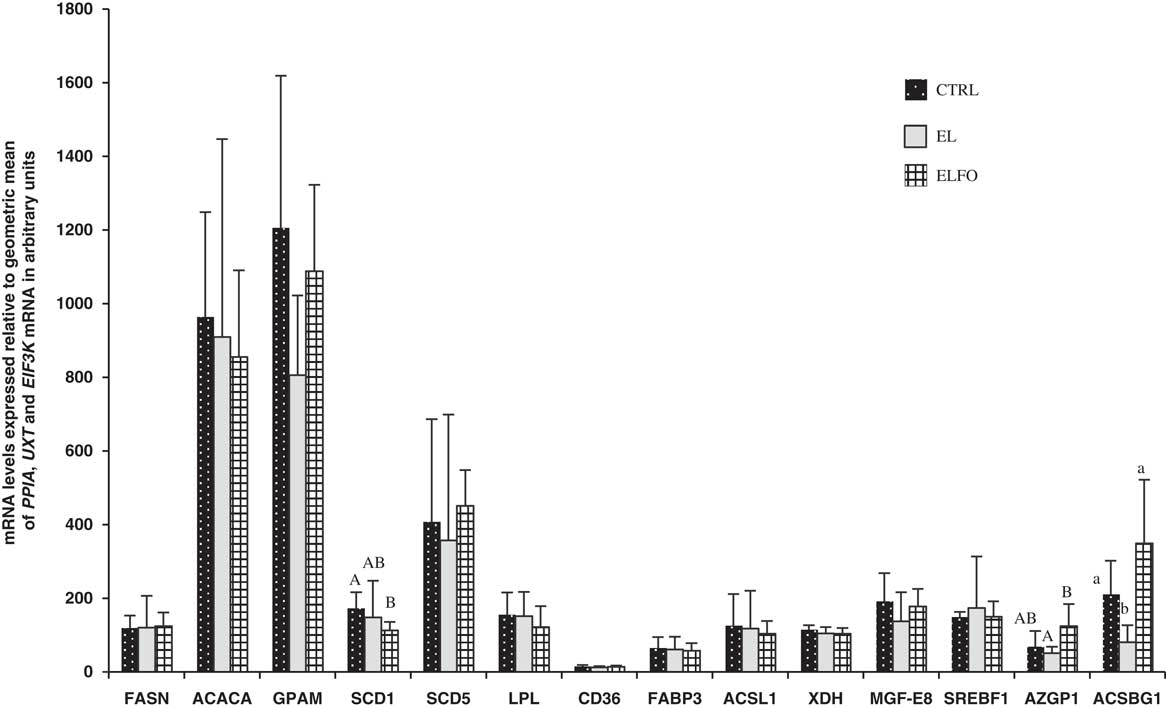
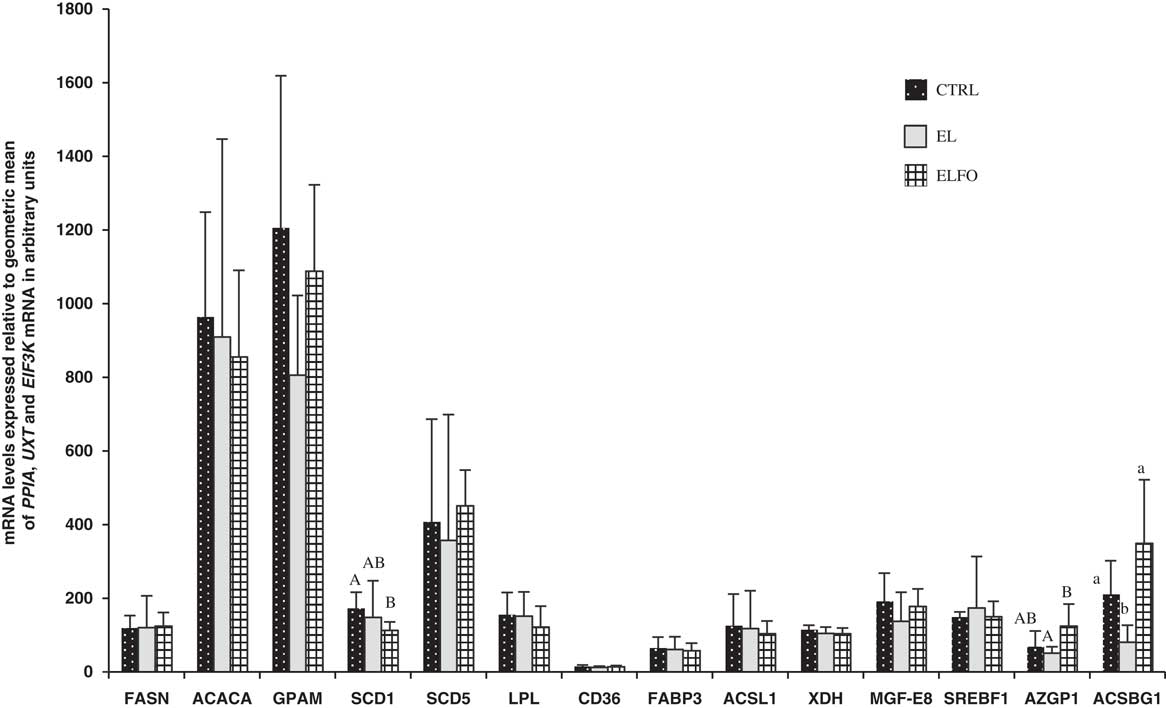
Effect of the dietary supplements extruded linseeds (EL) alone or in combination with fish oil (ELFO) on the mRNA abundance of candidate genes that encode proteins involved in lipid metabolism and transport processes (FASN, ACACA, GPAT, SCD1, SCD5, LPL, CD36, FABP3, ACSL1, SREBF1, AZGP1 and ACSBG1) and milk fat globule proteins (XDH and MFG-E8) in the mammary glands of lactating goats (n=14). a,bSignificant differences (P<0.05) and A,Btendency towards significance (P<0.10) between the experimental diets.
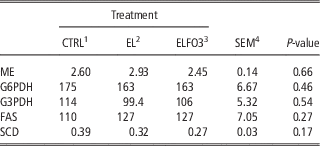
Effect of dietary supplements of extruded linseeds alone or in combination with fish oil on the activity of lipogenic enzymes in the mammary gland of lactating goats (n=14)

ME=malic enzyme; G6PDH=glucose-6-phosphate dehydrogenase; G3PDH=glucose-3-phosphate dehydrogenase; FAS=fatty acid synthase; SCD=stearoyl-CoA desaturase.
Mean values for activities are expressed as mmol/mn per mg protein
1 Natural grassland hay control diet (n=5).
2 CTRL supplemented with 530 g/day of extruded linseed (n=4).
3 CTRL supplemented with 340 g/day of extruded linseed plus 39 g/day of fish oil (n=5).
4 SEM for n=14.
Microarray data and analysis
Due to the absence of a caprine microarray, transcriptome analyses were performed using a bovine microarray as previously described in caprine studies (Ollier et al., Reference Ollier, Leroux, de la Foye, Bernard, Rouel and Chilliard2007 and Reference Ollier, Robert-Granie, Bernard, Chilliard and Leroux2009; Faulconnier et al., Reference Faulconnier, Chilliard, Torbati and Leroux2011). The microarray consisted of the Operon Bos taurus (bovine) AROS V1.1 set (Operon Biotechnologies, Cologne, Germany) and contained 8329 unique genes plus 53 genes that were chosen for their potential importance in mammary metabolism, resulting in a focused microarray. This platform is accessible through GEO Platform accession number GPL5451.
Five micrograms of total RNA from each mammary tissue sample was reverse transcribed and fluorescently labeled in the presence of either Cy3- or Cy5-dCTP (GE Healthcare Europe GmbH, Orsay, France) using the Pronto ChipShot™ Direct Labeling Kit (Promega, Madison, WI, USA) according to the manufacturer’s instructions. The labeling and hybridization were performed as previously described by Faulconnier et al. (Reference Faulconnier, Chilliard, Torbati and Leroux2011). The labeling and hybridization were conducted in a dye-swap manner. Thus, eight microarrays (four independent comparisons in dye-swap) and 10 microarrays (five independent comparisons in dye-swap) were performed to allow the comparison of the transcriptomes for EL v. CTRL and ELFO v. CTRL, respectively. After hybridization, the slides were washed and scanned then statistical analyses were performed as previously described by Faulconnier et al. (Reference Faulconnier, Chilliard, Torbati and Leroux2011). For each comparison, data from the four replicated spots per oligonucleotide were averaged to eliminate technical variations. Statistical analyses were performed using the free R 2.6 software (2006, http://www.r-project.org) with the ANOVA test, and the P values were adjusted using Benjamini-Hochberg correction (Benjamini and Hochberg, Reference Benjamini and Hochberg1995). Differences were considered significant at an adjusted P<0.05. The data are accessible through the GEO series accession number GSE68232.
Similar changes in the expression of eight genes (ELF3, LALBA, SPP1, SMAD3, ABCG2, PPARG, CSN1S1 and ADIPQ) were observed by microarray analysis and by RT-PCR.
Biological interpretation
The identities of the differentially expressed genes (DEGs) were validated by a sequence comparison between the spotted oligonucleotides and the NCBI non-redundant database using the BLASTN algorithm (2006). Gene symbols were obtained from the HUGO Gene Nomenclature Committee database (2006). The DEGs were classified according to their biological processes and their networks were studied using the following bioinformatics tools: Ingenuity Pathway Analysis (IPA: http://analysis.ingenuity.com) and Ensembl (http://www.ensembl.org/index.html). Potential transcription factors involved in the regulation of the DEGs were searched using the network algorithms for transcription factor development in the MetaCoreTM software (https://portal.genego.com).
Results
Composition of the diets and dry matter intake
The data presented in this study were obtained at the end of the last period of the Latin square and can be compared with the gene expression and enzyme activities data measured after slaughtering the 14 goats. The composition of the diets is presented in Supplementary Table S1. Milk production and composition at slaughtering (n=14) are presented in Supplementary Tables S3 and S4.
Candidate gene expression on mammary lipid metabolism
The dietary treatments had no effects on FASN, ME, SCD1, G6PDH and G3PDH activities (Table 1) or on the mRNA abundance of 11 of the 14 candidate genes encoding proteins involved in lipid metabolism and MFG proteins in mammary tissues (Figure 1). Indeed, we highlighted a down-regulation in ACSBG1 gene expression for the EL v. CTRL (−62%) and EL v. ELFO (−77%) treatments (P<0.04, Figure 1). A decreased tendency was also observed in SCD1 mRNA abundance for the ELFO v. CTRL and AZGP1 for the EL v. ELFO diets (P<0.10, Figure 1).
Global mammary gene expression
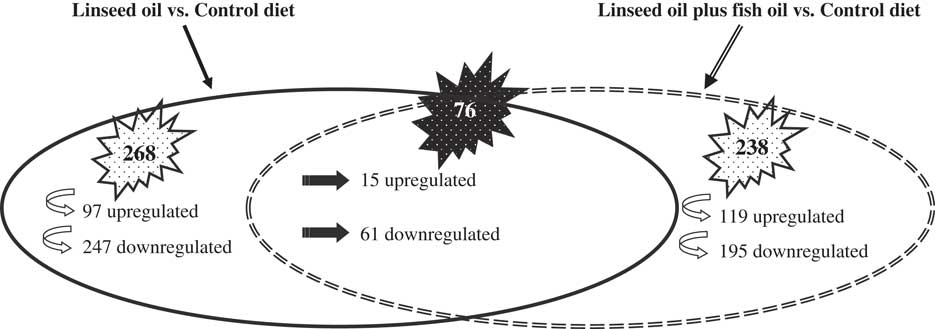
The gene expression comparisons (16 microarrays) revealed 344 DEGs (247 down- and 97 up-regulated) in goats fed EL v. CTRL diets and 314 DEGs (195 down- and 119 up-regulated) in goats fed ELFO v. CTRL diets (Figure 2 and Supplementary Tables S5 and S6). A total of 76 of the 344 and 314 DEGs (61 down- and 15 up-regulated) were common between these comparisons.
Venn diagram of the global analysis effects of extruded linseeds alone or in combination with fish oil v. the control diet on mammary gene expression in lactating goats.

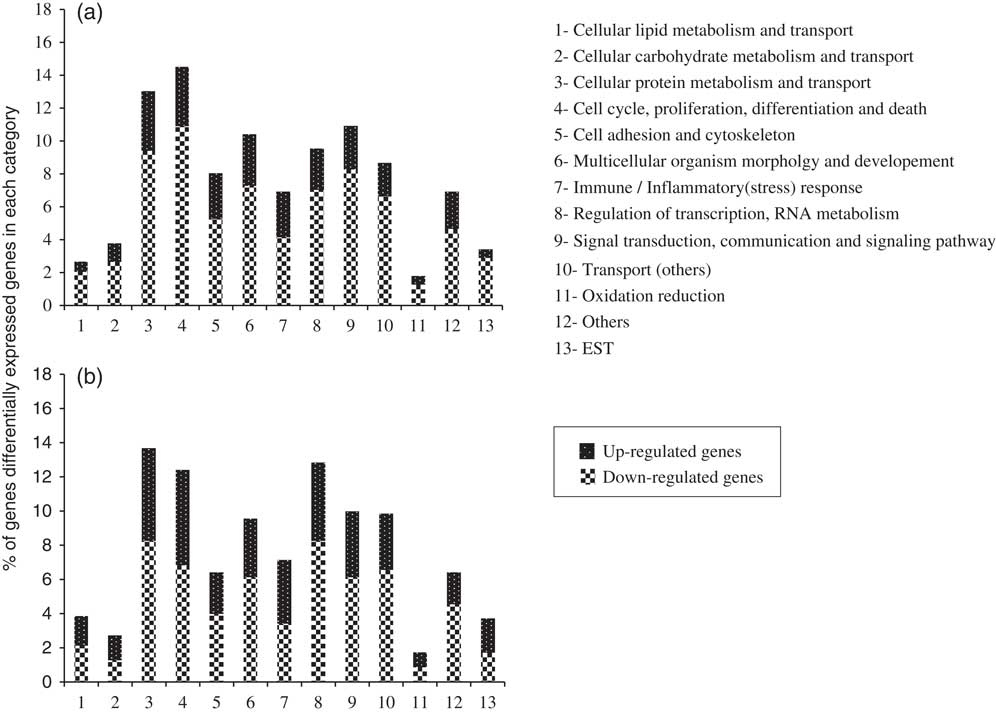
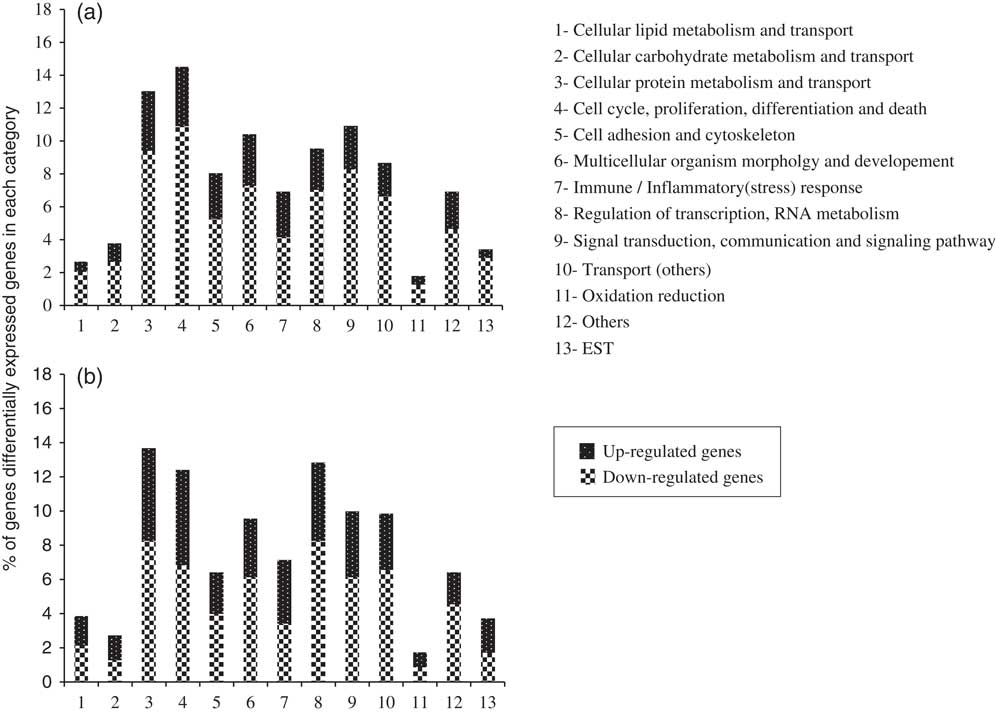
To identify the biological functions in which the DEGs were involved, gene ontology (GO) pathway and gene network analyses were performed. All of the DEGs were classified into 11 functional categories plus one mixed category and one undetermined class according to the GO annotation (Figure 3). For the two comparisons studied, the classification indicated two main processes, the cell cycle, with proliferation, differentiation and death (ca. 13% of the DEGs), and cellular protein metabolism and transport (ca. 13.5% of the DEGs) classes, both of which were altered by the EL (Figure 3a) and ELFO (Figure 3b) v. CTRL diets. In addition, cellular lipid metabolism and transport class comprised 2.6% and 3.8% of the DEGs identified in the EL (Figure 3a) and ELFO (Figure 3b) v. CTRL diets, respectively.
Distribution (in %) of differentially expressed genes in each of 13 biological process categories in mammary glands from lactating goats fed diets supplemented with (a) extruded linseeds alone or (b) in combination with fish oil v. the control diet.
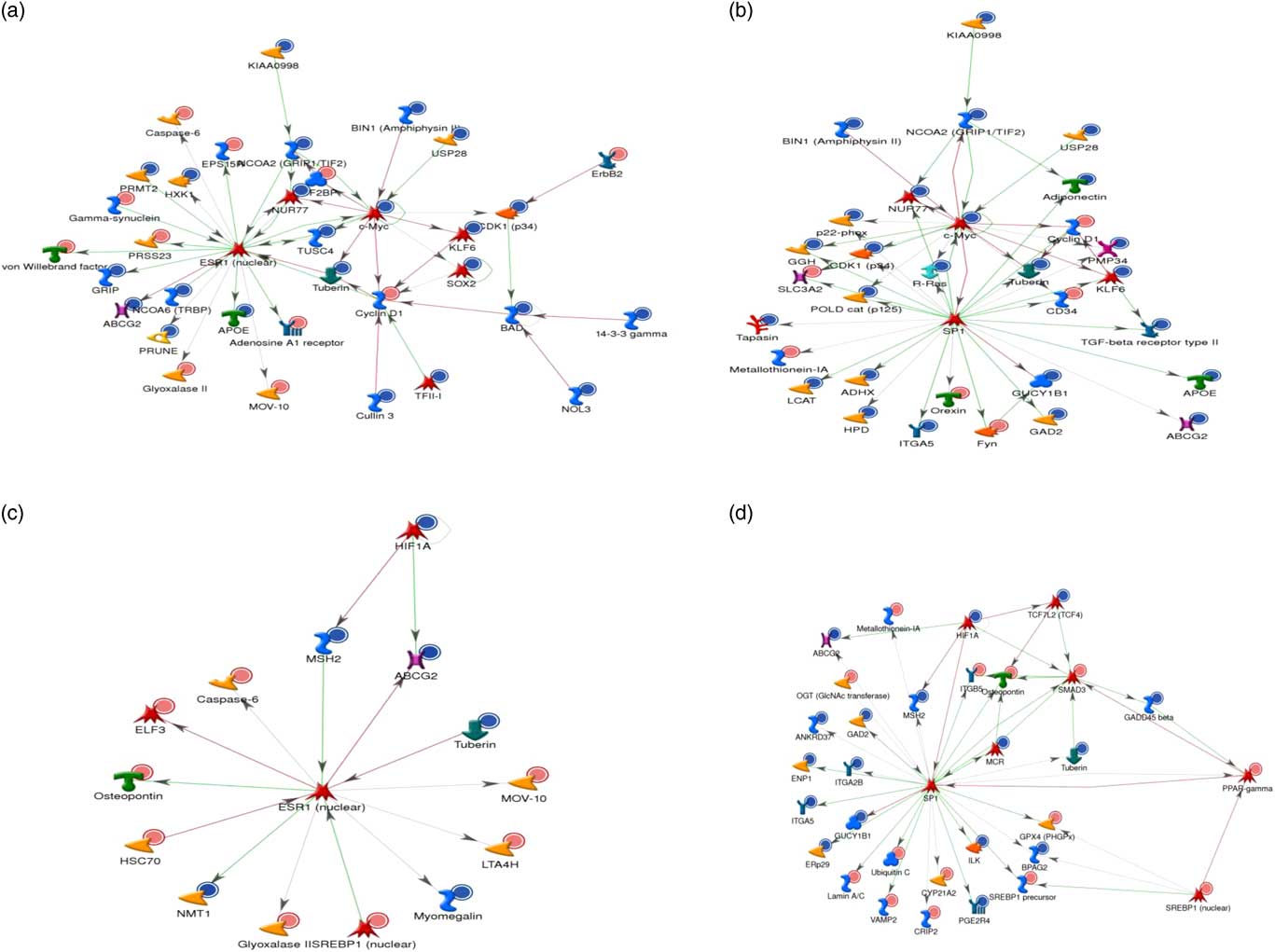
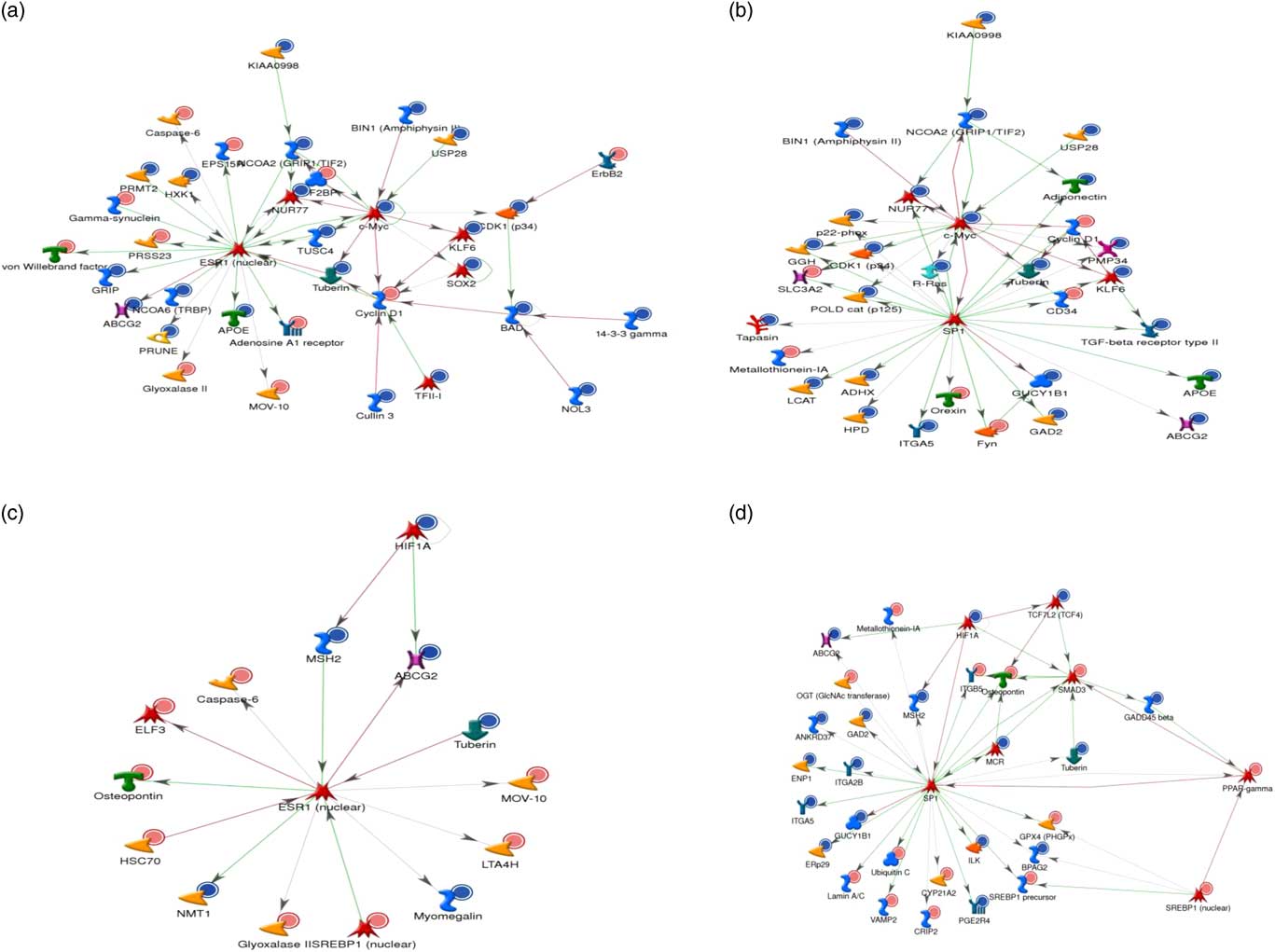
Bioinformatics analyses were performed to refine the biological functions of the DEGs. We showed that the first five impacted molecular and cellular functions that were highlighted in the EL v. CTRL and ELFO v. CTRL comparisons, as found using the Ingenuity (IPA) software, included cellular growth and proliferation (Supplementary Table S7A). We identified that the PI3K/AKT signaling pathway was the first and second canonical pathway altered by the ELFO (Supplementary Table S7B) and EL (Supplementary Table S7B) diets, respectively. Protein and amino acid metabolism were modified by EL and ELFO (Supplementary Table S7C), whereas only EL showed the lipid metabolism network among its first five altered networks. For regulatory network analyses, we used the MetacoreTM software and detected two common networks, one focused on ESR1 (Figures 4a and c) and one on the transcription factor SP1 (Figures 4b and d), in the EL v. CTRL and ELFO v. CTRL DEG lists.
The ESR1 and SP1 networks based on differentially expressed genes in mammary glands obtained from the MetaCoreTM network software. Dots near a gene indicate differential expression, with blue denoting down-regulated genes and red denoting up-regulated genes. (a and b) Networks obtained from transcriptomic comparisons from lactating goats fed a diet supplemented with extruded linseeds v. the control diet. (c and d) Networks obtained with transcriptomic comparisons from lactating goats fed a diet supplemented with extruded linseeds in combination with fish oil v. the control diet.
Pathways involved in milk component synthesis and secretion
Lipid metabolism and transport
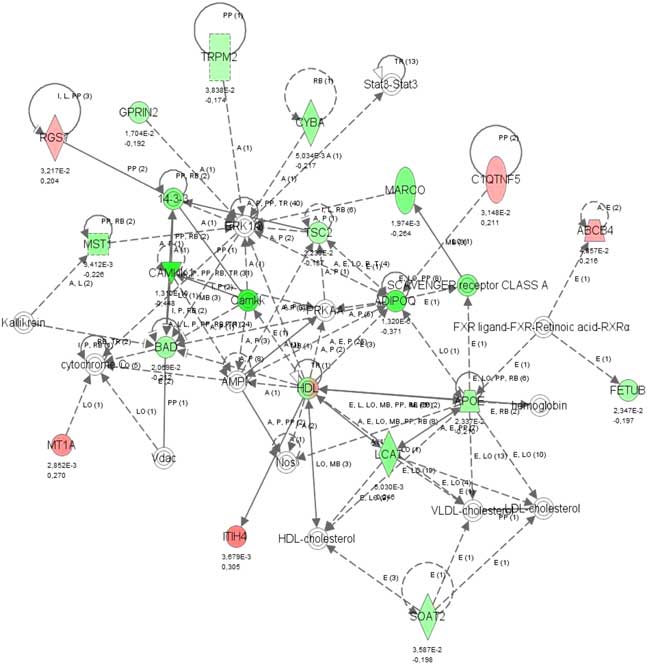
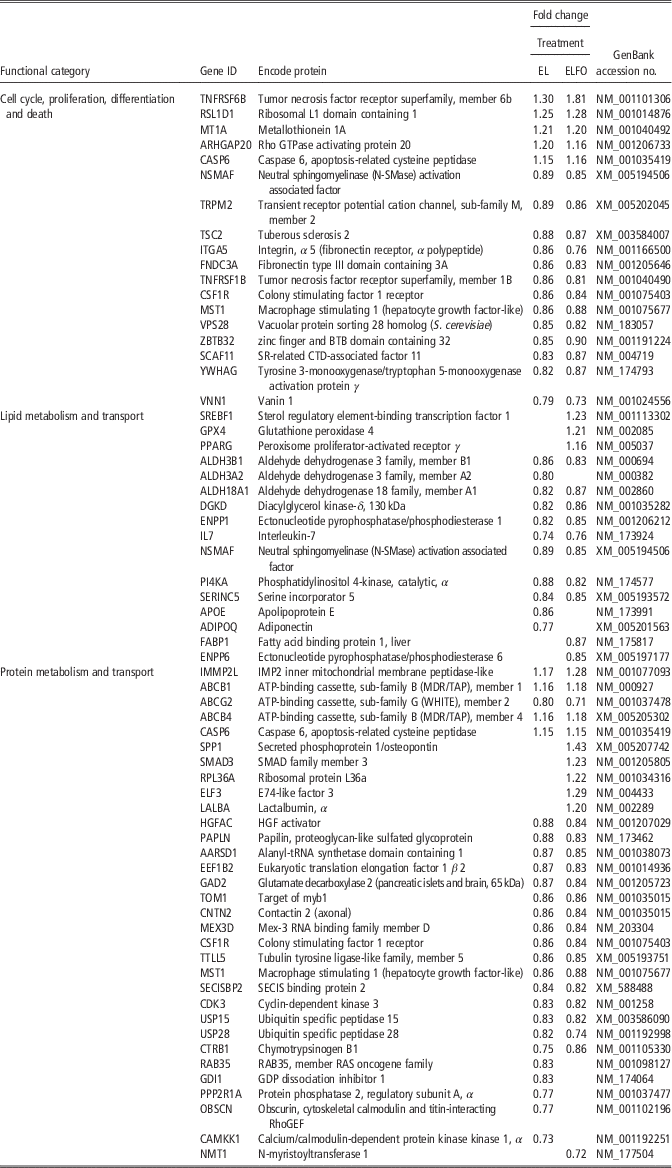
Using the IPA software, we identified a lipid metabolism network (the fourth identified network) in the EL v. CTRL DEG list (Table 2, Figure 5 and Supplementary Table S5). In contrast, for the ELFO v. CTRL, the DEG list did not reveal any lipid metabolism networks, despite the presence of genes involved in lipid metabolism (Table 2). We identified eight down-regulated (ALDH3B1, ALDH18A1, DGKD, ENPP1, IL7, NSMAF, PI4KA and SERINC5) genes involved in lipid metabolism and transport (Table 2) among the 76 DEGs common between the EL v. CTRL and ELFO v. CTRL lists. In the comparison of gene expression between the EL and CTRL diets, we identified the down-regulation of ApoE (which is known to mediate the binding, internalization, and catabolism of lipoprotein particles) and ADIPOQ (an adipokine known to be involved in the control of fat metabolism and insulin sensitivity). In the comparison of gene expression between the ELFO v. CTRL diets, we identified the regulation of three genes up-regulated (SREBF1, PPARG and GPX4) or two down-regulated (FABP1 and ENPP6) by ELFO involved in lipid metabolism (Table 2 and Supplementary Table S6). Indeed, FABP1, which is known to be involved in FA uptake, transport, and metabolism, and GPX4, which protects cells against membrane lipid peroxidation (Koulajian et al., Reference Koulajian, Ivovic, Ye, Desai, Shah, Fantus, Ran and Giacca2013), were down- and up-regulated by ELFO diet, respectively. Moreover, we detected two transcription factors (SREBF1 and PPARG) that are known to be involved in regulating lipogenesis gene expression as being up-regulated by the ELFO diet (Figure 4d, Supplementary Table S6, and Table 2). We also noted common families in the two DEG lists (EL v. CTRL and ELFO v. CTRL). For example, two different members of the aldehyde dehydrogenase protein family were down-regulated (ALDH18A1 and ALDH3B1 by EL and ELFO diets, respectively, and ALDH3A2 by the EL diet) in the present study (Table 2).
Lipid metabolism networks obtained from the Ingenuity software based on the differentially expressed genes in mammary glands from lactating goats fed a diet supplemented with extruded linseeds v. the control diet. Dots near a gene indicate differential expression, with green denoting down-regulated genes and red denoting up-regulated genes
Selection of differentially expressed genes in mammary gland from lactating goats fed diet supplemented with extruded linseed (EL) alone or in combination with fish oil (ELFO) v. control diet

Protein metabolism and transport
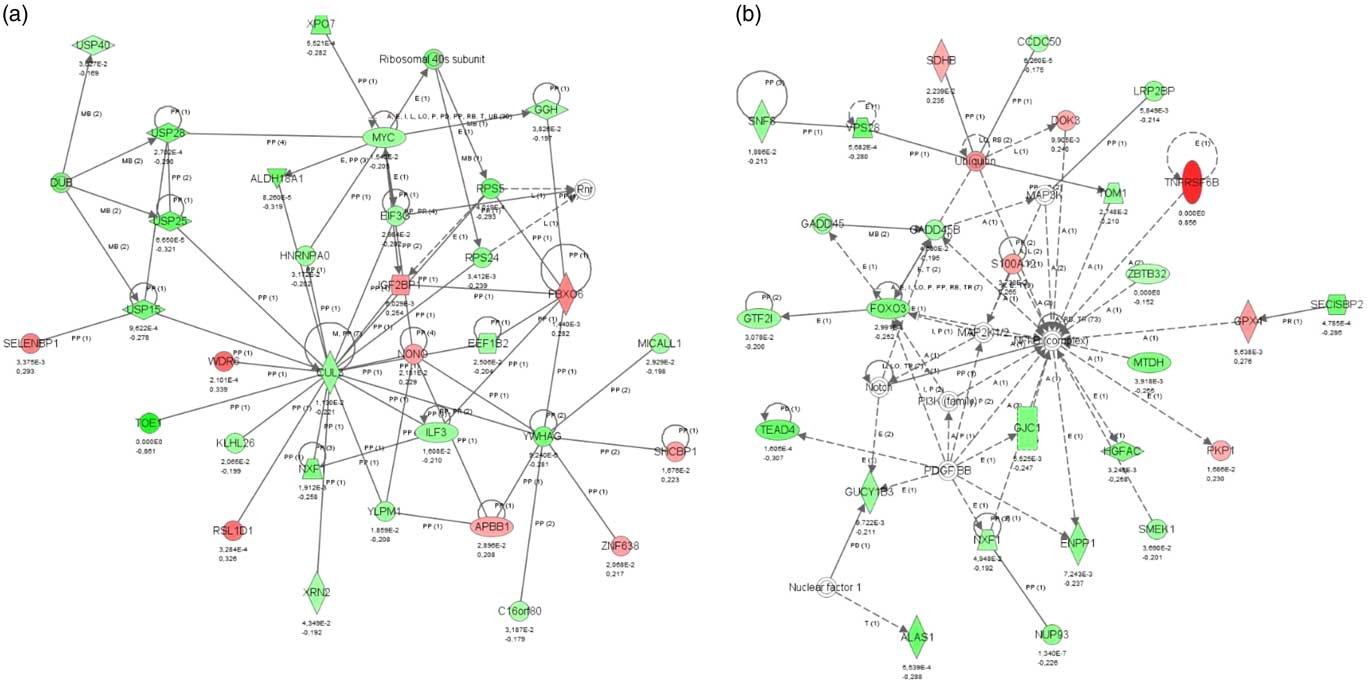
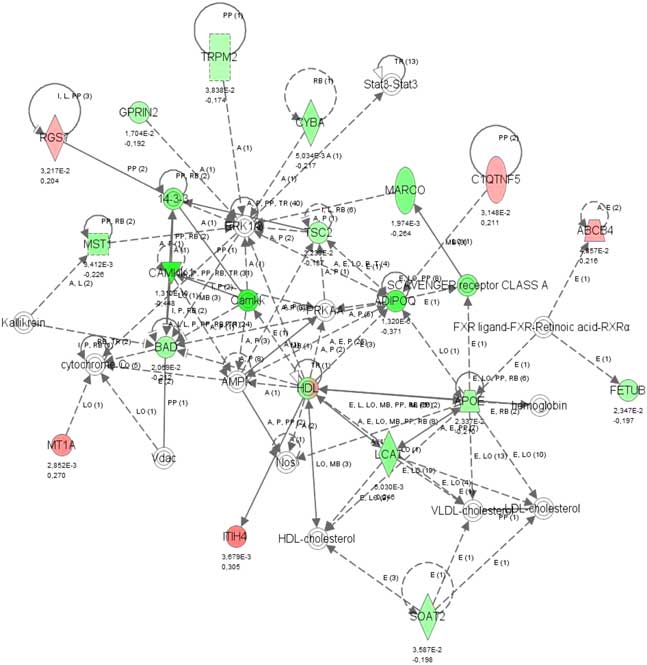
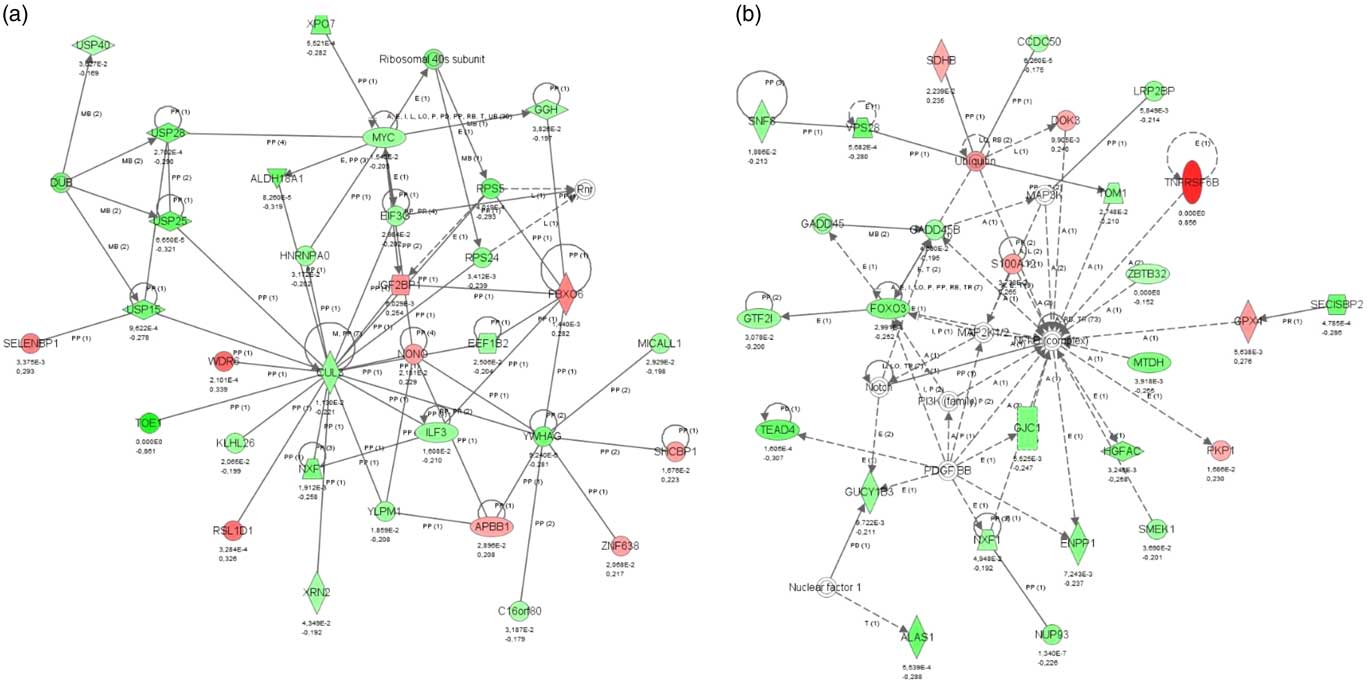
Another highly represented class was the cellular protein metabolism and transport process, which contained 104 and 95 DEGs when EL and ELFO were compared with CTRL diets, respectively, including 21 common DEGs (Table 2). This is in line with the detection of an amino acid metabolism network using the IPA software for the EL v. CTRL and ELFO v. CTRL DEG lists (Figure 6 and Supplementary Table S7). Among the 21 common DEGs, 4 (CTRB1, MST1, USP15 and USP28 were down-regulated by the EL and ELFO diets), representing nearly 20% of the common genes, belonged to the protease superfamily (Marchitelli et al., Reference Marchitelli, Crisa, Mostarda, Napolitano and Moioli2013) and three (ABCB1, ABCB4 and ABCG2) belonged to ATP-binding cassette (ABC) transporters. ABC family members were differently regulated: ABCB1 and ABCB4 were up-regulated, but ABCG2 was down-regulated by the EL and ELFO diets. We also identified two genes (ELF3 and LALBA) that were up-regulated by the ELFO diet and are involved in the protein metabolism and transport class.
Amino acid metabolism network based on differentially expressed genes in mammary glands obtained from the Ingenuity software. Dots near a gene indicate differential expression, with green denoting down-regulated genes and red denoting up-regulated genes. Networks obtained with transcriptomic comparisons from lactating goats fed a diet supplemented with (a) extruded linseeds v. the control diet and (b) extruded linseeds in combination with fish oil v. the control diet.
Discussion
With the objective of deciphering the nutri-regulation mechanisms in mammary functioning, we analyzed the mammary gene expression of goats fed with a control or two lipid (EL and ELFO)-supplemented diets. The effects of these dietary treatments on milk production and composition in the goats over the complete 3×3 Latin square (14 goats for each of the three diets leading to 48 data points) were previously reported (Bernard et al., Reference Bernard, Leroux, Rouel, Delavaud, Shingfield and Chilliard2015). Gene expression analyses reported here were performed on 14 mammary samples collected at slaughtering at the end of the trial and are discussed in relation to milk production and composition data from the corresponding experimental period (Supplementary Tables S3 and S4).
Targeted gene analyses of mammary lipid metabolism
The absence of effects due to lipid supplementation on the activities of five lipogenic enzymes is in line with the absence of effects on milk fat secretion (Supplementary Table S3) but does not agree with the decrease in the secretion of medium-chain FAs (12:0-16:0) and the simultaneous increase in 18-FA secretion with the EL diet (Supplementary Table S4). Similarly, the dietary treatments had no effect on the mRNA abundance of 11 of the 14 candidate genes that encode proteins involved in FASN and transport and the MFG proteins in mammary tissue (Figure 1). This lack of effect on the studied candidate genes expression has been reported previously in goats receiving lipid supplements (Bernard et al., Reference Bernard, Leroux and Chilliard2008). However, although the SCD1 activity did not change significantly, a tendency for a decrease in mRNA abundance was observed in the ELFO v. CTRL diets, which is in accordance with previous studies investigating cow diets supplemented with FO (Harvatine and Bauman, Reference Harvatine and Bauman2006). The expression of SCD1 gene expression known to be the major enzyme of milk FAs desaturation, has also been previously reported to be decreased in Chinese lactating goats fed a high concentrate diet (Tao et al., Reference Tao, Chang, Xu, Zhao, Zhang and Shen2015). This decrease in SCD1 mRNA abundance is in line with the reduction in the c9-14:1/(14:0+c9-14:1) ratio (Supplementary Table S4), which is considered to be the best proxy for Δ-9 desaturation flow in mammary tissues (Bernard et al., Reference Bernard, Leroux and Chilliard2008).
The EL diet reduced ACSBG1 mRNA abundance compared with CTRL and ELFO diets. The protein encoded by this gene possesses long-chain acyl-CoA synthetase activity when expressed in COS-1 cells (Steinberg et al., Reference Steinberg, Morgenthaler, Heinzer, Smith and Watkins2000) and is involved in the activation of both the synthesis of cellular lipids and their degradation via β-oxidation of long-chain FAs. Moreover, the EL diet tended to decrease the expression of AZGP1, a lipid mobilizing factor in adipocytes that encodes zinc-α2-glycoprotein, compared with the ELFO diet. This protein is known to stimulate lipid degradation in adipocytes and may bind PUFAs (Russell and Tisdale, Reference Russell and Tisdale2011). However, the function of these genes is poorly documented in mammary glands. Ollier et al. (Reference Ollier, Leroux, de la Foye, Bernard, Rouel and Chilliard2007) showed, for the first time, that these two genes were down-regulated in mammary glands after 48 h of food deprivation in lactating goats. Thus, a possible role for ACSBG1 and AZGP1 genes in the mammary responses to different dietary conditions in goats may be hypothesized and would need to be thoroughly investigated.
Transcriptomic analyses
Due to the lactation function of mammary glands and the stage of lactation in animals, particular attention was given to modifications affecting the biosynthesis and secretion of milk components. The fold changes in the identified DEGs were weak, which is in line with the light effects on lipogenesis candidate gene expression with lipid supplementation (Bernard et al., Reference Bernard, Leroux and Chilliard2008) and with previous data on mammary nutrigenomic analyses with whole intact rapeseed or sunflower oil (Ollier et al., Reference Ollier, Robert-Granie, Bernard, Chilliard and Leroux2009). These results could also be due, in part, to the limited number of animals at sacrifice. Interestingly, the EL v. ELFO transcriptomic comparison showed only 13 DEGs, with no genes involved in milk component biosynthesis (data not shown), whereas ELFO diet (compared with EL) decreased (−25%, P<0.05) the milk fat content and 18:0 and ∑cis-18:1 percentages (Supplementary Tables S3 and S4). It is worth noting that the decrease in 18:0 and c9-18:1 could be due to the inhibition of the last step of rumen biohydrogenation by EPA/DHA in FO resulting in reduced supply of 18:0 for bovine mammary gland (Kairenius et al., Reference Kairenius, Ärölä, Leskinen, Toivonen, Ahvenjärvi, Vanhatalo, Huhtanen, Hurme, Griinari and Shingfield2015).
Lipid metabolism
The conclusions from the targeted approach led us to perform a global analysis. With the aim of increasing our nutrigenomics database, we used the same dedicated bovine microarray found in previous studies (Ollier et al., Reference Ollier, Leroux, de la Foye, Bernard, Rouel and Chilliard2007 and Reference Ollier, Robert-Granie, Bernard, Chilliard and Leroux2009). Despite the relatively small number of genes represented on the microarray, we identified 344 and 314 DEGs in the goats fed EL and ELFO v. CTRL diets, respectively (Figure 1 and Supplementary Tables S5 and S6).
Bioinformatics analyses of each of the complete DEG lists obtained with EL and ELFO v. CTRL and using the IPA software identified lipid metabolism and transport process (the fourth network) as enriched (Supplementary Table S7C) with the EL v. CTRL list which is in line with the positive effects of the EL (v. CTRL) diet on milk fat content (+33%, Supplementary Table S3). The lack of the IPA network with the ELFO diet suggesting a weak effect on lipid metabolism and transport process was also in accordance with the absence of significant effects on milk fat content. The difference in the detection of a lipid metabolism network identified with the EL (Figure 5) and not with ELFO v. CRTL diets is in agreement with modifications in some milk FAs (e.g. increase in 12:0, 14:0 and 16:0 percentages) observed with the EL diet compared with no changes with the ELFO v. CTRL diets (Supplementary Table S4).
Among the lipid metabolism and transport class were eight common DEGs (ALDH3B1, ALDH18A1, DGKD1, ENPP1, IL7, NSMAF, PI4KA and SERINC5) and many down-regulated DEGs in the two lists (Table 2). The IL7 gene encodes an immunological factor that was recently shown to have a role in mammary remodeling and could be a potential biomarker for lactation performance in rodent models (Wei et al., Reference Wei, Yee, Ramanathan, Bendall and Williamson2011). Moreover, when IL7 is associated with its two receptors (IL-7Rα and gamma chain γc), it forms a signaling complex that activates intracellular phosphorylation events (which are essential for the phosphorylation of casein) via the JAK/Stat, PI3/Akt/mTOR and SRC signaling cascades, ultimately leading to enhanced gene transcription and cellular responses (Mazzucchelli and Durum, Reference Mazzucchelli and Durum2007). The PI3/Akt signaling pathway, which includes mTOR, was also highlighted by the IPA analyses as a major canonical pathway altered by the EL and ELFO diets (Supplementary Table S7B). In the present study, cell growth and proliferation function (Supplementary Table S7A) and amino acid metabolism (Supplementary Table S7C) were altered by the EL and ELFO diets, although the protein yield did not change. In addition, the diacylglycerol kinase-δ (DGKD) gene, which encodes a cytoplasmic enzyme that phosphorylates diacylglycerol to produce phosphatidic acid, was down-regulated by the addition of lipids to the diets (Table 2). The product of the DGK reaction, phosphatidic acid, is also linked to the regulation of diverse functions including cell growth and lipid metabolism (Merida et al., Reference Merida, Avila-Flores and Merino2008). Therefore, the down-regulation of IL7 and DGKD involved in PI3/Akt/mTOR signaling pathway, which is known to affect lipogenic gene networks (Li et al., Reference Li, Hosseini, Danes, Jacometo, Liu and Loor2016) could be related to the decrease in the 12:0, 14:0 and 16:0 percentages in the milk of goats fed the EL diet via other mechanisms than ACACA and FASN mRNA abundances.
There were DEGs involved in lipid metabolism and transport that were identified only in one comparison. For example, the expression of four genes (FABP1, GPX4, SREBF1 and PPARG, Table 2) was altered only by the ELFO diet (v. CTRL). FABP1 is involved in the uptake, transport, and metabolism of FA, and GPX4, which protects cells against membrane lipid peroxidation (Koulajian et al., Reference Koulajian, Ivovic, Ye, Desai, Shah, Fantus, Ran and Giacca2013), was down- and up-regulated by ELFO diet, respectively. Moreover, SREBF1 and PPARG, were up-regulated by the ELFO diet in the microarray analyses, but RT-qPCR analysis of SREBF1 did not show any significant difference. The PPAR gene network appears to control milk fat synthesis in lactating ruminants and is activated by long-chain FAs, which are ideal candidates for fine-tuning metabolism (Bionaz et al., Reference Bionaz and Loor2013; Shi et al., Reference Shi, Zhao, Zhang, Shahzad, Luo and Loor2016).
Cellular protein metabolism and transport
We identified another highly represented class, as the cellular protein metabolism and transport process contained 104 and 95 DEGs for the EL and ELFO v. CTRL diets, respectively, including 29 DEGs in common (21 DEGs selected in Table 2). This finding is in line with the network identified using the IPA software from the EL v. CTRL and ELFO v. CTRL DEG lists, which suggests that these genes play a role in amino acid metabolism in mammary glands (Figure 6). This network is of particular interest during lactation in mammary epithelial cells that synthesize milk proteins. Notably, a large proportion of the genes involved in this network were down-regulated, which could reflect a perturbation in mammary function (e.g. the non-significant trend for a 15% to 17% lower protein yield in the EL and ELFO groups). Among the 29 common DEGs, four (CTRB1, MST1, USP15 and USP28), which represent nearly 20% of the common genes, belonged to a protease superfamily known to be involved in many activities (Marchitelli et al., Reference Marchitelli, Crisa, Mostarda, Napolitano and Moioli2013). Their down-regulation could reflect a decrease in proteolytic activities in the mammary gland due to lipid supplementation in the diet.
We detected another family in the common nutri-regulated genes, with three members belonging to the ATP-binding cassette (ABC) transporters (ABCB1, ABCB4 and ABCG2).
The ABC proteins or transporters constitute a large protein family involved in the movement of various molecules across the lipid membrane thus controlling many different cellular functions and processes. ABCB1 and ABCB4 were up-regulated, but ABCG2 was down-regulated by the addition of lipids in the diet. The expression of ABCB4 has not yet been determined in the mammary gland. However, its role in controlling lipid synthesis, storage and oxidation by decreasing serum cholesterol and phospholipids levels and reducing hepatic PUFAs has been observed in mice (Moustafa et al., Reference Moustafa, Fickert, Magnes, Guelly, Thueringer, Frank, Kratky, Sattler, Reicher, Sinner, Gumhold, Silbert, Fauler, Höfler, Lass, Zechner and Trauner2012). The function of these genes in the mammary glands of ruminants is unclear and need to be clarified.
The analysis of the effects of ELFO v. CTRL diets highlighted the up-regulation of genes that play roles in mammary function or development. Among them, E74-like ETS transcription factor 3 (ELF3, Table 2) is an epithelial-specific ETS domain transcriptional activator that is involved in murine mammary gland development and involution during pregnancy and early lactation (Oliver et al., Reference Oliver, Kushwah and Hu2012). The induction of murine ELF3 during mammary involution suggests a role in the regulation of apoptotic pathways (Neve et al., Reference Neve, Chang, Scott, Wong, Friis, Hynes and Benz1998). In addition, caspase 6 (CASP6, Table 2), a member of the apoptosis-related cysteine peptidase family that is involved in apoptosis, was up-regulated by the two lipid diets. Together, these results suggest an increase in mammary cells progressing towards involution by lipid supplementation. Such observations have been previously reported in cows in response to dietary oils from rapeseed, soybean, linseed or a mixture of the three unsaturated FAs (Mach et al., Reference Mach, Jacobs, Kruijt, van Baal and Smits2011) and to whole intact rapeseeds or sunflower oil (Leroux et al., Reference Leroux, Bernard, Faulconnier, Rouel, de la Foye, Domagalski and Chilliard2016). Moreover, the gene encoding α-lactalbumin (LALBA), which is one of the two major whey milk proteins involved in lactose synthesis, is also up-regulated in the ELFO v. CTRL diets, although the lactose yield and content were not significantly affected by this diet in the present study. Alpha-lactalbumin was identified as a milk factor that feeds back to the mammary gland to regulate involution (Sharp et al., Reference Sharp, Lefevre and Nicholas2008). Modifications in the expression of this gene could be related to reported changes in mammary gland remodeling by unsaturated FAs in cows (Mach et al., Reference Mach, Jacobs, Kruijt, van Baal and Smits2011). Our results are in line with the reported effects of linseeds on mammary gland metabolism in periparturient dairy cows, which showed the main modifications on mammary cell proliferation and remodeling (Mach et al., Reference Mach, Zom, Widjaja, van Wikselaar, Weurding, Goselink, van Baal, Smits and van Vuuren2013). However, these results are not in line with the absence of modifications on milk yield and milk fat content and the yield when the diet is supplemented with ELs during two consecutive lactations in cows (Lerch et al., Reference Lerch, Shingfield, Ferlay, Vanhatalo and Chilliard2012). Thus, further studies are required to determine the long-term effect of lipid supplementation on mammary structures.
Mammary nutri-regulome
With the aim to describe the mammary nutri-regulome, we performed analyses using the MetacoreTM software with the DEG lists to identify key regulators that could be modulated by the dietary treatments. Both the EL v. CTRL (Figure 4a) and ELFO v. CTRL (Figure 4c) analyses identified a network that is focused on ESR1 and is known to be involved in mammary development and cell differentiation (Schams et al., Reference Schams, Kohlenberg, Amselgruber, Berisha, Pfaffl and Sinowatz2003). Furthermore, ESR1 is connected to the JAK/STAT pathway through its regulation by prolactin (Frasor and Gibori, Reference Frasor and Gibori2003). Another highlighted transcriptional network was centered on the transcription factor SP1 (Figures 4b and d), which is known to regulate a variety of processes including cell growth, apoptosis, differentiation and immune responses. Moreover, SP1 is a transcription factor for the SCD1 gene (Pauciullo et al., Reference Pauciullo, Cosenza, D’Avino, Colimoro, Nicodemo, Coletta, Feligini, Marchitelli, Di Berardino and Ramunno2010), which was down-regulated in the ELFO v. CTRL diets (Figure 1).
Conclusions
We observed no effect due to EL alone or in combination with FO on the expression of lipogenic genes (measured by RT-qPCR), which are considered key players in mammary lipogenesis, despite the significant effect of lipid supplements on milk fat content and FA composition, including decreases in c9-14:1/(14:0+c9-14:1) ratio. However, two genes (AZGP1 and ACSBG1 in EL v. ELFO and CTRL diets, respectively), which are less known, were identified as potential new candidate genes that can be considered in future studies. Global analysis using transcriptomic tools highlighted more than three hundreds DEGs due to the EL and ELFO diets compared to the CTRL diet. Lipid metabolism and transport pathways were identified using transcriptomic analyses with EL diet. It is worth noting that unexpectedly protein metabolism and transport class was one of the main biological processes altered by lipid supplementation without changes in the major milk proteins. In particular our results pointed out genes belonging to a protease superfamily. Moreover, the observed changes could be linked to mammary remodeling signed for example by the up-regulation of genes involved in mammary involution, which requires further investigation to precisely elucidate its effect on very long-term mammary functions.
Acknowledgments
The authors thank D. Roux and his team for the management of the animals at the Experimental Unit at Theix. The authors also thank J. Rouel for his helpful support for the experimental trial, S. Bes and C. Labonne for their technical assistance. Transcriptomics analyses were performed with the metabolism exploration platform (PFEM) at the ARA INRA center.
Supplementary material
To view supplementary material for this article, please visit https://doi.org/10.1017/S1751731117002816