Introduction
Bipolar disorder (BD) is a severe and persistent mental illness defined by the presence of recurrent mood episodes. 1 As per the Diagnostic and Statistical Manual of Mental Disorders, Fourth Edition, Text Revision (DSM-IV-TR), BD is characterized by the presence of mood episodes, namely, major depressive, manic, hypomanic, and mixed episodes. 2 The previous DSM-IV-TR criteria for mixed episodes required the contemporaneous presence of a threshold manic and major depressive episode (MDE). 2 With the updated Fifth Edition of the DSM (DSM-5), significant changes were made to how mixed mood states were defined. 1
Empirical evidence has revealed that the rare occurrence of fully meeting criteria for both mood states (ie, a DSM-IV-TR–defined mixed episode) lacked sufficient clinical utility to remain included in the diagnostic manual.Reference Swann, Lafer and Perugi 3 – Reference Benvenuti, Miniati, Callari, Giorgi Mariani, Mauri and Dell’Osso 5 Rather, mood states in which a patient met criteria for either a MDE, manic episode, or hypomanic episode with some symptoms, but not necessarily meeting full criteria, of the opposite mood state had greater clinical and scientific relevance.Reference Swann, Lafer and Perugi 3 – Reference Benvenuti, Miniati, Callari, Giorgi Mariani, Mauri and Dell’Osso 5 As such, the DSM-5 introduced the “with mixed features” specifier, which is defined by the presence of a mood episode wherein criteria for either a MDE or manic/hypomanic episode is met while simultaneously having 3 or more criteria from the opposite mood state. The mixed features specifier may have significant clinical relevance given that approximately 30–40% of patients with BD experience mood episodes with mixed features during the course of illness.Reference Kessing 6 – Reference Verdolini, Agius, Ferranti, Moretti, Piselli and Quartesan 8 Moreover, mixed features are associated with more severe symptomatology, mood episode recurrence, higher rates of comorbidity, poorer clinical outcomes, and suicidality.Reference Shim, Woo, Jun and Bahk 9 – Reference Popovic, Vieta and Azorin 12
Given the relative recency of this new nosological entity (May 2013), only a limited number of studies has directly examined the efficacy of treatments for mood states with DSM-5–defined mixed features.Reference Benazzi, Berk, Frye, Wang, Barraco and Tohen 13 – Reference Suppes, Silva and Cucchiaro 22 Further, to date, only the Florida Medicaid Guidelines have specifically addressed the treatment of mixed features. 23 At the current time, inadequate evidence exists to adequately inform evidence-based treatment guidelines for mixed features in BD, as randomized controlled trials (RCTs) assessing the efficacy of various treatments specifically for BD mood episodes with mixed features have yet to be conducted. Numerous RCTs have assessed the efficacy of treatments of DSM-IV–defined mixed episodesReference Swann, Lafer and Perugi 3 , Reference Shim, Woo, Jun and Bahk 9 , Reference Fagiolini, Coluccia and Maina 24 – Reference Muralidharan, Ali and Silveira 27 ; however, the translational application of these results to the treatment of DSM-5–defined mixed features is speculative, as the DSM-IV overlaps but is distinctly different.
The objectives of the current article are to identify, summarize, and synthesize clinical studies specifically assessing the treatment of DSM-5–defined BD mood episodes (ie, including mania, hypomania, and bipolar depression) with mixed features. Of note, there is inadequate evidence for definitive evidence-based treatment recommendations; however, in the absence of rigorously controlled trial data, this review attempts to provide decision support until the execution of RCTs that may appropriately assess the efficacy of treatments specifically for DSM-5–defined mixed features.
Methods
The MEDLINE/PubMed and Google Scholar databases were searched from inception through April 2016 for peer-reviewed published studies assessing the efficacy of treatments for DSM-5–defined BD mood episodes with mixed features. The search was not limited to RCTs and included secondary and tertiary analyses, such as post-hoc analyses. Search strings included various combinations of the following terms: bipolar disorder (BD), mixed features, mixed episode, treatment, anti-psychotic, anti-convulsant, mood stabilizer, antidepressant, olanzapine, risperidone, paliperidone, illoperidone, aripiprizole, asenapine, ziprazidone, lurasidone, quatiapine, haloperidol, clozapine, cariprazine, lithium, epival, valproate, carbamazepine, oxcarbazapine, lamotrigine, electroconvulsive therapy (ECT), psychotherapy, Interpersonal and Social Rhythm Therapy (IPSRT), cognitive behavioral therapy (CBT), and interpersonal therapy (IPT). Reference lists from included articles were also manually searched for additional pertinent references. Of note, primary studies assessing treatments of DSM-IV-TR-defined mixed episodes were not systematically retrieved or reviewed in the current article, as this has been done by numerous other authors previouslyReference Swann, Lafer and Perugi 3 , Reference Shim, Woo, Jun and Bahk 9 , Reference Fagiolini, Coluccia and Maina 24 – Reference Muralidharan, Ali and Silveira 27 and the focus of the current article is on studies specifically evaluating the treatment of DSM-5–defined “mixed features” rather than DSM-IV-TR–defined “mixed episodes.”
Results
Search results
The initial search to identify articles specifically assessing the efficacy of treatments of acute mood episodes with mixed features yielded 5 studies assessing treatments of bipolar depression with mixed features. Only 1 study was a primary RCT assessing treatment of depression with mixed features (using ziprasidone) a priori, while the remaining studies were post-hoc analyses assessing the efficacy of lurasidone, olanzapine, and the olanzapine-fluoxetine combination (OFC).Reference Benazzi, Berk, Frye, Wang, Barraco and Tohen 13 – Reference McIntyre, Cucchiaro, Pikalov, Kroger and Loebel 17 Three studies assessed the efficacy of treatment of manic/hypomanic episodes with mixed features with 2 post-hoc analyses assessing olanzapine and asenapine for mania with mixed features and 1 RCT assessing adjunctive quetiapine for hypomania with mixed features.Reference McIntyre, Tohen, Berk, Zhao and Weiller 18 – Reference Suppes, Ketter and Gwizdowski 20
Treatment of mania with mixed features
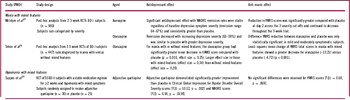
As summarized in Table 1, only 2 studies were identified that specifically assessed the treatment of DSM-5–defined mania with mixed features.Reference McIntyre, Tohen, Berk, Zhao and Weiller 18 , Reference Tohen, McIntyre, Kanba, Fujikoshi and Katagiri 19 Both studies were post-hoc analyses identifying subjects with mania with mixed features retrospectively. McIntyre et al Reference McIntyre, Tohen, Berk, Zhao and Weiller 18 conducted a post-hoc analysis using data from 2 identically designed 3-week, randomized, double-blind, flexible dose, placebo- and olanzapine referenced clinical trials (NCT00159744; NCT00159796) in patients with bipolar I disorder (BD-I). This post-hoc analysis used proxies for the DSM-5 mixed features specifier by using Montgomery–Åsberg Depression Rating Scale (MADRS) and Positive and Negative Syndrome Scale (PANSS) items. Of the 960 subjects analyzed, 34%, 18%, and 4.3% of patients, respectively, had ≥3 depressive features with mild (score≥1 for MADRS items and ≥2 for PANSS item), moderate (score≥2 MADRS, ≥3 PANSS), and severe (score≥3 MADRS, ≥4 PANSS) symptoms. In all subjects with ≥3 depressive features and independent of treatment, the MADRS remission rate decreased with increasing severity. Young Mania Rating Scale (YMRS) remission was similar for mild and moderate patients (36–37%), but higher for severe patients (54%). In asenapine-treated subjects, the MADRS remission rate was stable regardless of baseline depressive symptom severity (range 64–67%), whereas remission decreased with increasing severity with olanzapine (63–38%) and placebo (49–25%). Reduction in YMRS was significantly greater for asenapine compared with placebo at day 2 across the 3 severity cut-offs and continued to decrease throughout the treatment period. The difference in YMRS change between olanzapine and placebo was only statistically significant in subjects with mild to moderate symptoms.
Clinical studies assessing the efficacy of acute treatments specifically for DSM-5–defined manic and hypomanic episodes with mixed features

RCT=randomized controlled trial; BD=Bipolar Disorder; MADRS=Montgomery–Åsberg Depression Rating Scale; YMRS=Young Mania Rating Scale; HAMD=Hamilton Depression Scale.
Tohen et al Reference Tohen, McIntyre, Kanba, Fujikoshi and Katagiri 19 pooled data from 3 placebo-controlled olanzapine studies in subjects with BD-I with a current manic or mixed episode (n=228 olanzapine; n=219 placebo). Subjects were categorized for mixed features by number of concurrent depressive symptoms at baseline (0, 1, and 2 [category A; without mixed features], and ≥3 [category B; with mixed features]). Least-squares mean change of YMRS total scores in categories A and B (olanzapine versus placebo) were –11.78 versus –6.86 and –13.21 versus –4.72, respectively, showing a greater decrease in manic symptoms in subjects treated with olanzapine versus placebo. Subjects in the olanzapine-treated group compared with the placebo group experienced a greater decrease in YMRS total score for mania with or without mixed features (p<0.001).
Treatment of hypomania with mixed features
Only one study was identified that assessed treatments specifically for hypomania with mixed features.Reference Suppes, Ketter and Gwizdowski 20 Participants included 55 BD-II subjects with a stable medication regimen for ≥2 weeks and hypomania with mixed symptoms (>12 on the YMRS and >15 on the MADRS at 2 consecutive visits 1–3 days apart). Participants were randomly assigned to receive adjunctive quetiapine (n=30) or placebo (n=25). Adjunctive quetiapine demonstrated significantly greater improvement than placebo in Clinical Global Impression for Bipolar Disorder Overall Severity scores [F(1)=10.12, p=.002] and MADRS scores [F(1)=6.93, p=.0138), but no significant differences were observed for YMRS scores [F(1)=3.68, p=.069].Reference Suppes, Ketter and Gwizdowski 20 As such, the study suggested that either quetiapine is ineffective for treating hypomania with mixed features, or the study was underpowered.
McElroy et al,Reference McElroy, Martens and Creech 28 while not exclusively studying hypomania with mixed features, conducted an RCT of divalproex in 60 subjects with hypomania or mild mania, including participants with mixed hypomania and mixed mania, which consisted of 55% of the study participants. In this 8-week RCT, divalproex monotherapy was shown to significantly reduce symptoms of mania/hypomania in subjects with or without mixed features compared to placebo. There was also a trend toward an antidepressant effect; however, this trend was not statistically significant, and the authors commented that the study was likely underpowered to detect an antidepressant effect.
Treatment of bipolar depression with mixed features
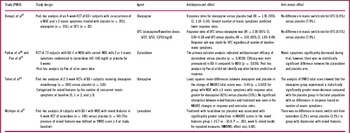
Only one prospective RCT was identified that evaluated treatment of bipolar depression with mixed features.Reference Patkar, Gilmer and Pae 14 Four post-hoc analyses were identified that re-analyzed RCT data through retrospectively identifying subjects that would have met criteria for bipolar depression with mixed features.Reference Benazzi, Berk, Frye, Wang, Barraco and Tohen 13 , Reference Pae, Patkar, Gilmer, Holtzman, Thommi and Ghaemi 15 – Reference McIntyre, Cucchiaro, Pikalov, Kroger and Loebel 17 All 5 studies assessed the efficacy of second-generation antipsychotics (SGAs), specifically ziprasidone, olanzapine, olanzapine-fluoxetine combination (OFC), and lurasidone. Of interest, 3 of the studies predated the publication of the DSM-5.Reference Benazzi, Berk, Frye, Wang, Barraco and Tohen 13 – Reference Pae, Patkar, Gilmer, Holtzman, Thommi and Ghaemi 15 The results of these studies are discussed herein and are summarized in Table 2.
Clinical studies assessing the efficacy of acute treatment specifically for DSM-5–defined bipolar depression with mixed features

RCT=randomized controlled trial; MDE=Major Depressive Episode; MDD=Major Depressive Disorder; BD=Bipolar Disorder; OFC=olanzapine-fluoxetine combination; OR=odds ratio; MADRS=Montgomery–Åsberg Depression Rating Scale; YMRS=Young Mania Rating Scale; MMRM=mixed model for repeated measures.
Patkar et al Reference Patkar, Gilmer and Pae 14 conducted a double-blinded, placebo-controlled RCT comparing the efficacy of ziprasidone (40–160 mg/d) compared to placebo in the acute treatment of depression with mixed features after 6 weeks of treatment. Included in the study were subjects with a diagnosis of major depressive disorder (MDD) or BD-II with a current MDE while also meeting 2 or 3 (but not more nor less) DSM-IV–defined manic criteria. After 3 weeks, the ziprasidone group (n=38) had a statistically and clinically significant improvement in depression severity (as indicated by change in MADRS scores), which was sustained until the end of the 6-week trial. There was not a statistically significant difference in change in the Mania Rating Scale (MRS) when comparing placebo to ziprasidone. Interestingly, antidepressant efficacy was more pronounced in BD-II subjects compared to MDD subjects (p= 0.036). Of note, Pae et al Reference Pae, Patkar, Gilmer, Holtzman, Thommi and Ghaemi 15 conducted a post-hoc analysis of the same study in an attempt to determine mediating factors that may predict efficacy; however, they were unable to identify any statistically significant factor.
All other identified studies were post-hoc analyses of previous RCTs in which subjects with bipolar depression with mixed features were retrospectively identified. The first study, by Benazzi et al,Reference Benazzi, Berk, Frye, Wang, Barraco and Tohen 13 assessed the efficacy of OFC versus olanzapine versus placebo. They conducted a post-hoc analysis of an 8-week, double-blind RCT of adult bipolar I patients depression treated with placebo (n=355), olanzapine (5–20 mg/d; n=351), or OFC (olanzapine/fluoxetine doses: 6/25, 6/50, 12/50 mg/d; n=82). Bipolar depression with mixed features was defined as the co-occurrence of a MDE and ≥2 manic/hypomanic symptoms. In this analysis, both olanzapine and OFC had greater antidepressant effects compared to placebo by the end of the 8-week trial. Comparing OFC to olanzapine alone, OFC had a non-statistically significant trend of greater response rates [odds ratio (OR)=2.00 (95% CI, 0.96–4.19)].
Tohen et al Reference Tohen, Kanba, McIntyre, Fujikoshi and Katagiri 16 also conducted a post-hoc analysis by pooling data from 2 placebo-controlled olanzapine studies in patients with bipolar I depression [olanzapine monotherapy (n=690) and placebo (n=524)]. Subjects were categorized for mixed features by the number of concurrent manic symptoms at baseline (0, 1 or 2, and ≥3, respectively, as measured by a YMRS item score≥1). As per DSM-5 criteria, subjects with ≥3 manic symptoms would qualify for mixed features. Least-squares mean differences between olanzapine and placebo in the change of MADRS total scores were –3.76 (p=0.002), –3.20 (p<0.001), and –3.44 (p=0.002) for mixed features 0, 1 or 2, and ≥3, respectively, suggesting that olanzapine monotherapy was equally efficacious for bipolar depression with or without mixed features.
McIntyre et al Reference McIntyre, Cucchiaro, Pikalov, Kroger and Loebel 17 conducted another post-hoc analysis evaluating the efficacy of lurasidone versus placebo for subjects with bipolar I depression with mixed features as defined by a MADRS score≥20 and YMRS score between 4 and 12. Subjects were randomly assigned to 6 weeks of double-blind, once-daily treatment with lurasidone 20–120 mg (n=182) or placebo (n=90). Treatment with lurasidone compared to placebo was associated with significantly greater reductions in MADRS scores in the mixed features group (–15.7 vs –10.9; p=0.001; week 6; mixed model for repeated measures [MMRM]; effect size, 0.48). As such, lurasidone was found to be an efficacious antidepressant treatment for bipolar I depression with mixed features and was notably not associated with treatment-emergent mania/hypomania.
Taken together, a limited number of studies has suggested that SGAs may be efficacious treatments of bipolar depression with mixed features, as they lower the severity of both depressive and manic symptoms. Certainly the data discussed have the significant limitation of being secondary analyses, and these finding require further confirmation in RCTs that are designed to assess the efficacy and safety of treatments specifically in bipolar depression with mixed features with this treatment group defined a priori.
Conclusion
Mixed features are common in BD, affecting approximately 40% of patients during the course of illness.Reference Kessing 6 – Reference Verdolini, Agius, Ferranti, Moretti, Piselli and Quartesan 8 Mixed states are associated with elevated rates of relapse, suicide, comorbidity, and treatment resistance.Reference Shim, Woo, Jun and Bahk 9 – Reference Popovic, Vieta and Azorin 12 This review article invites the need for adequately powered clinical trials that seek to determine the efficacy, safety, and tolerability of psychotropic agents in mania, hypomania, or depression with mixed features. At the current time, only a limited number of studies has assessed the efficacy of treatments specifically for mood disorders with DSM-5–defined mixed features. The current review identified a small number of RCTs and post-hoc analyses evaluating the efficacy of SGAs in the treatment of mood episodes with mixed features. The identified studies suggested that SGAs outperformed placebo in the acute treatment of mania and depression with mixed features. Conventional mood stabilizers (eg, lithium and divalproex) may also be of interest; however, they have not yet been adequately assessed in subjects with DSM-5–defined mixed features.
Post-hoc analyses suggest that olanzapine and asenapine may be efficacious treatments of mania with mixed features.Reference McIntyre, Tohen, Berk, Zhao and Weiller 18 , Reference Tohen, McIntyre, Kanba, Fujikoshi and Katagiri 19 One small RCT suggested that adjunctive quetiapine for hypomania with mixed features improved symptoms of depression; however, it did not have a significant improvement in symptoms of hypomania compared to the placebo group.Reference Suppes, Ketter and Gwizdowski 20 For bipolar depression with mixed features, post-hoc analyses suggested antidepressant efficacy of olanzapine, OFC, and lurasidone compared to placebo.Reference Benazzi, Berk, Frye, Wang, Barraco and Tohen 13 , Reference Tohen, Kanba, McIntyre, Fujikoshi and Katagiri 16 , Reference McIntyre, Cucchiaro, Pikalov, Kroger and Loebel 17 One RCT showed antidepressant efficacy for ziprasidone in the acute treatment of a MDE with mixed features in subjects with BD-II or MDD, with a greater antidepressant effect in subjects with BD-II.Reference Patkar, Gilmer and Pae 14
Taken together, SGAs show great promise for alleviating symptoms of both mania and depression in BD with mixed features. The preliminary efficacy of SGAs in mixed features comports with findings assessing treatments of DSM-IV-TR–defined mixed episodes. However, the low number of studies specific for DSM-5–defined mixed features and the paucity of RCTs limit the generalizability of the current results. Other SGAs and conventional mood stabilizers are also of interest. Prospective studies with a priori hypotheses regarding efficacy of treatments specifically for bipolar disorder with DSM-5–defined mixed features are required to assess the efficacy, safety, and tolerability of treatments to adequately inform future treatment guidelines. Studies assessing the pathophysiology of mixed states may also inform future novel treatments that may target etiologic factors specific to mixed states.
Disclosures
Joshua D. Rosenblat has no conflicts of interest to declare. Roger S. McIntyre has received research grant support from Lundbeck, Astra Zeneca, Pfizer, Shire, Otsuka, Bristol Myers Squibb, National Institute of Mental Health, Stanley Medical Research Institute, Canadian Institutes for Health Research, and The Brain and Behavior Research Foundation. He has also received speaker/consultant fees from Lundbeck, Pfizer, Astra Zeneca, Elli Lilly, Janssen Ortho, Sunovion, Takeda, Forest, Otsuka, Bristol Myers Squibb, and Shire.