Decades of research have shown that the formation of secure attachments to stable and contingent caregivers during the early stages of development lays the foundation for long-term emotional well-being (Groh, Roisman, van IJzendoorn, Bakermans-Kranenburg, & Fearon, Reference Groh, Roisman, van IJzendoorn, Bakermans-Kranenburg and Fearon2012; Thompson, Reference Thompson, Cassidy and Shaver2008). Early institutional rearing is a potent form of early adversity in which the developing child experiences a significant deviation from species-expected caregiving (Tottenham, Reference Tottenham2012). Due to high infant to caregiver ratios and frequent changes in caregivers, children reared in institutions often experience the absence of a stable and contingent caregiver, resulting in disruptions in the normative sequence of attachment formation (Gunnar, Bruce, & Grotevant, Reference Gunnar, Bruce and Grotevant2000). These early disruptions in caregiving can have long-lasting effects, as children with history of institutional rearing show increased prevalence of emotional difficulties such as internalizing symptoms during childhood and adolescence (Hawk & McCall, Reference Hawk and McCall2010). However, there is wide heterogeneity in long-term mental health outcomes in previously institutionalized (PI) youth, with some individuals showing relatively resilient developmental trajectories, and others showing emotional difficulties that persist throughout development, even following placement into caring families (Bimmel, Juffer, van IJzendoorn, & Bakermans-Kranenburg, Reference Bimmel, Juffer, van IJzendoorn and Bakermans-Kranenburg2003; Gunnar & van Dulmen, Reference Gunnar and van Dulmen2007; Hawk & McCall, Reference Hawk and McCall2010; Humphreys et al., Reference Humphreys, Gleason, Drury, Miron, Nelson, Fox and Zeanah2015; Wiik et al., Reference Wiik, Loman, Van Ryzin, Armstrong, Essex, Pollak and Gunnar2011). Given the significant vulnerability for emotional difficulties associated with early disruptions in caregiving, it is important to identify factors that can promote more resilient mental health outcomes in PI children and adolescents.
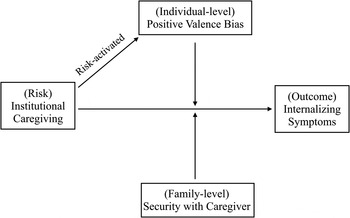
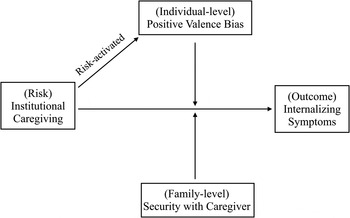
Developmental models of resilience have suggested that both risk-activated factors (i.e., traits instantiated by the risk exposure itself, such as coping behavior) and protective factors (i.e., positive parenting behaviors) can moderate the relationship between risk exposure (i.e., early adversity) and associated outcomes (Masten, Reference Masten2001). In the context of early institutional caregiving, previous work has shown that both adaptations in neuroaffective processing (Gee, Gabard-Durnam, et al., Reference Gee, Humphreys, Flannery, Goff, Telzer, Shapiro and Tottenham2013; Troller-Renfree, McDermott, Nelson, Zeanah, & Fox, Reference Troller-Renfree, McDermott, Nelson, Zeanah and Fox2015; Troller-Renfree et al., Reference Troller-Renfree, McLaughlin, Sheridan, Nelson, Zeanah and Fox2017) and the formation of secure attachments with caregivers in early childhood (McGoron et al., Reference McGoron, Gleason, Smyke, Drury, Nelson, Gregas and Zeanah2012; McLaughlin, Zeanah, Fox, & Nelson, Reference McLaughlin, Zeanah, Fox and Nelson2012) are associated with fewer internalizing symptoms in children with a history of institutional care. Thus, the current study applied a multifactor approach to examine how individual differences in a laboratory-based affective processing task (i.e., individual-level risk-activated factors) and the perceived security of the parent–child relationship (i.e., family-level protective factors) moderate the link between early institutional care and emotional difficulties during childhood and adolescence (Figure 1).
Proposed moderation model adapted from Masten (Reference Masten2001), showing how risk-activated alterations in affective processing (positive valence bias) and family-level factors (secure parent–child relationships) can moderate the link between risk (previously institutionalized status) and mental health outcomes (internalizing symptoms).
Alterations in Affective Processing: Potential for Risk-Activated Resilience Factors
In an effort to identify underlying factors of vulnerability associated with early disruptions in caregiving, recent research has investigated the role of these experiences on the neural and behavioral development of affective processing. Specifically, affective behaviors (i.e., emotional reactivity and regulation) and the underlying neural circuitry (i.e., amygdala and prefrontal cortex) are highly susceptible to the influences of the early caregiving environment (reviewed in Callaghan, Sullivan, Howell, & Tottenham, Reference Callaghan, Sullivan, Howell and Tottenham2014). Multiple forms of early adverse caregiving have been associated with heightened amygdala reactivity and altered amygdala–prefrontal connectivity during emotion processing (Gee, Gabard-Durnam, et al., Reference Gee, Gabard-Durnam, Flannery, Goff, Humphreys, Telzer and Tottenham2013; Jedd et al., Reference Jedd, Hunt, Cicchetti, Hunt, Cowell, Rogosch and Thomas2015; Maheu et al., Reference Maheu, Dozier, Guyer, Mandell, Peloso, Poeth and Jenness2010; McCrory et al., Reference McCrory, De Brito, Sebastian, Mechelli, Bird, Kelly and Viding2011, Reference McCrory, De Brito, Kelly, Bird, Sebastian, Mechelli and Viding2013; McLaughlin, Peverill, Gold, Alves, & Sheridan, Reference McLaughlin, Peverill, Gold, Alves and Sheridan2015; Tottenham et al., Reference Tottenham, Hare, Millner, Gilhooly, Zevin and Casey2011), suggesting an underlying neurobiological mechanism through which early disruptions in caregiving confer vulnerability for internalizing psychopathology.
Although alterations in neuroaffective circuitry have been identified at the group level following early institutional caregiving, there are wide individual differences in both affective behavior and neurobiology in PI samples. For example, although PI children and adolescents show heightened threat-related amygdala reactivity relative to comparisons overall, individual differences in amygdala–prefrontal connectivity within the PI group predict severity of anxious symptoms (Gee, Gabard-Durnam, et al., Reference Gee, Gabard-Durnam, Flannery, Goff, Humphreys, Telzer and Tottenham2013). Specifically, PI children with more mature connectivity phenotypes have lower levels of concurrent anxiety, suggesting that alterations in neuroaffective circuitry following institutional rearing may represent an adaptive response to early institutional caregiving that facilitates improved emotion regulation abilities.
Similarly, behavioral studies have begun to elucidate how individual differences in affective behaviors emerge as a function of the early caregiving environment. In the Bucharest Early Intervention Project, children with prolonged institutional rearing were more likely to show greater attention bias to negative stimuli (Troller-Renfree et al., Reference Troller-Renfree, McDermott, Nelson, Zeanah and Fox2015), consistent with previous work showing altered attention biases to negative stimuli following early adverse caregiving (i.e., maltreatment or physical abuse; Pine et al., Reference Pine, Mogg, Bradley, Montgomery, Monk, McClure and Kaufman2005; Pollak & Tolley-Schell, Reference Pollak and Tolley-Schell2003). However, some children with a history of institutional care exhibited greater attention bias to positive stimuli, including those removed from institutional care at younger ages (Troller-Renfree et al., Reference Troller-Renfree, McDermott, Nelson, Zeanah and Fox2015) or those with stable foster care placements (Troller-Renfree et al., Reference Troller-Renfree, McLaughlin, Sheridan, Nelson, Zeanah and Fox2017). This attentional bias toward positive stimuli was evident not only relative to children with prolonged institutional caregiving but also relative to children who had never experienced institutional care. Greater positive attentional bias was associated with fewer externalizing problems and greater social engagement during childhood (Troller-Renfree et al., Reference Troller-Renfree, McDermott, Nelson, Zeanah and Fox2015), and fewer internalizing symptoms during early adolescence (Troller-Renfree et al., Reference Troller-Renfree, McLaughlin, Sheridan, Nelson, Zeanah and Fox2017). These findings suggest that some youth with a history of institutional caregiving who are then placed into stable families may develop unique affective adaptations that confer more resilient socioemotional functioning (Troller-Renfree et al., Reference Troller-Renfree, McDermott, Nelson, Zeanah and Fox2015, Reference Troller-Renfree, McLaughlin, Sheridan, Nelson, Zeanah and Fox2017). In the current study, we investigated whether internationally adopted PI youth would exhibit similar risk-activated alterations in affective processing, and how these alterations are associated with individual differences in internalizing symptoms during childhood and adolescence.
Parent–Child Relationships: Potential for Family-Level Protective Factors
Protective factors of the family environment can also facilitate healthy emotional development following early institutional care. In typically developing children, secure attachment to the caregiver during early life is associated with positive long-term outcomes, such as lower risk for internalizing psychopathology, whereas insecure and disorganized attachment styles are associated with heightened prevalence of internalizing behaviors (Groh et al., Reference Groh, Roisman, van IJzendoorn, Bakermans-Kranenburg and Fearon2012; Madigan, Atkinson, Laurin, & Benoit, Reference Madigan, Atkinson, Laurin and Benoit2013). Although children reared in institutional care for longer durations are at greater risk for disorganized and insecure attachment (Smyke, Zeanah, Fox, Nelson, & Guthrie, Reference Smyke, Zeanah, Fox, Nelson and Guthrie2010), nearly all PI children are able to form an attachment to adoptive parents within 1 year following adoption (Carlson, Hostinar, Mliner, & Gunnar, Reference Carlson, Hostinar, Mliner and Gunnar2014). The quality of postadoption caregiving is an important predictor of emotional functioning in children with a history of institutional care. For example, sensitive parenting style is associated with improved development of emotional understanding (Garvin, Tarullo, Van Ryzin, & Gunnar, Reference Garvin, Tarullo, Van Ryzin and Gunnar2012) and fewer internalizing symptoms in PI children (Tarullo et al., Reference Tarullo, Youssef, Frenn, Wiik, Garvin and Gunnar2016).
Moreover, prior research has shown stable and sensitive caregiving following early institutional rearing can ameliorate risk for later emotional problems via the formation of secure attachments (McLaughlin et al., Reference McLaughlin, Zeanah, Fox and Nelson2012). In children with a history of institutional care, placement into stable foster care was associated with lower levels of internalizing symptoms during early childhood (Tibu, Humphreys, Fox, Nelson, & Zeanah, Reference Tibu, Humphreys, Fox, Nelson and Zeanah2014) and early adolescence in girls (Humphreys et al., Reference Humphreys, Gleason, Drury, Miron, Nelson, Fox and Zeanah2015). Attachment security mediated the effects of high-quality parenting (McGoron et al., Reference McGoron, Gleason, Smyke, Drury, Nelson, Gregas and Zeanah2012) and foster care placement on internalizing symptoms in early childhood, particularly in girls (McLaughlin et al., Reference McLaughlin, Zeanah, Fox and Nelson2012). Together, these studies suggest that the protective effects of the family environment following early institutional rearing operate through the more proximal factor of the formation of secure attachment to caregivers (McGoron et al., Reference McGoron, Gleason, Smyke, Drury, Nelson, Gregas and Zeanah2012; McLaughlin et al., Reference McLaughlin, Zeanah, Fox and Nelson2012).
Although the majority of research on parent–child relationships has focused on early attachment styles, the security of the parent–child relationship is associated with emotional well-being throughout childhood and adolescence (Kerns, Tomich, Aspelmeier, & Contreras, Reference Kerns, Tomich, Aspelmeier and Contreras2000). For example, in typically developing youth, children's perceived security with their caregivers is associated with lower prevalence of internalizing symptoms in middle childhood (Harold, Shelton, Goeke-Morey, & Cummings, Reference Harold, Shelton, Goeke-Morey and Cummings2004; Mayseless, Reference Mayseless2001). However, no study to date has investigated the perceived security of parent–child relationships in youth who have experienced early attachment disruptions due to institutional caregiving. By examining how parent–child relationship security relates to internalizing symptoms in internationally adopted PI children and adolescents, we can gain further insight into factors of the postadoption family environment that may promote healthy emotional development following early institutional caregiving.
Present Study
The significant heterogeneity in internalizing outcomes for PI youth merits investigation of the factors that promote resilience to psychopathology. In the present study, we simultaneously examined the moderating effects of risk-activated factors in affective processing (i.e., positive valence bias) and family-level factors (i.e., parent–child relationship security) on the link between early institutional care and internalizing symptoms. Although youth with a history of institutional care show greater risk for several domains of psychopathology (i.e., internalizing, externalizing, and attention-deficit/hyperactivity disorder [ADHD]; Humphreys et al. Reference Humphreys, Gleason, Drury, Miron, Nelson, Fox and Zeanah2015), the current study focuses on internalizing symptoms, given previous literature that has highlighted the role of both affective processing and attachment security in the risk for internalizing disorders (i.e., anxiety and depression; Groh et al., Reference Groh, Roisman, van IJzendoorn, Bakermans-Kranenburg and Fearon2012; Madigan et al., Reference Madigan, Atkinson, Laurin and Benoit2013).
First, we aimed to replicate the positive attentional bias previously observed in foster care youth (Troller-Renfree et al., Reference Troller-Renfree, McDermott, Nelson, Zeanah and Fox2015) using a behavioral paradigm that indexes valence bias (positive–negative ratings) to ambiguous social cues (Tottenham, Phuong, Flannery, Gabard-Durnam, & Goff, Reference Tottenham, Phuong, Flannery, Gabard-Durnam and Goff2013). In contrast to facial expressions of clear valence, ambiguous facial expressions (e.g., surprise) can be interpreted positively or negatively (Neta, Norris, & Whalen, Reference Neta, Norris and Whalen2009) and provide a useful index of affective biases that are associated with individual differences in amygdala–prefrontal circuitry (Kim, Somerville, Johnstone, Alexander, & Whalen, Reference Kim, Somerville, Johnstone, Alexander and Whalen2003). In adults, individuals with a negative valence bias to surprised faces show reduced prefrontal regulation of amygdala reactivity. Consistent with the protracted development of the regulatory connections between the amygdala and the prefrontal cortex in typical development (Dougherty, Blankenship, Spechler, Padmala, & Pessoa, Reference Dougherty, Blankenship, Spechler, Padmala and Pessoa2015; Gabard-Durnam et al., Reference Gabard-Durnam, Flannery, Goff, Gee, Humphreys, Telzer and Tottenham2014; Gee, Humphreys, et al., Reference Gee, Gabard-Durnam, Flannery, Goff, Humphreys, Telzer and Tottenham2013; Hwang, White, Nolan, Sinclair, & Blair, Reference Hwang, White, Nolan, Sinclair and Blair2014; Silvers, Shu, Hubbard, Weber, & Ochsner, Reference Silvers, Shu, Hubbard, Weber and Ochsner2015), children normatively show a negative valence bias when interpreting surprised faces, which subsequently changes with increasing age, such that older adolescents show a wide range of individual differences in positive–negative bias similar to adult samples (Neta et al., Reference Neta, Norris and Whalen2009; Tottenham et al., Reference Tottenham, Phuong, Flannery, Gabard-Durnam and Goff2013). However, given the more adultlike phenotype of amygdala–prefrontal circuitry in PI youth (Gee, Gabard-Durnam, et al., Reference Gee, Gabard-Durnam, Flannery, Goff, Humphreys, Telzer and Tottenham2013) and the positive attention bias exhibited by foster care youth (Troller-Renfree et al., Reference Troller-Renfree, McDermott, Nelson, Zeanah and Fox2015, Reference Troller-Renfree, McLaughlin, Sheridan, Nelson, Zeanah and Fox2017), we hypothesized that PI youth would be more likely to show positive valence bias to surprised faces relative to comparison youth (Tottenham et al., Reference Tottenham, Phuong, Flannery, Gabard-Durnam and Goff2013).
Moreover, the association of fewer internalizing symptoms with both positive attention bias (Troller-Renfree et al., Reference Troller-Renfree, McLaughlin, Sheridan, Nelson, Zeanah and Fox2017) and earlier maturation of amygdala–prefrontal circuitry (Gee, Gabard-Durnam, et al., Reference Gee, Gabard-Durnam, Flannery, Goff, Humphreys, Telzer and Tottenham2013) suggests that compensatory adaptations may emerge in response to early institutional caregiving. Such alterations in affective processing, although different from peers with a typical caregiving history, may represent risk-activated mechanisms of resilience (e.g., developing a positive bias) that are associated with lower risk for emotional difficulties following early institutional caregiving. In the current study, we hypothesized that positive valence bias would moderate the link between early institutional care and internalizing symptoms, such that even though positivity bias is developmentally atypical, those PI youth with greater positive valence bias would exhibit fewer internalizing symptoms.
Second, we anticipated that the security of the parent–child relationship would be an additional moderating factor of internalizing psychopathology following early institutional care. In the current study, we used a self-report measure of the child's perceived relationship security with his/her caregiver that has been validated for child and adolescent samples (Kerns et al., Reference Kerns, Tomich, Aspelmeier and Contreras2000; Van Ryzin & Leve, Reference Van Ryzin and Leve2012). Although we anticipated that the PI group would report lower parent–child security overall relative to comparisons, we expected that greater perceived security with the postadoption caregiver would be associated with lower levels of internalizing symptoms within the PI group.
Third, we investigated the degree to which valence bias and parent–child relationship security are independent factors, and the degree to which they operate additively to explain individual differences in internalizing psychopathology in the PI group (see Figure 1). We also conducted exploratory analyses to examine how caregiving history (i.e., age of placement in institutional care, age of adoption, and time with family) relates to individual differences in parent–child security and affective processing within the PI group. We examined these effects in a cross-sectional cohort of PI children and adolescents with known duration of institutional care, all of whom were subsequently adopted into families in the United States.
Methods
Participants
The present study recruited internationally adopted children and adolescents through international adoption agencies, family networks, and community flyers. All children included in the study had experienced institutional care during early life and were subsequently adopted into families in the United States. This population allows for the unique examination of early adverse caregiving of known duration, limiting confounds often seen in early life stress, such as co-occurrence of different adversities and the timing of the stressor. The country of origin for this sample of PI youth is predominantly eastern European (n = 30) and Asian (n = 23), as well as Indian (n = 1), Latin America (n = 1), and unknown (n = 1). The comparison group, comprising nonadopted youths who had always lived with their biological families, was recruited via flyer advertisements within the Los Angeles metropolitan area or from state birth records. Comparisons and PI youth included in this study were between the ages of 6 to 14 years. Full demographic information for each group will be presented later. The Institutional Review Board at the University of California, Los Angeles, approved the protocol. Parents provided informed consent and children provided assent.
Inclusion criterion
Comparison youth were excluded from study participation in cases of parent-reported neurological, developmental, psychiatric disorder diagnosis, or IQ below the normal range (IQ < 70). In order for the comparison group to represent a psychiatrically/neurologically healthy sample, participants with parent-reported psychiatric diagnoses identified at time of the follow-up visit were excluded from this analysis (n = 7, ADHD). In addition, one comparison subject was excluded due to clinical symptoms that exceeded the normal range, >3 SD of the mean of the Revised Children's Anxiety and Depression Scale (RCADS) total internalizing score. A subset of the comparison subjects in the current study was included in a previous publication (Tottenham et al., Reference Tottenham, Phuong, Flannery, Gabard-Durnam and Goff2013).
PI youth with IQ below the normal range (<70) were excluded (n = 1). PI youth with parent-reported diagnosis of psychiatric disorders (any disorder = 19, ADHD = 14, posttraumatic stress disorder = 7, mood disorder = 6, anxiety = 5, and oppositional defiant disorder = 1) and/or current psychotropic medication use (n = 6) were included in the current sample. To address variability in possible prenatal exposure to alcohol, photographs were used to quantify upper lip and philtrum characteristics on a scale of 1 to 5 based on the Diagnostic Guide for Fetal Alcohol Syndrome Disorder (FASD; Astley et al., Reference Astley2006). FASD-related facial features were assessed for all participants, excluding 3 participants for whom photographs were not obtained (2 comparisons, 1 PI). No group differences in FASD-related facial features were detected between the comparison group (M = 3.18, SD = 0.92) and the PI group (M = 3.20, SD = 0.89), t (125) = 0.119, p = .905, d = 0.02. However, a subset of the PI group (n = 4) had facial features consistent with possible prenatal alcohol exposures (score 4 out of 5). Although no definitive fetal alcohol syndrome diagnoses can be made on the basis of these data alone, analyses were conducted to confirm that there was no relationship between FASD-related facial features and variables of interest. Within the PI group, there were no significant associations between FASD-related facial features and valence bias, r (53) = .05, p = .71, parent–child security, r (48) = .07, p = .61, or internalizing symptoms, r (53) = –.07, p = .64.
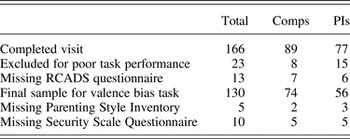
A total of 166 subjects (89 comparisons, 77 PIs) who met inclusion criterion participated in the laboratory visit. Thirteen participants (7 comparisons, 6 PIs) were excluded due to missing or incomplete data on the parent-reported RCADS questionnaire (missing >12 items total). After applying task exclusion criterion (described below), the final sample for the task analysis consisted of 130 participants (74 comparisons, 56 PIs) between ages 6 and 14 (M = 9.5, SD = 2.5). Participants with missing or incomplete (<80% questions completed) on the Security Scale Questionnaire (n = 10; 5 comparisons, 5 PIs) and the Parenting Style Inventory (n = 5; 2 comparisons, 3 PIs) were included in task analyses but excluded from relevant behavioral analyses, as shown in Table 1.
Sample size and exclusion criterion for task-based analyses and questionnaire data
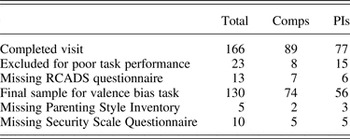
Note: PI, Previously institutionalized; RCADS, Revised Children's Anxiety and Depression Scale.
Procedures
Testing session
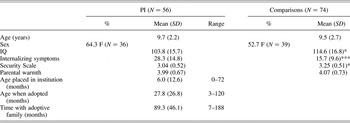
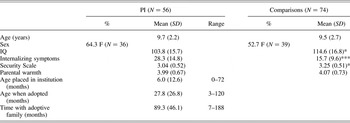
Participants completed a lab visit lasting approximately 2 hr. During each session, an experimenter administered the behavioral task, which lasted approximately 5–10 min. Questionnaires were collected as detailed below. Additional information on country of origin and relevant adoption information was also collected from PI families at this time. Experimenters also administered the full two-scale version of the Wechsler Abbreviated Scale of Intelligence to obtain a measure of IQ. Although all participants had IQ within normal range (IQ ≥ 70), significant group differences in IQ between PIs and comparisons were detected (Table 2). Initial analyses with IQ included as a covariate did not change the pattern of results, and final models are reported with IQ omitted.
Group means (standard deviations) for demographic and questionnaire data
Note: PI, Previously institutionalized; F, female.
*p < .05. ****p < .001.
Task stimuli
Stimuli were obtained from the NimStim, a standardized set of facial expressions that has been externally validated with regard to emotion type and valence (Tottenham et al., Reference Tottenham, Tanaka, Leon, McCarry, Nurse, Hare and Nelson2009). Eight different facial identities balanced for sex and ethnicity were included in the task. Participants viewed three different emotions (angry, happy, and surprised) of each identity.
Task procedure
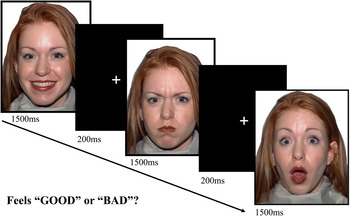
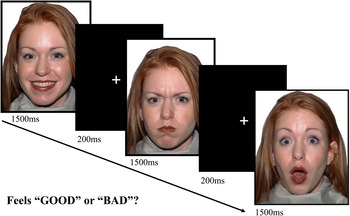
Participants completed a computerized behavioral task consisting of angry, happy, and surprised faces, displayed for 1500 ms, followed by a fixation screen for 200 ms (Figure 2). The task consisted of binary forced-choice decisions concerning the valence (i.e., positive or negative) of each facial expression. In effort to make the instructions developmentally appropriate for younger children, all participants were instructed to indicate using button press whether each face “felt good” or “felt bad.” Button presses were counterbalanced across participants in order to prevent any bias due to laterality (e.g., right handedness). In the full version of the task, participants completed 16 trials per emotion presented in randomized order. Some participants completed an abbreviated version of this task with 8 trials per emotion (n = 27; 8 comparisons, 19 PIs). In addition, accommodations were made for the younger participants (ages 6–8 years) who might have difficulty with button presses in a short time window. These accommodations included administration of a slower version of this task consisting of 4 trials per emotion in which the facial expression stayed on the screen until the participant made a button press and/or having the participant provide verbal responses that were recorded by the researcher (n = 5; 1 comparison, 4 PIs). These 5 accommodated participants are included in the valence bias analyses, but omitted from the reaction time analyses. The facial stimuli and task instructions were identical across all versions of the task. However, the task version was not balanced between groups. Initial analyses controlling for task version did not change the pattern of results, so final models are reported with this covariate omitted.
(Color online) Valence bias task: participants viewed happy, angry, or surprised faces (counterbalanced) on each trial and responded with ratings of positive or negative valence (i.e., good or bad) for each facial expression.
Task exclusion criterion
Participants with fewer than four trials per facial expression due to high miss-rates were excluded from this analysis (n = 9; 1 comparison, 8 PIs). In addition, participants with less than 60% correct responses to happy (positive response) and angry (negative response) faces were excluded from this analysis (n = 14; 5 comparisons, 9 PIs) in order to ensure that only participants who were able to follow the task directions were included.
Questionnaires
Internalizing symptoms
Internalizing symptoms were measured using the 36-question RCADS parent-report questionnaire (Ebesutani, Bernstein, Nakamura, Chorpita, & Weisz, Reference Ebesutani, Bernstein, Nakamura, Chorpita and Weisz2010). The current analysis utilizes the RCADS total score, which represents a cumulative score of internalizing symptoms across several domains (e.g., depression, separation anxiety, obsessive compulsive disorder, social anxiety, generalized anxiety, and specific phobia). Given that PI youth show higher levels of both depressive and anxiety symptoms (Gee, Gabard-Durnam, et al., Reference Gee, Gabard-Durnam, Flannery, Goff, Humphreys, Telzer and Tottenham2013; Goff et al., Reference Goff, Gee, Telzer, Humphreys, Gabard-Durnam, Flannery and Tottenham2013), we did not have any a priori predictions to examine specific subscales within the RCADS questionnaire. Because the age range of sample (6–14 years) extends beyond the age range established for standardized T scores of the RCADS questionnaire (Grade 3 and up), the current analysis uses raw scores, in line with a recent multisample study validating RCADS scores for younger ages and atypical developmental samples (Ebesutani, Tottenham, & Chorpita, Reference Ebesutani, Tottenham and Chorpita2015).
Parent–child relationship security
We used the Security Scale Questionnaire, a child-reported measure of perceived security of their relationship with the parent (Kerns et al., Reference Kerns, Tomich, Aspelmeier and Contreras2000). Although there are standard assessments of attachment in infancy (e.g., Strange Situation; Ainsworth, Blehar, Waters, & Wall, Reference Ainsworth, Blehar, Waters and Wall1978) and adults (e.g., Adult Attachment Interview; George, Kaplan & Main, Reference George, Kaplan and Main1985), there is no agreed-upon ideal assessment of attachment that covers the age span of the current sample. Instead, the Security Scale Questionnaire represents the child's report of “felt security” with the parent, including dimensions of parent availability, reliability, and communication. Although this measure was originally developed for middle childhood (youngest age = 8 years old), it has been previously validated for use in older adolescent samples (Van Ryzin & Leve, Reference Van Ryzin and Leve2012). Moreover, we have previously used this scale with children 4–9 years old and observed adequate internal consistency in the current sample (Cronbach α = 0.71). In this questionnaire, children indicate which of two statements is most characteristic of them (i.e., “some kids find it easy to count on their parents for help vs. other kids think it's hard to count on their parents”) and rated on a 4-point scale how well it fits them (sort of true to really true). Items were averaged, with higher scores indicating greater child-reported security. For the PI group, they completed these questionnaires in reference to their adoptive parents.
Parenting measures
In order to explore whether individual differences in parenting behavior are associated with children's perceived relationship security with their parents, we also included a child-report questionnaire of parental warmth using the Parenting Style Inventory—II emotional responsiveness subscale (Darling & Toyokawa, Reference Darling and Toyokawa1997). For the PI group, they completed these questionnaires in reference to their adoptive parents.
Analysis plan
All analyses were performed using R (R Core Team, 2015). First, we investigated group differences in internalizing symptoms, parent–child security, and other relevant demographic variables (Table 2) as well as the intercorrelations in these variables (Table 3). Second, we investigated a Group × Emotion interaction for valence bias (positive vs. negative responses) and reaction time, controlling for age and sex. Third, we examined the moderating effects of valence bias by conducting a Group × Valence Bias interaction on internalizing symptoms, controlling for age. Fourth, we tested the moderating effects of parent–child security by conducting a Group × Security Scale interaction on internalizing symptoms, controlling for age. Fifth, we investigated whether there was any direct relationship between valence bias and parent–child relationship security. In the absence of a significant direct relationship between these two variables, we tested the effects of parent–child security and valence bias concurrently in the same model using a three-way interaction (Group × Valence Bias × Security Scale) to predict internalizing symptoms. In the absence of a significant three-way interaction, we reran the model omitting the highest order interaction term in order to test the additive effects of the two two-way interactions (Group × Security Scale and Group × Valence Bias) on internalizing symptoms. Sixth, we conducted exploratory analyses to examine whether any variables related to caregiving history (age of placement, age of adoption, or time with family) related to individual differences in valence bias or parent–child security within the PI group.
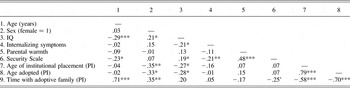
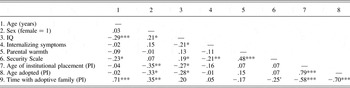
Correlation matrix for demographic and questionnaire data in all participants
Note: PI, Previously institutionalized.
*p < .05. **p < .01. ***p < .001.
Results
Demographic and questionnaire data
Group means and standard deviations for questionnaire and demographic data are shown in Table 2. As anticipated, the PI group showed higher levels of internalizing symptoms relative to comparison youth, controlling for age and sex, t (126) = 5.647, p < .001, partial η2 = 0.20, adjusted means for PIs = 28.01, comparisons = 15.78. Within the PI group, internalizing symptoms were not correlated with age of placement in institutional care, r (53) = –.15, p = .24, age of adoption, r (53) = –.01, p = .94, or time with family, r (53) = .05, p = .71.
Correlations among key demographic and questionnaire measures across all participants are shown in Table 3. We aimed to explore the associations between parenting behavior and parent–child relationship security. As anticipated, child-reported parental warmth was highly correlated with child-reported security scale, r (117) = .48, p < .001. There were no group differences in child-reported parental warmth when controlling for age and sex, as shown in Table 2, t (121) = –0.53, p = .60, partial η2 = 0.002.
Within the PI group, female children were younger than male children when placed into institutional care, r (53) = –.35, p = .009; they were younger when adopted, r (53) = –.33, p = .013; and they had spent more time in the care of the adoptive family, r (53) = .35, p = .008. These findings are as expected given that the majority of females in this sample were adopted from countries such as China that typically place children into international adoption at younger ages. It is important to note that although age of placement in institutional care, age of adoption, and time with family each represent independent measures of the caregiving history in the PI group, they are also highly correlated (Table 3).
Association between institutional care and valence bias
Valence bias task performance
Behavioral task performance was analyzed using a mixed-effects logistic regression model from the R package lme4 (Bates, Maechler, Bolker, & Walker, Reference Bates, Maechler, Bolker and Walker2015). The logistic function was used to model the log-odds of positive choices (coded as 1) relative to negative choices (coded as 0) as a function of group (between-subjects), emotion (within-subjects; angry, happy, surprised), and 2 (group) × 3 (emotion) interaction, with mean-centered age and sex included as covariates. To account for individual differences in mean levels of valence choice and in the effects of the emotion conditions, the intercept and emotion conditions were specified to vary randomly across participants. Note that analysis of variance-like tests of significance for mixed-effects logit models use the χ2 distribution instead of the F distribution.
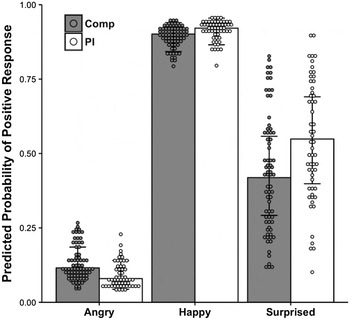
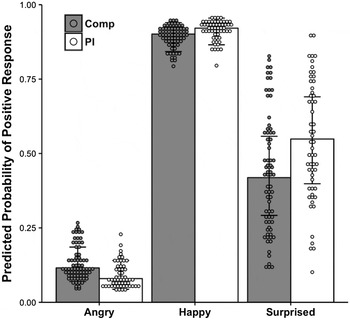
The results of the 2 (group) × 3 (emotion) mixed-effects logistic model revealed a main effect of emotion on valence choice, χ2 (2) = 433.44, p < .001, and a marginal effect of group, χ2 (1) = 3.38, p = .07. These effects were qualified by a significant Group × Emotion interaction, χ2 (2) = 10.047, p = .007. Follow-up analyses showed that the PI group showed a greater log-odds of positive versus negative responses to surprised faces relative to the comparison group (z = 2.22, p = .028, predicted probability in PIs = .55, comparisons = .42, difference = .13). There was also a marginal effect of group for the log-odds of positive versus negative responses to angry faces (z = –1.84, p = .07, predicted probability in PIs = .08, comparisons = .11, difference = .03) but not for happy faces (z = 1.30, p = .19, predicted probability in PIs = .92, comparisons = .90, difference = .02). The predicted probabilities of positive versus negative responses for each emotion condition by group are shown in Figure 3.
Group × Emotion interaction on valence bias task. Predicted probabilities of positive (vs. negative) response to each emotion condition are shown, as estimated from the Group × Emotion interaction of the mixed effects logistic task model, controlling for age and sex. The previously institutionalized group was more likely to rate surprised faces as positive relative to comparisons. Error bars represent 95% confidence intervals.
Valence bias task reaction time
Reaction time (RT) on the behavioral task was modeled using a 2 (group) × 3 (emotion) mixed-effects model, with random intercepts, and mean-centered age and sex included as covariates. Consistent with previous work using this task (Tottenham et al., Reference Tottenham, Phuong, Flannery, Gabard-Durnam and Goff2013), only correct trials were included in average RT for angry faces (i.e., participant made negative valence response) and happy faces (i.e., participant made positive valence response), and all trials were included in the average RT for surprised faces. Participants with reaction times 3 SD beyond the mean were excluded (n = 1 PI). In addition, participants who completed the slow version of this task with experimenter button presses (n = 4) and two additional participants who had the experimenter make button presses were excluded from the RT analyses (final sample N = 123; 72 comparisons, 51 PIs)
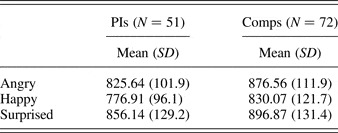
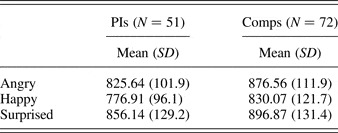
Group means and standard deviations of RT for each emotion condition of the valence bias task are shown in Table 4. When examining RT during the valence bias task controlling for age and sex, there was a significant main effect of group, F (1, 119) = 7.02, p = .009, b = –40.03, such that the PI group responded faster than comparisons across all three emotion conditions (adjusted means for PIs = 833.11 ms, comparisons = 873.14 ms). There was also a significant main effect of emotion, F (2, 242) = 20.86, p < .001 (adjusted means for angry = 851.80 ms, happy = 804.19 ms, and surprised = 877.21 ms) but no significant Emotion × Group interaction, F (2, 242) = 0.17, p = .85. Planned comparisons showed that participants were faster to respond to happy faces relative to angry faces, t (242) = –4.15, p < .001, b = –47.61, slower to respond to surprised faces relative to angry faces, t (242) = 2.21, p = .027, b = 25.41, and slower to respond to surprised faces relative to happy faces, t (242) = 6.36, p < .001, b = 73.02. There was no significant association between RT to surprised faces and valence bias to surprised faces, controlling for age and group, t (119) = 0.844, p = .40, partial η2 = 0.006. Consistent with previous work in this task (Tottenham et al., Reference Tottenham, Phuong, Flannery, Gabard-Durnam and Goff2013), there was also a significant effect of age, F (1, 118) = 34.89, p < .001, b = –1.48, such that RT decreased with increasing age.
Group means (standard deviations) for reaction times for emotion conditions on valence bias task
Note: PI, Previously institutionalized.
Valence bias and internalizing symptoms
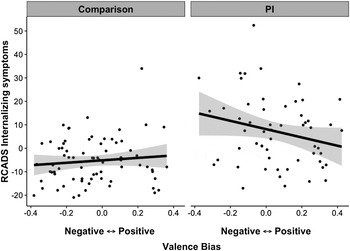
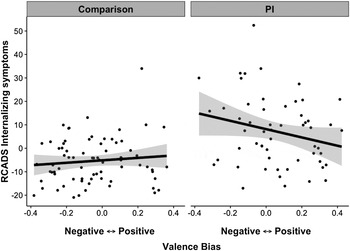
Using a linear model in R, we tested whether valence bias moderates the effect of group on internalizing symptoms, controlling for mean-centered age. The random effects from the mixed-effects logit model were used to calculate the predicted probability of positive (relative to negative) response to surprised faces for each individual subject. There was a main effect of group, t (125) = 13.06, p < .001, partial η2 = 0.22, on internalizing symptoms, which was qualified by a significant Group × Valence Bias interaction, t (125) = –2.00, p = .047, partial η2 = 0.03. Follow-up analyses of simple slopes showed a significant effect of positive valence bias on internalizing symptoms in the PI group, t (125) = –2.08, p = .039, but not in the comparison group, t (125) = 0.67, p = .50. Specifically, greater positive valence bias to surprised faces was significantly associated with fewer internalizing symptoms in the PI group only (Figure 4).
Moderating effects of valence bias on internalizing symptoms. Valence bias represents the predicted probability of positive response to surprised faces for each subject, with higher scores indicating greater likelihood of positive responses relative to negative responses. Simple slopes of the Group × Valence Bias interaction are plotted with mean-centered residuals (controlling for age) with 95% confidence interval. Greater positive valence bias predicted fewer internalizing symptoms in the previously institutionalized group only.
Association between institutional caregiving and parent–child relationship security
Group differences in security
Age was significantly correlated with security scale across all participants (Table 3), with higher scores of perceived parent–child relationship security in younger children, r (118) = –.21, p = .019. However, even when controlling for age, group differences were detected for the security scale, t (117) = –2.09, p = .040, partial η2 = 0.04, such that PIs had lower perceived relationship security with caregivers relative to comparisons (adjusted means for PIs = 3.05, comparisons = 3.25).
Security and internalizing symptoms
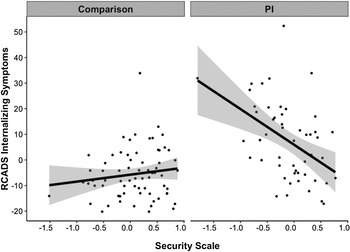
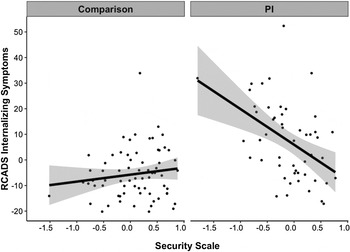
Security scale scores were highly correlated with internalizing symptoms in all participants, r (118) = –.23, p = .009, as shown in Table 3. When testing whether parent–child security moderated the relationship between institutional care and internalizing symptoms controlling for mean-centered age, a main effect of group, t (115) = 5.42, p < .001, partial η2 = 0.22, and a significant Group × Security Scale interaction were detected, t (115) = –3.95, p < .001, partial η2 = 0.12. Follow-up analyses of simple slopes showed that greater parent–child relationship security significantly predicted lower internalizing symptoms in the PI group, t (115) = –4.34, p < .001, but not in the comparison group, t (115) = 1.04, p = .30, as shown in Figure 5. Removal of an outlier subject in the PI group (3 SD below the mean for security scale) did not change the observed direction of the effects. In order to show the full range of variability in child-reported security with caregivers observed within the current sample, the results are reported including all participants with usable security scale data (N = 120).
Moderating effects of parent–child relationship security on internalizing symptoms. Simple slopes of the Group × Security Scale interaction are plotted with mean-centered residuals (controlling for age) with 95% confidence interval. Greater parent–child relationship security predicted fewer internalizing symptoms in the previously institutionalized group only.
Association between parent–child relationship security and valence bias
When testing whether parent–child security predicted individual differences in valence bias, there was no main effect of security scale, t (115) = 0.72, p = .47, partial η2 = 0.004, or Group × Security Scale interaction, t (115) = 0.40, p = .69, partial η2 = 0.001. In order to examine the potential relationship between parenting behaviors and valence bias, we also examined the effects of child-reported parental warmth. No main effect for parental warmth, t (115) = –0.117, p = .91, partial η2 = 0.001, or Group × Parental Warmth interaction were detected, t (120) = 0.53, p = .35, partial η2 = 0.007, suggesting that family-level factors of parenting behavior and parent–child relationship security are not significantly associated with individual differences in valence bias in the current study.
Moderating effects of valence bias and parent–child security on internalizing symptoms
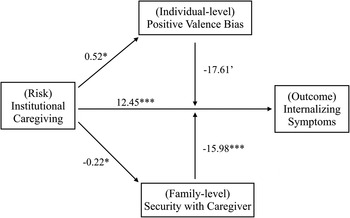
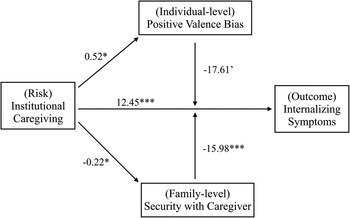
The previous analysis showed that valence bias and security scale are statistically independent factors. Next, we estimated a linear model to test whether parent–child security and valence bias additively or interactively predicted internalizing symptoms in the PI group versus the comparison group. This analysis excluded 10 subjects with missing data on the security scale, which resulted in a sample of 120 (69 comparisons; 51 PIs). We tested whether a three-way interaction (Group × Valence Bias × Security Scale) predicted internalizing symptoms, controlling for mean-centered age. In the absence of a significant three-way interaction, t (111) = 19.80, p = .37, partial η2 = 0.007, we reran the model with two two-way interactions predicting internalizing symptoms (Group × Valence Bias and Group × Security Scale), controlling for mean-centered age. A significant Group × Security Scale interaction was detected, t (113) = –3.86, p < .001, partial η2 = 0.12, and a marginal Group × Valence Bias interaction was detected, t (113) = –1.67, p = .09, partial η2 = 0.02, as depicted in Figure 6. Follow-up tests of simple slopes revealed that even when including the moderating effect of valence bias in the model, parent–child security was significantly associated with internalizing symptoms in the PI group, t (113) = –4.13, p < .001, but not the comparison group, t (113) = 1.06, p = .29. Similarly, tests of simple slopes showed that when including the moderating effect of parent–child security in the model, valence bias was marginally associated with internalizing symptoms in the PI group, t (113) = –1.71, p = .09, but not the comparison group, t (113) = 0.59, p = .55. It should be noted that the current model excluded subjects without usable Security Scale Questionnaire data (n = 10), leaving a total sample of N = 120. Although the effect of positive valence bias is at trend level when including the moderating effect of parent–child security in this subsample, the pattern of results is consistent with the previous model showing the moderating effect of valence bias independently (shown above in full sample of N = 130), such that PI youth with greater positive valence bias have fewer parent-reported internalizing symptoms.
Moderation model. Positive valence bias and parent–child relationship security moderate the link between institutional caregiving and internalizing symptoms. Unstandardized coefficients are presented. ‘p < .10. *p < .05. **p < .01. ***p < .001.
Associations with caregiving history
In order to investigate potential factors that predict individual differences in parent–child relationship security and valence bias within the PI group, we tested the effects of age of placement into institutional care and age of adoption, controlling for age and sex. These variables were positively skewed; thus, analyses were performed using log-transformed variables (age of placement in institutional care was log-transformed after adding a constant of 1). We also tested the effects of time with family on both parent–child security and valence bias in the PI group.
When testing whether individual differences in valence bias were explained by prior caregiving experiences in the PI group, age of placement in institutional care, t (51) = 1.12, p = .27, partial η2 = 0.02, age of adoption, t (51) = 1.41, p = .16, partial η2 = 0.04, and time with family, t (51) = –1.54, p = .13, partial η2 = 0.04, were not associated with valence bias when controlling for age and sex. Similarly, individual differences in parent–child relationship security were not associated with age of placement in institutional care, t (46) = 0.75, p = .45, partial η2 = 0.01, and age of adoption, t (46) = 0.394, p = .70, partial η2 = 0.003, controlling for age and sex. Although time with adoptive family was marginally associated with parent–child security in the PI group, r (48) = –.24, p = .09, this was no longer a significant association when controlling for age and sex, t (46) = –0.38, p = .70, partial η2 = 0.003.
Discussion
The current study highlights the role of both individual-level risk-activated adaptations in affective processing and family-level protective factors of secure parent–child relationships in moderating the effects of early institutional caregiving on internalizing symptoms, in line with our proposed model (Figure 1). Consistent with prior work showing greater positive attentional bias in foster care youth (Troller-Renfree et al., Reference Troller-Renfree, McDermott, Nelson, Zeanah and Fox2015, Reference Troller-Renfree, McLaughlin, Sheridan, Nelson, Zeanah and Fox2017), we found that internationally adopted PI children and adolescents are more likely to exhibit positive valence bias to ambiguous facial expressions relative to comparison youth. Individual differences in valence bias were associated with mental-health outcomes, such that PI youth with greater positive valence bias showed lower levels of internalizing symptoms. Similarly, factors of the postadoption family moderated the link between early institutional caregiving and internalizing symptoms, such that greater perceived security of the parent–child relationship was associated with fewer internalizing symptoms in PI youth. Positive valence bias and parent–child security were not directly related, and they contributed independent moderating effects to predict symptom levels. However, when both factors were modeled together, parent–child relationship security was more strongly associated with internalizing symptoms in the PI group.
Alterations in affective processing in PI youth
In the current study, PI children and adolescents were more likely to show positive valence bias to surprised faces relative to comparison youth. Given that typically developing youth normatively show a negative valence bias to surprised faces in childhood and early adolescence (Tottenham et al., Reference Tottenham, Phuong, Flannery, Gabard-Durnam and Goff2013), the observed positive valence bias in PI youth represents an age-atypical response to ambiguous social cues. Greater positive valence bias predicted fewer internalizing symptoms within the PI group, but not the comparison group, suggesting that the observed positive valence bias may represent an adaptation in affective processing that promotes resilience following early institutional caregiving. These findings are consistent with the proposed model, such that risk-activated factors (i.e., positive valence bias) function to moderate the association between risk exposure (i.e., institutional caregiving) and outcomes (internalizing symptoms; Figure 1).
In the context of prior work examining valance bias to surprised faces across typical development, the current results provide evidence suggesting that PI youth exhibit a more mature (i.e., positive) phenotype of affective processing relative to typically developing youth. Although no age-related effects were detected in this study, the current sample represents a restricted age range (i.e., 6–14 years), and we would not expect greater likelihood of positive bias to emerge in comparison youth until ages 15–18 years based on prior research (Tottenham et al., Reference Tottenham, Phuong, Flannery, Gabard-Durnam and Goff2013). Given that more positive (i.e., mature) valence bias predicts fewer internalizing symptoms in PI youth, these findings are also consistent with the broader cross-species literature showing that earlier maturation of neuroaffective systems may represent an ontogenetic adaptation in response to early life adversity (Callaghan et al., Reference Callaghan, Sullivan, Howell and Tottenham2014; Callaghan & Tottenham, Reference Callaghan and Tottenham2016). Thus, the current findings suggest that more adultlike (i.e., positive) affective processing to ambiguous social cues may confer beneficial effects on emotional well-being in youth with a history of early institutional care. However, when accounting for the effects of parent–child security, the moderating effect of positive valence bias fell to trend level, suggesting that family-level factors (i.e., parent–child security) are more robustly associated with internalizing symptoms in the current sample of PI youth.
Despite these limitations, the current results extend previous research showing that affective processing varies as a function of caregiving history. Whereas some children with history of early adversity (i.e., maltreatment, physical abuse, and interpersonal stressors) exhibit atypical attention biases for negative stimuli (Pine et al., Reference Pine, Mogg, Bradley, Montgomery, Monk, McClure and Kaufman2005; Pollak & Tolley-Schell, Reference Pollak and Tolley-Schell2003; Humphreys, Kircanski, Colich, & Gotlib, Reference Humphreys, Kircanski, Colich and Gotlib2016), here we observe a counterintuitive positive valence bias to ambiguous stimuli in some PI youth. Evidence from the Bucharest Early Intervention Project study suggests that attentional bias varies depending on the stability of the foster-care environment, such that children who experience stable high-quality caregiving show greater positive attention bias compared to those with disrupted placements (Troller-Renfree et al., Reference Troller-Renfree, McLaughlin, Sheridan, Nelson, Zeanah and Fox2017). When considering the current results in the context of previous research, greater positivity bias appears to emerge in youth exposed to early disruptions in caregiving, followed by placement into stable and sensitive families (i.e., international adoption or stable foster care). However, in the current sample, both parent–child relationship security and parental warmth were not related to individual differences in valence bias, suggesting that the observed alterations in affective processing may not be a function of the quality of the postadoption environment alone.
Previous research has shown that the developmental timing of caregiving history also influences the emergence of affective behaviors. For example, both earlier placements into foster care (Troller-Renfree et al., Reference Troller-Renfree, McDermott, Nelson, Zeanah and Fox2015) and longer duration of time with foster care family (Troller-Renfree et al., Reference Troller-Renfree, McLaughlin, Sheridan, Nelson, Zeanah and Fox2017) have been associated with greater positive attentional bias in youth with a history of institutional caregiving. Although we observed wide individual differences in valence bias in the current study, greater positive valence bias was not associated with age of institutional placement, age of adoption, or the duration of time with the adoptive family in PI youth. Further longitudinal research is needed in order to better delineate how certain experiences (e.g., caregiver deprivation or process of adoption) during specific developmental stages may be driving the observed alterations in affective processing, and how these alterations are associated with more adaptive emotional functioning following early institutional caregiving.
Parent–child relationship security in PI youth
The current study shows that greater perceived security of the parent–child relationship is a second and independent factor associated with lower levels of internalizing psychopathology in PI youth. Consistent with prior work in younger children with a history of institutional care (Carlson et al., Reference Carlson, Hostinar, Mliner and Gunnar2014; Smyke et al., Reference Smyke, Zeanah, Fox, Nelson and Guthrie2010), the PI group overall reported lower perceived security with their caregivers relative to the comparison group. However, individual differences in parent–child security predicted internalizing symptoms within the PI group, such that those with greater security exhibited fewer symptoms. These findings are consistent with the proposed model, such that protective family-level factors moderate the association between risk (i.e., institutional rearing) and outcome (e.g., internalizing symptoms) to promote more resilient emotional functioning in PI youth.
It is important that the current findings emphasize the importance of plasticity during affective development, such that despite early disruptions in the normative attachment process, the formation of secure parent–child relationships with adoptive caregivers is associated with improved mental-health outcomes in PI youth. Although previous work has shown that attachment security predicts fewer internalizing symptoms 2 years following placement into foster care (McGoron et al., Reference McGoron, Gleason, Smyke, Drury, Nelson, Gregas and Zeanah2012; McLaughlin et al., Reference McLaughlin, Zeanah, Fox and Nelson2012), the current findings suggest that secure parent–child relationships may continue to provide such ameliorative effects for PI youth throughout childhood and adolescence. Moreover, the associations between parent–child relationship security and internalizing symptoms remained highly significant even when accounting for the moderating effects of valence bias, emphasizing that child-reported security with adoptive parents is a robust predictor of emotional well-being in PI youth. These results highlight the foundational role of the parent–child relationship on emotional development and mental health following early caregiving disruptions. In addition, these findings suggest that relative to laboratory-based measures of affective processing, attachment-based interventions that aim to facilitate the formation of secure parent–child relationships may provide the greatest traction in ameliorating internalizing symptoms in youth with a history of early institutional caregiving.
Although the current study provides evidence to show that greater perceived security of the parent–child relationship is associated with fewer internalizing symptoms in PI youth, there were group differences in parent–child security, such that PI youth reported lower security than comparison youth. Although prior research has indicated that age of placement into families is also important for the formation of secure attachment following institutional caregiving (Smyke et al., Reference Smyke, Zeanah, Fox, Nelson and Guthrie2010), in the current study the age of institutional placement, age of adoption, and time with adoptive family were not associated with individual differences in parent–child relationship security. However, we did find significant associations with parenting behavior, such that child-reported parental warmth predicted child-reported security with caregivers in both PI youth and comparisons. Keeping in mind that these data are from the same informant, these findings provide preliminary evidence to suggest that parenting behaviors may play an important role in the development of secure parent–child relationships following early institutional caregiving.
Previous research has shown that preadoption adversity is also an important predictor of the quality of attachment in PI children (Carlson et al., Reference Carlson, Hostinar, Mliner and Gunnar2014). However, the current study had limited information with regard to the preadoption experience, limiting our ability to identify specific factors of the early rearing environment that may relate to individual differences in parent–child security in the PI group. Although previous work indicates that nearly all internationally adopted PI children form attachments to their caregivers within 1 year of adoption (Carlson et al., Reference Carlson, Hostinar, Mliner and Gunnar2014), little is known regarding how early attachment styles influence the longitudinal trajectory of parent–child relationships across development in PI youth. Further research is needed to elucidate factors of the pre- and postadoption environment that are associated with the formation and maintenance of secure parent–child relationships in PI children and adolescents. Such research will have important implications for parenting interventions that aim to improve socioemotional development and ameliorate the risk for long-term emotional difficulties in youth with a history of early institutional caregiving.
Limitations
There are several methodological limitations worth noting in the current study. The measures of internalizing symptoms used in the current study relied on parent-reported measures, from which it was not possible to assess clinically significant symptom levels or whether diagnostic criteria for any disorder was met. However, in light of recent efforts to examine psychopathology from a dimensional perspective (Morris & Cuthbert, Reference Morris and Cuthbert2012), the current study shows the utility of using continuous measures of psychopathology to better identify markers (e.g., affective processing or parent–child security) that predict individual differences in symptom severity within high-risk groups.
Given that there are no established behavioral measurements of attachment in late childhood or adolescence, we used a child-report questionnaire to assess perceived parent–child relationship security that has been well validated in middle childhood and adolescent samples and shows convergence with behavioral measures of parent–child interactions (Kerns et al., Reference Kerns, Tomich, Aspelmeier and Contreras2000; Van Ryzin & Leve, Reference Van Ryzin and Leve2012). However, the current study does not include assessments of early attachment styles in the PI sample. Thus, we cannot speak to whether security with adoptive caregivers can improve over time, or whether those PI youth with more secure attachments at an earlier age are those who report greater security with their caregivers during childhood and adolescence. In addition, the cross-sectional design of the current study limits the ability to ascertain the directionality of the reported associations. For example, we cannot exclude the possibility that PI children with fewer internalizing symptoms when adopted are those who are better able to form secure relationships with their adoptive caregivers during childhood and adolescence. Similarly, positive valence bias may have emerged only in those PI children who had fewer internalizing symptoms at the time of adoption. Further longitudinal studies are needed in order to delineate how and when changes in affective processing and security with caregivers emerge across childhood and adolescence in PI youth. Such research will be imperative for the development of evidence-based interventions that can harness these protective factors during specific periods of development to reduce risk for internalizing symptoms following early institutional caregiving.
Conclusion
The current findings show that multiple factors are associated with resilience in youth with a history of early institutional caregiving. Although developmentally atypical, here we show that positive valence bias may represent a compensatory adaptation following early institutional caregiving, such that PI youth with greater positive valence bias exhibit fewer internalizing symptoms. Moreover, greater perceived security of the parent–child relationship is robustly associated with fewer internalizing symptoms in PI youth, highlighting the importance of establishing secure relationships with adoptive caregivers following institutional caregiving. Given that early caregiving disruptions are associated with heightened vulnerability for long-term emotional difficulties, the current findings provide insight into factors that are associated with fewer internalizing symptoms in PI children and adolescents. Such research has important implications for the development of evidence-based interventions that can promote resilience and mitigate risk for maladaptive mental health outcomes in youth with a history of early institutional caregiving.