Background
Anomalous aortic origin of the coronary artery is a congenital abnormality of the origin or course of a coronary artery that arises from the aorta.Reference Mery, Lawrence and Krishnamurthy 1 It is the second leading cause of sudden cardiac arrest/death in young athletes in the United States of America especially when the anomalous coronary artery originates from the opposite sinus of Valsalva.Reference Maron, Doerer, Haas, Tierney and Mueller 2 The reported prevalence of anomalous aortic origin of the coronary artery varies depending on the diagnostic method applied: 0.06–0.9% for anomalous right coronary artery, 0.025–0.15% for anomalous left coronary artery, and 0.02–0.67% for anomalous circumflex coronary artery.Reference Prakken, Cramer, Olimulder, Agostoni, Mali and Velthuis 3 – Reference Cheezum, Liberthson and Shah 5
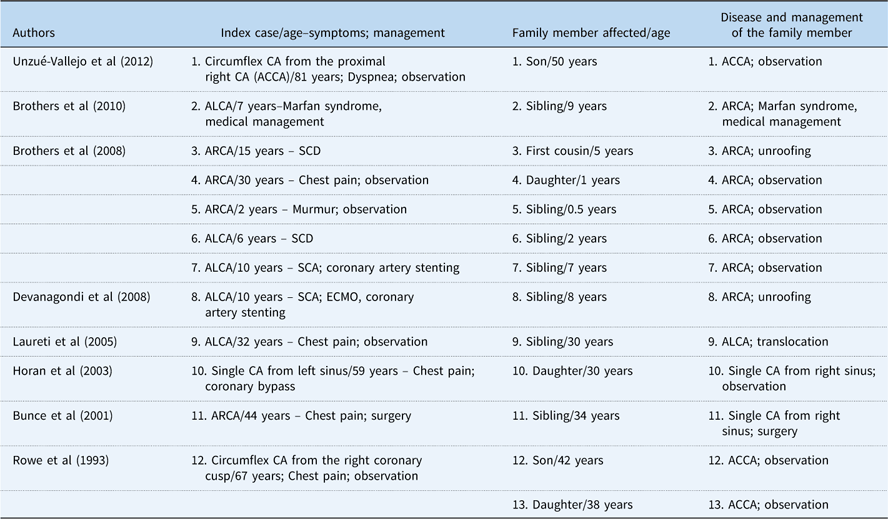
A myocardial bridge is characterised by a segment of a coronary artery that travels into the myocardium instead of a normal epicardial course. The presence of myocardial bridges in healthy paediatric population is unknown, but can occur in up to 28% of patients with hypertrophic cardiomyopathy.Reference Yetman, McCrindle, MacDonald, Freedom and Gow 6 In a cohort of 49,255 healthy adult men, the presence of premature family history of coronary heart disease before 50 years was 6.5% and was associated with an ~50% higher lifetime risk for both coronary heart disease and cardiovascular mortality.Reference Bachmann, Willis, Ayers, Khera and Berry 7 Similar family history data are unavailable for children. There are sporadic case reports and small case series that describe familial clustering of anomalous aortic origin of the coronary artery (Table 1),Reference Brothers, Stephens, Gaynor, Lorber, Vricella and Paridon 8 – Reference Devanagondi, Brenner, Vricella and Ravekes 13 but to our knowledge there are no studies that describe the prevalence of cardiovascular diseases in families affected with anomalous aortic origin of the coronary artery +/− myocardial bridge.
Previous reports of familial clustering of anomalous aortic origin of coronary arteries.

ACCA=anomalous circumflex coronary artery; ALCA=anomalous left coronary artery; ARCA=anomalous right coronary artery; CA=coronary artery; ECMO=extracorporeal membrane oxygenation; SCA=sudden cardiac arrest; SCD=sudden cardiac death
Each number in the second column denotes an unrelated proband, and their affected family members are described in subsequent columns
The American Heart Association/American College of Cardiology statementReference Van Hare, Ackerman and Evangelista 14 and American Association for Thoracic Surgery guidelinesReference Brothers, Frommelt, Jaquiss, Myerburg, Fraser and Tweddell 15 have differentiated high-risk interarterial anomalous left coronary artery and low-risk interarterial anomalous right coronary artery but, as seen in our classification of coronary anomalies,Reference Agrawal, Mery, Krishnamurthy and Molossi 16 many patients may not fit into these categories given the complexity of anatomic variants. We have created a multi-disciplinary team in our institution and followed a uniform algorithm to risk-stratify these patients with anomalous aortic origin of the coronary artery +/− myocardial bridge, with gathering of prospective outcomes data.Reference Mery, Lawrence and Krishnamurthy 1
Our objectives were to determine the incidence of familial cardiovascular diseases in patients diagnosed with anomalous aortic origin of the coronary artery +/− myocardial bridge, and to determine whether a positive family history was associated with higher-risk coronary anomaly.
Methods
All patients ⩽20 years evaluated for anomalous aortic origin of the coronary artery +/− myocardial bridge at Texas Children’s Hospital were prospectively enrolled between December 2012 and February 2017, following institutional review board approval. Patients with complex CHD requiring surgical intervention or aortic valve disease and those with hypoplastic coronary arteries with normal aortic origin were excluded. The coronary anomalies were classified based on their origin/course into anomalous left, anomalous right, anomalous circumflex, and single coronary artery.
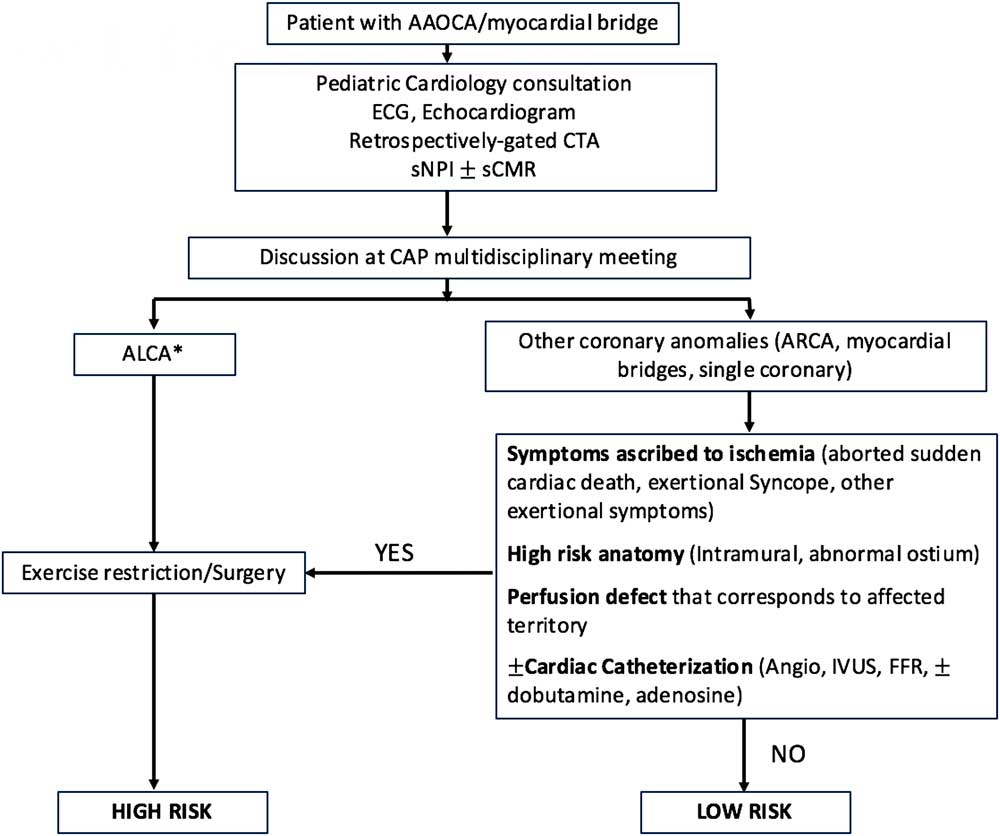
All patients were evaluated by cardiologists from the Coronary Anomalies Program using a uniform algorithm (Fig 1).Reference Mery, Lawrence and Krishnamurthy 1 Detailed family history was documented on the basis of reports provided by patients/families. All patients underwent electrocardiogram, echocardiogram, CT angiogram, and treadmill stress nuclear perfusion imaging±Dobutamine stress cardiac MRI. Those who presented with sudden cardiac arrest/shock or those who were of young age did not undergo myocardial perfusion imaging. Patients with dysmorphic features or known genetic mutation in family members were referred for genetic testing. Patients’ data were subsequently discussed in a multi-disciplinary meeting comprising cardiologists, cardiovascular radiologists, surgeons, nurses, and research staff. We classified all the patients with intramyocardial course into the following: intraseptal course – defined as the intramyocardial segment coursing behind the right ventricular outflow tract, below the level of the pulmonary valve; and myocardial bridge – defined as intramyocardial course of an epicardial coronary artery. All patients were classified into high or low risk on the basis of the algorithm developed (Fig 1). High-risk patients were exercise-restricted and/or referred for surgery.
Modified clinical algorithm used by Texas Children’s Hospital Coronary Anomalies Program (CAP) to evaluate and manage patients with anomalous aortic origin of coronary arteries (AAOCA). CT Angiography (CTA), stress nuclear perfusion imaging (sNPI), stress cardiac MRI (sCMR), anomalous left coronary artery (ALCA), anomalous right coronary artery (ARCA), intravascular ultrasound (IVUS), and fractional flow reserve (FFR). *High-risk anatomy.

Significant positive cardiac history was considered in first- or second-degree relatives if there was history of the following: sudden cardiac arrest/death before 50 years; CHD; cardiomyopathy; substrate for arrhythmia – e.g. long-QT syndrome, Wolff–Parkinson–White syndrome – and pacemaker use before 50 years; and atherosclerotic coronary artery disease before 50 years. Sudden cardiac death was defined as unexpected death owing to cardiac causes that occurred in a short time period in a person with or without previously known cardiovascular disease.Reference Hainline, Drezner and Baggish 17
Univariate analysis was used to compare baseline characteristics between the patients with positive and negative family history. χ2 test was used to compare categorical variables and Fisher’s exact test was used when the sample size was small. Mann–Whitney test was used for non-parametric variables. Family history of CV conditions was tallied in relation to unrelated probands to avoid double counting. The SPSS software 23.0 (IBM Corp., Chicago, Illinois, United States of America) was used for analyses.
Results
A total of 201 patients were evaluated in our programme in this period, and 171 patients, comprising 168 unrelated probands, with anomalous aortic origin of the coronary artery +/− myocardial bridge met the inclusion criteria. Of those, 36 unrelated probands (21%) had a positive family history: 19 (53%) in 1st-degree relatives and 17 (47%) in 2nd-degree relatives. Two probands with an anomalous right coronary artery were found to have affected siblings – one anomalous right coronary artery in each family. One proband with anomalous right coronary artery had a maternal uncle who died at the age of 11 years after collapsing in a soccer field and was found to have an anomalous left coronary artery on autopsy. There was one family where the father had sudden cardiac death and was found to have a myocardial bridge on autopsy. Subsequent testing led to the discovery of myocardial bridges in his three children. In our cohort, there were eight patients with intramyocardial course exclusively (Table 2) and 18 other patients had both anomalous aortic origin of a coronary artery and intramyocardial course (Single coronary artery=9, anomalous right=5, and anomalous left=4). Of the 26 patients with intramyocardial course, 12 had intraseptal course and 14 had myocardial bridges.
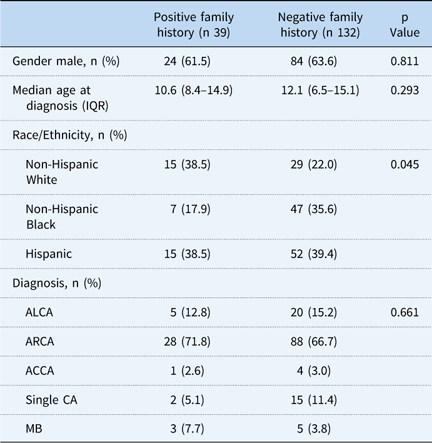
Demographics of affected patients.

ACCA=anomalous circumflex coronary artery; ALCA=anomalous left coronary artery; ARCA=anomalous right coronary artery; CA=coronary artery; IQR=interquartile range; MB=myocardial bridge
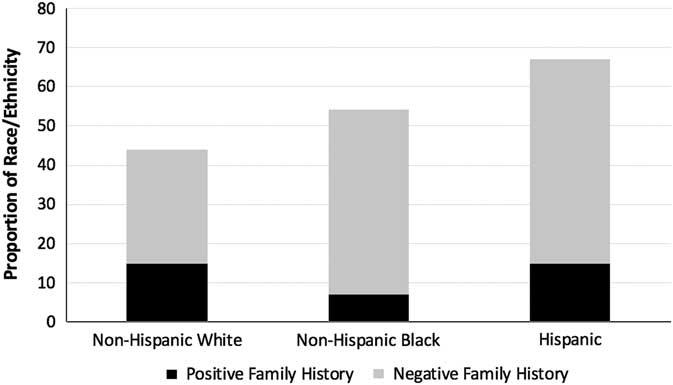
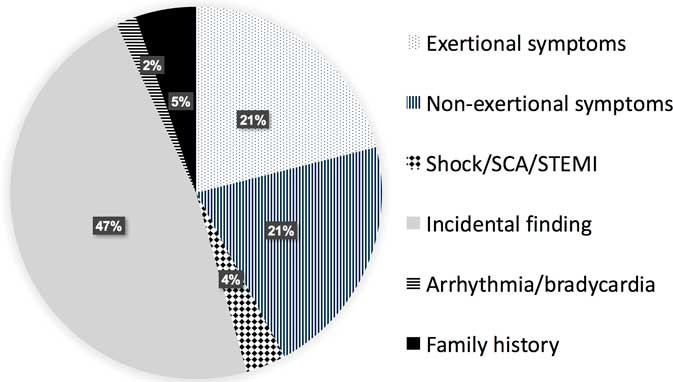
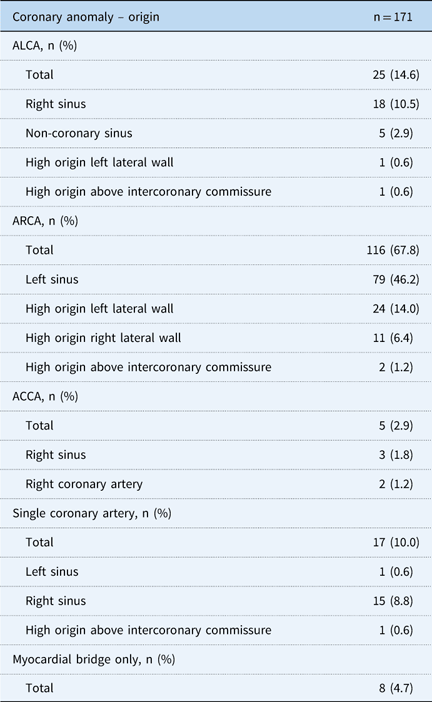
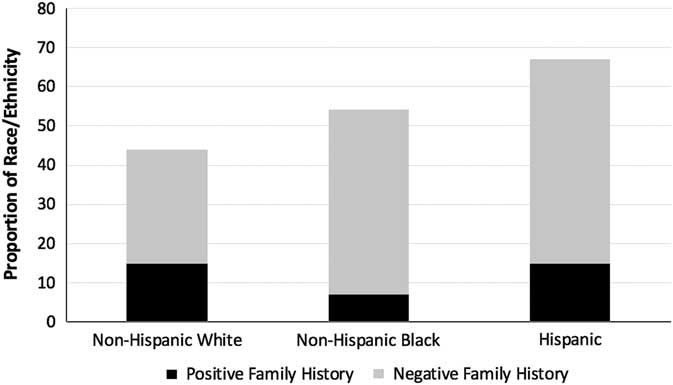
Demographic variables including gender, age, and diagnosis, and primary diagnoses were similar when comparing patients with positive and negative cardiovascular family history (Table 2). Non-Hispanic White race and Hispanic race were more likely to have a positive family history compared with those of Black race (p=0.045) (Fig 2). Nearly half (47%, n 81) of the patients came to medical attention owing to an incidental finding – e.g. murmur, abnormal electrocardiogram, or echocardiogram. Exertional symptoms led to referral in 21% (n 36) and non-exertional symptoms led to referral in 21% (n 36) of patients. The presence of family history was the primary reason for referral in 5% (n 9) of patients (Fig 3). In our cohort, 39% (n 67) of patients were Hispanic and the distribution of types of coronary anomalies was similar across race/ethnicity. The coronary anomalies were subclassified on the basis of their anatomic origin (Table 3). We did not find any association between the presence of interarterial course and positive cardiac family history (p=0.85) or history of sudden cardiac arrest/death in their families (p=0.73).
Distribution of positive family history according to race/ethnicity.
Clinical presentation at diagnosis. Sudden cardiac arrest (SCA) and ST elevation myocardial infarction (STEMI).

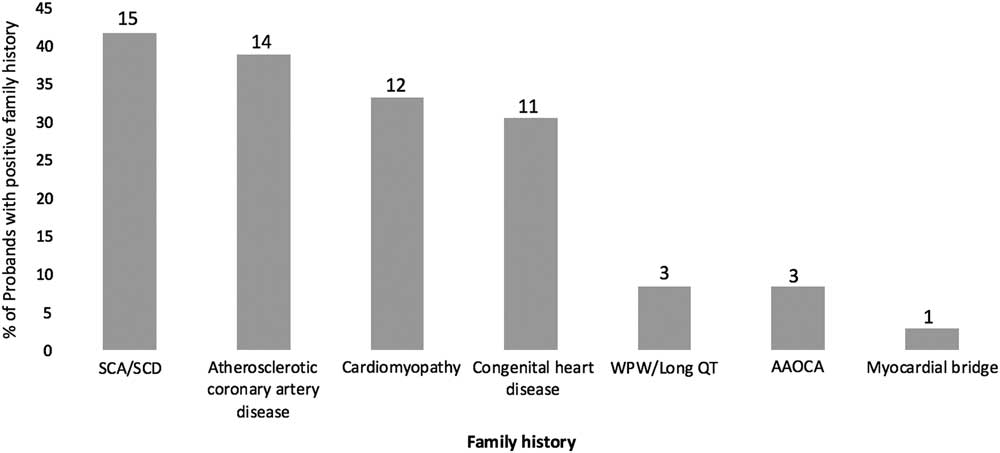
Cardiac family history in 36 unrelated probands. Sudden cardiac arrest (SCA), Sudden cardiac death (SCD), Wolff–Parkinson–White (WPW), and anomalous aortic origin of a coronary artery (AAOCA).

Anatomic classification of coronary arteries.

ACCA=anomalous circumflex coronary artery; ALCA=anomalous left coronary artery; ARCA=anomalous right coronary artery
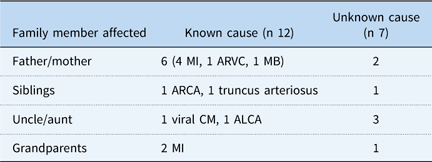
Among the 36 unrelated probands, 15 (42%) had a family history of sudden cardiac arrest/death; 14 (39%) had a family history of myocardial infarction from atherosclerotic coronary artery disease before 50 years; 12 (39%) had a family history of cardiomyopathy, including 11 dilated cardiomyopathies, three hypertrophic cardiomyopathies, one restrictive cardiomyopathy, one arrhythmogenic right ventricular cardiomyopathy, one left ventricular non-compaction cardiomyopathy, and one viral myocarditis; and 11 (31%) had a family history of CHD, including two large atrial septal defects, one bicuspid aortic valve, one tetralogy of Fallot, one truncus arteriosus, and nine unknown type of CHD excluding report of heart murmurs. Family history of Wolff–Parkinson–White syndrome was present in one unrelated proband, long-QT syndrome in two, anomalous aortic origin of the coronary artery in three, and myocardial bridge in one proband (Fig 4). The 15 unrelated probands with family history of sudden cardiac arrest/death had a total of 19 family members affected – 12 with known cause and seven with unknown cause – as listed in Table 4.
The presence of cardiovascular disease associated with sudden cardiac arrest/death in 15 unrelated probands with 19 family members affected

ALCA=anomalous left coronary artery; ARCA=anomalous right coronary artery; ARVC=arrhythmogenic right ventricular cardiomyopathy; CM=cardiomyopathy; MB=myocardial bridge; MI=myocardial infarction
Symptoms were divided into exertional and non-exertional type. There was no association between positive family history and clinical symptoms including chest pain, syncope, dyspnoea, palpitations, or any exertional/non-exertional symptom. We found no association between the presence of family history of cardiovascular disease and abnormal studies including electrocardiogram, Holter, treadmill stress test, stress nuclear perfusion, or stress cardiac MRI (Supplementary Table S1). There was also no association (p=0.50) between positive family history and presence of high-risk lesions in our cohort of patients with anomalous aortic origin of a coronary artery and/or myocardial bridges.
Regarding genetic testing, 18 patients, 10 with positive and eight with negative family history, in our cohort underwent genetic tests including chromosomal microarray analyses (six), whole-exome sequencing (four), and other genetic tests including fluorescence in situ hybridisation and gene sequencing (eleven). One patient with anomalous left coronary artery had a positive gene sequencing in BRAF and a diagnosis of cardio-facio-cutaneous syndrome. One patient with anomalous right coronary artery had a pathogenic mutation in CACNA1C associated with non-syndromic Timothy syndrome (long-QT 8). One patient with single left coronary artery has Klinefelter syndrome. Two patients with myocardial bridges had Noonan syndrome in one (mutation in PTPN11 gene) and Down syndrome (trisomy 21) in one. Variants of unknown clinical significance were found in three siblings with myocardial bridges from the same family, two unrelated patients with anomalous left coronary artery, and one patient with anomalous right coronary artery, all with a positive family history. Normal results were present in four patients with anomalous right, one with anomalous left, and one with single right coronary artery. One patient with anomalous right coronary artery has a clinical diagnosis of Ehlers Danlos syndrome and has gene sequencing pending to rule out vascular type.
Discussion
Familial clustering of anomalous aortic origin of the coronary artery has been previously described only in a very small number of patients. Our study presents data on the association of positive significant cardiac family history in a larger cohort of patients evaluated and managed following a common algorithm at the Coronary Anomalies Program at Texas Children’s Hospital. Familial clustering of anomalous aortic origin of the coronary artery has been reported in 12 unrelated probands: four with anomalous right,Reference Brothers, Stephens, Gaynor, Lorber, Vricella and Paridon 8 – Reference Bunce, Rahman, Keegan, Gatehouse, Lorenz and Pennell 10 five with anomalous left,Reference Brothers, Stephens, Gaynor, Lorber, Vricella and Paridon 8 , Reference Laureti, Singh and Blankenship 9 , Reference Devanagondi, Brenner, Vricella and Ravekes 13 , Reference Brothers, Harris and Paridon 18 one with single left coronary artery,Reference Horan, Murtagh and McKeown 11 one circumflex coronary artery from the right sinus of Valsalva,Reference Rowe, Carmody and Askenazi 12 and one circumflex coronary artery from proximal right coronary artery,Reference Unzué-Vallejo, Andreu-Dussac, Sánchez-Sánchez and Gragera-Torres 19 affecting 13 closely related family members (Table 1). We further add three unrelated probands with anomalous aortic origin of the coronary artery where two siblings were affected with anomalous right coronary artery in each family: one sibling died immediately at birth and anomalous right coronary artery was found on autopsy. The third proband with anomalous right coronary artery had a maternal uncle who suffered sudden cardiac death while playing soccer and was found to have anomalous left coronary artery on autopsy. Moreover, as we previously reported, we also found evidence of myocardial bridge in three siblings whose father suffered sudden death.Reference Agrawal, Molossi and Alam 20 Among these three siblings, one was asymptomatic with normal myocardial perfusion and two had abnormal myocardial perfusion on stress MRI and underwent surgery. These siblings demonstrate one of the challenges in screening for myocardial bridges. They are thought to be anatomically quite prevalent, yet anatomic prevalence may not necessarily establish physiologic significance.
In our cohort of anomalous aortic origin of the coronary artery +/− myocardial bridges, we observed a significantly higher prevalence of cardiovascular family history at 21% compared with 6.5% in the general population.Reference Bachmann, Willis, Ayers, Khera and Berry 7 Pepler and MeyerReference Pepler and Meyer 21 found that a third primary division of left coronary artery was significantly (p<0.01) more frequent in the Bantu hearts (74%) compared with European hearts (38%). Previous studies have shown geographic/ethnic variations in coronary patterns as well.Reference Topaz, DeMarchena, Perin, Sommer, Mallon and Chahine 22 , Reference Garg, Tewari, Kapoor, Gupta and Sinha 23 Leon and BloorReference Leon and Bloor 24 found that coronary artery patterns in rats are polygenetically determined. In view of these findings, it is reasonable to consider that genetics may play a major role in the development of various coronary patterns. Hispanics comprised 39% of our cohort, and the distribution of coronary anomalies pattern was similar between Hispanics and non-Hispanics. Interestingly, patients of Non-Hispanic White race and Hispanic seemed to more likely have a positive family history compared with those of Black race (p=0.045). Maron et alReference Maron, Haas, Ahluwalia, Murphy and Garberich 25 recently reported that the cardiovascular death rate among African-Americans and other minorities exceeded almost five-fold that seen in Whites.
Currently no data are available on genetic testing of individuals with anomalous aortic origin of the coronary artery +/− myocardial bridge. Owing to the non-uniform and limited genetic tests performed on our anomalous aortic origin of the coronary artery +/− myocardial bridge population, we are unable to draw any conclusions towards the heritability of this disease, but a polygenetic mode of inheritance may be speculated. There are emerging data on the presence of various coronary anomalies in both fetal and adult connexin43 knockout mouse hearts.Reference Clauss, Walker, Kirby, Schimel and Lo 26 , Reference Li, Waldo and Linask 27 Further work is needed to identify the genes involved in the inheritance of coronary artery pattern in humans, especially in the various anatomic subtypes. Among those with significant family history, we found that approximately half of the patients had a history of sudden cardiac arrest/death in family members. This also raises the question of possible genetic links in families who have an increased occurrence of cardiovascular conditions associated with sudden cardiac arrest/death.
Although nearly half of our cohort with anomalous aortic origin of the coronary artery +/− myocardial bridge presented with symptoms, there is low likelihood of abnormal physical exam or abnormal tests including electrocardiogram, Holter, treadmill stress test, or myocardial functional studies. Among those who present with symptoms, these are often vague, such as dizziness, chest pain, and palpitations. However, symptoms occurring during exertion are rare and do raise the concern for a possible cardiovascular origin. This may be the reason for not having a statistically significant association between positive cardiovascular family history and symptoms/abnormal tests. A larger cohort is needed for further evaluation of a possible association between symptoms, especially during exertion, and positive family history.
Our findings show significant familial clustering of cardiovascular diseases in families affected with anomalous aortic origin of the coronary artery +/− myocardial bridge, more than what would be expected by chance alone. Detailed medical history and physical exam might be considered in all 1st- and 2nd-degree relatives of these patients, knowing that some conditions might not be detected even with thorough evaluation and imaging. Moreover, if there are clinical concerns, additional imaging should be considered for further evaluation. Imaging with CT angiography or MRI may be necessary, in addition to echocardiogram, to exclude the anomalous origin of a coronary artery in older adolescents and adults. Asymptomatic older adults with anomalous aortic origin of the coronary artery or myocardial bridge may not require intervention unless there are signs or symptoms of myocardial ischaemia that are not attributable to atherosclerotic coronary artery disease.
Our study has several limitations. This study population is from a single, large referral centre, and thus the sample may be biased for race/ethnicity and for higher severity of disease. Family history information was based on reports provided by patients/families, an inherent limitation on data gathered from history taking. In addition, genetic testing was performed in a very small number of patients and driven either by clinical findings or family history of genetic abnormality. Thus, no conclusion can be drawn in regard to the heritability of this disease. Our probands did not undergo routine lipid screening, and it may be possible that their family members who had early atherosclerotic coronary artery disease may have had genetic dyslipidaemia, but such information was not available. Obtaining lipid profile might be considered, especially in the setting of family history of atherosclerotic cardiovascular disease. There is need for prospective case control studies in this area and to identify a potential familial association of anomalous aortic origin of the coronary artery with cardiac diseases in family members in the general population.
Conclusion
In our cohort of patients with anomalous aortic origin of the coronary artery +/− myocardial bridges, approximately one in every five patients has a positive cardiovascular family history. In those with a positive family history, nearly half of them have occurrence of sudden cardiac arrest/death before 50 years. This is in contrast to what has been published in the general population, raising the question of a possible genetic link in those affected with anomalous aortic origin of the coronary artery +/− myocardial bridges and conditions associated with sudden cardiac arrest/death. Therefore, it appears prudent to obtain detailed family history for all patients diagnosed with anomalous aortic origin of the coronary artery +/− myocardial bridges and, if there are clinical concerns, evaluation of those family members should be considered.
Supplementary material
To view supplementary material for this article, please visit https://doi.org/10.1017/S1047951118000835
Acknowledgements
None. Author’s contributions: Dr H.A. designed the study, carried out the analyses, drafted the initial manuscript, revised the manuscript, and approved the final manuscript as submitted. Drs C.M.M., S.K.S.T., C.D.F., E.D.M., and A.M.Q. reviewed and revised that manuscript and approved the final manuscript as submitted. All the authors were involved in critical analysis and interpretation of the data. Dr S.M. conceptualised and designed the study. She also reviewed and revised the manuscript and approved the final manuscript as submitted.
Conflicts of Interest
None.
Ethical Standards
The authors assert that all procedures contributing to this work comply with the ethical standards of the relevant national guidelines on human experimentation and with the Helsinki Declaration of 1975, as revised in 2008, and has been approved by the Baylor college of Medicine Institutional Review Board.