

DISCUSSION POINTS
• How can energy storage be economically deployed in vertically integrated, regulated states?
• What changes need to occur at MISO to fully integrate energy storage’s useful attributes?
• What are the technology, market, and policy implications for these questions?
• How does our grid transformation play out, especially in the Midwest?
Introduction: grid transformation
Our electricity grid is evolving very quickly and transforming into a very different system. The most obvious driver of change is the growth of renewable energy. Minnesota’s experience in renewable energy growth is similar to that in many states. As recently as 2001, grid operators and utility engineers testified in legislative committee hearings that at most 1% or 3% renewable energy could be reliably integrated into the grid. Many State Capitol observers said that 20% renewable electricity in the grid was neither technically feasible nor remotely affordable. Fast forward to 2018, when Minnesota utilities met the 25% Renewable Energy Standard renewable electricity law mandate 7 years ahead of schedule.
These changes have been driven by state and federal policy, technology improvements, dramatically falling costs, and increased concerns about climate change. Now, very high penetrations of renewable energy, up to 80–100%, are possible in our lifetime in many regions.1 The perceived technological and economic barriers many experts identified 17 years ago have mostly disappeared, and wind energy is the cheapest electricity resource in the region. While there is still a lot of learning and experience needed to reach 70–80 or 100% renewable electricity, think about the changes that have already occurred. Experts have advanced forecasting abilities significantly, allowing the Midcontinent Independent System Operator (MISO) to develop the Dispatchable Intermittent Resource (DIR) product to adjust wind dispatch based on real-time forecast and transmission system capabilities.Reference Bakke, Duebner, Manjure and Rauch2 This requires wind farms to offer energy into the real-time market and participate in economic dispatch.Reference Gimon, Orvis, Aggarwale and Curtailment3 MISO’s North region has experienced a record 80% of load from wind energy and maintained system reliability.Reference Bakke, Duebner, Manjure and Rauch2 Another significant foundation of wind energy growth in the Midwest has been the CapX2020 and Multi-Value Proposition transmission build-out.
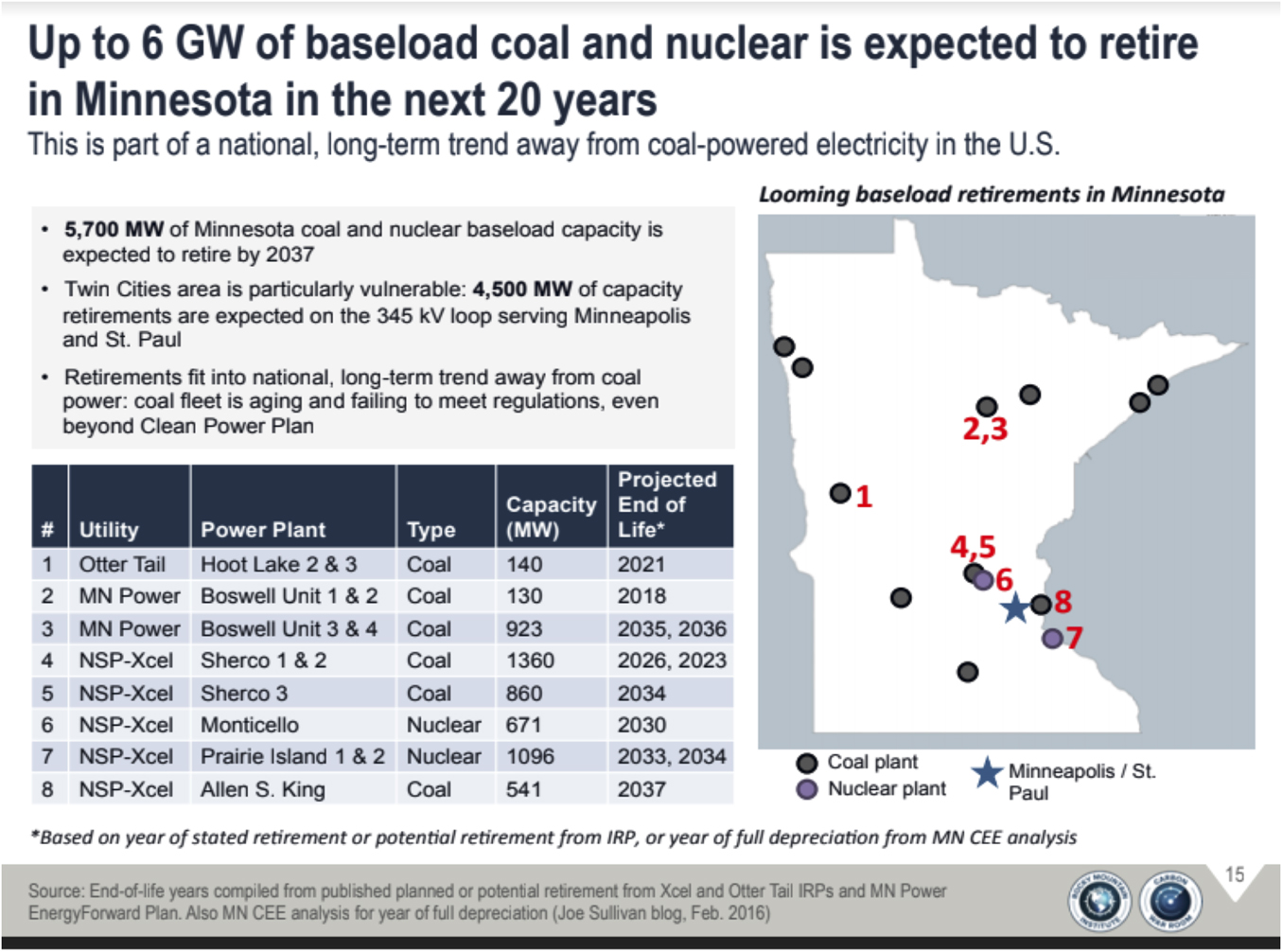
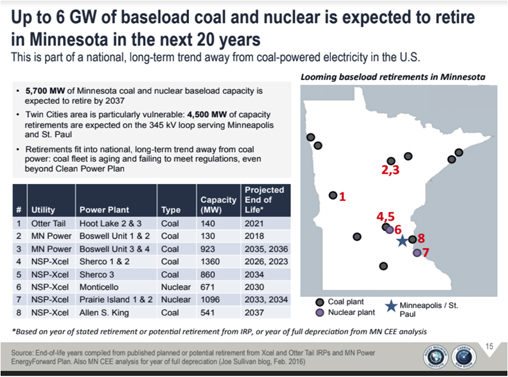
Another monumental change in the U.S. grid stems from the large number of thermal units (coal, nuclear, gas) expected to retire in the coming decades.4 Some say this could be the “last generation powered by fossil fuels.”Reference Osmanbasic5 Continuing the example, up to 6 GW of baseload coal and nuclear are expected to retire in the coming decades in Minnesota (Fig. 1).6
Source: Rocky Mountain Institute, with permission from Todd Zeranski.

Decarbonization scenarios for the Midwest and Minnesota are plausible by 2050, and envision a mix of renewable resources and enabling technologies. Most decarbonization scenarios rely on wide-scale electrification of the transportation, heating, and industrial power sectors, raising questions about how our regulatory, policy, and energy infrastructure systems need to change. The legacy system of large centralized fossil fuel generators sending electricity one way to customers is being disrupted by these changes. Utility-scale renewable energy resources are dispersed across broad geographic ranges and the falling prices and growing demand for renewable energy are leading to the rapid growth of smaller, distributed energy resources (DERs).7 The interface between the distribution system and bulk power grid is new territory. Many questions need to be answered. How will increasing amounts of distributed generation (DG) affect the grid? How will regional transmission organizations (RTOs), independent system operators (ISOs), and balancing authorities know what DG is operating and who will control it? When we are at very high penetrations of renewable energy, how will we need to change business models to maintain reliability and adequate infrastructure? How will the boundaries of the distribution system and bulk power system and individual DG “prosumers” (customers who also produce energy) change, and with it, the regulatory, policy, and legal framework?
Wind and solar energy have no fuel cost, so they are disrupting wholesale price patterns. How will economic dispatch work when the grid is flooded with zero marginal cost resources?Reference Gimon, Orvis, Aggarwale and Curtailment3 What is the optimal pattern of energy demand? Instead of supply coming off and on as needed to meet demand, will demand be controllable to meet generation supply as it becomes available? With large amounts of weather-affected variabilities in renewable generation, will it be optimal to shift the demand curve to times of higher production? Will it make sense to dump/curtail excess renewable power because it is the cheapest option and can be overbuilt without carbon impacts? Must we change the load curve to make it as steady and flat as possible?
It will be very cheap—nearly free—to use renewable energy in the coming decades, so we will want to use as much as possible. How will distribution system operators (utilities) be incented to build or buy generation when they cannot make money selling kWhs of electricity? How will adequate capacity be available to procure for long-term needs? Other grid services will need to play a more significant role in market transactions. Some likely changes to the evolving grid are described below.

One example of the technology revolution that will meet the changes above is the new NERC standard 1547, “Standard for Interconnecting Distributed Resources with Electric Power Systems.”9 As more energy is generated by DERs, it is essential for them to be interconnected to the bulk electric system in a way that does not adversely affect reliability. Abnormal conditions at generators and on transmission lines can cause high or low voltage or frequency events. “Ride through” means the capability of the generator to stay connected during these abnormal conditions, and these are essential for the bulk system reliability.Reference Levitt10 The new revised standard 1547–2018 mandates ride through capabilities for wind and solar plants and other inverter-based resources like energy storage connected to the bulk power system. The New England ISO, for example, sees a risk of losing significant amounts of DERs due to transmission faults, so these bulk grid issues have migrated into the distribution system scale.Reference Forrest11 This NERC requirement will not be fully implemented until 2020 or later.
Most DERs are under state authority, and RTO/ISOs lack jurisdiction within individual states. Thus, generally the distribution utility is the primary utility stakeholder for establishing DER trip and ride through parameters.
This grid “revolution” will require deployment of a variety of technologies, including energy storage at scale. In “The role of energy storage” section, we consider the specific role that energy storage will likely play in this newly designed grid, and how it might play out in the Midwest.
The role of energy storage
How does energy storage help to enable this evolving modern grid? Here is one example: modern solid-state solar plants with smart inverters can instantaneously provide “a suite of grid services, including spinning reserves, frequency regulation, voltage support, ramp control, and firming” faster and more efficiently than conventional gas peaker plants.Reference Rackey12 If storage is integrated, services can also include energy shifting, black start, and energy arbitrage. A smart photovoltaic (PV) plant functioning at 50% capacity can, with 4 h of battery storage added, achieve a total output equivalent to 98% capacity, able to meet most utility system’s peak demand.Reference Rackey12 Solar and storage together could meet the variable part of the load and allow the baseload plants to run most efficiently at their highest capacity; thus, gas plant plus solar and storage can effectively power the world’s energy system.Reference Rackey12
Energy storage has been called the “Swiss Army Knife” of the grid. In this newly transformed energy system, energy storage can serve multiple functions.13 To maximize the cost-effectiveness of the battery storage system, multiple functions and value streams can be “stacked.”Reference Fitzgerald, Garrett, Morris and Touati14 Innovative software controls can optimize the combination of functions depending on what is needed at a given point in time. Over the coming decades, expect energy storage to improve energy systems in the following ways:
(i) Augmenting or avoiding new natural gas peaking plants (capacity).
(ii) Making wind and solar energy more valuable by increasing its dispatchability and reducing curtailment.
(iii) “Taming” the duck curve15 by smoothing ramping.
(iv) Avoiding or deferring costs of transmission and distribution system upgrades.
(v) Mitigating transmission and distribution system congestion.
(vi) Providing resilience in communities facing climate change impacts.
(vii) Supporting functionality and islandabilityReference Palizban and Kauhaniemi16 of local microgrids.
(viii) Offering grid support for fluctuating voltage, frequency, and other ancillary services.
(ix) Providing grid stability to compensate for retired synchronous generators (power plants).
(x) Backup power.
(xi) Maintaining power quality for high-tech industries.
(xii) Reducing peak demand.
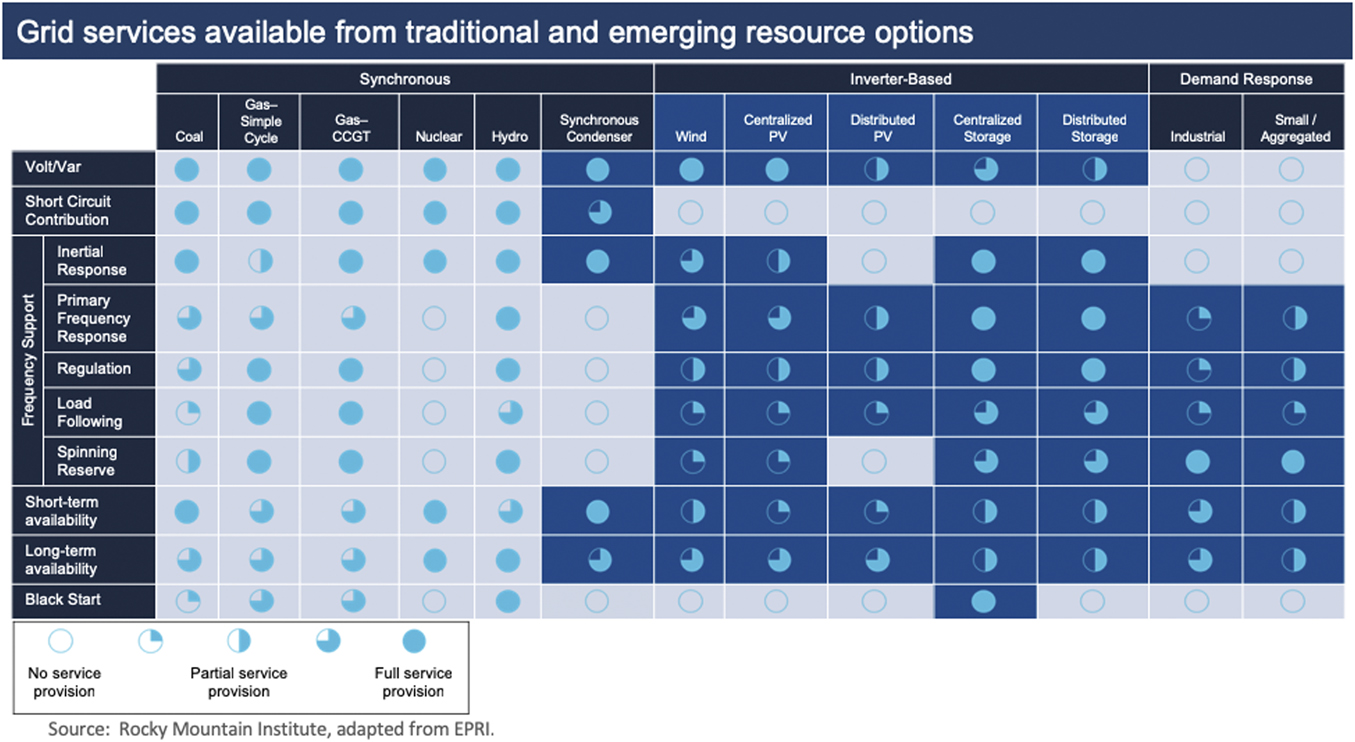
This chart from the Rocky Mountain Institute, using Electric Power Research Institute (EPRI) data, shows that integrating the right combination of different technologies, including energy storage, along with demand response, can provide the full capability of grid services needed for a reliable grid (Fig. 2).Reference Dyson and Engel17
Used with permission from Rocky Mountain Institute. Dyson, Mark, and Alexander Engel. “The Economics of Clean Energy Portfolios.” Webinar, Rocky Mountain Institute, July 3, 2018, used with permission. https://www.youtube.com/watch?v-2rWifsGqVh8.

Energy storage is rising to the challenge
Around the United States and the globe, energy storage is leaping ahead. Tesla made—and won—an audacious bet in Australia in 2017 to build a 100 MW/129 MWh battery energy storage project, to be the largest lithium-ion battery in the world, in 100 days “or it’s free.”Reference Ong18 The battery combined with a wind farm has been successful at making the wind energy dispatchable around the clock, reducing peak demand, and increasing reliability of the South Australian grid. A new report by McKinsey shows that the Tesla storage combined with wind farm system has “reduced the cost of the grid services it performs by 90%.”Reference Lambert19 But circumstances in Australia are uniquely suitable for this to work technically and economically. The country has the highest electricity prices in the world and an unstable grid prone to outages, which made the project very cost-effective.
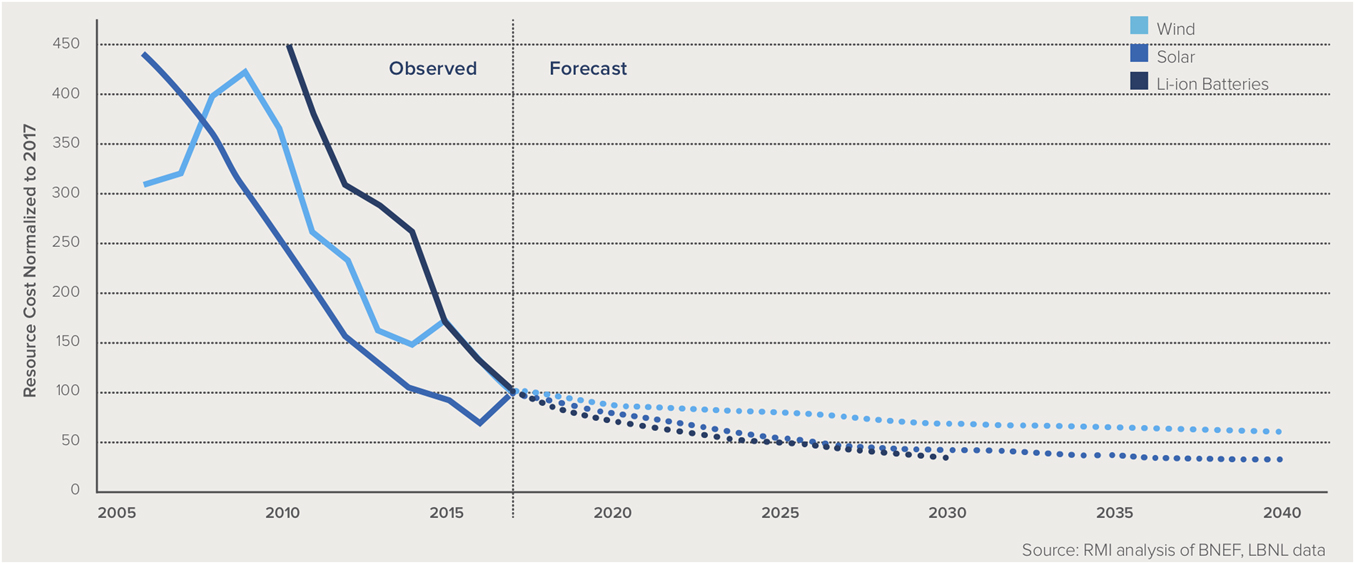
Across the United States, battery storage is charging ahead especially in states with supportive policy or mandates, incentives, and higher electricity prices.Reference Stanfield, Petta and Baldwin Auck20 At least 23 states and the District of Columbia have taken steps to support energy storage deployment, including procurement targets, incentives, studies, utility commitments and projects, and other legislative or regulatory actions, including the Midwestern states of Indiana, Illinois, Iowa, Michigan, Minnesota, and Missouri.21 Industry research forecasts energy storage deployments nationally to accelerate dramatically from 338 MW in 2018, to 1.7 GW in 2020, and 3.9 GW by 2023.22 Prices for battery storage have dropped significantly and are expected to continue declining in the coming years (Fig. 3).
Used with permission, Rocky Mountain Institute. Source: Rocky Mountain Institute, Dyson, Mark, and Alexander Engel. “The Economics of Clean Energy Portfolios.”

Energy storage in the MISO region
As prices for lithium-ion batteries drop, and installed capacity increases in the United States, deployment in the MISO Midwestern states has lagged behind. We examine some of the factors limiting storage deployment in the MISO region, and how those barriers are breaking down. Public Utilities Commissions play an important role in opening up integrated resource planning and procurement processes, so that energy storage can compete with conventional resources and that evolution is often slower in Midwest states, which have primarily traditionally regulated vertically integrated utilities. Most Midwestern states do not allow third parties to aggregate and sell DERs. Electricity prices tend to be low to moderate in many parts of the Midwest, so it is often more difficult for projects to garner a significant return on investment in a relatively short time period.
The role of the Midwest regional transmission operator, MISO, is also very important. Generally, energy storage does not fit neatly into the categories that grid operators traditionally use—generation, load, transmission—so it has taken proactive change at ISOs/RTOs to enable energy storage to play a more active and productive role. Market rules in many regions do not allow storage projects to capture multiple value streams or to otherwise monetize their many capabilities. This has been the case in MISO in recent years, but it is changing significantly in real time. While market restructuring is important to allow fair compensation of energy storage services, “frequent refinements create market uncertainty.”Reference Forrester23 In Minnesota, we have worked to understand the opportunities and barriers to storage. At the University of Minnesota’s Energy Transition Lab’s Energy Storage Summit in 2015, stakeholders from many perspectives—utilities, MISO, renewable energy industry, state regulators, and researchers—heard about the many policy and market barriers storage faces in Minnesota and the Midwest. The Energy Transition Lab then began to convene stakeholders to continue the conversation on how to enable beneficial deployment of energy storage in Minnesota. This coalesced into the Minnesota Energy Storage Collaborative (MESC), which then became the Minnesota Energy Storage Alliance (MESA). The collaborative identified key regulatory barriers, including the difficulties of participating in RTO markets, the inability to compete with conventional resources in utility and Public Utilities Commission integrated resource planning and procurement, and the barriers to monetizing multiple values of energy storage.
In 2016, MISO hosted an Energy Storage Workshop and then requested comments. MESC filed comments on January 22, 2016, which outlined some of the major obstacles in MISO to storage participation.24 Key points were:
(i) MISO should allow aggregation of energy storage assets. This would allow small energy storage resources, located behind a customer’s meter, to gain maximum access to MISO’s market in the early stage of market development. The inability to aggregate was identified as a barrier to demand response resources, which could include energy storage.
(ii) MISO should reduce the minimum megawatt limit for MISO market participation. PJM’s threshold of 100 kW would enable more participation, especially of DERs.
(iii) MISO should enable energy storage resources to provide multiple, stacked services in its markets. No market product existed in MISO to take advantage of the full suite of energy storage’s operational capabilities and services for the grid. In 2010, MISO introduced the stored energy resource product, which was limited primarily to flywheels, providing regulating reserve services. This did not allow advanced energy storage technologies to provide multiple services, including energy, capacity, and ramping. MESC also suggested that all types of storage technology be recognized, including thermal energy storage.
(iv) MISO should develop a fast ramping market product in its ancillary services, allowing more efficient options to maintain grid stability, especially important as more conventional generators retire and wind and solar become larger parts of the energy mix.
(v) MISO should develop simple, specific interconnection rules for energy storage.
(vi) Energy storage technologies should be able to participate in MISO markets as generation and/or transmission assets.
FERC Order 841
These comments illustrate the barriers energy storage has faced at MISO. However, MISO is correcting many of these, driven in part by the significant federal policy direction on energy storage set by the Federal Energy Regulatory Commission (FERC) in Order 841 in February 2018.25 The FERC addressed market barriers to energy storage participation in all the organized wholesale markets with the following requirements:
(i) Ensure participating resources are eligible to provide all capacity, energy, and ancillary services the resource is technically capable to provide.
(ii) Execute all storage wholesale transactions at locational marginal price.
(iii) Ensure resource can be dispatched and set the wholesale price.
(iv) Recognize physical and operational characteristics of storage.
(v) Establish a minimum size requirement that does not exceed 100 kW.
(vi) Allow storage to derate capacity to meet minimum run-time requirements.
The Order is intended to unlock electrical energy storage’s ability to compete with conventional resources and offer services into wholesale markets. Under Order 841, MISO is required to accommodate energy storage into existing market products—energy, ancillary services, and capacity—but not to create new market products. For example, a complaint from Indianapolis Power and Light (IPL) to the FERC requested a market for primary frequency response and frequency control, which the FERC is not mandating MISO to do.
One point of contention in Order 841 is its direction to RTOs/ISOs to allow energy storage in both the wholesale and distribution system to participate in wholesale markets. The order says that energy storage resources can participate from anywhere on the grid, including those interconnected to the distribution system.
Some stakeholders, including the Transmission Access Policy Study Group (TAPS) and Xcel Energy, have argued that FERC lacks jurisdiction to mandate distribution-connected storage resources to participate. In its filing, Xcel argued that it “oversteps the limits on the Commission’s jurisdiction under the Federal Power Act by interfering in state jurisdiction over retail sales and affecting the ability to preserve distribution system reliability.”26 States have raised jurisdictional concerns about participation of distribution scale resources in wholesale markets, a traditional area of state oversight. The FERC is considering its approach to DERs in a separate docket, and the MISO approach to this will not be clear until that is resolved.
Another key aspect of Order 841 is the changes to smaller scale, DERs participation in the wholesale market. The threshold for participation in each RTO/ISO must be reduced to 100 kW, which is a dramatic change in MISO with a much higher threshold.
Proponents would argue that access to wholesale markets by distributed resources at the lower threshold of 100 kW is essential for behind the meter storage projects to fully monetize their value. The FERC requirements would enable a future where homes or businesses with energy storage batteries and electric vehicles can be aggregated and sell their excess power into the regional market.
RTOs/ISOs were required to submit FERC 841 compliance filings by December 2018. Each proposed a participation model for storage, but requirements vary. MISO’s proposal is intended to enable electric storage resource participation in MISO’s capacity, energy and ancillary services markets. MISO’s proposal is technology neutral, designed to integrate any storage technology “and/or storage mediums, including but not limited to batteries, flywheels, compressed air, and pumped-hydro.”Reference Brown27 The storage resource may be located on either the transmission system or a local distribution system.Reference Brown27 MISO proposes to integrate the technology by “providing unique modeling, offer parameters, operating limitations and settlement provisions that recognize the physical and operational characteristics of storage resources.”Reference Brown27
Storage resources will be able to participate in MISO reserve markets as supply and demand, set market clearing prices as either supply or demand, and provide energy and ancillary service products.Reference Brown27
MISO would allow for eight “commitment statuses”: discharge, emergency discharge, charge, emergency charge, continuous, available, not participating, and outage.Reference Brooks28
MISO is currently modernizing its market platform. Ms. Paslawski said “there are limits to what [the RTO] can do” to implement the FERC order with the existing outdated system. For example, MISO established a 100-kW minimum size requirement for resources—the maximum allowed by the order—“because MISO’s existing market systems do not support offer or bid quantities less than this amount.”Reference Brooks28 In an effort to manage a quickly evolving set of grid issues, MISO has undertaken a major $135 million modernization of its software systems, which should help the market platform be more nimble and modular.
MISO has been working on many changes to accommodate the directives of Order 841. MISO has also begun to clarify how it will allow resources, including energy storage, to be qualified to provide non-market products, such as black start, voltage, and reactive power services, as needed for the grid on a cost-based basis.29 If the storage meets technical capabilities and submits an FERC filing documenting the revenue requirement, MISO could call on them as needed for reliability and recover the costs from utilities.
There is growing interest in the MISO region for “hybrid” energy systems, which incorporate generation resources of two or more different fuel types. This is being discussed by MISO’s Interconnection Process Task Force, which may lead to new processes in the future. Current rules would require each aspect of the project to be independently studied and modeled. However, the ISO’s new Net Zero Interconnection Service will allow a storage project to share the interconnection capacity of an existing resource that already has an interconnection agreement. The advantage of the Net Zero is that it provides for an expedited process outside of the interconnection process.30
Also extraneous to the FERC order, MISO has begun integrating energy storage as a transmission asset through its MISO Transmission Expansion Planning (MTEP) process. In January 2017, the FERC announced that it was open to considering electric storage resources receiving both cost-based rate recovery and market services revenues.31 However, questions need to be resolved for storage to serve that role. The issues were grouped into five higher level categories: project proposal submission details, interconnection requirements and processes, planning evaluation considerations/modeling, functional control/state of charge, and facility retirement. MISO controls the transmission operations, so would they control the storage assets when they are acting as transmission assets? If not, will the storage asset be in the proper state of charge when required? How will the storage’s expected availability (forced outage rates) compare to alternatives? How long would the storage resource last and replacement costs, should there be a formal retirement process for storage resources? Should the storage project go through the interconnection queue if it will be used exclusively as a transmission asset? MISO’s goal is to implement this during the MTEP 2019 cycle.
An insightful take on the FERC order suggests that energy storage should be adopted as the “universal participation model.”Reference Ahlstrom32 Author Mark Ahlstrom of NextERA and Windlogics points out that demand response, storage, renewables, and DG all look differently from conventional generators in their properties and capabilities. The RTOs must therefore create new participation models and modify market software, so that each of these technologies can fully participate and contribute their unique and valuable capabilities to the existing grid system. This can be a slow and cumbersome process to add new resources on one by one, and so Ahlstrom suggests we use storage as the most general model, which encompasses the capabilities of other resources. Battery storage can act as a generator, a load resource, and a flexibility enabler. The storage participation model would then “with slight ‘idealization’ in its design, become[s] the universal model that can be used, simply by changing appropriate parameters, for all other resources.”Reference Ahlstrom32
Energy storage in the Midwest
This section reviews some examples of energy storage in the Midwest, followed by an in-depth discussion of Minnesota’s energy storage trajectory as a case study.
Illinois
The Shedd Aquarium installed a 1 MW/277 kWh lithium-ion battery on May 26, 2016, the largest battery installation in Illinois.Reference Garcia33 The battery, the first installed at any zoo or aquarium in the United States, is part of a microgrid system that includes a 265 kW solar system on the roof of the Aquarium. Funded by a grant from the Illinois Department of Commerce & Economic Opportunity, the 60,000 lb, $2 million battery provides backup power, peak load demand, and frequency regulation. The energy storage systems, which are connected to Shedd’s electrical distribution system, are located on Shedd Aquarium’s loading dock and can be seen by aquarium visitors from inside the South Abbott Oceanarium window. The battery installation and solar system are part of the aquarium’s Master Energy Roadmap, which has set a goal to reduce its energy consumption by 50% by 2020.
In February 2018, the Illinois Commerce Commission approved ComEd’s $25 million plan to create a microgrid in Chicago’s Bronzeville neighborhood.Reference Palivos, Brumit and Merza34 The project involves solar panels and a battery storage system. ComEd’s pilot program is the first microgrid operated by a utility in the country.35 The final project will be completed in 2 phases and will ultimately serve 1060 residential, commercial, and small industrial customers. The goal of the project is to meet peak electricity demand of customers and maintain service to customers when the microgrid is “islanded” (able to operate independently) from ComEd’s grid. Phase I of the project, which began installation on June 26, 2018, includes 2.5 MW of load and installation of battery storage (0.5 MW/2 MWh) and solar PV and serves approximately 490 customers. Phase II of the project will add approximately 570 customers and an additional 4.5 MW of load and 7 MW of DERs.
Another ComEd project, the Community Energy Storage pilot in Beecher, Illinois, launched in March 2017 and uses a 25 kW/25 kWh lithium-ion battery to reduce the number and length of outages. The battery can supply power to three houses in the event of a power outage. The Beecher project was the first community energy storage program in Illinois.
Iowa
The Maharishi University of Management (MUM) solar and storage project launched in December 2018 in Fairfield, Iowa.36 The project uses a 1.1 MW solar array plus a 350 kW/1.05 MWh battery energy storage system. MUM already has two smaller solar arrays and a small wind turbine, and these previously installed projects in combination with the new solar and storage project will supply MUM with 43% renewable energy. The new solar and storage project will supply 33% of MUM’s electricity usage. “By combining active tracking technology with battery energy storage MUM forecasts it will cut its electric utility costs by a projected 30%.” In addition, in early 2019, the five acres of soil under the solar array will be planted with pollinator friendly plants. Ideal Energy, Iowa State University, and MUM will conduct studies on solar production and battery storage at the site with research grant funding provided by the Iowa Economic Development Authority.
Michigan
Consumers Energy has two energy storage programs. The first program, at Western Michigan University in Kalamazoo, Michigan, was installed in September 2018.Reference Lillian37 A 1 MW/1 MWh battery was installed at the Parkview battery site. The second program involves two 280 kW/340 kWh energy storage systems installed by Consumers Energy in Grand Rapids, Michigan, at the end of January 2019.Reference Walton38 The pilot project is located within and named Circuit West, a 13-block district on the west side of Grand Rapids, where new building construction is increasing.
Missouri
City Utilities of Springfield, Missouri, and NorthStar launched a pilot energy storage project in September 2017.Reference Uhlenhuth39 The 1.1 MW/1 MWh project utilizes thin plate lead carbon batteries, not the more commonly used lithium-ion batteries. The pilot project studies whether energy storage can extend utility equipment life, in this case, a substation, by providing demand and “grid smoothing” during peaks.
Ohio
The Village of Minster, Ohio, demonstrates the first U.S. municipal utility-owned solar plus storage project.Reference Trabish40 Minster installed a 3 MW solar array with a 7 MW/3 MWh lithium ion energy storage system in 2016.
South Dakota
BP Wind Energy installed a 212 kW/840 kWh battery storage system at its Titan 1 Wind Energy site in South Dakota in 2018.Reference Froese41 The project is the first combined wind and battery project in the Southwest Power Pool (SPP).
Minnesota and energy storage
The University of Minnesota’s Energy Transition Lab, which has been studying and educating stakeholders on energy storage since 2015, hosted the Midwest Energy Storage Summit in Minneapolis in 2017. The objective of the event, which attracted more than 300 attendees, was to explore opportunities and barriers to energy storage in the Midwest from the perspective of research, implementation, and policy and regulatory issues. Some key insights from the expert speakers are summarized below.
The biggest takeaways from the Midwest Energy Storage Summit were two contradictory assertions: many regional energy players are convinced that advanced energy storage, primarily batteries, are too expensive to deploy cost effectively in Minnesota and the Midwest, while many other experts presented examples of cost-saving energy storage scenarios available today. So many concluded that the price is closer than we think to where it needs to be to allow broad deployment in ways that benefit the energy system and its participants. The survey on pricing was taken before the Summit and then tested by a range of opinions and information presented by many experts.42
The Summit made it clear that many leaders are driving innovation, including utilities, renewable energy companies, state regulators, grid operators and RTOs, policymakers, individuals, and large and small customers.
The President of Xcel Energy (Minnesota & the Dakotas), Chris Clark said that they are “driving toward the future” where there will be “a lot more wind, a lot more solar, and a lot more need to figure out how storage and other things fit in.”43
Mary Powell, CEO and President of Green Mountain Power (GMP) in Vermont, asserted that the “debate about storage is over.” Her company has “leaned in hard to storage” for the benefit of ratepayers, and the results have surpassed any of their penciled pro forma estimates envisioned. GMP is “customer-obsessed,” which drives everything they do. Certified as a B Corporation,44 their incentives are driven not just by shareholder return. All value streams go back to other customers, which avoids cost shifting among customer groups. This helps them meet their customers’ desires to move “very fast to clean local renewable energy options” at low cost. Powell compared their model with the 130-year-old model that drives decisions at most electric utilities. The company is now 60% renewable energy powered and 90% carbon free.
Powell believes the energy industry is going through radical transformation. It is a “customer-led revolution away from the bulk grid system.” She sees the bulk grid as the backup system, not the main energy system. Powell asserts that it will save ratepayers money. She cited an NREL study predicting that 40% of American homes and businesses will be at least in part self-supplying their own energy by approximately 2025. She said GMP is the first utility to offer customers off-grid options. She critiqued the unprecedented spending on the bulk grid system which called for $10 billion of new infrastructure spending in 2016, for a system that has a flat to declining load and is only 40% efficient.
GMP’s residential battery storage program, rolled out in 2017, has saved $500,000 by reducing peak demand during the July 2018 heat wave.Reference Walton45 When the temperatures spiked, about 500 residential Tesla Powerwall batteries sent power to the grid. The program offered Powerwall 2 batteries to 2000 customers, who pay $1500 or $15 per month. The battery systems should be able to supply all of a home’s needs for up to 12 h. This “virtual power plant” can provide in aggregate up to 10 MW to reduce peak load.
This article’s author led a Summit interview with Mary Powell and Xcel Energy President Chris Clark, discussing the similarities and differences between their states’ approaches. Like most of the Midwest, Vermont and Minnesota are both traditionally regulated utility states, and electricity prices are slightly higher, on average, in Vermont than in Minnesota.46
Sarah Van Cleve, who leads analyzes energy policy for Tesla, said “we are past pilot projects. I understand that some companies want to pilot [battery storage] on their systems [but the] technology is fully commercially available.” She emphasized several cost-effective use cases, including reducing system peak demand, deferring distribution infrastructure projects, hedging against overly grandiose load forecasts that may not materialize, and demand charge reduction for commercial/industrial customers. Van Cleve emphasized that cost-effectiveness variability depends more on updating grid tariffs and processes than on pure technology economics.
Lin Franks, formerly Senior Strategist at IPL in Indiana, was originally a skeptic on the value of energy storage investment for her utility. She used the analogy of preferring to use a traditional manual screwdriver for home improvement projects—until she built a deck. Then, she realized a power screwdriver was essential for both higher efficiency and quality outcomes. She compared manual screwdrivers to utility’s conventional synchronous generators. Franks’ analysis convinced her company to install the largest battery storage system in the Midwest. That battery storage system, known as Advancion Energy Storage Array, is a 20 MW lithium-ion battery array. The array is capable of “both injecting and withdrawing up to 20 MWs in less than one second for a flexible range of 40 MWs in the performance of frequency control.”47
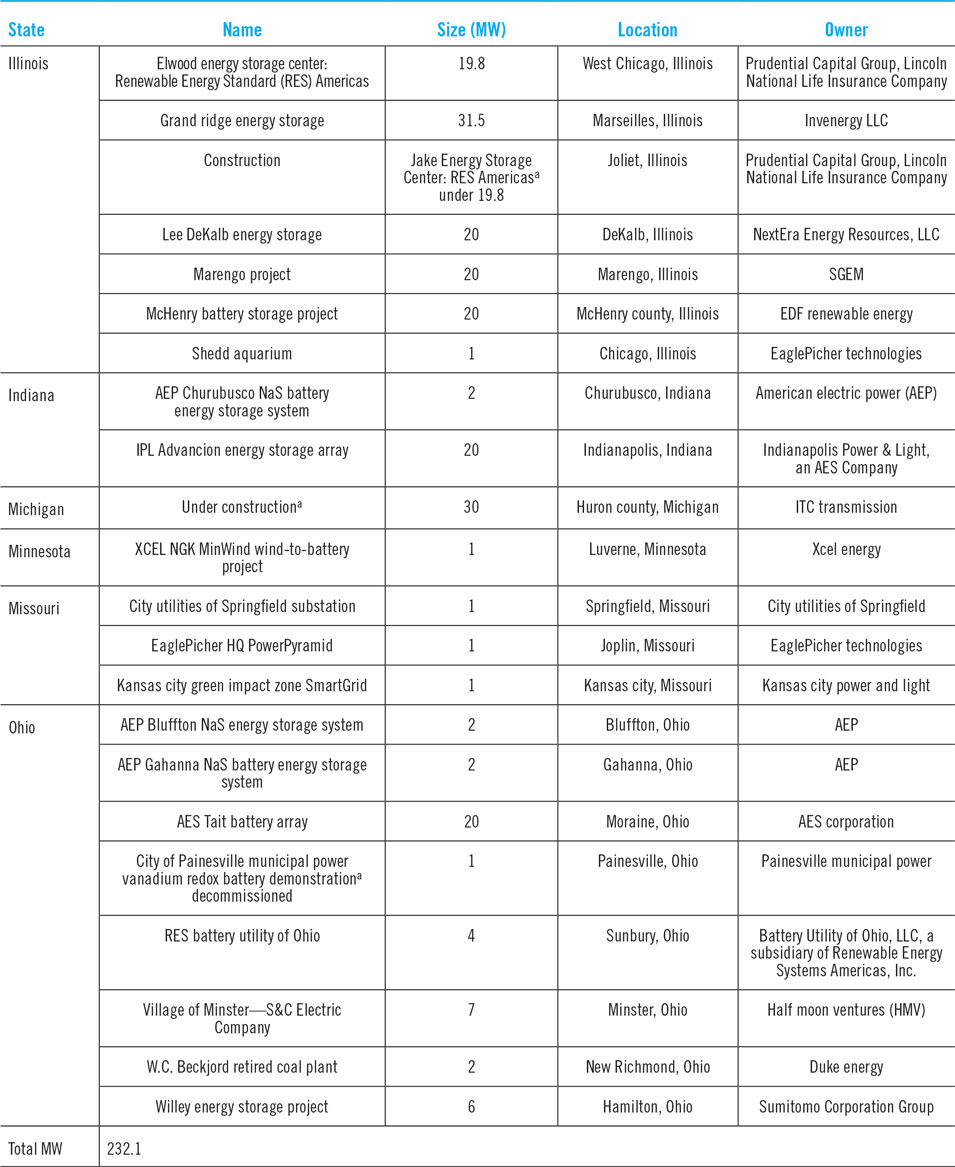
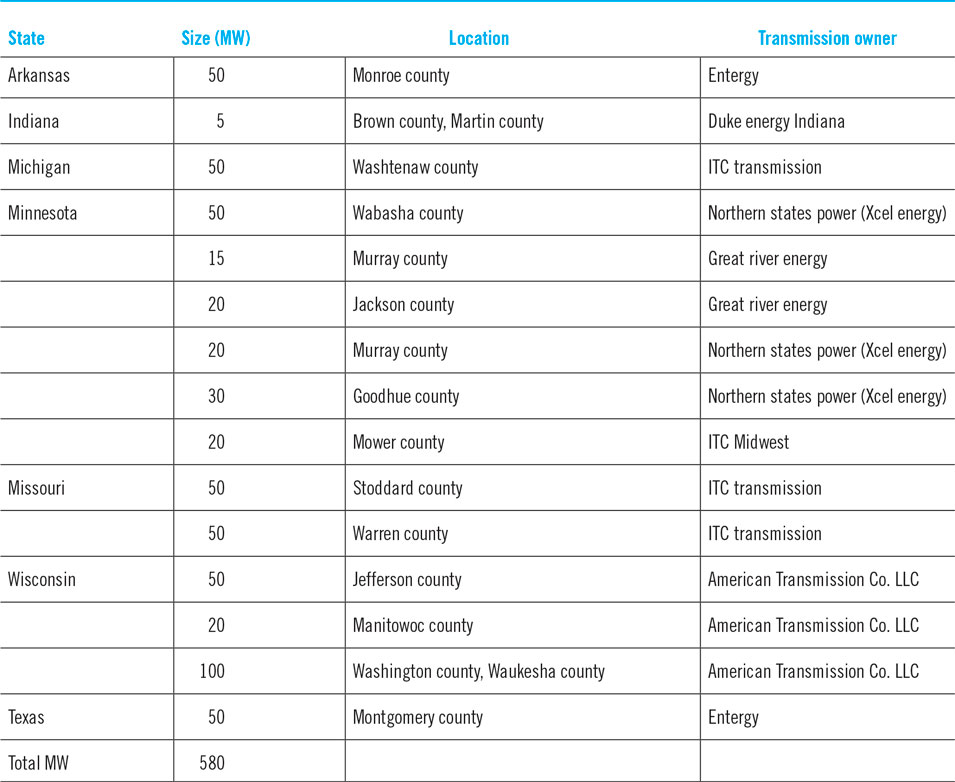
For MISO, the array was the first grid-scale lithium-ion battery to apply for interconnection. It was also “the first grid scale battery in the United States to be classified as a transmission asset.”48 Once installed, however, IPL found that MISO did not have a market product that sufficiently valued the instantaneous capabilities of the battery storage system. In particular, its transmission asset designation was a challenge. Existing Federal Energy Regulatory Commission (FERC) policy “dictated that no transmission asset could participate in a market mechanism.”49 In other words, the array was unable “to recover its costs through both cost-based and market-based rates concurrently.”50 To resolve this inefficiency, IPL challenged MISO, and, on January 19, 2017, the final complaint was resolved by the FERC. The FERC’s amended policy now allows transmission assets, like the array, to participate in markets if three conditions are addressed: “(i) the potential for combined cost-based and market-based rate recovery to result in double recovery of costs by the electric storage resource owner or operator to the detriment of cost-based ratepayers; (ii) the potential for cost recovery through cost-based rates to inappropriately suppress competitive prices in the wholesale electric markets to the detriment of other competitors who do not receive such cost-based rate recovery; and (iii) the level of control in the operation of an electric storage resource by an RTO/ISO that could jeopardize its independence from market participants.”50 Franks’ Summit presentation concluded with this anecdote: When IPL’s corporate counsel complained about the high cost of the legal action, she replied to him “we spent $600,000 and then we won, and saved customers $22 million” (Tables 1 and 2).
Existing Midwest battery storage projects.

a Only includes projects 1 Megawatt or greater. Data from Global Energy Storage Database. U.S. Department of Energy, Office of Electricity Delivery & Energy Reliability, retrieved from energystorageexchange.org; and Generator Interconnection Queue. Midcontinent Independent System Operator, Inc., retrieved from misoenergy.org/planning/generator-interconnection/GI_Queue.
Midwest battery storage projects in the MISO queue.a

a Only includes projects 1 Megawatt or greater. Data from Generator Interconnection Queue. Midcontinent Independent System Operator, Inc., retrieved from misoenergy.oreplanning/generator-interconnection/GI_Queue.
Energy storage use cases—Minnesota as a case study
In the Midwest, a number of states have identified economically viable use cases at a variety of scales, as described above. Below, we will describe the trajectory of storage in Minnesota, a state that has limited deployment but a growing interest and momentum for storage.
Storage and peak demand
Traditionally, utilities handle peaks in energy demand with fossil fuel plants built expressly for meeting that demand, sometimes combined with a limited amount of demand response or interruptible power. Utilities’ primary concern is maintaining reliable power that constantly matches energy supply with energy loads. Meeting peak demand is costly and represents millions of dollars of carbon-emitting infrastructure that is only used a small percent of the time. Energy storage has opened up a range of innovative alternatives to reduce or manage peaks.
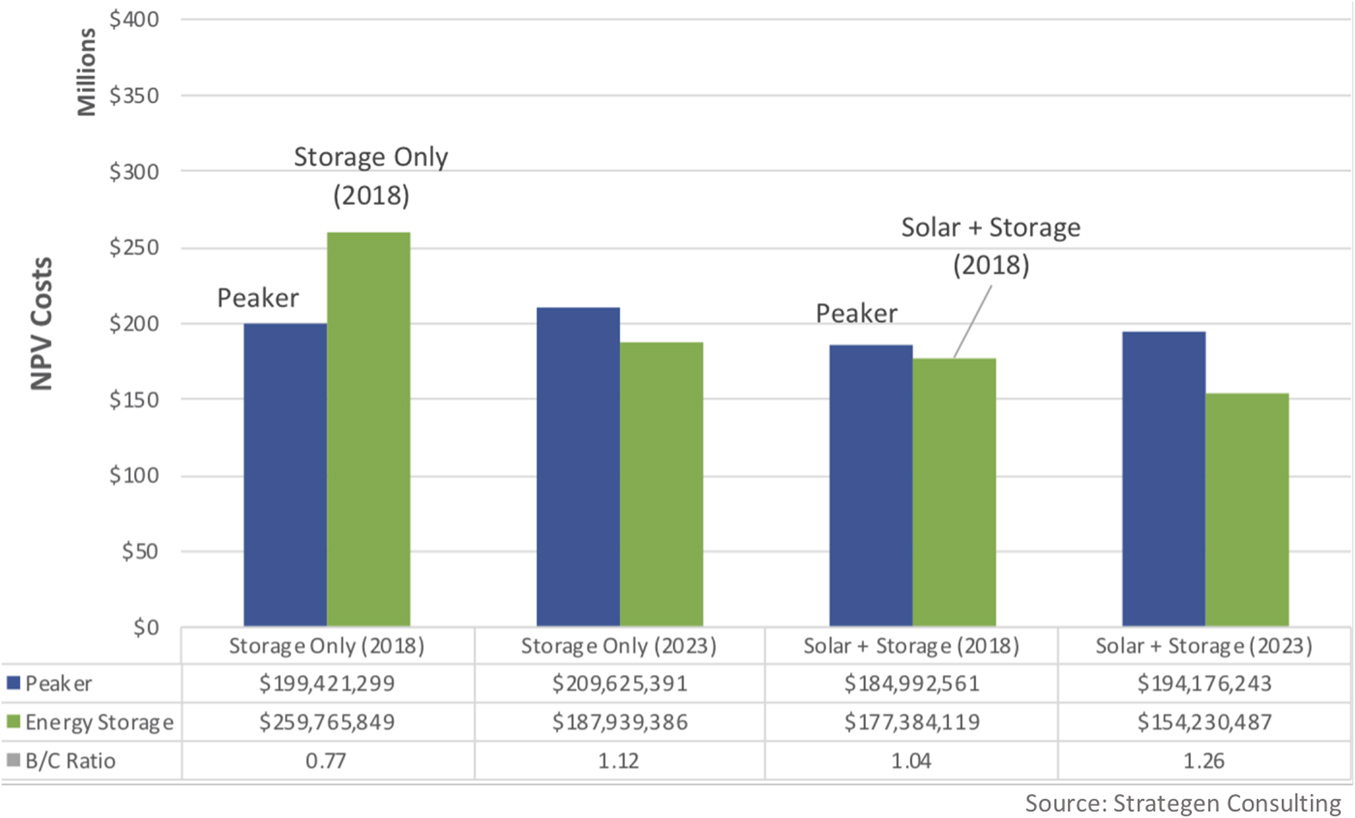
The news on energy storage in the United States is dominated by developments on the east and west coasts, while the profitability of storage in the Midwest is limited by generally lower electricity prices. However, a recent report from the University of Minnesota, “Modernizing Minnesota’s Grid: An Economic Analysis of Energy Storage Opportunities,” found that solar arrays combined with energy storage can be a more cost-effective option for Minnesota than the alternative of using natural gas peaking plants, once the additional environmental benefits are taken into account.51
This combination of renewable energy and energy storage can provide the state with a lower cost and quicker pathway toward meeting its statutory goal of 80% carbon reduction by 2050.52
Lessons learned from the report, which was led by the University of Minnesota’s Energy Transition Lab, could be usefully applied to other Midwest states within the jurisdiction of MISO.53 The findings are based on input from more than 60 stakeholders, including representatives from utilities, energy technology providers, nonprofit organizations, and government, provided over two Energy Storage Strategy Workshops. Participants explored how energy storage could be used to help Minnesota achieve its energy policy objectives, while enabling improvements to system efficiency, resiliency, and affordability. The need to reduce peak demand was identified as a key challenge for energy systems, which would benefit from further analysis. The use case and system-wide modeling for this analysis was conducted by Strategen Consulting.
Use-case analysis of energy storage and storage + solar as peaker alternative
The storage use-case analysis compared the costs and benefits of a 100 MW 4-h battery storage system with a conventional new natural gas 100 MW peaking combustion turbine (CT) and found that the alternative with storage alone would be a cost-effective way to meet Minnesota’s capacity needs in 2023. When solar was added to the storage system, it became cost-effective in 2018, with environmental costs and the federal Investment Tax Credit (ITC) included. This analysis assumed a 100 MW 3-h storage plus a 50 MW solar PV system. Income for the combined system is derived from capacity payments, energy sales revenue, and sub-hourly ancillary services revenue. As solar PV generation does not coincide with times of peak demand in Minnesota, it can instead be supplemented with stored energy during these hours, resulting in a capacity resource that satisfies peak demand using less capacity than a stand-alone storage project (Fig. 4).
Cost-benefit projection for storage or solar + storage versus gas peaker.

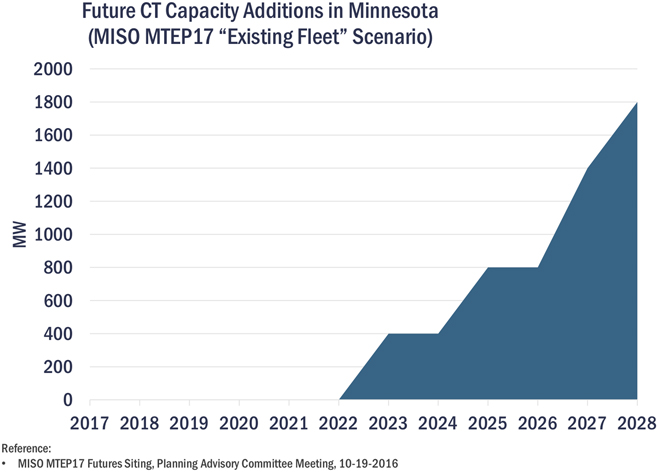
These findings are potential game changers for Minnesota and the Midwest region for several reasons. First, while electricity usage growth is relatively flat, peak demand is increasing and managing it is costly. The Massachusetts 2017 study, State of Charge, found that “on average from 2013 to 2015, Massachusetts electricity customers annually spent over $3 billion, 40% of the total annual electricity spending by consumers in Massachusetts, on the top 10% most expensive hours.” Minnesota plans forecast 1800 Megawatts of new gas peaking capacity by 2028, so there is a meaningful opportunity to find cost-effective and lower carbon solutions without locking in new fossil fuel infrastructure for decades to come. Energy storage systems paired with solar can level off peak demand, save customers money, and reduce carbon emissions (Fig. 5).
Projected peaking plants capacity additions in Minnesota.

Analysis of energy storage impacts to MISO regional grid
Some project that energy storage can compete directly with gas peaking plants when the price of batteries goes under $100/kw.54
A modeling analysis of long-term trajectories for energy storage in MISO has been completed by Vibrant Clean Energy (VCE), building on their prior research for MISO. These projections indicate that greater deployment of storage in Minnesota will allow increased dispatch of low-cost renewable energy and reduce the need for expensive upgrades to the transmission system. This would in turn lead to a reduction in the levelized cost of energy over time and reduce reliance on a single type of fossil fuel generation.
Even though MISO is still very reliant on coal, energy storage would enable greenhouse gas reduction sooner and at a lower cost. Without storage, MISO would face a significant risk of over-reliance on non-diversified fossil fuel sources, particularly natural gas. As energy storage becomes more economic in MISO, it appears to compete with and displace the gas CTs currently used to meet peak demand.
Utilities across the United States are already deploying energy storage in place of new natural gas peaking plants, and many experts believe storage will out-compete gas peakers.Reference Manghani55
Demand response and peak shaving
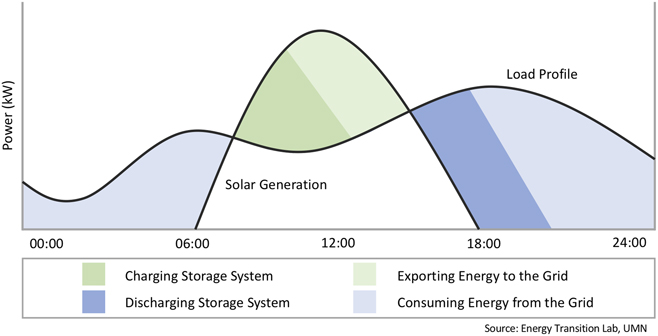
The Energy Transition Lab’s work illuminated projected and actual energy storage opportunities in Minnesota. Connexus Energy, Minnesota’s largest distribution cooperative, was a participant in the workshops. Connexus built and commissioned its 15 MW, 30 MWh energy storage system paired with 10 MW of solar in late 2018. It became the largest storage project of its kind in the state, saving money for cooperative customer/members and facilitating renewable energy growth to reduce greenhouse gas emissions. Responses to Connexus’ Request for Proposals demonstrated the market’s fast evolution, with bids coming in at half the cost projected just one year earlier. The project is “pay as you go,” using a solar 25-year power purchase agreement, in which Connexus only pays for the energy received, and a 25-year storage service agreement, only paying for the service received. The project is designed to time-shift solar energy production to reduce peak demand (Fig. 6).56
Representation of energy time shifting with battery storage in the Connexus solar and storage installation.

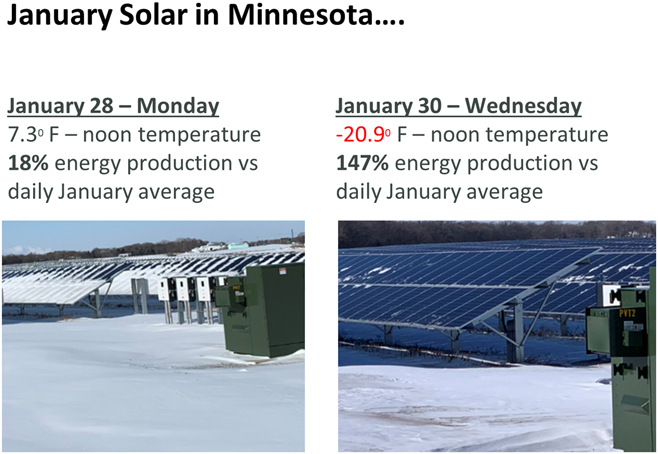
During the polar vortex period of cold weather, the solar plus storage installation performed beyond expectations. The solar array produced 147% compared with its average for the month of January 2019. The system enabled Connexus to meet peak demand on their system, helping to reduce stress on the grid during the same day that MISO experienced a “maximum generation” event.57 This is a MISO procedure to ensure system reliability by preparing all available generation to be dispatched in case of an emergency (Fig. 7).
Slides from Brian Burandt, Vice President, Power Supply & Business Development, Connexus Energy, used with permission.Reference Burandt58

Distribution infrastructure upgrades
A 2014 study by Strategen and EPRI on energy storage in Minnesota analyzed different use cases for storage to determine which, if any, were likely to have a positive return on investment. The resulting White Paper identified distribution infrastructure upgrade deferral as the most promising use case, with a positive benefit–cost ratio.59 Efforts to actualize this concept met with regulatory barriers, however.
Xcel Energy proposed a project of this type to the Minnesota Public Utilities Commission in 2015 as part of its Distribution Grid Modernization Report.60 The “Belle Plaine” project would have added “a large [6 MWh, 2 MW] battery to reduce the load on the Belle Plaine feeder and transformer, combined with a 1 MW…solar array.”61 Xcel Energy’s goals for the Belle Plaine project were twofold: (i) deferring distribution upgrades at its Belle Plaine substation, which was nearing capacity; and (ii) “exploring the benefits of battery storage combined with solar generation…”62 Construction on the project would have taken approximately a year and a half and would have cost about $12.5 million to put the project into service in 2017.63
The Commission denied the project without prejudice on June 28, 2016, finding that “Xcel simply [did] not provide enough information to establish that the Belle Plaine project [was] consistent with the requirements of Minn. Stat. § 216B.2425, subd. 2(e).64 The regulators did not think Xcel showed how deferring substation upgrades was necessary to modernize the transmission or distribution system, nor did they find that the project would meet the benefits listed in the statute.65 The order went on to say that “[t]his is particularly true since the Company is already operating a solar-plus-storage project in its Colorado service territory.”
In 2018, legislation advanced during the Minnesota Legislative session that would have required utilities to include energy storage in their Integrated Resource Planning (IRP) process at the Public Utilities Commission, incent investor-owned utilities to invest in energy storage and funded a study on energy storage. An earlier version of the legislation included direction to the Public Utilities Commission (PUC) to approve cost recovery for utilities for energy storage pilot projects that met certain criteria for system and ratepayer benefit. Although none of the bills were signed into law, they have been reintroduced in the 2019 session.Reference Osmek, Marty, Dibble and Senjem66
Resiliency
Most of the weather disasters in the national news have been on the East or West Coast or in Texas and Puerto Rico. Minnesota and the Midwest do not have hurricanes or coastal storm surges but do face extreme weather disasters every year. The northeastern Minnesota city of Duluth has been hard hit by extreme weather causing power outages. The city, which is built on a steep hill overlooking Lake Superior, has twice come within 2 h of its drinking water pumping system shutting down, cutting off access to drinking water for a city of nearly 100,000. Duluth’s Hartley Nature Center was hit by the same storms and has since built a small-scale solar plus storage project designed for resiliency.67 During the 2012 outage, the small nature center was forced to cancel a week of its summer camp program, losing $14,000, a significant portion of their annual revenue. The project, which combines 12 kW of solar and 6 kW/14.2 kWh battery, serves multiple functions. It reduces electricity demand charge costs by shaving peak demand and can island and become a community shelter, while protecting critical loads like lighting, computers, and charging stations.68 It even has the capability to act as a base of operations for the city’s emergency response efforts.
Hartley, while a small-scale project, was unique for northern Minnesota and has served as an educational model for the region. Other projects are being planned, including an innovative community resiliency microgrid project in North Minneapolis that will be built around community solar, storage, job training, resiliency, and access for disadvantaged communities to innovative energy solutions.Reference Bade69
Carbon emissions reduction
Storage plays an important role in supporting decarbonization of the electricity grid by enabling high penetrations of renewable energy, by displacing fossil fuel plants and by increasing the flexibility of the grid. Energy storage reflects the generation resource on the electric grid. Some regions such as MISO are still coal dependent, so storing that energy includes its emissions. Understanding marginal emissions factors can help storage owners and grid operators minimize greenhouse gas reductions when charging from the grid.Reference Li, Smith, Yang and Wilson70 As renewable energy generation increases and the grid becomes cleaner, this problem will diminish.
Conclusion: What is ahead for storage in the Midwest
Several states in the MISO region are ahead of Minnesota in deploying energy storage. There are currently 580 MW of energy storage in the interconnection queue in MISO, most with in-service dates of 2020–2024. This is a large increase from just one year ago.
Energy storage in Minnesota, the Midwest, and MISO is evolving quickly in the technology, policy, and market spheres, and many stakeholders would like to see change accelerated. All interested observers and stakeholders need to closely track MISO and each state’s regulatory and legislative process to stay abreast of change and to weigh in with decision makers. In Minnesota, the University of Minnesota’s Energy Transition Lab has focused on convening and educating stakeholders about energy storage, which is helping to raise awareness and understanding of energy storage’s potential, which is beginning to bear fruit by catalyzing action at the state and regional level. The storage market will continue to grow and evolve but will be best served by a clear, certain regulatory and policy path forward.
Appendix: Regulatory, policy, and market barriers
Economic deployment of energy storage in Minnesota, the MISO region, and the Midwest faces a number of headwinds. The “Modernizing Minnesota’s Grid” report discussed above lists:
(i) Relatively low differential between on-peak and off-peak wholesale energy prices in Minnesota.
(ii) Low wholesale capacity prices in Minnesota’s Load Resource Zones and uncertainty regarding ability for Minnesota utilities to claim MISO capacity credit for storage resources.
(iii) Relatively low prices and small market size for ancillary services in MISO.
(iv) Very inexpensive capital costs for traditional capacity resources such as natural gas peakers (e.g., advanced frame CTs).
(v) High degree of existing flexibility within MISO and surrounding control areas, enabling substantial integration of new renewable resources.
(vi) Lack of retail rate options that support customer-sided deployment of energy storage technologies.
(vii) High frequency of fossil generation on the margin, thereby diminishing the environmental benefits of grid-charged storage.
(viii) Lack of stronger policies to alleviate Greenhouse gases (GHG) emissions (e.g., emissions reduction requirements).71
Additionally, energy storage will only be able to utilize its full capabilities if the “rules of the road” are designed to accommodate the unique attributes of the technology. The broad cross-section of high-level Minnesota stakeholders assembled in the Energy Transition Lab’s Energy Storage Workshops prioritized next steps for state regulators and policymakers.72
(i) Host a utility-focused technical conference (or series of conferences) to advance thinking on energy storage to support planning, grid operations, interconnection, measurement and verification, and utility training. This conference could also address at a high-level alternative contracting mechanisms, including those for utility-owned, third party-owned and aggregated solutions. Recommended leaders for this effort include MESA, Minnesota utilities, and the PUC.
(ii) Identify and clarify potential utility cost recovery mechanisms for energy storage investments. This is critical, as cost recovery risk is a key barrier preventing investor-owned utilities from investing in energy storage projects. At the same time, criteria should be established for qualifying pilot projects. Recommended lead for this effort: PUC.
(iii) Work with utilities to develop and propose an energy storage pilot project to the PUC with broad stakeholder support. A necessary component of this type of proposal would be an agreed upon mechanism for cost recovery to be approved by the PUC. The steps would include the following:
(a) Identify particular system needs and locations that could be effectively met with energy storage.
(b) Propose a commercial scale Minnesota energy storage procurement process to achieve progress on demonstrating energy storage as a viable alternative to new gas peakers or other appropriate use cases. Such a procurement would help achieve current price discovery and help identify best practices for storage project development (e.g., planning, siting, contracting, interconnection, permitting).
(c) Conduct research and analysis of power control systems, operational integration, economic performance, and other areas of learning, making them explicit goals of these initial pilot projects, with an outcome of university and other expert partner white papers. These additional research objectives could be optional if they are found to be cost prohibitive.
(iv) Because of the superior cost-effectiveness and lower GHG emissions, solar and storage should be prioritized near term. For example, the PUC could authorize 20 MW of utility owned and 20 MW of third-party owned (either centralized or aggregated behind the meter) energy storage and or energy storage plus solar procurement pilots, to complement learning from impending Connexus’ solar plus storage procurement underway. Engaging in a commercially significant pilot will shed light on key implementation barriers and issues very efficiently. Recommended lead for this effort: PUC and MN utilities.
(v) Direct future capacity additions to be conducted through technology neutral all-source procurements. This would specify the need in terms of its capabilities, rather than its technology or generation type, and allow all resource types (including energy storage and energy storage + solar, as well as other technologies) to participate. The process and methodology for evaluating the all-source procurement should be established well in advance of its implementation. Recommended lead: utilities and PUC.
(vi) Update modeling tools used in the integrated resource planning process (i.e., Strategist) to allow for appropriate treatment and evaluation of energy storage as a potential resource.
(vii) Craft MISO rules, processes, and products for energy storage participation. This should encompass not only stand-alone energy storage but also behind the meter aggregated energy storage solutions as well storage coupled with wind and solar. Recommended lead for this effort: MISO.
(viii) Develop innovative retail rate designs that would support a greater deployment of energy storage. Recommended lead: utilities and PUC.
(ix) Conduct an assessment to link storage to Minnesota’s system needs.
(x) Lead a study tour of Minnesota stakeholders to existing grid connected and customer-sited energy storage installations. Recommended lead: UMN Energy Transition Lab and MESA.
(xi) Conduct outreach and education for state policymakers. This could include meetings with both state legislators and regulators. Ideally, this would also include development of a short handout to summarize use cases and benefits of storage for MN. Recommended lead: MESA.
(xii) Engage large customers to identify potential project hosting opportunities. Stakeholders would approach large potential host sites (e.g., large commercial and industrial customers, distribution centers) to identify value proposition. Recommended leads: MESA and MN Sustainable Growth Coalition.
(xiii) Refine the existing Community Solar Gardens program to include a peak time option for energy storage. This would create a minor modification to existing program structure and methodology to allow for a solar plus storage option (credit rate calculation would simply reflect the additional value of storage). Recommended lead: MESA and AG’s Office.
Other recommendations highly rated by workshop attendees included innovative rate designs to allow customers to access storage benefits, system analysis to identify high-impact locations for storage system benefits, and develop utility cost recovery models to enable prudent storage investment.
Several of these proposed actions have taken place in Minnesota.