In popular Western culture, many terms have emerged to describe a person who engages in unwanted pursuit of a former relationship partner, including ‘stalker’ and ‘Facebook creeper’. Stalking is generally defined in the legal system as engaging in repeated, intentional, and unwanted behaviours that evoke feelings of fear in the target (Spitzberg & Cupach, Reference Spitzberg and Cupach2007). Specifics of the legal definition vary across jurisdictions, making it difficult for researchers to capture these behaviours consistently (Fox, Nobles, & Fisher, Reference Fox, Nobles and Fisher2011). The term ‘unwanted pursuit behaviours’ (UPBs) has been adopted to describe the broader scope of behaviours, including less intrusive and more seemingly benign forms of harassment, tracking, and monitoring. UPBs have been defined as ‘the repeated and unwanted pursuit of intimacy through violation of physical and/or symbolic privacy’ (Spitzberg & Cupach, Reference Spitzberg and Cupach2007, p. 66). UPBs differ from stalking in that they do not require the target to experience fear to meet the criterion (Spitzberg & Cupach, Reference Spitzberg and Cupach2007).
Prevalence of Unwanted Pursuit Behaviours After Breakups
Studies examining the prevalence of UPBs in young adulthood after relationship breakups indicate that 63–99% of participants used at least one UPB post-breakup (De Smet, Uzieblo, Loeys, Buysse, & Onraedt, Reference De Smet, Uzieblo, Loeys, Buysse and Onraedt2015; Langhinrichsen-Rohling, Palarea, Cohen, & Rohling, Reference Langhinrichsen-Rohling, Palarea, Cohen and Rohling2000; Lee & O'Sullivan, Reference Lee and O'Sullivan2014). Use of UPBs for most of these individuals was infrequent and brief (De Smet et al., Reference De Smet, Uzieblo, Loeys, Buysse and Onraedt2015). Less severe pursuit behaviours following a breakup are relatively common, especially in college samples, whereas more extreme forms such as physical or sexual violence are quite rare (Dutton & Winstead, Reference Dutton and Winstead2011; Langhinrichsen-Rohling et al., Reference Langhinrichsen-Rohling, Palarea, Cohen and Rohling2000; Wigman, Graham-Kevan, & Archer, Reference Wigman, Graham-Kevan and Archer2008). A study examining both online and offline forms of UPBs in 271 young adults found that individuals did not report using online UPBs more often than offline ones, despite the increasing popularity of online forms of communication among this age group (Lee & O'Sullivan, Reference Lee and O'Sullivan2014).
User Characteristics
Ex-partners comprise the majority of UPB users, consistent with the relational context in which these behaviours occur (Alexy, Burgess, Baker, & Smoyak, Reference Alexy, Burgess, Baker and Smoyak2005; Sheridan, Gilett, Davies, Blaauw, & Patel, Reference Sheridan, Gillett, Davies, Blaauw and Patel2003). Rumination regarding the breakup is a significant predictor of the frequency of UPBs, and the degree of rumination tends to grow more severe over time until the problem is resolved or abandoned (Cupach, Spitzberg, Bolingbroke, & Tellitocci, Reference Cupach, Spitzberg, Bolingbroke and Tellitocci2011). Individuals who persistently pursue past relationship partners often believe that they can reconcile with their partner through sheer force of will and persistence (Cupach et al., Reference Cupach, Spitzberg, Bolingbroke and Tellitocci2011).
However, a key task of young adulthood at a developmental stage is to acquire and refine intimate relationship skills through experiences in one's intimate relationships (Arnett, Reference Arnett2000). One factor that has yet to be explored in relation to UPB use is the degree of romantic competence that an individual possesses. Romantic competence refers to the skills developed in previous relationship contexts, such as communication, empathy, and resolving conflict (Salvatore, Collins, & Simpson, Reference Salvatore, Collins, Simpson, Campbell and Loving2012). Research (Fine & Sacher, Reference Fine and Sacher1997) has found that by young adulthood, individuals have experienced several romantic relationships and breakups. However, it is unknown how skills and experience gained from past relationships are associated with an individual's likelihood of using UPBs in turbulent relational contexts such as breakups.
Gender Differences
Few studies have found gender differences in UPB use among young adults (De Smet, Buysse, & Brondeel, Reference De Smet, Buysse and Brondeel2011; De Smet et al., Reference De Smet, Uzieblo, Loeys, Buysse and Onraedt2015; Haugaard & Seri, Reference Haugaard and Seri2004; Lee & O'Sullivan, Reference Lee and O'Sullivan2014; Shorey, Cornelius, & Strauss, Reference Shorey, Cornelius and Strauss2015). Men and women have similar profiles in both choice and frequency of behaviours, with few exceptions. The most notable gender difference that emerges involves the appraisal of the behaviour by targets of UPBs. Women report feeling more threatened by UPBs from an ex-partner than do men (Cupach & Spitzberg, Reference Cupach and Spitzberg2000; De Smet et al., Reference De Smet, Uzieblo, Loeys, Buysse and Onraedt2015; Lee & O'Sullivan, Reference Lee and O'Sullivan2014). Yet other studies found no gender differences in terms of fear, discomfort, anger, or annoyance as a target of UPBs (Sinclair & Frieze, Reference Sinclair and Frieze2005). We explored the role that gender plays in terms of frequency, scope, and appraisal of UPBs in the current study.
The Context of Relationship Breakup
The context of the relationship breakup may be linked to UPB use. Feeling a lack of control over a relationship breakup was associated with both a higher frequency and scope of UPB use compared to those who initiated their breakup (Belu, Lee, & O'Sullivan, Reference Belu, Lee and O'Sullivan2016; De Smet et al., Reference De Smet, Buysse and Brondeel2011). This difference may emerge because greater emotional commitment to the relationship is associated with increased distress and anxiety after relationship dissolution compared to those who were less committed (Fine & Sacher, Reference Fine and Sacher1997; Frazier & Cook, Reference Frazier and Cook1993). Breakups also can serve as catalysts for the emergence of serious mental health issues in early adulthood, particularly anxiety and depression (Davis, Shaver, & Vernon, Reference Davis, Shaver and Vernon2003; Monroe, Rohde, Seeley, & Lewinsohn, Reference Monroe, Rohde, Seeley and Lewinsohn1999). Thus, the context and stress surrounding the relationship breakup appear to play key roles in the use of UPBs.
Coping Strategies Following a Breakup
Coping refers to behaviours and cognitions that assist an individual in dealing with external or internal threats that are appraised as exceeding personal resources (Lazarus & Folkman, Reference Lazarus and Folkman1984). Coping strategies typically emerge immediately after a stressful event such as a breakup and play a significant role in the conceptualisation of the stressor and adjustment to it (Lazarus & Folkman, Reference Lazarus and Folkman1984). The most common strategies are task focused (i.e., directly and practically dealing with a stressor) and emotion focused (i.e., aimed at minimising distress surrounding the stressor), and avoidance coping (i.e., avoiding distress associated with the stressor; Endler & Parker, Reference Endler and Parker1999; Lazarus & Folkman, Reference Lazarus and Folkman1984; Rafnsson, Smari, Windle, Mears, & Endler, Reference Rafnsson, Smari, Windle, Mears and Endler2006). The effectiveness of coping strategies in reducing distress varies between individuals and contexts, and research has found evidence that emotion-focused and avoidance strategies can be beneficial as well (Compas, Connor-Smith, Saltzman, Thomsen, & Wadsworth, Reference Compas, Connor-Smith, Saltzman, Thomsen and Wadsworth2001).
Researchers have yet to examine the association between UPBs and the coping patterns of the user. However, the stress that propels ex-partners to use UPBs following a breakup may reflect a poor choice in coping strategies, such as rumination or substance use. Identifying maladaptive coping strategies among UPB users is critical to understanding the mechanisms in which these behaviours emerge. Most UPB research on coping has focused instead on how individuals have dealt with being the target of UPBs (Chung et al., Reference Chung, Farmer, Grant, Newton, Payne, Perry and Stone2002; Dutton & Winstead, Reference Dutton and Winstead2011). Targets tended to use passive strategies such as avoidance and support-seeking more often than active, task-focused strategies (Dutton & Winstead, Reference Dutton and Winstead2011). More frequent UPB victimisation is correlated with increased use of coping resources, and individuals tend to employ more task-focused strategies as the behaviour gets more severe (i.e., involving threats, violence; Spitzberg, Marshall, & Cupach, Reference Spitzberg, Marshall and Cupach2001). Although commonly used following a breakup, avoidance strategies are generally associated with worse general health outcomes, including more anxiety, somatic symptoms, social dysfunction and depression (Chung et al., Reference Chung, Farmer, Grant, Newton, Payne, Perry and Stone2002).
Relational Goal Pursuit Theory
The current study was guided by the relational goal pursuit theory (RGPT; Spitzberg & Cupach, Reference Spitzberg and Cupach2007), which was developed specifically for the study of post-relationship pursuit behaviours and is visually represented in Figure 1. According to RGPT, goals are conceptualised as being hierarchical in nature (Martin & Tesser, Reference Martin, Tesser, Uleman and Bargh1989). Goals that are lower-order and of lesser importance are more easily abandoned, whereas higher-order goals tend to persist. Goal-linking occurs when an individual believes that a lower -order goal is necessary to reach to obtain a higher-order goal. According to RGPT, those who obsessively pursue ex-partners believe that the lower-order goal of maintaining the relationship, by whatever means possible, is necessary for obtaining valuable higher-order goals, such as happiness, self-worth, and purpose (Cupach & Spitzberg, Reference Cupach and Spitzberg2004). Once linked in this way, an ex-partner may subsequently adopt persistent, obsessive, and often intrusive pursuit behaviours (Cupach et al., Reference Cupach, Spitzberg, Bolingbroke and Tellitocci2011; Cupach & Spitzberg, Reference Cupach and Spitzberg2004).
Relational goal pursuit theory (RGPT).
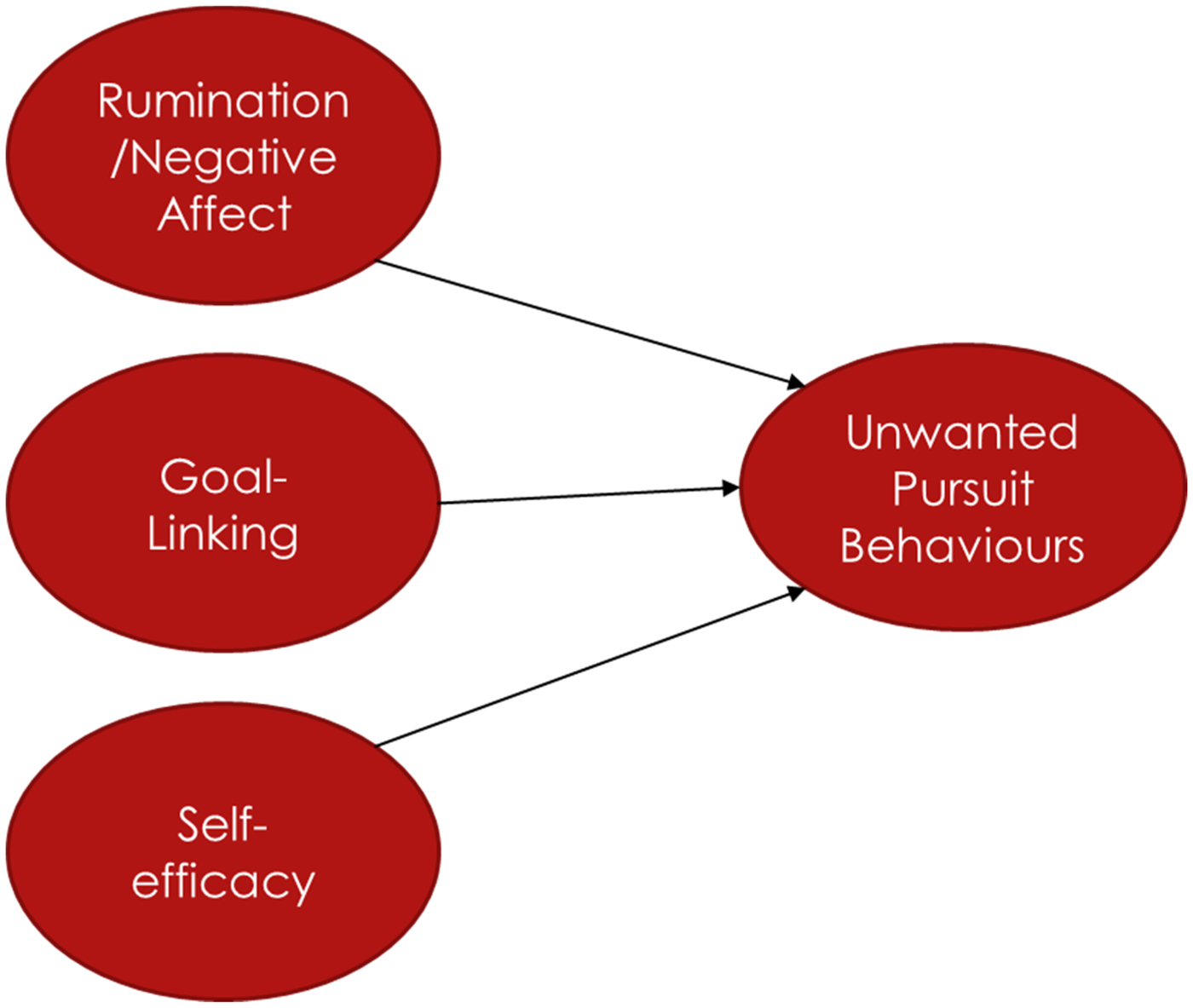
The RGPT model proposes multiple factors that contribute to UPB use. Rumination is one factor that is believed to intensify the severity and frequency of UPBs under RGPT. Rumination occurs when an individual fails to obtain a lower-order relational goal that is linked with a higher-order goal (Cupach & Spitzberg, Reference Cupach and Spitzberg2004; McIntosh & Martin, Reference McIntosh, Martin and Clark1992). The faulty perception that the relationship is essential for self-worth or happiness leads to extremely negative predictions regarding the impact of failing to achieve a higher-order goal. Rumination about perceived consequences of failure intensify over time until the goal is abandoned or obtained. However, because the relational goal is now linked to a higher-order one, the goal is unlikely to be abandoned easily (McIntosh & Martin, Reference McIntosh, Martin and Clark1992).
RGPT posits that rumination alone is insufficient for UPB use, as the belief that the goal is obtainable is also critical to the model. High self-efficacy has been associated with increased UPB use (Bagozzi, Reference Bagozzi1992). To pursue an ex-partner persistently in the face of repeated failure, an individual must have a strong belief that the goal is obtainable. Individuals using UPBs tend to misinterpret rejections or non-invitations as encouragement to continue the pursuit behaviour (Cupach, Spitzberg, & Carson, Reference Cupach, Spitzberg, Carson, Dindia and Duck2000). The RGPT model represents the first conceptualisation of the factors that are associated with UPB use and was used as the conceptual framework here.
The Current Study
Past research has identified that UPBs are common following relationship breakups among young adults (De Smet et al., Reference De Smet, Uzieblo, Loeys, Buysse and Onraedt2015; Lee & O'Sullivan, Reference Lee and O'Sullivan2014), and being a target of UPBs is associated with adverse mental health (Chung et al., Reference Chung, Farmer, Grant, Newton, Payne, Perry and Stone2002; Dutton & Winstead, Reference Dutton and Winstead2011). Coping has a solid body of empirical support for its role in helping people overcome adverse situations, such as relationship breakups, and may be instrumental in promoting positive post-breakup adjustment. The current study assessed how coping style was linked to UPB use in response to the distress of a relationship loss. Because romantic competence reflects skills acquired through experience to navigate a relationship breakup successfully (Salvatore et al., Reference Salvatore, Collins, Simpson, Campbell and Loving2012), we also examined whether romantic competence helped to predict the frequency and scope of UPB use. Despite little direct evidence for gender differences in UPB use, gender is an important organising principle in relationships and was a focus of the current study. Gender differences were analysed first to determine whether subsequent analyses required gender to be used as a control.
The research questions for the study are as follows:
RQ1: Are there gender differences between men and women in the frequency, scope, or appraisal of one's UPB use?
RQ2: Are the levels of perceived distress associated with the breakup, coping strategies, and romantic competence associated with the frequency and scope of UPB use?
RQ3: How well do the RGPT model constructs (i.e., self-efficacy, goal-linking, and rumination) account for the frequency and scope of UPB use?
Method
Participants
Two hundred participants (50% female; M age = 22.3, SD = 1.34; aged 19–24) were recruited from Amazon's Mechanical Turk (MTurk®), a widely adopted crowdsourcing website that allows individuals to complete online jobs of their choosing for monetary compensation (Mason & Suri, Reference Mason and Suri2012). Eligibility criteria included being a resident of the United States, between 19–24 years, having experienced a romantic or dating relationship that lasted at least two months and that had been terminated in the last six months, and not currently engaged in a romantic relationship. Participants identified primarily as Caucasian (76%), heterosexual (88.5%), and were generally employed full-time (53.5%).
Measures
Demographic questionnaire
Participants completed a demographic measure designed for the current study that assessed a range of background information, including age, gender (male, female, transgender, other), sexual orientation (e.g., heterosexual, lesbian, gay, bisexual), ethnicity (e.g., American Indian, Asian, African American, Caucasian), religion (importance ranging from 1 to 5), educational/employment circumstance (part-time student, full-time student, part-time employed, full-time employed, unemployed, receiving social assistance), and relationship status (single, dating, married).
Sexual and relationship history
This measure assessed qualities of the participants' most recent relationship, including relationship duration (in months), who initiated the breakup (me, partner, mutual, unsure), and gender of the partner (male, female, transman, transwomen, other). Feelings of closeness, level of commitment (i.e., desire for relationship to last), and romantic and sexual satisfaction were assessed on a 4-point Likert scale ranging from 1 (not at all) to 4 (a lot). The measure also assessed perceived intensity of the current breakup compared to previous ones on a 6-point Likert scale ranging from 1 (much more serious/intense) to 6 (I have never broken up with anyone before). This measure has been used successfully in our prior research (Lee & O'Sullivan, Reference Lee and O'Sullivan2018). Individuals were also asked to indicate the number of past romantic relationships in which they have been involved (romantic competence).
Unwanted pursuit behaviours
The Unwanted Pursuit Behavior Inventory (Lee & O'Sullivan, Reference Lee and O'Sullivan2014) is a 36-item measure designed to capture both online and offline forms of unwanted pursuit that occur following a relationship breakup. It was designed using young adult samples and examines both offline and online UPBs. Respondents are asked if they engaged in any of the 36 behaviours when dealing with a recent breakup (yes/no). Examples of the items include ‘Walked or drove around to try and see them’ and ‘Sent needy or demanding messages’. Respondents report the number of times that they had engaged in each behaviour that they report using, and appraise the behaviour in terms of perceived severity of the fear and harm experienced by the target. Fear is measured by asking respondents to indicate how threatened they believed their targets were by the respondent's behaviour, whereas harm is measured by the degree of harm respondents believed that their target experienced, with both measures using a 5-point Likert scale ranging from 1 (not at all) to 5 (extremely).
Breakup distress
The Breakup Distress Scale (BDS; Field, Diego, Pelaez, Deeds, & Delago, Reference Field, Diego, Pelaez, Deeds and Delgado2009) is a 16-item questionnaire that measures distress following a romantic relationship breakup. Items are measured on a 4-point Likert scale ranging from 1 (not at all) to 4 (very much so). An example of the items includes ‘I feel I cannot accept the breakup I've experienced’. Higher scores indicate greater distress. The BDS is the most widely used scale in studies of breakups, and it had high internal consistency in the method development study (α = .93 at T1 and α = .96 at T2; Fields et al., Reference Field, Diego, Pelaez, Deeds and Delgado2009), and in the current study (α = .95).
Coping style
The Coping Inventory for Stressful Situations (CISS; Endler & Parker, Reference Endler and Parker1999) is a widely adopted, 48-item, self-report questionnaire. Sixteen items are used to assess each of the three subscales: Task-oriented coping, Emotion-focused coping, and Avoidance. The Avoidance subscale includes two subcategories: Distraction (8 items), Social diversion (5 items), and three filler items. Individuals rate on a 5-point Likert scale how often they engage in each behaviour from 1 (not at all) to 5 (very much). Example of the items include: ‘Blame myself for having gotten into this situation (emotion-focused)’, ‘Think about the event and learn from my mistakes (task-oriented)’, and ‘Take time off and get away from the situation (avoidance)’. Higher scores indicate greater use of a particular coping strategy. Alpha coefficients in its development demonstrated good internal consistency for Task-oriented coping (α = .87–.92), Emotion-focused coping (α = .82–.90), and Avoidance (α = .76–.85) subscales (Endler & Parker, Reference Endler and Parker1999). The current study found similar levels of internal consistency (alphas = .92, .84, and .91 respectively).
Rumination
The Event Related Rumination Inventory (Cann et al., Reference Cann, Calhoun, Tedeschi, Triplett, Vishnevsky and Lindstrom2011) is a 20-item measure that assesses the degree of excessive or intrusive thoughts related to a specific event. The scale measures the frequency with which ruminative thoughts occurred on a 4-point Likert scale from 0 (not at all) to 3 (often). Higher scores indicate more rumination about an event. A sample item is ‘I forced myself to think about my feelings about my experience’. The scale has revealed high internal consistencies (α = .90–.94; Cann et al., Reference Cann, Calhoun, Tedeschi, Triplett, Vishnevsky and Lindstrom2011; Zhang, Yan, Du, & Lui, Reference Zhang, Yan, Du and Liu2013). High values were obtained in the current study (α = .93).
Self-efficacy
Perceived self-efficacy was measured using an eight-item scale developed specifically for the purposes of UPB research (Cupach et al., Reference Cupach, Spitzberg, Bolingbroke and Tellitocci2011). The items were rated on a 7-point Likert scale ranging from 1 (strongly disagree) to 7 (strongly agree). An example of the items is: ‘I was confident I could get my ex-partner to reconcile with me’. Higher scores indicate greater belief that a relationship can be reconciled or obtained. The scale was found to have adequate internal consistency (α = .77; Cupach et al., Reference Cupach, Spitzberg, Bolingbroke and Tellitocci2011), but good consistency in the current study (α = .87).
Goal-linking
The degree to which an individual believes achieving a lower-order goal is essential for obtaining a higher-order goal was measured using the Goal Linking Scale developed specifically for UPB research, and used successfully in the past (Cupach et al., Reference Cupach, Spitzberg, Bolingbroke and Tellitocci2011). The scale consists of eight items measured on a 7-point Likert scale ranging from 1 (strongly disagree) to 7 (strongly agree). A sample item is ‘I determined that only this person could help me achieve my life goals’. Higher scores indicate a greater likelihood or linking a lower order goal (relationship) with a higher order goal (happiness). The scale was found to have high internal consistency (α = .93; Cupach et al., Reference Cupach, Spitzberg, Bolingbroke and Tellitocci2011), and this was true also in the current study (α = .87).
Procedure
A priori power analyses indicated that 77 participants are required to have 80% power for detecting a medium effect size. Participants were recruited through MTurk®, and interested individuals clicked on a link to a secure server. Those eligible completed a consent form prior to completing the anonymous online survey. All measures were first entered into Checkbox Survey®, a professional survey platform then linked to MTurk®. The two platforms were separate, and identifying information was not connected to their responses. The survey took approximately 30 minutes to complete. After finishing the survey, participants were taken to a webpage where they were thanked for their participation, given a debriefing form, and asked for their MTurk® worker ID to receive monetary compensation for their time. All measures and procedures were piloted in full prior to the study and were approved by our institution's research ethics board.
Data Analyses
Data were screened and conditioned using procedures outlined by Tabachnick and Fidell (Reference Tabachnick and Fidell2018). The SPSS Missing Values Analysis software was used to determine whether data were missing systematically or at random. Participants (n = 4) who failed to complete more than 10% of the demographic, coping style, UPB use, and relationship measures were excluded automatically from all analyses. For variables missing less than 5% of data or data that were missing at random, missing values were not adjusted. These analyses revealed no non-random missing data. Univariate outliers (n = 8) that fell beyond three standard deviations from the mean score and were discontinuous from the rest of the sample were individually recoded to within three standard deviations, and multivariate outliers (n = 1) were deleted only when conducting regression analyses (Tabachnick & Fidell, Reference Tabachnick and Fidell2018). No significant issues regarding normality, linearity, and/or homoscedasticity assumption violations were observed. No participants failed the response validity items embedded in the survey, but four were identified as repeat, random, or careless responders and excluded from all analyses. The final sample included 200 participants.
First, a multivariate analyses of covariance (MANCOVA) was used to assess gender differences in the frequency and scope of UPB use, as well as the subjective appraisal of threat and harm associated with UPB strategies used (RQ1). Time since breakup was controlled for in the procedure. Next, two hierarchical linear regressions analyses were used to investigate whether distress, romantic competence, and coping strategies predicted frequency and scope of UPB use (RQ2). Finally, two hierarchical linear regressions were used to investigate whether self-efficacy, goal-linking, and rumination predicted frequency and scope of UPB use (RQ3). Time since breakup was entered on the first step as a control variable, with the remaining variables entered at the second step.
Results
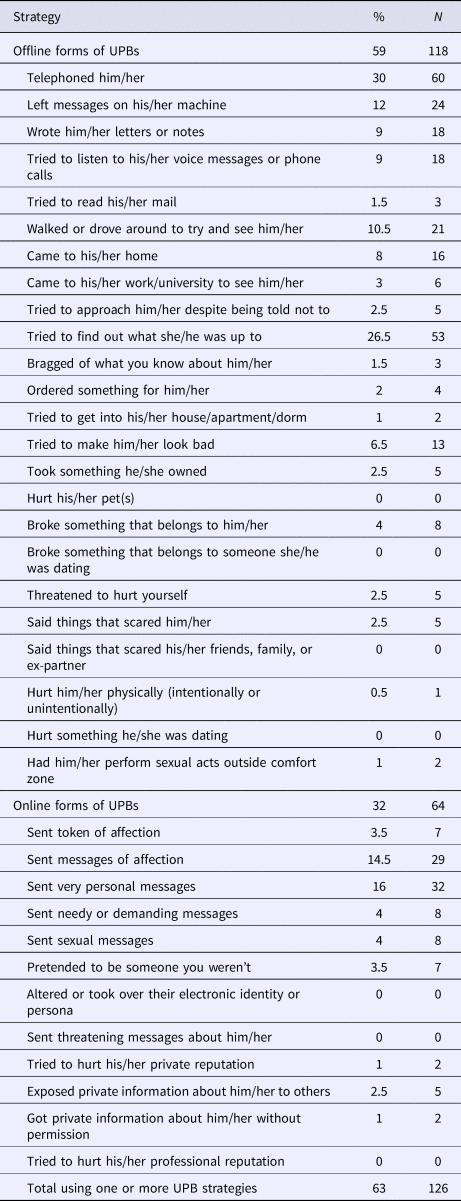
Descriptive statistics regarding respondents' use of UPBs overall as a function of offline/online behaviour, and percentage of use by strategy are presented in Table 1. Overall, 63% of respondents reported using at least one UPB after their most recent breakup. UPB use occurred at a relatively high frequency (M = 13.75, SD = 17.61, range = 1–82), and scope (M = 2.91, SD = 2.09, range = 1–9). Offline forms of UPBs (59% of respondents) were more commonly used than were online methods (32% of respondents), χ2(1) = 29.40, p < .05. For offline UPBs, the most common strategies were telephoning the ex-partner (30%), trying to find out what their ex-partner was doing (26.5%), and leaving telephone messages (12%). More extreme strategies, such as physically hurting an ex-partner (0.5%) and forcing an ex-partner to perform unwanted sex acts (1%) were relatively rare. For online UPBs, the most common strategies included sending extremely private messages (16%) and sending messages of affection (14.5%). Again, more severe behaviours, such as sending threatening messages (0%) and giving out private information (1%), were absent entirely or rare.
Percentage of Individuals Using UPBs by Strategy and Overall

Note: N = 200.
The association between gender and UPB use was examined first. Bivariate correlations did not suggest any relationship between gender and UPB frequency, scope, or subjective appraisal (i.e., subjective ratings of threat and harm to their ex-partner). The MANCOVA revealed no significant relationships, F(4, 115) = 1.582, p > .05, η2 = .052.
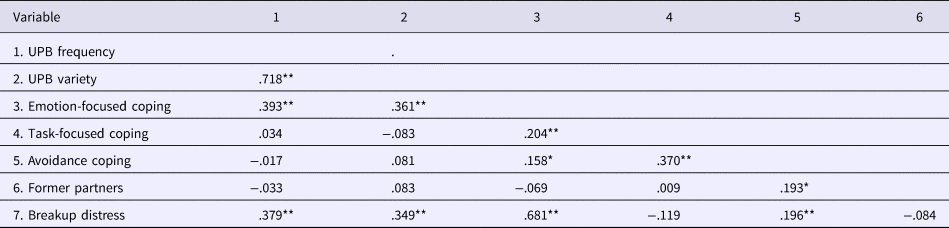
The extent to which breakup distress, relationship experience (i.e., lifetime number of relationship partners), and coping strategies predicted the frequency and scope of UPB strategies used in a recent breakup was examined next. Bivariate correlations indicated that emotion-focused coping was significantly associated with UPB frequency and scope (Table 2). Task-focused and avoidance coping were unrelated to any dependent variable and therefore were not included in subsequent analyses. Bivariate correlations revealed strong relationships between the predictor variables (emotion-focused coping, breakup distress) and UPB frequency and scope.
Bivariate Correlations for UPB Frequency and Scope, Coping Strategies, Breakup Distress, and Number of Former Partners

Note: N = 126. *p < .05. **p < .01.
Separate hierarchical linear regression analyses were conducted to predict frequency of UPB use and scope of UPB behaviours used while controlling for time since breakup. Predictors were breakup distress, number of former partners, and level of emotion-focused coping. Time since breakup was entered in the first step, while the remaining predictors were entered in the second step. The regression analyses predicting UPB frequency was significant, R 2 = .20, F(4,104) = 6.06, p < .001. However, no individual predictors were significantly associated with the frequency of UPBs used. Both emotion-focused coping (β = .24, p > .07) and breakup distress (β = .22, p > .097) approached significance. The analyses predicting scope of UPB use also was significant, R 2 = .23, F(4,104) = 7.34, p < .001. Emotion-focused coping (β = .23, p < .01) was found to be significantly associated with the scope of UPBs used. Higher levels of emotion-focused coping were associated with an individual engaging in a greater diversity of UPB strategies.
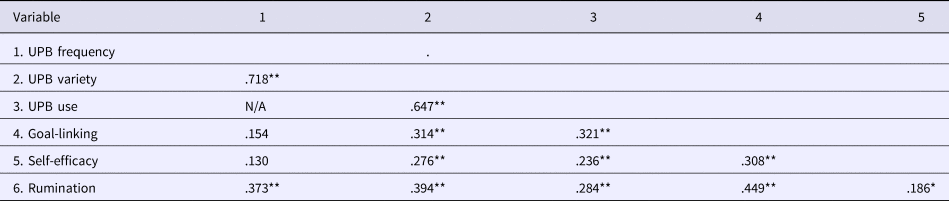
The RGPT was assessed regarding whether goal-linking, self-efficacy, and rumination could predict UPB frequency and scope. Bivariate correlations indicated that rumination, self-efficacy, and goal-linking were significantly associated with UPB frequency and scope (Table 3). The hierarchical linear regression analyses predicting UPB frequency was significant, R 2 = .16, F(4,111) = 5.00, p < .01. Rumination (β = .37, p < .001) was found to be significantly associated with the frequency of UPB use. Higher levels of rumination predicted more frequent use of UPBs following a breakup. The hierarchical linear regression analyses predicting scope of UPB use was also significant, R 2 = .19, F(4,111) = 6.19, p < .001. Both rumination (β = .35, p < .001) and self-efficacy (β = .18, p < .05) were significantly associated with the scope of UPBs used. Higher levels of rumination and perceived self-efficacy that one can achieve one's relational goals were associated with a wider scope of UPBs used to pursue an ex-partner, providing support for the RGPT model.
Bivariate Correlations for UPB Frequency and Scope, Goal-Linking, Self-Efficacy, and Rumination

Note: N = 126. *p < .05. **p < .01.
Discussion
Following a relationship breakup, nearly two-thirds (63%) of the young adults in this study reported that they had used at least one type of behaviour that constitutes unwanted pursuit against their former relationship partner. This rate is somewhat lower than found in similar studies of UPB use (De Smet et al., Reference De Smet, Uzieblo, Loeys, Buysse and Onraedt2015; Haugaard & Siri, Reference Haugaard and Seri2004), likely because we sampled a more heterogeneous population than is the case with the college samples used in past research. The young adults in the current study tended to use, on average, almost three forms of unwanted pursuit behaviours after experiencing a romantic breakup, primarily in-person (vs. online) forms, and they reported using UPBs at a relatively high frequency (M = 13.75 occasions). Fortunately, and in line with other research (Lee & O'Sullivan, Reference Lee and O'Sullivan2014), the majority used relatively benign behaviours (e.g., sending unwanted messages, looking for information about ex-partner). More severe pursuit behaviours (e.g., violence, theft of personal objects) were relatively rare. Even so, these results indicate that many young people have trouble letting go after the loss of a romantic relationship.
The current study replicated the findings from past research (Lee & O'Sullivan, Reference Lee and O'Sullivan2014) that UPB use still occurs offline to a significant extent, despite greater use of technology among emerging adults (Olsen, O'Brien, Rogers, & Charness, Reference Olson, O'Brien, Rogers and Charness2011). In fact, we found that 59% of respondents engaged in an offline UPB, whereas only 32% reported engaging in an online UPB. This difference suggests that a core component of the pursuit is to achieve physical, face-to-face, or in-person contact.
The first research question assessed gender differences in UPB use and subjective appraisals of the behaviour on the target of the pursuit. Our work confirmed what others have found, which is that gender appears unrelated to UPB frequency, UPB scope, and the perceived threat and harm experienced by the target (Cupach & Spitzberg, Reference Cupach and Spitzberg2000; De Smet et al., Reference De Smet, Uzieblo, Loeys, Buysse and Onraedt2015). Young women did not perceive their UPB use as more harmful to a target than did their male counterparts, even though female targets of UPBs have been found to view the behaviour as more threatening than male targets (Cupach & Spitzberg, Reference Cupach and Spitzberg2000). It may be that UPB users experience dissonance around the use of these behaviours, dismissing the intrusiveness, inappropriateness and unwanted nature of these efforts, which prevents them from acknowledging the potential threat and harm to the target. Future research should use qualitative methods to explore in depth how young people interpret the meaning of their use of UPBs, the impact (if any) that they believe these behaviours have on the target, and the extent to which dissonance regarding UPB use is apparent in their accounts.
The second research question examined the role of coping in UPB use, testing a model that incorporates the coping strategies used following a breakup. Breakups are recalled as one of the most stressful experiences in emerging adulthood (Park, Cohen, & Murch, Reference Park, Cohen and Murch1996; Tashiro, & Frazier, Reference Tashiro and Frazier2003), and therefore it is important to assess the role of coping as a response given its importance in research on stressful experiences (Chung et al., Reference Chung, Farmer, Grant, Newton, Payne, Perry and Stone2002). Greater use of emotion-focused coping strategies was related to a wider scope of UPB strategies used, although unrelated to the frequency with which individuals engaged in unwanted pursuit. Emotion-focused strategies typically involve thinking about the stressor without taking steps to solve it, such as discussing the issue with a friend. Although avoidance coping fails to resolve the stressor, it may succeed in keeping the ex-partner out of mind, which is contrary to the goals of unwanted pursuit. The fact that task-focused coping was not related to UPB use was surprising; however, as noted by Compas et al. (Reference Compas, Connor-Smith, Saltzman, Thomsen and Wadsworth2001), the success of a coping strategy depends heavily on the individual and context. Perhaps task-focused strategies are less beneficial when there is no concrete ‘solution’ to a problem, such as is the case with a relationship breakup.
Interestingly, relationship experience and breakup distress were found to be unrelated to UPB frequency and scope in the analyses. This finding is at odds with research that has found significant relationships between breakup distress and UPB use (De Smet et al., Reference De Smet, Buysse and Brondeel2011). It is possible that the lingering impact of a breakup overlaps significantly with breakup-related rumination, as rumination was significantly linked to UPB frequency and use.
The third and final research question looked at the predictive power of factors associated with RGPT theory and UPB frequency and scope. Proponents of RGPT (Spitzberg & Cupach, Reference Spitzberg and Cupach2007) argue that rumination, self-efficacy, and goal-linking are important factors in the use of UPBs. However, UPB research is relatively new, and the RGPT model was only tested once as of this writing (Cupach et al., Reference Cupach, Spitzberg, Bolingbroke and Tellitocci2011). In line with previous research (Cupach et al., Reference Cupach, Spitzberg, Bolingbroke and Tellitocci2011), rumination emerged as a significant predictor of both UPB frequency and scope. Self-efficacy was also related to increased UPB scope. Goal-linking was not found to be a significant predictor of UPBs, contrasting findings by Cupach et al. (Reference Cupach, Spitzberg, Bolingbroke and Tellitocci2011). Thus, perseverating about the relationship loss paired with a belief that one can bring about a reconciliation with a reluctant and rejecting partner were most closely linked to unwanted pursuit. Future research should continue to examine the core elements that predict UPB behaviour in the attempt to create a cohesive model of UPB use. Rumination, self-efficacy, and emotion-focused coping are some of the factors that appear valuable.
Study Limitations and Future Directions
There were several limitations to the current study that should be noted. Although fairly diverse in terms of ethnicity and sexual orientation, the sample only included respondents from the United States, so the findings cannot be generalised beyond this population. Future research should explore UPB use and links to coping among other age groups. In addition, our sample comprised individuals recruited using crowdsourcing online, which improved representativeness over traditional college samples, but may have introduced issues with participant integrity and data quality (Smith, Roster, Golden, & Albaum, Reference Smith, Roster, Golden and Albaum2016), although our validity checks appeared to indicate otherwise.
Another limitation of the study is that it does not address any legal or forensic issues associated with the more extreme forms of UPBs. It therefore does not inform potential treatment avenues or programs that aid in rehabilitating this population. Romantic competence was also defined narrowly in the current study, in that more romantic competence was related to having a greater number of former partners. These data may have captured romantic experience, but not necessarily competence if an individual acquired no new relationships skills across their relationships. In addition, more relationships might have a curvilinear relationship with romantic competence in that both those with few and those with many past relationships may have trouble establishing and sustaining a lasting close relationship. Future research should utilise a more valid measure of romantic competence.
Research that relies on self-reports are always subject to response bias and socially desirable responding. We tried to offset these problems by ensuring participants were aware that their responses were anonymous, embedding validity checks throughout the survey, and using non-judgmental wording throughout. However, our findings likely still reflect these biases to some degree, given the social sensitivity of this topic. Replication of the current study will be important to increase confidence in these results. Future research also should explore coping in greater detail, especially in terms of whether specific subtypes of emotion-focused strategies are particularly problematic for UPB use. Additional testing of the significant elements of both the RGPT and coping-based models of UPB use is warranted.
Conclusions
The current study has important implications for understanding and alleviating distress associated with UPB use following a breakup. Depression, anxiety, social withdrawal and isolation, sleep issues, and fear are common among individuals who experience unwanted pursuit (Chung et al., Reference Chung, Farmer, Grant, Newton, Payne, Perry and Stone2002; Dutton & Winstead, Reference Dutton and Winstead2011; McEwan, Mullen, & Mackenzie, Reference McEwan, Mullen and Mackenzie2009). Despite high prevalence rates, especially in young adult-aged samples, there has been a lack of research addressing this topic. These findings give some insights into the factors that might reveal that an individual is having trouble letting go of an intimate relationship that has ended. Perceived self-efficacy and rumination were found to predict UPB use, and emotion-focused coping strategies used post breakup were also associated with the unwanted pursuit of an ex-partner. Coping strategies represent a promising target for researchers and clinicians who want to better understand relationship distress and reduce the negative effects among young adults.
Author ORCIDs
Jeffrey E. Foshay 0000-0002-5312-5638
Acknowledgments
We acknowledge the work of Ms Mary Byers in assisting with recruitment and survey creation.
Disclosure
The authors are not aware of any potential conflicts of interest. This research received no specific grant from any funding agency, commercial or not-for-profit sectors. The authors assert that all procedures contributing to this work comply with the ethical standards of the relevant national and institutional committees on human experimentation and with the Helsinki Declaration of 1975, as revised in 2008.