




No CrossRef data available.
Article contents
Metapopulation and community dynamics of helminth parasites of eels Anguilla anguilla in the River Exe system
Published online by Cambridge University Press: 12 July 2001
Abstract
The possibility that much of the spatial and temporal variation in helminth communities in freshwater fish can be explained in terms of metapopulation theory was tested by examining helminth component communities of eels sampled from 3 localities in the River Exe and 5 of its tributaries on 2 occasions at an interval of 3 years. Four specific predictions of metapopulation theory in relation to community dynamics were tested. The prediction that parasite species could be recognized as common and rare and that this was sensitive to scale was met. The prediction that core species would be more widely distributed and have a higher dispersal ability was met only in part. The prediction that similarity between communities would increase with connectivity and decrease with distance apart was not met. The final prediction that species would go locally extinct and be replaced by rescue effects was not met. There was evidence of local extinctions; not of eel specialists but of species using other fish species as their principal definitive hosts. Eel helminth communities were heavily dominated by 3 species of eel specialists which were relatively stable and responsible for most of the similarity and its changes in space and time. It was concluded that metapopulation theory did not provide a very satisfactory explanation for the changes in the helminth communities in eels and reasons for this included the inherent difficulty of applying metapopulation theory to parasites and the fact that the helminth communities in eels in the River Exe were atypical in being dominated by eel specialists.
Information
- Type
- Research Article
- Information
- Copyright
- © 2001 Cambridge University Press
INTRODUCTION
It is becoming increasingly evident that helminth communities of fish species show considerable spatial (Holmes, 1990; Kennedy, 1990; Hartvigsen & Kennedy, 1993; Poulin & Morand, 1999; Kennedy & Hartvigsen, 2000) and temporal (Kennedy, 1993a, 1997) variation in composition and species richness, although there may be an underlying similarity in structure and diversity (Kennedy & Guégan, 1996; Kennedy & Hartvigsen, 2000). It has also become increasingly apparent that the extent of this variation may relate, amongst other factors (see Poulin & Morand, 1999 and Hartvigsen & Halvorsen, 1994 for a review of these), to the scale of the investigation (Kennedy & Bush, 1994; Hartvigsen & Halvorsen, 1994; Kennedy & Guégan, 1994). Earlier attempts to apply MacArthur & Wilson's (1967) island biogeography model to helminth communities of freshwater fish on habitat and real islands (Kennedy, 1978a, b) had not proved very successful. However, this theory has now largely been replaced by metapopulation theory and Hartvigsen & Halvorsen (1994) proposed this as an alternative approach to studying the spatial patterns in helminth communities of fish. They accepted the widely held view that some species are common and some rare and that there is a positive relationship between abundance and distribution. These same views were reformulated by Hanski, (1982a, b) in terms of his core and satellite concept, which has subsequently proved to be a valuable approach to analysing helminth communities (Bush & Holmes, 1986; Stock & Holmes, 1987; Hartvigsen & Halvorsen, 1993).
Hanski & Gilpin (1991) defined a metapopulation as a system of local populations connected by dispersing individuals, i.e. a set of local populations which interact via individuals moving between them. The characteristics of metapopulation dynamics are change and turnover. Local populations may and do go extinct, but only to be replaced by recolonization from other local populations within the metapopulation. Metapopulation dynamics is seen as the key to a species persistence in a locality as metapopulations have a much longer time to extinction than local populations. A local population may equate to a patch, a habitat or a locality.
If helminth communities of fish are unstructured, chance assemblages as Kennedy (1990) suggested, then much community variation may in fact reflect independent changes in component populations. Hartvigsen & Halvorsen (1993, 1994) implicitly took a similar view when they advocated a metapopulation approach to problems of predicting the composition of helminth communities. These authors went on to erect a number of hypotheses from which, together with the views of Hanski & Gilpin (1991), a number of predictions relevant to community patterns and processes can be made. (1) Parasites may be recognized as common or rare (core or satellite within a community) but this position of common or rare is sensitive to the spatial scale of the investigation. (2) Similarity between communities should increase with increasing connectivity amongst patches and decrease with distance between patches. (3) Core species will be more widely distributed and have higher dispersal ability. (4) Species will go locally extinct and be replaced by re-invasion from other populations within the metapopulation, i.e. by rescue effects. For further discussion of the importance of scales and rescue effects in a metapopulation or parasitological context see the above references and Bush & Kennedy (1994) and Kennedy & Bush (1994).
The objectives of this study were to test these predictions by comparing helminth communities from one fish species throughout a single river system at one time in space and over time in each locality. The results are presented in this paper.
MATERIALS AND METHODS
The fish species selected for the study was the European eel, Anguilla anguilla, and the river system was the River Exe and some of its tributaries. Samples of eels were collected by electro-fishing from 3 localities in the river: a backwater near Bampton (EXL) (NGR SS939208), at Stoodly Bridge (EXS) (SS946190) and at Bickleigh (EXB) (SS945083). Samples were also taken from 5 tributaries: the Little Dart (LD) (SS932081), the River Culm (CU) (SX942980), the River Creedy (CR) (SX896975), Alphin Brook (AL) (SX941907) and the River Clyst (CL) (SX971910). All samples were collected between July and October to minimize any seasonal variation. The first set of samples was taken in 1997, when a sample was also taken from the adjoining catchment of the River Otter (OT) (SY077846) for comparison. A second set of samples was taken in all localities except OT in 2000. Each locality is considered to be a local population, and the River Exe system the metapopulation. Long-term data sets also exist for CL (Kennedy, 1993a), OT (Kennedy, 1997) and CU (Kennedy, unpublished). Eels were brought back to the laboratory alive, killed and frozen prior to examination. The investigation was confined to the helminths of the gills, swim-bladder and intestine. Eels were examined for helminths by standard methods (Kennedy, 1993a, 1997), with all helminths being identified as far as possible and counted.
All comparisons and analyses were conducted at the component community level, and all terminology used is as defined by Bush et al. (1997). Community dominance was measured by the Berger–Parker Dominance Index and communities were compared using the qualitative Sorensen's Index (Magurran, 1988) and the quantitative Percentage Similarity Index as described by Hurlbert (1978). Correlations were carried out using the Spearman Rank correlation coefficient.
Wherever possible a minimum of 10 eels (see Kennedy, 1997 for justification) was taken from each locality on each occasion, but sample sizes perforce also reflected eel population densities and water conditions. No account was taken of eel sex or age or size as abundance of the common helminth species of eels is independent of these characteristics (Kennedy, 1993a). When the two sets of samples taken are combined, there was a significant correlation between sample size and intestinal helminth species richness (rs = 0.569, P<0.05, N = 17).
RESULTS
Composition of the intestinal communities
In the 1997 samples, 12 species were recorded from eel intestines in the Exe system (Table 1), with a maximum of 10 and a minimum of 1 in any locality. A further species, Camallanus lacustris, was found in the 2000 samples. Five of these species were eel specialists and a sixth species, Acanthocephalus clavula, uses eels as its principal host but can infect a range of fish species. Only 1 species, the eel specialist Paraquimperia tenerrima, occurred in all localities. It was certainly the commonest species and can be regarded as a core species. The eel specialist Bothriocephalus claviceps occurred in 7 localities and the eel specialist Spinitectus inermis in 5: both can be considered common species. Several species, including both eel specialists (Proteocephalus macrocephalus and Acanthocephalus clavula) and non-specialists (Cucullanus truttae, Echinorhynchus truttae, Neoechinorhynchus rutili and Pomphorhynchus laevis), occurred in only one or two localities. Some of these species are specialists of other species of fish, e.g. C. truttae, N. rutili and E. truttae are specialists of brown trout Salmo trutta and P. laevis of chub Leuciscus cephalus.
Table 1. The prevalance and abundance of intestinal parasites in eels of the River Exe system in 1997 (Locality names are given in full in the text.)

However, in the context of eel helminth communities, species present in only one or two localities were considered rare. There is no clear relationship between eel specialization and distribution: whilst the core species P. tenerrima is also the most widely distributed, P. macrocephalus was rare and confined to a single locality. A species such as P. laevis could be common in one locality and uncommon in another or completely absent. It is also apparent that species richness could be higher in tributaries (CU and CL) than in localities in the main river.
Intestinal community similarity
For each pair of localities, values for Sorensen's Index are generally higher than those for the Percentage Similarity Index (Table 2). This is to be expected as the former index gives all species similar weighting whilst the latter weights according to abundance. The correlations between the two indices are, however, significant and positive: for 1997, rs = 0.49, P<0.01, N = 36 and for 2000, rs = 0.53, P<0.01 and N = 28. There is great spatial variation in the values for both indices, which range from 0.18 to 0.86 for Sorensen's and from 5 to 87% for the Percentage Similarity Index.
Table 2. Similarity matrix between the intestinal helminth communities of eels within the Rivers Exe and Otter systems with the qualitative Sorensen's coefficient below the diagonal and the quantitative percentage similarity index above the diagonal (Localities are arranged in order down river and the top 6 similarities in each group are in bold type.)

There appears to be no pattern in the similarity of communities within the River Exe system (Table 2). Despite the fact that all localities are directly connected to each other and eels and other fish can move freely between them, community similarity was low. For the Percentage Similarity Index, 20/36 values were below 25% and only one was above 75%. Adjacent localities were not of necessity the most similar: EXL and EXS are adjacent, as are EXS and EXB, but they show very low levels of similarity with both indices whereas EXL and EXB, which are not adjacent, show high values with both. Moreover, 3 of the highest values of the Percentage Index and 2 of the Sorensen's are between localities in the River Exe system and the locality OT in the adjoining catchment of the River Otter. Adjacent tributaries such as CU and CR also showed low values of similarity. There were no significant differences in mean similarity between localities in the River Exe (Sorensen's x = 0.57+0.23 S.D.; % similarity x = 33+0.29 S.D.) and the tributaries (Sorensen's x = 0.54+0.19 S.D.; % similarity x = 37+0.24 S.D.).
Changes in composition over time
In 1997 there were only 5 species in the River Exe localities (Table 3) but by 2000 this had increased to 9 as C. lacustris had appeared in the samples and 4 species previously found only in the tributaries were now recorded from the river itself. In 1997 three of the species were eel specialists and by 2000 this had increased to 4. Each sample and locality was dominated by an eel specialist, 5/6 by S. inermis. Only P. tenerrima was found in all the samples but it dominated only 1, and by 2000 had been replaced as the dominant species in EXS by S. inermis. By this time this species could also be considered a core species. In the course of the 3 years C. truttae, C. lacustris and A. clavula had appeared in 2 localities and Pseudocapillaria sp. in 1, whereas R. acus and N. rutili had disappeared from the main river. Only in EXS was there a change in the identity of the dominant species, although in EXB S. inermis increased in relative abundance from co-dominant to sole dominant in 2000. Eel specialists continued to dominate all communities in 2000.

Similar changes were observed in the tributaries (Table 4). These harboured 12 species in total in 1997 and 13 in 2000, the only new species being C. lacustris. Four of the species, Sphaerostoma bramae, P. macrocephalus, E. truttae and P. laevis, were found only in the tributaries and 3 of these can be considered rare as they were only found in 1 or 2 samples. The only species present in all samples was again P. tenerrima and this core species dominated 60% of the samples. Although B. claviceps was commoner than S. inermis, being found in 70% of the samples as compared to 40%, it never dominated a sample whereas S. inermis dominated both CR samples. Only 1 locality, CU, was not dominated by an eel specialist. The commonest non-eel specialist was R. acus. The identity of the dominant species did not change in any locality over the 3-year period, although the value of the dominance index did. With the exception of CU, eel specialists contributed at least 67% to relative abundance.

Considering the catchment as a whole, i.e. Tables 3 and 4 together, there is evidence of extensive flux and turnover in species composition over the 3 years. One species, C. lacustris, appeared in eel helminth communities in the system whereas N. rutili, P. macrocephalus and E. truttae disappeared from eels. The occurrence of S. bramae, C. truttae, Pseudocapillaria sp., R. acus and A. clavula was erratic and showed no pattern, but 6 of this group of 9 species use other species of fish as principal definitive hosts. The only species that showed little change were the 3 common eel specialists B. claviceps, P. tenerrima and S. inermis and the non-specialist P. laevis in 1 locality. Of these, only P. tenerrima occurred in all samples. One of these 3 species of eel specialist dominated all samples and localities except those in CU.
Changes in similarity over time
The changes in similarity indices within a locality reflected very largely the changes in the identity and relative abundance of the dominant species (Table 5). Where the identity of the dominant species had changed (EXS) both indices were low: where there was little or no change in the abundance of the dominant species (LD, CU, CR) similarity was high. Where there was a large change in the real and absolute abundance of the dominant species, as in EXL, EXB, AL and CL, similarity also changed and could increase (AL) or decrease (CL).

Changes in similarity between localities also reflected strongly the changes in relative abundance of the dominant species (Table 6). Major changes often involved similarity with EXS, where the identity of the dominant species changed, and EXB, where a co-dominant species became sole dominant. The major changes involving EXS all led to an increase in similarity and those with EXB to a decrease. There is no pattern evident in the other changes: EXS and EXL showed the largest change and these are adjacent localities as are EXB and EXL, which showed the smallest change. Large changes were also observed between distant localities (EXB and AL; EXB and CL) and small ones between other pairs of adjacent localities, e.g. CL and AL. Most small changes seem to reflect small changes in the relative abundance of species.
Table 6. Changes in quantitative similarity index between localities in the River Exe system between 1997 and 2000 (Percentage changes are shown below the diagonal and absolute changes above the diagonal. Localities are arranged in order down river and major changes (>25 absolute or 200%) are in bold face.)

Changes in non-intestinal species
Only 2 non-intestinal helminth species were found in the system (Table 7).The eel specialist Pseudodactylogyrus sp. is widespread on the gills of eels throughout the system although absent from EXL and LD. There was no pattern evident in its prevalence or abundance in relation to the location and proximity of localities. In 1997 prevalence was highest in EXS and lowest in AL and CL, but in 2000 it was lowest in EXS and highest in CL. This species had not invaded any new localities or disappeared from any existing ones, and there was no consistency in the pattern of changes within or between the localities over the 3 years.

The eel specialist Anguillicola crassus, however, still appears to be invading the system (Table 7). In 1997 it was absent from all localities in the River Exe itself, and from LD, and was confined to the lower tributaries, with the highest prevalence in the lowest two. By 2000 it still remained at high levels of prevalence and abundance in AL, but prevalence and abundance had also risen sharply in both CR and CU and it was now found in the River Exe at EXB. This would suggest that it has been spreading up-river from a source near the estuary.
DISCUSSION
The fundamental aim of this investigation was to determine whether metapopulation theory could, as suggested by Hartvigsen & Halvorsen (1994), assist prediction of community composition and understanding of community heterogeneity. Although landscape ecology focuses on spatial heterogeneity it is equally applicable to temporal heterogeneity (Hartvigsen & Halvorsen, 1994) and their hypotheses can be tested on both scales. In their earlier study (Hartvigsen & Halvorsen, 1993) they compared parasite communities in brown trout in 4 lakes, 3 of which were unconnected. Indeed, most persons employing metapopulation theory seem to have envisaged that the local populations are not connected but are separated by unsuitable habitats (Hanski & Gilpin, 1991). This need not be the case and a lack of connection is not obligatory for application of the theory. There is therefore no reason why a river and its tributaries should not be viewed as a metapopulation and locations in the river and its tributaries as local populations. The only consequence of this is that one might predict higher than normal levels of similarity between communities given their proximity and connectivity (Poulin & Morand, 1999).
The choice of eels for testing the hypotheses was not simply due to pragmatic considerations such as ease of capture: they are particularly suitable because they are found in a wide range of aquatic conditions and are known to occur through the whole of the River Exe system. They are also easily able to move freely from one locality to another, unlike other species of fish which tend to be restricted to particular parts of the system. They will inevitably carry their parasites in such movements and so these have the potential to rescue declining local populations or replace extinct ones. Moreover, since all the helminths being studied are autogenic (Esch et al. 1988), this is the only way in which such rescue effects could operate. In addition, the helminth fauna of eels is well known, as is the extent of its variation in space (Kennedy, 1990; Kennedy & Guégan, 1996) and time (Kennedy, 1993a, 1997). Thus, both site and host species appear to be well suited to testing the hypotheses of (Hartvigsen & Halvorsen 1994).
The investigation focused on helminths in the intestinal habitat, since this harbours several species which form a recognizable community. Non-intestinal species were considered and analysed separately because they are not known to interact with any of the intestinal species and there was only a single species in each habitat. Moreover, A. crassus is known to be a recent introduction to the UK and to the River Exe catchment, throughout which it is still spreading rapidly, and the status of Pseudodactylogyrus sp. in the River Exe remains unclear (Kennedy, 1993b). These 2 species were included in the investigation for completeness but principally as further examples of patchy distributions, colonizing species and anthropochore influences on the parasite fauna. It seems inappropriate, however, to include them in spatial and temporal similarity comparisons of intestinal helminth communities to which they clearly do not belong.
The first prediction, that it is possible to recognize common and rare species, was undoubtedly met. Amongst the eel specialist intestinal helminths in the system, P. tenerrima, S. inermis and B. claviceps could be considered common and P. macrocephalus rare, whilst Pseudocapillaria sp. occupied an intermediate position. It is difficult to apply the core and satellite concept to these species since the method distinguishing these categories advocated by Hanski (1982a, b) is not readily applicable to species poor communities. Hartvigsen & Halvorsen (1993) used the concept in their study, but as descriptive terms only. If the same procedure is adopted here, both P. tenerrima and S. inermis could be described as core species. These core species, together with B. claviceps, were the most widespread and abundant species within the system, occurring in most localities and samples (in all for P. tenerrima) and one or other of them dominating all the communities except that in CU. Indeed these 3 species together are responsible for over 50% of the abundance in all communities except that in CU. This does appear to confirm the prediction that core species will be better at dispersal. This conclusion is, however, sensitive to scale as was also predicted. Although P. tenerrima is a widespread and common parasite of eels throughout Britain, it only dominates a minority of communities (Kennedy, 1990). By contrast, S. inermis has only previously been recorded from the British Isles in 3/87 localities. It is widespread but very local in continental Europe and is considered to be a rare species (Moravec, 1994). Why it is so common in the rivers Exe and Otter is not known: it was not found in the Otter before 1987 (Kennedy, 1997) or in the River Culm up to 1986 (Kennedy, unpublished), and it is possible that it has only recently colonized these systems. Another widespread species throughout Europe is A. clavula, which was once common and dominant in the eels of the River Clyst (Kennedy, 1984, 1993a) but can currently be considered uncommon. A different pattern again is shown by P. laevis, which can be locally very abundant as in the Culm and Otter but which is very patchily distributed on a regional scale (Kennedy, Bates & Brown, 1989). By contrast, Pseudocapillaria sp. is not widely distributed and always occurs in low abundance. The predictions relating to common and rare species do thus seem to be met on the whole, but the data do not completely support the view of Nee, Gregory & May (1991) that species abundant in one patch are also found in more patches.
The predictions relating to community similarity, by contrast, do not seem to be met. Each locality was connected to each of the others by water, a suitable habitat, and so connectivity of populations should be very high. However, similarity between communities bore no relationship to connectivity of localities. Indeed, the percentage similarity index ranged from 5% to 87%, with the majority of values below 25%. This range is similar to that reported by Esch et al. (1988) from eels in 12 localities scattered across Britain, whereas intuitively one would have expected similarity values to be far higher within a single river system. Similarity also appeared to be unrelated to proximity and distance between localities. Neighbouring localities showed both high (64%) and low (5%) levels of similarity and 3 of the highest similarity pairings involved a locality in the adjacent catchment. Moreover, average levels of similarity did not differ between localities in the main river and in the tributaries. The data thus refute this prediction of Hartvigsen & Halvorsen (1994) and do not support the views of Poulin & Morand (1999).
The predictions relating to change and turnover of species do appear at first to be met. One obvious source of spatial and temporal heterogeneity is the spread of an invading species throughout the system, exemplified by the natural spread of A. crassus and the so far inexplicable appearance of P. laevis in the River Culm some time post 1986 and its virtual restriction to that river. There is also evidence of species appearing in eel populations over the 3 years (C. lacustris), and of species disappearing from eel populations (N. rutili, E. truttae and P. macrocephalus), whilst others are erratic in respect of their appearance in, and disappearance from, particular localities. However, these changes do not per se provide evidence of a rescue effect or indeed of a disappearance from the system. Some of these species have a history of erratic appearances and disappearances from eel populations over much longer time scales in the River Clyst (Kennedy, 1993a) and the River Otter (Kennedy, 1997). Moreover, several of these species are specialists of other species of fish and their appearance or disappearance from eels and from any particular locality may reflect changes in, and movements of, the populations of their preferred hosts. The appearance of C. lacustris, for example, is likely to reflect changes in the perch population and changes in other species may reflect changes in the pike and trout populations and their movements throughout the system.
Perhaps, therefore, a test of the predictions should be confined to eel specialists only although the Culm helminth communities would then appear anomalous in being dominated by a non-specialist. The 3 common specialists P. tenerrima, S. inermis and B. claviceps show far greater population stability than the other species: between them they dominate all the samples, except those from the Culm; together they contribute most to the relative abundance of helminths in the communities, except for the Culm; and they are responsible for the levels of similarity between the communities and the changes therein. Changes in the identity and relative abundance of a dominant species in space or time are reflected in corresponding changes in levels of community similarity. The other two eel specialists, P. macrocephalus and Pseudocapillaria sp. always exhibited low abundance and so contributed little to community structure or similarity. There is no evidence either way for a rescue effect operating on these species and there appeared to be no place in the system where they were sufficiently abundant to serve as a source for a rescue. The only possible rescue effect is A. clavula. This species declined in the River Clyst after 1982, and a rescue effect from the River Exe was suggested for its continuation in the river (Kennedy, 1984). It has subsequently persisted in the Clyst (Kennedy, 1993a) and metapopulation theory still provides the most plausible explanation for the continuing local extinctions and re-appearances of this species.
Overall, however, metapopulation theory does not provide a very satisfactory explanation for the changes in helminth communities in eels in the River Exe system, as most of the predictions are not met in practice. There is evidence for species being common and rare, for heterogeneity in space and time and for change and turnover in populations but there are alternative and equally plausible explanations for most of these phenomena in terms of species invading the catchment or utilizing other fish species as principal hosts. They generally involve non-eel specialists or rare species, and can be equated with noise in the system. The ‘core' species of eels show great stability and no evidence of local extinctions or re-colonizations. They are the dominant species in the helminth communities of eels, except for the Culm, and their local and minor population changes do not provide any support for metapopulation theory.
It is pertinent to ask why this should be so. There are two, not necessarily exclusive, explanations. In the first place it is difficult to apply metapopulation theory to a particular species of parasite in a particular species of host, the efforts of Hartvigsen & Halvorsen (1994) and Simberloff & Moore (1997) notwithstanding. If the greater proportion of a parasite species cycles though another species of host, as is the case with C. truttae which uses brown trout and, P. laevis which cycles through chub, the changes in the helminth population and so community in eels will reflect events in the other host i.e. the true metapopulation is not being studied but only one small part of it. The definition of metapopulation used here is that of Hanski & Gilpin (1991) but not that of Simberloff & Moore (1997) who specifically define it as ‘all individuals of one parasite species in one population of one host species'. Such a definition may be appropriate for a monospecific parasite with a direct life-cycle, but it cannot apply to a parasite with wider specificity and employing intermediate hosts in its cycle. The definition of Hanski & Gilpin (1991) does allow for this. A consequence of this situation is that it may be necessary to study the parasite in all its hosts and not just one host, often a desirable but impracticable task. Alternatively, it is possible as suggested above to focus only on the specialist core species, but this also presents difficulties. Some species do not fit easily into the core-satellite mould, for example A. clavula which prefers eels as a definitive host but can infect a wide range of fish species. It would also rule out studies on all the communities such as those in the River Culm where the dominant ‘core' species is a non-specialist of eels. Parasite populations, and so subsequently communities, in the definitive host may also reflect changes in the intermediate host populations. The changes in A. clavula in the Clyst may, for example, reflect changes in the populations of its isopod intermediate host Asellus meridianus in relation to its competitor Asellus aquaticus (Kennedy, 1984). It is also possible that the restriction of P. laevis to the River Culm reflects the far higher densities of Gammarus pulex in this river than in other tributaries of the River Exe, with this in turn reflecting the higher levels of calcium and alkalinity in the River Culm compared to that of the River Exe (50/mgl and 126/mgl respectively compared to 15/mgl and 58/mg). Heterogeneity in distribution of invertebrate intermediate hosts must of necessity lead to heterogeneity in distribution of the adult population.
Secondly, the River Exe system is unusual in that eel helminth communities are dominated by eel specialists, apart from the Culm, and also in that S. inermis is a ‘core' species there. In the majority of British localities eel helminth communities are not dominated by eel specialists. In a survey of 50 localities, Kennedy (1990) found only 38.2% were dominated by an eel specialist and the single most common dominant species was Acanthocephalus lucii, the principal host of which is perch. A similar situation appears to prevail throughout continental Europe (Moravec, 1985; Saraiva & Eiras, 1996; Schabuss et al. 1997; Kennedy et al. 1998; Sures et al. 1999). As mentioned previously, S. inermis is considered a rare species (Moravec, 1985, 1994) and Kennedy (1990) recorded it dominating in only 2.1% of localities. Dominance of eel helminth communities by P. tenerrima and S. inermis, and indeed their status there as ‘core' species seems to be a peculiarity of the southwest of England and has been reported from no-where else. The River Exe system may thus be atypical. Hartvigsen & Halvorsen (1993) were perhaps fortunate in their choice of fish species and localities for the field study from which they developed their hypotheses. They studied the helminths of brown trout in small isolated lakes, of which 2 harboured no other species of fish, and all their communities were composed exclusively of salmonid specialists. This may well be a general feature of brown trout helminth communities compared to eel ones as 96.9% of 72 trout communities were dominated by salmonid specialists as opposed to 38.2% (48.8% if A. clavula is included) of eel ones (Kennedy & Hartvigsen, 2000). River Exe eels are more similar in this respect to Anguilla rostrata in Nova Scotia, where helminth communities are also dominated by eel specialists (Marcogliese & Cone, 1998). It may be, therefore, that the predictions of Hartvigsen & Halvorsen (1994) are only applicable under a restricted set of conditions. Eel helminth communities in the River Exe system do not meet these conditions, and here metapopulation theory does not assist understanding of the spatial and temporal changes in the intestinal helminth communities of eels.
Thanks are due particularly to Phil and Jan Shears for all their work in the field and for technical assistance. I would also like to thank the Environment Agency and appropriate owners, including Adrian Clayton, for permission to fish the rivers. Finally, I acknowledge with gratitude helpful discussions on this topic with Al Bush, Odd Halvorsen, John Holmes and Peter Hudson.
References
BUSH, A. O. & HOLMES, J. C. (1986). Intestinal helminths of lesser scaup duck: patterns of association. Canadian Journal of Zoology 64, 132–141.CrossRefGoogle Scholar
BUSH, A. O. & KENNEDY, C. R. (1994). Host fragmentation and helminth parasites: hedging your bets against extinction. International Journal for Parasitology 24, 1333–1343.CrossRefGoogle Scholar
BUSH, A. O., LAFFERTY, K. D., LOTZ, J. M. & SHOSTAK, A. W. (1997). Parasitology meets ecology on its own terms: Margolis et al. revisited. Journal of Parasitology 83, 575–583.CrossRefGoogle Scholar
ESCH, G. W., KENNEDY, C. R., BUSH, A. O. & AHO, J. M. (1988). Patterns in helminth communities in freshwater fish in Great Britain: alternative strategies for colonization. Parasitology 96, 1–14.CrossRefGoogle Scholar
HANSKI, I. (1982a). Dynamics of regional distribution: the core and satellite species hypothesis. Oikos 38, 210–221.Google Scholar
HANSKI, I. (1982b). Communities of bumblebees: testing the core-satellite species hypothesis. Acta Zoologica Fennia 19, 65–73.Google Scholar
HANSKI, I. & GILPIN, M. (1991). Metapopulation dynamics. Biological Journal of the Linnaean Society 42, 3–16.CrossRefGoogle Scholar
HARTVIGSEN, R. & HALVORSEN, O. (1993). Common and rare trout parasites in a small landscape system. Parasitology 106, 101–105.CrossRefGoogle Scholar
HARTVIGSEN, R. & HALVORSEN, O. (1994). Spatial patterns in the abundance and distribution of parasites of freshwater fish. Parasitology Today 10, 28–31.CrossRefGoogle Scholar
HARTVIGSEN, R. & KENNEDY, C. R. (1993). Patterns in the composition and richness of helminth communities in brown trout, Salmo trutta, in a group of reservoirs. Journal of Fish Biology 43, 603–615.CrossRefGoogle Scholar
HOLMES, J. C. (1990). Helminth communities in marine fishes. In Parasite Communities: Patterns and Processes (ed. ESCH, G. W. BUSH, A. O. & AHO, J.), pp. 101–130. Chapman & Hall, London.CrossRef
HURLBERT, S. H. (1978). The measurement of niche overlap and some relatives. Ecology 59, 67–77.CrossRefGoogle Scholar
KENNEDY, C. R. (1978a). An analysis of the metazoan parasitocoenoses of brown trout Salmo trutta from British lakes. Journal of Fish Biology 13, 255–263.Google Scholar
KENNEDY, C. R. (1978b). The parasite fauna of resident char Salvelinus alpinus from Artic Islands, with special reference to Bear Island. Journal of Fish Biology 13, 457–466.Google Scholar
KENNEDY, C. R. (1984). The dynamics of a declining population of the acanthocephalan Acanthocephalus clavula in eels Anguilla anguilla in a small river. Journal of Fish Biology 25, 665–677.CrossRefGoogle Scholar
KENNEDY, C. R. (1990). Helminth communities in freshwater fish: structured communities or stochastic assemblages? In Parasite Communities: Patterns and Processes (ed. ESCH, G. W. BUSH, A. O & AHO, J. M.), pp. 18–156. Chapman & Hall, London.
KENNEDY, C. R. (1993a). The dynamics of intestinal helminth communities in eels Anguilla anguilla in a small stream: long-term changes in richness and structure. Parasitology 107, 71–78.Google Scholar
KENNEDY, C. R. (1993b). Introductions, spread and colonization of new localities by fish helminths and crustacean parasites in the British Isles: a perspective and appraisal. Journal of Fish Biology 43, 287–301.Google Scholar
KENNEDY, C. R. (1997). Long term and seasonal changes in composition and richness of intestinal helminth communities in eels Anguilla anguilla of an isolated English river. Folia Parasitologica 44, 267–273.Google Scholar
KENNEDY, C. R. & BUSH, A. O. (1994). The relationship between pattern and scale in parasite communities: a stranger in a strange land. Parasitology 109, 187–196.CrossRefGoogle Scholar
KENNEDY, C. R. & GUÉGAN, J.-F. (1994). Regional versus local helminth parasite richness in British freshwater fish: saturated or unsaturated parasite communities? Parasitology 109, 175–185.Google Scholar
KENNEDY, C. R. & GUÉGAN, J.-F. (1996). The number of niches in intestinal helminth communities of Anguilla anguilla: are there enough spaces for parasites? Parasitology 113, 293–302.Google Scholar
KENNEDY, C. R. & HARTVIGSEN, R. A. (2000). Richness and diversity of intestinal metazoan communities in brown trout Salmo trutta compared to those of eels Anguilla anguilla in their European heartlands. Parasitology 121, 55–64.CrossRefGoogle Scholar
KENNEDY, C. R., BATES, R. M. & BROWN, A. F. (1989). Discontinuous distributions of the fish acanthocephalans Pomphorhynchus laevis and Acanthocephalus anguillae in Britain and Ireland: an hypothesis. Journal of Fish Biology 34, 607–619.CrossRefGoogle Scholar
KENNEDY, C. R., BERRILLI, F., DICAVE, D., DE LIBERATO, C. & ORECCHIA, P. (1998). Composition and diversity of helminth communities in eels, Anguilla anguilla, in the River Tiber: long term changes and comparison with insular Europe. Journal of Helminthology 72, 301–306.CrossRefGoogle Scholar
MACARTHUR, R. H. & WILSON, E. O. (1967). The Theory of Island Biogeography. Princeton University Press, Princeton, NJ.
MARCOGLIESE, D. J. & CONE, D. K. (1998). Comparison of richness and diversity of macroparasite communities among eels from Nova Scotia, the United Kingdom and Australia. Parasitology 116, 73–83.CrossRefGoogle Scholar
MORAVEC, F. (1985). Occurrence of endoparasitic helminths in eels (Anguilla anguilla (L.)) from the Macha Lake fishpond system, Czechoslovakia. Folia Parasitologica Praha 32, 113–125.Google Scholar
MORAVEC, F. (1994). Parasitic Nematodes of Freshwater Fishes of Europe. Academia and Kluwer Academic Publishers, Prague and Dordrecht, Boston, London.
NEE, S., GREGORY, R. D. & MAY, R. M. (1991). Core and satellite species: theory and artifacts. Oikos 62, 83–87.CrossRefGoogle Scholar
POULIN, R. & MORAND, S. (1999). Geographical distances and the similarity among parasite communities of conspecific host populations. Parasitology 119, 369–374.CrossRefGoogle Scholar
SARAIVA, A. & EIRAS, J. C. (1996). Parasite community of European eel, Anguilla anguilla (L). in the River Este, Northern Portugal. Research and Reviews in Parasitology 56, 179–183.Google Scholar
SCHABUSS, M., KONECNY, R., BELPAIRE, C. & SCHEIMER, F. (1997). Endoparasitic helminths of the European eel, Anguilla anguilla, from four disconnected meanders from the Rivers Leie and Scheldt in western Flanders, Belguim. Folia Parasitologica 44, 12–18.Google Scholar
SIMBERLOFF, D. & MOORE, J. (1997). Community ecology of parasites and free-living animals. In Host–Parasite Evolution (ed. CLAYTON, D. H. & MOORE, J.), pp. 174–197. Oxford University Press, Oxford.
STOCK, T. M. & HOLMES, J. C. (1987). Host specificity and exchange of intestinal helminths among four species of grebes (Podicipedidae). Canadian Journal of Zoology 65, 669–679.CrossRefGoogle Scholar
SURES, B., KNOPF, K., WURTZ, J. & HIRT, J. (1999). Richness and diversity of parasite communities in European eels Anguilla anguilla of the River Rhine, Germany, with special reference to helminth parasites. Parasitology 119, 323–330.CrossRefGoogle Scholar
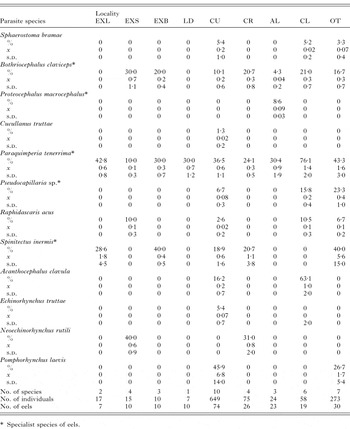
Table 1. The prevalance and abundance of intestinal parasites in eels of the River Exe system in 1997
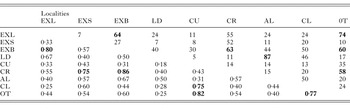
Table 2. Similarity matrix between the intestinal helminth communities of eels within the Rivers Exe and Otter systems with the qualitative Sorensen's coefficient below the diagonal and the quantitative percentage similarity index above the diagonal
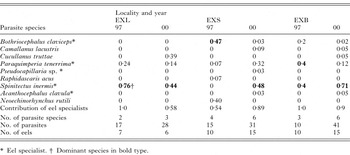
Table 3. The occurrence and relative abundance of each helminth species as a proportion (pi) of the total number of all intestinal helminths of all species in eels of the River Exe
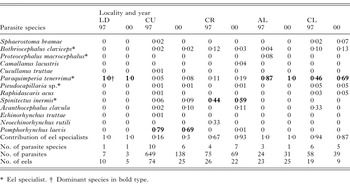
Table 4. The occurrence and relative abundance of each helminth species as a proportion (pi) of the total number of all intestinal helminths of all species in eels of tributaries of the River Exe
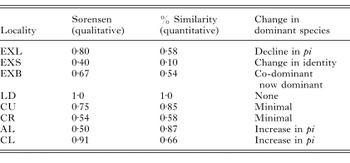
Table 5. Similarity between intestinal helminth communities within each locality, 1997–2000
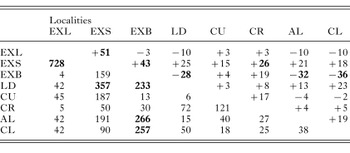
Table 6. Changes in quantitative similarity index between localities in the River Exe system between 1997 and 2000
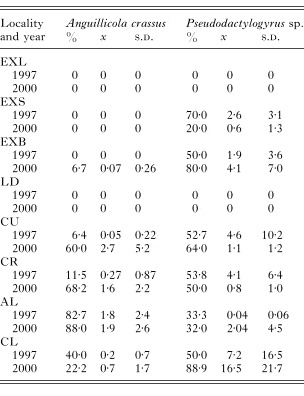
Table 7. The prevalences and abundance of non-intestinal helminth species in eels in the River Exe system
 You have
Access
- 27
- Cited by