Introduction
Tradition, norms and values govern Indian social behaviour. Reproductive and child health are personal matters to a married woman in Indian society. Males are less involved (FAO et al., 1998), although they exercise significant control over women’s care decisions and health finance (Population Council, 2005; Walston, Reference Walston2005). In most households in India women have restricted roles, i.e. cooking, cleaning and caring for family and children. They are often unable to access prenatal, natal or postnatal health services for a variety of reasons, including lack of control over the household’s finances, transport problems, poor knowledge, unsafe conditions and family restrictions. Reasons cited range from ‘spouse could not take time off work’ to ‘could not leave children and other dependants to travel to the nearest clinic or hospital’ (IIPS & ICF, 2017). There is therefore an urgency to include men in reproductive and maternal child health.
Following the recommendations of the 1994 Cairo ICPD, reproductive and child health programmes in India now include men. In 2013, the Government of India adopted the Reproductive, Maternal, New-born, Child and Adolescent Health (RMNCH+A) framework. This aimed to address the major causes of mortality and morbidity among women and to understand the delays in accessing and utilizing health care services through programmatic and community improvement. High quality and comprehensive ANC includes a minimum four ANC visits and the early detection of high-risk pregnancies, along with their follow-up and management. Institutional delivery is available free of cost in India through a network of government health facilities, including the lowest-level unit of health centres for 24–7 care, which train grassroots-level health workers in skilled delivery (Government of India, 2013).
In 2005, the Government of India launched the National Rural Health Mission (NRHM), which aimed to provide essential health services to poor families. This flagship programme has made significant strides in reducing maternal deaths and increasing ANC coverage and institutional delivery. It states that a pregnant woman and her family should be provided with information about pregnancy, childbirth, diet, rest, care and the danger signs to look for during childbirth. My Safe Motherhood: Booklet for Expecting Mothers, published by the Ministry of Health (Government of India, 2013), stresses the importance of family in maternal care:
… family behaviour and attitude should be pleasant and encouraging; family should ensure provision of healthy diet and timely visits to health facility; avoid delay in contacting medical facility when labour starts or in case of a complication; adequate finance and transport should be arranged beforehand; a blood donor should be identified for any unforeseen emergencies.
There have been recent policy efforts in India to involve men actively in maternal health care (FAO et al. 1998). The WHO also recommends interventions to promote the involvement of men during pregnancy, childbirth and the postnatal period (WHO, 2015). Men’s participation has been conceptualized in various ways, for instance: (1) men’s involvement in decisions about family size and family planning; (2) men’s responsibility to reduce risky sexual behaviour and prevent the spread of sexually transmitted infections; (3) men’s support for the reproductive health of women; (4) men’s own reproductive health needs (Drennan Reference Drennan1998; Pachauri, Reference Pachauri2001; Barua et al., Reference Barua, Pande, MacQuarrie and Walia2004). However, involving men in maternal health in a patriarchal society like India is a huge challenge. Until male partners are mobilized to participate in reproductive health care and encourage women to avail health care facilities during and after pregnancy, achieving high coverage of ANC and safe delivery by skilled birth personnel, as stated in Sustainable Development Goals (SDG 3 and 5), will not be possible. Although health plans have emphasized the importance of family involvement, there are no clear pathways to measure the achievement of this (Srivastava, Reference Srivastava and Ram2011).
Previous studies have reported the positive benefits of husband’s knowledge of pregnancy complications for maternal health, including increasing the chances of using ANC, institutional delivery and postnatal care services and the reduction of unhealthy practices such as smoking and tobacco use (Schaffer & Lia-Hoagberg, Reference Schaffer and Lia-Hoagberg1997; Starra, Reference Starrs2006; Martin et al., Reference Martin, McNamara, Milot, Halle and Hair2007; Ramchandani et al., Reference Ramchandani, Domoney, Sethna, Psychogiou, Vlachos and Murray2013; Redshaw & Henderson, Reference Redshaw and Henderson2013). Male involvement has been shown to be associated with reduced odds of postpartum depression among women (Sreelekshmi et al., Reference Sreelekshmi, Sharika and Vidyakrishna2010 Other studies have emphasized the husband’s role in desired family size (Becker & Costenbader, Reference Becker and Costenbader2001) and contraceptive use (Becker, Reference Becker1996; Balaiah et al., Reference Balaiah, Naik, Parida, Ghule, Hazari and Juneja1999). To date, few studies on husband’s involvement or agreement have been extended to the arena of maternal health, particularly in relation to safe motherhood and birth preparedness practices (Mullany, Reference Mullany2010). However, Bloom et al. (Reference Bloom, Tsui, Plotkin and Bassett2000), and other studies, have found that, in India, men know little about pregnancy and related care, although they are the gatekeepers to this.
Studies in developing countries like Uganda (Kabakyenga et al., Reference Kabakyenga, Ostergren, Turyakira and Pettersson2012), Bangladesh (Story et al., Reference Story, Burgard, Lori, Taleb, Ali and Hoque2012), Ethiopia (Lingerh et al., Reference Lingerh, Ababeye, Ali and Nigatu2014), Kenya (Mangeni et al., Reference Mangeni, Nwangi, Mbugua and Mukthar2014), Nepal (Mullany et al., Reference Mullany, Becker and Hindin2007) and Myanmar (Wai et al., Reference Wai, Shibanuma, Oo, Fillman, Saw and Jimba2015) illustrate the importance of male involvement in reproductive health in developing nations. However, there remain a number of gaps in the literature on men’s role in maternal care, especially in India. The current study aimed to address these and thereby inform policy decisions and programme revisions. First, most previous studies have had problem-oriented approaches to avoiding maternal death (Greene & Biddlecom, Reference Greene and Biddlecom2000), rather than preventive approaches: for instance, placing emphasis on husband’s knowledge of danger signs in obstetric emergencies (Bhalerao, Reference Bhalerao1984; Thaddeus & Maine, Reference Thaddeus and Maine1994; Bender et al., Reference Bender, Santander, Balderrama, Arce and Medini1995; Khan, Reference Khan1997; Becker & Robinson, Reference Becker and Robinson1998; Singh et al., Reference Singh, Bloom and Tsui1998; Bloom et al., Reference Bloom, Tsui, Plotkin and Bassett2000; Beegle, Reference Beegle2001). Second, many have used small area-specific samples (Bhalerao, Reference Bhalerao1984; Nagawa, Reference Nagawa1994; Bender et al., Reference Bender, Santander, Balderrama, Arce and Medini1995; Kaune & Guillermo, Reference Kaune and Guillermo1998; Raju & Leonard, Reference Raju and Leonard2000; Bloom et al., Reference Bloom, Tsui, Plotkin and Bassett2000; Celeb-Varkey, Reference Caleb-Varkey2001; Celeb-Varkey et al., Reference CalebVarkey, Mishra, Das, Ottolenghi, Huntington, Adamchak, Khan and Homan2004; Barua et al., Reference Barua, Pande, MacQuarrie and Walia2004; Srivastava, Reference Srivastava and Ram2011) or descriptive/qualitative data on non-probability samples or samples with limited characteristics of couples (Olayemi et al., Reference Olayemi, Bello, Aimakhu, Obajimi and Adekunle2009; Iliyasu et al., Reference Iliyasu, Abubakar, Galadanci and Aliyu2010; Kululanga et al., Reference Kululanga, Sundby, Malata and Chirwa2012; Bhatta, Reference Bhatta2013; Mangeni et al., Reference Mangeni, Nwangi, Mbugua and Mukthar2014; Ampt et al., Reference Ampt, Mon, Than, Khin, Agius and Morgan2015; Jungari & Paswan, Reference Jungari and Paswan2019) so the results could not be generalized for a country or state.
Although there is evidence that male involvement in overall obstetric care, or in obstetric emergencies, is associated with improved utilization of maternal health services (skilled birth attendance and postnatal care), more rigorous studies are needed at the country or state level to strengthen the evidence base (Yargawa & Leonardi-Bee, Reference Yargawa and Leonardi-Bee2015). Another major gap in the literature is in the predictors of women’s health care utilization by husband’s perceptions and attitudes about prenatal–postnatal care (Dudgeon & Inhorn, Reference Dudgeon and Inhorn2004), which play a significant role in shaping husbands’ behaviour. In the Indian context, with a few exceptions (Chattopadhyay, Reference Chattopadhyay2012), there have not been many representative studies on male involvement in safe pregnancy and delivery.
Conceptual model
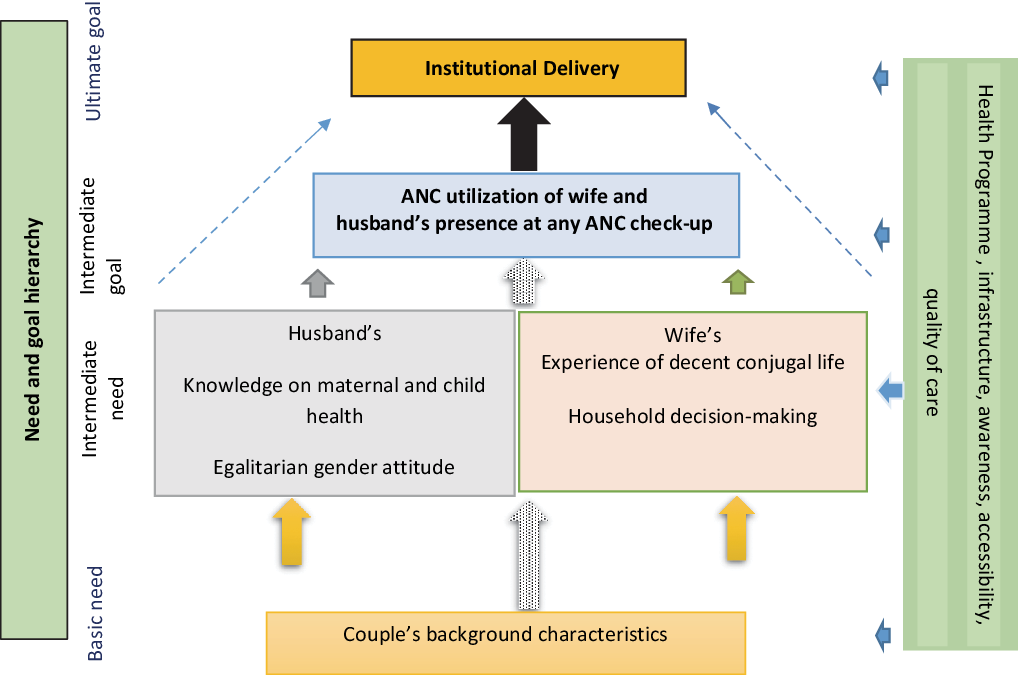
Based on the existing literature, the study used a four-tier model of male involvement in maternal health care (Figure 1). In this, ‘institutional delivery’ is considered the ‘ultimate goal’, and this is directly influenced by a wife’s ANC visits. Husband’s presence at his wife’s ANC visits can be termed an ‘intermediate goal’ as it can further enhance the chances of the ultimate goal of institutional delivery. Whether a wife is accompanied by her husband on an ANC visit is affected by several ‘intermediate needs’, including husband’s knowledge about maternal and child health care utilization, his gender attitude, wife’s freedom in decision-making on health matters and health infrastructure availability. While a wife’s independence in decision-making has a contradictory effect on husband’s involvement in maternal and child health in the Western world, where women are mostly independent, in the Indian context, where the majority of women in less-developed states depend on men for decision-making, it can be assumed that an egalitarian attitude towards gender will lead to better involvement of husbands in maternal and child health care. A set of positive ‘knowledge, attitude and behaviour’ factors can be considered as ‘intermediate needs’ that increase the chances of women going to ANC visits and having an institutional delivery. The ‘basic needs’ of husbands that influence these factors (as well as those of his wife) include education, mass media exposure, wealth, number of children, caste and place of residence.
Need and goal hierarchy in involvement of men in maternal health care utilization.

The provision of different health programmes, the available infrastructure, knowledge of these programmes by expectant mothers and their families, accessibility of health care facilities and quality of health care are all important underlying determinants of maternal health care utilization. In the recent decade, a series of maternal programmes have been implemented in India to achieve the maternal and child health related SDGs. These have been guided by the central tenets of equity, universal care, entitlement and accountability to provide a ‘continuum of care’ ensuring equal focus on various life stages. The flagship programmes are Janani Suraksha Yojana (JSY) (conditional cash transfer scheme with the objective of reducing maternal and infant mortality), Janani Shishu Suraksha Karyakram (JSSK) (which entitles all pregnant women delivering in public health institutions to absolutely free and no-expense delivery including Caesarean section), Pradhan Mantri Surakshit Matritva Abhiyan (PMSMA) (to ensure quality ANC and high-risk pregnancy detection in pregnant women on the 9th of every month) and LaQshya (Labour room Quality improvement Initiative) (National Health Mission, GOI). Furthermore, in 2018 the Government of India initiated midwifery services throughout the country, with the objective of providing access to quality maternal and neonatal health services, to promote natural births and ensure respectful care and reduce over medicalization. All states and union territories have identified delivery points with trained and skilled human resources, infrastructure, equipment, drugs and supplies, referral transport for providing quality and comprehensive RMNCH (Reproductive, Maternal, and Neonatal & Child Health) services. Maternal and child health wings are sanctioned at District Hospitals/District Women’s Hospitals.
However, the NFHS-4 did not ask questions on wives’ or husbands’ knowledge, utilization, accessibility or quality of care of these programmes. Thus, the study analysis was restricted to the limited data available in the Demographic Health Survey. Nevertheless, a wide range of questions on attitudes, knowledge and practices were asked in the NFHS-4 to married men, mainly on reproductive health. The knowledge component on obstetric care demonstrated the source of knowledge (family/friends, health worker, media) and interaction with health providers, if any. All ‘knowledge’ related questions were included in the present study’s analytical frame. Hence, the knowledge, attitudes and behaviours of husbands, to a great extent, reflect the programmatic dimensions captured in this study.
This study was an extension of the previous research of Chattopadhyay (Reference Chattopadhyay2012) based on NFHS-3 conducted in 2007. Its aim was to understand the husband’s role in maternal health care in India, with specific reference to the three worst-performing states, Bihar, Madhya Pradesh and Uttar Pradesh. The specific objectives were to understand husbands’ perspectives on the non-utilization of maternal care services; to assess the role of the husband in his wife’s utilization of ANC and institutional delivery through his attitude towards, and practices in relation to maternal and child health and gender roles. The association of husband’s characteristics with use of ANC and institutional delivery of his wife were assessed, controlling for basic socioeconomic factors. The findings will potentially help policymakers revise and update policy frameworks and interventions for integrating men in maternal and child health.
Methods
Data
Unit-level data were taken from the fourth National Family Health Survey (NFHS-4) conducted in 2015–16. This nationwide survey collected information from men aged 15–59 and women aged 15–49 years. Information on maternal and child care was sought from the men whose last child’s was aged 3 years or under at the time of the survey, giving a sample size of 20,268 for India as a whole. For the three states considered, the sample sizes were 1383 for Bihar, 2039 for Madhya Pradesh and 2925 for Uttar Pradesh.
Information on men’s involvement in maternal care was obtained from the survey’s men’s file and couple file. The sample size for the couple file for the whole of India was 14,164.
Outcome variables
The outcome variables were ‘utilization of ANC’ (intermediate goal) and ‘institutional delivery’ (ultimate goal). In the NFHS-4, the husbands of women who had given birth in the last three years were asked, ‘when your wife was pregnant with the last child, did she have antenatal check-up?’ The next question posed was: ‘were you present during antenatal check-ups?’ Considering both questions, a variable on presence/non-presence of husband at any ANC check-up was computed. If the check-up was not done, men were asked, ‘what was the main reason why she did not have the antenatal check-up?’ Similarly, detailed questions were posed to husbands on delivery and related care knowledge.
Intermediate need
Here, ‘needs’ mean factors that are necessary to attain the outcome. A summative index ‘husband’s knowledge’ was constructed for husband’s knowledge about pregnancy and delivery, which included seven questions derived from the NFHS-4: whether at any time when his wife was pregnant, any health provider or health worker told him about the signs of pregnancy complications such as vaginal bleeding, convulsions and prolonged labour; whether at any time during the pregnancy any health provider or health worker spoke to him about the importance of delivering the baby in a hospital or health facility and the importance of proper nutrition for the mother during pregnancy. Additional variables included in the summative index were: whether any health provider or health worker spoke to the husband about family planning or delaying the next child; whether anyone explained to the husband about the importance of breastfeeding the baby immediately after delivery; or keeping the baby warm immediately after birth; about cleanliness at the time of delivery and use of a new/unused blade to cut the cord.
The variable ‘Domestic violence’ was constructed from questions asked to ever-married women on ‘ever experience’ of seven types of physical violence, two types of sexual violence and three types of emotional violence by their current or most recent husband/partner. As emotional violence (humiliation, threat to harm) is more subjective, the other two types of violence were taken into consideration in the multivariate models. In a non-violent husband–wife relationship, it is assumed that women do not face any type of violence. Physical violence included pushing, slapping, twisting the arm, punching, kicking, choking or burning, attacking with weapon; sexual violence included coercion in sexual intercourse or any sexual act.
The variable ‘Wife’s decision-making’ was constructed from questions posed to wives on her decision-making on major household purchases, purchase of daily household needs and visits to her family and relatives. Of these three decisions, if the wife did not make even one decision, it was coded as ‘no decision-making’; if she made all the decisions solely or jointly with others, it was coded as ‘full decision-making’. The rest were considered as partial decision-making.
The variable ‘Justification of wife beating’ was constructed from questions asked to married men about their opinion on wife beating in various situations, including if she goes out without telling him, neglects the house or children, argues with him, refuses to have sex with him, does not cook food properly, is disrespectful towards the in-laws or he suspects her of being unfaithful. A summative score of husband’s justification of wife beating was computed. The score was 0 if in any of the above statements the husband was not justifying beating his wife (egalitarian gender attitude). The higher the score, the stronger was the husband’s justification of wife beating. The score was made dichotomous as justification of wife beating even in a single aspect shows typical controlling behaviour of men on women. So, the score was kept at 0 for ‘not justifying wife beating’ and 1 (more than 0) ‘otherwise’ in the regression analysis.
Basic needs
The socioeconomic background characteristics (‘basic’ variables) taken into consideration in the analysis were: age, place of residence, husband’s education, couple’s religion, caste and wealth index, number of children ever born. Direct variables on availability and accessibility to health programmes were not available in the data set and thus could not be considered in the analysis. This is a limitation of the study. However, differentiating between husband’s knowledge and behaviours and availability/accessibility of programmes is difficult because a programme shapes men’s knowledge and behaviour. A series of questions were asked to husbands on maternal care knowledge received from health care providers, including signs of complications, course of action to be taken if a pregnancy becomes complicated, place of delivery, nutritional care and family planning. Thus, the knowledge component computed in the analysis can be considered to be a proxy for health programme.
Analysis
Cross-tabulation and multivariate logistic regression analysis were carried out to predict the log odds of the outcome variables ‘ANC utilization’ and ‘institutional delivery’. Two logistic regressions were used to assess the relationship between the dependent binary variable (i.e. had ANC visit vs no ANC visit and institutional delivery vs otherwise) and nominal, ordinal, interval independent variables in the conceptual framework.
Results
Bivariate analysis
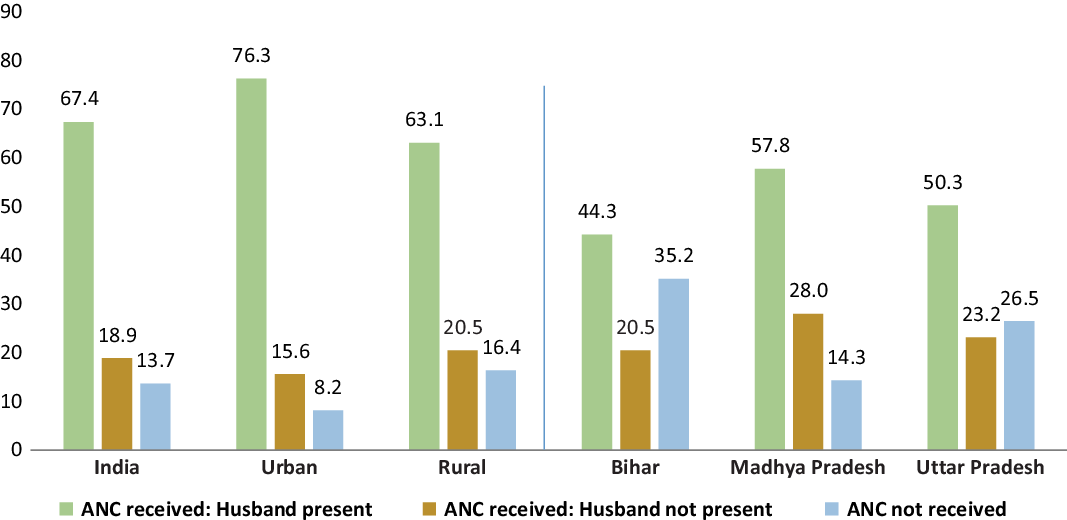
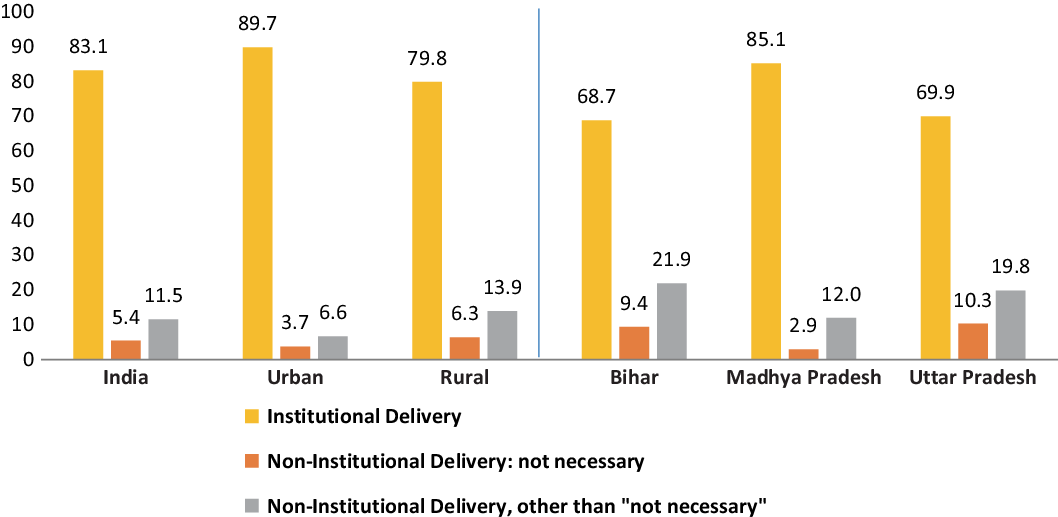
A substantial improvement in maternal care indices and male involvement in maternal care was observed in India over the decade between the NFHS-3 in 2005–06 and NFHS-4 in 2015–16 (IIPS 2007; IIPS & ICF 2017). About 90% of women received adequate ANC care in 2015–16 against 77% in 2005–06 (IIPS & ICF 2017). In 2005–06, of those women who received ANC, only half had husbands present during check-ups, whereas in 2015–16 this increased to 67% (a 17 percentage point increase). Similarly, the rate of institutional delivery improved – from 45% in 2005–06 (IIPS 2007) to 83% in 2015–2016 (a 38 percentage point increase). However, in 2015–2016 rural India lagged way behind urban areas in maternal health care utilization, as did Bihar, Madhya Pradesh and Uttar Pradesh. Only 44% of men in Bihar and 55% of men in Uttar Pradesh were present at their wives’ ANC visits, while the Indian average was 67% (Figure 2). Similarly, only about 70% of husbands in these two states opted for wife’s institutional delivery against 83% in India as a whole (Figure 3). Nine per cent of husbands in Bihar and 10% in Uttar Pradesh stated that institutional delivery was ‘not necessary’, while about one-fifth didn’t opt for institutional delivery for other reasons, such as cost and far-off facility.
Percentage distribution of women attending ANC visits with their husband in India and selected states, NFHS-4, 2015–16.

Percentage distribution of women by whether they had an institutional delivery in India and selected states, NFHS-4, 2015–16.

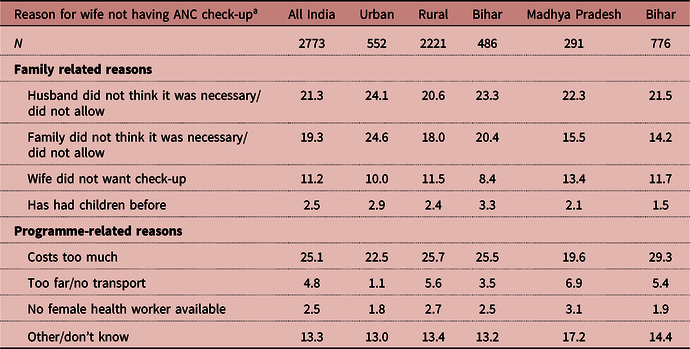
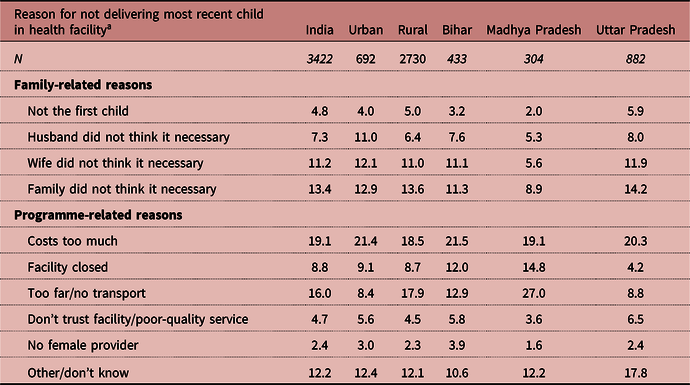
The main reasons for wife’s not attending ANC check-ups, as opined by their husband, were the high cost of ANC and its irrelevance (Table 1). Interestingly, in urban India, a higher proportion of husbands/family members perceived that ANC was not necessary compared with their rural counterparts, while cost-related issues were reported more by husbands in rural than urban areas. In Bihar and Uttar Pradesh, 26% and 29% of husbands, respectively, stated that cost was the main constraint for receiving ANC, followed by irrelevance; 23% of husbands in Bihar and 22% in Uttar Pradesh stated irrelevance as the reason. For non-institutional delivery, around 31% of husbands stated that family (husband, wife or other family member) did not consider ANC to be necessary. The pattern was similar in three selected states, indicating an antipathy for institutional delivery. Other factors given by husbands were high cost and distance to health centre for delivery (Table 2). State variation was evident in husband’s opinion on delivery care. A large number of husbands reported that the distance to the health facility made them unwilling to go for institutional delivery (16% in India), but it was the cost factor that was the foremost reason in Bihar and Uttar Pradesh. In Madhya Pradesh 27% of husbands stated that the health facility was too far away or that there was no available transport.
Reasons for not receiving ANC, as reported by husbands, in India and selected states, NFHS-4, 2015–16

a Among husbands whose wives did not have an ANC check-up.
Reasons for not having an institutional delivery, as given by husbands, in India and selected states, NFHS-4, 2015–16

a Among husbands whose wives did not have an institutional delivery.
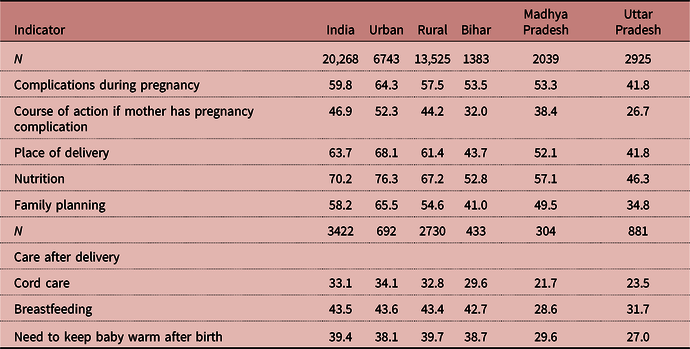
Less than half of husbands were aware of the course of action to take if their wife had a pregnancy complication (Table 3). This awareness was particularly low in Uttar Pradesh, followed by Bihar. For instance, 42% of husbands in Uttar Pradesh were aware of pregnancy-related complications; 27% in Uttar Pradesh and 32% in Bihar knew the course of action to be taken if their wife had pregnancy complications against 47% in India as a whole. About 60% of husbands in Uttar Pradesh and Bihar did not receive any advice on place of delivery, against 37% of husbands in India as a whole.
Information provided to husbands on maternal care by health workers in India and selected states, NFHS-4, 2015–16

Multivariate analysis
Husband’s presence at any ANC visit
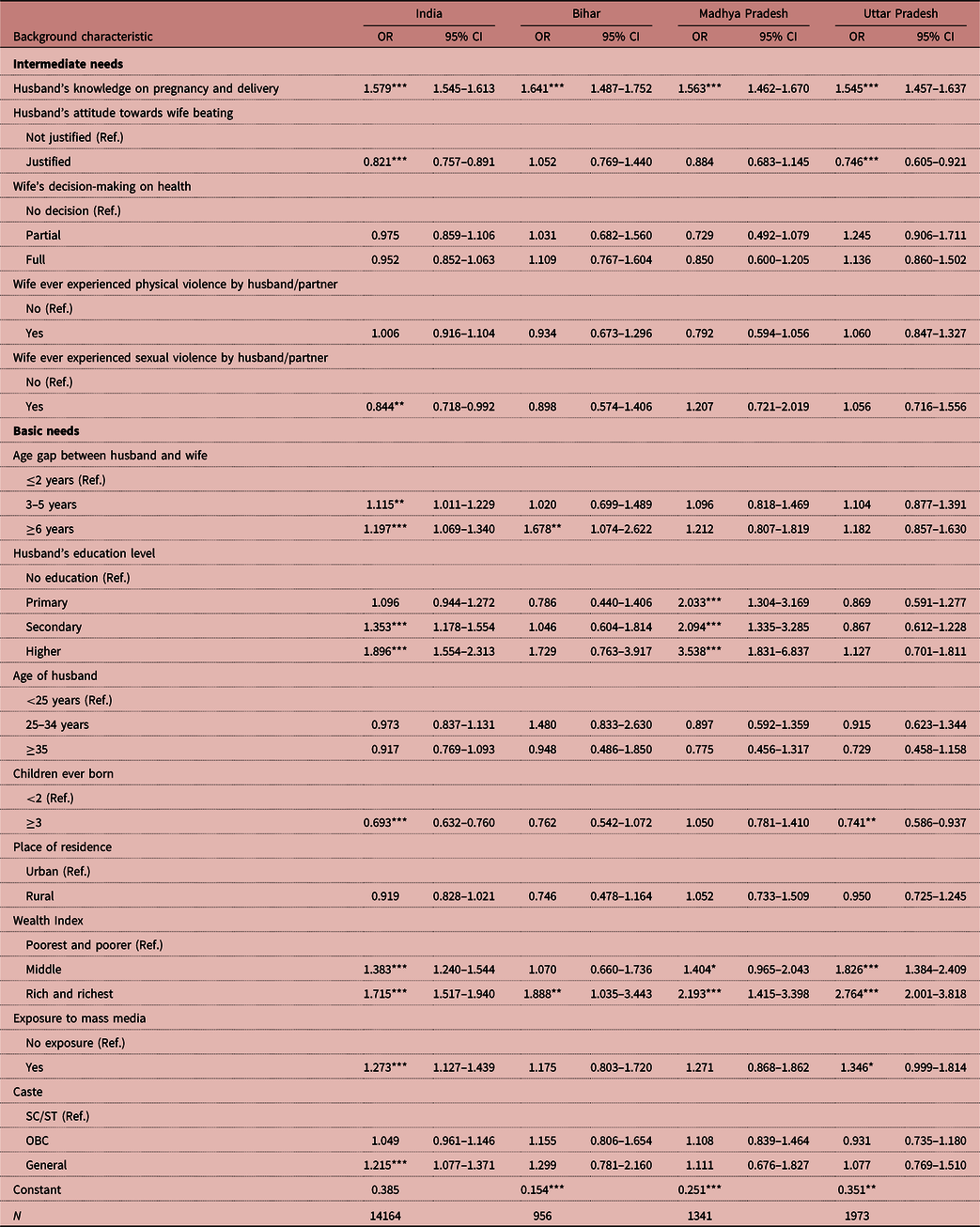
Table 4 shows the odds of husband’s presence during any ANC visit. The regression models revealed that in India as a whole, ‘intermediate needs’, i.e. husband’s knowledge about pregnancy care and delivery, non-violent relationship and respectful attitude towards his wife, played a crucial role in husband’s presence at ANC visits. Among the ‘basic needs’, having a more than 2-year age gap between husband and wife, better education and wealth, higher exposure to mass media and fewer than 3 children substantially enhanced the odds of husband’s presence at ANC visits, i.e. intermediate goal.
Determinants of husband’s presence at wife’s ANC check-up in India and selected states, NFHS-4, 2015–16

Dependent variable: husband’s presence at ANC visit. 0: ÁNC not received/husband not present; 1: husband present for at least one ANC visit.
*p<0.05; **p<0.01; ***p<0.001.
In Bihar, Madhya Pradesh and Uttar Pradesh, husband’s knowledge on components of pregnancy and delivery care increased the chances of their presence during any ANC visit by 1.5 to 1.6 times. Furthermore, husband’s justification of wife beating reduced the chances of husband’s presence at ANC visits by 26% in Uttar Pradesh. Husband’s education markedly increased the probability of presence of husbands at ANC visits in Madhya Pradesh by 2 to 3.5 times. Similarly, household wealth played a positive role, with households in middle or rich wealth categories having increased chances of husband’s presence at ANC visits in all three selected states by 1.4 to 2.7 times compared with those who were poor.
Institutional delivery
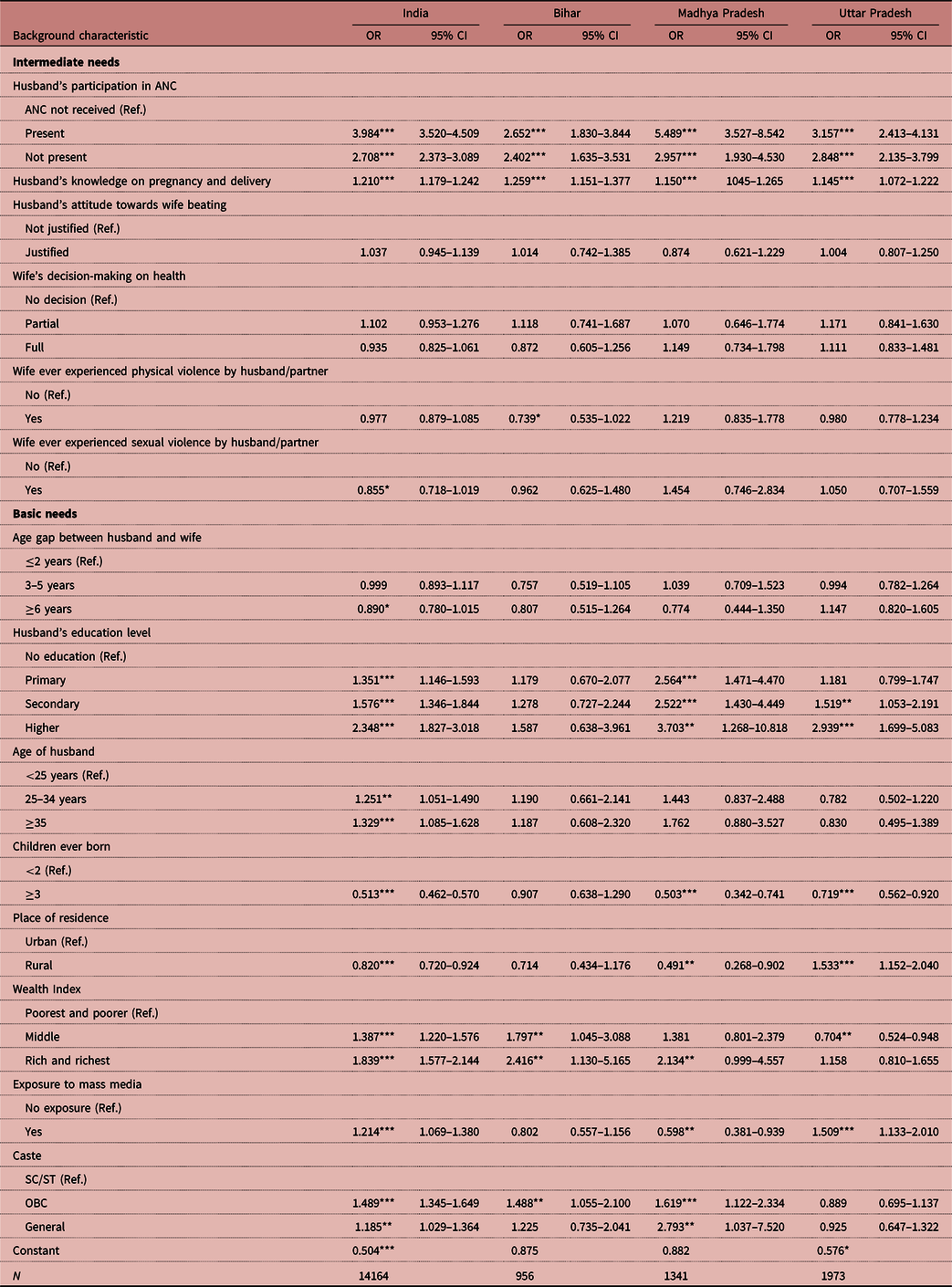
Men’s presence at any ANC visit was found to be an important determinant of institutional delivery in India as well as in the three poorly performing selected states. Hence, intermediate goals (husband’s ANC visit) had a strong influence on ultimate goal of institutional delivery (Table 5).
Determinants of institutional delivery in India and selected states, NFHS-4, 2015–16

Dependent variable: institutional delivery. 0: non-institutional delivery; 1: institutional delivery.
*p<0.05; **p<0.01; ***p<0.001.
Among intermediate needs, at the all-India level, a decent husband–wife relationship and husband’s better knowledge of maternal care had strong positive effects on institutional delivery, besides the basic factors of husband’s education, urban residence, exposure to mass media, better wealth, fewer than 3 children and husband’s age more than 25 years. Belonging to a Scheduled Caste/Tribe hindered institutional delivery significantly.
In Bihar, compared with those who did not receive ANC, husband’s presence at ANC visits increased the odds of institutional delivery by 2.7 times, while it was 5.4 times more in Madhya Pradesh and 3.1 times more in Uttar Pradesh. Compared with those who did not opt for ANC, wife’s attending ANC check-ups alone (without husband) increased the chance of institutional delivery by 2.4, 2.9, 2.8 times in Bihar, Madhya Pradesh and Uttar Pradesh respectively. These odds of wife’s ANC attendance alone (without husband), and its effect on institutional delivery, were lower compared with the odds of husband’s presence along with their wife at any ANC and its effect on institutional delivery in India and the three states. This clearly indicates an enhancing effect of husband’s presence at ANC on institutional delivery.
Likewise, husband’s knowledge about maternal care increased the odds of institutional delivery by 1.2 times in Bihar, 1.1 times in Madhya Pradesh and Uttar Pradesh each. Experience of physical violence reduced the chances of institutional delivery by 27%. Although husband’s education had no effect on institutional delivery in Bihar, the effect was 2.9 and 3.7 times more for more educated husbands in Uttar Pradesh and Madhya Pradesh, respectively, compared with non-educated husbands.
Thus, among all the characteristics considered in the multivariate analysis, husband’s knowledge about maternal health care clearly plays a positive role in women’s ANC. Similarly, husband’s participation in ANC had strong association with institutional delivery. Besides these two knowledge/behaviour factors, other indicators with strong outcomes on ANC and delivery were husband’s better education and higher household wealth.
Other factors
Wife’s decision-making in the marital home had no effect on their use of ANC or institutional delivery in India as a whole or the three states. Furthermore, no association was observed between ANC or institutional delivery with age of husband at state level, though in India, higher age had a significant positive effect. Rural–urban residence had a contrasting effect in the states for institutional delivery. In Madhya Pradesh, rural residence reduced the chances of institutional delivery by 51 percentage points, whereas in Uttar Pradesh the odds were 1.5 times greater in rural areas. This contradictory result needs further investigation and data quality checking.
Discussion
Men are presumed to be the gatekeepers of households in India, so involving them in the maternal health care will improve health service utilization, decrease the rate of maternal health complications, raise maternal self-esteem and decrease the possibility of childbirth complications (Mersha, Reference Mersha2018). The counter argument states that male involvement restrains women and decreases their choices. However, husbands’ knowledge and behaviour related to maternal health care and their attitude towards gender egalitarianism, and the association of these with maternal health service utilization, have not been specifically documented in the Indian literature using nationally representative data, partly due to a paucity of data, but also due to an overemphasis on women in reproductive health.
India is a diverse country with states at varying levels of development. There are laggard states, where women are apprehensive about using maternal health care facilities despite RMNCH coverage and its constant improvement. Hence, this study examined husband’s knowledge and attitude towards maternal care in general, and towards his own wife in particular, and their association with husband’s role in his wife’s ANC care during gestation and institutional childbirth using NFHS-4. It was hypothesized that better maternal and child health care knowledge and a positive attitude towards gender (called ‘intermediate needs’ in the study’s conceptual model) would enhance husbands’ participation in maternal health care utilization services such as ANC (an ‘intermediate goal’) and institutional delivery (the ‘ultimate goal’) when basic factors (i.e. couple’s background sociodemographic characteristics) were controlled. The research results should be taken into account when planning the health education of men, especially in the poorly performing states in India.
The key findings were as follows. First, the three major hurdles in maternal and child health care utilization in India are i) incorrect perception of ‘unnecessary’ maternal health care by families, ii) high cost and iii) health facility too far away. Second, the proportion of husbands who received knowledge from health workers on maternal and child health was too low to achieve the maternal health SDGs by 2030, as the majority of (more than half) husbands has no basic knowledge of pregnancy and child care, in spite of a series of recent programmatic efforts to involve family in maternal health care. Third, husband’s presence at any ANC visit has a strong effect on institutional delivery in India as a whole and in the three selected poorly performing states. Finally, egalitarian attitudes towards wives was associated with better use of maternal care, after controlling for ‘basic needs’. Mass media exposure, better wealth and education, fewer children have clear positive effects on ANC use and institutional delivery.
A higher proportion of husbands in urban than rural areas felt that ANC and institutional delivery were not necessary. Family apathy, cost and non-availability of facilities were major reasons given for not using maternal health care services. A hegemonic power structure is entrenched in the societies of poorly performing states, with two-fifth of women in the study not opting for ANC due to their family or husband not allowing them to go to ANC check-ups or not considering them to be necessary. Such attitudes are essentially due to poor knowledge of husbands on maternal health complications.
The multivariate analysis of the couple data revealed that the greater the number of children, the lower the chances of using ANC and having an institutional delivery. This indicates that higher order births may act as deterrent to health care utilization as a family that has already experienced childbirth may consider later births to be ‘usual’ and problem-free (Feyissa & Genemo, Reference Feyissa and Genemo2014). The chance of opting for institutional delivery among Schedules Caste/Tribe populations was quite low and deserves further research to understand the underlying reasons.
The study established that the proportion of husbands who received knowledge from health workers on pregnancy-related care (signs of complications, course of action to be taken if pregnancy becomes complicated, place of delivery, nutritional care, family planning) was low in India, especially in Uttar Pradesh and Bihar. Just about half of the husbands in India, 27% in Uttar Pradesh and 32% in Bihar were informed about the course of action if their wife had pregnancy complications. About two-fifth of husbands in Uttar Pradesh and Bihar got any advice on place of delivery against 65% in India as a whole. Advice on post-delivery care received by husbands was shown to be abysmally low in India as a whole, as well as in the poorly performing states. When husbands are so poorly advised on maternal and child health care, it will be difficult to attain the SDG goals on maternal and child health by 2030. Based on a randomized controlled trial in Nepal, it is evident that educating pregnant women and their male partners has a greater net impact on maternal health behaviours than educated women alone (Mullany et al., Reference Mullany, Becker and Hindin2007). Husband’s awareness and participation in maternal health care needs to be improved, especially in Uttar Pradesh and Bihar, which have a quarter of Indian’s population.
The analysis showed the following factors to be statistically significant determinants of improved maternal health care: husband’s better knowledge as obtained from health workers and better awareness of maternal care, husband’s presence at any ANC visit, husband’s respectful attitude towards his wife, husband’s higher education, mass media exposure, smaller family and better wealth. With a unit increase in knowledge score of the husband, the chances of husband’s presence at ANC visits increased by 50% in India as a whole. Furthermore, husband’s presence at any ANC visit increased the chance of institutional delivery by 3.9 times, and these odds were higher than the odds when the wife attended ANC alone, indicating the clear advantage of having husbands at ANC check-ups. Using a cohort design, a study in Ethiopia established that women who reported at least one ANC visit in which their husbands accompanied them were 6.3 times more likely to use skilled birth attendants compared with women who attended ANC alone (Teklesilasie & Deressa, Reference Teklesilasie and Deressa2018). So, enhancing the knowledge of husbands and gender sensitivity are key components of Indian culture for the attainment of better maternal care utilization.
From a programmatic point of view, woman’s institutional delivery can be improved by mandating their husband’s presence at least in one ANC visit. Increased communication and interaction between spouses on health practices during or after ANC may have the potential to increase safe motherhood coverage (Mullany et al., Reference Mullany, Becker and Hindin2007). However, husband’s indirect involvement by providing financial support for maternal care has been observed to be much higher in developing countries compared with their direct involvement through accompaniment to ANC check-ups (Wai et al., Reference Wai, Shibanuma, Oo, Fillman, Saw and Jimba2015). Further exploration on the direct and indirect assistance of husbands is needed.
Both justification of wife beating and actual experience of violence demotivate women to seek ANC and institutional delivery. This study found that husband’s presence at any ANC visit deceased by 20% when he justified wife beating. Experience of physical or sexual violence reduced the probability of institutional delivery by 20–30%, with state-level variation in its effect. A study based on NFHS-3 (2005–06) established that women who had experienced any form of physical/sexual violence were less likely to receive full ANC than non-abused women in the southern Indian states, and less likely to avail institutional delivery in northern India (Sinha & Chattopadhyay, Reference Sinha and Chattopadhyay2016). However, wife’s opinion on decision-making at home is perhaps not a concrete measure of maternal care utilization. No distinct impact of decision-making on ANC or delivery could be observed in India as a whole or in the chosen states.
The study has its limitations. Although individual/couple-level factors on maternal care utilization were considered in the study, health system or community-level factors that may have an impact on institutional delivery were not included due to a lack of data on health programmes. The NFHS-4 did not ask questions on knowledge, utilization, accessibility or quality of care on maternal and child health programme either to the wife or husband. Here it was assumed that husband’s knowledge and behaviour reflected programmatic components as many of the knowledge-related questions were directly based on husband’s interaction with health providers. So, the poorer the knowledge, the worse the health facility. Furthermore, many variables in the men’s file were ‘state modules’ with limited samples in NFHS-4. In addition, husband’s knowledge was based on those men who experienced births in the recent past and thus the sample has already been reduced in the study, especially at the state level. Facility survey data were not merged with the couple file due to additional complications in data merging and loss of sample, though it could be explored in future.
To summarize, unless the ‘gatekeepers’ are made aware of maternal care, it will be difficult to achieve the SDG targets on maternal health. Ignorance, indifference and a lack of concern on the part of men act as hindrances to fulfilling India’s maternal and child health goals. Household power dynamics are critical here. Empowering women and giving equal importance to men in maternal and child health are necessary. Insufficient knowledge of husbands on pregnancy/delivery/child care, poor mass media exposure and basic education, gender-unequal family environments, poverty and high fertility are detrimental to both the expectant mother and her unborn child. A proper understanding of the basic information related to pregnancy and delivery is perhaps a fundamental right of a couple. The main task is to transfer what is known into action through appropriate behavioural change and health system development (Jones et al., Reference Jones, Steketee and Black2003). There should be concerted action to step up efforts to educate families, particularly husbands, about reproductive and maternal health. Though the RMNCH of India mentions family involvement in maternal and child health, this study is an eye-opener on the abysmally low knowledge of husbands on maternal and child health care related matters, which demands immediate policy attention. In this context, programmes should be implemented and monitored based on the understanding of local gender dynamics on how decisions are being made and executed.
Acknowledgments
The authors are grateful to the reviewer/s for their valuable comments and suggestions on the manuscript. The first draft of the paper was presented at the Population Association of America annual conference held in Texas, USA, in April 2019. Thanks are also due to Caroline Gallimore and the editorial team of JBS, Debashis Ganguly and Akancha Singh for necessary editing.
Funding
This research received no specific grant from any funding agency, commercial entity or not-for-profit organization.
Conflict of Interest
The authors have no conflict of interest to declare.
Ethical Approval
Secondary data were used in this study; the NFHS is a Government of India funded national survey and it maintains all protocols and ethical guidelines, complying with the ethical standards of the relevant national and institutional committees.