Introduction
In 2012, it was estimated that 8.4 million individuals over the age of 60 years were affected by dementia in the European Union (EU), amounting to 7.0% of the European population aged ≥60 years (OECD, 2014). Corresponding figures for Spain were around 800,000 individuals, or 7.5% of the population aged ≥60 years. As a percentage of the population of this age group, this (along with that for France) was the second highest EU country prevalence, with only Italy demonstrating a higher prevalence (7.7%) (OECD, 2014). The prevalence of dementia in Europe is predicted to rise as the population ages, with an estimated 14 million affected individuals in 2030 and an estimated 19 million affected individuals in 2050 (Prince et al., Reference Prince2013).
Alzheimer's disease (AD) is the most common cause of dementia, accounting for 60–80% of dementia cases (OECD, 2014). The impact of dementia/AD on patients, caregivers, and society is substantial in terms of physical and mental well-being, health-related quality of life (HRQoL), and health and social care costs (Argimon et al., Reference Argimón, Limon, Vila and Cabezas2004; Sicras et al., Reference Sicras2005; López-Bastida et al., Reference López-Bastida, Serrano-Aguillar, Perestelo-Perez and Oliva-Moreno2006; Coduras et al., Reference Coduras2010; Peña-Longobardo and Oliva-Moreno, Reference Peña-Longobardo and Oliva-Moreno2015).
Country-specific data on resource use and costs associated with AD are useful to help inform governments about the increasing need for medical and financial support as the prevalence of the disease increases. An 18-month, multicenter, prospective, observational study (GERAS I) was conducted to assess resource use and costs associated with AD for patients and their caregivers in France, Germany, and the United Kingdom (Wimo et al., Reference Wimo2013). A similar 6-month study, GERAS II, was planned in Spain and Italy. The main objective of the study was to assess country-specific resource use and costs in patients with AD and their caregivers, stratified by patient disease severity at baseline. This manuscript presents baseline results from GERAS II from Spain; results from Italy will be reported separately.
Methods
Study design
GERAS II was a prospective, multicenter, observational study of community-dwelling patients with AD, presenting within the normal course of care, and their primary caregivers. The study design was similar to that of the GERAS I study, as already reported (Wimo et al., Reference Wimo2013), but it was planned to last for 6 months only. The study was approved by an ethical review board in accordance with Spanish regulations, and written-informed consent was obtained from all participants or their legal representative.
Participating physicians recruited patients during routine clinical practice at the study sites between April and December 2013 using a convenience sample. Study sites were centers involved in the assessment and treatment of AD, and were mainly specialist secondary care centers (“memory clinics”). All treatment decisions were at the discretion of the participating physician and followed standard care procedures during the course of normal clinical practice in Spain.
Patient and caregiver inclusion and exclusion criteria
The study involved community-dwelling patients aged ≥55 years with a diagnosis of probable AD (based on National Institute of Aging–Alzheimer's Association criteria; McKhann et al., Reference McKhann2011) and a Mini-Mental State Examination (MMSE) score of ≤26 (Folstein et al., Reference Folstein, Folstein and McHugh1975). Patients were required to have no history or signs of stroke or transient ischemic attack, Parkinson's disease or Lewy-body disease. In addition, patients were not allowed to be simultaneously participating in a study that included an investigational drug or procedure. Each patient had to have an informal (i.e. non-professional) caregiver who took responsibility for the patient for at least 6 months of the year and was willing to participate in the study. Patients and caregivers were stratified into three groups according to patient AD dementia severity at baseline: mild (MMSE score 21–26), moderate (MMSE score 15–20), and moderately severe/severe (MS/S) AD dementia (MMSE score <15).
Study objectives
The primary objective of the current analysis was to assess country-specific direct and indirect costs of AD for patients and caregivers at baseline, stratified by patient disease severity at baseline. Secondary objectives, also stratified for patient disease severity at baseline, included the assessment of patient and caregiver characteristics, treatment patterns, patient and caregiver resource use, caregiver time spent on caring for patients, caregiver subjective burden, and patient and caregiver HRQoL.
Assessments
Data on patient cognition, functioning, behavioral symptoms, and HRQoL were collected by the study investigators through interview with the patients and caregivers at the study visits using an electronic form. Patient cognitive function was assessed using the MMSE (Folstein et al., Reference Folstein, Folstein and McHugh1975), and the 14-item cognitive subscale of the Alzheimer's Disease Assessment Scale (ADAS-Cog14; only applied to patients with a MMSE score of ≥15) (Rosen et al., Reference Rosen, Mohs and Davis1984). Patient functional ability was assessed using the Alzheimer's Disease Co-operative Study Activities of Daily Living Inventory (ADCS-ADL) (Galasko et al., Reference Galasko1997), and patient behavioral and psychological symptoms were assessed using the 12-item Neuropsychiatric Inventory (NPI-12) (Cummings et al., Reference Cummings1994; Cummings, Reference Cummings1997). In addition, caregiver distress was assessed using the NPI-12 caregiver distress scale (Cummings, Reference Cummings1997). Subjective caregiver burden was also measured using the shortened version of the Zarit Burden Interview (ZBI; Zarit et al., Reference Zarit, Reever and Bach-Peterson1980), and patient (proxy version) and caregiver HRQoL were assessed using the EuroQoL-5D (EQ-5D) 3L version (Kind, Reference Kind and Spilker1996). Data were captured either by the investigators during the patient (MMSE and ADAS-Cog14) and caregiver (ADCS-ADL and NPI-12) interviews, or by the caregivers themselves (ZBI and EQ-5D, the latter for themselves and by proxy for patients).
Patient and caregiver healthcare resource use in the past month were collected from caregivers (by proxy for the patients) at the study visits using the Resource Utilization in Dementia (RUD) instrument (Wimo et al., Reference Wimo, Wetterholm, Mastey, Winblad, Wimo, Jönsson, Karlsson and Winblad1998). Data captured included total nights in hospital, hospital emergency room visits, outpatient visits, and drug use. In addition, the RUD instrument captured information on caregiver informal care (caregiver time and work loss; work-loss data only captured for caregivers who reported reduced working hours due to caregiving) and patient social care (district nurse visits, home aid/orderly visits, food deliveries, day care, public-paid transportation, and permanent or temporary institutionalization) in the past month. Caregiver time was defined as the total number of hours spent on caregiving, including the time spent on basic activities of daily living (ADL), such as dressing and eating; instrumental ADL, such as shopping and cooking; and supervising the patient. The RUD has been shown to accurately assess the time spent by caregivers on informal caregiving (Wimo et al., Reference Wimo, Jönsson and Zbrozek2010).
Cost estimates
For working caregivers, work loss was defined as the value of lost production time and was based on the national average annual, full-time, gross wage. For non-working caregivers, the unit cost of caregiver time was based on the value of lost leisure time and was taken as 35% of the gross national average wage.
Costs associated with AD were calculated for patients and caregivers using the resource utilization data obtained from the RUD instrument and also from additional data obtained during the interviews with the caregivers (treatments, financial assistance, and out-of-pocket expenses). Monthly costs in Euros (2013 values) were calculated by applying Spanish unit costs to the quantities obtained for patient and caregiver healthcare resource use, patient social care, and caregiver informal care in the past month. Costs were stratified according to patient disease severity at baseline. Costs were categorized into patient healthcare costs (medications, nights in hospital, emergency room visits, outpatient visits, and costs of neuropsychological assessments), patient social care costs (patient accommodation, community care services, structural changes to living accommodation, consumables, and financial support), caregiver healthcare costs (medications, nights in hospital, emergency room visits, and outpatient visits), and caregiver informal care costs (caregiver time and work loss). Patient healthcare costs, patient social care costs, and caregiver informal care costs were combined to give total societal costs associated with AD. Caregiver healthcare costs were not included in the total societal costs because they may not have been directly related to the patient's AD. Unit costs for resource use were obtained from sources specific to Spain (see Table S1, available as supplementary material attached to the electronic version of this paper at www.journals.cambridge.org/ipg).
The primary analysis (base case) used an opportunity cost approach, which involved assigning the value of lost production time for working caregivers and the value of lost leisure time for non-working caregivers, as detailed in Wimo et al. (Reference Wimo2013). Caregiver informal care costs were calculated using either the cost of caregiver time spent on basic and instrumental care of the patient or the total cost of caregiver work loss, whichever was highest, in order to avoid double counting. Caregiver time spent on supervising the patient was excluded.
As there is no standard approach to costing caregiver time, two sensitivity analyses were performed to assess alternative methodologies: one used an opportunity cost approach as for the base-case analysis but included caregiver supervision time in the calculation of informal caregiver costs; the other used a full replacement cost approach (based on the national minimum wage) and excluded caregiver supervision time (Wimo et al., Reference Wimo2013).
Sample size
Sample size calculations were based on the assumption that 10% of patients would be lost to follow-up during the first 6 months (Coley et al., Reference Coley2008). It was also assumed that costs would be exponentially distributed and that patients would be enrolled in equal numbers in the three AD dementia severity groups based on patient MMSE scores at baseline. It was estimated that a minimum of 117 patients would need to be enrolled in each AD dementia severity group (minimum 351 patients for the overall cohort) to calculate mean costs in Spain with a precision of ±11%.
Statistical analysis
Analysis was performed on all patients and their caregivers who gave informed consent and satisfied study entry criteria. All results were based on non-missing data. Results were compared between AD severity groups using the Cochran–Mantel–Haenszel (CMH) test for categorical data and analysis of variance (ANOVA) with independent factors for continuous data. A zero-inflated Poisson regression model with AD dementia severity group as an explanatory factor was used to calculate p values for the resource utilization data, as these data showed a high number of zero events. All data were analyzed using SAS software Version 9.2 (SAS Institute, Cary, NC, USA).
Results
Investigators and patients
A total of 25 investigators participated in the study. Of these, 13 (52.0%) were neurologists, 8 (32.0%) were psychiatrists, 3 (12.0%) were psychologists, and 1 (4.0%) was a geriatrician. Investigators had worked for a mean (standard deviation (SD)) of 19.8 (8.45) years. Most of the investigators (44.0%) worked in a public practice, while 20.0% worked in a private practice, and 36.0% worked in a combined private and public practice. Most practices (88.0%) were located in an environment with at least 2,000 inhabitants.
A total of 380 patients participated in the study; of these, 116 (30.5%) had mild, 118 (31.1%) had moderate, and 146 (38.4%) had MS/S AD dementia.
Patient and caregiver characteristics
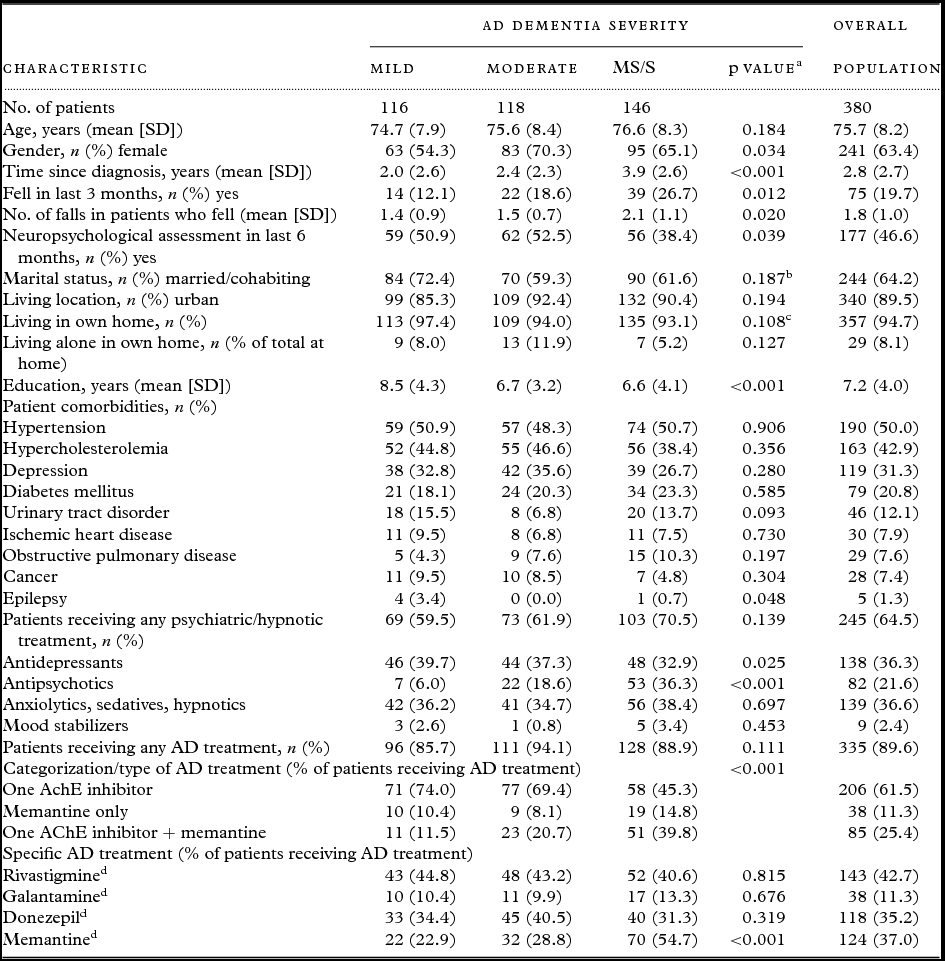
Patient characteristics differed significantly between the AD dementia severity groups with respect to the proportion of patients who were female, fell in the past 3 months, underwent a neuropsychological assessment in the past 6 months, had epilepsy as a comorbidity, and were taking antidepressants, antipsychotics, and/or memantine, and the mean time since diagnosis, the mean number of falls in the past 3 months, the mean number of years of education, and the type of AD treatment (Table 1). Overall, 89.6% of patients were taking an AD-specific drug, and 83.7% of patients had at least one comorbidity (mean (SD) of 1.8 (1.27) comorbidities per patient).
Patient characteristics

AChE, acetylcholinesterase; AD, Alzheimer's disease; ANOVA, analysis of variance; MMSE, Mini-Mental State examination; MS/S, moderately severe/severe; SD, standard deviation.
a p value for comparison between AD dementia severity groups (ANOVA for continuous variables and Cochran–Mantel–Haenszel test for categorical variables).
b p value for comparison between AD dementia severity groups for marital status (all categories, including married/cohabiting, never married, divorced/separated, and widowed).
c p value for comparison between AD dementia severity groups for living accommodation (all categories, including own home, intermediate forms of accommodation (not dementia-specific), dementia-specific residential accommodation, and other).
d Includes all patients taking this medication, either alone or combined with another treatment.
Percentages calculated based on total number in severity group with available data, unless otherwise stated.
“Mild” AD dementia = MMSE score of 21–26 points, “Moderate” AD dementia = MMSE score of 15–20 points, “MS/S” AD dementia = MMSE score of <15 points.
Caregiver characteristics were similar between AD dementia severity groups (see Table S2), apart from the mean number of additional caregivers involved in caring for the patient, which generally increased with increasing AD dementia severity. Overall, 216 caregivers (56.8%) had at least one medical condition (mean (SD) of 1.2 (1.67) medical conditions per caregiver).
Patient- and caregiver-reported assessments
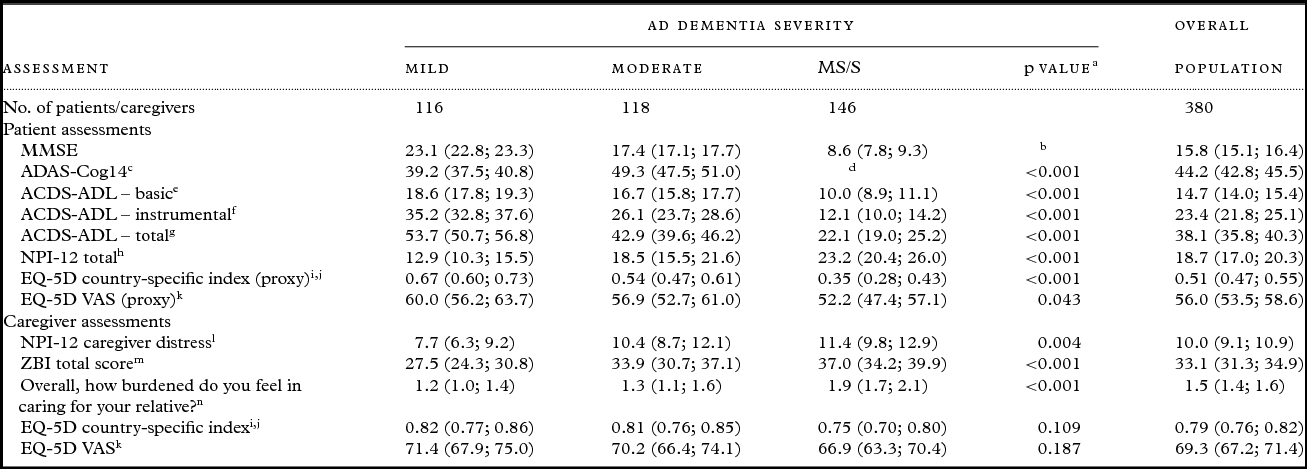
Patient- and caregiver-reported assessments are summarized in Table 2. Patient cognitive function and functional ability worsened significantly with increasing AD dementia severity, as demonstrated by mean ADAS-Cog14 scores and mean ADCS-ADL scores, respectively. In addition, patient behavioral and psychological symptoms increased significantly with increasing AD dementia severity, as shown by mean NPI-12 total scores.
Patient- and caregiver-reported assessments

AD, Alzheimer's disease; ACDS-ADL, Alzheimer's Disease Co-operative Study Activities of Daily Living Inventory; ADAS-Cog 14, 14-item Alzheimer's disease assessment scale – cognitive subscale; ANOVA, analysis of variance; CI, confidence interval; EQ-5D, EuroQoL-5D; EQ-VAS, EQ-5D visual analogue scale; HRQoL, health-related quality of life; MMSE, Mini-Mental State Examination; MS/S, moderately severe/severe; NPI-12, 12-item Neuropsychiatric Inventory; ZBI, Zarit Burden Interview.
a p value for ANOVA comparison between AD severity groups.
b No statistical analysis performed.
c Score range 0–90, higher scores indicating greater cognitive impairment.
d The ADAS-Cog is only applied to AD patients with a MMSE score of >14.
e Score range 0–22, higher scores indicating greater functional ability.
f Score range 0–56, higher scores indicating greater functional ability.
g Score range 0–78, higher scores indicating greater functional ability.
h Score range 0–144, higher scores indicating a greater frequency of symptoms.
i Score range 0–1, higher scores indicating better HRQoL.
j Presented to two decimal places to enable utility scores to be more clearly distinguished between AD severity groups.
k Score range 0–100, higher scores indicating better HRQoL.
l Score range 0–60, higher scores indicating greater caregiver distress.
m Score range 0–88, higher scores indicating greater caregiver burden.
n Specific question asked in the ZBI.
“Mild” AD dementia = MMSE score of 21–26 points; “Moderate” AD dementia = MMSE score of 15–20 points; “MS/S” AD dementia = MMSE score of <15 points.
Data presented as mean scores (95% CI) unless otherwise indicated.
Patient HRQoL decreased significantly with increasing AD dementia severity, as indicated by mean EQ-5D (proxy) country-specific index scores and mean EQ-5D (proxy) visual analogue scale (VAS) scores. The proportions of patients with problems in the different EQ-5D (proxy) domains differed significantly between AD dementia severity groups for mobility (39.1%, 42.1%, and 56.5% for the mild, moderate, and MS/S AD dementia groups, respectively; p value <0.001), self-care (32.7%, 48.2%, and 61.6%, respectively; p value <0.001), usual activities (45.5%, 62.3%, and 71.7%, respectively; p value <0.001), and pain/discomfort (65.5%, 59.6%, and 50.0%, respectively; p value = 0.018). There was no difference between AD dementia severity groups in the proportion of patients with problems in the anxiety/depression domain (50.0%, 53.5%, and 39.9%, respectively; p value = 0.161).
Caregiver distress increased significantly with increasing AD dementia severity, as demonstrated by mean NPI-12 caregiver distress scores. Caregiver subjective burden also increased significantly with increasing AD dementia severity, as reflected by mean ZBI total scores. By contrast, caregiver HRQoL was similar across AD dementia severity groups. However, the proportion of caregivers with problems was significantly different across AD dementia severity groups for the self-care (5.3%, 6.9%, and 10.9%, respectively; p value = 0.033) and usual activities (12.3%, 14.7%, and 23.2%, respectively; p value = 0.021) domains of the EQ-5D, with problems more common for caregivers of patients with MS/S AD dementia than for those caring for patients with mild or moderate AD dementia.
Patient and caregiver resource use
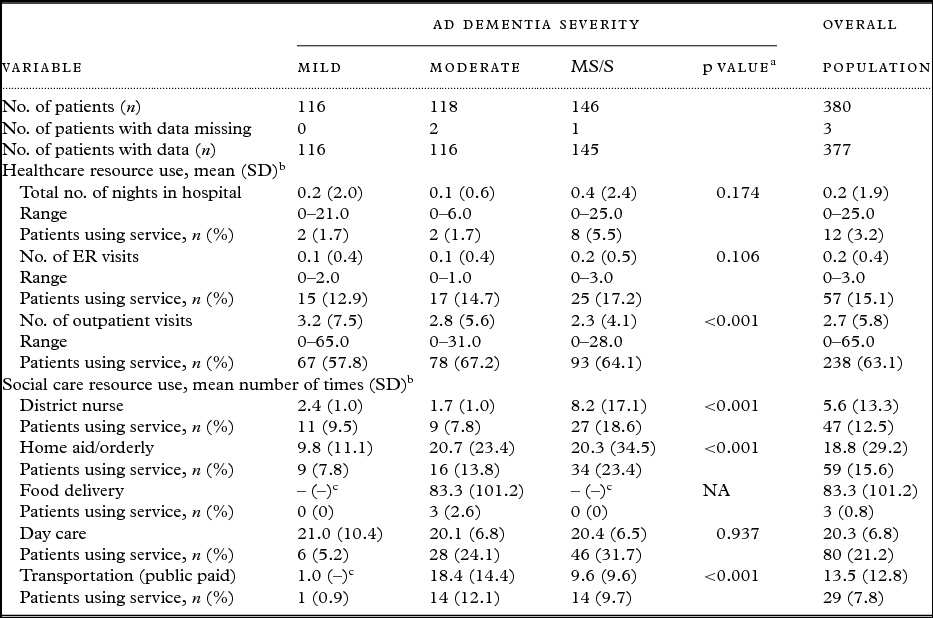
Patient resource use in the past month is summarized in Table 3. The mean number of outpatient, district nurse and home aid/orderly visits, and mean use of public paid transportation per patient differed significantly between AD dementia severity groups. The mean number of nights in hospital, mean number of emergency room visits, and mean use of day care per patient did not differ statistically between AD dementia severity groups.
Resource use per patient in the past month

AD, Alzheimer's disease; CI, confidence interval; ER, Emergency room; MMSE, Mini-Mental State Examination; MS/S, moderately severe/severe; NA, not applicable; SD, standard deviation.
a p value for comparison between AD dementia severity groups (zero-inflated Poisson regression model).
b Means and p values for patients using the service.
c No value as zero visits or, for transportation SD, only one use by one patient.
“Mild” AD dementia = MMSE score of 21−26 points; “Moderate” AD dementia = MMSE score of 15−20 points; “MS/S” AD dementia = MMSE score of <15 points.
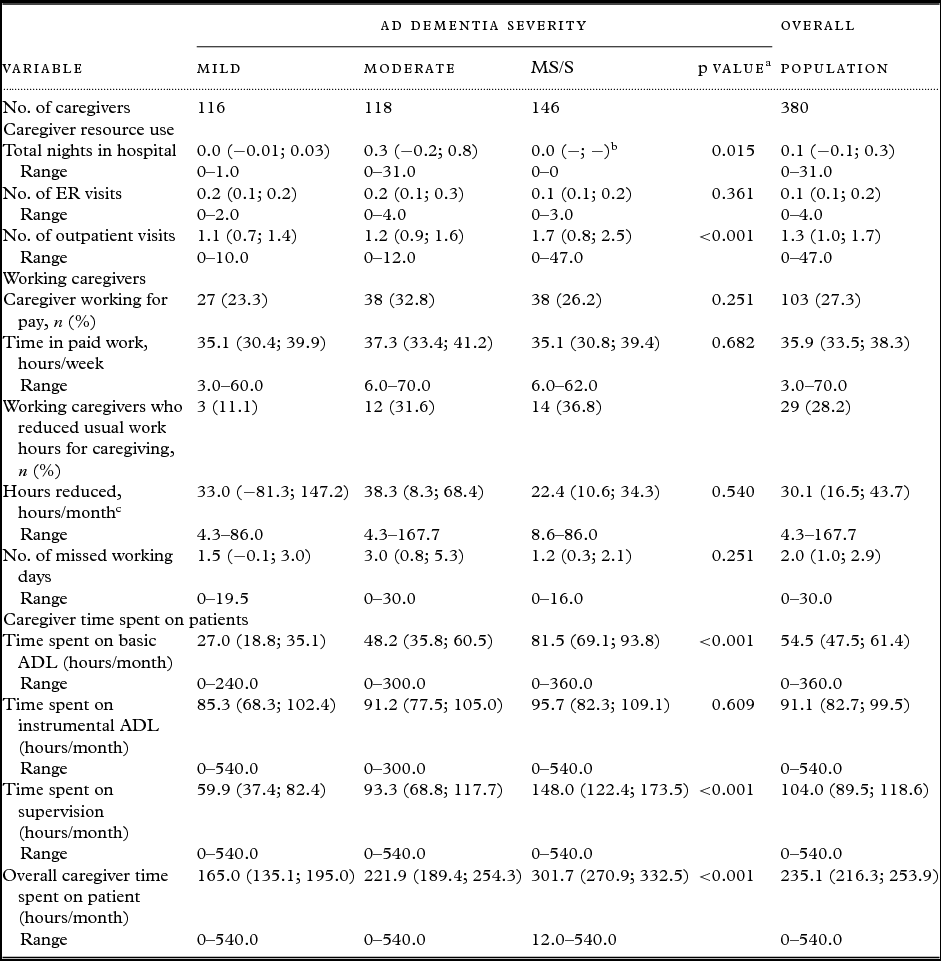
Caregiver resource use in the past month is summarized in Table 4. Mean total nights spent in hospital per caregiver differed significantly between AD dementia severity groups, being greatest in caregivers of patients with moderate AD dementia, although the mean number of nights was still low (0.3 nights) in this group. The mean number of caregiver outpatient visits increased significantly with increasing patient AD dementia severity. There was no difference between AD dementia severity groups in the mean number of caregiver ER visits.
Resource use and time variables per caregiver in the past month

AD, Alzheimer's disease; ADL, Activities of Daily Living; ANOVA, analysis of variance; ER, emergency room; MMSE, Mini-Mental State Examination; MS/S, moderately severe/severe.
a p value for comparison between AD dementia severity groups (ANOVA for continuous variables, Cochran–Mantel–Haenszel test for categorical variables and zero-inflated Poisson regression model for resource use).
b No value as zero visits.
c Based on reported number of hours lost in the past month by caregivers who were working.
Percentages calculated based on total number in severity group with available data, unless otherwise indicated.
Data are presented as means (95% confidence intervals), unless otherwise indicated.
“Mild” AD dementia = MMSE (Mini-Mental State examination) score of 21−26 points; “moderate” AD dementia = MMSE score of 15−20 points; “MS/S” AD dementia = MMSE score of <15 points.
Caregiver informal care
Mean overall caregiver time spent on the patient in the past month increased significantly with increasing AD dementia severity, as did mean caregiver time spent on basic ADL and mean caregiver time spent on supervising the patient (Table 4). Mean caregiver time spent on instrumental ADL did not differ significantly between AD dementia severity groups.
Costs
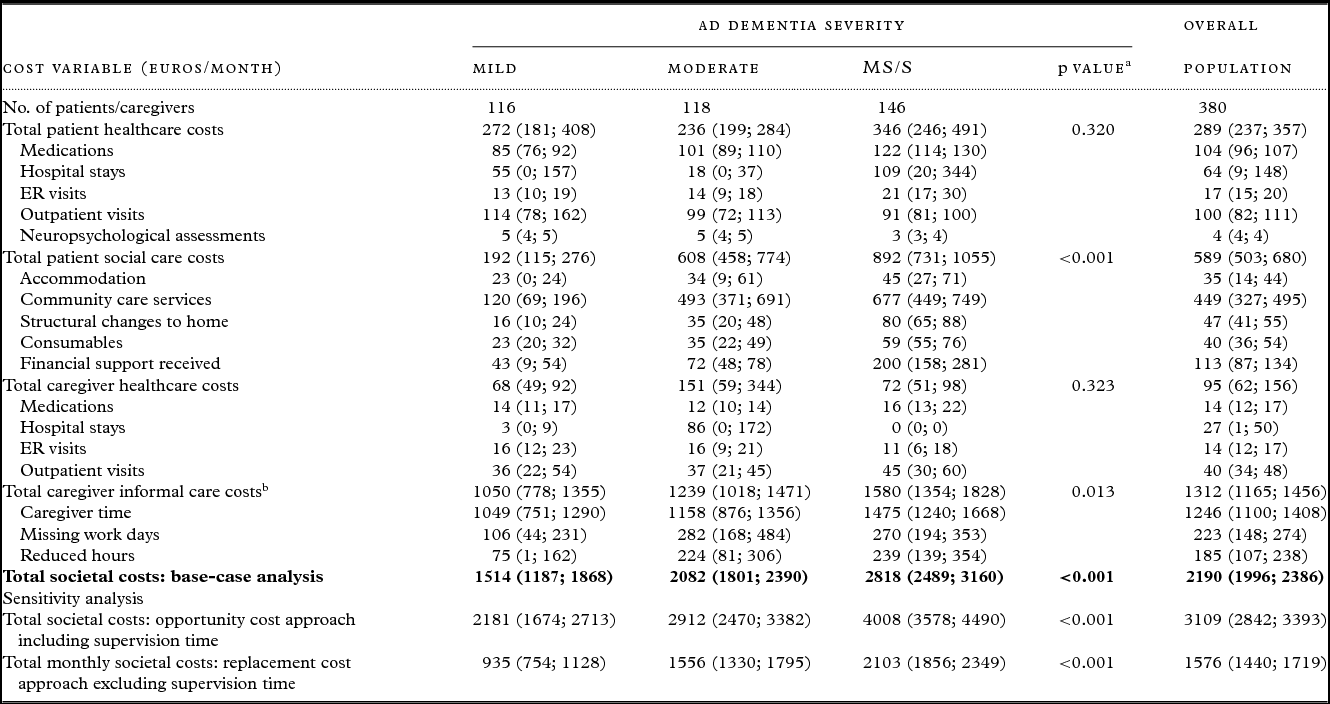
Total societal costs (i.e. patient healthcare costs plus patient social care costs plus caregiver informal care costs) increased significantly with increasing AD dementia severity: total mean monthly costs per patient were €1514 for mild, €2082 for moderate, and €2818 for MS/S AD dementia (p value <0.001) (Table 5). Caregiver informal care costs were responsible for the majority of the total societal costs and mean values differed significantly between AD dementia severity groups. Caregiver time spent caring for the patient accounted for the largest proportion of caregiver informal care costs. Mean patient social care costs also differed significantly between AD dementia severity groups, increasing with increasing AD dementia severity. Costs for community care services accounted for the largest proportion of patient social care costs. Although mean patient medication costs increased with increasing AD dementia severity, mean patient healthcare costs did not differ significantly between AD dementia severity groups. Mean caregiver healthcare costs were also similar between AD dementia severity groups.
Costs of Alzheimer's disease per patient in the past month (2013 Euros)

AD, Alzheimer's disease; ANOVA, analysis of variance; ER, emergency room; MMSE, Mini-Mental State Examination; MS/S, moderately severe/severe.
a ANOVA p value for comparison between AD dementia severity groups.
b Total caregiver informal care costs are not the sum of costs for caregiver time, missed work days and reduced hours as total caregiver costs were imputed separately from the imputation method used for these three cost components.
“Mild” AD dementia = MMSE score of 21−26 points; “Moderate” AD dementia = MMSE score of 15−20 points; “MS/S” AD dementia = MMSE score of <15 points.
Data are presented as means (95% confidence intervals).
Bold text is to highlight that they are total societal costs (the sum of patient healthcare costs, social care costs, caregiver healthcare costs and caregiver informal care costs).
Sensitivity analysis
Total monthly societal costs per patient were higher for all AD dementia severity groups when the cost analysis included caregiver time for supervising the patient (opportunity cost approach; Table 5). Analysis of costs using a replacement cost approach and excluding caregiver supervision time gave lower total monthly societal costs than in the base-case analysis for all AD dementia severity groups (Table 5). In both sensitivity analyses, mean costs increased significantly with increasing AD dementia severity.
Discussion
This study showed that the total monthly societal costs for AD increased with increasing AD dementia severity in Spain, with costs almost doubling for patients with MS/S AD dementia compared with those with mild AD dementia. Previous studies of the costs of AD in Spain in relation to disease severity have shown similar results (López-Bastida et al., Reference López-Bastida, Serrano-Aguillar, Perestelo-Perez and Oliva-Moreno2006; Darbà et al., Reference Darbà, Kaskens and Lacey2015; Turró-Garriga et al., Reference Turró-Garriga2015).
Studies in other countries, including France, Germany, and the United Kingdom (Wimo et al., Reference Wimo2013), have also shown that the costs of AD generally increase with increasing AD severity. In the GERAS I study, for example, costs associated with MS/S AD dementia were almost double those for mild AD dementia in France and the United Kingdom, and almost triple those for patients with mild AD dementia in Germany (Wimo et al., Reference Wimo2013).
Caregiver informal care costs were the main cost driver for total Spanish societal costs in GERAS II, a finding supported by data from other studies, including studies from Spain (Sicras et al., Reference Sicras2005; López-Bastida et al., Reference López-Bastida, Serrano-Aguillar, Perestelo-Perez and Oliva-Moreno2006; Coduras et al., Reference Coduras2010; Wimo et al., Reference Wimo2013; Darbà et al., Reference Darbà, Kaskens and Lacey2015). In three Spanish studies, for example, 71–93% of the cost of AD was attributed to informal caregiver-associated costs (Sicras et al., Reference Sicras2005; Coduras et al., Reference Coduras2010; Darbà et al., Reference Darbà, Kaskens and Lacey2015).
Different trends in patient resource-use categories according to AD dementia severity were observed in the current study, such as a decrease in outpatient visits but an increase in home aid/orderly visits with increasing disease severity. In addition, there was no clear pattern in caregiver resource use, apart from an increase in outpatient visits with increasing disease severity. As there was no clear pattern in patient or caregiver resource use, patient and caregiver healthcare costs did not differ across AD dementia severity groups. This contrasts with the findings from GERAS I, where patient healthcare resource use and patient healthcare costs increased with disease severity (Wimo et al., Reference Wimo2013). As in the current study, however, caregiver resource use and caregiver healthcare costs did not change with disease severity. The differences between findings from the current study and those from GERAS I may have been due to differences in healthcare provision or availability of AD care between the different countries. Our findings also contrast with the results of a Spanish study, which showed that more severe AD dementia (clinical dementia rating (CDR) score of 3) was independently and significantly associated with all cost categories, including direct medical costs, whereas less severe disease (CDR score of ≤2) only showed an association with informal care and social care costs (Darbà et al., Reference Darbà, Kaskens and Lacey2015). However, it is worth noting that patient medication costs did increase numerically with increasing AD dementia severity in the current study, which supports the findings of another Spanish study (Turró-Garriga et al., Reference Turró-Garriga2015).
In the current study, district nursing costs were classed as social care costs rather than patient healthcare costs. We used this standardized approach to the collection of resource use data and estimation of costs based on the RUD and associated published literature in order to allow comparisons with other country costs, where the RUD has also been used to capture resource use information. It could be argued that the categorization of district nursing costs as social care costs could affect the conclusions regarding the impact of disease severity on cost categories (specifically that patient healthcare costs did not increase with disease severity, while social care costs did). However, district nurses are not a frequently used resource in Spain, as illustrated by the relatively few district nurse visits reported in the month prior to baseline (average of 5.6 overall) in this study; this point would therefore have little impact on the estimations of total healthcare or community care costs.
Overall, 27.3% of caregivers were working for pay, which is similar to the proportions observed in Germany (28.5%), France (21.5%), and the United Kingdom (20.5%) (Wimo et al., Reference Wimo2013). The proportion of spousal caregivers was lower in Spain (53.3%) than in France, Germany and the United Kingdom, where approximately two-thirds of caregivers were spouses (Wimo et al., Reference Wimo2013).
Patient HRQoL was believed to decrease with increasing AD dementia severity, as demonstrated by decreasing EQ-5D (proxy) index and VAS scores. A similar pattern was observed in the GERAS I study in patients from France, Germany, and the United Kingdom (Wimo et al., Reference Wimo2013). Other studies have also shown that patient HRQoL decreases with increasing AD severity (Wlodarczyk et al., Reference Wlodarczyk, Brodaty and Hawthorne2004; López-Bastida et al., Reference López-Bastida, Serrano-Aguillar, Perestelo-Perez and Oliva-Moreno2006). It is worth noting that studies of patients with dementia or AD have shown differences between patient and proxy (usually the caregiver) ratings of HRQoL using the EQ-5D, with caregivers rating patient HRQoL significantly lower than the patients themselves (Jönsson et al., Reference Jönsson2006; Kunz et al., Reference Kunz2010). In addition, caregivers appear to project some of their own HRQoL onto patients when assessing patient HRQoL (Arons et al., Reference Arons, Krabbe, Schölzel-Dorenbos, van der Wilt and Rikkert2013). These findings suggest that patient HRQoL scores obtained by proxy should be interpreted with caution.
In contrast to patient HRQoL, caregiver HRQoL was similar across the AD dementia severity groups, even though caregiver burden increased with increasing disease severity. This suggests that the EQ-5D has limitations in reflecting the impact of patient AD dementia severity on the caregiver, as indicated in a sub-analysis from the GERAS I study (Reed et al., Reference Reed2015). However, this is consistent with a previous study from Spain, in which patient HRQoL (measured by proxy using the EQ-5D) decreased as disease severity increased, but the severity of AD did not influence caregiver HRQoL (also measured using the EQ-5D) (López-Bastida et al., Reference López-Bastida, Serrano-Aguillar, Perestelo-Perez and Oliva-Moreno2006).
By contrast, other studies have suggested that caregiver quality of life decreases with increasing disease severity (Wlodarczyk et al., Reference Wlodarczyk, Brodaty and Hawthorne2004; Schölzel-Dorenbos et al., Reference Schölzel-Dorenbos, Draskovic, Vernooij-Dassen and Olde Rikkert2009) and increased patient dependency on the caregiver (Serrano-Aguilar et al., Reference Serrano-Aguilar, López-Bastida and Yanes-Lopez2006). In addition, caregiver anxiety and depression have been shown to correlate with the severity of patient behavioral disorders and the duration of disease (Ferrara et al., Reference Ferrara2008). The difference between these results and those of the current study may be explained by the use of different instruments to measure quality of life (e.g. the EQ-5D focuses on the physical domain, which may have a ceiling effect in those capable of caregiving), and also the fact that patient behavior has a significant impact on caregiver burden (Ferrara et al., Reference Ferrara2008; Agüera-Ortiz et al., Reference Agüera-Ortiz, Frank-García, Gil and Moreno2010).
Strengths of the current study include the use of real-world data, and use of a standardized instrument (the RUD) to capture information on resource utilization. In addition, the study considered costs from a societal perspective, included a wide range of cost categories and also captured data on caregiver subjective burden. Limitations of the current study include the use of a clinic- rather than population-based cohort, which could introduce selection bias and limit the external validity of the results, as participating patients would not be fully representative of patients with AD living in the community. In addition, the MMSE score cut-off used for MS/S (<15) may bias this group toward less severely affected patients, again resulting in a group not fully representative of patients with severe AD living in the community and resulting in underestimation of the costs for this group. Finally, differences in patient characteristics between AD dementia severity groups may have had a confounding effect on resource utilization and costs. However, some patient characteristics would be expected to vary with disease severity, such as time since AD dementia diagnosis and number of falls.
Conclusion
This study showed that the societal costs associated with AD in Spain increased with increasing AD dementia severity. The costs of caregiver informal care accounted for the largest component of total societal costs and also increased with increasing disease severity. Patient healthcare costs did not differ across AD dementia severity groups. Patient HRQoL decreased with increasing disease severity, while caregiver subjective burden increased.
Conflict of interest
This study was sponsored by Eli Lilly and Company. CR, AC, PA, TD are employees of Eli Lilly and Company. JMA has received financial compensation from Eli Lilly for participation on the GERAS Advisory Board. JO and LAO report no conflicts of interest.
Description of authors’ roles
CR was involved in the study design; AC participated in implementation of the study; all authors were involved in the interpretation of data, in the drafting of the report and in the decision to submit the report for publication; in addition, all authors read and approved the final manuscript.
Acknowledgments
The authors would like to acknowledge the participating investigators: Pedro Abizanda, Francisco Javier Alberca de Castro, Consuelo Almenar Monfort, Jordi Alom, Miguel Baquero, Mercè Boada, Antonio del Olmo, Manuel Fernández, José Antonio Fernández Benítez, Manuel Franco-Martín, Jose Miguel Laínez, Secundino López-Pousa, Jose Luis López-Sendón Moreno, Antonia Ana Mármol Prados, Manuel Martín-Carrasco, Jorge Matías-Guiu, Angel Montejo-González, Angel Moríñigo, Miguel Moya, Javier Olazarán, Francesc Pujadas, Ramon Reñé, Manuel Sánchez Pérez, and Gabriel Selva-Vera. They would also like to acknowledge Dr Sue Chambers and Dr Claire Lavin (Rx Communications, Mold, UK) for medical writing assistance with the preparation of this manuscript, funded by Eli Lilly and Company.
Supplementary material
To view supplementary material for this article, please visit https://doi.org/10.1017/S1041610217001211