There is growing evidence that in the early stages of dementia, the brain retains cognitive and neural plasticity (Fernandez-Ballesteros et al. Reference Fernandez-Ballesteros, Zamarron and Tarraga2005), and can recruit additional neural networks to compensate for damage caused to other areas of the brain (Grady et al. Reference Grady, McIntosh, Beig, Keightley, Burian and Black2003). Supporting research shows that although memory and other cognitive functions are centrally affected by dementia, people with early stage dementia have retained cognitive and functional abilities and are often capable of new learning (Clare & Wilson, Reference Clare and Wilson2004). These findings indicate that cognitive interventions for dementia, aimed at delaying the progression of symptoms or improving functioning, might be most advantageous when implemented earlier in the disease course. Research shows that early cognitive interventions can build on preserved aspects of memory, and develop ways of compensating for impairments; thus increasing the possibility of enhancing or maintaining functioning and reducing excess disability (Clare, Reference Clare2008).
Early interventions for people with dementia typically consist of either cognitive training or cognitive rehabilitation (CR). Cognitive training targets underlying impairment and involves guided practise on a standard set of cognitive tasks (Martin et al. Reference Martin, Clare, Altgassen, Cameron and Zehnder2011). Although some studies show that cognitive training might benefit cognitive performance, results are inconsistent, and benefits have not been shown to transfer to everyday or functional abilities (Sitzer et al. Reference Sitzer, Twamley and Jeste2006; Bahar-Fuchs et al. Reference Bahar-Fuchs, Clare and Woods2013). CR may offer a promising alternative to cognitive training because it targets functional disability through individualised, goal-focused interventions, that draw on retained strengths to support adaptive behaviour (Clare et al. Reference Bahar-Fuchs, Clare and Woods2013). The aim of CR is to enable individuals experiencing progressive cognitive decline to achieve their optimum levels of well-being by improving performance on personally relevant goals. The CR intervention typically focuses on restoration of function, compensatory strategies, and environmental modification (Clare, Reference Clare2008).
Restoration of function aims to build on the individual’s retained abilities in order to promote new learning or relearning (Clare et al. Reference Bahar-Fuchs, Clare and Woods2013). An array of instructional strategies can be used to facilitate new learning including spaced retrieval, shaping and chaining (Skinner, Reference Skinner1953), forward and backward cues, mnemonics, semantic elaboration, action-based encoding, and prompting and fading (see Clare, Reference Clare2008; Cooper et al. Reference Cooper, Heron and Heward2007 for more detailed descriptions). During intervention sessions, instructional strategies can be applied using an errorless learning (EL) paradigm (Terrace, Reference Terrace1963), with strategies that require effortful or effortless processing (Clare & Wilson, Reference Clare and Wilson2004). EL is used to reduce or eliminate errors during learning trials, and has been shown to be beneficial for some participants with Alzheimer’s disease (AD) under certain conditions; particularly when teaching face–name associations, personal information, or using memory aids (e.g. Baddeley & Wilson, Reference Baddeley and Wilson1994; Clare et al. Reference Clare, Wilson, Carter, Roth and Hodges2002; Clare & Wilson, Reference Clare and Wilson2004). Effortful processing on the other hand, demands more active encoding of to-be-learned information than effortless processing; and may also be a useful technique (Clare & Wilson, Reference Clare and Wilson2004; Dunn & Clare, Reference Dunn and Clare2007). The most recent evidence suggests that increasing the level of effort required at encoding may be more important than focusing on eliminating errors (Dunn & Clare, Reference Dunn and Clare2007); although effortful processing can be applied within an EL paradigm (Clare & Wilson, Reference Clare and Wilson2004).
Literature on precision teaching (PT) has shown that it is a highly effective teaching strategy to promote learning and fluent responding in clinical and educational contexts with younger populations (Lindsley, Reference Lindsley1991; Kubina et al. Reference Kubina, Ward and Mozzoni2000). Despite this, very few studies have considered the utility of this method as a cognitive rehabilitative strategy for people with AD (Johnson-Talbert & Cooper, Reference Johnson-Talbert and Cooper1992). In light of existing evidence, it may be worthwhile to incorporate PT as part of a rehabilitative intervention targeting restoration of function.
Compensatory strategies encourage the use of memory aids to facilitate novel ways of performing cognitive tasks and provide practical solutions for managing cognitive deficits. Environmental modification might include rearranging an individual’s environment to promote efficiency, introducing electronic or computer equipment to support independent functioning, or using visual prompts or schedules to build routines (Clare, Reference Clare2008). During CR, it can also be beneficial to explore the person’s ways of managing stress or anxiety, and to provide relevant practice in simple relaxation techniques (Suhr, Reference Suhr1999).
Evidence from single-case and small-group intervention studies show that CR has the potential to improve performance on personally relevant goals or targets that present challenges to everyday living (e.g. remembering appointments); as well as enhancing well-being, and promoting active involvement in daily life for people with mild cognitive impairment (Clare et al. Reference Clare, van Paasschen, Evans, Parkinson, Woods and Linden2009; O’Sullivan et al. Reference O’Sullivan, Coen, O’Hora and Shiel2015) and early stage dementia (Clare et al. Reference Clare, Wilson, Carter and Hodges2003; Clare & Wilson, Reference Clare and Wilson2004; Clare, Reference Clare2010). Two randomised-controlled trials (RCTs) examined the impact of CR in early stage AD and showed that compared with alternative treatments or no treatment controls, CR improved ratings of goal performance and satisfaction, and caregiver’s self-reported quality of life (Clare et al. Reference Clare2010; Kurz et al. Reference Kurz, Thone-Otto, Cramer, Egert, Frolich, Gertz, Kehl, Wagenpfeil and Werheid2012). A recent Cochrane review concluded, however, that further studies of CR are required to provide more definitive evidence (Bahar-Fuchs et al. Reference Bahar-Fuchs, Clare and Woods2013). There is only one known published study in Ireland of CR with people with mild cognitive impairment (O’Sullivan et al. Reference O’Sullivan, Coen, O’Hora and Shiel2015); and none with people with early stage AD.
The content of CR interventions is determined by individual goals selected by each participant, and as such, goals generally differ across participants (Clare et al. Reference Clare, Wilson, Carter and Hodges2003). For this reason, a single-subject design approach is appropriate and beneficial as it allows for objective analysis of individual intervention outcomes (Horner et al. Reference Horner, Carr, Halle, McGee, Odom and Wolery2005). In addition, information about specific deficits and participants’ approaches to goals can be lost in RCTs and group designs, as only information applicable to all participants can be reported (e.g. subjective ratings of goal performance and satisfaction; standardised measures of cognitive function); an issue which is ameliorated by using a single-subject design (Horner et al. Reference Horner, Carr, Halle, McGee, Odom and Wolery2005; Shadish & Rindskopf, Reference Shadish and Rindskopf2007).
This pilot study aims to develop and evaluate a CR intervention for three older adults with early stage AD. We examined the impact of CR on actual and self-rated goal performance, self-rated goal satisfaction, quality of life, cognitive and everyday functioning, mood, and memory self-efficacy for people with early stage AD; and also on carer burden, general mental health, quality of life, and mood of carers.
Method
Participants
Five participants were initially identified, through the Alzheimer Society of Ireland, to take part in the study but two were excluded after screening. Participants were required to have a formal National Institute of Neurological and Communicative Disorders and Stroke and the Alzheimer's Disease and Related Disorders Association diagnosis of AD, be community dwelling with a carer willing to participate, and be able to give informed consent. Participants were screened using the Mini Mental Status Examination (MMSE; Folstein et al. Reference Folstein, Folstein and McHugh1975; range, 0–30, lower scores indicate poorer cognitive function), and were required to score between 18 and 24 to be considered for inclusion. Excluded participants received alternative intervention materials and information regarding services for people with mild cognitive impairment/dementia. The three participants included in the study consisted of two men and one woman, aged between 60 and 85 years with a mean age of 73.33 years (SD = 12.58); all had received an AD diagnosis from a neurologist. At screening, participant one (P1) scored 18, participant two (P2) scored 24, and participant three (P3) scored 20 on the MMSE. The mean MMSE score was 20.66 (SD = 3.05).
Ethical approval
The research methodology and study procedures were granted ethical approval by St. James Hospital Research Ethics Committee.
Design
The study was conceptualised as a pre–post-test, single-case multiple baseline design (MBD). Scores on self- and informant-rating scales and on cognitive test measures were obtained at baseline and post-test. A selection of measures were also administered at follow-up. In addition, individual performances on intervention goals were recorded during baseline and intervention sessions, and evaluated using an MBD. The MBD is the most commonly used single-subject design in psychology and education (Shadish & Sullivan, Reference Shadish and Sullivan2011); and is a useful method of evaluating intervention effects, as it allows for causal inferences to be made about effects of the independent variable on the dependent variable (Cooper et al. Reference Cooper, Heron and Heward2007). The research was guided by the Single-Case Experimental Design (SCED) (Tate et al. Reference Tate, McDonald, Perdices, Togher, Schultz and Savage2008) and The Revised Risk of Bias in N of 1 Trials (RoBiNT) scales (Tate et al. Reference Tate, Perdices, Rosenkoetter, Wakim, Godbee, Togher and McDonald2013), designed to measure methodological quality in single-subject design studies. The study met eight of the 11 criteria on the SCED scale; and scored 21 out of a possible 30 points on the RoBiNT scale. Assessments and CR sessions were conducted in participants’ homes. All other aspects of the research planning and analysis took place at the Neuro-Enhancement for Independent Lives (NEIL) Programme in the Institute of Neuroscience, Trinity College Dublin.
Procedure
The study comprised of five phases: (1) baseline assessments, (2) goal identification, (3) goal baseline measurement, (4) CR intervention sessions, and (5) post-test assessments (post-intervention and 6-week follow-up). Baseline assessments and goal identification were conducted on weeks 1 and 2; the CR intervention began on week 3 and continued for 8 weeks; post-test outcomes were measured at week 11 (1 week after the final intervention session); and follow-up assessments were conducted 6 weeks after the intervention concluded, at week 17.
Phases 1 and 5: Baseline and post-test assessments
The Repeatable Battery for the Assessment of Neuropsychological Status (RBANS; Randolph et al. Reference Randolph, Tierney, Mohr and Chase1998; alternate forms A and B used, lower scores indicate poorer cognitive function) was administered to establish a neuropsychological profile of participants’ strengths and weaknesses. The use of either Form A or Form B at baseline was randomly selected for each participant, and subsequently the alternate form was used at post-test and follow-up. Remaining assessments included the Montreal Cognitive Assessment (MoCA; Nasreddine et al. Reference Nasreddine, Phillips, Bedirian, Charbonneau, Whitehead, Collin, Cummings and Chertkow2005; range 0–30, lower scores indicate poorer cognitive function; test–retest reliability, 0.92), Quality of Life in AD (QoL-AD; Logsdon et al. Reference Logsdon, Gibbons, McCurry and Teri1999; range 13–52, lower scores indicate lower QoL) self and informant, Instrumental Activities of Daily Living (Lawton & Brody, Reference Lawton and Brody1969, range 0–8, lower scores indicate poorer everyday functioning), Hospital Anxiety and Depression Scale (HADS; Zigmond & Snaith, Reference Zigmond and Snaith1983; anxiety range 0–21; depression range 0–21, lower scores indicate better mood), and Memory Awareness Rating Scale (MARS; Clare et al. Reference Clare, Wilson, Carter, Roth and Hodges2002; self- and informant memory functioning subscale; range 0–52, lower scores indicate poorer perception of memory functioning). Self-rated goal performance and satisfaction were measured using the structured Bangor Goal-Setting Interview (BGSI; Clare et al. Reference Clare, Wilson, Carter, Roth and Hodges2002; performance range 1–10, 10 = able to carry out extremely well with no difficulty; satisfaction range 1–10, 10 = extremely satisfied with this level of performance); goal performance was also measured using an objective measure of percentage of correct responses.
For carers, assessments included the Zarit Burden Interview (22-item; Zarit et al. Reference Zarit, Orr and Zarit1985; range 0–22, lower scores indicate less burden), HADS, General Health Questionnaire-12 (GHQ-12; Goldberg, Reference Goldberg1992; range 0–12, lower scores indicate better general mental health), and World Health Organization Quality of Life Assessment, short version (WHOQOL-BREF; Bonomi et al. Reference Bonomi, Patrick, Bushnell and Martin2000; range 26–130, lower scores indicate poorer QoL). All outcomes were measured at baseline and post-intervention; only the RBANS and the QoL-AD were measured at the 6-week follow-up (see Tables 2–4). Test–-retest reliability for the RBANS was reported at 0.80 (Dong et al. Reference Dong, Thompson, Huey, Tan, Swie Lim, Pang and Li-Hsian Chen2013) and for the QoL-AD was reported at 0.76 for patients and 0.92 for caregivers (Ready & Ott, Reference Ready and Ott2003).
Phase 2: Goal identification
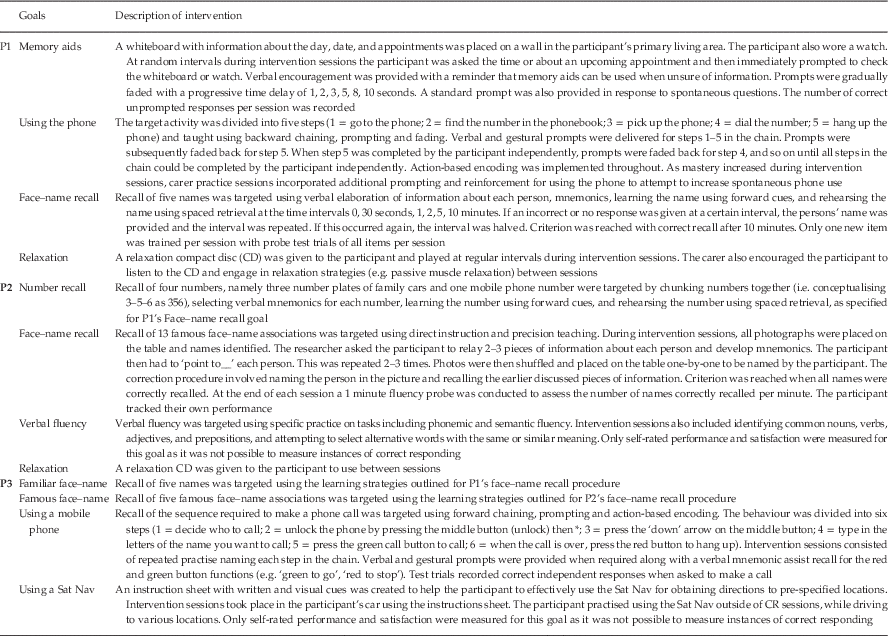
Three to four personal rehabilitative goals were identified for each participant through discussions with the participant and their carer, and using the structured BGSI (Clare et al. Reference Clare, Wilson, Carter, Roth and Hodges2002). Goals were personally relevant for each participant and reflected areas that were either causing difficulty or where the participant would like to see improvement (see Table 1).
Details of the cognitive rehabilitation (CR) intervention strategies implemented for each goal across the three participants

Phase 3: Goal baseline measurement
Where possible on individual goals, baseline, and intervention data were recorded as percentage of correct responses, and plotted MBD graphs (see Figs. 1–3). Simultaneous baseline data were gathered on two or more goals per participant. After a stable baseline was observed for one goal, the CR intervention was applied while baseline conditions were maintained for the remaining goals. After change in responding was observed for the first goal, the CR intervention was applied sequentially to the next goal with a stable baseline (Cooper et al. Reference Cooper, Heron and Heward2007). The data were recorded during clinical sessions by the first author.
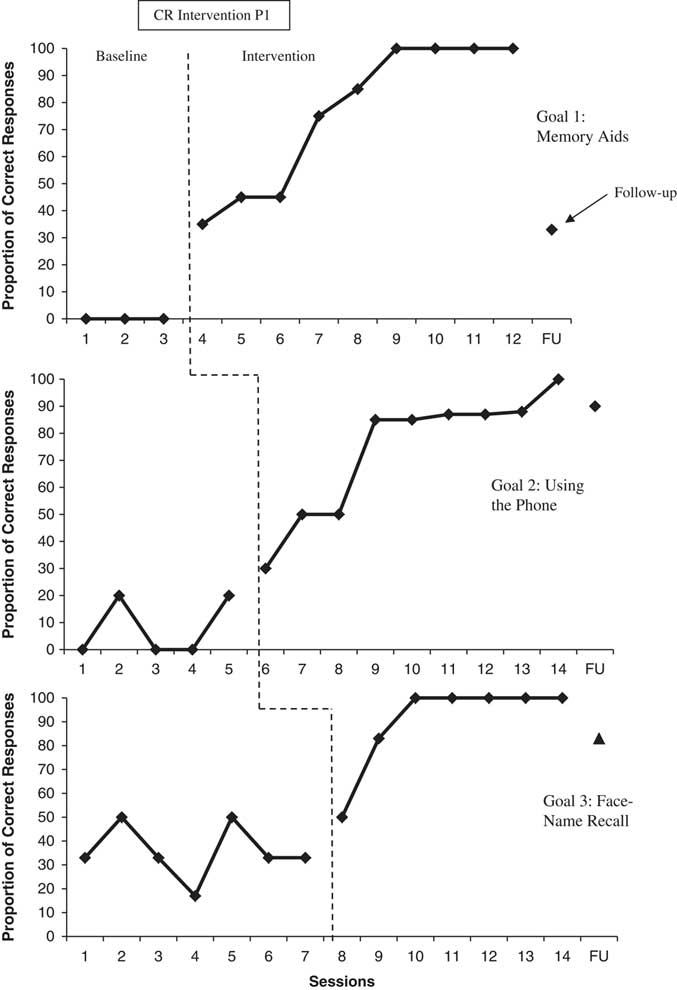
Participant 1 – memory aids: proportion of correct responses per session, when asked date/time or appointment details the participant checked her watch, calendar, or whiteboard; phone call: proportion of correct responses per session, action of making a call divided into four steps; face–name recall: proportion of correct responses across five names. CR, cognitive rehabilitation.

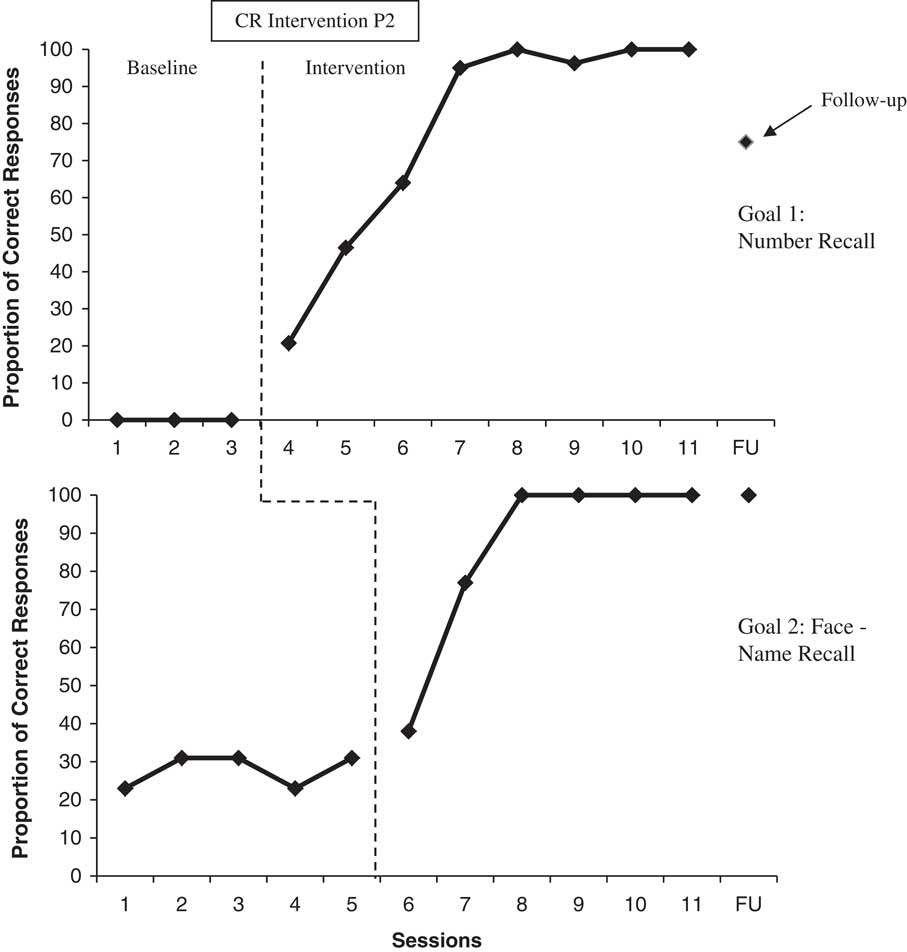
Participant 2 – number recall: proportion of correct responses per session, recall of four numbers; face–name recall: proportion of correct responses per session, recall of 13 famous face–name associations. CR, cognitive rehabilitation.

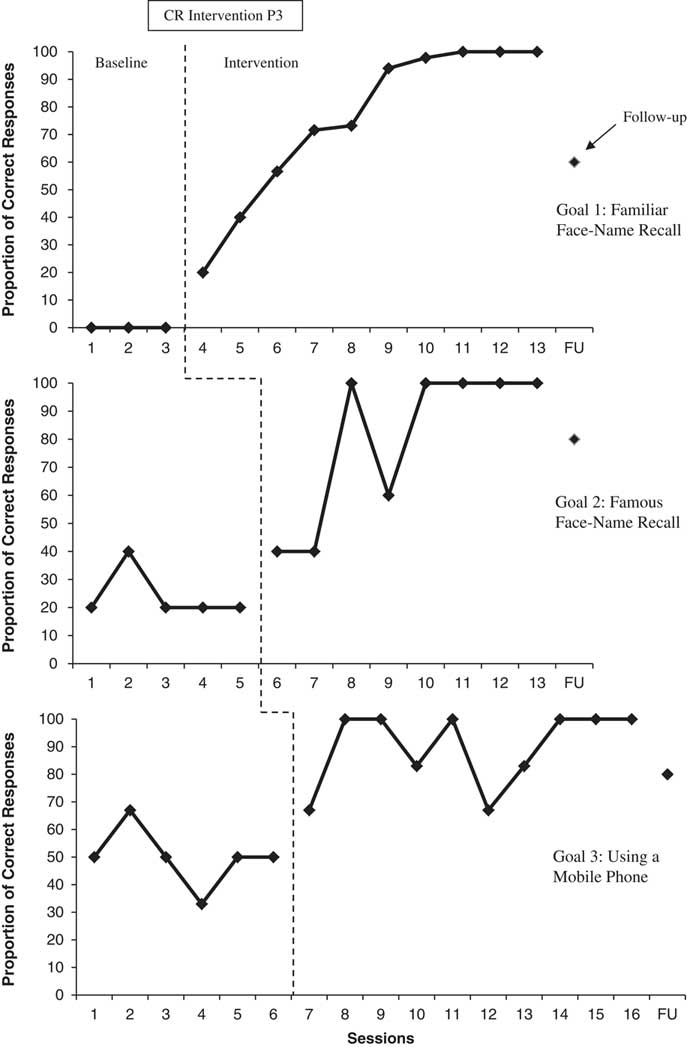
Participant 3 – familiar face–name recall: proportion of correct responses, recall of five familiar face–name associations; famous face–name recall: proportion of correct responses per session, recall of five famous face–name associations; using a mobile phone: proportion of correct responses per session, action of using the phone divided into six steps. CR, cognitive rehabilitation.

Phase 4: Intervention
CR intervention methods, informed by CR and behavioural intervention research literature, were devised to address participants’ identified goals. The first author implemented the CR interventions with all three participants as she was a Board Certified Behaviour Analyst-doctoral level, and had extensive experience with the implementation of evidence-based rehabilitative interventions. Intervention sessions were conducted for 60–90 minutes once per week over 8 weeks. Participants were encouraged to work on goals between sessions. Intervention sessions took place in participant’s homes to facilitate learning in the everyday setting. Where possible, a carer or family member joined in the last 10 minutes of each session. This involved reviewing the content of the session, agreeing homework, and discussing how to facilitate progress with personal goals. Performance data were recorded as percent correct at each session (as above), and typically each session included 10 intervention trials. The subsequent data were graphed on MBD graphs (Figs. 1–3).
Overall, the CR intervention incorporated techniques for learning new information, encouraged the use of learning strategies and memory aids every day, and encouraged relaxation. Memory rehabilitative strategies included the use of verbal and visual mnemonics, forward cueing, spaced retrieval, direct instruction, and PT. Strategies for improving procedural memory included action-based encoding, chaining, prompting, and fading (see Table 1). All interventions incorporated an EL paradigm by encouraging participants not to guess, but rather to respond with ‘I don’t know’ or not respond if unsure of an answer. Test sessions were conducted at the end of each intervention session, and data were recorded on MBD graphs. Where possible, carers attended the end of each session and were provided with a summary detailing areas covered, techniques used, and agreed practice. At the conclusion of the 8-week intervention each participant received a final report summarising goal performance, and effective and preferred strategies.
Results
Visual analysis of goal performance
Data were recorded during each session on participants’ performance on selected goals (proportion of correct responses per session). The data were then graphed on MBD graphs (see Figs. 1–3). Within and between condition analyses examined trend, level, and stability of data in order to evaluate intervention effects (Lane & Gast, Reference Lane and Gast2014). Stability was assessed using a stability envelope, consisting of two parallel lines drawn above and below the median line; the distance between the two lines shows how much variability is allowed for the data to be considered stable (see Gast, Reference Gast2010; Lane & Gast, Reference Lane and Gast2014 for a more thorough description). Criterion for the stability envelope was set at 70% due to low numbers of data points across phases. It was not possible to create a stability envelope for phases with all data points at zero. Percentage of non-overlapping data (PND) was used to quantify the extent to which scores were shared across phases; 100% non-overlap occurs when post-test values are greater or less than those recorded at baseline with no shared value (Manolov et al. Reference Manolov, Losada, Chacón-Moscoso and Sanduvete-Chaves2016). Although relaxation was targeted as part of the intervention for two participants, it was not appropriate to measure performance across sessions. Similarly, proportion of correct responses could not be measured for the ‘fluency’ goal for P2, and ‘using a Sat Nav’ for P3. These goals were instead targeted for general improvement outside of CR sessions.
P1 goal performance
Evaluation of level change within conditions for each of P1s’ three goals indicated that performance was stable during baseline and intervention. Accuracy criterion of 100% was reached during the intervention for ‘memory aids’ and ‘using the phone’. For the ‘face–name recall’ goal, performance was variable during baseline and intervention, but also improved to 100% accuracy in the intervention phase. Split-middle method of trend estimation indicated a contra-therapeutic trend during baseline and an increasing trend in a therapeutic direction during intervention for each of the three goals. The data for ‘memory aids’ and ‘using the phone’ were considered stable following application of a stability envelope to trend lines as 89% of data points in the intervention phase fell inside the trend stability envelope. Baseline data for the ‘face–name recall’ goal were variable as 57.14% of baseline data points and but intervention data were stable as 71.4% fell inside the trend stability envelope.
Evaluation of behaviour change between conditions indicated that performance in all three goals changed from a level trend in baseline to an accelerating improving trend during the intervention. Relative, absolute, median, and mean level change calculations indicated a positive and improving change across conditions; +45, +35, +85, +76.11, respectively, for ‘memory aids’; +40, +10, +85, +65.55 for ‘using the phone’; and +50, +17, +67, +54.85 for ‘face–name recall’. Calculations of PND indicated that there was 100% non-overlap of data observed between phases across each of the three goals. Maintenance data show that on the ‘memory aids’ goal, accuracy dropped from 100% at the end of the intervention to 33% at follow-up. Despite this, the participant commented at follow-up ‘I use my watch all the time now, but I didn’t before’. For ‘using the phone’, accuracy only dropped 10–90% at follow-up. For ‘face–name recall’, accuracy dropped from 100% at intervention to 83% at follow-up.
P2 goal performance
Evaluation of level change within conditions for both of P2’s goals indicated that performance was stable during baseline and intervention for ‘number recall’ and ‘face–name recall’ but was variable for the intervention phase of ‘face–name recall’. Performance on both goals reached 100% accuracy. Split-middle method of trend estimation indicated a contra-therapeutic trend during baseline and an increasing trend in a therapeutic direction during intervention for both goals. When the trend stability envelope was applied, 75% of intervention data for ‘number recall’, and 100% of baseline data and 67% of intervention data points for ‘face–name recall’ fell within the envelope.
Evaluation of behaviour change between conditions indicated that performance in both goals changed from a level trend in baseline to an accelerating improving trend during the intervention. Relative, absolute, median, and mean level change calculations indicated a positive and improving change across conditions; +55.25, +20.75, +95.62, +77.81, respectively, for ‘number recall’ and +50, +7, +69, +58.03, respectively, for ‘face–name recall’. Calculations of PND indicated that there was 100% non-overlap of data observed between phases. Maintenance data show that on the ‘number recall’ goal, accuracy dropped from 100% at the end of the intervention to 75% at follow-up. For ‘face–name recall’, intervention effects were maintained at 100% accuracy at the 6-week follow-up.
For the ‘fluency’ goal, P2 reported improvements in conversational fluency; specifically ‘I have noticed an improvement… this has given me the confidence to take my time and try to think of the words I want to use, instead of just not saying them’. Similarly for the relaxation goal, P2 reported listening to the relaxation CD during times of stress, and finding it beneficial to ‘escape and relax’.
P3 goal performance
Evaluation of level change within conditions for P3’s three goals indicated that performance was stable during baseline and intervention for ‘familiar face–name recall’ but was variable for both phases of the ‘famous face–name recall’ and ‘using a mobile phone’ goals. Performance on all goals reached 100% accuracy. Split-middle method of trend estimation indicated a contra-therapeutic trend during baseline and an increasing therapeutic trend during the intervention for all goals. When the trend stability envelope was applied, 70% of intervention data for ‘familiar face–name recall’; 80% of baseline data and 62.5% of intervention data points for ‘famous face–name recall’; and 67% of baseline and 60% of intervention data for ‘using a mobile phone’ fell within the envelope.
Evaluation of behaviour change between conditions indicated that performance in all goals changed from no trend in baseline to an accelerating improving trend during the intervention. Relative, absolute, median, and mean level change calculations indicated a positive and improving change across conditions; +56.6, +20, +83.6, +75.32, respectively, for ‘familiar face–name recall’; +50, +20, +80, +56, respectively, for ‘famous face–name recall’; and +50, +17, +50, +40, respectively, for ‘using a mobile phone’. Calculations of PND indicated that there was 100% non-overlap of data observed between phases for goals 1 and 2; and 80% non-overlap for goal 3. Maintenance data show that ‘familiar face–name recall’ accuracy dropped from 100% at the end of the intervention to 60% at follow-up; and ‘famous face–name recall’ and ‘using a mobile phone’ accuracy dropped to 80% at follow-up. P3 reported that the instructions provided for the ‘using a Sat Nav’ goal were ‘useful’ although it was unclear how often they were effectively used.
Self-Rated Goal Performance and Satisfaction
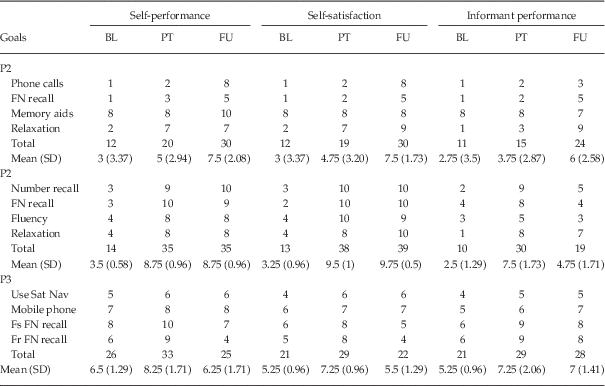
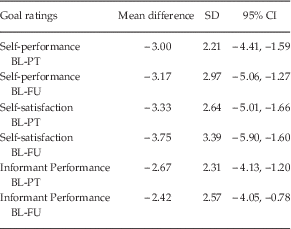
Table 2 illustrates scores including means and standard deviations for self- and informant ratings of goal performance and satisfaction. Baseline to post-test scores for self- and informant ratings increased for all participants. Post-test to follow-up self-rating scores increased for P1, remained the same for P2, and worsened for P3; whereas informant rating scores increased for P1, but decreased for P2 and P3. Difference scores from baseline to post-test and post-test to follow-up for all goals can be seen in Table 3.
Performance and satisfaction scores (minimum score = 1; maximum score = 10), including means and SD across goals for each participant at baseline, post-test and follow-up

BL, baseline; PT, post-test; FU, follow-up; FN, face–name recall; Fs FN, famous face–name recall; Fr FN, familiar face–name recall
Mean difference, including standard deviation (SD) and 95% confidence intervals (CI), between total ratings on 12 CR goals (3 participants×4 goals) at baseline (BL), post-test (PT), and follow-up (FU) for self-performance, self-satisfaction, and informant performance.

Cognitive function
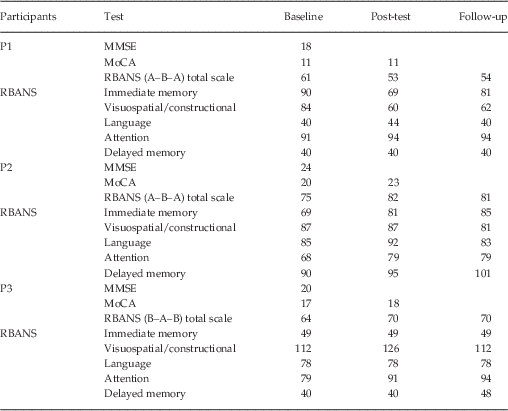
For P1 (baseline MMSE of 18), RBANS total scale score changed from 61 at baseline to 53 at post-test and 54 at follow-up; scores remained less than 1st percentile and were categorised as ‘extremely low’ (see Table 4). For P2 (baseline MMSE of 24), RBANS total scale score increased from 75 at baseline (5th percentile) to 82 and 81 at post-test and follow-up (12th percentile), increasing from ‘borderline’ up to ‘low average’. For P3 (baseline MMSE of 20), RBANS total scale scores increased from 64 at baseline (1st percentile) to 70 (2nd percentile) at post-test and follow-up, increasing from ‘extremely low’ to ‘borderline’. Baseline to post-test scores on the MoCA remained at 11 for P1, increased from 20 to 23 for P2, and increased from 17 to 18 for P3.
Cognitive test scores at baseline and follow-up; alternate versions of the Repeatable Battery for the Assessment of Neuropsychological Status (RBANS) were used

MMSE, Mini Mental Status Examination; MoCA, Montreal Cognitive Assessment.
RBANS total scale scores and index scores for separate cognitive abilities included. Qualitative description of RBANS index scores: 69 and below = extremely low; 70–79 = borderline; 80–89 = low average; 90–109 = average; 110–119 = high average; 120–129 = superior.
Subjective questionnaires
Participants
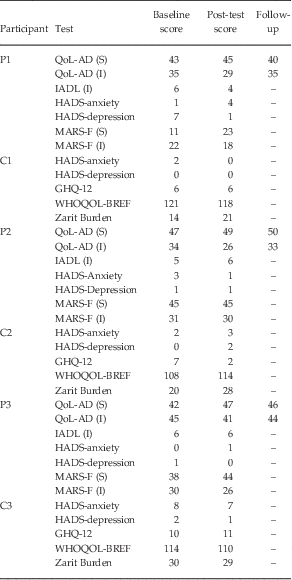
All participants’ self-reported quality of life scores improved from baseline to post-test with 6-week follow-up scores largely maintained (Table 5). Everyday functioning scores (Table 5) showed high levels of functioning for all three participants at baseline, which remained relatively unchanged at post-test. None of the participants reported any significant levels of depression or anxiety at baseline or post-test. Memory self-efficacy scores improved for P1 and P3; and remained unchanged for P2.
Primary outcome scoreFootnote a for quality of life (QoL); secondary outcome scoresFootnote a for participants including everyday functioning (IADL: Instrumental activities of daily living), mood (HADS: Hospital anxiety and depression scale), memory self-efficacy (MARS-F: Memory assessment rating scale-function subscale) self and informant versions; secondary outcome scores for carers including mood (HADS: Hospital anxiety and depression scale), general mental health (GHQ-12: General health questionnaire– 12 item), quality of life (WHOQOL-BREF: World Health Organization’s quality of life questionnaire, brief), and carer burden (Zarit Burden Interview)

a Higher score indicates poorer results for HADS (poorer mood), GHQ-12 (poorer general mental health), Zarit burden (more burden). Higher score indicates better results for QoL-AD, IADL, MARS-F, WHOQOL-BREF.
Carers
Carer 3 (C3) reported mild anxiety (8–10) at baseline whereas the remaining two carers (C1, C2) reported no significant levels of either depression or anxiety (Table 5). None of the carers reported any significant levels of anxiety or depression at post-test. All three scored within the normal range (11–12) for general mental health (GHQ-12) at both baseline and post-test. Self-reported quality of life was slightly lower for C1 and C3 at follow-up compared with baseline but improved for C2 from baseline to post-test. C1 and C2 reported little or no burden (0–20) at baseline which increased to mild to moderate burden (20–40) at post-test, whereas C3 reported mild–moderate burden at both baseline and post-test.
Discussion
Summary of results
Overall the CR intervention was effective in improving subjective and objective measures of goal performance, subjective ratings of goal satisfaction, and quality of life for all three participants with AD. Visual analysis of goal performance showed a replication of intervention effects across goals for all three participants. This replication demonstrated a functional relationship between the CR intervention and improved goal performance. Baseline to post-intervention cognitive function and memory self-efficacy scores increased for two participants. There were no improvements in ratings of everyday functioning. There was a slight improvement in anxiety ratings for one carer; but no improvements for carers on any of the remaining measures.
Results in the context of Prior CR Research
Goal performance
The results of our study are consistent with those of Clare et al. (Reference Clare2010) who reported RCT data showing that CR was successful in producing significant improvements in ratings of goal performance and satisfaction; and improving ratings of memory self-efficacy for people with early stage AD. The differences between self- and carer ratings of goal performance may have reflected greater sensitivity to social demand for participants with AD; although it has been argued that all explicit measures, whether self- or informant ratings, are susceptible to socially desirable responding (see Barnes-Holmes et al. Reference Barnes-Holmes, Barnes-Holmes, Stewart and Boles2010 for a discussion). Divergence between self- versus informant evaluations of cognitive performance is common in dementia research (Clare et al. Reference Clare, Wilson, Carter, Roth and Hodges2002) and is more likely due to participants’ awareness of their cognitive ability (Clare et al. Reference Clare and Wilson2004). In terms of MBD goal performance data, the intra-subject replication of intervention effects demonstrated a functional relationship between the intervention and goal performance. This provides support for a prior multiple single-case experimental design in which CR yielded significant improvements in the proportion of correct responses on a range of memory-related targets for five out of six participants (Clare et al. Reference Clare, Wilson, Carter, Breen, Gosses and Hodges2000). Maintenance of intervention gains as seen in this study are commonly noted (e.g. Clare et al. Reference Clare, Wilson, Carter, Breen, Gosses and Hodges2000).
Quality of life and carer burden
Our findings lend support to the results of Kurz et al. (Reference Kurz, Thone-Otto, Cramer, Egert, Frolich, Gertz, Kehl, Wagenpfeil and Werheid2012) who reported improvements favouring CR on self-reported quality of life of people with AD. In the current study, however, informant ratings of QoL-AD worsened at follow-up; Clare et al. (Reference Clare2010) showed similar trends on QoL-AD scores. Similarly, in both the current study, and in those of Clare et al. (Reference Clare2010) and Kurz et al. (Reference Kurz, Thone-Otto, Cramer, Egert, Frolich, Gertz, Kehl, Wagenpfeil and Werheid2012), carers’ ratings of burden/stress increased after the CR intervention. One possible explanation might be that carers were required to take part in intervention sessions, and practise CR strategies with participants between sessions. This may have led to an increased perception of burden. The increased engagement may also have led carers to take greater note of the participant’s deficits. It may also have been the case that carers felt positively about embarking on the intervention at the outset, and negatively about the removal of social support at the conclusion of the intervention. Future studies could examine whether some form of peer support system between carers, which could be continued after the intervention concluded, may improve carer outcomes.
Generalisation
Based on the results of their RCT, Clare et al. (Reference Clare2010) suggested that the effects of the CR intervention generalised to goals outside of specific intervention targets. Clare et al. (Reference Clare, Wilson, Carter, Breen, Gosses and Hodges2000) reported similar findings; one couple in their study began discussing, devising, and apply memory strategies when new situations arose. At the follow-up session in our study, P2 explained how strategies learned in the CR sessions were being applied to different situations daily. Practice between sessions appears to be a contributing factor in the generalisation of the intervention effects to goals not targeted within sessions (Clare et al. Reference Clare, Wilson, Carter, Breen, Gosses and Hodges2000, Reference Clare2010). P2 consistently practised the CR strategies between sessions and would often present the researcher with ‘homework’ completed. For P1, the intervention for using the phone did not generalise to spontaneous use outside of intervention sessions, although P1’s carer did report difficulty with practice. Our findings suggest that the potential for generalisation is maximised for those with higher baseline cognitive performance, who engage in regular practice of the strategies learned.
Activities of daily living (ADLs)
Consistent with the results of Kurz et al. (Reference Kurz, Thone-Otto, Cramer, Egert, Frolich, Gertz, Kehl, Wagenpfeil and Werheid2012), we failed to find generalisation of intervention effects to ADLs. Kurz et al. suggested that a reason for this might be low sensitivity of the assessment instruments or lack of appropriate measurement. Another explanation might be that participants were already functioning at very high levels at baseline. This is likely to be the case for many participants with early stage AD, therefore further improvement on standardised measures of ADLs may be difficult to achieve. Further studies should include direct assessment of ADLs and investigate whether high-ADL scores are typically maintained after longer-term follow-up periods.
Teaching strategies
An EL was used with effortful processing for all participants (Clare & Wilson, Reference Clare and Wilson2004). P3 reported liking this strategy and that making mistakes negatively impacted his confidence. Our results also support findings that effortful processing may be useful for CR (Clare & Wilson, Reference Clare and Wilson2004; Dunn & Clare, Reference Dunn and Clare2007); mnemonics and forward cues for teaching recall goals resulted in lasting improvements. For P1, we used an effortless processing strategy (backward cues) due to anxiety and difficulty with the task. Although performance improved, effects did not generalise. This is consistent with reports that strategies relying on effortless processing may not produce learning gains as effectively as effortful strategies (Clare & Wilson, Reference Clare and Wilson2004). Spaced retrieval was very effective for consolidating to-be-remembered information; this strategy has been consistently recommended for memory rehabilitation (Clare & Wilson, Reference Clare and Wilson2004; Oren et al. Reference Oren, Willerton and Small2014). To explore the utility of PT in CR, we incorporated PT for recall goals with P2 and P3. Improvements on goals targeted with PT were comparable with improvements with forward cues, although responses for P3 were more variable with PT versus forward cueing. This preliminary data nevertheless suggests that further exploration of PT for CR is warranted. Participants’ abilities, preferences, and goals should be considered before deciding on the most appropriate teaching strategies (Clare & Jones, Reference Clare2008).
Suitability of CR for early stage AD
The CR intervention appears to be most beneficial to those with mild impairments in cognitive function. Similar to earlier CR studies (Clare et al. Reference Clare, Wilson, Carter, Breen, Gosses and Hodges2000, Reference Clare2010, Reference Bahar-Fuchs, Clare and Woods2013), we selected a minimum score of 18 on the MMSE as criterion for inclusion. Despite the fact that all participants improved on goal performance, only the two participants with MMSE scores >18 showed improvements on cognitive test scores. P1’s cognitive performance declined at post-test, whereas P2 showed increases on MoCA and RBANS scores, which were maintained at follow-up. Earlier studies with participants with baseline MMSE scores of 24 or above similarly reported improvements in cognitive test scores after the intervention (e.g. Clare et al. Reference Clare, Wilson, Carter and Hodges2003, Reference Clare, van Paasschen, Evans, Parkinson, Woods and Linden2009). This suggests that CR is most beneficial to those in the earlier stages of decline. Our findings support the idea that people with early stage dementia have retained cognitive abilities and are capable of new learning (Clare and Wilson, Reference Clare and Wilson2004); and underscore the importance of implementing rehabilitative interventions earlier in the disease course (Clare, Reference Clare2008; O’Sullivan et al. Reference O’Sullivan, Coen, O’Hora and Shiel2015).
Limitations
The use of a single-subject design with individualised interventions limits the generalisability of our results; although our pilot data suggest that a CR intervention might be of benefit to some people with early stage AD in Ireland. An individual approach is also clinically relevant, particularly when dealing with such a diverse clinical population (Clare et al. Reference Clare, Wilson, Carter, Breen, Gosses and Hodges2000). A lack of comparative control group does, however, limit the extent to which one can understand the impact of possible confounds such as attention and general social demand. Although statistical analyses were not appropriate, the visual analysis of the experimental MBD data demonstrated a functional relationship and indicated that the changes in goal performances were likely attributable to the intervention. Future single-subject research should aim to collect MBD data amenable to statistical analysis (see Shadish, Reference Shadish2014).
It was not possible to record inter-observer agreement (IOA) or procedural integrity data due to limited resources, nor was the therapist blind to the treatment condition of the study. In particular, the lack of IOA for the multiple baseline data was a significant limitation, and should be addressed in future research. Although problematic, data were collected using objective recording where possible, the researcher was qualified to deliver interventions, and training was provided by an experienced clinical neuropsychologist in administering and scoring cognitive assessments before study commencement. Although the issue of limited resources in applied practice may often hamper the design of single-case research, future studies should try where possible, to fully adhere to guidelines as outlined by Kratochwill et al. (Reference Kratochwill, Hitchcock, Horner, Levin, Odom, Rindskopf and Shadish2010, Reference Kratochwill, Hitchcock, Horner, Levin, Odom, Rindskopf and Shadish2013), Tate et al. (Reference Tate, Perdices, McDonald, Togher and Rosenkoetter2014) for improving the overall quality of single-subject research.
Conclusions and recommendations
Overall, our results provide support for CR as an effective intervention to improve goal performance, satisfaction, quality of life, and cognitive function for people with early stage AD. The intervention also appears to be socially acceptable; one participant stated that ‘this has changed my life’. The study highlights the utility and benefits of implementing procedures such as EL, chaining, and prompting and fading with older adults. Although these procedures have a stronger evidence base in clinical contexts with neurodevelopmental disabilities (Cooper et al. Reference Cooper, Heron and Heward2007); behavioural gerontologists are continuing to develop this area of research with people with dementia (see Trahan et al. Reference Trahan, Kahng, Fisher and Hausman2011; Trahan et al. Reference Trahan, Kuo, Carlson and Gitlin2014). The benefits of the CR can be maximised by encouraging participants to engage in regular practice of intervention strategies, and by intervening earlier in the disease course. Future studies should conduct long-term follow-ups and use objective measurement to determine whether CR enhances or maintains performance in ADLs as the disease progresses; and should further investigate possible explanations for post-intervention increases in carer’s perceived burden. Research is also required to explore the utility of PT as a strategy for CR.
Acknowledgements
The authors thank Prof Linda Clare for her advice throughout the study.
Financial Support
While conducting this research, the first author was employed by the Alzheimer Society of Ireland and The NEIL Programme in Trinity College Dublin, a position funded by the Department of Arts, Heritage, and the Gaeltacht.
Ethical Standards
The authors assert that all procedures contributing to this work comply with the ethical standards of the relevant national and institutional committee on human experimentation with the Helsinki Declaration of 1975, as revised in 2008. The study protocol was approved by the institutional review board of the participating institution. Written informed consent was obtained from all participants.
Conflicts of Interest
The authors declare that there are no conflicts of interest.