


Why do advanced democratic countries have different electoral systems? The uniformly accepted view among comparativists is that the social cleavages that existed at the start of the twentieth century shaped the institutional choices of elites. As originally argued by Stein Rokkan (1970), and more recently formalized by Carles Boix (1999), in countries where the right was divided by religious and other non-economic cleavages, and unable to coordinate, they chose proportional representation as a defensive move to prevent electoral elimination by a rising left.
Judging from new evidence on the political and economic effects of electoral systems, this choice had dramatic consequences for subsequent economic policies and outcomes. Yet, there have been no attempts to revisit the conventional wisdom in light of this new evidence. Doing so points to two major puzzles.
First, recent work in political economy strongly suggests that the consequences of proportional representation (PR) are more frequent center-left governments (Iversen and Soskice 2006), higher government spending (Bawn and Rosenbluth 2006; Persson and Tabellini 2004), less inequality (Crepaz 1998; Rogowski and MacRae 2004), and more redistribution (Austen-Smith 2000; Iversen and Soskice 2006). So even if at the time this was not foreseen or if religious or other divisions on the right were too strong, it is surprising that no attempts were made by the center and right to adopt majoritarian systems in the many decades in which religious divisions had ceased to be salient. The center and the right have together controlled more than 50% of parliamentary representation in all PR countries during most of the past 80 to 90 years, yet PR has survived everywhere (with the exception of the recent interlude of a mixed system in Italy). Second, as Gourevitch (2003) and Gourevitch and Shinn (2005) have pointed out, current varieties of capitalism are almost perfectly correlated with electoral systems. The implication of the received wisdom is then either that religious cleavages and PR caused particular economic institutions, or both grew out of a common origin. Yet the emergence of distinct capitalisms predated PR, and they shared few, if any, antecedents with religious divisions.
In this article we argue that the two puzzles arise because the Rokkan–Boix (1970; 1999) argument is wrong in terms of the logic, the interpretation of the historical record, and the cross-national evidence. Thus we show that PR cannot be the equilibrium choice of right parties under the assumptions of the model, and we find no empirical support for the key propositions. It also turns out that the majority of countries which transitioned to PR had used run-off elections under plurality where the supposed coordination problem on the right simply did not arise. Likewise, the polarizing role accorded to religion by Rokkan is not supported by more recent research on the historical development of Christian Democracy by Stathis Kalyvas (1996). He shows that the divisive issues concerning religion had been substantially resolved before the introduction of PR, at which time Christian democratic parties were engaged in turning themselves into moderate catch-all parties.
The alternative explanation proposed in this article brings together two different literatures on PR systems, often seen as contradictory, and then links these to political economy arguments about varieties of capitalism. The first literature, building on power resources theory, sees PR as a system that promotes redistribution. This is a logic of minimal winning coalitions and exclusion of the right, and it has been used to explain the rise of the European welfare state (Esping-Andersen 1990; Huber and Stephens 2001; Korpi 1983). The second literature, building on arguments about consociationalism and corporatism, sees PR as a system that affords representation to all relevant groups as a means of resolving policy disputes in a consensual manner. This is a logic of oversized coalitions, consensus, and inclusion (Katzenstein 1985; Lijphart 1984; Powell 2000). In fact, we argue, PR systems involve both exclusionary and inclusionary elements, and they are related in different ways to the organization of the economy and distinct economic interests. In the early twentieth century, when politics had moved from the local to the national level, we argue that for those right and center parties that represented organized groups in the economy, and that had developed cooperative relations with unions, the benefits from the adoption of PR of consensual regulatory politics outweighed the costs of exclusion from minimum winning coalitions in redistributive politics. When that was not the case, mainly in countries with weakly organized economic groups, the right and center preferred to remain with a majoritarian system as a bulwark against the left.
We focus in particular on the economic interests of labor and capital in the first quarter of the twentieth century, which were shaped by a range of issues involving wages, control of the labor force, social protection, and skill formation. In those countries where a strong guild tradition had led in complex ways to powerful employer associations, where important parts of business wanted to build and control skilled workforces; and where the monopoly of skill training by the guilds meant that nascent unions did not seek to control the supply of skills (Thelen 2004), and where unions were predisposed to cooperation; both labor and capital gradually came to see the potential for investments in “co-specific” assets—investments in skills by both companies and workers where the return to companies depended on the acceptance by unions of a cooperative framework and the return to workers depended on collective bargaining and on effective social security. As the industrial revolution shifted coordination from the local to the national level, business and unions endorsed PR and the development of an inclusive regulatory framework. By contrast, in countries where craft unions fought employers for control of jobs and the supply of skills, the right had every reason to stay with majoritary rule—especially where the left was strong, and the threat of redistribution high.
The reason that electoral rules have remained largely “frozen” (to use Rokkan's [1970] striking terminology) since the early twentieth century is implied by this argument. Stable regulatory frameworks developed under PR reinforced the incentives to invest in co-specific assets, leading to increasingly distinctive neo-corporatist, or coordinated, political economies (Crouch 1993; Hall and Soskice 2001; Katzenstein 1985). That in turn reinforced the concern of the organized economic interests to maintain PR rather than to switch to majority voting. The association between PR and coordinated market economies, we argue, had its origins in the 1920s and has strengthened since as a result of institutional complemetarities. In majoritarian systems, because the left can only win by adopting party organizations that credibly commit the party to middle-class interests, and because PR is a system that benefits the left and promotes redistribution, reform of the electoral system is rarely on the agenda, even when nominally left parties govern.
The presentation is divided into four sections. The first is a critique of the Rokkan–Boix (R–B) (1970; 1999) argument, whereas the second develops our alternative logic, illustrated by historical examples. The third section tests our argument against the R–B model empirically. The final section concludes.
CRITIQUE OF THE ROKKAN-BOIX ARGUMENT
We begin our reassessment of the Rokkan–Boix approach with the simple but clear one-dimensional model in Boix (1999) and then turn to the more complex multidimensional argument in Rokkan (1970). As Boix acknowledges, the intellectual origin of his model is clearly Rokkan, but Boix's neat game-theoretic formulation of Rokkan's argument is both widely used and cited and easy to assess.
The Boix Model
Boix (1999; as Rokkan 1970) starts from the position where established right parties are forced to accept universal suffrage but can choose the electoral system under which universal suffrage will operate. He argues that the right parties choose PR when their support is evenly balanced and they face a strong left. This is because the choice of a plurality system would make it difficult for the right parties and/or their voters to coordinate either nationally or at constituency level on voting for a single right party; hence with a strong left party the result is potential electoral disaster. But there are three problems in Boix's account.
First, from a historical point of view Boix's (1999) argument has difficulties. Under the preexisting plurality systems, many countries had more than two parties so that the voting coordination problem was well known. And there was a standard solution—the runoff. The following seven countries used a runoff system: Belgium, France, Germany, Italy, the Netherlands, Norway, and Switzerland (Colomer 2004). Ireland adopted the functionally similar Single Transferable Vote system in 1922 (Colomer); and McLean (1996) shows that in Australia in 1918 the two right parties adopted a version of the single transferable vote (STV) explicitly because they feared that otherwise Labour would win. Plurality systems with runoff enable voters on the right to coordinate on the leading right party in the second round on a constituency-by-constituency basis, and STV (or variations thereoff) would have been functionally similar. Thus had right parties wished to maintain a plurality electoral system in the early twentieth century, the difficulty of voter coordination on a single right party was a non- problem.
Second, even were this not the case, we believe that Boix's variable measuring the absence of single right party dominance is problematic. His variable is the effective number of parties. But this does not distinguish cases of single right party dominance from cases with equally sized right parties. An example is the case of Belgium in the first election under universal suffrage in 1894 in comparison with the corresponding election in Australia in 1903: Belgium had three right parties, the largest (Catholics) gaining 51% of the vote, with the Liberals receiving 28% and the Daensists 1.2%; its effective number of parties score is 1.90. In Australia, the Free Trade party got 34%; and the Protectionist party, 30%, implying a score of 1.99. According to the effective number of parties measure, the two countries are virtually identical. Yet Belgium clearly has a dominant right party, whereas in Australia the two right parties are finely balanced. As we show in the empirical section, if we use a direct measure of party dominance on the right, Boix's (1999) statistical results collapse into insignificance.
Third, if the runoff option is not considered, we still see the logic of Boix's (1999) game-theoretical argument to be incorrect. In his setup of the game, parties have ideal points on a standard [0,1] left–right interval on which voter ideal points are uniformly distributed. There is one left or socialist party (S) located between 0 and .5 on a left–right scale, and two right parties (L for liberal and C for conservative) located between .5 and 1. No party can choose a platform of .5, presumably because that would not be credible given that the constituencies of the parties are “left” and “right.” The critical condition that leads to PR, according to Boix, is that the right parties, C and L, are divided and of equal strength (“balanced”), and S is sufficiently strong. But he does not present an explicit account of how the game is played and the equilibrium arrived at. In fact, we argue, right parties would never both prefer PR under the assumptions of the model.
The game has two stages (see Figure 1). In the first stage, L and C (having been currently elected under a restricted franchise) choose the electoral system, plurality, or PR, to be used in a forthcoming election under universal franchise. In the second stage under plurality, the right parties each choose whether to contest the election and whether to do so jointly or separately. There is no second stage under PR: if no party has an absolute majority, a coalition is formed at the midpoint between the two closest parties. Boix (1999) uses a simple example in which the ideal point of S is .351
Boix (1999) actually assumes the ideal point of S is .35+, but because this implies that S would always win an overall majority under any electoral system, making the choice of electoral system irrelevant to the right, we assume that S's position is .35.

Boix's Institutional Game
The main problem with Boix's (1999) approach can be seen from his own example (top panel): first, the inability of the right parties to choose how they should behave in the event of the adoption of a plurality system is inconsistent with subgame perfection (SGP) in a complete information model. In the subgame which starts after the choice of a plurality system, S is going to stand at .35 (it has no other credible alternative platform); and L and C have each to decide whether or not to stand. If L stands, it chooses .65 and if C stands it chooses .85 (the two ideal points, which are the only credible positions). This subgame between C and L is a straightforward one-shot game as shown. Assuming parties want to minimize the distance between the government position and their ideal point, the payoffs are calculated as follows: if C stands, S always wins, so C gets −.5 = .35 − .85 (the actual S policy less C's ideal point) and L −.3; if L stands alone, S and L win 50% of the time, so C's payoff is −(.5 × .5)–(.5 × .2) = −.35, where −.2 is the difference between L's policy and C's ideal point. Although there are two Nash equilibriums in the subgame (with bold payoffs), the unique weakly dominant strategy equilibrium in the subgame is for L to stand and C not to stand. So L's payoff from remaining with Plurality is −.15 and C's is −.35.
If C and L choose to switch to PR, S again wins half the time; otherwise C and L form a coalition because they are closer together than S and L. L will therefore prefer Plurality: under both systems S wins half the time, but L wins alone the other half under Plurality while having to accept a coalition with C the other half under PR.
Now consider Boix's (1999) two key predictions that PR is more likely the stronger is S and the more divided L and C. In the bottom panel we alter the ideal points of S, L and C to test these predictions: S's votes are increased by moving it to .4, and L and C remain evenly balanced in terms of votes but more ideologically divided—L being moved to .6 and C to .9. Now the payoff to Plurality is increased for L (L minds less about S winning) to −.1, and worsened for C (who minds more about S winning) to −.4. Under PR, S again wins half the time, but now the coalition the other half of the time is between S and L: L's payoff is −.15, and C's payoff is much worse at −.45. So now both L and C prefer Plurality to PR, the opposite to Boix's prediction.
It is in fact never the case in a SGPE of Boix's (1999) with weakly dominated strategies eliminated, whatever the ideal points of the three parties, that both C and L will agree to PR. If L and S are equidistant from the median, L will always prefer plurality because in the 50% of cases when S does not win, L can set a policy equal to its ideal point under plurality but never under PR in any coalition. If L is closer to the median than S, L always wins under plurality and sets its ideal point as policy; but it can never do this under PR. Hence L will always prefer plurality.
The Rokkan Argument
The key to Rokkan's (1970) argument is not that right parties are equally balanced, but that the right is sharply divided by noneconomic issues: “The high [electoral] threshold might have been maintained if the parties of the propertyowning classes had been able to make common cause against the rising working-class movements. But the inheritance of hostility and distrust was too strong. The Belgian Liberals could not face the possibility of a merger with the Catholics, and the cleavages between the rural and the urban interests went too deep in the Nordic countries to make it possible to build up any joint antisocialist front” (Rokkan, 158).
Rokkan's (1970) argument moves us from Boix's one-dimensional left-right space into a multidimensional space. As the quote suggests, Rokkan believed this space was defined by “social cleavages,” which emerged from the “national revolution” in the seventeenth and eighteenth centuries and from the industrial revolution in the nineteenth century (Lipset and Rokkan 1967; Rokkan 1970). In addition to class, the most important cleavage dividing many European countries was religion or the conflict between church and state.2
There is also a secondary conflict between denominations, in particular Catholics and Protestants, but these conflicts are secondary to the state–church division (especially over who controlled education). Other cleavages were between agriculture and industry and between a center and a peripheral culture. We concentrate on the religious division because it was the most consequential politically and the most central to Rokkan's (1970) argument. The presence of other cleavages, including denominational ones, does not affect the logic of our critique, which is that the existence of cross-cutting cleavages does not explain the choice of PR by the right. We do not, of course, dispute that these cleavages mattered for the structure of the party systems once PR was adopted.
Rokkan (1970) was a prolific writer who made a great number of subtle and perceptive observations about particular cases, and these are not easily summarized in a single theoretical statement. Still, the accepted interpretation of Rokkan's argument is the one we have summarized here, and it is this interpretation that is the focus for our critique.
This conclusion, however, seems problematic on both logical and historical grounds. In terms of the logic, where there was a dominant right party (as most of the Catholic parties were) its interest was in retaining Plurality, assuming that supporters of other parties would vote for it rather than lose to the left. If it feared that voters would always vote sincerely, the solution would have been to add a runoff or an STV system. For then the voters of the other parties would be able to record their first preference for their own party, but—if their party was not the leading right party at the first ballot—to support the remaining right party against the left. Moreover, where supporters of the right parties were heterogeneously spread across constituencies, while the left was relatively homogeneous, the runoff or STV systems would have guaranteed the representation of both right parties.
Nor is the Rokkan (1970) argument borne out by more recent historical evidence. Work by Kalyvas (1996) shows that religious divisions on the right no longer reflected deep “hostility and distrust” at the time PR was adopted. The state–church conflict that is so central to Rokkan's argument, and which centered on the control over education, had indeed been intense in the 1860s to the 1880s (Kalyvas, 25), but it had been largely resolved by the time countries switched to PR in the 1920s. In the early twentieth century, Christian democratic parties “deemphasized religion, declericalised party organization, and displayed a surprising spirit of political moderation.” This was both to “attract non-catholic votes and strike alliances with non-catholic political forces, and to break their dependence on the church” (Kalyvas, 234). By the early twentieth century, writes Caramani (2004) the past opposition between Catholic conservatives and liberals “moved towards an interest-based alignment” (204). Likewise, although agriculture and industry certainly had differences over economic policy, agricultural interests became incorporated into right, urban-centered parties before the First World War, except in Scandinavia (Caramani, 219–20).
In the next section we argue that the motivation to support PR is neither a function of (relative) party size nor the presence of noneconomic cleavages. Instead, the explanation for the choice of electoral system has to be rooted in an analysis of economic interests. We assume that economic agents prefer the political institutions that maximize the current and future value of the assets in which they have invested. To add substance to this assumption, we first theorize the linkage between different types of assets and the representative system. We then discuss the implications of the theoretical argument for the historical emergence of PR.
OUR ARGUMENT
Behind the Boix (1999) and Rokkan (1970) accounts of the transition to PR is a particular view of politics. Both assume that parties are divided over matters (income or religion) that they cannot or do not want to share with others. This leads to an exclusionary notion of democratic politics where parties have an incentive to form minimal winning coalitions (party coalitions in the case of PR and coalition parties in the case of majoritarian rules). Yet, as we have seen, this never produces the comparative statics that Boix and Rokkan need if parties behave so as to maximize their interests. Indeed, in the case where only class matters, right parties should never support PR.
The reason they sometimes do, we suggest, is that groups, whether organized as parties or as factions of parties, under certain conditions have strong common interests that lead them to prefer collaboration and mutual accommodation. This idea has perhaps been most powerfully illustrated by Katzenstein (1985) in his account of corporatism. Others, such as Lijphart (1984) and Powell (2000), have suggested similar ideas, represented by labels such as consensus democracy and consociationalism. Rogowski (1987) likewise emphasizes the potential of PR for producing Pareto improvements in welfare. We do not believe this implies that class politics is unimportant. Indeed, the interest of the right in majoritarian institutions to protect class interests means that in the absence of common interests with labor, the right never chooses PR. Rather, PR comes about as a result of cross-class alliances when there are sufficiently powerful offsetting interests in collaboration. To predict such cross-class alliances we therefore need an analysis of economic interests and how these relate to preferences over particular representative institutions. This section offers such an analysis.
Co-specific Assets and Representation
In our argument we start, as do Boix (1999) and Rokkan (1970) from the significance for parliamentary representation of the conjunction of industrialization and the rise of a mass working class in the late nineteenth and early twentieth centuries. But they confine their concern, in explaining choice of electoral systems, to issues of redistribution and hence the goal of center and right parties to constitute a majority in parliament against the rising left. Clearly redistribution was an issue of great importance, but as we showed in the last section if the zero-sum politics of distribution was central then we would have expected countries to maintain majoritarian electoral rules. We argue instead that the origins of PR are to be found in the move of economic networks from the local to the national level and the need this generated in some countries for a broad range of regulations of labor markets, of skill formation, of managerial control, of collective bargaining, elementary social security, and so on.4
Although we focus in this article on the regulatory frameworks at the national level governing business–labor relations, much of our argument can be extended to frameworks governing artisanal sectors, agriculture, and cross-industry relations (see Iversen and Soskice 2007).
If we simplify greatly, two broad possible alternative patterns of labor and skill regulation in industry can be distinguished at this critical period of the early twentieth century. They relate to the question—conflictual in the nineteenth century—of the control of skill formation and of the content of skilled jobs. The first possible alternative, which we find subsequently in each of the PR adopters, was some form of cooperative agreement between business and unions: in exchange for collective bargaining rights and monitoring of skill formation, business would have managerial control of the shop floor and determine training levels. This alternative had major implications for the politics of regulation because skills in this system are co-specific assets: the workers can only use their skills within a particular industry; thus they need assurance that the content of their training is appropriate, that industry will not depress wages once the skills are acquired, and that if unemployed they will receive suitably high benefits and the time to find another skilled job. Correspondingly, businesses who have set up production technology and machinery and targeted specialized product markets to make use of these skills require assurance that workers will be cooperative in the work environment.5
For a deeper analysis of training, see Thelen's (2004) seminal book.
The distinction between the politics of distribution and the politics of regulation corresponds to two quite different forms of lawmaking in PR systems. The zero-sum political logic of distribution is one of exclusion and minimum winning coalitions; the coordination logic of regulation is one of inclusion and consensus, because joint decision making is a precondition for effective management of co-specific assets, as well as for securing future investments in these. The former is captured by the power resource literature on the rise of the welfare state (e.g., Stephens 1979; Huser and Korpi 1983; Stephens 2001); the latter, by the literature on corporatism and consociationalism (e.g., Lijphart 1984; Colomer 2006; Katzenstein 1985).
Thus we argue in this article that proportional systems are both inclusionary and exclusionary, but across different policy dimensions. In the great majority of PR systems, governments are based on bare-majority class coalitions, whether the government is a minimal winning coalition of parties or a minority with support from legislative parties. For reasons explained in Iversen and Soskice (2006), such governments tend to be center-left and redistributive (in contrast to majoritarian systems). Yet regulatory policymaking in most PR systems takes place in a committee system that is based on proportional representation and consensus bargaining (Powell 2000, ch. 2; Strom 1984, 1990), and that draws on technical expertise from the bureaucracy where employer associations and unions are represented. With the important exception of budgetary decisions, all new legislation passes through these committees for amendment before they are presented to the floor, and the committees serve as more or less effective veto gates for the “technical” aspects of new legislation. In short, regulatory politics is subject to consensus bargaining, even though redistributive politics is not.
The empirical association between PR and strong, inclusive legislative committees (and majoritarian systems with weak, government-dominated committees) is well established. Powell (2000) has summarized the evidence using work by Strom (1984, 1990) and by several contributors to an edited volume by Doering (1995) on the role of parliamentary committees in different political systems (see Table 1). This summary combines information about the number and strength of committees, the distribution of committee seats and chairs, and the power of committees to set agendas and amend legislation. The aim is to distinguish “between rules that encourage a single parliamentary majority to control policy making and rules that encourage all parties to have influence on policy making and implementation in proportion to their size” (Powell, 31). Note that almost all cases fall along the northwest–southeast diagonal, with PR being characterized by strong committees and opposition influence; and majoritarian systems by weak committees and government dominance.

In the next subsection we argue that there were preconditions in the type of economic development in the nineteenth century and in the development of industrial relations, which made the choice of this pattern of labor regulation an option for business and parties of the center-right in some but not in other countries. Our claim is that if with these preconditions the benefits to the right from a consensus-based politics of regulation in a PR system outweighed the distributional costs of PR, it paid right parties to adopt PR. By contrast, in countries where craft unions were unprepared to cooperate with employers, demanding control of both jobs and the supply of skills, business and the right had no incentive to support a consensus-based politics of regulation. In this case the choice of a majoritarian system as a bulwark against the threat of the left was clear, especially in a setting of high-income inequality. In stark contrast to the Rokkan–Boix (1970; 1999) view that PR emerged as a defensive move by right parties to protect their class interests, we argue that it was the incentives and opportunities for class-collaboration that provided the motivation.
Implicit in this argument is a particular view of the relationship between electoral systems and political parties. To attend to specialized economic interests, the political system must allow parties to be representative of those interests while at the same time gaining representation and influence in the legislature. A PR system with strong legislative institutions enables that. Representation of specialized interests will often be associated with a fragmented party system, but the logic also applies to large parties that incorporate a variety of economic interests—Christian Democratic parties in particular. Because these parties must be able credibly to bargain out differences among affiliated groups, they cannot simultaneously credibly commit to the interests of the median voter. Under majoritarian institutions, by contrast, it is essential for political influence that parties can appeal to the “median voter” and credibly claim to be independent of “special interests.” These parties therefore tend to have comparatively weak party organizations and strong leaders. From this perspective, it is not surprising that, as a matter of historical record, party leaders in countries that adopted PR insisted on maintaining their “distinctiveness” vis-a-vis other parties. The underlying reason, however, is not religion or other cross-cutting cleavages, but the desire of these parties to protect and promote the specialized economic interests they represent.
The Historical Argument
PR, we argue, was closely linked to the nationalization of politics that occurred with national industrialization and urbanization, and with the rise of the partially organized working class in the late nineteenth and early twentieth centuries. Representation in local and regional governments before the industrial revolution in countries that later transitioned to PR was based on a combination of direct representation of economic interests in local economic coordination and what amounted to an essentially proportional representation through the national legislature despite the use of single member district (SMD) electoral rules. At that time most of the future PR adopters had more than two regionally based parties, and it was unusual for a single party to enjoy a majority of seats in the legislature. In many respects these systems therefore functioned as if they were PR, and because interests were locally rooted, the incentive of candidates in single member districts to safeguard their election by cultivating a strong local following served economic elites well—indeed elected members, “local notables,” were often returned unopposed (in Denmark by a show of hands in the town square).
The industrial revolution, urbanization, and the extension of the franchise undermined critical aspects of the old system of representation. Direct (“corporate”) representation of interest (the “ständestaat”) was challenged by pressures for franchise extension, and the regional monopoly of representation by political parties (and hence the proportionality that had characterized these systems) was eroded by the emptying of the countryside and the spread of industry throughout the urban areas. The need for national standards and regulations—especially those pertaining to competition, labor markets, and skill formation—coupled with the growing salience of class conflict meant that parties increasingly organized at the national level. As national economic coordination became more important, parties transformed themselves from relatively informal groupings of local interests to organizations representing economic interests at the national level. According to extensive data collected by Caramani, the territorial heterogeneity of party support in Europe was reduced by about two-thirds between 1830 and 1920 (2004, 75). But as the regional concentration of party support declined, the old electoral system produced a stark disproportionalities in representation, with rural interests typically vastly overrepresented and city interests underrepresented.
This is the historical context in which the political systems in Europe began to diverge depending on the structure of the existing economic system. Our argument is that the PR adopters wanted effective national systems of interest representation for a more general and a more particular reason. The general reason was that economic interests in the future PR adopters were highly organized, and actors were accustomed to solving collective action problems through associations. Consequently, economic activities, which would otherwise have been difficult, requiring specific investments were possible. As we have seen in our previous discussion of the collective action problems of investment in co-specific assets, solutions required joint agreements across associations and organized groups. Once these joint agreements needed to be made (or guaranteed) at the national political level, the relevant associations wanted not only to ensure that they were represented politically through their own parties but also to ensure that the associations and interest groups with whom they needed to make agreements were also politically represented. Hence PR was in principle more attractive than plurality voting: it both directly ensured effective representation and allowed something akin to veto power for the different groups in regulatory politics. Based on our reading of the historical literature, the countries that adopted PR exhibited high levels of nonmarket coordination and shared to one extent or another the following characteristics, which reinforced one another.
- Industrialization based on export specialization, and specialization in areas that demanded a relatively skilled workforce; heavy industry in the Ruhrgebiet and Wallonia were partial exceptions to this (Katzenstein 1985). Exports among industrialized regions put a premium on the capacity of firms to differentiate their products and tended to rely on specialized skills.
- Importance of small-scale industry in relatively autonomous towns closely integrated into surrounding countryside (Ruhrgebiet, East Prussia, and Mezzogiorno are exceptions).
- A history of guild activity at the local level, typically transforming into handwork sectors if and when guilds were formally abolished. In Scandinavia and several other countries a parallel tradition of rural cooperatives emerged.
The particular reason for PR was the concern of important sectors of business and of the unions in the future PR adopters to build a regulatory framework to enable companies and workers to invest in occupational skills. Such investments are classically co-specific (Iversen 2005). Companies need a guarantee that if unions are engaged in monitoring the training process they will not restrict the supply of skills nor hold up companies after they have invested in the skills; and workers need the guarantee that unions will monitor the training system to ensure its quality is sufficient and the skills are genuinely certified, and that unions will engage in collective bargaining on their behalf. Wider guarantees are also necessary covering social security in the event of technological change that renders skills obsolete. Thus both business and unions had reason to wish to represent themselves politically and to wish the other to be represented as well.
The logic is illustrated by several historical examples. Though no left party ever gained an absolute majority, when the left was in a position to choose the electoral system it backed PR. A case in point is Social Democrat party in Germany in 1918/19 (Bernhard 2000). After the Imperial Reich collapsed in late 1918, the Social Democrats took over the government and imposed a PR system for the constituent assembly elections—rejecting the prewar majoritarian system in part because they feared the existing right parties, though fragmented, would then combine and gain an overall majority. In the constituent assembly, the Social Democrats emerged as the largest party, forming a coalition with the Christian democratic Zentrum. The coalition chose to maintain the PR system in the Weimar constitution. In other words, a strong left chose PR in the face of a religiously divided right—exactly the opposite of the Rokkan logic. In other cases, such as Denmark, urban-based left and right parties joined forces in their support of PR in what amounts to de facto cross-class alliances.
Christian Democratic parties also supported PR, even in cases, such as Belgium or Italy, where they held an absolute majority, and even in cases where they were in a strong electoral position and could credibly present themselves as centrist, as in Austria or the Netherlands. The reason is not that they feared defeat under majoritarian rules (as Rokkan [1970] would have us believe), but that they had an interest in a political system in which the diverse groups represented under the Christian Democratic umbrella could bargain out their differences. Carefully brokered compromises among diverse groups within the party required an electoral system where the party was not compelled to adopt a centralized Downsian organization with the leader pandering to the interests of the median voter. Group collaboration, whether it occurs between or within parties, requires representation; and representation requires PR.
The inclusionary logic of our argument is also well illustrated by the Thelen's (2004) account of cross-class collaboration in the legislative arena:
During the war [1914–18] the unions had taken up the issue of vocational training In some industries and regions employers and unions demonstrated a great willingness to work together on this matter, At the national level the Zentralarbeitsgemeinschaft ZAG—formed by organized labor and employers to “institutionalize and organize future collaboration in the formulation of joint economic and social policies”—, produced a set of guidelines [1921] for future legislation in the area with oversight committees of equal numbers of employers and workers. (2004, 64–65)
A very similar logic can be found in Katzenstein's discussion of the emergence of corporatism and PR in the small European countries (Katzenstein 1985, ch. 4). Indeed we can distinguish the future PR adopters by two further characteristics pertinent to this discussion:
- Unions developing as industry unions, sometimes confessional and/or regional, but with cross-industry linkages, open to cooperation with management over workforce training and accepting of managerial prerogatives, by contrast to industrial relations systems based on crafts unions concerned to maintain job control and restrict the supply of skills (Thelen 2004).
- Coordinated employers, though with sectoral differences (Swenson 2002; Thelen 2004).
Precisely how industrial unions and sectorally coordinated business emerged out of local specialized economies and/or the guild system is debated by economic historians (Herrigel 1996; Thelen 2004). Thelen makes the powerful point that in systems in which guilds had enjoyed a monopoly on skill training, unions had little incentive to develop strategies of control of either the supply of skills or the control of the content of skilled jobs. Although there were initial conflicts with business as unions sought to gain members and bargaining rights, what is clear is that here is the beginning of a pattern of industrialization in which agreements between different sectors of industry and unions on training and workplace cooperation, and between industry and the handwork sector on training, and on the pattern of nonsegmentalist insurance and welfare benefits can develop (Mares 2003; Swenson 2002; Thelen 2004). But many of these agreements require the consent of all the relevant parties, and in many cases this is difficult outside the framework of the political system because coordination requires legislation or is affected by it.
A critical point is that, since agreement among the representative groups is necessary, each group has some incentive to ensure the inclusion of other groups: thus the examples mentioned earlier of the German social democrats choosing PR in 1919, and Catholic and center-right parties with overall majorities in Belgium and Italy doing the same.
The UK, the United States, Australia, New Zealand, and Canada, which retained majoritarian systems, have quite different backgrounds. For the most part, guilds vanished long before the onset of industrialization, and unions were organized along narrow craft lines that put them into conflict with employers. Building directly on Thelen (2004), one can make the following observations about these countries.
- English towns, as readers of Middlemarch or North and South will know, were not well-organized, autonomous communities. “Whereas the guilds persisted in other countries until they were abolished by acts of state in the nineteenth century, British guilds faded very early and gradually beginning centuries before” (Thelen 2004). Economic historians date the decay to the Tudor and Stewart period (Coleman 1975). Nor were there rural cooperatives: agriculture was organized primarily along the lines of large tenant farmers with dependent agricultural labor. Thelen makes a similar observation about the United States: “The overriding fact about the US case is the lack of guild structures and traditions” (Thelen 2004). Nor does there appear to be evidence of effective craft guilds in Australia, Canada or New Zealand.
- The development of industrial relations in the nineteenth and early twentieth centuries in the previously mentioned five countries took the form of craft unionization. The interests of craft unions were opposite to those of employers: the unions wished to limit managerial prerogatives in terms of employment and work practices; to control the supply of skilled labor by limiting access to apprenticeships; and thus to use their power to raise the relative wages of the craft. Under these conditions business had no incentive to engage with unions in the pursuit of a “cross-class alliance”—the term Swenson used to describe the developing relation under industrial union conditions between the LO and the SAF in Sweden from the turn of the twentieth century on.
- Craft unionism contrasted further with industrial unionism by its reduced ability to cooperate with other crafts—it wished to demarcate as broadly as possible the limits of its own craft. And more importantly its interests were opposed to those of unskilled and semiskilled workers: not only did it wish to raise craft wages relative to those of the less skilled, but also it wanted in consequence to restrict the ability of the less skilled to acquire skills.
- Reinforcing craft unionism (against industrial unionism) was the fact that there was limited coordination among employers in each of these economies. Craft unionism was a system for producing specific assets, but it did not lead to strong political pressures for insurance or for the development of national systems of vocational training. Why not? First and most important, because the interests of craft unions were directly opposed to those of employers, the latter wanted legal rules which preserved their managerial prerogatives. Moreover, because the interests of craft unions were opposed to those of semiskilled and unskilled workers over wages and the extension of skills, political conflict over unions got folded into the overarching class conflict over distribution, with the right opposing them. Second, the system was inherently self-limiting in the production of skills: on the one hand because the craft unions wanted to limit their production, and on the other, because employers had a strong incentive to adopt technologies that reduced their demand for craft workers. Hence craft workers remained a minority of the working class and politically weak. Insofar as the right was in a position to choose proportional representation it had no incentive to do so. To the contrary, majoritarian institutions best protected their class interests in the distributive battle with the left.
The United States may constitute a special case, although it is entirely consistent with our logic. Martin (2006) has argued that democracy and majoritarian political institutions arrived long before the industrial revolution in the United States and subsequently undermined the emergence of a truly coordinated capitalism. The reasons relate to the effects of two-party competition that we discussed earlier. When parties must compete for the median voter to win, they cannot be seen as beholden to the specific interests of any particular group. These interests instead have to turn themselves into political advocacy groups, which is not conducive to class compromise and collaboration. A case in point is the National Association of Manufacturers (NAM). Although American manufactures were prepared to support a coordinated and consensual form of capitalism in the late nineteenth century, the structure of the political system forced NAM to become just another special interest (Martin 2006). Such interests could never play a central role in the American political system.
The United States is a special case at least in the early twentieth century in another way. The response of many larger American producers to the problem of craft unions was to develop new technologies designed to eliminate the need for skilled craftsmen. The design of machinery, which required only semiskilled workers, led to Fordism, and unions were kept out of many plants until the 1930s.
One country, France, does not fit easily into either group. It adopted PR in 1918, but reverted to its two-round system in 1927. In 1946 the Fourth Republic again adopted PR, and De Gaulle moved the electoral system back again to two rounds in the Fifth Republic in 1958. Thus on average it counts as majoritarian, with just 19 years of PR in the last century. France, particularly in the third Republic, had much associational activity; but the goal of most interest-based associations was lobbying Paris for subsidies or protection. Again, French unions might technically be seen as industrial; the General Confederation of Labor (CGT) was the largest union, but it was really a federation of craft unions and itself adopted a syndicalist ideology leading to deep hostility with business. Moreover the craft unions themselves behaved in a classic craft union way, seeking job control and restriction of the supply of skills—quite unsuccessfully. The idea of an agreement along German lines between employers and unions over skills and workplace cooperation made little sense. And large French employers were the only significant groups of European employers to respond to craft unionization in an American way by designing machinery to eliminate the need for skilled workers.
Denmark is in some ways a mirror image of France. Unions were craft-based, which indeed brought them into conflict with employers. But employers were exceptionally well organized, and although they could not defeat the unions, they successfully forced them into a centralized industrial relations system, beginning with the 1899 collective bargaining settlement. This highly institutionalized system laid the foundation for a successful vocational training system, and when Denmark transitioned to PR in 1920, it was with the support of both the Social Democrats and the Conservatives. The subsequent pattern of policies also nicely illustrate our broader approach to electoral institutions. On the one hand Denmark is described by many as one of the most intensely negotiated economies in the world, with a strong legislature, an inclusive committee system, and representation of employers and unions in the bureaucracy. On the other hand, repeated center-left coalition governments have created one of the most generous welfare states in Europe. PR facilitates cross-class collaboration even as it redistributes.
The Persistence of Majoritarian Systems through the Nineteenth Century and Beyond
We have seen above that co-specific assets were a feature of the PR adopters through the nineteenth century. How was this consistent with the contemporaneous persistence of majoritarian systems? The argument here is that when investments in co-specific assets were locally concentrated, before the industrial revolution, there was little need for national policies and national-level coordination, which occurred instead through local institutions. And to the extent that there were common cross-regional interests and national-level policies affecting those, because interests were locally concentrated, a single-member district system was well suited to ensure the representation of these interests. Indeed, a SMD system is optimal in this context because single member districts furnish candidates with an incentive to cater to local interests and to cultivate a personal following at that level (Carey and Shugart 1995). The more location-specific interests are, the more important this function of the electoral system is. During the protoindustrialization stage—in the first half of the nineteenth century and sometimes later—this was essentially the state of affairs. As Rokkan rightly noticed, the transition to PR came only with industrialization at the national level, but it did so, we submit, for reasons that are different from the growing threat of the left.
Table 2 summarizes the argument by combining the type of investment (co-specific or general) with the spatial concentration of that investment (local or national) to predict preferences for electoral systems and legislative institutions. When interests are co-specific and local, the optimal system is SMD because candidates are encouraged to represent their local constituencies at the same time as the spatial concentration of interests ensures that they are represented in rough proportion to their size of the electorate. Because there is an incentive to coordinate national regulatory policies, there is also an incentive to have consensus legislative institutions, and we refer to this system as consensus SMD.

When investments and interests are defined at the national level and assets are general, we also expect economic elites to prefer an SMD (or a similar majoritarian) system. But the reason now is that the only salient economic dimension is income or class, and, as we argued, the right in that case has a distributive interest in majoritarian institutions. In a one-dimensional model, distributive conflict can never produce PR, despite the predictions of the Boix model. Indeed, the greater the threat from the left, the stronger the incentive for the right to preserve majoritarian institutions. Rather, support on the right for PR originates with the interest in setting up an inclusionary system of legislative bargaining once coordination and standard setting at the national level become important concerns. Insofar as the left played a role in convincing the right to agree to PR, it was that it permitted the advancement of their common interests, not that it would stem the ability of the left to implement its distributive agenda. It could not and it did not. The threat of this agenda to the right was reduced, however, because redistribution doubles to some extent as an insurance against the risks associated with specific asset investments (Estevez-Abe et al. 2001; Iversen 2005). This is because investments in specific assets, nontransferable skills in particular, exposes agents to a greater risk of loss of permanent income for which redistribution is an insurance. Because the willingness of workers to invest in specific skills depends on the availability of insurance, the adverse direct effects of taxes and redistribution on employers are partly offset by the indirect beneficial effects on efficiency from having better skills—in particular on the capacity of firms to compete effectively in the international market place. The aversion of the right to redistribution in coordinated market economies is thus attenuated as a result of the insurance aspects of redistribution. This logic does not apply to liberal market economies because the insurance effects of redistribution, in the context of general skills, are small and unimportant to employers.
Finally, we need to explain the persistence of majoritarian institutions in countries that did not transition to PR, but where the left has subsequently moved into a position of power. The reason, we believe, has to do with the party-organizational prerequisites for winning elections in majoritarian systems. In Downsian fashion, left parties need to appeal to the median voter, and they must be able to do so in a manner that is credible. As argued in Iversen and Soskice (2006), this in turn requires a centralized party organization where a moderate leader has the power to ignore party militants and renounce any demands for policies and institutions that could be seen as contrary to middle-class interests (unlike parties in PR systems, which can be directly representative of their core constituents). This includes demands for an electoral system (PR) that would lead to redistribution from middle to lower incomes. True, parties of the left may not want to abandon such an important institutional objective, but, if they did not, they would never get into a position where they could choose the electoral system. A case in point is the British Labour Party, where PR is a favorite topic of debate but never an explicit policy.
QUANTITATIVE EVIDENCE
Most of the comparative work on electoral and party systems is based on either impressionistic descriptions of multiple cases, as in the seminal piece by Lipset and Rokkan (1967), or simple regression analyses using historical data, as in Boix 1999. We follow the latter approach in this section, arguing that our theory offers a far more persuasive account of the evidence than existing ones. All the data sources for this section are listed under Appendix A.
Reassessing the R–B Evidence
Since the R–B argument is the main alternative to ours we first point out some issues in the methodological choices in Boix (1999) that in our view cast doubt on the robustness of the results. We then show how any remaining correlation between Boix's key explanatory variable and PR disappears once we control for differences in the organization of the economy.
The first measurement issue is timing. The Boix (1999) argument states that the decision to implement PR is a consequence of fragmentation on the right when the left is strong. This is captured by a variable that is the product of fragmentation (based on the effective number of right parties) and the strength of the left—what Boix calls “threat.” But there are problems with the timing of the threat measure, and those problems are potentially significant because Duverger's Law implies that fragmentation can be an effect, rather than a cause, of electoral rules.
We believe there are issues with at least 6 of the 22 cases that form the main focus of Boix's (1999) empirical analysis. First, three cases are completely missing appropriate data prior to the introduction of PR: Finland, Greece, and Luxembourg. The specific issues in each case are discussed in Appendix B, but we think it is clearly inappropriate to include any of these cases. Second, there are three countries, Iceland, the Netherlands, and Sweden, where the timing for the threat measure needs to be altered. In the case of the Netherlands, for example, Boix notes that he uses the year 1919, but there was no election in that year. Rather, there had been an election in 1918 where both PR and universal male suffrage were introduced simultaneously. We therefore chose to use data for the election of 1913, because (1) it was the election immediately preceding the introduction of PR, and (2) it would seem that the restrictions on male-citizen participation in that election were only marginally more restrictive than in 1918 (participation rate 22% in 1913 and 35% in 1918). Appendix B discusses similar issues in the cases of Iceland and Sweden.
The second measurement issue is the use of fragmentation on the right—defined as one divided by the effective number of right parties—as a measure of the absence of single right party dominance. A case where there is no dominant right party can have the same effective number of parties as a case where there is a clearly dominant right party (see section on the Boix (1999) model for a historical example). We therefore use a direct measure of single party dominance, namely, the percentage lead of the largest right party over the next largest. To capture the relative absence of a dominant party (so that it is analogous to Boix's fragmentation measure), we use the transformation 1/(single party dominance +1), where 1 is added in the denominator to ensure an nonzero devisor.6
This makes the maximum feasible value of the index 1. The minimum feasible value is .01 (if one right party gets all the votes: 1/(100 + 1)).
Finally, it needs to be noted that in calculating the threat measures for the alternative years, the data we recovered from the original sources in some instances differed from those of Boix (1999). In all cases but one, however, the deviations are very small and do not significantly affect the results. The exception is Spain. In that case there is a large number of small regionally based center-right parties, and we get an effective number of right parties of 11.6 (based on data in Linz et al. 2004), whereas Boix's data contain a figure of only 3.7. We presume that Boix chose to exclude a number of tiny parties, and to avoid this case becoming an issue of contention, we chose to use Boix's figure. For the alternative threat measure, there is no problem because it only refers to the two largest right parties.
In Table 3, we first replicate Boix's (1999) main results and then report what happens when the controversial codings are altered. Column 1 is equivalent to Boix's (1999) model and uses the data sources in the Appendix A. The control variable is the interaction between ethnic–linguistic division and a dummy for country size (the logic behind this variable need not concern us here). These results are identical to those reported in Table 1 of that article.7
Except that one or another of the variables that make up the Threat index used in Boix's (1999) analysis range from 0 to 1.0, in the table of Appendix A of Boix's article, these two variables are shown as ranging from 0 to 100.

When we adjust the timing, however, the results are quite different. Although the coefficient on the fragmentation/area variable is only marginally changed, the parameter on the threat measure is now appreciably smaller and statistically no longer significant. The overall fit of the model (using adjusted R-squared) is also nearly cut in half. The main reason is the corrections to the Swedish case where the earlier observation had both fewer effective right parties (1.98 as opposed to 2.75), and a much weaker left (15 as opposed to 44). The results further deteriorate when we use the alternative measure of threat based on single party dominance on the right. The coefficient on threat is now negligible and the fit of the model is once again cut in half, with only 9% of the variance accounted for. The reason is that some countries with a fairly large number of right parties in fact have one party that is clearly dominant. And even in cases without dominance, or with high fragmentation, the theoretical significance is questionable because our data refer to the first round in two-ballot systems, which was used in most countries ending up with PR.
An Alternative Analysis
Although systematic historical data on economic structure are hard to come by, we can roughly classify countries on five different economic dimensions identified earlier at the beginning of the twentieth century, before the transition to PR in the 1920s. The five dimensions are listed in Table 4 and refer to whether countries had (1) strong guild traditions and local economies (as a precursor for well-organized producer groups); (2) widespread rural cooperatives (as an indicator of close ties between agriculture, industry, and long-term credit institutions);8
Katzenstein (1985, 165–70, esp. 169) makes clear the importance of rural cooperatives as collective-action-solving institutions in relation not only to purchasing and selling but also to the development of products, links with local industry, and credit. In relation to the latter, it seems to have been difficult to transplant credit cooperatives from Germany to Ireland and the United States (Guinnane 1994, 2001). And although agricultural cooperatives were important in the United States in the nineteenth century, they were primarily purchasing and selling cooperatives.

The coordination index in column (6) is simply the number of positive entries (“yes”) across the columns, and it corresponds to the causal logic presented in the previous section. The index is an admittedly rough, but we think sensible, indicator for the extent to which a country was characterized by (i) co-specific investments in productive assets; and (ii) whether farmers, unions, and employers were coordinated and organized in a manner designed to protect and cultivate future investments in these assets. Given what we know about the effects of unions and coordinated employers on wages, the index is also likely to be negatively related to income inequality, which makes PR less objectionable to the right on redistributive grounds.
In Table 5 we use the coordination index to predict the electoral system that emerged in the 1920s, comparing the results to those of the Boix (1999) model. The first column is identical to model (4) in Table 3, except that we are restricting the sample to the 17 common cases. As before, the dominance-based threat variable has no statistically significant effect.

In model (2) we then add the coordination index, which shows a strong effect (both substantively and statistically) in the predicted direction. The explained variance jumps from 7% to 83%, and the sign on the threat variable is now actually in the wrong direction. The results for the coordination variable are virtually identical if we exclude the threat and ethnic–linguistic variables (see column 3), and the adjusted R-squared also stays pretty much constant. In other words, the coordination index is the only variable that helps explain electoral system, and it has a strong and consistent effect.
If instead of our dominance-based threat variable we use Boix's (1999) measure in the first model there is a modest (−.14) statistically significant negative effect, but it vanishes (−.02) when we control for coordination (results are not reported). The reason is that the coordination index is positively correlated with both of the components in Boix's threat variable: the strength of the left (r = .49) and the effective number of nonsocialist parties (r = .28). Although we have not theorized either variable as a function of coordination, the associations are very consistent with our argument. First, where industrial unions dominated, and industrial relations were not adversarial, we would expect unions to have a greater incentive to support, and employers less of an incentive to oppose, broad-based mobilization of labor. Second, countries that grew out of locally coordinated economies may have been able to sustain more parties because of the geographical concentration of interests. Although this was changing rapidly at the beginning of the twentieth century, we probably still see some of the effects at the time of the adoption of PR.
The latter logic ties in with another part of our argument, namely, the notion that SMD systems in coordinated economies—before the onset of large-scale industrialization—functioned in an essentially proportional manner because of the geographical concentration of interests (the case covered by the upper left-hand corner of Table 2). Those are the countries most likely to transition to PR when industrialization and the nationalization of politics undermined the proportionality of the old SMD institutions.9
This argument is substantiated empirically by Colomer (2005) and Blais, Dobrzynska, and Indridason (2005).
The measure of disproportionality is based on Gallagher (1991) and defined as the (square root) of the sum of squared differences between vote and seat shares.10
Because of nonlinearity, the statistical analysis measures disproportionality without the square-root transformation. The effects on the results are minor.
Of the countries that were (quasi-) democracies before 1900, we have pre-1900 data for 12 cases: Belgium, Canada, Denmark, Germany, Italy, the Netherlands, New Zealand, Norway, Sweden, Switzerland, the UK, and the United States.11
We also have data for France, but only for the second round of voting, which significantly underestimates the disproportionality between votes and seats.
The question is whether pre-1900 disproportionality, while all countries were still majoritarian, accurately predicts the interwar electoral system when the transition to PR had been completed. The last two columns in Table 5 provide the answer. Model (4) is identical to column (1), except that the sample now is reduced to only 12 cases for which pre-1900 disproportionality data exist. As before, the effect of the threat variable is negative but statistically indistinguishable from 0. The explanatory power of the model is also low. By adding the pre-1900 disproportionality variable (model 5), the explained variance increases fourfold (from 15% to 65%). The positive effect of disproportionality is also highly statistically significant, and it does not change when used alone (model 6).12
Of course, if we dichotomized the dependent variable into PR and majoritarian systems and used logit regression to predict PR, the effect of the disproportionality variable would be deterministic (both necessary and sufficient for explaining the choice of electoral system).
Because we have continuous time series for the 12 countries, we can also examine the relationship over time. Figure 2 shows the evolution of the disproportionality index from the 1870s until the last democratic election before the Second World War.13
The starting year is dictated by the data. We would have liked to have gone back further, but we could not.

Disproportionality by Electoral System, 1870s–1940
Note that during the preindustrial period (roughly before 1890), the countries that eventually adopted PR had electoral institutions that, despite similar formal rules, functioned in a relatively proportional manner compared to the majoritarian systems. As in Table 2, we refer to the former as consensus SMD.
What is evident from the graph is that this difference begins to disappear with the industrial revolution. Countries with proportional SMD were in effect being transformed into majoritarian systems. For countries with highly co-specific interests, this was very disruptive for the representational system, and given the option of PR, SMD now constituted disequilibrium. From this perspective, the adoption of PR can be seen as a restoration of the proportionality of representation that had existed in the preindustrial period. The difference, of course, is that the new PR system provided fewer incentives than the old SMD system for politicians to cater to local interests. But such locally specific interests had by then largely dis- appeared.
On balance, we think the quantitative results are highly suggestive of the potential explanatory power of our theoretical argument. It gains plausibility by the fact that it is consistent with the extensive evidence that now exists on the effects of electoral institutions on public policies, which shows that PR leads to more redistribution, but also a better protection of specific assets than majoritarianism. Also, it is notable that recent research by Gourevitch (2003) and Gourevitch and Shinn (2005) shows that political systems with PR are highly likely to have economies marked by a strong measure of non-market coordination. It stands to reason that if PR was adopted to ensure a political system that protected investments in co-specific assets in locally coordinated economies around 1900, while majoritarian systems undermined such protection, the correlation between electoral system and coordination would, if anything, strengthen over time. That said, the causal mechanisms we have proposed will have to be corroborated through detailed case studies.
CONCLUSION
We have argued in this article that the key to understanding the choice of electoral system at the beginning of the last century springs from differences in the structure of economies that existed at the end of the nineteenth century. Where local economic coordination had traditionally been low and employers were in conflict with craft-based unions, the primary division of conflict centered on class and redistribution, and right parties chose to maintain majoritarian institutions as the best protection against the rising left. Where right parties chose PR, it was because the economy grew out of locally coordinated economies where employers and skilled workers, the latter organized in industrial unions, had common interest in a regulatory system, as well as in a system of social insurance, that would protect investment in co-specific assets. With industrialization and extension of the franchise, PR and legislative institutions that permitted coordination in regulatory policy replaced what had previously been a system of representation rooted in local production network.
This account helps to bring the politics of the origins of electoral institutions into line with what we know about the consequences of electoral institutions. Majoritarian electoral rules provide the middle and upper middle class with guarantees against redistributive demands, as reflected in smaller welfare states, but only PR can ensure a party system, which pays close attention to specific interests and facilitates cross-class compromise. In sharp contrast to the standard Rokkan–Boix (1970; 1999) approach to electoral institutions, our model implies that the right chose PR only when it did not fear the left too much and welcomed opportunities for cross-class collaboration. Conversely, it was when the organization of the economy made unions and the left threatening to the core interests of the right that majoritarian institutions were preserved.
The main contribution of our article is to link differences in electoral institutions to differences in economic institutions, and to show how one reinforces the other. Varieties of capitalism are related to varieties of democratic institutions in a systematic manner. This suggests a new research agenda in understanding the relationship between economic interests and political representation.
First, the structure of political parties, like the electoral system, is endogenous to the structure of economic interests. Political parties with broad electoral appeals will be organized differently depending on electoral and economic institutions. For Christian democratic parties that organize a very diverse set of economic interests, for example, PR allows the working out of internal differences; but they cannot do this with a strong leader catering to the interests of the median voter.
Second, our theory may cast new light on the role of federalism. Recent work shows that there are distinct varieties of federalism with different economic implications (see Obinger, Leibfried, and Castles 2005; Rodden 2003). Our argument helps explain why. Thus, where labor is mobile, federalism generates tax competition among states, and having a small federal state reinforces this. Where labor is immobile, federalism permits regional economic differences, but these differences are only sustainable in a federal system of representation that limits and compensates for competition. These “strong” forms of federalism in effect create credible guarantees that local investments in co-specific assets will be protected.
Finally, our approach may cast new light on the role of presidentialism. In PR settings where inequality is high, the right may try to undo to the effects of PR by injecting a majoritarian (presidential) counterbalance. The reason that PR in presidential settings, as is the case in many Latin American countries, is both less redistributive and less consensual than PR in parliamentary systems may be due to this logic. For this reason, the political forces that gave rise to presidentialism are likely to be of a similar nature to those that sustained majoritarianism in parliamentary systems.
APPENDIX A: SOURCES FOR ELECTORAL DATA
Alexander, Gerard. 2004. “France: Reform-Mongering Between Majority Runoff and Proportionality.” In Handbook of Electoral System Choice, ed. Josep M. Colomer. New York: Palgrave Macmillan, 209–21.
Atsma, Renate, and Rainer Rund. 1969. “Schweizerische Eidgenossenschaft.” In Die Wahl der Parlamente und anderer Staatsorgane: Ein Handbuch, Volume 1: Europa, ed., Dolf Sternberger and Bernhard Vogel. Berlin: Walter de Gruyter, 1111–46.
Baldursson, Guðni, ed. 2002. Statistics Iceland. Reykjavik: Hagstofa Íslands.
Bartolini, Stefano. 2000. The Political Mobilization of the European Left, 1860–1980. The Class Cleavage. Cambridge: Cambridge University Press.
Caramani, Daniele. 2000. The Societies of Europe. Elections in Western Europe since 1815, Electoral Results by Constituencies. New York: Grove's Dictionaries.
Colomer, Josep M. 2004. “The Strategy and History of Electoral System Choice.” In Handbook of Electoral System Choice, ed. Josep M. Colomer. New York: Palgrave Macmillan, 3–78.
Colomer, Josep M. 2004. “The Americas: General Overview”. In Handbook of Electoral System Choice, ed. Josep M. Colomer. New York: Palgrave Macmillan, 81–109.
Colomer, Josep M. 2004. “Western Europe: General Overview.” In Handbook of Electoral System Choice, ed. Josep M. Colomer. New York: Palgrave Macmillan, 179–208.
Colomer, Josep M. 2004. “Spain: from Civil War to Proportional Representation.” In Handbook of Electoral System Choice, ed. Josep M. Colomer. New York: Palgrave Macmillan, 253–64.
Contiades, Ion. 1969. “Griechenland.” In Die Wahl der Parlamente und anderer Staatsorgane: Ein Handbuch, Volume 1: Europa, ed. Dolf Sternberger and Bernhard Vogel. Berlin: Walter de Gruyter, 555–603.
Dunleavy, Patrick, and Helen Margetts. 2004. “The United Kingdom: Reforming the Westminster Model.” In Handbook of Electoral System Choice, ed. Josep M. Colomer. New York: Palgrave Macmillan, 294–306.
Engstrom, Erik J. 2004. “The United States: The Past—Moving From Diversity to Uniform Single-Member Districts.” In Handbook of Electoral System Choice, ed. Josep M. Colomer. New York: Palgrave Macmillan, 155–63.
Flora, Peter, et al. 1983. State, Economy, and Society in Western Europe 1815–1975: A Data Handbook, Volume 1: The Growth of Mass Democracies and Welfare States. Frankfurt a.M.: Campus Verlag.
Franke, Lutz. 1969. “Schweden.” In Die Wahl der Parlamente und anderer Staatsorgane: Ein Handbuch, Volume 1: Europa, ed. Dolf Sternberger and Bernhard Vogel. Berlin: Walter de Gruyter, 1083–10.
Gambetta, Diego, and Steven Warner. 2004. “Italy: Lofty Ambitions and Unintended Consequences.” In Handbook of Electoral System Choice, ed. Josep M. Colomer. New York: Palgrave Macmillan, 237–52.
Kraft, Rolf, and Dieter Nohlen. 1969. “Daenemark.” In Die Wahl der Parlamente und anderer Staatsorgane: Ein Handbuch. Volume 1: Europa, ed. Dolf Sternberger and Bernhard Vogel. Berlin: Walter de Gruyter, 153–87.
Kreuzer, Marcus. 2004. “Germany: Partisan Engineering of Personalized Proportional Representation.” In Handbook of Electoral System Choice, ed. Josep M. Colomer. New York: Palgrave Macmillan, 222–36.
Lewin, Leif. 1988. Ideology and Strategy. A century of Swedish politics. Cambridge: Cambridge University Press.
Linz, Juan J., Jose Ramon Montero, and Antonia M. Ruiz. 2004. “Elecciones y Politica.” In Estadisticas Historicas de Espana, 1800–2000. Madrid Fundacion BBVA.
Lutz, Georg. 2004. “Switzerland: Introducing Proportional Representation from Below.” In Handbook of Electoral System Choice, ed. Josep M. Colomer. New York: Palgrave Macmillan, 279–93.
Mackie, Thomas T., and Richard Rose. 1974. The International Almanac of Electoral History. London: Macmillan.
Medzeg, Gisela, and Dieter Nohlen. 1969. “Frankreich.” In Die Wahl der Parlamente und anderer Staatsorgane: Ein Handbuch, Volume 1: Europa, ed. Dolf Sternberger and Bernhard Vogel. Berlin: Walter de Gruyter, 441–554.
Nicklaus, Juergen. 1969. “Norwegen.” In Die Wahl der Parlamente und anderer Staatsorgane: Ein Handbuch, Volume 1: Europa, ed. Dolf Sternberger and Bernhard Vogel. Berlin: Walter de Gruyter, 891–919.
Nohlen, Dieter. 1969. “Irland.” In Die Wahl der Parlamente und anderer Staatsorgane: Ein Handbuch, Volume 1: Europa, ed. Dolf Sternberger and Bernhard Vogel. Berlin: Walter de Gruyter, 651–94.
Nohlen, Dieter. 1969. “Italien.” In Die Wahl der Parlamente und anderer Staatsorgane: Ein Handbuch, Volume 1: Europa, ed. Dolf Sternberger and Bernhard Vogel. Berlin: Walter de Gruyter, 713–52.
Nohlen, Dieter. 1969. “Luxemburg.” In Die Wahl der Parlamente und anderer Staatsorgane: Ein Handbuch, Volume 1: Europa, ed. Dolf Sternberger and Bernhard Vogel. Berlin: Walter de Gruyter, 809–31.
Nohlen, Dieter. 1969. “Niederlande.” In Die Wahl der Parlamente und anderer Staatsorgane: Ein Handbuch, Volume 1: Europa. ed. Dolf Sternberger and Bernhard Vogel. Berlin: Walter de Gruyter, 857–90.
Nohlen, Dieter, and Heidemarie Opiela. 1969. “Belgien.” In Die Wahl der Parlamente und anderer Staatsorgane: Ein Handbuch, Volume 1: Europa, ed. Dolf Sternberger and Bernhard Vogel. Berlin: Walter de Gruyter, 77– 124.
Nohlen, Dieter, and Guenter Torka. 1969. “Finnland.” In Die Wahl der Parlamente und anderer Staatsorgane: Ein Handbuch, Volume 1: Europa, ed. Dolf Sternberger and Bernhard Vogel. Berlin: Walter de Gruyter, 413–40.
Nuscheler, Franz. 1969. “Grossbritannien.” In Die Wahl der Parlamente und anderer Staatsorgane: Ein Handbuch, Volume 1: Europa, ed. Dolf Sternberger and Bernhard Vogel. Berlin: Walter de Gruyter, 605–50.
Schnittger, Hajo, and Ingo Wagner. 1969. “Island.” In Die Wahl der Parlamente und anderer Staatsorgane: Ein Handbuch, Volume 1: Europa, ed. Dolf Sternberger and Bernhard Vogel. Berlin: Walter de Gruyter, 695–712.
Wada, Junichiro. 2004. “Japan: Manipulating Multi-Member Districts—from SNTV to a Mixed System.” In Handbook of Electoral System Choice., ed. Josep M. Colomer. New York: Palgrave Macmillan, 512–29.
Vogel, Bernhard, and Rainer-Olaf Schultze. 1969. “Deutschland.” In Die Wahl der Parlamente und anderer Staatsorgane: Ein Handbuch, Volume 1: Europa, ed. Dolf Sternberger and Bernhard Vogel. Berlin: Walter de Gruyter, 189–411.
APPENDIX B: EXCLUSION OR RECLASSIFICATION OF CASES
A1. Cases with Missing Data
Finland, under Russian control for nearly a century, achieved a degree of autonomy and democracy as a consequence of the weakened condition of the Russian regime following the revolution of 1905. But prior to the first election (1907) under universal suffrage (this was introduced for both men and women simultaneously), which also saw the use of proportional representation, the Finnish legislative system was based on four estates with very limited and unequal suffrage. There is simply no instance before the introduction of universal suffrage and PR that would allow one to fairly test the Boix argument.
The Grand Duchy of Luxembourg also needs to be excluded for similar reasons. Again, universal suffrage for men (and women as well) was introduced in 1919 along with PR. But no data are available in terms of election results or partisan composition of the Constituent Assembly prior to this election.
The third case that had to be omitted is Greece. Boix uses data from the year of 1926, but universal male suffrage had been established well before this election. Indeed it dates back to the first half of the nineteenth century. Although it is the first year for which data are available, 1926 marks the first election under PR and therefore should not be used (assuming that parties assess their chances of election before deciding whether to contest an election). Another problem is that Greece reintroduced a majoritarian system for the election of 1928. So 1926 can hardly be seen as the year of transition to a new electoral system equilibrium. PR was reintroduced in 1932, but the subsequent election in 1933 occurred under majoritarian rules. One could argue for using different elections under majoritarian rules as “the last” before the introduction of PR. We experimented with doing this, but adding Greece never makes much difference to the results. Given the arbitrariness of the choice, we decided against using Greece.
A.2 Cases with altered timing
As explained in the text, the timing of the first election before the introduction of PR in the Netherlands was changed from 1918 to 1913. In the case of Sweden, the change to a PR electoral system was initiated by legislation passed in 1907. This needed to be reaffirmed by legislation passed by a newly elected parliament. This parliament, which had the decisive voice in the transition to PR, was elected in 1908. Although not elected on the basis of universal suffrage (which was also passed by the legislature elected in 1908), this is the last year before the introduction of PR and therefore, in our view, the only sensible year to use for the threat measure. Both PR and universal male suffrage became law in 1909 and applied to the elections of 1911, 1914, 1917, 1920, and 1921. Yet, Boix (1999) uses 1921 to measure the threat variable.
In the case of Iceland there is a smaller issue. Boix (1999) uses 1934 as the base for his measure of threat. Yet, universal suffrage for male and females had been introduced in 1916. Admittedly, there were some minor restrictions, but none of which would seem to warrant such a late date. We chose instead to use the year 1922, the first year in which electoral data are available.
Previous versions of this article were presented at the Institute for International Integration Studies, Trinity College, Dublin, Ireland, January 12, 2007; at the Oxford University Comparative Politics Workshop, November 2006; at the LSE Government Department, November 2006; at the Annual Meetings of the American Political Science Association, Chicago, September 2004; and at the Conference on the Diversity of Politics and Varieties of Capitalism, Wissenschaftszentrum Berlin, October 31–November 1, 2003. We wish to thank the participants at these events, and in particular Peter Hall, Peter Gourevitch, Iain McLean, Patrick Dunleavy, and Desmond King, as well as the editor Lee Sigelman and three anonymous reviewers for their helpful suggestions on previous versions of this article.

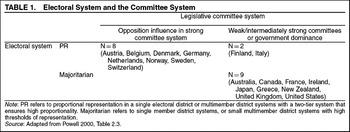

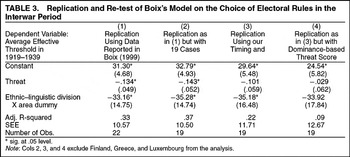
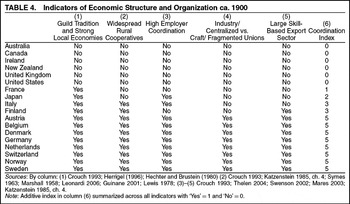





Comments
No Comments have been published for this article.