Introduction
There has been increasing recognition of the mental health consequences of the work carried out by emergency service workers (ESW) including police, ambulance personnel and fire-fighters (Lawrence et al., Reference Lawrence, Kyron, Rikkers, Bartlett, Hafekost, Goodsell and Cunneen2018; Mars, Hird, Bell, James, & Gunnell, Reference Mars, Hird, Bell, James and Gunnell2020). International evidence demonstrates that ESW are at increased risk of developing post-traumatic stress disorder (PTSD) (Berger et al., Reference Berger, Coutinho, Figueira, Marques-Portella, Luz, Neylan and Mendlowicz2012; Education & Committee, Reference Education and Committee2019; Petrie et al., Reference Petrie, Milligan-Saville, Gayed, Deady, Phelps, Dell and Glozier2018; Syed et al., Reference Syed, Ashwick, Schlosser, Jones, Rowe and Billings2020) and reports elevated prevalence and symptom levels of other mental health problems compared to the general population (Jones, Reference Jones2017; Kyron et al., Reference Kyron, Rikkers, Bartlett, Renehan, Hafekost, Baigent and Lawrence2022; Wagner et al., Reference Wagner, White, Regehr, White, Alden, Buys and Matthews2020) including depression, anxiety (Harvey et al., Reference Harvey, Milligan-Saville, Paterson, Harkness, Marsh, Dobson and Bryant2016; Kleim & Westphal, Reference Kleim and Westphal2011; Stevelink et al., Reference Stevelink, Pernet, Dregan, Davis, Walker-Bone, Fear and Hotopf2020) and suicidal ideation (Stanley, Hom, & Joiner, Reference Stanley, Hom and Joiner2016). Both workplace trauma exposure (Harvey et al., Reference Harvey, Milligan-Saville, Paterson, Harkness, Marsh, Dobson and Bryant2016; Milligan-Saville et al., Reference Milligan-Saville, Choi, Deady, Scott, Tan, Calvo and Harvey2018) and reluctance to seek help (Carlan & Nored, Reference Carlan and Nored2008) have been highlighted as significant contributors to these elevated rates. Whilst there has been improved awareness and provision of mental health support to ESW in recent years (Lawrence et al., Reference Lawrence, Kyron, Rikkers, Bartlett, Hafekost, Goodsell and Cunneen2018; Varker et al., Reference Varker, Metcalf, Forbes, Chisolm, Harvey, Van Hooff and Phelps2018), stigmatising attitudes and low rates of help-seeking still persist among the emergency services (Hazell, Koc, O'Brien, Fielding-Smith, & Hayward, Reference Hazell, Koc, O'Brien, Fielding-Smith and Hayward2021; Rikkers & Lawrence, Reference Rikkers and Lawrence2021).
The mental health burden of emergency service work, together with a traditionally male-dominated workforce and their access to lethal means as part of their role (i.e. firearms, pharmaceuticals) has generated a widely-held assumption that ESW are at increased risk of suicide. Indeed, recent anecdotal and media reports from Australia have characterised the rates of suicide among emergency services as being part of a mental health crisis (Smith, Reference Smith2020; White, Reference White2019). However, when this claim is interrogated, the evidence for this assertion remains mixed and often equivocal.
There is some evidence that exposure to traumatic incidents may confer increased risk for suicidal behaviours among ESW (Carleton et al., Reference Carleton, Afifi, Turner, Taillieu, Vaughan, Anderson and Czarnuch2020; Stanley et al., Reference Stanley, Hom and Joiner2016) but whether ESWs as a group have elevated suicide rates compared to other occupations is unclear. There is limited research on this issue relative to the evidence base concerning other mental health outcomes in ESW. A systematic review of suicidality among ESWs (predominantly police officers) was inconclusive (Stanley et al., Reference Stanley, Hom and Joiner2016) with studies variably reporting increased risk, decreased risk, or no difference. A meta-analysis of 101 police suicide mortality studies (Loo, Reference Loo2003) found that the average suicide rate per 100 000 for police personnel (19.3) was lower than the general population rate per 100 000 (25.2), but again, rates varied widely across included studies. The inconsistency in the literature is likely due in large part to heterogeneity between studies in terms of sampling strategies, timeframes, location and context (Berger et al., Reference Berger, Coutinho, Figueira, Marques-Portella, Luz, Neylan and Mendlowicz2012; Stanley et al., Reference Stanley, Hom and Joiner2016), comparison groups (Goodwin et al., Reference Goodwin, Ben-Zion, Fear, Hotopf, Stansfeld and Wessely2013), control variables and other methodological considerations (Milner, Witt, Maheen, & LaMontagne, Reference Milner, Witt, Maheen and LaMontagne2017). These limitations make it difficult to draw accurate, robust conclusions as to suicide risk among ESW from the existing literature.
In addition, the healthy worker effect (Li & Sung, Reference Li and Sung1999) needs to be considered within this context, given that evidence suggests elevated mental health problems among retired or former ESW (Harvey et al., Reference Harvey, Milligan-Saville, Paterson, Harkness, Marsh, Dobson and Bryant2016) and similarly, among military veterans (Reger et al., Reference Reger, Smolenski, Skopp, Metzger-Abamukang, Kang, Bullman and Gahm2015) compared to those employed or on active duty. For example, suicide rates among the current serving military are lower than the general population but are higher than the community among ex-serving military veterans (AIHW, 2020). Indeed, suicide risk and mortality is elevated among US military service members who recently transitioned to civilian life (Ravindran, Morley, Stephens, Stanley, & Reger, Reference Ravindran, Morley, Stephens, Stanley and Reger2020) and may be similarly so for ESW, and so suicide in the context of significant mental health decline may be preceded by or occur after leaving the service. As such, there is a need for a solid evidence base on suicide at two levels; firstly among currently active ESW and secondly, among former ESW. The current study focuses on active ESW, and as such, our population of interest comprises currently employed ESW.
Given this focus, two major gaps in the literature need to be addressed. First, there is little research about the risk of suicide among employed ESW other than police (Stanley et al., Reference Stanley, Hom and Joiner2016). Information about ambulance personnel and fire-fighters is lacking. Secondly, there is a paucity of studies that examine how suicide rates are changing over time among the emergency services, both across all services and within each service. There has been a dramatic increase in mental health awareness and stigma reduction campaigns among ESW over recent decades, but little evaluation of what impact this shift is having. This study sought to address these gaps in the evidence base. Furthermore, there has been very limited investigation of suicide rates in EMW groups over time at a national-level. Milner et al. (Reference Milner, Witt, Maheen and LaMontagne2017) compared suicide rates among emergency and protective service workers (including ambulance, fire-fighters, police, prison/security officers, and defence force personnel) and other occupations in Australia between 2001 and 2012 and found that suicide rates in emergency service and protective service workers were significantly higher as a group than other occupations over this 12-year period, with a range of suicide methods used (Milner et al., Reference Milner, Witt, Maheen and LaMontagne2017). However, this study did not report an examination of longitudinal changes in suicide rates between groups and included protective service workers as occupations of interest (Milner et al., Reference Milner, Witt, Maheen and LaMontagne2017). Given the current study's focus on the emergency services, the fact that more recent coronial data is now available, and the need to comprehensively examine whether suicide rates are changing over time among ESW, this study sought to build on this previous study by including only ESW and undertaking a longitudinal analysis of an additional 5 years of coronial data.
The current study utilises coronial data to investigate the relationship between suicide mortality and occupation in Australia, with a focus on those employed in the emergency services at the time of death. The study had three key objectives: (i) to quantify and compare suicide rates among ESW and other occupations in Australia (2001–2017); (ii) to describe and compare suicide methods in these occupational groups; and (iii) to examine trends in suicide mortality over time.
Method
Study design
We conducted a retrospective mortality study on deaths by suicide among emergency service personnel and other occupations in Australia between 2001 and 2017.
Data source and quality
Suicide cases were identified and extracted from the National Coronial Information System (NCIS), an online database that monitors and records reportable deaths in Australia and New Zealand. The NCIS provides basic demographic data, employment status, and occupation at time of death. Due to the coronial process, which involves determining intent and cause of death, there is often a time lag between the incident date and the case being closed and accessible to researchers. As a result, data for recent years may underestimate the true incidence of suicide deaths. However, closed cases are regularly updated. At the time of data extraction, the latest year for which the most comprehensive data on closed cases was available was 2017, which formed the endpoint of the time period of interest. NCIS provides the most comprehensive, routinely collected national-level data on suicide mortality in Australia.
Eligibility of suicide cases
Suicide was classified according to the International Classification of Diseases 10th revision (ICD-10), (codes X60–X84) (WHO, 2004). Cases were included if they were closed and officially recorded between 2001 and 2017 by the coroner as a death by intentional self-harm by an employed adult aged 20 to 69 years with a known occupation at time of death. Suicides from all states and territories except Western Australia were included in line with the methodology of earlier research (Milner et al., Reference Milner, Witt, Maheen and LaMontagne2017) and given time delays in ethics and data availability. Cases were excluded if employment status at time of death was unavailable or unknown, or if the individual was unemployed or retired. As ESW are usually aged 20 years or above, all cases under 20 at the time of death were excluded. Method of suicide was extracted (method-specific codes X60–X84, International Classification of Disease 10th revision) (ICD-10) (WHO, 2004) and coded at the three-character level based on an established protocol (Milner et al., Reference Milner, Witt, Maheen and LaMontagne2017). The broad suicide methods analysed were: poisoning by gases [carbon monoxide & other gases] (ICD-10 X66, X67); poisoning by chemicals or other substances (ICD-10 X60, X61, X62, X63, X64, X65, X68, X69); hanging (ICD-10 X70); firearms (ICD-10 X72, X73, X74); other specified means (ICD-10 X71, X75–X83); and unspecified means (X84) (WHO, 2004) (online Supplementary E- Table 1, Supplementary Material). Year of death was used to examine suicide rates over time. Data were extracted from the NCIS online system on 15 October 2020. At this time, complete data on closed cases was available up to and including 2017.
Ascertainment of population size
Labour force population data were obtained from the 2011 Australian Census. The 2011 Census was selected as it forms the midpoint of the years under study. Data were extracted from the ABS Table Builder (ABS, 2020) on 21 April 2021 for employed adults aged 20–69 years, by gender and by occupational group, in ten-year age bands.
Occupational coding
Occupation titles provided by the coroner were coded to the 4-digit level according to the Australian and New Zealand Standard Classification of Occupations structure (ANZSCO) (version 1.3) (ABS, 2019) based on an established protocol (Milner et al., Reference Milner, Witt, Maheen and LaMontagne2017). The coding process is described in online Supplementary E-Table 2, Supplementary Material. The ANZSCO codes are used to classify occupations within the NCIS and are maintained by the Australian Bureau of Statistics. The ESW group and subgroups were defined using the occupational structure and titles of the ANZSCO classification system (ABS, 2019). A full description of the roles, skill level and coding structure of each ESW group and subgroup (ABS, 2021) is provided in online Supplementary E-Table 3, Supplementary Material.
Where more than one occupation was recorded for a person at the time of death, if one of these was an emergency service profession, they were classified as a member of that group. If neither occupation was as an emergency service occupation, they were categorised as ‘other occupations’. Extracted data were coded using an automatic coding system developed in Microsoft Access 2016. Further manual coding of final occupation categories to the 4-digit level was undertaken by three researchers (KP, MK, SZ) and discrepancies were resolved through discussion.
Two occupational groups were defined: (1) ESW (ambulance officers and paramedics; fire and ESW; police) and (2) Other occupations (individuals who were employed in any other occupation at the time of death).
Statistical analysis
Demographic characteristics were reported descriptively. We assessed the frequency of suicide methods and tested for significant differences using the χ2 statistic. Direct standardisation was used to calculate age-standardised suicide rates per 100 000 person-years for all ESW and for each service, overall and by gender and year using the 30 June 2001 Australian standard population as recommended by the Australian Bureau of Statistics (ABS, 2013).
Negative binomial regression modelling was used to compare suicide rates in the emergency services to all other occupations (reference group). Suicide rates for all emergency services as a single group, and for each group (ambulance personnel, fire-fighters and ESW, and police officers) were compared to all other occupations in a two-step process. First, unadjusted models compared suicide rates between ESW and other occupations. Second, adjusted regression modelling, controlling for age group, gender, and year of death was conducted. Coefficients were transformed into rate ratios (RR) and 95% confidence intervals (CI) were calculated. To ensure anonymity, small case cohorts of fewer than 10 individuals were reported as n < 10. All analyses were conducted using Stata/IC statistical software version 16 (StataCorp Inc).
Ethical approval
The study was approved by the Department of Justice and Regulation Human Research Ethics Committee (JHREC) (reference CF/18/30091). A formal letter noting this approval was provided by UNSW HREC for the purposes of local ethical clearance.
Results
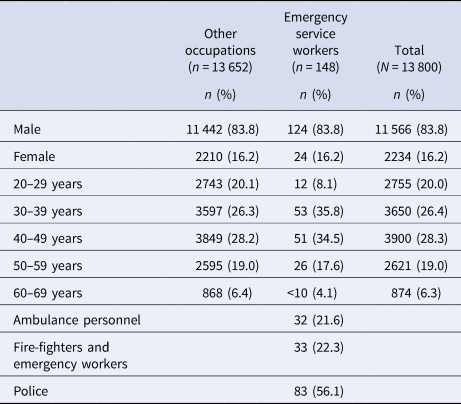
A total of 13 800 cases of death by suicide among employed adults aged 20 to 69 were identified between 2001 and 2017 in Australia (Table 1). Of these, 1.1% (n = 148) of suicides were among ESW, over half of which were police officers (n = 83; 56.1%). The majority of ESW suicides occurred among males (n = 124; 83.8%) and those aged 30–49 years (n = 104; 70.2%).
Suicides by gender, age group and occupational group, Australiaa, 2001–2017
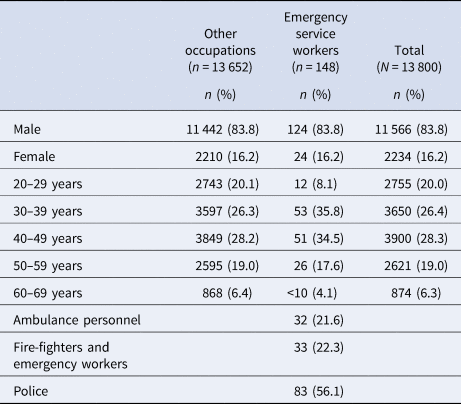
a All states except Western Australia.
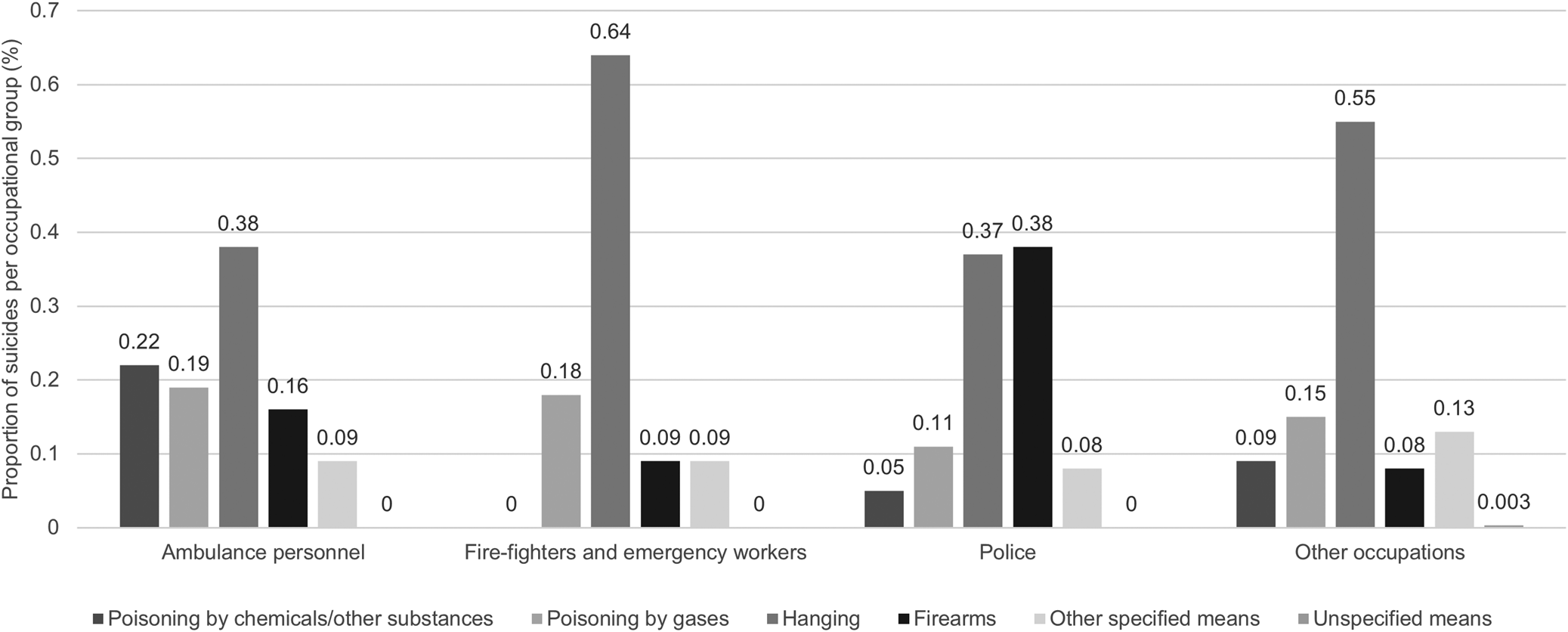
A χ2 test revealed significant differences between suicide methods used by each occupational group (χ2(4) = 76.12, p < 0.001). Firearms were most commonly used among police (n = 31; 37.3%) whilst hanging was most frequently used among the other occupational groups [fire and emergency workers (n = 21; 63.6%), ambulance personnel (n = 12; 37.5%] and other occupations (n = 7479, 55.0%)]. Approximately 1 in 5 ambulance personnel used self-poisoning by chemicals or other substances (n < 10; 21.9%), a higher proportion than any other occupational group (Fig. 1).
Suicide methods among emergency service occupations and all other occupations, Australia*, 2001 to 2017. *All states except Western Australia.
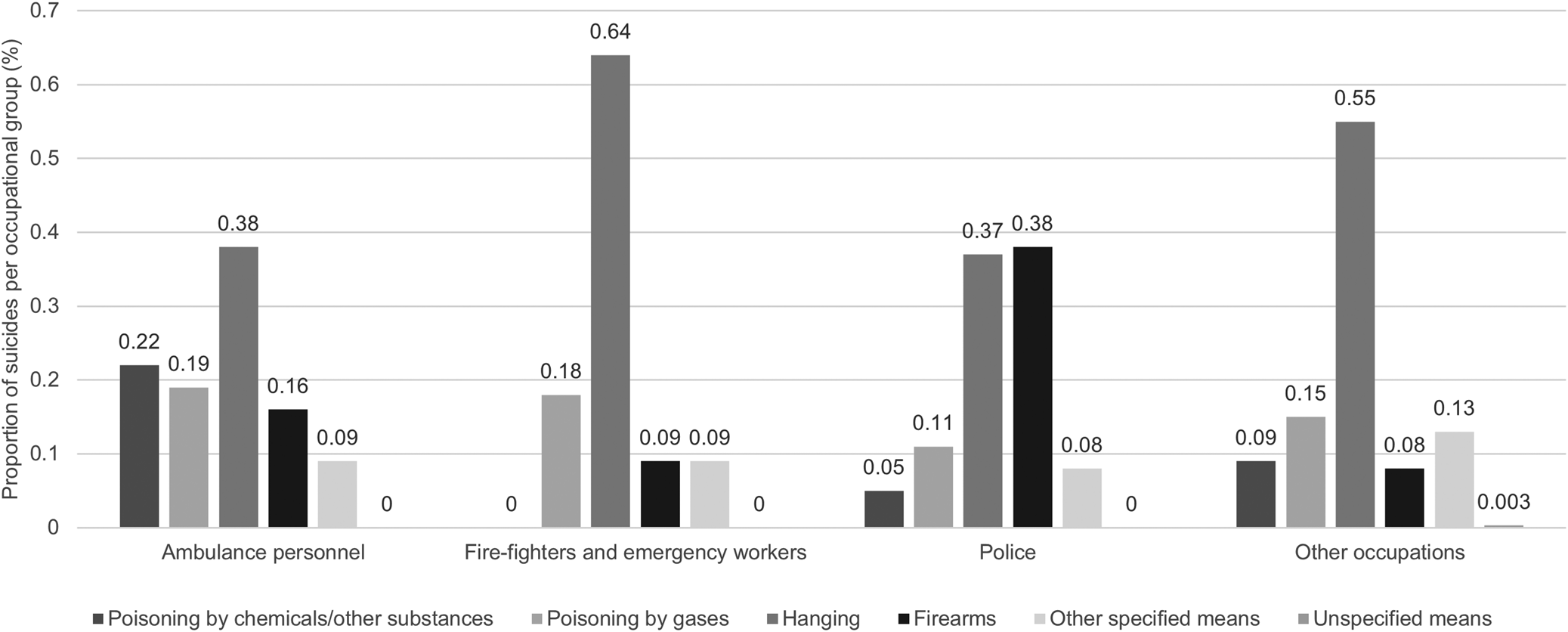
ICD-10 codes: poisoning by gases (ICD-10 X66, X67); poisoning by chemicals or other substances (ICD-10 X60, X61, X62, X63, X64, X65, X68, X69); hanging (ICD-10 X70); firearms (ICD-10 X72, X73, X74); other specified means (ICD-10 X71, X75-X83); unspecified means (X84) (WHO, 2004).
The age-standardised suicide rate in all persons employed in emergency services in Australia between 2001 and 2017 was 14.3 per 100 000 (95% CI 11.0–17.7) compared to 9.8 (95% CI 9.6–9.9) among other occupations. The age-standardised suicide rate per 100 000 person-years was 15.8 (95% CI 9.9–21.7) for ambulance personnel, 19.1 (95% CI 11.3–26.9) for fire-fighters and ESW and 14.0 (95% CI 7.7–20.2) for police officers. Crude age-standardised suicide rates by occupational group and gender are reported in online Supplementary E-Table 4, Supplementary Material.
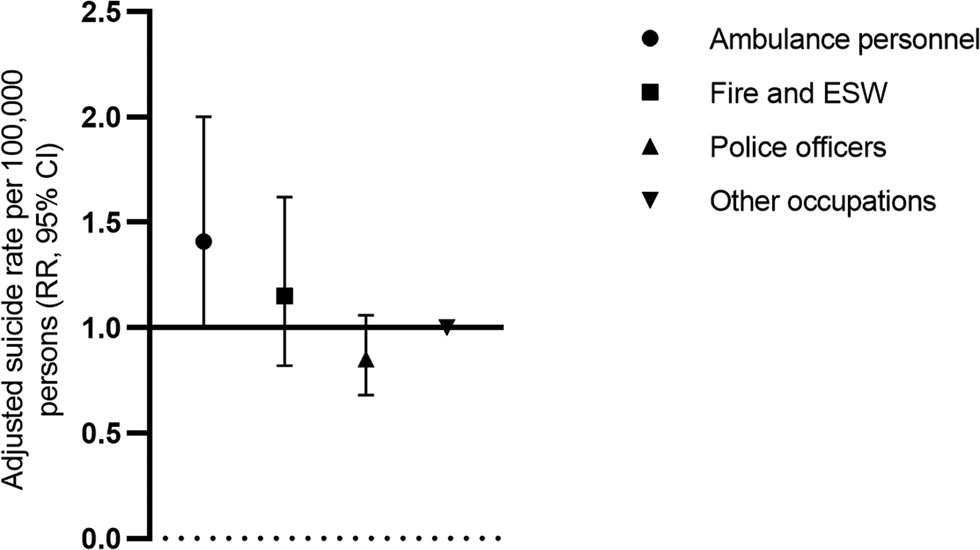
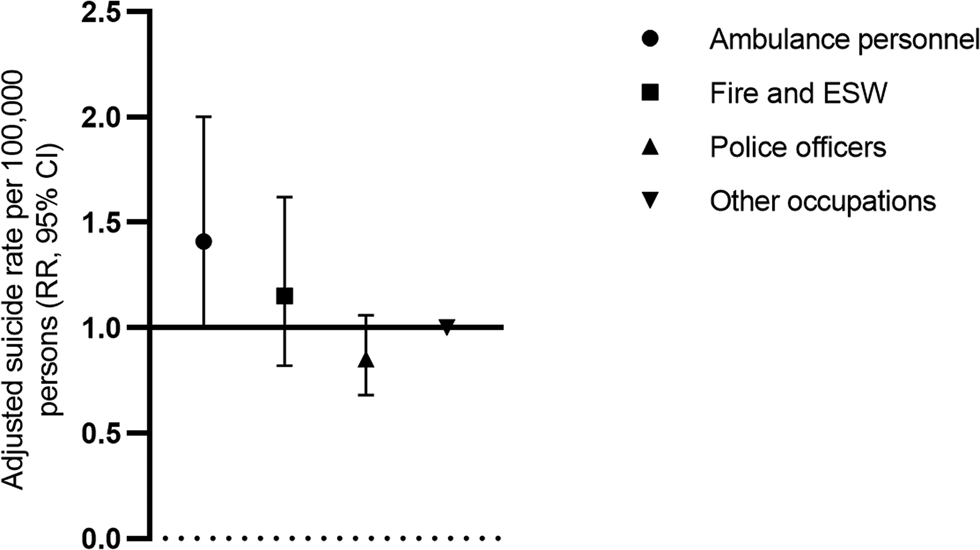
The unadjusted regression model showed the suicide rate for all ESW (RR = 1.47, 95% CI 1.19–1.83) was higher than all other occupations between 2001 and 2017 (p < 0.001). However, in the adjusted models, once the confounding effects of gender are accounted for, there was no longer an increased risk of suicide among ESW (RR = 1.08, 95% CI 0.91–1.28, p = 0.92). Similarly, models including the impacts of age, gender and year of death demonstrated there was no evidence for increased risk of suicide among ESW compared to other occupations (RR = 0.99, 95% CI 0.84–1.17; p = 0.95). The adjusted suicide risk among police (RR = 0.85, 95% CI 0.68–1.06, p = 0.14) and among fire-fighters and emergency workers (RR = 1.15, 95% CI 0.82–1.62, p = 0.42) were not significantly different to other occupations. In contrast, ambulance personnel were at marginally elevated risk of suicide (RR = 1.41, 95% CI 1.00–2.00) compared to other occupations, with weak statistical significance (p = 0.053) (Fig. 2).
Adjusted age-standardised suicide rates (RR, 95% CI) for each occupational group, controlling for year of death, gender, and age group, Australia*, 2001–2017. CI, Confidence Interval; ESW, Emergency Service Workers; RR, Rate Ratios. *All states except Western Australia.
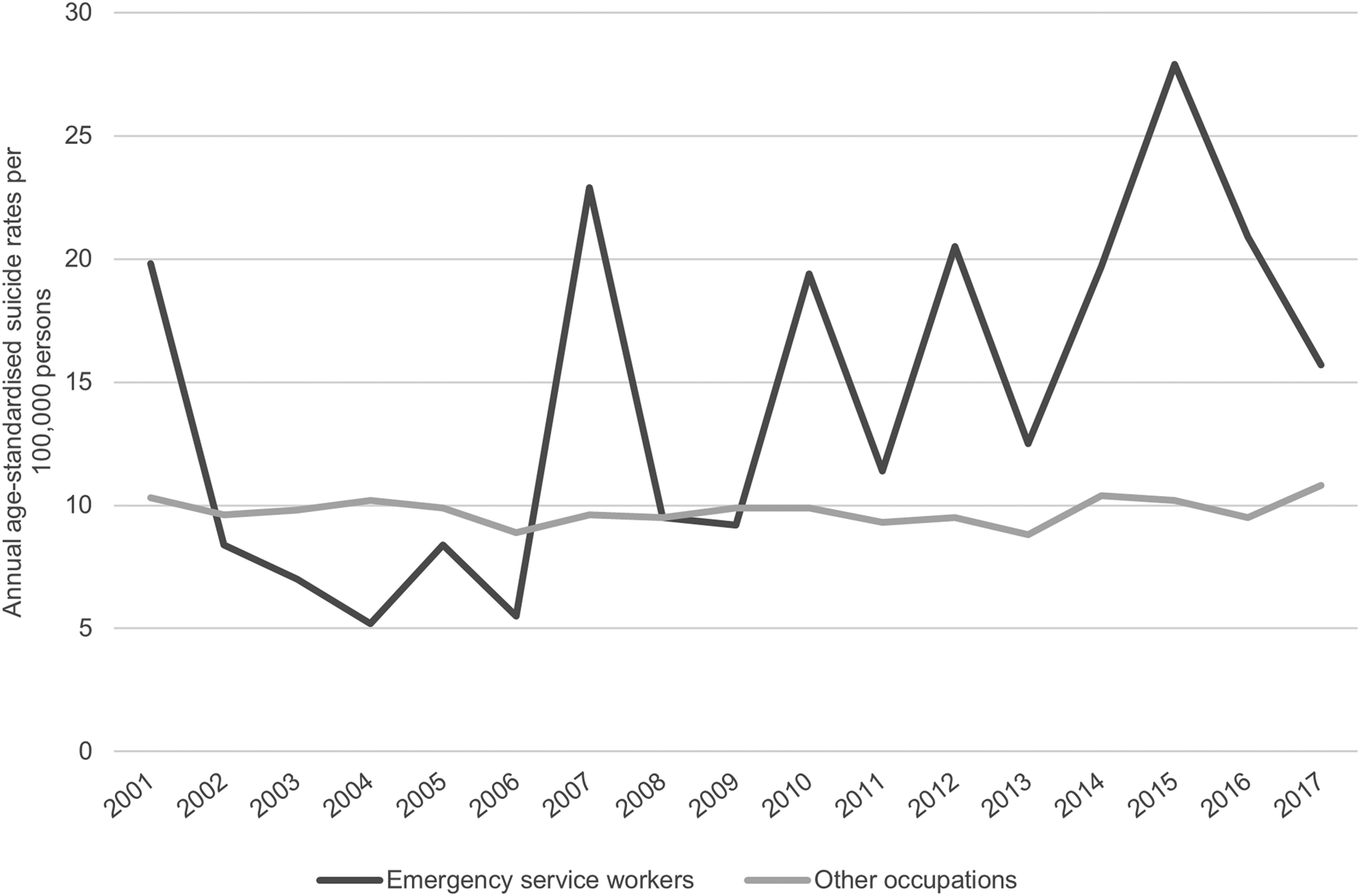
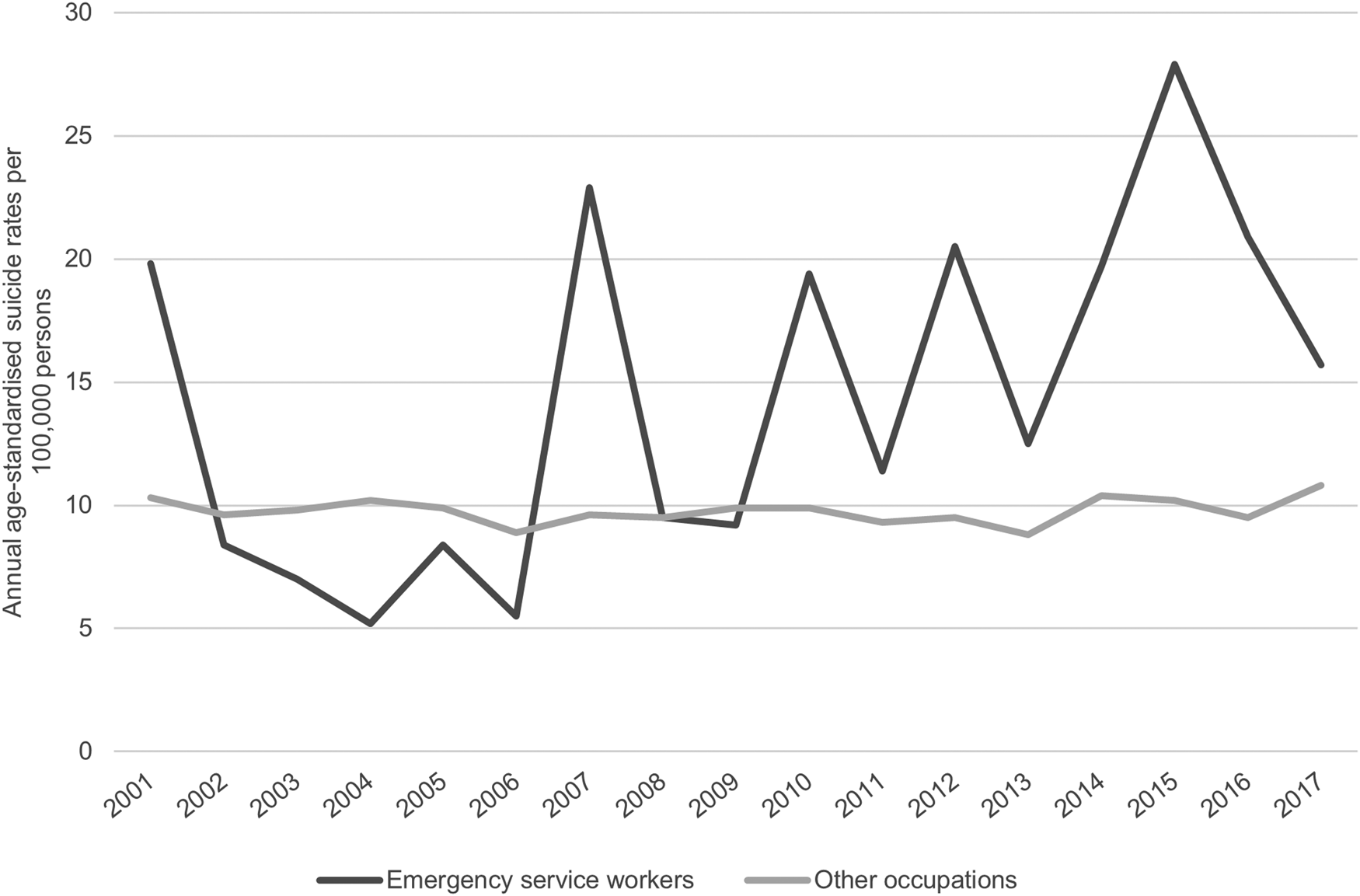
Annual age-standardised suicide rates per 100 000 persons were calculated for ESW and for other occupations between 2001 and 2017 (Fig. 3). There was no evidence of any overall change in rates of suicide over this time period among either ESW (p = 0.96) or other occupations (p = 0.68). Annual rates by the occupational group are shown in online Supplementary E-Fig. 1, Supplementary Material.
Annual age-standardised suicide rates per 100 000 persons for all emergency service workers and other occupational groups, Australia*, 2001–2017. *All states except Western Australia.
Discussion
This is the most comprehensive study of national-level suicide mortality among ESW published to date. Since 2001, suicide rates among ESW have been significantly higher than other occupations, with an additional 4.5 suicides per 100 000 people each year in Australia. However, modelling showed that this excess in observed suicides could be explained by gender differences, specifically the fact that the emergency services remain a male-dominated industry and that men in any occupation are at increased risk of suicide. Once the age and gender characteristics of the workforces were accounted for, there was no evidence of any increased risk of suicide among ESW. An exception to this overall finding was ambulance personnel, where there was a trend toward increased suicide risk compared to other occupations was observed even after controlling for age, gender, and year of death. Unfortunately, despite dramatic increases in mental health awareness and support programmes for ESW worldwide over the last two decades, there is yet to be any evidence of a shift in rates of suicide amongst these groups in Australia.
Our finding that emergency service work was not associated with an increased risk of suicide compared to other occupations in Australia is consistent with a number of previous international studies (Stanley et al., Reference Stanley, Hom and Joiner2016). However, this is the first time this finding has been identified at a national-level among employed individuals when controlling for demographics and time and when using other occupations as the comparator. These novel results build on previous work in this area by Milner et al. (Reference Milner, Witt, Maheen and LaMontagne2017) and advances our understanding of suicide mortality among the emergency services.
Several factors may assist in understanding this finding, which is counterintuitive given the documented high rates of mental disorder among ESW and their access to high lethality suicide means. First, the healthy worker effect (Li & Sung, Reference Li and Sung1999) may play a role, as ESW undergo rigorous pre-enlistment and pre-duty screening before employment (Marshall, Milligan-Saville, Mitchell, Bryant, & Harvey, Reference Marshall, Milligan-Saville, Mitchell, Bryant and Harvey2017) and the suicide cases included in this study were all currently employed at the time of death. In addition, identifiably mentally unwell ESWs, including those who might be at risk for suicide, will likely have transitioned voluntarily or involuntarily out of service. Second, many aspects of emergency service work have been identified as protective factors against suicide, including: (i) the camaraderie and informal peer support that occurs within a small team-centric role and the informal mental health surveillance that occurs within these units; (ii) strong organisational support and (iii) a strong sense of purpose and belonging (Chu et al., Reference Chu, Buchman-Schmitt, Hom, Stanley and Joiner2016; Martin et al., Reference Martin, Tran and Buser2017). Theoretical models of suicidal behaviour posit that social support and belongingness buffer against suicide risk (Joiner, Reference Joiner2005; Van Orden et al., Reference Van Orden, Witte, Cukrowicz, Braithwaite, Selby and Joiner2010). This has been demonstrated in the general population (Franklin et al., Reference Franklin, Ribeiro, Fox, Bentley, Kleiman, Huang and Nock2017) and among ESW, for example, a 2010 meta-analysis found a moderate relationship between social support and mental health among first responders (Prati & Pietrantoni, Reference Prati and Pietrantoni2010). Finally, suicide cases occurring among retired or former ESW are not captured within this data. Consistent with this point, data from military populations who share a range of characteristics in terms of demographics and occupational risk with ESW, particularly police, demonstrate suicide risk lower than the general population while in service but higher suicide risk than the community once transitioned or separated from military service (AIHW, 2021; Sadler et al., Reference Sadler, Van Hooff, Bryant, Lawrence-Wood, Baur and McFarlane2021). Nevertheless, this population (retired or former ESW) was not the focus of the current study, which focused on suicide risk in the context of employment within the emergency services. Information on previous occupations is not recorded in the NCIS database, meaning we are unable to use this national data source to examine rates of suicide amongst retired ESW.
While emergency service work in itself does not appear to increase the risk of suicide, our results do confirm that more ESW die from suicide than in other occupational groups. This finding has practical implications for ESW agencies. In recent decades there has rightly been increased efforts to better support and protect the mental health of ESW. Agencies have implemented stigma reduction and education programmes and mental health training for ESW staff (Joyce et al., Reference Joyce, Modini, Christensen, Mykletun, Bryant, Mitchell and Harvey2016; Tan, Petrie, Deady, Bryant, & Harvey, Reference Tan, Petrie, Deady, Bryant and Harvey2022). Additionally, access to formal mental health support is now commonplace within most emergency service organisations. These strategies may have gone some way to address barriers to help-seeking relevant for ESW and male-dominated industries. However, the lack of any observable trends in ESW suicide rates over time in our longitudinal analysis suggests that such efforts have not generated a measurable decline in suicide mortality among ESW. Notably, neither have similar efforts within the general community (Jorm, Reference Jorm2020). Our findings underscore the need for more research into suicide risk factors for EMW to inform the development of suicide prevention strategies for EMW in Australia and internationally (Witt, Milner, Allisey, Davenport, & LaMontagne, Reference Witt, Milner, Allisey, Davenport and LaMontagne2017).
However, this finding should not be taken to mean that workplace mental health initiatives for ESW are not effective. Well-controlled studies have shown clear benefits from interventions aimed at both managers and individual workers in terms of reduced symptoms of mental ill-health, improved resilience and improved functioning (Gayed et al., Reference Gayed, Milligan-Saville, Nicholas, Bryan, LaMontagne, Milner and Mykletun2018; Joyce et al., Reference Joyce, Shand, Tighe, Laurent, Bryant and Harvey2018) including in ESW (Milligan-Saville et al., Reference Milligan-Saville, Tan, Gayed, Barnes, Madan, Dobson and Harvey2017). There is also emerging evidence that rates of mental health symptoms may be decreasing among ESWs in some countries (Petrie et al., Reference Petrie, Milligan-Saville, Gayed, Deady, Phelps, Dell and Glozier2018) suggesting that the widespread use of mental health training and education programmes may be having some beneficial effects on mental health outcomes but no detectable impact on rates of suicide.
Our finding that ambulance personnel were at the highest risk of suicide and had borderline significant elevated suicide rates compared to other occupations is consistent with previous research from Australia (Milner et al., Reference Milner, Witt, Maheen and LaMontagne2017) and the United Kingdom (Statistics., 2017). It also aligns with cross-sectional studies reporting higher rates of PTSD among ambulance personnel compared to other ESW (Berger et al., Reference Berger, Coutinho, Figueira, Marques-Portella, Luz, Neylan and Mendlowicz2012; Petrie et al., Reference Petrie, Milligan-Saville, Gayed, Deady, Phelps, Dell and Glozier2018). Aside from high levels of mental health symptoms (Kyron et al., Reference Kyron, Rikkers, Bartlett, Renehan, Hafekost, Baigent and Lawrence2022; Lawrence et al., Reference Lawrence, Kyron, Rikkers, Bartlett, Hafekost, Goodsell and Cunneen2018), occupational access to and knowledge of lethal means of suicide, here medications, may also contribute to this finding. This hypothesis is supported by our results on suicide methods, where 1 in 5 ambulance personnel used self-poisoning as a means of suicide and by other studies showing high rates of self-poisoning suicide in other healthcare professions such as doctors who have similar workplace access and knowledge of potentially lethal controlled substances (Hawton, Agerbo, Simkin, Platt, & Mellanby, Reference Hawton, Agerbo, Simkin, Platt and Mellanby2011; Hawton, Clements, Simkin, & Malmberg, Reference Hawton, Clements, Simkin and Malmberg2000). However, due to the strict privacy and confidentiality restrictions surrounding use of coronial data in Australia, there are limitations on accessing and reporting specific details around suicide method, such as type of poison used. This meant that we are only permitted to report suicide method data at a broad level. Whilst controlling access to lethal means may represent a potential solution, more information is needed to help inform these types of decisions. Additionally, the lack of increased suicide risk amongst police who have access to high lethality means via firearms, suggests that access alone may not explain this difference. Furthermore, the fact that the threshold for activation of weapons restrictions once mental health problems are recognised is lower in the police service compared to the restrictions to access to medications applied to paramedics, may also potentially play a role in this difference. There are a range of other possible reasons for our finding that ambulance personnel are at increased risk of suicide which need to be considered and investigated, including cumulative trauma exposure, high rates of PTSD (Berger et al., Reference Berger, Coutinho, Figueira, Marques-Portella, Luz, Neylan and Mendlowicz2012; Mars et al., Reference Mars, Hird, Bell, James and Gunnell2020; Petrie et al., Reference Petrie, Milligan-Saville, Gayed, Deady, Phelps, Dell and Glozier2018) and whether ambulance personnel experience different types of trauma to other ESW, perhaps more exposure to death, dying and injury. For example, exposure to deaths and suicide attempts have been found to be positively correlated with suicidal behaviour among fire-fighters (Kimbrel et al., Reference Kimbrel, Pennington, Cammarata, Leto, Ostiguy and Gulliver2016). Workplace stressors, such as long hours and changing shift patterns, have been associated with mental health problems (BeyondBlue, 2018; Mind, 2015) and these adverse effects may be compounded by systems-level pressures of a strained health system. as registered healthcare professionals, paramedics face barriers to disclosure and help-seeking for mental health problems and suicidality, including concerns around confidentiality and mandatory reporting. Of note, previous studies have found ambulance personnel report low rates of help-seeking and high levels of stigma (Haugen, McCrillis, Smid, & Nijdam, Reference Haugen, McCrillis, Smid and Nijdam2017; Hazell et al., Reference Hazell, Koc, O'Brien, Fielding-Smith and Hayward2021; Rikkers & Lawrence, Reference Rikkers and Lawrence2021). Further research into occupation-specific risk factors for suicide among ESW is needed and will be essential to inform future suicide prevention efforts for these groups. (Harvey et al., Reference Harvey, Joyce, Tan, Johnson, Nguyen, Modini and Groth2014; WHO, 2014).
Strengths of the study include its national longitudinal scope, use of an appropriate comparison group to mitigate against the healthy worker effect (Goodwin et al., Reference Goodwin, Ben-Zion, Fear, Hotopf, Stansfeld and Wessely2013) and its adjustment for demographic factors. Limitations to consider when interpreting these results include issues related to the national suicide data used, such as delays in the coronial process, which may mean that suicide was under-reported. Miscoding of occupation and cause of death in the coronial records is possible. Additionally, there are records where employment status and occupation status are unknown or unspecified, and a free text field was also available for the occupation which contained similar entries. All such entries in the eligible cases were screened by independent coders using an established protocol (Milner et al., Reference Milner, Witt, Maheen and LaMontagne2017) (online Supplementary E-Table 2, Supplementary Material). Similarly, this process of independent coders using an established protocol based on a previous study (Milner et al., Reference Milner, Witt, Maheen and LaMontagne2017) was used for all occupational information, and ensured that occupation was coded consistently within the dataset used for the analysis. As occupational information is only recorded in the NCIS if the individual was employed at the time of death, we were unable to examine suicide mortality among retired or unemployed ESW or among ESW on disability or sick leave, and volunteer ESW were unable to be identified. However, this study focused on currently employed ESW as its population of interest. Delays in the coronial and ethics process meant that we were unable to include data after 2017 or from Western Australia (WA). However, our methodology follows that of a previous study by Milner et al. (Reference Milner, Witt, Maheen and LaMontagne2017) which also did not include WA. Given its small population, the exclusion of WA from the analysis is unlikely to have a major impact on the numbers of closed cases of suicides, nor have a meaningful impact statistically on the analysis, the nature or validity of the results. Other limitations include the small number of suicide cases among each service and among female ESW. Whilst we were limited by the quality and completeness of information available within the database, such issues are present in any similar data source, and are unlikely to have a major impact on the study or its findings. Furthermore, we employed strategies to address these as effectively as possible, such as the use of independent coders and an established protocol based on a previous study (Milner et al., Reference Milner, Witt, Maheen and LaMontagne2017). Notwithstanding these issues, the NCIS remains the most comprehensive source of routinely collected national information on suicide mortality in Australia. Our results may not be generalisable to other countries where there has been less of a sustained programme around mental health support for ESW.
This study demonstrates that suicide rates among ESW overall are higher than other occupations but, with the exception of ambulance personnel, this excess risk could be explained by the age and gender make-up of ESW. We also showed that despite an increased focus on the mental health and wellbeing of ESW, there has not been any measurable change in rates of suicide among ESW over the last two decades. Despite this, rates of mental disorder remain high among ESW and there is a need to continue efforts to better support and protect their mental health. Future research needs to improve our understanding of the individual risk factors for suicide amongst ESW and what, if any, interventions can be developed to reduce this suicide risk.
Supplementary material
The supplementary material for this article can be found at https://doi.org/10.1017/S0033291722002653
Acknowledgements
We acknowledge Michael Kalabouris who assisted with occupational coding, the National Coronial Information System as the database source of data, and the Victorian Department of Justice and Community Safety as the organisation source of data.
Author contributions
KP and SBH designed the study. SZ and KP conducted data extraction, and MK and KP coded occupation with assistance from SZ. KP conducted statistical analyses with advice from MJS and SBH. KP and SBH interpreted results. KP wrote the first draft of the manuscript, which was reviewed by SBH, and KP edited all subsequent versions. All authors reviewed, edited, and approved the final manuscript. The corresponding author attests that all listed authors meet authorship criteria and that no others meeting the criteria have been omitted.
Financial support
This research was supported by funding from the Australian Government Department of Health through the Caring for Those Who Care Project (4-52FZJ5A). This research was supported by the Centre of Research Excellence in Suicide Prevention (CRESP) through the NHMRC CRE in Population Health Research scheme (App ID: 1152952). KP is supported by an Australian Government Research Training Program Scholarship, by funding from NSW Health and the Centre of Research Excellence in Suicide Prevention (CRESP) through the NHMRC CRE in Population Health Research scheme (App ID: 1152952). RAB is supported by an NHMRC Investigator Grant (grant no. 1173921). SZ receives funding from the Paul Ramsay Foundation. MJS is a recipient of an Australian Research Council Future Fellowship (project number FT180100075) funded by the Australian Government. SBH is supported by an NHMRC Investigator Grant (grant no. 1178666). The funding groups played no role in the design, execution, analyses, interpretation of the data, writing of the manuscript, preparation of slides or presentation at congresses, or any other aspect of the study.
Conflict of interest
SBH, SZ, MP, MD, and FS are employed by the Black Dog Institute, a not-for-profit research institute that provides mental health training to a range of organisations. MJS and KP declare no relationships or potential conflicts of interest.
Ethical standards
The authors assert that all procedures contributing to this work comply with the ethical standards of the relevant national and institutional committees on human experimentation and with the Helsinki Declaration of 2013. The study was approved by the Department of Justice and Regulation Human Research Ethics Committee (JHREC) (reference CF/18/30091). A formal letter noting this approval was provided by UNSW HREC for the purposes of local ethical clearance.