

In 1875, fourteen years after the birth of the Italian state, Minister of Public Instruction Ruggiero Bonghi introduced administrative science (AS) as an optional subject in the four-year university curriculum for studies in law for the first time. Ten years later, in 1885, a new ministerial decree, signed by Minister Michele Coppino, made AS a mandatory two-year course in the law curriculum.Footnote 1 This government intervention in university curricula went hand-in-hand with a process of academic legitimization of certain disciplines. In the first edition of Digesto Italiano, Italy’s principal legal encyclopedia, AS was granted its own entry, which presented it as an autonomous discipline within the legal and social sciences. The discipline dealt with the social question, and was meant to provide Italian elites with the knowledge necessary to reduce inequality and keep the “specter of revolution” at bay within the nation.Footnote 2 AS was therefore initially a syncretic science of government rooted in the cameralist tradition, with a clear reformist and legitimizing mission in support of the young Italian state. However, the discipline’s academic institutionalization and autonomy were gradually challenged as its scope was narrowed—an early step in its eventual de-institutionalization. By the inter-war period, a more restricted view of AS, focused solely on public administration, had taken hold. In 1935, a decree issued by Minister of National Education Cesare Maria De Vecchi abolished AS courses in law faculties.Footnote 3 Furthermore, the Nuovo digesto italiano, published in 1937, reduced the discipline to a sub-field of political science concerned with the study of administration, in a predominantly bureaucratic sense of the term.Footnote 4 This article traces the trajectory of AS between the two ministerial decrees of 1875 and of 1935 that respectively mark its rise and its decline. Over a span of sixty years, AS saw its scope diminished, its scientific autonomy reduced to nil, and its identity subsumed by administrative law. Even before the rise of Fascism, the discipline’s reformist ambition was neutralized by the liberal and conservative elite in power. Though AS experienced a slow revival in the 1960s and is still taught in economics and political science (and less frequently in law) faculties today, its scope now remains limited to the study of public administration.
This evolution illustrates Andrew Abbott’s warning against the reification of disciplinary fields based solely on the persistence of a name.Footnote 5 In that sense, our case study offers some “local” answers to “general” questions.Footnote 6 How can we avoid the descriptive or teleological traps of certain disciplinary histories of knowledge?Footnote 7 Why question the functionalist idea according to which science evolves linearly through a process of differentiation within the “modern system of scientific disciplines”?Footnote 8 This perspective would attribute the decline of AS to its “eclecticism,”Footnote 9 which according to this functionalist logic would have been the cause of the discipline’s gradual disappearance as opposed to those with more specialized methods and stronger claims to scientific legitimacy. Adopting a different approach, we regard AS as a site of power relations. In keeping with Pierre Bourdieu, we consider here that power is exercised “over the agencies of reproduction of the university body”—notably the examiners’ boards for competitive examinations charged with recruiting and promoting professors—and that it “ensures for its holders a statutory authority.”Footnote 10 By controlling access to and promotion within the teaching profession, these examiners’ boards influence both the production of knowledge and the definition of disciplinary boundaries. Bearing this in mind, we situate the contested development and autonomy of the Italian AS within a broader academic and political context, emphasizing the relationships and trajectories of individuals who used various strategies to establish their authority within the legal field and beyond.Footnote 11 The transformations of the state and the extra-academic social capital of professors thus emerge as important parameters for analyzing the development of the discipline.Footnote 12 By focusing on universities and the structures governing faculty recruitment,Footnote 13 we therefore analyze how the birth and transformations of AS are structurally linked to the construction and metamorphoses of the Italian state, from its conservative liberalism to Fascism.
Our investigation builds on the work of Olivier Godechot and Nicolas Mariot, who examine how networks that are decisive in the composition of PhD defense committees through invitation by dissertation supervisors affect the subsequent recruitment of PhDs in political science. They also show how dense, cohesive networks help groups maintain, reproduce, or extend their influence in competition with others.Footnote 14 We also draw inspiration from Pierre Verschueren’s more historicized approach to PhD dissertation defense committees at the Faculté des Sciences de Paris during the post-war period, which reveals the logics behind the dominance physicists over the scientific field.Footnote 15 We employ social network analysis to reconstruct AS competitive recruitment spaces and to bring to light the power relations at work between disciplines. By competitive recruitment spaces, we refer to the relational arena constituted by academic recruitment competitions and the actors involved in them. The expression does not refer to a specific Bourdieusian concept but is used here to designate the network of relations through which recruitment decisions and disciplinary power are structured. We show that, for a time, jurists receptive to the social sciences managed to challenge the hegemony of a more formalist legal tradition, until defenders of the latter regained the upper hand. While the actors involved may not have been fully aware of the networks they participated in (or were up against) and their influence, the methodological tool of social network analysis helps us better understand the power dynamics underpinning the reproduction of different forms of knowledge. While network analysis, by focusing solely on the relations between members of examiners' boards, might risk overstating the role of inter-individual interactions,Footnote 16 we show that such interdependencies are “inseparable from the organized, cultural, institutional, and historical context in which they develop.”Footnote 17 Drawing on a variety of documentary sources, we shed light on the divisions and asymmetries present throughout both the competitive recruitment space and the discipline of AS itself. This allows us to demonstrate that the evolution of the form and structure of the networks governing recruitment are tied to broader shifts within the scientific and political arenas of the period.Footnote 18
We therefore draw on a wide range of primary sources. By cross-referencing the Bollettino ufficiale. Ministero della Pubblica Istruzione (under its various titles), the competitive examination records preserved at the Archivio centrale dello Stato,Footnote 19 and the Annuario of the universities concerned, we were able to reconstruct the composition of examiners' boards and track changes in how administrative courses were distributed over time. In addition, university textbooks on AS and administrative law, legal journal articles, and transcripts of inaugural lectures or commemorative speeches provide insights into individual political and academic stances as well as into academic patronage relationships. Finally, biographical information about examiners was gathered from the archives of the “Ministero della PI,” the Dizionario Biografico degli italiani, and the Dizionario biografico dei giuristi italiani.
This article begins by outlining the emerging model of the Italian university and its foreign influences, before turning to the controversy surrounding the administrative disciplines and their boundaries; this dispute, ongoing throughout the period of interest (1885–1935) is considered against a backdrop of regulatory change affecting both the distribution of specific courses between the disciplines of AS and administrative law and the methods used to recruit the jurists who would teach them. Reconstructing the web of relationships between members of examiners’ boards before and after World War I allows us to identify those who were able to assert their definitions and classification of the administrative disciplines, and to study certain exemplary academic trajectories in greater detail.
The Italian University, Between Paris and Berlin
The French and German models strongly influenced the organization of Italian universities from the advent of the unitary state in 1861. The impact of these two university systems unfolded in a broader context of symbolic domination by neighboring powers that persisted throughout the nineteenth century. As the English university model proved difficult to reproduce in Italy, in part due to the importance of the private sector in its development, it was France and Germany that drew most of the attention of the country’s political and academic elites.Footnote 20 What is of interest to us here, however, is to understand how, despite the lasting appeal of these neighboring models, certain features specific to the political organization of the Italian university system helped shape the unique disciplinary trajectory of AS.
The influence of the French model, marked by its centralism, predates Italian unification, as the Napoleonic conquests of the late eighteenth century left a significant cultural legacy. Traces of this impact can be found in the 1859 Casati law on school reform,Footnote 21 whose implementation extended from Piedmont to the rest of the peninsula after unification. This law asserted the state’s exclusive control of university funding and regulation, a monopoly that the Fascist government’s 1923 reform would maintain.Footnote 22 Meanwhile, the massive concentration of political and symbolic resources in the administrative capital so characteristic of the French university system proved harder to replicate. Unlike in France, where Paris was almost totally central, in Italy Rome’s academic weight was, and continues to be, counterbalanced by other hubs such as Milan, Padua, Naples, Pisa, and Bologna (home to Europe’s oldest university). This territorial structure reflects the political geography of the country, whose cities have been highly autonomous since the late Middle Ages.Footnote 23
Moreover, France’s dual structure of universities and grandes écoles Footnote 24 struggled to take root in Italy, where the constellation of small institutions dedicated to training the ruling class was not reproduced. Inversely, the discipline of AS did not become established in the French elite institutions where the administration of the state was taught. At the École libre des sciences politiques, founded in Paris in 1871, AS barely appeared as such in the curricula of the years following its opening.Footnote 25 According to Émile Cheysson, who began teaching economics there in 1882, the school’s founder Émile Boutmy in fact attributed to the discipline “a peril of [its] own, which was to exaggerate the idea of the state.”Footnote 26 It is also significant that the major work of Lorenz von Stein,Footnote 27 recognized in Germany and Italy as the father of AS,Footnote 28 was never translated into French. The space at the crossroads of the academic and political fields that might have been devoted to AS seems to have been occupied instead by other disciplines, notably political economy, at least until the Fourth Republic.Footnote 29 Political economy, for its part, was initially taught in law faculties before breaking away from them and ultimately flourishing within the École libre des sciences politiques, remaining distant not only from liberal orthodoxy but also from socialism.Footnote 30
As for the German university system, it became particularly attractive to Italy in the 1870s and the transfer of university-based administrative knowledge from one country to the other was fluid from this point forward. There are three main reasons for this trend. First, the multi-centered structure of the German system echoed the Italian model, in contrast to the center-periphery dualism of France. Secondly, Germany’s recent unification involved issues similar to and contemporaneous with those facing the young Italian state. Academics in both countries were thus involved in legitimizing the political regime and in public intervention to respond to the emerging social question. The third reason relates to international power dynamics: after its victory over France in 1870, Germany began to establish itself as a hegemonic center of influence, both politically and academically, in the European sphere in general and in Italy in particular.
The reorganization of the renowned University of Padua, reclaimed from the Austro-Hungarian Empire in 1866, also followed the Prussian model. AS, which had already been institutionalized as an autonomous discipline in Austrian universities and in the unified territories of Germany, was among the courses offered there.Footnote 31 As AS continued the long tradition of cameralism in the era of the nation-state (and as this was a tradition aimed at ensuring the security, stability, happiness, and well-being of the prince and his subjects),Footnote 32 the discipline aligned with the concerns of a certain segment of Italy’s political elite. This group viewed the theories of von Stein and others like him with great interest,Footnote 33 as demonstrated by the 1888 translation into Italian of his Handbuch der Verwaltungslehre Footnote 34 and the laurea honoris causa awarded to him by the University of Bologna the same year.Footnote 35
The influence of these foreign models, in combination with the persistence of certain local traditions, produced a hybrid university system marked by a strong centralizing impulse that shaped university recruitment procedures and, consequently, disciplinary trajectories. For political elites, the aim was to homogenize a diverse territory and curb centrifugal forces, while also creating the conditions for the production of a national science.Footnote 36 Since the emerging Italian university system was state-funded, its representatives also sought to protect it from interference by the Catholic Church, which remained omnipresent in primary and secondary education in the country. The Risorgimento elite was largely secular, and the emergence of the Italian state took place in opposition to the Vatican, which was forced to relinquish much of its territory and temporal power in the newly unified country. Government-designed university curricula, which laid out the faculties to be included in universities as well as compulsory subjects, reflected these core orientations. At the time of unification, there were faculties of law, medicine, mathematics, physics, natural sciences, humanities, and theology. Due to the secular orientation of the Risorgimento, however, theology faculties were quickly abolished. Law faculties, meanwhile, welcomed a growing number of students, and having attended one became an increasingly decisive factor for the careers of the national political elite.Footnote 37 Of the twenty-one universities recorded in 1870, only four were non-state universities in former papal territory. While they were financed by local administrations, these universities’ statutes still had to be approved by the Ministry of Public Instruction, and although their range of courses was limited, they all included a law curriculum, testifying to the growing centrality of this discipline.
Concerning the teaching corps, four ranks can be identified between the birth of the Italian state and the rise of the Fascist regime. At the top of the hierarchy of prestige and salaries were professori ordinari, or full professors. These were followed by professori straordinari, literally “extraordinary professors,” who also held tenure but who were defined by the Casati law as “external” to the professoriate. According to this law, straordinari positions were to be filled through ministerial appointment for renewable one year terms. In practice, however, they were quickly opened up to competitive examinations and acquired a permanent character. The rank of professore straordinario gradually evolved into a stable second tier professorship just below that of professore ordinario. The means by which a professor could attain ordinario status, namely through the positive decision of a panel of specialists, was legally formalized in 1904. In the 1920s, the Fascist regime would replace the terms ordinario and straordinario with stabile (“stable”) and non stabile (“not stable”).
The lower ranks consisted of docenti incaricati and liberi docenti, two kinds of lecturers working on a non-permanent part-time basis. The former ended up assuming the role initially intended by the Casati law for professori straordinari: that of teaching a given course for a fixed period of time at the request of a given department’s faculty board. The position of liberi docenti, generally filled by professionals practicing in the field they were hired to teach, allowed the university to draw on professional knowledge, most often without providing any real prospect of integration into the faculty.Footnote 38
Local competitive examinations were thus the most widespread means of recruiting professori ordinari and straordinari. Although the Casati law allowed the minister of public instruction to appoint professors directly under a procedure known as chiara fama, or “obvious reputation,” this power was used minimally, reflecting the academic field’s autonomy from politics—even if that autonomy was as relative as it was unstable. While proposals for the creation of new positions came from universities, both funding and recruitment regulations were set at the national level, in keeping with the centralizing ambitions of successive governments during the period in question. These regulations were also subject to reform, with consequences that often reshaped the stakes and boundaries of academic disciplines—those with a political dimension in particular.
A Controversy of Disciplines
From the 1880s onward, the use of the term “administrative disciplines” intensified, and a scientific debate began to take shape within the legal field over issues relating to the definition of “administration,” the ways in which it ought to be studied and taught, and the purposes behind it.Footnote 39 Developments in this controversy and in the distribution of the administrative disciplines can be linked to regulatory changes in the composition of examiners' boards set against a backdrop of broader political transformations.Footnote 40
In 1885, AS was made a compulsory subject for obtaining a law degree. However, Minister of Public Instruction Michele Coppino’s regulations gave universities the freedom to offer the subject in one of three ways: as part of the administrative law course (AL); combined with AL in a course entitled “Administrative Law and Administrative Science” (AL and AS); or taught as a separate course under a specific title (AS). Regardless of the option chosen by each university, the recruitment of professors tasked with teaching the course was entrusted to a single board of examiners. Its members were responsible for defining the scientific content that professors were to master and to promote in the course. In doing so, they determined the relative importance assigned to the two competing disciplines, AL and AS, which both shared “administration” as their object but whose boundaries were far from unanimously defined.Footnote 41 Recruitment boards thus became the arena for confrontation between defenders of AL’s hegemony in the disciplinary field of the administrative sciences and proponents of an autonomous AS, particularly with regard to the boundaries of each discipline.
Ultimately, the controversy was as much about scientific issues as about the political aims associated with these administrative disciplines. Promoters of the autonomy of AS called for an interventionist, reformist state. This was especially true of Carlo Francesco Ferraris (1850–1924), the most well-endowed in terms of symbolical capital among them. We will return in more detail to his academic career, marked by multi-disciplinary training partly completed in Germany and a period in the senior civil service. To inaugurate the first Italian AS course in Pavia in 1878, Ferraris delivered a paradigmatic speech, asserting that “administrative science makes use of political science, statistics, and social economics. Taking into account the principles of these disciplines, it analyzes how the State can become the organ and instrument of the collective action of the people—the demos—and how to help society progress in an orderly and rapid manner.” He added that the state “must take care to be the agent of as much de facto equality as possible to ensure juridical equality,” noting that “juridical equality alone is not enough, for in the hands of the wealthy and educated classes there always remains a great power, a de facto superiority, which, although not legally recognized, is the source of antagonisms and relationships of dependence.”Footnote 42 Developed with this objective in mind, the printed lecture notes for the AS course Ferraris taught at the turn of the twentieth century (fig. 1) begins by introducing not only general concepts, such as the state, but also a research method aimed at “exploring the social conditions” requiring intervention. This is followed by a chapter on public assistance, dealing with pauperism, hygiene, and public welfare. The next chapter addresses workers’ insurance, before turning to issues of public health, administrative classification of illnesses—including mental illness—and occupational health.Footnote 43
Cover of the Administrative Science Printed Lecture Notes of Carlo Francesco Ferraris
Source: Law Library of the University of Parma. Photograph: Andrea Rapini.

Conversely, defenders of AL’s hegemony over knowledge of government held more liberal positions, opposing both the expansion of the state’s social missions and any rapprochement with the social sciences.Footnote 44 This was especially true of Vittorio Emanuele Orlando (1860–1952), founder of the Italian school of public law and a major political player in the liberal camp until his withdrawal during Fascism.Footnote 45 Introducing his course on administrative and constitutional law at the University of Palermo in 1889, he asserted that the main fault of Italian jurists was that they were at once “too philosophical, too political, too historical, too sociological, and not legal enough.”Footnote 46 The editor of the ten-volume Primo Trattato completo di Diritto amministrativo italiano Footnote 47 (we will return to the structuring role the collaborative production of this tome played in the area under study), Orlando opens the introduction to the volume with a “warning of particular importance regarding monographs on social and financial administration, for which the near-total absence of scientific precedents in Italy increases the risk of substituting legal reasoning with socio-economic methodology.”Footnote 48 More broadly, Orlando’s aim was to establish a legal doctrine with the appearance of scientificity that would legitimize the young Italian state.Footnote 49 In his view, however, the sovereignty of this state did not depend on the people or the monarch, but on its own legal character: it should be subject only to the law and should remain unaffected in its foundations and functions by the emergence of the social question.Footnote 50 While he acknowledged the legitimacy and necessity of “social intervention by the state,” he defended the pre-eminence of AL as the proper means of studying the state and rejected any push for the autonomy of AS. He saw the social sciences broadly speaking as subordinate to the science of law, which he considered to be under the magisterium of Roman law.Footnote 51
Distribution of Administrative Disciplines Taught in Italian Universities (1885–1935)
Source: Annuario del ministero della Pubblica Istruzione.
Note: Courses taught by non-tenured and tenured teachers of various ranks are aggregated. Data are unavailable between 1915 and 1922, as the yearbook was not updated during this period.

Nevertheless, AL and AS continued to coexist in Italian universities until 1935, when Minister Cesare Maria De Vecchi challenged the mandatory status of the latter in the legal curriculum. AL thus survived the Fascist regime, unlike AS, which would become, and remain, an optional course offered in a mere handful of universities until the Liberation. Yet AS had been widely taught during the fifty years between the Casati law and this ministerial regulation, as shown by the analysis of courses offered in Italian universities during this period as listed in the Annuario del Ministero della Pubblica Istruzione, renamed dell’Educazione nazionale under the Fascist regime (fig. 2).
While in 1878 the University of Pavia was the only institution to offer a course in AS, the 1885 regulation making AS mandatory to law curriculums was followed by a gradual expansion of the subject that would continue well into the 1920s. However, the teaching of AS as an autonomous discipline remained very marginal throughout the period studied. Teaching was largely taken on by liberi docenti and courses were essentially complementary to the required curriculum. For a long time, the preferred format, congruent with the recommendations of the 1885 regulation, was a joint course covering both AS and AL, accounting for up to approximately 78% of courses in the administrative disciplines in 1924.Footnote 52 This trend reversed, however, with the rise of Fascism. The share of AL courses increased to make up the majority by the mid-1930s, and AS’s loss of ground would prove to be irreversible.
A link can be drawn, however, between the evolution of this distribution of courses and the regulatory changes affecting the configuration of the boards of examiners responsible for recruitment and promotion, often among peers. Until 1890, the regulations governing competitive examinations gave law faculties a predominant role in the composition of these boards. A list of five professori ordinari, or full professors, considered fit to form the board of examiners was drawn up by the representative of the faculty where the position was being created and submitted to the minister of public instruction. The procedure favored local influence over the selection of examiners and allowed for the emergence of strongholds defending AS’s autonomy, such as the one that took form in Pavia. However, legal reforms soon shifted the balance.
The 1890 regulation issued by Minister of Public Instruction Paolo BoselliFootnote 53 marked a major turning point with the introduction of the elective principle into the recruitment process. For each competition, the list of examiners submitted to the minister—who retained final appointment authority—now consisted of ten full professors, elected by the totality of their peers in Italian law faculties. As a result, specialists in legal disciplines that were relatively distant from one another (and from AS), such as Roman law and private law, were called upon to take a stance on the content and boundaries of AS alongside public law specialists. This method of appointing the members of boards of examiners, in place for most of the period studied, favored the selection of representatives from the administrative disciplines who were more aligned than not with their colleagues in other legal subfields. Defenders of AL’s dominance in the administrative sciences took advantage of their editorial resources, which allowed them to offer more publishing opportunities to their peers than their rivals could, as well as of their investments in the political field.
While the controversy had already shifted in favor of AL, Fascism confirmed the decline of AS by shifting the balance of power in the composition of examiners’ boards for recruitment and promotion. In 1925, Minister of Public Instruction Pietro Fedele restored a decisive role to the faculties where ordinari and straordinari professorships were being opened: two examiners were once again to be appointed by the professors of the faculty in question. Several professors from law faculties across the kingdom selected two others, and the Higher Council of Public Instruction, the principal advisory body to the Minister of Public Instruction composed of university professors from various disciplines, appointed a final member. The minister of public instruction retained the authority to grant or withhold final approval. While this tripartite balance was confirmed in 1933 by then National Education Minister Francesco Ercole, his successor would go on to overhaul the system entirely two years later. In the context of a totalitarian regime with the centralization of power on the rise, De Vecchi reserved the right to unilaterally decide which posts were created, the composition of the examination boards that would recruit professors to fill them, and the approval of board members’ selections.Footnote 54
We will now reconstruct more precisely the conditions of access to and participation in recruitment boards over the entire period studied. The evolution of the legal framework in the country at this time was closely intertwined with the dynamics specific to the relational systems formed by examiners, shaping both their individual trajectories and the definition of boundaries between the administrative disciplines.
The Relational Space of Academic Recruitment
The trajectory of AS, from its origins to its relative decline with the rise of Fascism, can be explained not only by the evolution of university regulations amid major political transformations, but also by internal dynamics within the field of the administrative disciplines. Our investigation grounds the analysis of power relations and symbolic domination within this field on a reconstruction of the system of interdependence between professors involved in recruiting and promoting their peers. To this end, we have compiled a record of all competitions for straordinari and ordinari professorships (non stabili and stabili in the vocabulary of the 1920s) created to teach AS and AL between 1885 and 1935. In doing so, we have identified two complete networks corresponding to the two distinct periods of AS’s trajectory—the first ending with the suspension of recruitment brought on by World War I, and the second beginning in 1922 when recruitment resumed for AS. A total of forty-one competitive examinations and the forty-two professors serving on their boards are included in our study: twenty-four recruitment competitions were held between 1885 and 1915, with thirty-one different professors serving on their boards in total; and seventeen competitions were held between 1922 and 1935, requiring the participation of nineteen professors as examiners. Despite changes in the legal framework that altered the conditions of their appointment to examiners' boards over time, these jurists were united by their common responsibility of recruiting, promoting, or rejecting candidates within the administrative disciplines.Footnote 55
The breadth of the period studied implies the involvement of multiple generations of jurists, who did not by any means always interact with one another. The length of time examiners had held tenure is also taken into account. On average, the time in a tenured position at the moment of participation in an examiners’ board was just over nineteen years at the end of the first wave of examinations in 1915, and nearly twenty-nine years in 1935. There are, however, wide disparities: some jurists were appointed to professorships shortly before World War I (and took no further part in examiners’ boards after the war), while others saw their careers in academia span across both identified periods. Only eight professors participated in examiners’ boards both before and after the Great War, primarily for converging reasons of age and their recognition within the administrative disciplines and the legal field more broadly.
Bipartite Graphs of the Networks of AS Recruitment Examiners (1885–1915 and 1922–1935)

The bimodal networks corresponding to these two periods are represented as bipartite graphs (figs. 3 and 4).Footnote 56 The circles represent professors, with their surnames shown, and the squares denote examiners' boards, indicated with the date of the competition and the type of position being filled (S = straordinario, O = ordinario, NS = non stabile, ST = stabile). A professor’s presence on a board is represented by an arrow linking the corresponding circle and square. Recording each professor’s participation in the various boards formed during the two periods enables us to establish an initial measure of their relational activity, proportional to the size of the circles on the graphs. This measure corresponds to each examiner’s cumulative participation in examiners' boards for first- and second-rank professorships. The average participation rate remains remarkably stable at 3.7–2.4 for first-rank and 1.3 for second-rank juries for both periods, though the standard deviation increases slightly from 3.2 to 3.5. The same applies to the density—i.e., the ratio between actual and possible links—of the corresponding networks, which is higher after World War I (0.214 vs. 0.156). This difference is reflected in the shape of the bipartite graphs: the overall structure of the first is less compact than that of the second (figs. 3 and 4). This is logically explained by the actor-to-event ratio, that is, the number of professors involved versus the number of boards (thirty-one professors for twenty-four boards between 1885 and 1915, compared with only nineteen for seventeen boards between 1922 and 1935). Regulatory changes implemented in 1923 allowed the size of some boards to be reduced from five to three members,Footnote 57 which tended both to limit the diversity of participating professors and to intensify the presence of certain individuals.
Transforming the bimodal networks into unimodal networks makes it possible to highlight the centrality of certain individual actors and, by extension, the significance of their contribution to recruitment processes during each of the two periods. Professors are here connected to one another by their presence on the same board, with the thickness of the lines proportional to the number of times they served together. We can thus begin by calculating the degree-based graph centrality measure of the observed examiners, that is, the number of different colleagues with whom they served on boards. Co-participation links tend to be concentrated among a smaller number of board members after World War I, as can be seen by comparing the unimodal network graphs for the two periods (figs. 5 and 6), in which the size of the nodes representing examiners is proportional to their degree, whose standard deviation increases from 3.2 to 4.
Monopartite Graphs of the Network of AS Recruitment Examiners (1885–1915 and 1922–1935)

Another indicator, that of the betweenness-based graph centrality measure, offers a more precise metric for the varying ability of actors within the network to coordinate and control recruitment processes.Footnote 58 It shows the extent to which the repeated presence of certain professors on examiners’ boards in the interwar period made them both central and indispensable figures. This indicator is also strongly linked to the number of board participations of a given professor. The betweenness shows greater variance than the degree, ranging from very low values (or even values of zero) for the least involved individuals to much higher ones for those most capable of coordinating recruitment (fig. 7). This makes it all the more interesting to cross-reference this indicator with specific personal characteristics of the jurists studied.
Participation in Examiners’ Boards and Betweenness (1885–1935)

A systematic examination of the courses taught by the professors making up the two networks, the universities where they themselves were appointed, and their political affiliations provides a set of clues for understanding the shifts in power relations within recruitment and the controversy around the disciplines. From the first to the second of the two periods identified, we observe a strengthening of correlations between certain characteristics of examiners, on the one hand, and betweenness on the other (table 1).
Characteristics of Examiners and Betweenness

Note: Between 1885 and 1915, the average betweenness value of members of examiners’ boards in the administrative disciplines who taught at least one course in AS was 1.72 times higher than the overall average for all examiners.
This is first and foremost the case with the teaching of the administrative disciplines, particularly AS courses taught separately from AL, which show a negative correlation with betweenness after World War I. These courses were taught by an increasingly small share of the jurists observed from the 1920s onward; these individuals also lost influence over recruitment compared to the previous period. Supporters of AS’s autonomy—those who continued to avoid combining its instruction with that of AL—are thus relegated to the periphery of the graphs corresponding to the network of this second period (figs. 4 and 6). Conversely, contributors to the Primo Trattato completo di Diritto amministrativo italiano, edited by Orlando and noted for its strongly legalistic orientation, account for an increasing proportion of board members after World War I and are even more closely associated with betweenness. As for the university regions employing examiners—bearing in mind that twenty-nine of the forty-two professors surveyed experienced academic mobility between 1885 and 1935—we observe a shift from the south to the north during the interwar period, both in terms of frequency of appointment and in the correlation of this geographic variable with betweenness. This change likely reflects a broader decline in the influence of southern universities on the training of academic and political elites. Holding a parliamentary mandate, another systematically tracked variable, was more common during the first period than the second and remained negatively associated with betweenness throughout both. This is less a reflection of the administrative disciplines’ autonomy from the political field than of a decline in the personal investment of parliamentarians in managing their academic careers following election to public office. During the second period studied, which begins in 1922 just prior to the March on Rome, not joining the National Fascist Party (Partito Nazionale Fascista, PNF)—an increasingly rare stance, especially after party membership became mandatory for university professors in 1932—relegated jurists to a peripheral role in university recruitment. Whether in terms of teaching or of political engagement, the presentation of these correlations provides a framework for network analysis that is attentive to individual career paths. Analyzing the structure of these networks alongside biographical details about the jurists studied thus helps to clarify the logic of the positions of different individuals within the space of the administrative disciplines and to distinguish their trajectories.
Strengthening the Legal Discipline
Analysis of the structure of the relational space of examiners’ boards for recruitment reveals that examiners occupy more or less central or peripheral positions. In this sense, several portions or subgraphs within the networks of the two periods identified (table 2) can be juxtaposed: one with particularly high density, in which the most central actors are found (the core); and others that are more widely dispersed, where the majority of individuals are less interconnected and less central (the periphery).Footnote 59 The positioning of actors determines their contribution to the coordination of professorial recruitment processes and, by extension, the imposition of particular perspectives within the field of the administrative disciplines.
Core/Periphery of the Network and Centrality of Examiners

In the unimodal network corresponding to the period before World War I, twenty-six professors—that is, a majority of the number studied—hold relatively peripheral positions. Most often participating in a small number of boards, these professors were not embedded in a dense enough web of relationships to exert decisive influence on recruitment processes. However, three types of jurists can be distinguished among them.
The first group includes examiners from the late nineteenth century—a moment marked by the rise of AS—who later faded from view as the disciplinary balance of power shifted, partly due to their age. Latecomers to the field of law entering the discipline from the social sciences, these men approached AS with a particular openness to philosophy and the economic and social sciences, as opposed to the formalist legal tradition. Among them was Domenico Mantovani Orsetti (1832–1915), who founded the École libre des sciences politiques—modeled on the Parisian example—in 1883 within the Faculty of Law at the University of Bologna. AS courses were initially taught there by Mantovani Orsetti himself, before being taken over a few years later by Luigi Rava. Although these courses would remain central to the school’s curriculum until World War I, Mantovani Orsetti stopped participating in examiners’ boards in the late 1880s. Adeodato Bonasi (1838–1920), another opponent of legal formalism, had a particularly high betweenness value—even relative to core members—due to his participation in six boards between 1886 and 1892. He served on boards alongside both proponents of AS autonomy, such as Ferraris, and defenders of Orlando’s formalist views whose presence on the boards gradually became dominant. Bonasi thus emerges as a transitional figure. Politically anchored on the right, he would go on to pursue a long career within the national political and administrative institutions.Footnote 60 In this, he resembled Ferraris, whose career—which is at once exemplary and marginal—will be examined in greater detail below.Footnote 61
A second type of peripheral professor in this first period represented related legal fields, such as constitutional law, international law, or Roman law. As such, they were only occasionally called upon to serve on examiners’ boards by those of their more central colleagues specialized in administrative law with whom they shared intellectual affinities.Footnote 62 A third group of examiners occupied peripheral positions due to the fact that, having been recruited around the turn of the twentieth century, they were in an early stage in their academic careers during the pre-World War I period. Oreste Ranelletti (1868–1956), Federico Cammeo (1872–1939), and Santi Romano (1875–1947) were intellectually close to Orlando, if not directly in a mentor-student relationship with him. After World War I, these jurists would rise to central positions within the recruitment space of the administrative disciplines.Footnote 63
Finally, the case of Antonio Salandra (1853–1931) does not fit into any of these three types and warrants particular attention. Trained in Naples and Rome under the brothers Bertrando and Silvio Spaventa,Footnote 64 Salandra taught AS in Rome for about twenty years, beginning in 1879.Footnote 65 His peripheral position in the recruitment space—he served on only two boards—was due to the intensity and continuity of his political involvement in the ranks of conservative liberalism. Elected as a member of parliament in 1886, he held office until 1925 and served in various ministries, including as Prime Minister when Italy entered the war.
At the core of the network of this first period are Federico Persico, Alfredo Codacci Pisanelli, Giuseppe Leporini, Vittorio Emanuele Orlando, and Lorenzo Meucci. These jurists are all connected to one another through frequent co-participation in examiners' boards. Codacci Pisanelli and Persico, for example, served together on eight examiners’ boards between 1890 and 1899. These five core professors account for 39.7 percent of all board memberships during this first period. They often served alongside more peripheral colleagues, and their betweenness values were particularly high (table 3).
Members of Examiners’ Board Networks (1885–1915 and 1922–1935)

Until the early twentieth century, the most central figures in the first network were Persico (1829–1919) and Codacci Pisanelli (1861–1929). A native of Naples, the former was the leading figure of the second generation of specialists in the administrative disciplines, after Gian Domenico Romagnosi.Footnote 66 Appointed professore straordinario of administrative law in his hometown in 1862, he was promoted to the higher rank of full professor six years later, shortly after he founded the journal Il Filangieri. Persico was both an archetypal jurist influenced by the humanities and social sciences—though he openly spoke out against the autonomy of ASFootnote 67—and one of those liberal, conservative, and Catholic political figures who promoted a reformist vision of the state to stave off revolutionary threats.Footnote 68 Between 1895 and 1915, he sat on eleven boards and had the highest betweenness value (table 3). He came into contact with Mantovani Orsetti, Adeodato Bonasi, and Jacopo Silvestri (1821–1901), as well as Lorenzo Meucci (1835–1905), a specialist in private law with a liberal outlook aligned with Orlando’s positions. Persico also maintained ties with Orlando’s disciples, who criticized definitions of AS that threatened to encroach upon the domain of administrative law. He formed alliances with these new actors in the field, sometimes acting as their mentor. This was the case with Codacci Pisanelli, who he helped recruit in the 1886 Pavia competition and whose trajectory we will examine later, as well as with Leporini (1852–1917). Both jurists would emerge as central through their intensive participation in examiners’ boards from the 1900s onward. Their influence reflected the recruitment strategies of prior decades and expressed the development of new power dynamics within the administrative disciplines, fostered through alliances and academic patronage networks. Co-opted by Orlando to contribute to his Primo Trattato completo di Diritto amministrativo italiano, they became key actors in a new disciplinary order. Orlando himself, who served on only eight boards, was not among the most frequently appointed examiners. However, as we previously noted, he remained a pivotal figure in the field of the administrative disciplines, exercising intellectual authority over several jurists recruited around the turn of the century who would become the most influential in the recruitment space following the war.
After World War I, a divide emerged between peripheral figures, on the one hand, who became so due to either their disciplinary distance or their political commitments, and, on the other hand, particularly central jurists who did little to maintain neutrality in regard to the Fascist regime. The fifteen jurists relegated to the periphery of the unimodal network in the second period sat on an average of just two examiners’ boards and show limited diversity in their co-participation links (table 2). Given the regulatory changes we referred to earlier, the involvement of jurists not specialized in the administrative disciplines became even more limited than in the earlier period, effectively relegating them to the margins of the network.Footnote 69 Although closely associated with Orlando, Vittorio Brondi—a specialist in Roman law—participated in just two examiners’ boards in the early 1920s. His appointment as senator for life further reduced his involvement in academic affairs. Participation by supporters of AS autonomy became even more sporadic. Only Ferraris, who sat on a single board for the recruitment of a professore straordinario in Macerata in 1921, is worth mentioning. All the other jurists located in the periphery for this period were affiliated with the Orlandian school and its evolution during the 1920s, which was shaped by its encounter with Fascism.
Among them, the case of Giovanni Vacchelli (1866–1940) stands out, as his trajectory is particularly illustrative of shifts in power relations within the administrative disciplines. After earning his law degree in Rome in 1887, Vacchelli initially defended the autonomy of AS in his early writings before turning toward a more strictly legal conception of administration—likely in response to negative evaluations he received from examiners aligned with Orlando and his circle following his own unsuccessful candidacies.Footnote 70 Vacchelli was ultimately granted tenure in Macerata in 1896 by a board composed of Codacci Pisanelli, Meucci, Persico, Leporini, and Orlando himself, who would later select him as a contributor to the Primo Trattato. From that point on, Vacchelli positioned himself as a faithful guardian of the formalist Orlandian approach hostile to the social sciences, or the “legal method,” in recruitment matters. He served on nine boards between 1900 and 1915, and five more after the war, earning a relatively high betweenness value in the second period—perhaps due to his intergenerational bridging role. Still, he would remain somewhat peripheral to the inner circle of young jurists who took control of recruitment in the 1920s. During this decade, he was preoccupied with composing a critical rethinking of the legal method that would only be published after his retirement.Footnote 71
The core of the network in this second period appears highly restricted and cohesive, composed of a quartet of jurists born between 1868 and 1878: Umberto Borsi, Cammeo, Ranelletti, and Romano. Their links of co-participation were especially strong (fig. 6). These jurists alone accounted for 56.5 percent of all board memberships, and at least two of them sat on each board they participated in. As a result, they achieved particularly high values for both degree-based and betweenness-based measures. Fierce defenders of a formalist legal tradition and for the most part hostile toward the social sciences, these specialists of administrative law were all products of the Orlando’s school of thought and the academic recruitment strategies associated with its development. Though they were generally trained or held early positions in the southern or central regions of Italy, their academic careers brought them northward. The members of this influential subgroup all pledged allegiance to the Fascist regime and collaborated with its institutions. With varying degrees of commitment, they all found personal motivations for this alignment. Disciplinarily, they can all be linked—more or less directly—to Orlando, at least insofar as each of them contributed to his Primo Trattato.
Cammeo graduated from Pisa in 1894, where he studied under Codacci Pisanelli. He became a professore straordinario in Cagliari in 1900, selected by a board composed of Codacci Pisanelli, Vacchelli, Longo, Leporini, and Orlando himself. He was later appointed to Padua, then to Bologna, where he chaired the law faculty. Borsi (1878–1961), for his part, was recruited as a professore straordinario in 1905 in Macerata. Deeply influenced by the work of Leporini and Ranelletti, he was appointed full professor four years later by a board that included Ranelletti, Longo, and Vacchelli. During the 1920s, Borsi took public stances closely resembling those of Codacci Pisanelli regarding the scientific incoherence of AS and the need to merge its teaching with that of administrative law.Footnote 72 Romano (1875–1947), who was the most renowned of the group and the most involved outside of the legal field, had the most complex scientific and political trajectory.Footnote 73 A student of Orlando, he earned his degree in Palermo in 1896. After teaching administrative law as a libero docente, he was appointed professore straordinario of constitutional law at Camerino in 1899 and transferred to Modena in 1902, where he also taught international law. During this period, he adopted an ambiguous stance on AS, diverging from his mentor’s position. Romano acknowledged the relevance of a comprehensive, interdisciplinary approach to administration—one synthesizing legal, economic, and sociological knowledge. Still, he refused to envision AS as an autonomous academic discipline. When he was appointed to the University of Pisa in 1909, he delivered an inaugural lecture for his AL course, still famous today, entitled The Modern State and Its Crisis. The speech cemented Romano’s ambiguous stance towards AS.Footnote 74 In this lecture, beyond carrying out a formal homage to the Orlandian approach, Romano implicitly acknowledged the relevance of threats to state sovereignty posed by the rise of the social question and mass trade unions. He also appeared sympathetic to corporatism—a doctrine supported by some AS advocates that would become a major ideological pillar of Fascism. Despite this partial legitimation of topics developed by supporters of AS autonomy—and even though he dedicated a specific course to AS at the University of Rome’s Faculty of Political Science in 1931Footnote 75—Romano would become one of its chief gravediggers, as revealed by the minutes of the competitive examinations in which he participated. During the 1920s, he sat on about ten examiners’ boards before being appointed by the Fascist government as President of the Council of State in 1928, a post he would hold until 1944.Footnote 76 Romano served on nine of these boards alongside Ranelletti, with whom he shared disciplinary and political orientations. We will later analyze the latter’s trajectory in the recruitment space, as he rose from a marginal position to one of maximum centrality and influence after World War I.
Exemplary Trajectories Within the Recruitment Space
The participation of jurists in the recruitment of their peers, and hence in the struggle to define the issues, methods, and legitimate boundaries of AS, extended over a variable span of time. Some sat on only one or two examiners’ boards during a very short window, while Codacci Pisanelli, representing the other end of the spectrum, first served as an examiner in Macerata in 1890 and served for the twelfth and final time in Milan in 1928. Only eight of the forty-two professors who acted as examiners straddled the World War I freeze on recruitment, appearing on boards during the pre- and the post-war periods. Cross-analysis of length of tenure and betweenness values allows us to compare the actors’ respective positions at the end of each period, taking into account the timing of their academic careers (fig. 8).
Length of Tenure and Betweenness (1885–1935)

The length of these professors’ careers corresponds here to the amount of time they were in a tenured position within the entire period under observation, including both pre- and post-war periods. This duration ranges from fourteen years for Cammeo to forty-four years for Vacchelli—with a standard deviation of ten—due not only to generational factors, but also to more specific disciplinary power dynamics. It is immediately apparent that seven of the eight jurists who served on examiners' boards after World War I belonged to the Orlando school. The only jurist among Orlando’s disciples and allies who was not from the administrative disciplines is Luigi Rossi. It is not insignificant that Rossi was a constitutionalist: this branch of public law remained largely insulated from the influence of the social sciences in Italy. Only Ferraris opposed the hegemony of the “legal method” promoted by Orlando and his followers. In order to understand the evolution of the influence that board members had on recruitment, we will study the most representative trajectories, namely those of Ferraris, Codacci Pisanelli, and Ranelletti. Each reflects a different type of trajectory within the recruitment space: Ferraris, the continuation of a certain marginality; Codacci Pisanelli, a shift from the core toward the periphery; and Ranelletti, conversely, a marked move from periphery to core. All three figures offer additional insight into the transformations of the administrative disciplines between 1885 and 1935, particularly those regarding the investment of academic actors in a shifting political landscape.
Ferraris (1850–1924) belonged to the second generation of specialists in administration. Born in Moncalvo in Asti, he graduated in law at the university in Turin in 1870 and went on to pursue interdisciplinary training in economics and political science in Germany. Amid the unification of the German state and the rise of various cameral sciences of diverse political orientation,Footnote 77 Ferraris aligned himself with Adolph Wagner’s “socialists of the chair,” or Kathedersozialisten Footnote 78—the most interventionist and economically anti-liberal current of that movement. Upon returning to Italy, he connected with a network of scholars and political figures who were opposed to laissez-faire policy and its advocates.Footnote 79 This political stance, along with his expertise in the social and economic sciences, led Luigi Bodio to appoint him to the directorship of the Statistics Division of the Ministry of Agriculture, Industry, and Commerce, where he would serve from 1874 to 1876.Footnote 80 In 1878, on the initiative of his mentor Angelo Messedaglia, a deputy and prominent professor of economics and statistics in Rome and Padua,Footnote 81 Ferraris secured Italy’s first chair in AS at the University of Pavia. At that time, Pavia was, along with Padua, one of the universities most receptive to the German cameral sciences. Ferraris’s lectures became a legitimate reference in Italy regarding the functions and objectives of the state and of a science devoted to studying it—in direct opposition to the liberal doctrines and theories of the legal personality of the state advanced by the Orlandian school.Footnote 82 As the statistician Corrado Gini, a close associate of Ferraris, put it, he stood “far removed from the modern tendencies of legal conceptualizers.”Footnote 83
In 1880, Ferraris founded the Annuario delle scienze giuridiche, sociali e politiche, a short-lived journal of interdisciplinary scope—as indicated by its title.Footnote 84 In the years that followed, he divided his time between the university (in 1885, he became full professor of statistics at Padua and then rector, resuming his AS teaching at the same time), his national duties as a statistics expert, and his parliamentary activities. In 1904, he was elected to the Chamber of Deputies before being appointed Senator in 1913, having in the meantime briefly held the post of Minister of Public Works. He died two years after the March on Rome, in 1924, without ever having joined the PNF. Over the course of his university career, Ferraris ultimately sat on no more than two examiners' boards. In the first of the two instances, in 1886, he benefited from a regulation introduced by the Minister of Public Instruction Guido Baccelli that assigned a predominant role in the selection of examination board members to the individual law faculty announcing the competition. His name was put forward directly by the Pisa Faculty of Law and then confirmed by the minister. On this occasion, Codacci Pisanelli, in the running as a candidate, decided to withdraw, possibly to maintain a certain disciplinary distance. The examiners’ board went on to select Salvatore Francone and Carmine Soro-Delitala, two candidates far removed from the Orlandian “legal method” and its proponents. In the second instance, which took place much later, in 1921, Ferraris contributed to the decision to grant a straordinario professorship at the University of Macerata to Silvio Trentin, a socialist and anti-Fascist activist who would emigrate to France shortly after the advent of Fascism.Footnote 85
Codacci Pisanelli’s trajectory in the recruitment space contrasts sharply with that of Ferraris. The decline of the former’s influence on recruitment after World War I can be explained by shifts in the national political landscape and by his own withdrawal, despite the particularly central position he had held in the administrative disciplines at the start of the twentieth century. The adopted son of the liberal-conservative jurist and Minister of Justice Giuseppe Pisanelli, Codacci Pisanelli graduated from the Faculty of Law in Naples in 1883 before continuing his training in Germany as Ferraris had a decade earlier. Recruited as a professore straordinario in 1885 by the University of Camerino, he was promoted to full professor a year later in Pavia, where he opposed Ferraris by rejecting both the “contamination” of law by the social sciences and the autonomy of AS. In the inaugural lecture of his public law course, he presented the discipline as an integral part of AL focused on the study of “social administration,” i.e., “the action of the State on physical, economic, and intellectual life.”Footnote 86 In this spirit, he supported the fusion of courses advocated by the 1885 Coppino regulation. In the years that followed, Codacci Pisanelli succeeded in advancing his convictions through the recruitment and promotion of his peers: he sat on all of the eleven boards convened between 1890 and 1903 and managed to forge alliances with other disciples of Orlando among the examiners who participated with him.
An active figure in the ranks of staunch conservative liberalism, Codacci Pisanelli published several works espousing reactionary positions opposing democratic theories and the “dogma of popular sovereignty.”Footnote 87 However, the trajectory of his political career was likely the main reason for his disappearance from examiners’ boards in the following decades, with the exception of his participation in the selection of a stabile professorship at the Catholic University of Milan in 1928. On that occasion, he challenged the insufficiently legal background of the sole candidate, Romeo Vuoli, despite his being strongly favored by the private university.Footnote 88 At the end of the nineteenth century, Codacci Pisanelli was elected to parliament and continued his political career until 1929, holding various posts as Undersecretary of State, first in the Ministry of the Treasury (1904–1905 and 1906) and later in the Ministry of Agriculture, Industry, and Commerce (1909–1910). He continued to embrace the formalist approach of Orlando’s group of disciples, who were by then firmly positioned at the center of the network. However, as political control over the university increased with the rise of Fascism, his repositioning depended on the ambiguous relationship he maintained with the Mussolini regime. Although he joined the PNF, he was sidelined due to his limited loyalty to the party in parliament.Footnote 89 Re-elected to the 27th legislature on the party list (1924–1929), in 1925 Codacci Pisanelli voted against the proposed electoral reforms, restrictions on freedom of association, and the dismissal of state employees suspected of anti-Fascism. His lack of full allegiance to the regime led to his marginalization once it began to shift from authoritarianism to a totalitarian dictatorship. Codacci Pisanelli died a few years later, in 1929.
In contrast to his older counterpart, Oreste Ranelletti (1868–1956) held a highly peripheral position in the recruitment space of the administrative disciplines before World War I, largely due to his young age. Between 1923 and 1935, however, he served on twelve examiners’ boards and recorded the highest betweenness value of any jurist in the post-war network (200.4). Such a shift toward the core of the recruitment network between the two periods warrants a closer look at his career (fig. 8). A native of the small town of Celano in the province of L’Aquila, Ranelletti earned his law degree in 1891 from the Sapienza University of Rome, at the time a hotbed of disciplinary controversy over the autonomy of AS. He trained under the close guidance of Vittorio Scialoja, one of the leading figures in Italian legal science at the end of the nineteenth century. Scialoja headed a powerful school with wide-reaching influence that served as a major center for shaping and spreading an approach to Roman law rooted in two core principles: formalism and abstraction.Footnote 90 Scialoja helped secure Ranelletti’s appointment in 1893, when he was just 25 years old, as an associate professor of AL and AS at the Free University of Camerino. He was promoted to full professor just two years later. Around the turn of the century, he moved to Macerata, where he was appointed by a board that included Orlando, three of his most loyal followers (Codacci Pisanelli, Leporini, and Longo), and Persico. Ranelletti would also become dean and later rector of the university there.
In 1904, Ranelletti wrote the chapter on law enforcement in Orlando’s treatise. There was a natural alignment between Scialoja’s student and the jurist from Palermo: during those same years, Orlando was working to establish his conception of public law scholarship, imbuing it with certain methodological premises that originated in civil law.Footnote 91 This was also essentially the approach taken by another highly central jurist of the interwar period, Romano. These shared methodological foundations led Ranelletti to see himself as a co-founder of a legal approach to the state and public administration, rather than as a direct disciple of Orlando or other prominent figures in Italian public law. The convergence of the two jurists also revolved around a shared concept of state sovereignty as based solely on its legal personality. In practice, this meant ignoring or even delegitimizing demands for social citizenship on the part of the working classes.Footnote 92
After Macerata, Ranelletti moved to Pavia, where he once again served as dean (1907–1914) and then as rector of the university (1915–1920), which allowed him to consolidate his influence over the law faculty there. During this time, he devoted himself to writing what would become one of his major works, Principii di diritto amministrativo. In the first volume, dedicated to “the most general and fundamental notions,” he took a clear position in the debate over AS, at the time acknowledging its legitimacy in studying “the organization of public administration” and “administrative activity in its substantive (material) sense,” so long as there was no “reciprocal contamination” with law.Footnote 93 Later on, however, Ranelletti would align himself with the majority view of those opposed to the disciplinary autonomy of AS. With Scialoja’s support, he joined the Higher Council of Public Instruction, spent several years at the University of Naples, and ended his career at the University of Milan, where he served as dean of the law faculty until his retirement in 1938. In the various reprints of his Principles, published throughout the 1920s and 1930s, any methodological discussion of the administrative sciences gradually faded until it disappeared entirely. It was as if the controversy around them no longer mattered. Over the course of his career, Ranelletti participated in eighteen recruitment boards for the administrative disciplines, chairing eight of them. Although he reaffirmed his unwavering loyalty to the “legal method” a few years before his death,Footnote 94 a slight crack seems to appear in his preface to a reprint of his final work, Istituzioni di diritto pubblico. Addressing a hypothetical young reader in a new post–World War II political era, he acknowledged the “formal aridity” of the school he had helped build.Footnote 95 While the word “Fascism” itself never appears in the text, it is clear that this particular “aridity” was fully compatible with the legal and political legitimation of Fascism—a project to which Ranelletti, a member of the PNF since 1931, had contributed.
To sum up what these exemplary career paths reveal, Ferraris represents a marginal conception of AS and its relation to the other administrative disciplines, as well as to the broader political changes taking place—at least up to the Second World War. Ranelletti, by contrast, came to embody a dominant approach to the field, especially compared with some of his predecessors, like Codacci Pisanelli. The divergence between the latter two had less to do with theoretical differences and more to do with the stages they had reached in their careers, as well as with the ways they adjusted their personal investment in the political arena following the rise of the Fascist regime. Taking a closer look at these individual trajectories reveals how AS lost its institutional grounding, as those who had supported its autonomy were gradually excluded from the examiners’ boards for recruitment that shaped the future of the administrative disciplines. These boards were filled instead with strictly legal scholars, who curbed the reformist ambitions of AS by failing to adapt them to the changing political and social order.
A Paradoxical Destiny
Before wrapping up the findings of this study, an important question remains: why did the Fascist regime allow AS to wither away despite the discipline’s potential for alignment with certain aspects of Fascist ideology? The origins of Rome’s Faculty of Political Science provide us with a clue. The school was created after the passing of the so-called Gentile Reform in 1924—named for Giovanni Gentile, Minister of Public Instruction and a philosopher—with the object of forming a new Fascist ruling class. The regime saw Rome’s Faculty of Law as too steeped in liberal values. According to Gentile, who described himself as liberal but advocated for a “strong state,” the new faculty was to serve as a compromise with liberal jurists, prioritizing “science” over approaches considered overly “activist.” The commission in charge of developing the curriculum was therefore mostly made up of professors with liberal-conservative leanings. A large number of the courses the commission proposed came from the Faculty of Law, including an AS course initially taught by Codacci Pisanelli. But despite Gentile’s intellectual clout, hardline Fascists who were intent on breaking from the liberal era pushed back hard. They lashed out at the commission’s proposals, which they saw as being marked by a backward past.Footnote 96 AS thus ended up facing a strange twist of fate: born as a challenge to dominant liberal conceptions of the state, it would ultimately be phased out because it had come to be associated with them.
Furthermore, Codacci Pisanelli’s teaching was far removed from the disciplinary content inspired by von Stein and the liberalism it supposedly represented. A comparison of the printed lecture notes of the AS course he taught during the 1920 academic year at the University of Rome and the one Ferraris had proposed twenty years earlier is particularly revealing. In the introduction to his course, Codacci Pisanelli asserts that AS cannot be autonomous and must be linked to administrative law. He then presents public administration from a strictly legal perspective. The first part of the course focuses on the “general concepts of the state,” the second on its “organization,”Footnote 97 and the third on its “organs.” Footnote 98Only the fourth section shares a theme with Ferraris’s course: “public charity.” However, considered in a historical context that predates the creation of compulsory social security, this notion does not, for Codacci Pisanelli, imply any obligation of state intervention. Moreover, his treatment of the subject is, once again, strictly legal.Footnote 99
AS was removed from the Faculty of Political Science’s curriculum as soon as the institution was launched, at the end of 1925. That moment coincided with the Fascist regime’s shift toward full-blown totalitarianism, marked by the 1926 trade union law and the 1927 Labor Charter, which laid out the principles of corporatism.Footnote 100 Liberal jurists from the Faculty of Law—starting with Orlando—were also removed. AL briefly returned to the school’s curricula in 1933, then appeared again in a combined course with AS in 1935, but both were soon replaced by courses in “corporate law.”Footnote 101 This turn toward totalitarianism shifted the regime’s preference to forms of knowledge that could be directly applied to corporatism—a tool for carrying out the larger project of controlling and managing the national society as a whole. Even so, administrative law held its ground within law faculties, where liberal-aligned jurists recruited in earlier years continued their careers, striking a kind of political and intellectual compromise with the dictatorship. Indeed, they contributed to the formal legitimization of the Fascist regime, the most loyal among them rewarded with positions deep inside the machinery of the state.
Knowledge, Networks, Power
Having studied the transformations of AS, we will now summarize our main findings and point out their implications for future research. This article contributes, first and foremost, to the history of power dynamics in academic recruitment—especially within disciplines like law and the social sciences. Our case study sheds light on how, and under what conditions, representatives of these fields “have gradually come to [compete among themselves for the] monopoly of legitimate thought and discourse on the social world”Footnote 102—and on the state, in particular. It also highlights the value of a social network analysis that moves beyond purely scientometric approaches by relying on qualitative sources to reconstruct how norms, affiliations, and individual characteristics shape scientific or legal knowledge.Footnote 103
In the 1870s, a scientific debate erupted in Italy around the epistemological foundations and boundaries of AS as an emerging discipline. These academic disputes were deeply entangled with broader political questions about the sovereignty of the state and the legitimacy of social intervention. Law faculties were the main setting for this controversy, largely due to their dual strategic role: producing the knowledge used to legitimize the young Italian state and training its political-administrative elite. International power shifts also played a part. During this politically delicate phase, France lost its place as Italy’s intellectual model and Germany took over this role, especially in legal science. AS took shape within a cameralist framework, presenting itself as a syncretic science of administration—less about the state as an institution, and more about the activity of governing society to ensure public welfare and security. Jurists like Ferraris translated and adapted German administrative thought to the Italian context, directly challenging the dominance of law—Roman law in particular. These jurists asked their peers, many of whom already had deep connections to the state’s administrative machinery, to move beyond legalism and embrace tools from statistics, economics, sociology, and history. During the period that saw AS course syllabuses thriving in the Italian university system and sparking controversy, the political line separating the supporters and the opponents of the discipline hardly coincided with the right-left divide. What united defenders of AS, who represented a diversity of political views, was the promotion of state intervention in addressing social issues, which was to take place through the development of expertise grounded on interdisciplinary synthesis.
Although courses in AS proliferated through the 1880s, the discipline soon became marginalized as the balance of power shifted in the field of academic recruitment, where the academic and political spheres intersected. Regulations passed by liberal governments favored a group of professors who defended a highly formalist legal approach to the study of the state. By securing control over this space of knowledge reproduction, the actors making up this group were able to pass down the “legal method” from one generation to the next, and to enforce it by exclusively selecting candidates who adhered to it. The political implications of this method—which included a rejection of popular sovereignty and indifference to social issues—aligned perfectly with the interests of the economic elite. It also helped legitimize the liberal state ideologically, up to the rise of Fascism. By the time Mussolini came to power, AS had already been reduced to a hollow shell. Taught mainly by liberal jurists, it had lost any claim to scientific autonomy and was increasingly seen as a subsidiary of law. The Fascist dictatorship—emerging from the ashes of the liberal state and tasked with managing a population shaken by the social crisis—chose instead to promote other forms of knowledge, such as corporatist doctrines. Even these, however, retained traces of AS thought, particularly those aspects of it that were closely linked to Catholicism.Footnote 104
After the Second World War, AS re-emerged very slowly. In 1955, a conference attended by some of the most prominent AL scholars of the timeFootnote 105 concluded with a joint call to revive AS in line with its original vision.Footnote 106 However, the discipline’s reappearance would end up taking on content more closely aligned with Italy’s place in the postwar international landscape. That same year, meetings between representatives of the U.S. and Italian governments aimed at facilitating transfers of knowledge to support Italy’s “modernization” led to the International Cooperation Administration (ICA)’s funding a graduate program at the University of Bologna.Footnote 107 As part of this initiative, the political science department at the University of California, Berkeley sent several professors—including Dwight Waldo—to Italy to teach courses in public management. The most promising Italian students were then sent to the United States in order to acquire a better understanding of these new doctrines, which they were meant to introduce into their home country’s universities and public administration upon their return. While the program continued thanks to a five-year grant from the Ford Foundation (1959–1963),Footnote 108 it was not until later decades that AS courses once again began to take root in some Italian universities. Still, AS remained focused on the study of the state and its organization. In this later incarnation, the discipline never fully took up its original ambition of analyzing the transformation of national society alongside state structures. Moreover, it was increasingly absorbed by political science and especially by economics, which soon replaced law as the dominant discipline in the academic study of the state.Footnote 109
Finally, social network analysis has proven here to be a powerful tool for identifying the structures at play in the reproduction of academic knowledge and the distribution of power around it. Still, the results of the analysis could not have been fully understood by looking exclusively at the space of examiners’ boards for recruitment, which only become intelligible when analyzed alongside more qualitative material. The resulting layered approach sheds light on the ways the administrative disciplines emerged and evolved in tandem with the transformation of the young Italian state. First, considering the impact of government reforms on university regulations—which significantly shaped the composition of boards—helps to relativize the idea that examiners, even the most central of them, made sovereign decisions. Determining power relations in the administrative disciplines from the top down, these reforms paved the way for AS and AL’s fundamental principles to be reshaped by advocates of the “legal method” with privileged access to resources through their stable connections in the legal and political fields. Secondly, the combination of quantitative and qualitative approaches nuances the meaning of centrality. For instance, Orlando’s influence on recruitment was not limited to his personal presence on a few examiners’ boards. And Ranelletti’s central role in post-World War I recruitment did not make him solely responsible for the decline of AS. His trajectory toward a central position was the result of complex dynamics involving multiple jurists, political actors, and institutions. Bearing these observations in mind, network analysis shows real promise for studying other academic controversies and fields, helping to build a history of knowledge that remains grounded in the messy realities of power.
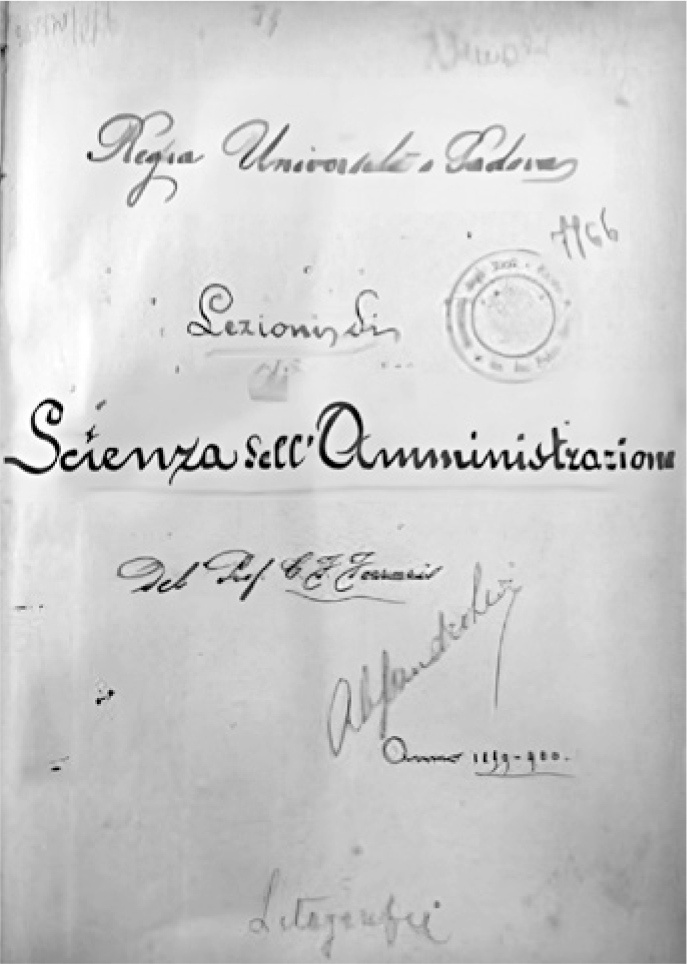
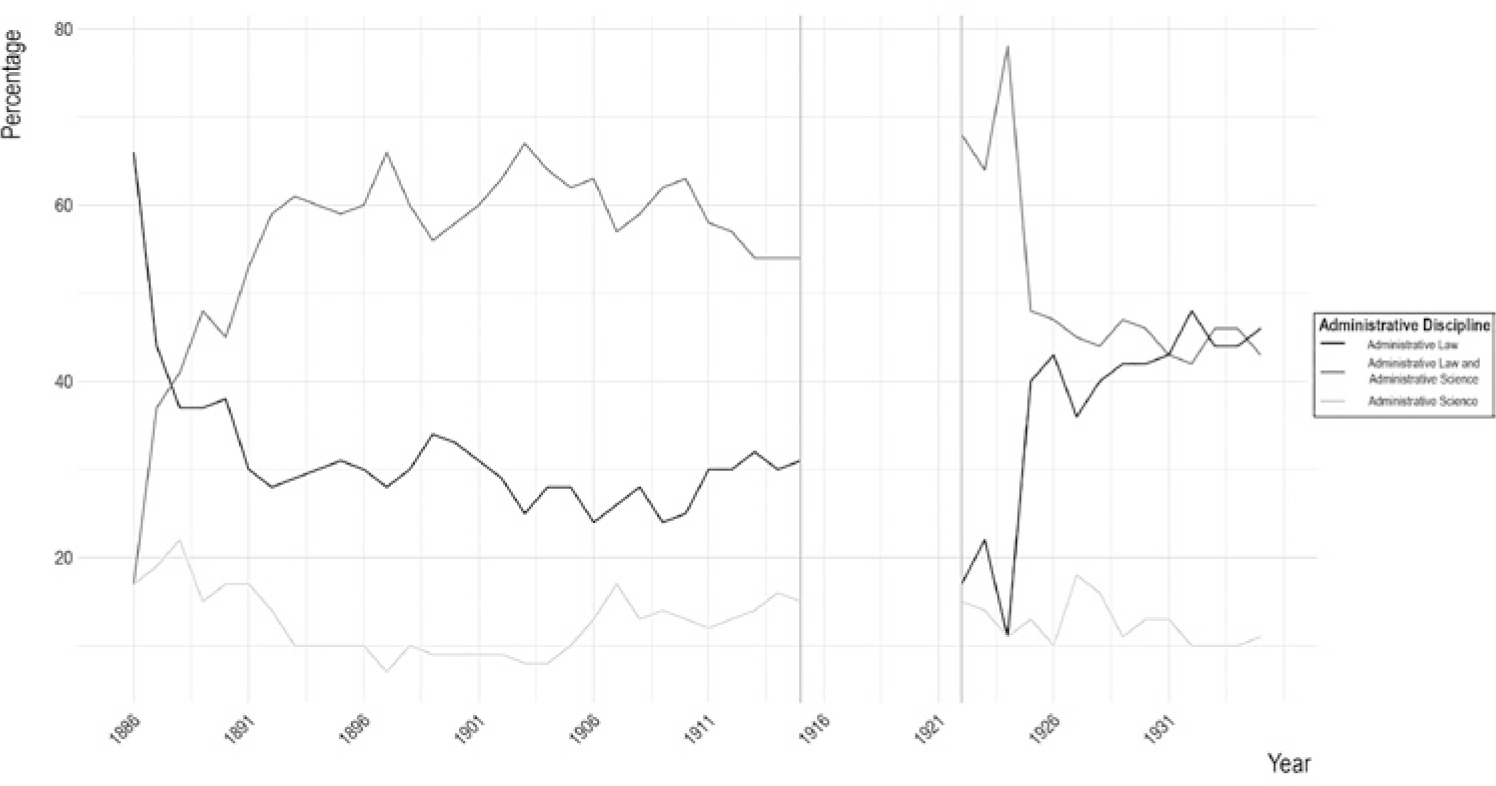
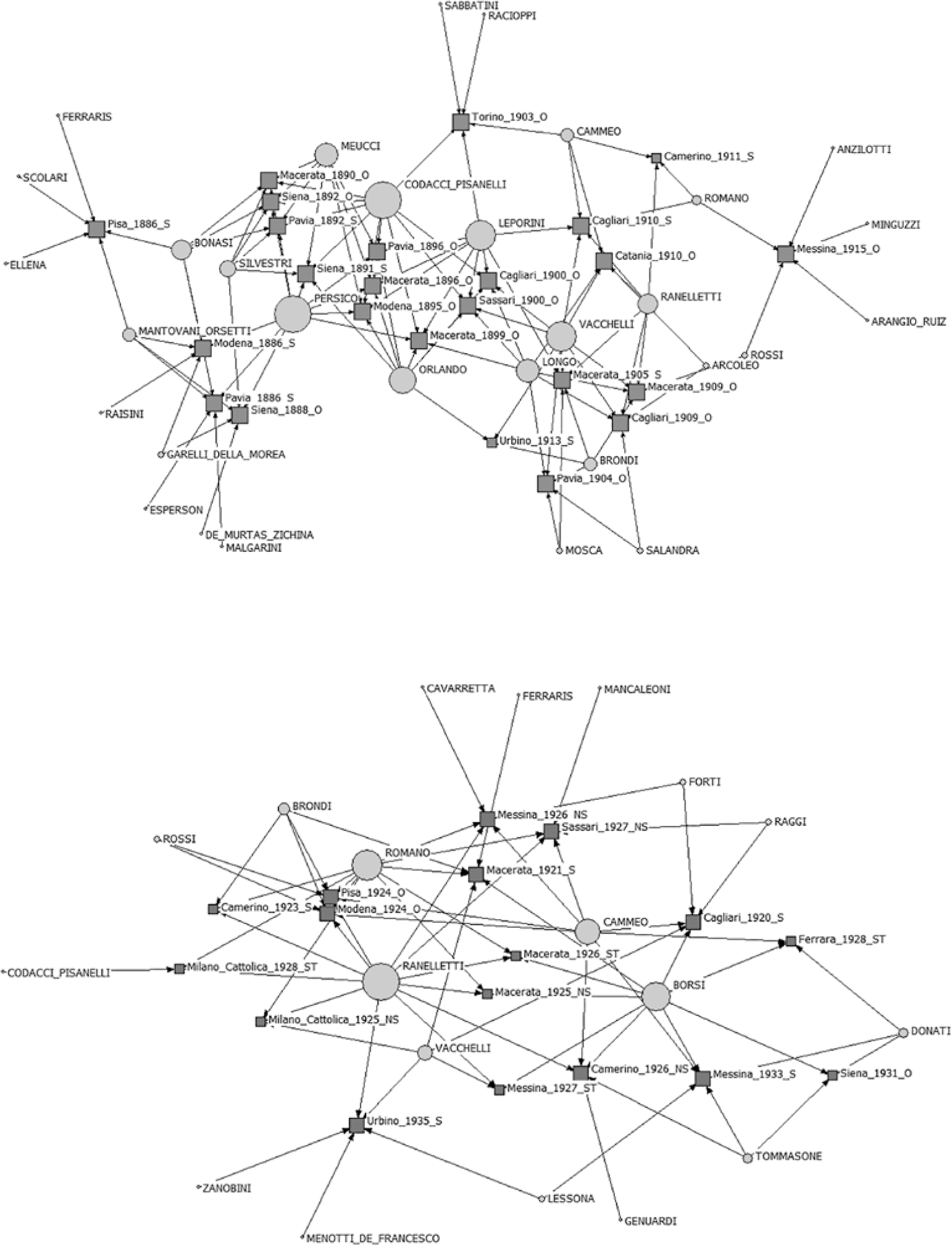
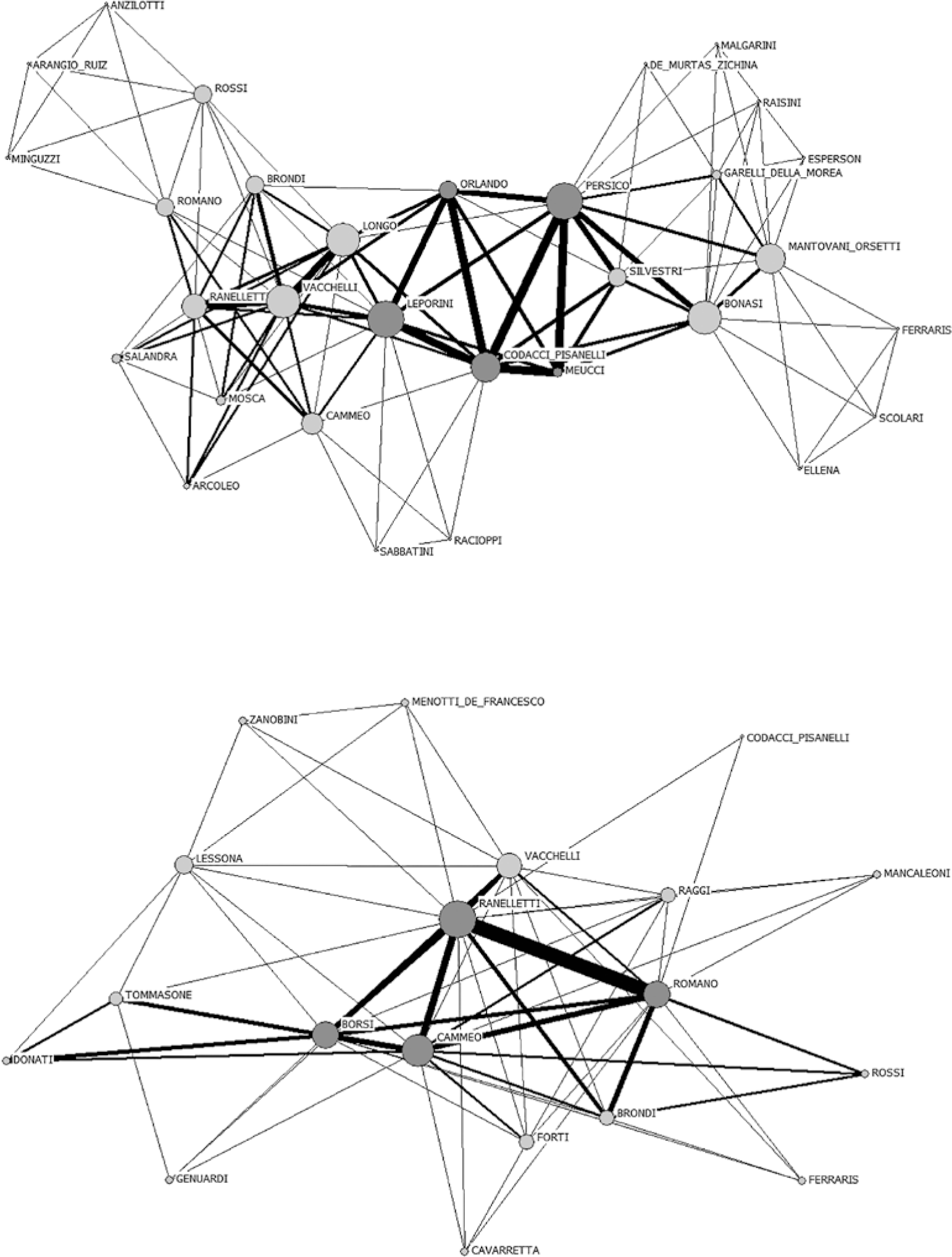
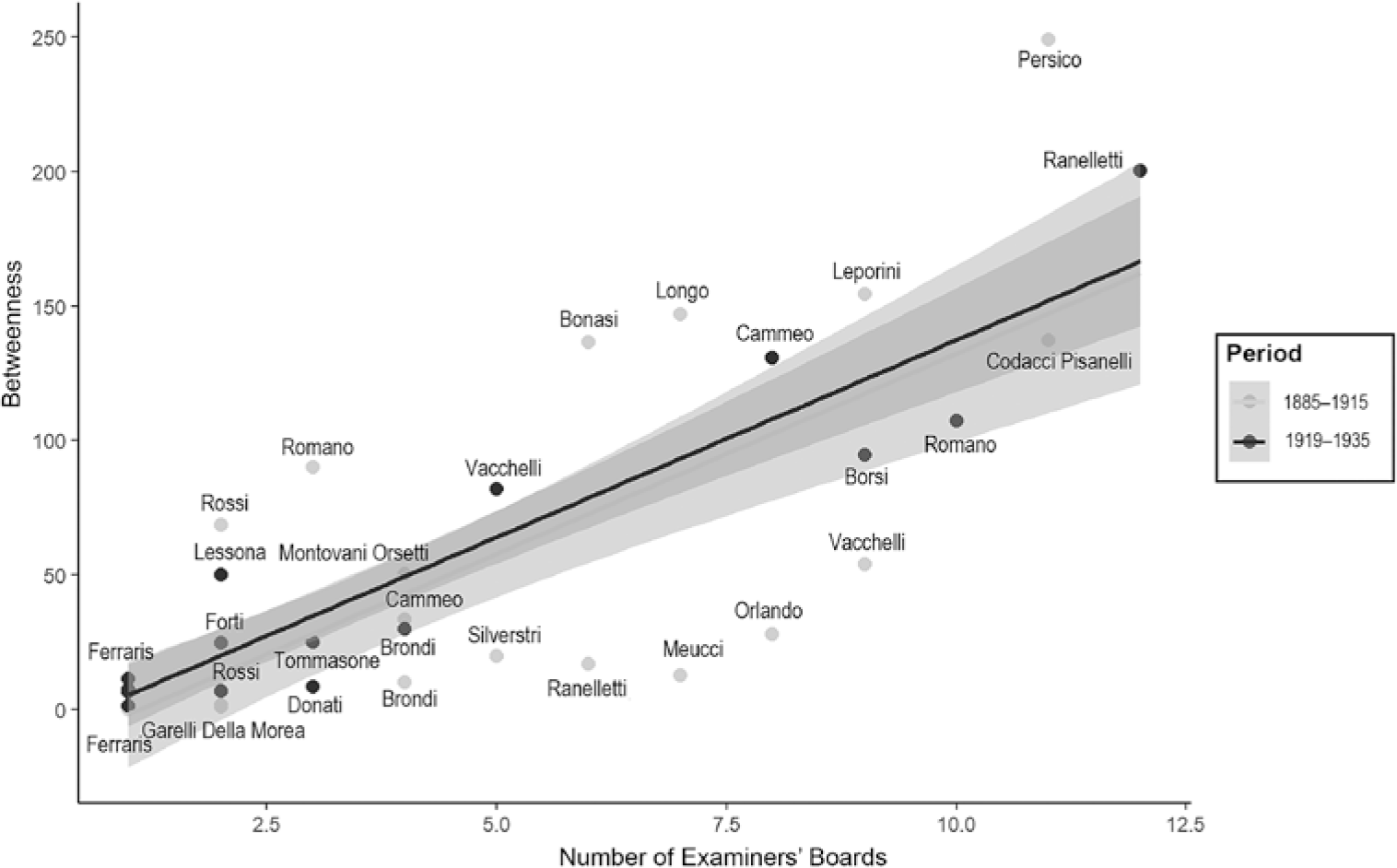
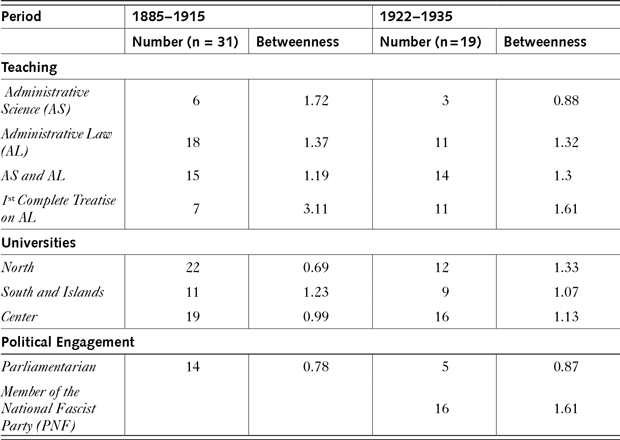
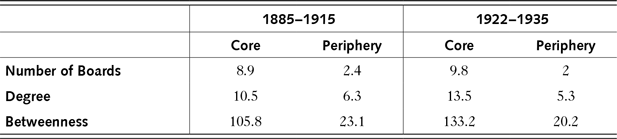
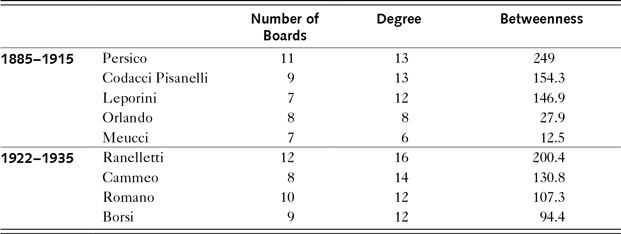
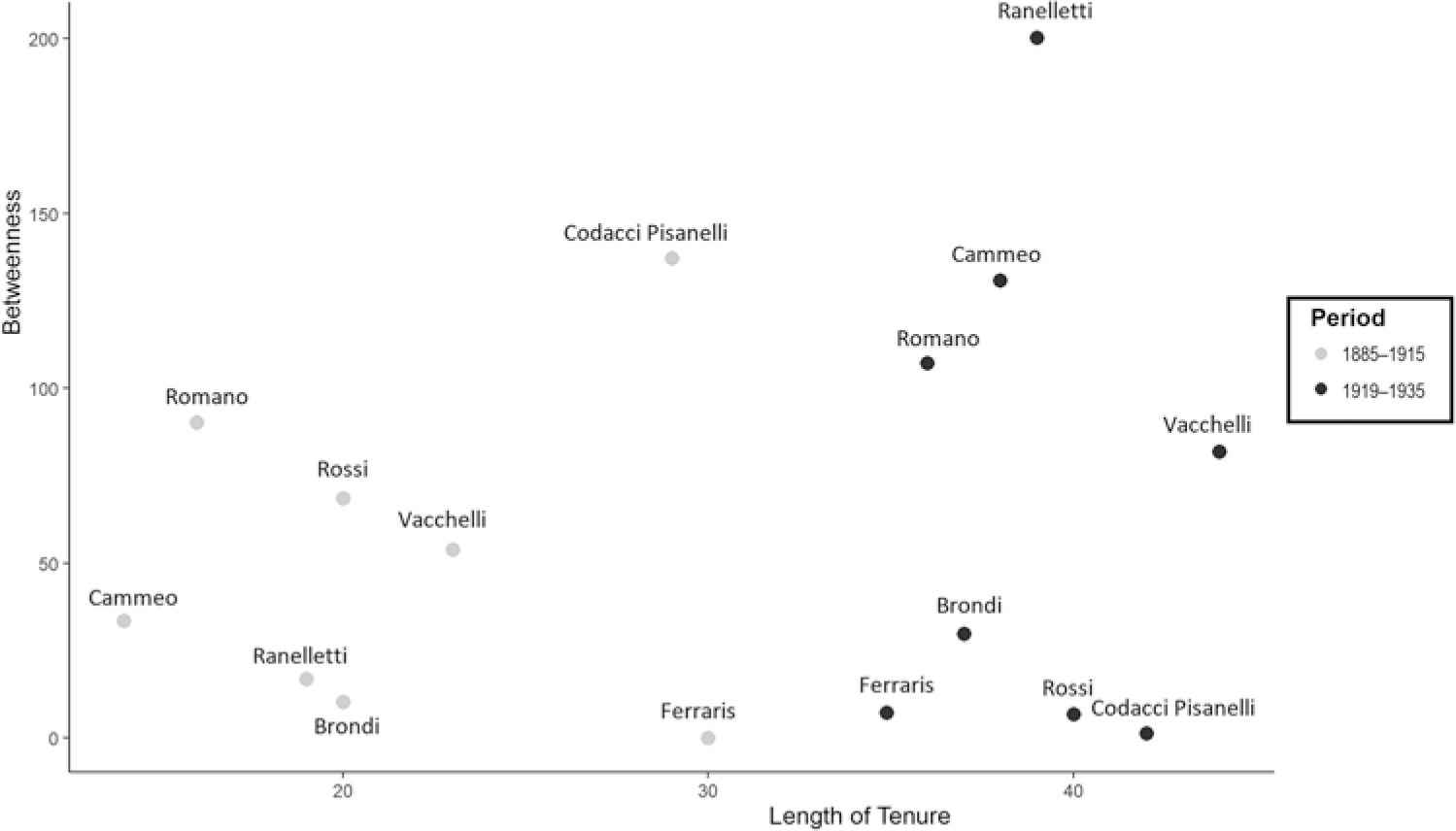

 Open access

