Introduction
Tanzania has an estimated 21.4 million cattle of which about 95 percent are of indigenous types. The indigenous breeds represent an important genetic resource that contributes significantly to the employment of the majority of people in rural areas and to the National Gross Domestic Product (MLDF, 2011). Indigenous cattle contribute more than 90 percent of the meat and 70 percent of the milk consumed in the country (Njombe and Msanga, Reference Njombe and Msanga2008). They also provide tangible non-food products such as hides, horns and manure for crop production. Moreover, they are used in agricultural and socio-cultural functions such as draught activity, dowry payments, traditional feasts and religious ceremonies (Scarpa et al., Reference Scarpa, Ruto, Kristjanson, Radeny, Drucker and Rege2003). Tanzanian indigenous cattle rearing thus constitutes a major occupation mainly in the rural areas of the country where cropping activities are also practised (Msechu, Reference Msechu2001).
About 95 percent of the Tanzanian indigenous cattle breeds are kept under the agro-pastoral farming system, where the farming community comprised sedentary farmers who combine crop production with livestock keeping for sustenance of their livelihoods (URT, 2006). The dominant management practice under this system is herded grazing in communal lands, fallow lands and in crop fields after harvesting cereal grains (Oumam, Abdulai and Drucker, Reference Oumam, Abdulai and Drucker2005). Unlike the pastoral communities that keep cattle for provision of cash income and meat and also as a repository of wealth and dowry payments; most agro-pastoral communities keep cattle for draught power, manure, income, dowry payment, milk and security against future uncertainties (Maeda-Machang'u et al., Reference Maeda-Machang'u, Mutayoba, Laswai, Mwaseba, Kimambo, Lazaro and Matovelo2000). The crop–livestock interaction gives an important synergism as animals provide draught power for land tillage, transport and manure for crop production, whereas crop residues are consumed by the livestock (Oluka et al., Reference Oluka, Owoyesigire, Esenu and Sssewannyana2008).
The dominant cattle breeds kept under the agro-pastoral system are the Tanzania Shorthorn Zebu (TSZ) and Sanga derivatives. The TSZ breed comprised a number of strains, such as Iringa red, Maasai, Mkalama dun, Singida white, Mbulu, Gogo, Chaga and Pare (Msanga, Mbaga and Msechu, Reference Msanga, Mbaga and Msechu2001), whereas the Sanga and Sanga × Zebu crosses include the Ankole breed, the Tarime and Fipa strain (Rege and Tawah, Reference Rege and Tawah1999). The Fipa cattle are mainly kept by Fipa communities in Rukwa region, in the South-Western Highlands of Tanzania. The Fipa people are settled agro-pastoral farmers and depend mainly on food crops production (maize, wheat, finger millet, beans, sunflower, potatoes and rice) and livestock keeping (cattle, goats, sheep, donkeys, turkeys and local chickens). The Fipa communities have persisted keeping Fipa cattle for generations despite the introduction of high-producing dairy breeds in urban areas for the last three decades as well as the encroachment of other indigenous cattle in some parts of the region. However, dairy cattle constitute only about 1 percent of the total cattle population in the region (URT, 2010). Although Fipa cattle do not receive much attention in terms of selection, housing, feeding and disease control, they are claimed to maintain a reasonable level of productivity in terms of fertility, growth rate, body weight and milk yield. The strain also shows relatively high resilience to tick-borne diseases in comparison with other cattle strains in the same area (Mwakilembe et al., Reference Mwakilembe, Mbwile, Sendalo, Msanga, Murro, Mwambene and Temu2007). The traditional knowledge and local customs of the Fipa communities are the main forces responsible for shaping the roles, values and adaptive characteristics of Fipa cattle through artificial selection (Msanga, Mbaga and Msechu, Reference Msanga, Mbaga and Msechu2001).
Despite the strain's considerable (40 percent) contribution to households’ food security and income, and being a major component of crop–livestock integrated system in Rukwa region (Mwakilembe et al., Reference Mwakilembe, Mbwile, Sendalo, Msanga, Murro, Mwambene and Temu2007), little is known and documented about its socio-economic roles, its production challenges and management practices employed by Fipa community for raising it. This study was therefore aimed at determining and documenting the socio-economic roles, traditional management practices and production challenges of the Fipa cattle in order to lay a foundation for rational improvement and sustainable utilization of the strain.
Materials and methods
Study area
The study was conducted in three districts of Rukwa region, Tanzania, viz. Sumbawanga rural, Sumbawanga urban and Nkasi district. The Rukwa region lies between latitudes 3°00″ and 9°00″S and longitudes 30°00″ and 33°00″E. The region has a unimodal rainfall pattern that starts in November and ends in May. The prolonged dry season extending from June to November, is a limiting factor for forage availability.
The estimated population of cattle in Rukwa region is 512 722, of which more than 50 percent are Fipa cattle (URT, 2010). The whole region has a total land area of 75 250 km2 of which about 86 percent is used for agricultural activities, wildlife and forestry. Of the total agricultural land, about 62.5 percent is communally owned through local authorities for expansion of cropping activities and grazing of animals, whereas about 37.5 percent of the total land is privately owned for different uses. Farm size per household for cropping activities is moderate (2–15 acres) (URT, 2010).
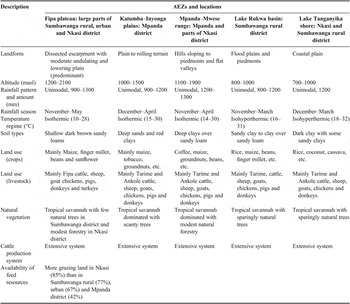
The Rukwa region is divided into five agro-ecological zones (AEZs) based on altitude, soil types, land use, climatic condition, natural vegetation, agricultural suitability and other economic activities (Table 1). Among these AEZs, the Fipa plateau is the main one. The plateau is situated between latitudes 6°50″ and 9°40″S and longitudes 30°26″ and 32°54″E. It occupies about 60 percent of the total area of the region, mainly the highland terrain of Sumbawanga rural, urban and Nkasi districts, and is dominated by settled agro-pastoral farming system, particularly maize – Fipa cattle farming system (Mussei et al., Reference Mussei, Mbwile, Kamasho, Mayona, Ley and Mghogho1999). The Fipa plateau was chosen for this study because it has a large proportion (over 90 percent) of the total number of Fipa cattle and also its climate and landscape across the three districts is distinctive. Other livestock species such as sheep, goats, chickens, donkeys, pigs and turkeys are kept in the area and various food crops are produced. Livestock keeping is the second dominant agricultural activity after crop production. The predominant natural vegetation along the plateau is the tropical savannah mainly with grasses such as Hyperenia rufa, Pannicum maximum (Guinea grass), Setaria sphacelata (Giant setaria) and Heteropogon contortus with scanty natural trees in Sumbawanga rural and urban districts and modest forestry in Nkasi district (URT, 2010).
Rukwa region AEZs with some environmental features.

Source: Rukwa region livestock profile report, 2010. masl, metres above sea level.
The other four AEZs of Rukwa region are mostly low land zones, characterized with relatively low rainfall and high temperature. These zones have high number of other Tanzanian local cattle, particularly Tarime and Ankole, which have been brought by immigrant agro-pastoralists from Shinyanga, Mwanza and Tabora regions of Tanzania since 1970s. Other characteristics of lowland zones are indicated in Table 1.
Livestock keeping system in the Fipa plateau
One major Fipa cattle management system in the Fipa plateau is extensive which consists of herded grazing in the communal grazing land, fallow land and crop fields after crop harvest. The system is largely traditional and subsistence oriented with very minimal management inputs in terms of breeding, disease control and supplementary feeds (Mwakilembe et al., Reference Mwakilembe, Mbwile, Sendalo, Msanga, Murro, Mwambene and Temu2007). The farmers have also little control over the natural feed resources. Fipa cattle are used for draught, sales, savings and cultural commitments. The Fipa cattle are widely distributed in the Fipa plateau, mainly between latitude 5°31″ and –10°23″S and longitude 30°00″ and –32°36″E. The crop–livestock production system in the Fipa community is characterized by the use of crop by-products as animal feed, whereas livestock provide manure as fertilizer.
In the plateau, livestock feed availability fluctuates with seasonal changes and location. Livestock feed resources are more in Nkasi than in Sumbawanga rural and urban district owing to availability of big grazing area in relation to available cattle and human population, low cropping activities and poor accessibility. Inaccessibility has also been reported to hinder regular movements of people and livestock for socio-economic activities in Nkasi district. As a result, Nkasi Fipa communities are relatively poorer in terms of household incomes with relatively high illiteracy levels than their counterparts from Sumbawanga rural and urban districts (URT, 2010).
Research design
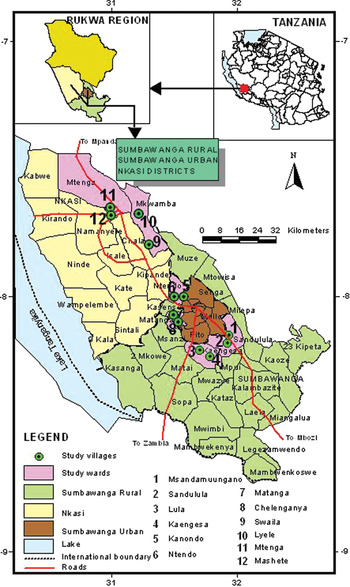
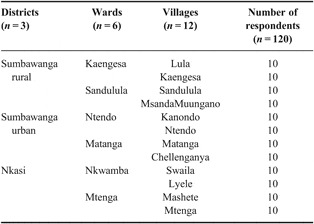
A cross-sectional research design was employed in this study. To obtain the desired data, purposive sampling was used to select two wards per district, making the total number of study wards to be 6 of the 39 wards from the entire study area. Selection of study wards was based on extension staff suggestions for the wards with large numbers of Fipa cattle with no evidence of admixture with other types of cattle populations and their easy accessibility. In each ward, two villages were randomly selected from the list of villages, making the total number of study villages to be 12 (Figure 1). In each village, ten households were randomly selected using random numbers from the list of all households who had been keeping more than 10 Fipa cattle in the last 10 years, making a sample size of 120 households (Table 2). Data were collected during the dry season from June to August 2010.
Map of Tanzania showing the study districts, wards and villages.

Sampling frame of the districts, wards, villages and respondents in the study area.

Data collection
A structured questionnaire containing both closed and open-ended questions was used for data collection. The questionnaire was administered through individual interview of household heads by the research team with assistance from the extension staff. Other members of the household were allowed to supplement relevant information during the interview. The questionnaire was pre-tested to check clarity and appropriateness of the questions. Some of the information collected during interviews were supported by on-site observation. The questionnaire was designed to obtain information on general household characteristics, livestock kept and herd structure, traditional management practices, production objectives and production constraints. Similar information particularly on traditional management practices, production objectives and production challenges for Fipa cattle was also collected from the extension officers in order to crosscheck its consistency.
Data processing and analysis
Qualitative data from the field survey were coded and analysed using the Statistical Package for Social Sciences (SPSS, 2008) computer software in order to generate descriptive statistics such as means and frequencies or percentages. The χ2 test of independence was run to compare proportions of respondents from different districts with respect to particular responses. Quantitative data were also analysed using SPSS in order to generate and compare means between districts. Column charts were used to compare values or proportions of respondents across the districts using Microsoft Excel. The recorded information from the extension staff was synthesized and summarized.
Results and discussion
Household socio-economic characteristics
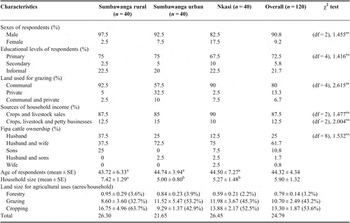
The average household size across the entire sample was 5.9. The mean household size was larger (7.4) in Sumbawanga rural than in Sumbawanga urban district (5.0). The average age of the respondents was 44 years. A similar mean age was observed in all the study districts. This implies that both young and old people keep Fipa cattle, and therefore suggesting the sustainability of the strain in the Fipa community. Most of the respondents were also in the active working age and could, therefore, be involved in the development of sustainable utilization strategies of the strain.
Seventy-two percent of the respondents had received primary education, and therefore, could read and write, whereas 5.8 and 21.7 percent had received secondary and informal education, respectively. There were relatively more (75 percent) farmers with primary education in Sumbawanga rural and urban than in Nkasi district (67.5 percent). Most of the respondents had therefore, formal education that can be capitalized on rational decision-making regarding improvement and conservation strategies of the Fipa cattle. The present study revealed that the majority (90.8 percent) of the respondents were males while a few (9.2 percent) were females. There were more (97.5 percent) male respondents in Sumbawanga rural than in Nkasi district (82.5 percent). The reverse was true for the female respondents. These observations are in agreement with the findings of Maeda-Machang'u et al. (Reference Maeda-Machang'u, Mutayoba, Laswai, Mwaseba, Kimambo, Lazaro and Matovelo2000) who previously reported similar education and male headed household levels of other Tanzanian agro-pastoral communities.
In most (61.7 percent) of the households interviewed animals were jointly owned by husband and wife, more in Nkasi (75 percent) than in Sumbawanga rural district (37.5 percent). In 25 percent of all households, cattle ownership was exclusively the prerogative of the husband, a larger proportion in Sumbawanga rural (37.5 percent) than in Nkasi district (12.5 percent). In about 11 percent of the households cattle belonged to the sons of the household, mainly in Sumbawanga rural district (25 percent) (Table 3). Joint ownership of cattle suggests either a gradual change of mindset to be taking place among males on gender equality or the presence of customary norms of the Fipa community which allow both the husband and wife to jointly own, access and use household resources. This observation is inconsistent with the findings reported by Sungael (Reference Sungael2005) on the Hehe agro-pastoral communities in which husbands dominated the ownership and decision-making on the use of household resources.
Socio-economic characteristics of the households in the study area.

Note: N, number of respondents; ameans with the same superscripts along the row are not significantly different at P > 0.05; nsnot significant (P > 0.05).
On average, about 24.8 acres of land was owned per household. The average land owned per household was relatively more in Nkasi (26.5 acres) than in Sumbawanga rural district (21.7 acres). The overall average land owned per household was slightly lower than that of the entire region (27.8 acres). It was further reported that farmers allocate a relatively large proportion (53.6 percent) of their agricultural land for cropping. More (63.7 percent) land was allocated for cropping in Sumbawanga rural than in Sumbawanga urban district (42.7 percent). The reverse was true for the land allocated for grazing. About 43.2 percent of the total land was allocated for grazing, whereas only 3.2 percent was reserved as forest land. Allocation of large proportion of land for cropping is an indication of cropping activities to be more predominant in the study area than the other agricultural activities. Similar results have been reported by Msalale (Reference Msalale2007) and Maeda-Machang'u et al. (Reference Maeda-Machang'u, Mutayoba, Laswai, Mwaseba, Kimambo, Lazaro and Matovelo2000) on the grazing land size and ownership in Sukuma and Hehe agro-pastoral communities, respectively, in Tanzania. However, the findings differ from those reported by Mwacharo and Drucker (Reference Mwacharo and Drucker2005) on the predominance of private grazing land compared with communal grazing and cropping land in agro-pastoral communities of South-Eastern Kenya.
The majority (80 percent) of the farmers herded their animals on natural pastures, on communal grazing lands, more in Sumbawanga rural (92.5 percent) and Nkasi (90 percent) than in Sumbawanga urban district (57.5 percent). Few farmers grazed their animals on private (13.3 percent) and both communal and private lands (6.7 percent). A considerable proportion (32.5 percent) of farmers from Sumbawanga urban used private land for grazing than those of the other districts. Generally, the proportions of respondents belonging to the different sexes, educational levels, grazing land ownership, sources of household income and Fipa cattle ownership were almost similar across the study districts.
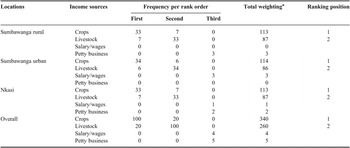
The results in Table 3 also reveal that 87.5 percent of the respondents depended on crop and livestock production for household income and food security, relatively more (90 percent) in Nkasi than in Sumbawanga urban district (85 percent). Only a few (12.5 percent) respondents had petty businesses in addition to crop and livestock production. A similar trend was also depicted with regard to the ranking of the sources of households’ income and food security. Crop production was ranked first across all the districts, followed by livestock keeping (Table 4). This observation implies that there is strong integration between cropping and livestock keeping activities in the Fipa community. This remark is consistent with that of Dinucci, Fre and Case (Reference Dinucci, Fre and Case2003) and Rass (Reference Rass2006), who reported that more than 50 percent of the agro-pastoral household gross revenue comes from farming and 10–50 percent comes from livestock production. The present study revealed that Fipa cattle contribute considerably to food security indirectly through provision of draught power and manure which improves production of food crops, as well as directly through sales of cattle and their products and by providing meat for the family. Cattle are sold during the periods of food shortage and the money accrued is used to buy cereal grains. These findings agree with those of Köhler-Rollefson (Reference Köhler-Rollefson2005) and Oumam, Abdulai and Drucker (Reference Oumam, Abdulai and Drucker2005) for agro-pastoral communities in developing countries. These authors concluded that cattle play a crucial role in coping with risks and in providing livelihood strategies in the face of increasing climate instability.
Ranking of sources for households’ income.

aBased on weighting of 3 for first rank order, 2 for second rank order and 1 for third rank order.
Livestock species kept by households
All the farmers reported keeping more than one livestock species. Fipa cattle were kept by all the respondents with a mean herd size of 19.58 heads. Also most (89.2 percent) of the respondents kept local chickens and the average flock size was 10.41 birds. About 79.2, 59.2, 26.7, 23.3 and 19.2 percent of the respondents also kept goats, donkeys, sheep, turkeys and pigs, respectively (Table 5). Ranking of the different livestock species was as follows: cattle, local chickens, goats, donkeys, sheep, turkeys and pigs, in that order of importance. There were significantly (P < 0.05) more local chickens in Sumbawanga rural and urban than in Nkasi district. Diversification of livestock species is becoming increasingly important since it provides multiple strategies for economic success and risk management (Fratkin, Reference Fratkin, Smith, Fratkin, Galvin and Roth1994). This practice might also aim at utilizing rangelands and household waste better as feed preferences differ among livestock species. The observed tendency to keep many livestock species in the present study is also common in other agro-pastoral communities in the developing countries and is influenced by socio-economic and socio-cultural setting (Bebe et al., Reference Bebe, Udo, Rowlands and Thorpe2003; Sungael, Reference Sungael2005). However, the average herd size of Fipa cattle was bigger than that reported for Kamba agro-pastoralists in Kenya (Mwacharo and Drucker, Reference Mwacharo and Drucker2005).
Livestock herd sizes and proportion (%) of respondents keeping different types of livestock species.

Note: N, number of respondents. Frequencies were based on multiple responses; means without superscripts along the rows are insignificantly different at P > 0.05.
A relatively large number of Fipa cattle compared with other livestock species were reported per household. This finding reflected farmers’ preference and perceived importance of Fipa cattle to the livelihood of the Fipa communities in comparison with other livestock species. These results are consistent with those of Msechu (Reference Msechu2001) who reported that indigenous cattle are preferred to exotic cattle and other livestock species kept in several agro-pastoral communities of Tanzania.
Means of acquisition of initial stock of Fipa cattle
Most (72.5 percent) of the farmers acquired their initial stock of Fipa cattle through purchases (Table 6). Other means of acquisition were inheritance (13.3 percent), exchange and inheritance (11.7 percent) and exchange with other stocks (2.5 percent). The means of acquisition of the initial stock of Fipa cattle were almost similar in all the study districts. These observations are in agreement with those reported by Sungael (Reference Sungael2005) and Chenyambuga et al. (Reference Chenyambuga, Ngowi, Gwakisa and Mbaga2008) with regard to ways of acquiring Iringa red and Tarime cattle, respectively.
Means of acquiring Fipa cattle by the households.

Note: N, number of respondents; nsnot significant (P > 0.05).
Fipa cattle herd composition
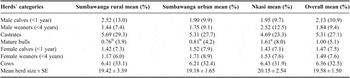
Results on herd structure of Fipa cattle indicate that the overall proportion of cows was much larger than those of other categories (Table 7). In total, the female cattle contributed about 47.5 percent of the total herd size while more than half (52.5 percent) of the animals were males. The young and growing males (<4 years) were proportionately more numerous than growing females. The proportion of oxen (mature castrated bulls) was also considerable (27.1 percent), particularly in Sumbawanga rural and urban district. The observed high proportion of oxen in the present study reflects the dominance of cropping activity in the study area as oxen are mainly used in ploughing of crop fields and transportation of crop produce. The importance of draught animals was also reported to have an influence on farmers’ decision to castrate strong Fipa bulls and even to keep oxen of different indigenous cattle in Sumbawanga rural and urban districts.
Herd structure of Fipa cattle.

Note: Means along the rows without superscripts are not significantly different at P > 0.05.
The ratio of intact bulls to cows for the households that possessed breeding bulls was 1:5.2. The ratio portrays a proportionately larger number of breeding bulls in relation to herd size. However, like castrates, some bulls were reported to be used also for draught purposes. This ratio is similar to that of most of the Sudan and Ethiopia agro-pastoral communities (Mukasa-Mugerwa, Reference Mukasa-Mugerwa1981). The ratio is lower than those which have been reported for the Iringa red (Sungael, Reference Sungael2005) and Small East African Zebu (SEAZ) (Mwacharo and Rege, Reference Mwacharo and Rege2002). However, it is higher than the recommended ratio (1:25) for usual herd mating. The ratio implies that missed oestrus periods would be unlikely.
There was a highly significant (P < 0.01) difference between districts with respect to the number of mature intact bulls. Proportionately more breeding bulls were observed in Nkasi than in the other two districts. This observation suggests that there are management differences particularly in breeding practices among Fipa communities in the three districts. The Fipa community of Nkasi district was found to be more aware of the importance of possessing own breeding bulls than those of Sumbawanga rural and urban districts, where draught activities were more intense. The closeness of the Sukuma agro-pastoral community to Fipa community in Nkasi district which insists on keeping of own bulls for breeding purposes in every household could have had an influence on the observed trend.
Purpose of keeping Fipa cattle
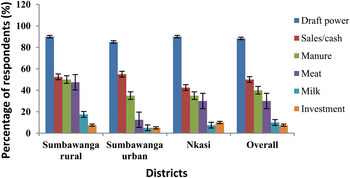
The results in Figure 2 reveal that the main purposes of keeping Fipa cattle include: provision of draught power, cash income, manure and meat, in that order of significance. The strain is valued also for investment for future uses and limited production of milk for home consumption in some households. The importance of Fipa cattle for manure, meat and milk production was more evident in Sumbawanga rural than in the other districts. The ranking of the uses of the Fipa cattle obtained in the current study is similar to that reported by Msalale (Reference Msalale2007) and Sungael (Reference Sungael2005) for Sukuma and Iringa red cattle, respectively. However, the results are somewhat inconsistent with those reported by Rege and Gibson (Reference Rege and Gibson2003) on the uses of SEAZ in Kenya. The perceived value of the Fipa cattle as cash source surpassed those of other uses, except draught power in Sumbawanga urban and Nkasi district. This trend is consistent with that reported by Mwacharo and Rege (Reference Mwacharo and Rege2002) on SEAZ in Kenya. However, these results are inconsistent with those reported by Maeda-Machang'u et al. (Reference Maeda-Machang'u, Mutayoba, Laswai, Mwaseba, Kimambo, Lazaro and Matovelo2000) on several Tanzanian agro-pastoral communities. The considerable reliance on Fipa cattle as source of income indicates the integration of the Fipa cattle production activities into the cash economy, contrary to the conventional socio-cultural roles of most of the African indigenous cattle. However, this tendency may have a side-effect on the sustenance of the Fipa cattle strain since as the communities become more integrated into cash economy, farmers may tend to switch to more productive breeds that might threaten the long-term existence of the strain through substitution or cross-breeding.
Proportions (%) of respondents falling under each purpose of keeping Fipa cattle.

Traditional management practices of Fipa cattle
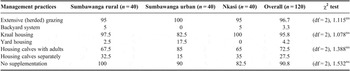
Table 8 shows different management practices for the Fipa cattle. The majority (96.7 percent) of the farmers practiced extensive grazing system, whereby the cattle were herded during the dry and wet season on communal grazing land and harvested grain crop fields. Backyard system (grazing around homesteads) was rarely practised by very few (3.3 percent) farmers, particularly during the cropping season. These observations are consistent with those reported by Oumam, Abdulai and Drucker (Reference Oumam, Abdulai and Drucker2005) and Msalale (Reference Msalale2007) for management of SEAZ and Sukuma cattle, respectively. Normally under communal grazing land, farmers are not obliged to improve the nutritive value of the natural pastures through rotational grazing or oversowing of improved pasture seeds or leguminous plants. Instead, regular movements of cattle herds are employed to restore overgrazed areas. Availability of feed for dry season feeding could also be improved by saving grazing areas in the form of standing hay or establishment of fodder banks. In this system, production of other indigenous cattle is also attractive because it offers opportunity for diversification and spreading risks (URT, 2010).
Proportion (%) of farmers falling under different categories of cattle management practices.

Note: N, number of respondents; nsnot significant (P > 0.05).
In Fipa communities supplementary feeding of cattle with energy, protein or minerals was practically non-existent, a tendency that can be attributed either to lack of awareness of the importance of supplementation or inability to buy supplementary feeds. Crop residues particularly maize stovers were utilized in situ during the dry season, perhaps owing to their ready availability at relatively low cost. However, according to Mwakilembe et al. (Reference Mwakilembe, Mbwile, Sendalo, Msanga, Murro, Mwambene and Temu2007), utilization of crop residues in situ is inefficient owing to associated losses of edible feed material through trampling, wind blowing, soiling, leaching and termite damage, despite enriching nutrients recycling for sustainable agriculture.
The majority (95.8 percent) of the farmers kept their animals in open kraals enclosed with untreated thorny bushes at night. The floor was earthen and muddy, hence predisposing the animals to foot rot disease particularly during the rainy season. These findings are similar to those reported by Maeda-Machang'u et al. (2000) for many other agro-pastoral communities of Tanzania. Most (72.5 percent) of the calves were penned and grazed together with adult animals, thus predisposing them to tick-borne diseases at their early stages of life. However, a few (27.5 percent) of the farmers housed calves separately under a roof either in their own pens, goat pens or in kitchens to keep away from their dams to avoid suckling. Mature male and female animals were kept in the same kraals.
A considerable proportion (30 percent) of the households neither milked their cows nor did they take milk as a source of protein. This habit might be the reason for some households sheltering calves together with adult animals, unlike the practice of other agro-pastoral communities in Tanzania. These observations are inconsistent with those reported by Mwacharo and Drucker (Reference Mwacharo and Drucker2005) and Sungael (Reference Sungael2005) on Kamba and Hehe agro-pastoral communities, respectively, where calves are housed separately and cows are milked. In general, Fipa farmers employed almost similar management practices across all the study districts.
Cattle watering amenities
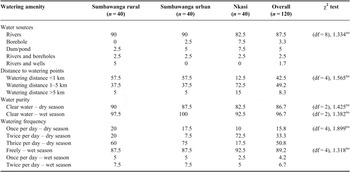
The distance to the watering points (rivers) varied considerably, but on average it was 1–5 km from the homesteads. All the animals were watered at least once a day throughout the year. The water used was described as clear/clean all year round. The level of availability of water sources, distances to watering points and frequencies of watering of the Fipa cattle were almost similar across the study districts (Table 9). Water sources were readily available all the year round and the sources were the same during the dry and wet season. This finding is consistent with that reported by Sungael (Reference Sungael2005) for the availability of water for Iringa red cattle. Thus, the availability of water all the year round in the Fipa communities could be among the opportunities that can be tapped to improve productivity of the Fipa cattle.
Proportion (%) of farmers with exposure to different watering amenities.

Note: Data were based on multiple responses; N, number of respondents; nsnot significant (P > 0.05).
Role played by different household members in the management of Fipa cattle
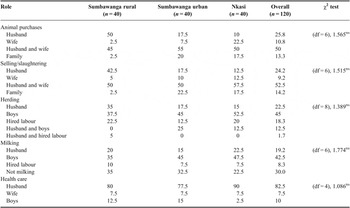
The roles played by different household members in various traditional management practices for the Fipa cattle are summarized in Table 10. It was reported that cattle purchases and disposals were largely decided upon by both husband and wife. However, the herding of cattle, which is the most time-consuming activity in livestock production, as well as the task of milking were assigned to boys. This might have some negative effects in that it may leave little room for boys to attend school properly. These observations are inconsistent with those reported by Maeda-Machang'u et al. (Reference Maeda-Machang'u, Mutayoba, Laswai, Mwaseba, Kimambo, Lazaro and Matovelo2000) and Sungael (Reference Sungael2005) for several other Tanzanian agro-pastoral communities where the herding of cattle was done by adult males and hired labour. On the other hand, the health of the animals was largely under the jurisdiction of the husband.
Proportion (%) of respondents indicating roles of different household members in management of Fipa cattle.

Note: N, number of respondents; nsnot significant (P > 0.05).
Also, in contrast to other agro-pastoral communities where the processing of milk into dairy products was the responsibility of women (Sungael, Reference Sungael2005), in the Fipa communities, some of the households did not milk their cows nor process the milk. Therefore, there were no roles assigned solely to women with regard to the Fipa cattle management practices. Generally, the distribution of roles among the household members was almost similar across all the study districts, particularly on animal purchases, disposal, herding and milking.
Production constraints of Fipa cattle
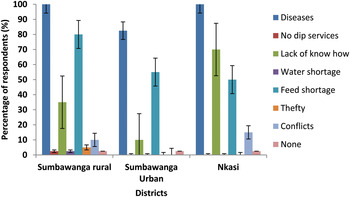
Figure 3 indicates the main production constraints of the Fipa cattle. According to the farmers and extension staff, diseases, feed shortages and lack of appropriate knowledge on management practices, in that order of importance, were the main production constraints that reduced productivity of Fipa cattle. The problem of diseases was significant across all the study districts. These observations are similar to those reported by Maeda-Machang'u et al. (Reference Maeda-Machang'u, Mutayoba, Laswai, Mwaseba, Kimambo, Lazaro and Matovelo2000) on the production constraints of the other agro-pastoral communities of Tanzania. Feed shortage was a more important problem in Sumbawanga rural and urban than in Nkasi district, particularly during the dry season. However, no feed conservation strategies were employed to cope with feed shortages possibly owing to lack of knowledge of this aspect. These observations are consistent with those reported by Sungael (Reference Sungael2005) on Hehe agro-pastoral communities where the same trend of feed shortage and absence of conservation strategies was observed. The weakening of traditional management of communal grazing lands, overgrazing, encroachment of crop production activities onto grazing land and human population growth might be the reasons behind the shrinkage of the grazing land, particularly in Sumbawanga rural and urban districts.
Frequencies (%) of respondents falling under each main production constraint.

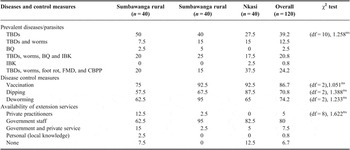
Tick-borne diseases were reported to be the most prevalent diseases (Table 11). Worm infestations and foot rot disease were also considerably important particularly during the wet season. Generally, the incidence of these diseases was rather low compared with the findings reported from other studies in similar production systems (Rwambo et al., Reference Rwambo, Grootenhuis, Demartini and Mkumbo1998; Maeda-Machang'u et al., Reference Maeda-Machang'u, Mutayoba, Laswai, Mwaseba, Kimambo, Lazaro and Matovelo2000). This observation may denote not only a low susceptibility of the Fipa cattle to various infections, but also the recent gradual improvement of the state and private extension services in the rural settings, particularly through dipping, vaccination and deworming, might have had an influence on the low incidence of the diseases.
Proportion (%) of respondents indicating the prevalent diseases, control measures commonly used and availability of extension services.

Note: N, number of respondents; nsnot significant (P > 0.05); TBDs, tick-borne diseases; BQ, black quarter; IBK, infectious bovine keratoconjuctivitis; CBPP, contagious bovine pleuro-pneumonia; FMD foot-and-mouth disease.
Most of the respondents reported to control viral/bacterial diseases through vaccination (86.7 percent), tick-borne diseases through routine dipping (70.8 percent) and worm infestations through deworming (74.2 percent). The prevalent diseases/parasites and control measures thereof were almost the same across the study districts.
Table 11 further reveals that most (80 percent) of the respondents had access to government extension services in their respective districts. Some of them (12.5 percent) depended also on private extension providers, particularly in Sumbawanga rural district. However, a few (6.7 percent) of the farmers had no access to any extension service providers, mainly in Nkasi (12.5 percent) and Sumbawanga rural district (7.5 percent). The levels of availability of the extension services to the farmers were almost similar across all the study districts.
Conclusion and recommendations
Based on the findings of the current study, it is concluded that:
1 Fipa cattle have multiple roles. The major roles include provision of draught power, income, meat and manure for soil nutrients recycling. Milk production and other socio-cultural uses are considered to be of minor importance by the Fipa community.
2 Fipa communities keep more than one livestock species as means to minimize risks and diversification of sources of household income.
3 Herded grazing system on natural pastures is commonly practiced mainly on communal grazing lands and in private crop fields in situ after harvesting cereal grains.
4 Diseases particularly tick-borne diseases and feed shortages during the dry season are the main production constraints that hinder productivity of the Fipa cattle.
Therefore, any conservation and improvement strategies of the Fipa cattle need to incorporate farmers’ preferences, traditional management practices and multiple roles the strain plays in the Fipa community.
Acknowledgement
This study was supported by Agricultural Sector Development Programme (ASDP) in Tanzania. We are grateful for their financial support. We appreciate the assistance provided to us by the Livestock Officers of Sumbawanga rural, Sumbawanga urban and Nkasi districts, Wards and Villages. We thank the farmers for accepting and participating in this study. We are also grateful for the comments of the anonymous reviewers of our manuscript.
Statement of interest: No relevant interests exist between the authors and any other parties.