During the past few decades, the study of human interaction with the material world has witnessed rapid development of method and theory on macro- and micro-scales. Archaeology has both benefited from and contributed to this emergence. For instance, landscape archaeology (through synergism with geography) has expanded the frame of archaeological inquiry beyond a settlement focus, allowed the inclusion of nonresidential places – such as sacred caves – and encouraged a more daring, phenomenological perspective on landscape inhabitation (Ashmore 2004; Ashmore and Knapp 1999; Barrett 2001; Brady 1997; Tilley 1994; among others). At the other end of the scale, approaches to artefacts (through synergism with social theory) have taken a decidedly social turn and now frequently entertain interpretive dimensions other than chronology and cultural affiliation. Attention often is focused on the manner in which artefacts encode social memory and biographies, evoke an understanding of human agency, resonate with social and ritual practice and play an active role in social networks and figured worlds (Appadurai 1986; Dobres and Robb 2000; Holland et al. 1998; Kopytoff 1986; Latour 2005; Van Dyke and Alcock 2003). But there is a middle ground – the place where landscape and artefacts meet – that remains undertheorized. The interpretation of stratigraphic sequences of depositional and subtractive processes forms a primary constituent of the self-identity of archaeologists and attention to sequence and context quickly separates a responsible investigator from a looter. Despite some notable and thoughtful discussions (considered below), the social meanings of stratigraphy-making tend not to be critically probed or extensively discussed. As Roskams (2001, 267–70) notes, stratigraphy tends to be overdescribed and undertheorized, with awkward articulation between the interpretation of excavated artefacts and the physical matrices in which artefacts are embedded, on the one hand, and, on the other, between the sedimented sequences of social action and the larger experience of landscape. As reviewed by Shott (1998, 312, 317), formation theory itself has been restricted to the debate over approaches to ‘[artefact] assemblage formation processes’, for which Shott maintains there has developed ‘an undisciplined plethora’ of approaches. In contrast, there has been limited theoretical formulation of the practical engagement of humans with earthly materials that produce stratification. Here, this topic is pursued with the goal of amassing a conceptual toolbox to facilitate archaeological interpretation.
The ways that archaeologists explore stratigraphy derive from geology (see Goldberg and Macphail 2006, among others). The superpositioning of layers allows relative chronologies to be built, and thus the development of forms (fossil species in geology, cultural types in archaeology) to be studied. In modern archaeology, the Harris matrix – although not without its detractors – is a major strut of archaeological method. It allows contexts, units and loci to be arranged into phases and the associations of artefacts to be studied. Thus stratigraphic analysis has come to be seen as a neutral method that underpins the organization of data in research and contract archaeology. By means of a historical discussion, we challenge the neutrality of organizing and presenting stratigraphic information. Stratigraphy produced by human effort has often been labeled ‘cultural stratigraphy’ to distinguish it from natural stratigraphy studied by geologists. We suggest that the similarities between natural stratigraphic sequences and those created by humans are more apparent than real and here advocate a different framework of interpretation. Specifically, we suggest a reorientation in the interpretation of stratigraphy towards the social meaning of this important variant of materiality that is constituted by the piling up of clay and stones, the processing of limestone to create plaster and mortar, or the intrusive disruption of a constructed space for the purpose of burying/storing/retrieving objects or deceased group members – the stuff of built environments. Rather than use the blanket term of cultural stratigraphy for these activities (meant to create an artificial partition between culture and nature), we suggest a focus on social practices – the web of human interaction – that results in built stratigraphic sequence. This approach – that of ‘social stratigraphy’ – helps direct our interpretive efforts towards the agency of those who conceived of and labored to construct the platforms, room complexes, subterranean features and soaring monuments that we so laboriously deconstruct through excavation. As geoarchaeologists Goldberg and Macphail (2006, 24) note, ‘occupation deposits are an essential part of the material culture. By ignoring the value of these deposits, archaeologists limit their ability to fully understand their sites.’ We advocate attention to the interpretation of ‘occupation deposits’ in social terms and focus here on sites with demonstrable built environments, although this approach has applicability for deposits of humanly produced materials within what traditionally is called ‘natural stratigraphy’.
Below, a brief critical account of the history of stratigraphy in archaeology is followed by a discussion of elements of social stratigraphy that refer both to techniques and to processes inherent in piling up and layering sediments, cutting through existing layers and filling spatial voids. Interpretive points are illustrated by reference to relevant stratigraphies, in particular those of Çatalhöyük, a seventh-millennium BCE Neolithic site in central Turkey (Hodder 2006), and K'axob, a first-millennium BCE and CE ancestral Maya community in Belize, Central America (McAnany 2004). Separated by great time and distance, commonalities are apparent, such as the manner in which burial and pit features were constructed within and beneath the house, while significant and obvious distinctions – such as adobe-walled houses versus platform construction for perishable houses – also existed between the two sites. As such, these two examples are intended to illustrate the general applicability of a concept of social stratigraphy as a kind of sequentially layered contextual analysis.
Historically constrained notions of archaeological stratigraphy
To understand better the contemporary state of stratigraphic recording and interpretation, the historical entanglement between archaeology and geology is considered and the impact of the codependency between the two disciplines discussed. The practice of recording and interpreting strata within archaeology is historicized in reference to the deployment of labour and centralized authority within emergent 19th- and early 20th-century schools of archaeology. The divergence between two principal schools of stratigraphy – British and American – is discussed in relation to the contrast between the Harris matrix and the study of formation processes. Additional, integrative approaches are suggested to have the potential to create a transatlantic rapprochement.
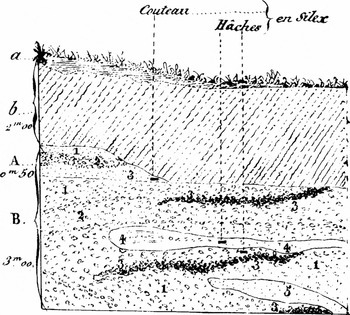
The well-known stratigraphic profile produced by 19th-century French antiquarian Boucher de Perthes served to defend his claim that he had found human-produced stone tools in association with extinct Pleistocene fauna in the Somme river terraces (figure 1). Such documentation represents an important milestone in the emergence of a stratigraphically controlled approach to the past. Significantly, scholarly acceptance of the association generally is credited to site visits during 1859 by British geologists John Prestwich and Charles Lyell, as well as antiquarian John Evans, who then defended de Perthes's assertions before British scientific associations such as the Royal Society of London (Trigger 1989, 93–94). Thus the codependence between archaeology and geology in the recognition of the antiquity of humans was established by the mid-19th century.
Stratigraphic profile produced by 19th-century French antiquarian Boucher de Perthes to record the presence of human-produced artefacts in Palaeolithic deposits (from Boucher de Perthes 1847, figure 14).

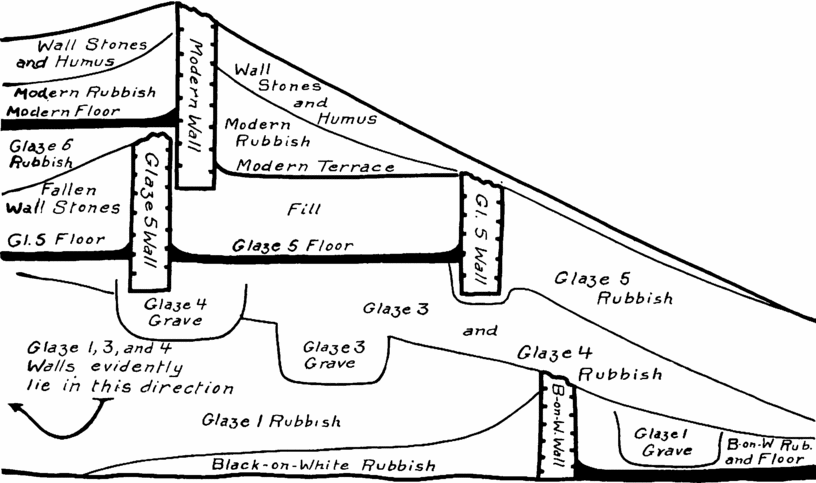
Throughout the latter half of the 19th century and the first half of the twentieth, the principle of superpositioning – and the implications for artefacts found within sequenced strata – became a key idea within the emergent field of archaeology. Early scientific archaeologists such as Pitt-Rivers (1887–98) emphasized the importance of recording stratigraphy and its associated artefacts; later Mortimer Wheeler (1954, 40–71) institutionalized three-dimensional recording methods and elevated the stratigraphic profile to a fine art. In the Americas Thomas Jefferson noted the presence of stratigraphy in south-eastern burial mounds as early as the 18th century. Stratigraphy was wedded to pottery seriation and formed a major strut of the American culture-historical approach, clearly evident, for example, in the work of Kidder (1924, figure 2). Across Europe and the Americas, this approach (together with stylistic seriation first introduced by Flinders Petrie (1904)) resulted in the construction of elaborate, Childean culture-historical time charts long before the advent and certainty of radiocarbon dating, but it also fostered a notion of stratigraphic sequences as neutral ‘containers’ of temporally sensitive artefacts that bracketed more or less measurable units of time. This approach is clearly shown in figure 2, in which Alfred Kidder illustrated the stratigraphy of the North Terrace at Pecos, New Mexico, by labelling each contextual constituent with the temporally sensitive pottery type contained therein. The social processes scripted upon stratigraphic sequences were not necessarily the subject of investigation, as is still the case in many student guides to archaeological practice (e.g. Balme and Paterson 2000, 14). The culture-historical approach – on both sides of the Atlantic – constituted the original version of an approach to stratigraphy that has been referred to as ‘object-based’ (Brown and Harris 1993, 9). The objects within strata – in earlier times, the temporally sensitive artefacts – were the subject of study rather than deposit shapes and interfaces. As discussed below, the processual-based Americanist school of behavioural archaeology elaborated upon the object-based method in productive ways but did not significantly deviate from it.
A ceramic-stratigraphic profile from Alfred Kidder's excavation at Pecos Pueblo, New Mexico. Note the referencing of each context in terms of the type of temporally sensitive pottery, e.g. black-on-white and glaze wares (from Kidder 1924, figure 2).

Wheeler's main approach to excavation through the box method was designed to produce stratigraphic sections or profiles (1954, 62–71). This focus on the section/profile was linked to his focus on temporal sequence, but also to the deployment of labour. Unskilled labourers performed the excavations but stratigraphic recording and integration or interpretation of sequence could be reconstructed after the event by the director or supervisor. In colonial contexts, this allowed large excavations to be undertaken with a small number of supervisors – as happened in the Middle East and India/Pakistan. So the stratigraphic section allowed control, either of unskilled ‘native’ labourers or unskilled workmen, the unemployed or prison inmates – and later students – in Europe and the United States.
The Harris matrix (Harris 1979) is linked to a different social context – large-scale urban excavations in Britain and the emergence of contract professional archaeology. One aim in the UK was to decentralize the interpretive process and to allow excavators themselves more of a say (see Roskams 2001, 170). In contrast to the monolithic, top-down stratigraphic authority of Wheeler's method, excavators make decisions about the stratigraphical relations of each unit, context or locus. These small decisions are assembled into large overall matrices. The Harris matrix also overcomes a shortcoming of cross-sectional recording, namely the inevitable absence of certain features and floor or construction units that do not extend to the edges of the excavation unit. While the creation of a Harris matrix entails interpretive decisions, the flexibility of this recording method allows the stratigraphy of the site to be reconstructed virtually, reworked and re-examined.
Most significantly, the Harris matrix – for all its resemblance to an electrical diagram – represented a major departure from stratigraphic business as usual on two fronts. First, although Edward Harris established the principles of the matrix based upon geological notions of bedding planes and disconformities (the latter became interfaces within archaeology), the creation and analysis of a Harris matrix stood entirely outside geology and thus loosened the chains of codependency. Especially at sites with complex architectural stratigraphy, the sequence of construction and deconstruction events could be modelled with attention given to every subtle pit feature. No cut or dump pile was too inconsequential to receive a context number and be placed on the chart. The introduction of this independent method did not go unnoticed by geoarchaeologists, some of whom voiced strong opposition to the acceptance of the Harris matrix (see Brown and Harris 1993, 8–10). Within archaeology, others voiced concern that the democracy of deposits or cuts as recorded by the Harris matrix method resulted in a net loss of the analytical perspective afforded by the hegemony of the feature as recorded using traditional methods (Carver 1990; personal communication 2007). More significantly, while the Harris matrix provides an effective method for recording sequence in a democratic fashion, it does not include information on the duration of deposit formation and use (Lucas 2005, 39–40).
Second, as a vehicle for encouraging attention to the shape, form and extent of deposits, the Harris matrix clearly diverged from the object-based method of stratigraphy so prevalent within culture-history approaches. Within the Americanist school of behavioural archaeology, Schiffer (1976; 1987) introduced a significant amplification of the object-based method in calling attention to formation processes within archaeological sequences. Although the terminology of this approach would suggest a focus on the formation of deposits (cutting, filling, adding and so forth), Schiffer and colleagues focus primarily on the ways in which archaeological objects – artefacts, primarily – might be broken, abraded or transported by stipulated cultural behaviours as well as by natural processes. When archaeological pits and structures are discussed, it is primarily in terms of abandonment processes (Schiffer 1987, 218–30). Critical of the concept of deposit, Schiffer (ibid., 266) maintains that the equifinality inherent in deposit formation renders its study infelicitous for the establishment of general principles that, in contrast, are more readily observable as ‘traces’ on artefacts – that is, attributes such as size, edge damage, patina and so forth. More recent studies of stratigraphy that follow from the school of behavioural archaeology embrace the term ‘deposit-oriented perspective’, but generally concern themselves with the interpretation of strata – often suggested to have been the result of ritual practice – based on artefact content (Walker 2002; Walker, LaMotta and Adams 2000). The study of artefact biographies, recycling and disposal (particularly in reference to structure abandonment) represents an important advancement within object-based methods but does not substitute for critically needed attention to stratigraphy-making techniques and processes.
Regardless of whether one builds a Harris matrix or looks for evidence of lateral cycling, the integration of social practice with the interpretation of archaeological stratigraphy has yet to occur (as noted by Mills and Vega-Centeno 2005). Lucas (2005, 43, 120) refers to the variable scales or ‘time perspectivism’ of episodic and durational time that will need to be cross-calibrated in order to meet this challenge. One approach that has been employed profitably on both sides of the Atlantic is that of structured deposition (Richards and Thomas 1984, among others). This integrates the study of artefact deposition and interpretation with a wider concern to understand social layering; however, the focus remains dominated by an object-oriented approach. We nevertheless argue below that it is possible to take from both the object-oriented and depositional-sequence approaches to create an interpretive method that addresses social strategies of cutting and layering strata.
Suggestions for a conceptual toolkit for social stratigraphy
As the above historical discussion suggests, stratigraphy is usually seen as methodological – a neutral mechanism for ordering data that allows the development of forms to be studied. Different methods for recording sequence (sections in trench sides or baulks or open area excavation and use of the Harris matrix) have been used depending on the scale and social and economic context of excavation. Stratigraphy also structures post-excavation analysis through the creation of temporal ‘packages’ such as phases or levels. In its most traditional usage, stratigraphy allows archaeology. It defines archaeological context.
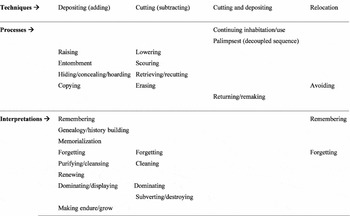
Here, we shift from stratigraphy as enabling method to stratigraphy as a social process to be interpreted and to the examination of stratigraphy not as a passive container of temporally sensitive artefacts but as a physical medium for the performance of social practice. Toward this end, we have gathered together concepts for thinking about social stratigraphy that include processes – such as palimpsest creation, raising, entombment, erasure, returning and avoiding – and techniques, such as depositing or adding and cutting into or subtracting from existing sequences. Within our discussion of stratigraphy-making techniques and processes, we refer to interpretive frameworks that are most relevant to the construction of earthly histories, including debates about memory and material memorialization, forgetting, renewal and subversion. For ease of reference, techniques, processes and interpretations under consideration here are presented in figure 3.
Stratigraphy-making techniques, processes and interpretations.

By way of introduction, consider the Greek Neolithic tell of Sesklo (Kotsakis 2006). The tell consists of two parts or sub-mounds. In the upper part of the site there is clear superpositioning of buildings on top of buildings with fill layers between. Here, in this higher-status part of the site, the stratigraphy suggests the practice of building house histories and a social concern with breaking and making continuities between generations. Houses were carefully abandoned, filled in, and new houses constructed. Social life was built through the layering of soil on soil. In the lower town, on the other hand, houses were assembled on top of older houses without intervening fill layers, and without any concern to create continuities from house to house through time. The archaeological stratigraphy in the lower-status part of the site looks very different, with much cutting and recutting, and with less build-up of soil. The differences between these two forms of stratigraphy are entirely social in the sense that natural strata-producing processes – such as alluviation and aeolian transport – played a minimal role.
Techniques and tempo of stratigraphy-making
The additive and subtractive calculus of geological process was fundamental to the development of a stratigraphic archaeology yet, in reality, there can be profound differences in tempo and technique between geological and archaeological sequences. Contrary to the epochal time frame of geology or the 200-year-plus time units of most culture-historical sequences, a social approach stresses the decadal or generational time frame of most human-produced strata (even if a wider temporal range of artefacts might be included). Assuredly, there are archaeological deposits – such as middens – that accumulate over a long durational span and geological deposits that display fine-grained temporal resolution – such as varves and micro-geostratigraphies, but the majority of strata within built sequences are highly episodic in construction duration. An approach that focuses on the social practices embedded within stratigraphic sequences (e.g. Bracco Baksar 2006) more closely matches the tempo and duration of human construction events than traditional approaches to stratigraphic interpretation modelled on geological methods. Another important distinction between social and natural stratigraphies lies in the formation and layering of natural sequences that have been modelled successfully by geologists as a function of climate, bedrock lithology and so forth, whereas the piling up of layers within a human-generated sequence is the result of human intentionality, the purposeful contouring of the earth's surface with some knowledge of underlying layers. In many contexts the distinction between social and natural stratigraphies needs to be problematized. Many ‘natural’ deposits may be the result of human intervention in the environment at local, regional or global scales.
Social stratigraphies can be produced using two general techniques – adding and subtracting – that is, depositing or piling up of earth and materials and cutting down to remove earth or materials (see figure 3). A midden occurs when the additive process substantially dominates the subtractive process, while an intrusive pit represents the opposite case. These two techniques form the first categorical distinction of Harris matrix production, whether an archaeological context can be interpreted as an additive or a subtractive event. Both depositing and cutting are involved in the process of ‘palimpsest creation’, a term that we use here to mean the overlaying of deposits in which there is no interest in creating links with underlying deposits and cuts. In effect, the slate is ‘rewritten’ with no regard to prior ‘signatures’ of human occupation. If there are considerable gaps in time between one activity and the next, and if the earlier layers are no longer visible, then residues and deposits may accumulate upon each other without social significance. Examples of such deposits are river gravel palimpsests that exist in many parts of Europe and North America and some extensive lithic scatters and features. Such landscapes and sites often contain cuts that were made without reference to or awareness of previous deposits and cuts. Cuts may involve the digging of pits for human burial and ritual dedication or termination, or storage or defensive ditches. Such cutting often disturbs underlying deposits, with earlier material brought to the surface. Palimpsest-creation sites, therefore, often resulted in knowledge that something existed there before, even if the positioning of a site or feature on top of an earlier one was not originally relational.
In other cases, cultural layers might be placed on top of each other or cut into each other in socially meaningful and active ways. With variable degrees of formality, archaeologists have developed taxonomies of the processes that lie behind stratigraphic technologies of depositing and cutting. Here, we gather together some of the many ways in which stratigraphic deposits and cuts have been understood as social process whilst at the same time expecting that other processes can be identified and that individual cases will need to be understood in their own terms. The notion of layering has been used metaphorically by archaeologists (e.g. Hawkes 1954) and the archaeological concept of layers has been used to discuss layers of meaning or layers of history outside the discipline (e.g. Giddens 1979, 110; Schmidt 2001; Wachtel 2003). Yet there is value in gathering together these concepts of process and interpretive frames that might constitute a ‘toolkit to think by’ and thereby encourage further systematization of tacit archaeological knowledge and stimulate theoretical development both within and outside the discipline.
Processes and interpretations of stratigraphy-making
There are stratigraphy-making processes that differ from palimpsest creation in that they involve social practices or performances that are relational to earlier deposits. Still fairly descriptive at this point, these include episodal depositing processes such as raising, entombment, hiding, copying and terminating, and also cutting processes such as lowering, retrieving, scouring (partial removal) and erasing (total removal), as well as long-term processes that might be applied to both depositional and cutting acts such as continuing inhabitation/use of a place and returning, or to neither acts – that is, the process of avoiding (see figure 3). Some of the many interpretive frames that archaeologists have employed or could employ in an effort to understand process within a stratigraphic context can be linked to the construction or deconstruction of memory (remembering, genealogy/history-building, memorializing or forgetting). As one of the most archaeologically visible social processes, stratigraphy-making is highly relevant to the burgeoning literature on the materialization of social memory (e.g. Bradley 2002; Connerton 1989; Hobsbawm and Ranger 1983; Rowlands 1993; Van Dyke and Alcock 2003).
By ‘social memory’ we mean the construction of links to the past in relation to social collectivities, at whatever scale, and the transmission of those constructions through social means and institutions. The piling up of earth to build a monument serves to inscribe social memories on the landscape that are highly visible. But many forms of social layering with earth involve covering features, for example on a settlement site. If social memory is being built in more mundane spheres of daily practice, the cues to earlier activity may be less visible or may be on a smaller and more intimate scale. In these latter cases memories may be embodied in daily practice rather than consciously inscribed on the landscape (Rowlands 1993; for a related distinction between commemorative and habituated behaviour see below and Connerton 1989).
Stratigraphic process also can be interpreted in terms of religious practice and the performance of rituals of life cycle and life crisis (purifying, renewing, and nurturing) in which the structure on which ritual objects are deposited plays an instrumental role, as shown by Walker (2002) and Mock (1998). The politics of stratigraphy-making (displaying, dominating and destroying) are a contentious but lively realm of interpretation (Pauketat and Alt 2003). Fraught with archaeological problems of equifinality and today entangled with issues of selective conservation within the industry of heritage tourism, this topic deserves far more studied attention than it receives in this exploratory essay. Finally, processes of cutting and depositing can take place as a result of aestheticizing a landscape or of utilitarian terraforming, as in the examples discussed below.
Depositing and cutting (as per Figure 3) may occur as a result of continuity of inhabitation or use through time. For example, if a place has been designated for refuse discard or midden, then there will be a piling up of soil and material in the same locale. At Çatalhöyük, middening may have involved the intentional covering of organic waste with ash in order to bury or burn decaying material. On European later prehistoric and historic sites, field survey has demonstrated that dung and associated material was taken out and deposited on fields as part of manuring (see Bintliff 1997, among others). In the Maya region, broken pottery, lithics and organic midden remains routinely were recycled into construction fill during episodes of platform expansion. Soil chemistry analyses have likewise indicated a range of depositional processes, from the transport of ash and night soil to nearby fields and gardens (Killion, Sabloff and Tourtellot 1989, 288) to the distinct chemical imprint of crafting and ritual practice (Wells 2004).
The continual use of space through time is bounded and conditioned by what is already there. Thus in complex medieval urban sites, existing roads and previous buildings may limit the manner in which space can be used by future inhabitants. There may be relatively little intentionality involved when past structures frame later use of space in this way, although the decision to leave or work around earlier buildings and spaces indicates a relational link between the present and the past. Similar effects are seen on less elaborate sites. At Aşıklı Höyük, a Neolithic aceramic site in central Turkey (Esin and Harmankaya 1999), a street organized the use of space over a very long period. At Çatalhöyük, later houses were built on the walls of earlier houses for a variety of reasons, but at least one reason was that walls of earlier buildings provided a hard foundation for later buildings. Also, since houses were rebuilt individually, the presence of neighbouring buildings limited where new buildings could be placed (Hodder 2006). The relational link between past and present was materialized in strata-forming activities in a way that is analogous to actor-network theory proposed by Latour (2005).
The process of raising the ground level by depositing material can be interpreted as social or political display. For example, in East Africa the height of the dung pile in the central cattle compound amongst the Samburu is an indicator of status and cattle wealth (Hodder 1982). Height often is a significant dimension of monumental architecture – a well-known example is the Templo Mayor complex of the Mexica capital of Tenochtitlan. There the massive, conjoined twin-pyramid complex was rebuilt seven times within a hundred-year span (López Luján 1993, 75), each time to greater height and each time requiring the transport of immense quantities of earth and stone along a causeway that linked the volcanic mainland to the imperial island capital. The obverse, lowering the height of a mound or surface, might again have political goals. Lowering might be related to rebuilding, or flattening the landscape for agriculture, for aesthetic reasons, as in the work of 17th-century British landscape architect Capability Brown, or as a consequence of quarry activities that produced cavities suitable for expansion into water reservoirs as at the Maya city of Tikal (Scarborough 2003).
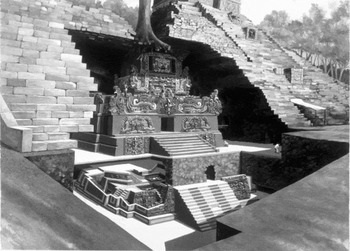
Another general category of stratigraphical process is preservation by covering with earth that might be seen as an active preserving or renewing agent (Hodder 1990). In many cases burial mounds are involved in the preservation of the memory of ancestors buried within them, although many subtle variations have been identified in this social process (Barrett 1994; Bradley 2002). Houses at the Neolithic site of Çatalhöyük were carefully cleaned and filled before rebuilding, thus preserving both the earlier house and those buried within it. The social practice of ‘entombment’ of earlier structures is featured prominently in the early acropolis of Copán, Honduras, where a structure dubbed ‘Rosalila’ was buried in a manner that completely preserved its elaborately decorated stucco façade (Agurcia Fasquelle and Fash 2005; figure 4). An anomalous practice within this specific stratigraphic/architectural sequence, the ‘entombment’ of Rosalila contrasts greatly with the partial or complete ‘erasure’ of earlier as well as subsequent constructions.
The social practice of entombment at the Classic Maya acropolis of Copán, Honduras. The buried structure, dubbed ‘Rosalila’, was completely entombed within a subsequent pyramid (courtesy of Christopher Klein/National Geographic Image Collection).

Sometimes, entombment involves the accretional piling up of materials, thus raising a surface. Often, these materials represent a very select subset of available resources and archaeologists puzzle through the possible significance of the selected materials. Within the Americas, the selection, transport and deposit of clay of a particular colour tends to occur in the context of ritual practices that result in the construction of sacred structures of monumental proportions. For instance, olive and blue clays were transported an unknown distance in order to cap the deposition of more than a 1,000 tons of serpentine axe blanks in the ceremonial core of the first-millennium BCE Olmec site of La Venta (Diehl 2004, 73). Symbolically, the colour green signals fertility and renewal throughout Mesoamerica and the monumentality of the event is certainly redolent of an act of memorializing through burial. More recent in time and farther to the north, the mounds constructed at Mississippian sites (1000–1500 CE) exhibit similar clay sediments carefully chosen by colour and grain size, as at the temple mound of Shiloh in the south-eastern USA (Sherwood 2007). At other times and places, the selection of materials is even more enigmatic, such as when small Neolithic work parties brought turf and topsoil from widely distributed areas to add to a Neolithic burial mound (Evans and Hodder 2006).
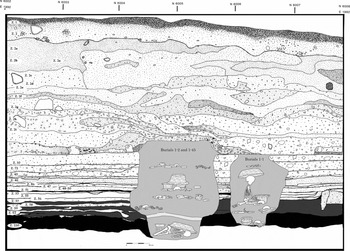
Entombment may be associated with a wide range of intentionalities. Covering over may involve remembering – as the Copán structure Rosalila memorialized the founding dynast K'inich Yax K'uk’ Mo’ – or forgetting, or some complex mixture of both. Covering with soil may be seen as a way of nurturing something or willing it to endure. In some contexts, it may be linked to the construction or perpetuation of divine rulership or the construction of an earth-bound genealogy, as suggested by the interlacing of burial placement and platform entombment at K'axob (figure 5). Discerning which type of interpretation is most appropriate in any particular case ultimately depends on context. In the case of European long burial mounds, the existence of plough marks below the barrow suggests that the mounding might have been related to notions of agricultural productivity (Whittle 1996). In south-eastern Europe, Neolithic houses were often burned on abandonment (Stevanovic 1997) as part of an intentional process of termination.
The West Wall of Operation I, K'axob, showing two Preclassic burial pits. The left facility (burials 1-2 and 1-45) was reopened several times to inter additional persons into the mortuary facility that eventually was entombed by the construction fill of a pyramidal shrine (image prepared by Pablo Robles).

The interpretive challenges associated with entombment and related processes are considerable. For example, when a house is filled in and another built on top in exactly the same place and with the same internal organization of space, as happened at Çatalhöyük, there is more going on than simply the continuity defined above. In the specific continuities of houses at Çatalhöyük, memory processes were at work. Connerton (1989) makes a distinction between habituated behaviour, involving the repetition of acts, and commemorative events that create specific social memories. In the former case, there may simply have been community practices – which had become routinized and tacitly codified – regarding how houses were to be rebuilt. In the latter case, a link was constructed to specific buildings, events or people. At Çatalhöyük, the similarities through time in the ways that houses were used and reused over time are sometimes very specific. As houses were built on top of filled-in earlier houses, clear continuities were maintained in the ways that internal space was organized. For example, in the 10–44–56–65 sequence of buildings in the South Area of the site, pots were repeatedly inset into the floor by the base of the entry steps, adult burials were placed in the central east platform, infant burials occurred in the south-west corner and collections of groundstone were deposited. In the same sequence, human remains were retrieved from earlier buildings and redeposited in later buildings. This building sequence expressed both habituated practices (in the repeated layout of buildings in the same place) and commemorative memory (in the conscious retrieval and redeposition of human remains).
Closely related to entombment are processes of hiding, concealing or hoarding (see figure 3). These practices create stratigraphic interfaces, pits and layers, and deposit shape is closely tied artefact emplacement. For European prehistory, Bradley (1990) has discussed the hoarding of materials and the different interpretations that have been offered (conspicuous consumption or destruction, ritual deposition and so on). Within Mesoamerica, and particularly the Maya region, pits that contain sealed deposits of valuable offerings such as jadeite – symbolically charged with notions of fecundity – as well as food remains are thought to have provided nourishment for the animus of the domicile (Harrison-Buck 2004; Mock 1998; Monaghan 2000). Nevertheless, these deposits were hidden away and removed from daily viewing; this fact highlights the dialectic roles of exclusionary knowledge and social memory (Van Dyke and Alcock 2003; Hendon 2000; among others). Maya carved monuments – particularly those containing portraits of rulers – sometimes were mutilated and buried or scattered upon the event of martial conquest, such as happened to the carved stone throne at the Classic Maya site of Piedras Negras. The throne was found broken and scattered near palatial Structure J-6. On the other hand, hiding or burying the portrait of an ancestral ruler can also be a way or preserving and memorializing, as happened at Tikal when a 7th–8th-century CE ruler buried the carved image (Stela 31) of a 5th-century CE ruler named Siyaj Chan K'awiil II within a newly constructed stone structure on the North Acropolis. Thus strata-making activities and object deposition cannot be neatly separated, as Walker, LaMotta and Adams (2000) have noted in reference to kiva abandonment at ancestral Pueblo sites in the US south-west.
When stratigraphic layers can be read across a site, sometimes the most notable pattern is not the stratigraphic layering of floor on top of floor but rather studied avoidance of earlier house remains when building a new house. A prevalent pattern in Linearbandkeramic Neolithic sites in Europe (Whittle 1996), avoidance is a social practice that can occur on at least two scales – the avoidance by later settlers of earlier locales and the avoidance of houses and other features within settlements. At the intra-site domestic scale, avoidance practices may suggest a preference for neolocality at the generational level and a disinclination to build house floor over house floor, to construct the kind of long-term house histories much discussed by Joyce and Gillespie (2000) and much in evidence at both Çatalhöyük and K'axob. However, avoidance in the Linearbandkeramik case may have involved constructing memories in relation to earlier houses left standing, and thus visible, nearby (Bradley 2002). Tringham (2000) has considered the varied options that were followed by Neolithic and Chalcolithic groups in south-eastern Europe. She notes that in some cases, houses were built directly on top of each other, copying an earlier house and reproducing its location and internal furnishings. Such duplication or continuing inhabitation may be central to the maintenance of house lineages and house societies (Joyce and Gillespie 2000). In other cases, Tringham notes that there is use of the same location but slightly offset, or with a different orientation (as at Çayönü in south-eastern Turkey; see Özdogan 1999). Obversely, there is systematic avoidance of previous house localities, as in the Linearbandkeramik case. This work by Tringham and others begins to systematize the social processes that lead to different types of stratigraphies of continuity and avoidance at a specific place, although any one process (e.g. avoidance) may result from different social strategies (remembering or forgetting).
Avoidance can relate to political motivations or to beliefs regarding continued occupation of a house in which death has occurred. Golden (2002) documents the studied avoidance for over 60 years of construction at the main acropolis of the Classic Maya capital of Piedras Negras following what appears to have been military conquest and burning that was recorded hieroglyphically at a nearby polity. Avoidance can also occur on the scale of the entire site, in which case archaeologists generally refer to site abandonment. Avoidance can indicate respect for that avoided and the construction of a memorial, or fear and a desire to forget.
A truncated stratigraphic sequence is often capped near the surface by a very specific layer indicative of a much more recent return to a place and use of the top of that sedimented sequence for a narrow range of social practices that may or may not include habitation. Examples of this practice come readily to mind: the Late Postclassic reuse of Classic Maya pyramidal structures for ritual practices that resulted in the construction of small shrines and the deposition of Chen Mul incense burners; the 6th-century BCE return to the Bronze Age tumuli of Bin Tepe in central Lydia, Turkey, for the emplacement of burials (Roosevelt 2006); and the return to Çatalhöyük during the Byzantine period, also for the purpose of mortuary interment. This pattern of returning may have been prompted by a number of different intentions. The return may be related to the magnetic effect exerted by places that contain conspicuous sedimented sequences of social practices that are recognized by later inhabitants of a landscape – whether descendant communities or not – as locales possessing special significance, as places where the layered remains of ancients can be trodden upon and opened up by digging. In this case, returning is part of the construction of histories. But in other cases, the placing of a settlement, grave or shrine on an elevated position (tell or mound) may simply be a matter of convenience or the avoidance of water or enemies (as in the case of the Roman use of Bronze Age mounds in the wetlands of eastern England; Evans and Hodder 2006).
The process of scouring is particularly clear at Çatalhöyük, where many floors, bins and ovens were scoured before infilling and just prior to abandonment. The aim does not seem to be erasure, but simply partially to remove oven and bin walls and floors. The purpose may have been to obtain valued clays for reuse, or the scouring may have had more to do with rituals of closure. In other cases, removal may be more complete and here we can talk of erasure. Wall paintings at Çatalhöyük were always painted over in white plaster – an act that both erased and entombed at the same time. These two social processes – entombment as opposed to erasure – stress two different approaches to transforming a built environment, although, as we have seen, they may be closely and subtly related. The first may be used to stress continuity and remembrance, while the second may suggest a break with the past, perhaps the charting of a new course, but it may also suggest protection and regeneration (resurfacing in fresh white plaster). Again the interpretive challenges must be met with specific contextual data.
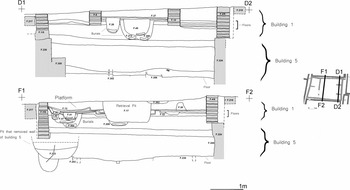
We have already noted depositional processes of hiding, concealing or hoarding. As a corollary, cutting may occur in order to retrieve objects, skeletons, even entire buildings. At Çatalhöyük, there is good evidence of excavation pits that were cut through earlier strata in order to retrieve earlier wall reliefs (Hodder 2006; figure 6). The digging of pits for burials and for storage has long been recognized as socially purposeful, but such cutting can also be used as part of the creation of social memories. At both Çatalhöyük and K'axob, some sub-floor burial pits were recut – often several times – in order to place additional house members within the same facility (see figures 5 and 6). If a new floor was lain before another house member was interred, the final stratigraphic pattern becomes a complex layering of floors and cuts that can be read as an earthbound genealogy (McAnany 1995). At Çatalhöyük, recutting into the platform in the north-west corner of the main room in Building 1 is especially clear in the F1–F2 section (see figure 6). Such complex stratigraphies provide a vivid chronicle of the social practices involved when humans actively create and model their social world through cutting, depositing, recutting and redepositing.
Cross-sectional profiles (D1–D2 and F1–F2) through Building 1 and underlying Building 5 at Çatalhöyük. Features are labelled with ‘F’ series numbers. Burials located in the main room of Building 1 are labelled with a concentration occurring beneath the raised platform (F.13) as seen in the F1–F2 profile. In the same profile, F.17 is a pit dug through the fill and underlying floors of Building 1 in order to retrieve a relief sculpture (courtesy of Craig Cessford; image adapted by Pablo Robles).

The definition of these and other general examples of social stratigraphy still leaves the problem of the interpretation of specific cases (see figure 3). In any particular context, there will be nuanced relationships among the social meanings involved in the material construction of histories. Our understanding of these strategies depends not only on the stratigraphic sequences themselves but also on associated artefacts and depositional practices. Thus termination, dedication and foundational practices, as well as ritual burning of structures and burial placement (Mock 1998; Stevanovic 1997; Stuart 1998), all contribute to understanding the social meaning of stratigraphy and often can be interpreted as acts of remembering, memorializing or genealogy-building. In the Çatalhöyük case, floors were carefully cleaned before houses were infilled, but in some instances objects were left on floors as part of the abandonment process. The social structuring of deposition can also include the placement of human remains, as in an example from K'axob where the body of an older male was carefully placed on the surface of a floor before a new construction layer was added to increase the height of the residential platform.
The term ‘structured deposition’ has been used to describe the deliberate deposition of cultural material as part of ritual and social acts (Richards and Thomas 1984). This notion has been very influential in the interpretation of sites in Europe as well as Mesoamerica (e.g. Hill 1995; McAnany 2004; Thomas 1996; Barrett 1994; Walker 2002). By extension, discard can be seen as intentional and socially embedded to differing degrees; the notion that refuse deposits could be structured was codified originally by Schiffer (1976; 1987) as primary, secondary and de facto refuse. Understanding specific discard practices can assist in the interpretation of layering practices. For example, at Çatalhöyük, the question of whether the burning of a house was intentional or not depends very much on the interpretation of artefacts and residues found on house floors; that is, whether the artefacts were placed on the floor before intentionally torching the structure (and thus represent primary deposits) or whether they represent de facto refuse from an accidental burning (Cessford and Near 2005). It is often difficult to interpret the intentionality of the occurrence of artefacts on floors at Çatalhöyük. If storage bins have been emptied and rare artefacts occur on floors, then intentional positioning (primary deposition) seems likely. If bins contain food remains, a wide range of everyday artefacts occurs on floors and the house is extensively burned, then an accidental destruction and de facto deposition seem more likely.
The burned structures of the Early Classic Acropolis at the Classic Maya capital of Piedras Negras have been interpreted variously as termination rituals orchestrated by the royal family or the torching of structures by victorious warriors from the site of Pomona (Golden 2002). The first interpretation stresses fire as a cleansing agent of renewal while the other emphasizes the destructive forces of political and martial conquest. The challenges of the social interpretation of stratigraphy-making processes are formidable and perhaps help to explain why this middle ground between landscape and artefact remains an undertheorized frontier within archaeological interpretation. On the other hand, the fundamentality and physicality of this domain mean that other indicators of the social forces that undergird stratigraphic sequences can provide additional lines of evidence.
Augmentative techniques for studying social stratigraphy
Advocating more attention to the social practices of stratigraphy does not entail a rejection of current techniques of studying stratigraphy – such as modified Harris matrices; micromorphology (thin sections of stratigraphic interfaces); analyses of the biological content of physical matrices (such as palynology, archaeobotany and phytoliths, among others); or chemical-residue, isotopic and SEM techniques.
Because of the earth-derived matrix in which stratigraphy occurs, archaeology is permanently wedded to the geosciences in which there exists an elaborated nomenclature for characterizing the natural processes that impinge upon the formation of geostrata. Archaeology lags behind in building a comparable supradescriptive nomenclature or even in applying geoscience approaches to archaeological deposits, as Stein (1992) has noted. Likewise, the modelling of interactivity between social practices and natural formation processes remains an extremely important but underdeveloped area of research. Too often, the modus operandi in this area can be characterized as the ‘cultural formation process by default’ model. That is, after geoarchaeologists have exhausted all means of characterizing a given deposit as having formed through natural formation processes, the opposite is accepted by default – that the deposit must be cultural. A more serious rapprochement between archaeology and geoscience is needed to fully understand deposit formation and integrity.
Of the current geoscience techniques, micromorphology in particular holds great promise as a technique that can yield very specific, fine-grained information regarding the human or animal actions that produced the texture, composition and inclusions within a particular deposit (Goldberg and Macphail 2006, 354–61). As with artefacts within layers, micromorphology enhances understanding of the human strategies involved in depositional acts. Thus analysis of a thin section may reveal whether trampling occurred between one layer and another, whether a house was left open without a roof for a time, whether there has been running water on a surface, and so on. This information helps to refine interpretations of social stratigraphy, to firm up a loop within a hermeneutic cycle. At Çatalhöyük, micromorphology has been key to understanding site formation processes such as the use of extramural locales as animal pens, the build-up of plaster layers on floors and walls according to monthly and seasonal periodicity, and the careful and regular renewal of floor surfaces on northern burial platforms within houses (Matthews 2006). In this case, micromorphology is a central element in the interpretation of socially constructed layering at the site. At K'axob, micromorphology of the stratigraphic interfaces in nearby wetland fields and canals has provided crucial information supporting the premise that the fields were constituents of a built environment and not natural hummocks (Berry and McAnany 2007).
Isolating social processes and framing interpretations also can be augmented by digital techniques for revealing patterns and relations. Quantitative approaches – such as correspondence analysis – are relevant here, as well as the perspectival analyses afforded by GIS and 3-D modelling. The power of these approaches to reveal social properties of archaeological stratigraphies could be enhanced by encoding of elements from figure 3 above into databases.
Towards a fuller accounting of human engagement with earthly matters
As Mills and Vega-Centeno (2005, 208) discuss, the notion of time remains central to the interpretation of stratigraphy, and the efficacy of the culture-historical approach (tracking stylistic change in artefacts through stratigraphic sequence) cannot and should not be dismissed. Any approach that facilitates an understanding of the tempo of strata formation provides a useful starting place for understanding social stratigraphy. Lucas (2005) provides an in-depth account of palimpsests, layerings and temporalities that builds on a longer archaeological debate about time and the long term (Bintliff 1991; Hodder 1987; Knapp 1992; Thomas 1996). The goal of this essay is not to supplant culture history but to amplify it in order to reach a fuller accounting of our engagement with earthly matters.
The parentage of the word ‘stratigraphy’ will always reside within geology, where it refers to the origin, composition and succession of strata that form the sphere on which we live. In this essay, we advocate a break with the epochal framework of geological analysis and we embrace a more fine-grained and nuanced approach to the sedimented histories that define our discipline. We have pointed to some of the ways in which layering can be seen as a construction of genealogies and histories, memories and relationships. But unlike a written history, creating layers of sediments involves practical engagements – with earth, walls, timber, mounds and ditches. In the process of such mundane interactions, social relationships are sedimented in the practices of entombment, erasure, return and so on. The present world is lived in relation to earlier layers in an active and physical engagement with the social history of place.
As archaeologists are learning from indigenous stakeholders, archaeological sites are places of memory in which the relationship between the present and the past is constructed and played out in the practice of daily life (Colwell-Chanthaphonh and Ferguson 2008). But, as we have discussed above, there is much that is forgotten – perhaps purposively – from one physical stratum to the next. As our examples show, genealogies can be constructed and deconstructed, histories made and erased, and tradition as well as transformation documented in layers of sediment. The past can be hidden, erased, selectively filtered, manipulated and imbued with a positive as well as negative charge. These are complex practices for archaeologists to tackle; nevertheless, we encourage further conceptualization, in social terms, of these very interactions with earthly materials.
Archaeologists themselves are involved in decisions about the production and erasure of layers. In planning to restore, renovate or reconstruct ancient buildings and sites, archaeologists and conservationists make selective judgements that are keyed into social and political processes, contested pasts and contested identities (De la Torre 1997; Kane 2003). In highly charged political areas such as the Middle East, which layers get erased and which get reconstructed (Ottoman, Christian, Jewish, Islamic, prehistoric) is particularly contested, drawing the archaeologists themselves into the processes of social stratigraphy (Abu el Haj 2001). In South Africa the earlier erasure of housing, as in District 6 in Cape Town, can become the focus of healing and restitution (McEachern 1998). In these ways archaeologists become agents in the construction of contemporary meaning ascribed to the cultural layers of deep history.
Acknowledgements
Ideas expressed here about social stratigraphy began to take shape during the 2006 Context in Human Society lecture series delivered by Ian Hodder at Boston University. The authors express appreciation for the discussion engendered by this annual event sponsored by the Department of Archaeology. Illustrations for this paper were greatly improved by the graphics work of Pablo Robles. We wish to thank all those who worked – in the field and the lab – on the K'axob Project and the Çatalhöyük Project; we regret that space does not allow a full listing here. The thoughts expressed in this paper are based on the careful field recording of, and many long discussions about stratigraphic sequence with, project participants. This paper also benefited from insightful comments by anonymous reviewers and the published commentaries. The authors assume full responsibility for any interpretive errors.
Permission to conduct research at K'axob was granted by the Government of Belize, Department of Archaeology, and generously funded by the National Science Foundation, the Ahau Foundation, and Boston University Division of International Programs. The work at Çatalhöyük takes place thanks to permits provided by the Ministry of Culture and under the auspices of the British Institute of Archaeology at Ankara. The Çatalhöyük Research Project is grateful to all its funders, including the John Templeton Foundation, Stanford University and University College London.