Introduction
Natural disasters are a growing concern for developing countries due to climate change. Reference Van Aalst1 India as a country is highly vulnerable to various natural disasters; losing around 2% of its GDP every year. India weathered more than 300 cyclones of severe intensity in the last 126 years. 2 An estimated 1.9 million deaths occurred worldwide due to tropical cyclones. Reference Nicholls3 The deadliest cyclone hit the coast of India in 1999 and that struck the state of Odisha claiming around 10000 lives, property, and environmental damage. Reference Dolce and Donegan4 Odisha has witnessed 37% of the total cyclones on the eastern coastline of India. Reference Mooley and Mohile5
The most recent cyclone which hit the coast of Odisha was the rarest summer Cyclone Fani on May 3, 2019. This cyclone caused heavy losses of property, livelihoods, and environmental damage. However, early preparedness and prompt actions of the Government of Odisha during the disaster minimized the loss of lives. Total loss and damage were estimated at INR 29315 crore. 6 This tropical cyclone affected 16.5 million people in 14 coastal districts of the state, and claimed 64 human lives. Among them, 9.6 million people (57%) who were most affected, were from 5 districts namely: Puri, Khordha, Cuttack, Kendrapara, and Jagatsinghpur. A total of 1031 health facilities and 2513 Anganwadi centers were damaged by the devastating cyclone.
Disasters can have direct and indirect health effects in both the short and long-term. Exposure to disasters during the early growth phase, i.e., infancy, can affect the growth and development of the infants. Immediately after the cyclone, the health system made constant efforts to restore life-saving health service delivery in the hospitals and respond to communicable diseases. During and after a cyclone, common life is affected due to loss of properties, unavailability of basic minimum needs, and non-adherence to hygiene practices. Disasters can hamper the immunization, facility-based, and home-based care of newborns. In the state of Odisha where the neonatal mortality rate is high and immunization coverage is below the national average, disasters greatly affect newborn care. 7 The recent report of the National Institution for Transforming India (NITI) Aayog reflected a poor health index score of Odisha as the neonatal mortality rate was 32 per 1000 live births in 2016, which was the highest among all other states of India. 8 The current infant mortality of the state of Odisha is 41 per 1000 live births, which is much higher than the national average of 31. 9 In this situation, SNCU discharged babies are the most vulnerable, as they are susceptible to various infections either because of their low birth weight, or other morbidities.
The damage to infrastructure, affected healthcare system, and unhygienic conditions in the aftermath of the cyclone, exposed the newborns to hazardous environmental conditions. Since the first few months of life are very crucial for the growth and development of every child, the high number of vulnerable babies who were discharged from SNCU could be important factors in the high rate of mortality and morbidity. In terms of newborn care, the state’s poor performing healthcare system therefore faced the stiff task to provide quality healthcare during this disaster. Considering children’s vulnerability in the first 6 months of life, it was proposed that all babies discharged from the SNCUs should be followed up to understand their current health status.
There is limited scientific literature on the health status of newborns following cyclones. The only study that focused on cyclones and children’s health was for Hurricane Mitch at Nicaragua. Reference Baez and Santos10 The only study in India that focused on natural disasters and childhood mortality was based on secondary data analysis in the year 2012. Reference Datar, Liu, Linnemayr and Stecher11 This study was conducted to assess the health status of newborns discharged from the SNCUs of the Cyclone Fani-affected-districts of Odisha and to find out the barriers to the utilization of health services.
Materials and methods
This cross-sectional study was conducted in the 5 most affected districts by Cyclone Fani namely, Puri, Khordha, Cuttack, Kendrapara, and Jagatsinghpur. These 5 districts form a high percentage of the coastal line of Odisha, covering a population of 9590012. This study was conducted by All India Institute of Medical Sciences, Bhubaneswar, after the devastating cyclone. All the babies discharged from the SNCUs between January 1, 2019, and May 31, 2019 in the 5 districts were included in the study. Babies whose parents did not give consent of participation in the study were excluded. All 1840 newborn babies who were discharged from SNCUs of the 5 most affected districts during the study period were enlisted for assessment of health status.
Study tool
The study tool had 5 components which included socio-demographic details, health-seeking behavior, health outcomes of the followed-up newborns, immunization status, growth, and development. The tool was pre-tested in a population sample of 40 separate from the study population. Information was collected in a web-based platform enabled with a mobile application. Data regarding the health status of a newborn in terms of episodes of illness since discharge from SNCU, factors for delay or not seeking health care, and any deviation in growth and immunization status were captured through telephonic semi-structured interviews by contacting parents of these babies.
Data collection procedure
Data were collected from August to October 2019 by a trained interviewer by telephonic conversations, and verbal consent for the same was acquired from the parents after detailing the objective of the study. This being an emergency, a quick assessment was done through telephonic conversation to screen ‘possible vulnerable babies.’ The database of the SNCU discharged babies was obtained from the state health officials and the community health workers of the area. Efforts were made to contact all the parents of all the children discharged from the SNCUs. For non-responders, attempts were made at separate times (morning or afternoon) of the day to contact them. Parents were considered as non-responders after the third attempt. Where possible, health workers were also contacted when parents could not be contacted.
The current weight of the babies was recorded as informed by the parents. However, they were asked to give the most recent weight, not beyond 1 month. For accuracy, they were asked to refer to the Mother and Child Protection (MCP) card provided by the health workers. Similarly, parents were also asked to obtain the child’s immunization status from the MCP card. Whenever the MCP card was not available with the respondents, recall method of the vaccination was considered. Healthcare workers were also contacted for recall accuracy.
Breastfeeding practices, kangaroo mother care (KMC), home-based newborn care (HBNC) provided to the newborn, and self-reported health problems were also investigated. Along with this, reasons for not attending follow up visits and not seeking health care services for the illnesses were also assessed. HBNC was conducted by Accredited Social Health Activists (ASHAs). The ASHAs conduct 6 home visits for the newborn and post-partum mother on days 3, 7, 14, 21, 28 and 42. 12 The purpose of HBNC is early identification of newborn illnesses, provision of appropriate care at home, or referral whenever required.
As a part of capacity building, all the block level stakeholders were trained in the second phase of the study. All the General medical officers, Pediatricians, Obstetricians/Gynecologists, and staff nurses were trained regarding neonatal resuscitation and facility-based newborn care. The training was conducted in all the 52 blocks of the 5 districts after approval from state and district level health authorities. Ethical approval was taken from the Institutional Ethical Committee of AIIMS, Bhubaneswar prior to the commencement of the study.
Statistical analysis
Data collected on the web-based application was retrieved after the completion of the data collection. Quantitative analysis was performed using Statistical Packages for Social Sciences version 22 SPSS (IBM Inc., Armonk, New York, USA). Categorical data were presented by proportion or percentages. World Health Organization Anthro application was used to calculate the weight against the age of the followed-up babies (where < 2SD and < 3SD were considered as underweight and severely underweight respectively).
Results
General characteristics
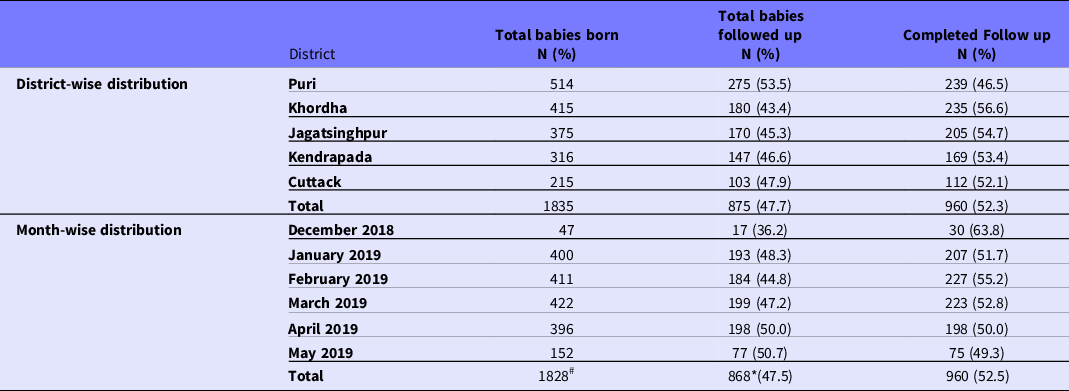
Out of 1840 babies admitted to SNCUs of the 5 districts most affected by Fani, 5 were invalid. Thus, 1835 babies were followed up through telephonic interviews, but only 875 could be contacted. More than 50% (52.4%) of the calls could not be completed due to various reasons such as: did not receive the call after 3 attempts over different days (31.1%), not reachable (20.3%), wrong number (19.7%), switched off (18.0%), incoming call not available (8.9%), and out of service (2.0%).
Out of the 1835 babies admitted to SNCU, 518 (28.0%) were from Puri district followed by 415 from Khordha (22.7%). Among the completed followed up, a third (31.4%) were from Puri district, followed by Khordha (20.6%), and least from Cuttack district (11.8%). The maximum percentage of babies who could not be followed up were from Khordha district (56.6%), and the least percentage were from Puri district (46.5%) (Table 1).
Summary of number of babies discharged and successfully followed up during the study period

* Missing data for 7 babies.
# Missing data for 12 babies.
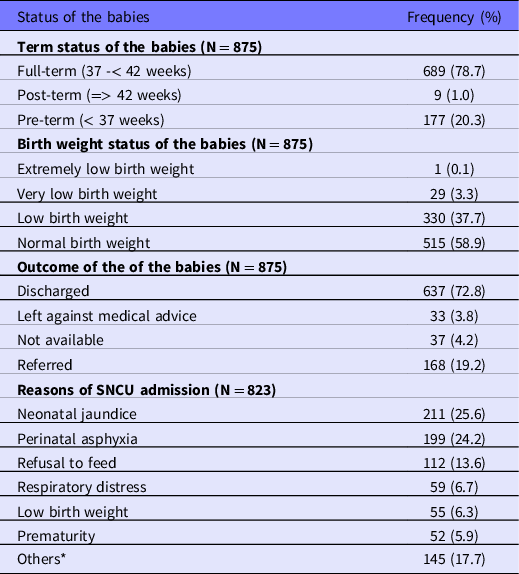
Out of the 875 babies followed up, 52 (5.9%) had died by the time of follow up. Among the babies followed up, 689 (78.7%) were full term, 177 (20.3%) were preterm, and 9 (1%) were post-term at birth. Around 40% of the babies had low birth weight, of which 29 (3.3%) had extremely low birth weight, and 0.1% had extremely low birth weight. A majority (72.8%) were discharged from the SNCUs after treatment and 19.2% were referred to higher centers. However, 3.8% of babies left the SNCUs against medical advice. Neonatal jaundice (25.6%) was the commonest reason for SNCU admission, followed by birth asphyxia (24.2%), and refusal to feed (13.6%). Other common reasons are mentioned in Table 2.
General health characteristics of the babies discharged from the SNCUs

* Other reasons include abdominal distension, bleeding, congenital malformation, diarrhea, fever (> 37.5C), hypoglycemia (< 45 mg%), hypothermia (< 35.4C), large baby (> 4kg), meconium aspiration, and convulsion.
Less than 50% (45.4%) of the babies did not come for a follow-up visit. Similarly, 18.9% of the babies were followed up with once, whereas 16.8%, and 11.45% of the babies were followed up twice and thrice, respectively. Only 7.5% of the babies were followed up for the recommended 4 or more times. For home-based newborn care, 31.7% of the newborns were not followed up by the ASHAs and only 10% of the newborns were followed up by the ASHAs i.e., at least followed up 6 times in the first 6 weeks of infancy. Only 4%, 15.5%, 19.4%, 13.3%, and 6.1% of the newborns were followed up in the first 6 weeks once, twice, thrice, 4 times, and 5 times, respectively.
Neonatal care of the newborn and contributing factors
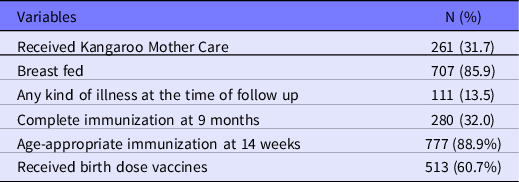
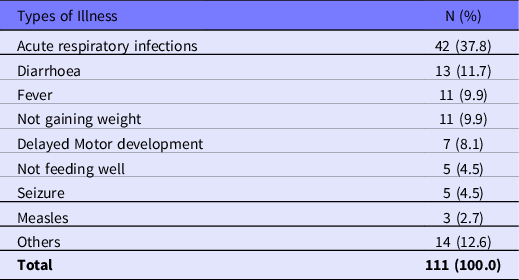
Only a third of the babies (31.7%) received KMC after discharge. 14.1% of babies were not breastfed after discharge. Only 32% of the discharged babies were completely immunized, however, 88.9% of the babies were appropriately immunized by 14 weeks. Birth dose vaccines (BCG, Hepatitis-B, and OPV) were not received by 40% of the babies admitted to SNCUs. In every 7 babies, 1 had an illness or the other during the assessment (Table 3). Health issues were reported among 111 (12.7%) of the newborns. Acute respiratory infections (42%) were the commonest illnesses, followed by diarrhea (13%), fever (11%), not gaining weight (11%), and developmental delays (7%), respectively (Table 4).
Newborn care of the discharged babies (N = 823)

Pattern of morbidities among the babies discharged from SNCUs (N = 111)

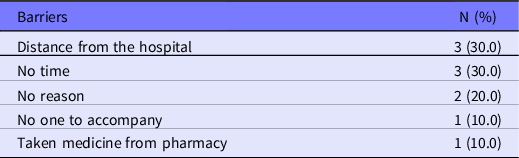
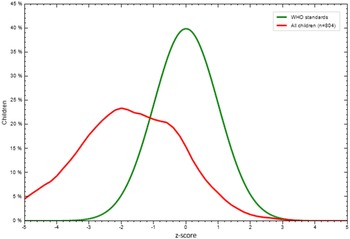
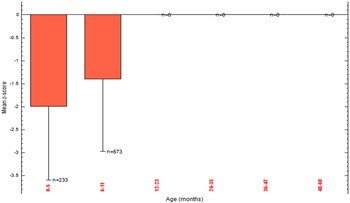
The study revealed that distance (30%) and time constraints (30%) were the major reasons parents gave for not seeking health care for illnesses. Absence of an accompanying person (10%) and unsupervised medication from a pharmacy (10%) were some other reasons. (Table 5). However, 20% of the parents did not mention any reason for not seeking healthcare. The current weight of the babies showed that 35.7% of the babies were below the 2 standard deviations (SD) and 17% of the babies were ≤- 3SD for weight-for-age (Figure 1). After age stratification, it was observed that 27.9% of the babies from 0 - 5 months were <- 3SD, whereas it was 12.6% for babies aged 6 - 11 months for weight-for-age (Figure 2).
Barriers of health care seeking for newborns’ illnesses (N = 10)

Current growth status of the SNCU discharged babies.

Comparison of mean z-score of different age groups.

Discussion
Health assessment was conducted through telephonic interviews. 50% of the newborns could not be followed up due to several reasons. The breastfeeding practice, KMC practice, and HBNC was poor in these 5 districts. However, the effectiveness of home-based newborn care was already reported in rural India. Reference Bang, Bang, Reddy, Deshmukh and Baitule13
In this study, only 48% of the participants could be contacted. Similar response was reported by Schoeman et al. and the reasons for loss to follow-up were also similar. Reference Schoeman, Swanepoel and Van Der Linde14 1 in 10 contact number was reported to be wrong. This shows the requirement of proper data management at the district level for the SNCUs, as parents are to be reminded of their scheduled follow up visits. The distribution of newborn admissions to the SNCUs was almost similar in the 5 districts except that of Puri which was the most affected by the cyclone. Despite having a population less than that of Khordha and Cuttack, the newborns admitted to SNCUs were more in Puri. This shows the effect of the cyclone on the newborns. Similarly, loss to follow-up in out telephonic interview was higher in the Puri district, which could be due to 2 reasons. First, they might have lost their mobile phones during the severe cyclone with all other infrastructures, and second, the SNCU follow up of the district was severely affected by poor data management evident from the percentage of wrong numbers.
Neonatal jaundice (25.6%), birth asphyxia (24.2%), and refusal to feed (13.5%) were the 3 major reasons for SNCU admission in our study. Another study regarding morbidity pattern among SNCU admitted babies in Odisha reported the highest morbidity for birth asphyxia (29.1%), low birth weight (25.3%), and jaundice (15.9%). Reference Som, Nayak, Padhi and Ashwani15 The increased number of jaundice patients in our study could be due to breast milk jaundice or sepsis. The result may also be due to the periodic training imparted to the health professionals regarding the management of preventable neonatal morbidity such as birth asphyxia. Preterm babies were 20.3% in our study, whereas it was 40.5% in a study conducted in an SNCU of a tertiary care hospital of Odisha. Reference Jena, Tripathy, Pradhan and Sethi16 Low birth weight was reported among 41% of the newborns in the current study, whereas it was 57% in a study in SNCU of a tertiary care hospital in Odisha. Reference Begum, Ali and Tripathy17 The difference in preterm and low birth weight at admission can be due to the difference in the level of health care facilities. Tertiary care facilities are more likely to admit a higher number of preterm and low birth weight newborns. Previous researches suggested that facility-based newborn care can improve the neonatal outcome. Reference Neogi, Malhotra, Zodpey and Mohan18
In our anthropometric measurement, 35.7% of the babies were found to be underweight (z-score <- 2SD) and 17.0% were severely underweight (z-score <- 3SD). According to NHFS-4, 35.7% of Indian children under 5 years of age were underweight and that for Odisha was 34.4%. 19,20 ARI, diarrhea, and fever were the common morbidities among the SNCU discharged babies. A similar result was reported in a study by Datar et al. Reference Datar, Liu, Linnemayr and Stecher11 Immunization coverage was 88.9% at 14 weeks, 32% at 9 months, and 60.7% at birth. According to NFHS-4, the immunization coverage at birth was 62.0% for India, and 78.6% for Odisha. Similarly, the measles vaccination was 81.1% at 9 months in India, and 87.9% for Odisha. The birth dose result was similar in our study and NFHS-4 survey. The birth dose of OPV, Hepatitis-B, and BCG coverage needs to be improved. Measles coverage was reported to be poor in our study. It could be due to the fact that the assessment was made for babies immediately at 9 months also. Timely completion of maximum vaccines in infants, except measles, suggest that the immunization services resumed immediately after the cyclone. During disasters, interrupted supply of vaccines resulted in a decline in the coverage and delay in vaccination.
Just before the cyclone, the state government’s prompt action of moving 1945 women with an expected date of delivery within the next 15 days to the nearest MaaGruha/Maternity Waiting Home for safe delivery was exemplary. 6 All other people were moved to the safe Cyclone Shelter Centre. ASHAs were deployed to manage and transfer the sick people to the hospitals. Overcrowding and lack of proper hygiene in the shelter centers made it difficult for the parents to take care of their newborns. Special care should be provided for the infants to minimize health hazards. The pattern of illnesses showed that there was a disruption in the supply of clean drinking water and safe water for household use, sudden climate change, overcrowding, and exposure to the unhygienic environment.
The study reported poor health condition among the SNCU discharged babies. 35.7% of the babies were underweight during telephonic follow up and more than 40% of the SNCU admitted babies had low birth weight. Poor breastfeeding practice and KMC can be detrimental to the health conditions of the babies, and adverse climate conditions like cyclones increase adverse health conditions. The damaged roads and transport system may affect those seeking health care for these illnesses. Community health workers also play a vital role in paying home visits to these babies which can prevent adverse outcomes. Timely HBNC by the ASHAs can effectively identify illnesses of newborns. Improved facility based newborn care can be effective in improving outcomes of the discharged babies.
Strength and limitations
There is a paucity of literature on the outcome and survival rates of newborns in the post-cyclone period. The study was conducted on the babies admitted to SNCUs of the 5 districts through universal sampling. However, this study has some limitations. These include the fact that data could not be collected for more than 50% of the babies. However, the follow-up and loss to follow up babies had similar characteristics. For rapid assessment, a telephonic interview was conducted, which has its limitations. Some interviews were conducted after 4 - 5 months after the cyclone which has a probability of recall bias. The major limitation of the study was that the private owned SNCUs were not included, which may be an issue in generalization of the results. However, there are very few private owned SNCUs in this region.
Conclusion
Cyclones affect human health along with heavy destruction of the environment, infrastructure, and livestock. Newborns, who are highly vulnerable to any environmental changes are always at the receiving end. Poor health conditions following Cyclone Fani was reported among the newborns. Poor breastfeeding, KMC, and immunization practices were also reported. Efforts need to be made to improve the facility-based and home-based newborn care for better survival of these vulnerable babies. Awareness generation among the community regarding newborn care remains vital. Strengthening health systems concerning newborn care is essential in this part of the world. Proper utilization of existing infrastructure with skill improvement of the human resources both in terms of quality and quantity, is the need of the hour. A major part of neonatal mortality is preventable with a community-based focused approach towards newborn care.
Acknowledgments
We thankfully acknowledge UNICEF, Odisha for financial support for the study, and Monika O Nielsen, Chief of Field Office-UNICEF, Odisha for her support throughout the study. We are also thankful to the state national health mission for their administrative support.
Authors contributions
VB, AKS, BKP, DPS, and RUK contributed to the development of concept, literature search, and design of the study. DPS, DPS, RUK, and AKS participated in data acquisition and data analysis of the study. DPS, VB, and AKS prepared the manuscript. VB, AKS, BKP, DPS, DPS, and RUK participated in manuscript editing and review.
Funding
This study was funded exclusively by UNICEF, Odisha Field Office. The funding agency had no role in the design, data collection, analysis, interpretation, or writing up of the article.
Conflict of interest
There are no conflicts of interest.