Introduction
Monogeneans are common helminths parasitizing bony fishes worldwide. The majority are host specific and naturally occur on wild fish but at low densities with insignificant pathology (Bakke et al., Reference Bakke, Harris and Cable2002; Buchmann & Lindenstrøm, Reference Buchmann and Lindenstrøm2002; Cribb et al., Reference Cribb, Chisholm and Bray2002). Under crowded conditions (a characteristic exhibited in culture facilities), however, these parasites take advantage of the stressful conditions and other factors, such as frequent water deterioration, causing severe diseases in infected fish (Michel, Reference Michel1989; Buchmann & Lindenstrøm, Reference Buchmann and Lindenstrøm2002; Seng et al., Reference Seng, Tan and Enright2006; Halwart et al., Reference Halwart, Soto and Arthur2007; Florio et al., Reference Florio, Gustinelli, Caffara, Turci, Quaglio, Konecny, Nikowitz, Wathuta, Magana, Otachi, Matolla, Warugu, Liti, Mbaluka, Thiga, Munguti, Akoll, Mwanja, Asaminew, Tadesse and Fioravanti2009). Besides, monogenean infection predisposes infested hosts to other secondary infections (Xu et al., Reference Xu, Shoemaker and Klesius2007), exacerbating the infections. Under the current extensive level of farming practised in Uganda, as in many African countries, problems associated with monogeneans are less understood. With the upcoming intensification of fish farming practices, parasites will undoubtedly pose a threat to fish production (Michel, Reference Michel1989). Although much has been done on the taxonomy and biology of monogeneans on fish in Africa (Douëllou, Reference Douëllou1993; Pariselle & Euzet, Reference Pariselle and Euzet1996, Reference Pariselle and Euzet1997, Reference Pariselle and Euzet1998, Reference Pariselle and Euzet2003, Reference Pariselle and Euzet2004; N'Douba et al., Reference N'Douba, Thys Van Den Audenaerde and Pariselle1997), there is apparently little information about infection dynamics (Khidr, Reference Khidr1990; Paperna, Reference Paperna1996; Boungou et al., Reference Boungou, Kabre, Marques and Sawadogo2008). Yet taxonomy and biology of parasites offers limited understanding of their likely economic significance in fish farming. Therefore, understanding their infection dynamics is necessary to determine intervention measures to lessen fish mortalities and the associated economic consequences.
Currently, Nile tilapia, Oreochromis niloticus is among the most cultured fish species globally and is a suitable host for a wide range of monogeneans, particularly genera of Cichlidogyrus, Onchobdella and Enterogyrus (Paperna, Reference Paperna1963; Ergens, Reference Ergens1981; Jiménez-García et al., Reference Jiménez-García, Vidal-Martínez and López-Jiménez2001; Pariselle et al., Reference Pariselle, Bilong Bilong and Euzet2003; Pariselle & Euzet, Reference Pariselle and Euzet2004). Cichlidogyrus is a widely distributed genus, occurring almost everywhere cichlid fishes exist (Roberts & Summerville, Reference Roberts, Summerville, Pullin and Lowe-McConnell1982; Paperna, Reference Paperna1996; Arthur & Lumanlan-Mayo, Reference Arthur and Lumanlan-Mayo1997; Jiménez-García et al., Reference Jiménez-García, Vidal-Martínez and López-Jiménez2001; Mendoza-Franco et al., Reference Mendoza-Franco, Vidal-Martınez, Cruz-Quintana and Leon2006). So far, 85 Cichlidogyrus species are described from African fishes, of which seven species, dominated by C. sclerosus and C. tilapiae, occur in O. niloticus from Ugandan waters (Roberts & Summerville, Reference Roberts, Summerville, Pullin and Lowe-McConnell1982; Paperna, Reference Paperna1996; Le Roux & Avenant-Oldewage, Reference Le Roux and Avenant-Oldewage2010).
Cichlidogyrus species are oviparous and have a typical direct life cycle. The eggs hatch into a free-swimming infective stage – the oncomiracidium. The hatching, survival, infection ability and life span of this group of parasites are temperature dependent. At a temperature range of 20–28°C, eggs hatch within 2–6 days and infectivity lasts for 12–48 h. The parasite matures in 4–6 days with a life span of up to 40 days (Paperna, Reference Paperna1996). With this short and simple life cycle, the prevalence and intensity of these monogeneans will most likely change in response to the prevailing abiotic and biotic conditions.
Studies have reported the influence of host immunity and behavioural changes associated with host size, sex, age and species on monogenean infections (Gonzalez-Lanza & Alvarez-Pellitero, Reference Gonzalez-Lanza and Alvarez-Pellitero1982; Paperna, Reference Paperna1996; Zuk & McKean, Reference Zuk and McKean1996; Appleby & Mo, Reference Appleby and Mo1997; Simkova et al., Reference Simkova, Jarkovsky, Koubkova, Barus and Prokes2004; van Oosterhout et al., Reference van Oosterhout, Mohammed, Hansen, Archard, McMullan, Weese and Cable2007; Boungou et al., Reference Boungou, Kabre, Marques and Sawadogo2008). Likewise, abiotic factors, including temperature (Gonzalez-Lanza & Alvarez-Pellitero, Reference Gonzalez-Lanza and Alvarez-Pellitero1982; Appleby, Reference Appleby1996; Appleby & Mo, Reference Appleby and Mo1997; Simkova et al., Reference Simkova, Sasal, Kadlec and Gelnar2001; Fellis & Esch, Reference Fellis and Esch2004; Viozzi et al., Reference Viozzi, Semenas and Gutierrez2005) and rainfall-associated hydrological events such as flooding and flow rates (Chapman et al., Reference Chapman, Lanciani and Chapman2000), are essential in controlling parasite establishment and proliferation. Many of the findings are reported in temperate regions; however, in the tropics the available information on the seasonality of parasite intensities with respect to temperature and rainfall is inconsistent. Boungou et al. (Reference Boungou, Kabre, Marques and Sawadogo2008) reported lack of seasonality in a monogenean population, while Khidr (Reference Khidr1990) and Chapman et al. (Reference Chapman, Lanciani and Chapman2000) reported seasonal changes in parasite populations linked to rainfall intensity. In addition, the adverse effects of habitat modification on the host can affect the distribution and transmission of parasites, including monogeneans (Marcogliese, Reference Marcogliese2001; Lafferty, Reference Lafferty2008). Therefore, holding fish in ponds and cages for aquaculture purposes would be equivalent to modified habitats and will definitely affect the occurrence and proliferation of monogeneans.
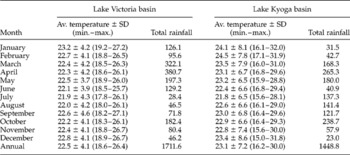
Therefore, the aim of this study was to examine the infection dynamics of Cichlidogyrus spp. in O. niloticus from Uganda in different habitats, host sex and size, and seasons. There were three specific objectives: first, to compare the occurrence of Cichlidogyrus spp. in four different ‘habitat types’ – ponds, a semi-natural system (Kajjansi stream), a natural lotic system (in Lake Victoria basin) and a reservoir (natural lentic system) and cages (heavily modified) therein (in Lake Kyoga basin). We expected to find a higher percentage of infected fish and number of parasite in cages (due to confinement of high fish densities) than in hosts from the other habitat types. The second objective was to compare the occurrence of Cichlidogyrus spp. between fish sexes across the habitat types. In Oreochromis species, female fish incubate eggs and guard the young until the yolk sac is absorbed (Philippart & Ruwet, Reference Philippart, Ruwet, Pullin and Lowe-McConnell1982); hence, they may have prolonged exposure to oncomiracidia. Accordingly, we expected to find a high proportion of infected female fish, with a higher parasite load than sexually undifferentiated and male individuals. The third objective was to determine the relationship between rainfall and the number of parasites and proportion of infected O. niloticus. In temperate regions, temperature delineates seasons and is subsequently considered the major factor influencing parasite populations. In Uganda, because of low temperature variation (see table 1), seasons are delineated by rainfall intensity. During periods of low rainfall intensities (dry season), habitat shrinkage, environment-related stress and reduced water currents (in lotic systems) would enhance the transmission of oncomiracidia. Therefore we expected fluctuations in Cichlidogyrus spp. infection to be related to rainfall intensity, with higher infection levels in the dry season than in the wet season. The results of this study will provide information for better understanding of essential biotic and abiotic factors responsible for parasite population dynamics in the region, upon which management strategies can be designed for intensive fish farming.
The monthly and annual rainfall intensity (mm) and average air temperature (minimum and maximum, °C) in Lake Victoria and Kyoga basins for the year 2008.

Materials and methods
Study site and sample collection
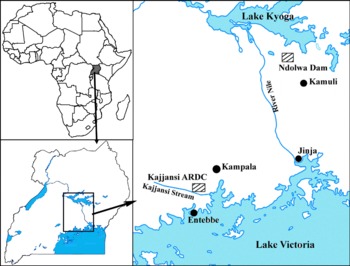
The study was conducted in Uganda, a tropical country lying astride the equator between latitudes and longitudes 4.2°N, 1.5°S and 28°E, 35°W, respectively. Data were collected from fish raised in cages, the reservoir (in which cages where established) at Ndolwa Dam in Lake Kyoga basin (1.21°N, 33.10°E) and from ponds and a water-supplying stream at Kajjansi Aquaculture Research and Development Centre (Kajjansi ARDC), Lake Victoria basin (0.13°N, 32.32°E) (fig. 1). The reservoir was constructed in the 1950s across a wetland to supply water for livestock and domestic use. The reservoir covers an area of about 3 ha, with a quarter of the surface area covered with macrophytes. The maximum depth is 4 m. After heavy rains, the wetland intermittently floods, linking the dam to the River Nile. The cage system consisting of nine units, with dimensions of 1 × 1 × 1.5 m3, was placed at least 20 m from the nearest shore at a depth of 4 m, and approximately 1.2 m of the depth of each cage was in water. In January 2008, each cage was stocked with 150–200 fish of average weight 20 g. Seven cages were harvested in June 2008 and restocked after 5 days. Fish mortalities (5–10 fish/day/cage) were recorded during the first week post-stocking, probably due to transportation stress. A random sample of up to 20 fish, composed of specimens from different cage units, was collected monthly using scoop nets. Prior to stocking with fish (both in January and June), examination revealed that the fish were infected. The number of Cichlidogyrus spp. on the fish stocked in June did not differ significantly from the parasite load in the two unharvested units; hence data from all cages were included in the analysis. Fish from the reservoir, pond and stream were caught using gillnets, hooks and/or seine nets, monthly from January to November 2008, except for June at Kajjansi. Up to 30 fish were randomly collected during each sampling and the entire sample consisted of fish sizes ranging from 2 to 34 cm in total length and < 1–470 g in weight.
Map of Uganda showing the sampling sites (▨): Ndolwa Dam – the reservoir (and cages therein) – and Kajjansi ARDC – the location of ponds and the stream. A colour version of this figure is available at www.journals.cambridge.org/jhl.

Due to logistic difficulty, daily water temperature measurements were not possible; thus, this study used air temperature, which has a strong linear relationship with water temperature (McCombie, Reference McCombie1959; Stefan & Preud'homme, Reference Stefan and Preud'homme1993; Livingstone & Lotter, Reference Livingstone and Lotter1998). Daily rainfall and temperature at the respective sites were obtained from Department of Meteorology, Uganda. From the data collected, seasons were categorized as ‘dry season’, characterized by rainfall intensity below 150 mm/month, and ‘wet season’, characterized by rainfall intensity equal to or greater than 150 mm/month (table 1). Generally, the temperature change was gradual and rainfall showed a bimodal pattern within the two lake basins.
Examination of fish for parasites
In the laboratory, a parasitological examination for monogenean ectoparasites was performed immediately, which included fish measurement, examination of skin scrapings and gill squashes. Furthermore, fish, killed by severing the spinal cord anterior to the dorsal fin, were dissected to determine their sex. Observed monogeneans were counted, and some were isolated and fixed in 70% ethanol for further identification at Stirling University, UK. Identification was based on morphological analyses of opisthaptoral hard parts with the aid of a phase-contrast microscope, after partial digestion of the parasite following the modified proteolytic method of Harris & Cable (Reference Harris and Cable2000). This involved washing parasite specimens in distilled water, clearing them in ammonium picrate glycerine, to permit a better examination of the haptoral hard parts, before mounting on the glass slide and digestion. With the aid of a camera lucida, the digested haptoral parts were traced, measured and compared with previous drawings. From the isolates, two monogenean species were identified: C. tilapiae Paperna, 1960 using the description presented in Ergens (Reference Ergens1981) and C. sclerosus Paperna et Thurston, 1969 from the drawings given in Douëllou (Reference Douëllou1993). To provide an understanding of the infection dynamics of monogeneans, data of both species were pooled for further analyses because of the difficulty of separating species during examination using gross morphological features, and frequent occurrence of co-infections (Pariselle & Euzet, Reference Pariselle and Euzet1995, Reference Pariselle and Euzet1996, Reference Pariselle and Euzet1997, Reference Pariselle and Euzet1998, Reference Pariselle and Euzet2003, Reference Pariselle and Euzet2004; Simkova et al., Reference Simkova, Sasal, Kadlec and Gelnar2001; Boungou et al., Reference Boungou, Kabre, Marques and Sawadogo2008).
Data analysis
The number of parasites and proportion of the infected hosts was analysed with a linear regression fitted with maximum likelihood using host sex, site, temperature and rainfall as the explanatory variables. A general linear model with Bonferroni post-hoc test was used to test for differences in parasite numbers and proportion of the infected hosts between months, sites, sexes and size. The statistical significance of the seasonal differences in the number of parasites and proportion of the infected hosts was tested using a t-test. Further, analysis of covariance (ANCOVA) was performed with Bonferroni post-hoc test with sex and size as covariates. The natural logarithm transformation (x+1) was used to normalize frequency distributions before performing statistical analysis on the number of parasites. The analyses were performed using R (R Development Core Team, 2010) and SPSS for windows (SPSS Inc., Chicago, Illinois, USA) and graphical representations were drawn in Sigma Plot (Systat Inc., Chicago, Illinois, USA). For all statistics, P values ≤ 0.05 were considered significant.
Results
Infection levels relative to habitat types
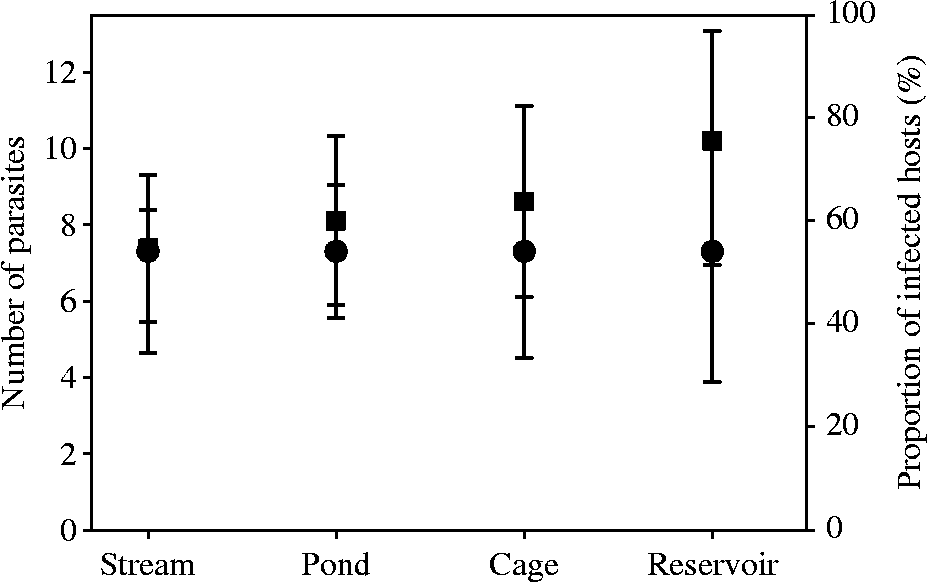
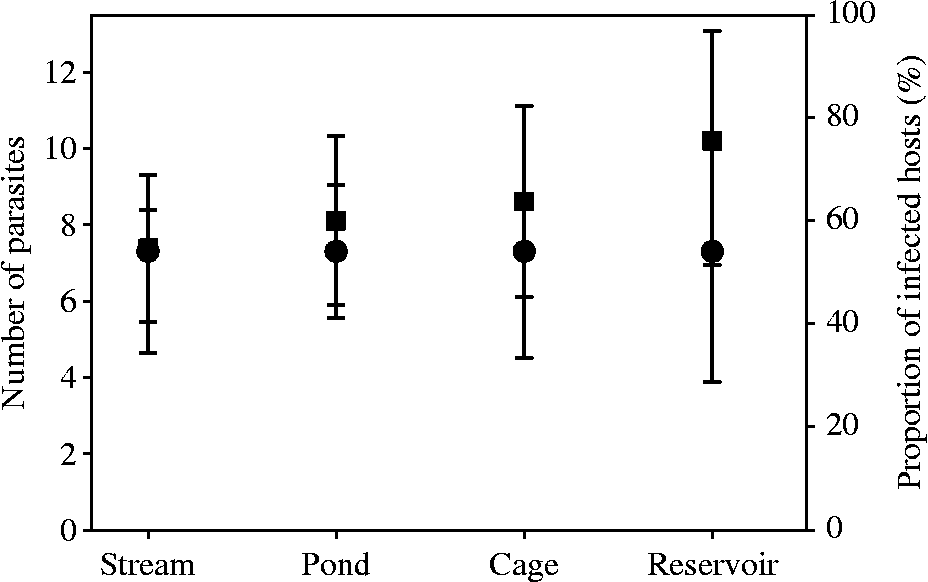
In total 650 fish – 213 caged, 153 pond-raised, 165 reservoir-dwelling and 119 stream-dwelling – were examined. Two Cichlidogyrus spp., namely C. tilapiae and C. sclerosus, were recovered from the gills of 294 (45.2%) fish, with 8.6 ± 3.4 parasites/fish. The parasite community was dominated by C. tilapiae with a ratio of 4:1 in the isolates. The proportion of infected fish did not differ across habitat types (ANOVA, P>0.05), while significant differences in parasite numbers were found between stream-dwelling and reservoir-dwelling fish only (ANOVA, P < 0.05) (fig. 2). Among the stream-dwelling fish, 47.9% were infected, with an average of 7.4 ± 2.1 parasites/fish. The high proportion of infected fish in the stream and low parasite number indicates a more or less random distribution of parasites among the hosts. On the other hand, reservoir-dwelling, caged and pond-raised fish had aggregations of parasites, depicted by few hosts carrying high numbers of parasite individuals. From the reservoir, 69 (41.8%) fish were infected with 10.1 ± 3.8 parasites/fish. From the ponds, 73 (47.7%) hosts were infested with 8.1 ± 2.7 parasites/fish and 95 (44.6%) from cages with 8.6 ± 2.6 parasites/fish.
The overall proportion of infected fish (■; mean ± SD) and number of Cichlidogyrus spp. individuals (●; mean ± SD) recorded in O. niloticus from each habitat type.
Infection levels relative to host sex/size
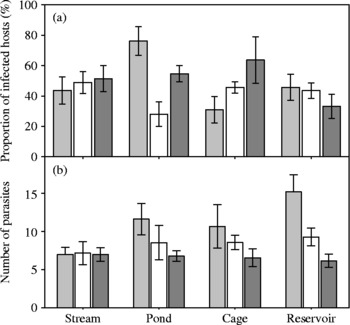
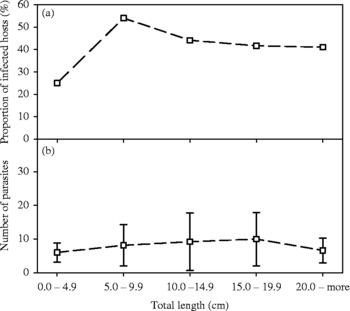
With respect to sex, the overall proportion of infected hosts and number of parasite individuals in female fish (52.6%, 11.6 ± 2.2 parasites/fish) was significantly higher than in male (42.7%, 8.08 ± 2.5 parasites/fish) and immature (43.6%, 7.08 ± 2.7 parasites/fish) individuals (ANOVA, P < 0.05). Across habitat types, the proportion of infected female fish was not different from other sites (ANOVA, P>0.05) except from ponds (ANOVA, P < 0.05) (fig. 3a). The proportion of infected immature fish from the reservoir was significantly lower than from other habitat types, while female fish harboured higher parasite numbers than male and immature fish from all sites (ANOVA, P < 0.05) except stream-dwelling individuals (ANOVA, P>0.05) (fig. 3b). The number of individuals of Cichlidogyrus spp. in male fish did not differ from that recorded in immature fish (ANOVA, P>0.05). The regression model showed that the parasite numbers would decrease significantly by a magnitude of 0.15 per unit change in sex, while controlling for size. Moreover, with the effect of sex controlled, the number of parasites and proportion of infected fish decreased, but not significantly (ANOVA, P < 0.05), with host size (fig. 4). The regression model showed that a unit increase in fish size would result in a decrease in parasite numbers by 0.032 (P>0.05).
The proportion of infected fish (mean ± SD) (a) and number of Cichlidogyrus spp. individuals (mean ± SD) (b) in female (grey), male (open) and sexually undifferentiated (dark grey) O. niloticus from the different habitats.

The relationship between total fish length and (a) the proportion of infected hosts; and (b) the number of Cichlidogyrus spp. individuals (mean ± SD).

Infection levels relative to season
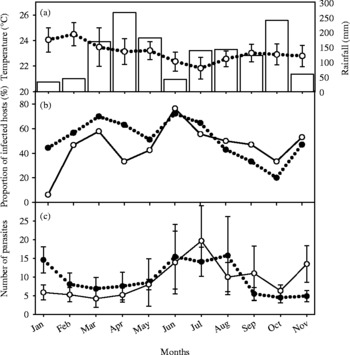
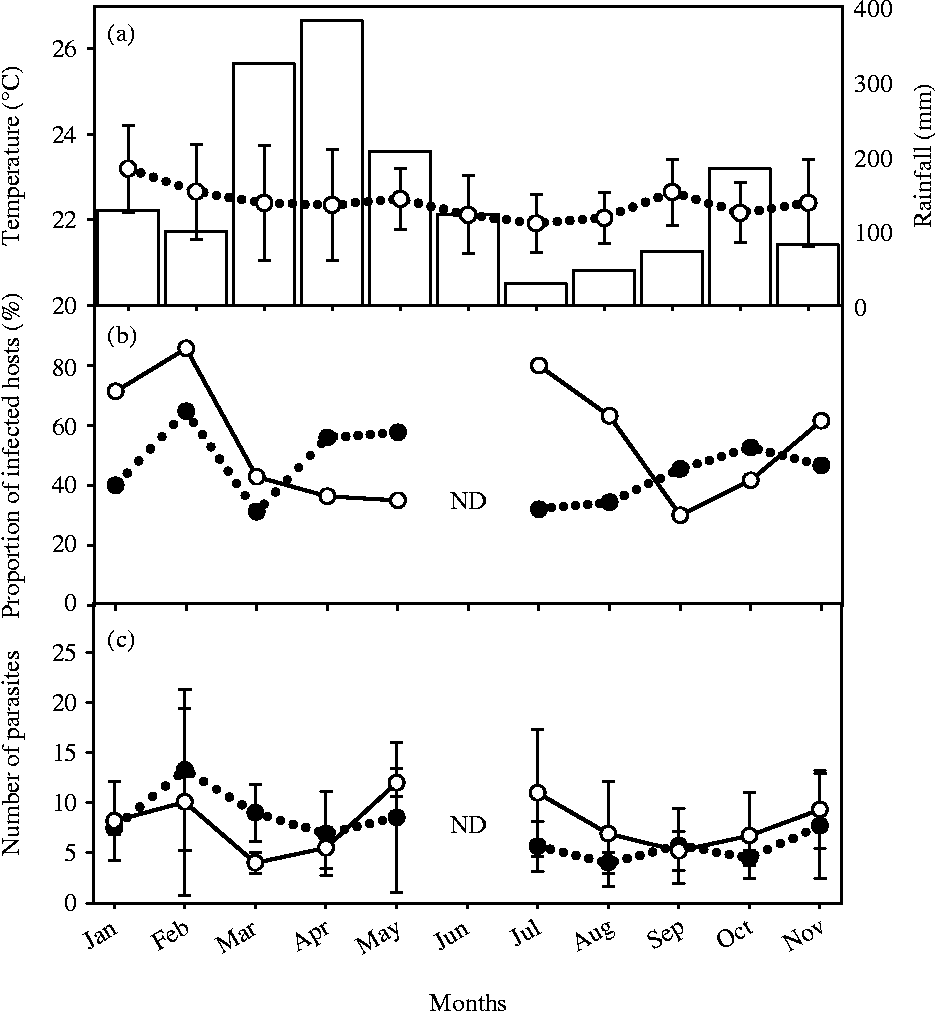
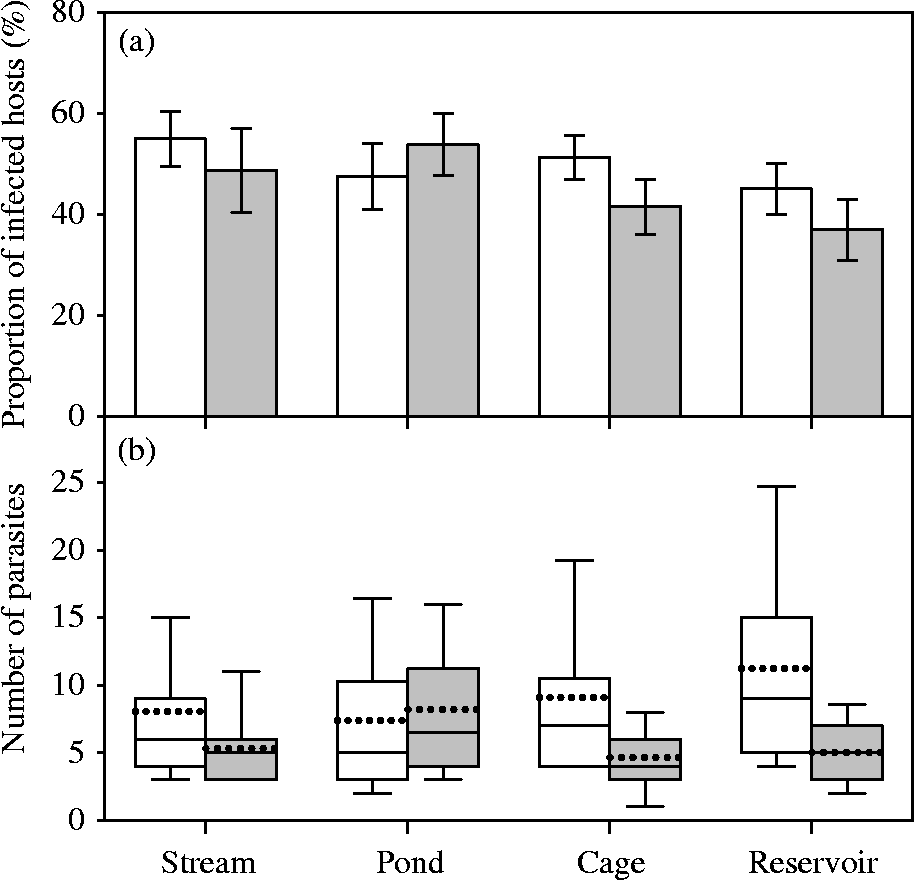
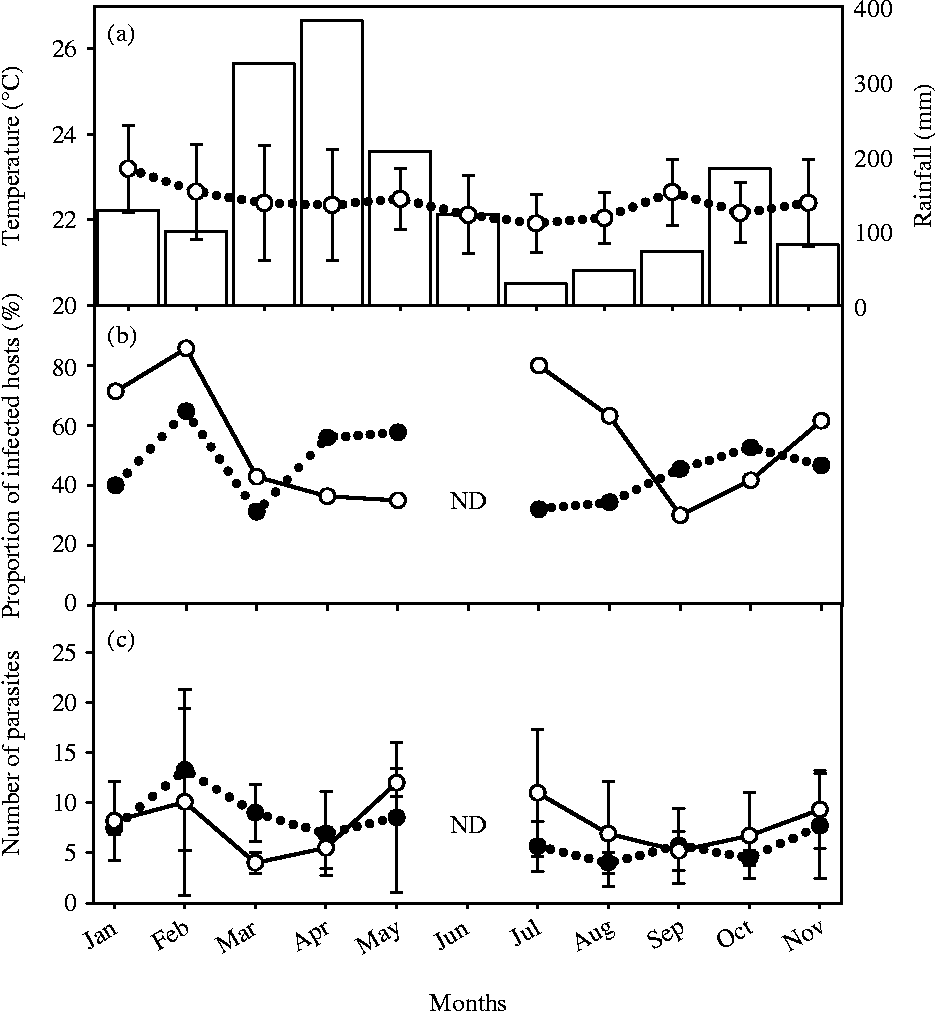
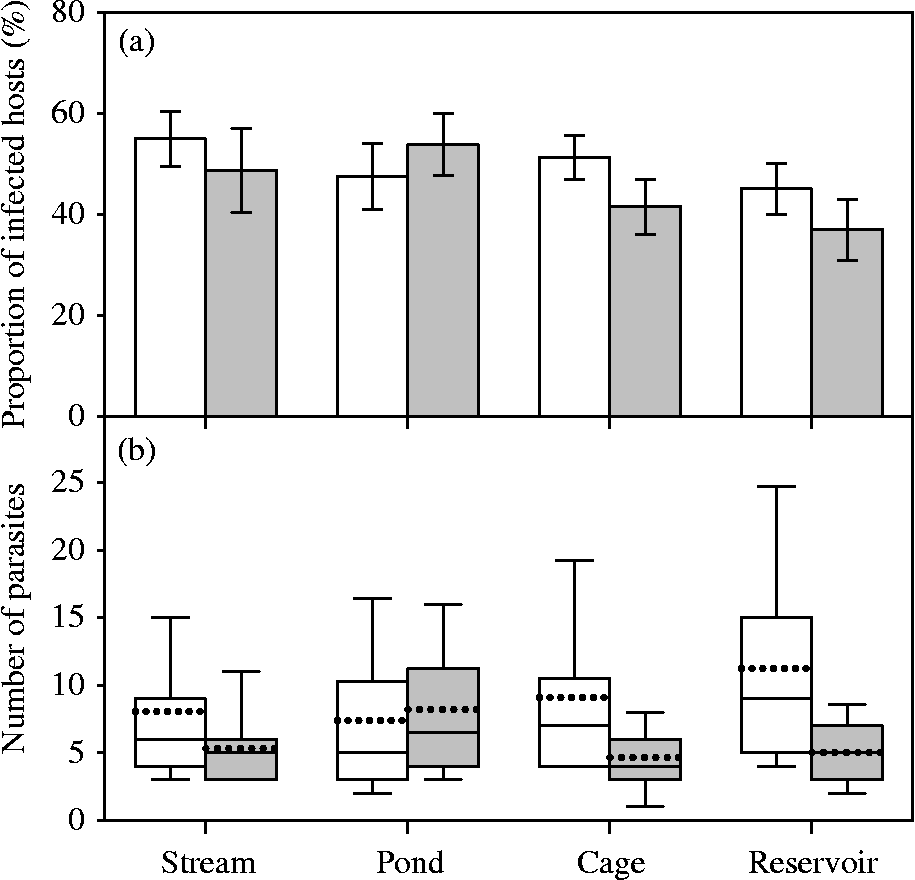
In the present study, Cichlidogyrus spp. were present in O. niloticus throughout the study period, with peaks of parasite numbers recorded during the dry months of June and August in caged fish and in July among reservoir-dwelling fish (figs 5 and 6). Although rainfall had a negative effect on monthly fluctuations in parasite numbers, the correlation (r = − 0.098) was not significant (P>0.05). With regard to rainfall, delineating seasons, the overall proportion of infected fish collected during the dry season did not differ from those collected during the wet season (t-test, P>0.05) and across sites (ANOVA, P>0.05) (fig. 7a). Further, the regression analysis revealed that rainfall (r = − 0.006) did not have significant effect on the proportion of infected hosts. In contrast, the number of Cichlidogyrus spp. on O. niloticus varied significantly between seasons except for pond systems (fig. 7b). The number of parasites in fish collected during the dry season was 9.6 ± 3.5 parasites/fish, compared to 5.7 ± 3.4 parasites/fish recorded in fish collected during the wet season. Within habitat types, fish from cages, reservoir and stream collected during the dry season harboured higher numbers of parasite individuals than those collected during the wet season (P>0.05). On the other hand, the parasite numbers present on pond-raised fish collected during dry and wet seasons did not differ significantly (t-test, P = 0.22).
Monthly values of: (a) temperature (line graph, mean ± SD) and rainfall intensity (bar graph) received in Lake Kyoga basin; (b) the proportion of infected fish; and (c) the number of Cichlidogyrus spp. individuals (mean ± SD) in O. niloticus from cages (dotted line) and the reservoir (solid line).

Monthly values of: (a) temperature (line graph, mean ± SD) and rainfall intensity (bar graph) received in Lake Victoria basin; (b) the proportion of infected fish; and (c) the number of Cichlidogyrus spp. individuals (mean ± SD) in O. niloticus from ponds (dotted line) and the stream (solid line). ND, no data were collected during the month of June.
(a) The proportion of infected fish and (b) the number of Cichlidogyrus spp. individuals (mean ± SD) in O. niloticus collected in dry seasons (open bars) and wet seasons (grey bars).
Discussion
In the present study, the results revealed that host habitat type affects the parasite numbers and proportion of infected hosts, as suggested by Marcogliese (Reference Marcogliese2001) and Lafferty (Reference Lafferty2008). We found few infected fish harbouring a high parasite load in the reservoir, and several infected hosts in the stream with low parasite numbers. This observation, though contrary to our expectation that crowding in cages would promote parasite infection, suggests fish behavioural changes linked to the habitat type, and the disruption of parasite transmission by water currents and depth, as the main driving factors. Naturally, O. niloticus are known to form and defend territories, particularly during spawning (Philippart & Ruwet, Reference Philippart, Ruwet, Pullin and Lowe-McConnell1982), and this territorial behaviour appears to have exposed and maintained fish individuals in the reservoir to different intensities of oncomiracidia. In the stream, however, water currents seem to have played a major role in spreading the oncomiracidia widely and more or less uniformly within the system, as well as flushing out some individuals (van Oosterhout et al., Reference van Oosterhout, Mohammed, Hansen, Archard, McMullan, Weese and Cable2007). This resulted in a large number of infected hosts, but with low parasite numbers. With regard to the cage habitat type, the present study found parasite aggregations in caged fish but lower parasite load as compared to the reservoir. Aggregation of parasites in caged fish show that crowding did not contribute significantly to cross-transmission and suggests that some of the eggs hatched within the gills of the infested fish (Paperna, Reference Paperna1996). Although parasite-induced mortalities do result in low parasite load, the fish kills recorded in the first week after stocking during this study were more likely due to transportation stress than from parasitic infection. Therefore, the lower parasite load in caged fish suggests that water depth and currents disrupted the parasite transmission pathway. Upon hatching on the lake/pond/stream bed, the oncomiracidia swim actively, searching for hosts. Since the infective viability weakens rapidly after 6 h (Paperna, Reference Paperna1996), by the time the oncomiracidia clear the 2–2.5 m water depth, with interruptions from water currents, to reach the cages, their infective ability may be reduced. In ponds, the low parasite intensity may be explained by management practices, including frequent seining and pond flushing. It was observed that pond seining to remove fry was done every 3 weeks, and flow of fresh water through the system every fortnight could have interrupted parasite transmission as well as washing out some of the oncomiracidia.
With regard to sex, a higher parasite load was found in female fish than in male and immature individuals. Although other studies have found high parasitism in males (Appleby & Mo, Reference Appleby and Mo1997), female fish are known to be more susceptible (Simkova et al., Reference Simkova, Jarkovsky, Koubkova, Barus and Prokes2004; van Oosterhout et al., Reference van Oosterhout, Mohammed, Hansen, Archard, McMullan, Weese and Cable2007; Boungou et al., Reference Boungou, Kabre, Marques and Sawadogo2008). Studies suggest that differential exposure to parasites because of sex-specific behaviour changes and susceptibility related to sexual activities contribute significantly to variation in infection (Zuk & McKean, Reference Zuk and McKean1996; Appleby & Mo, Reference Appleby and Mo1997). Indeed, O. niloticus undergoes behavioural changes during the spawning period, during which female individuals are confined for at least 1–2 weeks while incubating eggs and protecting the fry (Philippart & Ruwet, Reference Philippart, Ruwet, Pullin and Lowe-McConnell1982). This temporarily sessile behaviour in female individuals ultimately increases exposure to oncomiracidia. Moreover, sexual activities such as egg production, and reduced food intake, may have caused stress in females which reduced their resistance to parasites. Besides, some hormonal substances released during the spawning period act as chemoattractants for oncomiracidia (Buchmann & Bresciani, Reference Buchmann and Bresciani1998; Buchmann & Lindenstrøm, Reference Buchmann and Lindenstrøm2002; Buchmann et al., Reference Buchmann, Madsen and Dalgaard2004). Therefore, it is possible that O. niloticus females produce some of these hormonal substances, attracting more oncomiracidia than males or immature individuals.
In line with our expectations, parasite infection variations corresponded with rainfall intensity. Lower infection was recorded in rainy periods compared to drier ones. The results agree with the previous studies in that rainfall and the associated hydrological changes, such as flooding and water currents, play an important role in parasite infection patterns (Chapman et al., Reference Chapman, Lanciani and Chapman2000; Pech et al., Reference Pech, Aguirre-Macedo, Lewis and Vidal-Martínez2010). Although the monthly correlation between rainfall and parasite intensity was weak, the infection peaks were observed during dry months (June, July and August), suggesting effects of rainfall on infection. It is plausible that rainfall and the hydrological events interrupted transmission of the monogeneans by altering habitat size, water quality and water currents. In dry periods, habitat size contraction due to shrinkage of water bodies caused host crowding and this increased availability and proximity of hosts to the oncomiracidia. Besides, stressors such as rapid oxygen depletion, high ammonium concentration and temperature, associated with habitat contraction, increase host stress, increasing their susceptibility to parasites (Chapman et al., Reference Chapman, Lanciani and Chapman2000; Lamková et al., Reference Lamková, Šimková, Palíková, Jurajda and Lojek2007). In streams, reduced amounts of water in dry periods reduced water currents, thereby reducing parasite drift and enhancing transmission of the oncomiracidia (van Oosterhout et al., Reference van Oosterhout, Mohammed, Hansen, Archard, McMullan, Weese and Cable2007). In wet periods, sporadic flooding events after heavy downpours and the associated increase in water currents may have caused dislodging and flushing out of some parasite individuals from the infested fish, and/or removal of heavily infested hosts from the system, hence reducing the infection intensity (van Oosterhout et al., Reference van Oosterhout, Mohammed, Hansen, Archard, McMullan, Weese and Cable2007). Meanwhile, the lack of fluctuations in parasite numbers and proportion of infected hosts in ponds with rainfall intensity could be attributed to the adjustments of farm management procedures due to changes in water needs. During the study, it was observed that flushing of ponds was done every 2 weeks during the dry season but not in wet season. The suspension of pond flushing during the wet period could have enhanced settlement and colonization of fish by the oncomiracidia, increasing the parasite infection. Although in the present study infection patterns of Cichlidogyrus spp. appeared to be related to rainfall intensity, long-term study is required to ascertain the seasonality.
Generally, the continuous presence of Cichlidogyrus spp. in O. niloticus found in this study is consistent with reports on other monogenean trematodes from fish in tropical aquatic environments (Khidr, Reference Khidr1990; Boungou et al., Reference Boungou, Kabre, Marques and Sawadogo2008). From the disease management perspective, the persistence of these parasites in both cultured and wild stocks from aquatic environments in Uganda poses a constant risk for aquaculture systems. Furthermore, the interplay of temperature- and rainfall-related abiotic factors, including habitat contraction and management procedures, influences parasite populations and the threats posed. In particular, fish production systems located in water-stressed areas, where serious water shrinkage occurs during dry seasons, face a great risk of disease outbreak. Furthermore, rapid water quality deterioration following water shrinkage and low water turnover will cause environment-related host stress, increasing susceptibility to parasites. Therefore, adherence to biosecurity measures, particularly pre-screening of fish for stocking, applying anaesthetics to reduce transportation stress and scheduling routine disease monitoring, could be essential in minimizing monogenean infestations. Therefore, farmers ought to be aware of this sanitary risk during transformation of the fish farming systems for commercial purposes.
Acknowledgements
This study was supported by the Austrian Development Agency through the Austrian Exchange Service (ÖAD). The authors gratefully acknowledge additional funding from the European Community financial participation under the Sixth Framework Programme for Specific Targeted Research Projects, for the Integrated Project BOMOSA, INCO-CT-2006-032103.