





1 Introduction
The main object of our interest in the present paper is the Cremona group
$\operatorname {{\mathrm {Cr}}}_n(k)$
 . It is defined as the group of birational automorphisms of the projective space
$\mathbb P^n_{k}$
 . More precisely, our focus is on linearizability properties of subgroups G of
$\operatorname {{\mathrm {Cr}}}_n (k)$
 .
Definition 1.1. We say that
$G\subset \operatorname {{\mathrm {Cr}}}_n (k)$
 is projectively k-linearizable if it is conjugate in
$\operatorname {{\mathrm {Cr}}} _n(k)$
 to a subgroup
$G'$
 of
$\operatorname {{\mathrm {PGL}}}_{n+1}(k)$
 . If one can choose
$G'$
 so that the faithful projective representation
$G'\hookrightarrow \operatorname {{\mathrm {PGL}}}_{n+1}(k)$
 can be lifted to a linear representation
$G'\to \operatorname {{\mathrm {GL}}}(n+1,k)$
 , we say that G is k-linearizable.
Since
$\operatorname {{\mathrm {PGL}}}_{n+1}(k)$
 is the group of automorphisms of
$\mathbb P^n_{k}$
 , one can rephrase this by saying that
$\mathbb P^n_{k}$
 admits a faithful regular action of G. More precisely, given
$G\subset \operatorname {{\mathrm {Cr}}}_n (k)$
 , we say that G is k-regularizable if there exist a smooth projective k-variety X and a k-birational map
$\varphi \colon X\dashrightarrow \mathbb P^n_{k}$
 such that
$\varphi ^{-1}\circ G\circ \varphi \subset \operatorname {{\mathrm {Aut}}} (X)$
 . Thus, if one can take
$X=\mathbb P^n_{k}$
 , then G is projectively k-linearizable.
Not all subgroups
$G\subset \operatorname {{\mathrm {Cr}}}_n (k)$
 are k-regularizable, see various examples in [Reference Brunella8], [Reference Cheltsov10] (attributed there to Dolgachev), [Reference Cantat9]. Moreover, the set R of regularizable subgroups is meagre enough: recently Lin and Shinder [Reference Lin and Shinder30] showed that R may not (and normally does not) generate
$\operatorname {{\mathrm {Cr}}}_n (k)$
 , thus refuting a long-standing conjecture.
However, for finite subgroups
$G\subset \operatorname {{\mathrm {Cr}}}_n (k)$
 the situation is entirely different: any such G is regularizable, at least if
$\operatorname {{\mathrm {char}}}(k)=0$
 , see, for example, [Reference Cheltsov10].
In the present paper, we assume throughout that G is finite. Our general goal is to study the behaviour of the linearizability of G under base change, when k is a subfield of K, and we compare
$G\subset \operatorname {{\mathrm {Cr}}}_n (k)$
 to its image
$G_K$
 with respect to the natural inclusion
$\operatorname {{\mathrm {Cr}}}_n (k)\subset \operatorname {{\mathrm {Cr}}}_n(K)$
 . This topic got certain attention in the classical complexification-realification context, when
$k=\mathbb R$
 ,
$K=\mathbb C$
 , see [Reference Yasinsky40], [Reference Yasinsky41], [Reference Cheltsov, Mangolte, Yasinsky and Zimmermann11]. We shall also touch on this situation, though our focus is on another, arithmetical setup. Namely, our main interest is in the validity of the following local-to-global principle.
Question 1.2. Let k be a global field, let
$G\subset \operatorname {{\mathrm {Cr}}}_n (k)$
 be a finite subgroup, and for each place v of k let
$G_v$
 denote the image of G in
$\operatorname {{\mathrm {Cr}}}_n (k_v)$
 with respect to the natural inclusion
$k\subset k_v$
 . Suppose that
$G_v$
 is (projectively)
$k_v$
 -linearizable for every v. Is it true that G is (projectively) k-linearizable?
Our main result answers this question in the negative for any global field k of characteristic different from 2 and any
$n\ge 3$
 . It turns out that counterexamples can be found among subgroups of order
$2$
 .
Theorem A (cf. Theorem 3.10).
For any
$n\ge 3$
 and any global field k of characteristic different from 2 there exists a birational involution of
$\mathbb P^n_{k}$
 (= an element g of order
$2$
 in
$\operatorname {{\mathrm {Cr}}}_n (k))$
 such that
$\bullet \, g$
 is
$k_v$
 -linearizable for all v;
$\bullet \, g$
 is not k-linearizable.
The proof contains several ingredients of different nature. The first is a general statement providing a necessary condition for the linearizability. It is formulated in the setup of equivariant birational geometry over an arbitrary field, and I believe it is interesting in its own right.
Let k be a field, and let X, Y be smooth, projective, integral k-varieties equipped with a faithful k-regular action of a finite group (= constant k-group scheme) G (for short, G-varieties). We say that G-varieties X, Y are G-birational if there exists a k-birational map
$\varphi\, \colon X \dashrightarrow Y$
 equivariant with respect to the action of G. We say that a smooth, projective, integral k-variety X is k-linearizable if it is G-birational to
$Y=\mathbb P(V)$
 where the G-action on Y is induced by a linear action of G on a vector k-space V.
Let
$\bar k$
 denote a separable closure of k. Denote
$\overline X=X\times _{k}\bar k$
 . Let
$\Gamma =\mathrm {Gal}(k)=\mathrm {Gal}(\bar k/k)$
 be the absolute Galois group of k. The actions of G and
$\Gamma $
 on
$\overline X$
 commute, so that we can define the action of
$W:=G\times \Gamma $
 on
$\overline X$
 and extend it to the geometric Picard group
$\mathrm {Pic} (\overline X)$
 . Denote by N the W-module
$\mathrm {Pic} (\overline X)$
 .
Suppose that N, viewed as a
$\mathbb Z$
 -module, is a free module of finite rank (this holds, say, if
$\overline X$
 is a rational variety). We say that N is a permutation module if it has a free
$\mathbb Z$
 -basis globally respected by W. We say that N is stably permutation if there exist permutation modules S,
$S'$
 such that
$N\oplus S\cong S'$
 . We say that W-modules N and
$N'$
 are similar if there exist permutation modules S,
$S'$
 such that
$N\oplus S\cong N'\oplus S'$
 . (More properties of a similar flavour will be introduced in Section 2.)
The following theorem, the proof of which (as well as of its stronger version, Theorem 3.7) was communicated to me by Jean-Louis Colliot-Thélène, is crucial for the proof of Theorem A.
Theorem B (cf. Theorem 3.7).
With the above notation, suppose that the G-variety X is k-linearizable. Then
$N=\mathrm {Pic} (\overline X)$
 is a stably permutation W-module.
The second ingredient in the proof of Theorem A is an explicit construction of a birational involution of a certain 3-dimensional algebraic k-torus T. It is a modification of [Reference Kunyavskiĭ27, Example 3.7]. This purely algebraic result allows us to prove that the geometric Picard module
$\mathrm {Pic} (\overline X)$
 of a smooth compactification X of T is not stably permutation for the W-action and thus deduce from Theorem B that the corresponding birational involution is not k-linearizable.
To finish the proof of Theorem A and prove that this involution is everywhere locally linearizable, we use (in the same way as in [Reference Kunyavskiĭ27]) the existence of a biquadratic extension
$K/k$
 for which all decomposition groups are cyclic. This is actually the only arithmetical ingredient of the proof.
Remark 1.3. Below we shall prove slightly more general versions of Theorems A and B. Namely, we shall use the stable linearizability condition, see details in Section 3. Recall that there are several subtle examples showing the existence of a gap between stable rationality and rationality in the arithmetic case [Reference Beauville, Colliot-Thélène, Sansuc and Swinnerton-Dyer2], and between stable linearizability and linearizability in the geometric case [Reference Reichstein and Youssin35], [Reference Lemire, Popov and Reichstein29], [Reference Hassett and Tschinkel20], [Reference Böhning, Graf von Bothmer and Tschinkel4], [Reference Böhning, Graf von Bothmer and Tschinkel5], [Reference Cheltsov, Tschinkel and Zhang12], [Reference Pinardin, Sarikyan and Yasinsky33].
2 Preliminaries on tori
In this section, we provide a brief account of some basic facts on algebraic tori necessary for the proof of Theorem A. Details can be found in [Reference Colliot-Thélène and Sansuc15], [Reference Voskresenskiĭ39].
$\bullet $
 A k-torus T is an algebraic k-group such that
$T\times _kk^{\textrm {alg}}\cong \mathbb G_{\textrm {m},k^{\textrm {alg}}}^d$
 , where
$k^{\textrm {alg}}$
 is an algebraic closure of k.
$\bullet $
 Every torus T splits over some finite separable extension of k (Ono, Borel, Springer, Tate, Tits), see [Reference Yu42] for an overview of different proofs. Hence in the definition above one can replace
$k^{\textrm {alg}}$
 with
$\bar k$
 . There is a unique smallest finite Galois subextension
$L/k$
 inside
$\bar k/k$
 which splits T. We call L the minimal splitting field of T.
$\bullet $
 Let L be the minimal splitting field of T,
$\Pi =\mathrm {Gal} (L/k)$
 , then
$M=\hat T=\mathrm {Hom} (T,\mathbb G_{\mathrm m})$
 viewed as a
$\Pi $
 -module is called the character module of T.
$\bullet $
 Many rationality properties of T can be expressed in terms of M.
We say that a
$\Pi $
 -module N is
-
(i) permutation if it has a $\mathbb Z$
 -base globally respected by
$\Pi $
;
-
(ii) stably permutation if $N\oplus S\cong S'$
for some permutation modules S,
$S'$
; -
(iii) invertible if N is a direct summand of a permutation module;
-
(iv) $H^1$
-trivial (aka coflasque) if
$H^1(\Pi ',N)=0$
for all subgroups
$\Pi '\le \Pi $
; -
(v) flasque if the dual module $N^{\circ }:=\mathrm {Hom} (N,\mathbb Z)$
is
$H^1$
-trivial.





We have irreversible implications

$\bullet $
 Any module M can be embedded into a short exact sequence

where S is permutation and F is flasque; such a sequence is called a flasque resolution of M.
The module F can be constructed geometrically: embed T into a smooth projective variety X as an open subset (this is possible even in positive characteristic [Reference Colliot-Thélène, Harari and Skorobogatov14]), then
$F=\mathrm {Pic} (X\times _k\bar k)$
 .
$\bullet $
 We say that a k-torus T is
-
(i) k-rational if T is birationally k-equivalent to $\mathbb A^d$
; -
(ii) stably k-rational if $T\times \mathbb A^m$
is k-rational for some
$m\ge 0$
; -
(iii) retract rational if $T\times T'$
is k-rational for some torus
$T'$
.


We then have the implications
$\mathrm {(i)\Rightarrow (ii)\Rightarrow (iii)}$
 ; the right one is irreversible whereas the reversibility of the left one is a notoriously difficult long-standing problem.
Remark 2.1. In the original definition [Reference Saltman36], the property of retract rationality is different. For tori, it implies the property of item (iii), as proved in [Reference Colliot-Thélène and Sansuc17, Proposition 7.4].
$\bullet $
 We have the following relations: T is stably rational (resp. retract rational) if and only if the module F in a flasque resolution of
$M=\hat T$
 is stably permutation (resp. invertible).
$\bullet $
 We shall use the notation
$R_{K/k}$
 for Weil’s restriction of scalars from K to k.
3 Proofs of main results
We start with reformulations of Theorems A and B in a slightly more general way, as mentioned in the introduction. We maintain the notation introduced there.
Definition 3.1. We say that smooth, projective, integral G-varieties X, Y defined over a field k are stably G-birational if there exist
$m,n$
 such that
$X\times \mathbb P^n_{k}$
 and
$Y\times \mathbb P^m_{k}$
 , where G acts trivially on the projective spaces, are G-birational.
We say that X is stably projectively k-linearizable if it is stably G-birational to a projective space
$\mathbb P^m_k$
 with trivial G-action.
We say that X is stably k-linearizable if it is stably G-birational to a projective space
$\mathbb P(V)$
 equipped with the action induced by a linear action of G on a vector k-space V.
Remark 3.2. Note that there are different definitions of (stable) linearizability, see [Reference Prokhorov34], [Reference Cheltsov, Tschinkel and Zhang12].
The linearizability properties introduced in Definition 3.1 fit into the following diagram of implications:

Before proceeding to the precise statements and proofs, one has to ask a natural question regarding the behaviour of the linearization properties with respect to taking direct products.
Question 3.3. Let X, Y be smooth projective k-varieties equipped with a faithful action of a finite group G.
(i) Suppose that X and Y are k-linearizable. Is it true that so is
$X\times _kY$
 ?
(ii) Suppose that X and Y are projectively k-linearizable. Is it true that so is
$X\times _kY$
 ?
It turns out that the answers to (i) and (ii) are different. The following remarks are due to Yuri Tschinkel.
Remark 3.4. Question 3.3(i) is answered in the affirmative. The proof is based on a projective version of the no-name lemma (see [Reference Kresch24]), which can be easily deduced from [Reference Colliot-Thélène, Sansuc and Mehta18, Lemma 3.5].
Lemma 3.5. Let X be a projective G-variety. Assume that the G-action is generically free. Let
$\mathcal E \to X$
 be a G-vector bundle of positive rank n. Then we have a birational isomorphism

where on the right-hand side the action of G on the second factor is trivial.
With Lemma 3.5 at hand, for
$X=\mathbb P(V)$
 and
$Y=\mathbb P(V')$
 we view
$\mathbb P(V)\times \mathbb P(V')$
 as the projectivization of a trivial G-vector bundle over
$\mathbb P(V)$
 , and (1) implies that
$\mathbb P(V)\times \mathbb P(V') \sim _G \mathbb P(V)\times \mathbb P^{\dim (V')-1}$
 , with trivial action on the second factor. Then the same argument puts the trivial part into the representation. (This argument is implicit in [Reference Katsylo23, Lemma 1].)
Remark 3.6. Question 3.3(ii) is in general answered in the negative, even when k is algebraically closed, because projective linear actions have cyclic Amitsur group
${\mathrm {Am}}^2(X,\ G)$
 , and a product of two projective linear actions with nontrivial Amitsur group will give a noncyclic group. See [Reference Kresch and Tschinkel25] for details on the Amitsur invariant.
We now go over to the precise statements of the main results.
Theorem B follows from the following stronger version.
Theorem 3.7 (Colliot-Thélène).
Suppose that smooth, projective, geometrically integral G-varieties X,
$X'$
 over the field k are stably projectively G-birational. Then the W-modules
$N=\mathrm {Pic} (\overline X)$
 and
$N'=\mathrm {Pic} (\overline X')$
 , where
$\overline X=X\times _k\bar k$
 and
$\bar k$
 is a separable closure of k, are similar, in particular
$H^1(U,N)=H^1(U,N')$
 for any subgroup
$U\le W$
 .
Thus, if X is stably projectively k-linearizable, then N is a stably permutation W-module, in particular, it is flasque and coflasque.
Remark 3.8. The earlier versions of Theorem 3.7 were established in two extreme situations: the arithmetic case, when
$k\ne \bar k$
 and
$G=\{1\}$
 , was settled by Manin [Reference Ju31] for surfaces and by Voskresenskii [Reference Voskresenskiĭ39, Chapter 2, Section 4.4] in general, under resolution of singularities, and the geometric case, when
$k = \bar k$
 and
$G\ne \{1\}$
 , is due to Bogomolov and Prokhorov [Reference Bogomolov and Prokhorov3] under resolution of singularities.
We postpone the proof of Theorem 3.7 until Section 4.
Before proving Theorem A, we also make its statement a little more general, as for Theorem B.
First note that for
$m>n$
 we have a natural inclusion of Cremona groups
$\operatorname {{\mathrm {Cr}}}_n(k)\subset \operatorname {{\mathrm {Cr}}}_m(k)$
 induced by adjoining variables. We say that subgroups
$G,G'\subset \operatorname {{\mathrm {Cr}}}_n(k)$
 are stably conjugate if they are conjugate in
$\operatorname {{\mathrm {Cr}}}_m(k)$
 for some
$m\ge n$
 . We say that
$G\subset \operatorname {{\mathrm {Cr}}}_n(k)$
 is stably (projectively) k-linearizable if it is stably conjugate to some (projectively) k-linearizable subgroup.
Remark 3.9. Let k be an arbitrary field, G a finite group, X a smooth, projective, geometrically integral, k-rational G-variety of dimension n. Assume that the action of G on X is faithful. Then, as in the Introduction, using a k-birational map
$\varphi \colon X\dashrightarrow \mathbb P^n_{k}$
 , one can embed G into
$\operatorname {{\mathrm {Cr}}}_n(k)$
 by mapping
$g\in G$
 to
$\varphi \circ g\circ \varphi ^{-1}$
 .
With this correspondence,
$G\subset \operatorname {{\mathrm {Cr}}}_n(k)$
 is (stably) (projectively) k-linearizable if and only if X is (stably) (projectively) G-linearizable.
Theorem A follows from the following stronger version.
Theorem 3.10. For any
$n\ge 3$
 and any global field k of characteristic different from 2 there exists a birational involution of
$\mathbb P^n_{k}\, ($
 = an element g of order
$2$
 in
$\operatorname {{\mathrm {Cr}}}_n (k))$
 such that
$\bullet \, g$
 is
$k_v$
 -linearizable for all v;
$\bullet \, g$
 is not stably projectively k-linearizable.
Proof.
Step 1. We start with the case
$n=3$
 .
Let
$L=k(\sqrt {a}, \sqrt {b})$
 be a biquadratic extension. Embed
$\mathbb G_{\mathrm m,k}$
 into
$R_{L/k}(\mathbb G_{\mathrm {m},L})$
 and consider the quotient
$T=R_{L/k}(\mathbb G_{\mathrm {m},L})/\mathbb G_{{\mathrm {m}},k}$
 . The torus T is k-rational, being an open subset of

The character module
$\hat T$
 is isomorphic to
$\ker \left [\mathbb Z[\Pi ]\to \mathbb Z\right ]$
 , the augmentation ideal of
$\mathbb Z[\Pi ]$
 , see [Reference Voskresenskiĭ39, Section 4.8].
It is convenient to use a matrix representation of
$\hat T$
 . Fix a pair
$\rho , \sigma $
 of generators of
$\Pi $
 , a basis of
$\mathbb Z^3$
 , and an isomorphism of modules
$\hat T$
 and
$\mathbb Z^3$
 . Consider the subgroup of
$\operatorname {{\mathrm {GL}}}(3,\mathbb Z)$
 corresponding to the
$\Pi $
 -action on
$\hat T$
 . It is conjugate to

Step 2. Define a birational involution g of T sending t to
$t^{-1}$
 . More formally, we define the action of g on
$\hat T$
 (written additively) as sign changing, so that the corresponding matrix is
$-I_3$
 . Denote
$G=\left <g\right>$
 .
Embed T into a smooth projective model X as an open subset. Recall (see Section 2) that such an X exists even when
$\operatorname {{\mathrm {char}}} (k)> 0$
 . Moreover, note that such an embedding can be made
G-equivariant. Indeed, in the setup of Theorem 3.7, replace
$\Gamma =\mathrm {Gal}(\bar k/k)$
 with its finite quotient
$\Pi =\mathrm {Gal} (L/k)$
 and define
$W=G\times \Pi $
 . Since the G-action on the algebraic variety T comes from its action by automorphisms of the lattice
$\hat T$
 , we can use [Reference Colliot-Thélène, Harari and Skorobogatov14, Th. 1] to obtain a W-equivariant, smooth, projective fan from which we obtain the needed G-variety X.
Step 3. Consider now the W-module
$\mathrm {Pic}(\overline X)$
 .
Looking at the finite subgroup of
$\operatorname {{\mathrm {GL}}}(3,\mathbb Z)$
 corresponding to the W-action on
$\hat T$
 , we see from (2) and the definition of the action of g that it is conjugate to

Looking at the list of finite subgroups of
$\operatorname {{\mathrm {GL}}}(3,\mathbb Z)$
 corresponding to tori that are not stably rational [Reference Kunyavskiĭ26, Theorem 1], we see that subgroup (3) appears on that list where it is denoted by
$W_2$
 . According to [Reference Kunyavskiĭ26, Section 4], the flasque W-module
$F=\mathrm {Pic} (\overline X)$
 is not invertible (and hence not stably permutation).
See [Reference Hoshi and Yamasaki21, Section 7] for a computer verification of this result; see [Reference Cheltsov, Tschinkel and Zhang12, Section 5] for an explicit geometric description of the toric variety X.
Note that the W-module
$\mathrm {Pic} (\overline X)$
 is flasque and coflasque, see [Reference Kunyavskiĭ27, Section 3], [Reference Hoshi and Yamasaki21]; this allowed the use of the torus
$T'$
 in [Reference Kunyavskiĭ27, Example 3.7] for constructing an example of a toric variety violating a local-to-global principle for rationality in the absence of the Brauer obstruction.
According to Theorem 3.7, G is not stably projectively k-linearizable.
Step 4.
Let us now choose L such that all decomposition groups
$\Pi _v$
 are cyclic (hence of order 1 or 2). Such a choice is always possible, see [Reference Neukirch, Schmidt and Wingberg32, Corollary 9.2.3]. Thus each
$k_v$
 -torus
$T_v=T\times _{k}k_v$
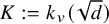
 splits by a quadratic extension
$K:=k_v(\sqrt {d})$
 . Then
$T_v$
 is a direct product of tori of dimension 1 or 2 [Reference Voskresenskiĭ39, Chapter 2, §5, Theorem 4]. By Remark 3.4, it is enough to show that the action of G on the 1- and 2-dimensional direct factors of
$T_v$
 is linearizable.
(Note that even in the case
$n=2$
 , the linearizability of a birational involution is not automatic, even if it is linearizable after a quadratic base change, see, e.g., [Reference Cheltsov, Mangolte, Yasinsky and Zimmermann11, Section 8].)
For the one-dimensional split torus
$\mathbb G_{{\textrm {m}},k_v}$
 the needed property is immediate: it equivariantly embeds into
$\mathbb P^1$
 where g acts by swapping the coordinates, and the projective representation
$G\to \operatorname {{\mathrm {PGL}}}_2(k_v)$
 corresponding to this action lifts to a linear representation.
Let now
$T_v$
 be the norm one torus
$R_{K/k_v}^1{\mathbb G}_{{\textrm {m},K}}$
 with the G-action given by
$g(t)=t^{-1}$
 . Let
$\gamma $
 denote the generator of
$\mathrm {Gal} (K/k_v)$
 . Then
$T_v$
 can be represented by the equation
$N(x)=x\bar x=1$
 , where
$\bar x=\gamma (x)$
 , and hence the action of g coincides with the action of
$\gamma $
 .
One can view
$T_v$
 as a smooth affine conic
$C\ \mathbf \subset\ \mathbb A^2$
 given by
$x^2-dy^2=1$
 ; it has a G-invariant rational point
$P=(1,0)$
 . The smooth equivariant compactification
$\overline C \subset \mathbf P^2$
 given by
$X^2-dY^2=Z^2$
 has a G-invariant rational point
$\overline P=(1:0:1)$
 . We have an isomorphism
$f\colon \overline C \overset {\cong }{\to }\mathbf P^1$
 , with the G-action induced by the G-action on
$\overline C$
 and G-invariant rational point
$f(\overline P)$
 . This regular action gives rise to a projective representation
$G\to \operatorname {{\mathrm {PGL}}}(2,k_v)$
 . The presence of a G-invariant rational point implies that the image of g is conjugate to
$\left (\begin {matrix} 1 & 0 \\ 0 & -1\end {matrix} \right )$
 (modulo scalar matrices). Hence this representation can be lifted to a linear representation
$G\to \operatorname {{\mathrm {GL}}}(2,k_v)$
 .
Remark 3.11. There are projectively linearizable actions of the group of order 2 that are not linearizable (even one-dimensional). I thank Yuval Ginosar for indicating the following example. Let k be a field of characteristic different from 2 that is not quadratically closed, let
$a\in k^*\setminus k^{*2}$
 , and let
$G=\mathbb Z/2\mathbb Z=\left <g\right>$
 act on
$\mathbb G_{\textrm {m},k}$
 by
$g(t)=a/t$
 . This action gives rise to the projective representation
$\varphi \colon G\to \operatorname {{\mathrm {PGL}}}_2(k)$
 with
$\varphi (g)$
 conjugate to
$\left (\begin {matrix} 0 & a \\ 1 & 0\end {matrix} \right )$
 (modulo scalar matrices), which cannot be lifted to a linear representation. (Such a phenomenon cannot occur in the traditional setting where k is algebraically closed of characteristic zero because then the Schur multiplier
$H^2(G,k^*)$
 is zero for any cyclic group G.)
To finish the proof of the case
$n=3$
 of the theorem, we have to consider two-dimensional tori appearing in a direct decomposition of
$T_v$
 . Such a torus must be isomorphic either to a product of two one-dimensional tori (when Remark 3.4 is applicable), or to a torus of the form
$S=R_{L/k_v}\mathbb G_{\textrm {m},L}$
 , where
$L/k_v$
 is a quadratic field extension.
We first embed S into a
$k_v$
 -quadric
$Q=R_{L/k_v}\mathbb P^1_L$
 as an open subset, with the G-action on Q induced by the G-action on
$\mathbb G_{\textrm {m},k_v}$
 (recall that Weil’s restriction functor is compatible with group actions, see [Reference Brion7, Section 5]). More explicitly, the open set
$x^2-dy^2 \neq 0$
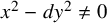 in
$\mathbb A^2$
 can be identified with the open set
$zt\neq 0$
 in the quadric
$x^2-dy^2+zt=0$
 .
To show that the G-action on Q is
$k_v$
 -linearizable, we use the following lemma. Its proof (for the case
$k=\mathbb C)$
 and the subsequent remark were communicated to me by Ivan Cheltsov. The case of general k requires certain adjustments (suggested by Jean-Louis Colliot-Thélène).
Lemma 3.12. Let G be a finite group, let
$n\ge 3$
 , and let
$Q\subset \mathbb P_k^n$
 be a quadric hypersurface equipped with a faithful action of G. Assume that the order of G is prime to n. Suppose that Q has a k-point fixed by G. Then the action of G is k-linearizable.
Proof. Projecting from the G-fixed k-point, we get a k-birational map
$Q\dashrightarrow \mathbb P_k^{n-1}$
 . This gives rise to a projective k-representation
$G\to \operatorname {{\mathrm {PGL}}}_n$
 . Consider the degree n covering
$\mathrm {SL}_n\to \operatorname {{\mathrm {PGL}}}_n$
 . The long sequence of cohomology yields an exact sequence of groups

where
$\mu _n$
 is the k-group scheme of
$n^{\textrm {th}}$
 roots of unity. Sequence (4) induces short exact sequences

and

Since we have an embedding
$G \hookrightarrow \operatorname {{\mathrm {PGL}}}_{n}(k)$
 and the order of G is prime to n, we conclude that G embeds into
$\mathrm {SL}_{n}(k)/\mu _{n}(k)$
 . By pull-back, we obtain a group extension

where
$G'$
 is a subgroup of
$\mathrm {SL}_{n}(k)$
 and
$\mu _{n}(k)$
 is a central abelian subgroup of
$G'$
 of order prime to the order of G. Such extensions are classified by the group
$H^2(G,\mu _{n}(k))$
 , which is killed by the order of G and the order of
$\mu _{n}(k)$
 and is therefore zero.
Hence, extension (5) admits a section, a group homomorphism
$G \to G'$
 , whence a required embedding
$G\hookrightarrow \mathrm {SL}_{n}(k)$
 .
Remark 3.13. The statement of Lemma 3.12 (for
$k=\mathbb C$
 ) was generalized by Alexander Duncan, see [Reference Abban, Cheltsov, Kishimoto and Mangolte1, Lemma 2.4].
Thus the case
$n=3$
 is settled.
Step 5. To treat the case of
$G\subset \operatorname {{\mathrm {Cr}}}_{l}(k)$
 ,
$l>3$
 , one can take the involution acting on the first three variables as g considered above and trivially on all the remaining variables. The resulting involution on
$T\times \mathbb G_{\textrm {m}}^{l-3}$
 extends to
$X_l:=X\times \mathbb P^{l-3}$
 with the three-dimensional X as above and the trivial action of G on the projective space. Therefore the W-module
$\mathrm {Pic} (\overline X_l)$
 is isomorphic to
$\mathrm {Pic} (\overline X) \oplus \mathbb Z^{l-3}$
 and is thus not stably permutation, as
$\mathrm {Pic} (\overline X)$
 , which proves that G is not stably projectively k-linearizable. The local linearizability is proved in exactly the same way as in the case
$n=3$
 .
This finishes the proof of Theorem 3.10.
4 Proof of Theorem 3.7
As said in the introduction, the proof presented below was communicated to me by Jean-Louis Colliot-Thélène.
Let G be a finite group. Let k be a field (no restriction on the field). In what follows, a G-action on a k-variety X is always assumed to be an action over k.
We start with a couple of lemmas.
Lemma 4.1. Let G be a finite group. Let
$X/k$
 be a quasi-projective variety equipped with a G-action. Then X can be covered by affine open sets which are G-stable.
Proof. Let
$m \in X$
 be a closed point. Since X is quasiprojective, the finitely many points
$g.m$
 are contained in an affine open set U. The intersection of the affine open sets
$gU$
 is a G-stable open set which is affine (see [37, Lemma 26.21.7]), and contains m.
The proof of the following lemma is omitted.
Lemma 4.2. Let X and Y be integral varieties over a field k. Let G be a finite group. There is an equivalence between:
(i) There is an action of G on the fields
$k(X)$
 and
$k(Y)$
 , trivial on k, and there exists an isomorphism of fields
$k(X) \simeq k(Y)$
 which respects the G-action.
(ii) There exist a G-stable nonempty open set
$U \subset X$
 and a k-birational G-morphism
$U \to Y$
 of k-varieties.
(iii) There exist nonempty open sets
$U \subset X$
 and
$V \subset Y$
 each with a G-action and a G-isomorphism
$U \simeq V$
 of k-varieties.
If these properties hold, one says that there is a G-birational equivalence between X and Y.
Proposition 4.3. Let k be a field. Let G be an abstract finite group. Let X and Y be quasi-projective geometrically integral k-varieties equipped with a G-action. Suppose there exist a nonempty G-stable open set
$U \subset X$
 and a G-morphism of k-varieties
$\phi \colon U \to Y$
 . Then there exist a normal k-variety
$\tilde {X}$
 with a G-action on
$\tilde {X}$
 , a birational G-morphism
$p\colon \tilde {X} \to X$
 , a nonempty G-stable open set
$V \subset X$
 such that
$p\colon p^{-1}(V) \to V$
 is an isomorphism and a G-morphism
$q\colon \tilde {X} \to Y$
 such that q and
$\phi \circ p$
 coincide on
$p^{-1}(V)$
 . If X is normal and
$Y/k$
 is projective, then there exists such an open set V which contains all codimension 1 points of X.
Proof. There is a G-action on the graph
$\Gamma \subset U \times Y $
 of the morphism
$U\to Y$
 . The projection map
$\Gamma \to U$
 is an isomorphism. Let
$Z \subset X \times\, Y$
 be the closure of this graph. It is geometrically integral. The action of G extends to
$Z \subset X \times Y$
 .
The projection map
$q\colon Z \to X$
 is birational. Over U, the map
$q = q^{-1}(U) \to U$
 is an isomorphism.
Let
$\tilde {Z}$
 be the normalization of Z. Since G acts on Z, it acts on
$\tilde {Z}$
 . Indeed, via Lemma 4.1 this statement is reduced to the following statement. Suppose we have an inclusion of integral commutative rings
$A \subset B$
 with the same field of fractions K, with B normal and integral over A. Suppose we have an action of G on A, hence on K. If we are given
$g\in G$
 and
$b \in B$
 satisfying an equation
$b^n+ \sum _{i=0}^{n-1} a_{i}b^{i}=0$
 , then
$(gb)^n+ \sum _{i=0}^{n-1} a_{i}(gb)^{i}=0$
 . Thus
$gb \in B$
 .
One then takes V to be the open set of normal points of U.
If X is normal and
$Y/k$
 is projective, then the given map
$U \to Y$
 extends to a G-morphism from an open set
$U \subset X$
 that contains all codimension 1 points of X.
Proposition 4.4. Let k be a field. Let G be an abstract finite group. Let X, Y be smooth, projective, geometrically integral k-varieties with a G-action over k. Let
$K/k$
 be a Galois extension with group
$\Gamma $
 , finite or infinite. Let
$X_K=X\times _kK$
 ,
$Y_K=Y\times _kK$
 be equipped with the natural action of
$W=G\times \Gamma $
 .
Suppose there exists a G-birational equivalence between X and Y. Then there exist W-permutation modules
$P_{1}$
 and
$P_{2}$
 and a W-isomorphism

Proof. Once equipped with Proposition 4.3, one may copy the proof of [Reference Colliot-Thélène and Sansuc16, Prop. 2.A.1, p. 461/462] (a proof due to Laurent Moret-Bailly) word for word. One gets isomorphisms of W-modules


where
$CH^1(\tilde {Z})$
 is the Chow group of codimension 1 cycles modulo rational equivalence on the normal variety
$\tilde {Z}$
 of Proposition 4.3, and where
$P_{1}$
 and
$P_{2}$
 are permutation modules. This gives a W-isomorphism

Corollary 4.5. Let X, Y be smooth, projective, geometrically integral k-varieties with a G-action. Suppose there exists a G-birational equivalence between
$X \times \mathbb P(V_1)$
 and
$Y \times \mathbb P(V_2)$
 , where G acts on
$\mathbb P(V_1)$
 and
$\mathbb P(V_2)$
 via homomorphisms
$G \to \operatorname {{\mathrm {PGL}}}(V_1)$
 and
$G\to \operatorname {{\mathrm {PGL}}}(V_2)$
 , respectively. Then there exist W-permutation modules
$P_{1}$
 and
$P_{2}$
 and a W-isomorphism

Proof. The action of G on
$\mathrm {Pic}(\mathbb P(V_i)) = \mathbb Z$
 (
$i=1,2$
 ) is the trivial one. We have natural G-isomorphisms

and similarly for
$\mathrm {Pic}(Y \times \mathbb P(V_2))$
 . It remains to go over to
$X_K$
 ,
$Y_K$
 , and apply Proposition 4.4.
Remark 4.6. If
$\operatorname {{\mathrm {char}}} k=0$
 and resolution of singularities is available, there is a shorter proof. One can use weak factorization (which is functorial, over any field of characteristic zero, and in presence of group actions): every birational map can be factored in a sequence of blowups and blowdowns with centres in smooth subvarieties; this implies the required statement; cf. [Reference Bogomolov and Prokhorov3, Proposition 2.5].
Setting
$K=\bar k$
 in Corollary 4.5, we arrive at the statement of Theorem 3.7.
5 Real plane
In this section, we show some applications of Theorem 3.7. Namely, it can be viewed as a purely algebraic and computationally feasible alternative to some more sophisticated tools such as classification of Sarkisov links used in the study of birational involutions of real plane [Reference Cheltsov, Mangolte, Yasinsky and Zimmermann11] and other problems of a similar flavour. Moreover, in the absence of such a classification for higher-dimensional varieties, Theorem 3.7 may turn out to be the only available tool for proving the nonlinearizability.
Below we present a simple example of such an application.
Consider the following question.
Question 5.1. What are elements of order 2 in
$\operatorname {{\mathrm {Cr}}}_2(\mathbb R)$
 that are
$\mathbb C$
 -linearizable but not
$\mathbb R$
 -linearizable?
This question was answered in [Reference Cheltsov, Mangolte, Yasinsky and Zimmermann11] as a consequence of the classification of birational involutions of real plane up to conjugacy. According to the Main Theorem in 1.E and its proof in Section 8 (particularly, Lemma 8.2 and Section 8.B), any involution as in Question 5.1 is conjugate either to one of the two involutions acting on a quadric of signature (3,1) or (2,2), or to one of the Trepalin involutions (subdivided into three infinite families), each thereof acting on a conic bundle with even number (at least 4) of degenerate fibres.
Below we present in some detail an alternative proof of the nonlinearizability for one of these families (as said, the original proof in [Reference Cheltsov, Mangolte, Yasinsky and Zimmermann11] is based on subtle techniques from equivariant birational geometry), providing a little stronger result.
Example 5.2. Let
$n\ge 1$
 , and let
$Z_n$
 denote the surface in
$\mathbb P^2_{\mathbb R}\times \mathbb P^1_{\mathbb R}$
 given by

where
$([x:y:z], [t_0:t_1])$
 denote the coordinates in
$\mathbb P^2_{\mathbb R}\times \mathbb P^1_{\mathbb R}$
 .
This surface was first considered by Trepalin [Reference Trepalin38] and then studied in [Reference Yasinsky41] and [Reference Cheltsov, Mangolte, Yasinsky and Zimmermann11]. We reproduce some of its properties described in [Reference Yasinsky41, Example 1.4] (with minor corrections).
$\bullet $
 The projection onto
$\mathbb P^1_{\mathbb R}$
 defines on
$Z_n$
 a structure of a conic bundle with
$r:=4n+2$
 degenerate fibres at the points
$p_k=[k\sqrt {-1}:1]$
 ,
$p_{-k}=[-k\sqrt {-1}:1]$
 (
$k=1,\dots ,2n$
 ),
$p_0=[0:1]$
 ,
$p_{\infty }=[1:0]$
 . The set D of the components of the degenerate fibres consists of the lines {
$l_k$
 ,
$\bar l_k$
 }, {
$l_{-k}$
 ,
$\bar l_{-k}$
 },
$k=1, \dots ,2n$
 , of the form
$z=\pm k^{4n}\sqrt {-1}y$
 (for the first
$4n$
 fibres), {
$l_0$
 ,
$\bar l_0$
 } given by
$z=\pm ((2n)!)^2\sqrt {-1}x$
 (for the fibre at
$p_0$
 ), and {
$l_{\infty }$
 ,
$\bar l_{\infty }$
 } given by
$y=\pm \sqrt {-1}x$
 (at
$p_{\infty }$
 ). The group
$\Gamma =\mathrm {Gal} (\mathbb C/\mathbb R)=\left <\sigma \right>$
 acts on D by swapping
$l_{k}$
 and
$\bar l_{-k}$
 (
$k=\pm 1, \dots ,\pm 2n$
 ),
$l_0$
 and
$\bar l_0$
 ,
$l_{\infty }$
 and
$\bar l_{\infty }$
 . Since the lines in each of the first
$4n$
 orbits of
$\Gamma $
 do not intersect, we can blow down the first
$4n$
 fibres over
$\mathbb R$
 and obtain a real conic bundle with two degenerate fibres, which is
$\mathbb R$
 -rational by a theorem of Iskovskikh [Reference Iskovskikh22, Theorem 4.1]. Hence
$Z_n$
 is also
$\mathbb R$
 -rational.
$\bullet $
 The involution of
$\mathbb P^1_{\mathbb R}$
 defined by
$[t_0:t_1] \mapsto [-t_0:t_1]$
 gives rise to an
$\mathbb R$
 -regular involution
$g_n$
 of
$Z_n$
 . Denote
$G_n=\left <g_n\right>$
 . The group
$G_n$
 acts on D by swapping
$l_{k}$
 and
$l_{-k}$
 ,
$\bar l_{k}$
 and
$\bar l_{-k}$
 (
$k=1, \dots ,2n$
 ), and fixing the remaining four lines. Since
$Z_n$
 is
$\mathbb R$
 -rational,
$G_n$
 corresponds to a subgroup of order two in
$\operatorname {{\mathrm {Cr}}}_2(\mathbb R)$
 , for which we will use the same notation.
Proposition 5.3. The subgroup
$G_n\subset \operatorname {{\mathrm {Cr}}}_2(\mathbb R)$
 is
$\mathbb C$
 -linearizable but not stably projectively
$\mathbb R$
 -linearizable. For
$n\ne m$
 the subgroups
$G_n$
 and
$G_m$
 are not stably conjugate.
Proof. Denote
$N_n=\mathrm {Pic} (Z_n\times _{\mathbb R}\mathbb C)$
 . This is a free
$\mathbb Z$
 -module of rank
$r+2$
 where
$r=4n+2$
 is the number of degenerate fibres of the conic bundle. One can choose as generators of N (the classes of) a section s, the general fibre l, and one component of each of the r degenerate fibres (not meeting s), say,
$l_k$
 (
$k=\pm 1,\dots ,\pm 2n$
 ),
$l_0$
 ,
$l_{\infty }$
 (see, e.g., [Reference Kunyavskiĭ and Tsfasman28, Proposition 0.4] for more details). As to the additional component
$\bar l_k$
 of each degenerate fibre, in N we have
$\bar l_k=l-l_k$
 .
The group
$G_n$
 acts on
$N_n$
 by swapping
$l_k$
 and
$l_{-k}$
 and fixing all the remaining elements of the chosen free basis, so that N is a permutation
$G_n$
 -module and is hence flasque and coflasque. Therefore
$G_n$
 is
$\mathbb C$
 -linearizable by a theorem of Bogomolov and Prokhorov [Reference Bogomolov and Prokhorov3, Corollary 1.2].
The group
$\Gamma $
 acts on N as follows:
$l_k\mapsto l-l_{-k}$
 (
$k=\pm 1,\dots ,\pm 2n$
 ),
$l_0\mapsto l-l_0$
 ,
$l_{\infty }\mapsto l-l_{\infty }$
 , l is fixed. As to s, we shall use the formula from [Reference Kunyavskiĭ and Tsfasman28, page 586]:

where
$L_i$
 is a component of the
$i^{\textrm th}$
 degenerate fibre. In our notation this gives

Since
$H^1(G_n,N_n)=0$
 , the restriction-inflation sequence for the group
$W_n=G_n\times \Gamma $
 gives
$H^1(W_n,N_n)=H^1(G_n,N_n^{\Gamma })$
 . We have

The action of
$G_n$
 on
$N_n^{\Gamma }$
 fixes
$\tilde s$
 and
$\tilde l$
 and maps each
$\tilde l_k$
 to
$-\tilde l_k$
 . Hence we obtain
$H^1(W_n,N_n)=(\mathbb Z/2)^{2n}$
 . Thus the
$W_n$
 -module
$N_n$
 is not stably permutation and hence by Theorem 3.10, we conclude that
$G_n$
 is not stably projectively
$\mathbb R$
 -linearizable. By the same theorem, for
$n\ne m$
 the subgroups
$G_n$
 and
$G_m$
 are not stably conjugate in
$\operatorname {{\mathrm {Cr}}}_2(\mathbb R)$
 because the modules
$N_n$
 and
$N_m$
 are not similar, since they have different first cohomology.
6 Concluding remarks
We finish by collecting several miscellaneous remarks and questions.
Remark 6.1. We do not know an answer to Question 1.2 in the case
$n=2$
 , even for cyclic G, even for G of order 2. Hopefully, one can somehow use the available classification results [Reference Dolgachev and Iskovskikh19], [Reference Pinardin, Sarikyan and Yasinsky33].
We do not know anything about the local-global behaviour of elements of odd order in Cremona groups.
Remark 6.2. Somewhat surprisingly, it is not clear how the linearization properties behave with respect to Weil’s functor of restriction of scalars. In particular, an affirmative answer to the following question could simplify the argument at Step 4 of the proof of Theorem 3.10.
Question 6.3. Let
$L/k$
 be a finite field extension. Suppose that the action of a group G on a smooth, projective L-variety X is (projectively) L-linearizable. Is the induced G-action on
$R_{L/k}X$
 (projectively) k-linearizable?
The following partial answer was communicated to me by Evgeny Shinder.
Proposition 6.4 (Shinder).
Let
$L/k$
 be a finite field extension. Suppose that the action of a finite group G on X is L-linearizable. Then the induced G-action on
$R_{L/k}X$
 is stably k-linearizable.
Proof. We will use the no-name lemma in the following form [Reference Chernousov, Gille and Reichstein13, Lemma 4.4]:
Lemma 6.5. If G is a finite group acting faithfully on X and
$\mathcal E\to X$
 is a G-linearized vector bundle of relative dimension d, then
$\mathcal E$
 is G-birational to
$X\times \mathbb A^d$
 with trivial action on the second factor.
To prove the proposition, we can assume
$X = \mathbb P^n_L$
 with a G-action induced from a linear G-representation on
$\mathbb A^{n+1}_L$
 . Denote
$d = [L:k]$
 . We have an induced G-equivariant rational map

Here
$R_{L/k}Tot(\mathcal O_{\mathbb P_L^n}(-1))$
 is a G-linearized vector bundle over
$R_{L/k}\mathbb P_L^n$
 . (Weil’s descent of a G-linearizable vector bundle is a G-linearizable vector bundle, see [Reference Brion6, Lemma 2.2].) Thus, by Lemma 6.5 we have a G-birational map

Therefore
$R_{L/k}\mathbb P_L^n$
 is stably k-linearizable.
Acknowledgements
I thank Mikhail Borovoi, Ivan Cheltsov, Mathieu Florence, Yuval Ginosar, Evgeny Shinder, Yuri Tschinkel, and Michael Tsfasman for useful discussions and correspondence. My special thanks go to Jean-Louis Colliot-Thélène, to whom I owe Section 4 as well as numerous critical remarks on the earlier versions of this text. I am also grateful to the referees for careful reading and helpful comments.
Part of this work was accomplished when the author was visiting the IHES (Bures-sur-Yvette), Sorbonne Université (Paris), and the MPIM (Bonn). Support of these institutions is gratefully acknowledged.
Competing interests
The author has no competing interests to declare.
Funding statement
Author’s research was supported by the ISF grant 1994/20.


 Open access

