Introduction
The sharing and translation of knowledge into clinical practice is necessary to ensure the provision of effective health services, but dissemination can be difficult. Communities of practice (CoPs) are a mechanism for sharing knowledge which have evolved over the past 3 decades (Wenger, Reference Wenger1998). CoPs are characterised by members’ interactions with each other, knowledge sharing and building a sense of belonging through networking (Li et al., Reference Li, Grimshaw, Nielsen, Judd, Coyte and Graham2009) with an essential element being thinking together through mutual engagement (Pyrko, Dörfler, & Eden, Reference Pyrko, Dörfler and Eden2017). Due to widespread availability and convenience, CoPs are now generally convened online through email listservs and/or social media, enabling global exchange of knowledge (Cheung, Lee, & Lee, Reference Cheung, Lee and Lee2013).
Online CoPs have been implemented in diverse areas of health practice including paediatric critical care (Wolbrink, Kissoon, Mirza, & Burns, Reference Wolbrink, Kissoon, Mirza and Burns2017), aphasia rehabilitation (Gauvreau, Le Dorze, Kairy, & Croteau, Reference Gauvreau, Le Dorze, Kairy and Croteau2019), developmental co-ordination disorder (Camden, Rivard, Hurtubise, Héguy, & Berbari, Reference Camden, Rivard, Hurtubise, Héguy and Berbari2017) and manual physiotherapy (Evans, Yeung, Markoulakis, & Guilcher, Reference Evans, Yeung, Markoulakis and Guilcher2014). This has enabled accessible information sharing within disciplines (Hoffmann, Desha, & Verrall, Reference Hoffmann, Desha and Verrall2011; Hurtubise, Rivard, Héguy, Berbari, & Camden, Reference Hurtubise, Rivard, Héguy, Berbari and Camden2016; Terry, Nguyen, Peck, Smith, & Phan, Reference Terry, Nguyen, Peck, Smith and Phan2020) and across disciplines (Bermejo-Caja et al., Reference Bermejo-Caja, Koatz, Orrego, Perestelo-Perez, Gonzalez-Gonzalez, Ballester and Martinez-Marcos2019). Online CoPs can also be a source of learning for student clinicians and novice clinicians (Terry et al., Reference Terry, Nguyen, Peck, Smith and Phan2020). Participation in online CoPs has been described as particularly valuable in supporting health practices for people with complex needs, for highly specialised practices such as augmented and supported communication, empowerment of people with chronic conditions in primary healthcare settings and where health professionals may be geographically dispersed such as in community nursing practice (Bermejo-Caja et al., Reference Bermejo-Caja, Koatz, Orrego, Perestelo-Perez, Gonzalez-Gonzalez, Ballester and Martinez-Marcos2019; Quinn, Cook, & Rowland, Reference Quinn, Cook and Rowland2019; Valaitis, Akhtar-Danesh, Brooks, Binks, & Semogas, Reference Valaitis, Akhtar-Danesh, Brooks, Binks and Semogas2011).
One such highly complex area of practice is acquired brain injury and illness, which requires a multidisciplinary approach to assessment, treatment and collaboration (Togher et al., Reference Togher, Wiseman-Hakes, Douglas, Stergiou-Kita, Ponsford, Teasell and Turkstra2014). The complexity and heterogeneity of the changes that commonly result from conditions affecting the brain, such as traumatic brain injury (TBI), stroke, dementia, neurodevelopmental disorders and multiple sclerosis, require collaboration amongst skilled clinicians to optimise outcomes. The clinical skills required in assessing and treating people with brain impairment are specialised, and their acquisition often requires additional training and supervision above and beyond discipline-specific training programmes and on-the-job experience (Ponsford, Sloan, & Snow, Reference Ponsford, Sloan and Snow2012). Available methods of acquiring these specialised skills include 1) discipline-specific peer mentoring through individual supervision or email listservs – in Australia these include Neuropsychology in Australia (NPinOz: https://groups.google.com/d/forum/npinoz?hl=en), Speech Pathology Brain Injury Interest Group (SPBIIG: https://groups.io/g/SPBIIG) and the Occupational Therapy Neuro Special Interest group (SIG: https://www.otaus.com.au/member-resources/interest-groups/neurology-and-abi); 2) multi-disciplinary knowledge and evidence sharing groups such as NeuroBITE (previously PsycBITE: https://neurorehab-evidence.com/web/cms/content/home), Speechbite (https://speechbite.com/), Evidenced-based Review of Moderate-Severe Acquired Brain Injury (ERABI: https://erabi.ca/) and Model Systems Knowledge Translation Centre (MSKTC: https://msktc.org/) and 3) training workshops and conferences on particular topics in the brain impairment field, such as those offered by the Australasian Society for the Study of Brain Impairment (ASSBI: https://www.assbi.com.au/) and other local, national and international organisations.
However, multidisciplinary CoPs have the potential to add to these methods of knowledge sharing. Discipline-specific online peer networks are an effective way of communicating issues relevant to each profession, but do not allow cross-communication between the various professions involved in the care of people with brain impairment. Workshops and conferences are an excellent way for this multidisciplinary communication to occur, but are not always affordable or accessible for all, particularly clinicians and researchers in rural and regional areas of Australia and other countries around the world. These groups can also be isolated from relevant specialist face-to-face training or knowledge sharing opportunities in the brain impairment field.
Access to these methods for learning and developing specialised skills is crucial for effective and timely translation of new research findings into clinical practice. However, a review of landmark clinical trials and rate of usage suggests it takes on average 17 years for research evidence to reach clinical practice (Balas & Boren, Reference Balas, Boren, Bemmel and McCray2000). Even specialised university training programmes do not always provide access to supervised practical opportunities for development of skills relevant to the brain impairment field (e.g., Wong, McKay, & Stolwyk, Reference Wong, McKay and Stolwyk2014). Pagan et al. (Reference Pagan, Ownsworth, McDonald, Fleming, Honan and Togher2015) found that the majority of multidisciplinary clinicians working in the field of TBI rehabilitation in Australia wanted more professional development about new interventions and therapies (76%) and translating rehabilitation research into everyday practice (65%). Implementation of strategic methods to facilitate the timely dissemination and exchange of knowledge and skills between clinicians and researchers can improve the process of clinical translation (Daudelin, Selker, & Leslie, Reference Daudelin, Selker and Leslie2015). However, further opportunities for interdisciplinary collaboration, skill-sharing and mentoring between clinicians and researchers working with people with brain impairment could be beneficial for improving knowledge translation and health professionals’ level of knowledge, skills and confidence.
The BRAin Impairment cliNician and reSearcher Peer Network (BRAINSPaN) is a multidisciplinary network of clinicians and/or researchers in the brain impairment field in Australia, launched in June 2017. The aims of BRAINSPaN are 1) to enhance clinical translation of brain impairment research by improving the speed and quality with which findings are translated into practice; 2) to provide an interdisciplinary forum for clinicians and researchers to share knowledge and skills; 3) to highlight new techniques and interventions in the field and evaluate the quality of new research; 4) to allow clinicians, including those in rural and regional areas, to be guided by experts and peers, connect with others and seek assistance with complex clinical issues; 5) to encourage a researcher–clinician exchange, so the experience of clinicians in implementing evidence-based techniques can be used to guide future practice and research and 6) to facilitate clinically relevant research opportunities and collaborations. BRAINSPaN primarily uses an online platform to communicate (google groups), which disseminates posts via email. To our knowledge, it is the first of its kind in Australia to facilitate interdisciplinary skill sharing through peer mentoring in the field of brain injury.
In this study, we wanted to investigate the needs of clinicians and researchers involved in BRAINSPaN and the impact of participation in BRAINSPaN on skills, knowledge and confidence in working with people with brain impairment. In this way, we hoped to evaluate the intended impact of this initiative: to improve evidence-based care for people with brain impairment. Our specific aims were to 1) describe the extent of multidisciplinary collaboration of BRAINSPaN participants; 2) understand the reasons people might engage in BRAINSPaN, including their goals for BRAINSPaN participation, and the areas in which they would most like to increase their knowledge, skills and confidence; 3) evaluate whether participants’ goals were met, and if there were changes to knowledge, skills and confidence in the desired areas following participation in BRAINSPaN and 4) describe how BRAINSPaN is used by its members.
Aims 1, 2 and 4 were exploratory. In relation to Aim 3, we hypothesised that knowledge, skills and confidence in assessment and intervention techniques for people living with brain impairment would improve following participation in BRAINSPaN.
Methods
Ethical approval for this study was obtained from the Monash University Human Research Ethics Committee.
Participants
Members of the BRAINSPaN listserv at the time of the study were invited to participate, including researchers, clinicians and students. Listserv members at the time mostly comprised members of ASSBI, who were included in the initial formation of BRAINSPaN as part of their membership, but were given the opportunity to opt out. BRAINSPaN members who were not ASSBI members at the time of listserv formation were able to join through direct request, by providing information on their qualifications, training and/or experience in the brain impairment field. There were no exclusion criteria for the study. There were between 500 and 700 members during the period of data collection. Therefore, we calculated our target sample size as 234, which would be a representative sample from a population of 600 potential participants based on desired accuracy with confidence level of 95% (Taherdoost, Reference Taherdoost2017).
Materials
Three related online surveys were developed to address the research aims. Survey 1 (see online supplementary appendix 1) included questions regarding demographic and professional details; goals for participating in BRAINSPaN (from a list of six options, such as ‘increase access to new research findings’); frequency of multidisciplinary collaboration; selection of the top three domains of practice in which they wanted to increase knowledge, skills and confidence (from a list of 22 options such as goal setting and cognitive rehabilitation); current ratings on a 5-point Likert scale of knowledge, skills and confidence in those top three domains; and types of activities they wanted to engage in as part of their BRAINSPaN membership. Survey 2 (see online supplementary appendix 2) contained the same questions, plus additional questions for those who had been BRAINSPaN members for 3–7 months, including which goals from Survey 1 had been addressed; which domains of knowledge, skills and confidence had increased; which activities they had engaged in as part of their BRAINSPaN membership and how frequently; and open questions about the benefits of BRAINSPaN participation and suggestions for improvement. Survey 3 was identical to Survey 2 except the additional questions were for those who had been BRAINSPaN members for 6–14 months.
Procedure
Participants provided informed consent. All surveys were conducted using Qualtrics and distributed via email to the BRAINSPaN membership. Survey 1 was conducted 1 month after the launch of BRAINSPaN, which occurred in June 2017 (T1) (at which time there were 595 members in total). Survey 2 was conducted 7 months after launch (T2; 637 members), and Survey 3 was conducted 14 months after launch (T3; 668 members). All members were invited to participate at each time point, regardless of whether or not they had participated in the previous survey(s). Each participant was asked to generate a participant ID comprising the day and month of their birth, followed by the first three letters of their middle name (or XYZ for those with no middle name). This enabled anonymous participation while also allowing survey responses at different time points to be linked. Participants in surveys 1 and 2 were instructed to download a pdf of their responses, to remind them of the top three areas for improvement they had selected when completing the subsequent survey(s). Each survey took approximately 10–15 min to complete.
To evaluate how BRAINSPaN was being used by its members, two separate content analyses of the topics of posts (i.e., emails sent to the google group by BRAINSPaN members) were conducted. Posts were defined as topic threads (i.e., some posts may have had multiple messages sent). The first analysis involved classifying the topics of all posts over the period of the three surveys (August 2017 to November 2018) that related to any of the 22 domains of practice listed in the surveys (i.e., goal setting, cognitive rehabilitation, etc.). This was done to explore how the BRAINSPaN topics discussed may have aligned with other participant outcomes, such as knowledge, skills and confidence, during the survey period. Post titles were exported from the BRAINSPaN google group website into Excel, where they were grouped into survey periods. Two researchers (JS and ED) independently identified whether any of the domains of practice were the focus of the post and categorised them accordingly. Percentage agreement about practice domain categorisation between the two raters was calculated and all discrepancies resolved by discussion between all authors. The frequency of occurrence of each topic domain was then calculated.
The second content analysis was based on the goal or purpose of each post (e.g., request for information, advertising a professional development event) and covered all posts from August 2017 until May 2020, to allow a more comprehensive view of BRAINSPaN posts over time and beyond the 22 domains of practice. Again, post titles were exported from the BRAINSPaN google group website, and author JS used open coding to generate topic codes for each post. Codes were progressively refined and compared across categories, until these were stable and no new categories were identified. A second researcher (ED) independently coded all posts using the coding framework generated by JS. Percentage agreement was calculated, and discrepancies resolved by consensus discussion between all authors. The frequency of occurrence of each code was then calculated.
Data analysis
Survey data from the three time points were collated and primarily analysed using descriptive statistics. Missing data were reviewed and considered to be of minimal impact given low frequencies of mid-survey attrition, low numbers of missing individual item responses and the largely descriptive nature of the analyses. Missing data were not imputed. Survey responses in which only the initial demographic questions were completed were excluded from the dataset for analysis (n = 2 at T1, n = 1 at T2 and n = 0 at T3). Percentages reported in the results are based on the number of respondents who answered each item, which varied slightly across items. When statistically comparing change in responses from T1 to T2 and T1 to T3, quantitative data were analysed with repeated measures t-tests. Qualitative content analysis (Hsieh & Shannon, Reference Hsieh and Shannon2005) was used for responses to open-ended survey questions, by inductively coding written responses and counting the number of times that the codes were mentioned for each question. The code counts were checked by a second researcher and any discrepancies resolved through discussion.
Results
Participants
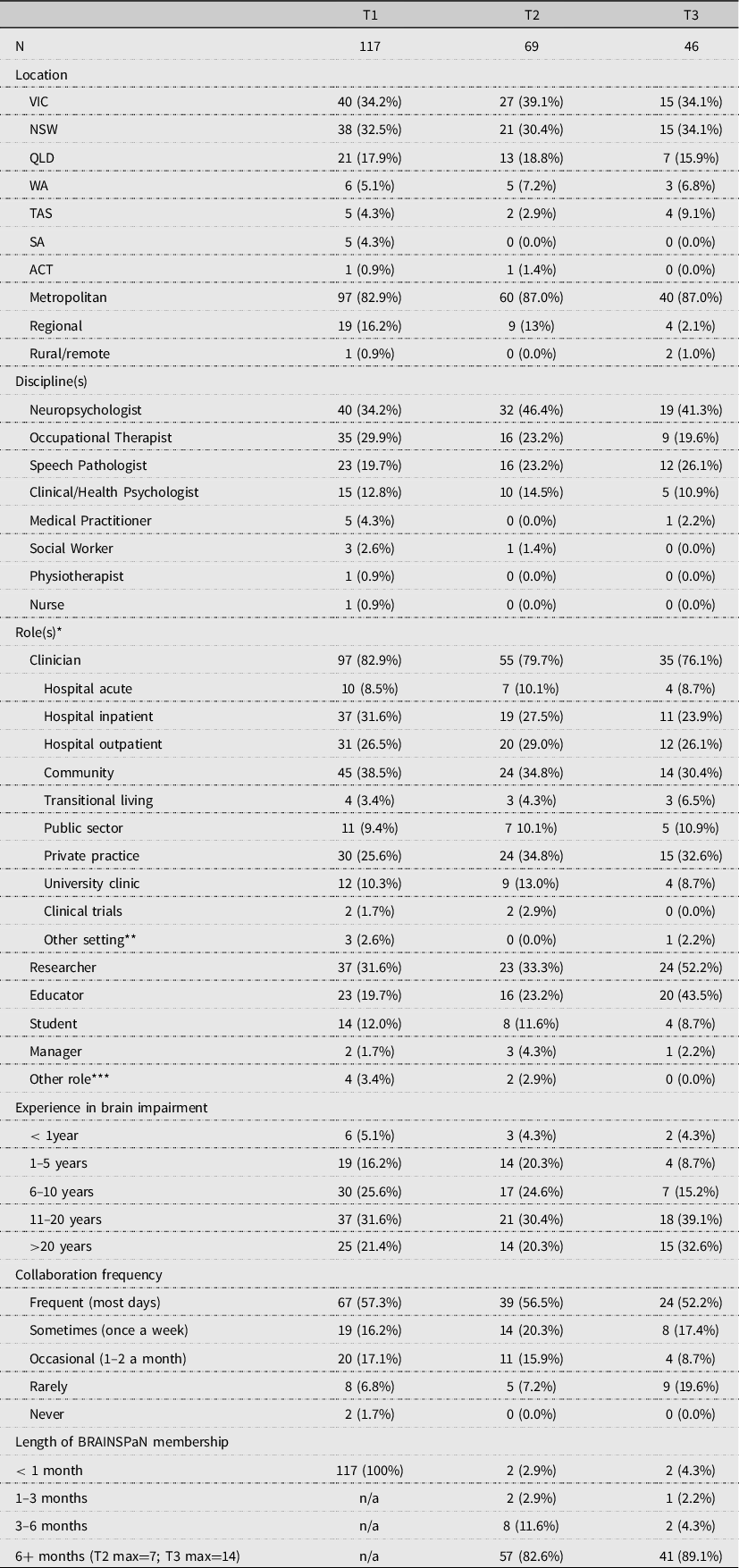
As seen in Table 1, there were 117 participants for the T1 survey. Of the 69 T2 respondents, 28 (42.0%) had done the T1 survey, and of the 46 T3 participants, 29 (63.0%) had done the T1 or T2 survey. The majority of participants were neuropsychologists, occupational therapists and speech pathologists, primarily practising in clinical roles in metropolitan areas of Victoria and New South Wales. A large proportion of participants were highly experienced (10+ years) in the brain impairment field.
Participant demographics at each timepoint (T1 = 1 month post-launch; T2 = 7 months post-launch; T3 = 14 months post-launch)

*Numbers and percentages do not add up to 100% due to respondents having multiple roles and/or more than one clinical setting. **Other setting = School/paediatric, aged care facility and forensic. ***Other role = Administrator, Allied Health Assistant, Case Manager, on Maternity Leave, Health Professional and Program Developer.
Aim 1: Extent of multidisciplinary collaboration
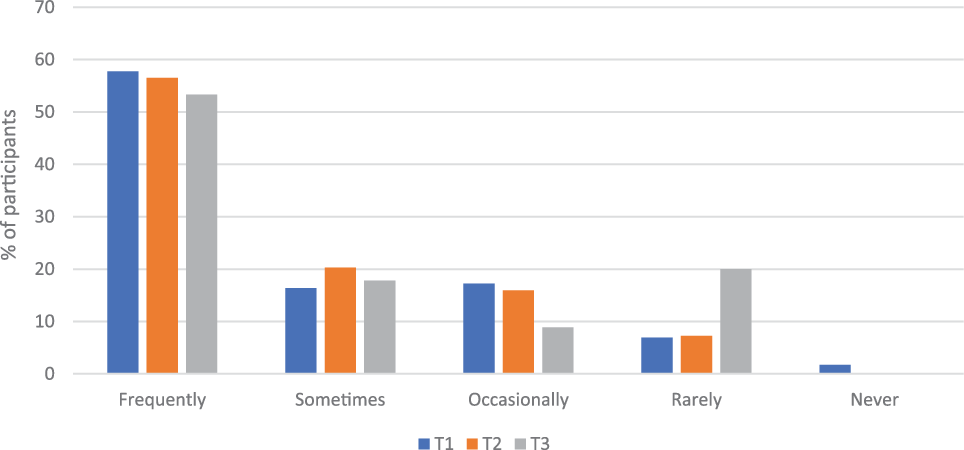
As shown in Fig. 1, at T1, 74.1% of participants reported collaborating ‘frequently’ or ‘sometimes’ with colleagues from other disciplines about the management of brain impairment. This increased slightly to 76.8% of participants at T2, and then decreased to 71.1% at T3. At T1, there were two participants who reported ‘never’ collaborating, but there were no participants who ‘never’ collaborated at T2 or T3. Repeated measures analysis showed none of the changes in the frequency of collaboration over time were statistically significant.
Frequency of multidisciplinary collaboration regarding management of brain impairment clients at each time point.
Graph displays percentage of participants selecting each response at each time point (T1: n = 116; T2: n = 69; T3: n = 45)

Aim 2: Goals for participation in BRAINSPaN
Participants’ goals for participating in BRAINSPaN at T1, from the most to least commonly endorsed of the five options offered, were to
-
1. increase access to new research findings (n = 102)
-
2. increase interaction with other clinicians/researchers in the brain impairment field (n = 95)
-
3. improve knowledge, skills and/or confidence in intervention techniques (n = 84)
-
4. increase collaboration with clinicians/researchers from other disciplines (n = 69) and
-
5. improve knowledge, skills and/or confidence in assessment techniques (n = 69).
At T2, goals were similar, with the exception that increasing interaction with other clinicians/researchers in the field (n = 55) was selected slightly more often than increasing access to new research findings (n = 54), with the remaining goals in the same order of frequency (n = 45, 38 and 32, respectively). At T3, the top two goals had reversed again so that increasing access to new research findings was more frequently selected (n = 38) than the interaction with others goal (n = 34), with the remaining three again falling in a similar pattern (n = 28, 30 and 20 respectively).
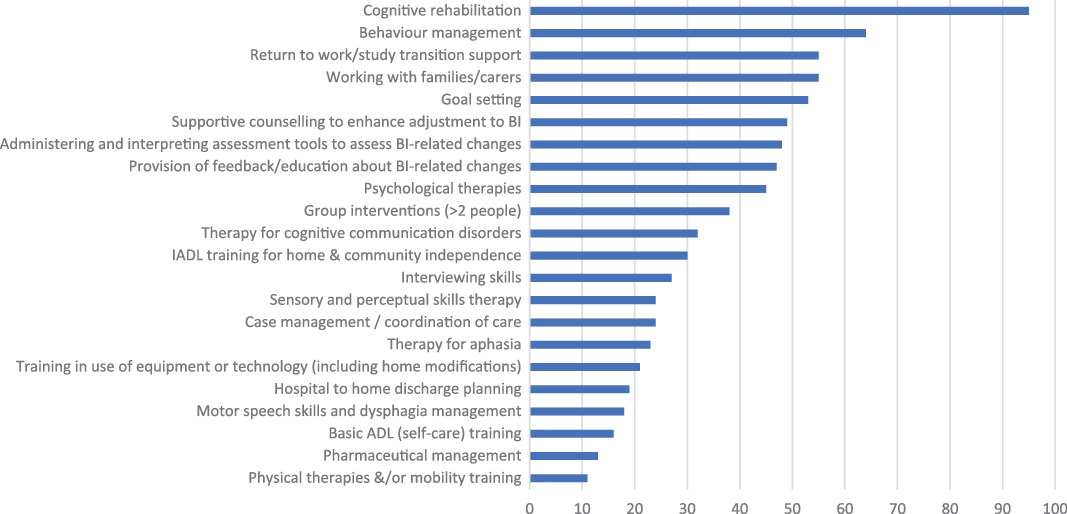
Figure 2 shows the number of participants selecting each of the 22 available domains in which they wished to increase their knowledge, skills and confidence. The most commonly selected domains were cognitive rehabilitation, behaviour management, working with families/carers, return to work/study transition support and goal setting.
Number of participants selecting each domain of desired improvement in knowledge/skill/confidence at T1 (n = 117).

Aim 3: Impact of BRAINSPaN participation on goals, knowledge, skills and confidence
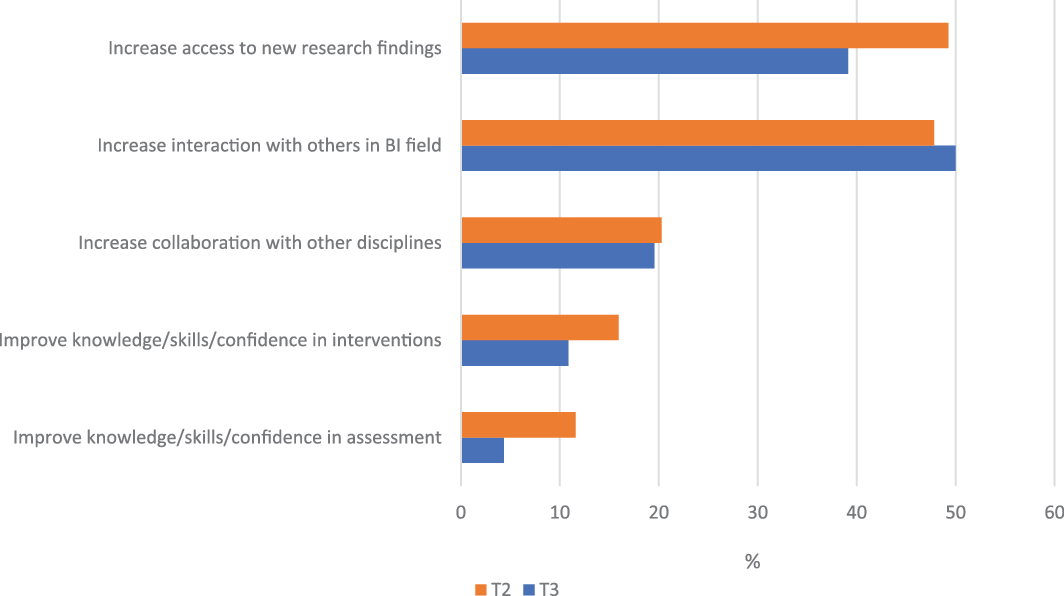
Figure 3 shows that ‘increasing access to new research findings’ and ‘increasing interaction with other clinicians and researchers in the brain impairment field’ were the two most commonly attained goals for BRAINSPaN participation at T2 and T3 for the overall sample.
Percentage of participants at T2 (n = 69) and T3 (n = 46) who reported achieving the goals listed. BI=brain impairment.

When asked to select all domains of practice in which their knowledge/skills/confidence had increased as a result of participating in BRAINSPaN, at T2 the most commonly selected domain was cognitive rehabilitation (n = 24), followed by administering and interpreting assessment tools (n = 8), psychological therapies (n = 5) and behaviour management (n = 5). At T3, this had changed slightly, with cognitive rehabilitation remaining the most frequently selected domain (n = 9), followed by goal setting (n = 6), administering and interpreting assessment tools (n = 5) and provision of feedback/education (n = 5).
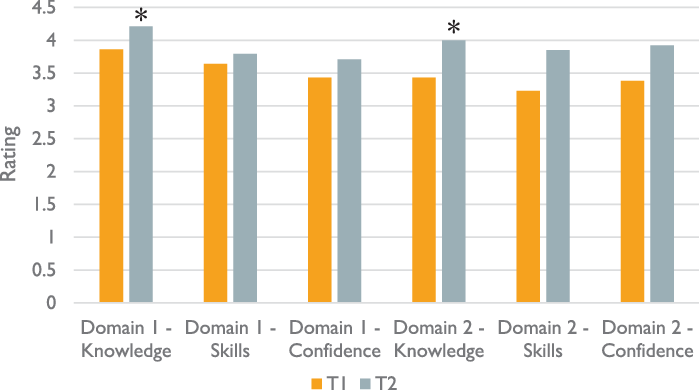
At T2 and T3, participants who had previously completed the T1 survey were also asked to rate their knowledge, skills and confidence in the top three domains of practice they had selected at T1 as targets for improvement. As the number of participants at T3 who had completed the T1 survey was insufficient to allow meaningful analyses, only the T2 data were compared with T1. As seen in Fig. 4, there was a significant increase from T1 to T2 in participants’ knowledge of their top selected domain of practice, t(13)= −2.69, p=.02, and also for knowledge of their second domain, t(13) = −2.51, p=.03.
Self-ratings of knowledge, skills and confidence at T1 and T2 for top two domains (n = 14). *p<.05.

Content analysis of responses to an open question about the benefits of BRAINSPaN participation revealed a range of impacts. Those mentioned by at least two participants at either T2 or T3 (reported n is a sum of mentions at T2 and T3) included increased knowledge of and access to resources and information (n = 15), access to a multidisciplinary network of clinicians and researchers and the associated diversity of perspectives (n = 8), access to new ideas and guidance for solving problems (n = 7), increased knowledge of current research (n = 7), connecting with others with common interests (n = 6) and information about professional development opportunities (n = 5).
A range of suggestions for improving BRAINSPaN were also made. At T2, two participants suggested more regular postings to increase engagement, and others suggested increased sharing of tools, resources, new discoveries, and management strategies, a clearer goal, meetings at conferences, subgroups for people with a common interest, and focusing on particular topics or areas of new research each month (one mention each). At T3, further suggestions for improvement included a twitter handle, continued confidence building among members, engaging members to post interesting information to keep the listserv active, development of a participant pool for research, increased access to resources and sharing policies, procedures and guidelines pertaining to different professions (one mention each).
Aim 4: Usage of BRAINSPaN by members
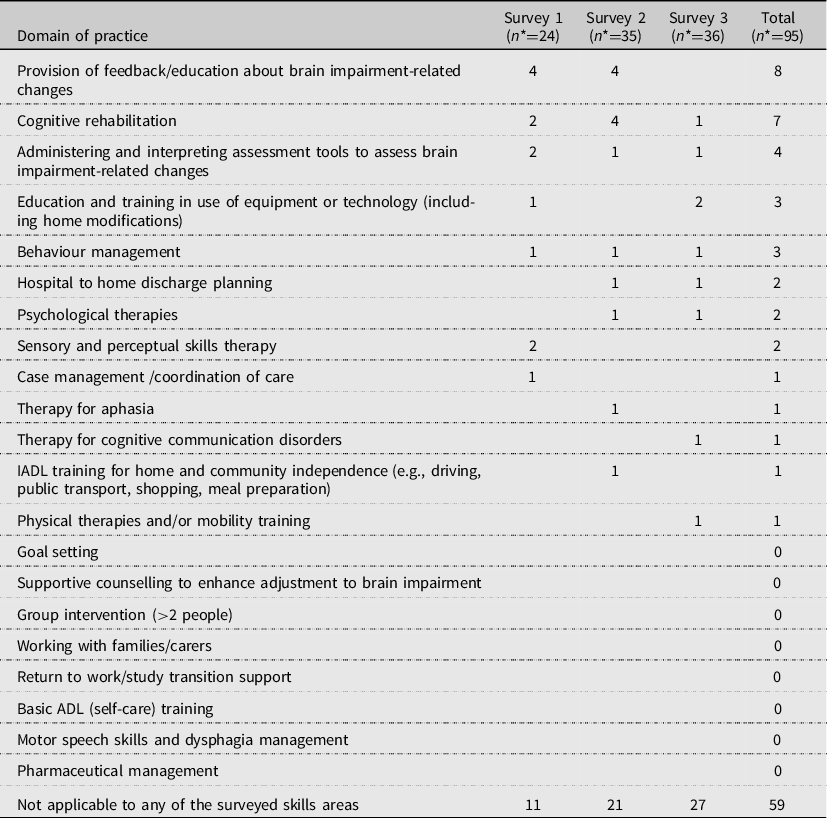
During the period from August 2017 to November 2018, 95 topics were posted to the BRAINSPaN group. In the initial survey period, from the launch of the group to one month post-launch, there were 24 posts by members, with 35 posts in the second survey period, and 36 posts in the third survey period. The number of topics posted about each of the 22 domains of practice is shown in Table 2. Initial inter-rater agreement for categorisation into the 22 domains was 64%, with the majority of disagreements occurring for posts that did not clearly fall into one practice domain; these disagreements were all resolved following discussion with 100% consensus on the final classifications. The most frequently discussed topics overall related to the area of ‘Provision of feedback/education around brain impairment-related changes’ (n = 8 topics), followed by ‘Cognitive rehabilitation’ (n = 7), ‘Administering and interpreting assessment tools to assess brain impairment-related changes’ (n = 4), ‘Behaviour management’ (n = 3), and Education and training in use of equipment or technology (including home modifications) (n = 3).
Number of BRAINSPaN topic posts relating to the 22 domains of practice during the three survey periods

* n refers to the total number of posts to BRAINSPaN in the survey period. Posts that were not applicable to the surveyed skill areas were primarily related to professional development opportunities, research recruitment and other administrative matters as detailed in the other content analysis of the purpose of BRAINSPaN posts.
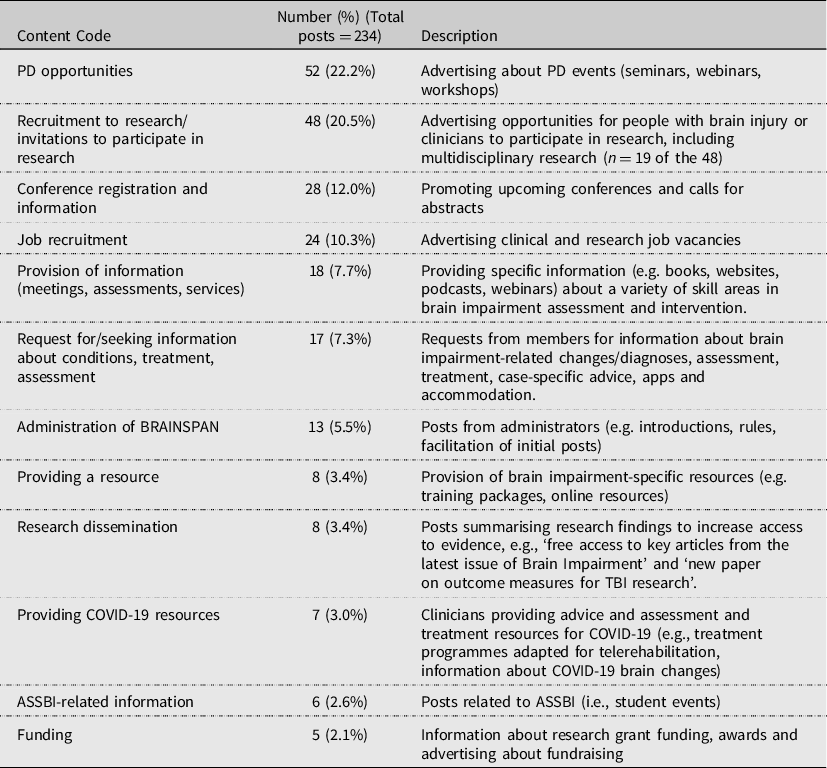
BRAINSPaN posts were also categorised according to the purpose of the message (see Table 3). There were a further 139 posts from November 2018 until May 2020, so this content analysis covered 234 posts altogether. Inter-rater agreement for the message purposes was 90%, and the remaining 10% were resolved through discussion. The most frequent purposes were about professional development opportunities, research recruitment, conference registration information and calls for abstracts, job recruitment, members providing information and members seeking information (e.g. about treatment, conditions and assessments). In the initial survey period, 30 members introduced themselves and stated their roles, aligning with one of the aims of BRAINSPaN, to increase interaction between researchers and clinicians within various professional fields.
Topic content categories and examples for all posts between August 2017 and May 2020

Discussion
In this study, we aimed to characterise the impact of a CoP in brain impairment on its multidisciplinary membership. Our survey data over three time periods up to 14 months following the launch of BRAINSPaN, alongside analysis of the content of listserv posts, revealed that the BRAINSPaN CoP can serve as a vehicle for the sharing and translation of knowledge in the brain impairment field. Survey respondents indicated that increasing access to new research findings and increasing interaction with others in the brain impairment field were key goals for their participation in BRAINSPaN. At 7- and 14-months post-launch, these were also the most commonly achieved goals and most cited benefits. Cognitive rehabilitation and behaviour management were the most frequently reported domains of desired increase in knowledge, skills and confidence, as well as being two of the five most common topics of BRAINSPaN posts over the survey period. In partial support of our hypotheses, BRAINSPaN participation resulted in a significant increase in self-reported knowledge for participants’ top two domains of interest, but there was no change in skills or confidence. Nevertheless, BRAINSPaN enabled increased awareness of other opportunities for skill development, with professional development events representing the most common topic (22%) of all BRAINSPaN posts.
It is possible, and plausible, that other forms of dissemination such as workshops and clinical supervision are needed to influence the development of skills and confidence, and that CoPs cannot act as a replacement for these more traditional forms of professional development. Some communities of practice have been combined with workshops to enhance skill development, such as a physiotherapy online continuing education course (Evans et al., Reference Evans, Yeung, Markoulakis and Guilcher2014) and a face-to-face workshop for management of developmental co-ordination disorder (Camden et al., Reference Camden, Rivard, Hurtubise, Héguy and Berbari2017). Camden and colleagues (Reference Camden, Rivard, Hurtubise, Héguy and Berbari2017) found a significant improvement in participants’ self-perceived knowledge, skills and practice change in response to a two day face-to-face workshop combined with a 5 month online CoP. Evaluation of how the BRAINSPaN CoP could complement and enhance the benefits of conference participation, workshop training and clinical supervision would be an interesting topic for future research.
The focus on increasing interaction with others in the brain impairment field as an important benefit was interesting in light of the fact that BRAINSPaN had little impact for participants on the frequency of multidisciplinary collaboration regarding management of clients with brain impairment. Given that frequency of collaboration was already high at T1 and remained high at subsequent time points, it is possible that what BRAINSPaN offered was a unique opportunity to interact with others who are not part of participants’ local multidisciplinary clinical and/or research teams in their work settings. Sharing knowledge and experiences with the wider field may be important for understanding how widespread certain practices are and to hear about new knowledge or innovations that have arisen. Evaluations of other communities of practice have described various benefits, including sharing of evidence-based practices and resources (Quinn et al., Reference Quinn, Cook and Rowland2019; Valaitis et al., Reference Valaitis, Akhtar-Danesh, Brooks, Binks and Semogas2011), enabling connection and strengthening inter-professional relationships particularly when members are geographically dispersed (Valaitis et al., Reference Valaitis, Akhtar-Danesh, Brooks, Binks and Semogas2011), and provision of opportunities for mentoring and networking (Hoffmann et al., Reference Hoffmann, Desha and Verrall2011).
CoPs may serve as a particularly valuable way of placing local practice in the context of the wider field in circumstances where there is significant uncertainty or change, or in fields where there is limited information to guide practice (e.g., working with homeless people; Valaitis et al., Reference Valaitis, Akhtar-Danesh, Brooks, Binks and Semogas2011). When there is a lack of evidence to guide practice, consensus among peers about best practice becomes especially important (van Heugten, Reference van Heugten, Wilson, Winegardner, van Heugten and Ownsworth2017). Previous CoP evaluations have described enabling participants to draw on each other’s expertise and find confirmation about practices by sharing their clinical experiences and knowledge (Evans et al., Reference Evans, Yeung, Markoulakis and Guilcher2014). This was exemplified by the use of BRAINSPaN to rapidly exchange knowledge and ideas in the context of the COVID-19 pandemic. In the three-month period from March to May 2020, there were 30 topic threads posted, compared with 19 topic threads for the same period in 2019. Of the 30 threads, 13 (incorporating 28 individual messages) related to COVID-19. These included seven threads sharing resources such as for telehealth delivery of services, and six regarding professional development such as a webinar about the effects of COVID-19 on the brain. The Australian response to COVID-19 included expansion of government rebates and support for telehealth services to enable continued access to healthcare, which required clinicians to rapidly acquire knowledge, skills and confidence in using telehealth platforms for assessment and treatment (Snoswell & Smith, Reference Snoswell and Smith2020). Multiple CoPs were established to support the networking and sharing of strategies between multidisciplinary clinicians during COVID-19 (https://www.health.nsw.gov.au/Infectious/covid-19/communities-of-practice/Pages/default.aspx). However, existing CoPs such as BRAINSPaN enabled dissemination of knowledge that was specific to our field, such as resources to help explain COVID-19 social distancing and hygiene practices to people with communication and cognitive impairments.
Increasing access to new research findings was a key goal and benefit for our participants; however, posts disseminating new research findings represented only 3% of all BRAINSPaN posts. While several other message types contributed to the overall purpose of knowledge sharing (e.g., professional development opportunities, provision of resources, etc.), increased sharing of new discoveries was suggested by participants to more directly address this goal. More regular postings to increase engagement was another suggestion for improvement. Active steps were taken by BRAINSPaN moderators in response to these suggestions, including encouraging members to post about new papers they had published. However, there was a limited response to this encouragement. It is possible that researchers feel more comfortable promoting their own research on other platforms such as Twitter, where it is more of an accepted norm to do so. Developing posting norms on CoPs such as BRAINSPaN is likely to take time, whereby members may become gradually more comfortable posting as more of their peers contribute to discussions.
It is also possible that members may be more cautious about open discussion in multidisciplinary CoPs as opposed to single-discipline CoPs where practice norms are more well known. Most existing CoP research has evaluated single-discipline CoPs, so methods for facilitating interaction within multidisciplinary CoPs is less well understood. Focusing on specific topics of widespread interest (e.g., goal setting) over a certain month and encouraging specific members from multiple disciplines to post on these topics, as suggested by some participants, may be a helpful way to encourage more listserv activity and increase comfort with posting. However, that would require more active facilitation of the listserv by its moderators, which requires time and resources. It could also potentially change the non-hierarchical nature of the CoP, which may have the paradoxical effect of decreasing engagement with posting. The posts that were reviewed for this study were all collaborative, supportive and positive in nature, which was helpful in creating a sense of community. Future research could compare the impact of active and passive facilitation styles on CoP member engagement.
Our findings should be interpreted in the context of several limitations. First, we did not reach our target sample size of 234, which increases the likelihood that our sample was not representative of all BRAINSPaN members. It is possible that more engaged, enthusiastic BRAINSPaN members were more likely to respond, which may have positively biased our results. There was also significant attrition between the first and third surveys. As a result, there were very few participants for whom data were available at all three time points, which limited within-subjects comparisons. This may have been at least partly due to the somewhat onerous requirement that previous survey responses needed to be downloaded, stored and located at the time of subsequent surveys to prompt recall of the goal areas that had been set. While this was necessary to maintain participant anonymity, in future similar repeated surveys may be better conducted using systems that enable ‘piping’ of survey responses to future surveys while retaining anonymity through the use of participant IDs. Furthermore, it is difficult to confidently attribute the improvements in knowledge that were found in participants’ top two domains of interest to BRAINSPaN participation, as there may have been other forms of learning that were occurring concurrently. However, the alignment between BRAINSPaN posts and the practice domains where knowledge increased is consistent with an association between the two. Finally, we relied on self-report to assess the impact of BRAINSPaN participation on knowledge, skills and confidence. It would be interesting to objectively assess knowledge and skills in participants’ domains of interest and investigate alignment between subjective and objective improvements. Additionally, the impact of subjective improvements in participants’ knowledge on their clinical and research outcomes in practice is an important topic of future research.
To our knowledge, this is the first study evaluating the impact of a multidisciplinary CoP. BRAINSPaN is not a replacement for practical training and clinical supervision as a means to enable development of the unique skills required for working effectively with people living with brain conditions (Wong, McKay, Kazantzis, & Ponsford, Reference Wong, McKay, Kazantzis and Ponsford2020). However, our findings suggest that it can facilitate interaction among the community of clinicians, researchers and students interested in brain impairment and increase knowledge in specific domains of practice that are of interest to its members. Multidisciplinary CoPs such as BRAINSPaN can therefore serve a unique purpose in the multifactorial and complex process of clinical translation of evidence-based practice to improve the lives of people with brain impairment and their families.
Acknowledgements
The authors would like to thank Professor Skye McDonald and the Moving Ahead NHMRC Centre of Research Excellence in Brain Recovery for their support in developing BRAINSPaN.The authors would also like to acknowledge the Australasian Society for the Study of Brain Impairment for hosting BRAINSPaN among its suite of offerings.
Funding Support
This research received no specific grant from any funding agency, commercial or not-for-profit sectors.
Conflicts of Interest
None.
Ethical Standards
The authors assert that all procedures contributing to this work comply with the ethical standards of the relevant national and institutional committees on human experimentation and with the Helsinki Declaration of 1975, as revised in 2008.
Supplementary Material
To view supplementary material for this article, please visit https://doi.org/10.1017/BrImp.2021.9