PERSONAL OBSERVATION
Prior to 2003 I had the opportunity to observe at close quarters the German-Russian dialogue concerning the fate of cultural valuables displaced by the Second World War and to participate in more than a few of these discussions.Footnote 1 The city and the Kunsthalle of Bremen asked me to find out whether there was a chance to resolve the problem of the Bremen collections that were taken to the Soviet Union in 1945, and to achieve a mutually agreeable resolution with the Russian side for their return. From 1991 to 2000 I led a research team investigating Soviet cultural losses during the war. That is to say, we focused not on what the Germans had lost, but on what they had plundered from Russian, Ukrainian, and Belarusian territories of the former Soviet Union.Footnote 2 This was a change in perspective from the approach of the German government, which was primarily concerned with its own losses from the Soviet plunder of cultural property at the end of the war. Our project did not transform German policy. Nevertheless, it was essential.
THE PROBLEM
The history of German-Russian negotiations over looted art (Beutekunst) is a history of failure.Footnote 3 Nevertheless, both countries consider themselves good partners and friends. Since 1989, together with all their neighbors, they have transformed the political geography of Europe. Time and again they have reassured each other about their special relationship of trust within the larger domain of politics. Their economic interests complement each other. In 2003 and 2004 they celebrated each other's culture and they never tire of emphasizing their spiritual affinities. But when it comes to the question of lost or displaced cultural property, then stagnation, feuding, and lack of understanding prevail. Diplomacy on this issue is now in a deep freeze. Why can Moscow and Berlin come to an understanding about major issues of world politics, but not about incunabula from the Middle Ages? What are the obstacles?
Anyone dealing with looted art is confronted by the catastrophes of the twentieth century. Nevertheless we have to find a way forward so that these objects of art and other cultural valuables do not remain forever labeled as “trophies” or “loot.” Russia still has many such objects belonging to Germany, whereas Germany—at least according to current knowledge—no longer has any loot from Russian sources. Thus, returns by the former victim to the former aggressor are possible, in contrast to returns by the former aggressor to the former victim. Even before the two horrendous world wars, the Hague Convention of 1907 had declared that cultural assets have immunity in war and had forbidden their confiscation or destruction.Footnote 4 But what happens if protection was then disregarded, or even systematically and extensively violated?
In trying to find solutions two generations after World War II, one can neither avoid the question of responsibility for the war and the aggressor's strategies of extermination, nor can one ignore the question of which responses to the German crimes were understandable and appropriate given the historical context. Research in the historical, cultural, and legal disciplines that enable an informed response to these issues suddenly takes on immense political and symbolic importance.Footnote 5 Theoretical positioning determines practical options. To my knowledge, however, within the German government, there has never been a conceptual or cultural-political debate to get to the bottom of this matter and determine the proper place of displaced cultural assets in the overall framework of German foreign policy.
THE OFFICIAL GERMAN POSITION
In the “Treaty … on Good-Neighborliness, Partnership and Cooperation” that the Federal Republic of Germany signed in 1990 with the former Soviet Union, and in the “Agreement … on Cultural Cooperation” with the new Russian Federation in 1992, both sides agreed “that lost or unlawfully transferred cultural valuables that are located in their territory will be returned to their owners or successors.”Footnote 6 The Federal Republic saw unequivocal support in international law for its claim for the repatriation of German-owned artworks, archives, and books still in Russia. The German claim was based on the previously cited Hague Convention of 1907, which prohibited taking artistic and scientific works from the enemy as spoils of war, independent of the question of who bore responsibility for the war. In accordance with international and specifically American research, the Federal Republic denied that postwar decisions by the victorious powers and the Allied Control Council had nullified German claims.Footnote 7 This is why German negotiators saw themselves as holding a legally sound position, whose nonacceptance by Russia would provoke doubts about its reliability as a partner. The negotiators did not, however, consider a remaining question: The Hague Convention forbids the destruction as well as the confiscation and looting of cultural assets. When, therefore, on the basis of the Hague Convention, confiscations and lootings must be restored, must not the damages inflicted also be repaired or compensated?
At times, the representatives of the Bonn Government even felt obliged to support their claims for fear that international law itself would be damaged if they failed.Footnote 8 Yet they were perfectly aware that blame for the war had to be placed on Hitler's Germany, and they were also aware that the Soviet Union had suffered tremendously. There was no historical misrepresentation. However, they viewed their own legal position as irrefutable—irrespective of history and guilt. In their perspective the one-sidedness of the duty to restitute expressed the timeless principle at issue in the law (whoever can restitute must do so). At no point did the Germans consider themselves on the defensive. With the backing of international law, they thought they had to teach the other side the rules of civilization. From a bilateral conflict of interest, which is usually neutralized among friends through compromise, the issue of looted art mutated into a dispute about principles, which caused the negotiators to turn into prosecutors. Whereas librarians and archivists in the two countries managed to establish mutual trust because their shared concerns brought them closer together, negotiations on the governmental level, however, were increasingly marked by estrangement. Reversing the cordiality achieved through the policy of détente, law threatened to become an instrument to blame or to accuse the partner. The artworks themselves quite often receded into the background.
Germany, however, did not object on principle to undertaking various associated, or parallel, activities. Without backing down from its interpretation of international law, the Federal Republic showed itself willing to accommodate the Russians in certain related areas. In the early 1990s, for example, it offered impressive programs to fund new acquisitions to needy libraries in Russia. Bonn scrupulously avoided any direct reference to looted art. By refusing to consider the idea of giving balancing services or “compensation” in return, Germany diminished the effect it ultimately wanted to achieve.
Eventually, in 1993, the offer emerged to finance the reconstruction of the Amber Chamber, if Russia would go along with the German legal position. But the idea of such a deal quickly faded because of its fundamental asymmetry. The German side was quite aware that it would finally have to pay, but it wanted to wait until the last possible moment in order to minimize the cost. The counterargument—that the longer it waited to make an agreement, the more costly the agreement might be—was rejected. Nobody in the Bonn bureaucracy understood the advice of experts or its own diplomats, namely, that Germany should take advantage of the favorable moment and seek an agreement while the looted cultural assets in Russia were still perceived as an annoying burden left over from the Soviet era. To the extent that a new nationalism would gain ground again in Russia and displaced cultural objects become seen as symbols of victory, the chances of a compromise would diminish and the cost of potential repatriation would increase. The responsible authorities ignored such warnings.
There was a marked contrast between the fervor with which German officials embraced international law and the institutional framework at the federal level for addressing the issue of displaced cultural assets. In the beginning (before 1998), the Ministry of the Interior and the Foreign Office were in charge, but they also had to come to an agreement with the Federal States (Bundesländer) most affected by the losses. According to the demands of individual cases, representatives of museums, archives, and libraries were included in the consultations. The task was clearly defined: to adhere to the spirit of the German position with respect to restitution and to translate into action the agreements reached with Russia. Every effort was to serve the aim of bringing to an end factually what had already been legally determined. In achieving this goal, the cultural department of the Ministry of the Interior was overtaxed in many ways with respect to competence, knowledge, and personnel. It was neither prepared for international and bilateral negotiation, nor did it possess the instruments to carry out within the Federal Republic the necessary research on losses and provenance.Footnote 9 Consultations with Russia that took place in the Federal Republic were to be led by the Ministry of the Interior, and those in Moscow by the German Foreign Office, which led repeatedly to confusion on Russia's side about who was ultimately in charge. With establishment of the Federal Minister for Media and Culture (Staatsminister für Medien und Kultur) in the Federal Chancellery in 1998, the administrative organization was reconfigured, although squabbles over authority and competence were always in the background.
Institutional weaknesses, however, were only a minor issue. From the beginning of the negotiations with Russia, I had the impression that there was a recurring gap between the ministerial bureaucracy authorized to make policy and the ministers responsible for its execution. High officials themselves were uncertain how far their political backing reached, while leading politicians harbored doubts on whether the course advocated by their ministries could achieve success.
The facts of the case were repeatedly conveyed to the heads of the ministries and even to the chancellor, and the question of looted cultural assets was regularly taken up in successive governmental consultations between Bonn/Berlin and Moscow. Nevertheless, the impression prevailed that to mention the problem in high-level talks with Russia was more a case of duty than an expression of real engagement in the outcome. In Germany's policy toward Russia, the question of repatriation remained a difficult, but subordinate, issue. Within Germany, the government was keen to appear to the public as being concerned about its lost cultural patrimony, but this same government was adamant that nothing should threaten its relationship with Russia. The result was an unsettled state of affairs behind which doubts about the German stance—not doubts about the importance of the matter, but about the wisdom of the course taken—were concealed.
According to my information, politicians in the Federal Republic who could look back on many years of experience with Russia judged the rigid legal argumentation of the Ministry of the Interior and the Foreign Office with skepticism, if not as downright counterproductive. A negotiation plan with long lists of demands and no willingness to give anything in return was not a promising one. Not a few diplomats, among them several ambassadors, assured me that they presented their concerns both orally and in writing to Bonn and later Berlin, but the bureaucracy turned a deaf ear. For example, Hans Dietrich Genscher, the foreign minister until 1992, found it difficult to understand the German position. “Dilettantish” was his judgment in a personal conversation with me in January 2003, on a return flight from Moscow, where we met by chance. Certainly it was good to know that international law was on one's side, but this did not by any means replace politics and diplomacy. If one had limited oneself in “questions concerning the fate of the nation” to a similar know-it-all attitude, there would never have been any building of trust or the détente between East and West that made German reunification possible.Footnote 10
Representatives of the business sector came to similar assessments. Without German concessions, there would be no progress on the contentious issue of cultural objects displaced by war. In 1997, F. Wilhelm Christians, former head of the Deutsche Bank, sounded out the possibilities of a settlement that would be backed financially by German companies and suggested an informal, highly confidential round of talks between both countries. Although he had the impression that Chancellor Helmut Kohl was receptive to his idea, he received a “No” from the ministries of Bonn.Footnote 11
Some alternative approaches were nevertheless realized. In 1940, National Socialist Germany had acquired the Koenigs Collection of Old Master drawings in the occupied Netherlands, most of which was designated for Hitler's Linz Museum. At the end of the war, it was carried off to Moscow. While in 1992 and 1993 the German Foreign Office insisted, in opposition to the Dutch claim for restitution from Russia, that the collection had been lawfully purchased and therefore belonged to the Federal Republic, Chancellor Kohl decided without hesitation in 1996 that Germany would not claim the collection and that it should be considered the property of the Netherlands. Nevertheless, the governments in Moscow and The Hague have still not agreed on its restitution, whereas in 2003, Ukraine returned 139 drawings and engravings from the collection that it found in its possession back to Rotterdam.Footnote 12
At the beginning of the new decade, German politicians began to feel their way cautiously forward toward new paths. While they maintained their basic legal position, they did not want to prolong the old legal conflict indefinitely. The resolution of individual cases as well as acts of reciprocity, which, of course, could not be referred to as such, was no longer taboo. But in the meantime, the Russian position had changed significantly.
THE OFFICIAL RUSSIAN SIDE
In adopting the obligations of the former Soviet Union, the new Russian Federation in 1992 had not only committed itself contractually to the return of “unlawfully” dislocated cultural possessions but also reaffirmed repeatedly its willingness to do so in the following years.Footnote 13 An intergovernmental commission composed of representatives of both countries and supported by teams of specialists was given the task of putting the talks in concrete form and propelling them forward. At the same time, negotiators from Moscow made clear cautiously but unambiguously that repatriations could not be a one-way street. Even though initially it was expected that cultural possessions of the former Soviet Union would be found in Germany, the unlikelihood of further discoveries quickly became evident to all involved. The contracts of 1990 and 1992 had established an obligation to return in both directions, but now return as “restitution” could only be realized de facto in one direction. In order to rectify this situation, an intolerable one for Russia, an additional offer from the German side was necessary. Moscow's willingness to settle in the early 1990s was contingent upon Bonn's willingness to offer commensurate services in return. While not explicit in the paragraphs themselves, this obligation could be seen as underlying the spirit of the agreements. “Reciprocity” became a key Russian word without a determination of what equivalence would mean. To be successful, German diplomats would have to amend their stance. But they were not prepared to discuss and test the scope of what the Russians wanted.
Already in 1993, representatives of the Russian Ministry of Culture noted that the agreements only provided for the restitution of “illegally” displaced art, which implied that there could also have been legal dislocations. But this was not yet an insurmountable obstacle to an understanding in the spirit of a balance between restitution and reciprocal offers. The situation changed only after negotiations stalled. The German insistence on a one-sided interpretation of the law got the Russian Ministry of Culture into trouble as it searched for solutions.Footnote 14
A report by legal specialists of the Institute for State and Law of the Russian Academy of Sciences twisted the term “unlawful dislocation” into what they presented as a legal concept of “compensatory restitution” for losses that the former USSR had suffered at the hands of Germany. An animated dispute flared up in Russia that was lost by those who advocated a settlement with Germany. Prominent jurists doubted whether “compensatory restitution” had a firm basis in international law. They pointed to the constant evolution of the legal status of confiscated cultural goods since 1945 in order to question the nationalization of such goods a half-century after the war. At the same time, these jurists and law professor Mark Boguslavskii rejected the one-sided German legal position in favor of a balanced structure.Footnote 15 The Russian president and the Ministry of Culture also insisted on keeping the question open. However the Duma passed a law in 1997 (finally signed into law by President Yeltsin April 1998) declaring that cultural assets confiscated and displaced to Soviet territory from Germany at the end of the war and now held in Russia were now the legal possession of the Russian Federation.Footnote 16
The former Soviet Union's extensive restitution to the German Democratic Republic in the 1950s as a gesture of reconciliation, and young Russia's inclination in the early 1990s toward a rapprochement with the Federal Republic of Germany were radically annulled. The Gutenberg Bibles, the Rembrandts, and the Gold of Troy were reinterpreted as evidence of victory: Such objects should no longer be negotiable.Footnote 17 The stand-off with Germany was not the only factor here; the objects were also victims of an internal Russian power struggle between Yeltsin and the Duma majority, which had absolutely nothing to do with them. But German diplomacy did not make the position of Russian opponents of the law any easier. Experts and diplomats appealed to the German government to do everything possible to temper the bill, or at least to soften its effect by negotiating with Russia. But their pleas went unheeded in the Bonn bureaucracy. With the verification and validation of the law by the Russian Constitutional Court in 1999, a new diplomatic situation emerged.Footnote 18
INTERIM BALANCE 2000
To a certain degree, the front lines were now reversed. At the beginning of the dialogue, Russia was more willing to negotiate and Germany took a more rigid position. Now the Russian side hardened through the Duma's intervention, while Berlin cautiously modified its initial stance. The window of opportunity disappeared. To have recourse to international law, as the Germans did, was plausible given their concerns. But to emphasize historical responsibility, as the Russians did, could be argued equally well. The losses that the German Reich had inflicted upon the USSR in the war were too massive to be only addressed by appeals to international law. The initial positions of both sides, in which strong interests blended with legal and moral arguments, reified into dogma over the course of the negotiations. Instead of bringing together the discourses on history and on law, they were pitted against one another. Politics failed and art suffered the consequences.
Meanwhile, grassroots diplomacy involving returns of war booty in both directions had already begun a long time before without complications. Objects that German soldiers had once looted or taken as personal “souvenirs” were now being returned by their children or widows. When an elderly lady gave me several books with old engravings and atlases from the Imperial Library of Tsarskoe Selo and from Pskov with the plea to return them there, she told me, “My husband sent them to me in 1941; in 1942 he was killed in action. They were the last mail I received from him. Before my death I want to clear up this matter.”Footnote 19 On private initiative, dozens of prints and engravings, antique vases, and china from the Catherine Palace and other palaces around St. Petersburg were returned.
Ukraine was also deeply involved with comparable citizens' diplomacy “from below.” In 1995 a museum on Lake Constance (Pfahlbauten-Museum, Bodensee), discovered 723 old, valuable volumes on prehistory in its holdings that had been stolen from several museums in Kyiv. Against the advice of the German government, the museum decided immediately to send the volumes back to Ukraine, where their discovery and return was celebrated as a cultural and political event of the highest order. At the same time the famous self-portrait by Hans von Marées was returned from Chernihiv to the Bremen Kunsthalle.Footnote 20 Five years later, the Kyiv government gave back the famous music archive of the Berlin Sing-Akademie with Bach family scores.Footnote 21
Objects have moved in both directions. The son of a German diplomat who had worked in Helsinki before 1945 discovered a watercolor from the private residence of the last tsarina in his house. This work has also been returned to its place of origin. In 1998 the Bremen Kunsthalle received three drawings by mail with no return address, but postmarked in Moscow. Meanwhile, the Library for Foreign Literature (VGBIL) in Moscow has accomplished truly pioneering work by publishing, starting in 1992, catalogs of displaced German, Dutch, and Hungarian books.Footnote 22 A special series sponsored by the Commission for Art Recovery in New York describes Jewish art, books, and manuscripts that ended up in Russian institutions as confiscated treasures after 1945.Footnote 23 VGBIL has also been organizing various conferences (1999–2003) to discuss key issues and find ways out of the political deadlock.Footnote 24 Many of the Russian cataloguing efforts are now highlighted in the web site listings by the Ministry of Culture.Footnote 25
SURPRISING TURNS
In July 1999, the Russian Constitutional Court validated the essence of the 1998 cultural property law initiated by the Duma, while not wholly shutting the door to good-will gestures and exceptions to the rules. Almost on the very same day, the German firm Ruhrgas offered to finance the restoration of the Amber Chamber in the Catherine Palace in Tsarskoe Selo, near St. Petersburg.Footnote 26 The German Foreign Office greeted the offer from Ruhrgas to use this project to support its own policy with reserve. Nevertheless a cautious back and forth was now underway to test the small openings permitted by the 1998 law. A list of conceivably special cases was handed over to Russia, but no agreement was achieved.
Independently, through a Bremen initiative, a Florentine mosaic from the Amber Chamber, which had surfaced in 1997 in the Hanseatic City, was given back to the Catherine Palace in 2000 (Figure 1). In return, 101 folios of drawings from the Bremen Kunsthalle, among them a watercolor by Albrecht Dürer, which a Soviet veteran had handed over in 1993 to the German Embassy in Moscow and had been kept there ever since, were permitted to travel home (Figure 2).Footnote 27
Handing over of the mosaic confiscated from the Amber Chamber, discovered in Bremen, and returned to Tsarskoe Selo, April 29, 2000. Holding the mosaic on the left is Ivan P. Sautov (Director of the Palace-Museum of Tsarskoe Selo), on the right, Michael Naumann (Minister for Media and Culture of Germany). Looking over from behind, Mikhail E. Shvydkoi (Minister of Culture of Russia). Image courtesy of Kommersant.

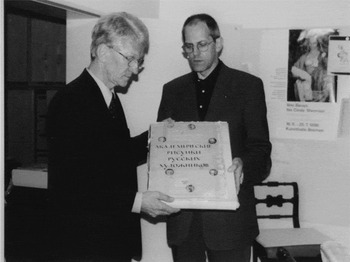
The “101” Bremen drawings return home after seven years in the German Embassy in Moscow. Wolfgang Eichwede (left) hands them over to the custodian of the Bremen Kunsthalle, Willy Athenstädt, just before 1:00 am on the 30th of April 2000. The folder that had enclosed the drawings while in hiding in Russia is curiously entitled “Academic drawings of Russian artists” (Akademicheskie risunki russkikh khudozhnikov). Photo courtesy of Wolfgang Eichwede.

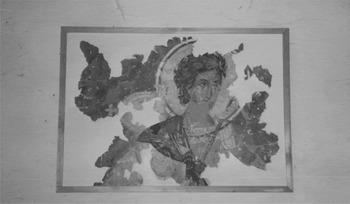
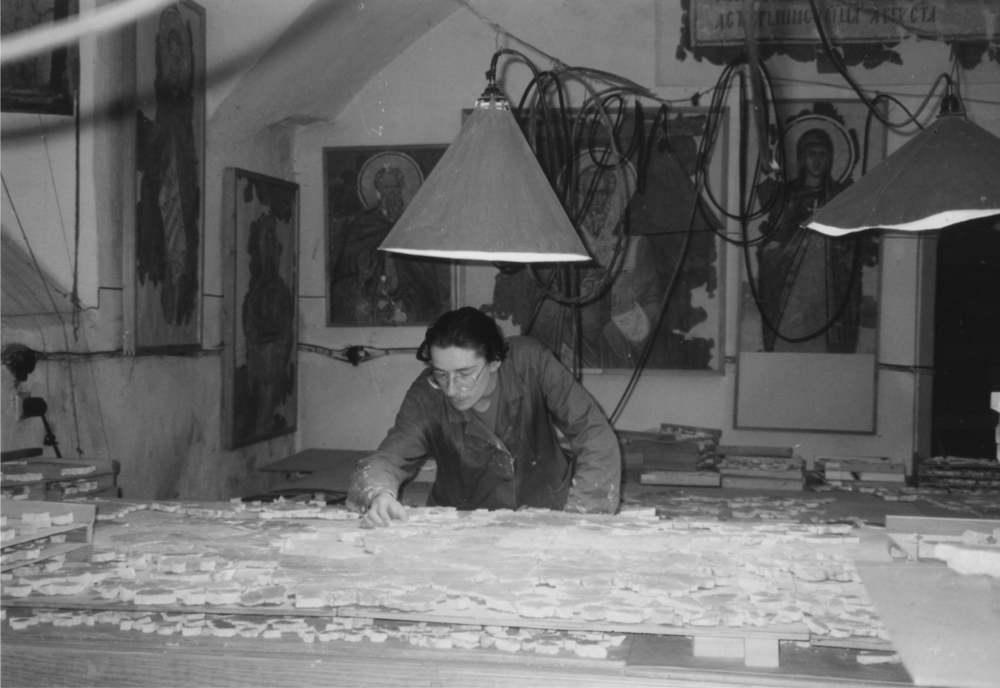
A tip from the Ministry of Culture in Moscow led to the discovery in Berchtesgaden of the Icon of the Virgin (Videnie startsa Dorofeia) from Pskov, which according to legend saved the town from Polish occupation in 1581. It was confiscated in 1942 by German units and after the war fell into private hands. The work was turned over to a representative of the Russian Orthodox Church in 2001. The Russians' willingness to return the medieval stained glass windows from the Marienkirche in Frankfurt on Oder in 2002 was matched by the reconstruction of the war-damaged Volotovo Cathedral in Novgorod financed by the German firm Wintershall. Earlier Novgorod restitution had been financed by the Russian Government (Figures 3 and 4). It almost seemed as though a network of mutually helpful gestures was being developed that could serve as a model for larger solutions. Obviously Moscow's Cultural Ministry was interested in keeping its own law flexible while trying to see what possibilities it could elicit from Germany. Berlin was apparently inclined, for the first time, to pick up the thread and consider a rapprochement that involved gestures from both sides.
One of the restored frescoes of the Kovalevo Cathedral in Novgorod in the A.P. Grekov restoration studio in Novgorod, summer 1993. This restoration work in Novgorod was accomplished under Russian government funding. Photo by Wolfgang Eichwede.

A craftsman in the restoration workshop for the Kovalevo Cathedral in Novgorod, summer 1993. Later reconstruction of the Volotovo Cathedral in Novgorod was financed by the German firm Winterhall in exchange for the return of the stained-glass windows from the Marienkirche in Frankfurt on Oder. Photo by Wolfgang Eichwede.

The apogee of this cultural diplomacy through “small steps” was an agreement in 2002 regarding the return of the Baldin Collection. The 362 drawings and two paintings from the Bremen Kunsthalle had been taken in 1945 by Viktor Baldin, a Soviet officer, on his own initiative from the Karnzow Castle in Brandenburg to his home in the USSR. As a private “appropriation,” these works did not fall under the jurisdiction of the 1998 Cultural Property Law, and Russian law otherwise allowed for the return of these works to Bremen, which Baldin had desired.Footnote 28 With backing from the cultural ministries of both countries, and the Hermitage in St. Petersburg, where the collection was by then located, the Bremen Kunsthalle agreed to a return arrangement whereby 20 exceptional works from the collection would be left in Russia in gratitude. The date for the handover had already been arranged, and the transport already ordered. But then a storm of protest erupted in the Russian media and the Duma. As a result, the agreement has not been realized to this day, despite further amendments. Unfortunately—and contrary to the confidential character of all the negotiations—the agreement had been prematurely announced in Berlin.Footnote 29 The general public in Russia was not prepared for it and considered itself duped.
After this incident, talks on a governmental level again came to a standstill. The Russian side lacks the political will, and the German side lacks ideas. At any rate, the restitution of the stained glass windows to Frankfurt on Oder was successfully concluded with the transfer of the remaining batch from Moscow in 2008. Meanwhile, the Merovingian exhibit Europe without Borders in Moscow in 2007 opened new territory by jointly showing, for the first time, looted works together with loaned items from Germany and documenting the provenance of the items in a jointly produced catalog.Footnote 30 Simultaneously, but without previous discussion with German specialists, the Pushkin Museum opened an exhibit entitled Archeology of the War: Return from the Void with a great number of restored vases, statues, and frescoes from the Berlin Antiken-Sammlungen (Antiquity Collections), which had been kept under lock and key in Russia since the 1940s.Footnote 31
After a number of German museum directors noted publicly in 2005 the deplorable deadlock in the negotiations concerning looted art, the “German-Russian Museum Dialogue” was launched the same year to bring together and represent the interests of German and Russian institutions affected by the issue of displaced works of art.Footnote 32 Along with a critique of the Russian law, this initiative aims to work around the political impasse in order to increase the flow of information among museums, plan joint exhibitions that include looted works of art, and initiate research projects that illuminate the fate of each country's missing cultural possessions.
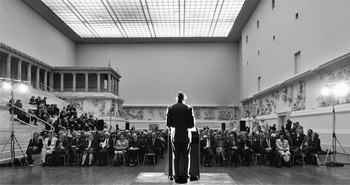
The first big project of this dialog was to draw attention to the 1.5 million works of art that the Soviet Union had returned to the GDR in 1958 and 1959. However belatedly, the unified Germany now thanked Russia for the restitution half a century earlier, which had returned almost three-quarters of the objects displaced by the war to their original collections. On 30 October 2008, a ceremony loaded with symbolism took place in front of the frieze of the Pergamon-Altar in Berlin, restituted from Moscow in 1959 (Figure 5). As acknowledged by Hermann Parzinger, president of the Stiftung Preussischer Kulturbesitz (Prussian Cultural Property Foundation), “Without this Soviet action … the Berlin State Museums … would not be what they are today.”Footnote 33
Berlin, 30 October 2008. A ceremony below the Pergamon-Altar (from Asia Minor), in the Pergamon Museum, remembers the Soviet removal of the altar and freize at the end of the Second World War and restitution from Moscow in 1959. Photograph by Achim Kleuker. Reproduced with permission of the Stiftung Preußischer Kulturbesitz.

Following up on earlier Bremen initiatives, the Dresden State Art Collections (Dresdener Staatliche Kunstsammlungen) organized a scholarly conference in Moscow in February 2009 on a central theme: the pillaging by the German Reich in the occupied territories of the Soviet Union during World War II. Under the title “Trophies—Losses—Equivalents,” insights both into the present state of research and reports on the history of losses suffered by Russian museums were aired.
Nevertheless, these new beginnings must necessarily confront hard realities. Since 1991, diplomacy has missed out on many opportunities and accumulated lots of baggage of which it now has to divest itself. As long as the German government does not rectify the imbalance between what it is demanding and offering, it will remain without perspective. The Russian legal position also blocks the way toward a solution, although when understanding improves and background conditions change, laws need not remain fixed. But if something is to change, Germany must interest Russia in this process. Progress will only be achieved if Berlin is willing to adjust its own position. When German cultural plunder as well as previous Soviet restitution is taken into account, what can rightfully be reclaimed by law starts to shift.
LOOT AS AMBASSADOR
The idea underlying the Hague Convention of 1907 is that culture does not belong to States, but to people, and that States, not people, are responsible for wars; therefore cultural assets should be excluded from harm during military conflicts among powers. Although events of the twentieth century have occasioned doubts as to whether this idealistic distinction can be maintained, there remains the desire, traceable back to this convention, that art looted or confiscated in wartime may be returned. Likewise the appeal contained in this convention that deep quarrels and disagreements over art occasioned by war should not continue retains all its force. The scale of destruction wrought by Germany in the Second World War does not permit the Federal Republic to give ownership claims top priority. In the spirit of the Hague Convention, it would be best to use yesterday's abducted cultural possessions to build tomorrow's bridges to better intercultural understanding.
I must admit that for many years I hoped and labored for support for a constructive approach that would link acts of restitution to Germany with equivalent offers to Russia. The idea of a wide-ranging Kulturwerk as a foundation of both countries, as suggested in the early 1990s, would not only have reconstructed historically significant monuments of the Russian cultural landscape destroyed by war, but also have elevated cultural interchange to a new level through a kind of intergenerational contract. Young architects, artists, restorers, craftspeople, and academics on both sides could have dedicated themselves jointly to the care of historic town and city centers, churches, and castles. At the same time, they could also have made the legacy of the modern age and contemporary art their common cause. Springing from the goal of alleviating the losses of the war wherever possible, such a project could have had the potential to point far into the future and harbor within itself completely new possibilities for cultural cooperation, mutual learning, and understanding.
Ideas of other foundations (Stiftungen) were also discussed. For example, German services in return could be initiated and financed by a special foundation, funded mainly by private sources. Another appealing suggestion was the establishment of a German-Russian foundation that would assume fiduciary responsibility for cultural possessions and thereby bring them back into the normal cultural sphere. Further proposals envisioned internationalizing displaced treasures in order to transcend the bilateral battle over ownership.Footnote 34
Since such options are no longer in sight or were utopian from the outset, and other solutions must be tried with the goal of freeing art from the hostage-taking tactics of the politics of pride. It just cannot be that two countries that wounded each other so deeply in and after the war, but that now have become partners in so many realms, cannot communicate about a subject that carries within itself every possibility for furthering understanding. If there is one lesson to be learned from the history of wars, but also from the unsuccessful negotiations regarding cultural assets displaced by war, it can only be the following: Art should no longer divide nations, but should be understood as a common, historical heritage. The loot of yesterday must become the ambassadors of tomorrow. This means saying goodbye to legal claims in the tradition and style of the last 17 years. It also rules out regarding works of art as trophies. Outside the combat zones between countries, categories of triumph shaped by hostilities no longer have a place. In order to end the odyssey of art displaced by war, decisions must be taken that may be painful, but that will build trust by forging links that will open up new options and new identifications.
Legal and institutional forms can be conceived in a multitude of ways, if only the negotiating partners so desire, and each side avoids ossifying its position into dogmatism. But all new beginnings must have this in common: They must be developed in close proximity to the works of art themselves and handled by the appropriate art institutions. The task for politicians would be fundamentally different. Instead of making demands for the return of art to no avail, diplomacy has to smooth the way for the museums involved and help them reach a consensus with their Russian partners. It would be ideal if Russia could be persuaded to make its own law more flexible, or even to amend it to take into account the special nature of some collections, especially those of private, university, and religious ownership, and the interests of the respective relevant institutions. In this way, new forms of “curatorial rights,” “joint custody” (Treuhänderschaft), or mutually agreed upon, cooperative projects would come to fruition more easily, including restoration efforts and exhibitions. An all-encompassing foundation would necessarily be burdened with a considerable bureaucracy, whereas cultural networking could be more easily and usefully accomplished at the level of individual museums.
Lawyers or legal scholars should be asked to examine closely all procedures for settlements described within the 1998 Federal Law in a constructive manner. Realistically speaking, though, since the law currently exists, one has to start from the status quo that Russian title has to be respected in order to make any progress on the larger issue. Works of art or entire collections could then perhaps be displayed in their former hometowns, a temporary reunion that would certainly produce a more joyful encounter with the objects than would a continued tug of war over looted art. There is no reason for Russian museums such as the Hermitage not to erect a branch in Berlin (as it now has in Amsterdam) in order to exhibit collections there including those that formerly belonged to German institutions. Long-term loans would also be conceivable and could become part of a more extensive exchange in both directions. Critics of such a change should take into account that the Soviet Union already restituted to the GDR the vast majority of its confiscated art. If today's Russia does not see itself as capable of resuming this path, it is not appropriate simply to accuse the other side of violating international law. Instead, we must experiment with new ideas to achieve a détente in art.
For prominent cases such as the Schliemann treasures, pilot projects could be discussed. Turkey and Greece both also claim these artifacts, and from an historical point of view, their claims cannot be easily dismissed.Footnote 35 Without addressing the question of ownership, the treasures could be exhibited under the auspices of UNESCO or for a couple of years in Istanbul, Athens, Berlin, and then again in Moscow. While in the past, borders have been repeatedly violated by the gold of Troy, such an exhibition could transcend frontiers and thereby help to diminish their divisive character.
The disputed Russian law, as previously mentioned, leaves a limited range of options—especially for Germany—that must be balanced against one another. By this means a series of positive examples could be created, and a climate of understanding could emerge that would thrive from the advantages of agreement. In addition to church property, the property of those families belonging to the anti-Nazi German resistance could also be dealt with in a consensual way. Nearly a thousand books from the historic library of the counts Yorck von Wartenburg are located in St. Petersburg and Moscow, because they were plundered in Silesia in July 1945 by Soviet troops.Footnote 36 As a member of the plot against Hitler (20 July1944), Peter Graf Yorck von Wartenburg was executed under Hitler's orders. It would be a shame if Russia and Germany could not reach a consensus on the fate of this collection. The same holds true for the papers of Walter Rathenau, the Jewish foreign minister of the Weimar Republic who was assassinated by right-wing extremists in 1922.
If one can trust opinion polls in Russia, current willingness to trust Germany at the political level is not negligible. So why should the situation differ with respect to culture? After my decades-long experience in this field, it does not seem utopian to me that in response to a German initiative that takes history more fully into account, Russia will contemplate certain relaxations of its own position that at present are still difficult to imagine. Hand in hand with the use of legal possibilities, Germany will have to render services that benefit Russian culture. Activities envisioned in the framework of a Kulturwerk or of another foundation could be adopted. Not a few Russian palaces and country estates lost paintings or furniture that had not been evacuated before the National Socialist occupation. Would it not be possible for today's German institutions to grant equivalent works by the same artist or furnishings from the same epoch from their holdings as gifts or as permanent loans?
It is certain that research on Soviet, and today first and foremost Russian and Ukrainian but also Jewish cultural losses, must be intensified in order to come closer to solving the puzzle of their disappearance and to find out more about their migration and fate. Especially desirable are joint research teams and—finally—access to all relevant archives in Russia. More publications in both languages are needed, as well as translations of important studies already undertaken. Documentary films about the cultural void that the Third Reich left behind in the former Soviet Union could bear further witness to the historical truth and promote mutual understanding.
Too often in the fight over looted art, German politicians have invoked questions of national heritage and given the impression that national identity hinges upon a demand for the return of cultural possessions displaced by war. But the history of destruction in the Second World War demands a different language. The art once considered lost makes this new language possible. As German historical responsibility precludes any one-sided approach, making the artwork itself accessible once again will bring joy to all lovers of culture and bring people together. A “national heritage” comes about not merely through possession and ownership, but can also exist in flux and have its home beyond the borders of Germany. If the desire to communicate flows through this heritage, relinquishing the conventional demand for possession will be a worthwhile investment. Also, the pleasure of achieving a historical settlement can enter into our much-cited collective memory. That is why we should attempt to liberate this issue from the mindset of national prestige in order to make way for cultural options that involve museum-to-museum and collection-to-collection interactions. Solutions will more easily be found by working directly and jointly with the works of art themselves, which can thus be returned to the public sphere, than in verbal combat about legal paragraphs. Though I address this appeal initially to the German side, it holds for the Russian side as well: Let us be open to new forms of exchange that treat cultural assets not as trophies but as a shared opportunity.
APPENDIX
Bremen Research on Soviet Losses of Cultural Valuables during World War II: Preliminary Note
In August 1989, Viktor Baldin, retired former director of the Shchusev State Museum of Architecture in Moscow, informed the Bremen Kunsthalle that, as a soldier in the Soviet Army in 1945, he had taken 362 drawings and graphic folios and two paintings from Castle Karnzow in Brandenburg, and that he wished to bring them back to Bremen, where, according to their stamps, they belong. Since then, the Kunstverein (Art Society), as private owner of the museum, and the Hanseatic City have striven to ensure the return of the “Baldin Collection.” From the beginning they made clear that they were prepared to offer a sort of “compensation” and to look for the cultural losses of the Soviet Union in the years of the war.
Research Unit (Arbeitsstelle) for the Location of Works of Art and Cultural Goods Displaced from the USSR during World War II, (AsT) 1992–2000
Initiated by Reinhard Hoffmann, Secretary of State in the Bremen Ministry of Science, the Arbeitsstelle was built early in 1992 (under my direction) associated with the Research Center for Eastern Europe (Forschungsstelle Osteuropa) at the University.
• Bremen fully funded the Arbeitsstelle for eight years. Full positions were held by the following historians: Gabriele Freitag, Andreas Grenzer, Ulrike Hartung, Marlene Hiller, and Willy Korte (in Washington). Systematic archival research was done in the Federal Archives (Bundesarchiv) in Koblenz, Potsdam, Berlin, and Freiburg, as well as in Moscow, St. Petersburg, Kyiv, and Washington by additional members of the Arbeitsstelle. Thus, a dense, international network with affiliated working groups in Russia and Ukraine developed during the 1990s held together by workshops, conferences, and grants.
• The subject of research were the aims and the institutional structure of National Socialist art looting, the involvement of the Wehrmacht, the Einsatzstab Rosenberg, the Sonderkommando Künsberg, and the SS Ahnenerbe, which often acted in fierce rivalry. Several surveys and more specific accounts were published by Bremen specialists, including the collective volume, “Betr.: Sicherstellung.”Footnote 37 Of particular note are the separate studies of the Künsberg Commandos by Ulrike Hartung,Footnote 38 as well as an article by Anja Heuss.Footnote 39 An examination of the lists of seizures and plunder campaigns uncovered the extent of the looted art and cultural goods. However, the attempt to match the German figures with Soviet records of losses, which began to be compiled already during the war, could not be achieved due to the manifold inaccuracies of the lists and methodological differences in registration. But for the first time, the comparison of plunder and losses on the basis of German and Soviet archival records became a focus of research.
Furthermore, the extensive American restitution of Soviet cultural objects to the USSR could be documented on the basis of property cards, claims, and restitution receipt lists from the U.S. Central Collecting Points, and especially the one in Munich (MCCP). Documentation about the U.S. restitution processing was discovered in the Bundesarchiv in Koblenz and in the U.S. National Archives in Washington, DC (now in College Park, MD), covering more than 500,000 items returned by U.S. authorities to the USSR. Data about the items were recorded in a CD ROM publication, copies of which were presented to Russia and to Ukraine.Footnote 40 Given that Russian (Soviet) military archives, particularly the State Archive of the Ministry of Defense (TsAMO) and corresponding files of SMAD/SVAG in the Soviet Occupation Zone were inaccessible at the time, many questions remained unanswered. In spite of a multitude of new insights into Nazi art looting and the reconstruction of National Socialist policy, there is no persuasive explanation today of the whereabouts of a large part of the lost and stolen art. The fate of Jewish cultural assets also remains a central research task. However, it has been possible to shed some light on Soviet restitution of art to the GDR during the late 1950s.
• Another important area of the Bremen activity was not only research into specific issues, but also locating, collecting, and making available documentary materials that had previously not been available. Thus, tens of thousands of copies of documents from archives of all the participating or affected countries are now accessible in Bremen.Footnote 41 They expose, in the sense of an archaeology of art looting, all the layers of its history. Although the inventories are incomplete and do not provide a uniform concentration of documents, they rank among the most comprehensive collections of material and have been only partially evaluated. A small but representative selection of documents was published in an edition of sources titled Verschleppt und verschollen (Displaced and Missing).Footnote 42
• While the Bremen Forschungsstelle itself organized a series of workshops—a first conference with preeminent Russian art experts took place as early as November 1991 in the Hanseatic City—it also participated in many conferences and seminars, among them those in Chernihiv (1994), Odesa (1995), New York (1995), Kyiv (1996), and Washington (1998). There was a regular exchange of ideas with ministries of culture, various commissions set up to preserve cultural heritage, and state archives in Moscow and Kyiv.
• Due to its research profile, the Bremen Arbeitsstelle became often involved in the solution of individual cases. Pieces of loot German soldiers had brought from the USSR were turned over. So the center's role was decisive in the discovery and restitution to Kyiv of books on prehistory that were located in the Pfahlbauten-Museum at Lake Constance; in the restitution of a charter (gramota) of Peter the Great that was also returned to Kyiv; in the retrieval of an icon from Pskov in Berchtesgaden, and in the restitution of the Florentine Mosaic from the Amber Chamber, to mention only a few cases. The director of the Forschungsstelle Osteuropa was also a member of the scientific advisory board for the reconstruction of the Amber Chamber (1999–2003), which was financed by the Germany company Ruhrgas. Finally, he was involved in returns of books and art to Germany.Footnote 43
• One thing that should not be omitted is the cooperation with the Coordinating Center for Lost Cultural Property (Koordinierungsstelle für Kulturgutverluste), established in 1994 by the German Federal States in Bremen to serve as a central collecting point for information about lost art. A conference organized by the Coordinating Center in the same year expanded the framework of the Hanseatic City's activity.Footnote 44 The Coordinating Center also initiated the Spoils of War: International Newsletter (1995–2003).Footnote 45 Bremen research profited from the joint cooperative German-Russian project to describe and microfilm the records of the Soviet Military Administration in Germany (SMAD/SVAG), largely with German funding, leading by the end of the decade to declassification of over ninety percent of the records and a series of publications.Footnote 46
To the present day, the founding director of the research center coordinates formal and informal contacts with Russian cultural policy circles, including those with the largest museums of Russia and their directors, namely, the Pushkin Museum in Moscow and its director, Irina A. Antonova, and the Hermitage in St. Petersburg and its director, Mikhail B. Piotrovskii.
Acknowledgements
The English version of Professor Eichwede's article was initially translated by Isabelle Black and Martin Gelter, revised by Jane Bestor, with additional editing by Patricia Grimsted.