Introduction
Functionally single-ventricle heart malformations, such as hypoplastic left heart syndrome (HLHS) and other forms of univentricular heart (UVH), are severe congenital heart defects. In hypoplastic left heart syndrome, the left-side structures of the heart are inadequately developed and are non-viable for the support of the systemic circulation (Rychik, Reference Rychik2005). This syndrome was uniformly fatal more than 25 years ago, but with improved care and surgical management survival rates have greatly improved (Tweddell et al., Reference Tweddell, Hoffman, Mussatto, Fedderly, Berger, Jaquiss and Litwin2002). The repair of this severe heart condition requires early surgical intervention which is usually either a complex three-staged Norwood procedure (Norwood, Lang, & Hansen, Reference Norwood, Lang and Hansen1983), or heart transplantation. Other forms of univentricular heart defect include diverse anatomies, such as tricuspid atresia and double-inlet right ventricle. Children born with these defects are often exposed to somewhat similar physiological states as those with HLHS (Goldberg, Reference Goldberg2007) and require corrective surgery, but the first demanding Norwood I operation in the newborn period is not always necessary.
Despite improved care and survival rates, children with functionally single ventricular heart defects are at risk for later neurodevelopmental deficits (Goldberg, Reference Goldberg2007; Mahle & Wernovsky, Reference Mahle and Wernovsky2004). Sequelae range from global cognitive deficits and neurologic disorders, such as cerebral palsy, to more specific deficits in cognitive functions, behavior, and learning (Forbess, Visconti, Bellinger, & Jonas, Reference Forbess, Viconti, Bellinger and Jonas2001; Forbess et al., Reference Forbess, Visconti, Hancock-Friesen, Howe, Bellinger and Jonas2002; Kern, Hinton, Nereo, Hayes, & Gersony, Reference Kern, Hinton, Nereo, Hayes and Gersony1998; Mahle et al., Reference Mahle, Clancy, Moss, Gerdes, Jobes and Wernovsky2000, Reference Mahle, Visconti, Freier, Kanne, Hamilton, Sharkey and Jenkins2006; Sarajuuri et al., Reference Sarajuuri, Jokinen, Puosi, Eronen, Mildh, Mattila and Lönnqvist2007; Uzark et al., Reference Uzark, Lincoln, Lamberti, Mainwaring, Spiecer and Moore1998; Wernovsky et al., Reference Wernovsky, Stiles, Gauvreau, Gentles, duPlessis, Bellinger and Newburger2000). Such sequelae are most evident in children with HLHS (Goldberg et al., Reference Goldberg, Schwartz, Brunberg, Mosca, Bove, Scork and Kulik2000; Wernovsky et al., Reference Wernovsky, Stiles, Gauvreau, Gentles, duPlessis, Bellinger and Newburger2000).
Early reports on children with HLHS revealed a concerning incidence of intellectual disability as well as significant developmental problems. Rogers et al. (Reference Rogers, Msall, Buck, Lyon, Norris, Roland and Pieroni1995) reported that of 11 children with HLHS, 7 suffered varying degrees of intellectual disability, 8 exhibited substantial functional disabilities, and 5 displayed motor delays. In one of the most comprehensive studies on school-aged children with HLHS, Mahle et al. (Reference Mahle, Clancy, Moss, Gerdes, Jobes and Wernovsky2000) found a median full-scale IQ of 86 and a wide variety of neurodevelopmental problems, including impairments in language function and school achievement, with one-third receiving special education. In addition, intellectual disability was reported in nearly 18% of the children. However, this study was conducted on the first survivors of staged palliative surgery who had undergone the procedure more than 15 years ago. Other studies have generally found mean IQ or mental development index scores within the normal range, but lower than for the normal population (Creighton et al., Reference Creighton, Robertson, Sauve, Moddemann, Alton, Nettel-Aguirre and Rebeyka2007; Goldberg et al., Reference Goldberg, Schwartz, Brunberg, Mosca, Bove, Scork and Kulik2000; Kern et al., Reference Kern, Hinton, Nereo, Hayes and Gersony1998; Sarajuuri et al., Reference Sarajuuri, Jokinen, Puosi, Eronen, Mildh, Mattila and Lönnqvist2007). Most of the more recent studies have reported lower-than-expected mental development at an early age among patients with HLHS or variants (Atallah et al., Reference Atallah, Dinu, Joffe, Robertson, Sauve, Dyck and Rebeyka2008; Tabbutt et al., Reference Tabbutt, Nord, Jarvik, Bernbaum, Wernovsky, Gerdes and Gaynor2008; Visconti et al., Reference Visconti, Rimmer, Gauvreau, del Nido, Mayer, Hagino and Pigula2006). However, many studies included patients with known or suspected genetic abnormalities, which may affect development in addition to the congenital heart defect, and no healthy controls. Comparisons of outcomes in children with HLHS and UVH reveal a better intellectual outcome in those with UVH (Goldberg et al., Reference Goldberg, Schwartz, Brunberg, Mosca, Bove, Scork and Kulik2000; Wernovsky et al., Reference Wernovsky, Stiles, Gauvreau, Gentles, duPlessis, Bellinger and Newburger2000). Goldberg et al. (Reference Goldberg, Schwartz, Brunberg, Mosca, Bove, Scork and Kulik2000) observed that, although mean full-scale, performance, and verbal IQ scores in preschool-aged children with HLHS were within the normal range, they were significantly lower than in the UVH group.
The mechanism of deviant development is likely multifactorial with preoperative, intraoperative and postoperative factors all contributing to the outcome (Ballweg, Wernovsky, & Gaynor, Reference Ballweg, Wernovsky and Gaynor2007; Goldberg, Reference Goldberg2007; Wernovsky, Reference Wernovsky2006). The risks associated with surgical techniques, such as exposure to deep hypothermic circulatory arrest and cardiopulmonary bypass, have been widely studied over the past decade (e.g., Forbess et al., Reference Forbess, Viconti, Bellinger and Jonas2001; Limperopoulos et al., Reference Limperopoulos, Majnemer, Shevell, Roblicek, Rosenblatt, Tcbervenkov and Darwish2002; Tabbutt et al., Reference Tabbutt, Nord, Jarvik, Bernbaum, Wernovsky, Gerdes and Gaynor2008; Wernovsky et al., Reference Wernovsky, Stiles, Gauvreau, Gentles, duPlessis, Bellinger and Newburger2000). Post-operative hemodynamic instability, poor nutrition, and cerebrovascular accidents increase the risk for neurodevelopmental problems (Mahle & Wernovsky, Reference Mahle and Wernovsky2004). More recently, interest in patient-specific and preoperative factors has grown because studies have demonstrated that these factors may be even more important determinants of later development (Mahle et al., Reference Mahle, Visconti, Freier, Kanne, Hamilton, Sharkey and Jenkins2006; Tabbutt et al., Reference Tabbutt, Nord, Jarvik, Bernbaum, Wernovsky, Gerdes and Gaynor2008). Some studies have suggested that compromise to the brain may begin as early as in utero, thus affecting the later development of the child's central nervous system (Goldberg, Reference Goldberg2007; Mahle & Wernovsky, Reference Mahle and Wernovsky2004; Wernovsky, Reference Wernovsky2006). In fetuses with HLHS, cerebral circulation is diminished and vascular resistance decreased, unlike with right-sided obstructive lesions, where vascular resistance is higher (Kaltman, Di, Tian, & Rychik, Reference Kaltman, Di, Tian and Rychik2005). This explains why some newborns with HLHS have exhibited cerebral compromise in the form of periventricular leucomalacia (Licht et al., Reference Licht, Wang, Silvestre, Nicolson, Montenegro, Wernovsky and Detre2004; Mahle et al., Reference Mahle, Tavani, Zimmerman, Nicolson, Galli, Gaynor and Kurth2002) or microcephaly (Mahle et al., Reference Mahle, Clancy, Moss, Gerdes, Jobes and Wernovsky2000) preoperatively. In addition, structural brain abnormalities and genetic abnormalities may be associated with HLHS and other forms of single-ventricle heart defects (Mahle & Wernovsky, Reference Mahle and Wernovsky2004).
There is only limited knowledge of the more specific neuropsychological functions in children with HLHS and UVH. Studies that address functions other than full-scale IQ have mainly measured nonverbal performance, such as visuomotor and visuospatial functions (Forbess et al., Reference Forbess, Viconti, Bellinger and Jonas2001, Reference Forbess, Visconti, Hancock-Friesen, Howe, Bellinger and Jonas2002; Mahle et al., Reference Mahle, Visconti, Freier, Kanne, Hamilton, Sharkey and Jenkins2006; Uzark et al., Reference Uzark, Lincoln, Lamberti, Mainwaring, Spiecer and Moore1998), with less focus on language functions. Language deficits in children with HLHS have been identified in some studies using older data (Mahle et al., Reference Mahle, Clancy, Moss, Gerdes, Jobes and Wernovsky2000, Reference Mahle, Visconti, Freier, Kanne, Hamilton, Sharkey and Jenkins2006), as well as some more recent data (Brosig, Mussatto, Kuhn, & Tweddell, Reference Brosig, Mussatto, Kuhn and Tweddell2007a; Sarajuuri et al., Reference Sarajuuri, Jokinen, Puosi, Eronen, Mildh, Mattila and Lönnqvist2007), and these deficits appear also in children with other types of congenital heart defects (Bellinger et al., Reference Bellinger, Wypij, Kuban, Rappaport, Hickey, Wernovsky and Newburger1999, Reference Bellinger, Wypij, duPlessis, Rappaport, Jonas, Wernovsky and Newburger2003; Hövels-Gürich et al., Reference Hövels-Gürich, Bauer, Schnitker, Willmes-von Hinckeldey, Messmer, Seghaye and Huber2008; Miatton, De Wolf, François, Thiery, & Vingerhoets, Reference Miatton, De Wolf, François, Thiery and Vingerhoets2007).
Studies also suggest that a child with a congenital heart defect is at risk for emotional and behavioral problems (Mahle et al., Reference Mahle, Clancy, Moss, Gerdes, Jobes and Wernovsky2000; Oates, Turnbull, Simpson, & Cartmill, Reference Oates, Turnbull, Simpson and Cartmill1994), which may appear early in life (Limperopoulos et al., Reference Limperopoulos, Majnemer, Shevell, Roblicek, Rosenblatt, Tcbervenkov and Darwish2002). Comparing patients with different forms of congenital heart defects, the risk for poor behavioral outcomes has been linked especially to children with complex congenital heart defects who have undergone palliative interventions, such as HLHS and double-inlet left ventricle (McCusker et al., Reference McCusker, Doherty, Molloy, Casey, Rooney, Mulholland and Stewart2007). Mahle et al. (Reference Mahle, Clancy, Moss, Gerdes, Jobes and Wernovsky2000) studied school-aged children with HLHS and found that nearly 21% suffered clinically significant anxiety problems, and in a neurologic evaluation, nearly 70% showed signs of attention deficit hyperactivity disorder (ADHD). In a study conducted by Sarajuuri et al. (Reference Sarajuuri, Jokinen, Puosi, Eronen, Mildh, Mattila and Lönnqvist2007), signs of ADHD also appeared in over half of the children with HLHS and UVH.
While it is known that cognitive, behavioral, and school problems exist in older children with functionally univentricular heart defects who underwent surgery in past decades, little is known about development across the different domains in young children who underwent surgery in this century. Knowledge of early language development is particularly relevant, because language functions play a critical role in future learning. Furthermore, dysfunctions in language development may indicate global developmental impairment (Hövels-Gürich et al., Reference Hövels-Gürich, Bauer, Schnitker, Willmes-von Hinckeldey, Messmer, Seghaye and Huber2008). In addition, knowledge of the early development of behavioral functions is important when trying to improve the neuropsychological and psychosocial care of these children and their families.
The present study sought to present an up-to-date evaluation of overall cognitive development, expressive language function, and behavior in a representative prospective cohort of children with HLHS and UVH at the early age of 30 months. Unlike in most previous studies, comparison with healthy controls was used. This study forms part of a national prospective neurodevelopmental follow-up study of children with univentricular heart. The authors have previously presented results concerning the medical risk factors related to neurodevelopmental outcomes in these children at the ages of 12 months (Sarajuuri et al., Reference Sarajuuri, Lönnqvist, Mildh, Rajantie, Eronen, Mattila and Jokinen2009) and 30 months (Sarajuuri et al., Reference Sarajuuri, Jokinen, Puosi, Mildh, Mattila, Lano and Lönnqvist2010). Results reveal that neurological dysfunction and motor deficits are common particularly among children with HLHS (Sarajuuri et al., Reference Sarajuuri, Jokinen, Puosi, Mildh, Mattila, Lano and Lönnqvist2010). The present study assesses the wider spectrum of development. It was hypothesized that the children with HLHS and UVH would have worse outcomes in cognitive and language development and behavioral regulation than the control children. It was further hypothesized that the children with HLHS would have worse outcomes than those with UVH in these areas.
Method
Participants
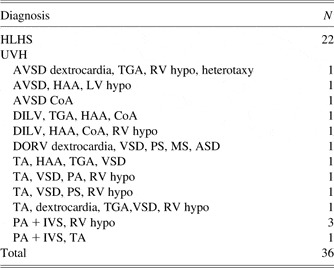
The sample of the present study was drawn from an ongoing prospective follow-up study of the neurodevelopmental outcomes in children with univentricular heart (Sarajuuri et al., Reference Sarajuuri, Lönnqvist, Mildh, Rajantie, Eronen, Mattila and Jokinen2009). Children born between August 2002 and February 2005 were recruited as newborns at the Department of Gynecology and Pediatrics of the Helsinki University Central Hospital, which handles all pediatric heart surgery for the Finnish population. During that period 32 children with HLHS and 25 with UVH were born. The healthy control children were recruited as newborns from among the low-risk deliveries at the Kätilöopisto Maternity hospital of the Department of Gynecology and Pediatrics of the Helsinki University Central Hospital. The participants in the present study comprised a total of 36 children with functionally single-ventricle heart defects, 22 with HLHS, 14 with UVH, and 41 control subjects (see Appendix A for a flow chart). The children underwent a neuropsychological assessment at a median age of 30 months. The diagnoses are presented in Table 1.
Diagnoses of the children with HLHS and UVH

Note. HLHS = Hypoplastic left heart syndrome; UVH = other forms of univentricular heart; AVSD = atrioventricular septal defect; TGA = transposition of the great arteries; RV hypo = hypoplasia of the right ventricle; HAA = hypoplastic aortic arch; LV hypo = hypoplasia of the left ventricle; CoA = coarctation of the aorta; DILV = double-inlet left ventricle; DORV = double-outlet right ventricle; VSD = ventricular septal defect; PS = pulmonary stenosis; MS = mitral stenosis; ASD = atrial septal defect; TA = tricuspid atresia; PA = pulmonary artrery; PA + IVS = pulmonary atresia with intact ventricular septum.
In the neonatal period all but one of the surviving children had undergone a primary operation, which was Norwood I for all the children with HLHS. The children with UVH had undergone various primary operations. Five children had undergone the Norwood I operation and eight had undergone less demanding surgeries according to each child′s individual diagnosis. By the age of 30 months, all the patients had undergone a bidirectional Glenn operation, and five children had undergone a total cavopulmonal connection operation (TCPC). The surgical strategies and neonatal characteristics of the patients are more thoroughly described in Sarajuuri et al. (Reference Sarajuuri, Lönnqvist, Mildh, Rajantie, Eronen, Mattila and Jokinen2009).
The study was approved by the Ethics Committee of the Department of Gynecology and Pediatrics at the Helsinki University Central Hospital.
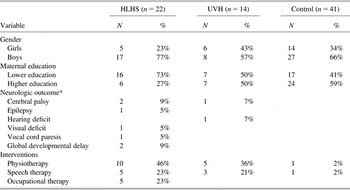
Table 2 summarizes the sociodemographic and neurological outcomes for the three groups. The mean age at the time of assessment was 29.7 months (SD = .56; range, 29–32 months). No significant differences between the groups were found in age according to ANOVA, or in gender on comparisons using cross-tabulation and the χ2-test. Socioeconomic status was evaluated based on the maternal level of education using the Finnish version of Unesco International Standard Classification of Education (1997). Maternal education was classified into two categories due to the small sample size. Comparisons between the three groups in the maternal level of education indicated a difference that approached significance, χ2 (2) = 5.63, p < .10. The maternal level of education was lowest in the HLHS group. Five children with HLHS (18%) and two children with UVH (14%) received a neurological diagnosis. One child with HLHS received three different neurological diagnoses: visual impairment, epilepsy, and global developmental delay. None of the control children received a neurological diagnosis.
Sociodemographic and neurological characteristics of the HLHS, UVH and control groups

Note. HLHS = Hypoplastic lef heart syndrome; UVH = other forms of univentricular heart, maternal education = higher education ≥14 years of education such as a university degree of applied sciences or a higher degree.
*One child with HLHS had three different neurological diagnoses.
Before the age of 30 months, 15 patients (42%) had consulted with a physiotherapist, 8 (22%) with a speech therapist, and 5 (14%) with an occupational therapist. One control child (2%) had consulted with a physiotherapist, and one (2%) with a speech therapist. These therapies varied from one to two consultation sessions, to weekly rehabilitation.
The neuropsychological assessment was conducted during two 45-min visits to the hospital with intervals no longer than 1 week. The first visit took place within 2 weeks of the exact age of 30 months, with the exception of one child with UVH, for whom the assessment had to be postponed for 2 months. A professional child neuropsychologist carried out the assessments.
Assessments
The Bayley Scales of Infant Development II
The Bayley Scales of Infant Development II (BSID – II; Bayley, Reference Bayley1993) was administered to assess cognitive development and behavior. The Mental Scale provides a mental development index (MDI) with a mean score of 100 and an SD of 15, and the Behavior Rating Scale (BRS) assesses qualitative aspects of the child's test-taking behavior. The Orientation/Engagement subscale assesses the child's approaching or avoiding activity in environmental interactions. The Emotional Regulation subscale characterizes the child's activity, adaptability, affect, cooperation, persistence, and frustration tolerance (Bayley, Reference Bayley1993). All BRS items are scored according to the child's age, with lower scores indicating less optimal behavior. The examiner, who administered the Mental Scale and BRS was not blind to the condition of the child. North American norms were used because Finnish norms were unavailable for these scales.
MacArthur Communicative Development Inventories
MacArthur Communicative Development Inventories (MCDI; Fenson et al., Reference Fenson, Dale, Reznick, Bates, Thal and Pethick1994) was used to collect data on the child's expressive vocabulary and the maximum length of sentences (MLS). The MCDI is a questionnaire based on the parental ratings of their children's communication skills. The questionnaire intended for ages 16–30 months was used. The MCDI has been standardized for Finnish children (Lyytinen, Reference Lyytinen1999). In the Finnish version (Lyytinen, Reference Lyytinen1999), correlations between measurements for expressive vocabulary at ages 18 to 30 months were between .65 and .71 and the correlation for sentence length at ages 24 to 30 months was .63.
The Child Behavior Checklist for ages 1.5–5 years
Maternal ratings of the Finnish version of the Achenbach Child Behavior Checklist (Achenbach & Rescorla, Reference Achenbach and Rescorla2000) for ages 1.5–5 years were used to assess behavior and emotional functioning. The CBCL is a 100-item, empirically based questionnaire that asks parents to indicate the degree to which they have observed specified behaviors in their child over the past 2 months. This questionnaire consists of seven subscales measuring the following aspects of behavior: emotionally reactive, anxious/depressed, somatic complaints, withdrawn, sleep problems, attention problems, and aggressive behavior. The subscales were classified into three scores: Internalizing, Externalizing, and Total problems scores. Raw scores were used for analyses. Higher scores indicate more problems in behavior. According to the manual, the scores can also be classified into clinical groupings, where T scores of 60 to 63 represent borderline range behavior problems, and T scores above 63 indicate clinical range behavior problems. North American norms were used as Finnish norms were unavailable.
Statistical Analysis
The SPSS version 16.0 software (SPSS Inc, Chicago, IL) was used for the statistical analysis, and cross-tabulation and the χ2 test to compare categorical variables between the HLHS, UVH, and control groups. Since the difference in maternal education approached significance, the differences in the continuous variables between the groups were analyzed using the univariate ANOVA (group × maternal education). The tests of simple effects (contrasts) were carried out to test hypothesized differences between the HLHS and control groups, the UVH and control groups, and the HLHS and UVH groups. An alpha level of p < .05 was considered statistically significant.
Results
Cognitive Development
The distribution of the MDI scores in the HLHS, UVH, and control groups appears in Figure 1. Two children with HLHS (9%) had MDI scores below 50, indicating significantly delayed performance (Bayley, Reference Bayley1993). The performance of these children was evaluated according to their developmental age, as the index scores were unavailable. The performance of these two children corresponded to the developmental ages of 8 months and 13.5 months, respectively. Due to their young developmental ages, these children could not be evaluated with the intended language or behavior measurements, and were, therefore, excluded from further analyses.
The distribution of MDI scores in the HLHS, UVH, and control groups. X-axis indicates the classification of scores, Y-axis indicates the frequency of MDI scores in the three groups. HLHS = Hypoplastic left heart syndrome. UVH = other forms of univentricular heart.

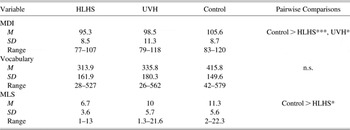
Table 3 presents the means, standard deviations, range, and pairwise group comparisons of the MDI scores for the three groups. Comparisons between the groups revealed statistically significant differences in the mean mental development index, F(2,71) = 7.71, p < .01, ηp2 = .18. The effect of maternal education on the mean MDI was not significant. As hypothesized, the tests of simple effects (contrasts) revealed that the mean mental development index was significantly lower in children with HLHS and in children with UVH than in the control children, F(1,71) = 13.40, p < .001, ηp2 = .16, and F(1,71) = 5.95, p < .05, ηp2 = .08, respectively. No significant differences in the MDI were found between the children with HLHS and those with UVH (ηp2 = .01).
Characteristics of MDI and expressive language measures for the HLHS, UVH and control groups

Note. MDI = mental development index; Vocabulary = number of words; MLS = maximum length of sentences in morphemes (Lyytinen, Reference Lyytinen1999); *p < .05; ***p < .001.
Expressive Language Function
Table 3 shows the findings for expressive language function in the HLHS, UVH, and control groups. The groups differed significantly with respect to the maximum length of sentences, F(2,67) = 3.56, p < .05, ηp2 = .10. The group effect on vocabulary size did not reach significance, F(2,68) = 2.81, p < .10, ηp2 = .08. The effect of maternal education on maximum sentence length and vocabulary was not statistically significant. The test of simple effects (contrasts) showed that children with HLHS produced significantly shorter sentences than did the control children, F(1,67) = 7.1, p < .05, ηp2 = .10, but did not differ from those with UVH (ηp2 = .03). No significant differences in maximum sentence length were found between the UVH and control groups (ηp2 = .01).
The children were considered at risk for expressive language delay when their scores in vocabulary size and maximum sentence length were both in the lowest 10 percentiles (Lyytinen, Reference Lyytinen1999). Risk was associated with group membership, χ2 (2) = 7.55, p < .05. Seven children with HLHS (35%), three children with UVH (25%), and three control children (10%) were classified in the risk group. Pairwise comparisons showed that the children with HLHS differed from the control children, χ2 (1) = 7.52, p < .01, but not from those with UVH. No differences were found between the UVH and control children.
Behavioral Functions
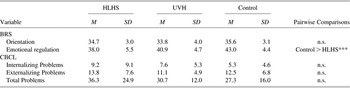
Table 4 shows the characteristics and pairwise group comparisons of the behavior measures for the HLHS, UVH, and control groups. On the Behavior Rating Scale, a significant difference between the groups was found in emotional regulation, F(2,71) = 6.77, p < .01, ηp2 = .16, but not on the orientation subscale (ηp2 = .05). Univariate ANOVA (group × maternal education) showed no significant association between the maternal level of education and the emotional regulation subscale. The tests of simple effects (contrasts) indicated that the children with HLHS experienced significantly more difficulties in regulating their emotions and behavior in the testing situation than did the control children, F(1,71) = 13.43, p < .001, ηp2 = .16. The difference between the HLHS and UVH children did not, however, reach significance, F(1,71) = 2.95, p < .10, ηp2 = .04, nor were differences in emotional regulation found between the UVH and control children (ηp2 = .03).
Characteristics of the behavior measures for the HLHS, UVH and control groups

Note. BRS = Behavior Rating Scale, lower scores indicate less optimal behavior; CBCL = Child Behavior Checklist, raw scores, higher scores indicate more problems in behavior; ***p < .001.
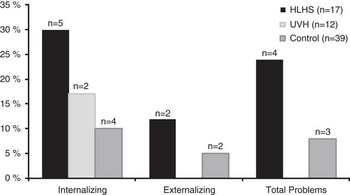
On the Child Behavior Checklist, the mean raw scores for Internalizing, Externalizing, and Total problems scores fell in the average range for all groups. No significant differences between the groups were found with regard to mean Internalizing (ηp2 = .07), Externalizing (ηp2 = .02), or Total problems scores (ηp2 = .05). However, classification of the scores according to clinical cut-points (T scores) suggests more problematic behavior in the children with HLHS, who differed significantly from the control children with respect to the classification of Internalizing problems, χ2 (2) = 7.43, p < .05. No differences in the classifications of Internalizing problems were found between the HLHS and UVH groups or between the UVH and control groups; nor did significant differences exist between the groups in the classifications of Externalizing or Total problems behavior. Figure 2 presents the percentages and frequencies of the borderline to clinical range of Internalizing, Externalizing or Total problems behavior for the HLHS, UVH, and control groups.
The distribution of borderline to clinical range behavior problems in CBCL for the HLHS, UVH and control groups. X-axis presents the classification of the behavior problems based on T scores, Y-axis indicates the frequency of borderline to clinical range behavior problems. HLHS = Hypoplastic left heart syndrome. UVH = other forms of univentricular heart.

Discussion
This study presents an up-to-date evaluation of overall cognitive development, expressive language function, and behavior in children with HLHS and UVH at the age of 30 months. The participants were a representative prospective cohort of children in a relatively homogenous population who were treated with modern operative and intensive care methods during the years 2002–2005. In addition to mental development, this study focused on the assessment of language and behavior, and thus extends prior knowledge about the early development of these children. The results revealed that, at the group level, both the children with HLHS and those with UVH had mean mental development indexes within the average range. However, as predicted, their scores were significantly lower than those of the control group. Of the 22 children with HLHS, 9 had MDI scores below the average range, and of these children, 2 exhibited significantly delayed performance. Similar results have recently been reported by Tabbutt et al. (Reference Tabbutt, Nord, Jarvik, Bernbaum, Wernovsky, Gerdes and Gaynor2008), who found a median mental development index score of 90, with 11% scoring below 70 in a cohort of 1-year-olds with HLHS. Other recent studies have also reported lower-than-expected mental development at early ages with HLHS or variants (Atallah et al., Reference Atallah, Dinu, Joffe, Robertson, Sauve, Dyck and Rebeyka2008; Visconti et al., Reference Visconti, Rimmer, Gauvreau, del Nido, Mayer, Hagino and Pigula2006).
With respect to expressive language, the results of the current study showed more delays in the expressive language of the children with HLHS as compared to that of the control children. With respect to both the vocabulary size and sentence length, 35% of the children with HLHS performed in the lowest 10%. Language problems have been previously identified in older children with hypoplastic left heart syndrome (Brosig et al., Reference Brosig, Mussatto, Kuhn and Tweddell2007a; Mahle et al., Reference Mahle, Clancy, Moss, Gerdes, Jobes and Wernovsky2000, Reference Mahle, Visconti, Freier, Kanne, Hamilton, Sharkey and Jenkins2006; Sarajuuri et al., Reference Sarajuuri, Jokinen, Puosi, Eronen, Mildh, Mattila and Lönnqvist2007) and are often present also in older children with other congenital heart defects (e.g., Bellinger et al., Reference Bellinger, Wypij, Kuban, Rappaport, Hickey, Wernovsky and Newburger1999; Hövels-Gürich et al., Reference Hövels-Gürich, Bauer, Schnitker, Willmes-von Hinckeldey, Messmer, Seghaye and Huber2008; Miatton et al., Reference Miatton, De Wolf, François, Thiery and Vingerhoets2007). Thus, the findings of the present study indicate that the language problems seen in other studies with older children with congenital heart defects, emerge early in development and are discernible very early in children with HLHS. This suggests some continuity in deficient language development from young age into later childhood in these children. Indeed, studies conducted with the Finnish version of the MCDI suggest that delays in early language development show continuity especially in at-risk children, for example, children at risk for dyslexia (Lyytinen, Reference Lyytinen1999; Lyytinen, Eklund, & Lyytinen, Reference Lyytinen, Eklund and Lyytinen2005).
With respect to emotional and behavioral problems, the results showed that the children with HLHS had significantly more difficulties than did the control children in regulating their emotions and their behavior during the testing situation. A higher percentage of mothers also reported their children as experiencing borderline to clinical range Internalizing behavior problems. These findings are partly consistent with those of previous research. Mahle et al. (Reference Mahle, Clancy, Moss, Gerdes, Jobes and Wernovsky2000) reported that nearly 21% of school-age children with HLHS exhibited clinically significant anxiety problems that represent Internalizing type behavior. In the current study, a higher prevalence of Internalizing behavior problems in young children with HLHS may also reflect somatic problems, such as pains and eating difficulties associated with the heart defect and its treatment (Achenbach & Rescorla, Reference Achenbach and Rescorla2000; Davis et al., Reference Davis, Davis, Cotman, Worley, Londrico and Harrison2007; Perrin, Stein, & Drotar, Reference Perrin, Stein and Drotar1991). Children with HLHS have nevertheless also been reported to experience Externalizing behavior (Brosig et al., Reference Brosig, Mussatto, Kuhn and Tweddell2007a), attention, and hyperactivity problems (Mahle et al., Reference Mahle, Clancy, Moss, Gerdes, Jobes and Wernovsky2000; Sarajuuri et al., Reference Sarajuuri, Jokinen, Puosi, Eronen, Mildh, Mattila and Lönnqvist2007). In the present study, such problems may be partly evident in the processes of emotional regulation. Emotional regulation at the age of 30 months measures characteristics such as activity level, frustration tolerance, cooperation, adaptation to change, attention to tasks, and hyperactivity in the testing situation. This means that lower scores indicate negative and irritable emotional tone, poor adaptability, and irregular or unstable bio-behavioral self-regulation (Bayley, Reference Bayley1993). One might speculate that some of these processes could manifest themselves as attention problems as well as more widespread problems in self-regulation as these children grow older. Studies have shown deficits in attention (Hövels-Gürich et al., Reference Hövels-Gürich, Konrad, Skorzenski, Herpertz-Dahlmann, Messmer and Seghaye2007) and impulse control (Miatton et al., Reference Miatton, De Wolf, François, Thiery and Vingerhoets2007) in older children with other forms of severe congenital heart defects.
Previous studies have reported a better cognitive outcome in children with UVH as compared with the children with HLHS (Goldberg et al., Reference Goldberg, Schwartz, Brunberg, Mosca, Bove, Scork and Kulik2000; Wernovsky et al., Reference Wernovsky, Stiles, Gauvreau, Gentles, duPlessis, Bellinger and Newburger2000). In this study, differences in language and behavior measures were not found between the UVH and control groups or between the UVH and HLHS groups. However, differences between the groups cannot be excluded due to the relatively small number of patients with UVH, and the heterogeneous diagnoses and surgical management in the UVH group. In addition to partly different operative approach, also preoperative mechanisms render the children with HLHS more vulnerable to adverse outcomes: Fetal Doppler measurements of cerebral blood flow reveal that fetuses with HLHS comprise a special risk group with decreased cerebral vascular resistance due to impaired cerebral circulation. On the other hand, in fetuses with right-sided obstructive lesions, like most of the children with UVH in the current study, cerebral vascular resistance is elevated to shunt excess blood away from the brain (Donofrio et al., Reference Donofrio, Bremer, Schieken, Gennings, Morton, Eidem and Kleinman2003; Kaltman et al., Reference Kaltman, Di, Tian and Rychik2005). Abnormal fetal cerebral blood flow may result in microcephaly or ischemic lesions, such as periventricular leucomalacia, in newborns with HLHS (Donofrio et al., Reference Donofrio, Bremer, Schieken, Gennings, Morton, Eidem and Kleinman2003; Licht et al., Reference Licht, Wang, Silvestre, Nicolson, Montenegro, Wernovsky and Detre2004).
In children with cyanotic heart defects, preoperative hypoxemia has been postulated as a risk factor for expressive language development (Hövels-Gürich et al., Reference Hövels-Gürich, Bauer, Schnitker, Willmes-von Hinckeldey, Messmer, Seghaye and Huber2008) and attention dysfunction (Hövels-Gürich et al., Reference Hövels-Gürich, Konrad, Skorzenski, Herpertz-Dahlmann, Messmer and Seghaye2007). Others have also hypothesized that children with HLHS may be at increased risk for language delays because they are hospitalized in infancy for extended periods when many language skills are acquired (Mahle et al., Reference Mahle, Visconti, Freier, Kanne, Hamilton, Sharkey and Jenkins2006). Finally, with respect to behavioral problems, one possible explanation to consider may be the effect of parenting behavior. Parents of children with HLHS have been shown to be more permissive in their parenting style and may therefore be more reluctant to set limits for their children (Brosig, Mussatto, Kuhn, & Twedell, Reference Brosig, Mussatto, Kuhn and Tweddell2007b). A permissive parenting style may affect the development of self-regulatory processes in young children. Indeed, the results of McCusker et al. (Reference McCusker, Doherty, Molloy, Casey, Rooney, Mulholland and Stewart2007) suggest that family processes, such as parenting style and maternal worry, play an important role in predicting behavioral outcomes in children with complex cyanotic heart defects.
As for the limitations of this study, the first is the small sample size of children with HLHS, and especially of children with UVH that limits statistical power. Also the heterogeneity of the UVH group may have affected the results. However, although the sample was small, it nevertheless represents a majority of the entire cohort of children with HLHS and UVH who were born in Finland during the years 2002–2005 and who underwent surgery with advanced surgical techniques (88% of the surviving eligible children with HLHS and 76% of those with UVH attended the 30-month assessment). To what extent the results are generalizable to children with this disorder in other countries is uncertain.
The second limitation is related to the assessment of BSID-II. The examiner, who administered the Mental Scale and completed the BRS, was not blind to the condition of the child. This was done to facilitate the provision of clinical guidance and support to the child and the family. The results of the categorical analysis of CBCL scores provide some converging evidence for greater behavioral difficulties in children with HLHS. Finally, it should be noted that the results concerning the MDI scores should be interpreted with certain reservations, as North American norms were used because Finnish norms were unavailable.
In this study the assessment of language was restricted to expressive language, where as receptive language was not assessed. The MCDI has, however, been shown to be a reliable and valid measure of child language at that age (Fenson et al., Reference Fenson, Dale, Reznick, Bates, Thal and Pethick1994).
In conclusion, the results of the present study suggest that at the age of 30 months, children with HLHS are at risk for neurocognitive and behavioral deficits. Compared to the control children, these children had lower scores in the mean mental development index, more delays in expressive language, and more problems in emotional and behavioral regulation. The children with UVH differed from the controls only with respect to overall cognitive development. Although neurobehavioral assessment at early age is not always predictive of later developmental outcomes (Hack et al., Reference Hack, Taylor, Drotar, Schluchter, Cartar, Wilson-Costello and Morrow2005; McGrath, Wypij, Rappaport, Newburger, & Bellinger, Reference McGrath, Wypij, Rappaport, Newburger and Bellinger2004), the findings concerning the children with HLHS, in combination with studies of older children, suggest a certain continuity in the pattern of neurocognitive difficulties across developmental time points. Thus, these findings demonstrate the need for early developmental screening, focused intervention and clinical neuropsychological follow-up until school age, particularly regarding the children with HLHS. Future studies will indicate more precisely the neuropsychological profile of these children as they grow older.
Acknowledgments
The authors thank Pekka Lahti-Nuuttila, MA (psych.), for his advice with the statistics of this study. This study was supported by the Arvo and Lea Ylppö Foundation, the Lastenlinna Foundation, the Foundation for Pediatric Research, and the Finnish Foundation for Cardiovascular Research. The authors declare no financial conflicts or other conflicts of interest pertaining to this manuscript.
Appendix
The participants of the study (22 children with HLHS, 14 with UVH and 41 control children) attending neuropsychological assessment at the age of 30 months derived from the prospective neurodevelopmental follow-up study.