Introduction
Worldwide about 2.1 billion human adults are overweight or obese.Reference Smith and Smith 1 Obesity is a risk factor for the development of metabolic syndrome (MetS), non-alcoholic fatty-liver disease (NAFLD) and type II diabetes mellitus (DM II).Reference Reinehr 2 , Reference Alisi and Nobili 3 Compared to normal growing children, overweight and/or obese children are more likely to become obese in adulthood.Reference Pandita, Sharma and Pandita 4 The Developmental Origins of Health and Disease (DOHaD) hypothesis states that perinatal exposure to suboptimal nutritional and environmental stimuli can cause temporary and/or permanent alterations to physiological function which can result in increased susceptibility or resistance to developing disease in adulthood.Reference Nomura and Yamanouchi 5 , Reference Vickers, Clayton, Yap and Sloboda 6 Epigenetic modifications, through DNA methylation and histone modification, are the main mechanisms that explain the DOHaD hypothesis and these mechanisms provide a basis for the ‘single-hit’ and ‘double-hit’ hypotheses of metabolic programming.Reference Vickers, Clayton, Yap and Sloboda 6 , Reference Laker, Wlodek, Connelly and Yan 7 The ‘single-hit’ hypothesis posits that exposure to ‘single-hit’ of suboptimal nutritional environment in perinatal life results in metabolic derangements immediately or after a latency period.Reference Almond and Currie 8 The ‘double-hit’ hypothesis of metabolic programming states that exposure to the ‘first-hit’ or ‘single-hit’ of suboptimal nutrition in perinatal life is not sufficient to cause metabolic derangementsReference Tamashiro and Moran 9 : the ‘first-hit’ events merely increase the risk of developing metabolic derangements when ‘second-hit’ suboptimal stimuli or factors are introduced later in adulthood.Reference Stewart, Heerwagen and Friedman 10
Studies using animals and humans have shown that direct (neonatal) and indirect (through maternal and paternal) exposure to suboptimal diets such as high-fructose diets in early developmental phases modifies the expression of genes and receptors that are involved in glucose and lipid metabolism.Reference Vickers, Clayton, Yap and Sloboda 6 , Reference Huynh, Luiken, Coumans and Bell 11 These modifications to gene and receptor expression increase the risk of developing obesity, MetS and NAFLD in childhood and adulthood.Reference Huynh, Luiken, Coumans and Bell 11 – Reference Chen, Tang and Bao 13 Studies have reported that the administration of agents with antioxidant, antiobesity and antidiabetic activities to pregnant and/or lactating dams protected offspring against the adverse metabolic outcomes of ‘single-hit’ and ‘double-hit’ diet-induced metabolic programming.Reference Ching, Yeung, Tse, Sit and Li 14 , Reference Tanaka, Kita and Yamasaki 15
The water-soluble organosulphur S-allyl cysteine (SAC), a major constituent of aged garlic.Reference Amagase, Petesch and Matsuura 16 It possesses health beneficial (antioxidant, antiobesity and antidiabetic) properties.Reference Asdaq 17 , Reference Saravanan and Ponmurugan 18 These health beneficial properties of SAC suggest that it can potentially protect against the adverse metabolic outcomes of ‘early single-hit’, ‘late single-hit’ and ‘double-hit’ high-fructose diet-induced adverse metabolic programming in adulthood. However, to our knowledge, there are no studies that have investigated the potential of neonatal orally administered SAC to programme for protection against ‘early single-hit’, ‘late single-hit’ and ‘double-hit’ fructose diet-induced metabolic derangements in adulthood. This study interrogated the potential of neonatal orally administered SAC to protect Wistar rats against the development of adverse metabolic derangements in adulthood following ‘early single-hit’, ‘late single-hit’ and ‘double-hit’ fructose diet.
Materials and methods
Experimental stages
The study was done in three experimental stages: stage I was from postnatal day (PND) 6–20; stage II from PND 21–55 and stage III from PND 56–116.
Animals, housing and feeding
In total, 112, 4 day old, male (n=56) and female (n=56) Wistar rat pups from 12 first-time female breeders (litter size: minimum 8, maximum 12) were used in the study. During the first stage, the rat pups in the litters were housed with their respective dams in Perspex cages lined with wood shavings in the Central Animal Services, University of the Witwatersrand. After weaning (PND 21 onwards) the rats (weanling) were housed individually in Perspex cages. Room temperature was maintained 24±2°C with a 12-h light–dark cycle (lights on from 7 am to 7 pm) for all experimental stages. While during the first experimental stage the rat pups freely nursed from their dams, for experimental stages II and III they had ad libitum access to standard rat chow pellets and either clean drinking water and/or a 20% fructose solution (FS) depending on the treatment regimen.
Experimental design
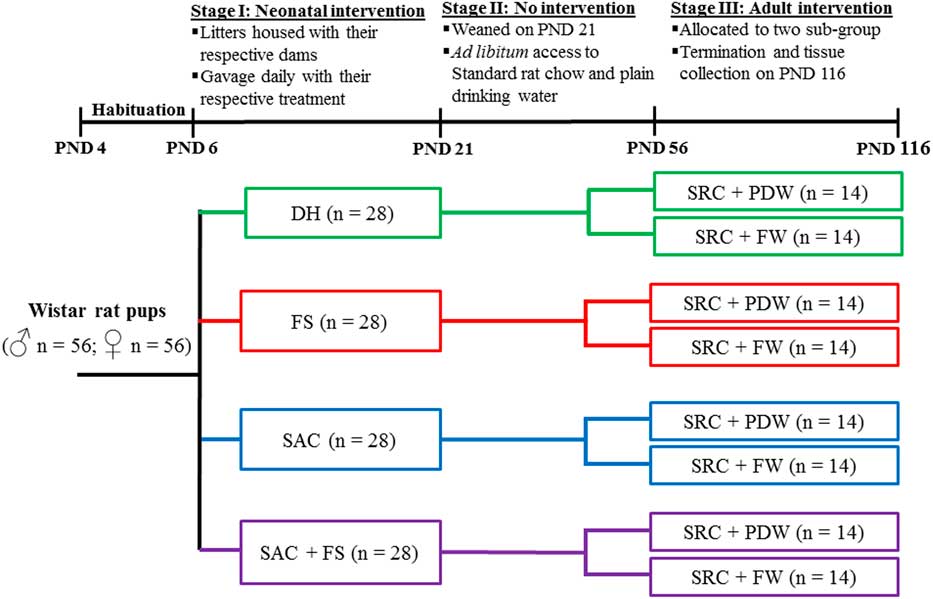
Experimental stage I was the neonatal intervention stage in which the equal male and female pups were randomly allocated to and administered one of the following treatment regimens: group I – 10 ml/kg body mass per day of distilled water (DH), group II – 10 ml/kg body mass per day of 20% FS (w/v), group III – 150 mg/kg body mass per day of SAC dissolved in DH, group IV – SAC+FS. The first stage thus also represented the first (early) hit with fructose. The respective treatment regimens were administered as a single bolus daily to the respective rat pups for 15 days.
The rats from each treatment regimen (stage I) were weaned on PND 21. From PND 22 to 55 they were housed individually and had ad libitum access to standard rat feed and plain drinking water (PDW).
The grown male and female rats from each treatment regimen, having gone through neonatal interventions (stage I) and the growing (stage II), were randomly allocated to two subgroups: subgroup I and subgroup II. The rats on subgroup I continued on a standard rat chow (ad libitum) and PDW while those on subgroup II had ad libitum access to a standard rat chow and 20% fructose (w/v; FW). This intervention with fructose provided either a late single-hit or the late second-hit (for double-hit) with fructose. The rats in each of the subgroups were kept on their respective treatment regimens for 8 weeks following which they were to an oral glucose tolerance test (OGTT). Immediately thereafter they were returned on their respective treatment regimens and then euthanized 48 h later. A schematic illustration of the study design is shown in Fig. 1.
A schematic representation of the study design. DH, 10 ml/kg body mass per day distilled water; FS, 10 ml/kg body mass per day 20% fructose solution (w/v); SAC, 150 mg/kg body mass per day S-allyl cysteine; SAC+FS, 150 mg/kg body mass per day S-allyl cysteine+10 ml/kg body mass per day 20% fructose solution (w/v); SRC+PDW, standard rat chow+plain drinking water; SRC+FW, standard rat chow+20% fructose solution for drinking fluid; OGTT, oral glucose tolerance test; PND, postnatal day.

Measurements
Body mass
The rats were weighed daily during stage I of the experiment in order to adjust the amounts of fructose and SAC so as to ensure a constant dose rate (PND 6–21) and twice weekly during stages II and III of the experiment. An electronic balance (Snowrex Electronic Scale, Clover Scales, Johannesburg, South Africa) was used to weigh the rats.
Determination of tolerance to an oral glucose load
After 8 weeks of high-fructose diet intervention in adulthood, the rats were fasted overnight (PND 114) and fasting blood glucose concentration was determined from a drop of blood obtained from the tail vein via pinprick.Reference Loxham, Teague and Poucher 19 A calibrated Contour Plus glucometer [Bayer (Pty) LTD, Isando, South Africa] was used to determine the blood glucose concentration. Thereafter the rats were gavaged with 2 g/kg 50% (w/v) glucose and blood glucose concentration was then determined at15, 30, 60 and 120 minutes post-gavage. The rats were returned onto their respective treatment regimens for 48 h to allow them to recover. The total area under the curve (AUC) for the OGTT for each rat was computed to evaluate the total increase in blood glucose over a period of time following an oral glucose load.Reference Sakaguchi, Hirota and Hashimoto 20
Terminal procedures
Determination of terminal body mass and blood parameters
At the end of the third experimental stage (PND 116), the rats were fasted overnight and then their terminal body masses were measured using an electronic scale. The rats were then euthanized by intraperitoneal injection of an overdose of sodium pentobarbitone [Eutha-naze, Bayer (Pty) LTD] at 200 mg/kg body mass. Following euthanasia, blood was collected via cardiac puncture into heparinised blood collection tubes (Becton Dickinson Vacutainer Systems Europe, Meylan Cedex, France), spun and the harvested plasma was stored at −20°C for determination of triglycerides, cholesterol, leptin and insulin concentrations.
Determination of fasting plasma triglycerides and cholesterol
Fasted plasma triglyceride concentration was determined using a calibrated Accutrend triglyceride meter (Roche, Mannheim, Germany) as per the manufacturer’s instructions. The fasted plasma cholesterol concentration was determined using a colorimetric-based clinical chemistry analyser (IDEXX VetTest® Clinical Chemistry Analyser, IDEXX Laboratories Inc., USA).
Determination of plasma insulin and leptin concentration
Plasma insulin and leptin concentration were determined by enzyme-linked immunosorbent assay (ELISA) using a rat leptin kit [Elabscience®, Rat LEP (Leptin) ELISA kit, Wuhan, Hubei Province, China] and insulin kit [Elabscience®, Rat INS (Insulin) ELISA kit, Wuhan, Hubei Province, China] according to the manufacturer’s instructions. To evaluate whole-body insulin sensitivity the homoeostasis model assessment of insulin resistance (HOMA-IR) was computed using the following equation:
 $$\eqalign { {\rm HOMA}{\minus}{\rm IR}\, & {\equals} \,[ {{\rm fasting\,\,insulin \,\,level }\,( {{\rm ng}/{\rm ml}})} \cr & {\times} {\rm fasting \,\,glucose\,\, level }( {{\rm mg}\,/\,{\rm dl}})]/{\rm 4}0{\rm 5}.^{{21}} $$
To convert mmol/l fasting glucose concentration to mg/dl, mmol/l was multiplied by 18.01.
Determination of visceral organ macro- and micro-morphometry
Following blood collection, the liver, visceral fat (mesenteric and perirenal) and epididymal fat (males only) were carefully dissected out and weighed using a Presica electronic balance (Presica 310M; Presica Instruments AG, Switzerland). A sample of the liver was stored at −20°C for determination of liver lipid content. Liver samples for histology analysis were preserved in 10% phosphate-buffered formalin and then embedded in paraffin wax, sectioned, and then stained with haematoxylin and eosin.Reference Reyes-Gordillo, Segovia and Shibayama 22 To assess hepatocellular changes the three random sections per slides were viewed under a light microscope using an eyepiece micrometer (Reichert®, Austria) at high power magnification of 400×. The NAFLD activity score (NAS), which is a semi-quantitative grading and scoring system, was used to evaluate the progression and severity of NAFLD: steatosis grade 0: <5%; 1: 5–33%; 2: 34–66%; 3: >66%; foci of lobular inflammation scoring 0: none; 1: <2; 2: 2–4; 3: >4; hepatocellular ballooning scoring 0: none; 1: few ballooned cells; 2: many ballooned cells.Reference Kleiner, Brunt and Van Natta 23
Determination of liver lipid content
The total liver lipid content was determined using the soxhlet method of extraction as described by AOAC (2005; method number 920.39). 24
Statistical analysis
Parametric data are expressed as mean±SD and non-parametric data are expressed as median and range (min, max). The data were analyzed using GraphPad Prism 5 software (Graph-Pad Software Inc., San Diego, CA, USA). Statistical significance was considered when P⩽0.05. Data on body mass was analysed using a repeated measures ANOVA. A one-way ANOVA was used to analyze other multiple group data followed by multiple comparisons Bonferroni’s post-hoc test to compare means. The Kruskal–Wallis test was used to analyse multiple groups NAS data followed by multiple comparisons Dunn’s post-hoc test to compare medians.
Results
Body mass
There were no significant differences in the body weights of male (Supplementary Fig. 1a) and female (Supplementary Fig. 1b) rats at induction, weaning, PND 56 and termination across treatment regimens. However, across treatment regimens, the male (Supplementary Fig 1a) and female (Supplementary Fig. 1b) rats grew significantly (P<0.0001) during the three experimental stages: induction to weaning, weaning to PND 56 and PND 56 to termination (PND 116).
OGTT and AUC
There were no significant differences in total AUC of male (Supplementary Fig. 2a) and female (Supplementary Fig. 2b) rats across treatment regimens.
Blood parameters
In male (Supplementary Table 1a) and female (Supplementary Table 1b) rats, the concentration of the circulating metabolic substrates (glucose, triglycerides and cholesterol) and hormones regulating metabolism (leptin and insulin) and the computed HOMA-IR were similar across treatment regimens.
Adiposity
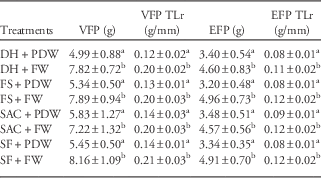
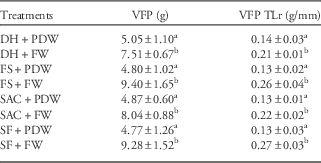
The absolute and relative masses of visceral fat and epididymal (males only) fat masses from male and female rats are shown in Tables 1a and 1b, respectively. The consumption of ‘late single-hit’ high-fructose diet resulted in significantly heavier (P<0.0001) visceral and epididymal (males only, Table 1a) fat masses and female (Table 1b) rats. Orally administered ‘early single-hit’ high-fructose diet did not predispose the male (Table 1a) and female (Table 2b) rats to increased adiposity [visceral and epididymal (males only)] in adulthood (Table 1a). The ‘double-hit’ fructose diet resulted in significantly increased (P<0.0001) adiposity [visceral and epididymal (male only)] in both the male and female rats (Tables 1a and 1b, respectively) rats. Notably, the observed increase in adiposity mediated by the ‘double-hit’ high-fructose diet was similar to the adiposity induced by the ‘late single-hit’ high-fructose diet (Tables 1a and 1b). Neonatal orally administered SAC did not prevent the ‘late single-hit’ or ‘double-hit’ fructose diet-induced increase in visceral and epididymal (males only) fat masses in the rats (Tables 1a and 1b, respectively).
Effects of high-fructose diet on visceral fat pad and epididymal fat pad masses of adult male rats orally administered S-allyl cysteine during suckling

VFP, visceral fat pad; TLr, relative to tibia length; EFP, epididymal fat pad; DH+PDW, gavage with 10 ml/kg body mass per day distilled water during suckling+plain drinking water in adulthood; DH+FW, gavage with 10 ml/kg body mass per day distilled water during suckling+20% fructose (w/v) as their drinking fluid in adulthood; FS+PDW, gavage with 10 ml/kg body mass per day 20% fructose solution (w/v) during suckling+plain drinking water in adulthood; FS+FW, gavage with 10 ml/kg body mass per day 20% fructose solution (w/v) during suckling+20% fructose (w/v) as the drinking fluid in adulthood; SAC+PDW, gavage with 150 mg/kg body mass per day S-allyl cysteine during suckling+plain drinking water in adulthood; SAC+FW, gavage with 150 mg/kg body mass per day S-allyl cysteine during suckling+20% fructose (w/v) as their drinking fluid in adulthood; SF+PDW, gavage with 150 mg/kg body mass per day S-allyl cysteine and 10 ml/kg body mass per day 20% fructose solution (w/v) during suckling+plain drinking water in adulthood; SF+FW, gavage with 150 mg/kg body mass per day S-allyl cysteine and 10 ml/kg body mass per day 20% fructose solution (w/v) during suckling+20% fructose (w/v) as their drinking fluid in adulthood.
Data presented as mean±SD; n=7 per treatment.
a,bWithin column means with different superscripts are significantly different at P<0.0001. Regardless of neonatal oral administration intervention, all male rats that consumed FW in adulthood had significantly heavier (P<0.05) visceral and epididymal fat masses compared to all male rats that consumed PDW in adulthood.
Effects of high-fructose diet on visceral fat pad masses (absolute and relative to tibia length) of adult female rats orally administered S-allyl cysteine during suckling

VFP, visceral fat pad; TLr, relative to tibia length; DH+PDW, gavage with 10 ml/kg body mass per day distilled water during suckling+plain drinking water in adulthood; DH+FW, gavage with 10 ml/kg body mass per day distilled water during suckling+20% fructose (w/v) as their drinking fluid in adulthood; FS+PDW, gavage with 10 ml/kg body mass per day 20% fructose solution (w/v) during suckling+plain drinking water in adulthood; FS+FW, gavage with 10 ml/kg body mass per day 20% fructose solution (w/v) during suckling+20% fructose (w/v) as the drinking fluid in adulthood; SAC+PDW, gavage with 150 mg/kg body mass per day S-allyl cysteine during suckling+plain drinking water in adulthood; SAC+FW, gavage with 150 mg/kg body mass per day S-allyl cysteine during suckling+20% fructose (w/v) as their drinking fluid in adulthood; SF+PDW, gavage with 150 mg/kg body mass per day S-allyl cysteine and 10 ml/kg body mass per day 20% fructose solution (w/v) during suckling+plain drinking water in adulthood; SF+FW, gavage with 150 mg/kg body mass per day S-allyl cysteine and 10 ml/kg body mass per day 20% fructose solution (w/v) during suckling+20% fructose (w/v) as their drinking fluid in adulthood
Data presented as mean±SD; n=7 per treatment.
a,bWithin column means with different superscripts are significantly different at P⩽0.0001. Regardless of neonatal oral administration intervention, all female rats that consumed FW in adulthood had significantly heavier (P<0.05) visceral and epididymal fat masses compared with all female rats that consumed PDW in adulthood.
Liver mass and lipid content
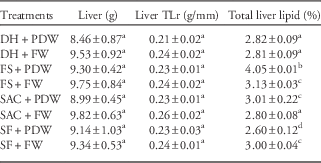
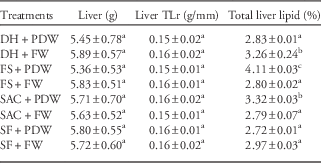
The absolute and relative (to tibia length) liver masses and liver lipid content of male and female rats, across treatment regimens, are shown in Tables 2a and 2b, respectively. The oral administration of an ‘early single-hit’ fructose diet resulted in significantly (P<0.05) higher liver lipid content in adult male and female rats (Tables 2a and 2b). A ‘double-hit’ (early and late) fructose diet resulted in significantly increased (P<0.05) liver lipid content in adult male rats only, but the increase in liver lipid content was not significantly higher compared with the ‘early single-hit’ induced increase in liver lipid content (Table 2a). The consumption of high-fructose diet in adulthood only (‘late single-hit’) resulted in significantly increased (P<0.05) liver lipid content in adult female rats, but the increase in liver lipid content was not significantly higher compared with the increase in liver lipid content as a result of fructose consumption in the early postnatal period only (‘early single-hit’) (Table 2b). Neonatal orally administered SAC protected against increased liver lipid accretion induced by ‘early single-hit’ high-fructose diet in both male and female rats and also the ‘late single-hit’ high-fructose diet in female rats only (Tables 2a and 2b). However, neonatal orally administered SAC did not protect the male rats against the ‘double-hit’ (early and late) high-fructose diet-induced increase in liver lipid content (Table 2a). Interestingly neonatal orally administered SAC alone (without added fructose in the diet early or late), resulted in significantly increased (P<0.05) liver lipid content in male and female rats (Tables 2a and 2b).
Effects of high-fructose diet on liver masses (absolute and relative to tibia length) and total liver lipid content of adult male rats orally administered S-allyl cysteine during suckling

DH+PDW, gavage with 10 ml/kg body mass per day distilled water during suckling+plain drinking water in adulthood; DH+FW, gavage with 10 ml/kg body mass per day distilled water during suckling+20% fructose (w/v) as their drinking fluid in adulthood; FS+PDW, gavage with 10 ml/kg body mass per day 20% fructose solution (w/v) during suckling+plain drinking water in adulthood; FS+FW, gavage with 10 ml/kg body mass per day 20% fructose solution (w/v) during suckling+20% fructose (w/v) as the drinking fluid in adulthood; SAC+PDW, gavage with 150 mg/kg body mass per day S-allyl cysteine during suckling+plain drinking water in adulthood; SAC+FW, gavage with 150 mg/kg body mass per day S-allyl cysteine during suckling+20% fructose (w/v) as their drinking fluid in adulthood; SF+PDW, gavage with 150 mg/kg body mass per day S-allyl cysteine and 10 ml/kg body mass per day 20% fructose solution (w/v) during suckling+plain drinking water in adulthood; SF+FW, gavage with 150 mg/kg body mass per day S-allyl cysteine and 10 ml/kg body mass per day 20% fructose solution (w/v) during suckling+20% fructose (w/v) as their drinking fluid in adulthood.
Data presented as mean±SD; n=7 per treatment.
a,b,c,dWithin column means with different superscripts are significantly different at P⩽0.05. Liver masses were similar across treatment regimens. Liver lipid content was significantly higher (P<0.05) in FS+PDW male rats compared to DH+PW, DH+FW or FS+FW male rats. SAC+PDW male rats had significantly higher (P<0.05) liver lipids compared with DH+PDW, DH+FW and SAC+FW male rats. Liver lipid was significantly lower (P<0.05) in SF+PDW male rats compared with FS+PDW, FS+FW, SF+FW, DH+PDW or DH+FW male rats.
Effects of high-fructose diet on liver masses (absolute and relative to tibia length) and total liver lipid content of adult female rats orally administered S-allyl cysteine during suckling

DH+PDW, gavage with 10 ml/kg body mass per day distilled water during suckling+plain drinking water in adulthood; DH+FW, gavage with 10 ml/kg body mass per day distilled water during suckling+20% fructose (w/v) as their drinking fluid in adulthood; FS+PDW, gavage with 10 ml/kg body mass per day 20% fructose solution (w/v) during suckling+plain drinking water in adulthood; FS+FW, gavage with 10 ml/kg body mass per day 20% fructose solution (w/v) during suckling+20% fructose (w/v) as the drinking fluid in adulthood; SAC+PDW, gavage with 150 mg/kg body mass per day S-allyl cysteine during suckling+plain drinking water in adulthood; SAC+FW, gavage with 150 mg/kg body mass per day S-allyl cysteine during suckling+20% fructose (w/v) as their drinking fluid in adulthood; SF+PDW, gavage with 150 mg/kg body mass per day S-allyl cysteine and 10 ml/kg body mass per day 20% fructose solution (w/v) during suckling+plain drinking water in adulthood; SF+FW, gavage with 150 mg/kg body mass per day S-allyl cysteine and 10 ml/kg body mass per day 20% fructose solution (w/v) during suckling+20% fructose (w/v) as their drinking fluid in adulthood.
Data presented as mean±SD; n=7 per treatment.
a,b,cWithin column means with different superscripts are significantly different at P⩽0.05. Liver masses were similar across treatment regimens. Liver lipid content was significantly higher (P<0.05) in DH+FW female rats compared to DH+PDW female rats. FS+PDW female rats had significantly higher (P<0.05) liver lipids compared to FS+FW, DH+PW, SF+PDW or SF+FW female rats. Liver lipid content was significantly higher (P<0.05) in SAC+PDW female rats compared to DH+PDW or SAC+FW female rats.
Liver histo-morphometry
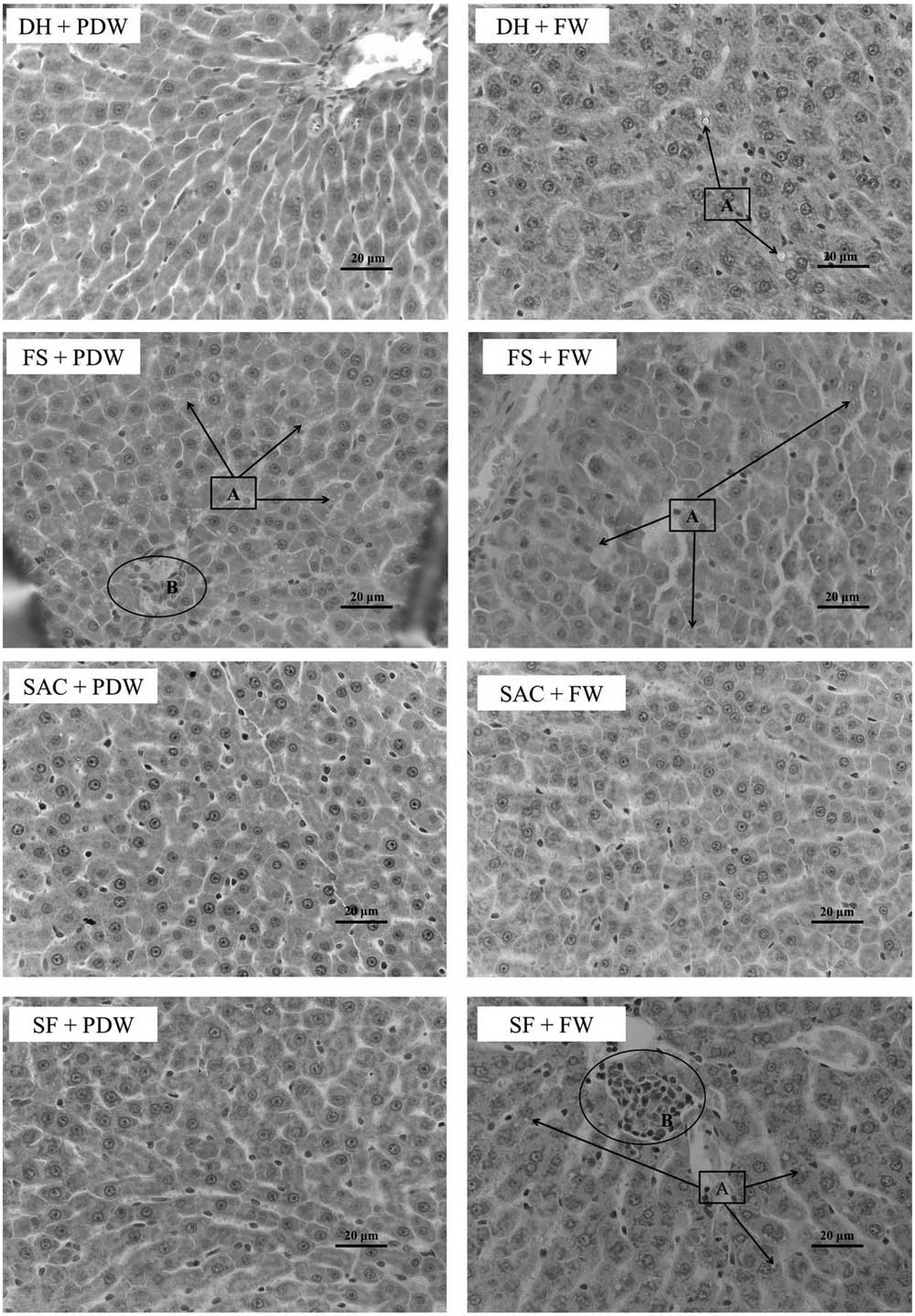
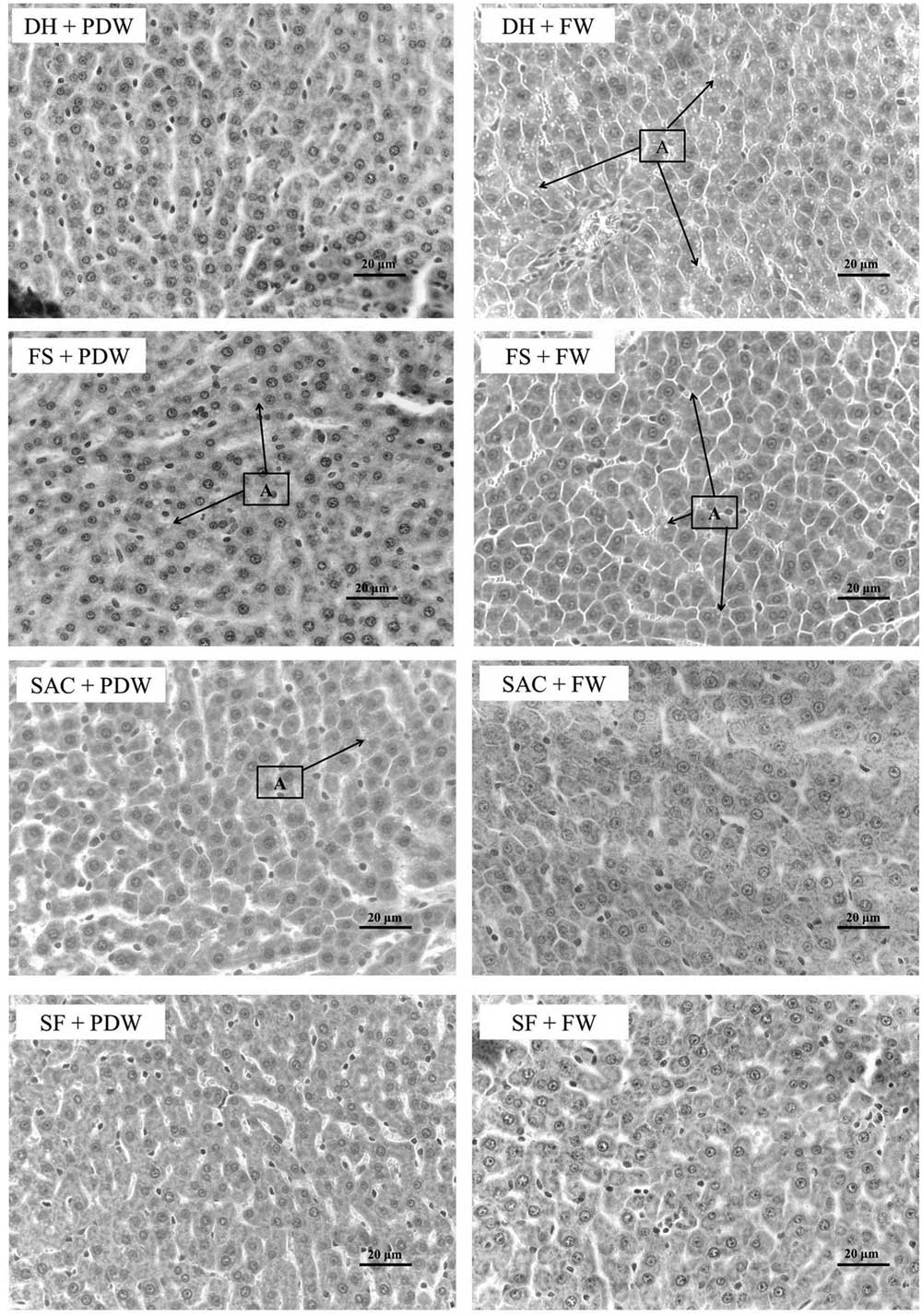
There were no significant differences in hepatocyte size and density of male (Supplementary Table 2a) and female (Supplementary Table 2b) rats across treatment regimens. The treatment regimens had no significant effect on the NAS of male (Supplementary Table 3a) and female (Supplementary Table 3b) rats. Representative liver histology photo sections (H and E staining, 400× magnification) of male and female rat from the different treatment groups are shown in Fig. 2a and 2b, respectively. The ‘early single-hit’, ‘late single-hit’ and ‘double-hit’ (early and late) high-fructose diet resulted in the development of microvesicular steatosis in male rats (Fig. 2a). Orally administered neonatal SAC prevented ‘early single-hit’ and ‘late single-hit’ high-fructose diet-induced microvesicular steatosis in male rats but did not prevent the ‘double-hit’ (early and late) high-fructose diet-induced microvesicular steatosis (Fig. 2a). Although neonatal orally administered SAC alone increased liver lipid content in male and female rats (Tables 2a and 2b), it caused microvesicular steatosis in female rats only but not in male rats (Fig. 2a and 2b). The ‘early single-hit’, ‘late single-hit’ and ‘double-hit’ (early and late) high-fructose diets resulted in the development of microvesicular steatosis in female rats (Fig. 2b). Oral administration of SAC during the neonatal growth phase prevented ‘early single-hit’, ‘late single-hit’ and ‘double-hit’ (early and late) high-fructose diet-induced microvesicular steatosis in female rats (Fig. 2b).
Effects of high-fructose diet on liver histology (H and E staining, 400× magnification) of representative adult male rats orally administered S-allyl cysteine during suckling. Arrows A point to hepatic microvesicular steatosis and circle B shows foci of lobular inflammation. DH+PDW, gavage with 10 ml/kg body mass per day distilled water during suckling+plain drinking water in adulthood; DH+FW, gavage with 10 ml/kg body mass per day distilled water during suckling+20% fructose (w/v) as their drinking fluid in adulthood; FS+PDW, gavage with 10 ml/kg body mass per day 20% fructose solution (w/v) during suckling+plain drinking water in adulthood; FS+FW, gavage with 10 ml/kg body mass per day 20% fructose solution (w/v) during suckling+20% fructose (w/v) as the drinking fluid in adulthood; SAC+PDW, gavage with 150 mg/kg body mass per day S-allyl cysteine during suckling+plain drinking water in adulthood; SAC+FW, gavage with 150 mg/kg body mass per day S-allyl cysteine during suckling+20% fructose (w/v) as their drinking fluid in adulthood; SF+PDW, gavage with 150 mg/kg body mass per day S-allyl cysteine and 10 ml/kg body mass per day 20% fructose solution (w/v) during suckling+plain drinking water in adulthood; SF+FW, gavage with 150 mg/kg body mass per day S-allyl cysteine and 10 ml/kg body mass per day 20% fructose solution (w/v) during suckling+20% fructose (w/v) as their drinking fluid in adulthood.

Effects of high-fructose diet on liver histology (H and E staining, 400× magnification) of representative adult female rats orally administered S-allyl cysteine during suckling. Arrows A point to hepatic microvesicular steatosis. DH+PDW, gavage with 10 ml/kg body mass per day distilled water during suckling+plain drinking water in adulthood; DH+FW, gavage with 10 ml/kg body mass per day distilled water during suckling+20% fructose (w/v) as their drinking fluid in adulthood; FS+PDW, gavage with 10 ml/kg body mass per day 20% fructose solution (w/v) during suckling+plain drinking water in adulthood; FS+FW, gavage with 10 ml/kg body mass per day 20% fructose solution (w/v) during suckling+20% fructose (w/v) as the drinking fluid in adulthood; SAC+PDW, gavage with 150 mg/kg body mass per day S-allyl cysteine during suckling+plain drinking water in adulthood; SAC+FW, gavage with 150 mg/kg body mass per day S-allyl cysteine during suckling+20% fructose (w/v) as their drinking fluid in adulthood; SF+PDW, gavage with 150 mg/kg body mass per day S-allyl cysteine and 10 ml/kg body mass per day 20% fructose solution (w/v) during suckling+plain drinking water in adulthood; SF+FW, gavage with 150 mg/kg body mass per day S-allyl cysteine and 10 ml/kg body mass per day 20% fructose solution (w/v) during suckling+20% fructose (w/v) as their drinking fluid in adulthood.

Discussion
The consumption of high-fructose diets [20% (w/v) fructose drinking water] has been shown to result in the development or programming for metabolic derangements such as visceral obesity, insulin resistance, atherogenic dyslipidaemia and NAFLD.Reference Liu, Xue and Ji 25 We aimed to investigate whether neonatal orally administered SAC protects Wistar rats against adverse metabolic outcomes induced by early or late ‘single-hit’ or ‘double-hit’ high-fructose diet insult. Our main findings show that the ‘early single-hit’ neonatal orally administered 20% FS programmes for increased liver lipid accretion and microvesicular steatosis in adult male and female rats. However, the adverse metabolic outcomes in adulthood induced by the ‘early single-hit’ neonatal orally administered 20% FS were not exacerbated by the ‘double-hit’ (early and late) high-fructose insult. In addition, the consumption of a high-fructose diet in adulthood only ‘late single-hit’ resulted in visceral obesity in male and female rats. Although the neonatal oral administration of SAC protected the rats against the adverse metabolic programming effects (increased liver lipid accretion and microvesicular steatosis) of an ‘early single-hit’ neonatal orally administered 20% FS, it did not protect them against visceral obesity induced by high-fructose diet consumption in adulthood.
In the current study, there were no significant differences in the body masses of the male and female rats across treatment regimens at weaning and termination. Nonetheless, both male and female rats across treatment regimens showed significant growth from induction to weaning and from weaning to termination. These findings suggest that the treatment regimens (neonatal oral administered SAC, single-hit and double-hit fructose) had no adverse effect on growth (body mass) of the rats. Our findings are at variance with Huynh et al. (2008)Reference Huynh, Luiken, Coumans and Bell 11 who documented increased body masses and increased risk for obesity in Wistar rats in adulthood following the oral administration of a 10% FS (first-hit) to them as suckling neonates and a subsequent 65% high-fructose diet (second-hit) in adulthood. We speculate that the dichotomy in the findings could be due to possible higher caloric intake in the study by Huynh et al. (2008) where the diet used in adulthood was comprised of 65% fructose v. the 20% fructose drinking water in the current study.
The treatment regimens did not alter plasma lipid (triglycerides and cholesterol) concentrations which suggest that neonatal orally administered 20% FS did not programme for increased susceptibility to develop hypertriglyceridemia and hypercholesterolaemia in the rats in adulthood. The insignificant differences in the AUC for the OGTT, leptin and insulin concentration and insulin resistance (HOMA-IR) of male and female rats across treatment regimens, suggest that the treatment regimens did not alter glucose handling, leptin and insulin secretion neither did they cause insulin resistance. Our findings on fasting blood glucose concentration are consistent with Huynh et al. Reference Huynh, Luiken, Coumans and Bell 11 who reported no changes in the blood glucose concentration of Wistar rats administered a 10% FS (first-hit) during suckling and fed a 65% high-fructose diet (second-hit) in adulthood. However, Huynh et al. Reference Huynh, Luiken, Coumans and Bell 11 reported hyperinsulinemia and insulin resistance in Wistar rats that were orally administered a 10% FS (first-hit) during suckling and fed 65% high-fructose diet (second-hit) in adulthood and these findings (by Huynh et al. Reference Huynh, Luiken, Coumans and Bell 11 ) are at variance with findings of the current study. Studies have reported that rats fed a 60% fructose diet (w/w) for 8 weeks develop more severe metabolic derangements than rats that consume 10% FS and standard rat chow for 8 weeks.Reference Ferreira de Moura, Ribeiro, Aparecida de Oliveira, Stevanato and Rostom de Mello 26 , Reference Sanchez-Lozada, Tapia and Jimenez 27 This difference has been attributed to the 60% fructose in feed (w/w) providing surplus calories as compared with the 10% FS (w/v).Reference Ferreira de Moura, Ribeiro, Aparecida de Oliveira, Stevanato and Rostom de Mello 26 , Reference Sanchez-Lozada, Tapia and Jimenez 27 Thus the variance in our findings and those by Huynh et al. Reference Huynh, Luiken, Coumans and Bell 11 may be attributed to the variation in the calories yielded by the ‘second-hit’ high-fructose diets that were administered in adulthood.
It was interesting that we found that the orally administered ‘early single-hit’ fructose diet resulted in the greatest accumulation of liver lipids in both adult male and female rats (Tables 2a and 2b). However, the ‘late single-hit’ fructose diet increased liver lipid accretion in adult female rats only and ‘double-hit’ fructose diet increased liver lipid accretion in the adult male rats only (Table 2a). The ‘double-hit’ (early and late) fructose diet did not cause a higher hepatic lipid accretion than did the ‘early single-hit’ fructose diet (Table 2a). Our findings suggest that neonatal oral administration of a 20% FS single-handedly programmed for increased liver lipid accumulation in adulthood in male and female rats. The neonatal fructose-induced programming of increased liver lipid accumulation was not exacerbated by a ‘double-hit’ fructose diet. Perinatal maternal fructose consumption has been shown to modify the expression of genes that are involved in lipogenesis and β-oxidation of free fatty acids.Reference Clayton, Vickers, Bernal, Yap and Sloboda 28 Huynh et al. Reference Huynh, Luiken, Coumans and Bell 11 also showed that neonatal orally administered 10% FS alone programmed increased fatty acid uptake and deposition in the skeletal muscle of Wistar rats by increasing skeletal muscle fatty acid transporters. These mechanisms may explain our findings which also show that both male and female rats were prone to developing fatty-liver disease in adulthood when they were administered an ‘early single-hit’ fructose diet. However, the male rats were more prone than females to developing fatty-liver disease in adulthood when they were exposed to ‘double-hit’ fructose diet and the female rats were more prone than male rats to developing fatty-liver disease in adulthood when exposed to ‘late single-hit’ fructose diet.
An exciting finding in the current study was the observation that neonatal oral administration of SAC+an ‘early single-hit’ fructose diet resulted in significantly reduced liver lipid in male rats and in female rats it resulted in liver lipid similar to that of control female rats (Table 2b). As discussed earlier the ‘early single-hit’ fructose diet resulted in the greatest accumulation of liver lipids in both males and females. Another interesting finding was that in female rats the neonatal oral administration of SAC followed by a ‘late single-hit’ fructose diet resulted in liver lipid content similar to that of female rats on the control (Table 2b).
In summary, these findings suggest that neonatal orally administered SAC protected against the programming of for increased liver lipid accretion induced by ‘early single-hit’ fructose hit (in both male and female rats) and ‘late single-hit’ fructose diet-induced increased lipid accretion (in female rats only). Unfortunately, neonatal orally administered SAC did not protect the male rats against a ‘double-hit’ fructose diet-induced increased liver lipid accumulation.
In the current study, both male and female rats to which SAC was orally administered during the neonatal growth stage and received PDW during adulthood had significantly higher liver lipid content compared with their counterparts on other treatment regimens (Tables 2a and 2b). This finding suggests that like neonatal orally administered 20% FS, neonatal orally administered SAC programmed rats for increased liver lipid accumulation in adulthood. We theorize that neonatal orally administered SAC in the absence of fructose (insult) may have programmed for dysregulation of hepatic lipid metabolism. It would be important for future research to interrogate the possible mechanisms that resulted in the accumulation of liver lipid following the administration of SAC (without fructose) during the neonatal growth phase. A limitation of the current study was that the profile (triglyceride concentration and free fatty acid profile) of the liver lipids as well as the activity of enzymes involved in lipid metabolism were not determined. It is recommended that future studies interrogating the effects of SAC on lipids should include the lipid profile to provide clarity on the mechanisms involved.
We propose that the sexually dimorphic effects of treatment regimens on the liver lipid accretion that were noted in the current study (discussed above) could be ascribed to the variance in the sex hormones and physiological development in early-life between male and female rats. Although the mechanisms are not yet fully understood, studies have shown that testosterone, a principal sex hormone in males, and oestrogen, a principal sex hormone in females, are involved in the regulation of various metabolic pathways.Reference Kadowaki 29 Thus the sex hormones may play a role in the susceptibility, onset and prevalence of various metabolic derangements such as NAFLD and MetS.Reference Kim, Kwon and Park 30 , Reference Carulli, Lonardo, Lombardini, Marchesini and Loria 31 In male rats, the neural and endocrine systems have been shown to mature at an earlier age than in female rats and thus could have contributed to sexually dimorphic responses to the treatment regimens.Reference Sakuma 32 , Reference Viveros, Llorente and López-Gallardo 33 Though our proposed explanations could theoretically clarify the sexually dimorphic effects of the treatment regimens on liver lipid accretion (discussed earlier), there still is a need to further interrogate and identify the physiological mechanisms driving the sexually dimorphic responses reported by the current study.
The current study reports the presence of microvesicular steatosis in the liver of male and female rats that were orally administered an ‘early single-hit’, ‘late single-hit’ and ‘double-hit’ fructose diet (Supplementary Fig. 2a and 2b). Microvesicular steatosis was not observed in the liver histology sections of male and female rats that were orally administered SAC and ‘early single-hit’ fructose diet. These findings suggest that ‘single-hit’ (neonatal or adulthood) and ‘double-hit’ fructose diets caused microvesicular steatosis in male and female rats and support our findings which point to the neonatal oral administration of fructose programming for increased liver lipid accretion in adulthood. This finding is also consistent with our earlier observations, which suggested that neonatal orally administered SAC attenuated the programming of increased liver lipid accretion induced by neonatal oral administration of a 20% FS. We also report the presence of microvesicular steatosis in the liver of male rats that were orally administered of a combination of neonatal SAC and ‘double-hit’ fructose diet and in female rats that were orally administered neonatal SAC only (Supplementary Fig. 2a and 2b). Although contrary to expectation, our results suggest that neonatal oral administration of SAC caused microvesicular steatosis in female rats and did not protect the male rats against microvesicular steatosis induced by ‘double-hit’ fructose diet. The microvesicular steatosis that was induced by neonatal orally administered SAC in adult female rats may be related to its (SAC’s) programming of increased liver lipid accretion in adulthood (discussed earlier). Microvesicular steatosis results in mitochondrial dysfunction and consequently decreased hepatic β-oxidation.Reference Tandra, Yeh and Brunt 34 We thus theorize that the observed microvesicular steatosis may possibly signify symptoms of hepatic mitochondrial dysfunction and decreased hepatic β-oxidation. However, more research on this topic needs to be undertaken to verify our speculation.
Even though we found increased liver lipid accretion and hepatic microvesicular steatosis in the rats that were exposed to ‘single-hit’ (early or late) or ‘double-hit’ fructose diet (Tables 2a and 2b; Fig. 2a and 2b), there were similarities in the number of hepatocytes in a linear field, hepatocyte size, hepatocyte ballooning score, steatosis score, inflammation score and total NAS of male and female rat across treatment regimens. The observations suggest that despite increased liver lipid accretion and the presence of microvesicular hepatic steatosis in the rats that were exposed to early or late ‘single-hit’ or ‘double-hit’ high-fructose diet, none of the treatment regimens had adverse effects on hepatocyte density or caused NASH. A possible explanation for this outcome might be that the microvesicular steatosis may have been in its initial or latency period which is characterized by non-apparent clinical features.Reference Rabinowich and Shibolet 35 , Reference Gaggini, Morelli and Buzzigoli 36
An increase in visceral fat accumulation results in increased inflammatory markers which can subsequently lead to insulin resistance and the development of MetS.Reference Esser, Legrand-Poels, Piette, Scheen and Paquot 37 , Reference DeBoer 38 On the other hand, increased epididymal fat accumulation is associated with infertility in males.Reference Katib 39 The current study reports that whereas the ‘late single-hit’ or ‘double-hit’ (early and late) high-fructose diet resulted in significantly heavier visceral and epididymal (in male rats) fat masses in male and female rats (Tables 1a and 1b) the ‘early single-hit’ high-fructose diet had no effect on visceral and epididymal (in male rats) fat pad masses of male and female rats (Tables 1a and 1b). These findings suggest that while the consumption of a ‘late single-hit’ high-fructose diet caused increased visceral and epididymal (in male rats) fat accumulation in rats, the ‘early single-hit’ high-fructose diet did not predispose the male and female rats to visceral and epididymal (in male rats) adiposity nor did it exacerbate it in ‘double-hit’ (early and late). Importantly, our findings suggest that the ‘late single-hit’ or ‘double-hit’ (early and late) high-fructose diet resulted in visceral obesity in adulthood and thus increasing the rats’ susceptibility to developing MetS and DM II. Furthermore, our findings suggest the ‘late single-hit’ or ‘double-hit’ high-fructose diet increased epididymal fat accumulation and thus potentially increasing the male rats’ risk of developing infertility.Reference Katib 39 , Reference El-Wakf, Hassan, Mahmoud and Habza 40 Our findings are consistent with several other works that have indicated that high-fructose diet is associated with visceral obesity and increased epididymal fat pad accumulation.Reference Huynh, Luiken, Coumans and Bell 11 , Reference Pektaş, Sadi and Akar 41 , Reference Tran, Yuen and McNeill 42 Fructose is reported to cause visceral obesity by transiently increasing very low-density lipoproteins (VLDLs) which transport lipids from the liver to peripheral tissues (plasma and adipose).Reference Horst 43 , Reference Vos and Lavine 44 As long as the peripheral adipose tissue, inclusive of the visceral adipose tissue, is not saturated it acts as a sink area in which lipids continue to be absorbed and stored. This will result in increased visceral fat pad mass without any plasma lipid disturbances.Reference Horst 43 , Reference Vos and Lavine 44 We speculate that in the current study fructose consumption in adulthood increased the visceral fat pad and epididymal fat pad (male only) masses of the male and female rats by transiently increasing VLDLs.
The current study found that neonatal orally administered SAC did not protect the rats against visceral and epididymal (in male rats) fat accumulation induced by a ‘late single-hit’ and/or ‘double-hit’ high-fructose diet which suggests although SAC showed protective effects against the high-fructose diet-induced excessive hepatic lipid accretion, it did not confer protection against increased visceral and epididymal fat (male) accumulation induced by the ‘late single-hit’ and ‘double-hit’ high-fructose diet. It is difficult to explain this finding however, we speculate that it might indicate that SAC exerts its beneficial antihyperlipidaemic effects mainly in the liver and does not prevent the transportation of lipids from the liver to the periphery by VLDLs following fructose consumption.
One of the more significant findings to emerge from this study is that, while the accumulation of hepatic lipids was affected not only by the developmental age when the fructose was administered but also by the sex of the rats, the consumption of a ‘late hit’ fructose diet in adulthood, regardless of early intervention, resulted in visceral obesity in both male and female rats. The ‘early single-hit’ fructose diet programmed the male and female rats for increased liver lipid accretion in adulthood. Importantly, the neonatal oral administration of SAC mitigated the programming of increased liver lipid accretion by the ‘early single-hit’ fructose diet but not against visceral adiposity induced ‘late hit’ fructose diet in adulthood. Neonatal oral administration of SAC alone caused liver accretion in adulthood. We thus conclude that the neonatal oral administration of SAC may be a feasible intervention for preventing the adverse fructose-induced neonatal metabolic programming of liver lipid accretion in adulthood. However neonatal oral administration SAC still requires further probing and validation should be used with caution as it may have the potential to cause fatty-liver disease adulthood.
Acknowledgements
Mrs Grace Ayewole, Ms Monica Gomez and the University of the Witwatersrand Central Animal Services staff are acknowledged for their technical input.
Financial Support
This work was supported by the University of the Witwatersrand, Faculty of Health Sciences (grant numbers: 001254852110151211054992, 001283852110151211055155) and the Oppenheimer Memorial Trust (grant numbers: 19516/03, 19516/04).
Conflicts of Interest
None.
Ethical Standards
All experimental procedures conducted in the study complied with the relevant international guidelines on the care and use of laboratory animals and ethical clearance was granted by the Animal Ethics Screening Committee (AESC) of the University of Witwatersrand. The AESC clearance number was 2015/07/B.
Supplementary Material
To view supplementary material for this article, please visit https://doi.org/10.1017/S2040174417000940