Introduction
This article attempts to study the urbanization and urban politics of late nineteenth-century Puri, a small town on the eastern coast of India that was a popular pilgrimage centre. Over the course of the second half of the nineteenthcentury—especially with the increase in cholera epidemics after the 1860s—significant attempts were made by the colonial state to reorder the urban space of pilgrimage towns in the subcontinent. Puri, Gaya, Allahabad, and Haridwar are a few examples of such centres, which experienced massive colonial intervention in the form of public health measures and a subsequent new process of urbanization. In Puri, however, the narrative is complicated by the fact that authority in the town was shared between the temple of Jagannath and the colonial state. Although the latter had taken over political control of Puri, the temple continued to exert its power as an alternative public body. The colonial state wanted to undertake a process of urbanization, but crucial resources like food, the water supply, and huge amounts of land were under the control of the temple. As a result, this article argues, the urbanization of Puri could only take place through a process of interaction and negotiation between the temple and the state.
Placing Puri on the urban map of South Asia has some fundamental drawbacks. Apart from land and resources being outside the purview of the state, the second signifier of an urban settlement—its population—was unsettled in Puri. Most cities in colonial India were planned according to their ‘settled population’, which was the focus of government policies; however, in the case of Puri, pilgrims comprised a larger proportion of the population than its residents.Footnote 1 Thus, unlike other centres where urban planning was centred on a town's settled population, in the case of Puri this sector was largely ignored in favour of the peripatetic pilgrim population. Most colonial discourses surrounding the planning of Puri, such as defining boundaries, sanitary concerns, and so on, always kept the itinerant pilgrim at its heart, a feature specific to very few urban settlements. The relationship between itinerancy and urbanization became particularly problematic with regard to questions of taxation. As the larger peripatetic population dominated the proceedings of the urban centre, taxes could not be imposed on the smaller proportion of residents inhabiting the city. And after the abolition of the pilgrim tax, the government faced immense problems in facilitating urban governance without a population to provide the necessary taxes. Thus, interrogating the urban formation of Puri will provide us with insight into a new facet of the ‘urban’ in South Asia: first, how urbanization and urban politics unfolded in a centre where the colonial state had to negotiate its policies with an alternative public body—the temple of Jagannath—and, secondly, how colonial governance negotiated this quandary between itinerancy and urbanization.
The urbanization of Puri in particular and Orissa in general has received little attention in South Asian historiography,Footnote 2 which makes engaging with existing scholarship somewhat difficult. Biswamoy Pati's essay ‘Ordering disorder in a holy city: Colonial health interventions in Puri during the nineteenth century’Footnote 3 is perhaps the only academic work on the subject. His work, for the most part, deals with the deliberation among colonial officials about the health interventions that were put in place in Puri during the nineteenth century. He maps the development of this discourse through two key figures: D. B. Smith, the sanitary commissioner of Bengal, and Dr J. F. Mouat, the inspector-general of jails. After a comprehensive perusal, Pati concludes that the intellectual debates regarding public health intervention in Puri among colonial officials never materialized to the fullest extent on the ground. He notes that ‘the few changes [that occurred over the course of the nineteenth century regarding public health] were more in the nature of maintaining a colonial outpost rather than any serious strategy to improve health standards’.Footnote 4 Thus Pati's central argument revolves around the fact that Puri could never be properly urbanized because the colonial government ‘was not keen to implement’ proper urban plans.Footnote 5 This negligence was partly a function of the colonial state's fear of a backlash from the Indian populace,Footnote 6 and partly because it was never seriously concerned with improving the standards of health among the pilgrims. While part of my narrative dovetails with Pati's, his concern is primarily with the social history of medicine, and with the ideas and discourses related to the interventions that were planned in colonial circles.Footnote 7 My concern, however, is sharply different. While public health features heavily in my argument, it remains auxiliary to understanding the broader process of urbanization. Pati focuses on how the colonial government envisaged the urbanization of Puri, but he does not take into account the role of the temple of Jagannath in the process of Puri's urbanization. My work departs from his most significantly in this respect, as I try to uncover the role of the temple in relation to that of the colonial state, and to demonstrate that without interaction between the two, the urbanization of Puri would not have been possible. The remainder of this article is divided into sections which function to locate the contestations between the temple and the state over land and resources, and demonstrate the production of urban space in Puri.
Pre-colonial and early colonial Puri
Alternatively known as Purushottam Khetra, Nilachala, Nilachalapuri, Juggernauth Pooree (in colonial records)—or simply Juggernauth—Puri is referenced way back in the Puranas. The Purushottam Mahatmya of Skanda PuranaFootnote 8 and the Bramha Purana,Footnote 9 with some variation, narrates the tale of a king of Malwa, Indrayumna, who was a devotee of Vishnu. Indrayumna came to Orissa (then Kalinga) and built the temple, and with the help of the gods, he installed the idols in their rightful place.Footnote 10 While the veracity of the legend has kept scholars engaged in debate, what can be ascertained with certainty is that the temple of Jagannath in its present form was built in 1135 ce by a monarch of the Ganga dynasty named Anantaverman Codganga.Footnote 11 Thereafter the temple and the deity became central to the political,Footnote 12 social, and literary imagination of Orissa.Footnote 13 Minor skirmishes aside, the temple largely retained its importance in the political and social milieu of medieval, Mughal, and Maratha Orissa.
The particular situation of the temple of Jagannath in the heart of the town makes Puri one of the four dhams in the country.Footnote 14 While this article deals primarily with the late nineteenth century, it is important to note that Puri as a pilgrimage centre was not merely a nineteenth-century phenomenon. Indeed, pilgrimage to Puri predated both colonial rule and the Mughal era. Though it is difficult to ascertain the inception of the phenomenon, what can be said with certainty is that the car festival (that is, the Rathayatra held in the month of June or occasionally July) was a grand spectacle that drew large numbers of visitors to Puri annually.
The transition from the eighteenth to the nineteenth century witnessed a rapid advancement in technology, alongside the emergence of a colonial landed gentry, and a resultant significant increase in pilgrim traffic throughout the Indian subcontinent. Shifting from being a ritual enjoyed by the elite, pilgrimage gradually acquired a more popular character.Footnote 15 In the case of Puri, this increase was noticeable, particularly after the British occupation of Orissa and the subsequent construction of the New Jagannath Trunk Road, which ran between Midnapur (in Bengal) and Puri.Footnote 16 The influx of a population of pilgrims necessitated new processes of urbanization in the centre. Pilgrimage posited a unique challenge to urbanization, however, particularly in terms of public health. Indeed, the latter half of the nineteenth century evinced an increased concern around pilgrimage and public health in official colonial circles. While the notion of a contagious disease travelling from one body to another had been the centre of medical debate for much of the nineteenth century, the horror of it was magnified in relation to pilgrimage—and this horror increased all the more as the spectre of cholera loomed large on the subcontinent. Thus, public health, pilgrimage, and pestilence become important nodes through which one can map the broader process of urbanization in Puri.
It is important, however, to be mindful that Puri as a pilgrimage centre differed somewhat from its counterparts in the subcontinent. While cities like Benares boasted an urban form prior to the coming of colonialism, Puri's context was largely different. Prior to the nineteenth century, Puri was a tranquil pilgrim centre with little or no development in urban governance.Footnote 17 Other urban centres in Orissa, like Cuttack and Balasore, were given more importance by the Mughals and Marathas during their rule because of the political and strategic prominence of these centres. Even during the early decades of the British rule, Puri did not experience substantial urban development. In the case of Benares, Madhuri Desai has demonstrated that the colonial government was committed to restructuring the city and its public spaces, like the chowk,Footnote 18 from the early decades of the nineteenth century: such an endeavour was completely absent in Puri. Puri's residential population consisted mostly of the small temple community who lived inside the precincts of the town and close to the temple.Footnote 19 Public officials, however, resided near the seashore. When Claudius Buchanan visited Puri in the early decades of the nineteenth century, he complained that the European officials never ‘interrogated’ the horrors that took place in the temple site and preferred to enjoy the seaside location of their homes and offices.Footnote 20 The initial cutcherry (office) of the Collector of pilgrim tax was stationed near the seashore in Chakratirtha, but was later moved to the proximity of the temple owing to the ‘complaints of the pilgrims’.Footnote 21 The old cutcherry was left to decay for a number of years, until 1810 when it was refashioned as the Collector's residence.Footnote 22 As the seaside slowly evolved into a residential area for public servants, complaints proliferated about the unhealthy living conditions near the temple. In 1814, when J. Richardson became the Collector of Cuttack, he notified the Board of Revenue that traders and artisans flocked near the ‘great wall’ of the temple, which contributed to the general degeneration of the conditions of the town.Footnote 23
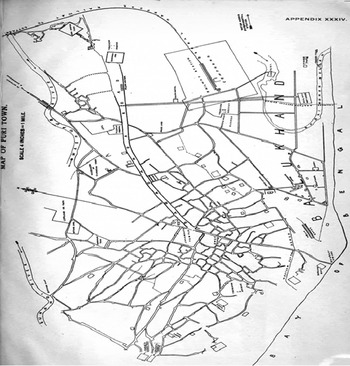
In the latter half of the century, the Home Department expressed its dissatisfaction with the fact that public officers travelling to Puri, especially those landing on the coast, had great difficulty due to ‘the absence of a house’ in the vicinity.Footnote 24 It was then decided to sanction an ‘additional establishment’ for the ‘Circuit house’ at Puri. One bearer, one khidmutgar (servant), and one sweeper were allotted to the Dak Bunglow,Footnote 25 and orders were given to the Public Works Department to start its construction. The bungalow was completed by 1862, as suggested by the requests that were made for new furniture, which were readily given the go-ahead.Footnote 26 A slow dichotomy started developing as the residences near the seashore remained largely reserved for public officials while the area surrounding the temple became the temporary residences for the pilgrims and traders who flocked to the town. Puri as an urban space had started to take on a distinctly dual identity (see Figure 1).
Map of Puri town. Source: Pilgrim Committee Report of Bihar and Orissa, 1913 (Shimla: Government Central Branch Press, 1915).

The beginning of colonial concerns
Long before cholera became a dominant issue in the colonial discourse surrounding Puri, the question of the health of pilgrims had become a pressing concern for the colonial state. In the first instance, it was assumed that most illnesses among pilgrims occurred because of the poor quality of the food offered in the temple and the dreadful conditions of the lodging houses in Puri. However, the colonial state's concern over the sacred food was more political than medical, and was an ongoing problem for it. The monopoly over food—more precisely the cooking of the food—belonged to the temple. A pilgrim in Puri was supposed to (only) consume the sacred food, or bhog,Footnote 27 after it was offered to Jagannath. Such observance was not applicable to the residents of the town, but since pilgrims comprised the majority of the population, the colonial state was naturally aggravated as it viewed this monopoly over food as a possible threat to its authority (see further below). The government was also mindful of the political implications of the temple's provision of food since its confrontation with the raja of Khurda over the issue earlier in the century.
In 1810, when Raja Padmanabh Narayan Deo of Kimedi visited Puri, the raja of Khurda, enacting his newfound power,Footnote 28 refused him entry to the temple.Footnote 29 The East India Company intervened in the disagreement and allowed Padmanabh Deo to enter the temple, along with his family, a decision which enraged the raja of Khurda. He ordered the temple cooks to refrain from cooking as a protest, which led to mass starvation of people in the town. Busby, the Collector of pilgrim tax in Puri, complained to the Collector of Cuttack that ‘four or five thousand of souls are starving’ in the town, ‘as it is not proper nor conformable with their religion, to cook victuals at Pooree when they come on pilgrimage …’.Footnote 30 In the 1860s, a few years before the paranoia surrounding cholera swept through Puri,Footnote 31 ‘sickness and loss of life’ among the pilgrims were attributed to the ‘lax management of those in charge of Pooree Temples’.Footnote 32 Biswamoy Pati notes that the government even contemplated making the sale of stale bhog punishable under the Indian Penal Code.Footnote 33
In 1866, Ravenshaw, the commissioner of Cuttack, asked the district magistrate of Puri to prepare a report on the condition of the temple and the town, having consulted the police superintendent. In the initial part of his report, the magistrate noted the ‘horror’ the pilgrims experienced while in Puri.Footnote 34 After setting out his initial concerns, the magistrate expatiated on the role of the sacred food provided by the pundas, or priests, of the temple in this ‘horror’. In particular, the magistrate suggested that the bhog,Footnote 35 which was consumed by residents and pilgrims alike, was injurious to their health.Footnote 36 The issue of public health thus served as a pretence for the government to intervene. What vexed the colonial state, in fact, was the temple's monopoly over trade. The magistrate pointed out that the right to cook food was solely in the hands of temple cooks, who were appointed on a hereditary basis. He then expressed his disapprobation of the exclusive rights of these men to regulate the culinary habits of the town,Footnote 37 and asserted the need for the government to take the necessary steps to control the situation, which was ‘baneful to the public health’, as it was its duty to ‘protect[ing] the lives of its subjects’.
It is important, also, to understand the centrality of food production and consumption to the overall economic structure of the town. The temple owned vast swathes of rural land and thus monopolized the availability of food grains. Burton Stein, in his study on a South Indian temple, demonstrates how consecrated food was essential to agrarian land structures and the general network of political economy.Footnote 38 The temple's monopoly over the consecrated food, its preparation, and distribution meant that no parallel agencies or markets were in a position to compete with the temple.
The concerns of the colonial government over bhog and the cooked rice controlled by the temple in the middle part of the 1860s was also due to the disastrous famine that struck Orissa during this time. Puri was a notable exporter of rice and enjoyed a strategic coastal location, which facilitated this rice trade. The district exported an annual average of 58,000 maunds of rice before the famine, but this figure became negligible after it;Footnote 39 indeed, by 1865 the trade of rice from Puri to Ganjam had ceased altogether.Footnote 40 The colonial government was perpetually vexed during the famine years as rice was not procurable at the bazaar throughout the district of Puri but private dealers were selling it at an inflated rate.Footnote 41 In such a situation the presence of a private body like the temple, which controlled the town's rice network, increased the government's economic problems. Along with the temple, the monasteries (muths) inside the town,Footnote 42 which were linked through the broader network of pilgrimage, also hoarded huge amounts of rice during the famine. In its initial phase, the deputy magistrate was informed that the chiefs of the Puri monasteries had hoarded so much rice that they could ‘supply [rice to] the whole district for two years’,Footnote 43 which other officials, however, noted might have been an exaggerated estimate. During the height of the famine the colonial government had to ‘induce’ the chiefs of the monasteries to open their private stores to ease the crisis,Footnote 44 and this also affected the local markets favourably.Footnote 45 This is a theme that finds a brilliant literary representation in J. P. Das's masterpiece Desha Kala Patra. Footnote 46 Observers noted on multiple occasions that during the famine in Puri the mohunts held stores of rice and sold it,Footnote 47 but also actively provided ‘private relief’, which saved the lives of a substantial number of people.Footnote 48 Before the relief committee could reach the poor, it was noted that the mohunts were feeding indigent pilgrims mahaprasad Footnote 49 (the chief rice bhog of Jagannath) and a certain Mohun Dass of Puri was identified as having given loans of grains to people.Footnote 50
The above events demonstrate the dependence of the colonial state (at least in the town of Puri) on the temple of Jagannath and its subsidiary bodies, particularly during crises. The fact that the political economy of the town was so evidently controlled by an alternative public body shows why the colonial state wanted to bring the preparation and distribution of the consecrated food under its control. The issue of food remained a pivotal issue that continued to annoy the colonial government from time to time. For example, in later decades, authors like W. W. Hunter raised similar concerns, noting that the political economy of the district was apparently suffering due to this monopoly on food by the temple authorities:
Puri is an indigent city; or rather, the only classes that can be subjected to local rates are unable to pay them. The pilgrims would support a wealthy community of grain merchants, but for the fact that the Temple cooks claim the monopoly of supplying their food. The first thing that strikes a stranger on entering the town is the scarcity of rice-shops. The pilgrims buy scarcely anything in the market.Footnote 51
The government tried many ways to curb the temple priests’ control over food, but their attempts failed. The question of bhog was raised in most reports on the sanitary conditions of the town and the state consistently lamented its lack of control over the matter. The colonial government was never able control the supply of food and eventually decided to appoint a ‘native officer’ to inspect the quality of food inside the temple. Later, when the municipality was formed in Puri a ‘native town observer’ visited the temple to report to the chairman about the state of the food.Footnote 52 Nevertheless, it can be observed that the older complaints never ceased.
Pilgrimage and epidemic
The notion of the pilgrim as a carrier of pestilence loomed large in the minds of colonial officials in the late nineteenth century.Footnote 53 In 1865, cholera struck Mecca and outbreaks were simultaneously reported in Europe. These two disparate geographical events were immediately connected, and pilgrims from India were seen to be responsible for spreading cholera in Europe. E. F Peters wrote ‘an exhaustive account on the Haj’ in which he blamed the pilgrims for spreading cholera in Europe. ‘Cholera was carried to Mecca by pilgrims …,’ he asserted, substantiating his claim with statistics, before adding that the disease had later spread all over Egypt, Marseilles, and even to New York.Footnote 54 This enhanced the notion of the pilgrim body as a travelling caravan of disease. Such notions were furthered by the publication of W.W. Hunter's magnum opus, Orissa. In his work, Hunter noted that the pilgrims of Orissa were responsible for spreading cholera all over India. ‘America, Europe and the greater part of Asia,’ wrote Hunter, ‘may justly blame India for all they have suffered from cholera and India can blame Puri for annually subjecting whole provinces to the chance of the epidemic.’Footnote 55 Hunter's work was, of course, widely read in England and was influential in shaping perceptions about pilgrimage and epidemic. Events in the global arena also aligned with the concerns of the colonial state, as many officials in India at the time implicated pilgrims and pilgrimage sites for the spread of cholera in the country. Government officials G. B. Malleson and J. M. Cuningham asserted that pilgrims were responsible for disseminating cholera in their report on the Hardwar fair,Footnote 56 and a year later the sanitary commissioner of Madras, W. Cornish, made a similar case against the pilgrims.Footnote 57 In the wake of these events, such intersection of global and local concerns led the government of India to interrogate, in depth, the conditions of pilgrimage in the country.
The government pondered over the possibility of halting pilgrimage altogether in order to exorcise the spread of the epidemic. David Arnold notes that, ‘The international conference which met at Constantinople in 1866 to co-ordinate measures for the control of cholera pointed an accusing finger at Puri.’Footnote 58 The secretary to the government of India wrote to the government of Bengal that, ‘[R]ecent experience has made it abundantly manifest that serious epidemic disease is very generally engendered among the large multitudes of people who periodically assemble at the various centres of Pilgrimage in India.’Footnote 59 The secretary requested that the governor seek information from local officials and ‘native gentlemen of character and intelligence’ about the possibility of halting pilgrimage.Footnote 60 Living up to the expectations of an ethnographic state, the government of Bengal then ordered local authorities to gather as much information as possible about the situation of pilgrimages in the country.
In their reply to the government of Bengal, the commissioners of the different divisions were unanimous in the opinion that it was impossible to put an end to pilgrimage through government intervention. The commissioners noted that the social mobility an individual gained after undertaking a pilgrimage was one of the major reasons why any governmental measure was likely to fail. The commissioner of ‘Sonthal Pergunnahs’, A. Money, noted that a pilgrim returning to his village after his pilgrimage from Puri was regarded as person of ‘more consequence and of higher social position than he was before’.Footnote 61 With memories of the pilgrim tax debate still fresh, and the spectre of 1857 still looming large, the government eventually found it expedient not to meddle with the social structure of the subcontinent by forcefully putting an end to pilgrimage.
It was largely agreed by the government of Bengal, however, that pilgrimage to Puri was their chief concern in terms of the epidemic. The commissioner of the Burdwan Division noted that ‘…[p]ilgrims who attempt long expeditions, such as [those to] the Juggernath shrine, are, when proceeding, healthy and robust, whereas on the contrary those returning are sick and bring disease with them, many dying on the way’.Footnote 62 The ‘enlightened native gentlemen’ were also of a similar opinion about pilgrimages to Puri. Digambar Mitra, consulted by the commissioner of the Presidency Division, wrote a detailed analysis of the issue, stating that,
Some pilgrimages … are performed at very unfavourable seasons of the year and under circumstances, which entail considerable hardship and suffering, and may lead to the generation of virulent disease. The pilgrimage to Juggernauth on the occasion of the Ruth festival in the month of June is particularly open to objection. Forty to fifty thousand persons generally assemble at Pooree at that time and they are mostly in a condition peculiarly subject to disease.Footnote 63
While the voice of the educated native did echo, for the most part, that of the colonial official, there were instances of differences as well. In spite of accepting the fact that pilgrimage induced diseases, Mitra strongly held that there was no substantial evidence that pilgrims returning from Puri were the sole reason for the spread of cholera. Nonetheless, after an initial dialogue with the commissioners of the division and the ‘native educated gentlemen’, the secretary to the government of Bengal wrote to the government of India that ‘[t]he question of legislating for the regulation of pilgrimages to Pooree, which is the most important place of gathering, is at present under the consideration of the lieutenant governor. No other place of gathering, neither Deogurh nor Gaya, nor Sonepore seems to call urgently for government interference at present.’Footnote 64 The intervention of the government in Puri would eventually come in the form of a new law: the Puri Lodging Housing Act of 1871, which will be dealt with in the latter half of this article.
At this juncture it might be fruitful to consider how cholera and its transmission (along with epidemic in general) was perceived in Britain. By the 1840s and 1850s, a clear opinion had formed about fever in general and cholera in particular. While in the early nineteenth century destitution was regarded as one of the defining causes of disease,Footnote 65 such perceptions were later demolished by the juggernaut of sanitarianism. With the destitution-disease paradigm being incompatible with the liberal policies of the new poor law, the theory that had gained currency in Britain kept the environment, and not economic conditions, central in the understanding of disease.Footnote 66 Vociferously supported and promoted by Edwin Chadwick (among others), this new theory gained increasing momentum, and ‘filth’ as a category slowly assumed centre stage in understanding disease, while cleaner sanitary measures came to be seen as the most effective way to get rid of it.Footnote 67 However, after Chadwick's demise and John Snow's discovery, the question of the transmission of cholera was further problematized, leading to a shift in British sanitary policies. The ‘new turn’ in the 1860s, following the outbreak of cholera in Mecca, led Britain to accept a more pragmatic approach, as it was now impossible to pursue the polemical opposite positions of contagionism and sanitarianism. Though in international discussion Britain still emphasized sanitary conditions as central to limiting the spread of disease, there was a greater degree of flexibility in its policies. By the mid-1860s Britain had adopted what Peter Baldwin has termed a policy of ‘neoquarantinism’,Footnote 68 which was conveniently located at the intersection between traditional quarantinist measures and sanitary undertakings.
The colonial context was further problematic as many colonial officials believed that ‘filth’ could not be the reason for cholera in South Asia, since the pilgrims (and ‘natives’ in general) had always been ‘filthy’.Footnote 69 However, most of them still argued for greater sanitary measures and vigilance, since, in their view, although filth did not necessarily generate cholera, it surely disseminated it.Footnote 70 Furthermore, colonial officials did not concur on one specific reason for the cause and spread of cholera. For example, while officials like Malleson and Cunningham (discussed above in the context of Hardwar) blamed the habits of the ‘natives’ for cholera, officials like S. C. Townsend focused less on this and more on the geographical factors that favoured the pollution of water and thus ‘spread the disease’. In addition to these opinions were the quite bizarre views of officials like Robert Lawson, inspector-general of hospitals, who was of the opinion that cholera was not only anti-contagionist, but also anti-sanitarian. Officials like Lawson and James Bryden observed that sanitary measures and quarantines had hardly any effect on preventing cholera.Footnote 71 In a town like Puri, along with the insanitary habits of the ‘natives’, the blame was readily shifted to the temple and its insalubrious management. However, the habits of the pilgrims, the act of pilgrimage (and the exhaustion attached to it), and the management of the temple were seen as ‘predisposing’ causes of cholera, not always as leading to a direct outcome. Destitution and hunger, especially after the famine, were seen as further complicating the matter. During the famine it was noted that cholera's prevalence in Puri was ‘probably due to the scarcity of food’.Footnote 72
Regardless of the opinions (and dissent) within colonial circles about the role of pilgrimage in spreading cholera, the government acted with great alacrity, taking action against cholera during the Car Festival of 1869. In the town, a portion of the dharmasala (rest house) was partitioned off and a separate cholera hospital was set up. Cholera hospitals and dispensaries were also established in ‘Damooderpoor, Pipli and Balwanta’. The officials noted in their report that the sanitary work had been excellent throughout the festival, and that whenever there was a case of cholera sickness, it was immediately attended by the ‘dooly bearers’. In his report, the sanitary commissioner wrote with conviction that, ‘not a single case of a pilgrim perishing on the way for want of help was either seen or reported. Besides the erection of cholera hospitals, cholera medicines were distributed to police stations throughout the district.’Footnote 73 However, the officials also noted that though cholera was tackled vigorously, there were still large numbers of victims who fell prey to the disease. The Odia press, however, held a slightly different opinion. First, they argued that the success of the colonial health machinery could be largely credited to the fact that cholera was less rampant that year and, secondly, that there were considerably fewer pilgrims in comparison to previous years, notably diminishing the required commitment on the part of colonial health officials to tackle the disease.Footnote 74
In a statistical account added to the sanitation report, it was demonstrated that in the months of January and July in 1869, 50.3 per cent of the total deaths in Puri were the result of cholera. Not surprisingly, it also surfaced in the report that in the months of June and July (generally the time of the year when the Rathayatra is held) in 1869, the mortality due to cholera in the district was a colossal 79 per cent.Footnote 75 It is interesting to note that four years previously, when Ravenshaw was furnished with a report from the district magistrate of Puri (cited earlier), there was only one stray mention of cholera among the pilgrims. The ‘sickness’ among the pilgrims was attributed solely to the ‘lax management’ of the temple authorities in 1865, yet within a few years four-fifths of the population in Puri were dying of cholera.Footnote 76
Biswamoy Pati is of the opinion that the government's alacrity in confronting disease after the 1860s stemmed from deeper military concerns. The absence of ‘any threat of cholera’ to the colonial army prior to this period led the government to remain phlegmatic about the disease, with the result that there were no serious interventions.Footnote 77 However, this argument appears to be slightly deterministic, and military concerns were probably not the sole cause for colonial intervention. It is possible, for example, that increasing global pressure on the British government in India played a greater role in hastening health interventions by the mid-1860s.Footnote 78 It should be remembered that between 1865 and 1869 the entire discourse of cholera and pilgrimage took on a new dimension. The idea that cholera was brought to Europe by South Asian pilgrims who travelled to Mecca took root in the minds of European countries, and the simultaneous surge of cholera among the pilgrims of Jagannath might not be a historical coincidence.
Health interventions in Puri during the mid-nineteenth century, however, were not completely unique. While previous authors have noted that there remained ‘a clear obsession with Puri town alone’,Footnote 79 this assertion seems quite unconvincing. The research of Kama MacleanFootnote 80 and Amna KhalidFootnote 81 has shown, in the context of Allahabad and Hardwar respectively, that in this period there were repeated interventions (and negotiation) by the government in places where fairs and pilgrimages took place. An increase in sanitary vigilance, and the extension of sanitary laws to places of gathering, became an essential preoccupation of colonial officials. In the case of the North Western Provinces, for example, ‘the number of sanitary crimes increased sharply between 1869 and 1870’. This was not the result of greater vigilance against perpetrators, but was a consequence of the extension of crimes to include ‘urinating along a roadside or creating a sanitary … “nuisance”’.Footnote 82
While the colonial state had wanted to intervene in the workings of Puri earlier, they were restrained in their actions because of the imposing authority of the temple and the broader social consequences of the 1857 Rebellion. Cholera provided the pretext for such intervention, at the moment at which the colonial state entered the stage of municipal politics in Puri. Sanitary reports were written and enquiries were made about the ‘filthy’ conditions of the town as a result of the outbreak of cholera and the government tried its best to challenge the authority of the temple and its monopoly over resources, such as water and lodging. Repeated enquires would be made to locate the root of cholera, and at every turn the government would attempt to intervene and make Puri more salubrious for both its inhabitants and its itinerants.
Olfactory sensations and the making of the urban space
A year later, in 1870, the inspector-general of hospitals wrote, ‘The pilgrims returning from Jagannath disseminated cholera all over the country in the line of their returning routes during the present year and by the most authenticated accounts, very frequently from the time immemorial.’Footnote 83 The town's sanitary conditions were seen as one of the major reasons why cholera occurred so frequently in Puri. While it was agreed in official colonial circles that this situation could be ameliorated through proper government aid, the state acknowledged that there were occasions when state interference was necessarily limited.Footnote 84 This was the first sanitary report on Puri after the paranoia surrounding cholera had swept through the district.Footnote 85 It identified three main factors responsible for the spread of cholera in Puri: lodgings, water supply, and the sacred food or bhog. Interestingly, all three resources were monopolized by the temple and were thus beyond the control of the colonial state. The deputy inspector-general of hospitals noted that the pilgrims who travelled unfathomable distances were subjected to insanitary lodgings, provided by the pundas, and were required to eat the sacred food, provided by the temple. Lal Behari Dey's novel, Bengal Peasant Life, presents a similar picture: in a section, he describes the plight of a female pilgrim who, while on her way to Puri, was infected by cholera. The lack of medical help coupled with the extreme conditions eventually led to her death—and her body did not receive proper cremation.Footnote 86 It is worth noting, however, that Dey's personal resentment towards Hinduism in general might have shaped the events of his narrative.
The previously mentioned sanitary report explicitly suggested that the overcrowded lodges and the sacred food being ‘forced’ on the pilgrims was undoubtedly the reason that cholera was so widespread in the district. Remedies were also proposed, including the suggestion that ‘if great care is taken of the pilgrims and his mode of life is regulated whilst at Pooree by municipal authority we may help him to escape fearful outbreaks of cholera sickness with which he is associated in this town’.Footnote 87 A disciplinary attitude becomes evident in the colonial state's rhetoric, as it attempted to ‘regulate’ the ‘mode of life’ of the pilgrims. While the colonial state was concerned with the authority the temple exercised over food sources and spatial arrangements, what most compounded this anxiety was its monopoly over water resources. Fresh water in Puri was almost absent, if we are to believe the reports of the officials. The proximity of the sea and the saline content in the soil added to the problems of planning. The few freshwater tanks available for bathing and drinking were possessed by the temple. The wells were the only water source available for ‘public’ use, and in the 1890s the colonial government would enter into a negotiation with the rani of Puri over this monopoly of water. This disagreement between the temple and state over water resources is dealt with in the penultimate section of this article.
Colonial officials were of the unanimous belief that conditions in Puri were extremely unsanitary. According to these officials, the town needed to be more salubrious, and pilgrims needed to be more strongly regulated for there to be any chance of improvement. A peculiar aspect of the sanitary report of 1870 is that the description is essentially olfactory rather than visual, as exemplified by passages such as:
Every nook and corner of the surrounding of this tank sent forth an unmistakable ammonical odour, resulting from the continuous defilement of surface by excretion matter, with fecal filth. I went through the different streets and lanes of the town and the suburbs … the same fetid stench assailed the nostrils.Footnote 88
In his influential work The Foul and the Fragrant, Alain Corbin demonstrates the link between the production of urban space and olfactory sensations. ‘Pleasure at the sight of the landscape of an English garden or the blueprint of an ideal city is paralleled by horror of the city air, which is infested by miasmas.’Footnote 89 As concern in Europe about pollution of air rose, smell slowly became the identifier of the poorer classes, including unsophisticated workers and the fatally sick.Footnote 90 Oversensitivity towards smell was one of the key features and was found even in the colonial discourse surrounding sanitation in Puri. Hunter's descriptions of sanitary conditions in Puri consistently focused on what he smelled rather than what he saw. ‘Those whose experience of foul smells is confined to cities in the temperate zone, can form no idea of the suffocating stench which such cesspools throw off in a tropical temperature between 85° and 105° during seven months of the year. Nor is there any outlet for the deadly gases that bubble up from them day and night.’Footnote 91 It is important to note at this point that in the early nineteenth-century descriptions of Puri given by missionaries like Claudius Buchanan and James Peggs (among others who witnessed the sufferings of the pilgrims), more importance was assigned to the visual aspects of the narrative. For example, Buchanan painted a picture of skulls lying all around, vultures waiting to eat the dead, and so on. However, although municipal reports did mention the filthy condition of pilgrims, the emphasis was always on the stench of the cesspools, the odour of excrement, or the noxious fumes of the tanks. ‘It has been demonstrated,’ the sanitary report of 1871 notes, ‘that the air of the town is for the most part polluted by putrid emanations by overcrowding in close and ill vented houses, and by obstacles to natural perflation.’ The increasing hypersensitivity towards smell was essential in the reordering and new production of urban space, as Corbin has pointed out. ‘Increased recognition of the importance of the air led to increased acknowledgment of the importance of the sense of smell as an instrument of vigilance. That vigilance produced the guidelines for the reordering of space…’.Footnote 92
Ventilation was one of the key concerns for reordering Puri's urban landscape as well. The assistant civil surgeon of Puri submitted his report after the Rathayatra in 1870, and he pointed out that Puri, like most Indian cities, was poorly planned. When compared to others, however, the planning of Puri town was ‘worse than most’. As the majority of the land was sacred, the houses were built keeping in mind the greatest ‘economy of space’.Footnote 93 This led to the small houses, narrow streets, and natural congestion which were seen as baneful to the natural flow of air and proper ventilation. The ‘natural consequence’ of such a scenario was that ‘the atmosphere of the place’ became stagnant, which concerned the civil surgeon. The suggestions he gave for the betterment of the town emphasized planning the streets in such a way as to leave more room for ventilation:
By these artificial arrangements, fresh air is excluded, and the natural method of supply more or less effectually cut off. Individuals breathing such an atmosphere must bring their constitutions below par, and thus be prone to disease. The great want of ventilation is all the more serious when the state of the surface soil is taken into account. From mal-conservancy, and a general state of un-cleanliness about houses, noxious vapours are continually given off, rendering the atmosphere still more unfit for breathing. To let air circulate in the town, all waste places and ditches must be cleaned, useless tanks filled in, and open squares built wherever possible; streets widened and straightened in line with the prevailing direction of the wind, and fresh ones made where necessary.Footnote 94
Concern about polluted air, which stormed through England and other European countries, was in many ways a product of the public health anxieties that developed over industrial cities.Footnote 95 These concerns led to the massive deodorization of private spaces through state initiatives (as in the case of Paris during the initial phase of the July Monarchy after the spread of the cholera morbus in 1832),Footnote 96 which ushered in newer urban modalities. In due course such concerns filtered back to the colonies and played a major role in the planning of the cities on the subcontinent. The first legislation that the colonial government would introduce in Puri was based on both the need for proper ventilation and the concern to control the flow of air.
The Puri Lodging House Act
The conundrum of the lodging house baffled colonial officials in the late nineteenth century. Most residents in Puri allowed pilgrims to stay in their homes, perhaps in exchange for some cash. Often the pilgrims stayed in the punda’s house or in a dwelling arranged by the punda through his network. The Bengal District Gazetteer for Puri noted that the temple priests arranged the pilgrims’ lodging after their arrival.Footnote 97 The colonial government's complaint was that these lodging houses were ‘dens’ of cholera, as all of them were thoroughly overcrowded. The inspector-general of jails, F. J. Mouat, prepared a report on the condition of the town, focusing on the lodging houses, in 1868. His report was extensively quoted by Hunter to explain the ‘evils’ of the lodging houses. In one pertinent observation, the inspector-general notes,
I was shown one apartment in the best pilgrim hotel of the place, in which eighty persons were said to have passed the night. It was 13 feet long, 10 feet 5 inches broad, with side walls 6 feet and a half in height, and a low pent roof over it. It had but one entrance, and no escape for the effete air. It was dark, dirty, and dismal when empty, and must have been a pest-house during the festival. In this house in a similar room occurred the first case of cholera of the last outbreak …Footnote 98
Interestingly, in describing the conditions, in a postscript Mouat noted that since the conditions seemed almost unbelievable, an experiment was conducted in the Alipore Jail. It was apparently found that ‘ninety natives of average size could squat in a cell ten feet square, and one hundred and twenty could stand in the same space’.Footnote 99 The Lodging House Act, which would limit the number of people who could stay in a room, was based on reports like these. The Alipore Jail, which itself had a notorious reputation for insanitary conditions, became the experimental ground for such public hygiene legislation. O'Malley, writing in the twentieth century, quoted a previous report on the overcrowding experienced by pilgrims and drew an interesting historical comparison: ‘I went into a house in the town this afternoon, where about forty-five pilgrims were putting up, men and women. The place had only two doors, no windows. One of the doors was locked. This place measured 12 by 20 feet. Certainly not more; and in this place no less than forty-five persons were crammed.’ The description, wrote O'Malley, looked ‘more like an account of the historical Black Hole of Calcutta than of a lodgings provided by the Hindus for their co-religionists’.Footnote 100 In 1870, a year prior to the passing of the Act, the officiating magistrate of Puri wrote, ‘The greatest number of deaths in Pooree was six on the seventeenth. Most of them have occurred in lodging houses … In one instance, one out of eleven persons died of cholera in a room 15 x 12 feet with no ventilation whatever.’Footnote 101
In Europe, the issue of spacing between individuals was the product of a long discourse over the privacy of beds.Footnote 102 The privacy of the tomb, which had been a key concern since the middle of the nineteenth century, and which emerged in Europe, called for the imposition of space between bodies. ‘If one grave were reserved for every dead person, cemeteries would smell less. What at the time [during the late eighteenth century] was only an argument for hygiene rapidly became a requirement of dignity and piety.’Footnote 103 The idea of death being a threat to the health of the living also emerged at around the same time, which is perhaps one of the reasons for cemeteries in the nineteenth century onwards being pushed outside the towns.Footnote 104
The concern surrounding overcrowding was central to the public health discourse in England in the mid-nineteenth century, as overcrowding was seen as a chief reason for the propagation of diseases.Footnote 105 This concern did not disappear in the colonies altogether. In his influential work Anthony King notes that the design of military tents barracks often attended to the notion of per capita allocation of space. It was widely believed that ‘organic matter given off by the lungs … tends to attach itself to the walls of the tents’.Footnote 106 However, how much space to allocate per individual was, for the most part, ‘racially determined’, as it was widely believed that Europeans were in need of ‘1000 to 15000 cubic feet of air’, while a mere ‘600 cubic feet’ would suffice for ‘natives’.Footnote 107 Laws such as the Lodging House Act, which would go on to become extremely pervasive, were eventually based on these fallacious notions of space and consumption.
These considerations led the government to formulate the Puri Lodging House Act (Act IV of 1871). Its provisions made it compulsory for any owner of a lodging house to obtain a licence from the magistrate. A health inspector was appointed to inspect lodging houses; after a thorough examination of the sanitary conditions, he would certify the ‘nature and extent’ of accommodation.Footnote 108 The government charged one rupee for the application for the licence and a certain amount for each pilgrim. The money collected by the government was used for making sanitary improvements to the town. The Act was seen to be a great success in official circles and was extended to most parts of Bengal and Bihar. The key component in the operation of the Act was the regulation of the ratio of the number of people to the available space. The Act tried to solve the problem of overcrowding which seemed to be the most pertinent one for the sanitary reformers. The health inspector had the right to fix the number of people to be accommodated in a house based on his judgement of available space and the existing number of residents. De-crowding spaces became one of the most important colonial public health concerns. Crowds were seen as origin points of disease and of all other sorts of insalubrious paraphernalia that threatened public health.Footnote 109 It should also be remembered that when the Act was being formulated, the majority of the members of the Indian Medical Service and the colonial government were of the opinion that cholera was an airborne disease.Footnote 110 The restriction on numbers, which it was believed would decrease the chances of salubrious air circulation, was therefore proposed as an effective way to fight the cholera epidemic among pilgrims.
The idea of restricting the number of bodies in a space through legislation had its roots in related Acts passed by the British government in London. The Shaftesbury Act of 1851, which gave powers to the police to limit overcrowding in common lodging houses, marked the genealogy of such legislation; this was followed by the Nuisance Removal Act of 1855, which gave the vestries the power to regulate overcrowding and ‘abate overcrowding if a house’ had more than one family residing in it. ‘Fuller powers were given to register and inspect overcrowded tenements by the Sanitary Act of 1866. The Torrens Act of 1868 further widened the range of initiatives that were open to local authorities. Under this Act, a medical officer was empowered to report a house unfit for human habitation, order the owner to make repairs at his own expense, or, if necessary, order the house to be demolished and charge the cost to the owner.’Footnote 111 These (almost) contemporary acts were crucial in shaping the Lodging House Act.
Incidentally, one interesting theme to consider here, which is surprisingly similar to concerns surrounding overcrowding both in England and Orissa, is the interplay between public health concerns, overcrowding, and crime—more specifically, sexual crimes. In London, it was alleged that multiple cases of sexual offences, incest, and juvenile prostitution were the direct result of overcrowding,Footnote 112 allegations also made against the lodging houses of Puri. The alleged sexual debauchery between Hindu women (mostly widows) and the pilgrim hunter or the punda in these overcrowded lodging houses has been central to the colonial imagination.Footnote 113 Whether such interplay between sanitation and vice was relevant is difficult to pinpoint in the case of Puri, but it is worth noting that the mass demolition of slums that followed the legislation to reduce overcrowding in England was, in fact, a product of these interactions.
The significance of the Lodging House Act in colonial urban policy is colossal. As noted earlier, Puri's residential population was miniscule. Residents were estimated to be number 20,000 in 1870, well exceeded by the ‘floating’ population’.Footnote 114 W. D. Stewart, the civil assistant surgeon of Puri, noted that the number of pilgrims in a year was ‘certainly not’ less than 60,00, and ‘80,000 would be a nearer mark’. He then raised concerns about the treasury: ‘The question now comes who is to pay for the sanitary keeping and surveillance of this annual number of temporary residents?’Footnote 115 While a settled population could be successfully taxed, thereby generating revenue for its governance, the same was not possible for a peripatetic population. Prior to 1837, the infrastructure payments of the town came from the pilgrim tax, for the most part. The abolition of the pilgrim tax made it increasingly difficult for the government to provide funds for a hoard of itinerants, who themselves could not be taxed. The poor sanitary conditions of the town were also ascribed to the ‘habits’ of the pilgrims, who defiled the town without remorse. ‘The town is full of the fecal deposits of the pilgrims,’ wrote the sanitary commissioner, ‘who will not resort to the latrines provided for them, and who sit on the main and side streets in the early mornings.’Footnote 116 The Lodging House Act solved this financial problem for the government. It successfully devised a way to raise revenue through taxing the lodging house owners and imposing a fee on the pilgrims. For the most part this fascinating aspect of urban finance has remained understudied in South Asian urban historiography. The response of the Odia elite to the Lodging House Act was mixed, but it did not share the government's optimistic view. Initially, the Act was welcomed, but questions were raised as to whether English doctors could access lodging houses, which were mostly run by Hindus.Footnote 117 In the years following, accusations were made that lodge owners took advantage of the lack of available lodges by charging arbitrary fees.Footnote 118 During the Rathayatra of 1874, the Odia press was particularly furious about the mismanagement of the pilgrims by medical authorities. The criticism was directed at the uselessness of the Lodging House Act, which, in spite of all the pomp, failed to ameliorate the condition of the pilgrims.Footnote 119
It should be noted, however, that only an intermediary economic class stayed in the lodging houses. The pauper pilgrims largely camped on the roads under trees, while the wealthy ones preferred to stay ‘in their carts’.Footnote 120 Large numbers of pilgrims, as a result, occupied roads and otherwise ‘public’ areas, carving out private space from traditionally public spaces. When the Lodging House Act was being drafted, the government claimed that such ‘excess’ pilgrims were kept in mind (though the Utkal Deepika asserted otherwise).Footnote 121 The government wanted to make sure that the ‘public’ spaces were not filled by the itinerants.Footnote 122 Initially, the government contemplated erecting iron shades for their accommodation, but concerns about cost effectiveness led to the suggestion of erecting lines of huts instead.Footnote 123 The government also wanted pilgrim rest houses to be built on the way to Puri. Rest houses and lodging houses were recommended in Rajghat, Jaleshwar, Bhadrak, Jajpur, Balasore, Bhuwaneshwar, Cuttack, and other important halting stations on the road to Puri. In effect, the government regulated the pilgrims’ path and removing the possibility of them wandering. It was essential for the colonial state to settle the wandering population in order to impose proper governmental modalities on them. In the latter half of nineteenth century, iron shades and public health became particular mechanisms for controlling the itinerants whom the government so visibly problematized. ‘A crowd of pilgrims,’ noted Ravenshaw, ‘is about the most unmanageable body it is possible to conceive…’Footnote 124
Resistance, alliance, and the narrative of planning
Government planning was not a unidirectional enterprise. At every turn, there was constant negotiation with existing stakeholders. The government also wanted to erect dharmasalas (which were essentially different from lodging houses) with the intention (most likely) of providing accommodation to poorer pilgrims free of charge. However, it was noted that hardly any pilgrim availed themselves of the dharmasala, except those who were ‘absolutely destitute’. A charitable gift from the government was seen as a debt (wrin) and by accepting such a gift the pilgrim was acknowledging that he was bound to repay it in another life. As pilgrimage to the temple of Jagannath was undertaken to avert any possibility of a future life, the pilgrims resisted government intervention in their own rhetoric. It was noted that ‘No Hindoo having the means of paying for shelter, food, or assistance, especially when on pilgrimage, should accept anything gratuitously.’Footnote 125 Erecting a pilgrim shed or a dharmasala also meant facing the challenges that existed around caste. The government realized that pilgrims were not a homogeneous group when many of them refused to take shelter under the same roof as the lower castes: ‘Another objection is that, though the buildings are divided by partitions, several compartments are under the same roof, and people of respectable caste, especially the Bengallees, have an objection to live or cook under the same roof which gives shelter to a person of an inferior caste.’Footnote 126 This led Ravenshaw to propose building four sheds to be placed at a small distance from each other.Footnote 127 The continuous preoccupation with public health evinced by these actions also had a considerable impact on reshaping (or inventing) the traditions of the town. One interesting practice that owes its genealogy to this is the Badi-Nrisingha.Footnote 128 Starting officially from the early twentieth century, it is believed to be essential in keeping cholera at bay. It is interesting to note that this newer indigenous practice, which evolved to battle cholera, is likely to have been a reaction against these colonial health interventions.
The planning of the town and several of the public health policies undertaken by the government were a product of deliberations between the government and the temple authorities.Footnote 129 The temple-state negotiations and their impact on policymaking were most clearly shown during the formation of the Puri Municipality. It is baffling that despite constant urging by local authorities in the 1870s to fix the boundary of Puri and grant it the status of a municipality, it was not until 1880 that the plan materialized. The government of Bengal wanted to raise the revenue to address the sanitary conditions of Puri and thus planned to develop a municipality in 1880. The commissioner of the Orissa Division notified the government that the magistrate of Puri had submitted a resolution of a public meeting held at Puri that thoroughly opposed the formation of a municipality.Footnote 130 When the deputy magistrate, J. C. Williamson, and the civil surgeon, B. Gupta, proposed that a municipality be established, the magistrate, J. S. Armstrong, together with the temple priests, defeated the proposal by a vote of 14–8.Footnote 131 The magistrate also collected 250 signatures of the ‘servants and dependents of the Temple of Jagannath’ who were likewise against the formation of a municipality. The magistrate noted that, ‘[T]he objections made by them appear to be reasonable and their statements are generally correct. I do not advocate any additional taxation for the town nor do I see any ground for introducing a municipal institution.’Footnote 132 The lack of evidence makes speculation difficult, but it is quite possible that the temple priests lobbied the magistrate to achieve their ends.
The influence of the temple in municipal politics and the formation of Puri's urban space becomes evident in such moments. A municipality would have led to increased taxation, which was opposed by the temple priests and probably other residents as well. Though they were eventually unsuccessful, the fact that the temple authorities could potentially have manipulated the magistrate to act against both his deputy and government orders demonstrates the fractures in colonial politics and power. The problem of urban finance is a ubiquitous theme in other colonial cities as well, where, in many cases, the formation of municipalities was opposed by the inhabitants because of local anxiety about an increase in taxes.Footnote 133 It is likely, however, that the influence the inhabitants of Puri exercised on colonial policymaking was more visible than that of inhabitants in other towns. When the government of Bengal learned of the meeting conducted by the magistrate, they were furious and admonished him for his activities. The secretary wrote to the commissioner of the Orissa Division, ‘The lieutenant governor desires me to remark upon the impropriety of the course which Mr. Armstrong has pursued in regard to a measure which the government has decided to introduce.’Footnote 134 The government of Bengal eventually sanctioned the formation of a municipality which came into effect from 1 April 1881.
The monopoly over water
Exercising a monopoly over water distribution has been a major prerogative of modern states in their efforts to reorder urban space. As John Broich points out in the context of Britain, ‘Only with [a] universal, affordable water service could city dwellers and landlords be required by law to connect their properties to water supplies. Only if the state better managed natural resources could it better manage the behaviour of its people and ultimately preserve itself.’Footnote 135 One of the most serious concerns for the colonial government was the condition of drinking water in Puri. There were four major tanks and 139 wells in the town. The four tanks were the Indrayumna, the Markund, the Chandan Talao, and the Swetganaga, all of which belonged to the temple in one way or another. In 1870, the civil assistant surgeon took samples from all the important bodies of water and sent them for testing. The results were used to prove that the drinking water was one of the major reasons for the town's suffering.Footnote 136 It was assumed that the ‘Tanks have in some places been filled up with the filth of ages and polluted by incessant bathing until the waters are incessantly filthy.’Footnote 137 The government could not take any steps to make improvements because the tanks were associated with the religious feelings of the pilgrims (or so the colonial state assumed). The 1880 sanitary report pointed out,
The question of the drinking water-supply of this town is a difficult one, not so much from a pecuniary point of view as from the tanks being all sacred, and therefore resorted to by many thousands for bathing daily and for throwing rice, flowers, and fruits into them in the way of religious ceremonies. During the pilgrim seasons these impurities increased many fold, and this state of things has gone on for generations. It is for these reasons impossible to keep the tanks clean, even at unbearable expense.Footnote 138
The colonial government was concerned about the conditions in the town in terms of conservancy and management. They observed that people preferred to defile the roads, increasing the chances of fecal matter reaching one of the tanks. These concerns led the government to chalk out a plan for providing the inhabitants with fresh drinking water. Biswamoy Pati, who briefly glossed the conditions of drinking water in Puri, notes that ‘no efforts were made … by the colonial administration to dig two or three tanks for drinking water’. He further concludes that the state of the water remained deplorable even at the beginning of the twentieth century.Footnote 139 These assertions are unconvincing, as a deeper interrogation of the colonial archive reveals the convoluted politics surrounding water in the final decades of the nineteenth century in Puri.
A plan was proposed in the late 1880s to ‘have a reservoir at some distance from the town and to conduct the water artificially’.Footnote 140 It was suggested that water would be drawn from the Sonamoyi River, from where it would be pumped into a main reservoir near the temple of Jagannath. Finally, with the help of several pipes, it would distribute water to the rest of the town. The plan aimed to provide water at the rate of six gallons per head for the population of 50,000. It was estimated that around Rs 295,000 would be required to complete the work, and Rs 16,500 for annual maintenance. It was proposed that iron pipes would be used, and the Glasgow Water Works standard used in Calcutta was deemed necessary.Footnote 141 The magistrate noted, however, that while the amount of money required for the work seemed enormous, the temple had the duty to provide financial help, thus mitigating the burden on the state. Although the government of Bengal clearly asserted that it was not in a position to provide funding for ‘purely local requirements’, it also added that, ‘Any further donation which may be received from the wealthy Rajas and others who visit the Shrine of Juggernath will no doubt be very welcome, and will prove of material assistance.’Footnote 142 Nonetheless, in August 1889 the government sanctioned a loan of Rs 25,000 for the drainage of the town after the Puri Municipality notified the state that a ‘sufficient amount’ (for the purpose of providing pure drinking water) could not be obtained through taxation.Footnote 143
Mariam Dossal, referring to the Vihar water works in Bombay, points out that the ‘project was an attempt to further extend governments control over the everyday life of the inhabitants’.Footnote 144 When Arthur Crawford became the municipal commissioner of Bombay in the wake of the cholera epidemic in the 1860s, he invested in a drainage scheme; he later turned towards improving the condition of the wells due to a lack of funds.Footnote 145 The efforts to control local water supplies remained one of the most constant preoccupations of the colonial state in nineteenth-century India. Puri was no exception to this rule, as the government's perseverance in attempting to monopolize the sources and distribution of water is a recurring theme in the municipal archive. Within four years of the formation of the municipality in 1884, the boundary of the town was revised to include the two areas of Matiapara and Mahantsahi. ‘The object of bringing these portions of the town within the limits of the municipality,’ noted the commissioner of the Orissa Division, ‘[i]s to bring the tank Indrayumna … within the purview of the Municipal Act.’Footnote 146
However, as noted previously, most of the tanks were used for religious purposes, and some of them were directly under the purview of the temple. The Swetganga tank, for example, was the property of the temple and to this day plays an important role in the public memory of the town. The Chandan Talao, similarly, was particularly sacred, as the water from the Sarovar was used during the Snan Jatra (an important annual festival of Jagannath which precedes the Rathayatra). The establishment of a reservoir and provision of drinking water for the town would eventually remove the religious element from the water supply, and this transition seems to have been the aim of the government. While this was seen as the perfect remedy by many, the government could never fully execute its plan. The members of the Puri Temple Fund, which mostly comprised Bengalis situated in Calcutta, sent a letter to the government of Bengal to express their concern about the drinking water in Puri.Footnote 147 The government replied that because of the report presented in 1891 by W. H. Greg, the sanitary commissioner of Bengal, the municipality had revoked the earlier plan to build a reservoir.Footnote 148 Greg's report pointed out that the Sonamoyi River and its water was unhealthier than had previously been believed. Furthermore, Greg had been ‘told that the bad quality’ of the river water meant that it was not used by the inhabitants, even for domestic purposes. It is worth noting that Greg never mentioned where he got his information from—he merely alluded the fact that he was told by an informant.
Only a few months after Greg's report, the magistrate of Puri, D. B. Allen, wrote a letter to the commissioner of the Orissa Division regarding conditions in the town. In quite an acerbic tone, Allen noted, ‘The theory that the water supply of Pooree Town is very bad appears to be prevalent among many Europeans and some educated Bengali gentlemen.’Footnote 149 He reprimanded the ‘Bengali gentlemen’ of the Puri Temple Fund, who quoted Hunter's report in their petition, saying that it was incorrect to compare Hunter's 1870s report with the current situation. ‘If water supply of the town was so bad,’ noted Allen, ‘how is it that people are not decimated by disease which result from bad drinking water?’Footnote 150 He added that the 139 stone wells were perfectly adequate for the provision of fresh drinking water to the town, and pointed out that not all the water of the town had been properly tested. Thus, an incorrect assumption had been made about the filthy state of the water supply. He closed his letter by noting his ‘protest’ against the ‘misleading statements’ about Puri. Allen's report convinced the government of Bengal, who notified the Puri Temple Fund that there was nothing to be worried about with regard to Puri's drinking water: ‘Mr. Allen's argument is incontrovertible that as the general health of Puri is good there cannot be anything seriously wrong with the well water, which is what most people drink. The wells are abundant and their water appears to be good: in many cases it is certainly excellent.’Footnote 151
What is really is bewildering about this letter is that two years previously Allen had supported the plan to build a reservoir. When it was proposed by A. J. Hughes, Allen had reported to the commissioner of the Orissa Division that the condition of the drinking water in Puri was quite ‘notorious’. He had even pleaded with the commissioner to fund the project and ‘help the municipality to attain their object viz. [a] proper supply of good drinking water’.Footnote 152 It is well known that the colonial archive has multiple voices, but records like these indicate that colonialism was perhaps even more fractured than historians generally assume. An interesting facet of this can be traced through the role of Dr Walsh, the civil surgeon and the commissioner of Puri Municipality in 1889, who was one of the key sanitary figures and the chief proponent of the theory that the water in the wells was pure enough for drinking purposes. Walsh's report was central to Allen's argument in favour of the wells, and was later also cited by municipal authorities when they had to defend the town's drinking water.Footnote 153 Interestingly, Dr Walsh's report, dated 9 August 1889,Footnote 154 was to be foundational to changing the sanitary discourse in Puri, although this was to be his last administrative act. On 5 September 1889, he submitted his resignation, which was accepted by the next meeting held on 17 September 1889. The cause of his departure, the chairman noted, was for ‘reason(s) over which the municipality have no control’.Footnote 155 At the very same meeting, the proposed reservoir was scrapped by the municipality in favour of the wells.Footnote 156
It is difficult to imagine why the plan of providing water, which seemed appropriate in 1889, was abandoned in 1891. It might well be the case that the temple authorities opposed the plan and persuaded the magistrate to write a positive report about the water supply, leading to the revocation of the plan. It might also be possible that the sanitary commissioner of Bengal had been misled into believing that the river water was unhealthy. After all, he was simply told that the river water was insalubrious—he provided no evidence to back his assertions. The role of Dr Walsh—and his subsequent resignation—only complicates the possibilities. Furthermore, the assumption that the Puri's well water was hygienic seems a bit problematic, since the municipality had changed its position by the end of the century when it accepted that only ‘one out of the 92 wells in the vicinity of the town’ contained drinkable water.Footnote 157 Whatever the reason, the cancellation of the plan for a reservoir meant that the monopoly over the water supply remained in the hands of the temple.
A year later, the government again took steps to sanitize the water supply, but this time they approached the issue cautiously. The proposed plan was that the filthy water would be drained and the tanks refilled.Footnote 158 This proved to be an acceptable compromise between the temple's control and the colonial government's public health policies. The temple retained its authority over the tanks while the government could execute its duty to provide a safe supply of drinking water.
The Swetganga in particular was seen to be the priority for draining and refilling. As the tank was the property of the temple, the government believed it should be the duty of the temple to clean it. The magistrate of Puri called a meeting of the mohunts in 1893 to discuss the issue, but none of them attended it.Footnote 159 A year later, the government contemplated buying a Pulsometer pump and tried to persuade the rani to hand over the Swetganga tank as a ‘gift’ to the municipality, which she refused to do.Footnote 160 However, she agreed to bear the cost of the pump, which the government accepted. This scheme had a better outcome than the plan for the reservoir, as we find in O'Malley's writings that the ‘Pulsometer pump was effectively cleansing the tanks daily, thereby providing freshwater to the town’.Footnote 161
Conclusion
The urbanization of Puri, as discussed in this article, was a complex historical process that grew out of interactions between the colonial state and the temple of Jagannath. The events of the second half of the nineteenth century make it abundantly clear that, despite the repeated attempts of the colonial state, the temple was able to retain much of its dominance in matters of urban governance. The constant negotiations that the state had to undertake with an alternative public body makes Puri's story vastly different from that of other tales of colonial urbanization. As demonstrated in this article, the government had no monopoly over resources and therefore had to negotiate with the temple at every turn. Puri provides an interesting case study in the urban historiography of South Asia as it shows the limits of colonial planning and the extreme vulnerability of the colonial state.
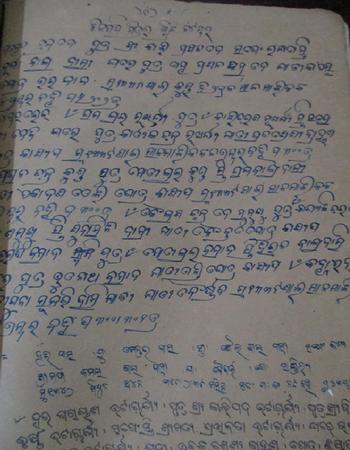
There is further research to be done, not only on Puri, but also in regard to similar patterns of urbanization that might be traced in other pilgrimage centres of the subcontinent. Gaya, Pandharpur, and Kamakhya are a few of the towns that might have similar interest in terms of urbanization, and which remain unexplored in historical scholarship. With the recent availability of documents from the pundas (or priests) of these pilgrimage centres, new avenues of social histories, which were previously closed off, have become available. The visitors to these pilgrimage sites often recorded the details of their trip with their family punda, who traditionally wrote down and archived these histories through the generations. For example, one of the documents in the private collection of a raj punda of Puri named Gopinath Mahapatra discloses the visit of Kaliprashanna from Calcutta, who came with his mistress on pilgrimage while acknowledging that he had a legitimate son back home (see Figure 2). I have seen similar records documenting visits of pilgrims who travelled with their neighbours and of those who came with their extended family.
Twentieth-century record of Gopinath Mahapatra, the raj punda of the temple of Jagannath, documenting the ‘Visit of a Certain Bengali Gentlemen Named Kaliprashanna who travelled to Puri with his Mistress’. Source: Picture taken by the author from the private collections of Gopinath Mahapatra.

Furthermore, this article concentrates solely on the nineteenth century and does not engage with the twentieth-century urbanization of Puri, which I believe would be equally fascinating. The peripatetic population of pilgrim lodgers evolved into one of ‘tourists’ by the turn of the twentieth century, and in this way Puri would become the premier tourist destination for the Bengali middle class. A new dimension of urbanization can therefore be mapped with the emergence of this new category of itinerants. While itinerancy would remain central to the proceedings of urban governance, a different set of concerns would emerge along with this shift. Problems of sanitation and drinking water would gradually resolve themselves through private enterprises which were then subsumed into urban governance. A 1902 advertisement for the Bengal-Nagpur Railway in Amrita Bazar Patrika suggested that the best place to spend the ‘Poojah holiday’ was Puri. Lucrative rates were offered and train timetables were advertised alongside this.Footnote 162 The visual aspect would become extremely important in planning the town in the twentieth century, as seaside hotels gained immense popularity. Alain Corbin in the case of FranceFootnote 163 and Eric Hobsbawm in the case of EnglandFootnote 164 demonstrate that, by the mid-nineteenth century, middle-class holiday booms would transform the coastline. The seaside would become, to use Corbin's expression, ‘recourse against the misdeeds of civilisation’.Footnote 165 The intersection of industrial capitalism with the coming of the railways produced a middle-class interest in tourism in general and seaside tourism in particular during this period.
A new category would emerge of health-seeking tourists who descended on Puri during the traditional holiday seasons. In 1911, for example the ‘Victoria Club’Footnote 166 exhorted health-seekers to come and stay in Puri. A notable advertisement was captioned ‘Offers a Home to Hindu Tourists and Health Seekers at a Moderate Charge by the Sea Beach; Temple at a short distance’. By the second decade of the twentieth century, Puri would be overrun by myriads of Bengali tourists.Footnote 167 The seaside, which was so favoured by colonial officials, would be slowly colonized by health-seeking religious tourists. Similar advertisements were made by Arya Nibash, which catered to a Hindu population and boasted of being situated at the ‘first row’ of the sea.Footnote 168 Other than hotels, the private properties of Puri's landed aristocracy would also be sought after by wealthy tourists. The Chowdhuries of Bhingarpur advertised to auction their estate to ‘Rajas and Ranis’ who permanently or temporarily wanted to stay in Puri.Footnote 169 A prominent land market would develop, which was hitherto absent, with property near the sea becoming more expensive in comparison to other parts of the town.Footnote 170 Town planning in Puri would change completely in the twentieth century with the shift towards this new population.
The tale of Puri's urbanization is unique because at different times it catered to different categories of populations, first the pilgrim lodger, followed by the tourist. These populations were catered to in ways that were both similar and different, and these nuances make Puri a unique case study for nineteenth- and twentieth-century colonial town planning, including the ways in which modern municipal concerns intersected with the authority of the temple. This study demonstrates an aspect of urban planning and development wherein the state faced competition from an alternative public body, and had a stubbornly itinerant population to deal with.