Introduction
Leading medical and public health authorities including the American Heart Association (Haskell et al., Reference Haskell, Lee, Pate, Powell, Blair, Franklin and Bauman2007), the U.S. Centers for Disease Control and Prevention (Pate et al., Reference Pate, Pratt, Blair, Haskell, Macera, Bouchard and Wilmore1995) and the World Health Organization (World Health Organisation, 2018) have identified sufficient regular physical activity as an essential component of good health. Physical inactivity is the fourth leading cause of death due to non-communicable disease worldwide and is estimated to contribute to over three million preventable deaths each year including deaths due to coronary heart disease, hypertension, colon cancer and diabetes mellitus (Lee et al., Reference Lee, Shiroma, Lobelo, Puska, Blair and Katzmarzyk2012). Physical activity is associated with improvements in cardiorespiratory function, musculoskeletal, metabolic and mental health, as well as improved body composition and physical functioning (Kohl & Murray, Reference Kohl and Murray2012). Based on this evidence, it is recommended that adults should accumulate 150–300 minutes (2 ½ to 5 hours) of moderate intensity physical activity or 75–150 minutes (1 ¼ to 2 ½ hours) of vigorous intensity physical activity, or an equivalent combination of both moderate and vigorous activities, each week (Department of Health, 2014; Department of Health Social Services and Public Safety, 2011; U.S. Department of Health and Human Services, 2008a).
Brain impairment (BI) is defined as a significant loss or abnormality in the brain structure (World Health Organisation, 2001). A range of health conditions may lead to BI, including cerebral palsy (Rosenbaum et al., Reference Rosenbaum, Paneth, Leviton, Goldstein, Bax, Damiano and Jacobsson2006); traumatic brain injury (Menon, Schwab, Wright, Maas, & The Demographics and Clinical Assessment Working Group of the International and Interagency Initiative toward Common Data Elements for Research on Traumatic Brain Injury and Psychological Health, Reference Menon, Schwab, Wright and Maas2010); and stroke (Sacco et al., Reference Sacco, Kasner, Broderick, Caplan, Connors and Culebras2013). Regardless of aetiology, BI results in abnormal brain function and consequences may include impaired cognitive, social/behavioural and/ or sensorimotor function. We posit that BI is a potent moderator of physically active behaviour. Specifically, people with BI have a number of clinical features that are likely to influence physical activity adoption and maintenance including an increased incidence of behavioural and learning difficulties (Khan, Baguley, & Cameron, Reference Khan, Baguley and Cameron2003), apathy and low motivation (Worthington & Wood, Reference Worthington and Wood2018), psychiatric disturbances and poor mental health including depression and anxiety (Jorge et al., Reference Jorge, Robinson, Moser, Tateno, Crespo-Facorro and Arndt2004), impaired social support and social connectedness (Dijkers, Reference Dijkers2004), increased metabolic cost of activity (Littlewood, Davies, Cleghorn, & Grote, Reference Littlewood, Davies, Cleghorn and Grote2004) and increased incidence of chronic pain (Bhambani, Reference Bhambani, Myers and Nieman2010; Nampiaparampil, Reference Nampiaparampil2008).
The physical activity guidelines for adults with a disability recommend that individuals, who are able to meet the same guidelines as the general population, should accumulate at least 150 minutes a week of moderate intensity, or 75 minutes a week of vigorous-intensity aerobic activity, or an equivalent combination of moderate and vigorous intensity aerobic activity (Carroll et al., Reference Carroll, Courtney-Long, Stevens, Sloan, Lullo and Visser2014; U.S. Department of Health and Human Services, 2008a). Aerobic activity should be performed in bouts of a minimum of at least 10 minutes and should be spread throughout the week. Additionally, the guidelines recommend that adults with a disability should also complete muscle-strengthening activities of a moderate or high intensity that involve all major muscle groups on 2 or more days a week (U.S. Department of Health and Human Services, 2008b).
Evidence indicates that adults with BI perform significantly less physical activity than adults without BI (Carroll et al., Reference Carroll, Courtney-Long, Stevens, Sloan, Lullo and Visser2014; U.S. Department of Health and Human Services, 2008b) and that the loss of cardiovascular fitness, muscle strength and flexibility that occurs as a result of inactivity can compound the sequelae of the primary impairment (Carroll et al., Reference Carroll, Courtney-Long, Stevens, Sloan, Lullo and Visser2014; Rimmer, Reference Rimmer1999; U.S. Department of Health and Human Services, 2008b). Additionally, it is proposed that the high rates of sedentary behaviour predispose people with BI to an increased risk of the health conditions associated with physical inactivity including chronic obstructive pulmonary disease, myocardial infarction, hypertension, cancer and anxiety/depression (Peterson, Ryan, Hurvitz, & Mahmoudi, Reference Peterson, Ryan, Hurvitz and Mahmoudi2015; Rimmer, Reference Rimmer1999; Rimmer, Schiller, & Chen, Reference Rimmer, Schiller and Chen2012; Ryan, Allen, Gormley, Hurvitz, & Peterson, Reference Ryan, Allen, Gormley, Hurvitz and Peterson2018). Importantly, evidence indicates that people with BI who increase their physical activity can improve a range of indices including cardiorespiratory fitness, muscle strength and functional independence (Bhambani, Reference Bhambani, Myers and Nieman2010; Rimmer, Chen, McCubbin, Drum, & Peterson, Reference Rimmer, Chen, McCubbin, Drum and Peterson2010). Consequently, the development and evaluation of interventions which successfully promote participation in physical activity among people with BI are vital. Given the immaturity of this area of research, it is important that physical activity promotion programs are conceptually grounded in theory, and disability specific.
Our group recently designed and evaluated an intervention for promoting physical activity among community dwelling adults with BI (Clanchy, Tweedy, & Trost, Reference Clanchy, Tweedy and Trost2016). At the conclusion of the controlled clinical trial conducted in a sample of 43 community dwelling adults with BI, the 12-week intervention increased moderate intensity physical activity significantly compared to the control group (net difference 12.9 ± 6.0 min day−1, p = .03). The increased physical activity levels in the intervention group were not maintained at 3 months follow-up (mean change 4.5 ± 4.1 min day−1, p = .28); however, this is typical of many interventions promoting physical activity in a range of populations and its success in fostering adoption in BI population is promising. This paper provides a detailed description of the intervention program, including the conceptual framework, in order to permit practitioners and researchers to implement the program; replicate its evaluation; and/ or translate the program into multi-professional rehabilitation settings.
Program Overview
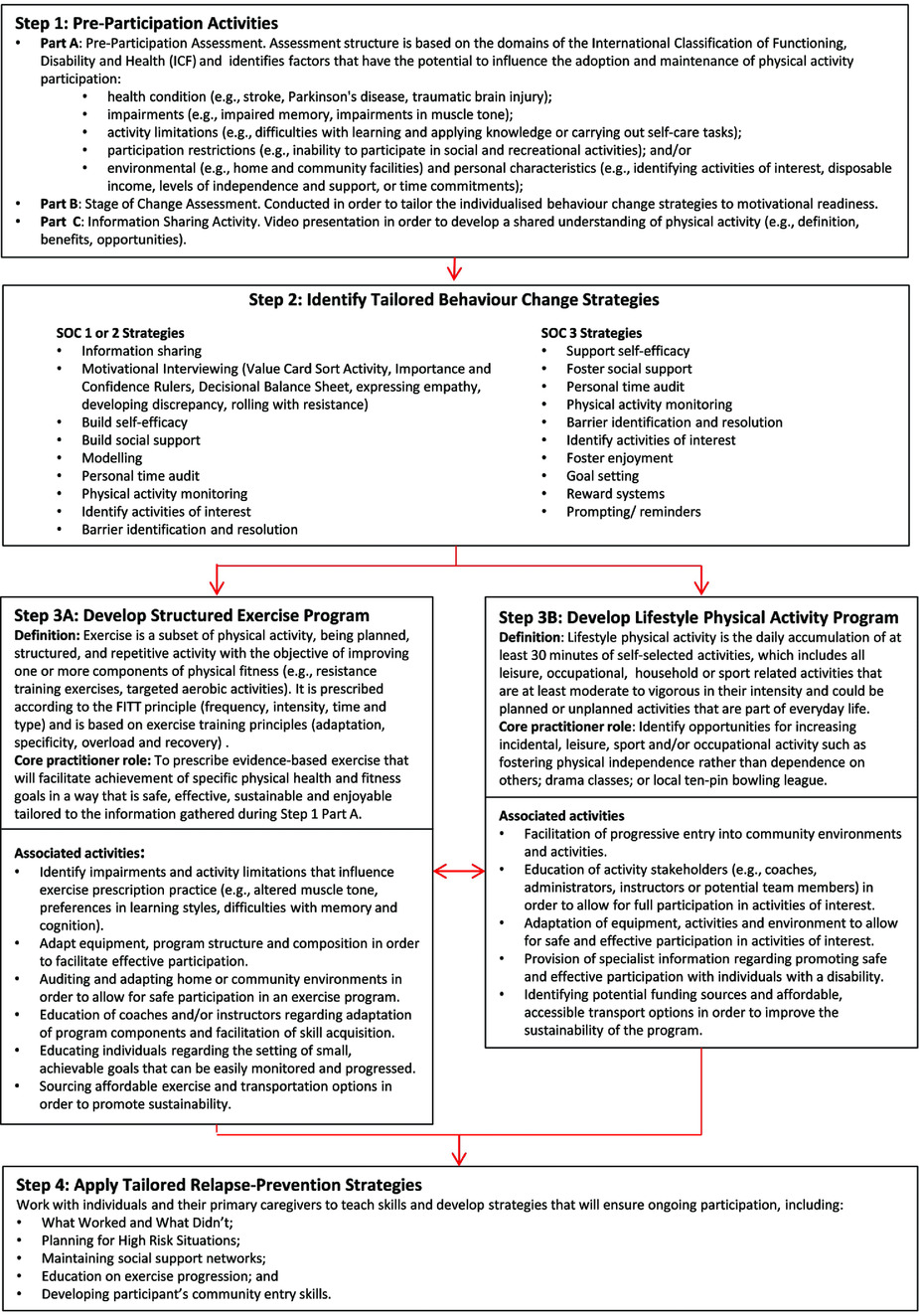
Figure 1 provides an overview of the adapted physical activity program (APAP), including practitioner actions undertaken during each step. The program is delivered by a health practitioner with experience in the use of evidence-based strategies for physical activity promotion, structured exercise prescription for individuals with a disability and facilitating community engagement for individuals with a disability. Individual's transition through Steps 1, 2, 3 and 4 during approximately 10 face-to-face sessions delivered over a 12-week period. Each session is approximately 1 hour in duration and the inter-session time varies depending on the needs of the individual. Typically, more sessions are completed in the first 6 weeks as discussions regarding values and motivation and physical activity participation evolve, community access is arranged, skills learned and habits established. Session frequency diminishes in the second 6 weeks, with more emphasis on fostering independence and the self-management of physical activity. During Steps 2 and 3, the face-to-face sessions are supplemented by reminder calls, email messages or electronic notifications in order to reinforce the session outcomes and/or provide a prompt for additional action (e.g., to discuss a participant's first community exercise class or a prompt to call a local sports club). The extent to which these methods are utilised depends on the participant's preferences, availability and ability to utilise various communication methods as well as the individual's impairment profile (in particular, impaired memory).
Adapted Physical Activity Program intervention model. The aim is to provide practitioners with a framework for increasing participants physical activity in ways that are safe, effective, sustainable and enjoyable. The steps in the model are sequential and all participants receive Steps 1, 2, 3A and/or 3B and 4. Following the pre-participation activities (Step 1), the practitioner identifies behaviour change strategies tailored to participant and their stage of change (Step 2) and outcomes from these first two steps are used by the practitioner to decide whether to engage the participant in structured exercise (Step 3A), lifestyle physical activities (Step 3B) or a combination of the two. The final step is the application of relapse prevention strategies (Step 4).

The APAP is delivered utilising a community-based rehabilitation model. Community-based rehabilitation refers to services delivered in an individual's home or community (i.e., physical surrounds which they typically inhabit or could easily access) (Tweedy, Reference Tweedy, Taylor, Foster and Fleming2007). Community-based rehabilitation is a theory-driven model of service delivery that has been successfully applied to the provision of a range of rehabilitation services for people with BI including physiotherapy, occupational therapy and community reintegration services (Kendall, Buys, & Larner, Reference Kendall, Buys and Larner2000; Tweedy, Reference Tweedy, Taylor, Foster and Fleming2007). There are a number of advantages of implementing a program utilising a community-based rehabilitation model in comparison to a traditional fixed-facility model. The infrastructure costs associated with community-based rehabilitation are negligible when compared to establishing and maintaining a purpose-built, fixed facility which significantly enhances the prospects of widespread translation into practice and substantially increases the variety of programs and activities that can be accessed and therefore the ability to be of interest to the participant. Furthermore, programs conducted in fixed facilities have limited geographical reach because transport is a significant barrier for people with disabilities, and fixed facility programs are often discontinued.
The community-based rehabilitation model not only permits the development of conventional, structured and in-home exercise programs for those participants interested in exercise but also accommodates the delivery of a lifestyle physical activity intervention. Lifestyle physical activity interventions are proposed to increase physical activity due to their effect on theory-based mediators of physical activity including self-efficacy (Reavenall & Blake, Reference Reavenall and Blake2010), social support (Kosma, Ellis, Cardinal, Bauer, & McCubbin, Reference Kosma, Ellis, Cardinal, Bauer and McCubbin2007a) and decisional balance (Heller, Ying, Rimmer, & Marks, Reference Heller, Ying, Rimmer and Marks2002). Lifestyle physical activity interventions utilise individualised behaviour change strategies demonstrated to increase physical activity participation to assist individuals increase their physically active behaviour (Dunn, Andersen, & Jakicic, Reference Dunn, Andersen and Jakicic1998; Tweedy Reference Tweedy, Taylor, Foster and Fleming2007). Lifestyle physical activity interventions have been demonstrated to be as effective as a structured exercise program for promoting physical activity participation and indices of health and fitness in sedentary and clinical populations (Dunn et al., Reference Dunn, Marcus, Kampert, Garcia, Kohl and Blair1999; LIFE Study Investigators et al., Reference Pahor, Blair, Espeland, Fielding, Gill and Studenski2007; Tuomilehto et al., Reference Tuomilehto, Lindstrom, Eriksson, Valle, Hamalainen and Ilanne-Parikka2001). Lifestyle physical activity interventions are also determined to be more cost-effective, with the total cost of the program equating to approximately one-third to one-fourth of a structured exercise program (Dunn et al., Reference Dunn, Marcus, Kampert, Garcia, Kohl and Blair1999). Delivering a lifestyle physical activity intervention using a community-based service delivery model allows for the physical activity promotion strategies to be discussed, designed and evaluated in the same setting in which physical activity will be adopted and maintained. Additionally, the use of lifestyle physical activity interventions provides activity options beyond structured gym-based programs for individuals with accessibility issues or exercise preferences beyond structured exercise. Lifestyle physical activity interventions can be seamlessly integrated into already established community-based rehabilitation services for people with BI.
Detailed Explanation of Program Components
The conceptual framework and a detailed description of the individual steps that comprise the APAP model are described in more detail below and follow the schema in Figure 1.
Step 1: Pre-Participation Activities
Step 1 Part A: Pre-Participation Assessment
Standardised pre-participation activities allow each individual's physical activity program to be individually tailored. Step 1 consists of a series of questions and activities based on the domains of the International Classification of Functioning, Disability and Health (ICF) (World Health Organisation, 2001), which aims to identify key factors that would impede or enhance physical activity adoption and maintenance for a particular individual (Rimmer, Reference Rimmer2006). Variables identified from the ICF Framework as important considerations for the adoption and maintenance of physical activity participation, and subsequently program design and delivery, include health conditions (e.g., cerebral palsy, stroke and traumatic brain injury); impairments of body structures and functions (e.g., impaired memory function, impaired speech function, sensation impairments and impairments of the cardiovascular system); activity limitations (e.g., learning and applying knowledge, carrying out daily routines, mobility and self-care); participation restrictions (e.g., relating to strangers, interacting in formal relationships, participating in social and recreational activities); personal factors (e.g., physical activity preferences, disposable income, available equipment and time commitments); and environmental factors (e.g., transportation restrictions, inaccessible facilities and physical environment restrictions) (Rimmer, Reference Rimmer2006).
These factors can be classified as modifiable (e.g., access to accessible facilities and transportation) and non-modifiable (e.g., short-term memory impairments or increased muscle tone) and are assessed for the purpose of developing a physical activity program for the participant that is safe, effective, sustainable and enjoyable. The program delivered to each individual is tailored using these factors, either by addressing them in the program design (e.g., increased reminders and prompts for physical activity participation for individuals with memory impairment) or by compensating or adapting for them in the program delivery (e.g., the adaptation of equipment for individuals with impairments in muscle tone that limits their ability to use conventional fitness equipment). A decision about whether to develop an intervention that aims to directly address one or more of the identified factors is based on each individual's physical activity goals and preferences. For example, a decision about whether to include evidence-based balance exercises to address an identified balance impairment would be made based on how important balance was for safe effective participation in their activity of interest – balance exercises might be advisable for a participant interested in a community-based walking program but might be less important for an accessible aqua aerobics program. The protocol for this assessment has been uploaded as supplementary digital content entitled “Pre-Participation Screening Form”.
Step 1 Part B: Stage of Change Assessment
In our recent controlled clinical trial (Clanchy et al., Reference Clanchy, Tweedy and Trost2016), stage of change was assessed using the Marcus and Simkin's (Reference Marcus and Simkin1993) staging algorithm, which classifies individuals into one of five Stages of Change on the basis of their current physical activity participation and their motivational readiness for change: Stage of Change 1 – currently does not participate in physical activity, and does not intend to start within the next 6 months; Stage of Change 2 – currently does not participate in physical activity, but are intending to start within the next 6 months; Stage of Change 3 – currently physically active but not regularly (i.e., three or more times per week for 20 minutes or longer); Stage of Change 4 – completing regular physical activity, however, have not maintained this activity level for 6 months; or Stage of Change 5 – completing regular physical activity and have maintained this activity level for 6 months or more. The assessment of stage of change for this intervention allows the practitioner to (1) determine whether the individual self-reports being insufficiently active for good health; and (2) tailor the program strategies to the participants motivational readiness for change (Blissmer & McAuley, Reference Blissmer and McAuley2002). Individuals in Stage of Change 1 to 3 are not meeting physical activity guidelines and have a number of perceived cognitive and behavioural barriers limiting their participation in physical activity. For this reasons, the focus of this intervention is individuals in Stage of Change 1–3. As a result, the program utilises a range of individually tailored, evidence-based strategies that aim to transition individuals through the first three stages of change – pre-contemplation (Stage of Change 1), contemplation (Stage of Change 2) and preparation (Stage of Change 3) (Prochaska & Velicer, Reference Prochaska and Velicer1997). This process is facilitated by factors related to behaviour change including the knowledge about the behaviour; value of the behaviour; perceived costs and benefits of the behaviour; barriers to change; and beliefs regarding the individual's ability to perform the behaviour (Bundy, Reference Bundy2004). The Stage of Change assessment has been uploaded as supplementary digital content.
Step 1 Part C: Information Sharing Activity
The Information Sharing Activity is conducted in order to: (1) build a shared understanding of the term physical activity; (2) discuss the benefits of physical activity participation broadly; (3) discuss the benefits of physical activity specific to adults with BI; and (4) provide an overview of the level of physical activity required for good health. The Information Sharing Activity is conducted through showing an individual a specifically designed video incorporating the above points. This format is used to gain a perspective of what information the individual finds interesting or relevant, and discuss how this information relates to their current situation. The Information Sharing Activity asks/prompts individuals to consider the benefits associated with physical activity participation and therefore is well suited to individuals in the early stages of motivational readiness.
Step 2: Individualised Behaviour Change Strategies
Based on the Stage of Change Assessment conducted in Step 1 Part B, the practitioner selects behaviour change strategies appropriate to the participant's stage of change (Marcus & Simkin, Reference Marcus and Simkin1993). The strategies required to increase motivational readiness for physical activity are the same for Stage of Change 1 and 2; therefore, in the APAP, individuals in Stage 1 and 2 receive the same behaviour change strategies (Blissmer & McAuley, Reference Blissmer and McAuley2002). These include increasing knowledge regarding the benefits of physical activity participation; developing a discrepancy between the individual's current behaviour and their broader goals and values; evaluating the benefits and barriers regarding changing their behaviour; and eliciting change talk for increased physical activity participation (Blissmer & McAuley, Reference Blissmer and McAuley2002). For individuals in Stage 3, emphasis is placed on increasing pre-existing physical activity behaviour and removing barriers for increased participation. Therefore, emphasis is placed on strategies that assist them to increase their activity from insufficient levels to sufficient levels (e.g., goal setting, reward systems and self-monitoring) (Blissmer & McAuley, Reference Blissmer and McAuley2002). It has been demonstrated that stage-matched interventions are more successful at increasing physical activity adoption in comparison to stage-mismatched, stage-generalized or information-based interventions (Blissmer & McAuley, Reference Blissmer and McAuley2002).
A description of the stage-matched individualised behaviour change strategies included in Step 2 of the program are available as supplementary digital content – Table 1 presenting individualised behaviour change strategies used for participants in Stage of Change 1 and 2; and Table 2 presenting strategies used in Stage of Change 3. Both tables present evidence regarding the efficacy of the selected strategies, sourced literature related to physical activity promotion for people with a disability in the first instance and, where disability-specific evidence was unavailable, from research involving people without a disability. In addition to the participant's stage of motivational readiness, the selection of an appropriate strategy is also dependent on the participant's intended goals or activities of interest, and the outcomes from the previous session. A description of an individual's transition through the program is presented below in the section entitled Applying the Model in Practice - A Case Study.
The delivery of the individualised behaviour change strategies is supported through the use of motivational interviewing. Motivational interviewing is defined as a client-centred, directive method for enhancing intrinsic motivation to change by exploring and resolving ambivalence (Miller & Rollnick, Reference Miller and Rollnick2002). Motivational interviewing is based on four general principles: expressing empathy; developing discrepancy; rolling with resistance; and supporting self-efficacy (Miller & Rollnick, Reference Miller and Rollnick2002). The motivational interviewing philosophy, approach, and methods are uniquely suited to assist individuals to transition through the first three stages of change (DiClemente & Velasquez, Reference DiClemente, Velasquez, Miller and Rollnick2002). Emphasis during Stage 1 is placed on creating and amplifying, from the individual's perspective, a discrepancy between their present behaviour and their broader goals and values through the use of a value card sort exercise (DiClemente & Velasquez, Reference DiClemente, Velasquez, Miller and Rollnick2002). In Stage 2, the individual acknowledges the benefits of being more physically active and is beginning to think about becoming more physically active, however, have not committed to this behaviour (DiClemente & Velasquez, Reference DiClemente, Velasquez, Miller and Rollnick2002). The focus of this stage is to explore the reasons for and against change and help the individual to tip the balance towards change. This is facilitated through exploring and resolving ambivalence and eliciting change talk and confidence statements regarding increasing physical activity levels. Individuals in Stage 3 appear to be ready and committed to increasing their physical activity levels. It is important in this stage to help the individual to develop goals and strategies for change that the individual perceives to be acceptable and effective (DiClemente & Velasquez, Reference DiClemente, Velasquez, Miller and Rollnick2002). The strategies specifically derived from motivational interviewing and their application are highlighted in Table 1 (see Supplementary Digital Content).
Step 3
Depending on the outcomes of the discussions undertaken during Step 2, individuals elect to take part in either structured exercise (Step 3A) or lifestyle physical activity (Step 3B). The arrow linking Step 3A and Step 3B in Figure 1 indicates that participants may choose to participate in a combination of the two.
Step 3A: Develop Structured Exercise Program
Exercise is defined as a subset of physical activity that is planned, structured and repetitive with the objective of improving one or more components of physical fitness (e.g., resistance training exercises and targeted aerobic activities) (Casperson, Powell, & Christenson, Reference Casperson, Powell and Christenson1985). Exercise is prescribed according to the FITT principle (frequency, intensity, time and type) and is based on exercise training principles (adaptation, specificity, overload and recovery) (American College of Sports Medicine, Reference Thompson, Gordon and Pescatello2010). The focus of Step 3A is to implement a safe, effective and enjoyable exercise program for the individual using resistance, aerobic, flexibility and neuromotor exercises (including neuromuscular, functional and balance exercises) tailored to the individual's current fitness and physical functioning, health goals and the outcomes of the pre-participation screening. This form of physical activity is prioritised by individuals who particularly enjoy structure and routine or those that have goals that specifically relate to function (e.g., being able to walk further or being more independent in activities of daily living), health (e.g., prevention of further disability or secondary chronic disease) and/or fitness (e.g., improved muscle strength or aerobic fitness). Behaviourally, structured exercise programs, particularly walking programs, are an efficacious way of initiating physical activity participation due to their structure and repeatability, the ability of individuals to monitor their progress and compliance easily and their ability to be performed in the individual's home with relatively low equipment requirements and cost.
The practitioner activities undertaken in order to permit individuals to participate in structured exercise that is safe, effective, sustainable and enjoyable are presented in Figure 1, Step 3A. Impairments and activity limitations demonstrated to have an important impact on exercise prescription for people with BI include but are not limited to cognitive (e.g., preferences in learning styles, difficulties with memory and cognition, difficulties with planning and organization and/or difficulties with language and communication); social and behavioural (e.g., impaired social support and social connectedness, disinhibition, reduced self-control, egocentricity, lack of motivation and/or reduced insight) and physical (e.g., balance disorders, altered sensation (including pressure, friction and heat), altered muscle tone, decreased range of motion/contracture, increased rate of fatigue, intra-personal variability in presentation of motor impairment, the presence of stereotypical movements, susceptibility to overuse injuries in joints, difficulties acquiring new skills, seizures/epilepsy, and/or visual and/or hearing impairments). These considerations for exercise prescription are screened for in the pre-participation assessment undertaken in Step 1 Part A of the program. On the basis of the above-identified impairments and activity limitations adaptations to prescription practice, equipment and activity components can be implemented in order to develop a safe and effective exercise program. These adaptations include the following:
• use of wide benches, seats with high backs, grab rails or manual support in order to compensate for impairments in balance;
• stretching pre- and post-exercise in order to prevent contracture advancement;
• implementing sessions with a reduced number of exercises, reduced intensity of activity and more frequent rest breaks in order to prevent fatigue;
• scheduling longer sessions in order to provide more time for recovery, transition between activities and set up for activities;
• conducting sessions in environments that minimise movement difficulty and teaching new skills at the beginning of the day in order to maximise motor learning;
• reducing the speed and force of the task and breaking the task down into simple progressive steps in order to allow the individual to concentrate on producing the movement correctly;
• positioning the individual in an anatomical neutral position, completing movements focusing on joint symmetry and avoiding movements that reinforce stereotypical movements or postural abnormalities;
• including movements that combine flexion and extension through the individuals full range of motion with the use of unilateral exercises in preference to bilateral exercises;
• experimenting with a wide array of instructional methods including video play-back, demonstration, verbal and written cues, movement guidance (brailling) or visualisation and supplementing exercise programs with written or tape recorded instructions; and
• encouraging the use of diaries for appointments and the use of reminder features in electronic software in addition to minimising changes in schedules and routines.
Sustainability of the undertaken exercise program can be improved through participant education and/or by providing education to coaches or practitioners associated with community centres in order to allow for safe participation in – and prescription of – exercise, including practices such as setting small, achievable goals, encouraging self-monitoring, providing positive feedback and reinforcement of success and sourcing affordable exercise and transportation options.
Step 3B: Develop a Lifestyle Physical Activity Program
Lifestyle physical activity is defined as the daily accumulation of at least 30 minutes of self-selected activities, which includes leisure, occupational, household or sport related activities that are at least moderate to vigorous in their intensity and could be planned or unplanned activities that are part of everyday life (Dunn et al., Reference Dunn, Andersen and Jakicic1998). Lifestyle physical activity programs are targeted to individuals with activity preferences outside of structured exercise and aim to promote physical activity participation through increased participation in activities of daily living (e.g., cleaning and cooking); leisure activities (e.g., drama or art classes); outdoor recreational activities (e.g., gardening or playing with a frisbee); sport (e.g., social, inclusive or disability sport) and incidental exercise (e.g., taking the stairs where applicable, parking further away from shopping centres and getting off the bus at a stop further away). Participation in lifestyle physical activity programs is beneficial, particularly for inactive individuals, as they provide opportunities and options for tailoring for physical activity participation to an individual's current lifestyle, as it includes the accumulation of short bouts or incidental activity rather than activity performed in one long bout of continuous activity. Preferences for lifestyle physical activity programs can be identified during discussions undertaken during Step 2 of the program model.
The intervention described in this paper is tailored for individuals classified as Stage of Change 1, 2 and 3. They will frequently have relatively high levels of impairment and a greater prevalence of secondary conditions, factors known to be associated with profound inactivity (Verschuren, Peterson, Balemans, & Hurvitz, Reference Verschuren, Peterson, Balemans and Hurvitz2016). As a consequence, the daily accumulation of 30 minutes of moderate to vigorous intensity activity is likely to be aspiration for many participants and therefore, the focus of the APAP is to put in place structures that allow for scaffolding that helps such people accrue small increases in activity in the first instance – either daily or more frequently – with the prospect of building to meet activity guidelines over time.
Lifestyle physical activity programs are facilitated in this program in the following ways:
• education of activity stakeholders (e.g., coaches, administrators, instructors or potential team members) to allow for full and inclusive participation and a valuable experience;
• identifying opportunities for increasing incidental activity, e.g., fostering physical independence rather than dependence on others or identifying sustainable community based physical activity opportunities;
• identification of safe and accessible environments for physical activity participation;
• equipment or task modification or the provision of other specialist information in order to allow for increased access and participation in activities of interest; and
• sourcing affordable, accessible transport options where necessary in order to allow participation to be sustained beyond the duration of the program.
A key component to the development of a lifestyle physical activity program is to assist the participant to develop the skills and knowledge required to participate in home- and community-based physical activities. In order to promote sustained participation in these activities, barriers associated with participation in community-based physical activities need to be identified and addressed. Focus groups conducted with individuals with a disability have identified a number of barriers associated with community access and physical activity participation including (1) restricted access due to features of the built or natural environment, e.g., inability to use the stairs; (2) high costs of participating in recreation/fitness activities in combination with limited disposable income; (3) limited accessibility of exercise and recreation equipment, e.g., inability in navigating in small spaces with inbuilt obstacles; (4) limited access to information within the facility e.g., inability to access or interpret signs and brochures used by the facility; (5) lack of education and training of professionals in the areas of accessibility and appropriate interactions involving people with disabilities; (6) stereotypical perceptions and attitudes of both professionals and non-disabled individuals toward accessibility and persons with disabilities; and (7) the absence of essential resources that would allow persons with disabilities to participate in fitness and recreation activities, e.g., transportation and adaptive equipment (Rimmer, Riley, Wang, Rauworth, & Jurkowski, Reference Rimmer, Riley, Wang, Rauworth and Jurkowski2004). The aim of the activities undertaken in Step 3B of this program is to negate or reduce the impact of these barriers in order to promote sustained participation in community activities.
The process of evaluating suitable and affordable options for community entry and on-going participation is usually a collaboration between participant and practitioner, with the aim of supporting the participant to develop the skills required. Community access is facilitated through processes including liaising with community-based physical activity providers on issues such as equipment, rules, environment and activity modifications (Rimmer et al., Reference Rimmer, Riley, Wang, Rauworth and Jurkowski2004). The amount of time spent in non-face-to-face practitioner activities (e.g., liaising with community service providers or designing exercise programs) varies widely depending on the goals of the participant, the complexity of the activity of interest (e.g, community walking vs. scuba diving) and the impairment profile of the individual.
Where required, facilitating entry into community group situations is completed gradually, with the inclusion of orientation sessions for the activity or environment. The sustainability of the program is promoted through the identification of funding sources for sustained participation and affordable and accessible transportation options.
Step 4: Individually Tailored Relapse Prevention Strategies
The first three steps of the APAP are developed to assist individuals with BI to adopt a physical activity lifestyle which is safe, effective and enjoyable. The last step aims to promote maintenance of the newly adopted physical activity lifestyle. Individuals with BI face a set of specific barriers relating to physical activity maintenance (Rimmer et al., Reference Rimmer, Riley, Wang, Rauworth and Jurkowski2004; Shields, Synnot, & Barr, Reference Shields, Synnot and Barr2012) including changes to the physical environment, funding, social support and health status that may influence or restrict a participant's capacity for maintenance of a physical active lifestyle. The relapse prevention component of the APAP aims to identify potential interruptions, disruptions and endings to previously APAP. Evidence indicates that interventions including tailored physical activity maintenance or relapse prevention strategies either alone or in combination with other behavior change strategies can lead to improved short-term and long-term physical activity participation (Marcus et al., Reference Marcus, Dubbert, Forsyth, McKenzie, Stone, Dunn and Blair2000). The relapse prevention model proposes that the negative impact of factors that influence physical activity participation can be reduced if the individual (1) anticipates and plans for their occurrence; (2) can recognise any negative impact on physical activity as temporary; and (3) has developed self-regulatory skills to reduce the impact (King et al., Reference King, Blair, Bild, Dishman, Dubbert, Marcus and Yeager1992). Research indicates that increased self-efficacy, strengthened social support networks and effective goal setting are associated with physical activity maintenance post-participation in a physical activity program (Bock, Marcus, Pinto, & Forsyth, Reference Bock, Marcus, Pinto and Forsyth2001).
Step 4 of the program entails the delivery of individually tailored relapse prevention strategies designed to help individuals identify potential situations in which their physical activity routine may be disrupted or stopped (e.g., illness, reduction in social support and weather changes) and to formulate appropriate strategies to restart or continue with their physical activity program (Blair, Dunn, Marcus, Carpenter, & Jaret, Reference Blair, Dunn, Marcus, Carpenter and Jaret2001; Marcus & Forsyth, Reference Marcus, Forsyth, Marcus and Forsyth2009). Additionally, individuals are asked to reflect upon their experiences with physical activity participation and the strategies undertaken during the program they believe best contributed to progressing to a new stage of motivational readiness. This process allows individuals to build a “tool box” of strategies and plans to maintain or restart their chosen physical activity. Secondary benefits include improving outcome expectations, strengthening self-efficacy, conceptualising continuing activity and goal setting. Finally, behavioural skill development relating to maintaining social support networks and education on exercise progression and community entry is undertaken to allow individuals and their significant others to initiate and maintain strategies for physical activity participation after the completion of the program.
An example of a home visit schedule that would permit the monitoring and evaluation of potential maintenance of activity for 10 home visits over 12 weeks would be twice-weekly sessions for weeks 1–2; weekly sessions during weeks 3–6; and once every two to three weeks for weeks 7–12. The gradual increase in time between face-to-face sessions permits the practitioner to evaluate the likelihood of physical activity maintenance and the identification of potential barriers with the aim of providing tailored strategies as solutions to these barriers, prior to the intervention concluding. An additional strategy that can be employed following conclusion of the face-to-face visits entails utilising relatively cheap electronic communication (e.g., phone, text and email) to support physical activity maintenance (Bouton, Reference Bouton2000). Previous studies evaluating physical activity interventions indicate that follow-up phone calls can improve the maintenance of physical activity following the withdrawal of face-to-face interventions in adults with BI (Gillham & Endacott, Reference Gillham and Endacott2010; Wise, Hoffman, Powell, Bombardier, & Bell, Reference Wise, Hoffman, Powell, Bombardier and Bell2012). The extent to which participants maintain the physical activity they adopt during the intervention can be evaluated by implementing a follow-up period, during which the measures used to evaluate physical activity participation are re-administered after the withdrawal of the structured intervention sessions.
Evaluation of Program Effectiveness
Evaluation of program outcomes is an important component of a good clinical practice. As this is a physical activity promotion intervention, monitoring physically active behaviour should be the primary outcome of interest in order to demonstrate the program success. This can be completed using objective measures of physical activity including accelerometer-based motion sensors, pedometers, commercially available fitness trackers or self-report measures validated for use in adults with BI including the Physical Activity and Disability Survey (Rimmer, Riley, & Rubin, Reference Rimmer, Riley and Rubin2001) and The Physical Activity Scale for Individuals with Physical Disabilities (van der Ploeg et al., Reference van der Ploeg, Streppel, van der Beek, van der Woude, Vollenbroek-Hutten and van Mechelen2007). Additionally, the stage of change questionnaire could be used to evaluate changes to an individual's motivational readiness for participating in physical activity (Marcus & Simkin, Reference Marcus and Simkin1993).
As this is a participant-centred intervention, participant satisfaction with the intervention is also an important outcome measure. This can be done with Likert-scale feedback forms or, where more detail is required, semi-structured interviews covering the perceived benefits and acceptability of the program from the perspective of the participant or their significant others.
Additional outcomes that may be positively influenced by the APAP that have not yet been addressed, but may have clinical relevance include measures relating to physical capacity including the Lower Extremity Functional Scale (Binkley, Stratford, Lott, & Riddle, Reference Binkley, Stratford, Lott and Riddle1999), High-Level Mobility Assessment Tool (Williams, Robertson, Greenwood, Goldie, & Morris, Reference Williams, Robertson, Greenwood, Goldie and Morris2006), Clinical Outcome Variables Scale (Salter, Jutai, Foley, & Teasell, Reference Salter, Jutai, Foley and Teasell2010) or tests relating to physical fitness including treadmill- and cycle-based submaximal test (Eng, Dawson, & Chu, Reference Eng, Dawson and Chu2004) or shuttle tests (Hassett, Harmer, Moseley, & Mackey, Reference Hassett, Harmer, Moseley and Mackey2007).
Applying the Model in Practice – A Case-Study
Step 1: Pre-participation Activities
Jane* (female, 53 years of age) had a right-sided stroke primarily effecting her right temporoparietal lobe one year prior to being referred to the program by her in-home therapy provider. She presents with left-sided hemiplegia; is able to independently move from a seated to standing position; is unable to walk up or down stairs or over long distances; and primarily uses her wheelchair for most household and community mobility tasks. She is able to walk independently using a walking stick; however, she chooses to limit her walking with the stick due to her balance difficulties and frustration with her ankle foot orthoses. She has two daughters but has lost contact with them since her stroke and she would like to reconnect with them. She identified as Stage of Change 1 – not participating in physical activity with no intention of becoming more physically active.
After completing the information sharing exercise, Jane identified an interest in the distinction between lifestyle physical activity and structured exercise, particularly the classification of incidental walking and leisure activities including arts classes as a physical activity that could benefit health. She believed that individuals with a stroke did not require information about the benefits of physical activity, the emphasis of information provided should relate to how to overcome barriers resulting from physical disability (i.e., paralysed left side and the inability to walk long distances). Jane was currently participating in a home therapy program for her upper limb and found the movements difficult, painful and identified as being left feeling “brain dead” as a result. She did not identify her ongoing physical therapy program as physical activity or exercise. She identified the need to find activities that were enjoyable because “if I hate it, I won't do it”. As a result, the identification of activities of interest to Jane and presentation of strategies to modify these activities to address her left-sided hemiplegia were identified as a priority. The activities identified needed to be easily completed, with a low level of repetition in order to allow her to feel intellectually stimulated. Ideally, the activities would be performed with her daughters.
Step 2: Individualised Behaviour Change Strategies
Jane received 10 face-to-face sessions with an Exercise Physiologist over a 12-week period. During these sessions, a range of individualised behaviour change strategies were implemented, including:
• Value Card Sort Activity which revealed that Jane valued: doing the activities that she used to do; controlling her own finances; having control over her own life; walking further; and being a healthy body weight;
• Identifying Activities of Interest, an activity during which Jane identified:
○ participating in an art class as an activity that she completed prior to her stroke that she would like to recommence; and
○ ten pin bowling was identified as an opportunity to increase her walking activity without increasing her pain due to the rest periods between each frame of bowling.
• Decisional Balance Sheet regarding increasing her walking activity which revealed the following:
Disadvantages of increasing walking activity:
○ being reminded of activities that she is now unable to complete successfully or now has difficulty completing;
○ being exhausted by the smallest amount of activity currently with the anticipation that increasing her current activity will increase her fatigue substantially; and
○ inability to increase walking activity currently due to pain which she believes is caused by her ankle-foot orthoses (AFOs) and her leg struggling to lift the extra weight of the orthoses.
Advantages of increasing walking activity:
○ the possibility she may be able to complete more tasks independently (particularly relating to self-care and spending time with her children and dog); and
○ the possibility of her surgeon allowing her to remove her AFO.
• Physical activity monitoring: Jane was encouraged to start wearing a pedometer to monitor her current walking activity. Despite her belief that she spent a large amount of time in her wheelchair, she was surprised by the number of steps taken during her routine day. Evaluating the differences between active and inactive days indicated that days identified as “good physical activity” days were usually followed by “bad fatigue” days, and while fatigue was increased with increased walking her overall pain scores were not.
Step 3
Step 3A: Structured Exercise Prescription – Hypothetical ONLY
Based on the discussions undertaken in Step 2, Jane expressed no interest in participating in a structured exercise program and as a result the practitioner did not develop a structured exercise program for her. However, if Jane had expressed an interest in a structured exercise program, the APAP model of intervention could have accommodated this.
Step 3B: Non-Exercise Prescription Activities
As a result of the discussions undertaken during Step 2, Jane identified an interest in increasing her walking activity for the purposes of increasing her walking capacity and tolerance. Jane used goals setting and self-monitoring to begin a weekly walking program focusing primarily on increasing walking frequency, and secondarily on walking duration. Jane was also able to identify a series of tasks that she believed would be able to increase her daily number of steps taken including collecting her own mail; having coffee twice a week with her neighbour; throwing the ball with the dog in the backyard; and microwaving her own meals.
Two opportunities for taking up her activities of interest were identified – participation in an art class and ten-pin bowling. Both of these required an element of community integration. Information regarding community organisations that provided art classes was provided to Jane and she was tasked with working through the information provided, deciding upon a class of interest and making enquiring phone calls to establish the cost, duration and time of the class. Options were discussed with family members and information regarding subsidised transportation options was provided. The art class was screened by the Exercise Physiologist prior to Jane attending in order to ensure accessibility and the support of the community service providers. Initially, Jane attended the art class with the Exercise Physiologist. The support of the Exercise Physiologist for community access reduced as Jane became more independent in accessing the facility and her application for subsidised transportation was approved.
Participation in ten-pin bowling was facilitated gradually beginning with an individualised preliminary session in order to determine what supporting equipment was required and to begin working on a technique that she would be comfortable with. Initially, Jane started to bowl seated in her wheelchair using a lap ball ramp; however, she soon progressed to free standing bowling using a fixed ball ramp. Jane wore a pedometer while completing the activity in order to gauge the number of additional steps bowling provides, and as a result, determined that she was completing approximately 360 m of walking. The sustainability of the program was identified as a concern, relating to transportation and assistance with the frame and carrying of the bowling ball; therefore, a meeting with a community disability support program was arranged to see if additional and sustained support could be provided.
Step 4: Tailored Relapse Prevention Strategies
Relapse prevention was addressed by evaluating the program strategies undertaken and compiling plans to address situations in which physical activity may be reduced or ceased. Plans for self-identified situations in which physical activity could become problematic including returning to work, getting sick, losing the support of family and friends, and poor weather were discussed. Jane identified that setting small goals and writing the goals down with her family members “worked every time” to increase physical activity participation; wearing the pedometer “worked sometimes” to increase physical activity participation; and writing down the advantages and disadvantages of physical activity “didn't help me become more physically active”. Sustainability of the program elements was addressed through the provision of community disability support.
Program Evaluation
The primary outcome measure for intervention was physical activity participation, assessed progressively over the course of the intervention using a hip-worn accelerometer. Motivational readiness for change was assessed at the beginning of the first week as well as weeks 5 and 10 using the Stage of Change assessment. Self-efficacy for physical activity, social support and decisional balance were completed in week 1, 12 (post-intervention) and 24 (follow-up). By the end of the intervention, Jane was completing an additional 10 minutes of moderate intensity physical activity per day and had transitioned from Stage of Change 1 to Stage of Change 2. Jane's score on the physical activity self-efficacy measure increased from 1.2 to 3.2, and scores on the friends and family social support measured increased from 23 to 40 and 21 to 32, respectively.
Discussion
This paper describes a community-based tailored program for the promotion of physical activity participation in adults with BI. The program has been shown to be effective at promoting physical activity adoption in adults with BI (Clanchy et al., Reference Clanchy, Tweedy and Trost2016). The distinguishing features of the APAP in comparison to previously evaluated programs include a comprehensive pre-participation assessment mapped against the domains of the ICF in order to tailor the program to the individuals health, personal and environmental considerations; the use of a community-based rehabilitation model in preference to delivery in a fixed facility; and the inclusion of tailored behaviour change strategies in addition to structured exercise prescription and lifestyle physical activity participation. The use of tailored community-based physical activity programs is advantageous due to the low cost of program implementation and the link to sustained physical activity participation.
This paper presents a detailed description of the components of the program and a worked case study example in order to allow researchers and practitioners to replicate and refine the program for delivery in clinical practice. By outlining these components, it is anticipated that researchers/practitioners are able to identify the necessary skills and knowledge to allow the program to be implemented into clinical practice. Translation of the program model into pre-existing or differing clinical practice models (e.g., multi-professional settings) may require the adaptation of the model by knowledge users or the implementation of evidence-based knowledge translation frameworks (e.g., the Integrated Knowledge Translation Framework). Once translated, the evaluation of the program can be conducted through evaluating increased participation in physical activity either objectively or subjectively, changes in stage of change or motivational readiness, theory-driven predictors of physical activity participation (including self-efficacy) and the perceived benefits of the program for the participants.
The outcomes of the controlled clinical trial undertaken by the authors of this paper demonstrated that the APAP was successful at promoting physical activity adoption; however, it was limited in its ability to promote physical activity maintenance (Clanchy et al., Reference Clanchy, Tweedy and Trost2016). The Adapted Physical Activity Program could be modified to include addition evidence-based strategies demonstrated to promote physical activity maintenance. Additionally, different delivery models including a shortened program delivery period or delivery using e-health platforms comprising smartphones and wearable sensors could also be investigated in order to reduce the resources associated with program delivery and/or to increase the capacity for remote delivery to individuals residing in rural or remote areas.
Conflict of Interest
Dr Kelly Clanchy has no conflicts of interest to disclose. Dr Sean Tweedy has no conflicts of interest to disclose. Professor Stewart Trost has no conflicts of interest to disclose.
Supplementary material
To view supplementary material for this article, please visit https://doi.org/10.1017/BrImp.2018.16
Acknowledgements
This work was supported by The Hopkins Centre 2017 Round 2 Seeding Grants for Translation Research, a joint initiative of Metro South Health and Griffith University. Dr Kelly Clanchy's work is supported by the Menzies Health Institute of Queensland's Early Researcher Mentorship Program. Sean Tweedy's work is supported by the Motor Accident Insurance Commission.
Ethical Standards
The authors assert that all procedures contributing to this work comply with the ethical standards of the relevant national and institutional committees on human experimentation and with the Helsinki Declaration of 1975, as revised in 2008.