Introduction
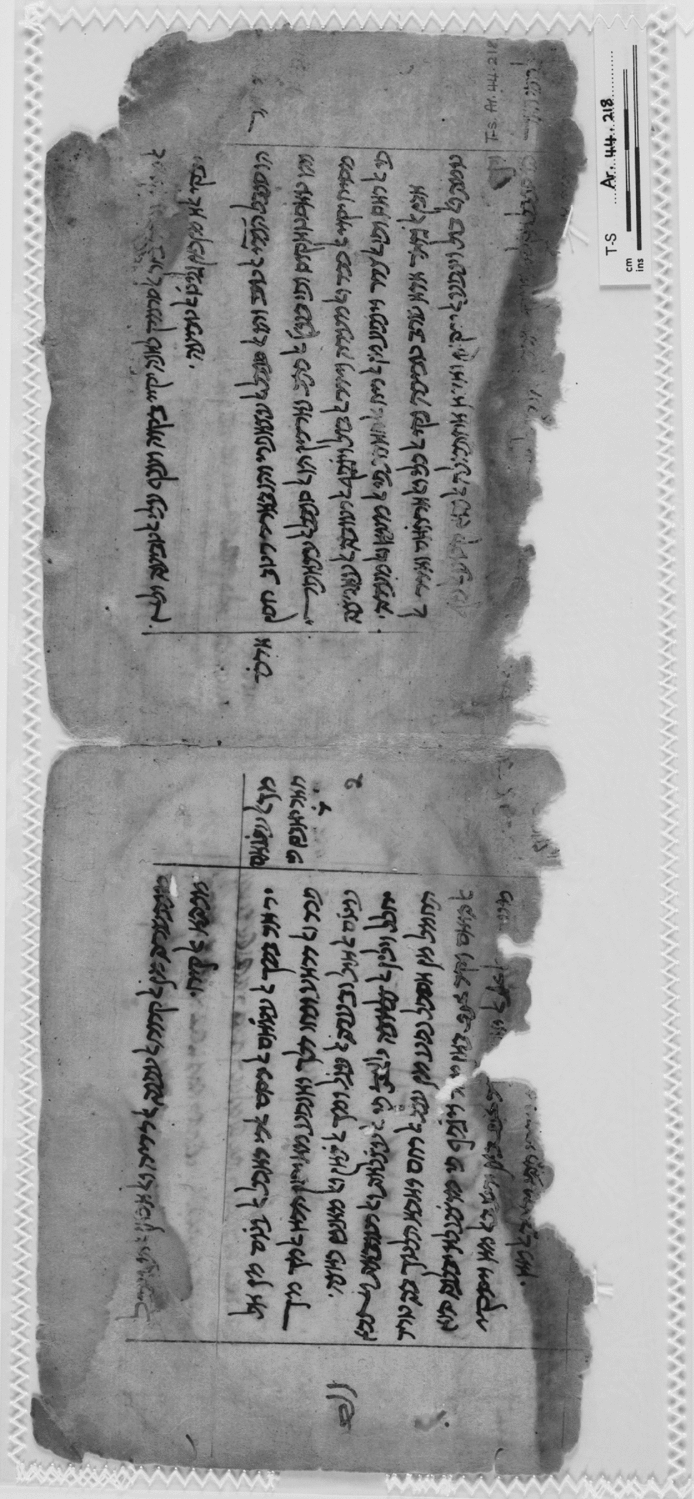
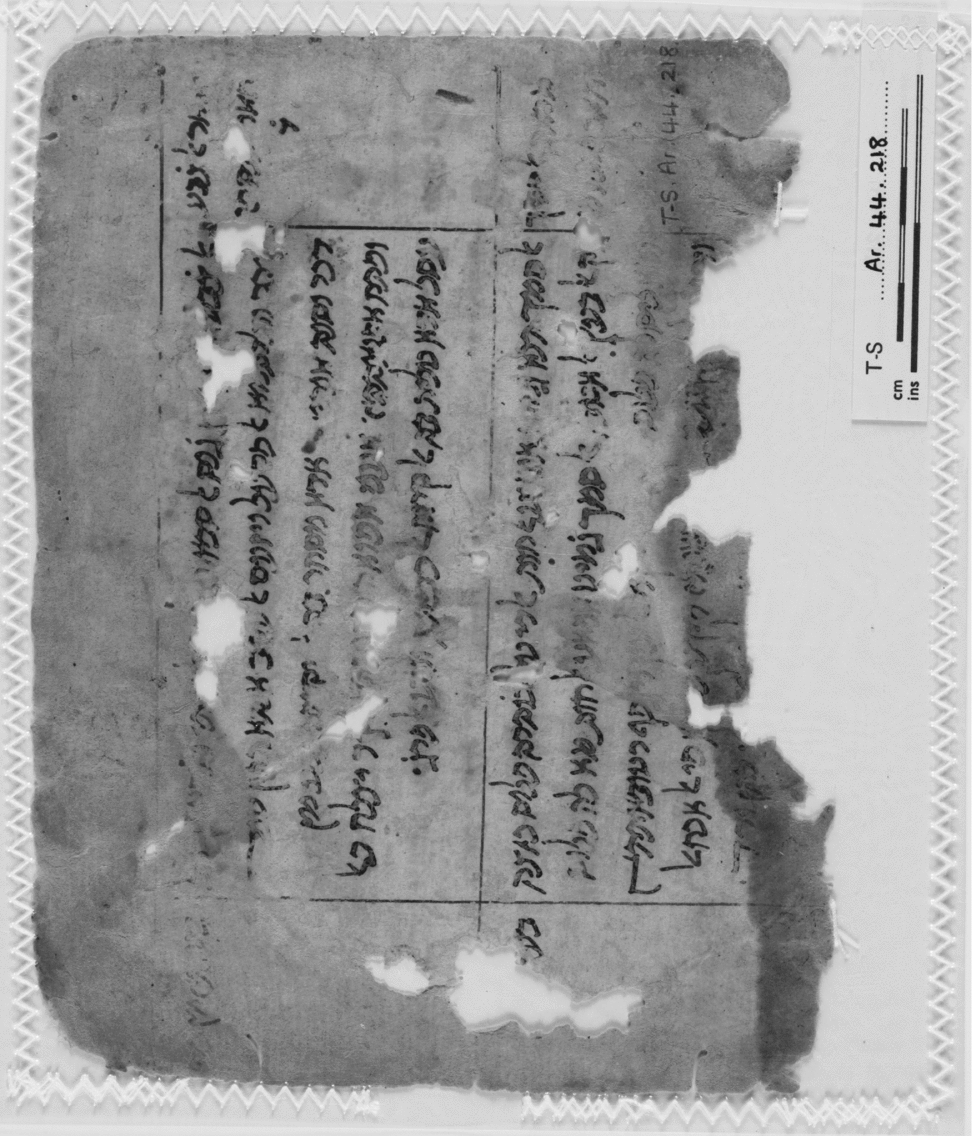
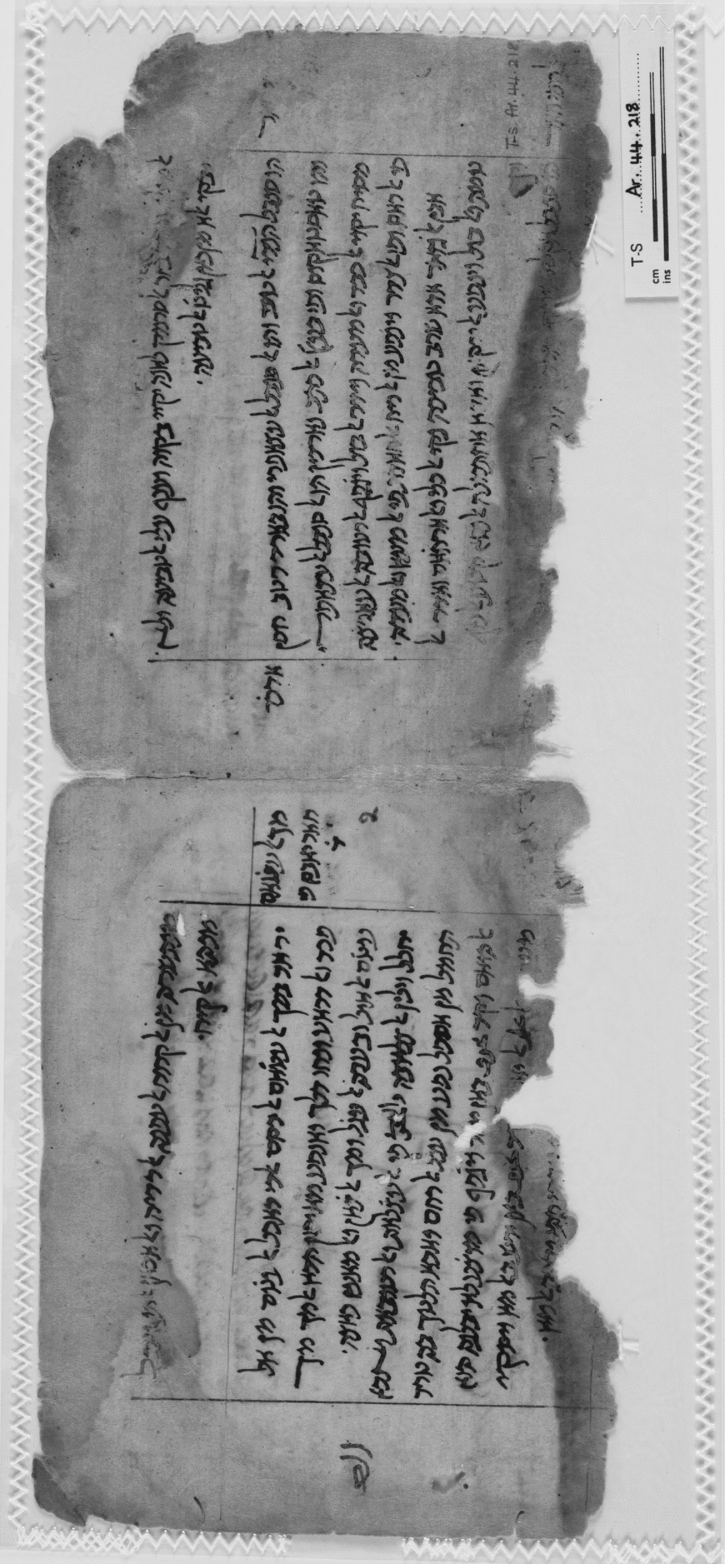
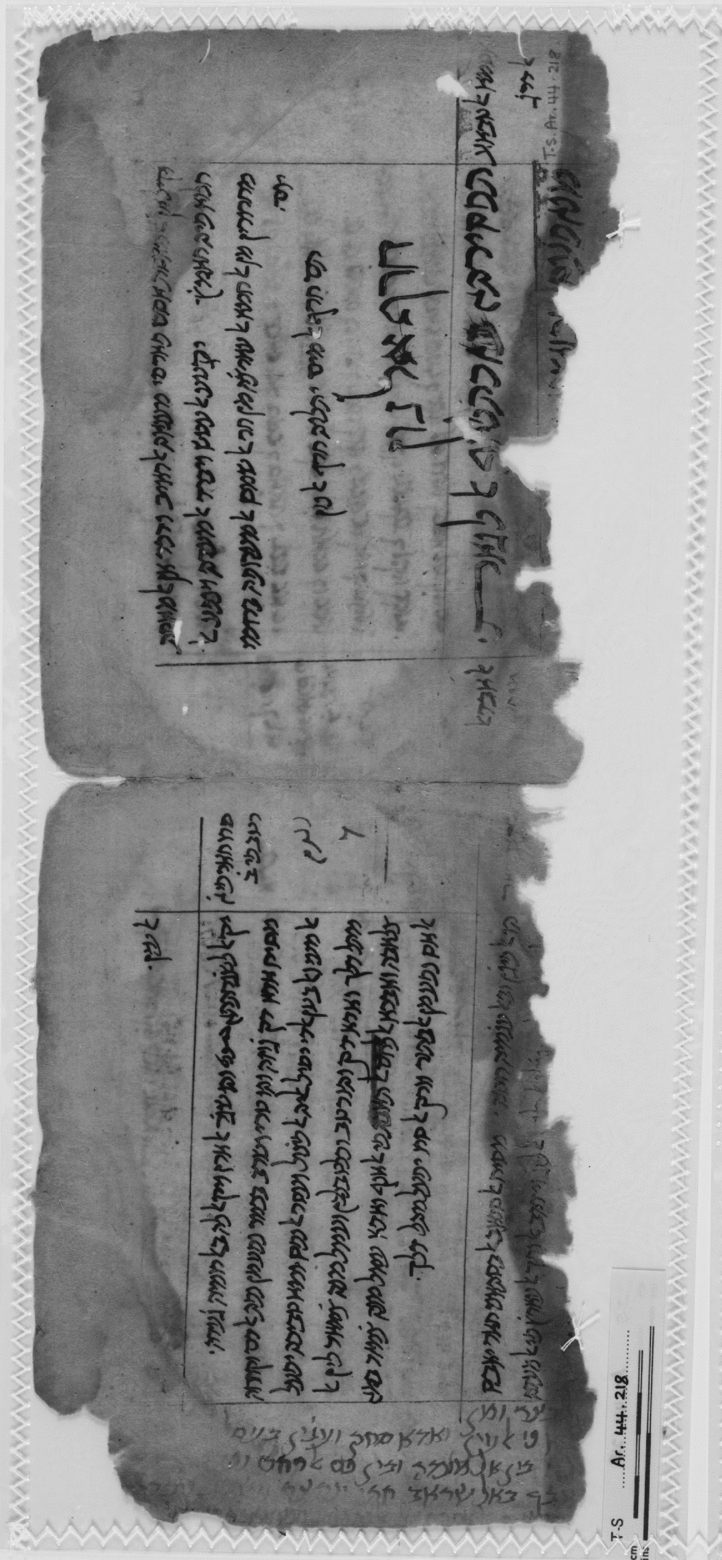
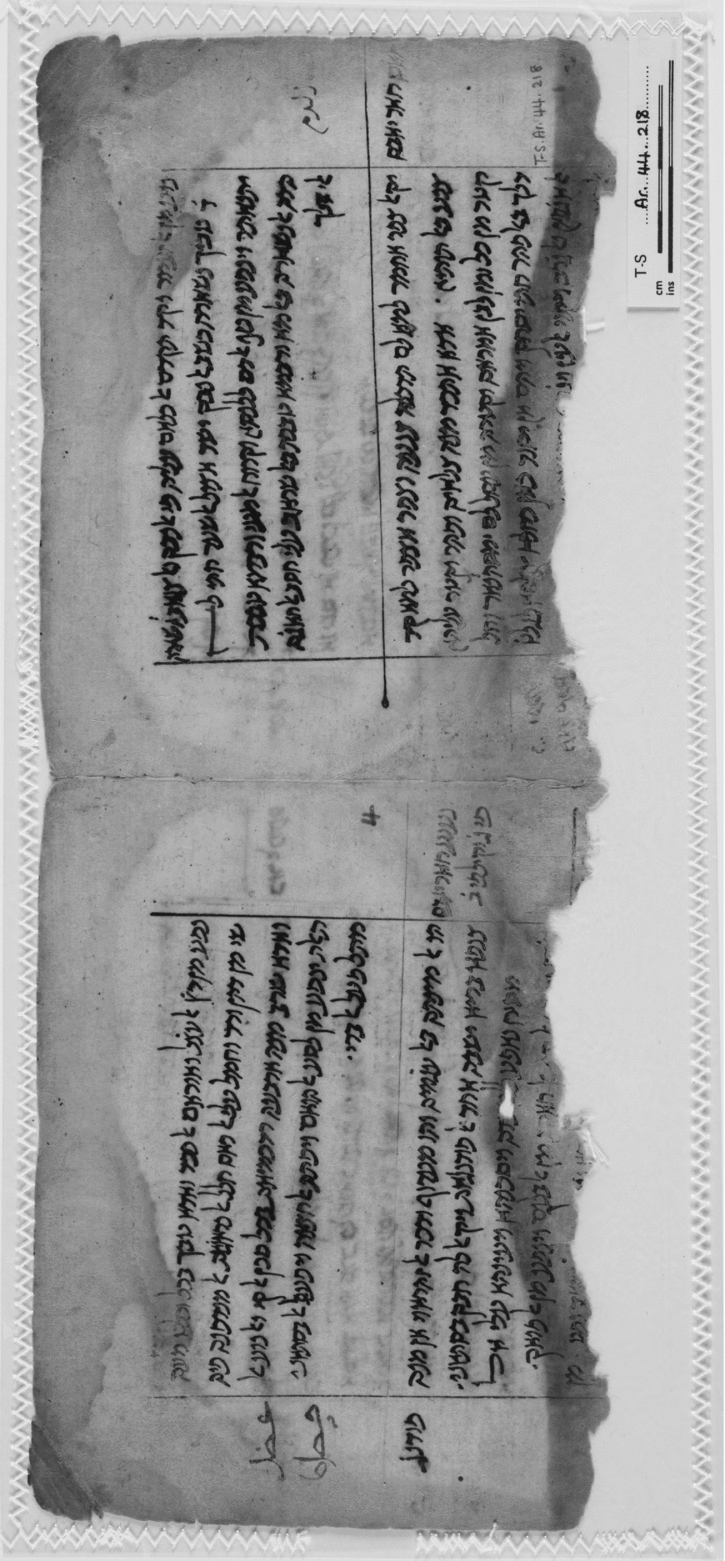
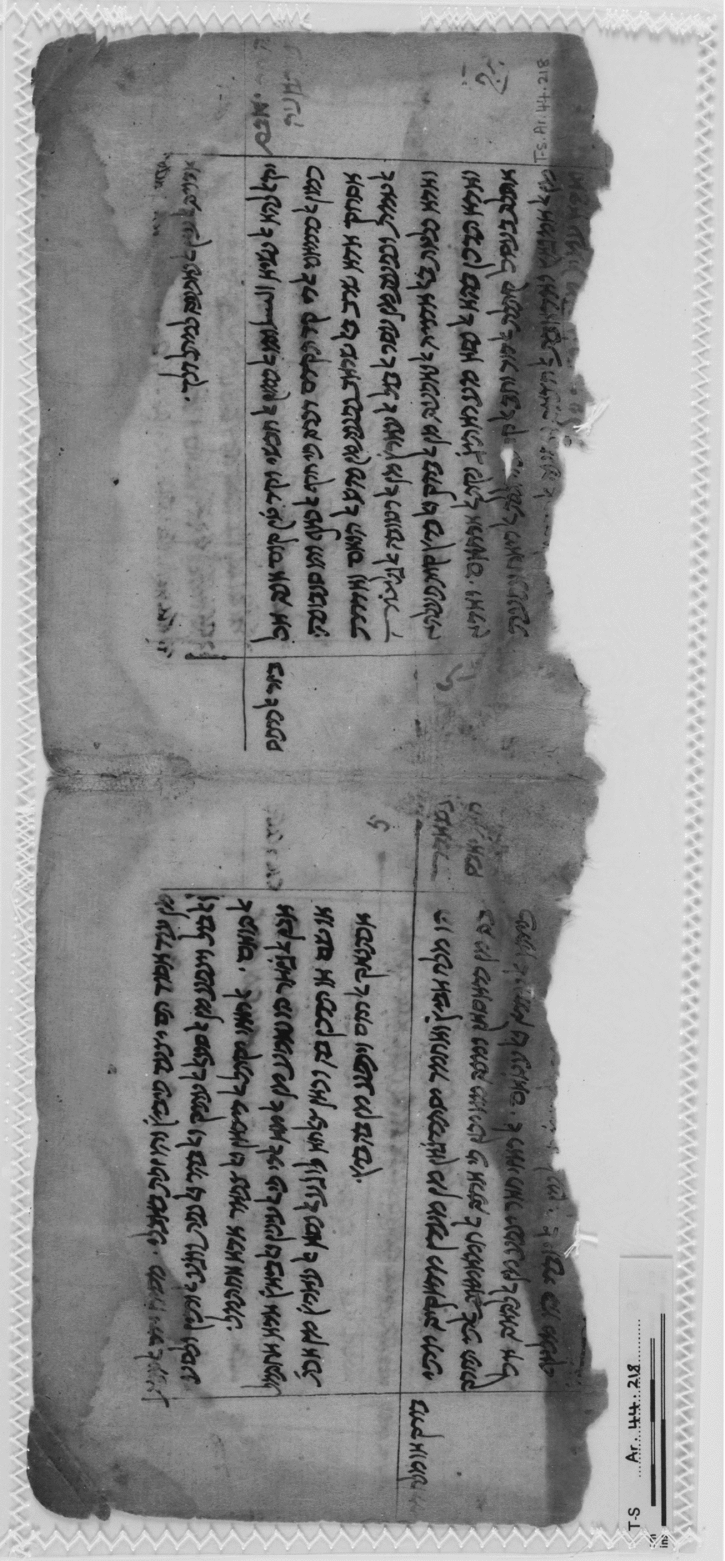
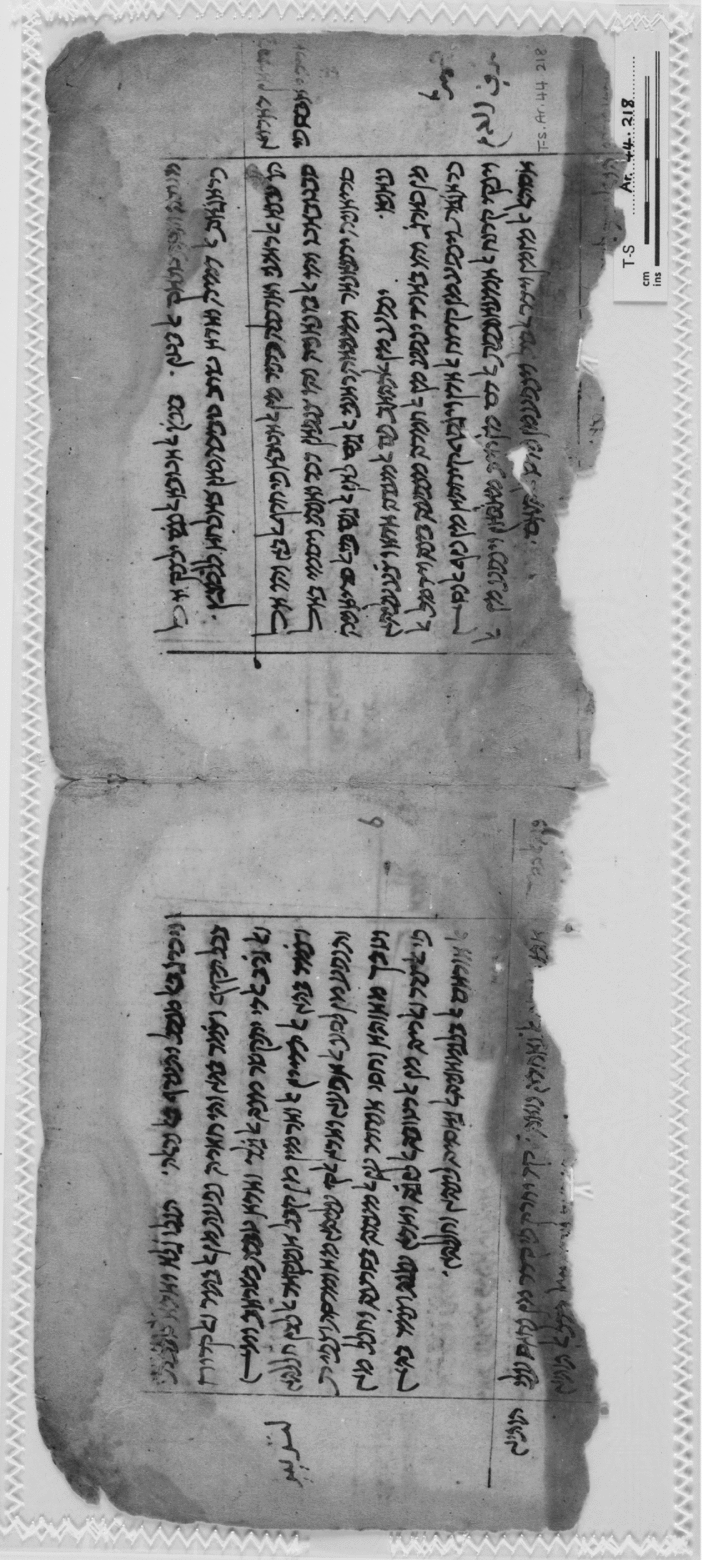
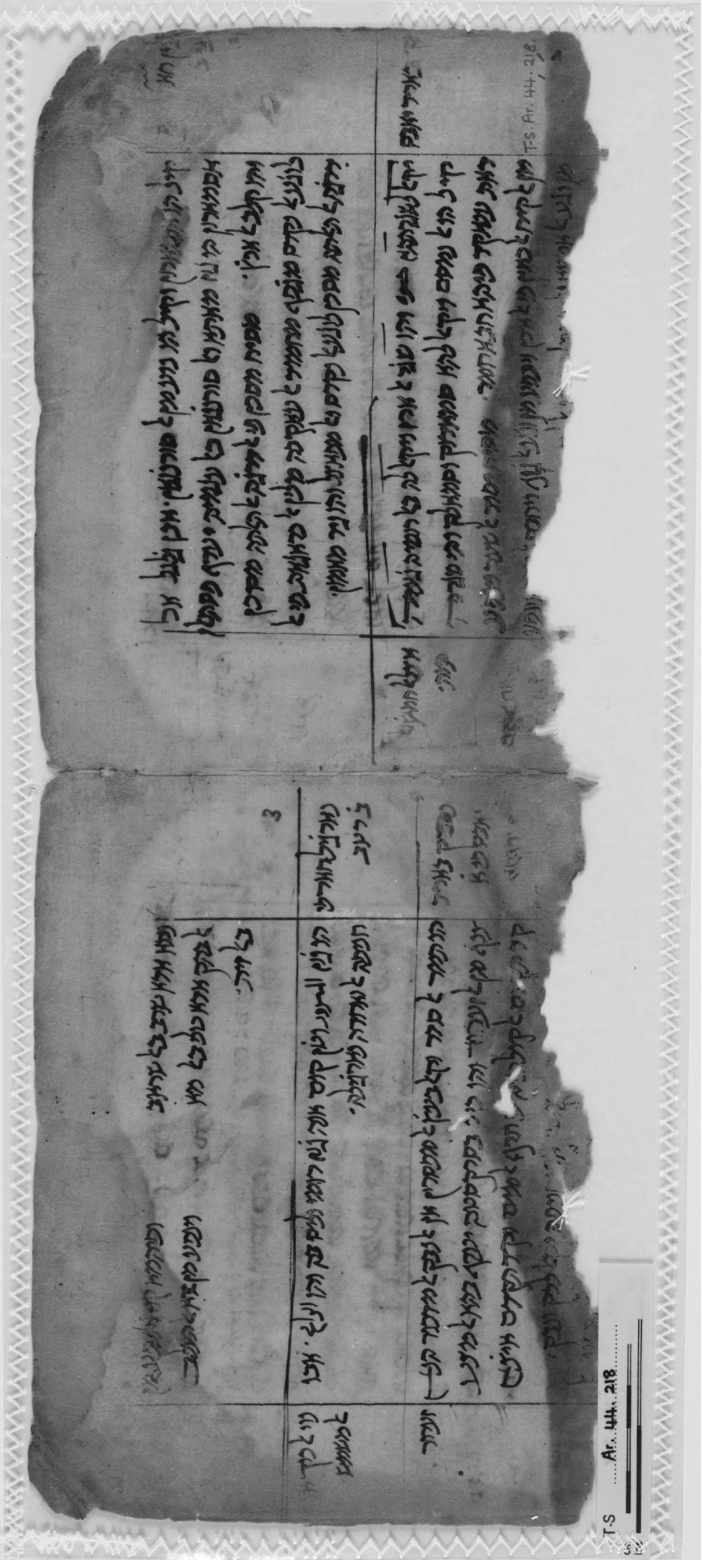
The reconstruction of the library of Eastern medieval Jewish scholars and medical practitioners according to the Cairo Genizah is a long-term project. In the course of the work a Judaeo-Arabic fragment of a unique tabular medical book by Ibn Biklārish was identified by us (T-S Ar.44.218).
The fragment is unique in several respects, particularly (a) very few medieval Arabic tabular medical works are known, (b) only a few works by Andalusian Jewish authors of the late eleventh or early twelfth-century have been found in the Genizah so far,Footnote 1 (c) only one other Judaeo-Arabic fragment of Ibn Biklārish's Kitāb al-Mustaʿīnī is known to date.Footnote 2
Sparse biographical details exist about the author of the book, Yūsuf Ibn Isḥāq Ibn Biklārish al-Isrāʾīlī. He was a Jewish physician born in Saragossa, and he practised medicine around the turn of the eleventh century. He was court physician to the Hūd dynasty of rulers in Spain. These details are known from Ibn Abī Uṣaybiʿa's book.Footnote 3
Ibn Biklārish wrote his book of medical simples for Abū Jaʿfar Aḥmad II al-Mustaʿīn bi-llāh (ruled Saragossa 1085–1109) and the book's title, Kitāb al-Mustaʿīnī, is in honour of the ruler. This work is unique because it is the only known Spanish (Andalusian) medical book written in tabular format and it is the only tabular medical book by a Jewish author. Ibn Biklārish's book offers no intimation of his being a Jew, unlike the writings of other Jewish physicians such as Iṣḥāq al-Isrāʾīlī, Maimonides, and many more.Footnote 4 Wasserstein argues that Ibn Biklārish was “a Jew who is not perhaps all that Jewish”, since if he were he would have been mentioned in the sources that recorded the noble members of the Jewish community in Andalusia.Footnote 5 Savage-Smith speculated that being a Jew was the reason Ibn Biklārish's book was not popular.Footnote 6
In any case, tabular medical books are rare and of a singular kind, especially in the field of medicine. Haddad surveyed medieval Arabic tabular medical works and mentions four, not counting Ibn Biklārish's book:Footnote 7
1. Ibn Jazla – Kitāb taqwīm al-ʾabdān Footnote 8
2. Ibn Buṭlān – Kitāb taqwīm al-ṣiḥḥa [fī quwā al-ʾaghdhiya wa-dafʿ maḍārrihā] Footnote 9
3. Ibn al-ʿalāʾī – Taqwīm al-ʾadwiya al-mufrada Footnote 10
4. al-Tiflīsī – Taqwīm al-ʾadwiya Footnote 11
Until lately four manuscripts of Ibn Biklārish's Kitāb al-Mustaʿīnī were known: Rabat 481; Leiden 1339; Napoli – Italian catalogue 237, no. 96,Footnote 12 and Madrid 5009.Footnote 13 However, in the last few years more manuscripts were revealed, and one of special importance is that found in the Arcadian Library.Footnote 14 We acquired a microfilm of the Madrid manuscript and used it to edit our fragment (T-S Ar.44.218); it is in good condition and comparably easy to read.
Isaacs in his catalogue of medical fragments described our fragments as “Lexicon of materia medica, Judaeo-Arabic and a few Arabic words; Oriental semi-cursive script; tabulated; paper; 7 leaves (3 bifolia); mutilated and stained; 17 × 35.2; 13.9 × 18.1; 9–11 lines; Simples; their actions and uses; alphabetical arrangement including the end of the letter Mīm and the beginning of the letter Nūn”.Footnote 15
We identified this fragment as part of Ibn Biklārish's book, which contains several entries beginning with the letters mīm, nūn, and sīn.
The book was well known and most important and useful in the medieval period, but it has never been printed or edited in any language in full to the present day; some passages and the introduction were published by RenaudFootnote 16 and Levey,Footnote 17 both using the Rabat and Leiden manuscripts. As part of her doctoral research, Jöelle Ricordel edited seven chapters of the book [ʾalif to zāy] and translated the text into French; her edition is based on the Madrid manuscript.Footnote 18
The first chapter, including all entries of the first letter (bāb al-hamza) was published recently, also according to the Madrid manuscript, as part of doctoral dissertation of Yaron Serri.Footnote 19 The introduction of the book was published in full, according to Madrid and Naples manuscripts, by LabartaFootnote 20 and was translated into English by Levey and Souryal.Footnote 21
A collection of essays on Kitāb al-Mustaʿīnī has just been published.Footnote 22 It discusses various aspects of Kitāb al-Mustaʿīnī and its author Ibn Biklārish. The book came about as the result of several studies conducted after the finding of probably the most important manuscript of Kitāb al-Mustaʿīnī, in the Arcadian Library. It is the most complete, the most precise, and possibly the earliest and the closest to the original. It might have been copied from the same original, like the Madrid manuscript.Footnote 23
T.S. Ar. 44. 218. dv.

T.S. Ar. 44. 218. dr.

T.S. Ar. 44. 218. ar.

T.S. Ar. 44. 218. av.

T.S. Ar. 44. 218. br.

T.S. Ar. 44. 218. bv.

T.S. Ar. 44. 218. cr.

T.S. Ar. 44. 218. cv.

The Text
By our editing technique each page of text contains the tables as they appear in the Genizah fragment (T-S Ar.44.218) in the original language, Judaeo-Arabic. The English translation follows, and carries notes indicating additions to or corrections of the original text according to the Madrid manuscript or other medical books by authors such as Dioscorides (Arabic edition), al-Isrāʾīlī, Ibn al-Jazzār, Ibn Wāfid, Ibn al-Bayṭār, and others.
Discussion
A. Ibn Biklārish and his book
Our finding of the fragment is chiefly important in that this is the first time that the presence of a rare Spanish medical book has been attested in the Cairo Genizah collection. Moreover, dozens of Genizah fragments have been identified as belonging to medical books, but none was written by a Spanish Jewish author, in Judaeo-Arabic, and tabulated.
One can only speculate about how this book reached Cairo from Spain; and whether it was copied and transliterated in Spain or from an Arabic copy in Egypt. In any event, and from certain reasoning, we are confident that it was transliterated from a manuscript written in Arabic. Our main proof is the non-readable words that the copier could not positively recognise were left in the original Arabic without the diacritics. Other evidence is the copier's frequent misreading of certain words owing to the similarity of the Arabic letters.
The reason why most of the Spanish physicians refrained from writing their original works in tabular forms is not clear. Again we must conjecture: perhaps they thought that such a stenographic method would prevent them from presenting their wide knowledge. On such a narrow platform the work would be deemed nothing but a gimmick, not be as “deep” and fundamental as they desired. In general, books of materia medica should provide the physician with as many solutions and information as possible; naturally, a tabular book is limited and cannot contain such a vast amount of information.
B. The work and its features
-
1. Kitāb al-Mustaʿīnī is the most stenographic and practical work of all tabular dictionaries of materia medica: it consists of only five columns. In some cases, where the table was inadequate, the author adds more information outside the table, above or below it, or even, very rarely, in the left-hand margin.
-
2. In his introduction the author explains the devices for the use of his book, such as his abbreviations and the alphabetical order of the entries. This order was similar to that commonly used in Spain and North Africa at that period, that is, the “Abjad Hawwaz” order with minor modifications.
-
3. Ibn Biklārish sets the entries in each chapter according to the prevalence of the substances: first medicinal plants, these constituting the great majority of the inventory of the medicinal substances; then the substances of animal origin, and finally inorganic substances.
-
4. The number of entries in Ibn Biklārish's book is smaller than usual in other books of materia medica. The author's guidelines in his insertion of the name of an entry are not clear. For example, the entry “nushārat al-nabaq” (sawdust of Christ's thorn jujube) appears separately after the entry “nabaq” (in other books they would appear in the same entry).
-
5. As in other contemporary books of materia medica, the fundamental data of each entry are from the ancient Classical sources, especially Dioscorides and Galen (mostly as direct quotations or aprécis of the information in their books). In a few cases Ibn Biklārish ascribes this information to medieval Arabic sources such as Masīḥ, al-Rāzī, al-Isrāʾīlī, and Ibn al-Jazzār.
C. The manuscript fragment (T-S Ar.44.218) and its uniqueness
1. Technical remarks
a. The original table designed by Ibn Biklārish consists of 5 columns: 1. the name of the drug, 2. its nature and classification, 3. synonyms in several languages, 4. substitutes, 5. benefits and medical uses. In our fragment the copier has reduced them to three columns:
I. He merged the name column (column 1) with the nature and classification column (column 2).
II. He merged the benefits column (column 5) with the synonyms column (column 3); The substitutes column (column 4) remained as it was in the original order.
These changes were apparently to save expensive material (paper), the copier thereby halving the amount needed for copying such a book in its original and usual format. We argue that by doing so the copier was unfaithful to the original text from which he transliterated and copied; one explanation might be that he wished to satisfy his own needs (he copied the book for himself) and not the needs of potential readers or customers. A similar case is the materia medica dictionary that Ibn Sīnā added to the second part of his al-Qānūn. In the introduction to the dictionary Ibn Sīnā describes in great details how he arranged the whole section of the dictionary as one table of seventeen columns. He also notes that the information in some columns was written in coloured ink – to make it easier for the reader in his search for the needed drug.Footnote 24 Still, in all the many Ibn Sīnā ‘s al-Qānūn manuscripts known today around the world such a table, which according to the author himself was part of the original book, is not to be found. The reason seems to be that such table was very hard to copy or almost impossible to include in a book of normal size.
b. The copier did not plan his changes to the table in advance. The evidence for this is that he did not revise the table headings according to their new content.
2. Sloppy copying
a. In a few cases the copier does not complete the sentence: he stops in the middle (e.g., entry “nushārat al-nabaq” (sawdust of Christ's thorn jujube)).
b. In other cases the copier does not copy exactly from the original book by Ibn Biklārish (as in the Madrid manuscript). Instead he summarises, for example, entry nukhālat al-ḥinṭa.
c. The original contains text omitted from the table for various reasons – mainly lack of space. The copier of T-S Ar.44.218 disregards text written in the margins, and the reader is not aware that much information has been left out. Moreover, even the text in the table is summarised according to the copier's judgement, in particular where several identification options for one drug were given in the original (nānkhāh, nārsiyān dārū, naʿnaʿ). Occasionally the copier omitted some words, especially before the end of the line, for example, the entry nushārat al-nabaq.
d. Whenever the copier encountered non-readable Arabic words, in most cases borrowed words in Arabic, he copied it letter by letter in Arabic but without the diacritical marks. In general, diacritical marks in the original Arabic manuscript were seemingly the cause of many mistakes by our copier, for example, when he writes “כיר” instead of “כת’יר”, or “ראזיג” instead of “ראזינג”.
e. Our Genizah fragment seems to have been copied and transliterated from an Arabic text, presumably by a Maghrebian as is the case with the Madrid manuscript. Evidence for this argument may be found in the entry “nushādir”, in which the word “arna” was wrongly copied and transcribed instead of ارفة (ارنة →ارفة); it is known that in North Africa the letter qāf (ق) is written with only one dot above (ف).Footnote 25 Sometimes the copier corrupts words due to wrongly reading the diacritical marking, for example, “כ’ראג’את” instead of “ג’ראחאת” (in this particular example the two words have close medical meanings). Note that such mistakes are known in original Arabic texts as well (e.g., the same mistake can be found here and there in the Arabic translation of Dioscorides).Footnote 26
f. In one rare case, in the entry nushārat al-nabaq, medical information is mistakenly attributed to Dioscorides even though according to our knowledge the true source is Galen. We presume that the reason for that mistake is the similarity of the abbreviations of these two important sources: “جـ” which stands for Galen and “د” which stands for Dioscorides.
g. The copier did not meticulously follow the abbreviations determined by the author: in the entry nānkhāh he writes “ת’אניה” instead of “ב” as Ibn Biklārish determined and wrote in his introduction.
h. Replacement of letters due to the similarities between them: in the entry nammām he writes “רדכמיאת” instead of “דרכמיאת” (ד-ר>); in the entry nānkhāh he writes “אוראך” instead of “אוראד” (ך-ד).
i. In some cases the copier changed the order of the entries: in the Madrid manuscript the entry marārat al-samak (gall of fish) appears before the entry marārat al-ḍabʿ (gall of hyena). The same holds for the entry marārat ʿaqrab al-baḥr (gall of sea scorpion), which is placed before marārat al-sulaḥfā al-baḥriyya (gall of sea turtle). In fact, only the heading and the substitutes belong to the original entry “ʿaqrab al-baḥr”, the rest of the data including the medicine itself and the medical uses are from the entry “al-sulaḥfā al-baḥriyya”. It seems as half of the entry “ʿaqrab al-baḥr” mistakenly dropped by the scribe.
j. In some cases the copier chose to omit whole entries: marārat al-ẓibāʾ (gall of deer), māʾ (water), nushārat al-khashab (sawdust).
3. Textual remarks
a. In two cases the author, Ibn Biklārish, includes information on one drug in more than one entry: both “nabaq” and “nushārat al-nabaq”.
b. In four cases the medical uses are cut off: marārat al-ḍabʿ, marārat al-samak, marārat al-ʿuqāb, nārsiyān dārū. In the entry: nārjīl he does not mention medical uses at all, although some of them are in Madrid manuscript.
c. In three entries the suggestions for identifications are cut off: nānkhāh, nārsiyān dārū, naʿnaʿ
d. In two cases the copier made mistakes that could put a patient's life at risk: the entry nafṭ gives 2 examples: “אלדידאן ואלצפאר” (= worms and ascaris) instead of “אלדידאן אלצגאר” (= little worms); “ברץ” (= leprosy) instead of “צרע” (= epilepsy). In the entry sūranjān: it relieves the pain of gout, it dries, it has good results; whereas in Ibn al-Bayṭār's opinion it has bad results.
e. In several entries information extracted from Dioscorides by Ibn Biklārish himself was attributed wrongly to Arabic sources: Masīḥ (summāq, sirw); al-Isrāʾīlī (nānkhāh).
Conclusions
We presume that our fragment is part of a medical treatise, which was translated from Arabic into Judaeo-Arabic by a non-professional writer probably for his own use.
Since the vast majority of the Genizah's fragments are from the tenth to thirteenth centuries, our fragment is apparently from one of the earliest known versions of Kitāb al-Mustaʿīnī.
The existence of a fragment of Kitāb al-Mustaʿīnī in the Cairo Genizah can teach us about the route of the book's rapid distribution from Spain, where it was written, to Egypt through the Maghreb.
Unlike most of the contributions to the new important book on Ibn Biklārish's Kitāb al-Mustaʿīnī,Footnote 27 our article has focused on the substances themselves, which are the main subject of the book, and not only on technical and philological issues.
Acknowledgments
This research could have not have been conducted without the generous grant of St John's College, Cambridge, which hosted Efraim Lev as an Overseas Visiting Scholar (2003–2004) and the post-doctoral grant from the Israeli Planning and Budgeting Committee of the Council for Higher Education and the Research Authority of the University of Haifa, awarded to Yaron Serri.
The authors express their deepest thanks to Charles Burnett, The Warburg Institute London, Zohar Amar, Bar-Ilan University, and to Leigh Chipman, Hebrew University, Israel, who read an earlier version of this article and made helpful comments.
Lev expresses special thanks to his colleagues at the Taylor-Schechter Genizah Research Unit at Cambridge University Library, who shared with him their enormous knowledge and experience and supported him with helpful remarks, in particular Ben Outhwaite.
The authors are indebted to the Syndicate of Cambridge University Library for permission to publish the Cairo Genizah fragment presented in this article.
Notes and Instruction for Reading the Transcription and Translation
-
1. For the reader's convenience table headings appear only in the first page.
-
2. Missing or unclear text that has been replaced or completed is in brackets [ ].
-
3. The original table created by Ibn Biklārish consists of 5 columns:
1. The name of the drug.
2. Its nature and classification.
3. Synonyms in several languages.
4. Substitutes.
5. Benefits and medical uses.
-
In our fragment the copier reduced them to two tables:
I. He merged the names column (1) with the nature and classification column (2). We set the Judaeo-Arabic names in boldface, and the English translation in italic.
II. He then merged benefits and medical uses column (5) with the synonyms column (3). We set benefits and medical uses in Judaeo-Arabic in boldface, and the English translation in italic. The substitutes column (4) remained as it was in the original order.
-
4. All the drugs named in the text below are assembled in a table at the end.
T-S Ar. 44.218dr1

1Ibn Biklārish, p. 94. Entry Mararat al-samak [= gall of fish] is set before entry Mararat al-ḍabʿ [= gall of hyena].
2al-Fīrūzʾābādī (1995), p. 401.
3Ibn Biklārish: سنة ذكر وسنةأنثى
4Ibn Biklārish: وما لا فلوس له
5On simple drugs of animal source see Contadini (Reference Contadini and Burnett2008), pp. 133–152. On animal galls see especially p. 142.
6al-Fīrūzʾābādī (1995), p. 938.
T-S Ar. 44.218dv7

7Ibn Biklārish, pp. 94–95. Entry Marārat ʿaqrab al-baḥr [= gall of sea scorpion] is set before entry Mararat al-sulaḥfāh al-baḥriyya [= gall of sea turtle].
8Ibn Biklārish: عند انعلاقها يلذعها
9Ibn Biklārish: حدتها. There the text goes on to mention some more medical uses of gall of eagle.
10Ibn Biklārish: وللنجرفا
T-S Ar. 44.218ar(left)11

11Ibn Biklārish, p. 95. Before this, entry Mararat al-ẓibāʾ [= gall of deer] is mentioned, but it was omitted from our Ms.
12Ibn Biklārish: والوترات والرباطات.
13Ibn Biklārish: بان يوخذ في الشتا
14Contadini (Reference Contadini and Burnett2008), p. 142.
T-S Ar. 44.218av(right)15

15Ibn Biklārish, p. 96. Before this, entry al-māʾ [= water] is mentioned, but it was omitted from our Ms.
Here ends the letter mīm. The letter nūn follows.
The letter nūn Substitutes Translation into different Nature and languages classification Benefits, qualities and ways of use
T-S Ar. 44.218cv(left)16

16Ibn Biklārish, pp. 96–97. Before this, the entry Nārmushk [= musk of pomegranate] is mentioned, but it was omitted from our Ms.
17Ibn Biklārish: بالشراب القابض. The rest of the missing sentence is يقطع نزف النسا اذا شرب بالشراب القابض.
18Ibn Biklārish: هو جوز الهند.
19Ibn Biklārish: الرازيانج!.
20

T-S Ar. 44.218cr(right)21

21Ibn Biklārish, p. 97.
22This is how it is written in Ibn Sīnā: نرسيان داروأظن أن فيه تصحيفاً للعرب، وهو برسيان دارو، بالباء لا بالنون، but he says that the correct name is Barsiyān dārū. According to Ibn al-Jazzār (Reference al-Jazzār and al-Qish1998), p. 156, it is a Persian name: Barshiyān dārd – not dārū! al-ʾIshbīlī (Reference al-Khaṭābī1995), p. 212: مرشيان دار
23Ibn al-Jazzār (Reference al-Jazzār and al-Qish1998), p. 156: ويعرف عندنا بإفريقية بالجنجرة وهو الشبطباط. Cf. Ibn al-Bayṭār (Reference al-Bayṭār1935), entry janjar; in entry shabaṭbaṭ the name in Syriac means a stick.
24This word is missing from our Ms. and we added it according to Ibn Biklārish.
25On Syriac words in Ibn Biblārish's book see Khan (Reference Khan and Burnett2008), pp. 95–104.
26The source of all these medical uses is Galen; cf. Ibn al-Jazzār (Reference al-Jazzār and al-Qish1998), p. 165; Ibn al-Bayṭār (Reference al-Bayṭār1935), entry ʿaṣā al-rāʿī.
T-S Ar. 44.218br(left)27

27Ibn Biklārish, p. 97.
28Based on Dioscorides: see Dioscorides (1952–1957); p. 257 (3, 36); idem (Reference Beck2005), p. 197 (3, 38).
29Fūdanj is the collective name for various species of aromatic plants, mainly of the Lamiaceae family; see Lev and Amar (Reference Lev and Amar2008), p. 30.
T-S Ar. 44.218bv(right)30

30Ibn Biklārish, p. 98.
31Ibn al-Jazzār (Reference al-Jazzār and al-Qish1998), p. 138, states that it is its Syrian name, السسا. Ibid., n. 1, the editor comments that it is a non-readable word.
32Ibn al-Jazzār (Reference al-Jazzār and al-Qish1998) and al-Isrāʾīlī (1992): الرطوبات.
33According to Ibn Biklārish: الأوراك; Ibn al-Jazzār (Reference al-Jazzār and al-Qish1998), p. 138: الأوراد; al-Isrāʾīlī (1992): الأورد ة. Ibid., n. 2 indicates that the original text is الأوراد.
34al-ʾIsrāʾīlī (Reference al-Ṣabāh1992), p. 369, with some changes. Most of the text is cited from Dioscorides: see Dioscorides (1952–1957), p. 268 (3, 58).
T-S Ar. 44.218bv(left)35

35Ibn Biklārish, p. 98. Before this, entry Nushārat al-khashab [= sawdust] is mentioned, but it was omitted from our Ms.
36Ibn Biklārish: قفر.
37Ibn Biklārish: الديدان الصغار.
38Ibn Biklārish: العين.
39Ibn Biklārish: واذا احتمل وشم. . . كان صالحا.
40Ibn Biklārish: صرع.
41Ibn Biklārish: مذاقته مالح.
42Ibn Biklārish: ارق. Ibn al-Bayṭār (Reference al-Bayṭār1935), citing al-Ghāfiqī: دخان.
43Ibn Biklārish: العذارا. Ibn al-Bayṭār (Reference al-Bayṭār1935), citing al-Ghāfiqī: الزبل.
44Dioscorides (1952–1957), pp. 77–78 (1, 77); idem, (Reference Beck2005), p. 58 (1, 73).
45Ascaris, an intestinal worm.
46Cf. Ibn al-Bayṭār (Reference al-Bayṭār1935), entry nafṭ.
47This text is already in Dioscorides, long before Ibn al-Jazzār.
T-S Ar. 44.218br(right)48

48Ibn Biklārish, p. 99.
49The text ends here; we completed the rest according to Madrid Ms.
50In Arabic ج [= Galen], i.e., this text is attributed to Galen, not Dioscorides.
51Ibn al-Bayṭār (Reference al-Bayṭār1935), entry nuḥās, attributes this text to al-Ghāfiqī.
T-S Ar. 44.218cr(left)52

52Ibn Biklārish, p. 99.
53Ibn Biklārish: من طين.
54Dioscorides (1952–1957), p. 174 (2, 84); idem (Reference Beck2005), p. 129 (2, 85).
55Dioscorides (Reference Beck2005) adds: and for the colicky.
56Ibn Biklārish: من طين; likewise Dioscorides (1953–1957), p. 106; idem (2005), p. 80 (1, 109) has “in an unfired earthen vessel”.
The letter sīn
T-S Ar. 44.218cv(right)57

57Ibn Biklārish, p. 100.
58Ibn al-Bayṭār (Reference al-Bayṭār1935), entry sūranjān: غير جيد العاقب. In Madrid Ms. the following words are attributed to Ibn al-Jazzār (Reference al-Jazzār and al-Qish1998), except for the words ‘מלין אלכראג’את’.
59Ibn Biklārish: وهو مكرب غير م
60The scribe mistakenly copied first the entry sarw – “יקאל לשג’רתהא והו שג’ר אלארז ויקאל לה באלרומיה ג’עדה”. Once the scribe realised his mistake, he added the delete signs over the text and copied the right text instead.
61Ibn Biklārish: سماقل.
62On the meaning of the term ʿajamiyya in Kitāb al-Mustaʿīnī: see Amieva (Reference Amieva and Burnett2008).
63Even though this text is attributed to Masīḥ, it is Dioscorides’: see Dioscorides (1953–1957), p. 105 (1, 115).
64Ibn Biklārish: التمتم.
T-S Ar. 44.218av(left)65

65Ibn Biklārish, p. 100. It should be mentioned that in our fragment the left column is deleted and a later Hebrew prescription is written there instead.
66This name is used as an example by Amieva (2008), p. 52.
67Although this text is attributed to Masīḥ, it is Dioscorides’: see Ibn al-Bayṭār (Reference al-Bayṭār1935), entry sarw.
68Dioscorides (Reference Beck2005), pp. 58–59 (1, 74): fig.
69Dioscorides (1953–1957), pp. 78–79 (1, 78); idem (Reference Beck2005), pp. 58–59 (1, 74).
70This name is used as an example by Amieva (Reference Amieva and Burnett2008), p. 52.
71Dioscorides (1953–1957), p. 260 (3, 43); idem (Reference Beck2005), pp. 200–201 (3, 45).
T-S Ar. 44.218ar(right)72

72Ibn Biklārish, pp. 100–101.
Glossary of drug names that appear in the manuscript.73

73The drugs’ names are identified mainly on the basis of Lev and Amar (Reference Lev and Amar2008), Bedevian (Reference Bedevian1936), Aḥmad Issa Bey (1930), and Sābūr ibn Sahl (Reference Sahl and Kahl2003).