Nomenclature
- RSQ
-
reconfigurable serial quadrotor
- CoG
-
centre of gravity
- CAD
-
computer-aided design
- PID
-
proportional integral derivative
- LPV
-
linear parameter varying
- LMIs
-
linear matrix inequalities
- CAD
-
computer-aided design
- WOA
-
whale optimisation algorithm
- UAVs
-
unmanned aerial vehicles
- DoF
-
degree of freedom
- LQI
-
linear quadratic integral
- TGB
-
trajectory generation block
- CSB
-
configuration switching block
1.0 Introduction
1.1 Short review
Conventional rigid frame multirotor unmanned aerial vehicles (UAVs) rely on a single, fixed geometric configuration and are widely deployed in both military and civilian applications, including object transportation, infrastructure inspection, search and rescue missions and environmental monitoring [Reference Liu, Xiao, Peng, Zhang, Zhao, Lu and Huang1–Reference Naser, Hashim and Ahmadi5]. Despite their broad adoption, such platforms suffer from intrinsic limitations in terms of mission-specific geometric adaptability [Reference Kocamer, Kose, Sal and Oktay6]. Their fixed structure prevents dynamic modification of the vehicle shape to reduce the effective cross-sectional profile, which is essential for safe navigation in narrow or cluttered environments. In practice, traversing confined spaces often requires substantial vertical clearance and significant manoeuvring distance to generate the acceleration necessary for lift maintenance and to ensure safe deceleration without collision. These manoeuvres typically rely on aggressive vertical reorientation during gap entry, further increasing spatial demands and compromising operational safety. Consequently, rigid multirotors exhibit limited effectiveness in dynamic, cluttered and unstructured environments such as damaged buildings, industrial facilities or disaster response scenarios where both vertical clearance and available manoeuvring space are severely constrained [Reference Ahangar, Ohadi and Khosravi7, Reference Zhang, Zhang and Shi8].
For manipulation and interaction tasks, conventional drones are generally unable to perform aerial manipulation or object handling without integrating additional mechanisms such as robotic arms, suspended cables or grippers. These add-on systems often significantly increase the platform mass, reduce flight endurance, and introduce additional structural and control complexity, while remaining poorly adaptable to objects of varying shapes and sizes [Reference Berra, Mellet, Seisa, Sankaranarayanan, Gamage, Satpute, Ruggiero, Lippiello, Tolu and Fumagalli9, Reference Sun, Wang, Sanalitro, Franchi, Tognon and Alonso-Mora10]. Moreover, the inclusion of such mechanisms amplifies the risk of instability, frequently caused by large offsets between the system’s centre of gravity (CoG) and the reference point assumed in the control allocation model [Reference Housseyn, Yasser and Mohamed11].
To overcome these limitations, reconfigurable drones have emerged in recent years as a promising solution, enabling online adaptation of the vehicle morphology to meet mission-specific constraints [Reference Lou, Wu, Wang, Li, Liu and Sun12–Reference Sugihara, Zhao, Nishio, Okada and Inaba15]. While such architectures significantly enhance manoeuvrability, accessibility and task versatility, they also introduce new challenges. In particular, geometric reconfiguration leads to time-varying inertial properties, nonlinear coupling effects and complex aerodynamic interactions that must be accurately captured to ensure reliable control and safe operation. Consequently, precise dynamic modeling that accounts for both geometric and inertial variations, as well as configuration-dependent aerodynamic effects, becomes a critical prerequisite for control synthesis and experimental validation of reconfigurable aerial robots.
1.2 Motivations and related works
To overcome the limitations of rigid multirotor platforms, a new class of aerial robots, referred to as reconfigurable drones, has recently emerged. These systems can dynamically adjust their structural configuration and propulsion modes in real time to better accommodate mission requirements. Such adaptability significantly enhances their ability to navigate confined spaces and to interact more effectively with complex environments, offering a substantial advantage over traditional rigid structure drones [Reference Daadi, Bouzid, Araar, Derrouaoui, Dahmani and Dellali16]. Most reconfigurable drones developed for exploration or operation in indoor and confined environments are typically small scale platforms. They generally have a tip-to-tip size below 260 mm, a total mass of about 1.2 kg and limited payload capabilities, often restricted to lightweight visual sensing devices such as onboard cameras [Reference Wu, Huang and Zhang17].
Among existing designs, the deformable drone proposed in Ref. [Reference Zhao, Luo, Deng and Shen18] improves obstacle surmounting capabilities through a scissor-like foldable structure in the vertical plane, enabling dynamic volume adjustment. However, its ability to navigate narrow spaces is limited to widths smaller than 316 mm, and it does not support object-carrying functionality. Another line of work [Reference Falanga, Kleber, Mintchev, Floreano and Scaramuzza19–Reference Wang, Liu and Zhang21] introduced morphing quadrotors with foldable arms actuated independently in the horizontal plane, with a weight of 1.2 kg. While these architectures improve compactness, their reconfiguration range remains constrained by physical limits to avoid propeller overlap, with a minimum width of 52 cm. To address this issue, Hu et al. [Reference Hu, Pei, Shi and Tang22] proposed a configuration with rotor arms placed on different planes, allowing propeller overlap. However, this design reduces the effective lift generated by the overlapping rotors [Reference Jayakumar, Subramaniam, Stanislaus Arputharaj, Solaiappan, Rajendran, Lee, Madasamy, Gnanasekaran, Karuppasamy and Raja23]. The MorphoCopter in Ref. [Reference Modi, Su, Liang and Zheng24] was introduced to overcome the limitations of earlier morphing drones. It operates as a standard X-quadcopter during normal flight and can continuously fold in-plane around a central pivot to reach a stacked bicopter configuration, while maintaining full controllability in position and yaw. The prototype can reduce its width from 447 mm to 138 mm (nearly 70% reduction) within a few seconds. Compared to earlier designs [Reference Bai and Gururajan25, Reference Desbiez, Expert, Boyron, Diperi, Viollet and Ruffier26], which only allow partial folding angles [21
 $ ^{\circ }$
to 27
 $^{\circ }$
] without achieving a fully stacked configuration, the MorphoCopter provides superior compactness and adaptability.
Brown et al. [Reference Brown, Clarke, Akbari, Jovan, Marafie, Marjanovic, Bernardini, Richardson and Watson27] proposed a drone for subterranean exploration and inspection, featuring pivotable arms capable of folding and unfolding in the vertical plane. This design enables deployment through boreholes as small as 150 mm in diameter, making it suitable for pipeline and underground infrastructure inspection. Similarly, ballistically launched reconfigurable drones have been proposed in Ref. [Reference Bouman, Nadan, Anderson, Pastor, Izraelevitz, Burdick and Kennedy28]. These systems are initially deployed in a compact configuration, with rotor arms passively folded using spring-based mechanisms. Upon launch, the arms rapidly unfold into a conventional X-shaped configuration suitable for stable flight, transitioning from a compact form factor of approximately 150 mm to an unfolded rotor-to-rotor diameter of about 580 mm.
Other reconfigurable aerial robots focus on both navigation in confined spaces and physical interaction with the environment. The retractable ring-shaped quadrotor [Reference Wu, Yang, Wang, Wang, Cao, Xu and Gao29] is capable of dynamically adjusting its physical dimensions in both length and width from 43 to 32 cm. It integrates a whole-body aerial transportation strategy, enabling the grasping and transportation of objects with various shapes without requiring external robotic arms. The platform can carry a payload of up to 150 g with a maximum object size of 19
 $\times$
12 cm. Similarly, the quadrotor design presented in Refs [Reference Xu, De, Yu, Hu, Liu and Wang30, Reference Yeh, Xu and Han31] is inspired by the morphology of an eagle claw during prey capture. Its arms can fold vertically to enable dynamic grasping, mimicking the transition of the eagle claw from an open to a closed state. This motion is achieved through the rotation of a central servo motor and the coordinated movement of 20 links. The platform can carry a payload of up to 100 g and is capable of penetrating confined spaces with a minimum width of 32 cm, allowing it to handle objects of unknown size and navigate narrow environments, thereby enhancing versatility in aerial manipulation tasks. Zhao et al. [Reference Zhao, Anzai, Shi, Chen, Okada and Inaba32] introduced DRAGON, a reconfigurable aerial robot that dynamically adjusts its morphology through snake-like articulated motions. This morphing capability enables the platform to traverse narrow openings at low velocities, reducing collision risks. The system was designed for confined apertures, with each link having a diameter of 424 mm and a total mass of 7.38 kg. Similarly, the author in Ref. [Reference Zhao, Anzai and Nishio33] proposed SPIDAR, a quadruped-inspired aerial robot combining terrestrial locomotion with flight. Despite their versatility, these systems suffer from high mechanical complexity and increased weight due to the large number of actuators, leading to higher energy consumption and reduced autonomy.
The concept of multilink reconfigurable drones was introduced by Zhao et al. [Reference Zhao, Kawasaki, Okada and Inaba34], who proposed a transformable aerial robot designed for confined spaces and disaster environments. In this architecture, the autopilot and avionics are integrated within the articulated arms, enabling in-flight shape changes. Consequently, reconfiguration modifies the orientation of the body-fixed reference frame, since variations in arm angles directly affect the principal motion axes of the vehicle. During motion planning, each articulation configuration corresponds to a distinct set of effective motion axes, which must be considered when generating feasible trajectories. Moreover, the multilink structure influences manipulation capabilities: the available grasping volume is limited, and payload handling relies mainly on mechanical constraints rather than active sensing and control. This platform has a total mass of 4.3 kg, with 2.05 kg allocated to the gripping rings, enabling payloads up to approximately 450 g without active sensing. Anzai et al. [Reference Anzai, Zhao, Nozawa, Shi, Okada and Inaba35] later extended this concept by developing a reconfigurable system with a ring-like structure capable of expanding or contracting to securely envelop objects. This approach simplifies aerial manipulation and reduces the need for multi-drone cooperation, thus minimising operational complexity and collision risks [Reference de Wit, van den Brink and Moghadasi36]. However, this platform is primarily designed for transporting heavier payloads and is not intended for navigation in narrow or cluttered environments.
To overcome the limitations of previously reported designs, this paper proposes a multifunctional reconfigurable concept that supports both narrow-space exploration and aerial manipulation. Unlike the deformable and foldable multirotors reported in Refs [Reference Zhao, Luo, Deng and Shen18–Reference Hu, Pei, Shi and Tang22, Reference Modi, Su, Liang and Zheng24–Reference Bouman, Nadan, Anderson, Pastor, Izraelevitz, Burdick and Kennedy28], which mainly achieve obstacle penetration by reducing their profile width and do not provide active aerial manipulation or payload transportation capabilities, the proposed system integrates both functionalities within a single reconfigurable architecture. In contrast, transformable aerial systems equipped with grasping or transportation mechanisms [Reference Wu, Yang, Wang, Wang, Cao, Xu and Gao29–Reference Yeh, Xu and Han31, Reference Zhao, Kawasaki, Okada and Inaba34] do enable object handling and narrow-space traversal; however, their payload capacity and manipulation volume remain limited due to the large number of actuators and heavy integrated grasping mechanisms, which significantly increase structural mass and reduce usable payload. The proposed architecture introduces an intermediate base between the arms, which substantially increases the grasping volume and enables the handling of larger objects while maintaining the payload close to the CoG. This design prevents excessive load concentration on individual rotors, thereby avoiding actuator saturation and degradation of attitude tracking performance. As a result, the payload is more evenly distributed across the four rotors. Furthermore, the intermediate base accommodates the onboard instrumentation and flight controller, rather than mounting them on the arms. This key feature eliminates the need to redefine the body-fixed reference frame after each reconfiguration, thereby simplifying motion planning and control by preserving a constant body orientation relative to the base.
In addition, a lightweight grasping mechanism based on rings and force sensors is proposed. The force sensors provide feedback on the applied grasping force, enabling control of the torques exerted on the joints and ensuring that the object does not slip during grasping and transportation. The system is also equipped with wheels to allow ground reconfiguration and object pickup from the floor. The structure is mainly built from carbon fibre and aluminium to ensure low weight and high stiffness (see Fig. 1). Overall, the proposed drone significantly reduces structural weight and can penetrate narrow spaces at low speeds, exploiting its horizontal-plane reconfiguration capability to reduce its profile width and minimise collision risks with the environment.
Capabilities of the RSQ to traversing narrow spaces, grasping and transporting objects.

Several studies on the modeling of reconfigurable aerial robots [Reference Falanga, Kleber, Mintchev, Floreano and Scaramuzza19–Reference Wang, Liu and Zhang21, Reference Zhao, Kawasaki, Okada and Inaba34, Reference Anzai, Zhao, Nozawa, Shi, Okada and Inaba35, Reference Shi, Zhao, Murooka, Okada and Inaba37] extend simplified linear models originally developed for conventional quadrotors. These approaches typically assume a diagonal inertia matrix aligned with the principal axes of motion, whose orientation changes with each geometric configuration. Consequently, the body-fixed reference frame continuously reorients during reconfiguration, which complicates control design and increases mission-planning complexity due to the time-varying alignment of the motion axes. Moreover, these simplified models commonly neglect important dynamic effects, such as aerodynamic drag, gyroscopic moments and the time derivatives of the inertia tensor, which can significantly affect system behaviour during reconfiguration [Reference Daadi, Bouzid, Araar, Derrouaoui, Djekrif and Boukabour38]. In addition, inertial parameters such as the inertia matrix and the CoG position are often estimated using coarse geometric approximations. Many structural components are either neglected or modeled as simple primitives (e.g. batteries approximated as rectangular blocks and rotors represented as cylinders). While these simplifications reduce modeling complexity, they introduce inaccuracies in mass distribution and inertial coupling, especially for morphologically adaptive platforms.
In contrast, the present work adopts a geometry-driven modeling approach, where inertial parameters are directly estimated from component-level properties extracted from a high-fidelity computer-aided design (CAD) model developed in SolidWorks. This method accurately captures the actual mass distribution, dimensions and material properties of each structural element, enabling realistic and precise estimation of both the inertia matrix and the CoG position. These parameters are updated in real time to maintain model fidelity and control performance for the reconfigurable serial quadrotor (RSQ). The proposed nonlinear dynamic model explicitly accounts for geometry-dependent variations of the inertia matrix and its derivatives, gyroscopic effects, changes in the control allocation matrix, actuator limitations and aerodynamic drag whose inclusion significantly improves model accuracy [Reference Nesij, Yahya and Elif Albina39]. Neglecting these effects would lead to substantial modeling errors and degraded control performance, especially during reconfiguration.
Regarding control, a few control strategies have been tested on serial reconfigurable drones, notably the linear quadratic integral (LQI) controller in Refs. [Reference Zhao, Kawasaki, Okada and Inaba34, Reference Anzai, Zhao, Nozawa, Shi, Okada and Inaba35], which is based on linearised models and neglect aerodynamic drag, gyroscopic effects, as well as the time derivatives of the inertial parameters during reconfiguration. In contrast, our control scheme explicitly addresses the strong coupling present in the RSQ dynamics. The controller gains are optimised using the whale optimisation algorithm (WOA), enabling effective attitude regulation across multiple configurations.
To evaluate performance and tune controller parameters without risking damage to the environment, various drone test benches have been developed, ranging from 1 degree of freedom (DoF) to 6DoF. An overview of these systems is provided in Refs [Reference Hassani, Mansouri and Ahaitouf40, Reference Jatsun, Emelyanova and Leon41]. However, no test bench specifically designed for reconfigurable serial drones capable of accommodating configuration changes during testing has been reported in the literature. Therefore, a dedicated 3-DoF attitude test bench for the RSQ is proposed in this work. Our contributions are summarised as follows:
-
• We propose a multifunctional design of an RSQ featuring a central base that increases the grasping volume and prevents unintended reorientation of the body frame during morphological changes. The arms are equipped with lightweight force-sensing rods, enabling object grasping and transportation around the CoG without additional manipulators. The platform also integrates wheels to enable ground reconfiguration and object pickup from the floor.
-
• We develop analytical equations that enable real-time updates of the dynamic model for both simulation and control, while also allowing the analysis of inertial variations and CoG shifts. These equations are validated against high-fidelity CAD models generated in SolidWorks across multiple configurations;
-
• We develop a comprehensive nonlinear dynamic model that explicitly accounts for configuration-dependent inertial properties, control allocation, aerodynamic drag, and gyroscopic effects. To address the strong coupling induced by in-flight reconfiguration, a dedicated control scheme is proposed, and its closed-loop stability is analysed within a linear parameter varying (LPV) framework, providing sufficient conditions for quadratic stability under time-varying inertia.
-
• We propose an analytical formulation to estimate the aerodynamic drag force as a function of the RSQ configuration and its translational velocity.
Moreover, the controller gains are optimally tuned using the WOA to ensure accurate trajectory tracking across different configurations. The proposed control strategy is experimentally validated on a custom-built test bench, demonstrating consistent attitude tracking under multiple reconfiguration scenarios.
Outline
The remainder of this paper is structured as follows. Section 2 presents the mechanical design of the proposed RSQ and analyses the variations in inertial parameters across different configurations. Section 3 formulates a nonlinear dynamic model to accurately capture the system’s behaviour under structural transformations. In Section 4, the control scheme is detailed, and simulation results are presented to demonstrate the performance of the proposed approach. Section 5 validates the system through experimental results using a dedicated test bench.
Notation
Throughout this paper, we adopt the following notations. We denote by
 $ \mathbb{R}$
,
 $ {\mathbb{R}}^{+}$
,
 $ {\mathbb{R}}^{n}$
, and
 $ {\mathbb{R}}^{n\times n}$
the set of real numbers, positive real numbers, vectors and matrices, respectively.
 $ {R}_{I}$
and
 $ {R}_{G}$
represent the inertial and body (CoG) frames, while
 $ {O}_{\beta }$
and
 $ {O}_{ij}$
denote the reference frames attached to the central base and to arm
 $ \left(ij\right)$
. The vectors
 $\overrightarrow{{O}_{\beta }G}\in {\mathbb{R}}^{3\times 1}$
and
 $\overrightarrow{{{O}_{\beta }}{{G}_{ij}}}\in {\mathbb{R}}^{3\times 1}$
describe the positions of the global CoG and of arm
 $ \left(ij\right)$
relative to
 $ {O}_{\beta }$
.
 $ {M}_{\beta }$
and
 $ {M}_{ij}$
refer to the masses of the base and arms, with
 $ M=M_{\beta }+\sum {M}_{ij}$
the total mass.
 $ I\left({\xi }_{ij}\right)$
is the inertia matrix of the RSQ depending on the reconfiguration angles
 $ {\xi }_{ij}$
, and
 $ R\left({\xi }_{ij}\right)\in SO\left(3\right)$
is the associated rotation matrix. The translational velocity in
 $ {R}_{I}$
is denoted by
 $ {V\!}_{{R}_{I}}$
, while
 $ \Omega ={[p\,q\,r]}^{T}$
represents the angular velocity in
 $ {R}_{G}$
, and
 $ [\phi\, \theta\, \psi {]}^{T}$
are the Euler angles.
 $ {F\!}_{{R}_{I}}$
and
 $ {F}_{{P}_{{R}_{G}}}$
correspond to the external and propulsive forces, whereas
 $ {\tau }_{ij}$
and
 $ {M}_{gyr}$
denote the aerodynamic drag torques and gyroscopic effects. Finally,
 $ {K}_{{\beta }_{x}},{K}_{{\beta }_{y}},{K}_{{\beta }_{z}}$
and
 $ {K}_{ar{m}_{ij,x,y,z}}\left(\xi \right)$
are the drag coefficients of the base and arms, respectively.
2.0 Design and geometric modeling of the RSQ
The design proposed in this work is illustrated in Fig. 2. It consists of a central base with two arms on each side, interconnected via servo motors and aluminium junctions. Unlike the serial drones presented in Refs [Reference Zhao, Kawasaki, Okada and Inaba34, Reference Anzai, Zhao, Nozawa, Shi, Okada and Inaba35], which feature only three joints and four arms, our design incorporates an additional central base and an extra joint. This enhancement enables a wider range of configurations and greater flexibility. Furthermore, the additional joint decouples the central base from the arms, preventing unwanted autopilot motion caused by arm angle variations and thereby improving guidance precision.
Design of the RSQ.

The central base serves as a mounting platform for the autopilot and other avionics, such as telemetry and GPS. It consists of two identical parallel carbon fibre plates, each connected to the arms via a Dynamixel AX-12A servo motor. The arms, made of hollow carbon fibre tubes, route and organise the internal wiring of the structure. Each arm carries a 10
 $ \times $
4.5" propeller mounted on a brushless Eflite Park 480 motor, capable of generating up to 12 N of thrust per rotor.
Each arm is additionally equipped with a simple carbon fibre grasping rod, with a force-sensitive resistor (FSR) installed at its tip. This configuration allows the drone to grasp, lift and transport objects while keeping the payload near the CoG to maintain system stability. The operation is performed via angular control of the servo motors located adjacent to the central base until contact with the object is made. Then, the servo motors at the extremity arms are actuated in torque mode to enclose the object. Once the target gripping force is reached, the drone maintains this configuration, allowing safe transport of the object. Unlike the designs in Refs [Reference Zhao, Kawasaki, Okada and Inaba34, Reference Anzai, Zhao, Nozawa, Shi, Okada and Inaba35], which rely on heavy rings for object manipulation and do not provide feedback on gripping force, our design optimises both weight and control precision.
Each end arm is also equipped with a battery, offering multiple advantages. This placement ensures symmetry, keeping the CoG near the geometric centre. Consequently, the rotors evenly compensate for weight distribution, reducing the risk of rotor saturation. Additionally, all arms are fitted with wheels that serve as a landing platform, enabling the drone to reconfigure its structure while on the ground. The servo motors allow precise control of joint articulation between the arms, either in terms of position or torque. Real-time feedback on angular position and torque is crucial for computing the inertia matrix, the control allocation matrix and the CoG position.
The combination of the proposed design and selected materials significantly improves payload capacity. The drone weighs 1.912 kg and can carry a payload of up to 1 kg, compared to the 0.5 kg capacity of the drones in Refs [Reference Zhao, Kawasaki, Okada and Inaba34, Reference Anzai, Zhao, Nozawa, Shi, Okada and Inaba35]. Payload capacity can be further increased by incorporating intermediate arms, leveraging the modular nature of the design. For detailed information about the weight distribution across components, see Table 1.
Dimensions and weight of RSQ components

Table 1 Long description
A table comparing dimensions and weights of RSQ components. The table has four rows and three columns. The column headers are Component, Dimension (cm), and Weight (g). The row labels and values are as follows: Row 1: Middle arm (length), 44, 354. Row 2: End arm (length), 40, 476. Row 3: Arm (width), 25.5, -. Row 4: Central base (length), 16, 252.
For rigid-structure drones, the geometric and inertial parameters need to be determined only once due to their fixed morphology [Reference Daadi, Bouzid, Araar, Derrouaoui, Dahmani and Dellali42]. In contrast, for an RSQ, these parameters evolve continuously as the structure undergoes reconfiguration. This section therefore introduces the analytical equations developed to compute the inertial parameters in real time. These computations are essential for determining the position of the CoG, the inertia matrix, their derivatives and the control allocation matrix at any given instant as a function of the arm rotation angles
 $ {\xi }_{ij}$
, with
 $ i,j\in \mathrm{1,2}$
(see Fig. 3). The validity of the proposed analytical approach is verified through comparison with results obtained from SolidWorks-based CAD simulations. Finally, a comprehensive analysis of parameter variations across all possible configurations is presented.
References frames associated with the RSQ.

Each arm is associated with a reference frame
 $ {R}_{ij}$
with origin
 $ {O}_{ij}$
, located at the centre of the arm and defined by an orthogonal coordinate system
 $({\overrightarrow{X}}_{ij},{\overrightarrow{Y}}_{ij},{\overrightarrow{Z}}_{ij})$
, where
 ${\overrightarrow{X}}_{ij}$
is aligned parallel to the tube. The index
 $ i=1$
corresponds to the rotors on the left side of the central base, while
 $ i=2$
refers to those on the right. The index
 $ j$
specifies the relative position of each rotor with respect to the central base. Additionally, the central base is defined by its own frame
 $ {R}_{\beta }$
, with origin
 $ {O}_{\beta }$
, which coincides with the centre of the autopilot. This frame follows an orthogonal coordinate system
 $({\overrightarrow{X}}_{\beta },{\overrightarrow{Y}}_{\beta },{\overrightarrow{Z}}_{\beta })$
, as illustrated in Fig. 3. The body frame
 $ {R}_{G}$
, associated with the CoG, has its origin at
 $ {O}_{G}$
, whose position varies depending on the structure’s configuration. However, it remains consistently aligned with the base frame
 $ {R}_{\beta }$
, ensuring coherent angular measurements. Finally, an inertial frame
 $ {R}_{I}$
is introduced with an origin
 $ {O}_{I}$
and an orthogonal coordinate system
 $({\overrightarrow{X}}_{I},{\overrightarrow{Y}}_{I},{\overrightarrow{Z}}_{I})$
. All these frames are depicted in Fig. 3.
2.1 Analytical computation of inertia matrix and CoG coordinates
To simplify the analytical modeling of the inertia matrix and CoG in terms of joint angles, the following assumptions are considered:
-
• The mechanical components of the RSQ are assumed to be rigid.
-
• The four joints are modeled as ideal pivot joints.
-
• All designed mechanical components are assumed to have a uniformly distributed mass.
-
• Some components such as cables, screws and nuts are considered as additional mass, uniformly distributed across the four arms.
2.1.1 Calculation of the CoG
The CoG of the RSQ is calculated from the individual
 $ Co{G}_{s}$
of its main components: the end arms, the middle arms and the central base. Since these components are assumed to be rigid bodies, their individual CoG
 $_{s}$
, denoted as
 $ {G}_{ij}$
for the arms and
 $ {G}_{\beta }$
for the central base, remain constant with respect to the local frame. Their values are obtained from SolidWorks based on the CAD model in Fig. 2, where the precise geometry and weight of each component is considered. The position of each arm’s frame relative to the base frame is computed as:
 \begin{align} \left\{\begin{array}{l}\overrightarrow{{O}_{\beta }{O}_{\beta }}=\left[\begin{array}{l}0\\ 0\\ 0\end{array}\right]\!,\,\,\, \overrightarrow{{O}_{\beta }{O}_{11}}=\left[\begin{array}{l}-\frac{{L}_{s}}{2}-\frac{L}{2}\mathrm{c}\mathrm{o}\mathrm{s}\left({\xi }_{11}\right)\\[5pt] -\frac{L}{2}\mathrm{s}\mathrm{i}\mathrm{n}\left({\xi }_{11}\right)\\ 0\end{array}\right]\!,\,\,\, \overrightarrow{{O}_{\beta }{O}_{12}}=\left[\begin{array}{l}-\frac{{L}_{s}}{2}-L\mathrm{c}\mathrm{o}\mathrm{s}\left({\xi }_{11}\right)-\frac{L}{2}\mathrm{c}\mathrm{o}\mathrm{s}\big(\sum _{j=1}^{2} {\xi }_{1j}\big)\\[6pt] -L\mathrm{s}\mathrm{i}\mathrm{n}\left({\xi }_{11}\right)-\frac{L}{2}\mathrm{s}\mathrm{i}\mathrm{n}\big(\sum _{j=1}^{2} {\xi }_{1j}\big)\\ 0\end{array}\right]\\[20pt] \overrightarrow{{O}_{\beta }{O}_{21}}=\left[\begin{array}{l}\frac{{L}_{s}}{2}+\frac{L}{2}\mathrm{c}\mathrm{o}\mathrm{s}\left({\xi }_{21}\right)\\[5pt] -\frac{L}{2}\mathrm{s}\mathrm{i}\mathrm{n}\left({\xi }_{21}\right)\\ 0\end{array}\right]\!,\quad \overrightarrow{{O}_{\beta }{O}_{22}}=\left[\begin{array}{l}+\frac{{L}_{s}}{2}+L\mathrm{c}\mathrm{o}\mathrm{s}\left({\xi }_{21}\right)+\frac{L}{2}\mathrm{c}\mathrm{o}\mathrm{s}\big(\sum _{j=1}^{2} {\xi }_{2j}\big)\\[6pt] -L\mathrm{s}\mathrm{i}\mathrm{n}\left({\xi }_{21}\right)-\frac{L}{2}\mathrm{s}\mathrm{i}\mathrm{n}\big(\sum _{j=1}^{2} {\xi }_{2j}\big)\\ 0\end{array}\right]\end{array}\right.\end{align}
where
 $\overrightarrow{{O}_{\beta }{O}_{ij}}\in {\mathbb{R}}^{3\times 1}$
denotes the position vector of the arm frame
 $ {O}_{ij}$
relative to the base frame
 $ {O}_{\beta }$
, while
 $ L$
and
 $ {L}_{s}$
represent the arm length and the central base length, respectively.
The CoG of the RSQ is computed as the centroid of the CoG of the four arms and the central base, expressed in the base frame. It is given by Equation (2).
 \begin{align} \begin{array}{ll}& \overrightarrow{{O}_{\beta }{O}_{G}}=\dfrac{\sum _{i,j=\mathrm{1,1}}^{i,j=\mathrm{2,2}} {M}_{ij}\overrightarrow{{O}_{\beta }{G}_{ij}}+{M}_{\beta }\overrightarrow{{O}_{\beta }{G}_{\beta }}}{2{M}_{11}+2{M}_{12}+{M}_{\beta }}\end{array}\end{align}
where
 $ {M}_{ij}$
and
 $ {M}_{\beta }$
denote the masses of the arms
 $ \left(ij\right)$
and the central base, respectively. The vector
 $\overrightarrow{{O}_{\beta }{G}_{ij}}\in {\mathbb{R}}^{3\times 1}$
represents the position of the centre of mass
 $ {G}_{ij}$
of each arm relative to the base frame
 $ {O}_{\beta }$
, while
 $\overrightarrow{{O}_{\beta }{O}_{G}}\in {\mathbb{R}}^{3\times 1}$
denotes the offset between the base frame and the body frame, corresponding to the global CoG of the RSQ.
The positions of
 $ {G}_{ij}$
are expressed in the base frame
 $ {O}_{\beta }$
using Huygens’ theorem, as mentioned in Equation (3).
 \begin{align} \begin{array}{ll}& \overrightarrow{{O}_{\beta }{G}_{ij}}=\overrightarrow{{O}_{\beta }{O}_{ij}}+{R}_{{O}_{ij}\to {O}_{\beta }}\overrightarrow{{O}_{ij}{G}_{ij}}\end{array}\end{align}
with
 \begin{align}\left\{ \begin{matrix} {{R_{{O_{22}}\mathop \to {O_\beta }}} = R\left( {{\xi _{21}} + {\xi _{22}}} \right){\rm{\;\;\;\;}}{R_{{O_{21}}\mathop \to {O_\beta }}} = R\left( {{\xi _{21}}} \right)} \\[4pt] {{R_{{O_{12}}\mathop \to {O_\beta }}} = {R^T}\left( {{\xi _{11}} + {\xi _{12}}} \right){\rm{\;\;\;\;}}{R_{{O_{11}}\mathop \to {O_\beta }}} = {R^T}\left( {{\xi _{11}}} \right)} \end{matrix}\right.\end{align}
and
 \begin{align} R\left({\xi }_{ij}\right)=\left[\begin{array}{l@{\quad}l@{\quad}l}Cos\left({\xi }_{ij}\right)& Sin\left({\xi }_{ij}\right)& 0\\[4pt] -Sin\left({\xi }_{ij}\right)& Cos\left({\xi }_{ij}\right)& 0\\[4pt] 0& 0& 1\end{array}\right]\end{align}
where
 $ R\in \mathrm{S}\mathrm{O}\left(3\right)$
denotes the rotation matrix, and
 $ {R}^{T}$
represents its transpose.
2.1.2 Calculation of the inertia matrix
To derive the inertial matrix of the RSQ, the moment of inertia of each of its main components, i.e. main base and arms, is estimated using SolidWorks software. These parameters are then combined using the parallel axis theorem to account for the overall structure.
 \begin{align} I\left({\xi }_{ij}\right(t))=\sum _{i,j=11}^{i,j=22} \big({R}_{{O}_{ij}\to {O}_{\beta }}{I}_{Ar{m}_{ij}/{O}_{ij}}{R}_{{O}_{i\mathrm{j}}\to {O}_{\beta }}^{-1}+{M}_{Ar{m}_{ij}}{I}_{{O}_{ij}}\big)+{I}_{base/{O}_{\beta }}-M{J}_{{O}_{G}}\end{align}
where
 $ I\left({\xi }_{ij}\right(t))\in {\mathbb{R}}^{3\times 3}$
denotes the inertia tensor of the RSQ expressed in the body frame
 $ {O}_{G}$
, which depends on the configuration variables
 $ {\xi }_{ij}\left(t\right)$
,
 $ M$
denotes the total mass of the system,
 $ {I}_{Ar{m}_{ij}/{O}_{ij}}$
denotes the inertia tensor of each arm expressed in its local frame
 $ {O}_{ij}$
and
 $ {I}_{base/{O}_{\beta }}$
denotes the inertia tensor of the central base expressed in the base frame
 $ {O}_{\beta }$
. Furthermore,
 $ {J}_{({O}_{ij},G)}$
denotes the Huygens (parallel-axis) matrix associated with the displacement between
 $ {O}_{ij}$
and
 $ G$
, with
 \begin{align} {J}_{({O}_{ij},G)}=\left[\begin{array}{c@{\quad}c@{\quad}c}{y}_{({O}_{ij},G)}^{2}& -{x}_{({O}_{ij},G)}{y}_{({O}_{ij},G)}& 0\\ -{y}_{({O}_{ij},G)}{x}_{({O}_{ij},G)}& {{x}_{({O}_{ij},G)}}^{2}& 0\\ 0& 0& {x}_{({O}_{ij},G)}^{2}+{y}_{({O}_{ij},G)}^{2}\end{array}\right]\end{align}
where (
 $ {x}_{{O}_{ij}}$
,
 $ {y}_{{O}_{ij}}$
), and (
 $ {x}_{G}$
,
 $ {y}_{G}$
) represent the coordinates of the arm frame and the CoG frame, respectively, with respect to the base frame.
2.2 Validation of the analytical formulation via SolidWorks CAD modeling
To validate the equations established for the online computation of inertial parameters, four configurations were considered: ‘O’, ‘U’, ‘V’ and ‘L’, as depicted in Tables 2 and 3. The analytical results were compared with those obtained from SolidWorks, which provides these parameters in a discrete manner.
CoG coordinates obtained from the analytical formulation (blue) and SolidWorks CAD modeling (red)

Table 2 Long description
A table comparing coordinates obtained from analytical formulation and SolidWorks CAD modeling for four configurations. The table has four rows and eleven columns. The columns are labeled with different parameters and configurations. The rows are labeled with specific values for each parameter. The configurations are O, V, L, and U. The parameters include ξ22, ξ11, ξ12 in degrees, xG, yG, and zG in meters. The values for each parameter and configuration are listed in the table. For example, for configuration O, the values are: ξ22, ξ11, ξ12: 80, 55, 55, 80; xG: -0.00002801, -0.00002914, -0.32798483, -0.32798424, -0.00182995, -0.00182896; yG: -0.00002801, -0.00002914, -0.28407248, -0.28407195, -0.00182995, -0.00182896; zG: -0.06420157, -0.06420168, -0.06538202, -0.06538302, -0.00182995, -0.00182896. Similar values are provided for configurations V, L, and U.
Inertial parameters computed in blue and those obtained from SolidWorks in red

Table 3 Long description
A table comparing inertial parameters computed in blue and those obtained from SolidWorks in red. The table has 4 rows and 5 columns. The columns are labeled I subscript xx, I subscript yy, I subscript zz, I subscript xy, and I subscript xz. The rows are labeled O, V, L, and U. The values in the table are as follows: Row O: I subscript xx, 0.07790815; I subscript yy, 0.07790808; I subscript zz, 0.05895824; I subscript xy, 0.00000207; I subscript xz, -0.00000731. Row V: I subscript xx, 0.08396465; I subscript yy, 0.08396422; I subscript zz, 0.27123847; I subscript xy, 0.00000135; I subscript xz, -0.0000792. Row L: I subscript xx, 0.02905546; I subscript yy, 0.02905514; I subscript zz, 0.49772362; I subscript xy, 0.00001434; I subscript xz, -0.00129063. Row U: I subscript xx, 0.04407592; I subscript yy, 0.04407509; I subscript zz, 0.34358318; I subscript xy, 0.00000952; I subscript xz, -0.00300911.
Tables 2 and 3 summarise the obtained results for the four configurations. The findings show strong consistency with those obtained from SolidWorks, with an average positional error for the CoG below
 $ 1{0}^{-6}$
m and errors in moments and products of inertia less than
 $ 1{0}^{-7}$
kg
 $ \cdot $
m
 $ ^{2}$
.
These results also demonstrate a considerable variation of the inertial parameters among the four studied configurations. The elements of the inertia matrix vary by up to 844% for
 $ {I}_{yy}$
and up to 400% for
 $ {I}_{\mathrm{x}x}$
and
 $ {I}_{zz}$
. Additionally, the CoG on the other hand moves by 0.2617 m along the Y-axis and 0.064 m along the X-axis when transitioning from the ‘O’ to the ‘L’ configuration. These substantial variations must be considered in the control design to prevent potential stability issues.
To analyze the variation of the inertia matrix parameters and the CoG across all intermediate configurations. This study excludes singular configurations presented in Fig. 6, as well as configurations resulting in rotor overlap.
Figure 4 plots the position of the CoG for the studied configurations. As the figure shows, the CoG coordinates vary between −30 cm and 30 cm along the X-axis and between −42.33 cm and 42.33 cm along the Y-axis, highlighting the importance of the online calculation of the CoG position. Indeed, this position is crucial for computing the control allocation matrix and, consequently, for ensuring effective control of the torque inputs. The range of variation of the inertia matrix parameters across the assessed configurations is illustrated in Fig. 5.
Range of CoG variation with respect to
 $ {O}_{\beta }$
for all possible configurations of the RSQ.

Range of variation of inertia matrix elements across all RSQ configurations possible.

These results highlight a significant variation in these parameters. Notably, the off-diagonal terms
 $ {I}_{xy}$
reach values comparable to the diagonal elements, necessitating its inclusion in both simulation and control design models. In contrast, the terms
 $ {I}_{xz}$
and
 $ {I}_{yz}$
are approximately 100 times smaller, justifying their omission to simplify the control design.
To highlight the impact of morphological reconfiguration on inertial properties and flight parameters, Table 4 compares the proposed RSQ with representative rigid multirotor platforms, namely a quadrotor, a hexarotor and an octocopter. The inertia values reported for the RSQ correspond to the principal moments of inertia, computed from the full inertia matrix for different morphological configurations. From Table 4, it can be observed that the RSQ exhibits a significantly wider range of inertia values compared to conventional rigid multirotor platforms. These inertia variations are explicitly incorporated into the proposed LPV model, whose parameters form the matrices presented in Subsection (2). As a result, the eigenvalues of the linearised system vary across configurations, leading to stronger dynamic coupling effects and configuration-dependent stability margins. This behaviour fundamentally differs from conventional multirotor models [Reference Daadi, Boulebtinai, Derrouaoui and Boudjema43–Reference Kose and Oktay45], where the inertia matrix and the corresponding state space parameters are assumed to be constant. Despite its reconfigurable architecture, the RSQ maintains comparable parameters in terms of translational speed, maximum altitude and total mass. This demonstrates that the proposed platform achieves enhanced adaptability without compromising the core flight capabilities expected from multirotor UAVs.
Comparison of inertial and performance parameters for linearised models of multirotor platforms

Table 4 Long description
The table compares inertial and performance parameters for linearized models of multirotor platforms, including RSQ, Quadrotor, Octorotor, and Hexarotor. It has 6 rows and 5 columns. The columns are labeled Eigen value, RSQ, Quadrotor, Octorotor, and Hexarotor. The rows are labeled I_xx [kg.m^2], I_yy [kg.m^2], I_zz [kg.m^2], Velocity [m/s], Altitude_max [m], and Poids [Kg]. Row 1: I_xx [kg.m^2], [0.028 to 0.134], 0.03, 0.009, 0.035. Row 2: I_yy [kg.m^2], [0.01 to 0.667], 0.03, 0.013, 0.035. Row 3: I_zz [kg.m^2], [0.012 to 0.667], 0.032, 0.017, 0.06. Row 4: Velocity [m/s], 0.6, 0.6, 0.8, 0.8. Row 5: Altitude_max [m], 350, 300, 350, 350. Row 6: Poids [Kg], 1.91, 1.79, 1.2, 1.3.
3.0 Dynamic modeling of the RSQ
In this work, two nonlinear dynamic models are developed. The first one is a high-fidelity simulation model that accounts for configuration-dependent geometric and inertial variations, including inertia derivatives and gyroscopic effects. A drag force formulation is also introduced, which explicitly depends on the current configuration and the translational velocity. The second model is a control-oriented representation used for controller synthesis under simplifying assumptions, namely small attitude variations. Regarding attitude representation, several alternatives exist, such as Euler angles, quaternions or Lie-group formulations, each presenting different levels of complexity and suitability for aggressive manoeuvres. In this study, Euler angles are adopted because the RSQ is primarily intended for low-speed missions, including object transportation and navigation in cluttered environments. These tasks exploit the reconfiguration capability to reduce the vehicle’s profile and do not require aggressive rotations that would approach the singularity of Euler angles. The remainder of this section is organised into two subsections: the dynamic simulation model and the dynamic control model.
3.1 Dynamic simulation model
The system’s equations of motion are derived to relate the inputs (forces and torques) to the outputs (position and orientation). The model integrates all relevant physical effects, including aerodynamic drag, gyroscopic moments and configuration-dependent inertial variations. It also accounts for the drone’s ability to change its geometry during flight. This subsection is divided into two parts: translational dynamics (forces) and rotational dynamics (moments).
3.1.1 Translation dynamics
The translation dynamics are derived using Newton’s first law,
 \begin{align} \begin{array}{lll}\sum {F\!}_{{R}_{I}}=\dfrac{d}{dt}(M{V\!}_{{R}_{I}})& & \\ & & \end{array}\end{align}
where
 $ {R}_{I}$
denotes the inertial frame,
 $ {F\!}_{{R}_{I}}$
denotes the external forces applied to the RSQ expressed in
 $ {R}_{I}$
and
 $ {V\!}_{{R}_{I}}$
denotes the velocity of the RSQ expressed in the inertial frame.
Gravitational force
The gravitational force
 $ {F}_{{g\!}_{{R}_{I}}}$
in the inertial frame is given by Equation (9),
 \begin{align} {F}_{{g\!}_{{R}_{I}}}={\left[\begin{array}{lll}0& 0& -Mg \end{array}\right]}^{T}\end{align}
where
 $ g$
denotes the acceleration due to gravity.
Thrust force
For the used rotors, the thrust force relationship is defined as specified in Ref. [Reference Daadi, Boulebtinai, Derrouaoui and Boudjema43],
 \begin{align} {F}_{ij}=d\frac{\varpi }{S+\varpi }{u}_{ij}\end{align}
where
 $ {u}_{ij}$
denotes the pulse width modulation (PWM) input of rotor
 $ ij$
,
 $ d$
is a positive gain, and
 $ \varpi $
represents the actuator bandwidth; both parameters are specified in Table 5.
RSQ parameters

Table 5 Long description
A table with two columns and twelve rows. The first column is labeled 'Parameters' and the second column is labeled 'Value'. The table lists various parameters related to a rotor system and their corresponding values. The parameters include force, angular velocity, gain, revolutions per minute, mass, moments of inertia, voltage, pulse width modulation, and thrust. Each row provides a specific value for each parameter. For example, the first row lists the parameter 'Force' with a value of '12 N', and the second row lists the parameter 'Angular velocity' with a value of '15 rad/sec'. The table provides a comprehensive overview of the rotor system's specifications.
The thrust forces generated by all propellers in the CoG frame
 $ {R}_{G}$
are given as:
 \begin{align} {F}_{{P}_{{R}_{G}}}={[\begin{array}{l@{\hspace*{8pt}}l@{\hspace*{8pt}}l}0& 0& {F}_{T}={F}_{11}+{F}_{12}+{F}_{21}+{F}_{22} \end{array}]}^{T}\end{align}
Drag force
The drag force acting on the RSQ depends not only on its translational velocity but also on its configuration. In this work, the drag is modeled as the sum of the individual drag forces acting on each arm, which vary with the rotation angle of the arms in the horizontal plane.
Assumption: Since reconfiguration occurs in the horizontal plane and the roll/pitch angles remain small, the projected surface area of the arms and base along the vertical axis is approximately constant. Therefore, the drag forces acting on the four arms along the Z-axis are assumed identical and depend only on the translational velocity. The drag force is thus expressed as:
 \begin{align} {D\!}_{{R}_{I}}=Diag\left[\begin{array}{lll}{K}_{{\beta }_{x}}+\sum \limits_{ij=11}^{22} {K}_{ar{m}_{ij,x}}\left(\xi \right(t))& & \\[3pt] {K}_{{\beta }_{y}}+\sum \limits_{ij=11}^{22} {K}_{ar{m}_{ij,y}}\left(\xi \right(t))& & \\[3pt] {K}_{{\beta }_{z}}+4{K}_{ar{m}_{ij,\mathrm{z}}}& & \end{array}\right]\dot{\chi }\end{align}
with
 \begin{align*} \dot{\chi }=[\dot{x}\,\,\,\, \dot{y}\,\,\,\, \dot{z}]^{T}\end{align*}
where
 $ {K}_{{\beta }_{x,y,z}}$
denotes the drag coefficients of the central base along the
 $ {X}_{\beta }$
,
 $ {Y}_{\beta }$
and
 $ {Z}_{\beta }$
axes, respectively, and
 $ {K}_{ar{m}_{ij,x,y,z}}\left(\xi \right(t))$
represents the drag coefficients of the arm
 $ \mathrm{a}\mathrm{r}{\mathrm{m}}_{ij}$
along the corresponding axes, which depend on the arm’s orientation
 $ \xi \left(t\right)$
.
According to the previous discussion, all forces applied to the RSQ are expressed in the inertial frame, as follows:
 \begin{align} {F\!}_{_{{R}_{I}}}={F}_{{g\!}_{{R}_{I}}}+{F}_{{P\!}_{{R}_{I}}}-{D\!}_{_{{R}_{I}}}\end{align}
From Equation (8), we can write
 \begin{align*} {F\!}_{_{{R}_{I}}}={F}_{_{{R}_{G}}}=M\frac{d}{dt}({V\!}_{{R}_{I}})\end{align*}
Therefore, Equation (8) becomes
 \begin{align} \left\{\begin{array}{lll}\ddot{x}=\dfrac{1}{M}{F}_{{P}_{{R}_{G}}}\left(C\right(\psi \left)S\right(\theta \left)C\right(\phi )+S(\psi \left)S\right(\phi ))-\dfrac{{K}_{{\beta }_{x}}+\sum _{ij=11}^{22} {K}_{ar{m}_{ij,x}}\left(\xi \right(t))}{M}\dot{x}& & \\[8pt] \ddot{y}=\dfrac{1}{M}{F}_{{P}_{{R}_{G}}}\left(S\right(\psi \left)S\right(\theta \left)C\right(\phi )-C(\psi \left)S\right(\phi ))-\dfrac{{K}_{{\beta }_{y}}+\sum _{ij=11}^{22} {K}_{ar{m}_{ij,y}}\left(\xi \right(t))}{M}\dot{y}& & \\[8pt] \ddot{z}=\dfrac{1}{M}{F}_{{P}_{{R}_{G}}}\left(C\right(\theta \left)C\right(\phi ))-\dfrac{{K}_{{\beta }_{z}}+4{K}_{ar{m}_{ij,z}}\left(\xi \right(t))}{M}\dot{z}-g \end{array}\right.\end{align}
where
 $ [x \quad y \quad z]^{T}$
denotes the position of the drone expressed in the inertial frame
 $ {R}_{I}$
.
3.1.2 Rotation dynamics
The reconfiguration of the drone affects its inertia matrix. Consequently, considering these variations is crucial for precise modeling. By applying Newton’s second law, the equations of motion can be expressed as follows:
 \begin{align} \begin{array}{lll}{M}_{{R}_{G}}=I\left({\xi }_{ij}\right(t))\dot{\Omega }+\Omega \times I\left({\xi }_{ij}\right(t))\Omega +\dfrac{dI({\xi }_{ij}(t))}{dt}\Omega & & \end{array}\end{align}
where
 $ {M}_{{R}_{G}}$
includes all torques acting on the drone, expressed in the body frame
 $ {R}_{G}$
and
 $ \Omega $
denotes the angular velocity, also expressed in
 $ {R}_{G}$
.
External torques
This gives after development:
 \begin{align} \left\{\begin{array}{lll}{M}_{\phi }=D{Y}_{_{11}}{F}_{11}+D{Y}_{_{12}}{F}_{12}+D{Y}_{_{21}}{F}_{21}+D{Y}_{_{22}}{F}_{22}& & \\ {M}_{\theta }=-(D{X}_{_{11}}{F}_{11}+D{X}_{_{12}}{F}_{12}+D{X}_{_{21}}{F}_{21}+D{X}_{_{22}}{F}_{22})& & \\ {M}_{\psi }={\tau }_{11}-{\tau }_{12}+{\tau }_{22}-{\tau }_{21}& & \end{array}\right.\end{align}
where
 $ {M}_{\theta }$
,
 $ {M}_{\phi }$
and
 $ {M}_{\psi }$
denote the moments around the
 $ y$
,
 $ x$
and
 $ z$
axes of the body frame
 $ {R}_{G}$
, respectively;
 $ D{X}_{ij}$
and
 $ D{Y}_{ij}$
represent the
 $ x$
and
 $ y$
coordinates of the point of application of the force
 $ {F}_{ij}$
in
 $ {R}_{G}$
, as illustrated in Fig. 3; and
 $ {\tau }_{ij}$
denotes the drag torque generated by propeller
 $ ij$
, as given in Ref. [Reference Daadi, Boulebtinai, Derrouaoui and Boudjema43],
 \begin{align} {\tau }_{ij}={K}_{z}{u}_{ij}\end{align}
where
 $ {K}_{z}$
represents a positive gain, defined in Table 5.
Gyroscopic moments
The gyroscopic moments induced by the rotors resist changes in the drone’s attitude [Reference Daadi, Boulebtinai, Derrouaoui and Boudjema43]. These moments are expressed by Equation (18):
 \begin{align} \begin{array}{ll}{M}_{gyr}& =\Omega \times {J}_{rz}{\left[\begin{array}{lll}0& 0& ({u}_{11}-{u}_{12}-{u}_{21}+{u}_{22}){K}_{v}V\end{array}\right]}^{T}={\left[\begin{array}{lll}{U}_{g}q& -{U}_{g}p& 0\end{array}\right]}^{T}\end{array}\end{align}
where
 $ {U}_{g}=\left({u}_{11}-{u}_{12}-{u}_{21}+{u}_{22}\right){J}_{rz}{K}_{v}V$
,
 $ {M}_{gyr}$
denotes the vector of gyroscopic moments,
 $ {J}_{rz}$
represents the moment of inertia of a rotor about its rotation axis (
 $ Z$
-axis),
 $ {\mathrm{K}}_{v}$
is a positive constant,
 $ V$
denotes the input voltage and
 $ [p \, q \, r]^{T}$
represents the angular velocity of the drone about the axes of the body frame
 $ {R}_{G}$
.
The RSQ parameters are presented in Table 5.
After development, the rotation dynamics of the RSQ becomes
 \begin{align} \left\{\begin{array}{ll}\dot{p}=& {A}_{\left(p\right)}{p}^{2}+{B}_{\left(p\right)}pq-{C}_{\left(p\right)}pr-{D}_{\left(p\right)}p-{E}_{\left(p\right)}{q}^{2}+{F}_{\left(p\right)}qr\\[4pt] & -{G}_{\left(p\right)}q+{H}_{\left(p\right)}{r}^{2}-{I}_{\left(p\right)}r+{Z}_{\left(p\right)}\\[4pt] \dot{q}=& {A}_{\left(q\right)}{p}^{2}-{B}_{\left(q\right)}pq-{C}_{\left(q\right)}pr-{D}_{\left(q\right)}p-{E}_{\left(q\right)}{q}^{2}+{F}_{\left(q\right)}qr\\[4pt] & -{G}_{\left(q\right)}q-{H}_{\left(q\right)}{r}^{2}-{I}_{\left(q\right)}r+{Z}_{\left(q\right)}\\[4pt] \dot{r}=& -{A}_{\left(r\right)}{p}^{2}+{B}_{\left(r\right)}pq+{C}_{\left(r\right)}pr-{D}_{\left(r\right)}p+{E}_{\left(r\right)}{q}^{2}-{F}_{\left(r\right)}\mathrm{q}r\\[4pt] & -{G}_{\left(r\right)}q+{H}_{\left(r\right)}{r}^{2}-{I}_{\left(r\right)}r+{Z}_{\left(r\right)}\end{array}\right.\end{align}
The time derivatives of the Euler angles are expressed in terms of the angular rates in the body frame as follows:
 \begin{align}\left[ \begin{array}{l} {\dot \phi } \\[3pt] {\dot \theta } \\[3pt] {\dot \psi } \end{array} \right] = \overbrace {\left[ \begin{array}{c@{\quad}c@{\quad}c} 1 & {Sin\left( \phi \right)Tan\left( \theta \right)} & {Cos\left( \phi \right)Tan\left( \theta \right)} \\[3pt] 0 & {Cos\left( \phi \right)} & { - Sin\left( \phi \right)} \\[3pt] 0 & {{{Sin\left( \phi \right)} \over {Cos\left( \theta \right)}}} & {{{Cos\left( \phi \right)} \over {Cos\left( \theta \right)}}} \\[3pt] \end{array} \right]}^\Im \cdot \left[ \begin{array}{l} p \\[3pt] q \\[3pt] r \end{array} \right]\end{align}
All these parameters are detailed in Appendix 1.
The complexity of this model arises from the reconfiguration and asymmetry of the structure, which prevent the principal axes of the RSQ from coinciding with its rotation axes. As a result, the inertia matrix becomes non-diagonal, leading to coupling terms between the system’s angular accelerations. Consequently, a rotation about the
 $ X$
-axis can induce unintended rotations around the
 $ Y$
or
 $ Z$
-axes, and vice versa.
3.2 Dynamic control model
The RSQ is primarily designed for object grasping and transportation, as well as for navigating through narrow spaces by exploiting its horizontal reconfiguration capability. The platform is intended to operate at low speeds in cluttered environments to minimise collision risks with the surrounding obstacles.
To facilitate the synthesis of control laws, the dynamic model in Equation (19) is simplified by adopting the following assumptions:
-
• The inertia cross terms
 $ {I}_{xz}$
and
$ {I}_{yz}$
are neglected, as they are negligible compared to the main inertia components. This simplification is supported by the inertial variation analysis shown in Fig. 5 (and confirmed in Fig. 15).
-
• The roll (
$ \phi $
) and pitch (
$ \theta $
) angles remain small during flight.


Under these assumptions, the transformation matrix reduces to:
 \begin{align} \mathfrak{I}=\mathrm{d}\mathrm{i}\mathrm{a}\mathrm{g}(\mathrm{1,1},1)\end{align}
Consequently, the rotational dynamics of the RSQ in the inertial frame can be expressed as:
 \begin{align} \left\{\begin{array}{ll}\ddot{\phi }=& \dfrac{{I}_{xy}{M}_{\theta }-{I}_{yy}{M}_{\phi }+({I}_{yy}{\skew3\dot{I}}_{xx}-{I}_{xy}{\skew3\dot{I}}_{xy}-{I}_{xy}{U}_{g})\dot{\phi }}{{I}_{xy}^{2}-{I}_{xx}{I}_{yy}}+\dfrac{({I}_{yy}{I}_{zz}-{I}_{xy}^{2}-{I}_{yy}^{2})\dot{\theta }\dot{\psi }+({I}_{xy}{I}_{zz}-{I}_{xy}{I}_{yy}-{I}_{xx}{I}_{xy})\dot{\phi }\dot{\psi }}{{I}_{xy}^{2}-{I}_{xx}{I}_{yy}}\\[5pt] & +\dfrac{({I}_{yy}{\skew3\dot{I}}_{xy}-{I}_{xy}{\skew3\dot{I}}_{yy}-{I}_{yy}{U}_{g})\dot{\theta }}{{I}_{xy}^{2}-{I}_{xx}{I}_{yy}}\\[5pt] \ddot{\theta }=& \dfrac{{I}_{xy}{M}_{\phi }-{I}_{xx}{M}_{\theta }+({I}_{xx}{\skew3\dot{I}}_{xy}-{I}_{xy}{\skew3\dot{I}}_{xx}+{I}_{xx}{U}_{g})\dot{\phi }}{{I}_{xy}^{2}-{I}_{xx}{I}_{yy}}+\dfrac{({I}_{xx}^{2}+{I}_{xy}^{2}-{I}_{xx}{I}_{zz})\dot{\phi }\dot{\psi }+({I}_{xx}{I}_{xy}+{I}_{xy}{I}_{yy}-{I}_{xy}{I}_{zz})\dot{\theta }\dot{\psi }}{{I}_{xy}^{2}-{I}_{xx}{I}_{yy}}\\[5pt] & +\dfrac{({I}_{xx}{\skew3\dot{I}}_{yy}-{I}_{xy}{\skew3\dot{I}}_{xy}+{I}_{xy}{U}_{g})\dot{\theta }}{{I}_{x \mathrm{y}}^{2}-{I}_{xx}{I}_{yy}}\\[5pt] \ddot{\psi }=& \dfrac{{M}_{\psi }-{\skew3\dot{I}}_{zz}\dot{\psi }-{I}_{xy}({\dot{\phi }}^{2}-{\dot{\theta }}^{2})+({I}_{xx}-{I}_{yy})\dot{\phi }\dot{\theta }}{{I}_{zz}}\end{array}\right.\end{align}
The rotational dynamic model highlights the strong coupling between rotational motions through the necessity of two control inputs
 ${M}_{\phi }$
and
 $ {M}_{\theta }$
for controlling the roll or pitch. As a result, regulating the roll angle inherently requires the simultaneous adjustment of both roll and pitch angles. This interdependence complicates the synthesis of control laws, making it challenging to address each rotational axis independently. Moreover, this phenomenon can significantly impact system stability, making certain manoeuvres more difficult to control. This model is distinct from conventional drone models, which typically require only a single control input to achieve a desired motion.
The nonlinear attitude model in Equation (22), characterised by time-varying parameters, can be rewritten in the form of an LPV system as follows:
 \begin{align} \left\{\begin{array}{ll} \dot{x}=A(I(t),\skew3\dot{I}(t))x+B(I(t))u+{B}_{w}(I(t),\skew3\dot{I}(t))w\\ y=Cx+{B}_{\mathrm{y}u}(I(t))u+{B}_{wu}(I(t),\skew3\dot{I}(t))w\end{array}\right.\end{align}
The attitude state vector is defined as follows:
 \begin{align*} x={[\begin{array}{l}\phi \quad \theta \quad \psi \quad \dot{\phi } \quad \dot{\theta } \quad \dot{\psi }\end{array}]}^{T}\in {\mathbb{R}}^{6}\end{align*}
with the control input vector defined as:
 \begin{align*} u={[\begin{array}{l}{V}_{\phi} \quad {V}_{\theta } \quad {M}_{\psi }\end{array}]}^{T}\in {\mathbb{R}}^{3}\end{align*}
with
 $ {V}_{\phi }$
and
 $ {V}_{\theta }$
expressed as functions of the control moments
 $ {M}_{\phi }$
et
 $ {M}_{\theta }$
, and the inertia parameters I(t), as given in Equation (29).
In the proposed LPV formulation, the scheduling parameters are defined as the configuration-dependent inertial properties and their time derivatives, i.e.
 \begin{align*} \left[\begin{array}{l}I\left(t\right)\\ \skew3\dot{I}\left(t\right)\end{array}\right]=\left[\begin{array}{l}{I}_{xx}\left(t\right) \quad {I}_{yy}\left(t\right) \quad {I}_{zz}\left(t\right) \quad {I}_{xy}\left(t\right)\\ {\skew3\dot{I}}_{xx}\left(t\right) \quad {\skew3\dot{I}}_{yy}\left(t\right) \quad {\skew3\dot{I}}_{xy}\left(t\right) \quad {\skew3\dot{I}}_{zz}\left(t\right)\end{array}\right]\end{align*}
where the inertia matrix and its time derivatives are considered within bounded sets
 $ I\left(t\right)\in \Pi$
and
 $ \skew3\dot{I}\left(t\right)\in \Pi^{\prime}$
where
 \begin{align} \left\{\begin{array}{ll}A(I(t),\skew3\dot{I}(t))& =\left[\begin{array}{l@{\quad}l}{0}_{3\times 3}& {\mathbf{I}}_{3}\\ {0}_{3\times 3}& {A}_{22}(I(t),\skew3\dot{I}(t))\end{array}\right]\!,\\[15pt] B(I(t))& =\left[\begin{array}{l}{0}_{3\times 3}\\ {B}_{2}(I(t))\end{array}\right]\!,\end{array}\right.\end{align}
with
 \begin{align} {A}_{22}(I(t),\skew3\dot{I}(t))=&\left[\begin{array}{l@{\quad}l@{\quad}l}{A}_{11}& {A}_{12}& {A}_{13}\\ {A}_{21}& {A}_{22}& {A}_{23}\\ {A}_{31}& {A}_{32}& {A}_{33}\end{array}\right]\!,{B}_{2}(I(t)) = \left[\begin{array}{l@{\quad}l@{\quad}l}\dfrac{1}{\Delta }& 0& 0\\ 0& \dfrac{1}{\Delta }& 0\\ 0& 0& \dfrac{1}{{I}_{zz}}\end{array}\right]\!,\nonumber\\ &\left[\begin{array}{l}{A}_{11}=\dfrac{{I}_{yy}{\skew3\dot{I}}_{xx}-{I}_{xy}{\skew3\dot{I}}_{xy}-{I}_{xy}{U}_{g}}{\Delta }+\dfrac{{I}_{xy}{I}_{zz}-{I}_{xy}{I}_{yy}-{I}_{xx}{I}_{xy}}{2 \Delta }\\[8pt] {A}_{12}=\dfrac{{I}_{yy}{\skew3\dot{I}}_{xy}-{I}_{xy}{\skew3\dot{I}}_{yy}-{I}_{yy}{U}_{g}}{{\Delta}}+\dfrac{{I}_{yy}{I}_{zz}-{I}_{xy}^{2}-{I}_{yy}^{2}}{2 \Delta }\\[8pt] {A}_{13}=\dfrac{{I}_{xy}{I}_{zz}-{I}_{xy}{I}_{yy}-{I}_{xx}{I}_{xy}}{2 \Delta }+\dfrac{{I}_{yy}{I}_{zz}-{I}_{xy}^{2}-{I}_{yy}^{2}}{2 \Delta }\\[8pt] {A}_{21}=\dfrac{{I}_{xx}{\skew3\dot{I}}_{xy}-{I}_{x \mathrm{y}}{\skew3\dot{I}}_{xx}+{I}_{xx}{U}_{g}}{\Delta }+\dfrac{{I}_{xx}^{2}+{I}_{xy}^{2}-{I}_{xx}{I}_{xz}}{2 \Delta }\\[8pt] {A}_{22}=\dfrac{{I}_{xx}{\skew3\dot{I}}_{yy}-{I}_{xy}{\skew3\dot{I}}_{xy}+{I}_{xy}{U}_{g}}{\Delta }+\dfrac{{I}_{xx}{I}_{xy}+{I}_{xy}{I}_{yy}-{I}_{xy}{I}_{zz}}{2 \Delta }\\[8pt] {A}_{23}=\dfrac{{I}_{xx}^{2}+{I}_{xy}^{2}-{I}_{xx}{I}_{xz}}{2 \Delta }+\dfrac{{I}_{xx}{I}_{xy}+{I}_{xy}{I}_{yy}-{I}_{xy}{I}_{zz}}{2 \Delta }\\[8pt] {A}_{31}=\dfrac{{I}_{xx}-{I}_{yy}}{2{I}_{zz}}\\[8pt] {A}_{32}=\dfrac{{I}_{xx}-{I}_{yy}}{2{I}_{zz}}\\[8pt] {A}_{33}=-\dfrac{{\skew3\dot{I}}_{zz}}{{I}_{zz}}\end{array}\right]\end{align}
and
 \begin{align*} \Delta (I(t))={I}_{xy}^{2}-{I}_{xx}{I}_{yy}.\end{align*}
The performance output is selected as:
 \begin{align} y=Cx,\quad C=\left[\begin{array}{l@{\quad}l}{I}_{3}& {0}_{3\times 3}\end{array}\right]\!,\,\,{B}_{yu}={B}_{wu}={0}_{3\times 1}.\end{align}
The thrust forces and torques exerted by the drone are related to the motor commands (PWM signals) through the control allocation matrix, defined for the RSQ as follows:
 \begin{align} \left[\begin{array}{l}{F}_{P}\\[5pt] {M}_{\theta }\\[5pt] {M}_{\phi }\\[5pt] {M}_{\psi }\end{array}\right]={\left[\begin{array}{l@{\quad}l@{\quad}l@{\quad}l}\unicode{x1E11}& \unicode{x1E11}.D{Y}_{22}({\xi }_{ij}(t))& -\unicode{x1E11}.D{X}_{22}({\xi }_{ij}(t))& {K}_{z}\\[5pt] \unicode{x1E11}& \unicode{x1E11}.D{Y}_{21}({\xi }_{ij}(t))& -\unicode{x1E11}.D{X}_{21}({\xi }_{ij}(t))& -{K}_{z}\\[5pt] \unicode{x1E11}& \unicode{x1E11}.D{Y}_{11}({\xi }_{ij}(t))& -\unicode{x1E11}.D{X}_{11}({\xi }_{ij}(t))& {K}_{z}\\[5pt] \unicode{x1E11}& \unicode{x1E11}.D{Y}_{12}({\xi }_{ij}(t))& -\unicode{x1E11}.D{X}_{12}({\xi }_{ij}(t))& -{K}_{z}\end{array}\right]}^{T}\left[\begin{array}{l}{u}_{22}\\[5pt] {u}_{21}\\[5pt] {u}_{11}\\[5pt] {u}_{12}\end{array}\right]\end{align}
The elements of the control allocation matrix vary according to the positions of the rotors relative to
 $ {O}_{G}$
. Therefore, a real-time estimation of these parameters is required to ensure an accurate mapping between the rotor PWM and the desired moments and thrust.
Singular configurations for the RSQ.

Figure 6 Long description
A diagram illustrating different configurations of a multirotor unmanned aerial vehicle. Panel A: A straight, rigid frame multirotor UAV with four propellers. Panel B: A curved configuration of the same UAV with four propellers. Panel C: A diagonal configuration of the UAV with four propellers. The diagram includes mathematical relationships between the configurations.
After a thorough analysis of the control allocation matrix it was concluded that the RSQ presents singular configurations, shown in Fig. 6. For instance, a configuration where all four motors are aligned, i.e
 $ {\xi }_{12}={\xi }_{22}=-2\times {\xi }_{11}=-2\times {\xi }_{12}$
, renders the drone uncontrollable, reducing the available DoF for attitude control from four to three. Another critical singular configuration, characterised by symmetry with respect to the
 $ {O}_{\beta }$
, impairs yaw control while leaving pitch and roll unaffected. This occurs when
 $ {\xi }_{12}=-{\xi }_{22}$
and
 $ {\xi }_{11}=-{\xi }_{21}$
. These configurations must be carefully avoided when planning transitions between different configurations to ensure the controllability of the drone.
4.0 Control design and numerical validation
The control scheme we developed to ensure the attitude and position tracking of the RSQ is depicted in Fig. 7. The outer loop is composed of three position controllers:
 $ PI{D}_{x}$
,
 $ PI{D}_{y}$
,
 $ PI{D}_{z}$
, and the yaw controller
 $ PI{D}_{\psi }$
. The
 $ PI{D}_{x}$
and
 $ PI{D}_{y}$
controllers generate the virtual commands
 $ {U}_{x}$
and
 $ {U}_{y}$
, which are then used to compute the desired attitudes
 $ {\theta }_{d},{\phi }_{d}$
via the following nonlinear decoupling equation as:
 \begin{align} {\phi }_{d}=\mathrm{a}\mathrm{r}\mathrm{c}\mathrm{s}\mathrm{i}\mathrm{n}\left(\mathrm{s}\mathrm{i}\mathrm{n}\left({\psi }_{d}\right){U}_{x}-\mathrm{c}\mathrm{o}\mathrm{s}\left({\psi }_{d}\right){U}_{y}\right)\!,\quad {\theta }_{d}=\mathrm{a}\mathrm{r}\mathrm{c}\mathrm{s}\mathrm{i}\mathrm{n}\left(\frac{\mathrm{c}\mathrm{o}\mathrm{s}\left({\psi }_{d}\right){U}_{x}+\mathrm{s}\mathrm{i}\mathrm{n}\left({\psi }_{d}\right){U}_{y}}{\sqrt{1-{\left(\mathrm{s}\mathrm{i}\mathrm{n}\left({\psi }_{d}\right){U}_{x}-\mathrm{c}\mathrm{o}\mathrm{s}\left({\psi }_{d}\right){U}_{y}\right)}^{2}}}\right)\end{align}
Architecture and controller design for RSQ.

The tracking of the angles
 $ {\theta }_{d}$
and
 $ {\phi }_{d}$
is achieved using the controllers
 $ PI{D}_{\theta }$
and
 $ PI{D}_{\phi }$
, respectively. These controllers generate the virtual control signals
 $ {V}_{\theta }$
and
 $ {V}_{\phi }$
. The desired roll and pitch moments,
 $ {M}_{\phi }$
and
 $ {M}_{\theta }$
, are then computed from these virtual inputs using the inverse transformation given by:
 \begin{align} {V}_{\phi }={I}_{xy}{M}_{\theta }-{I}_{yy}{M}_{\phi }, \quad {V}_{\theta }={I}_{xy}{M}_{\phi }-{I}_{xx}{M}_{\theta }\end{align}
The desired trajectory is generated by the trajectory generation block (TGB), while the configuration switching block (CSB) manages the drone’s configurations. The measured angular positions of the servo motors enable real-time computation of the CoG, rotor positions and inertial parameters. These values are used to update both the dynamic model and the control allocation matrix.
4.1 Stability analysis
In this study, the LPV framework (Equation 23) is employed to analyse and control the nonlinear dynamics of the RSQ. The LPV approach allows representing the nonlinear or time-varying system as a family of linear systems whose dynamics depend on measurable scheduling parameters, such as the time-varying inertia matrix and its derivative. This formulation facilitates both stability analysis and controller synthesis under parameter variations.
Consider the following LPV representation of the closed-loop system:
 \begin{align} \left\{\!\!\begin{array}{ll}& \dot{x}\left(t\right)=A(I(t),\skew3\dot{I}(t))x\left(t\right)+B(I(t))u\left(t\right)+{B}_{w}(I(t),\skew3\dot{I}(t))W\left(t\right)\\[3pt] & y\left(t\right)={C}_{y}(I(t),\skew3\dot{I}(t))x\left(t\right)+{D}_{\mathrm{y}u}(I(t),\skew3\dot{I}(t))u\left(t\right)+{D}_{yw}(I(t),\skew3\dot{I}(t))W\left(t\right)\\[3pt] & {z}_{\infty }\left(t\right)={C}_{z}(I(t),\skew3\dot{I}(t))x\left(t\right)+{D}_{zu}(I(t),\skew3\dot{I}(t))u\left(t\right)+{D}_{zw}(I(t),\skew3\dot{I}(t))W\left(t\right)\end{array}\right.\end{align}
where
 $ x\left(t\right)\in {\mathbb{R}}^{12}$
denotes the state vector,
 $ u\left(t\right)\in {\mathbb{R}}^{4}$
is the control input and
 $ w\left(t\right)\in {\mathbb{R}}^{4}$
represents the disturbance input. The measured output and the controlled output are denoted by
 $ y\left(t\right)\in {\mathbb{R}}^{6}$
and
 $ z\left(t\right)\in {\mathbb{R}}^{6}$
, respectively.
The matrices
 $ A(\cdot )$
,
 $ B(\cdot )$
,
 $ {B}_{w}(\cdot )$
,
 $ {C}_{y}(\cdot )$
,
 $ {C}_{z}(\cdot )$
,
 $ {D}_{yu}(\cdot )$
,
 $ {D}_{uw}(\cdot )$
,
 $ {D}_{zu}(\cdot )$
and
 $ {D}_{zw}(\cdot )$
are continuous matrix-valued functions of the scheduling parameter
 $ I\left(t\right)$
and
 $ \skew3\dot{I}\left(t\right)$
. The parameter vector
 $ I\left(t\right)\in \Pi$
and its derivative
 $ \skew3\dot{I}\left(t\right)\in \Pi{^{\prime}}$
belong to compact hyperrectangles
 $ \Pi$
and
 $ \Pi{^{\prime}}$
, respectively.
Theorem 1. [Reference Mattei46, Reference Song and Yang47]: Consider system (30) with
 $D_{yu}(I(t),\skew3\dot{I}(t))$
a null matrix for all
 $ I\left(t\right)\in \Pi$
and
 $ \skew3\dot{I}\left(t\right)\in {\Pi}^{{^{\prime}}}$
. The system is quadratically stabilisable (QS) via static output feedback, with a prescribed convergence rate
 $ \alpha \gt 0$
and an
 $ {H}_{\infty }$
norm bound less than a positive scalar
 $ \gamma $
, if there exist a symmetric positive definite matrix
 $ P={P}^{{\rm T}}\gt 0$
and a static output feedback gain
 $ {K}_{s}$
such that the following linear matrix inequality (LMI) holds for all
 $ I\left(t\right)\in \Pi$
and
 $ \skew3\dot{I}\left(t\right)\in {\Pi}^{{^{\prime}}}$
:
 \begin{align} \left[\begin{array}{c@{\quad}c@{\quad}c}({A}_{K}{)}^{{\rm T}}P+P{A}_{K}& P({B}_{w}+B{K}_{s}{D}_{yw})& {\gamma }^{-1}({C}_{z}+{D}_{zu}{K}_{s}{C}_{y}{)}^{{\rm T}}\\ {\star}& -I& {\gamma }^{-1}{D}_{zw}^{{\rm T}}\\ {\star}& {\star}& -I\end{array}\right]\lt 0,\end{align}
where
 \begin{align*}{A_K} = \tilde A + B{K_s}{C_y},\,\,\,\,{\text {and}}\,\,\,\,\tilde A = A + \beta I\end{align*}
Throughout the paper, we adopt the following standard state-space representation of a PID controller with state augmentation:
 \begin{align} \left\{\begin{array}{lll}{\dot{x}}_{I}={G}_{I}y& & \\ u={K}_{I}{x}_{I}+{K}_{P}y+{K}_{D}\dot{y}& & \end{array}\right.\end{align}
where
 $ {x}_{I}\in {\mathbb{R}}^{6}$
denotes the integral state vector and
 $ G\in {\mathbb{R}}^{6\times 6}$
is a constant matrix
Theorem 2. [Reference Mattei46, Reference Song and Yang47]: Consider system (30) with
 $ {D}_{yu}(I(t),\skew3\dot{I}(t))$
and
 $ {D}_{yw}(I(t),\skew3\dot{I}(t))$
a null matrix for all
 $ I\left(t\right)\in \Pi$
, and assume that the parameter variation rate
 $ \skew3\dot{I}\left(t\right)$
is bounded and belongs to a compact hyperrectangle
 $ \Pi{^{\prime}}$
. Then, there exists a PID controller of the form (32) that guarantees QS with a prescribed convergence rate
 $ \beta $
and an
 $ {\mathcal{H}}_{\infty }$
norm bound less than a positive scalar
 $ {\gamma }_{b}$
, via static output feedback if there exist a symmetric positive definite matrix
 $ P$
and a gain matrix
 \begin{align*} {K}_{s}=\left[\begin{array}{lll}{K}_{1}& {K}_{2}& {K}_{3}\end{array}\right],\,\,\,{K}_{1},\,\,\,{K}_{3}\in {\mathbb{R}}^{{n}_{u}\times {n}_{y}},\,\,\,{K}_{2}\in {\mathbb{R}}^{{n}_{u}\times {n}_{x}}\end{align*}
such that the following LMI holds:
 \begin{align}\left[ \begin{array}{c@{\quad}c@{\quad}c} {{{({A_k})}^{\rm T}}P + P\left( {{A_k}} \right)} & {P\left( {{{\tilde B}_w} + \tilde B{K_y}{{\tilde D}_{yw}}} \right)} & {\gamma _b^{ - 1}{{({C_z} + {D_{zu}}{K_y}{C_y})}^{\rm{{\rm T}}}}} \\ {\rm{{\star}}} & { - I} & {\gamma _b^{ - 1}\tilde D_{zw}^{\rm T}} \\ {\rm{{\star}}} & {\rm{{\star}}} & { - I} \end{array} \right] \lt 0,\;\;\;\;\forall \;\;\;\;I\left( t \right) \in {\rm{\Pi \;\;\;\;\mathrm{and}\;\;\;\;}}\dot I\left( t \right) \in {\rm{\Pi '}}\end{align}
with
 \begin{align*}{A_k} = \hat A + \tilde B{K_s}{C_y},{\rm{\;\;\;\;\;\;\;\;\mathrm{and}\;\;\;\;\hat A}} = \hat A + \beta I\end{align*}
where
 \begin{align}\left\{\begin{array}{l}{\hat A\left( {I\left( t \right),\dot I\left( t \right)} \right) = \tilde A\left( {I\left( t \right),\dot I\left( t \right)} \right) + \beta I,{\rm{\;\;\;\;}}\hat A\left( p \right) = \left[ \begin{array}{c} {A\left( {I\left( t \right),\dot I\left( t \right)} \right)0} \\[6pt] {{G_I}{C_y}\left( {I\left( t \right),\dot I\left( t \right)} \right)0} \\[6pt] \end{array} \right],{\rm{\;\;\;\;}}\tilde B\left( {I\left( t \right)} \right) = \left[ \begin{array}{c} {B\left( {I\left( t \right)} \right)} \\[6pt] 0 \\ \end{array} \right]}, \\[20pt] {{{\tilde B}_w}\left( p \right) = \left[ \begin{array} {c}{{B_w}\left( p \right)} \\[6pt] 0 \\ \end{array} \right],{\rm{\;\;\;\;}}{{{\rm{\tilde C}}}_y}\left( {p,\dot p} \right) = \left[ \begin{array} {c} {{C_y}\left( p \right)0} \\[6pt] {{C_y}\left( p \right) + \dot p{\dfrac{\partial {C_y}} {\partial p}}A\left( p \right)} I \\[6pt] \end{array} \right],{\rm{\;\;\;\;}}{{\tilde C}_z}\left( p \right) = \left[ \begin{array}{c} {{C_z}\left( p \right)} \ \ 0 \end{array} \right]} \\[20pt] {{\tilde D}_{yw}}\left( p \right) = \left[ \begin{array} {c} 0 \\[6pt] {{C_y}\left( p \right){B_w}\left( p \right)} \\[6pt] \end{array} \right] \end{array} \right.\end{align}
Under this assumption, a feasible set of PID gains possibly scheduled with respect to the parameter vector
 $ p$
is given by:
 \begin{align} \left\{\begin{array}{ll}{K}_{p}\left(p\right)& =\left(I-{K}_{3}(I+{C}_{y}(p)B(p){K}_{3}{)}^{-1}{C}_{y}(p)B(p)\right){K}_{1}\\[5pt] {K}_{i}\left(p\right)& =\left(I-{K}_{3}(I+{C}_{y}(p)B(p){K}_{3}{)}^{-1}{C}_{y}(p)B(p)\right){K}_{2}\\[5pt] {K}_{d}\left(p\right)& ={K}_{3}(I+{C}_{y}(p\left)B\right(p){K}_{3}{)}^{-1}\end{array}\right.\end{align}
The invertibility condition
 $ I-{C}_{y}\left(p\right)B\left(p\right){K}_{3}$
must hold for all
 $ p\in \Pi$
to ensure a valid mapping. Based on Theorems 1 and 2 [Reference Mattei46, Reference Song and Yang47], the LPV system Equation (23) is quadratically stabilisable and satisfies an
 $ {\mathcal{H}}_{\infty }$
performance bound
 $ \gamma $
if there exists a symmetric positive definite matrix P such that the LMI Equation (33) holds for all admissible
 $ p\in \Pi\mathrm{a}\mathrm{n}\mathrm{d}\dot{p}\in {\Pi}^{{^{\prime}}}$
. Moreover, the resulting PID controller guarantees the prescribed convergence rate and ensures robust performance across the entire set of morphological configurations of the RSQ.
By computing
 $ \dot{y}$
, and noting that the matrix
 $ C$
does not depend on the scheduling parameters
 $ I\left(t\right)\mathrm{a}\mathrm{n}\mathrm{d}\skew3\dot{I}\left(t\right)$
, we obtain
 \begin{align} \dot{y}=C\dot{x}\end{align}
Substituting the LPV system dynamics Equation (23) into Equation (36) yields
 \begin{align} \dot{y}=CA(I(t),\skew3\dot{I}(t))x+CB(I(t))u+C{B}_{w}(I(t),\skew3\dot{I}(t))w\end{align}
Injecting this expression into the PID control law in Equation (32) leads to:
 \begin{align} u={K}_{I}{x}_{I}+{K}_{P}Cx+{K}_{D}(CAx+CBu+C{B}_{w}w)\end{align}
Assuming that the matrix
 $ (I-{K}_{D}CB(I\left(t\right)))$
is invertible for all admissible parameters, the control input can be written as follows:
 \begin{align} u=(I-{K}_{D}CB{)}^{-1}[{K}_{I}{x}_{I}+{K}_{P}Cx+{K}_{D}CAx+{K}_{D}C{B}_{w}w].\end{align}
We have the following closed-loop system equations (see Equation (34)) for the definition of the new matrices:
 \begin{align}\left\{ {\begin{matrix} {{{\dot x}_a}} = \big( {\tilde A + \tilde B{K_s}\tilde C} \big){x_a} + \left( {{{\tilde B}_w} + \tilde B{K_s}{{\tilde D}_{yw}}} \right)w \\[5pt] z = \big( {{{\tilde C}_z} + {D_{zu}}{K_s}C} \big)x + \left( {{D_{zw}}{ + _{zu}}{K_s}{{\tilde D}_{yw}}} \right)w \end{matrix} } \right.\end{align}
where
 $ {x}_{a}$
denotes the augmented state vector defined as
 \begin{align} {x}_{a}={\left[\begin{array}{l}x\quad {x}_{I}\end{array}\right]}^{T},\quad {\dot{x}}_{I}={G}_{I}Cx\end{align}
It turns out that the synthesis of the PID can be converted into a static output feedback problem on the fictitious system.
The correspondence between the constant matrix gains
 $ {K}_{1},{K}_{2},{K}_{3}$
and the parameter-dependent matrix-valued functions
 $ {K}_{p}\left(p\right),{K}_{I}\left(p\right),{K}_{d}\left(p\right)$
assured by the invertibility of matrix
 $ I-CB(I(t)){K}_{3},\forall I\left(t\right)\in \Pi$
[Reference Mattei46] where
 \begin{align*} {K}_{s}=\left[\begin{array}{l}{K}_{1}\\ {K}_{2}\\ {K}_{3}\end{array}\right]=\left[\begin{array}{l}(I-{K}_{3}{C}_{I}B{)}^{-1}{K}_{p}\\ (I-{K}_{3}{C}_{I}B{)}^{-1}{K}_{I}\\ (I-{K}_{3}{C}_{I}B{)}^{-1}{K}_{d}\end{array}\right].\end{align*}
The resulting augmented system with the enlarged parameter vector
 $ ({I}^{{\rm T}},{\skew3\dot{I}}^{{\rm T}}{)}^{{\rm T}}\in \Pi\times \Pi{^{\prime}}$
guarantees exponential stability of the closed-loop system. The proof follows directly from the equivalence between the PID control law and a static output feedback acting on the augmented LPV representation.
To guarantee the well posedness of the PID control law, the invertibility of the matrix
 $ \left(I-CB(I(t)){K}_{3}\right)$
is imposed for all admissible inertia matrices
 $ I\left(t\right)\in \Pi$
. A sufficient condition ensuring this property is given by
 \begin{align} \left(I-CB(I(t)){K}_{3}\right){\left(I-CB(I(t)){K}_{3}\right)}^{{\rm T}}\succ 0,\quad \forall I\left(t\right)\in \Pi.\end{align}
Under this condition, the parameter-dependent PID gains remain well defined and continuous over the entire admissible parameter set.
In this work, the feedback gains
 $ {K}_{s}$
are tuned using an optimisation algorithm (WOA) to explore different combinations that strictly satisfy the closed-loop LPV system stability while enforcing an
 $ {\mathcal{H}}_{\infty }$
performance bound specified by
 $ \gamma =1$
[Reference Mattei46]. The optimisation procedure ensures that the LMIs in Equation (33), as stated in Theorem 2, are strictly satisfied. Once these conditions are met, the corresponding PID controller gains are computed from the optimised feedback gains using Equation (35), while guaranteeing the invertibility of the matrix
 $ (I-{K}_{D}CB(I(t)))$
through verification of condition Equation (42). This ensures that the parameter-dependent PID gains remain well-defined across all morphological configurations. For each feasible combination of parameters, the closed-loop trajectory is simulated to evaluate tracking performance. The integral of squared error (ISE) is computed for each case, and the optimisation iterates until the set of gains that simultaneously guarantees closed-loop stability and achieves the best possible trajectory tracking performance is identified.
The resulting optimal PID gains are summarised in Table 6, and the proposed architecture for PID parameter tuning via feedback gains
 $ {K}_{s}$
using WOA is illustrated in Fig. 8. This approach ensures uniform stability margins and optimal tracking performance across all morphological configurations of the reconfigurable quadrotor.
 \begin{align} \left\{\begin{array}{lll}{F}_{ob\mathrm{j}}=& ISE={\int }_{0}^{+\infty } {e}^{2}\left(t\right)dt=\sum {e}_{\psi }{e}_{\psi }^{T}+{e}_{\theta }{e}_{\theta }^{T}+{e}_{\psi }{e}_{\psi }^{T}+{e}_{x}{e}_{x}^{T}+{e}_{y}{e}_{y}^{T}+{e}_{z}{e}_{z}^{T}& \end{array}\right.\end{align}
where
 \begin{align*} {e}_{i}\left(t\right)={i}_{d}\left(t\right)-i\left(t\right)\end{align*}
with
 $ {e}_{i}(t)$
representing the error of the RMQ, and (
 $ i\in \{\psi ,\phi ,\theta ,x,y,\mathrm{a}\mathrm{n}\mathrm{d}\,z\}$
).
The optimised PID controller gains

Table 6 Long description
A table comparing PID controller gains across different parameters. The table has three rows and six columns. The columns are labeled Gain, F sub p, U sub x, U sub y, M sub psi, V sub psi, and V sub theta. The rows are labeled Kp, Ki, and Kd. Row 1: Kp, 20, 0.26480, 0.27010, 1.94553, 2.46799, 10. Row 2: Ki, 0.017, 0, 0, 5.07227, 1.64702, 2.51823. Row 3: Kd, 20, 0.23808, 0.24411, 10, 0.71995, 1.98547.
Proposed architecture for PID parameter tuning via WOA.

The search space is defined as:
 \begin{align*} {k}_{{s}_{i}}=[{K}_{{1}_{i}},{K}_{{2}_{i}},{K}_{{3}_{i}}]\in [-\mathrm{20,\,20}]\end{align*}
where
 $ {K}_{{1}_{i}}$
,
 $ {K}_{{2}_{i}}$
and
 $ {K}_{{3}_{i}}$
denote the output feedback gain matrix
 $ {k}_{{s}_{i}}$
that satisfies the LMIs (33).
The WOA parameters were selected as:
-
• Maximum number of iterations:
$ \mathrm{M}\mathrm{a}{\mathrm{x}}_{\mathrm{i}\mathrm{t}\mathrm{e}\mathrm{r}\mathrm{a}\mathrm{t}\mathrm{i}\mathrm{o}\mathrm{n}}=10$
; -
• Number of search agents:
$ \mathrm{S}\mathrm{e}\mathrm{a}\mathrm{r}\mathrm{c}\mathrm{h}\mathrm{A}\mathrm{g}\mathrm{e}\mathrm{n}\mathrm{t}{\mathrm{s}}_{\mathrm{n}\mathrm{o}}=700$
; -
• Objective function: the ISE, which accounts for tracking errors across all controlled states (
$ \phi ,\theta ,\psi ,x,y,z$
).


After determining the gain matrix
 $ {k}_{{s}_{i}}$
that satisfies the LMIs, the PID controller parameters can be obtained using Equation (35).
These parameter settings were found to be sufficient for determining the appropriate controller gains, as increasing the number of iterations or search agents significantly increases computation time without improving the obtained results.
To validate the adopted control scheme, extensive simulations were conducted before moving to real-world experiments. The validation scenario involves a sequence of configuration changes, simulating the navigation through a narrow gap with a height of 20 cm and a width of 30 cm.
The drone takes off in the ‘O’ configuration and then transitions to the ‘V’ configuration while moving along the Y-axis. As it approaches the narrow passage, it progressively reconfigured into the ‘L’ configuration, which offers a narrower profile compared to the other shapes. While passing through the narrow passage, the drone adopts a ‘U’ configuration, and subsequently aligns its rear arms to achieve the inverted ‘L’ configuration. This transition helps avoid potential singularities resulting from rotor alignment. After clearing the narrow passage, the drone returns to the ‘V’ configuration, and finally transitions back to the initial ‘O’ configuration. The variation of the desired and realised joint angles during the simulated scenario is shown in Fig. 9, where the blue curve represents the displacement phases and the yellow curve indicates the hovering phases allocated for the transition between configurations. The corresponding angles for these configurations are reported in Table 2.
Evolution of joint angles for the RSQ while executing the mission of penetrating a narrow space.

Figure 10 illustrates the 3D trajectory, along with the corresponding configurations adopted throughout the flight. As observed, the RSQ successfully completed the assigned trajectory with minimal tracking error.
Evolution of 3D trajectory.

The time response of the drone altitude
 $ Z$
is depicted in Fig. 11(c), while the trajectories along the
 $ X$
and
 $ Y$
axes are illustrated in Fig. 11(a) and (b), respectively.
Evolution of position and error for the RSQ.

Figure 11 Long description
The image contains four line graphs depicting the tracking performance of position and error for a system. Panel A: A line graph shows the tracking performance of the x position over time. The x-axis represents time in seconds, and the y-axis represents the x position in meters. The graph includes two lines, one for the desired position (x_d) and one for the actual position (x). Panel B: A line graph shows the tracking performance of the y position over time. The x-axis represents time in seconds, and the y-axis represents the y position in meters. The graph includes two lines, one for the desired position (y_d) and one for the actual position (y). Panel C: A line graph shows the tracking performance of the z position over time. The x-axis represents time in seconds, and the y-axis represents the z position in meters. The graph includes two lines, one for the desired position (z_d) and one for the actual position (z). Panel D: A line graph shows the tracking performance of the error positions over time. The x-axis represents time in seconds, and the y-axis represents the error in meters. The graph includes three lines, one for the error in the x position (e_x), one for the error in the y position (e_y), and one for the error in the z position (e_z).
As shown in Fig. 11(d), the tracking error along the
 $ X$
-axis remains bounded within the range of
 $ -0.14$
m to
 $ 0.13$
m. For the
 $ Y$
-axis, the error reaches 0.15 m but rapidly decreases, often canceling out with each manoeuvre. Coupling between the
 $ X$
and
 $ Y$
motions is observed, particularly between [29.5–50] s and [59–69.5] s, where fluctuations under 2 cm appear on the
 $ Y$
-axis due to
 $ X$
-axis movements. The controller does not fully mitigate these coupling effects, as the narrow profile complicates control along the
 $ Y$
-axis. On the other hand, the movement along the
 $ Y$
-axis has less influence on the
 $ X$
-axis, due to the important rotor to CoG distance along the
 $ X$
-axis, as shown in Fig. 11. The
 $ Z$
-axis error starts at 0.6 meters at
 $ t=0s$
and decreases to zero as the desired altitude
 $ {Z}_{d}$
is reached (see Fig. 11(d)).
For attitude control, Fig. 12 illustrates the overall angular responses. The yaw angle, shown in Fig. 12(c), accurately follows the desired trajectory, with a tracking error below
 $ 0.05$
deg. Similarly, the roll (
 $ \phi $
) and pitch (
 $ \theta $
) angles, depicted in Fig. 12(a) and (b), respectively, also align well with the reference commands. As reported in Fig. 12(d), the maximum tracking error for roll and pitch remains below
 $ 1.1{5}^{\circ }$
.
Evolution of Euler angles and error for the RSQ.

Figure 13 illustrates the time evolution of the control inputs during the simulated mission. As shown in Fig. 13(a), the thrust force
 $ {F}_{p}$
rapidly increases to approximately 25 N before stabilising at a constant value to counteract the gravitational force. The yaw control moment
 $ {M}_{\psi }$
ensures proper alignment with the desired trajectory, with a peak value of 0.02 N
 $ \cdot $
m (see Fig. 13(d)). The roll moment
 $ {M}_{\phi }$
reaches a maximum of 0.13 N
 $ \cdot $
m, while the pitch moment
 $ {M}_{\theta }$
peaks at 0.3 N
 $ \cdot $
m, as depicted in Fig. 13(b) and (c).
Control signals input evolution.

The evolution of the CoG position relative to
 $ {O}_{\beta }$
is shown in Fig. 14, revealing significant variations throughout the flight scenario, ranging from
 $ -34$
to
 $ -7$
cm along the
 $ Y$
-axis, and from
 $ -7$
to
 $ 7$
cm along the
 $ X$
-axis.
Evolution of the CoG position relative to the base frame
 $ {O}_{\beta }$
.

Figure 15 illustrates the time variation of the inertia matrix elements across different configurations, highlighting notable changes in
 $ {I}_{xx}$
,
 $ {I}_{yy}$
and
 $ {I}_{zz}$
, as well as a non-negligible
 $ {I}_{xy}$
component compared to
 $ {I}_{xz}$
and
 $ {I}_{yz}$
. These variations are significant and reflect the system’s dynamic structural reconfiguration.
Evolution of the inertia parameters of the RSQ.

The variations of the derivatives of the inertia matrix elements are shown in Figs 16 and 17. The results indicate that, during reconfiguration, these derivatives reach up to
 $ 0.4\mathrm{K}\mathrm{g}\cdot {\mathrm{m}}^{2}/\mathrm{s}$
for
 $ {I}_{zz}$
, and
 $ 0.1\mathrm{K}\mathrm{g}\cdot {\mathrm{m}}^{2}/\mathrm{s}$
for
 $ {I}_{xx}$
and
 $ {I}_{yy}$
. For the inertia product
 $ {I}_{xy}$
, the derivative reaches
 $ 0.04\mathrm{K}\mathrm{g}\cdot {\mathrm{m}}^{2}/\mathrm{s}$
. It can be observed that these variations are not negligible in the system dynamics.
Derivatives of the diagonal inertia elements.

Derivatives of the off-diagonal inertia elements.

Evolution of the distances between the rotor positions
 $ {O}_{ij}$
and the CoG over time is presented in Fig. 18. These distances define the elements of the control allocation matrix. Unlike a conventional quadrotor, where such parameters remain constant, they vary substantially in the case of the RSQ due to its transformable architecture.
Evolution of the distance between the CoG frame and rotor
 $ _{ij}$
frame.

5.0 Real-world experiments
For the experimental validation, the control architecture is presented in Fig. 19(a). The attitude control loop for the three configurations ‘O’, ‘U’ and ‘V’ was considered, as depicted in Figs 20(a), 21(a), and 22(a). The configuration is manually selected via a remote control. The corresponding positional values are processed by an Arduino board and transmitted to the servo motors as serial data. Each servo motor is equipped with an embedded controller, ensuring precise positioning. Attitude sensing and control are achieved using a Pixhawk flight controller, which converts the received signals into reference commands for the desired attitude and altitude
 $ ({\phi }_{d},{\theta }_{d},{\psi }_{d},{z}_{d})$
, as shown in Fig. 19(a).
Attitude control results for the ‘O’ configuration under decoupled attitude motion.

Attitude control results for the ‘O’ configuration.

Experimental attitude tests with the ‘U’ configuration.

Experimental attitude tests with the ‘V’ configuration.

Figure 19 presents an experimental scenario in which the attitude angles are commanded in a decoupled manner, similarly to the decoupled attitude motions considered in simulation. The experimental results demonstrate accurate tracking of the desired trajectories, as shown in Figs 19(b), 19(c) and 19(d). For all three attitude angles, the tracking error remains limited and does not exceed a maximum value of approximately
 $ {2}^{\circ }$
. Furthermore, Fig. 19(f) shows that the motor control signals remain within acceptable ranges and do not reach their saturation limits when the decoupled motions are executed independently. The observed small tracking errors are mainly attributed to unmodeled phenomena, in particular the mechanical interactions between the RSQ and the experimental test bench.
For the three remaining scenarios, the attitude motions are performed simultaneously to evaluate the overall tracking performance of the RSQ under coupled attitude dynamics.
Figure 20 illustrates the attitude tracking performance of the RSQ in the ‘O’ configuration. The results demonstrate accurate tracking of the desired attitude angles with minimal error when the commanded angles remain below
 $ 2{5}^{\circ }$
, which corresponds to the limit imposed by the mechanical constraints of the ball joint on the experimental test bench. Figures 20(b), 20(c) and 20(d) present the desired and realised trajectories of the roll, pitch and yaw angles, respectively, while Fig. 20(e) depicts the evolution of the corresponding tracking errors. A maximum tracking error of approximately
 $ 1{3}^{\circ }$
is observed for the roll angle, whereas the maximum tracking errors for the pitch and yaw angles are approximately
 $ {7}^{\circ }$
and
 $ {4}^{\circ }$
, respectively. These deviations occur mainly within the time interval
 $ [40,52]\,\mathrm{s}$
and are attributed to coupling effects in the system dynamics. Such effects become significant when the RSQ undergoes simultaneous large-amplitude rotations about the roll, pitch and yaw axes, thereby increasing the control effort and leading to actuator saturation, as illustrated in Fig. 20(f), where the PWM1 signal reaches its actuation limit.
It is worth noting that only half of the total available thrust is allocated to attitude control, while the remaining thrust is reserved for vertical lift generation. When the rotational motions are decoupled or when the commanded angles have smaller amplitudes, the system exhibits improved tracking performance with acceptable errors, and no saturation is observed in the control moments allocated for attitude stabilisation.
The ‘U’ configuration, which enables the grasping of large objects, is experimentally evaluated in terms of attitude control performance in Fig. 21. The results show that the RSQ achieves accurate tracking of the desired roll and pitch trajectories, as illustrated in Figs 21(b) and 21(c), respectively. The maximum tracking error reaches approximately
 $ 9.{5}^{\circ }$
(Fig. 21(e)); however, these deviations are transient and rapidly attenuated. The observed tracking errors mainly occur during the transition from an initially inclined attitude toward the target reference orientation of
 $ {0}^{\circ }$
. In this phase, coupling effects between the roll and pitch dynamics become more pronounced, affecting the transient response. Nevertheless, the closed-loop system remains stable and exhibits fast convergence toward the desired equilibrium despite these coupled dynamics. When large amplitude roll and yaw motions are commanded simultaneously, a temporary degradation in tracking performance is observed due to actuator saturation (see Fig. 21(f)), as the motors momentarily reach their operational limits. This behaviour highlights the increased control effort required under coupled rotational manoeuvres. In contrast, when the rotational motions are executed independently, the RSQ demonstrates improved tracking performance, with errors rapidly converging to zero. For the yaw angle, shown in Fig. 21(d), precise tracking is maintained throughout the manoeuvre, with a maximum error of approximately
 $ {1}^{\circ }$
, demonstrating high-accuracy attitude trajectory tracking under the ‘U’ configuration.
The attitude trajectory tracking performance in the ‘V’ configuration is presented in Fig. 22. This configuration introduces a pronounced structural asymmetry along the
 $ X$
-axis, resulting in unequal distances between the CoG and the rotors. Despite these challenging conditions, the RSQ successfully tracks the roll, pitch and yaw reference trajectories, as illustrated in Figs 22(b), 22(c) and 22(d), respectively. As shown in Fig. 22(e), transient tracking errors arise during aggressive attitude manoeuvres, primarily due to strong coupling dynamics amplified by the asymmetric mass distribution and the mechanical constraints of the test bench. The maximum tracking errors reach approximately
 $ 1{5}^{\circ }$
for the roll angle and
 $ 1{0}^{\circ }$
for the pitch angle, while the yaw error remains below
 $ {5}^{\circ }$
. The observed degradation is further compounded by the temporary shutdown of motor PWM1 during large-amplitude simultaneous roll and yaw movements. To maintain tracking of the desired angles, the remaining motors temporarily operate at increased duty cycles, which redistributes the available control authority and limits the overall performance.
Overall, the experimental results remain satisfactory considering these challenging conditions. The simultaneous excitation of all three rotational DoF places significant demands on the propulsion system, frequently driving the actuators close to their saturation limits. This effect is particularly evident in yaw control, which requires higher actuation effort to accurately follow the reference trajectory under asymmetric conditions.
To provide a clear and objective comparison, a quantitative analysis is performed for both decoupled and coupled attitude motions. The MSE is used to evaluate tracking accuracy, while the mean squared input (MSI) quantifies the control effort as follows:
 \begin{align} \left\{\begin{array}{ll}& \mathrm{M}\mathrm{S}{\mathrm{E}}_{\mathrm{a}\mathrm{t}\mathrm{t}\mathrm{i}\mathrm{t}\mathrm{u}\mathrm{d}\mathrm{e}}=\dfrac{1}{N}\sum \limits_{i=1}^{N} \left({e}_{\phi }(i{)}^{2}+{e}_{\theta }(i{)}^{2}+{e}_{\psi }(i{)}^{2}\right)\\[5pt] & \mathrm{M}\mathrm{S}\mathrm{I}=\dfrac{1}{N}\sum \limits_{i=1}^{N} \left(\mathrm{P}\mathrm{W}{\mathrm{M}}_{1}(i{)}^{2}+\mathrm{P}\mathrm{W}{\mathrm{M}}_{2}(i{)}^{2}+\mathrm{P}\mathrm{W}{\mathrm{M}}_{3}(i{)}^{2}+\mathrm{P}\mathrm{W}{\mathrm{M}}_{4}(i{)}^{2}\right)\end{array}\right.\end{align}
where
 $ N$
is the total number of samples collected during the experiment or simulation. The MSE provides a measure of the average tracking error across the roll, pitch and yaw angles, while the MSI quantifies the average control effort required by the propulsion system.
Based on Table 7 and Fig. 23, a quantitative comparison of the attitude tracking performance of the RSQ under decoupled and coupled motion scenarios is presented using the MSE and the MSI indices. The decoupled motion refers to a control strategy in which the attitude angles are commanded independently. As expected, this case exhibits the best tracking performance, with a very low MSE of
 $ 0.72$
and a minimal control effort MSI =
 $ 0.28$
. This result confirms that, in the absence of coupling effects, the actuators do not reach their saturation limits, thereby ensuring accurate tracking of the desired trajectory. When simultaneous attitude motions are considered, the performance naturally degrades due to dynamic coupling. Among the three RSQ configurations, the ‘U’ configuration achieves the best tracking accuracy, with a MSE of
 $ 6.47$
, although it requires a slightly higher control effort MSI =
 $ 1.038$
compared to the ‘O’ configuration. This reflects the experimental observations where the ‘U’ configuration maintained precise roll and pitch tracking even during transient manoeuvres, thanks to a more effective distribution of control authority and reduced coupling effects. In contrast, the ‘O’ configuration exhibits moderate tracking accuracy MSE =
 $ 15.84$
while requiring the lowest control effort during coupled motions MSI =
 $ 0.73$
, consistent with its stable performance under small to medium amplitude commanded angles and only minor transient errors due to actuator saturation. The ‘V’ configuration, however, shows a substantial degradation in tracking performance, with a significantly higher MSE of
 $ 203.91$
despite a moderate control effort MSI =
 $ 0.84$
. This is due to the pronounced structural asymmetry along the
 $ X$
-axis, which amplifies coupling effects and limits the ability of the propulsion system to fully compensate for attitude deviations, particularly during aggressive manoeuvres. Overall, this comparison highlights the impact of attitude coupling and structural configuration performance. While the decoupled motion case establishes the upper bound of achievable performance, the ‘U’ configuration offers the most favourable balance under realistic coupled motion conditions, followed by the ‘O’ configuration, whereas the ‘V’ configuration clearly illustrates the limitations induced by asymmetric structural designs.
Quantitative comparison of attitude tracking performance for the three RSQ configurations

Table 7 Long description
A table with four rows and three columns comparing attitude tracking performance for different configurations. The columns are labeled Configuration, MSE (deg^2), and MSI (PWM^2). The rows are labeled Decoupled motion, O, U, and V. Row 1: Decoupled motion, 0.72, 0.28. Row 2: O, 15.84, 0.73. Row 3: U, 6.47, 1.038. Row 4: V, 203.91, 0.84.
Comparison of the performance indices MSE and MSI for the ‘O’, ‘U’ and ‘V’ configurations.

The demonstration videos are available at the following link: https://drive.google.com/file/d/1I4DtdIOgY-MGJ79pVE7j6FslC1rPDM8y/view.
6.0 Conclusion
This paper presented a reconfigurable serial quadrotor that combines narrow-space navigation and aerial manipulation within a lightweight architecture featuring an intermediate base that preserves a constant body-fixed reference frame during morphological reconfiguration. This design simplifies motion planning while significantly increasing the grasping workspace and maintaining the payload close to the CoG. A geometry-driven modeling framework was developed to accurately capture configuration-dependent inertial variations, CoG shifts (up to
 $ \pm $
30 cm along the X-axis and
 $ \pm $
42.33 cm along the Y-axis), aerodynamic drag, gyroscopic effects and inertia matrix derivatives. These parameters are updated in real time and validated against high-fidelity CAD models. Based on this model, a coupling-aware control architecture was designed and tuned within a quadratic stability and LMI-based framework.
The proposed framework was validated through simulations and experimental tests on a dedicated 3-DoF attitude bench for three representative configurations (‘O’, ‘U’ and ‘V’). Quantitative results demonstrate consistent performance across configurations: the ‘U’ configuration achieved the best attitude tracking accuracy (MSE = 6.47 deg
 $ ^{2}$
) with slightly higher control effort (MSI = 1.038 PWM
 $ ^{2}$
), the ‘O’ configuration exhibited moderate tracking errors (MSE = 15.84 deg
 $ ^{2}$
) with lowest effort (MSI = 0.73 PWM
 $ ^{2}$
) and the ‘V’ configuration showed larger errors (MSE = 203.91 deg
 $ ^{2}$
, MSI = 0.84 PWM
 $ ^{2}$
) due to pronounced structural asymmetry affecting dynamic coupling. These results confirm the framework’s ability to maintain reliable attitude control despite significant morphological changes.
Despite these promising results, the current control design relies on a simplified Euler-angle representation, which constrains the operational envelope and may be unsuitable for aggressive manoeuvres due to singularities. Future work will focus on developing a quaternion-based dynamic model to eliminate these limitations, enabling safe and continuous in-flight reconfiguration. In parallel, more advanced control strategies robust, adaptive or nonlinear will be integrated to enhance tracking performance under aggressive manoeuvres and extensive morphological changes for asymetric shape. Finally, experimental validation will be extended to fully autonomous in flight reconfiguration and integrated aerial manipulation tasks, ensuring comprehensive assessment of the platform’s capabilities.
Appendix
 \begin{align*}\begin{cases}{A}_{\left(p\right)}= \dfrac{{I}_{xy}^{2}{I}_{yz}-{I}_{xz}^{2}{I}_{yz}-{I}_{xy}{I}_{xz}{I}_{yy}+{I}_{xy}{I}_{xz}{I}_{zz}}{{I}_{zz}{I}_{xy}^{2}-2{I}_{xy}{I}_{xz}{I}_{yz}+{I}_{yy}{I}_{xz}^{2}+{I}_{xx}{I}_{yz}^{2}-{I}_{xx}{I}_{yy}{I}_{zz}}\\[9pt]{B}_{\left(p\right)}= \dfrac{{I}_{xx}{I}_{xz}{I}_{yy}-2{I}_{xz}{I}_{yz}^{2}-{I}_{xx}{I}_{xy}{I}_{yz}-{I}_{xz}{I}_{yy}^{2}+{I}_{xy}{I}_{yy}{I}_{yz}}{{I}_{zz}{I}_{xy}^{2}-2{I}_{xy}{I}_{xz}{I}_{yz}+{I}_{yy}{I}_{xz}^{2}+{I}_{xx}{I}_{yz}^{2}-{I}_{xx}{I}_{yy}{I}_{zz}}+\dfrac{{I}_{xy}{I}_{yz}{I}_{zz}}{{I}_{zz}{I}_{xy}^{2}-2{I}_{xy}{I}_{xz}{I}_{yz}+{I}_{yy}{I}_{xz}^{2}+{I}_{xx}{I}_{yz}^{2}-{I}_{xx}{I}_{yy}{I}_{zz}}\\[9pt]{C}_{\left(p\right)}= \dfrac{{I}_{xx}{I}_{xy}{I}_{zz}-{I}_{xy}{I}_{zz}^{2}-{I}_{xx}{I}_{xz}{I}_{yz}-2{I}_{xy}{I}_{yz}^{2}+{I}_{xz}{I}_{yy}{I}_{yz}}{{I}_{zz}{I}_{xy}^{2}-2{I}_{xy}{I}_{xz}{I}_{yz}+{I}_{yy}{I}_{xz}^{2}+{I}_{xx}{I}_{yz}^{2}-{I}_{xx}{I}_{yy}{I}_{zz}}+\dfrac{{I}_{xy}{I}_{yy}{I}_{z\mathrm{z}}+{I}_{xz}{I}_{yz}{I}_{zz}}{{I}_{zz}{I}_{xy}^{2}-2{I}_{xy}{I}_{xz}{I}_{yz}+{I}_{yy}{I}_{xz}^{2}+{I}_{xx}{I}_{yz}^{2}-{I}_{xx}{I}_{yy}{I}_{zz}}\\[9pt]{D}_{\left(P\right)}= \dfrac{-{I}_{yz}^{2}{\skew3\dot{I}}_{xx}-{I}_{xy}{I}_{yz}{\skew3\dot{I}}_{xz}{I}_{xz}{I}_{yy}{\skew3\dot{I}}_{xz}-{I}_{xz}{I}_{yz}{\skew3\dot{I}}_{xy}}{{I}_{zz}{I}_{xy}^{2}-2{I}_{xy}{I}_{xz}{I}_{yz}+{I}_{yy}{I}_{xz}^{2}+{I}_{xx}{I}_{yz}^{2}-{I}_{xx}{I}_{yy}{\mathrm{I}}_{zz}}+\dfrac{{I}_{xy}{I}_{zz}{\skew3\dot{I}}_{xy}-{I}_{yy}{I}_{zz}{\skew3\dot{I}}_{xx}-{I}_{xz}{I}_{yz}{J}_{z}{u}_{g}+{I}_{xy}{I}_{zz}{J}_{z}{u}_{g}}{{I}_{zz}{I}_{xy}^{2}-2{I}_{xy}{I}_{xz}{I}_{yz}+{I}_{yy}{I}_{xz}^{2}+{I}_{xx}{I}_{yz}^{2}-{I}_{xx}{I}_{yy}{I}_{zz}}\\[9pt]{E}_{\left(p\right)}= \dfrac{{I}_{xy}^{2}{I}_{yz}-{I}_{xz}{I}_{yy}{I}_{xy}+{I}_{yz}^{3}-{I}_{yy}{I}_{zz}{I}_{yz}}{{I}_{zz}{I}_{xy}^{2}-2{I}_{xy}{I}_{xz}{I}_{yz}+{I}_{yy}{I}_{xz}^{2}+{I}_{xx}{I}_{yz}^{2}-{I}_{xx}{I}_{yy}{I}_{zz}}\\[9pt]{F}_{\left(p\right)}= \dfrac{-{I}_{xy}^{2}{I}_{zz}+{I}_{xz}^{2}{I}_{yy}-{I}_{yy}^{2}{I}_{zz}+{I}_{yy}{I}_{yz}^{2}+{I}_{yy}{I}_{zz}^{2}-{I}_{yz}^{2}{I}_{zz}}{{I}_{zz}{I}_{xy}^{2}-2{I}_{xy}{I}_{xz}{I}_{yz}+{I}_{yy}{I}_{xz}^{2}+{I}_{xx}{I}_{yz}^{2}-{I}_{xx}{I}_{yy}{I}_{zz}}\\[9pt]{G}_{\left(p\right)}= \dfrac{{I}_{yz}^{2}{\skew3\dot{I}}_{xy}-{I}_{xy}{I}_{yz}{\skew3\dot{I}}_{yz}+{I}_{xz}{I}_{yy}{\skew3\dot{I}}_{yz}-{I}_{xz}{I}_{yz}{\skew3\dot{I}}_{yy}}{{I}_{zz}{I}_{xy}^{2}-2{I}_{xy}{I}_{xz}{I}_{yz}+{I}_{yy}{I}_{xz}^{2}+{I}_{xx}{I}_{yz}^{2}-{I}_{xx}{I}_{yy}{I}_{zz}}+\dfrac{{I}_{xy}{I}_{zz}{\skew3\dot{I}}_{yy}-{I}_{yy}{I}_{zz}{\skew3\dot{I}}_{xy}-{I}_{yz}^{2}{J}_{z}{u}_{g}+{I}_{yy}{I}_{zz}{J}_{z}{u}_{g}}{{I}_{zz}{I}_{xy}^{2}-2{I}_{xy}{I}_{xz}{I}_{yz}+{I}_{yy}{I}_{xz}^{2}+{I}_{xx}{I}_{yz}^{2}-{I}_{xx}{I}_{yy}{I}_{zz}}\\[9pt]{H}_{\left(p\right)}= \dfrac{{I}_{xz}^{2}{I}_{yz}-{I}_{xy}{I}_{zz}{I}_{xz}+{I}_{yz}^{3}-{I}_{yy}{I}_{zz}{I}_{yz}}{{I}_{zz}{I}_{xy}^{2}-2{I}_{xy}{I}_{xz}{I}_{yz}+{I}_{yy}{I}_{xz}^{2}+{I}_{xx}{I}_{yz}^{2}-{I}_{xx}{I}_{yy}{I}_{zz}}\\[9pt]{I}_{\left(p\right)}= \dfrac{{I}_{yz}^{2}{\skew3\dot{I}}_{xz}-{I}_{xy}{I}_{yz}{\skew3\dot{I}}_{zz}+{I}_{xz}{I}_{yy}{\skew3\dot{I}}_{zz}-{I}_{xz}{I}_{yz}{\dot{\mathrm{I}}}_{yz}}{{I}_{zz}{I}_{xy}^{2}-2{I}_{xy}{I}_{xz}{I}_{yz}+{I}_{yy}{I}_{xz}^{2}+{I}_{xx}{I}_{yz}^{2}-{I}_{xx}{I}_{yy}{I}_{zz}}+\dfrac{{I}_{xy}{I}_{zz}{\skew3\dot{I}}_{yz}-{I}_{yy}{I}_{zz}{\skew3\dot{I}}_{xz}}{{I}_{zz}{I}_{xy}^{2}-2{I}_{xy}{I}_{xz}{I}_{yz}+{I}_{yy}{I}_{xz}^{2}+{I}_{xx}{I}_{yz}^{2}-{I}_{xx}{I}_{yy}{I}_{zz}}\\[9pt]{Z}_{\left(p\right)}= \dfrac{{I}_{yz}^{2}{M}_{\phi }-{I}_{xy}{I}_{yz}{M}_{\psi }+{I}_{xz}{I}_{yy}{M}_{{\psi }}-{I}_{xz}{I}_{yz}{M}_{\theta }}{{I}_{zz}{I}_{xy}^{2}-2{I}_{xy}{I}_{xz}{I}_{yz}+{I}_{yy}{I}_{xz}^{2}+{I}_{xx}{I}_{yz}^{2}-{I}_{xx}{I}_{yy}{I}_{zz}}+\dfrac{{I}_{xy}{I}_{zz}{M}_{\theta }-{I}_{yy}{I}_{zz}{M}_{\phi }}{{I}_{zz}{I}_{xy}^{2}-2{I}_{xy}{I}_{xz}{I}_{yz}+{I}_{yy}{I}_{xz}^{2}+{I}_{xx}{I}_{yz}^{2}-{I}_{xx}{I}_{yy}{I}_{zz}}\end{cases}\end{align*}
 \begin{align*} \left\{\begin{array}{ll}{A}_{\left(q\right)}=& \dfrac{I_{xy}^{2}{I}_{xz}-{I}_{xx}{I}_{yz}{I}_{xy}+{I}_{xz}^{3}-{I}_{xx}{I}_{zz}{I}_{xz}}{{I}_{zz}{I}_{xy}^{2}-2{I}_{xy}{I}_{xz}{I}_{yz}+{I}_{yy}{I}_{xz}^{2}+{I}_{xx}{I}_{yz}^{2}-{I}_{xx}{I}_{yy}{I}_{zz}}\\[9pt] {B}_{\left(q\right)}=& \dfrac{{I}_{xx}{I}_{xy}{I}_{xz}-2{I}_{xz}^{2}{I}_{yz}-{I}_{xx}^{2}{I}_{yz}-{I}_{xy}{I}_{xz}{I}_{yy}+{I}_{xx}{I}_{yy}{I}_{yz}}{{I}_{zz}{I}_{xy}^{2}-2{I}_{xy}{I}_{xz}{I}_{yz}+{I}_{yy}{I}_{xz}^{2}+{I}_{\mathrm{x}x}{I}_{yz}^{2}-{I}_{xx}{I}_{yy}{I}_{zz}}+\dfrac{{I}_{xy}{I}_{xz}{I}_{zz}+{I}_{xx}{I}_{yz}{I}_{zz}}{{I}_{zz}{I}_{xy}^{2}-2{I}_{xy}{I}_{xz}{I}_{yz}+{I}_{yy}{I}_{xz}^{2}+{I}_{xx}{I}_{yz}^{2}-{I}_{xx}{I}_{yy}{I}_{zz}}\\[9pt] {C}_{\left(q\right)}=& \dfrac{-{I}_{xx}^{2}{I}_{zz}+{I}_{xx}{I}_{xz}^{2}+{I}_{xx}{I}_{yz}^{2}+{I}_{xx}{I}_{zz}^{2}-{I}_{xy}^{2}{I}_{zz}-{I}_{xz}^{2}{I}_{zz}}{{I}_{zz}{I}_{xy}^{2}-2{I}_{\mathrm{x}y}{I}_{xz}{I}_{yz}+{I}_{yy}{I}_{xz}^{2}+{I}_{xx}{I}_{yz}^{2}-{I}_{xx}{I}_{yy}{I}_{zz}}\\[9pt] {D}_{\left(q\right)}=& \dfrac{{I}_{xz}^{2}{\skew3\dot{I}}_{xy}-{I}_{xy}{I}_{xz}{\skew3\dot{I}}_{xz}+{I}_{xx}{I}_{yz}{\skew3\dot{I}}_{xz}-{I}_{xz}{I}_{yz}{\skew3\dot{I}}_{xx}}{{I}_{zz}{I}_{xy}^{2}-2{I}_{xy}{I}_{xz}{I}_{yz}+{I}_{yy}{I}_{xz}^{2}+{I}_{xx}{I}_{yz}^{2}-{I}_{xx}{I}_{yy}{I}_{zz}}+\dfrac{-{I}_{xx}{I}_{zz}{\skew3\dot{I}}_{xy}+{I}_{xy}{I}_{z\mathrm{z}}{\skew3\dot{I}}_{xx}+{I}_{xz}^{2}{J}_{z}{u}_{g}-{I}_{xx}{I}_{zz}{J}_{z}{u}_{g}}{{I}_{zz}{I}_{xy}^{2}-2{I}_{xy}{I}_{xz}{I}_{yz}+{I}_{yy}{I}_{xz}^{2}+{I}_{xx}{I}_{yz}^{2}-{I}_{xx}{I}_{yy}{I}_{zz}}\\[9pt] {E}_{\left(q\right)}=& \dfrac{{I}_{xy}^{2}{I}_{xz}-{I}_{xz}{I}_{yz}^{2}-{I}_{xx}{I}_{xy}{I}_{yz}+{I}_{xy}{I}_{yz}{I}_{zz}}{{I}_{zz}{I}_{xy}^{2}-2{I}_{xy}{I}_{xz}{I}_{yz}+{I}_{yy}{I}_{xz}^{2}+{I}_{xx}{I}_{y\mathrm{z}}^{2}-{I}_{xx}{I}_{yy}{I}_{zz}}\\[9pt] {F}_{\left(q\right)}=& \dfrac{{I}_{xx}{I}_{xz}{I}_{yz}-{I}_{xy}{I}_{zz}^{2}-2{I}_{xy}{I}_{xz}^{2}+{I}_{xx}{I}_{xy}{I}_{zz}-{I}_{xz}{I}_{yy}{I}_{yz}}{{I}_{zz}{I}_{xy}^{2}-2{I}_{xy}{I}_{xz}{I}_{yz}+{I}_{yy}{I}_{xz}^{2}+{I}_{xx}{I}_{yz}^{2}-{I}_{xx}{I}_{yy}{I}_{zz}}+\dfrac{{I}_{xy}{I}_{yy}{I}_{zz}+{I}_{xz}{I}_{yz}{I}_{zz}}{{I}_{zz}{I}_{xy}^{2}-2{I}_{xy}{I}_{xz}{I}_{yz}+{I}_{yy}{I}_{xz}^{2}+{I}_{xx}{I}_{yz}^{2}-{I}_{xx}{I}_{yy}{I}_{zz}}\\[9pt] {G}_{\left(q\right)}=& \dfrac{{I}_{xz}^{2}{\skew3\dot{I}}_{yy}-{I}_{xy}{I}_{xz}{\skew3\dot{I}}_{yz}+{I}_{xx}{I}_{yz}{\skew3\dot{I}}_{yz}-{I}_{xz}{I}_{yz}{\skew3\dot{I}}_{xy}-{I}_{xx}{I}_{zz}{\skew3\dot{I}}_{yy}}{{I}_{zz}{I}_{xy}^{2}-2{I}_{xy}{I}_{xz}{I}_{yz}+{I}_{yy}{I}_{xz}^{2}+{I}_{xx}{I}_{yz}^{2}-{I}_{xx}{I}_{yy}{I}_{zz}}+\dfrac{{I}_{xy}{I}_{zz}{\skew3\dot{I}}_{xy}+{I}_{xz}{I}_{yz}{J}_{z}{u}_{g}-{I}_{xy}{I}_{zz}{J}_{z}{u}_{g}}{{I}_{zz}{I}_{xy}^{2}-2{I}_{xy}{I}_{xz}{I}_{yz}+{I}_{yy}{I}_{xz}^{2}+{I}_{xx}{I}_{yz}^{2}-{I}_{xx}{I}_{yy}{I}_{zz}}\\[9pt] {H}_{\left(q\right)}=& \dfrac{{I}_{xz}^{3}+{I}_{xz}{I}_{yz}^{2}-{I}_{xx}{I}_{zz}{I}_{xz}-{I}_{xy}{I}_{zz}{I}_{yz}}{{I}_{zz}{I}_{xy}^{2}-2{I}_{xy}{I}_{xz}{I}_{yz}+{I}_{yy}{I}_{xz}^{2}+{I}_{xx}{I}_{yz}^{2}-{I}_{xx}{I}_{yy}{I}_{zz}}\\[9pt] {I}_{\left(q\right)}=& \dfrac{{I}_{xz}^{2}{\skew3\dot{I}}_{yz}-{I}_{xy}{I}_{xz}{\skew3\dot{I}}_{zz}+{I}_{xx}{I}_{yz}{\skew3\dot{I}}_{zz}-{I}_{xz}{I}_{yz}{\skew3\dot{I}}_{xz}-{I}_{xx}{I}_{zz}{\skew3\dot{I}}_{yz}}{{I}_{zz}{I}_{xy}^{2}-2{I}_{xy}{I}_{xz}{I}_{yz}+{I}_{yy}{I}_{xz}^{2}+{I}_{xx}{I}_{yz}^{2}-{I}_{xx}{I}_{yy}{I}_{zz}}+\dfrac{{I}_{xy}{I}_{zz}{\skew3\dot{I}}_{xz}}{{I}_{zz}{I}_{xy}^{2}-2{I}_{xy}{I}_{xz}{I}_{yz}+{I}_{yy}{I}_{\mathrm{x}z}^{2}+{I}_{xx}{I}_{yz}^{2}-{I}_{xx}{I}_{yy}{I}_{zz}}\\[9pt] {Z}_{\left(q\right)}=& \dfrac{{I}_{xz}^{2}{M}_{\theta }-{I}_{xy}{I}_{xz}{M}_{\psi }+{I}_{xx}{I}_{yz}{M}_{\psi }-{I}_{xz}{I}_{yz}{M}_{\phi }+{I}_{xy}{I}_{zz}{M}_{\phi }}{{I}_{zz}{I}_{xy}^{2}-2{I}_{xy}{I}_{xz}{I}_{yz}+{I}_{yy}{I}_{xz}^{2}+{I}_{xx}{I}_{yz}^{2}-{I}_{xx}{I}_{yy}{I}_{zz}}\\[9pt] & -\dfrac{{I}_{xx}{I}_{zz}{M}_{\theta }}{{I}_{zz}{I}_{xy}^{2}-2{I}_{xy}{I}_{xz}{I}_{yz}+{I}_{yy}{I}_{xz}^{2}+{I}_{xx}{I}_{yz}^{2}-{I}_{xx}{I}_{yy}{I}_{zz}}\end{array}\right.\end{align*}
 \begin{align*}\left\{\begin{array}{ll}{A}_{\left(r\right)}=& \dfrac{I_{xy}^{3}+{I}_{xy}{I}_{xz}^{2}-{I}_{x}{I}_{yy}{I}_{xy}-{I}_{xx}{I}_{yz}{I}_{xz}{p}^{2}}{{I}_{zz}{I}_{xy}^{2}-2{I}_{xy}{I}_{xz}{I}_{yz}+{I}_{yy}{I}_{xz}^{2}+{I}_{xx}{I}_{yz}^{2}-{I}_{xx}{I}_{yy}{I}_{zz}}\\[9pt]{B}_{\left(r\right)}=& \dfrac{-{I}_{xx}^{2}{I}_{yy}+{I}_{xx}{I}_{xy}^{2}+{I}_{xx}{I}_{yy}^{2}+{I}_{xx}{I}_{yz}^{2}-{I}_{xy}^{2}{I}_{yy}-{I}_{xz}^{2}{I}_{yy}pq}{{I}_{zz}{I}_{xy}^{2}-2{I}_{xy}{I}_{xz}{I}_{yz}+{I}_{yy}{I}_{xz}^{2}+{I}_{xx}{I}_{yz}^{2}-{I}_{xx}{I}_{yy}{I}_{zz}}\\[9pt]{C}_{\left(r\right)}=& \dfrac{{I}_{xx}{I}_{xy}{I}_{xz}-2{I}_{xy}^{2}{I}_{yz}-{I}_{xx}^{2}{I}_{yz}+{I}_{xy}{I}_{xz}{I}_{yy}+{I}_{xx}{I}_{yy}{I}_{yz}}{{I}_{zz}{I}_{xy}^{2}-2{I}_{xy}{I}_{xz}{I}_{yz}+{I}_{yy}{\mathrm{I}}_{xz}^{2}+{I}_{xx}{I}_{yz}^{2}-{I}_{xx}{I}_{yy}{I}_{zz}}+\dfrac{-{I}_{xy}{I}_{xz}{I}_{zz}+{I}_{xx}{I}_{yz}{I}_{zz}pr}{{I}_{zz}{I}_{xy}^{2}-2{I}_{xy}{I}_{xz}{I}_{yz}+{I}_{yy}{I}_{xz}^{2}+{I}_{xx}{I}_{yz}^{2}-{I}_{xx}{I}_{yy}{I}_{zz}}\\[9pt]{D}_{\left(r\right)}=& \dfrac{{I}_{xy}^{2}dI_{xz}-{I}_{xy}{I}_{xz}d{I}_{xy}-{I}_{xx}{I}_{yy}d{I}_{xz}+{I}_{xx}{I}_{yz}d{I}_{xy}}{{I}_{zz}{I}_{\mathrm{x}y}^{2}-2{I}_{xy}{I}_{xz}{I}_{yz}+{I}_{yy}{I}_{xz}^{2}+{I}_{xx}{I}_{yz}^{2}-{I}_{xx}{I}_{yy}{I}_{zz}}+\dfrac{-{I}_{xy}{I}_{yz}d{I}_{xx}+{I}_{xz}{I}_{yy}d{I}_{xx}-{I}_{xy}{I}_{xz}{J}_{z}{u}_{g}+{I}_{xx}{I}_{yz}{J}_{z}{u}_{g}p}{{I}_{zz}{I}_{xy}^{2}-2{I}_{xy}{I}_{xz}{I}_{yz}+{I}_{yy}{I}_{xz}^{2}+{I}_{xx}{I}_{yz}^{2}-{I}_{xx}{I}_{yy}{I}_{zz}}\\[9pt]{E}_{\left(r\right)}=& \dfrac{{I}_{xy}^{3}+{I}_{\mathrm{x}y}{I}_{yz}^{2}-{I}_{xx}{I}_{yy}{I}_{xy}-{I}_{xz}{I}_{yy}{I}_{yz}{q}^{2}}{{I}_{zz}{I}_{xy}^{2}-2{I}_{xy}{I}_{xz}{I}_{yz}+{I}_{yy}{I}_{xz}^{2}+{I}_{xx}{I}_{yz}^{2}-{I}_{xx}{I}_{yy}{I}_{zz}}\\[9pt]{F}_{\left(r\right)}=& \dfrac{{I}_{xx}{I}_{xy}{I}_{yz}-{I}_{xz}{I}_{yy}^{2}-2{I}_{xy}^{2}{I}_{xz}+{I}_{xx}{I}_{xz}{I}_{yy}+{I}_{xy}{I}_{yy}{I}_{yz}}{{I}_{zz}{I}_{xy}^{2}-2{I}_{xy}{I}_{xz}{I}_{yz}+{I}_{yy}{I}_{xz}^{2}+{I}_{xx}{I}_{yz}^{2}-{I}_{xx}{I}_{yy}{I}_{zz}}+\dfrac{-{I}_{xy}{I}_{yz}{I}_{zz}+{I}_{xz}{I}_{yy}{I}_{zz}qr}{{I}_{zz}{I}_{xy}^{2}-2{I}_{xy}{I}_{xz}{I}_{yz}+{I}_{yy}{I}_{xz}^{2}+{I}_{xx}{I}_{yz}^{2}-{I}_{xx}{I}_{yy}{I}_{zz}}\\[9pt]{G}_{\left(r\right)}=& \dfrac{{I}_{xy}^{2}d{I}_{yz}-{I}_{xy}{I}_{xz}d{I}_{yy}-{I}_{xx}{I}_{yy}d{I}_{yz}+{I}_{xx}{I}_{yz}d{I}_{yy}}{{\mathrm{I}}_{zz}{I}_{xy}^{2}-2{I}_{xy}{I}_{xz}{I}_{yz}+{I}_{yy}{I}_{xz}^{2}+{I}_{xx}{I}_{yz}^{2}-{I}_{xx}{I}_{yy}{I}_{zz}}+\dfrac{-{I}_{xy}{I}_{yz}d{I}_{xy}+{I}_{xz}{I}_{yy}d{I}_{xy}+{I}_{xy}{I}_{yz}{J}_{z}{u}_{g}-{I}_{xz}{I}_{yy}{J}_{z}{u}_{g}q}{{I}_{zz}{I}_{xy}^{2}-2{I}_{xy}{I}_{xz}{I}_{yz}+{I}_{yy}{I}_{xz}^{2}+{I}_{xx}{I}_{yz}^{2}-{I}_{xx}{I}_{yy}{I}_{zz}}\\[9pt]{H}_{\left(r\right)}=& \dfrac{{I}_{\mathrm{x}y}{I}_{xz}^{2}-{I}_{xy}{I}_{yz}^{2}-{I}_{xx}{I}_{xz}{I}_{yz}+{I}_{xz}{I}_{yy}{I}_{yz}{r}^{2}}{{I}_{zz}{I}_{xy}^{2}-2{I}_{xy}{I}_{xz}{I}_{yz}+{I}_{yy}{I}_{xz}^{2}+{I}_{xx}{I}_{yz}^{2}-{I}_{xx}{I}_{yy}{I}_{zz}}\\[9pt]{I}_{\left(r\right)}=& \dfrac{{I}_{xy}^{2}d{I}_{zz}-{I}_{xy}{I}_{xz}d{I}_{yz}-{I}_{xx}{I}_{yy}d{I}_{zz}+{I}_{xx}{I}_{yz}d{I}_{yz}}{{I}_{zz}{I}_{xy}^{2}-2{I}_{xy}{I}_{x \mathrm{z}}{I}_{yz}+{I}_{yy}{I}_{xz}^{2}+{I}_{xx}{I}_{yz}^{2}-{I}_{xx}{I}_{yy}{I}_{zz}}+\dfrac{-{I}_{xy}{I}_{yz}d{I}_{xz}+{I}_{xz}{I}_{yy}d{I}_{xz}r}{{I}_{zz}{I}_{xy}^{2}-2{I}_{xy}{I}_{xz}{I}_{yz}+{I}_{yy}{I}_{xz}^{2}+{I}_{xx}{I}_{yz}^{2}-{I}_{xx}{I}_{yy}{I}_{zz}}\\[9pt]{Z}_{\left(r\right)}=& \dfrac{{I}_{xy}^{2}{M}_{\psi }-{I}_{xy}{I}_{xz}{M}_{\theta }-{I}_{xx}{I}_{yy}{M}_{\psi }-{I}_{xy}{I}_{yz}{M}_{\phi }}{{I}_{zz}{I}_{xy}^{2}-2{I}_{xy}{I}_{xz}{I}_{yz}+{I}_{yy}{I}_{xz}^{2}+{I}_{xx}{I}_{yz}^{2}-{I}_{xx}{I}_{yy}{I}_{zz}}+\dfrac{{I}_{xz}{I}_{yy}{M}_{\phi }+{I}_{xx}{I}_{yz}{M}_{\theta }}{{I}_{zz}{I}_{xy}^{2}-2{I}_{xy}{I}_{xz}{I}_{yz}+{I}_{yy}{I}_{xz}^{2}+{I}_{xx}{I}_{yz}^{2}-{I}_{xx}{I}_{yy}{I}_{zz}}\end{array}\right.\end{align*}


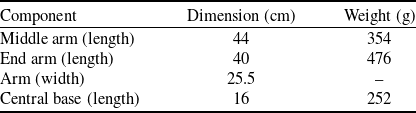

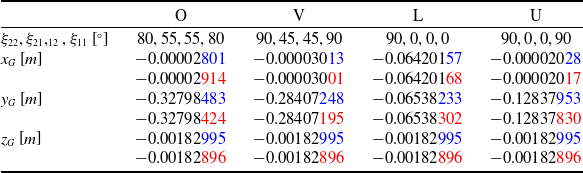
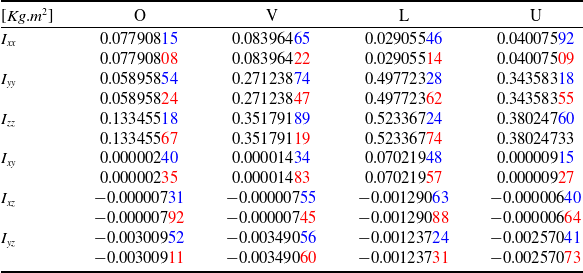
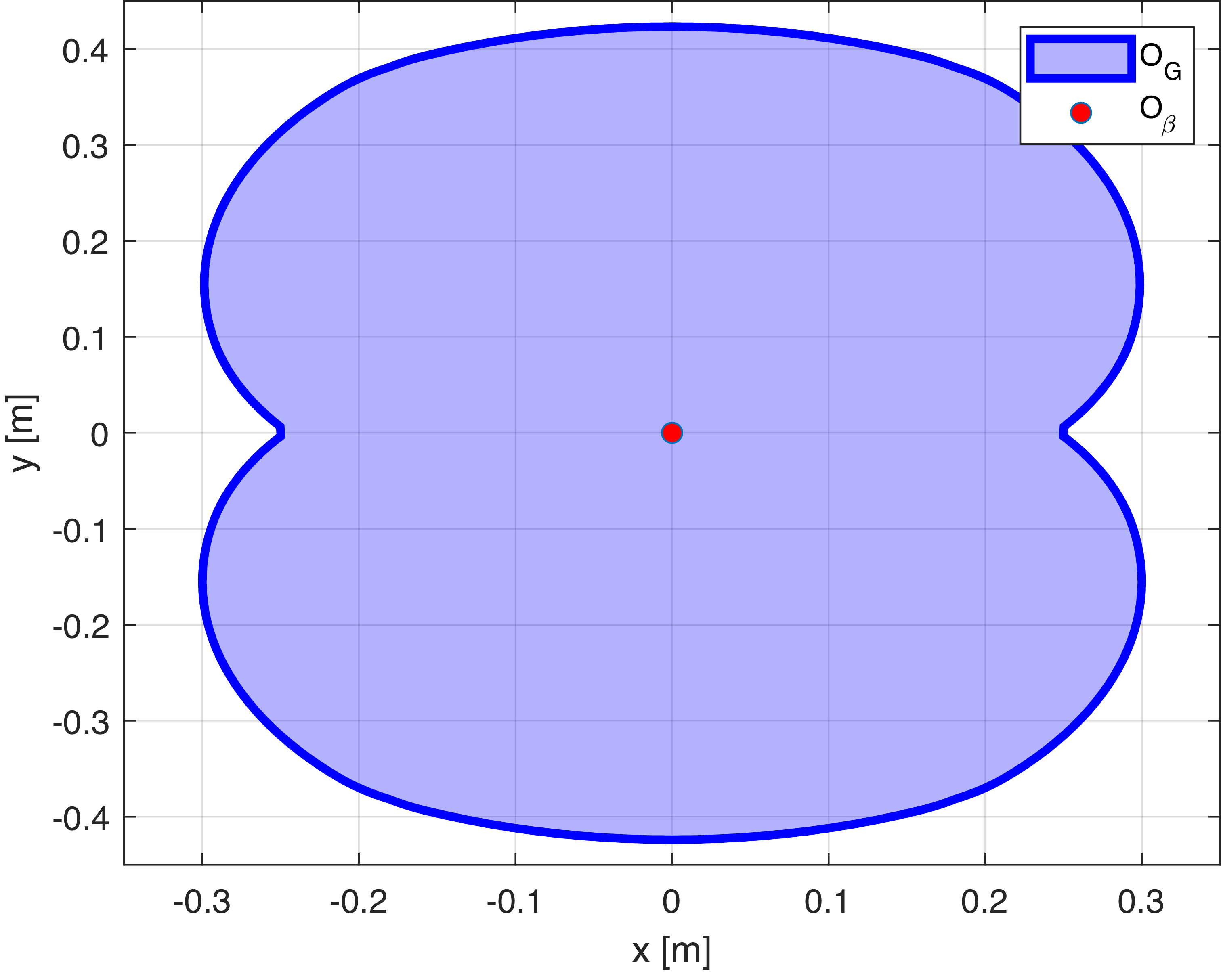
 Oβ
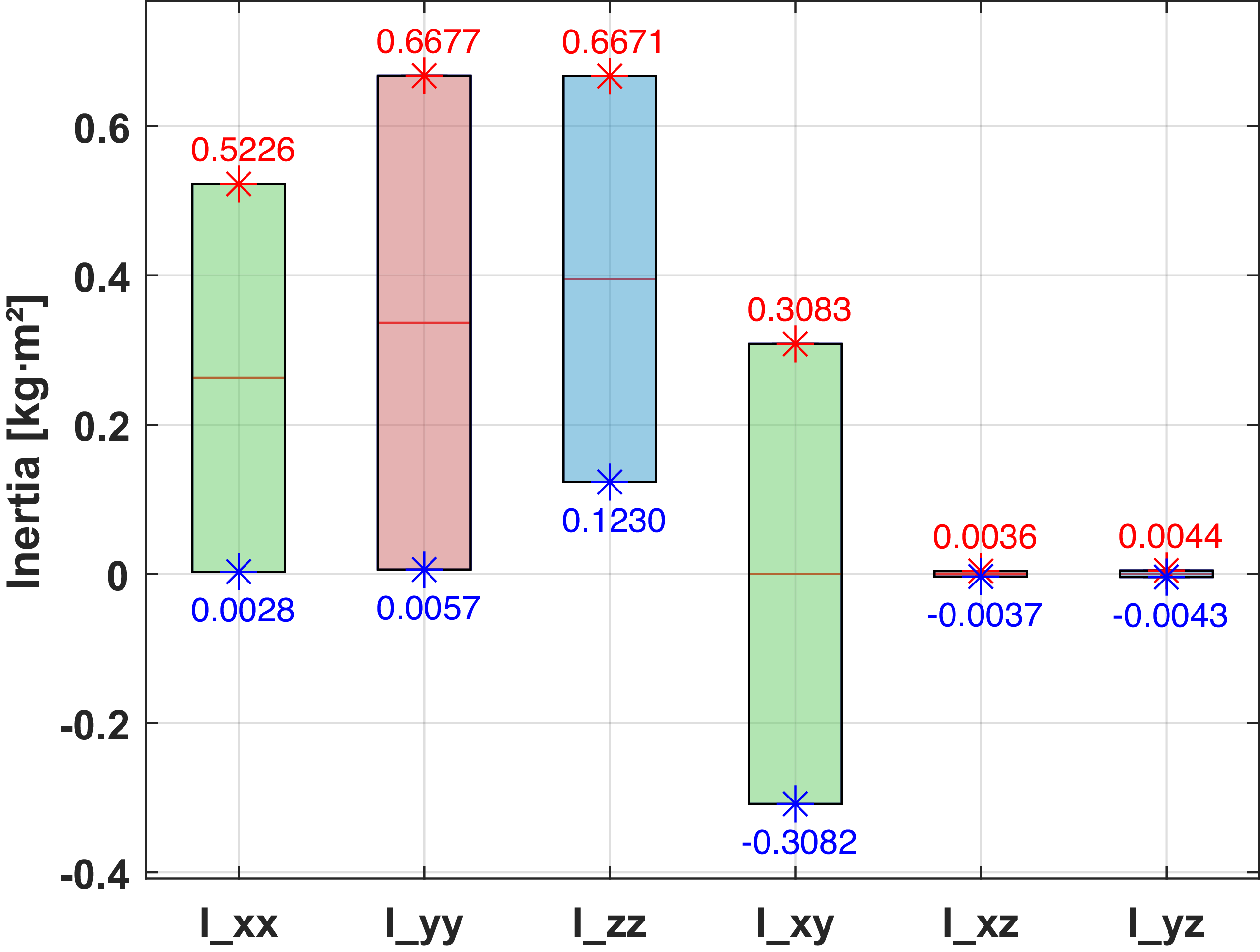
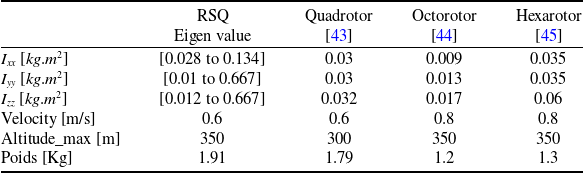
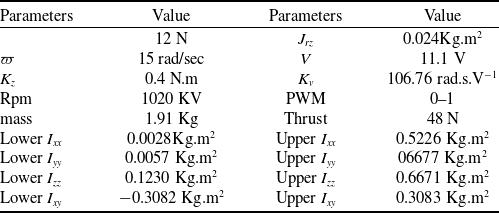





 Oβ


 ij