Normal haemodynamic changes associated with pregnancy include increased cardiac output, stroke volume, and heart rate. These changes are coupled with a relative drop in haemoglobin and total peripheral vascular resistance.Reference Grewal, Silversides and Colman 1 In addition to the haemodynamic stress of pregnancy, thrombosis risk is increased because of a rise in clotting factors and fibrinogen.Reference Grewal, Silversides and Colman 1 This constellation of physiological changes may be expected to put women with dilated, compressed, or obstructed coronary arteries at elevated risk of adverse cardiac events during pregnancy.
The reported prevalence of structural congenital coronary anomalies ranges from 0.3 to 2%.Reference Akpinar, Sayin and Karabag 2 Anomalous coronary arteries with an inter-arterial or intra-mural course, coronary fistulas, and anomalous coronary artery arising from the pulmonary artery have all been associated with an increased rate of cardiac death outside of pregnancy.Reference Ripley, Saha and Teis 3 Many patients with anomalous coronary arteries are identified and repaired during paediatric life, but some reach childbearing age with no symptoms or lack of an established diagnosis.Reference Rajbanshi, Burkhart, Schaff, Daly, Phillips and Dearani 4 , Reference Sharma, Burkhart and Dearani 5 Data regarding outcomes of pregnancy in those with congenital coronary anomalies are scarce.
Patients with a history of Kawasaki disease comprise yet another type of childhood coronary disease in which the risk of complications during pregnancy is undefined. Kawasaki disease is an inflammatory arteritis that results in coronary artery aneurysms in 15% of untreated patients and <10% of those who are medically treated. Some of these patients are left with irreversible coronary disease.Reference Kato 6 Women diagnosed with paediatric Kawasaki disease are now reaching childbearing age in growing numbers. There are currently no available publications regarding management of Kawasaki disease in pregnancy, and tools for predicting cardiovascular risk in the mother have not yet been described.
For women with paediatric-onset coronary artery anomalies considering pregnancy, the risk of morbidity as a result of their paediatric-onset coronary artery anomaly is germane to preconception counselling. The lack of guidelines and management paradigms for the surveillance and treatment of women with paediatric-onset coronary artery anomalies during pregnancy and the postpartum period results in preconception counselling and gestational management rife with uncertainty, even when patients are well-educated regarding their underlying diagnosis and engaged in the process of risk management. By review of pertinent published literature, in conjunction with focussed study of patients managed at our institution, we sought to define outcomes related to pregnancy in women with paediatric-onset coronary artery anomalies.
Methods
Definition
In our study, we included women with a constellation of coronary pathologies present in paediatric life and requiring follow-up through adulthood. Diagnoses included structural abnormalities of the coronary arteries present at birth, such as anomalous aortic origin of a coronary artery, anomalous coronary artery from the pulmonary artery, and coronary fistulas, medium-sized or greater; and inflammatory arteriopathy of childhood, such as Kawasaki disease, resulting in coronary aneurysms. Women with acquired coronary artery disease, complex congenital heart disease, inherited dyslipidaemias with atherosclerotic disease present in childhood, Takayasu arteritis, and spontaneous coronary dissection were excluded. Women who had never been pregnant were also excluded.
Retrospective study of patients at our institution
After approval from our institutional ethics review board, our database was screened for all female patients with a coded diagnosis of coronary artery anomaly present in childhood. Charts were reviewed, and those with a history of pregnancy were contacted by telephone and mailed a retrospective survey questionnaire if they met inclusion criteria and agreed to participate. Our survey tool was adapted from one previously utilised for evaluation of pregnant patients with Fabry’s disease.Reference Holmes and Laney 7 The survey was divided into questions pertaining to demographics, pregnancy symptoms and outcomes, including cardiovascular, obstetric, and/or fetal, medications, investigations, and management during pregnancy (survey is included as Supplementary material 1). Hospital charts of women who consented to be included in the study were screened to verify and clarify reported interventional and surgical procedures, as well as cardiovascular outcomes.
Systematic review of published literature
We conducted a systematic review of the literature for all published cases of paediatric-onset coronary artery anomalies in pregnancy. A literature search was conducted by two authors – M.K. and D.V. – in EMBASE and Medline to identify relevant titles and abstracts using the following search strategy: “coronary vessel anomalies”; or “Bland–White–Garland Syndrome” or “anomalous left coronary artery from the pulmonary artery”; “anomalous right coronary artery from the pulmonary artery” or “mucocutaneous lymph node syndrome” or “Kawasaki disease/syndrome” or “coronary aneurysm”; or “anomalous aortic origin of a coronary artery”; or “coronary fistula”; and “pregnancy” or “pregnancy complications”. The search was expanded to also include multiple terms for fetal outcome. Only human studies were included, but there were no restrictions on language or year of publication. Our search included all publications from February, 2016 and earlier. If a title or abstract was deemed possibly relevant, full text was obtained, translated to English if necessary, and screened for eligibility using the following criteria: case reports or case series describing women with paediatric-onset coronary artery anomalies during pregnancy with any description of pregnancy outcomes, including maternal, obstetric, or fetal. Maternal cardiovascular and obstetric outcomes were included if they occurred during pregnancy or within 6 months postpartum. References listed within eligible studies were reviewed to identify additional, potentially applicable references. Data were extracted from articles that met inclusion criteria by two authors – M.K. and C.B. Authors of published studies were contacted for additional information when deemed necessary.
Characteristics of the patient(s) were collected, including age, number of pregnancies, presentation, investigations or surgical/interventional procedures, and cardiovascular, obstetric, and neonatal outcomes. We defined maternal cardiovascular events as heart failure resulting in pulmonary oedema, sustained arrhythmia requiring treatment, stroke, myocardial infarction, and cardiac arrest or death.Reference Siu, Sermer and Colman 8 Neonatal outcomes were defined as prematurity (<37 weeks gestation), low birth weight (<10th percentile), and fetal (⩾20 weeks gestation) or neonatal (within 28 days of birth) death.Reference Siu, Sermer and Colman 8 Obstetric outcomes included non-cardiac death, pregnancy-induced hypertension, and postpartum haemorrhage.Reference Siu, Sermer and Colman 8 As this review consisted of case reports and case series only, no meta-analysis was performed. Data were analysed using SPSS (version 22.0; SPSS Inc., Chicago, Illinois, United States of America).
Results
Retrospective study of patients at our institution
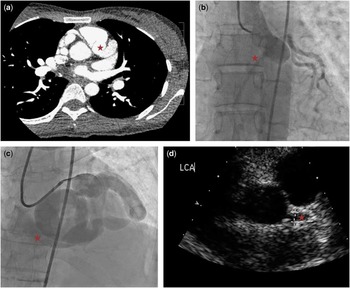
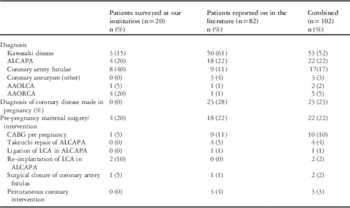
A total of 40 patients with paediatric-onset coronary artery anomalies and a history of pregnancy were identified from our database, which includes all patients referred or seen from the 1980s to the present. Among them, four patients died, and none of the deaths occurred during pregnancy or the postpartum period; nine were lost to follow-up with no accurate contact information available; and two were unable to complete the survey because they could not recall details of pregnancy secondary to cognitive deficits related to advanced age. A total of 25 surveys were mailed of which 20 were returned (80% response rate). Demographics and anatomical information of the surveyed patients are presented in Table 1 and in Figure 1. The median age of patients at survey completion was 50 years (interquartile range 40–63). The median number of pregnancies per woman was 3. The median age at first pregnancy was 25 years (interquartile range 25–30). Only a minority of women surveyed (n=7, 35%) had an established diagnosis of coronary artery disease before pregnancy. Of those who were unaware of their anomaly (n=13, 65%), the majority (n=9, 70%) stated that previous knowledge of their coronary disease would not have had an impact on their decision to have children.
Coronary anomalies of women who responded to retrospective survey. ( a ) CT of anomalous left coronary artery from the pulmonary artery (*) in a woman with one previous pregnancy and angina throughout. ( b ) Coronary angiogram of a woman with anomalous aortic origin of a right coronary artery (*) from the left who experienced angina during pregnancy. ( c ) Coronary angiogram of a woman with left cirumflex artery to coronary sinus fistula (*) with three uneventful pregnancies. ( d ) Echocardiogram of a woman with Kawasaki disease and large coronary aneurysms (*) who was asymptomatic during two pregnancies.

Cumulative maternal demographics of women surveyed and those identified in the literature.

AAOLCA=anomalous aortic origin of the left coronary artery; AAORCA=anomalous aortic origin of the right coronary artery; ALCAPA=anomalous left coronary artery from the pulmonary artery; CABG=coronary artery bypass grafting; LCA=left coronary artery
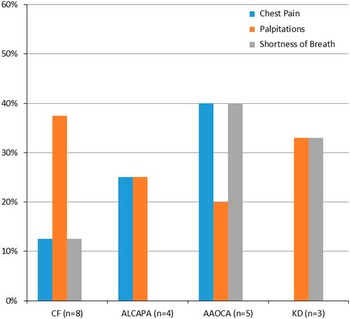
Of the seven surveyed women who had a diagnosis of coronary disease before pregnancy, only three reported a pre-conception discussion with a physician regarding the risk of pregnancy. Overall, 40% (n=8) of patients reported an increase in cardiac symptoms during pregnancy (Fig 2). The most commonly reported symptom was palpitations (n=6, 30%), followed by chest pain (n=4, 20%), and exertional shortness of breath (n=3, 15%). Cardiovascular and pregnancy outcomes of the women surveyed are presented in Tables 2 and 3.
Pregnancy symptoms reported by women with paediatric-onset coronary artery anomalies using a retrospective survey tool (n=20). AAOCA=anomalous aortic origin of a coronary artery; ALCAPA=anomalous left coronary artery from the pulmonary artery; CF=coronary fistula; KD=Kawasaki disease.

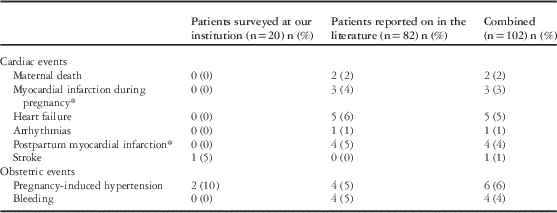
Adverse maternal cardiac and obstetric events during pregnancy (n=102 women).

* All myocardial infarctions were due to thrombotic occlusion with the exception of one case of supply–demand ischaemia in a patient with anomalous left coronary artery from the pulmonary artery requiring postpartum bypass surgery
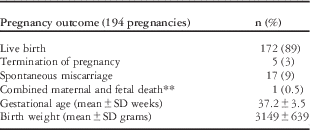
Pregnancy outcomes (n=102 women)Footnote *.

* Combined data from 20 women surveyed at our institution and 82 women identified by systematic review of the literature
** The only fetal death occurred in the setting of sudden death in a woman with undiagnosed anomalous aortic origin of a left coronary artery from the right aortic sinus
Systematic review of the literature
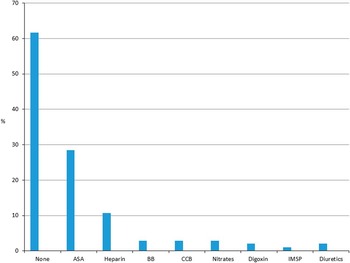
Our intentionally broad search strategy yielded 1024 citations. After the initial title/abstract screen, 80 articles were deemed possible candidates for inclusion. Full text was obtained for all 80 articles and translated to English as required from Spanish (two), Polish (two), Japanese (one), German (two), or French (three). Subsequently, 34 articles were excluded for the following reasons: 11 described a coronary anomaly in the neonate and not the mother; 13 described maternal anomalies outside of our inclusion criteria, specifically sinus of Valsalva aneurysm, Takayasu arteritis, cardiomyopathy, Marfan syndrome, and aortic or spontaneous coronary dissection; one was excluded as it presented images alone without accompanying clinical data; five were excluded as they were review articles without sufficient clinical detail; one was excluded as it described a case of questionable Kawasaki disease in a woman 1 month postpartum; and three were excluded as they described paediatric-onset coronary artery anomalies in women who had never been pregnant. The 46 articles that met inclusion criteria reported on 166 pregnancies in 82 women, and sufficient detail on maternal and fetal outcomes was available for 138 pregnancies.Reference Cauldwell, Swan, von Klemperer, Patel and Steer 9 – Reference Saaid, Balchin and Azman 54 The median age of the women at the time of reported pregnancy was 28 years (interquartile range 24–31). The majority of published cases of paediatric-onset coronary artery anomalies included Kawasaki disease in Japanese women (n=50, 61%) and included reports of pregnancy in those with or without giant aneurysms.Reference Kanno, Sakai, Nakajima, Satake, Konishi and Hajime 10 , Reference Samada, Shiraishi, Sato and Momoi 16 , Reference Tsuda, Kawamata, Neki, Echigo and Chiba 24 , Reference Tsuda, Ishihara and Kawamata 25 , Reference Hayakawa and Katoh 32 , Reference Arakawa, Akita and Nizhizawa 35 , Reference Taniguchi, Ono and Sato 50 Data on medical therapy during pregnancy are presented in Figure 3. Despite the majority (n=60, 59%) of women being known to have coronary disease before pregnancy, most of them (n=63, 62%) were not on medications to decrease the risk of thrombosis or myocardial infarction during pregnancy. The most frequently utilised strategy was antiplatelet therapy, with 28% (n=29) of women being on low-dose aspirin for a portion of their pregnancy.
Medical therapy during pregnancy in surveyed and published cases of women with coronary artery anomalies since childhood (n=102). Columns are not mutually exclusive as several women were on multiple medications. ASA=aspirin; BB=beta-blocker; CCB=calcium-channel blocker; IMSP=immunosuppression.

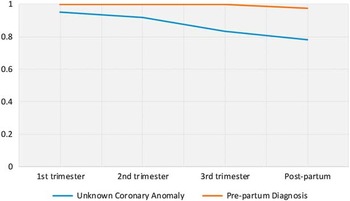
Major cardiovascular events occurred in 14 women (14%), including two maternal deaths. Among them, one maternal death occurred in a woman with a giant aneurysm in her left main coronary artery, which was identified at autopsy. She had thrombosis of the aneurysm and cardiac arrest 16 hours after delivering a healthy baby boy. A paediatric cardiologist performed a forensic medical interview with her parents and determined she had a febrile illness in childhood that met criteria for Kawasaki disease. The second maternal death was sudden cardiac death in the second trimester in a woman with an undiagnosed anomalous aortic origin of the left coronary artery from the right sinus. Another woman with Kawasaki disease had aborted sudden cardiac death at 20 weeks gestation in her fifth pregnancy. She had ventricular fibrillation and was successfully resuscitated. Cardiac catheterisation revealed thrombotic occlusion of an aneurysm in her right coronary artery. The majority of maternal cardiac events (13/14, 93%) occurred in women without a pre-pregnancy diagnosis of coronary disease. Therefore, pregnancy likely unmasked their underlying coronary pathology, as diagnoses were made during or after pregnancy. The rate of cardiac events in women with a pre-pregnancy diagnosis was only 2% (1/60) as compared with 31% (13/42) in those undiagnosed before pregnancy (Fig 4).
Kaplan–Meier curve representing major adverse cardiac event-free survival during pregnancy of women with coronary anomalies stratified by pre-pregnancy versus post-pregnancy diagnosis of coronary artery anormalies.

In all, five patients developed heart failure, with two in the setting of pre-eclampsia. Four women had adverse bleeding events but none resulted in death, and two women, both on combined aspirin and heparin therapy, experienced peripartum haemorrhage. Only one woman with known Kawasaki disease and giant coronary aneurysms, who was treated with unfractionated heparin before delivery, underwent a caesarian delivery because of severity of the underlying cardiac disease. She required re-operation because of abdominal bleeding at 1 day postpartum. The fourth bleeding event occurred in a woman with Kawasaki disease who was being treated with aspirin. She developed a vaginal haemorrhage and premature rupture of membranes at 23 weeks of gestation.
Obstetric outcomes included pregnancy-induced hypertension (n=6, 6%) and peripartum haemorrhage (n=4, 4%). The majority of pregnancies resulted in live births delivered vaginally (n=106/172, 66%). The mean birth weight of babies born to mothers with paediatric-onset coronary artery disease was normal, and the gestational age was at term.
Discussion
This is the largest report of pregnancy outcomes in women with coronary anomalies present since childhood. We found a 14% maternal cardiac event rate during pregnancy in women with paediatric-onset coronary artery anomalies. Even though there appears to be an increased maternal risk, we found no increased risk to the neonate. Most pregnancies resulted in live births delivered vaginally. By adding patients from our institutional survey, we have doubled the number of cases of coronary fistulas and tripled the number of anomalous aortic origin of a coronary artery cases during pregnancy in the published literature.
This review extends observations made in the recent publication by Burchill et al,Reference Burchill, Lameijer and Roos-Hesselink 55 highlighting the need for enhanced assessment and risk management of pregnant women with symptoms of angina and those with acquired coronary artery disease. Burchill et alReference Burchill, Lameijer and Roos-Hesselink 55 excluded women with paediatric-onset coronary artery anomalies, focussing rather on acquired coronary artery disease. The maternal cardiac event rate in this study of 14% is similar to the 10% event rate found in pregnant women with atherosclerotic coronary artery disease.Reference Burchill, Lameijer and Roos-Hesselink 55
It is notable that, in over 20% of the women reviewed, pregnancy unmasked previously undiagnosed coronary artery disease despite presence of the anomaly from childhood. The majority of adverse cardiac events occurred in women without a pre-pregnancy diagnosis. This could indicate that previous knowledge and medical management of coronary anomalies during pregnancy confer survival benefit. Conversely, it could suggest that the haemodynamic stress of pregnancy may precipitate or facilitate a first presentation in many women.
Furthermore, many women surveyed at our institution reported cardiovascular symptoms and/or signs such as exertional dyspnoea, chest discomfort, and/or palpitations during pregnancy, which were overlooked at the time, and the diagnosis of paediatric-onset coronary artery anomaly was ultimately made later in life. It has been shown that women presenting with angina are less likely than men to be referred for additional testing, including cardiac catheterisation and stress tests.Reference Chang, Mumma, Sease, Robey, Shofer and Hollander 56 Inherent gender bias is likely further exacerbated when women presenting with chest pain are young and pregnant, as they fall outside the prevailing paradigm of ischaemic cardiac disease. Our review confirms the need for a higher index of suspicion in pregnant women who present with symptoms that may be due to coronary ischaemia. If coronary insufficiency is suspected in pregnancy, prompt investigation is warranted.
Despite 59% (n=60) of women having a prepartum diagnosis of paediatric-onset coronary artery disease, very few were on medical therapy. Aspirin has been shown to be safe in pregnant women.Reference Henderson, Whitlock, O’Connor, Senger, Thompson and Rowland 57 Guidelines for the management of Kawasaki disease state that all patients with residual coronary sequelae, even those with small- to medium-sized coronary aneurysms, should be on long-term anti-platelet therapy.Reference Newburger, Takahashi and Gerber 58 In our combined survey and systematic review, 52% of women had Kawasaki disease, but only half of them were on aspirin. Almost all the reports (5/7) were published after the Kawasaki disease management guidelines became available in 2004. This under-treatment may represent a fear of creating adverse bleeding events in pregnant women, despite evidence to the contrary.Reference Henderson, Whitlock, O’Connor, Senger, Thompson and Rowland 57 Low-dose, enteric-coated aspirin is safe in pregnancy and should be considered in all women with coronary aneurysms or stenosis. Other antiplatelet agents and/or anticoagulation may be protective, but therapy needs to be individualised in the absence of systematic data.
When faced with rare disease entities with a paucity of data pertaining to outcomes, decision making and patient counselling are fraught with obstacles. Our review presents a comprehensive look at the available literature coupled with our institutional experience. This information can be used as a tool for counselling patients with paediatric-onset coronary artery disease who are making family-planning decisions. Of the women surveyed with known coronary anomalies, very few reported pre-pregnancy consultation with a cardiologist. This is problematic, as current guidelines suggest that all women with underlying cardiac conditions should receive pre-pregnancy consultation with a specialist.Reference Warnes, Williams and Bashore 59 Our review also highlights the need for appropriate specialty consultation and follow-up at a centre with expertise in pregnancy and heart disease.
There are some important limitations to this study. Recall bias may have been present in the retrospective survey. The number of women surveyed was small and a proportion of surveys (n=5, 20%) were not returned. Studies on maternal recall investigating prepartum depression have shown significant agreement between original reports and recollection, but elapsed time negatively affects the ability to accurately grade symptoms.Reference Newport, Brennan and Green 60 In addition, many of the symptoms reported, such as shortness of breath and palpitations, are common in pregnancy and may not be directly attributable to the underlying paediatric-onset coronary artery anomalies. There is also controversy regarding the pathophysiology of some coronary anomalies such as fistulas and anomalous aortic origin of the right coronary artery.Reference Davies, Burkhart and Dearani 61 , Reference Angelini 62 Indeed, we found no maternal cardiac events during pregnancy in women with anomalous aortic origin of the right coronary artery, although several of them described peripartum symptoms. Conversely, three women from the literature with coronary fistulas, all diagnosed intra-partum, had maternal cardiac events – two myocardial infarctions and one episode of heart failure in the third trimester.
Only one major cardiac event occurred in our survey population, a stroke of unknown aetiology in a woman with unrepaired anomalous left coronary artery from the pulmonary artery. Therefore, our event rate was more heavily weighted by the systematic literature review data than survey data. Consequently, the cumulative event rate in our study is likely affected by publication bias. We attempted to increase the strength of our study by including published cases from around the world and not excluding reports on the basis of language or date of publication.
Despite the relative rarity of paediatric-onset coronary artery anomalies, these conditions have important implications for morbidity and mortality in affected women, especially during the high-risk period of pregnancy. This study had laid the foundation for prospective research. Systematic prospective studies and the creation of international registries are the next steps to identify biological risk factors for pregnancy complications in these women, establish guidelines for treatment, and, hopefully, improve morbidity and mortality during pregnancy and in the long term.
Conclusions
The prevalence of coronary artery anomalies renders this an important medical issue to address before and during pregnancy. Kawasaki disease with a history of coronary involvement is a significant risk factor for women during pregnancy, and antiplatelet and anticoagulation therapies should be addressed proactively. Paediatric-onset coronary artery anomalies may be associated with morbidity and mortality in the context of pregnancy. Our data and literature review underscore the need for a multicentre, prospective clinical study to better understand the medical issues facing this important patient population.
Acknowledgements
The authors thank Panos Lambiris for his assistance with our literature search, Bogna Piotrowski for assisting with Polish translations, and A. Holmes and D. Laney for allowing us to adapt their survey tool.
Financial Support
This research was supported by an unrestricted grant from the University of Toronto Dean’s Fund (RW).
Conflicts of Interest
None.
Ethical Standards
The authors assert that all procedures contributing to this study comply with the Helsinki Declaration of 1975, as revised in 2008, and has been approved by the institutional review board at the University of Toronto.
Supplementary material
To view supplementary material for this article, please visit https://doi.org/10.1017/S1047951117000658