What does it mean to look at the Victorians from the outside in? This essay comes at this question from the perspective of a case study of the reception of the Oscar Wilde trials at the end of the nineteenth century, as covered in the periodical press based in the very different environment of Brazil's capital, Rio de Janeiro. In so doing, and as my opening question frames it, I invoke Benedict Anderson's “spectre of comparisons,” not so much to shore up existing scholarly understandings of nationalism in countries like Brazil as reactive to and potentially absorptive of the diverse European models that historically informed it (although that argument certainly can be and has been made); instead, I use this case to speculate about how the specific shape of the Brazilian intellectual response to the Wilde trials—in terms of discourses of sexuality and human rights, in particular—unsettles some of our assumptions about the long nineteenth century and Britain's role within it. I trace some of the ways through which ideas about sexual normativity, presumed to be hegemonic in Europe, and the narrativity associated with them traveled across the South Atlantic, alongside the forms of affiliation or disjunctions in reception they engendered. I tentatively compare this corpus to the relative lack of coverage in the English-language press in Brazil so as to measure the different inflections in their treatment of sexual behavior and their different reading publics.Footnote 1
As will become clear in the case study of the Brazilian reception of the three Oscar Wilde trials and of Wilde's subsequent imprisonment, despite the reliance on the heritage of British thought (and its U.S. instantiations), by the end of the nineteenth century there was already a transatlantic ideological disagreement over the moral function of legal punishment in a liberal nation, and one that articulates a sense of national pride in superseding the illiberal practices of what had been understood as the cradle of such liberal ideologies. Thus, the trials afford an instance of the discordances that arise when different systems of thought about individual freedom and agency, legal structures and penal institutions, and the possible function of public censure interact, as the events surrounding Wilde's eventual conviction for the crime of gross indecency and his imprisonment with hard labor reverberated across the Atlantic. This reverberation occurred against the backdrop of Brazil, a country with strong but vexed economic and conceptual links to Britain: a country that Britain, in the aftermath of the Napoleonic Wars, had helped to win its freedom from Portugal during the period 1821–25, securing strong trading rights in reciprocation; a country that had bristled under the 1845 Aberdeen Act outlawing the Atlantic slave trade, of which Brazil was the main target (and undermining Brazilian sovereignty to do so);Footnote 2 and a country whose late nineteenth-century economy was dominated by a coffee trade beholden in good part to British transshipping. The relationship of perceived dependency that was one legacy of this complex history had, at various times, motivated strident, public anti-British sentiment. Indeed, the Wilde trials took place in the midst of a minor territorial dispute between Britain and Brazil over the remote island of Trindade, occupied by Britain in February 1895 for the laying of a telegraph line in the South Atlantic. Yet it was also tempered by the strong intellectual links to British abolitionism, liberalism, and free trade among the Brazilian metropolitan elite (if not the plantocracy) and with the rise of U.S. interest in South America. Combined, these factors make the dynamics of this moment and these points in the global network of the fin de siècle a compelling site for working through some of the challenges of the project of the “wide” nineteenth century. They also highlight the key function of comparison as a means of demonstrating Brazil's participation in a transatlantic deliberation over the function of a liberal justice system.
Methods
Before elaborating the details and implications of this case, it is necessary to situate it in the context of my initial prompt: What does it mean to look at Victorian Britains from the outside in? First, looking beyond and outside of metropolitan centers to local and regional sites of discursive formation and to textual production outside of the English language directs us toward the as-yet-underutilized archive of periodical cultures. Periodicals could be said to have constituted the largest proliferation of print culture in the long and wide nineteenth century, and they also constituted a significant node for the transcultural discussion of sexuality. They offered content linked to a discernible spectrum of political opinions and affiliations and to local and regional interpretations of specialized fields of knowledge, including medicine and law. They also flourished in a range of locations with few or no printing presses and where most actual books were imported (as in Brazil and other Latin American countries), offering rare access to thinking not necessarily memorialized elsewhere. Moreover, because of the paucity of publication outlets, from Brazil to colonial India to Shanghai and the treaty ports in China, newspaper presses were often responsible for publishing a wide variety of local literature, from almanacs, dictionaries, and language compendia to travel guides, novels, and locally staged drama. Reviewing this literature as both a discrete body of cultural production and as it sits in conjunction or tension with metropolitan materials in less obvious pairings—Britain and Brazil, for instance—annotates the inside/outside paradigm with new comparative and relational perspectives. It works to overcome the balkanization of scholarship on transnational histories of print and its operation within largely “circumscribed areas” that,Footnote 3 in essence, defines wideness narrowly. In like fashion, the well-known patterns of sharing, copying, recycling, and paraphrasing “news” across other periodicals in different geographical locations and different idioms—aided by the telegraph and systems of correspondents—offer another opportunity to productively blur the lines of perspective governing inside and outside.
The periodical print archive also affords manifest material for deepening our understanding of nation- and empire-building and unbuilding. In the introduction to her pioneering Gandhi's Printing Press: Experiments in Slow Reading, Isabel Hofmeyr writes: “In one of his many memorable phrases, Benedict Anderson describes imperialism as a process of ‘stretching the tight skin of nation over the gigantic body of empire.’ To Mohandas Gandhi, a reluctant nationalist at best, this sentiment would have seemed back to front. . . . What happened when one tried to bunch the vast skin of empire on the nation? What to do with all those ungainly folds?”Footnote 4 Anderson's image of the skin of nation recalls Charles Wentworth Dilke's description of Greater Britain as a girdle around the globe, an image of containment concurrent with that of expansion.Footnote 5 Hofmeyr proposes that Gandhi's radical answer—to create a triad of Truth, India, Empire—positioned sovereignty within the self and located self-rule “primarily in the individual rather than in a territory.”Footnote 6 Her account, grounded in the print cultures of the Indian Ocean world, reminds us that widening is as much about the folds as it is about the stretching. Within those folds lie conceptions of individual agency starkly different from those of the Enlightenment, yet also enabled and maintained by imperial structures beholden to that Enlightenment. This imagining of empire and text in relation to skin and folds also forms a crucial backdrop to my case study because it underscores the connections between physical bodies and the proverbial body politic, which were at the heart of Brazilian reflections on Wilde as both a sexual and a suffering body.
Second, as my comments on print culture suggest, widening Victorian studies fundamentally involves a more diffuse definition of relevance vis-à-vis Britain's place in the world. We might place emphasis on Europe as a site profoundly affected by global encounters at precisely the period when norms of gender and sexuality were establishing themselves, looking to the more complicated picture of the mediations inherent to sexual contact zones and their narration and the challenges that other cultures’ understanding of sex/gender systems provoked on the “inside” of the “outside in” dynamic.
This undertaking means recalibrating a central premise that continues to define much of the research on the history of sexuality in the long nineteenth century: that while imperialism had a profound impact on the gendering of societies outside of Europe and their consequent construction of sexuality, Europe itself was the source for these definitions. Certainly, foundational theorists like Michel Foucault saw modern sexuality more as a European than as a global development, a matter of export more than import. Take Foucault's acts-to-identity paradigm expounded in The History of Sexuality, volume 1—according to which the second half of the nineteenth century saw a seminal shift in which sexual acts transmuted into sexual identities, and during which sexual identities became a seminal organizing principle for Western societies. This paradigm provides a unitary model in which one form of thinking sex replaces another in a temporally coherent way. (Whether this model is accurate is another question, and recent scholarship shows a much more variegated picture.) According to this logic, other, often colonial parts of the world are stuck in a belated state because of their different, often overlapping models of acts and identities—a problematic assertion at best. But the concept of overlap, by contrast, is a productive one: viewed from Brazil (where it is still not uncommon for men who have sex with men to be married men with families), Wilde's position as a husband and a father and a homosexual might make perfect sense. It might equally suggest—alongside work on rural and working-class same-sex activities—that older ways of understanding male homosex coexisted and may continue to coexist with the identity categories emergent in the nineteenth century.
We need, in other words, to look into archives that we don't know in order to queer our own assumptions about Wilde's iconic queerness.—Lauren Goodlad
Consequently—and correlatedly—the view from outside of Britain and Europe, and indeed outside the sphere of direct colonization, continues the work of challenging center-periphery models and assumptions that unequal power structures correlate to unidirectional influence. Alongside the rethinking of the “writing back” model so cogently identified by Bill Ashcroft, Helen Tiffin, and Gareth Griffiths in The Empire Writes Back (1989), which was central to an earlier wave of postcolonial-inflected studies of imperialism, this process also contributes to scholarship confirming the impact of nineteenth-century globalization on everyday life in Britain, including the establishment of patterns of heteronormativity and the disciplining of bodies and subjects.
Third, at the same time, the outside/in paradigm prompts reflection on the continued primacy of the “Victorian” in Victorian studies, even as the term itself has come under stress and, with it, the seemingly mutable dividing line between the inner and the outer that makes notions of “writing back” plausible. Such reflection has always informed scholarship within our subject on the complicated engagement of colonial elites with the Victorian world; on technological developments in fields like photography, telescopy, and microscopy that quite literally changed Victorians’ perspectives on themselves and, via contemporary engaged spectatorship, offer a means for interaction with nineteenth-century forms of material culture; and on the ever-widening gyre of archival materials that has yielded critical insight into Victorian systems of economy, ecology, gender, class, nation, and aesthetics, to name but a few categories. Nevertheless, at the same time that scholars working primarily within departments of English have destabilized what the “Victorian” means—if anything, beyond a crude delineation of an era defined by a monarch's reign—for a variety of disciplinary reasons, we have largely retained the rubric of “Victorian studies” and “Victorian literature and culture” itself as the thing to be “widened.” Even as we acknowledge that there has been a robust response to Edward Said's injunction to track “the unmistakable imprint of empire upon British culture” and vice versa, we have retained the “implicit understanding of a British-mandated century that forms the point of reference for our efforts at widening,” as Sukanya Banerjee, Ryan D. Fong, and Helena Michie state in their introduction to this collection.Footnote 7
Of course, a cornucopia of work by historians such as Catherine Hall, Philippa Levine, Antoinette Burton, Ann Laura Stoler, and many others demonstrating the complexities of cross-cultural engagements has led to a growing recognition, as the editors of this collection state, that “the nineteenth century world . . . was not neatly apportioned into isomorphic nation-states.”Footnote 8 In practice, however, the underlying assumption persists that people's primary allegiance nestles within a notion of national or regional culture—an assumption that, as many have also observed, fits nicely within the disciplinary boundaries to which we as scholars are often asked to adhere.
This continued definition of our fields as within the “Victorian” fold has also operated to stabilize the often-illusory divisions between formal and informal empire (the latter a concept ripe for revisiting). It also promotes unitary models of the trajectories of influence between colonizers and colonized peoples that give insufficient attention to the need for “both a wide angle and a focused lens” in writing the history of globalization (and its cultural components), as Erika Rappaport reminds us in A Thirst for Empire: How Tea Shaped the Modern World (2017).Footnote 9 Similarly, as Banerjee notes in her definition of the transimperial, it inhibits productive ways of viewing “the ‘non-West’ [or even the ‘non-European’] in terms of coevality, an attribute that is not usually accorded to the episteme of the colonial.”Footnote 10 Thus, excellent work has been done to make us aware of the patterns of circulation of fabric between Britain and India, for instance—from raw cotton to Kashmiri shawls to cheap cloth manufactured in Britain's North at the expense of Indian industrialization—and to trace such circulation in literature.Footnote 11 But what of the “feedback loops” from the more myriad transfer points involved in Britain's function as a global clearing house for crucial commodities (tea, coffee, timber, and houseplants, for example)? Or the processes by which economic and cultural lines, running sometimes elliptically through European and U.S. imperialisms, were maintained to institutionalize batik in West Africa or transport birds’ nests from Southeast Asian forests to the tables of Chinese epicures?
What also is required today is an equally robust rethinking of the value and discreteness of “empire” and “British culture” and “English identity” as units of analysis, something that the view from outside helps bring into focus, participating as it does in what Jessie Reeder notes, in her essay in this collection, as the “unflattening” side of widening. This reevaluation implicitly involves an ongoing queering of our field, adhering to Eve Kosofsky Sedgwick's now famous definition of “queer” as “the open mesh of possibilities, gaps, overlaps, dissonances and resonances, lapses and excesses of meaning when the constituent elements of anyone's gender, of anyone's sexuality, aren't made (or can't be made) to signify monolithically.”Footnote 12 In only a slightly different register, this “mesh”—aka “network”—has energized studies of globalization and imperialism in the long nineteenth century.
Already, the crucial reinvigoration of the concept of Greater Britain by Duncan Bell, Jason Rudy, Nasser Mufti, me, and others working at the intersection of the historical and the literary/cultural situates Britain's “political centrality” within the mesh of the multisited and polyvocal. Studies of the transatlantic, Pacific Rim, Indian Ocean and other ways of refiguring our conceptual mind maps have also influenced our perspectives. In her engagement with transatlanticisms in this volume, Reeder embraces the salutary questioning of “national boundaries as rigid cultural containers” and the mobilization of concepts of network and flow that promise more openness and less coherent modes of accounting, which are significant precisely because they refuse easy containment. Robert D. Aguirre provides an archival-driven model forward in Mobility and Modernity: Panama in the Nineteenth-century Anglo-American Imagination (2017), cathecting on the isthmus as, in nineteenth-century parlance, a “communication.”Footnote 13 Kendall A. Johnson, in The New Middle Kingdom: China and the Early American Romance of Free Trade (2017), further reminds us to consider the “layered audiences” for nineteenth-century texts and the value of research that intersects with area studies (in his case, China studies) in contradistinction to a history of running parallel.Footnote 14
Meanwhile, historian Karen Racine's work opens up a wider purview of Britain's cultural ambit in Latin America and the significance of Britain's liberal intellectual traditions on institutions of state, including schools and prisons. In the early part of the century, she finds, “the region's patriot leaders derived their most important cultural model, their animating energy, and their major material support from Great Britain,” rather than from the French and American revolutions “reflexively assumed to be the inspiration for Spanish American independence movements.”Footnote 15
Ultimately, what might emerge from disregarding the inside/outside dialectic itself is other, fruitful frames of comparison—affiliations between working-class cultures across geographical space or queer subcultures or scientific communities, to name but a few possibilities. At the same time, this process forces us to attend to the profound sense of disaffiliation and disaggregation within the putative national culture, such as those between men and women in nineteenth-century Britain, or those between urban and rural same-sex actors and their mechanisms of identity-building, or those among sailors moving as agents and actors in different sexual-cum-geographical contexts.
Crime and Punishment
There were three trials involving Wilde in the spring of 1895. The first was Wilde's libel trial against the father of his lover Lord Alfred Douglas (Bosie), which led to Wilde's arrest when it collapsed in April. The second trial was the first criminal trial. It began at the end of April and ended in a hung jury. The third trial, less than a month later, secured a conviction against Wilde, with Mr. Justice Alfred Wills sentencing Wilde to the “rare” maximum sentence under the law of two years hard labor with solitary confinement.Footnote 16 Andrew Elfenbein sums up recent scholarship on the trials that challenges assumptions of the hostility toward Wilde and the sense that his conviction was a foregone conclusion. Of the second trial, he states,
Despite fierce press against Wilde and supposed government pressure to convict him, when he was initially prosecuted for gross indecency, he was not found guilty. Even with a string of men who had testified to their relations with him, explicit details about his hotel room, the complete unwillingness of highly-placed friends to help him, and a second-rate counsel, the jury could not reach a verdict.Footnote 17
Harry G. Cocks's painstaking archival research—summing up the insights of Foucault, Jeffrey Weeks, and other scholars who had seen the Wilde trials as a defining or watershed moment for the acts-to-identity shift—has shown that the legal context suggests otherwise. Cocks notes that in The Wilde Century, Alan Sinfield makes the case that, subsequent to the trials, “the effeminacy, irony, and queer talent for inversion seen in Wilde began to create an image of a particular homosexual man.”Footnote 18 Indeed, Sinfield avers, “Wilde and his writings look queer because our stereotypical notion of male homosexuality derives from Wilde, and our ideas about him.”Footnote 19 Similar claims appear in Latin American studies. Writing in the 1990s, Sylvia Molloy asserts: “After Wilde, posing will become increasingly suspect, will be read more and more as advertising sexual deviance. In Latin America, this is particularly true in those cases in which posing—and decadence in general—are considered in relation to hypervirile constructions of nationhood.”Footnote 20 But Molloy's corpus is hispanophone literary works written subsequent to the trials, not the periodical press at the time of the trials. Indeed, like much scholarship on Britain, scholarship on Latin America has tended to ground its understanding of male sexual “deviance” and its association with tropes of effeminacy through an extrapolation of literary texts. The question arises, therefore, of whether this narrative of Wilde's formative role is more indicative of a process of prolepsis or metalepsis than a true teleology of influence.
In contrast to Sinfield's view and its permeation beyond British studies, Cocks sees the Wilde trials more as part of a continuum of prosecutions and the new crime of gross indecency itself, created in the Labouchère Amendment to the 1885 Criminal Law Amendment Act, as a far-from-revolutionary legal change from preexisting mechanisms to regulate homosex.Footnote 21 What distinguishes Wilde, then, is the public consciousness surrounding the trials and, as Cocks highlights, Wilde's testimony in his own defense.Footnote 22 Similarly, Joseph Bristow insists:
The “guilty” verdict remains significant not because the wealth of press reports depicted him—in Ed Cohen's words—as “a particular type of male individual who had a ‘tendency’ toward committing sexual acts with men” (1993: 131). Instead, as journalism from the time makes clear, there was a much more scandalous aspect to these trials. As some sections of the press observed, the Crown prosecution finally persuaded members of the jury to condemn Wilde's sexual behaviour on the basis of a disingenuous argument that advanced the view that sodomy was not so much subject to blackmail as the cause of it.Footnote 23
This body of research casts doubt on the trials’ role in crystalizing conceptualizations of same-sex identities, constituting a counterdiscourse to a major line of reasoning governing research on the history of sexuality in Britain and the British Empire. Nevertheless, the notion that Britain at the turn of the century did witness the emergence of such types remains intact, even if it constituted only one of a number of different, synchronous modes of understanding homosex. Elfenbein notes that in the aftermath of the trials, Wilde's name “became shorthand for sex between men”: “A crime without a name had received its name.”Footnote 24 And consciousness of this shift, if not global, certainly reached distant and not-so-distant pockets of European empires. Witness to this shift, for instance, is the openness with which, roughly a decade later in 1906, muckraking titles like Reynolds’s Newspaper could report on the Bucknill inquiry into allegations of sodomy among “catamite coolies” brought to work in the gold mines of South Africa in the aftermath of the Anglo-Boer War: the 11 August 1906 issue termed it the “horror of the mines.” Regular references were made to Wilde in newspapers, pamphlets, and even in testimony to the inquiry as anti-Chinese sentiment in both South Africa and Britain heated up. The pamphlet “Startling Revelations of the Vice and Immorality in the Chinese Compounds,” which circulated in South Africa in 1906, for instance, trumpeted: “Let it not be said that the nation which sent Oscar Wilde to gaol, and which execrates his memory to this day, hesitated to strike hard at the same vice when it was bound up with commercial interests. Literature did not save Wilde, [but] shall the Stock Exchange save this Chinese Sodom?” Testimony in the follow-up inquiry into Portuguese African laborers in 1907 even recorded a Zulu mine manager who referred to “what I call sodomy or Oscar Wildism.”Footnote 25
This variegated map for the public documentation of homosex gives the transcultural reporting of the Wilde trials in a place like Brazil several important functions. First, it juxtaposes the reverberations of the Wilde trials with the reverberation of the medico-legal discourses about gender and sexuality that were also traveling across the Atlantic.Footnote 26 Second, it helps us to gauge the ramifications of the different, intersecting timelines for the conversion of acts into identities, rather than upholding a model of supersession. Third, it promotes Sedgwick's “recognition of the ‘unrationalized coexistence’ of incommensurate models of sexuality”—in this instance the coevalness of identitarian and nonidentitarian understandings of sexuality.Footnote 27 In so doing it speaks to recent scholarship on queer temporalities that aims for “a decolonization that is simultaneously archival, methodological, and temporal,” as Valerie Traub characterizes it, while resisting the anti- or unhistoricist positions held by some queer scholars that periodization entails an unacceptable “straightening of the past.”Footnote 28
Finally, it promotes a queer cross-fertilization across area studies and disciplines, between Victorian studies and Brazilian studies, or between history and literature, or between an earlier generation of LGBTQ+ history and contemporary queer methodologies. Using the periodical press to decenter the ostensibly formative role of “literature” in discourses of sexuality, for instance, provides one resolution to the “contradiction” recently noted by César Braga-Pinto “between an alleged silence surrounding Wilde's trial [sic] [in Brazil], on the one hand, and an overly visible impersonation and incorporation of—that is to say, a penetration by—the spirit of Oscar Wilde among a group of Brazilian writers at the turn of the century, on the other.”Footnote 29 In this 2019 article in the Journal of Latin American Cultural Studies, Braga-Pinto traces the history of the study of Wilde's influence from Brita Broca's 1956 work A vida literária to Gentil Luiz de Faria's 1988 book A presença de Oscar Wilde na “Belle Époque” literária brasileira to the debate between Molloy and Brazilian scholar Davi Arrigucci Júnior in the 1990s.Footnote 30 Following in the footsteps of Brito Broca's analysis, Arrigucci alleges that the Wilde trials had few repercussions in Brazil because of the francophilia of Brazil's Belle Époque.Footnote 31 Had Wilde been French, Arrigucci avers, the outcome would have been different. Both Broca and Arrigucci point to a lack of commentary on the trials in the Brazilian press in the 1890s, with both claiming (in Arrigucci's words), “The first to publish any sort of article on Wilde in Brazil . . . was João do Rio in 1905, in the journal Renascença.”Footnote 32 But these supposed “lacunas in the penetration of history” are not entirely true;Footnote 33 neither is this narrative of disconnection, of metalepsis, between the trials and the subsequent “penetration” of Wilde's persona and philosophy that also troubles Braga-Pinto.Footnote 34
To synthesize: a wider purview that includes both the more global dimensions of imperialism and transnational exchange and the study of less metropolitan and more rural formations of sexual identity has led to three central insights. First, the move from acts to identities existed in a synchronous and symbiotic relationship with the persistence of older or simply other patterns of behavior where acts and identities did not coalesce in the way Foucault and others have imagined; both Britain and Brazil, therefore, provide very different but analogous contexts for this relationship. Second, Foucault's lead has instigated a blindness toward the multidirectionality of the consolidation of sex and gender norms that only recently has begun to be redressed. Imperialism and other forms of exchange with other parts of the world—not to mention the slave trade (and subsequent trade in indentured laborers from Asia), the large-scale population movements it instigated, and the homosocial environments it fostered—were actually, if not surprisingly, a constituent part of the creation and codification of European modes of sexual thinking. In other words, if sexuality and sexual expression, alongside race and class, became pivotal nodes for biopower and major hubs for social organization, then these hubs and nodes were informed by and working simultaneously in tandem with and in contradistinction to what was understood about non-Western, even non–Northern European knowledge about sexuality and its reference points. Third, as scholars widen the scope of the archival base on which they premise this rethinking of systems of gender and sexuality and their significance to life in the long nineteenth century, it is becoming more and more apparent that the periodical press offered a fundamental, hybrid space for debating, popularizing, and developing understandings of sexuality, sexual behaviors, and deviance and normality, as well as the scope for medicine, law, and governance/policing to define these identity and behavioral categories.
What we're asking scholars to do is to rediscover the richness or dynamism of certain political categories, and to do this by pursuing those political categories in places—whether that be in texts or languages—they have not pursued before. Not simply because they haven't, but because those places offer unexpected perspectives on the categories themselves.—Jessie Reeder
Here, a brief diversion into yet another context may be helpful in solidifying these assertions. I have recently been researching the case of La lanterne (The lantern), a handwritten, short-lived printed newspaper published in 1885 by one Henri Hillairet in Nouméa, the capital of the French penal colony of New Caledonia. With a nod to Diogenes, this title appeared with the express purpose of provoking a scandal about same-sex goings-on among and between prisoners, soldiers, and colonial officials in order to pursue a vendetta against the local procureur de la République, one Paul Cordeil. The first issue, published on 30 October 1885, accuses Cordeil of vice infâmes (“infamous vices,” which, like “unnatural vice,” was common code for same-sex activities). The newspaper also included a suggestive illustration of the bearded magistrate with a young soldier of the marine infantry. An extraordinary supplement to the fourth number, dated 20 November 1885, goes so far as to announce that the writer has the pleasure of publicly accusing Cordeil of pederasty and “of profiting from his functions as Chief Justice to more easily obtain ‘subjects’ . . . of satisfaction.”Footnote 35 This example reveals the extraordinary reach not just of discourses of sexuality but of the periodical press's role in publicizing homosex and motivating the affiliations surrounding it. It also provides a counterpoint to the more circumspect reporting of convictions for sodomy, buggery, gross indecency, and related crimes in some more controlled, more metropolitan environments.
Reverberations
Let me now focus on the Brazilian case in more depth (which is itself a form of widening) to tease out some of the ideas above. The newspapers I cite below were all widely circulated and influential titles, read largely by the Brazilian elite, located by this time mostly in the south of the country, especially around the capital, Rio de Janeiro.Footnote 36 They printed only in Portuguese; a separate English-language press catered to expatriate British and American communities as well as to Brazilian intellectuals with knowledge of English. (Records are incomplete, and many periodicals were short-lived, but William Scully's long-standing Anglo-Brazilian Times had ceased publication in the 1880s, following its proprietor's death. However, The Brazil and River Plate Mail was publishing in the 1890s.) The British community in Brazil was small but influential, especially in the area of commerce, in particular in Rio, São Paulo, and Santos, the port near São Paulo where Richard Burton served as consul during the 1860s. The community was considerably smaller than the community in Argentina, which David Rock estimates reached sixty thousand at its height in the 1930s,Footnote 37 and mostly middle class and urban, despite efforts to recruit British settlers.Footnote 38
The first thing to note about reporting of the trials in the Brazilian press is the generally sympathetic treatment Wilde garnered. The relative lack of interest in moralizing about the figure of the “invert” and about Wilde's immorality provides a contrast with the British press, especially at the populist, yellow end of the spectrum. In some cases, the reporting was very matter-of-fact, with O Jornal do Brasil (The Brazil daily) simply noting of Wilde's codefendant, Alfred Taylor, who was accused of being a pander, that he was being tried as a “corruptor of morals” (21 May 1895).Footnote 39 Its one-paragraph wire report on the conclusion of the trial reads, “The Supreme Criminal Court in today's session examined the case against the poet Oscar Wilde and his accomplice Taylor, for indecency (attentado contra a moral). The two defendants were sentenced to two years of prison with forced labor” (26 May 1895).
In Brazil, the immorality ascribed to Wilde in the British press is typically displaced onto British society and onto British law. British law is seen to enact an unfair and retributive justice on what commentators in Brazil see more as a sin than a crime—perhaps a key distinction between a Protestant view of homosexuality and a Catholic one in this period, if not entirely reducible to this point—and Britain becomes a place where punishment belies the liberal heritage that an earlier generation of Brazilian intellectuals had praised in their modeling of the empire's own legal system and through their interest in Benthamite ideas about prison reform.Footnote 40 Brazil had recently enacted a new criminal code in 1890 against the backdrop of growing interest in positivism.Footnote 41 Perhaps because of the relatively elite and liberal sources of the commentary on the Wilde trials in the Brazilian press, hostility toward same-sex acts more generally did not form a major part of the commentary—even if literary journals in Brazil during this era published pictures of effeminate men that echoed those of British periodicals like Punch.Footnote 42
Of course, this sympathetic understanding of crimes against morality largely represented elite and public attitudes toward homosexuality, rather than legal frameworks, which, while distinct from Britain's and based on the Napoleonic code, nevertheless gave ample license for the authorities to prosecute men and police same-sex activities through public indecency and antiprostitution legislation not specifically aimed at homosex. Indeed, the police and the courts in Brazil had various mechanisms for “regulating public manifestations of homosexuality,” as James Green notes; Brazil had decriminalized sodomy in the early nineteenth century, but “criminal codes with vaguely defined notions of proper morality and public decency . . . provided a legal net that could readily entangle those who transgressed socially sanctioned sexual norms.”Footnote 43 The new criminal code of 1890 maintained the decriminalization of sodomy, although public indecency remained a crime, with a sentence of one to six months of prison; cross-dressing was also illegal, with a penalty of fifteen to sixty days’ imprisonment, and might be used to “arrest homosexuals who liked to wear clothes of the opposite sex.”Footnote 44 At the same time there were numerous sexual spaces around the city that, like Hyde Park and the Hampstead Ponds in London, were not unknown to the wider public and, thus, the readership of these reports. For instance, Green's research shows cariocas were well aware of the reputation of the Largo do Rossio (later, Praça Tiradentes), a square in downtown Rio that was famous as a cruising ground and center of male prostitution from the late nineteenth century forward.
Arguably the most interesting reporting on the trial in Brazil appeared in O Paiz (The country), a liberal Rio-based serial that, from its start in the 1880s, had taken an abolitionist and republican stand under the initial editorship of Rui Barbosa, one of Brazil's most prominent intellectuals and statesmen and later its delegate to the Hague Convention.Footnote 45 What role or influence, if any, Barbosa played in the reports of the trials has been impossible to determine, especially since all the reporting on Wilde from London in O Paiz is unsigned. But the trials do correspond with the period of Rui Barbosa's exile in London, where he penned his famous Cartas de Inglaterra (Letters from England) for the newspaper the Jornal do Commerico (Business journal). Certainly, O Paiz's correspondent was very knowledgeable about the literary and social scene in London in the late 1890s and had sufficient influence to be present in court during Wilde's disastrous libel trial against John Sholto Douglas, the Ninth Marquess of Queensberry, in April 1895. O Paiz described itself as “a folha de maior traigem e de maior circulação na America do Sul” (the most select and biggest circulation paper in South America) and reported assiduously on events in London, including the three trials in April and May 1895.
O Paiz's first commentary on the trials comes in the “Londres” (London) column, with a dateline of 20 March 1895 but published on 16 April 1895, after the conclusion of the criminal libel trial that Wilde had launched against the Marquess of Queensberry but before the start of the second trial. This article is fairly explicit in its characterization of the events and Wilde's relationship to Bosie (Lord Alfred). Speaking of the marquess's attempt to defame Wilde because of the “friendly relationship between Salomé's playwright and Lord Alfred” (relaçoes de amisade que existe entre o poeta dramatico de Salomé e o lord Alfredo), it characterized the elder Douglas as “half-crazy,” or meio doido, and a pateta perigoso (i.e., a “dangerous oaf”). The column goes on to accuse the marquess of having wanted to assassinate Lord Rosebery, the former prime minister rumored to have had a relationship with Bosie's brother Viscount Drumlarig,Footnote 46 and who was ostensibly pressured by Queensberry to prosecute Wilde or risk his own exposure—an example of gossip whispered across the Atlantic. Now, it continues, he wanted to assassinate Wilde because he was “constantly running around with his son” (passeia constantemente com o seu filho). The article continues its character assassination of Queensberry by describing him as a disoriented philosopher, who had flirted with Buddhism, Catholicism, and materialism and whom everyone in London avoided, to the extent that he was ostracized at his own club.Footnote 47 From the point of view of the established British press, none of these accusations are that surprising. But from a Brazilian point of view, they indicate that (a) readers of periodicals like this one received an accurate reporting of society happenings in European capitals like London, even if Queensberry was spelled “Quernsberry” (an error in telegraphy?); (b) that Wilde's work was familiar, at least by reputation, to late nineteenth-century audiences in Brazil, even if Portuguese translations did not yet exist; and (c) that the reports employed the device of the open secret to describe homosexuality in terms of Wilde's “friendship” with Bosie. Nevertheless, there is a belatedness to the reporting since, despite advances in telegraph cabling on transatlantic routes, the article appeared on the very day that the libel trial ended and a warrant was issued for Wilde's arrest on charges of gross indecency. True, O Paiz was a serial periodical at this stage, but my research so far suggests that daily newspapers in Rio did not report on the Wilde trial to the same extent and in the same detail as it did.
These factors come through even more clearly in an article entitled “Escandalo Londrino” (London scandal) with a dateline of 5 April but published on 18 May and, from its tone, written by a different correspondent. Here, the writer claims to have been present at the first trial and to have heard the judgment. The article maintains a guarded sympathy for Wilde as an artist, calling him the most modern of poets and a celebrated critic but tempering this sympathy with appropriate indignation about his conduct with Bosie and other men and, this time, characterizing Queensberry as “um homem honestissimo” (a supremely honest man). The writer, in turn, vilifies Bosie on his appearance in court, describing him as a pallid and almost beardless youth with the blank eyes of someone enervated by pleasure, evoking an image of neurasthenia that would have been familiar on both sides of the Atlantic.
This article describes the scene at the court and redacts Wilde's rationale for launching the case: that Wilde had received a card at his club from Queensberry calling him “os nomes mais crus e accusando-o de ter depravado o seu filho, o jovem e elegante lord Alfredo Douglas” (the crudest names and accusing him of having depraved his son, the young and elegant Lord Alfred Douglas).”Footnote 48 (The card left by Bosie's father at the Albemarle Club read, “For Oscar Wilde posing Somdomite” [sic].) The correspondent discusses how Wilde had been blackmailed over three letters written to Douglas, the most provocative of which was read out in court in the judgment and “provoked huge scandal” (provocou grosso escandalo). The article proceeds to describe the speeches and testimony, including the audience's reaction to Wilde's own testimony, conforming with the prosecution's use of this testimony against him: “The whole room was incensed by the poet's revolting cynicism, who seemed to approve of all sodomitical vices, with an impudent pose.” Particularly noteworthy here is the tension around the printing of the words vicios sodomitas—whereas the respectable press in Britain, which also contained detailed reports of the trials and testimony, generally relied on the more euphemistic language of immorality and indecency. In fact, the article concludes with a “curious detail” about two British evening papers that announced in huge letters that they were not publishing details of the trials because they might be purchased by the paterfamilias. These journals, the article concludes, are the only ones that can enter the domestic circle in Britain because the others are filled with the indecorous details of the trial.
The next piece in O Paiz, with a dateline of 28 May—three days after the termination of the third trial—appeared only on 26 June, a full month after Wilde had been sentenced to two years of imprisonment with hard labor. The opening of this article is noteworthy, with its condemnation of the “repellent and tremendous vice of pederasty”—noteworthy because it is one of the few instances in which Wilde's sexual conduct is treated with such a lack of sympathy. Indeed, the Brazilian periodicals I have consulted to date generally conform to the pattern of not seeing Wilde as a type for an emerging figure of the homosexual but as a victim of an unfair and cruel system of justice.
Beyond the censure for Wilde's behavior, however, this liberal newspaper with a former abolitionist agenda goes on to treat Brazilian readers to a lengthy description of hard labor (trabalho duro), noting its nonexistence in the Napoleonic code and likening it to the tortures of the Inquisition. “It is a punishment that shames civilized England, where the whip is still admitted in her prisons.” Here, the author steps out of the Wilde case to cite the example of two young men convicted of arson, who had recently received fifty lashes at Millbank at the start of their sentence of two years’ hard labor.Footnote 49
In this respect, O Paiz's reaction to Wilde's sentence is more akin to that of the French press, which also criticized British penal methods, than that of the English press, which, as Ed Cohen notes in Talk on the Wilde Side, tended not to draw elaborated conclusions from the verdict.Footnote 50 (In so doing, O Paiz conforms to the traditional idea in Brazilian studies that Brazil took its intellectual lead from France, whose language Brazilians were also more familiar with.) It is true that O Paiz’s turn to flogging, like its earlier refence to Wilde's “impudent pose,” is consistent with Cohen's assertion that the public gaze, via the British press, concentrated on “the disposition of Wilde's body.” And because this British press could not detail the exact sexual acts in which Wilde was accused of having engaged, the focus shifted to Wilde, the actor, as a “‘metonym’ for the ‘crime’” and especially to an emerging legal offense in line with Foucault's claim of a shift from acts to identity, according to Cohen.Footnote 51 Still, a concern with humane punishment and penal reform, enabled here by O Paiz's comparison of British and Continental legal codes, differs markedly from the relative abandonment of Wilde by the intellectual community in Britain during the trials. Moreover, the belatedness of the article allowed its author to provide extensive details of what happened to Wilde at the conclusion of the final trial—his transfer from Newgate to Pentonville Prison, for example—and a further and most remarkable critique of the prison environment there that leaves Wilde's body and even his ostensible offenses far behind. Instead, readers are treated to information about solitary confinement without talking, describing the single rooms for the convicts, the hard, wooden pallets in them, and the lack of straw mattresses and sheets. The author returns to the theme of the Inquisition when describing how Wilde and Taylor were weighed the day after arriving at Reading, noting, “It is necessary for them to lose weight during the period of their incarceration. The punishment brings with it an obligatory loss of strength and vitality. A true Inquisitorial process, as we shall see.”
Readers then receive a lengthy description of the treadmill (with the word written in English to emphasize the alien nature of this form of punishment) and how it operates: treadmills had been common in Caribbean plantations during the era of slavery and subsequent indentured labor, but I have yet to find evidence that they were also used in Brazil. The reference here makes a touchstone for Britain's comparative cruelty and hints at the historical hypocrisy in Britain's self-proclaimed role of protector in ending the slave trade. (It is worthwhile to note, because of the paper's connection to him, that as Brazil's minister of finance in 1890, Rui Barbosa presided over the destruction of many of the government's records about slavery, in part to forestall the kinds of indemnifications of slave owners that Britain had paid in places like Jamaica or the crippling indemnity that France had demanded of Haiti in 1825 as the price for independence.) In any event, the description of the treadmill certainly bears heavy and intentional echoes of the treatment of slaves, with the article's indignation stemming not solely from the application of such a method of punishment to a different population sector but from its inherent inhumaneness and violation of human rights. Flogging with a cat-o’-nine-tails (gato de nove rabos) was administered if the prisoner refused to run the treadmill. After the treadmill, the article goes on to describe the task of stone-breaking, which was another cruel element of the British hard-labor system, and which O Paiz labels a “terrible martyrdom” (and thus a very different form of martyrdom from the “gay martyrdom” some critics have claimed for Wilde).
In this regard, the discussion of the treadmill also recuperates for Brazil—only a few years after the final abolition of slavery and the declaration of the Republic of Brazil the following year—a narrative of liberal humanity and modern nation-building that shifts attention away from Brazil's continued, more clandestine traffic in slaves after the Aberdeen Act. That activity gave rise to the still-extant expression para inglês ver (for the English to see, i.e., for the sake of appearances),Footnote 52 in reference, alternatively, to the Brazilian authorities’ pretense of cooperating with Britain's suppression of the trade or the camouflaging of slavers to hide their cargo from British warships.Footnote 53 Intriguingly, this connection between Britain and Brazil and slavery and sexuality is one that British anthropologist Peter Fry made implicitly, although in a very different context, in the 1980s in his book Para inglês ver: Identidade e política na cultura brasileira.
At no point in this very detailed and extensive critique of British penal methods does the article return to Wilde; Wilde is almost the pretext here for an examination of an inhumane prison system that, indubitably, was meant to reverberate with conditions back in Brazil, while still asserting Brazilian nationalism by its unspoken idea that, in this instance, Brazil is more civilized than its European cousin.
O Paiz's next discussion of Wilde's condition comes in a short notice from 18 March 1897 about the author's impending release from prison, which notes that he had been spared from having to perform “rude and infamous labor” (trabalhos grosseiros e infamantes) because of a campaign by British newspapers against the “excessive rigors of English prisons” (rigores excessivos das prisões inglezas). Wilde's release was widely reported in Brazil, with literary magazines like Don Quixote even redacting O Paiz's coverage of Wilde's trip to Paris and Florence for its readers and the enthusiastic reception he received there.
It is salient to compare the reporting on the trial with the limited access that the Brazilian public might have had to Wilde's work in the 1890s for at least two key reasons: first, it highlights the geographic scope of the diffusion of celebrity culture around author figures by the turn of the century; second and concurrently, it underscores a dynamic through which access to the literary product itself (either in the original or in the vernacular or French translation) is not the precondition for such celebrity—if it ever was. The combination of fame that is not necessarily coupled to the actual consumption of the literary artifact is itself a symbol of the need for elites in environments like South America to establish cosmopolitan credentials through their familiarity with broader cultural currents, the news of which alone mainly reached their shores. As Molloy notes for Hispanic America, “Wilde is fetishized even before his work is read, recognized as standing for that unnameable to which his posing points at every turn.”Footnote 54
My research thus far has not indicated any performances of Wilde's plays in Brazil by the date of the trials, although that is not to say that reviews of these plays when performed in Europe did not appear in the Brazilian press or that Brazilian elites might not have seen performances abroad or even heard Wilde during his speaking tour in North America. Moreover, a search of the Biblioteca Nacional's catalog and that of the Real Gabinete Português de Leitura (the Royal Portuguese Reading Room, a major historical collection dating back to 1837) have yielded no holdings of Portuguese translations or even examples of Wilde's work in any language that predate the trials.
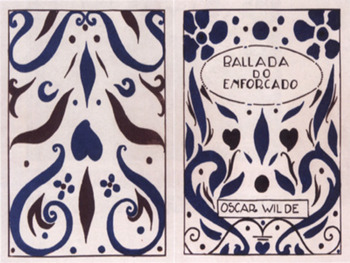
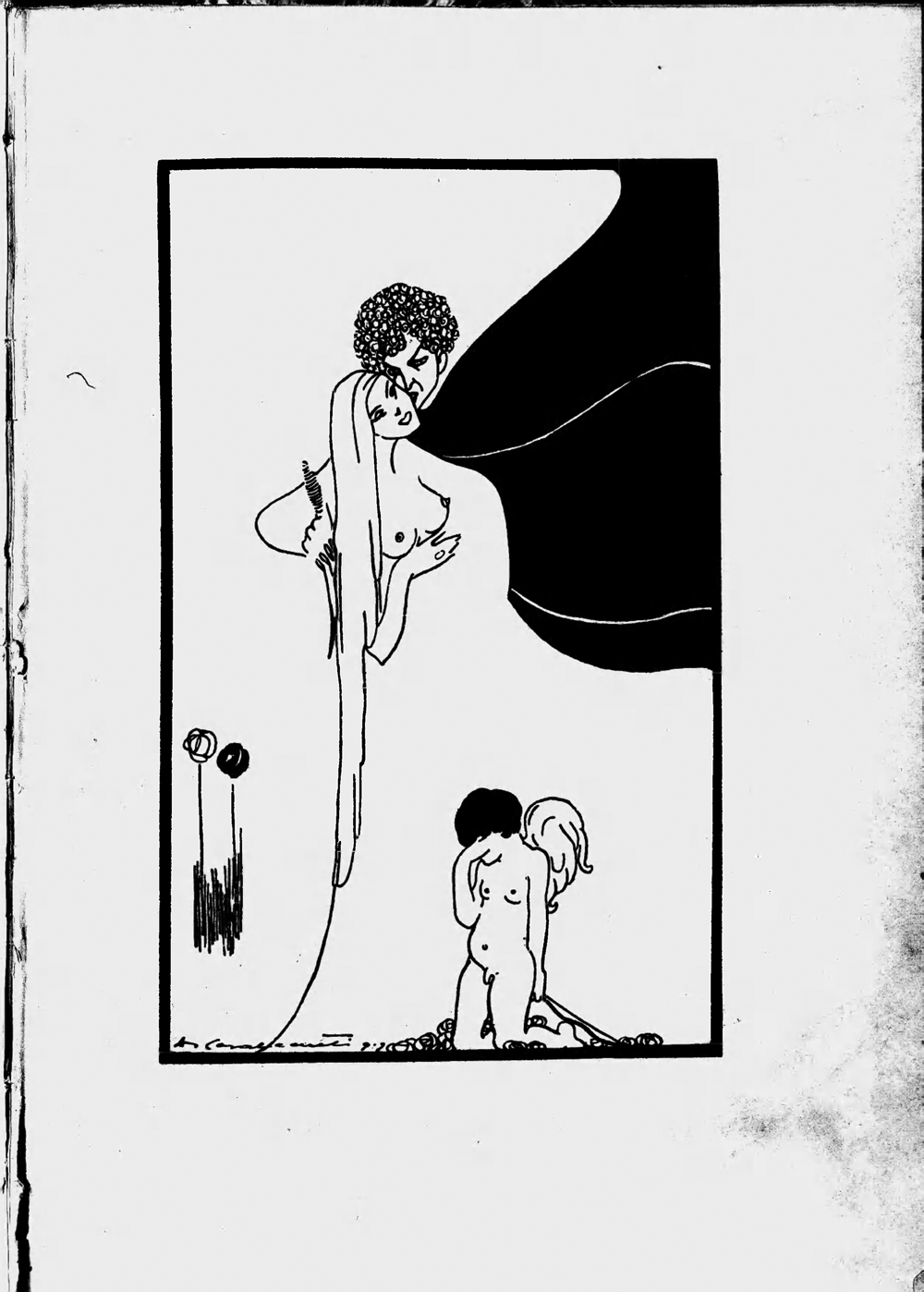
Indeed, the earliest holding in the Biblioteca Nacional appears to be Elysio de Carvalho's 1899 translation of The Ballad of Reading Gaol (A Ballada do Enforcado), which was published almost immediately after its 1898 publication in Britain—but apparently in an initial print run of only twenty copies. Carvalho, only nineteen at the time, was the editor of the weekly Brasil Moderno. A Ballada do Enforcado was the first of a series of books that, interestingly, O Paiz described in a 23 May 1899 announcement for the forthcoming volume as editions of “various works from Brazilian authors in elegant volumes, neatly printed.” O Paiz would go on to announce this book on 26 August 1899, again expressing sympathy for Wilde, who had been convicted “more for a sin than a crime” (language implicitly harkening back to the “earlier” mode of treating homosex as a religious offense). Two days later, it published a more substantial review, signed by Alberto Augusto. In his preface to his translation, Carvalho himself defends Wilde against the British “prudery” that buried Wilde in “a filthy dungeon, after a scandalous trial that had repercussions around the world.”Footnote 55 Not until 1919 would there be a more sizable print run of the ballad, using the same Carvalho translation, with Aubrey Beardsley– and Yellow Book–inspired illustrations by Emiliano Di Cavalcanti—but this time in a print run of two hundred copies (figs. 1 and 2).Footnote 56
The cover of Emiliano Di Cavalcanti's edition of A Ballada do Enforcado (1919). Courtesy of the Biblioteca Nacional, Brazil.

Frontispiece from Emiliano Di Cavalcanti's edition of A Ballada do Enforcado (1919). Courtesy of the Biblioteca Nacional, Brazil.

The Real Gabinete holds examples of Wilde's work in English, French, and Portuguese from the libraries of Brazilian intellectuals, such as José Pereira da Graça Aranha's copy of The Sphinx from 1901 and numerous English and French works owned by João do Rio (João Paulo Emílio Cristóvão dos Santos Coelho Barreto), who translated Wilde's Salomé into Portuguese in 1908, but again, these date from the first years of the twentieth century—after the trials and after Wilde's release from Reading Gaol and death in 1900. Indeed, although João do Rio came to be known as the Brazilian Oscar Wilde, he was only fourteen at the time of the trials.Footnote 57 Future investigation may show whether the city's main bookstore, H. Garnier, sold copies of Wilde's work or whether private circulating libraries like the Rio de Janeiro British Subscription Library held examples of Wilde's work, or whether any Brazilian periodicals published translations of his poetry or prose up to 1895. (Like other countries in South America, the book trade owed a heavy debt to imports from Europe and the United States, meaning a literary culture that was always polyglot to a certain extent, even if more oriented toward French-language texts than toward anglophone ones.)
Strikingly, I have so far failed to find any significant coverage of the Wilde trials in the English-language press in Brazil. A keyword search of the Rio Times, for instance, finds the trial only mentioned on 5 April 1898, in an opinion piece about an article in the Portuguese-language newspaper O Estado de São Paulo (The State of São Paulo) called “O Traidor” (The traitor). This piece concerns Émile Zola's intervention into the Dreyfus Affair, the writer of the article lending his support to Zola as well as to “Oscar Wilde, the English poet now condemned to hard labor for immoralities.” (Bizarrely, this column also goes on about Zola's Jewishness!) Given the small size of the British and English-speaking community in Brazil at this time, the fact that European and North American print culture was also circulating in Rio, and the vagaries of archival preservation, it is difficult if not dangerous to draw too many conclusions from the apparent unevenness of coverage in the English-medium Brazilian press versus the coverage in the Portuguese-language one. Nonetheless, the very use of the word “immoralities” in the Rio Times hints at meaningfully divergent perspectives on Wilde's behavior and its legal consequences.
Heroes of Sodomy, Vestiges of Slavery
My endpoint, though, is the following: one key possibility of the outsiders’ perspective that Brazilian reactions to the Wilde trial bring to the surface lies in the different ways in which writers and readers would have formed their impressions of Wilde as a cultural figure and potential sexual outlaw. Unlike the situation in London or Paris, where many educated readers would have seen one of Wilde's enormously popular plays and perhaps read The Picture of Dorian Gray (1890) or some of his seminal essays about aesthetics and politics, in Brazil, Wilde would have been better known by reputation. Equally, the trials clearly made Wilde more widely visible in Brazil, whereas previously his name seems to have been known by a small segment of the elite, meaning the scandal, at a distance, constituted the celebrity, rather than modifying it or overriding a celebrity built on lecture tours and the popularity of his plays. Indeed, O Paiz makes this exact point in its 28 August 1899 piece on A Ballada do Enforcado, opening the review with this statement: “Few people are familiar with the verse of Oscar Wilde, the English poet whose name came to us more through the fame of the scandalous trial against him than through the sonorous stanzas of his books. His name is best known to us among the heroes of sodomy, surging from the dung heap of the London population by means of a noisy trial rather than his literary glories, which, nonetheless, are not among that number that lead to immortality, to judge, as I do, by the critical reviews I have read about them.” If Wilde's reputation was overtaken by scandal at home, in Brazil lack of widespread access to his work assured that the scandal was his reputation, even if the interpretation of that scandal had substantially different valences than those in the English press. In this case, at least, the worlding of Wilde was first and foremost about sexuality, rather than aesthetics, and it was his notoriety, rather than his work, that circulated. Here, Wilde is figured as Job, while teeming London's inhabitants constitute the dung heap that he supersedes, perhaps a reference, too, to Charles Dickens's Our Mutual Friend (1864–65).
More crucially, this review of A Ballada do Enforcado has moved from the sodomitical vices of the earlier report to “heroes of sodomy” three years later. This transition may simply reflect the views of different writers within a relatively small intellectual community, rather than a meaningful philosophical or moral shift. Yet that phenomenon in itself speaks to the significance of the periodical as a site for the polyvocal and thus, at least in theory, a wider horizon for cultural negotiation and translation/transculturation than other sites of print production. What this phenomenon also tests is any assumption that smaller literary communities are more homogeneous and more conservative (sexually, politically, socially) than larger ones. True, in studying periodical culture in Rio de Janeiro, I have not moved away from a metropolitan or, indeed, “cosmopolitan” environment that, though smaller, was just as hegemonic for Brazil as London and Edinburgh were for Britain (or Calcutta for India). Nevertheless, the different sentiments expressed from or to Brazil in this reporting of the Wilde trials and the digressions into issues of comparative human rights that it inspired signal how smaller might also mean more flexible—not the least because of the lesser likelihood of information about homosexuality reaching the “wrong” audience. By contrast, newspapers aimed at family readerships in Britain were markedly more constrained and talked in ellipsis and euphemism about some of the content of the trial testimony. It is telling that it is impossible to imagine a reputable, mainstream British newspaper at the fin de siècle speaking as O Paiz does of “heroes of sodomy,” figuring Wilde as Job, or seeking to recuperate his literary legacy from the taint of immorality that Edward Carson, Queensberry's barrister for the defense in the first trial, had so successfully motivated against him.Footnote 58 In that surprising contrast—surprising in part because it belies our critical desire to see Britain as a crucible for progressive queerness, however skeptical we may be about its historical role in human rights abuses—lies the promise of the wide nineteenth century. The ungainly folds of this history and this comparison reveal Brazil, not simply as an economically backward country only just emerging from slavocracy in the 1890s, but also as a place for continued critical reflection on the contradictions and uneven negotiation of putative Victorian principles of liberalism, free trade, and humanity. The acts of widening that this Brazilian example, therefore, performs lead definitively to the conclusion that, like gender and sexuality, Victorian studies are not made, cannot be made, and should not be made to “signify monolithically.”