

Published online by Cambridge University Press: 10 May 2005
“President Bush's victory, the approval of every anti-gay marriage amendment on statewide ballots and an emphasis on ‘moral values’ among voters showed the power of churchgoing Americans in this election and threw the nation's religious divide into stark relief.” Associated Press, November 4, 2004
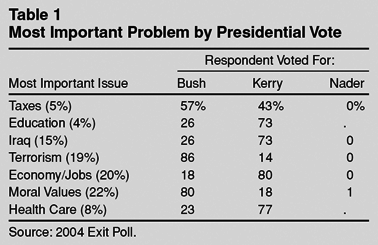
Although the 2004 presidential election was predicted to be razor close, Republican President George W. Bush became the first candidate to win a majority of the popular vote since his father in 1988. Bush's coattails extended to the U.S. Congress as well, with Republican gains in both the Senate and the House of Representatives. Journalists and pundits immediately attributed Republican success to the now ubiquitous “values voters” explanation—voters supported Bush because they shared his socially conservative values. Bush had emphasized his Christian faith throughout the campaign, and a widely reported exit poll found that voters thought “morals” were the most important problem facing the nation. The success of gay marriage bans in 11 states seemed to further affirm the prominence of moral values in voters' decision making. With these indicators suggesting that value issues, like gay marriage and abortion, were the catalyst behind President Bush's re-election, it seemed that the president rode to victory on a wave of values voters who had all but escaped the notice of even the most careful political observers until Election Day. Surprisingly, the role of the economy, the war in Iraq, and a host of other plausible interpretations of the 2004 presidential election received comparatively little attention in the national media—where analysts seemed almost unanimously preoccupied with moral values. Tucker Carlson, then co-host of CNN's Crossfire, concluded on November 5, 2004, “Three days after the presidential election, it is clear that it was not the war on terror, but the issue of what we're calling moral values that drove President Bush and other Republicans to victory this week.”1
Dick Meyer, “The Anatomy of a Myth: How Did One Exit Poll Answer Become the Story of How Bush Won?” Washington Post, Sunday, December 5, 2004, B01. Reprinted at www.washingtonpost.com.
In this manuscript, we examine voter decision making in the 2004 presidential race, evaluating the influence of the “moral issues” of gay marriage and abortion on individual vote choice relative to competing factors such as party identification, retrospective evaluations of the economy, and the Iraq war. Using a new national post-election survey, we find that opinions about gay marriage and abortion were far from the most important predictors of vote choice, and had no effect on voter decision making among Independents, respondents in battleground states, or even among respondents in states with an anti-gay marriage initiative on the ballot. Rather, only in the South did either issue have an independent effect on vote choice, and even here the effect was minimal in comparison to that of attitudes toward the economy, the Iraq war, and terrorism.
The conclusion that citizens based their presidential vote largely on the basis of morals was first suggested by the results of a single question from the 2004 exit polls.2
The exit polls were sponsored by the National Election Pool, a consortium of major television networks and the Associated Press, and conducted by Edison Media Research and Mitofsky International.

Also contributing to the conclusion that “morality” was the most important consideration in voters' minds was the success of gay marriage bans on the ballot in 11 states.3
The states with gay marriage ban ballot initiatives include Arkansas, Georgia, Kentucky, Michigan, Mississippi, Missouri, North Dakota, Ohio, Oklahoma, Oregon, and Utah.
The amendments in many of these states also banned civil unions between homosexual couples.
See for example, www.voteforgod.com or www.stthomascamas.org/votegod2004/worthiness.htm.
Although gay marriage was the moral value issue most prominently featured in the 2004 presidential election, we would be remiss to ignore the perennial hot button issue of abortion. The abortion issue received somewhat less campaign coverage, but it is decidedly an issue that most expect to be an important part of the values vote. Abramowitz (1995) concluded that abortion had a dramatic influence in the 1992 election—even though Governor Bill Clinton campaigned predominantly on the importance of the economy. The role of abortion in the 2004 campaign was highlighted when some Bishops in the Catholic Church were outspoken about their unwillingness to allow Senator John Kerry to participate in communion because of his pro-choice platform, and other church officials declared that it would be a sin to vote for a pro-choice candidate.6
See for example, www.st-thomascamas.org/votegod2004/worthiness.htm.
See for example, http://www.jrn.columbia.edu/studentwork/election/2004/catholic_vote.asp.
Following the flurry of media reports concluding that moral values, and gay marriage and abortion in particular, were the primary explanation for Bush's re-election, a number of academics have pointed out several problems with the moral values interpretation (Burden 2004; Jacobs 2004; Fiorina 2004). First, there are certainly reasons to challenge the validity of the exit poll question itself. The question asked respondents about the most important problem facing the country today. In this context, what do moral values as a “national problem” mean? Is it some combination of gay marriage and abortion policy? Alternatively, do moral values also reflect opposition to Kerry's perceived flip-flopping or President Bush's decision to invade Iraq? Moral values as a response category is hardly comparable to the more specific policy and political issues listed as alternative answers to the question. In this context, moral values can be defined any number of ways, making it very difficult to draw meaningful conclusions about what voters meant when they selected it as an important issue (Fiorina 2004).8
Fiorina (2004) reports that “other post-election polls that explicitly separated out those issues [gay marriage and abortion] found fewer than 1 in 6 voters viewing them as overriding.”
Further, while gay marriage was generally cited in the media as the most likely issue behind the comparatively ambiguous category of “morals/values,” the same exit polls indicate that a majority of voters (59%) favored either civil unions (34%) or legal marriage (25%) for same-sex couples. The exit polls also indicate that the electorate generally cast ballots in line with their party identification: 89% of Democrats voted for Kerry and 93% of Republicans voted for Bush. While the importance of party identification for vote choice was established by political scientists nearly a half century ago (Campbell et al. 1960), and recent evidence suggests that the effect may have grown in recent elections (Bartels 2000), the mass media generally failed to acknowledge the importance of party identification in the 2004 presidential election. Jacobs (2004) concludes, “the preoccupation with moral values and then the postmortems on John Kerry's strategy and personal limitations as a candidate has distracted attention from the two most important and enduring influences on voting—the economy and partisanship.”9
Burden (2004) similarly argues that national security concerns, not moral values, appear to explain changes in Bush support between 2000 and 2004.Although there are growing doubts about the values voter hypothesis, existing empirical challenges have had to rely on aggregate data and can therefore not definitively test competing explanations of individual decision making.10
Existing analysis risks problems of ecological inference in drawing conclusions about individual behavior from aggregate-level data.
“Evangelicals to Bush: Payback Time: Christian Conservatives Say They Gave Bush ‘Moral Mandate’; Call on Him to Act on Their Behalf.” ABC News Original Report, November 28, 2004.
Ultimately, the explanations presented by the media, pundits, and even some scholars are, so far, incomplete. They fall short because they have not tested the values voters hypothesis with individual level data controlling for potential alternative explanations. In other words, do policy preferences about gay marriage and abortion have an effect on individual vote choice independent of party identification, ideology, and other prominent issues? To offer a more complete evaluation of the importance of values in the 2004 presidential election, we analyze data from a nationally representative post-election survey of more than 2,800 respondents. This post-election survey was designed to gauge public opinion on a wide variety of policy issues that tend to differentiate the political parties, and thus promises to provide an improved understanding of the role of political issues in campaigns, political evaluations, and political participation.
The Blair Center 2004 Presidential Election Survey is nationally representative and randomly sampled from the Knowledge Networks (KN) Internet panel.12
Independent comparison studies have found the KN sample representative of U.S. Census averages (Krosnick and Chang 2001; Viscusi et al. 2004). Krosnick and Chang (2001) commissioned a set of side-by-side surveys using a single questionnaire regarding the 2000 U.S. election from national samples of American adults. They find the KN survey is comparable to the RDD telephone survey and representative of the U.S. population.
Detailed information on the KN methodology can be found on their web site at http://www.knowledgenetworks.com/ganp/index.html. Research using the KN panel has been published in a number of academic journals including American Political Science Review, American Journal of Political Science, and Journal of Politics, to name a few.
For more elaborate comparison of probability versus volunteer Internet samples see Pineau and Slotwiner (2003).
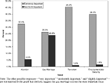
Given the importance that existing explanations of the 2004 presidential election placed on the issue of gay marriage, we begin by presenting attitudes toward gay marriage as measured by our post-election survey (question wording for this and other issues reported in the Appendix).15
Although polls find wide-spread support for civil unions, voters did not have an opportunity to vote for civil unions on the ballot; they simply had the option of voting for or against gay marriage bans. For this reason, our survey question asks only about support for gay marriage.
See for example, Scott Keeter, “Reading the Polls on Gay Marriage and the Constitution.” The Pew Research Center for the People and the Press. July 24, 2004. http://people-press.org/commentary/pdf/92.pdf.

Comparison of Issue Importance
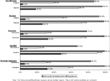
To begin our investigation into the alternative explanations of the 2004 election, we look at vote choice by party identification and the issues noted above. Figure 2 reports the percentage of respondents voting for Bush (over Kerry) by party identification and issue preferences. For example, in the first set of bars we see that 86.9% of Republicans who supported gay marriage voted for Bush, as did 39.2% of Independents, and just 3.2% of Democrats. Stated differently, the majority of both Democrats and Independents who supported gay marriage voted for Kerry (96.8% and 60.8%, respectively). More interesting, of course, is that among Republicans who supported gay marriage, just 13.1% defected to Kerry. In other words, the vast majority of Republicans who disagreed with Bush on the issue of gay marriage still remained loyal to their party's candidate.

Percent Voting for Bush by Issue Position and Party Identification
Comparing the relationship between issue preferences and vote choice, we find several interesting patterns. First, these data show that both Democrats and Republicans were exceedingly loyal to their party's candidate regardless of their position on the issues. In fact, we could not find a single issue where a majority of partisans voted against their party's candidate—even when they disagreed with the candidate on that issue. Looking specifically at attitudes about gay marriage, just 18.3% of Democrats opposed to gay marriage defected to Bush, while only 13.1% of Republicans supporting gay marriage defected to Kerry. It is also interesting to note that across all issues, Republicans were consistently more loyal to their party candidate than were Democrats, an asymmetry identified in previous elections as well (Hillygus and Jackman 2003). Democrats who held issue positions at odds with their candidate appear to have been somewhat more willing to defect from their party and vote for Bush.
This overall pattern of party loyalty should not obscure the fact that there were notable variations in party defections by issue. In comparing defections and loyalty across the various issues, gay marriage and abortion were far less likely to discriminate vote choice than were opinions on the war in Iraq and the economy. In contrast to the rather small rates of defection on the issue of gay marriage reported above, some 33% of Republicans who believed the Iraq war was “not worth the costs” voted for Kerry, while 48.3% of Democrats who believed the Iraq war was “was worth the costs” voted for Bush. Likewise, 21.5% of Republicans who believed the economy had gotten worse in the last year voted for Kerry; while 32.8% of Democrats who believed the economy had improved voted for Bush. Thus, partisans who disagreed with their party on the issue of the Iraq war, terrorism, or the economy were more likely to defect than were partisans who disagreed with their party on the issue of gay marriage or abortion.
Similar to their partisan counterparts, the issue that best discriminated vote choice among Independents was evaluations of the Iraq war. A whopping 90.4% of Independents who thought the Iraq war was worth the costs supported Bush on Election Day, compared to just 22% who thought the Iraq war was not worth the costs—a 68.2% point gap. Among Independents who believed the economy had improved over the past year, 71.9% voted for Bush while only 30.8% who believed the economy had declined over the past year did—a 41.1% point gap. In contrast, the vote gap was far smaller for the issues of gay marriage (29.9% points) and abortion (23.1% points). In other words, opinions about the economy and the war in Iraq did a better job of differentiating vote choice (for both Independents and partisans) than either gay marriage or abortion attitudes.
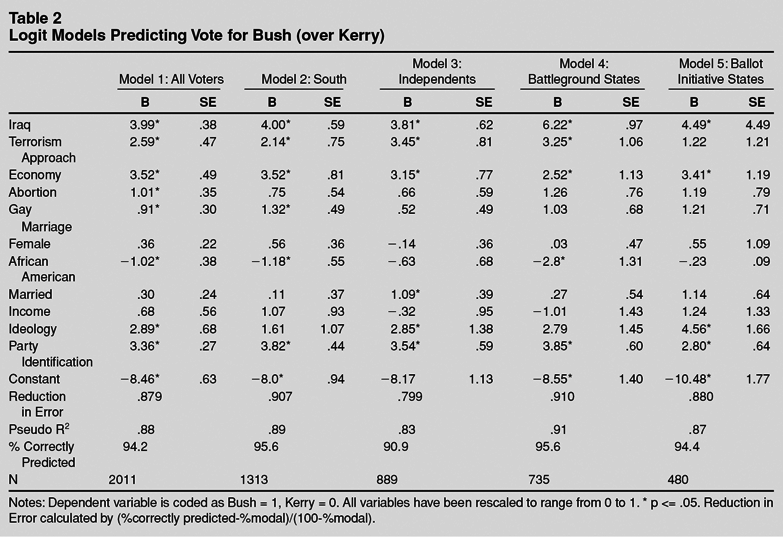
Although the data presented in Figure 2 provide an initial test of the importance of gay marriage in shaping vote choice, a more rigorous examination simultaneously controls for alternative explanations. To do this, we estimate a multivariate logit model predicting a vote for Bush (over Kerry), allowing us to compare the effects of the economy, evaluations of the war in Iraq, abortion, approaches to terrorism, and gay marriage.17
Including a measure of church attendance or attitudes toward the Bible does not change results. Adding presidential approval to the model did not change the gay marriage or Iraq effect, but swamped the economy effect.
Models have also been estimated, with no change in results, including measures of education, age, and Hispanic ethnicity; none reach statistical significance.
In addition to examining the effect of moral issues on vote choice in the general population, we also look at the importance of these issues among various groups where values-based voting may have been particularly influential in shaping election outcomes in 2004. The first model predicts vote choice among all respondents in the survey. The second model restricts the analysis to only those living in the South19
Defined here as the 11 states of the Old Confederacy.
Independents include those leaning towards one party or the other. Battleground states were defined as those states in which the 2000 two party vote difference was smaller than five percentage points. These states included New Hampshire, Pennsylvania, Ohio, Wisconsin, Minnesota, Iowa, Missouri, Florida, Tennessee, New Mexico, Nevada, and Oregon.

Examining the results for all respondents (Model 1), we see that several issues were significant predictors of voting for Bush (over Kerry). Specifically, respondents' evaluations of the war in Iraq and the economy, and opinions about a multilateral approach to terrorism were all significant predictors of vote choice—even controlling for demographics, party identification, and ideology. Notably, opinions on the Iraq war had the largest effect, with a coefficient more than four times that of gay marriage, and even larger than the effect of party identification.21
Non-voters and minor party voters are omitted from the analysis, and all variables are rescaled to range from 0–1.
Among those respondents living in the states of the Old Confederacy (Model 2), one of the most socially conservative regions of the country, the results are quite similar, except that the effect of attitudes toward abortion no longer reaches standard levels of statistical significance. The relationship between gay marriage and a vote for Bush is somewhat stronger among Southerners than for the nation as a whole, but the effect does not rival the impact of the Iraq war or the economy.
We find that among Independents (Model 3), respondents in battleground states (Model 4), and respondents in states with an anti-gay marriage initiative was on the ballot (Model 5), that abortion attitudes and attitudes toward gay marriage had no significant effect on presidential vote choice when party identification, ideology, and demographics are taken into account. In contrast, the effect of the Iraq war, the economy, and terrorism remain critically important to voter decision making among all of these groups.
To better illustrate and compare the substantive effects of these various issues, we estimate the change in the predicted probability of voting for Bush across the range of issue preferences.22
For comparability on the x-axis, we have generically relabeled the five point issue responses as pro-administration or anti-administration. The actual survey response and survey questions are reported in the Appendix.
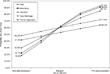
Figure 3 illustrates the predicted probability of voting for Bush across issue preferences for all voters, holding all other variables at their means and indicator variables to zero.23
In other words, the probabilities are computed for an average Independent white male.

Predicted Probabilities for All Voters
Although these findings suggest that Bush did not benefit nearly as much from moral issues as initially suspected, it is interesting to note that Bush generally found support among those with neutral positions on the various issues. Looking at the predictions for those without strong beliefs one way or the other on the issues, we find that they were always predicted to vote for Bush even if they took a moderate position on the issue. The only exception is gay marriage, with those who were neutral on the issue of gay marriage more likely to support Kerry.24
This may reflect the distribution of this variable. Since the majority of respondents were on the Republican side of this issue, those not explicitly opposed to gay marriage were actually more liberal than the average respondent.
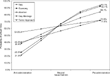
Graphing the predicted probabilities for Model 2, we find a similar pattern as indicated in Figure 4. Even in the conservative South, the issues of the war in Iraq, the economy, and terrorism did a better job of differentiating vote choice than did gay marriage or abortion preferences. Our model predicts that respondents with the most pro-administration positions on the issue of the Iraq war had a 93.7% chance of voting for Bush, compared to a 21.3% chance among those with the most anti-administration viewpoints—a difference of 72.4% points. That difference was 66.6% points for evaluations of the economy, 45.7% points on support for a multilateral approach to terrorism, and 31.4% points on the issue of gay marriage (the difference was not statistically different from zero for the issue of abortion). Overall, then, the influence of moral issues pale in comparison to the decisive influence of the Iraq war, the economy, and terrorism even in the area of the country thought to be the most receptive to the moral values campaign messages.

Predicted Probabilities for Southern Voters
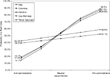
Finally, in figure 5, we graph the predicted probability of voting for Bush across the range of issue preferences for Independents. It might be hypothesized that Independents weigh the issues of the campaign more heavily in their decision making since they are likely to be less loyal to a particular party candidate. The relative impact of the various issues is particularly dramatic among Independents, with the graph illustrating a clean separation of values and non-values issues. As in the previous figures, respondents' attitudes regarding the war in Iraq, the economy, and terrorism have much steeper slopes than the issues of abortion and gay marriage (which did not reach statistical significance). Overall, those who held anti-administration positions on the issues of the Iraq war, the economy, and terrorism were almost sure bets to vote for Kerry, while those holding pro-administration positions on these issues were almost sure bets to vote for Bush. The effects of the so called value issues of abortion and gay marriage show little change across the range of responses to these issues. Put simply, to correctly predict who an Independent voted for in the 2004 presidential election, we need to know their evaluation of the Iraq war, not their opinions about abortion or gay marriage. To the extent that moral values played a role in 2004, it was to reinforce support among partisans not to attract most Americans to a particular candidate.

Predicted Probabilities for Independents
In an individual-level analysis of presidential vote choice in the 2004 election, we find only isolated support for the values voter explanation. The effects of respondents' attitudes toward abortion and gay marriage were inconsistent, and even in those cases where they reached statistical significance the effects were substantially smaller than respondents' evaluations of the Iraq war, terrorism, and the national economy. Surprisingly, in the 2004 presidential election, the effects of the Iraq war were at least as strong, if not stronger, than the effects of party identification.
We should note that it is somewhat difficult to differentiate fully the effect of the Iraq war from the war on terrorism because the two attitudes are so closely related with one another—no doubt in part a consequence of the explicit efforts of the Bush camp to link these issues during the campaign. The correlation between respondents' evaluations of Iraq and opinions about a multilateral approach to terrorism is .556. Similarly, the correlation between respondents' evaluations of the war in Iraq and the personal salience of terrorism as a political issue is .649. Consequently, there is likely an overlap between our measure of evaluations of the war in Iraq and approaches to solving terrorism. Regardless, the importance of these foreign policy concerns for predicting vote choice in the 2004 presidential election remain much greater than the importance of attitudes toward either abortion or gay marriage.
Notably, in this investigation we have focused on presidential vote choice, but have ignored voter turnout. It could be argued that voters may have cast a ballot based upon foreign policy once they entered the voting booth, as our analysis indicates, but the salience of gay marriage and/or abortion sparked interest in individuals who were otherwise unlikely to vote on Election Day. After all, Karl Rove's electoral strategy appeared to focus on mobilizing conservative Christian voters rather than attracting swing voters. Although we do not address the influence of moral values on voter turnout in this analysis, initial research casts doubt on that hypothesis. Burden (2004) reports that rates of turnout among religious voters did not change between 2000 and 2004; nor did rates of turnout in the Bible Belt or Midwest states. Regardless of what brought voters to the polls during the 2004 presidential election, once there the issues of gay marriage and abortion were not strongly related to how they cast their ballot—whether the respondent was an Independent, living in a state with a gay marriage initiative, or living in one of the much talked about battleground states.
Ultimately, the values voter explanation appears to be only a very minor part of citizens' voting calculus in the 2004 presidential election. More important to vote choice in the 2004 election was party identification, ideology, attitudes toward the Iraq war, terrorism, and the economy. Among the most decisive groups—Independents and respondents in battleground states—gay marriage and abortion had no impact on individual vote choice once other factors were controlled. Only in the South did the values issue of gay marriage have an independent effect on vote choice; yet few ever doubted the strength of the GOP, nor Bush's electoral lead, in the South. Even here, the importance of other issues dwarfed the impact of attitudes toward gay marriage and abortion. It appears that values-based appeals only served to reinforce Bush's support among those already planning to vote for him, but failed to persuade new voters. In other words, the moral values issues of gay marriage and abortion matter most where the campaign mattered least.
We would like to acknowledge the generous support of the Diane D. Blair Center for Southern Politics and Society.

Most Important Problem by Presidential Vote

Comparison of Issue Importance

Percent Voting for Bush by Issue Position and Party Identification

Logit Models Predicting Vote for Bush (over Kerry)

Predicted Probabilities for All Voters

Predicted Probabilities for Southern Voters

Predicted Probabilities for Independents
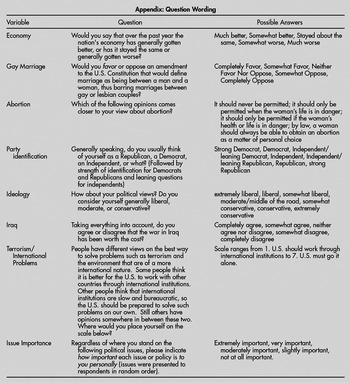
Appendix: Question Wording