


Introduction
Malnutrition arises from deficiencies, excesses or imbalances in the intake of energy and/or nutrients that disturb the metabolism and ultimately leads to either obesity or undernutrition. Obesity is considered a chronic and insidious disease which predisposes to metabolic disorders mainly as consequence of a persistent pro-inflammatory state(Reference Zhou, Xu and Wu1). Undernutrition disturbs body development, delays onset of puberty, interferes with normal oestrous cycles and alters reproductive hormone secretion(Reference Barb, Kraeling and Rampacek2). The effects of undernutrition may vary on the basis of the nutrients that are deficient. Energy intake and metabolism are critical components of the link between body condition and reproductive performance. However, dynamic changes in protein metabolism and deficiencies in amino acids or nutrients can also lead to impaired reproductive performance and health.
Malnutrition is not only deleterious to maternal health, but also to that of their offspring. This occurs because perturbations to the intra-uterine fetal environment lead to permanent postnatal changes in the metabolism and health of the offspring, with these adverse effects being carried over to the next generation (fetal programming via epigenetic changes)(Reference Heerwagen, Miller and Barbour3).
The diet ingested by pregnant sows of modern genetic lines is often insufficient to meet the nutrient requirements for fetal and mammary development which are dramatically increased during late gestation. The energy requirement increases by 4·6 to 5·4 MJ ME per day from day 90 of gestation for sows and gilts, varying according to the number of fetuses(4). Further, in the last 5 days of gestation it is estimated that the energy requirement has an additional increase of more than 20·9 MJ ME per day(Reference Feyera and Theil5). Similarly, amino acids requirements are also increased in late gestation for gilts and sows. The lysine requirement rises approximately 65% after day 90 of pregnancy for gilts and sows(4). Consequently, in situations where maternal body reserves are lacking, embryonic/fetal growth and neonatal development are compromised(Reference Vázquez-Gómez, García-Contreras and Torres-Rovira6). At the other end of the nutrition spectrum, maternal overnutrition was reported to perturb embryonic/fetal development, predisposing piglets to early development of metabolic syndrome, mitochondrial dysfunction and diminished antioxidative capacity(Reference Tian, Wen and Dong7). The impacts of inappropriate body condition are also observed at farrowing and lactation. Both thin and obese sows are prone to increased stillbirth rates, puerperal disorders, impaired colostrum and milk yield, and decreased neonatal survivability(Reference Oliviero, Heinonen and Valros8–Reference Cheng, Wu and Zhang12).
The pig industry has long been confronted with ethical concerns, economic losses and animal welfare issues due to high mortality rates of piglets and high culling rates of sows(Reference Engblom, Calderón Díaz and Nikkilä13). Improper maternal body condition is amidst the main causes of poor reproductive health, decreased longevity and increased perinatal morbidity and mortality. Therefore, it is of utmost importance to shed light on the consequences of maternal overnutrition and undernutrition, providing management tools to the stakeholders involved in pig production in order to keep sows in an optimal body condition, thereby improving reproductive health, overall productivity and sustainability of the pig industry. The objective of the present review is to elucidate maternal overnutrition and undernutrition and their effects on reproductive health and perinatal outcomes as well as to pinpoint currently available nutritional managements to keep sows’ body condition in an optimal range.
Evaluation of sow body condition
To maximise production targets and sustainability in commercial pig operations, attention to sows’ body condition is paramount. Evaluating the body condition of sows in modern pig herds has become essential to maximise the proportion of sows within the optimal body condition, avoiding, therefore, overweight and underweight sows(Reference Maes, Janssens and Delputte14–Reference Knauer, Stalder and Karriker17). All available methods to access the body composition are performed at a specific point of time. Thus, these measures are only a snapshot of sow’s body composition and fail to show the dynamic changes overtime and its effects on metabolism. Ideally, the evaluation of body condition would be interpreted as a set of measures taken throughout the reproductive cycle to better understand and make conclusions about the metabolism. The evaluation of body condition should be performed at critical moments of the reproductive cycle such as pre-insemination, mid pregnancy, pre-farrowing and weaning.
Sows’ body composition can be directly determined by dissection, but this is obviously impractical under field conditions(Reference Charrette, Bigras-Poulin and Martineau18). Indirect techniques can also be used to determine body condition, such as 2H dilution(Reference Ferrell and Cornelius19) and bio-electrical impedance(Reference Swantek, Crenshaw and Marchello20). However, despite their precision and accuracy, these methods have many practical constraints(Reference Maes, Janssens and Delputte14). Other indirect methods to determine sows body condition that are more feasible under field conditions include assessment of body weight, visual body condition score, sow body condition calliper, and the evaluation of backfat thickness and loin muscle depth and area through ultrasonography. All these methods have disadvantages and advantages(Reference Maes, Janssens and Delputte14–Reference Knauer, Stalder and Karriker17), which will be further addressed.
Backfat thickness
The intense genetic selection for increased litter size and leanness that occurred over the last 40 years hinders the comparison of older studies with the modern genotypes regarding the importance of backfat thickness (BFT) to reproductive function. BFT is still the most objective and precise indicator of a sow’s body condition, as it reflects the total fat content of the sow and it is closely related to reproductive function and metabolism(Reference Mullan and Williams21). However, in the modern genotypes, characterised by intense growth of the muscular tissue, BFT should not be the only objective technique to evaluate the metabolic condition of sows and gilts. The BFT is properly evaluated by B-mode ultrasonography at P2 position (approximately 6–8 cm away from dorsal midline at the last rib curve)(Reference Maes, Janssens and Delputte14). Factors such as incorrect position of the probe, experience of the technician and differences among instruments may jeopardise its accuracy and reflect in variations among studies. Moreover, metabolic disturbances (e.g. amino acids and mineral deficiency) may occur even when the desirable BFT is achieved.
There are divergences among studies (Table 1) regarding the cut-off point to classify a sow as under- or overconditioned(Reference Thongkhuy, Chuaychu and Burarnrak22–Reference Farmer, Martineau and Méthot24); besides, the genotype of the sows could influence this classification. Evaluation of the effects of BFT as an isolated factor is a challenge under field conditions considering that many factors (housing, growth rate until first insemination, boar contact, season, onset of puberty) may affect the reproductive performance of sows and gilts concomitantly with BFT and metabolic state. In this case, some studies failed to find any influence of BFT on performance, probably owing to the influence of other factors and to the low BFT ranges which were considered in these trials(Reference De Rensis, Gherpelli and Superchi25,Reference Rozeboom, Pettigrew and Moser26) .
Main outcomes regarding performance and reproductive physiology from studies comparing different BFT through the reproductive cycle of sows and gilts

BFT, backfat thickness; EP, early pregnancy; MLP, mid-/late pregnancy.
Several studies agree regarding the lowest cut-off point of BFT in hyper-prolific sows. Sows that are under 15 mm of BFT had higher stillbirth rate, decreased number of piglets born and born alive, lighter piglets at birth and greater number of piglets showing signs of intra-uterine growth restriction (IUGR)(Reference Maes, Janssens and Delputte14,Reference Thongkhuy, Chuaychu and Burarnrak22,Reference Amdi, Giblin and Ryan30,Reference Zhou, Xu and Cai32) . Otherwise, Cools et al.(Reference Cools, Maes and Decaluwé37,Reference Cools, Maes and Decaluwé40) considered 18 mm of BFT as the lowest recommended limit for sows around farrowing. Notwithstanding, the higher threshold of BFT considered acceptable for sows is more controversial. Tian et al.(Reference Tian, Dong and Hu27) found that second-parity sows with BFT of ≥20 mm at mating and at late pregnancy (105 d) presented decreased placental efficiency, while Zhou et al.(Reference Zhou, Xu and Cai32) only observed detrimental effects for this variable in sows with BFT of ≥23 mm. With respect to litter performance during the suckling period, it was reported that hyper-prolific sows with BFT higher than 23 mm resulted in lower litter weight gain and greater mortality rates(Reference Li, Hu and Wei31,Reference Zhou, Xu and Cai32) . Lipid accumulation impairs placental function; however, the mechanisms underlying this phenomenon are largely unknown. Methods that use a global assessment of a set of molecules (omics) aiming to elucidate these underlying mechanisms are required to improve our knowledge in this topic. As an example, Li et al.(Reference Li, Hu and Wei31) demonstrated by proteomic analysis that maternal obesity in pigs is associated with abnormal metabolism, mitochondrial dysfunction, decreased steroid hormone biosynthesis and increased oxidative stress and inflammation in the placenta.
All phases of the sow reproductive cycle are closely intertwined. Thus, abrupt deviations of normal body condition in one phase may explain some carry-over effects in subsequent phases(Reference Maes, Janssens and Delputte14,Reference Coffey, Diggs and Handlin41) . However, carry-over effects should be analysed cautiously in studies performed in commercial herds, since there are several variables that are not controlled and can affect the outcomes, such as the starting metabolic state of the animal, feeding management and lactation length. Therefore, a conservative recommendation would be to maintain sows and gilts in a range of 16–20 mm and 15–19 mm of BFT, respectively, and a calliper category of C4 (12·5–14·0 units), and visual score of 3–3·5.
Loin muscle depth and area
Loin muscle depth and area evaluation are included in the measurement of the longissimus dorsi by B-mode ultrasound. The evaluation of loin muscle is an objective indicator of body protein mass and, therefore, allows for the assessment of sow’s metabolic state. Mobilisation of body protein is associated with impaired reproductive performance(Reference Schenkel, Bernardi and Bortolozzo16), changes in uterine and ovarian gene expression(Reference Willis, Zak and Foxcroft42–Reference Quesnel, Mejia-Guadarrama and Dourmad44), decreased milk yield and altered milk composition(Reference Costermans, Soede and Middelkoop45).
Nevertheless, in pig operations, the assessment of body protein mass is often neglected. This fact is concerning since visual score, calliper and backfat thickness measurements have low correlation with loin area, with r-values ranging from 0·26 to 0·47(Reference Maes, Janssens and Delputte14,Reference Knauer and Baitinger15,Reference Knauer, Stalder and Karriker17) . Loin depth and loin area have a higher correlation (r = 0·92); further, loin muscle depth measurement can be easily and rapidly performed without the need for expensive ultrasound equipment(Reference Knauer, Stalder and Karriker17), meaning that loin muscle depth assessment can be used in the farm routine in combination with backfat thickness evaluation. This multi-evaluation approach provides more accurate information about sows’ metabolic status.
However, the limited number of published studies evaluating loin depth precludes a confident recommendation regarding the minimum loin depth for satisfactory performance throughout the reproductive cycle. Further research is required to evaluate the effects of loin depth and the combination of backfat and loin depth on reproductive function.
Visual body condition score
In many herds, body condition is evaluated by visual scoring, on a scale ranging from 1 to 5(Reference Maes, Janssens and Delputte14,Reference Fitzgerald, Stalder and Dixon46) . This method is widely used owing to its easy application and can provide relevant information about the sow’s body composition. However, the visual body condition score is a subjective and inaccurate method that largely depends upon the training of farm personnel(Reference Maes, Janssens and Delputte14,Reference Fitzgerald, Stalder and Dixon46) . The accuracy of body condition score is affected by the scale adopted, whereas 1–5 with a scale of 0·5 points is more precise than 1–5 with scale of 1 point(Reference Fitzgerald, Stalder and Dixon46). The visual body condition score is affected by parity and gestational phase. The visual body score condition has moderate correlation with more objective and precise indicators of body composition such as BFT and loin area measurements (r = 0·48 and 0·43, respectively), with the lowest correlation observed in gilts(Reference Maes, Janssens and Delputte14,Reference Fitzgerald, Stalder and Dixon46) .
Body condition measured by calliper
The calliper is an objective tool that performs fast and accurate measurements of sows’ body condition. The method was developed to quantify the angularity from the spinous process to the transverse process of a sow’s back. The sow calliper technology is based on the premise that, as a sow loses weight, fat and muscle of the back becomes more angular(Reference Knauer and Baitinger15). It was observed that backfat, loin depth and body condition score were correlated with calliper measurements (r = 0·50–0·60, 0·40–0·47 and 0·60–0·77, respectively), with an accuracy similar to visual body condition score. The main disadvantage of this tool is that it was designed on the basis of modern genetic lines with similar skeletal size to those used in the study(Reference Knauer and Baitinger15). On this basis, genetic advances or assessment of other genetic lines may require a new standardisation of the method.
Body weight
It is clear that body weight increased as visual body condition score, BFT and loin depth increased. However, body weight is not only determined by fat and protein deposition but also by genetic factors, parity, visceral and bone weight, and period of gestation. Consequently, there is a discrete correlation between body weight and BFT (r = 0·33)(Reference Knauer and Baitinger15). Despite the limitations of body weight to determine the body composition, this technique can be used in combination with measurements of BFT and loin area or loin depth to determine the metabolic state of the sow as well the protein and fat loss during specific reproductive stages known by intense metabolic changes such as lactation(Reference Maes, Janssens and Delputte14,Reference Schenkel, Bernardi and Bortolozzo16,Reference Mullan and Williams21) .
Maternal overnutrition
Obesity and associated hyperlipidaemia were related with pre-conceptual, gestational, intrapartum and postpartum complications to both mother and the fetus(Reference Brewer and Balen47). Adipose tissue is no longer considered only a depot to store excess energy in the form of fat; rather, it is a specialised endocrine and paracrine organ that modulates energy metabolism via the secretion of circulating adipokines, that is, leptin, adiponectin and chemerin, which are key regulators of insulin action, glucose metabolism and reproductive function(Reference Superchi, Saleri and Menčik33,Reference Ahlsson, Diderholm and Ewald48,Reference Weber and Spurlock49) . Obesity is not only problematic per se; it also can cause structural and metabolic alterations in various tissues and organs, including muscle, uterus and liver, that lead to undesirable consequences to maternal health, pregnancy outcomes and short- and long-term health of offspring. During pregnancy, nutrients are transferred from the dam to fetuses via active transport mechanisms or undergo extensive metabolism before reaching the fetus(Reference Fowden, Apatu and Silver50). Therefore, it is suggested that the effects of overnutrition on offspring development may not only be mediated directly by nutrients themselves, but also by the impact that body composition has on the metabolic/hormonal status of the dam(Reference Muhlhausler, Gugusheff and Ong51). It is well documented in various mammalian species, including pigs, that overweight and obese female subjects are at an increased risk of a number of pregnancy complications induced by metabolic disorders such as insulin and leptin resistance(Reference Gonzalez-Bulnes, Pallares and Ovilo52).
The Iberian, Mangalica and Ossabaw pig breeds are ancient genotypes predisposed to obesity, and for this reason make suitable models to study the mechanisms by which excessive fat deposition impairs sows’ reproductive performance(Reference Martin, Qasim and Reilly53,Reference Vieira-Potter, Lee and Bayless54) . Iberian pigs are characterised by lower reproductive efficiency compared with modern lean pigs, a characteristic which is worsened by age and adiposity. This is believed to occur because Iberian pigs display a gene polymorphism of the leptin receptor which contributes to their high voluntary feed intake and obesity due to a similar syndrome to the leptin resistance described in obese human subjects(Reference Gonzalez-Bulnes, Pallares and Ovilo52).
Rearing period
Successful gilt selection and introduction to the breeding herd dictates lifetime reproductive performance and longevity in the breeding herd. Longevity is an issue that must be dealt with in a very effective way as sows are not profitable until their second to third parity. As a consequence of poor management prior to first insemination, gilts may have limited performance in subsequent parities; also, gilts have the highest frequency of culling within a herd (39–51%)(Reference Patterson and Foxcroft55). High replacement rates are primarily a result of suboptimal management, particularly inappropriate nutrition prior to the gilt becoming breeding eligible and throughout the breeding life.
In most production systems, gilts are raised as fattening pigs in groups of mixed sex until reproductive age(Reference Quinn56,Reference Boyle and Björklund57) ; the diets used are the same as those intended for fattening pigs and thus may not meet gilt physiological needs(Reference Quinn, Green and Lawlor58). However, there is no recommendation for the correct balance of minerals to satisfy nutritional needs for reproductive performance of gilts(Reference Levis, Vernon and Rozeboom59–Reference Knauer, Cassady and Newcom61); thus, more studies are required to determine the optimal mineral inclusion to reach the full genetic potential of developing, hyper-prolific gilts.
In pigs, BFT is among the several factors associated with reproductive success as early as the period of puberty attainment. Indeed, Kummer et al.(Reference Kummer, Bernardi and Schenkel29) allocated gilts in groups according their growth rate from birth to 144 d of life and demonstrated that gilts with a mean BFT of 11·6 mm attained puberty 9 d prior to the gilts with mean BFT of 10·0 mm.
BFT at puberty can also influence lifetime productivity; gilts at first oestrus with BFT of 11·1–13·0 mm gave birth to fewer total born and born alive piglets compared with gilts with BFT of 13·1–15·0 mm(Reference Tummaruk, Tantasuparuk and Techakumphu62). Moreover, BFT at puberty is positively associated with BFT at insemination and at first parturition in gilts(Reference Filha, Bernardi and Wentz35). Tummaruk et al.(Reference Tummaruk, Tantasuparuk and Techakumphu62) and Filha et al.(Reference Filha, Bernardi and Wentz35) found that gilts inseminated with BFT of 16–17 mm had greater litter size than gilts with BFT of ≤15 mm. Tian et al.(Reference Tian, Wen and Dong7,Reference Tian, Dong and Hu27) observed similar results but considered a wider interval of BFT (15–19 mm), whereas Flisar et al.(Reference Flisar, Malovrh and Urankar63) demonstrated lower litters for gilts with BFT greater than 20 mm. The occurrence of excessive fat accumulation prior to breeding in gilts may arise owing to a delay in entering the breeding herd; thus, controlling growth rate during the rearing period and age at first service is crucial(Reference Engblom, Lundeheim and Strandberg64,Reference Koketsu, Takahashi and Akachi65) , as it influences BFT and body weight, which impacts gilt reproductive performance(Reference Flisar, Malovrh and Urankar63).
Gilts with a good appetite should be selected; however, attention must be considered to prevent their excessive fattening(Reference Lammers, Stender and Honeyman66), as Filha et al.(Reference Filha, Bernardi and Wentz67) reported that gilts with growth rate (GR) from birth to insemination greater than > 770 g/d had a larger litter size but a higher percentage of stillborn piglets compared with the gilts with lower GR. According to Faccin et al.(Reference Faccin, Laskoski and Lesskiu68), gilts should have at least one oestrus prior to insemination with a minimum average daily gain (ADG) of 550 g, 130 kg of body weight and at least 180 d of age. If these criteria are met, no negative effects on litter size and longevity until the third parturition should be observed. The authors also point out that a reduction of approximately 21 non-productive days can be achieved if the insemination is performed before 210 d of age.
In contrast, gilts older than 260 d of life and which have had more than four oestrus cycles are more prone to decreased reproductive performance at first insemination and in latter parities(Reference Young, Tokach and Aherne69). Heavier and faster-growing gilts have an increased risk of developing leg disorders(Reference Stern, Lundeheim and Johansson70,Reference Jørgensen and Sørensen71) , which together with reproductive failure is among the main reasons for culling young sows(Reference Engblom, Lundeheim and Strandberg64). This will lead to a decrease in farm productivity, especially in terms of piglets weaned per sow per year(Reference Małopolska, Tuz and Lambert72) as the most productive sows have two to four parities(Reference Koketsu, Takahashi and Akachi65,Reference Tantasuparuk, Techakumphu and Dornin73,Reference Kasprzyk and Łucki74) .
The ideal moment to execute the first breeding of gilts depends on the number of oestrus cycles, growth rate, body weight, BFT and age(23,Reference Clowes, Aherne and Schaefer43) . However, there is a lack of published studies on the intrinsic relationship between fatness at first mating and lifetime productivity of the gilt. Additionally, the interpretation of any findings, such as a correlation between fatness and lifetime productivity, requires caution as it does not prove causation and may be confounded by other factors such as age and weight at mating.
Early pregnancy
In pigs, the peri-implantation period of accelerated trophoblastic elongation and attachment to the uterine surface relies on an intricate interplay between conceptuses (embryo/fetus and its associated membranes) and the uterine epithelium. Embryonic and endometrial production of various cytokines and growth factors are essential for providing the synergistic environment for a proper embryonic development and placentation(Reference Geisert and Yelich75,Reference Bazer and Johnson76) . Consequently, early pregnancy is arguably the most critical phase of pregnancy(Reference Pope, Xie and Broermann77). Up to 40% of embryonic loss occurs during this time(Reference Bazer and Johnson76), and variations in early conceptus development may lead to differences in piglets’ birth weights.
Obesity was associated with increased reproductive disorders during early pregnancy in pigs(Reference Pope, Xie and Broermann77,Reference Gonzalez-Añover, Encinas and Torres-Rovira78) owing to deficiencies in endometrial receptivity(Reference Alfer79), embryo development(Reference Robker80) and trophoblast/placental functionality(Reference Castellucci81). Gonzales-Añover et al.(Reference Gonzalez-Añover, Encinas and Torres-Rovira78) demonstrated that obese sows have 22% less viable embryos when compared with thin sows at day 21 of pregnancy, even with a similar ovulation rate. Considering that early embryo development is a determinant of fetal/placental development throughout gestation(Reference Ashworth, Toma and Hunter82); obesity may also affect neonatal birth weight. Maternal obesity causes overgrowth and large size in some offspring (large for gestational age), whereas other littermates suffer inadequate placental development and are small for gestational age, sometimes with evidence of IUGR(Reference Nohr, Vaeth and Bech83). The offspring of obese Iberian sows are overall smaller than those of their thin counterparts and have more frequent evidence of IUGR. Moreover, Large White × Landrace sows with excessive BFT (≥23 mm) were reported to have a higher incidence of piglets born underweight (<800 g)(Reference Zhou, Xu and Cai32). Immediately after birth, the survival of IUGR piglets is greatly compromised by gastrointestinal, metabolic, respiratory and immune dysfunctions. Most IUGR piglets die before weaning, and IUGR piglets account for 76% of preweaning deaths in pigs(Reference Wu, Bazer and Burghardt84).
The composition of uterine luminal fluid (collectively known as histotroph) and the molecular interactions between the mother and developing embryo during the pre-implantation period are influenced by maternal factors such as the metabolic status of the mother. Metabolic disorders associated with obesity such as hyperleptinemia and insulin resistance may lead to a harmful uterine environment during early pregnancy. Glucose and insulin play a pivotal role as mediators in the expression of genes that modulates uterine environment, and it is crucial to assure their optimum concentration to support embryo development(Reference De-Bem, Tinning and Vasconcelos85). Early pregnancy of obese Iberian sows is characterised by substantial changes in the availability of triacylglycerol and cholesterol and in the steroidogenic activity of their conceptuses(Reference Torres-Rovira, Astiz and Gonzalez-Añover86). Insulin resistance and hyperleptinemia have been also related to hyper-oestrogenemia and hypo-progesteronemia, which have a deleterious effect on endometrial receptivity since oestrogen and progesterone are crucial to endometrial receptivity and production/secretion of histotroph(Reference Gonzalez-Añover, Encinas and Torres-Rovira78,Reference Muro, Carnevale and Leal87,Reference Bazer, Kim and Ka88) . Gonzalez-Añover et al.(Reference Gonzalez-Añover, Encinas and Torres-Rovira78) found defective luteal function in obese genotypes resulting in a reduction of 45% of progesterone secretion during early pregnancy when compared with lean genotypes. High levels of systemically leptin has been found to be associated with impaired endometrial receptivity and embryonic development(Reference Alfer79,Reference Wang, Fu and Wang89–Reference Morley, Alshaher and Farr95) .
Mid- and late pregnancy
Nutrition during mid-gestation (30–75 d) is mainly focused on body growth for young sows and recovery of body reserves lost during lactation in older ones(Reference McPherson, Ji and Wu96). The requirements for mammary and fetal tissue development are still relatively minor at this stage(Reference Goodband, Tokach and Goncalves97); body weight gain is related to an intake greater than the requirement for maintenance and development of fetal and mammary tissue, placenta and fluids(Reference Solà-Oriol and Gasa98). Some researchers(Reference Wang, Yang and Cao99,Reference Wiecek, Rekiel and Bartosik100) found improvement in colostrum quality when increasing the amount fed for the sows during this period. However, the increased feed intake during this period should be promoted only for sows considered thin, and this feed increment should be maintained only until the female recovers the optimal body condition, as body condition may have a greater impact on the performance of the sows and its progeny than the amount of feed(Reference Amdi, Giblin and Ryan30).
According to Cerissuelo et al.(Reference Cerisuelo, Sala and Gasa101), providing an extra feed allowance during mid-gestation has beneficial effects on gilts’ body fat reserves at weaning (higher proportion of females in the optimum BFT interval). However, for sows with optimal body condition, Cerissuelo et al.(Reference Cerisuelo, Sala and Gasa102) found that increasing the amount of feed during mid-pregnancy during three consecutive parities negatively impacted the productive performance of the sows as it reduced the ability of the sows to produce milk and reduced piglet survival during lactation (greater piglet mortality and mastitis, metritis, and agalactia (MMA) syndrome). These findings are mainly correlated with higher BFT of the sows from the increased feed. This loss of performance could be related to the replacement of mammary tissue by fat as Weldon et al.(Reference Weldon, Thulin and MacDougald103) reported that greater energy or increased feed allowance during mid- to final gestation could cause it.
Although nutrient requirements of sows in early and mid-gestation are low, in the final third of gestation the requirements increase dramatically, as fetal and mammary growth occurs. In the last 4–6 weeks of gestation, fetal weight increases 5-fold and mammary protein content increases 27-fold(Reference McPherson, Ji and Wu96,Reference Kim104) . Further, between 90 and 100 d of gestation, there is a greater efficiency in the exchange of nutrients between sows and fetuses due to both an augmented surface contact of the placenta to endometrium and an increase in placental vascularisation(Reference Biensen, Wilson and Ford105). Some nutritional strategies have been widely used in the swine industry to maximise maternal–fetal exchange during late gestation.
Bump feeding, for example, consists of an increased amount of feed provided to sows at the end of gestation(Reference Gonçalves, Gourley and Dritz9,Reference Ferreira, Rodrigues and Ferreira106,Reference de Araújo, de Oliveira and deVieira107) . However, the benefits of bump feeding are controversial. Some authors demonstrated benefits in improving litter birth and weaning weights(Reference Cromwell, Hall and Clawson108), while others observed positive responses to bump feeding on trials conducted with gilts(Reference Shelton, Neill and DeRouchey109). Gonçalves et al.(Reference Gonçalves, Gourley and Dritz9) found a slight improvement on piglets’ birth weight with bump feeding. Ferreira et al.(Reference Ferreira, Rodrigues and Ferreira106) found that the use of bump feeding over two parities improved the retention rate in the sow herd. Bump feeding of the parity-four sows resulted in a greater number of piglets born alive as well as greater pre- and post-prandial glucose levels, post-prandial insulin, phosphorus and triacylglycerol. In contrast, some authors did not find any benefit of bump feeding in the performance of piglets(Reference Gonçalves, Gourley and Dritz9,Reference Mallmann, Betiolo and Camilloti110,Reference Mallmann, Camilotti and Fagundes111) and/or in colostrum quality(Reference Ferreira, Rodrigues and Ferreira106). Bump feeding may lead to fatter sows(Reference Gonçalves, Gourley and Dritz9), which is associated with lower voluntary feed intake during lactation(Reference Sinclair, Bland and Edwards112), lower colostrum yield(Reference Decaluwé, Maes and Declerck11,Reference Foisnet, Farmer and David113) and impaired reproductive performance in the subsequent cycle(Reference Eissen, Kanis and Kemp114,Reference Thaker and Bilkei115) .
The beneficial effects of bump feeding demonstrated by the abovementioned studies support the notion of an increase in energy and lysine requirements at late gestation due to a high demand from fetal and mammary growth. However, the feeding planning during this stage of gestation should be addressed to specific nutrient requirements (e.g. specific amino acids, notably, arginine, proline, glutamine and glutamic acid) based on precision feeding instead of increasing the total amount of feed, which does not guarantee the achievement of all nutrients requirement and may result in excessive fat deposition.
Ajuwon et al.(Reference Ajuwon, Arentson-Lantz and Donkin116) demonstrated that the offspring of sows which had an increase of 50% of metabolised energy intake during gestation had a greater expression of genes associated with the regulation of adipogenesis such as SFRP2, SETD8, GCR, PPARγ, CCAAT, CEBPα and FABP4. This demonstrates the epigenetic effect of prenatal sow energy intake on the postnatal phenotype of the offspring, as SETD8 can increase adipogenesis(Reference Wakabayashi, Okamura and Tsutsumi117), SFRP2 is a negative regulator of inhibitors of adipogenesis(Reference Surana, Sikka and Cai39,Reference Park, Jung and Lee118) , PPARγ, CCAAT, CEBPα and FABP4 are involved with adipocyte differentiation and GCR is correlated with the effects of glucocorticoids increasing adipogenesis(Reference Ringold, Chapman and Knight119).
Pregnancy in obese females is associated with higher plasma concentration of acute-phase proteins and pro-inflammatory cytokines, including tumour necrosis factor-alpha (TNF-α), interleukins (IL-1, -6 and -8) and C-reactive protein(Reference Zhou, Xu and Wu1,Reference Tian, Wen and Dong7,Reference Pawar, Zhu and Eirin120) . Hu et al.(Reference Hu, Yang and Li121) observed that overfeeding gilts induced obesity, caused glucolipid metabolic disorders and increased triacylglycerol and NEFA contents in the placenta of pregnant gilts; furthermore, it increased placental oxidative stress through up-regulation of NOX2 and decreased placental angiogenesis demonstrated by the lower density of placental vessels and by decreased expression of proteins associated with vascularisation, angiogenesis and endothelial permeability (VE-cadherin, VEGF-A). Furthermore, maternal obesity and its associated pro-inflammatory state promotes a lipotoxic placental environment which is characterised by lipid/triacylglycerol accumulation and oxidative stress, contributing to placental dysfunction such as decreased placental efficiency(Reference Tian, Wen and Dong7,Reference Zhou, Xu and Cai32,Reference Challier, Basu and Bintein122,Reference Roberts, Smith and McLea123) . Additionally, immune cells such as macrophages can be found on adipose tissue(Reference Pawar, Zhu and Eirin120,Reference Xu, Barnes and Yang124) and proteins such as TLR4, which demonstrates the role of adipose tissue in the inflammatory response(Reference Ajuwon, Jacobi and Kuske125).
In addition to the direct effect of sow overfeeding, body composition can be a programming agent for the phenotype of the offspring. Zhou et al.(Reference Zhou, Xu and Cai32) evaluated the effect of sow BFT at 109 d of gestation on sow and piglet performance and observed that LDL, HDL and NEFA concentrations significantly increased in both maternal and umbilical cord blood with increased BFT. Moreover, it was demonstrated that placental lipid concentrations are significantly increased with increased BFT (>23 mm), and this variable was positively correlated with the number of piglets weighing <800 g but negatively correlated with birth weight, litter birth weight and piglet weaning weight. The impairments verified in weights are related to the placental ectopic lipid accumulation-induced lipotoxicity(Reference Saben, Lindsey and Zhong126). Indeed, Zhou et al.(Reference Zhou, Xu and Wu1) demonstrated that excessive BFT (>23 mm) during late gestation is associated with greater placental inflammatory environment with an increase in pro-inflammatory factors such as TLR 2, TLR4, TNF-α, IL–1β, IL–6 and MCP–1, greater oxidative stress and lower vascular development.
Similarly, Gonzalez-Bulnes et al.(Reference Gonzalez-Bulnes, Torres-Rovira and Ovilo127), evaluating sows genetically predisposed to obesity, verified that these sows had a lower ability to improve the vascularity of the placenta and that this was correlated with lower expression levels of VEGF and increased levels of leptin. As a result of these changes, the placental efficiency and, thus, the nutrition and the metabolism of the fetus (glucose, triacylglycerol and cholesterol) were impaired. Moreover, maternal obesity influences placental functions, especially fatty acid transport and metabolism in the porcine full- term placenta, accompanied with decreased placental efficiency. Tian et al.(Reference Tian, Dong and Hu27) demonstrated that the placenta of sows with BFT of 20–27 mm had impaired number and activity of transmembrane (CD36, FATP and FATP4) and intracellular (FABP1 and FABP 4) proteins involved in the transplacental transport of lipids necessary for fetal growth during late gestation.
Li et al.(Reference Li, Hu and Wei31), evaluating the effect of sow obesity (BFT of 25–27 mm) during gestation on the proteome of placenta, also found a relationship between fat accumulation and lower total antioxidant capacity and activity, increased triacylglycerol content and greater amount of proinflammatory cytokines such as TNF-α and IL-6. The authors concluded that the maternal obesity is related with disrupted metabolism of carbohydrates and lipids, mitochondrial dysfunction and lower biosynthesis of steroid hormones. Fowden et al.(Reference Fowden, Camm and Sferruzzi-Perri128) demonstrated the impact of obesity on energetic metabolism, revealing that obese sows have reduced abundance of the electron transport system complexes and ATP synthase responsible for producing ATP, which are located in the inner mitochondrial membrane, and this decrease in mitochondrial oxidative function causes a lower placental ATP content and lower rates of mitochondrial palmitic acid and glutamine oxidation.
Sows’ energy requirement during mid-gestation is mainly addressed to ensure maintenance of sows’ body components and growth of the fetuses. Therefore, special attention is required to avoid excessive weight gain during this period as this may cause obesity-related complications that may affect the sows’ metabolism, litter performance and, notably, placental function.
Farrowing and lactation
At farrowing, sows undergo substantial hormonal and metabolic changes during a very short period of time(Reference Algers and Uvnäs-Moberg129). Consequently, farrowing is easily disrupted by factors within and around the sow(Reference Oliviero, Heinonen and Valros8). Commonly, these disturbances are related to suboptimal management or inappropriate nutrition(Reference Cools, Maes and Decaluwé37,Reference Cools, Maes and Decaluwé40) . Oliviero et al.(Reference Oliviero, Heinonen and Valros8) demonstrated a linear effect between BFT and duration of farrowing; in this study, sows with more than 20 mm of BFT had a greater incidence of prolonged farrowing duration (>300 min). Several studies have demonstrated deleterious effects of prolonged farrowing on sows and offspring. Sows that experienced prolonged farrowing have increased postpartum oxidative stress(Reference Szczubiał, Dabrowski and Bochniarz130), augmented risk for both placental retention(Reference Björkman, Oliviero and Rajala-Schultz131) and postpartum dysgalactia syndrome and require more manual obstetric intervention through vaginal palpation(Reference Björkman, Oliviero and Kauffold132), which negatively impact uterine health, fertility and longevity(Reference Peltoniemi, Björkman and Oliviero133,Reference Oliviero, Kothe and Heinonen134) .
The preparatory phase of parturition (stage I), when vulvar swelling, mammary gland fill and dilation of the cervix take place, is characterised by hormonal and metabolic changes that lead to the regression of the corpora lutea, which then cease to secrete progesterone and start to secrete relaxin. These endocrinological changes are fundamental since several studies found a relationship between hormonal changes during stage I and the duration of expulsive stage (stage II) of parturition(Reference Langendijk and Plush135,Reference Rootwelt, Reksen and Farstad136) , suggesting that sows with prolonged parturition are already compromised at the start of parturition and that some of the underlying causes can be found prior to stage II. Obesity is known to affect lipid-soluble steroids, and especially the progesterone-to-oestrogen ratio, which is known to affect oxytocin receptor activation(Reference McCracken, Custer and Lamsa137,Reference Russell, Leng and Douglas138) . Additionally, Oliviero et al.(Reference Oliviero, Heinonen and Valros139) observed a delayed decline in progesterone linked to obesity and the prolongation of parturition. The authors suggested that progesterone bound to fat may be too stable to promptly react to produce CL regression. In agreement, Langendjik(Reference Langendijk140) found that gilts with a protracted decline in plasmatic concentration of progesterone and the expulsion of the first piglet are more likely to experience prolonged parturition. However, the relationship between the decline of progesterone during stage I of farrowing and corporal composition requires further study.
The metabolic condition of the parturient sow is also crucial for an adequate farrowing process. Although the knowledge regarding the link between metabolic and hormonal changes during peripartum is still scarce, an important role of insulin, glucose and NEFA for farrowing traits was demonstrated(Reference Mosnier, Etienne and Ramaekers141–Reference Feyera, Pedersen and Krogh143). The periparturient sow is under a catabolic state because of increased nutrient demands in the last days of gestation. Although, an increase in plasmatic concentration of NEFA is commonly observed on the day of farrowing owing to fat mobilisation(Reference Le Cozler, Beaumal and Neil144), it was demonstrated that sows with higher plasmatic concentration of NEFA at the onset of expulsive stage are more likely to have complicated farrowing(Reference Bories, Vautrin and Boulot145). Therefore, the increased concentration of NEFA observed in the blood of obese sows(Reference Feyera, Pedersen and Krogh143) makes them more susceptible to dystocia. Additionally, Feyera et al.(Reference Feyera, Pedersen and Krogh143) and Carnevale et al.(Reference Carnevale, Muro and Carnino146) demonstrated the importance of an adequate plasmatic concentration of glucose since the gravid uterus is reliant on glucose oxidation during farrowing. However, the excessive insulin resistance related to obesity may inhibit the proper oxidation of glucose in uterine tissue.
Feeding may play a role for the farrowing process in several ways. However, there is a lack of studies evaluating different feeding management strategies and feed composition to improve farrowing traits. Consequently, there is an abundance of feeding strategies to be applied on the day of farrowing that were determined on the basis of trial and error rather than on scientific knowledge(Reference Theil147). Therefore, problems related to feeding management such as constipation and insufficient readily available energy for uterine contractions commonly occur synergistically with hormonal and metabolic disorders to impair the farrowing process. In a retrospective study, Feyera et al.(Reference Feyera, Pedersen and Krogh143) concluded that sows fed within an interval of 3 h prior to farrowing had shorter farrowing duration, higher blood glucose concentrations at onset of farrowing, and decreased stillborn rate compared with sows that were fed >6 h prior to farrowing. Similarly, Gourley et al.(Reference Gourley, Calderon and Woodworth10) found that increased feeding frequency and smaller meal size (670 g) prior to farrowing had a positive impact on the sow’s ability to expel piglets without assistance in comparison with sows fed ad libitum or fed the full daily requirement in only one large meal (2·7 kg) in the morning of the farrowing date. Additionally, both (1) overfeeding pre-partum and (2) obesity at farrowing predispose sows to several problems in the first days postpartum: low voluntary feed intake(Reference Revell, Williams and Mullan148), greater catabolic rate, increased NEFA mobilisation and decreased insulin secretion(Reference Cools, Maes and Decaluwé40,Reference Weldon, Lewis and Louis149) .
Feeding sows a prepartum diet rich in dietary fibre can improve farrowing traits such as stillborn percentage and decreased piglet mortality due to low vitality(Reference Feyera, Højgaard and Vinther150). These benefits are reliant on the properties of the fibre. Solubility is one of the most important characteristics to consider when including fibre in the sows’ diet(Reference Bach Knudsen and Hansen151). Soluble fibre generally has a more complete and faster fermentation rate in comparison with insoluble fibre, with a subsequent higher production of short-chain fatty acids (SCFA)(Reference Lindberg152). Serena et al.(Reference Serena, Jørgensen and Bach Knudsen153) found that approximately 30% of net absorbed energy originated from SCFA in sows fed high dietary fibre (440 g of dietary fibre/kg DM). In agreement, Feyera et al.(Reference Feyera, Pedersen and Krogh143) observed that during late gestation the uterus partially satisfies its energy demand using acetate and butyrate. There is an increased energy requirement around farrowing to support the intense physical activity towards the nest-building behaviour and the heavy colostrum production. Thus, the SCFA could be an important energy source in this period and also to spare the circulating glucose and triacylglycerol that will be used by the uterus as energy sources to intensely contract during farrowing(Reference Feyera, Pedersen and Krogh143,Reference Feyera, Højgaard and Vinther150,Reference Feyera, Zhou and Nuntapaitoon154) . Additionally, diets rich in soluble fibres are related to a longer post-prandial energy uptake from the gastrointestinal tract(Reference Serena, Jørgensen and Bach Knudsen155), and stabilises inter-prandial blood glucose levels(Reference Revell, Williams and Mullan148), which would be of utmost importance in herds where it is not possible to feed the parturient sow more than twice a day.
In theory, the high energy demand of sows rearing large litters may be covered by increased feed intake. However, voluntary feed intake during lactation is often limited owing to metabolic and hormonal regulation(Reference Eissen, Kanis and Kemp114). Several studies reported a positive association between BFT and backfat/body weight loss during lactation(Reference Schenkel, Bernardi and Bortolozzo16,Reference De Rensis, Gherpelli and Superchi25,Reference Lavery, Lawlor and Magowan156,Reference Amdi, Giblin and Hennessy157) . This higher catabolic state in obese sows was probably a result of greater concentrations of anorexigenic hormones such as leptin and decreased insulin sensitivity that made them more prone to ingesting less feed and losing more weight during lactation(Reference Hu, Yang and Li121,Reference Mosnier, Etienne and Ramaekers141) . Kim et al.(Reference Kim, Yang and Pangeni28) demonstrated that lactation feed intake decreases linearly as BFT before farrowing increases, with the greatest decrease in feed intake for sows with >20 mm of BFT at farrowing. Prevention of excessive catabolism and the consequent body weight, body protein and BFT loss during lactation is of utmost importance to achieve an optimal reproductive performance owing to the limited time (4–7 d) between weaning and subsequent insemination(Reference Clowes, Aherne and Schaefer43,Reference Hoffmann and Bilkei158) . Thaker and Bilkei(Reference Thaker and Bilkei115) indicate that >10% of body weight loss during lactation significantly depresses subsequent reproductive performance of the sow by decreasing subsequent total born litter size and farrowing rate. Feed restriction and excessive weight loss during lactation, which is correlated with lower plasma IGF1 and higher plasma creatinine levels(Reference Costermans, Teerds and Keijer159), resulted in a decreased LH pulsatility during lactation and around weaning(Reference Quesnel, Pasquier and Mounier160,Reference Van Den Brand, Dieleman and Soede161) , smaller follicle size at weaning(Reference Quesnel, Pasquier and Mounier160), impaired oocyte quality(Reference Costermans, Teerds and Keijer159), lower embryo weight at 30 d of gestation and decreased uniformity in the subsequent litter(Reference Patterson, Smit and Novak162,Reference Van den Brand, Soede and Kemp163) .
Maternal undernutrition
The modern swine industry is usually feeding the gestating gilts and sows a restricted diet based on maize and soybean to increase the profitability and avoid overweight. Such feeding strategy results in suboptimal placental growth and, notably, inadequate provision of amino acids to the gestating females and their fetuses (Reference Chen, Wang and Feng164,Reference Wu, Bazer and Johnson165). Within the farm routine, females that have been undernourished at some point of the reproductive cycle may be easily identified by corporal condition score or BFT measure. Females with BFT lower than 15 mm (gilts) or 16 mm (sows) or presenting visually apparent shoulders, ribs, hips and/or backbone can be translated as females that have been under energy challenge.
Female pigs that experienced undernutrition during any period of the productive cycle (i.e. rearing, pregnancy or lactation) will present compromised reproductive performance. Undernutrition during the rearing period exerts detrimental impacts for gilt development(Reference Prunier, Martin and Mounier166–Reference Stalder, Saxton and Conatser169), impairing oocyte quality and embryo development(Reference Van Wettere and Mitchell167), ultimately reducing sows’ longevity(Reference Stalder, Saxton and Conatser169–Reference Jin, Jin and Jang171). Moreover, undernutrition is not only deleterious for the sow but also for her offspring. Studies have shown that piglets born from sows that experienced undernutrition during pregnancy had lower productivity(Reference Vázquez-Gómez, García-Contreras and Torres-Rovira6,Reference Da Silva-Buttkus, Van den Hurk and Velde172–Reference Freking, Lents and Vallet174) , altered proportion of muscular fibre type(Reference Bee175), increased obesity characteristics(Reference Óvilo, González-Bulnes and Benítez176) and reduced development until slaughter(Reference Vázquez-Gómez, García-Contreras and Torres-Rovira6). Also, maternal undernutrition reduces total born piglets and birth weight, and increases the number of IUGR piglets(Reference Bee175–Reference Wu, Bazer and Wallace178).
Rearing period
Many events that take place during the pre-ovulatory phase greatly influence embryonic and placental development. Severe undernutrition around this period will increase within-litter-variation birth weights, as well as decrease weaning weight and body weight at slaughter(Reference Campos, Silva and Donzele179). Feed restriction can delay the attainment of puberty, with the severity of the effects depending on the phase that the feed restriction occurs. The last phase of gilt development (between 97 and 131 kg) appears to be more critical to decrease the percentage of gilts cycling at 230 d of age(Reference Prunier180). In a study performed by Miller et al.(Reference Miller, Moreno and Johnson181), gilts that were feed-restricted from weaning presented lower BFT and took longer to reach puberty.
Chronic and acute feed restriction during the peripubertal period impairs reproductive performance. Gilts submitted to chronic (91 d) or acute (14 d) feed restriction had reduced numbers of medium-size ovary follicles by 23% and 28%, respectively, at 175 d of age(Reference Van Wettere and Mitchell167). Also, the acutely feed restricted gilts had 14% lower proportion of oocytes that reached metaphase II(Reference Van Wettere and Mitchell167). Follicular steroidogenesis may be deregulated as a consequence of acute feed restriction; oestradiol and androstenedione levels as well as oestradiol-to-progesterone ratio were lower in the follicular fluid from acute feed-restricted gilts compared with non-restricted gilts(Reference Van Wettere and Mitchell167). Positive associations between oocyte meiotic competence and follicular fluid concentrations of both progesterone and oestradiol have been demonstrated(Reference Ding and Foxcroft182,Reference Van De Leemput, Vos and Zeinstra183) . Undernutrition can also impact the hypothalamic–pituitary axis, since pre-pubertal gilts that had undergone severe feed restriction had impaired gonadotrophin-releasing hormone (GnRH) pulse generator and, consequently, impaired luteinising hormone (LH) secretion(Reference Prunier, Martin and Mounier166,Reference Miller, Moreno and Johnson181,Reference Ferguson, Ashworth and Edwards184,Reference Booth, Cosgrove and Foxcroft185) .
Nutritional status alters the secretion of IGF- I. There is a positive association between nutrient intake, circulating IGF-I and oocyte quality in sows(Reference Van Wettere and Mitchell167,Reference Booth, Cosgrove and Foxcroft185–Reference Diskin, Mackey and Roche188) . Reduced secretion of IGF-I arises owing to the low availability of GH receptors in the liver, which appears to be caused by low insulin plasma levels(Reference Butler, Marr and Pelton189) as well as low leptin levels and/or a high adiponectin plasma concentration(Reference Lubbers, List and Jara190), reflecting a deficient nutritional status.
Body condition during gilt development can influence lifetime productivity and, consequently, longevity. Improper body condition of young gilts before becoming breeding eligible was negatively associated with longevity and total number of piglets born(Reference Stalder, Saxton and Conatser169,Reference Nikkilä, Stalder and Mote170) . In addition, body weight and BFT of gilts at the first observed standing oestrus significantly influenced total number of piglets born per litter and the number of piglets born alive per litter up to parity three(Reference Tummaruk, Tantasuparuk and Techakumphu62).
Tummaruk et al.(Reference Tummaruk, Lundeheim and Einarsson191) observed that gilts with higher growth rates (500–550 g/d) until 100 kg of body weight gave birth to larger litter sizes, had shorter weaning to oestrus intervals and greater farrowing rates than gilts with lower growth rates (350–450 g/d). Conversely, Filha et al.(Reference Filha, Bernardi and Wentz67) observed that litter size was more influenced by BFT at breeding than by growth rate.
Both birth weight and average daily gain are used as references for gilt selection. Compared with gilts with a normal birth weight, those born with signs of IUGR exhibited a delay or failure to express oestrus, conceive or farrow; in addition, the offspring of these gilts had reduced pre-weaning and post-weaning growth performance(Reference Freking, Lents and Vallet174). The adverse effects of IUGR can be carried over for up to three generations(Reference Freking, Lents and Vallet174). IUGR pigs also have compromised ovary development and late onset of puberty in postnatal life(Reference Da Silva-Buttkus, Van den Hurk and Velde172).
Early pregnancy
During the second and third weeks of gestation, any disturbances to the metabolic and endocrine milieu will compromise embryo survival and may determine the health of future offspring(Reference Fleming, Velazquez and Eckert192). These detrimental effects may be related to the placental function/development, which precedes fetal growth (Reference Burton and Jauniaux193). In scenarios of protein deficiency, placental development is jeopardised, and it may result in impaired fetal growth. Wu et al.(Reference Wu, Bazer and Burghardt84) reviewed that current restricted feeding programs of gestating gilts and sows (provision of only ∼50% of their ad libitum intake) aiming to minimise the accretion of white adipose tissue during gestation and alleviates the problem of their feed intake depression during lactation, results in insufficient amino acids intake to support optimal placental development and, consequently, embryonic and fetal growth during early to late gestation(Reference Wu, Bazer and Burghardt84). However, increasing crude protein in the diet is not recommended as placental development relies on specific amino acids (e.g. arginine, proline, glutamine) and excess amounts of most amino acids results in high plasmatic ammonia concentration, which is extremely toxic for embryos and fetuses(Reference Sinclair, Bland and Edwards112,Reference Ji, Wu and Dai194,Reference Yuan and Krisher195) . Thus, the addition of specific amino acids that are deficient in the diet is an attractive strategy to enhance placental growth and function and, in turn, fetal growth and development.
Progesterone blood concentrations may be affected by nutrition and metabolic condition. Progesterone stimulates the uterine glandular epithelium to synthesise and secrete a plethora of biological molecules (e.g. nutrient transport proteins, mitogens, cytokines, enzymes, growth factors) collectively known as histotroph, which is essential for conceptus growth and development(Reference Bazer and Johnson76). Fluctuations in progesterone concentrations may impair endometrial functionality, resulting in embryonic loss(Reference Szymanska and Blitek196). Gilts submitted to feed restriction during the first 10 d of pregnancy had 20% lower average and 30% fewer pulses of progesterone, and the number of embryos recovered on day 11 of pregnancy was lower(Reference Athorn, Stott and Bouwman197). Accordingly, severe feed restriction (2 d of fasting) following breeding decreased plasma progesterone concentration, which resulted in diminished embryo cleavage rate and transport rate of morula-stage embryos along the oviduct(Reference Mwanza, Englund and Kindahl198).
Malnutrition during early pregnancy was shown to compromise the expression of several genes important for adequate embryo–maternal interactions. Key developmental genes encoding for proteins such as retinol-binding protein 4 (RBP4), which is considered a candidate gene for litter size and uniformity(Reference Rothschild, Messer and Day199), and DNA (cytosine-5)-methyltransferase 1 (DNMT1), which has an important function in epigenetic regulation of gene expression(Reference Xu, Wu and Guo200), were decreased in gilts that were feed-restricted during early pregnancy. Likewise, feed-restricted females during the peri-conceptional period showed lower expression of DNMT1 and DNMT3a mRNAs and their protein abundance in uterine tissues as well as having lower concentrations of oestradiol-17β in uterine flushing(Reference Franczak, Zglejc and Waszkiewicz201). Further, when a restricted diet was applied to gilts, there was a decrease in endometrial expression of two main elements of methylation complex, that is, tripartite motif containing 28 (TRIM28) and zinc finger protein 57 (ZFP57) mRNAs(Reference Zglejc and Franczak202).
IGF-I is highly expressed in the endometrium around the time of implantation in pigs(Reference Waclawik, Kaczmarek and Blitek203). IGF-I plays a central role in porcine trophectoderm elongation, regulating embryonic development(Reference Jeong, Song and Bazer204), and increases steroidogenesis in filamentous trophoblast(Reference Persson, Sahlin and Masironi205). IGF-I concentration is positively related to fetal weight and is lower in IUGR pig fetuses(Reference Persson, Sahlin and Masironi205), and regulates early trophoblast expansion, being a limiting factor for the final size of placental surface area(Reference Geisert206). Serum concentrations of IGF-I are compromised by restricted feeding during early pregnancy(Reference Musser, Davis and Dritz207), compromising fetal growth. The concentration of IGF-I in both uterine flushing and serum was lower in gilts receiving a restricted diet during early pregnancy. Also, embryo survival was negatively affected in gilts which had lower concentrations of IGF-I(Reference De, Ai-rong and Yan208).
In swine operations, feed intake is often restricted (between 1·5 and 2 kg of feed per day) during the first and second week of pregnancy to reduce embryo mortality because it is believed that providing energy in amounts that are greater than those for maintenance during early pregnancy increases progesterone catabolism, resulting in augmented embryo mortality(Reference Leal, Muro and Nichi209). Nevertheless, such detrimental effects have not been confirmed by recent studies(Reference Leal, Muro and Nichi209–Reference Condous, Kirkwood and van Wettere211). Leal et al.(Reference Leal, Muro and Nichi209) systematically reviewed the effect of different energy intake in the first 2 weeks after insemination and concluded that the feeding management after insemination should be performed according to the body condition. Energy intake as high as 54 MJ ME per day had no detrimental effect on embryo survival. There is a post-prandial decrease in systemic progesterone concentration shortly (1 h, approximately) after feeding in both sows and gilts(Reference Cosgrove, Tilton and Hunter187,Reference Hoving, Soede and Feitsma212) . However, the lack of effect on embryo survival in response to a post-prandial decrease in systemic progesterone concentration could be a result of a local transfer from the ovarian veins to the uterus, through counter-current and lymphatic pathways(Reference Athorn, Stott and Bouwman197,Reference Leal, Muro and Nichi209) . As the events at the time of implantation are largely influenced by nutritional status, feed should not be restricted for contemporary high-prolific sows and gilts during early pregnancy. Rather, energy should be provided above maintenance especially when animals are not fully developed (gilts) or when they are in less than optimum body condition or obviously underconditioned.
Mid- and late pregnancy
Maternal feed intake is not only required for maintaining pregnancy but also dictates fetal growth(Reference Kind, Clifton and Grant213). Sows provided with only 70% of the daily nutritional requirements from day 38 to day 90 of gestation had reduced litter size(Reference Vázquez-Gómez, García-Contreras and Torres-Rovira6). Close et al.(Reference Close, Noblet and Heavens214) reported that a 28% decrease in feed intake after day 80 of gestation negatively affected fetal growth in gilts. Furthermore, sows with reduced BFT from day 80 of gestation to parturition gave birth to a higher proportion of stillborn piglets(Reference Maes, Janssens and Delputte14). Moreover, Óvilo et al.(Reference Óvilo, González-Bulnes and Benítez176) observed that newborn piglets from feed-restricted sows were lighter and had lower plasma triacylglycerol concentrations.
Maternal undernutrition affects male and female offspring differently. Female piglets born from feed-restricted sows showed increased concentrations of cortisol and reduced hypothalamic expression of anorexigenic peptides (LEPR and POMC), which was not observed for male piglets; additionally, it was observed that pigs exhibiting this altered endocrine functionality were prone to adiposity late in life(Reference Óvilo, González-Bulnes and Benítez176).
Excessive endogenous cortisol production is involved in retarded fetal growth(Reference Lesage, Blondeau and Grino215) and is considered to be one possible mechanism involved in offspring metabolic programming following prenatal environmental insults(Reference Belkacemi, Jelks and Chen216). There is evidence that appetite and energy homoeostasis pathways are the main targets of programming processes. Studies have shown that undernutrition during the perinatal development results in hyperphagic offspring(Reference Vickers, Breier and Cutfield217,Reference Desai, Gayle and Han218) , predisposes to obesity and metabolic disorders later in life(Reference Ikenasio-Thorpe, Breier and Vickers219,Reference Krechowec, Vickers and Gertler220) and leads to alterations in the hypothalamic mRNA levels of several neuropeptides involved in appetite and metabolism regulation(Reference Plagemann, Waas and Harder221,Reference Orozco-Solís, Matos and Guzmán-Quevedo222) .
The deleterious effects of undernutrition during pregnancy may not be observed at birth; however, it was reported that mortality rates were higher in the growing–fattening phase for piglets born from feed-restricted sows compared with those born from non-restricted sows (6·5% and 3·3%, respectively)(Reference Vázquez-Gómez, García-Contreras and Torres-Rovira6). Pigs from the feed-restricted sows also had the lowest body weight and average daily weight gain as well as the worse feed conversion ratio at days 110 and 215 of life(Reference Vázquez-Gómez, García-Contreras and Torres-Rovira6). Sows with low BFT (14·6 mm at farrowing) gave birth to piglets with lower IGF-1 concentration at birth(Reference Superchi, Saleri and Menčik33). IGF-1 production in utero is independent of GH and participates in myogenin expression, being an important signal to muscle cell differentiation(Reference Theil, Sorensen and Nissen223).
Although some divergences exist regarding the mechanisms that lead to lower placental efficiency, both obese and thin sows have an impaired transport of nutrients, markedly fatty acids, from maternal to fetal environment. Similar to obese sows, thin sows have lower expression of transmembrane (CD36, FATP4, PPARα and PPARγ) proteins involved in the transport of lipids from maternal circulation to the inside of placental cells. However, the intracellular proteins (FABPs) that bind to fatty acids to transport them across the placental cells towards fetal circulation are highly expressed in thin sows(Reference Tian, Dong and Hu27). Tian et al.(Reference Tian, Dong and Hu27) also observed that thin sows have lower serum concentration and activity of lipoprotein lipase (LPL), the enzyme that hydrolyses triacylglycerol to NEFA to be transported through the placenta.
Restriction of specific components of the diet can also disturb fetal outcomes. It was reported that bone development is impaired in the progeny of gilts fed a protein-restricted diet. Likewise, piglet birth weight, brain and liver weights were also affected by a restricted protein diet(Reference Ji, Wu and Dai194). Protein deficiency also had negative impact on the development of the immune system of piglets(Reference Tuchscherer, Otten and Kanitz224). Wu et al.(Reference Wu, Pond and Ott225) demonstrated that protein deficiency (0·5% versus 13% of crude protein) in gilts fed isoenergetic diets decreased several amino acids (glycine, arginine, proline, proline, taurine, branched-chain amino acids) concentrations in fetal plasma and allantoic fluid at days 40 and 60 of pregnancy without altering maternal concentrations of these amino acids. The author suggested that protein deficiency may impair placental transport of amino acids from maternal to fetal blood. Similarly, severe maternal protein undernutrition during gestation impairs the development of fetal skeletal-muscle fibres(Reference Rehfeldt, Nissen and Kuhn226). Also, Zou et al.(Reference Zou, Yu and Yu227) demonstrated that 13% of energy restriction in primiparous sows altered the expression of genes (myosin heavy chain, MyHC) involved in muscle fibre development and cellular differentiation resulting in fetuses with decreased muscle fibre growth and density as well as reduced muscular DNA and protein concentration at day 90 of pregnancy. Furthermore, piglets born from undernourished dams had impaired small intestine development and functionality represented by small intestine weight, length and weight-to-length ratio, and villus height(Reference Cao, Che and Wang228).
Farrowing and lactation
It is estimated that sows’ energy requirement increases more than 40% at day of farrowing to support nest-building behaviour, colostrum production and uterine contractions(Reference Feyera and Theil5). Consequently, catabolism increases in late pregnancy. It was demonstrated by Mosnier et al.(Reference Mosnier, Etienne and Ramaekers141) that NEFA and creatinine increase on the day of farrowing. Moreover, the authors found a rapid drop in the serum triacylglycerol concentrations immediately after farrowing, which is probably a result of its use by the uterus during the expulsive stage(Reference Feyera, Pedersen and Krogh143). Therefore, sows with very low body reserves are more predisposed to have complications during farrowing. Cools et al.(Reference Cools, Maes and Decaluwé37) found that sows with BTF under 18 mm had higher stillborn rates compared with sows with BFT considered as moderate by the authors (18–22 mm). Similarly, Thongkhuy et al.(Reference Thongkhuy, Chuaychu and Burarnrak22) considered sows with BFT ≤12·5 as thin and also found higher stillborn rates in this category of sows.
The piglets’ energy reserves at birth provide barely half of the energy requirement of newborn piglets even in thermoneutral conditions(Reference Noblet, Dourmad and Etienne229,Reference Dividich, Rooke and Herpin230) . Thus, an adequate consumption of colostrum is essential to achieve optimal productivity. Studies reported that approximately 30% of modern hyper-prolific sows do not produce a minimum amount of colostrum to support litter requirements, and consequently, insufficient colostrum intake is one of the major causes of piglet’s mortality(Reference Hales, Moustsen and Nielsen231,Reference Decaluwé, Maes and Wuyts232) . This could be even more critical considering underconditioned sows. Decaluwé et al.(Reference Decaluwé, Maes and Declerck11) found that colostrum yield was negatively associated with late gestation loss of back fat and, consequently, with sows arriving at farrowing with a poor body condition. Furthermore, Decaluwé et al.(Reference Decaluwé, Maes and Wuyts232) found that piglets’ weaning weight depended on colostrum intake. Hasan et al.(Reference Hasan, Orro and Valros233) also demonstrated that lower BFT at farrowing is correlated with both (1) lower amount of immunoglobulin A (IgA) in the colostrum and (2) greater risk of antibiotics to treat piglets’ diarrhoea before weaning. In agreement, Beyga and Rekiel(Reference Beyga and Rekiel234) indicated that colostrum energy and fat content were lower in sows with BFT ≤19 mm compared with fatter sows (BFT >20 mm).
Lactation is one of the most energy-demanding periods for sows as they need to produce vast amounts of milk so that the demands of her large and fast-growing litter are met(Reference Dourmad, Noblet and Étienne235–Reference Koketsu, Dial and Pettigrew237). However, conventional feeding programs for hyper-prolific sows are often insufficient to supply their high energy requirements during the lactation period(Reference Morley, Alshaher and Farr95). A proper fat reserve is essential throughout the lactation and may affect milk yield and composition. Thongkhuy et al.(Reference Thongkhuy, Chuaychu and Burarnrak22) demonstrated that an increase by 1 mm of BFT at day 109 of pregnancy resulted in an increase of 271 g/d of milk yield between days 3 and 10 of lactation. Also, sows with greater BFT at farrowing (24·3 mm in average) had increased milk fat content compared with sows with lower BFT (17·9 mm in average)(Reference Revell, Williams and Mullan148). Amdi et al.(Reference Amdi, Giblin and Hennessy157) demonstrated that primiparous sows considered as thin (14·4 mm average of BFT at farrowing) had lower milk fat percentage compared with fatter sows (19 mm average of BFT at farrowing), markedly unsaturated fat acids such as oleic and linolenic acid. The increased fat content in milk resulted in higher average daily gain of piglets and heavier piglets at weaning. In agreement, Grandinson et al.(Reference Grandinson, Rydhmer and Strandberg238) observed a positive correlation between sows’ BFT during lactation and piglet survival and growth.
The importance of an optimal corporal condition during lactation is of special relevance for first parity sows, since they are physically immature at first farrowing and thus only have limited body reserves. Also, primiparous sows have limited capacity of feed intake and still need energy for growth and further development(Reference Eissen, Apeldoorn and Kanis239). Second-parity sows (19% of breeding sows in a herd) often have lower farrowing rates and/or smaller litter sizes compared with first-parity sows(Reference Hoving, Soede and van der Peet-Schwering240). A reduction in reproductive efficiency of second-parity sows might also contribute to decreased sow longevity, as poor reproductive performance is among the main reasons for removal of low-parity sows(Reference Lucia, Dial and Marsh241,Reference Sasaki and Koketsu242) .
Previously, the negative effects of severe feed and/or protein restriction during lactation were mainly manifested in the form of prolonged weaning-to-oestrus interval, while studies with contemporary sows demonstrate more negative effects on ovulation rate and embryonic survival. The possible explanation for this change may lie in the fact that sows have undergone intense genetic selection for short weaning-to-oestrus interval(Reference Campos, Silva and Donzele179). Therefore, in case of high mobilisation of body reserves during lactation, and together with a short weaning-to-oestrus interval, ovarian follicles are developed during a period of negative energy balance, leading to lower-quality oocytes and less-developed corpora lutea, which results in increased embryonic losses and eventually lower litter sizes and farrowing rates(Reference Hazeleger, Soede and Kemp243,Reference Soede, Langendijk and Kemp244) .
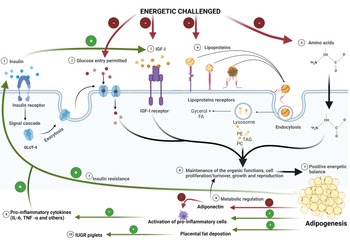
Undernutrition leads to a reduction in GH and, consequently, reduction in plasma IGF-I or in follicular fluid(Reference Prunier and Quesnel245). Indeed, Zak et al.(Reference Zak, Cosgrove and Aherne246) observed that 50% of feed restriction during lactation reduced the concentrations of IGF-I, oocyte quality and ovulation rate. Of note, when sows were fed an insulin-stimulating diet during lactation and the weaning-to-oestrus interval, it was observed that within-litter variation in birth weight in the subsequent litter was reduced, and these outcomes were attributed to higher insulin and/or IGF1 levels during the ovarian follicular phase(Reference Van den Brand, van Enckevort and van der Hoeven247). Van den Brand et al.(Reference Van Den Brand, Dieleman and Soede161) observed that gilts restricted during the lactation period presented lower mean follicle diameter and ovulation rate after weaning. Also, excessive weight loss during lactation led to lower percentage of morphologically healthy cumulus–oocyte complexes obtained from the fifteen largest follicles at 2 h after weaning(Reference Costermans, Teerds and Keijer159). Conversely, at weaning, less catabolic sows had more large follicles (greater than 3·5 mm) with a higher follicular fluid oestradiol concentration(Reference Clowes, Aherne and Schaefer43). There is a link between variability in oocyte quality and developmental competence and asynchronous embryo development, which is a key factor determining embryo survival(Reference Ferguson, Ashworth and Edwards184). Even moderate feed restriction during lactation can lead to an accentuated loss of body fat and protein, which can result in reduced implantation sites and embryo viability at 35 d of the subsequent gestation(Reference Wientjes, Soede and Knol248) as well as decreased litter uniformity(Reference Tummaruk34). In Figs. 1 and 2, the main harmful outcomes in gestation and lactation associated with over- and undernutrition are shown.
Main harmful outcomes in gestation and lactation associated with over- and undernutrition. Adapted from Coffey et al. (1999)(Reference Coffey, Parker and Laurent249)

Impact of nutritional status on the female metabolism and homoeostasis. Green arrows represent a stimulatory effect. Red arrows represent an inhibitory effect. Carbohydrate intake stimulates insulin secretion. (1) Insulin binds to its respective receptor and start a signalling cascade that allows GLUT-4 migration to the external membrane. (2) Glucose enters the cell by GLUT-4 receptor. (3) IGF-I–IGF-R interaction. IGF-I is secreted when the energetic balance is positive, and it plays an important role in the regulation of growth and reproduction. Owing to homology, insulin can bind to IGF-R (positive interaction) and stimulates a signalling cascade. (4) Different lipoproteins (chylomicron, VLDL and/or LDL) bind to its receptors and are internalised by endocytosis; after the action of lysozyme, there is a release of triacyclglycerols (TAG), glycerol (glycerol), fatty acids (FA), phosphatidylethanolamine (PE) and phosphatidylcholine (PC). (5) Amino acids can cross the bilayer membrane. (6) The interaction of different nutrients and hormones leads to the maintenance of the organic functions, cells proliferation/turnover, reproduction functions, growth and immune system activity. (7) When energetic balance is positive, adipogenesis is observed. (8) When adipogenesis is high, an increased level of insulin due to insulin resistance is observed, which can impair the GnRH–IGF-I axis. The excessive backfat reduces adiponectin secretion. Adiponectin is essential to metabolism regulation and to preventing insulin resistance, and it also has anti-inflammatory activity. (9) The excess adipose tissue leads to activation of pro-inflammatory cells, which leads to the release of pro-inflammatory cytokines (mainly IL-6 and TNFα). The release of pro-inflammatory cells and cytokines can contribute to increased insulin resistance. Adipogenesis is observed in various tissues, and when the deposition is in the placenta, an increase in the IUGR piglets is observed. When the sows/gilts are energetically challenged, the feed intake of diverse nutrients is impaired and, consequently, reproduction is affected. Created with BioRender.com

Recommendations
Selection of gilts to optimise reproductive performance
Gilt management starts at birth. It is recommended to use 1·2 kg of birth weight as a minimum threshold to select females for the reproductive herd. At older ages, the targets to optimise the reproductive performance and longevity must consider the physiological maturity and adequate corporal composition of the gilts. Therefore, we recommend the following: (1) a growth rate between 600 and 700 g/d from birth to first insemination, (2) body weight at insemination between 140 and 170 kg, (3) 220–260 d of age, (4) BFT between 15 and 19 mm, and (5) visual condition score of 3. After reaching all the targets, the second or the third estrous cycle should be used for the first insemination. To ensure sufficient BFT at first insemination without excess weight gain, it is recommended to rear the replacement gilts separately of the growing/fattening pigs and feed them to achieve daily lysine intake of 30–42 g and ME energy of 34–35 MJ ME per day.
Mating gilts and sows
An increase in the daily energy intake during 14 d prior to the first mating is suggested to achieve the full reproductive potential of the modern gilts. During this period, gilts may be fed ad libitum with a diet containing easily digestible carbohydrates (e.g. starch) as the main energy source and approximately 120 g/kg of crude fibre, from sources containing soluble fibre.
Sows should be fed according to their corporal condition during the wean-to-oestrus interval. Sows that lose more than 15% of the body weight during lactation and/or are underconditioned (BFT <16 or visual condition <3) at weaning should be fed additional energy whistle the sows overconditioned at weaning should be fed restrictedly during wean-to-oestrus interval. Sows in an optimal corporal condition may be fed between 29 and 33 MJ ME per day. The feed provided to the sows during this period should be similar to the one fed to gilts, with carbohydrates as main energy source and 12% of fibre as these components may increase the ovulation rate and early embryo development.
Feeding of sows and gilts during early, mid- and late gestation
The recommendation regarding amount of feed and energy intake varies among herds as these variables are reliant on factors such as animal, genetics, environment, ingredients and management. The daily energy recommendation for gilts that are in optimal corporal condition is between 26·5 and 29·4 MJ ME per day from mating until day 90 of pregnancy. For sows in optimal condition, the energy recommendation during this period is between 28·6 and 33·1 MJ ME per day. Both sows and gilts that are over- or underconditioned should be fed according to their corporal condition as soon as the first day of pregnancy.
From day 90 of pregnancy until farrowing, the recommended energy intake is between 29·4 and 34·9 MJ ME per day for gilts and 34·2–36·4 MJ ME per day for sows. Rather than an increase in the daily feed intake, as proposed by bump feeding, the augmented daily energy intake in late pregnancy should be followed by an increase of daily intake of specific amino acids in the diet, mainly arginine and/or its precursors (e.g. citrulline and N-carbamylglutamate), carnitine and glutamine.
During the transition period (last 5 d of pregnancy and first 5 d of lactation), it is recommended to allocate at least four daily meals to sows to maintain a proper energy availability for uterus contraction. Also, the diet should contain approximately 150 g of crude fibre per kilogram of feed, and the total feed allowance should not exceed 3·5 kg/d to avoid physical blocking of birth canal during farrowing process.
Feeding of sows during early and mid-lactation to optimise sow health and productivity, and piglet survival and growth
Lactation is the most energy demand for swine females; therefore, it is the period when the females are more susceptible to abrupt changes in the body condition. The feed composition and feeding management during this period must be addressed to maximise the feed intake. Maintaining adequate supplies of fresh feed and water is crucial as well as encouraging the sow to stand between six and ten times per day. It is suggested to feed the females at least four daily meals during lactation. It is recommended an energy intake of 85·4–91·6 MJ ME per day and 55–64 g SID lysine per day for gilts, and 91·3–100 MJ ME per day and 58–69 g SID lysine per day for sows in optimal corporal condition. The inclusion of 2–10% fat sources in the lactation diet is suggested to increase the energy density and palatability, especially when the females are housed at high temperature (>24˚C).
Ways to change nutrition if outside recommendations
The amount of feed recommended for the reproductive herd is highly dependent on several factors related to the animal, environment, ingredients and management. Thus, both sows and gilts should be fed according to their corporal condition. The nutritional management of the reproductive herd must be aimed to maintain sows and gilts in a range of 16–20 mm and 15–19 mm of BFT, respectively, a calliper category of C4 (12·5–14·0 units) and visual score of 3–3·5, regardless of the phase of the reproductive cycle. Females within optimal corporal condition may be fed according to the recommendations provided by the genetic line or by the nutrients requirement council (NRC) for each phase of the reproductive cycle. Females that are not in the optimal range must be adjusted to reach the optimal body condition as soon as possible to minimise the negative impacts of inadequate corporal condition on reproduction and health. However, when this adjustment is needed, it is recommended to increase or decrease the daily energy intake at a maximum of 15% of the requirement to avoid abrupt changes in the feeding management.
Closing remarks
There is a wealth of literature showing that body condition influences sow productivity and longevity. Obesity or underweight should be avoided in all phases of the sow reproductive cycle as deviations of normal body condition in one phase can exert carry-over deleterious effects in subsequent reproductive phases. The consequences for productivity are, at several points, similar for swine females (gilts and sows) from both spectrums of malnutrition. However, the mechanisms that lead over- and underconditioned females to lower productive and reproductive performance and decreased longevity are divergent. Pregnancy in obese females is associated with higher plasmatic and placental concentration of pro-inflammatory cytokines, increased oxidative stress and lipotoxic placental environment. Moreover, the insulin resistance and hyperlipidaemia associated with obesity may contribute to impaired farrowing and lactation traits. Otherwise, the lower plasmatic concentration of IGF-1 associated with energy-challenged females may lead to impaired ovarian follicles development and higher embryo mortality. Also, embryo/fetal growth as well milk production and composition may be impaired in females that have diminished or absent body reserves. Another important aspect to be considered is that, although BFT evaluation provides objective and precise information of body composition, it is not correlated with body protein mass, and protein mobilisation exerts great influence on reproductive function; therefore, body composition assessment requires a multi-evaluation approach in order to provide more accurate information about sow’s metabolic status. Finally, maintaining an optimal body condition throughout the reproductive cycle is of pivotal importance to achieve the full productive potential of contemporary sow genotypes, resulting in benefits such as increased sow reproductive health and longevity as well as improved perinatal outcomes.
Financial support
We thank São Paulo Research Foundation (FAPESP) for grants 2020/11016-9, 2020/02731-6, 2019/23320-7, 2019/17683-0 and 2019/01192-7, and Brazilian National Council for Scientific and Technological Development (CNPq) for grant 303750/2021-9.
All authors contributed to the idealisation and drafts of the manuscript. All authors critically reviewed the manuscript and approved the final version submitted for publication.
The authors declare no conflicts of interest.