


Introduction
Over the past decades, translational research has experienced sustained growth and significant expansion, driven by substantial investment in infrastructure and the consolidation of interdisciplinary teams committed to this research model. Its impact has been such that it is now regarded as a strategic approach and a priority objective in both the basic and clinical sciences [Reference Maienschein, Sunderland, Ankeny and Robert1]. The implementation of translational research has required the development of robust projects, the establishment of a multidisciplinary workforce, effective management of financial resources, and the strengthening of good practices in research ethics and scientific integrity in response to emerging challenges [Reference Mandal, Ponnambath and Parija2, Reference Sharp, Taylor and Brinich3]. In Colombia, this process has likewise yielded important developments, including the presence of research groups across the country dedicated to this field [4]. These initiatives, together with the creation of new spaces for scientific production within key research centers, reflect growing investment in technological infrastructure, the training of highly qualified personnel, and a strategic orientation toward high-impact projects.
Within this evolving landscape, bioethics has played a central role by promoting the responsible conduct and dissemination of research. At the same time, this commitment has brought to the fore a range of ethical challenges, including the protection of participants’ autonomy [Reference Shapiro and Layde5], the management of sensitive medical information [Reference Rothstein6], and issues related to transparency and data governance [Reference Kimberly7]. From this perspective, further concerns arise regarding potentially unpredictable harms [Reference Sofaer and Eyal8], the social complexities embedded in translational methodologies, questions of population prioritization [Reference Rothstein9], and the tensions generated by financial costs and competing interests among stakeholders [Reference Kimberly7, Reference Sofaer and Eyal8].
The challenges surrounding research ethics and scientific integrity in translational research extend beyond the bioethical principles traditionally applied in biomedical research, as the translation of knowledge from the basic sciences to the patient’s bedside unfolds within a complex environment that integrates the expertise and practices of basic science, clinical medicine, and public health [Reference Mandal, Ponnambath and Parija2]. To illustrate this point, consider research on conditions for which no therapeutic options currently exist, which raises pressing questions about risk and uncertainty management, and the validity of informed consent [Reference Childerhose, Finnila and Yu10]. Such circumstances have prompted renewed reflection on the need to strengthen the ethical frameworks that guide the development and expansion of translational research [Reference Childerhose, Finnila and Yu10, Reference Kaiser11].
Translational research in Colombia has gained significant momentum in recent years. According to the classification system of the Ministry of Science, Technology, and Innovation (Minciencias), the country currently has 13 research groups focused on this field, 6 of which hold the highest rank for scientific output, reflecting a solid trajectory and high productivity. This ecosystem is further supported by a specialized center for autoimmune diseases alongside key initiatives from prominent hospitals and universities [12]. Nevertheless, this progress coexists with pronounced structural, functional, and financial challenges. The healthcare response to the COVID-19 pandemic exposed a historical underinvestment in biomedical research, showcasing the country’s limited scientific autonomy and global competitiveness asymmetries [Reference Guzman, Máttar, Alvis-Guzmán and De la Hoz13].
Although scientific production and project execution have shown an upward trend, further advancement is hindered by structural constraints such as budget deficits, reliance on external cooperation, political instability, and technological access barriers [Reference Huete-Perez and Salvatierra14]. Compounding this situation is a persistent regulatory lag; the scientific community must still adhere to Resolution 8430 of 1993, an obsolete framework that predates and completely omits the core principles of translational research [15]. While more recent guidelines, such as Resolution 0314 of 2018 [16], represent efforts to strengthen bioethics and research integrity, the Colombian legal framework urgently requires a comprehensive update adapted to contemporary biomedical dynamics.
Accordingly, this study aimed to analyze the conditions and potential needs related to research ethics and scientific integrity in the implementation of translational research in Colombia. Specifically, it sought to examine the current state of research ethics and scientific integrity in translational medicine from the perspective of researchers in the field, to explore the adequacy of oversight mechanisms considering the ethical and integrity-related challenges identified within the Colombian context, and to develop recommendations to strengthen the integration of research ethics and scientific integrity into translational research practices in the country.
Materials and methods
Study design
This study presents a qualitative hermeneutical analysis, aimed at interpreting participants’ experiences and narratives to generate a contextualized understanding of the topic at hand, including an interpretative process for uncovering deeper and subjective meanings embedded in participants’ accounts [Reference Denzin and Lincoln17]. In addition, the study also presents a value-oriented conceptual analysis informed by the qualitative findings.
Participant recruitment was conducted through two strategies: targeted email outreach and the dissemination of a promotional infographic on the professional social network LinkedIn. The email recipients were individuals registered in the ScienTI platform, which serves as Colombia’s national information system for science, technology, and innovation management. Additionally, emails were sent to all translational research centers and institutions officially registered with the Minciencias.
Data were collected through focus groups designed to foster open discussion and collective reflection, providing a context of deliberative dialogue [Reference Denzin and Lincoln17, Reference Denzin and Lincoln18]. Each focus group was conducted in Spanish, lasted up to one hour, and followed a master protocol featuring a semi-structured interview guide. This instrument was designed to address the current conditions and potential needs regarding ethics and scientific integrity in the implementation of translational research in Colombia.
Participants were grouped according to their academic level and professional role, for promoting an environment of trust and respect: directors or leaders of research centers, senior researchers or co-investigators, and trainees, including master’s and doctoral students. A total of two focus groups were held, each consisting of three individuals. Given the limited participation within the trainees’ group, a complementary individual interview was conducted using the identical design protocol. The participant pool spanned three distinct cities. Although the sample size is small, we consider it important to present this exploratory study, as it is the first of its kind in the country, and it provides insightful guidelines for strengthening research ethics in translational research in this context and other similar contexts.
Data analysis
We conducted a thematic analysis using systematic coding and iterative development themes, following a predominantly inductive approach that allowed codes and themes to emerge progressively from the data. Codes were noy predetermined; rather, they emerged from participants’ accounts and the meanings they attributed to their experiences, in dialogue with the study’s theoretical framework. These codes constituted the initial analytical units and were subsequently organized into broader thematic domains based on their conceptual affinities. The analytical process was organic, open, and iterative, allowing codes to be progressively refined. Identified themes functioned both as analytical tools guiding the coding process and as interpretative syntheses of emerging domains [Reference Liamputtong19].
We subsequently reviewed and redefined preliminary themes and codes to enhance conceptual clarity, minimize overlap, and ensure internal coherence. To strengthen analytical validity, the principal investigator compared the identified themes and the raw data, then made a comparison between the identified themes, assessing their consistency and plausibility. All data were managed and analyzed using NVivo software (licensed by Universidad de los Andes). Software was employed exclusively as a data management tool to facilitate the storage, indexing, and retrieval of transcripts. The iterative process of coding and thematic analysis was fully conducted by the investigators, who maintained continuous oversight and reflexivity throughout the interpretive phase.
Results
The thematic analysis yielded three major themes that shape the experiences of research group leaders, senior investigators, and trainees regarding research ethics and scientific integrity guidelines within the context of translational research implementation in Colombia: (1) regulatory frameworks and guidelines for research ethics and scientific integrity; (2) needs and practices in research ethics; and (3) needs and practices related to scientific integrity.
Each theme was further organized into subthemes comprised of coherent clusters of coded data segments (codes:10). These codes supported the development of precise and conceptually grounded definitions that reflect participants’ articulated experiences. Accordingly, the identified subthemes function as analytical categories that capture both respondents’ perceptions and enacted practices related to ethics and integrity in the specific domain of translational research in the national context.
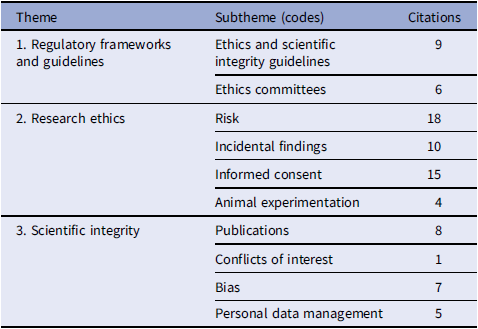
Table 1 presents the data derived from the focus group discussions, delineating the themes and subthemes that emerged during analysis. For each category, the table indicates the number of participant quotations, providing an empirical measure of the recurrence of each theme within the dataset. This presentation not only summarizes the distribution of coded data but also highlights which aspects received greater emphasis among participants and which were mentioned more sporadically.
Number of citations by theme and subtheme

Table 1. Long description
A table categorizing themes, subthemes, and their citations from focus group discussions. The table has three columns: Theme, Subtheme (codes), and Citations. It contains three rows for each theme, with subthemes and their corresponding citation counts. Theme 1, Regulatory frameworks and guidelines, has two subthemes: Ethics and scientific integrity guidelines with 9 citations, and Ethics committees with 6 citations. Theme 2, Research ethics, includes four subthemes: Risk with 18 citations, Incidental findings with 10 citations, Informed consent with 15 citations, and Animal experimentation with 4 citations. Theme 3, Scientific integrity, comprises four subthemes: Publications with 8 citations, Conflicts of interest with 1 citation, Bias with 7 citations, and Personal data management with 5 citations.
Regulatory frameworks and guidelines on research ethics and scientific integrity
This theme emerged from the need to clarify participants’ pre-existing understanding of research ethics and scientific integrity guidelines, enabling reflection on research practice and the identification of potential risks. The analysis revealed recurring patterns concerning the relationship between ethics and regulation, with ethical deliberation often reduced to compliance with established legal requirements, such as National Resolution 8430 of 1993, which governs the scientific, technical, and administrative aspects of health research in Colombia. Participants further noted that this regulatory framework may generate procedural barriers, potentially hindering the development of translational research, as reflected in participants’ accounts:
…however, there are indeed some elements, as I mentioned, that in a way limit the progress of translational research, mainly because not all factors are taken into account. So, at times, those constraints and the slow evolution of regulations can also hinder further development. (P6-Leader of Research Center)
In this regard, participants indicated that the interpretation and application of regulations vary across institutions and research ethics committees. This variability contributes to the perception that research ethics and scientific integrity processes are shaped by institutional identity and differing levels of procedural stringency. A similar perception extends to intra-team evaluation processes, particularly regarding students, for whom participants emphasized the need for structured mentorship and guided ethical analysis.
In addition to human subject research, participants referred to guidelines governing animal research. Although participants described these guidelines as clearly established, they perceived their enforcement and level rigor as substantially dependent on institutional practices.
Despite general awareness of existing frameworks, participants identified significant challenges in their implementation. As noted in previous sections, some guidelines were perceived to be outdated, insufficiently context-sensitive, or even counterproductive. Within this framing, research ethics and scientific integrity were sometimes construed as constraints, given that scientific progress was described as inherently dynamic and forward moving, whereas regulatory frameworks were perceived as restrictive. Consequently, participants underscored the urgent need for bioethics training at all academic levels to foster a more constructive understanding of ethics and to promote responsible research practices. Insufficient preparation in this domain may unintentionally contribute to inappropriate conduct, as expressed by this participant:
Yes, I think it is vital that we begin to talk about bioethics at the training level—undergraduate, master’s, and doctoral levels… I feel that it is something vital for the good execution of research projects, and that it is easy to, like, overlook it without realizing it, even unintentionally. (P4- Leader of Research Center)
Finally, several participants highlighted the role of research ethics committees in ethical deliberation processes. Beyond acknowledging their formal responsibilities, participants questioned the extent of committee members’ training and technical expertise in translational research within the national context, as one participant explained: “How many people who are able to see both sides of the coin are actually present and available in the labor market to serve on ethics committees, where they can provide an objective assessment of those projects?” (P1-Senior Researcher)
Within this thematic axis, the perspectives of research leaders, investigators, and trainees primarily centered on research ethics guidelines, whereas issues explicitly associated with scientific integrity were comparatively less emphasized. Notably, although ethics committees were not explicitly foregrounded in the interview guide, they received substantial attention in participants’ accounts, underscoring their perceived centrality in ethical oversight and deliberative processes.
Needs and practices in research ethics
This section explores the challenges, uncertainties, and tensions that emerge in relation to research ethics. These issues concern the foundational principles and conditions guiding research involving human participants and animals, with the aim of safeguarding their rights, dignity, and welfare. Across discussions, the most salient topics were risks, incidental findings, informed consent, and animal research.
As shown in Table 1, risks constituted one of the most extensively discussed subthemes. This prominence reflects not only perceived risks but also the uncertainties and ethical tensions inherent to translational research, which is characterized by iterative processes and continuous discovery that may directly affect patients or research participants.
Notably, the identification of risks was predominantly framed from a technical perspective. Such an approach may constrain ethical deliberation by limiting attention to non-physical risks, including psychological, social, or informational harms that participants may also encounter. Within this context, participants raised concerns regarding emerging procedures associated with advances in molecular biology. Data anonymization was described as a potentially vulnerable aspect of research practice, especially when collaboration with external institutions involves ethical standards and governance structures that are not fully known to local investigators.
Participants also reflected on risks to methodological rigor arising from the experimental process itself. Among these, low participant recruitment was identified as a significant challenge. In such cases, protocol modifications may be introduced to address feasibility concerns, potentially undermining the rigor of the study. Time constraints were likewise recognized as limiting factors, restricting opportunities for in-depth ethical reflection and deliberation.
Within this thematic domain, risks to participants was the most salient topic. Discussions focused particularly on the immediate consequences of interventions and experimental outcomes, especially in situations where the appropriate course of action for researchers is not clearly defined, as one participant described:
…the result shows me a risk or a benefit, but it is an experimental result… As a researcher, what am I supposed to do with the patient? Do I tell them or not? (…) this is one of the major risks I have seen in this type of situation, especially because, as we were just discussing, the omics are advancing faster than the clinical and ethical fields are progressing… (P1-Senior Researcher)
Incidental findings were another central area of discussion. In translational research, incidental findings are defined as unanticipated clinical, genetic, or experimental information identified during a study and not directly related to the research question. Although such findings may influence the course of the study, participants emphasized their implications for individuals, particularly regarding diagnosis, prognosis, or risk status. Researchers described uncertainty about their ethical obligations in these circumstances and, in some cases, acknowledged personal distress associated with not knowing how to respond appropriately. Despite this uncertainty, some investigators, drawing on prior experience and institutional requirements, highlighted the importance of informing participants about the possibility of incidental findings during the consent process and ensuring appropriate clinical guidance for timely and responsible disclosure:
…well, I think it is one of the most sensitive points, perhaps (…) I honestly wouldn’t really know how to approach it… because as a person, more than as a researcher, I would probably be deeply affected by the ethical limitations of not being able to disclose that information. (P5-Leader of Research Center)
Informed consent emerged as one of the most prominent subthemes in terms of frequency and depth of discussion. Participants underscored the practical and ethical challenges of designing consent processes that meet participants’ expectations and ensure meaningful understanding of study procedures and potential implications. A critical issue concerned therapeutic expectations, particularly in projects involving patients with severe or difficult-to-treat conditions. Researchers recognized participants as potentially vulnerable, often with limited capacity to fully assess risks and benefits, thereby framing informed consent as a process requiring careful ethical reflection rather than mere procedural compliance. Participants also proposed improvements to strengthen consent practices, including structured feedback mechanisms for patients. As participants indicated: “…that is difficult, but any clinical study should try to provide feedback to patients once the study is completed… However, patients are often given little consideration” (P5-Leader of Research Center).
Finally, although fewer participants reported direct experience with animal models, the discussion of animal research revealed divergent perceptions. Some considered regulatory frameworks overly rigid, potentially introducing procedural constraints or unintended bias in results. Others perceived excessive flexibility and the persistence of suboptimal practices. These tensions were linked to concerns about uneven regulatory oversight and insufficient recognition of institutional mechanisms such as Institutional Animal Care and Use Committees and established standards for animal welfare and good laboratory practice.
Needs and practices in scientific integrity
This section examines accepted standards, professional values, and practices within the scientific community aimed at ensuring objectivity, transparency, utility, and rigor in scientific evaluation. These principles are fundamental to preventing bias, fabrication data, plagiarism, undue external influence, and forms of censorship that may compromise the quality and reliability of research outputs. Although the number of references to this theme was generally lower than to others, discussions nevertheless emerged around issues such as publications, conflicts of interest, bias, and the management of personal data.
Publications were addressed primarily from the perspective of access to high-impact journals. According to participants, this opportunity is directly linked to funding prospects and to the strengthening of translational research groups. In this same vein, the discussion extended to data publication, particularly in projects funded with public resources. From the researchers’ perspective, this practice not only promotes transparency but also reinforces good research practices:
Let’s say it ultimately remains at the discretion of the researcher to state, “If you would like my data, write to me; if the request is reasonable, I will send it.” But when public funds are involved, shouldn’t that information be made public? In some way, to ensure that the data, if they are false, are not being manipulated. (P1-Senior Researcher)
Within this discussion, participants also raised questions regarding the dual role a researcher may assume when simultaneously acting as a treating physician. This issue is especially relevant in translational research, as it may influence clinical practice in ways that directly benefit the patient, thereby generating tensions when overlapping with research interests. As one participant expressed, there is a fine line between the actual standard of medical care and the subjectivity that may be introduced when acting concurrently as a researcher:
From the outset, our patients are ill; that is, from the outset, they are vulnerable and do not have many options to choose from… I have also struggled with this from the perspective of clinical trials, because one wants to enroll patients in a clinical trial, but to what extent is it based on the standard of care. I am providing, or is it my standard of care? It is a process that should be standardized or, in some way, made more operational. (P1-Senior Researcher)
As noted in previous sections, number and quality of publications, research group rankings according to national scientific evaluation systems, and other performance indicators are key elements for accessing funding and ensuring project continuity. In addition, participants emphasized the need to establish strategic alliances, particularly with institutions in the Global North, to support and strengthen local scientific production.
Participants also highlighted two aspects related to funding biases. First, they noted that timelines established by funding agencies are often shorter than those required for translational research processes. This renders translational research a long-term endeavor that demands sustained support from multiple funding sources to maintain a single project and achieve meaningful impact on society and public health.
Second, in response to time constraints and pressure to deliver results, some researchers mentioned the option of publishing partial findings. Although this practice may alleviate pressures related to deadlines and project continuity, it poses both methodological and ethical challenges. In this regard, participants also examined the influence of bias and the political instrumentalization of science in analytical processes. This issue is particularly significant, given that state support is essential not only for research sustainability but also for access to resources that strengthen scientific work. However, one participant warned that, in practice, such processes frequently lack the necessary objectivity and impartiality.
Finally, issues of particular concern to researchers emerged in the discussion, among which the management of personal data was especially prominent. Some participants indicated that assigning responsibility or custodianship to a specific researcher typically the principal investigator served as a strategy to ensure greater control over information. Nevertheless, other researchers stressed the importance of advancing toward more mature processes and adopting improved data protection practices. In this sense, international models regulated by law were highlighted as offering stronger guarantees of data security and anonymization, as one participant described:
…unfortunately, in Colombia it is not handled that strictly. However, at least in theory, under what are known as the medical records protection laws, through which data are extracted from clinical records, one is assured that the data can be anonymized and managed by the institution rather than being directly handled by a researcher. (P1-Senior Researcher)
Although scientific integrity was not explicitly identified through the review of formal guidelines or codes of good research practice, the analysis revealed several issues that directly affect its development. This category was constructed primarily from contributions of the investigator group and the student interview, which pointed to significant biases that constrain the development of translational research and the dissemination of results. Within this domain, personal data governance practices (including data access, storage and protection measures) stand out as requiring strengthening practices to ensure responsible and secure management.
Discussion
The principal findings of our discussions with researches reveal, first of all, investigators’ difficulties in understanding the concept of ethics, particularly due to its reduction to a strictly legal domain; second, a lack of clarity regarding the ethical responsibility of scientists currently engaged in translational research initiatives; and third, a reduction of ethical consideration to a discrete evaluative moment within research projects, limited primarily to the assessment of physical risks and the drafting of informed consent documents. Collectively, these findings help us better understand the opportunities and challenges for the ethical implementation of translational research in Colombia.
Challenges for ethical deliberation
One of the most salient findings of this study is the confusion between guidelines on research ethics and scientific integrity, on the one hand, and legal or regulatory provisions, on the other. As some participants indicated, ethical analysis often centers on compliance with regulations, such as “Resolution 8430” (as referenced by a participant from the research leaders’ group), or on requirements established by ethics committees.
Although law and ethics are closely related, ethical reflection should never be reduced to following regulatory standards [Reference Brassington20]. Legal provisions do not necessarily capture the full complexity of ethical deliberation, and in some cases, law and ethics may diverge, as in the case of laws that may be considered unjust. Ethical reasoning is a process aimed at determining the best course of action in a situation, requiring critical examination of one’s own judgments. It is a deliberative process that extends beyond a purely intellectual exercise, demanding openness to alternative perspectives and respect for moral diversity [Reference Dore21]. It also requires reasoning, critical and creative thinking. There is a natural inclination to attempt to resolve ethical problems through formulas, checklists, or step-by-step procedures often codified in law. However, when confronted with competing obligations, such approaches rarely provide effective solutions to ethical challenges. Thus, while deliberation concerning research ethics and scientific integrity is fundamental for the research process, when ethics is misinterpreted as mere regulatory compliance, it is mistakenly perceived as a barrier to translational research, i.e., as an extra administrative step, instead of an opportunity to improve research design and practice [Reference Shamoo and Resnik22].
Limited perception of the researcher’s ethical responsibility
Recognition of the researcher’s moral responsibility is essential in translational research, where the boundaries between basic science, preclinical research, and clinical application are increasingly blurred. However, participants did not show a clear understanding of this responsibility. Although there was a strong emphasis on compliance with biomedical regulations, many researchers appeared to remain within this regulatory framework without fully internalizing their role as moral agents in the research process. This limited awareness weakens the deliberative function that should characterize researchers and reinforces the perception of ethics as an administrative requirement rather than an intrinsic component of research practice, thereby diminishing opportunities to cultivate a culture of bioethical deliberation aligned with national needs.
Philosopher of science Heather Douglas has argued that scientists must recognize themselves as moral agents capable of ethical responsibility, independent of external coercion, as failure to do so risks undermining the autonomy inherent to scientific practice [Reference Douglas23]. From this perspective, ethics committees and regulatory bodies cannot substitute for individual moral accountability. Nevertheless, findings from the focus groups reveal a recurrent tendency to attribute ethical responsibility to committees, often in vague terms. At the same time, structural features of translational research such as multidisciplinary teams, multi-phase designs, and multi-center collaborations, further complicate the attribution of responsibility. Drawing on social cognitive theory, the psychologist Albert Bandura emphasizes that moral control becomes more fragile when responsibility is distributed across multiple actors, facilitating processes of diffusion in which task subdivision appears ethically neutral and collective decision-making promotes self-exoneration [Reference Bandura and Christie24].
These dynamics may be reinforced by mechanisms such as the displacement of responsibility, whereby actions are justified as obedience to authority. In biomedical research settings, junior researchers may adopt compliant roles, prioritizing hierarchical directives over independent ethical deliberation, which enables the activation of psychosocial processes that disengage moral responsibility [Reference Bandura and Christie24]. Addressing these challenges requires not only the development of personal ethical standards but also the strengthening of collective structures that promote ethical conduct and limit harmful practices.
Reducing ethical analysis to critical checkpoints
Focus group discussions revealed that research ethics and scientific integrity are often addressed only at critical procedural junctures, particularly during risk assessment and informed consent processes. This framing reduces ethics to regulatory compliance and overlooks the ethical dimensions embedded in epistemological and methodological decisions. As Douglas argues, research decisions involve inductive risk, since conclusions can never be fully certain. Consequently, the acceptance or rejection of hypotheses necessarily entail value judgments regarding potential consequences. Scientific claims carry epistemic authority and may produce harm if erroneous, making values essential for weighing risks associated with uncertainty. In translational research, these decisions similarly involve non-epistemic considerations, including judgments about socially and morally significant outcomes and appropriate standards of evidence [Reference Douglas25].
This limited and procedural understanding of ethics is further reflected in the superficial engagement with issues of scientific integrity, particularly among research leaders. The lack of sustained reflection fosters the illusion that practices such as plagiarism, conflicts of interest, funding bias, data manipulation, or inappropriate authorship are isolated incidents rather than manifestations of systemic problems. However, ethical considerations begin at the earliest stages of research design, shaping methodological choices and data collection processes [Reference Paul26]. Early phases require careful reflection on the prevention of harm, distress, and anxiety, while ethical evaluation must also extend to data organization and interpretation, as ethicists Adil Shamoo and David Resnik emphasize. Ethics and scientific integrity should therefore be understood as reflexive practices that permeate all phases of research, rather than as issues addressed solely through monitoring or compliance mechanisms [Reference Shamoo and Resnik22].
These challenges are particularly significant in translational research, given its integrative and iterative nature. By bridging laboratory and clinical settings, it generates ethical dilemmas and questions from the earliest experimental stages, whose consequences may extend into clinical applications. Reducing ethics to discrete checkpoints obscures these cumulative risks and responsibilities. Moreover, translational research teams are dynamic and interdisciplinary, often involving patients with limited therapeutic options, which intensifies the blurred boundary between knowledge generation and therapeutic expectation [Reference Shukla, Shamim, Agarwal, Pandey and Narayan27]. This context demands continuous ethical deliberation capable of adapting to evolving protocols, emerging risks, and complex decisions regarding data access, benefit distribution, and intellectual property. Robust and participatory ethical systems are therefore required, as institutional oversight alone is insufficient to ensure ethical practice or to safeguard the social value and impact of research [Reference Bandura and Christie24].
Conclusion and recommendations
Focus group participants emphasized the need for targeted educational opportunities and spaces addressing research ethics and scientific integrity in translational contexts. Although ethics instruction is formally incorporated into Colombian biomedical curricula, it is often theoretical [Reference Tobar Bonilla, Mendieta Izquierdo, Tobar Bonilla and Mendieta Izquierdo28]. Rather than advocating additional courses, this study calls for rethinking how ethics and integrity are taught, positioning ethical formation as integral to scientific practice.
Ethical deliberation strengthens critical reasoning, autonomy, and dialogue and dialogue [Reference Meyer29], as moral reasoning is an interpretive and argumentative process that requires the evaluation of normative claims [Reference Wienmeister30]. Accordingly, effective training must move beyond the mere transmission of rules to integrate ethical principles, regulatory requirements, research misconduct, informed consent, and subject protection within deliberative frameworks [Reference Rosenstein, Miller and Rubinow31]. Interactive and interdisciplinary approaches have shown promise in this regard, including case-based moral deliberation models implemented in programs such as those at the Medical University of South Carolina [Reference Arnold, Boan, Lackland and Sade32], and the UMC of Amsterdam [Reference Inguaggiato, Labib, Evans, Blom, Bouter and Widdershoven33], as well as transversal initiatives like the Center of Applied Ethics at Universidad de los Andes, which emphasize faculty development and cross-disciplinary engagement [Reference Juny and Gonzalo34]. In line with these experiences, expert in scientific integrity Francis Macrina has underscored that cultivating ethical competence depends not only on content but also on interactive methodologies and strong mentor–trainee relationships [Reference Macrina35]. Therefore, institutional commitments must extend beyond regulatory compliance toward structured systems of oversight and professional development that embed ethical reflection, deliberative practice, and interpersonal skills within everyday research environments [Reference Briskin and Gunsalus36].
One of the principal limitations of this study was the scarce participation of master’s and doctoral students, as well as early-career researchers, which prevented the formation of the focus group initially planned for this population. A key barrier was the dependence of trainees on authorization from mentors or supervisors. Contact with students required the cooperation of faculty leaders, and in some instances, students expressed hesitation about participating without prior approval from their supervisors. A second limitation concerns the low representation of translational research stakeholders from different regions of the country. This limited participation has restricted our capacity to examine how perceptions and practices may vary according to regional context, available resources, and accumulated institutional experience.
Finally, this pioneering study opens avenues for future research exploring pedagogical and institutional strategies to strengthen ethical integration in translational research, including informed consent processes, risk perception, ethical leadership, and ethical modeling for early career researchers.
Data availability statement
De-identified qualitative excerpts and supporting analytic documentation are publicly available in Zenodo (DOI: https://doi.org/10.5281/zenodo.20533844). All materials were anonymized prior to being uploaded to ensure participant confidentiality in accordance with institutional ethical approval.
The master protocol is available in both its original language (Spanish) and English.
Acknowledgments
MLQ thanks the professors, colleagues, tutors, and advisors of the Master’s Program in Bioethics and Research Ethics at Universidad de los Andes for providing the academic and professional training that made this project possible.
Author contributions
Manuel Latorre Quintana: Conceptualization, Formal analysis, Investigation, Methodology, Project administration, Writing-review & editing, Natalia Bolaños-Cristancho: Formal analysis, Methodology, Writing-original draft, Manuela Fernández Pinto: Conceptualization, Formal analysis, Methodology, Supervision, Validation, Writing-review & editing.
Funding statement
This project was funded by the Fogarty International Center of the U.S. National Institutes of Health (NIH) through the Master’s Program in Bioethics and Research Ethics at Universidad de los Andes under award number R25TW011808.
Competing interests
The authors declare no competing interests.
IRB approval
The study was approved by the School of Medicine’s Research Ethics Committee at Universidad de los Andes (Approval No. 2025012806, 7 February 2025). All participants in this study provided informed consent. No minors were involved.
GenAI use
Generative artificial intelligence was used solely for limited support tasks, including literature searches, grammatical revision, and translation. It was not involved in data analysis, interpretation of findings, or conceptual development of this manuscript.

 Open access

