




No CrossRef data available.
Clinical profile of acute rheumatic fever in Pakistan
Published online by Cambridge University Press: 18 April 2005
Abstract
We designed a multi-hospital prospective study of children less than 12 years to determine the comparative clinical profile, severity of carditis, and outcome on follow up of patients suffering an initial and recurrent episodes of acute rheumatic fever. The study extended over a period of 3 years, with diagnosis based on the Jones criteria. We included 161 children in the study, 57 having only one episode and 104 with recurrent episodes. Those seen in the first episode were differentiated from those with recurrent episodes on the basis of the history. The severity of carditis was graded by clinical and echocardiographic means. In those suffering their first episode, carditis was significantly less frequent (61.4%) compared to those having recurrent episodes (96.2%). Arthritis was more marked in the first episode (61.4%) compared to recurrent episodes (36.5%). Chorea was also significantly higher in the first episode (15.8%) compared to recurrent episodes (3.8%). Sub-cutaneous nodules were more-or-less the same in those suffering the first (7%) as opposed to recurrent episodes (5.8%), but Erythema marginatum was more marked during the first episode (3.5%), being rare in recurrent episodes at 0.9%. Fever was recorded in approximately the same numbers in first (45.6%) and recurrent episodes (48.1%). Arthralgia, in contrast, was less frequent in first (21.1%) compared to recurrent episodes (32.7%). A history of sore throat was significantly increased amongst those suffering the first episode (54.4%) compared to recurrent episodes (21.2%). When we compared the severity of carditis in the first versus recurrent episodes, at the start of study mild carditis was found in 29.8% versus 10.6%, moderate carditis in 26.3% versus 53.8%, and severe carditis in 5.3% versus 31.8% of cases, respectively. At the end of study, 30.3% of patients suffering their first episode were completely cured of carditis, and all others showed significant improvement compared to those with recurrent episodes, where only 6.8% were cured, little improvement or deterioration being noted in the remainder of the patients. We conclude that the clinical profile of acute rheumatic fever, especially that of carditis, is milder in those suffering their first attack compared to those with recurrent episodes.
Information
- Type
- Original Article
- Information
- Copyright
- © 2003 Cambridge University Press
Rheumatic fever is the commonest cause of acquired heart disease among children and adolescents in the developing world. The clinical spectrum is reported to differ markedly in different parts of the world, being mild in developed countries,1–4 but severe in the countries of the developing world.5–8 Recent epidemics of acute rheumatic fever in the United States of America underscore the need for vigilance in the management and treatment of streptococcal throat infections. The reports by Sanyal9 and Majeed,4 with their respective colleagues from India and Kuwait, suggested that the clinical profile and severity of the disease was mild in those suffering their first episode when these patients were separated from those with recurrent episodes. This is at variance with reports from the developed world. Most of the studies from the developing countries showing a severe profile for the acute infection, however, may have included in their analysis the children with recurrent episodes after the initial attack, failing to differentiate recurrent episodes from the first attack of acute rheumatic fever.
With this problem in mind, therefore, we planned a prospective study, hypothesizing that the severity of disease reported in the developing countries is due to inclusion of patients with recurrent episodes in addition to those suffering their first attack. The purpose of our study was to:
- Determine the comparative clinical profile of acute rheumatic fever in initial and recurrent episodes.
- Compare the severity of carditis in the initial versus recurrent episodes.
- Study the follow up of those with initial as opposed to recurrent episodes for a total duration of 3 years.
- Determine the incidence of recurrences during follow-up in both groups.
Material and methods
Karachi is the largest cosmopolitan city of Pakistan and lies within the Tropics. The climate is hot and humid in summer, and mild in winter. There is scant rainfall. It has a population of over 12 million, representing people from all four provinces of Pakistan.
For our study, we registered 161 children, 57 suffering their first episode, and 104 with recurrent episodes of acute rheumatic fever. The paediatric departments of three major teaching hospitals of Karachi participated in the study, namely the National Institute of Cardiovascular Diseases, a purely cardiac facility, the National Institute of Child Health, a Paediatric Hospital, and the Civil Hospital of Karachi, a general hospital. These hospitals serve as primary and tertiary centers for the care of children. The period of study was from March 1991 to March 1994. Both authors independently confirmed the clinical findings. The incidence of new cases registered varied slightly during the year, being higher in the months of winter and spring. A mean of 28.5 new cases were registered in a year for those suffering their first episode, and 52 having recurrent episodes. The mean age of patients was almost similar, at 9 ± 1.95 years for those having their first episode, and 10 ± 1.6 years for those with recurrent episodes. The overall gender was also equal in the two groups, and patients in both groups were under weight for their age, at 22.6 ± 6.2 kg for those suffering the first episode, and 24 ± 5.7 kg for those having recurrent episodes.
Prior to referral to tertiary care, 68% of the patients had been treated by their general practitioner, 14% by homeopaths, and 10% by faith healers, but were not appropriately diagnosed or treated. The remaining 8% of children had not been seen by any of these. The duration of symptoms from the onset to the time of registration ranged between 8 and 75 days, with mean of 36 ± 18 days.
Two-thirds of the children were referred from the urban slums of Karachi, one-fifth from crowded urban areas, and one-sixth from rural areas, so that five-sixths of children came from urban areas. At the time of registration, four-fifths of children suffering their initial attack were attending school, compared to half of those having recurrent episodes.
The average income per month from all sources for the family was estimated to be US$55 for those suffering the first episode, compared to US$44.25 in those having recurrent episodes. The number of members living together in the family were 10 ± 6 in those suffering an initial attack, compared to 9 ± 5 for those having recurrent episodes, with most living in 2 room houses when suffering a first episode, but in 1 roomed houses for those having recurrent episodes. On average, 4 members of the family of those having a first episode shared a single room, compared to 7 members in those having recurrent episodes. A history of recurrent episodes amongst the family was elicited for 5% of patients suffering their first episode, compared to 10% of those having recurrent episodes.
Criteria for inclusion in the study
- Children who had acute rheumatic fever based on the modified Jones criteria.
- Children at or below 12 years of age.
Criteria for exclusion from the study
- Children with other associated diseases.
- Age greater than 12 years.
- Children with symptoms for more than 6 months duration.
The criteria for diagnosis of the initial episode of acute rheumatic fever were fulfillment of the modified Jones criteria, and no previous history of acute rheumatic fever.
The criteria for diagnosis of recurrent acute rheumatic fever were reappearance of 2 major, or 1 major and 2 minor, manifestations of acute rheumatic fever, along with evidence of recurrent streptococcal infection.
Carditis was diagnosed, and graded as mild, moderate and severe, based on the following criteria:
- No carditis: was diagnosed in the absence of sleeping tachycardia suggesting myocarditis and cardiac murmur as a sign of valvitis.
- Mild carditis: was characterized by a pansystolic murmur of grade 2/6 or greater at the apex radiating to the axilla, with or without a soft early diastolic murmur of aortic insufficiency. The chest radiograph was required to show a normal or mildly enlarged heart, with the cardiothoracic ratio between 0.45 and 0.5, without signs of congestive cardiac failure.
- Moderate carditis: was diagnosed when there was a pansystolic murmur of grade 3/6 or more, with or without an early diastolic murmur and apical mid diastolic murmur. The apical impulse in these circumstances was hyperdynamic, and the cardio-thoracic ratio was between 0.60 and 0.75, but in the absence of signs of frank congestive cardiac failure, although some patients showed signs of mild pulmonary arterial hypertension.
- Severe carditis: was diagnosed when, along with the signs of moderate carditis, we found the signs of congestive heart failure, pulmonary arterial hypertension, and a cardio-thoracic ratio of greater than 0.75.
The cardiac findings were confirmed by M-mode, cross-sectional, and color flow Doppler echocardiography.
Management
We advised complete bed rest for all patients, with gradual ambulation after the erythrocytic sedimentation rate had started to return towards normal. The mean duration of the acute attack, indicated by amelioration of symptoms and normalization of the erythrocytic sedimentation rate, was shorter in those suffering their initial attack, at 53 ± 24 days, compared to 67 ± 32 days in those having recurrent episodes. It was shorter in patients with arthritis, with an average of 22 days, intermediate in those with chorea, and longest in those with carditis, the latter ranging from 45 to 60 days.
In order to eradicate streptococcal throat infections, we gave injections of Benzathine penicillin to all patients, after a test dose, in the dose of 0.6 million units for children weighing less than 27 kg, and 1.2 million units for those heavier than 27 kg. The first injection was given at the time of admission, and repeated after 2 weeks, and then at 4 weekly intervals. Inflammation was controlled with Aspirin, which was given in the dose of 100 mg/kg/day in 4 divided doses, being reduced to 75 mg/kg/day after 2 weeks, and continued in the same dose until the erythrocytic sedimentation rate had returned to normal. Steroids were administered to one-tenth of patients suffering their first episode, and to a similar proportion of those having recurrent episodes, in the setting of severe toxemia, abdominal pain, vomiting, pericarditis and dominant myocarditis. All patients with carditis were treated with Digoxin, while anti-failure medication was added over the first one or two weeks for one-tenth of patients suffering an initial attack, but was needed for seventeen-twentieths of those having recurrent episodes. Children with severe carditis complicating recurrent episodes needed more aggressive vasodilator therapy, such as inhibitors of angiotensin converting enzyme, which were used in 15% of patients, intravenous inotropic support in 3% of patients, and sodium nitroprusside as dermal patches in 5%. Surgery was advised for uncontrolled congestive cardiac failure. Patients with chorea were free from symptoms within 2 to 3 months of being treated with oral Phenobarbitone.
Follow-up
Follow up was conducted for 3 years from the date of registration, visits occurring at one monthly intervals for the first 6 months, 3 monthly for the next 6 months, and then at 6 monthly intervals until the end of the study.
Statistical analysis
Percentages, means, and standard deviations were calculated for continuous variables, and Student's t test and the chi square test were used for comparative analysis where appropriate. A p value of less than 0.05 was taken as significant.
Results: clinical profile according to the modified Jones criteria
Major manifestations (Fig. 1)

Figure 1. Comparative clinical profile of acute rheumatic fever in those seen after a first episode versus those suffering recurrent episodes diagnosed by the Jones criterions.
Carditis. The mean heart rate calculated by electrocardiographic means in those suffering their first episode was 112 ± 20 beats per minute, compared to 122 ± 20 in those having recurrent episodes. The heart rate was greater than 101 beats per minute in 88% of patients.
Carditis was significantly less frequent in those suffering their first episode, at 64% compared to 96% in those having recurrent episodes (p < 0.05). Congestive cardiac failure was also significantly less frequent, being seen in only 21.1% of those having their initial attack compared to 65.4% in those having recurrent episodes (p < 0.0001). Pericarditis was observed in 5.3% of those having a first episode, compared to 9.6% for those with recurrent episodes. Oedema was also much less frequent in those having an initial episode, at 7% compared to 32.6% of those having recurrent episodes (p < 0.05). The carditis was graded at mild in 29.8% of those having a first episode, compared to 10.6% in those with recurrent episodes, moderate in 26.3% compared to 53.8%, and severe in 5.3% of those with a first episode compared to 31.8% of those having recurrent episodes (p < 0.05 – Tables 1 & 2). Pulmonary arterial hypertension was significantly less frequent in those suffering a first episode, at 29.8% compared to 86.5% for those with recurrent episodes (p < 0.05). Atrial fibrillation was absent in those having their initial attack, but seen in 3.8% of those having recurrent episodes.
Isolated mitral valvar regurgitation was a frequent finding in those having a first episode, being noted in 80%, but was found in only 13% of those with recurrent episodes. Aortic regurgitation combined with mitral regurgitation was detected in 14% of patients having an initial attack, but in 43% of those having recurrent episodes. Tricuspid, mitral, and aortic regurgitation were detected in 6% of the patients having an initial attack, but in 11% of those having recurrent episodes. Stenotic lesions were found only in those suffering recurrent episodes, with mitral stenosis and regurgitation being present in 15% of cases. Mitral regurgitation and stenosis with tricuspid regurgitation were present in 17%, and aortic stenosis with mitral stenosis and regurgitation and tricuspid regurgitation found in 1%. All the findings were significantly more severe in those having recurrent episodes.
Arthritis. This feature was more frequent during the first episode, at 61.4%, compared to 36.5% in those suffering recurrent episodes (p < 0.05).
Chorea. This was seen more frequently in those suffering the initial attack, 15.8% compared to 3.8% in those with recurrent episodes (p < 0.05). It was isolated in 14%, and associated with carditis in 2% of those having their first episode whereas, amongst those having recurrent episodes, 3% had isolated chorea and 1% had chorea associated with carditis.
Skin lesions. These were always associated with carditis. Sub-cutaneous nodules were more frequent in those having a first episode (7%), as opposed to 5.8% of those with recurrent episodes (p > 0.05). Erythema marginatum was also observed more frequently in the setting of the first episode, at 3.5%, compared to only 0.9% of those having recurrent episodes (p < 0.05).
Minor manifestations (Fig. 1)
Fever. Fever was present in all children except those who had isolated chorea as a manifestation. Thus, 84% of children suffering their first episode complained of fever, compared to 94% of those having recurrent episodes (p > 0.05).
A toxic state was observed in 31% patients suffering the first episode, compared to 41% of those having recurrent episodes, while 47% children with a first attack were anaemic, compared to 63% of those having recurrent episodes.
Arthralgia. These problems with the joints were found in 21.1% of those having a first attack, compared to 32.7% of those with recurrent episodes (p < 0.05). Arthralgia was always seen associated with carditis in both groups.
Streptococcal throat infection. A history of a sore throat was obtainable from 54.4% of children having a first episode, compared to 21.2% of those having recurrent episodes (p < 0.05).
Laboratory work. The throat swab and cultures for β-hemolytic streptococci were positive in 21.1% of those suffering an initial attack, compared to 16.3% of those with recurrent episodes. The mean total leukocytic count was comparable, at 11,907 ± 3762/cu.mm for those having a first episode, and 13,409 ± 9159 in those with recurrent episodes. All patients had erythrocytic sedimentation rates of more than 12 mm in 1st hour. The mean rate was 78 ± 33 mm in the first hour of those suffering a first episode, compared to a higher mean of 97 ± 33 mm in those with recurrent episodes. The anti Streptolysin O Titer was more than 400 i.u. in 87.7% of those suffering a first episode, and 95.2% in those with recurrent episodes, and was less than 200 i.u. in 12% of those having a first episode, and in 5% of those with recurrent episodes, all of whom had isolated chorea.
Follow-up. Amongst those having their initial attack, 2 of 57 children (3.6%), compared to 12 of 104 (13.3%) of those with recurrent episodes, were lost to follow-up. Thus 147 of 161 (81.3%) were followed to the end of the study, 55 having had a first attack, and 92 suffering recurrent episodes. These children together were followed for a mean period of 13,494 patient years. Patients suffering their first episode were followed for a mean period of 18 ± 7.8 months, as opposed to a period of 17.3 ± 8.3 months for those suffering recurrent episodes. The mean numbers of follow-up visits were 5 ± 2.5 visits/patient for those having their first attack, and 5.6 ± 2.9 per patient in those suffering recurrent episodes.
During the period of follow-up, 3 children (5.3%) first seen after their initial attack developed a recurrence of acute rheumatic fever, giving a recurrence rate of 0.036/patient year, compared to 11 children (10.8%) in those who had already suffered recurrent episodes, with their recurrence rate being 0.085/patient year (p < 0.05). Secondary prophylaxis with long acting penicillin was achieved in 94.5% of those first seen after an initial attack, and in 85.5% of the patients who had already suffered recurrent episodes.
In those seen after their first attack, 38.6% had no carditis at their initial examination. In those with carditis, it was mild in 29.8%, moderate in 26.3%, and severe in 5.3%. At the conclusion of the follow up, 55 remained of the children seen after their first episode, and of them, 32 (56.1%) had no carditis, 13 (22.8%) had mild carditis, and 10 (17.5%) had moderate carditis. Thus, of those seen after their first attack, 30.3% patients were cured of carditis, an improvement in severity was marked in 39.4%, and 30.3% of patients showed some improvement. A statistically significant improvement in the severity of carditis, therefore, was noted in all grades (p < 0.09 – Table 1 and Fig. 2).
Table 1. Outcome of carditis in patients seen after the first episode of acute rheumatic fever*.


Figure 2. Comparative outcome of carditis at the end of follow-up between those seen after the first episode as opposed to recurrent episodes of acute rheumatic fever.
When comparing the data for carditis for those seen already having had recurrent episodes, at the start of study 3.8% patients had no carditis, it was mild in 10.6%, moderate in 53.8% and severe in 31.8%. At the conclusion of follow-up, 90 patients remained in the study, as 2 of the initial 104 had died, and 12 were lost to follow-up.
The outcome for these patients at the time of last follow-up visit showed that 11 (10.6%) had no carditis, 13 (12.6%) had mild carditis, 62 (59.6%) had moderate carditis, and only 4 of the 90 (3.8%) had severe carditis (Table 2 and Fig. 2). There was significant improvement in 44 of the 90 patients (48.9%), no improvement in 42 (46.7%), and deterioration in 4 patients (4.4%). Two patients had died (1.9%). Statistical comparison between the first and last assessments of the grading of carditis amongst these 90 patients showed significant improvement at the time of the last examination. (p < 0.000001).
Table 2. Outcome of carditis in patients seen with recurrent episodes of acute rheumatic fever*.

One patient seen after having had recurrent episodes developed endocarditis on the aortic valve during a recurrence, and required replacement of the valve. Mitral valvar commissurotomy was performed in 2 children, while a symptomatic child at Grade IV of the classification of the New York Heart Association with severe mitral regurgitation underwent replacement of the mitral valve.
When we compared the outcome of carditis between those seen after their first episode and those who had suffered recurrent episodes, we found that 69.7% of the children seen after their initial attack improved, compared to 48.9% of those who had suffered recurrent episodes, while moderate to severe carditis was statistically more significant in those who had suffered recurrent episodes (Fig. 2).
Discussion
In our prospective study, we registered approximately twice as many patients suffering recurrent episodes of acute rheumatic fever compared to those seen after their first attack. The clinical profile was significantly milder for those seen after their first attack compared to those with recurrent episodes, this being similar to the trend reported in the past in developed countries. It is of interest to note that the recently reported clinical profile of resurgent acute rheumatic fever in seven communities in the United States of America was in large measure similar to that for our patients seen after their first attack. The mean incidence of carditis of 57% was comparable to 61.4% in our study. The points to note were that the epidemics occurred in suburban settings, and at least one of the communities was middle class. The virulent strains of streptococci re-emerged after a long period of dormancy in the suburban communities in the United States of America.10
Our results confirm the reports of Sanyal et al. from Delhi,9 and Majeed and colleagues from Kuwait.4 They also noted that the incidence and severity of carditis was significantly less in those seen after their first episode compared to those who had already suffered recurrent episodes. Severe carditis was largely confined to those having recurrent episodes. Thus, if no distinction was made between those suffering an initial attack compared to those having recurrent episodes, then patients diagnosed with acute rheumatic fever according to the modified Jones criteria would appear to be manifesting severer disease, with the dominant lesion as carditis, and would resemble the reports from most of the developing countries.6, 9, 11–16 Our data, therefore, suggests that those reporting severe and fulminant acute rheumatic fever in developing countries might have included patients suffering recurrent episodes along with those seen after the initial attack.
Subcutaneous nodules, and Erythema marginatum, are reported to be seen less frequently as manifestations of acute rheumatic fever in the developing countries.17–21 Our study does not support this observation. We found subcutaneous nodules, as well as erythema marginatum, with similar frequency to the reports from India9 and Kuwait,4 all of which studied patients seen after their first episode of infection.
Follow-up of our patients, as with previous studies, showed that chronic rheumatic valvar disease was more severe in those suffering recurrent episodes6, 7, 10, 11 compared to those seen after their first infection,2, 4, 22, 23 and that the symptoms improved in both groups, but significantly more in those seen subsequent to their first episode (p < 0.05). If the chronic rheumatic valvar disease was moderate or severe in those seen at the first visit with recurrent episodes, then the severity did not improve significantly, and deteriorated in some cases. Indeed, at the conclusion of our study, there were no children seen after their initial attack who still had severe carditis, and both patients who died had already had recurrent episodes when first seen. Thus, the chances of cure or improvement in the severity of carditis were significantly greater for those children seen after an initial attack, a finding reported by several other investigators.2, 4, 9, 22, 23
At the time of registration, stenotic valvar lesions were present only in those seen after recurrent episodes. At the conclusion of the follow up, no patients seen after their first attack had developed mitral stenosis. This is at variance to the report of Sanyal and colleagues.24 The period of follow-up for our children, however, was probably too short for any to have developed mitral stenosis.25
Follow-up of all our patients showed that the adherence to secondary prophylaxis was much less in those seen after already having recurrent episodes compared to those seen after their first attack. This undoubtedly influenced the significantly higher recurrence rate in those seen after already suffering recurrent episodes. The rate of recurrence during the period of follow-up for those seen after their first attack was 0.036/patient year, this being half that seen for those already having had recurrent episodes, with 10.8% of those already having had recurrences developed still further recurrences, compared to 5.3% of those seen after their first episode of acute rheumatic fever. This is also in keeping with previous reports.24–30
The comparison of the socioeconomic conditions of our patients showed that all the children came from the lower socioeconomic communities in Pakistan. The children came from the urban slums, where sanitation and hygiene is poor.8, 19, 31–35 The huts and houses are huddled together across narrow passages. Over-crowding was rife, with 9 to 10 persons living in one house, which comprised of one or two rooms.17, 35–38 The registers for school attendance showed that 58 of 161 (36%) children with acute rheumatic fever did not attend school, which suggests that the assessments of the incidence of acute rheumatic fever based on school attendance in the developing countries do not truly reflect its prevalence.38–40 When we compared the socioeconomic parameters in those suffering recurrent episodes with those seen after their first attack, we found that those suffering recurrent episodes came from poorer families. This may in part explain the higher recurrences and higher non-compliance to secondary prophylaxis amongst these children.20, 26, 30, 41
Recurrences due to non-compliance to the secondary prophylaxis resulted in a significant number of those seen after their first episode joining those who had suffered recurrent episodes at the conclusion of the study.24, 26, 29, 42 Thus, the process of conversion to recurrent episodes is a continuous phenomenon in children with acute rheumatic fever, and is expected to continue. It also explains why we registered more children who had already suffered recurrent episodes than those seen after their first attack. This suggests that the pool of those with recurrent acute rheumatic fever will continue to increase due to the persistent recurrences, and will add to the burden of severe cardiac sequels.24, 26–30
This phenomenon of an ever-increasing pool of severe cardiac disease also explains the reports from the developing countries showing the prevalence of established rheumatic valvar heart disease, which is often severe and fulminant.6, 7, 11, 12 Our data showed that complications such as bacterial endocarditis and chronic cardiac failure were seen only in those suffering recurrent episodes with moderate, or more often severe, established chronic rheumatic valvar disease.
We found that the majority of our patients came from urban rather than rural areas, and none of the children belonged to the middle or high-income groups.8, 11, 31–35 It can, of course, be argued that only poor children come to the public hospitals. One of the hospitals included, nonetheless, was the National Institute of Cardiovascular Diseases, where large sections of patients are from the middle or lower middle class.14, 41 Our study, therefore, shows that acute rheumatic fever is endemic in the urban slums, where the causative factors of adverse socioeconomic and environmental factors are aggregated. Preventive strategies should be targeted to these communities. The local providers of health care need to be trained to apply preventive measures. Sore throat should be treated in these communities with Penicillin, with or without the facility for throat culture, particularly if the examination shows pus or other features of streptococcal infection.5, 40
Local non-medical providers of health care initially treated the majority of our children, and there was a delay of almost one month before the children presented to one of the three hospitals involved in the study. The preventive strategies should be directed to this group of providers of care if we are to control acute rheumatic fever in these communities. Teaching hospitals, non-Governmental organizations, and Government programs of health education, should be actively involved in teaching primary and secondary prevention of rheumatic fever, targeting these urban communities. Our study, along with others24, 25, 43–45 has shown that hospital-based programmes are unlikely to control the occurrence of acute rheumatic fever.
Cure from the carditis of acute rheumatic fever is possible in those seen after the first attack, but once significant chronic valvar disease has occurred, the chances of cure are reduced. Recurrences are likely to further damage the heart, with higher morbidity and mortality.6, 7, 12, 46
Thus, our prospective study has shown that acute rheumatic fever is mild when seen in those presenting with an initial attack, with severe disease limited to those suffering recurrences. The chances of cure from severe disease are small. The rate of cure from the sequels of acute rheumatic fever was significantly higher amongst those seen after their initial attack. The infections tended to occur in urban slums. Thus, it is these communities that should be targeted for preventive strategies.
References
Brittanica: Book of year 1991. Chicago, 1991.
Cheadle WB. The various manifestations of rheumatic fever as exemplified in childhood and early life. Smith and Co., London, 1889.
El-Sadr W, Taranta A. The spectrum and specter of rheumatic fever in 1980's. In: Clinical Immunology Up-Date. Edited by Franklin EC. Elsevier, New York, 1979, pp 183–203.
Majeed HA, Khan N, Dabbagh M, Naidi K. Acute rheumatic fever during childhood in Kuwait: The mild nature of initial attack. Ann Trop Paediatr 1981; 1: 13–20.Google Scholar
Haig-Brown C. Tonsillitis in adolescent, Bailliere Tendoll and Cox, London 1886.
Joshi MK, Kandoth PW, Barve RJ, Kamat JR. Rheumatic fever: Clinical profile of 339 cases with long term follow-up. Indian pediatr 1983; 20: 849–853.Google Scholar
Okoroma EO, Ihenacho HNC, Anyanwu CH. Rheumatic fever in Nigerian children. A prospective study of 66 patients. Am J Dis Child 1981; 35: 236–238.Google Scholar
Padmavati S. Rheumatic fever and rheumatic heart disease in developing countries. Bull. WHO 1979; 56: 543–550.Google Scholar
Sanyal SK, Thaper MK, Ahmed SA, Hooja V, Tewari P. The initial attack of acute rheumatic fever during childhood in North India. A prospective study of the clinical profile. Circulation 1974; 49: 7–12.Google Scholar
Alan L, Bisno. Group A streptococcal infection and acute rheumatic fever. N Engl J Med 1991; 325: 783–793.Google Scholar
Gharib R. Acute rheumatic fever in Shiraz, Iran. It's prevalence and characteristics in two socio-economic groups. Am J Dis Child 1969: 118: 694–699.Google Scholar
Ismail SA, El Amin A. Rheumatic fever in Sudanese children. Arab J Med 1983; 2: 21–24.Google Scholar
Rahimtoola RJ, Shafqat H, Ramzan A. Acute rheumatic fever and rheumatic carditis in children. Pak Heart J 1980; 3: 2–9.Google Scholar
Robinson RD, Sultana S, Abbasi AS et al. Acute rheumatic fever in Karachi, Pakistan. Am J Cardiol 1966; 8: 548–551.Google Scholar
Strasser T. Rheumatic fever and rheumatic heart disease in the 1970's. WHO Chron. 1978; 32: 18–25.Google Scholar
Levine LI, Chapman SS, Guerra V, Cooper J, Krause RM. Studies on the transmission within the families of group A hemolytic streptococci. J Lab Clin Med 1966; 67: 483–494.Google Scholar
Shanks RA. Collagen and connective tissue diseases. In: Forfar JA, Arneil CC (eds) Textbook of Pediatrics. Churchill Livingstone, Edinburgh, 1978: 1501–1515.
Bland EF, Jones TD. Rheumatic fever and rheumatic heart disease. A twenty-year report on 1000 patients followed since childhood. Circulation 1951; 4: 836–843.Google Scholar
Baldwin JS, Kerr JM, Kuttner AG, Doyle EF. Observation in rheumatic nodules over 30 years period. J Pediatr 1960; 56: 465–470.Google Scholar
Ward C. The reappraisal of the clinical features in acute and chronic rheumatic heart disease. Etiology implications. Am Heart J 1979; 98: 298–306.Google Scholar
Brownell KD, Rese FB. Acute rheumatic fever in children. Incidence in Borough of New York city. JAMA. 1973; 224: 1593–1597.Google Scholar
Feinstein AR, Spagnuolo M. The clinical patterns of acute rheumatic fever; A reappraisal. Medicine 1962; 41: 279–305.Google Scholar
Sanyal SK, Berry AM, Duggal S, Hooja V, Ghosh S. Sequel of initial attack of acute rheumatic fever. A prospective 5-year follow-up study. Circulation 1982; 65: 375–379.Google Scholar
Strasser T, Dondong N, Elkholy A et al. The community control of rheumatic fever and rheumatic heart disease. Report of a WHO international co-operative project. Bull. WHO 1981; 59: 285–294.Google Scholar
Reale A, Colella C, Bruno AM. Mitral stenosis in childhood: Clinical and therapeutic aspects. Am Heart J 1963; 66: 15.Google Scholar
Billoo AG, Abbasi AS, Sultana S, Desa L, Syed SA. Prophylaxis against recurrence of rheumatic fever. Pak Heart J 1968; 1: 8–14.Google Scholar
Ehmke DA, Stehbens JA, Young L. Two studies of compliance with daily prophylaxis in rheumatic fever patients in Iowa. Am J Public Health 1980; 70: 1189–1193.Google Scholar
Hassel TA, Stuart KL. Rheumatic fever prophylaxis. A three-year study. Br Med J 1972; 2: 39–40.Google Scholar
Koshi G, Benjamin V, Cherian G. Rheumatic fever and rheumatic heart disease in rural south Indian children. Bull WHO 1981; 59: 599–603.Google Scholar
Gordis L. Effectiveness of comprehensive care program in preventing rheumatic fever. N Engl J Med 1973; 289: 331–335.Google Scholar
Intersociety commission for heart disease and resources. Rheumatic fever and rheumatic heart disease study group. Prevention of rheumatic fever and rheumatic heart disease. Circulation 1970; 41: A1–15.
Spagnuolo M, Pasternack B, Taranta A. Risk of rheumatic fever recurrences after streptococcal infections. Prospective study of clinical and social factors. N Engl J Med 1971; 285: 641–647.Google Scholar
Watkins JH, Quinn JP. Rheumatic heart disease and overcrowding. Am J Public Health 1948; 38: 1071–1081.Google Scholar
Abbasi AS, Hashmi JA, Robinson RD, Suraya S, Syed SA. Prevalence of heart disease in school children of Karachi. Am J Cardiol 1966; 18: 544–547.Google Scholar
Malik SM, Jaffrey S, Ahmed S, Zubeda Khanum: Prevalence of heart disease in school children of Islamabad. Pakistan Heart Journal 1981; 14: 2–6.Google Scholar
Meyer RJ, Haggerty RJ. Streptococcal infections in families. Factors altering individual susceptibility. Pediatrics 1962; 29: 539–549.Google Scholar
Talbot R. Pockets of rheumatic fever in developed world. XI World Congress of Cardiology. Manila 1990.Google Scholar
Taranta A, Markowitz M. Rheumatic fever. A guide to its recognition, prevention and cure, with special reference to developing countries. M.T.P. Press Ltd., Boston, 1981.
Wood HF, McCarty M. Laboratory aids in the diagnosis of rheumatic fever and evaluation of disease activity. Am J Med 1954; 17: 768–774.Google Scholar
Community control of rheumatic heart disease in developing countries-I. A major public health problem. WHO Chron 1980; 34: 336–345.
Community control of rheumatic heart disease in developing countries-II. Strategies for prevention and control. WHO Chron 1980; 34: 389–395.
Markowitz M. Eradication of rheumatic fever. An unfulfilled hope. Circulation 1970; 41: 1077–1084.Google Scholar
Aziz KU, Cheema L, Memon AD. Long-term observations of rheumatic carditis. Cardiol Young 1992; 2: 254–260.Google Scholar

Comparative clinical profile of acute rheumatic fever in those seen after a first episode versus those suffering recurrent episodes diagnosed by the Jones criterions.
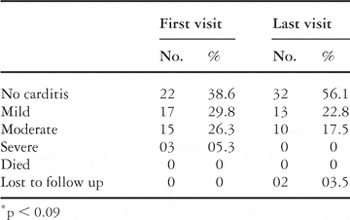
Table 1.

Comparative outcome of carditis at the end of follow-up between those seen after the first episode as opposed to recurrent episodes of acute rheumatic fever.
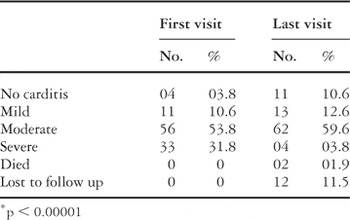
Table 2.
 You have
Access
- 19
- Cited by