Cognition as a Transdiagnostic Treatment Target
Cognitive impairment is a core feature of most neuropsychiatric disorders and is closely related to the functional outcome and societal costs of mental illness.Reference Millan, Agid and Brune 1 –Reference Arguello and Gogos 3 Indeed, cognitive impairment often persists in asymptomatic phases of the disorders and is a stronger predictor of socio-occupational capacity than psychiatric symptoms, including hallucinations or subsyndromal depressive symptoms.Reference Etkin, Gyurak and O'Hara 2 , Reference Martinez-Aran and Vieta 4 , Reference Tse, Chan, Ng and Yatham 5 In Europe alone, reduced work capacity due to psychiatric disorders annually costs an estimated €315 billon, which constitutes 40% of the total expenditures associated with the disorders.Reference Olesen, Gustavsson, Svensson, Wittchen and Jonsson 6 Cognitive impairment is also a consistent predictor of poor treatment efficacy of both psychological and pharmacological interventions,Reference Roiser and Sahakian 7 , Reference Harvey and Sand 8 contributing to reduced chances of recovery and a prolonged illness duration.Reference Millan, Agid and Brune 1 , Reference Etkin, Gyurak and O'Hara 2 Cognition has therefore emerged as a critical therapeutic target in psychiatric disorders to improve patient recovery and vocational function, thereby reducing societal costs.Reference Millan, Agid and Brune 1 , Reference Martinez-Aran and Vieta 4 Nevertheless, current treatments lack robust and long-lasting efficacy on cognitive impairments.Reference Millan, Agid and Brune 1 , Reference Harvey and Sand 8
Challenges and Possible Solutions for Development of Cognition Treatments
Over the past two decades, substantial research efforts have been invested in the discovery of treatments to restore cognition in neuropsychiatric disorders.Reference Millan, Agid and Brune 1 , Reference Arguello and Gogos 3 Nevertheless, there are currently no clinically available pharmacological treatments that have had decisive success in achieving this goal.Reference Vreeker, van Bergen and Kahn 9 –Reference McIntyre, Cha and Soczynska 11 This is partially due to the common methodological challenge in the field, concerning a lack of a valid and sensitive neurocircuitry-based biomarker for pro-cognitive effects to aid decision making in drug development strategies (eg, reference Reference Miskowiak, Burdick and Martinez-Aran10). Therefore, drug screening typically relies on animal models and if beneficial effects are seen, the compounds are moved directly into costly clinical efficacy (phase 3) trials. However, discovery of pro-cognitive effects of a compound in animal models provides poor prediction of its efficacy in humans.Reference Millan, Agid and Brune 12
According to the psycho-biological Research Domain Criteria project (RDoC) 13 initiated by the National Institute of Mental Health, difficulties with identifying biomarkers are not only related to cognition. Instead, they represent a global challenge within the field of psychiatry.Reference Cuthbert and Insel 14 , Reference Insel 15 The challenge originates in a primary focus on broad psychiatric diagnoses that suffer from high intra-diagnostic heterogeneity and high inter-diagnostic symptom overlap, which complicates the identification of unitary biological correlates.Reference Cuthbert and Insel 14 To ensure a better match of granularity between psychological and biological measures, RDoC proposes that psychopathology should be studied by relating narrowly defined symptoms (that may occur trans-diagnostically) to disruptions of brain circuits.Reference Kozak and Cuthbert 16 Indeed, the most fundamental assumption of RDoC is that psychiatric illnesses should be considered disorders of brain circuits and that normalization of neurocircuitry functioning will therefore alleviate the symptoms.Reference Insel, Cuthbert and Garvey 17 , Reference Morris and Cuthbert 18 In keeping with this view, a promising way to aid treatment development targeting transdiagnostic cognitive impairments, would be to identify key neurocircuitries associated with cognitiveimpairment and -improvement across disorders. As a result, target engagement within these neurocircuitries could become a transdiagnostic biomarker model for pro-cognitive effects that could be implemented in small-scale phase 2 trials. This would aid decision making regarding new candidate cognition treatments prior to initiation of large-scale (costly) phase 3 efficacy trials.
Common Neural Correlates for Cognitive Impairments and Improvements Across Mood Disorders
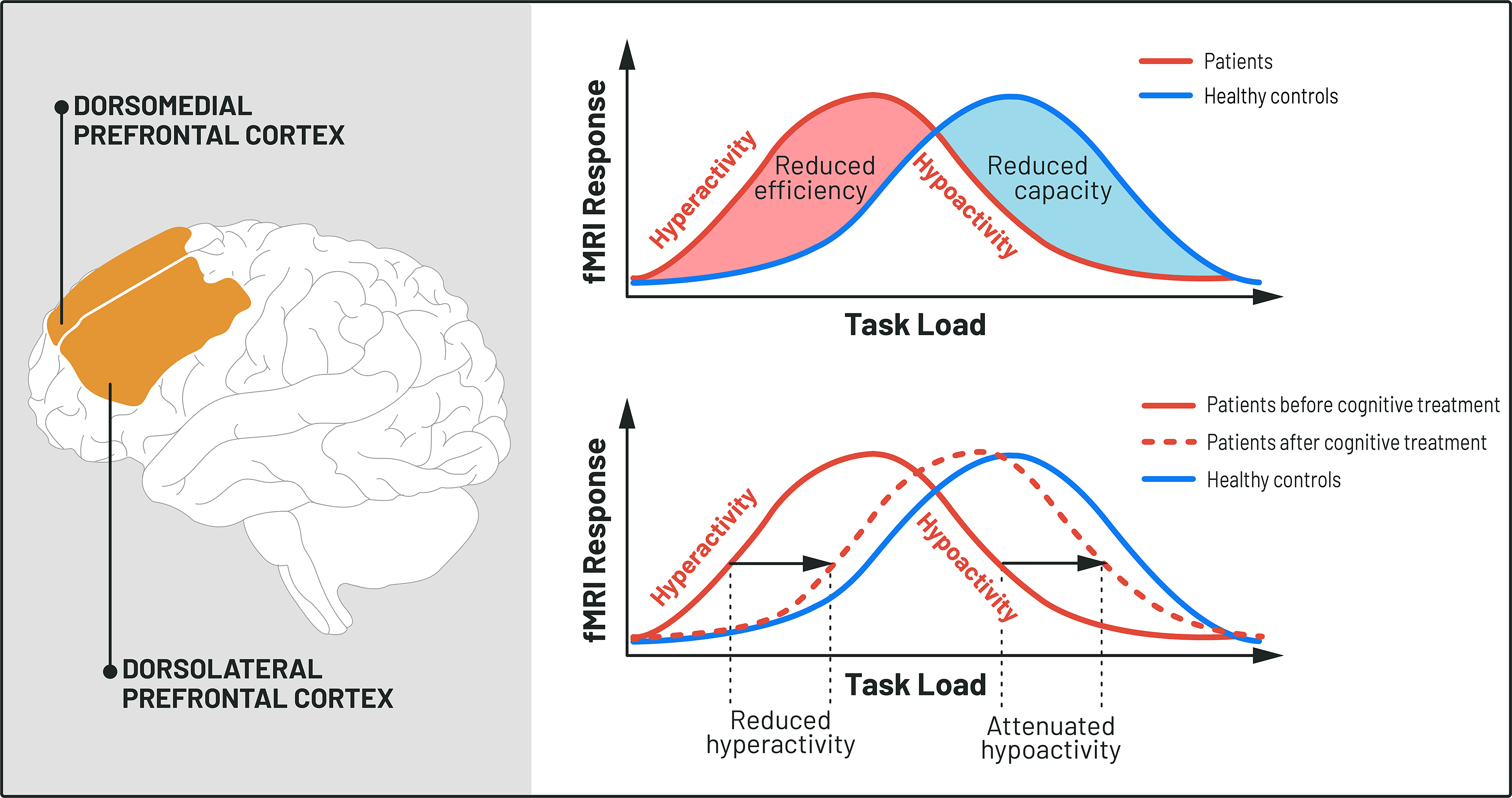
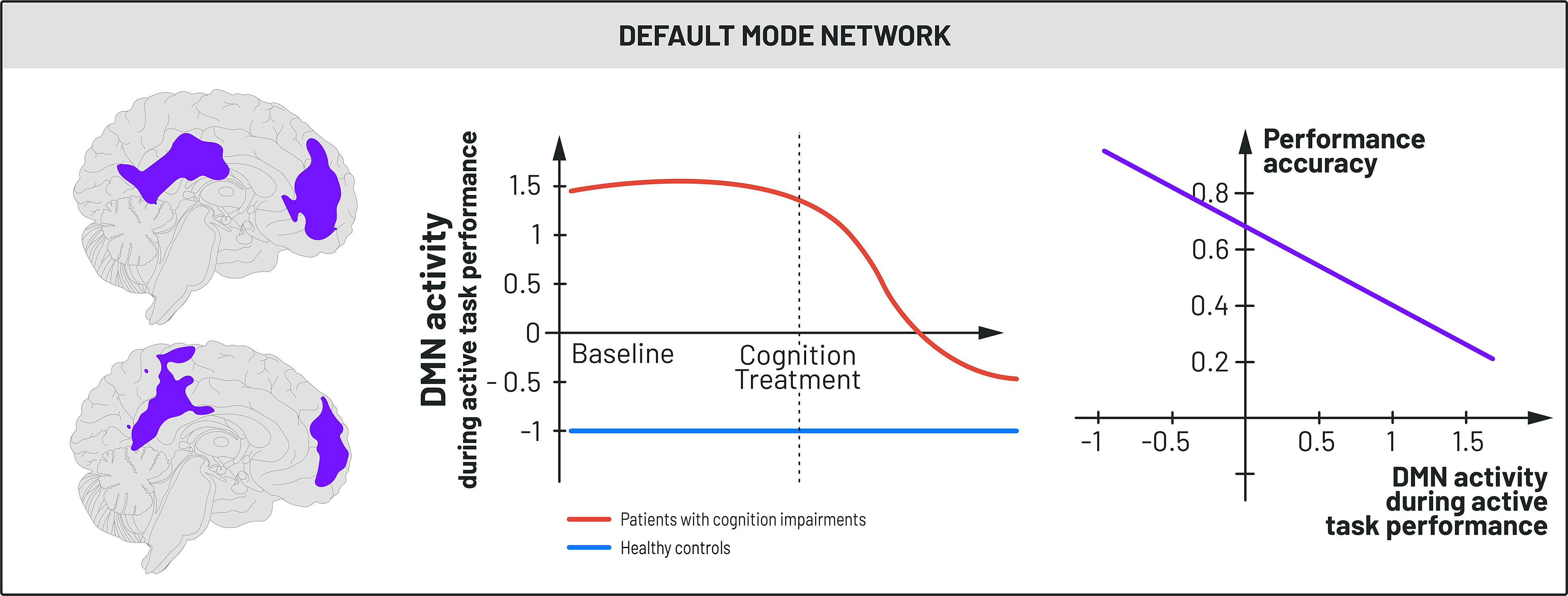
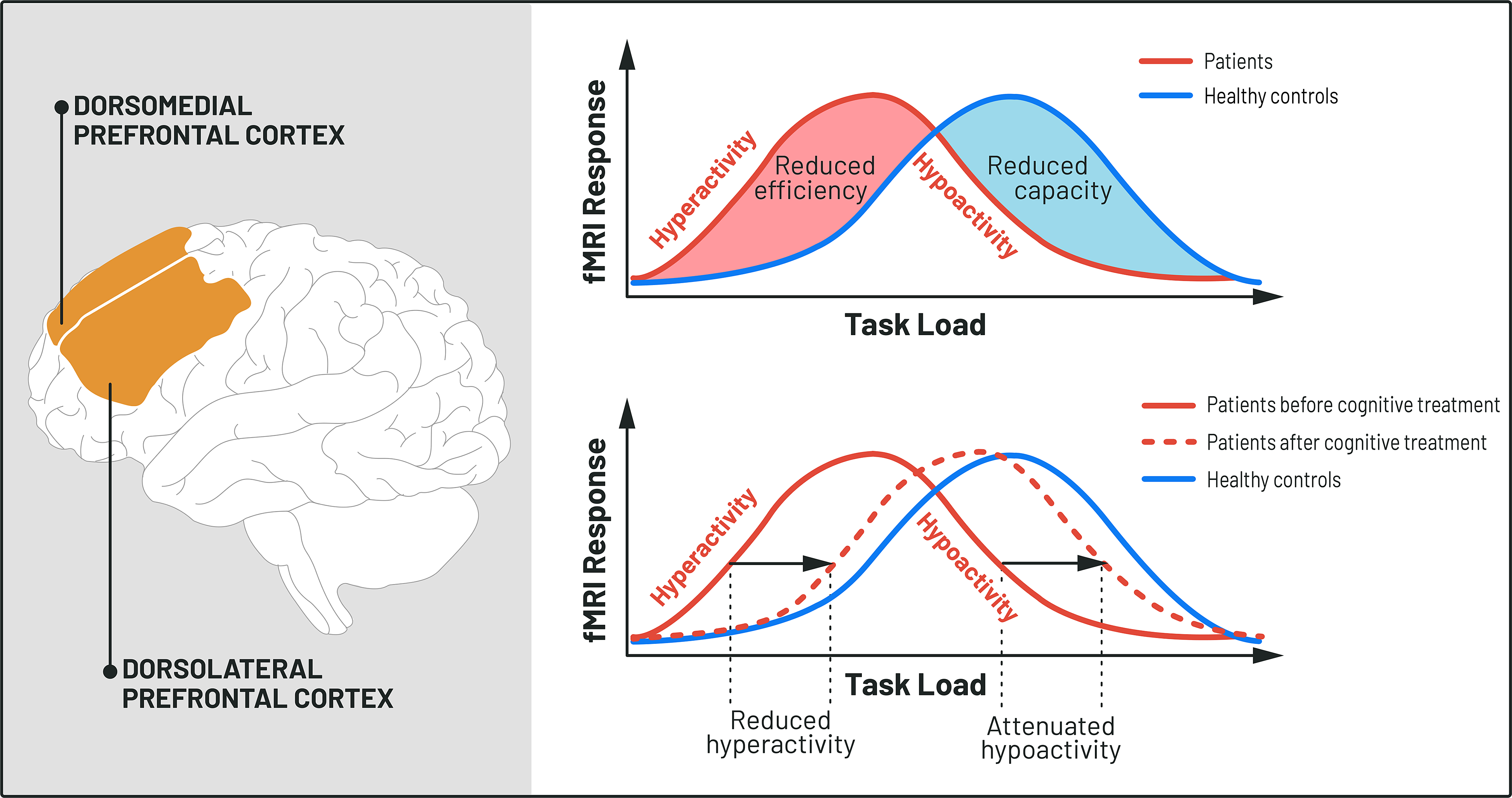
In a recent systematic review of functional magnetic resonance imaging (fMRI) studies of cognitiveimpairment and -improvement across mood disorders, we identified some promising neurocircuitry-based targets for future cognition treatments.Reference Miskowiak and Petersen 19 Abnormal (hypo- and hyper-) activation of the dorsal prefrontal cortex (PFC) and failure to suppress the default mode network (DMN) were consistently observed across mood disorders and cognitive domainsReference Miskowiak and Petersen 19 (Figures 1 and 2). This finding is similar to that of a previous review article in depression by Fossati.Reference Fossati 20 Furthermore, we found emerging evidence from a few studies that modulation of activity within these networks was related to cognitive improvementReference Miskowiak, Vinberg and Glerup 21 –Reference Miskowiak, Macoveanu and Vinberg 24 (for a discussion of the quality of study results, see reference Reference Miskowiak and Petersen19; Figures 1 and 2). Inspired by the work of Callicott et alReference Callicott, Egan and Mattay 25 in patients with schizophrenia and the transdiagnostic thinking of RDoC, we suggested that the variable findings regarding the direction of aberrant dorsal PFC activity could be explained by differences between task loads and patients’ performance levels across studies.Reference Miskowiak and Petersen 19 Specifically, hypo-activity was commonly observed in patients with impaired performance, whereas hyper-activity was associated with preserved performance. Accordingly, hypo-activity likely reflects lower cognitive capacity (ie, impaired performance), whereas hyper-activity reflects lower cortical efficiency (ie, having to recruit more neural resources to maintain normal performance)Reference Miskowiak and Petersen 19 (Figure 1). Callicott et alReference Callicott, Egan and Mattay 25 suggested that the association between task load and fMRI response follows an inverted U-shaped curve across patients with schizophrenia and healthy controls, but that the curve for patients is shifted in the direction of lower task loads. This implies that patients reach their peak blood-oxygen-level-dependent (BOLD) response and thereby their cognitive capacity at a lower task load than healthy controls, after which activity declines and performance starts to deteriorate.Reference Callicott, Egan and Mattay 25 A similar interpretation of discrepant findings regarding PFC activity during cognitive performance in schizophrenia has been presented in a review article by Manoach.Reference Manoach 26 In our systematic review, we found evidence for a similar association between the direction of activity abnormalities in dorsal PFC and cognitive performance in patients with mood disorders.Reference Miskowiak and Petersen 19 However, in our opinion, the association is better explained by bell-shaped (as opposed to inverted U-shaped) load-response curves that are more compatible with the physiology of neural activity measures, and better illustrate the observed hypo- and hyper-activity in patients at different task loads (Figure 1).
Integrative model to explain the variability in findings regarding the direction of aberrant dorsal prefrontal (PFC) response in patients and treatment-related dorsal PFC activity change. Left: Dorsolateral and dorsomedial PFC regions commonly identified as showing abnormal (hypo- or hyper-) activity in mood disorders. Top right: Hypothesized association between dorsal PFC response in patients and healthy controls at increasing cognitive task loads. The bell-shaped “load-response” curve indicates increase in fMRI response with increasing task load until the task load exceeds people’s cognitive capacity after which the activity (and performance levels) declines. The bell-shaped curve for patients lies to the left of the curve for healthy controls, indicating that patients reach their maximum capacity sooner (at lower task loads) than controls. This implicates hyper-activity in patients with preserved performance (reduced efficiency) at low-to-moderate task loads and hypo-activity in patients with poorer performance at moderate-to-high task loads (reduced capacity). Bottom right: Hypothesized rightward shift in the bell-shaped “load-response” curve toward normality, which can explain treatment-related reduction in dorsal PFC hyper-activity in patients who show no cognitive change as well as attenuated dorsal PFC hypo-activity in patients who show cognitive improvements.
Exaggerated default mode network (DMN) activity in patients, effects of cognition treatment, and association with cognitive performance. Left: DMN regions that consistently show exaggerated activity in patients relative to healthy controls during active task performance. Middle: Illustration of the commonly observed failure to deactivate the DMN during task performance, which is hypothesized to contribute to patients’ cognitive impairments, as well of the emerging evidence for treatment-related DMN deactivation. Right: Repeatedly observed negative association between DMN activity during task performance and performance accuracy.
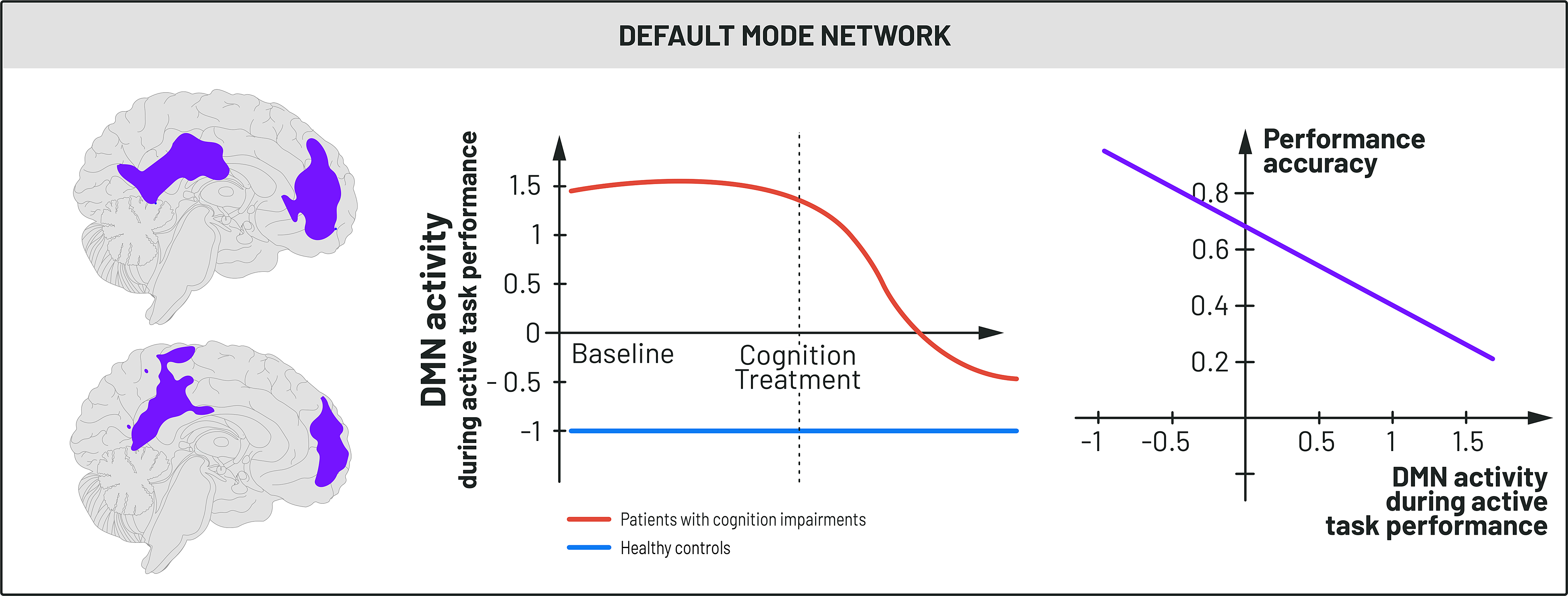
Based on the emerging findings from the intervention studies, we suggest that cognitive improvement following distinct treatments targeting cognition is associated with a normalization of aberrant dorsal PFC activity and reduction of hyper-activity in the DMNReference Etkin, Gyurak and O'Hara 21 –Reference Miskowiak, Macoveanu and Vinberg 24 (Figures 1 and 2). Notably, the direction of dorsal PFC activity change varied across cognition trials, depending on whether or not patients exhibited an increase in their cognitive performance.Reference Miskowiak and Petersen 19 According to our model (Figure 1), the apparent discrepancy in the direction of activity change can be explained by a common treatment-related shift in patients’ load-response curve in the direction of “normality.”Reference Miskowiak and Petersen 19 Specifically, this shift toward normality is reflected by either (i) a reduction of pretreatment dorsal PFC hyper-activity in patients with no treatment-related performance change (ie, enhanced efficiency) for tasks of medium difficulty levels or (ii) an attenuation of pretreatment hypo-activity in dorsal PFC (ie, increased activity) in patients showing treatment-related cognitive improvement (ie, increased capacity) in more difficult tasks.
Toward a Transdiagnostic Biomarker Model for Pro-Cognitive Effects
Based on the above key findings of our reviewReference Miskowiak and Petersen 19 and inspired by RDoC, we suggest that treatment-related modulation of neural activity in dorsal PFC and DMN is a putative biomarker model for pro-cognitive effects that may be more broadly applicable across neuropsychiatric disorders. Accumulating evidence from individual- and meta-studies in schizophrenia also highlights aberrant activity in the dorsal PFC and failure to deactivate DMN as the most consistent neural basis of cognitive impairments.Reference Callicott, Egan and Mattay 25 , Reference Minzenberg, Laird, Thelen, Carter and Glahn 27 –Reference Ortiz-Gil, Pomarol-Clotet and Salvador 32 Studies comparing the neural activation during task performance among schizophrenia, bipolar disorder, and healthy controls show dorsal PFC abnormalities in both patient groups, that are most pronounced in schizophrenia.Reference Hamilton, Altshuler and Townsend 30 , Reference Costafreda, Fu and Picchioni 33 These findings are in line with the generally more severe cognitive deficits in this group.Reference Reichenberg, Harvey and Bowie 34 , Reference Barch 35 Furthermore, abnormal activity in dorsal PFC regions has been shown even broader across schizophrenia, unipolar disorder, bipolar disorder, anxiety disorders, and substance use disorders.Reference McTeague, Goodkind and Etkin 36 , Reference McTeague, Huemer, Carreon, Jiang, Eickhoff and Etkin 37 Finally, a meta-analysis and a systematic review of changes in neural activity in response to cognitive remediation treatments in schizophrenia found that enhanced activity in dorsal PFC and related neural circuits was the most reliable marker of cognitive improvements.Reference Ramsay and MacDonald 38 , Reference Isaac and Januel 39 Similarly, a more recent longitudinal fMRI study in schizophrenia found that cognitive enhancement therapy was also accompanied by increased dorsolateral PFC activity, which was modestly associated with improved neurocognition.Reference Keshavan, Eack, Prasad, Haller and Cho 40 Collectively, these findings support the notion that target engagement within dorsal PFC and DMN activity may be a putative transdiagnostic biomarker model for pro-cognitive effects.
For dorsal PFC and DMN target engagement to be a valid biomarker model for pro-cognitive effects, it must fulfil five general validity criteria Reference Harmer, Cowen and Goodwin 41 , Reference Macoveanu, Demant, Vinberg, Siebner, Kessing and Miskowiak 42: it must (i) be sensitive to treatments with pro-cognitive effects, (ii) produce similar effects in patients with neuropsychiatric disorders and healthy controls, (iii) be sensitive to effective treatments with different mechanisms, (iv) be unresponsive to ineffective treatments, and (v) be sensitive to cognitive decline. Multiple fMRI studies indicate that the proposed biomarker model is sensitive to different pharmacological and psychological treatments with pro-cognitive effects across neuropsychiatric disorders,Reference Etkin, Gyurak and O'Hara 21 –Reference Miskowiak, Macoveanu and Vinberg 24 , Reference Ramsay and MacDonald 38 , Reference Keshavan, Eack, Prasad, Haller and Cho 40 thereby confirming criteria (i) and (iii). In a recent fMRI study, Macoveanu et alReference Macoveanu, Demant, Vinberg, Siebner, Kessing and Miskowiak 42 found no treatment-related change in the dorsal PFC following an ineffective cognitive remediation trial, which supports validity criterion (iv). Although this finding supports the biomarker model validity, it requires replication in separate studies. Moreover, studies are now warranted to investigate criteria (ii) by testing the effects of pro-cognitive interventions in healthy populations and (v) by assessing the neural activity changes that accompany cognitive decline. If such studies support the validity of the proposed biomarker model for pro-cognitive effects, this would widen our understanding of brain mechanisms of effective treatments and impact treatment development strategies targeting cognition. Specifically, implementation of this biomarker model in small phase 2 trials could represent a much-needed tool to screen and select among novel candidate treatments for cognitive impairments, based on their ability to produce neurocircuitry target engagement prior to large-scale costly phase 3 efficacy trials.
Conclusions and Future Directions
There is a pressing need for new effective treatments targeting cognitive impairments across a range of neuropsychiatric disorders. A key challenge in drug development strategies is the reliance upon preclinical biomarker models that have poor predictive validity of efficacy in humans. Identification of a human transdiagnostic neurocircuitry-based biomarker model of pro-cognitive effects can therefore have immense impact on the success rates of future treatment development. In this perspective article, we (i) reviewed a new model that can explain the variability in the findings regarding the direction of aberrant dorsal PFC activity across patients with mood disorders and treatment-related dorsal PFC activity change. Based on this model, we (ii) argue that normalization of dorsal PFC hypo- and hyper-activity and exaggerated DMN activity during cognitive performance is a strong candidate biomarker model for pro-cognitive effects across neuropsychiatric conditions. Lastly, we (iii) suggest the next steps to assess the validity of this putative transdiagnostic biomarker model are to investigate: (a) whether dorsal PFC and DMN activity change occurs with distinct treatments that improve cognition in healthy populations and other patient groups, and (b) whether ineffective treatments produce no activity change in these regions in additional patient groups, and (c) whether the opposite dorsal PFC and DMN changes occur with cognitive decline.
Acknowledgment
We would like to thank Miss Beata Trawińska for creating the figures.
Disclosures
Kamilla W. Miskowiak has received consultancy fees from Allergan and Janssen in the past 3 years. Kamilla W. Miskowiak is supported by a Lundbeck Foundation Fellowship (R215-2015-4121). Cecilia S. Petersen has no conflict of interest.