Management Implications
Glyphosate and triclopyr are often the only POST herbicides used for Paederia foetida (skunk-vine) management, and no efficacy information exists on PRE herbicide efficacy. Given that P. foetida often grows on trees or other desirable vegetation, and the desire of many land managers to have herbicide alternatives, this research examined efficacy of aminocyclopyrachlor, aminopyralid, fluroxypyr, glyphosate, imazapic, triclopyr amine, and triclopyr ester applied at two labeled rates across three different P. foetida growth stages in greenhouse trials. We also examined efficacy of these herbicides in two field experiments in central Florida over 12 mo. As P. foetida is often a nuisance weed in urban and suburban landscape plantings, we additionally evaluated PRE control by applying herbicides, including dimethenamid-P, flumioxazin, indaziflam, isoxaben, and prodiamine, to pots seeded with P. foetida in a greenhouse. Of the POST herbicides evaluated, we found all herbicides provided a high level of control, and few differences were observed in greenhouse or field trials, with the exception of imazapic, which generally provided less control than other treatments. Flumioxazin and prodiamine applied PRE provided greater than 80% control of P. foetida and could potentially be used as management tools in smaller areas or landscapes containing significant amounts of P. foetida seed. While a high degree of control was generally observed in our experiments, we did not evaluate control of very large vines or dense populations, and effective herbicides could pose risks to non-target plants due to P. foetida growth habit. Future research should assess efficacy of these herbicides on more mature P. foetida populations and evaluate application methods and herbicides that could mitigate impacts to non-target vegetation.
Introduction
Skunk-vine (Paederia foetida L.) is a fast-growing, woody perennial vine that is native to eastern and southern Asia (Langeland and Burks Reference Langeland and Burks1998; Langeland et al. Reference Langeland, Stocker and Brazis2006). In the late 19th century, P. foetida was introduced into Florida as a potential fiber crop but escaped cultivation and began invading natural areas throughout the state. By 1993, P. foetida was labeled a Category 1 (high impact) species by the Florida Exotic Pest Plant Council, and it was declared legally noxious in 1999 (FDACS 2016). Paederia foetida has been reported in Hawaii, Texas, Louisiana, Georgia, the Carolinas, Alabama, Mississippi, and Tennessee and is known to inhabit at least 25 counties in Florida (EDDMapS 2018; USDA-NRCS 2018). In Florida P. foetida has been found on a variety of soil types, ranging from xeric sandhills to floodplain swamps in USDA hardiness zones ranging from 10b to 8b (USDA-NRCS 2018). This wide distribution in many southeastern U.S. states suggests wildlife may disperse seeds and that there is a potential threat of population expansion into new areas (Gann and Gordon Reference Gann and Gordon1998; Puff and Werbowsky Reference Puff, Werbowsky and Puff1991). While P. foetida is still confined to primarily tropical and subtropical regions in the United States, its native range extends into areas of Japan where minimum temperatures reach −10 C, suggesting potential to spread as far north as Delaware in the United States (Coombs et al. Reference Coombs, Clark, Piper and Cofrancesco2004).
Paederia foetida reproduces and spreads by both seed and vegetative growth. It has a long sexual reproductive cycle; in tropical areas of its native range, flowering (cymes) and fruit production may occur almost year-round, whereas in subtropical regions, such as central Florida, P. foetida flowers primarily from early summer and fall (May to October). Fruit production (light brown capsules, 4 to 6 mm in diameter) follows from June to December (Puff Reference Puff and Puff1991). Each fruit capsule contains 1 to 2 globose seeds, 2 to 5 mm in diameter. Paederia foetida requires outcrossing for pollination and fruit production. In Florida, a combination of native and introduced bee species have been identified as pollinators (Liu et al. Reference Liu, Pemberton and Stiling2006). Reports of sexual reproductive potential are limited. In Japan, 3,800 seeds were counted from 41 plants, but counts were conducted on 1 d, not throughout the season (Takahashi and Kamitani Reference Takahashi and Kamitani2004). As flowering and fruit production can occur for several months depending upon location (Puff Reference Puff and Puff1991), invasive potential is difficult to estimate based on previous reports. Reports of seed production in the United States are lacking, but hundreds of berries (each containing one or two seeds) have been observed on vines in Florida (Liu et al. Reference Liu, Pemberton and Stiling2006). In North Carolina, very low berry production has been reported from sparse populations that have been verified (Diamond Reference Diamond1999). Seed dispersal by wildlife, primarily birds, has been suspected but has not been verified as the primary or only dispersal mechanism (Gann and Gordon Reference Gann and Gordon1998). Germination requirements are not well understood; however, Washitani and Masuda (Reference Washitani and Masuda1990) reported no germination of freshly collected seeds and increased germination following chilled (4 C) moist storage, suggesting a possible physiological dormancy and chilling requirement for seed germination (Washitani and Masuda Reference Washitani and Masuda1990). Vegetative reproduction can often be extensive, creating an array of management challenges. Extensive root development occurs when stems are in contact with soil, as rooting will occur along nodes, and small stem fragments that become detached from parent plants are capable of producing new vines (Hall Reference Hall1993). In natural areas, P. foetida is an ecological threat due to its wide-ranging adaptability to different environmental conditions and its fast growth rate combined with an ability to climb over the top of trees and create dense canopies, leading to damage or death of native vegetation. Consequently, the dense shading reduces photosynthetic capability of native vegetation, and the weight of multiple P. foetida stems can lead to broken tree limbs or tree death, creating canopy gaps in forests (Gann and Gordon Reference Gann and Gordon1998). Within these gaps, P. foetida growth rates can further increase due to increased sunlight, with the vine in turn preventing normal forest regeneration (Gann and Gordon Reference Gann and Gordon1998). In Florida, P. foetida has significantly reduced the density and cover of multiple native and federally endangered plant species, including one of the few remaining populations of Cooley’s water-willow (Justicia cooleyi Monachino & Leonard syn. Justicia pringlei B. L. Rob.) (Gucker Reference Gucker2009). We found no previous reports of growth and reproduction in relation to environmental conditions. In Florida, we have observed the highest growth rates during the summer months, coinciding with the most frequent and abundant rainfall throughout the year. In south Florida, P. foetida grows as an evergreen, and vegetative growth occurs throughout most or all of the year, whereas in north Florida, it is still perennial but deciduous, dropping its leaves with frost. In central Florida, we have observed P. foetida as being evergreen for several winters and only dropping leaves when temperatures fall below 0 C for several consecutive nights. Its leaves and aerial shoots are vulnerable to frost damage, but woody stems, roots, and root crowns can survive freezing temperatures and resprout following cold temperatures (Puff Reference Puff and Puff1991). No reports on dormancy in relation to environmental conditions are available.
In many parts of central and south Florida, we have observed this species also becoming a major nuisance in residential landscapes, growing in turfgrass or on ornamental trees and shrubs. Due to its ability to regrow from stem fragments and its fast growth rate, mechanical or manual (hand-pulling) removal or cutting of stems is usually ineffective and may exacerbate spread into larger areas, as we have observed resprouting occurring in less than 2 wk following use of these methods. Herbicides that are currently used to manage P. foetida include aminopyralid, glyphosate, and triclopyr, but resprouting after treatment has been observed, and repeated applications are often needed (Enloe et al. Reference Enloe, Langeland, Ferrell, Sellers and MacDonald2018a; Langeland et al. Reference Langeland, Stocker and Brazis2006; MacDonald et al. Reference MacDonald, Ferrell, Sellers, Langeland, Duperron-Bond and Ketterer-Guest2008). Further, there are no previous reports of P. foetida efficacy with any of the most currently used herbicides, and optimal rates have not been established.
Previous research has been conducted to determine the most effective herbicides for control of P. foetida in agricultural settings. Seeruttun et al. (Reference Seeruttun, Barbe and Gaungoo2005) evaluated the efficacy of fluroxypyr foliar applications alone and tank mixed with ioxynil + 2,4-D ester at various rates in comparison with picloram + 2,4-D amine for the control of P. foetida in sugarcane (Saccharum officinarum L.) fields in the country of Mauritius in Africa. The authors reported control of P. foetida with fluroxypyr at 0.6 kg ae ha−1 was similar to the control achieved with picloram + 2,4-D, suggesting that other herbicide active ingredients could potentially be more effective at comparable or even reduced rates. The objectives of this study were to first assess the efficacy of herbicide active ingredients registered for natural area and non-crop sites. Second, as P. foetida is often problematic in landscape planting beds in central Florida, where no or limited POST herbicides can be used due to ornamental plant phytotoxicity concerns, we wanted to identify PRE herbicides that could be used to suppress seedling emergence and/or exhaust the seedbank. Herbicides selected either had been previously recommended for P. foetida management or were possible alternatives based on literature or practitioner reports.
Materials and Methods
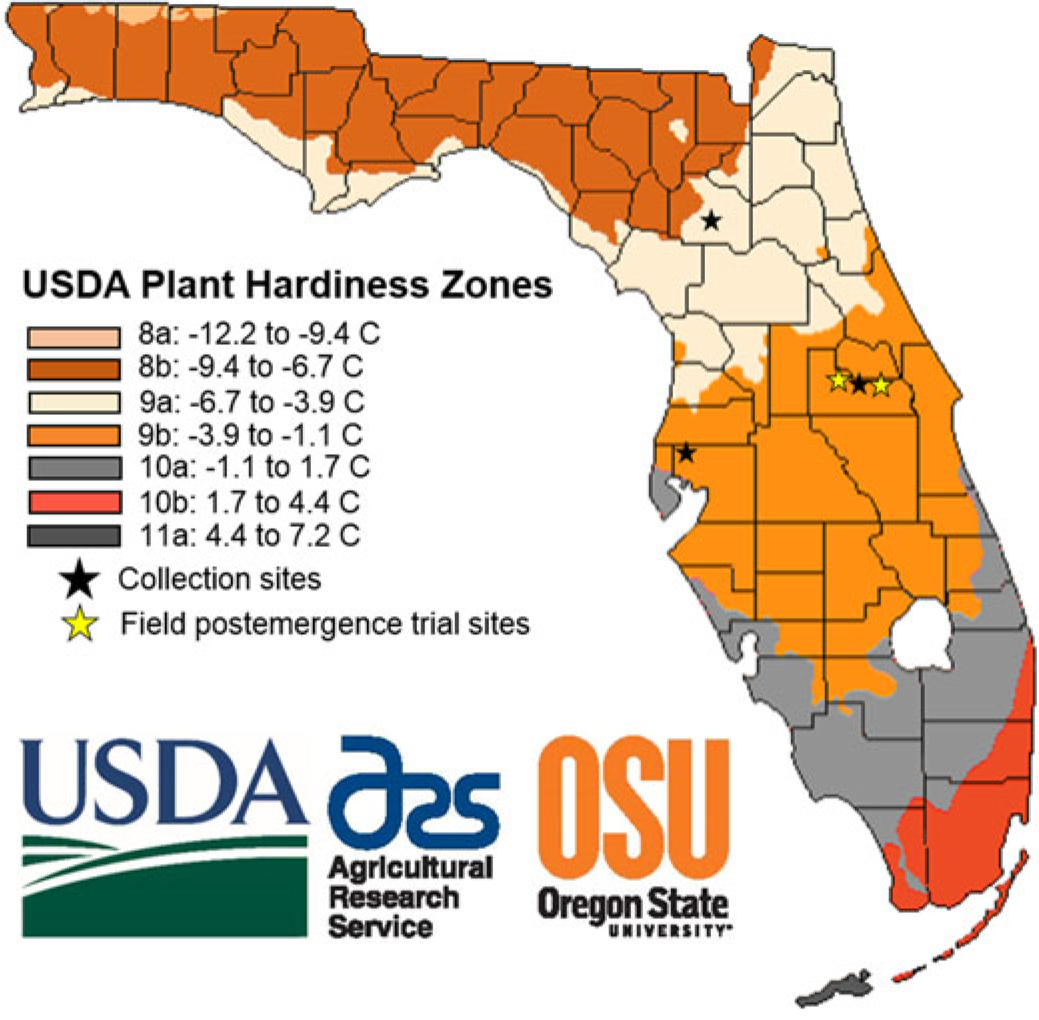
All experiments were conducted in central Florida from 2015 to 2017. Greenhouse experiments were conducted in Apopka, while field sites in Winter Park and Orlando were chosen for field studies (Figure 1). Central Florida is characterized as a humid subtropical environment in USDA hardiness zone 9b, and freezing temperatures are rare. Soils are largely classified as well-drained fine sandy soils (USDA-SCS 1989). The highest rainfall occurs during the summer months, from May to October, with annual rainfall averaging 120 cm (Florida Climate Center 2018).
USDA plant hardiness zones of Florida derived from USDA (2018). Gold stars indicate field POST trial sites, and black stars indicate collection locations (stem cuttings and seed).

Greenhouse POST Study
Experiments were conducted from 2015 to 2017 at the Mid-Florida Research and Education Center in Apopka, FL. In the fall of 2015, cuttings were collected on three separate dates (September 15, October 16, November 27) from wild populations of P. foetida in Orange County in a wooded area of a city park (28.5833°N, 81.3578°W) and outside a botanical garden in a wooded area of Alachua County, FL (29.6131°N, 82.4092°W). Cuttings were collected from approximately 15 to 20 different mature and flowering plants at both locations. Cuttings were taken from current season’s growth (apical shoots approximately 9 cm in length with two fully expanded leaves) on each collection date and potted on the same day as collection in 256 cm3 square plastic pots filled with a pine bark and peat blend (Fafard® 52, Sun Gro Horticulture, Agawam, MA) and received constant moisture until rooting. After ∼4 wk, rooted cuttings were transplanted on three different dates (October 19, November 18, December 30) into 3.8-L nursery containers filled with the same soilless substrate incorporated with Osmocote® Plus 15-9-12 (ICL Specialty Fertilizers NA, Dublin, OH), a controlled release fertilizer containing micronutrients, at a rate of 3 kg m−3 before potting. Vines were trained to grow on a three-stake vertical trellis standing 152-cm tall that was inserted into each pot to keep the vines from growing horizontally. Immediately after transplanting, pots were placed inside a shadehouse (40% reduction in ambient light) and irrigated overhead (0.6 cm d−1). Separate dates for planting cuttings (September 15, October 16, November 27) and transplanting (October 19, November 18, December 30) resulted in three different growth stages based on stem length, including (1) small (green stems, all softwood, 40 to 60 cm in length), (2) medium (semi-hardwood or brown stems, 80 to 120 cm in length), and (3) large (semi-hardwood brown stems, 120 to 210 cm in length). Pots were blocked by size morphology classes in the shadehouse until treatment. On February 2, 2016 (24 C, 62% relative humidity, partly cloudy) POST herbicides (Table 1) were applied using a CO2 backpack sprayer calibrated to deliver 234 L ha−1 with an 8004 flat-fan nozzle (TeeJet® Technologies, Glendale Heights, IL) at 207 kPa. Before treatment, all pots were removed from the shadehouse, and herbicide applications were made directly over the top of plant foliage. Each treatment was applied in isolation to prevent drift contamination and confoundment, and plants were returned to the shadehouse 1 d after treatment. Each herbicide was applied at two rates, 50% and 25% of the maximum labeled rate. Submaximal rates were chosen for evaluation to accommodate practitioners who would most likely be required to make multiple applications annually. This trial used a seven-herbicide (Table 1) by two-rate factorial treatment structure in a randomized complete block design. A nontreated control group was maintained for comparison. Plants were separated into the three different growth stages described earlier. Within each growth stage, location within the shadehouse and small differences in plant size were used as the blocking factor. Data collected included visual control ratings (Enloe and Kniss Reference Enloe and Kniss2009; Grey et al. Reference Grey, Webster, Li, Anderson and Cutts2015) based upon percent necrosis of each plant. Each single pot replication (one plant) was visually rated using a 0% to 100% scale in 5% increments based on percentage of the entire plant showing necrosis (0 = 0% of the plant showing necrosis and similar in appearance to nontreated plants; 100 = complete absence of living shoots) at monthly intervals for 2 mo after treatment (MAT). Biomass was measured with destructive harvests at 2 and 4 MAT on separate plants to assess survival and regrowth response to herbicides. It was unknown how the combined effect of herbicide application followed by cutting of plants at the soil line might confound P. foetida regrowth potential, as different growth stages were included and plants would not be cut in most management scenarios following treatment. At 2 MAT, half of the replications (10 of 20 total replications) were harvested for shoot fresh weight determination by clipping plants at the soil line and weighing total aboveground biomass. Biomass measurements were completed by growth stage, with harvests for each stage occurring on separate and consecutive days. In each growth stage, plants were harvested by block and weighed immediately after clipping using a digital portable scale that was calibrated with standard gram weights between blocks. The remaining plants were monitored for an additional 2 mo and harvested at 4 MAT. Following both 2 and 4 MAT harvest dates, pots were maintained in the shadehouse and monitored for regrowth for an additional 2 mo. Shoot weight data were converted to percent control based on weight of the corresponding nontreated control using the formula 100 × [1 − (weight of treated plant/weight of nontreated control)]. The experiment was repeated in 2016 to 2017 using the same methodology as the experiment in 2015 to 2016, except only 5 replications per treatment were included at each harvest date (10 total replications per treatment were used in 2016 to 2017).
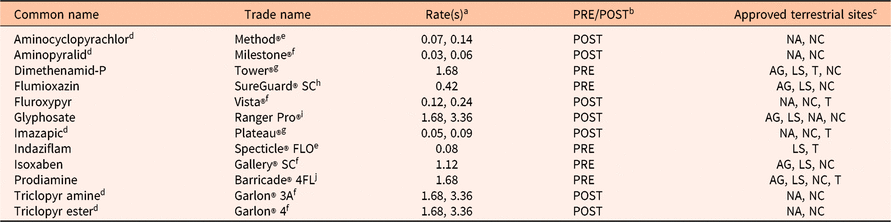
Herbicides evaluated for Paederia foetida control in greenhouse and field experiments in Florida.

a Rates are given in kg ai ha−1, with the exception of aminocyclopyrachlor, aminopyralid, fluroxypyr, glyphosate, triclopyr amine, and triclopyr ester, which are presented in kg ae ha−1.
b POST herbicides were evaluated in greenhouse trials at both rates and in field trials at the higher rate. PRE herbicides were evaluated in PRE greenhouse trials only.
c AG, agriculture; LS, residential or commercial landscapes; NA, natural areas; NC, non-crop; T, turfgrass. Approved sites include predominate sites of application but other sites may also be approved.
d A nonionic surfactant was added at 0.25% v/v before application (Capsil®, Auquatrols, Paulsboro, NJ).
e Manufactured by Bayer Environmental Science, Research Triangle Park, NC.
f Manufactured by Dow AgroSciences, Indianapolis, IN.
g Manufactured by BASF Corporation, Research Triangle Park, NC.
h Manufactured by Nufarm, Inc., Alsip, IL.
i Manufactured by Monsanto Company, St Louis, MO.
j Manufactured by Syngenta Crop Protection, Greensboro, NC.
Field POST Study
In November 2016, two field sites were chosen in central Florida (Orlando and Winter Park) for herbicide efficacy evaluations in naturalized (non-crop/residential) settings (Figure 1). The Orlando site (28.5911°N, 81.1983°W) was an urban forested area (∼1.5 ha−1) outside the University of Central Florida arboretum, containing a mixture of bald cypress [Taxodium distichum (L.) Rich.], various oak species (Quercus spp.), and native understory vegetation. Vines at this location were approximately 0.9 to 1.2 m in length and sprawling over fallen trees and along the bases of trees and some shrubby vegetation. The field site in Winter Park (28.6041°N, 81.3766°W) was a residential area where P. foetida was growing extensively underneath several large live oak (Quercus virginiana Mill.) trees. Vines at this location were also sprawling, and those chosen for evaluation were approximately 1.8 to 2.2 m in length. Individual isolated vines chosen for the experiment were marked with flags, any other P. foetida nearby were hand pulled, and vines outside the treatment area were spot sprayed with a 2% v/v glyphosate solution to keep adjacent vines from growing into the treatment area. In Orlando, the smaller vines were left as is (growing along the soil surface or on fallen tree branches), and treatments were blocked as shaded and unshaded. Light levels were not recorded during this study. In Winter Park, individual vines were separated and staked, and in some cases, vines were cut when intertwining among different vines was extensive. Individual vines were then staked using bamboo poles to limit lateral spread and adventitious root development (rooting along nodes) before herbicide application. These vines were larger and had more size variation, so vines were selected for uniformity but still blocked according to size as small, medium, and large. The same herbicides that were evaluated in POST greenhouse trials were evaluated in the field, but only the higher rate (50% of maximum labeled rate) was evaluated (Table 1). Herbicides were applied on November 11 and December 11 in Orlando and Winter Park, respectively, using procedures similar to those used in greenhouse trials. A single pass was made over the top of P. foetida foliage that was growing either sprawled along the ground in Orlando or staked in Winter Park. The trial was designed as a randomized complete block design with 4 single-plant (stem) replications per treatment at each location. Data collected included visual control ratings at bimonthly intervals for 6 MAT at the Orlando site and 10 MAT in Winter Park (three and five ratings total, respectively) using the scale described previously. At each evaluation date, plants were inspected and restaked if necessary. At 12 MAT, shoot fresh weights were collected at the Winter Park site and weighed in the field using a portable scale.
PRE Greenhouse Study
Paederia foetida seeds were collected in December 2016 from wild populations in Lutz, FL (28.1392°N, 82.4819°W), on the outer edge of a forested area near an agricultural production area. Seeds were removed from vines, cleaned (sifted to remove debris), allowed to air dry at room temperature (23 C) for 7 d, and then stored at room temperature (23 C) in glass vials. On April 8, 2017, 3.8-L plastic nursery pots were filled with potting soil and amended with fertilizer as described earlier. Pots were placed inside the shadehouse described earlier and irrigated in the same manner. Approximately 50 seeds (measured by volume using a 3.1-ml volumetric spoon) were sown on the media surface of each pot and lightly topdressed (0.3 cm) with the potting mix described earlier. On April 10, 2017, PRE herbicides (Table 1) were applied using a CO2 backpack sprayer calibrated to deliver 468 L ha−1 with an 8004 flat-fan nozzle (TeeJet® Technologies) at 207 kPa. A nontreated control was included for comparison. Data collected included emergence (counts) at 1 and 3 MAT and combined shoot fresh weights for all emerged plants within each pot at 3 MAT. Due to the growth habit of P. foetida, it was difficult to separate individual seedlings to determine weight per seedling. We calculated mean fresh weight per seedling by dividing number of seedlings per pot by the total fresh weight of all seedlings in the pot. Percent reduction in total seedlings per pot, average fresh weight per seedling, and total fresh weight per pot (combined weight of all seedlings) were calculated in relation to the nontreated control for each experimental run, as described earlier. The trial was repeated on May 10, 2017. The trial was designed as a completely randomized design with 10 single-pot replications per treatment in the first experimental run and 8 replications in the second.
Statistical Analysis
Visual ratings and percent control data (based on shoot fresh weight reduction in comparison with nontreated plants) in POST greenhouse trials were subjected to a mixed-model ANOVA using SAS® Proc Mixed (SAS Institute, Cary, NC) reflecting the factorial treatment arrangement. Plants were arranged and randomized by growth stage due to spacing requirements and to prevent vines from intertwining, so separate ANOVAs were performed for each stage. Replication (block) was considered a random effect, while trial run (or year), herbicide, rate, and interactions between these terms were treated as fixed factors. Percent control of each herbicide treatment relative to the nontreated control was calculated for each replication before analysis; therefore, data from the nontreated control group were not analyzed. Means were separated using Fisher’s LSD test (P ≤ 0.05) when effects were found to be significant. Model assumptions of constant variance and normality were checked, and percentage data were arcsine square-root transformed as needed to meet the assumptions of normality before analysis (Ahrens et al. Reference Ahrens, Cox and Budhwar1990). Back-transformed means are presented for clarity. Results from both years were pooled for analysis, as there were no year by treatment interactions. As data from visual ratings followed the same trend as shoot fresh weight data, only shoot fresh weight data are presented for brevity. As data from 2 and 4 MAT were harvested separately, separate ANOVAs were performed for each harvest date. Data collected in the field were analyzed similarly using a repeated-measures mixed-model analysis to determine whether any changes in visual ratings occurred within each herbicide treatment group. At the Orlando field site, all herbicide treatments resulted in 100% control of P. foetida; thus, Orlando data were not analyzed. PRE data were analyzed using mixed-model analysis with experimental run and block within experimental run as a random effect and herbicide treatment as a fixed effect. The homogeneity of variance assumption was not met, so three residual variance groups were created based on the minimum corrected Akaike information criterion fit statistic. The P-values for pairwise means comparisons were adjusted for multiplicity using the simulation option in PROC GLIMMIX in SAS.
Results and Discussion
Greenhouse POST Study
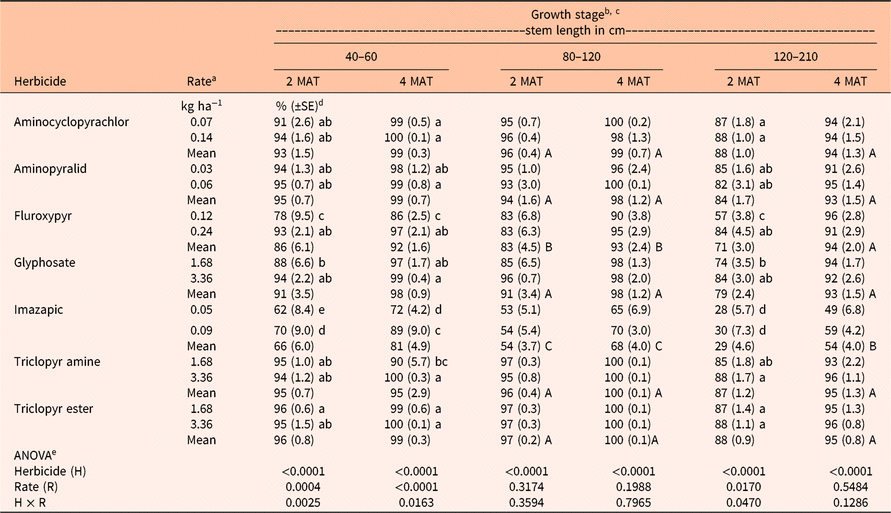
A significant herbicide by rate interaction was detected in the small growth stage at 2 MAT (P = 0.0025) (Table 2). Both rates of aminocyclopyrachlor, aminopyralid, and both triclopyr formulations provided greater than 90% control at this time, while fluroxypyr and imazapic resulted in a significantly higher level of control at the higher rate (Table 2). Glyphosate and fluroxypyr applied at the higher rate also provided greater than 90% control. All other herbicides provided greater control compared with imazapic, which provided only 70% control at the high rate. Similar results were observed at 4 MAT, as differences were again detected in the low and high rates of fluroxypyr and imazapic. There was also a difference in the high rate of triclopyr amine (100% control) and the low rate (90%). Similar to results observed at 2 MAT, all treatments provided greater P. foetida control than the low rate of imazapic.
Paederia foetida control with selected POST herbicides in greenhouse trials conducted in 2016 and 2017.

a Rates are presented in kg ae per ha−1, with the exception of imazapic, which is presented in kg ai ha−1.
b MAT, months after treatment.
c Means within each column followed by the same letter are not significantly different according to Fisher’s LSD (P ≤ 0.05). Mean separations are displayed for each herbicide and rate when interactions were significant (lowercase letters) or for herbicide when rate was not significant and there was no interaction (uppercase letters).
d Percent control was based upon reduction in shoot fresh weight in comparison with the nontreated control. Mean shoot weight of control was 32.9, 47.4, and 70.4 g at 2 MAT and 64.1, 80.0, and 105.6 at 4 MAT in the 40–60, 80–120, and 120–210 cm growth stages, respectively.
e ANOVA performed using a mixed-model analysis in SAS. Effects were considered significant at P ≤ 0.05.
There was no rate effect or herbicide by rate interaction within the medium growth stage. At both 2 and 4 MAT, aminocyclopyrachlor, aminopyralid, glyphosate, and both triclopyr formulations provided greater control than fluroxypyr or imazapic. While all herbicides provided greater control, fluroxypyr still provided 83% to 90% control at both rates and outperformed imazapic (54 to 68% control).
There was a significant herbicide by rate interaction in the large growth stage at 2 MAT, with fluroxypyr providing greater control at 0.24 kg ha−1 (84%) compared with 0.12 kg ha−1 (57%). Similar to other growth stages, few differences were observed among other treatments, and all provided greater control than imazapic or the low rate of fluroxypyr. Herbicide was the only significant effect at 4 MAT, and all herbicides provided greater than 90% control with the exception of imazapic (54%).
Overall, a high level of control was achieved with most herbicide treatments with the exception of imazapic. Rate effects were observed in the small growth stage at 2 and 4 MAT and in the large growth stage at 2 MAT, primarily with imazapic and fluroxypyr. While imazapic at the low rate was generally ineffective against all three growth stages, the high rate provided up to 89% control when applied to the small growth stage. Although fluroxypyr provided better control than imazapic, the same general trend was observed in the small growth stage and the large growth stage at 2 MAT. Although not directly measured, differences in leaf area, growth rate, and root mass may have also contributed to rate effects being observed in the small and large growth stages and not the medium growth stage. In most cases, herbicide efficacy is reduced when applied to larger plants due to greater root biomass, ability to metabolize herbicides more rapidly, inadequate coverage, and other factors (Enloe et al. Reference Enloe, O’sullivan, Loewenstein, Brantley and Lauer2018b; Jordan et al. Reference Jordan, York, Griffin, Clay, Vidrine and Reynolds1997; Obrigawitch et al. Reference Obrigawitch, Kenyon and Kuratle1990; Sharpe et al. Reference Sharpe, Boyd and Dittmar2016; Singh and Singh Reference Singh and Singh2004). Significant differences in plant size, and possibly growth rate, when comparing the small and large P. foetida growth stages could have contributed to this rate effect, as the high rate of imazapic resulted in greater control of smaller P. foetida (89%), whereas neither imazapic rate was effective against medium- or large-stage vines. Similarly, while both fluroxypyr rates resulted in ≥78% control of the small- and medium-stage vines, the low rate of fluroxypyr provided only 57% control of the large-stage vines at 2 MAT, less than the 84% control achieved with the high rate. This indicates that plant size will likely become a more critical factor when using below-threshold application rates of herbicides.
Following harvest at both 2 and 4 MAT, no regrowth was observed from plants treated with herbicides. Plants used for evaluation were quite small in relation to what can be encountered in the field, which may explain the high degree of control observed here. In contrast to our results, other authors have reported multiple applications are usually necessary for complete control of P. foetida (Langeland et al. Reference Langeland, Stocker and Brazis2006; MacDonald et al. Reference MacDonald, Ferrell, Sellers, Langeland, Duperron-Bond and Ketterer-Guest2008). Similarly, Seeruttun et al. (Reference Seeruttun, Barbe and Gaungoo2005) reported that fluroxypyr rates of 0.4 to 0.6 kg ae ha−1 were needed to control P. foetida, whereas our results show greater than 80% control at 0.12 to 0.24 kg ae ha−1 at 4 MAT across all three growth stages. It should be noted that herbicides are often more efficacious in greenhouse compared with field experiments (Fletcher et al. Reference Fletcher, Johnson and McFarlane1990; Riemens et al. Reference Riemens, Duek and Kempenaar2008). Additionally, previous resprouting in the field observed by land managers is often following treatment of large, naturalized vines in dense populations where complete spray coverage is difficult or impossible to achieve. Large, naturalized plants also likely have greater potential for carbohydrate storage than these experimental plants (Dey and Dixon Reference Dey and Dixon1985). A high level of control with no resprouting was likely the result of ensuring thorough coverage and evaluation of smaller vines in the greenhouse.
Field POST Study
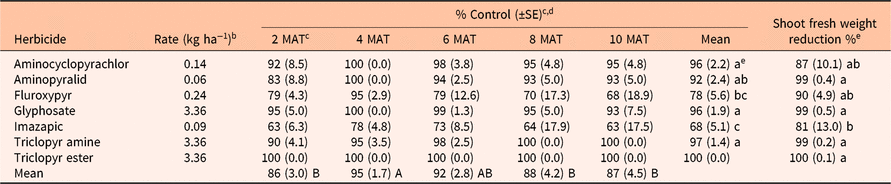
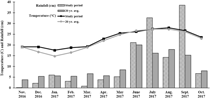
Data collected at the Orlando site were not analyzed, as 100% lethality was observed on all evaluation dates (unpublished data). High efficacy with all herbicide treatments was likely a result of treatments being administered in excess given the size of the test plants and the ability to achieve thorough coverage on smaller isolated plants. In Winter Park, herbicide (P = 0.0018) and MAT (P = 0.0040) were found to be significant factors, but no herbicide by MAT interactions were detected (unpublished data). Visual ratings showed both formulations of triclopyr (97% to 100%), glyphosate (96%), aminopyralid (92%), and aminocyclopyrachlor (96%) provided greater than 90% control throughout the trial, and minimal to no resprouting was observed (Table 3). Across all evaluation dates, aminocyclopyrachlor (96%), glyphosate (96% reduction), and both triclopyr formulations (99% to 100% reduction) provided greater control than imazapic (68% reduction) and fluroxypyr (78%), but no other treatment differences were detected. Analysis of shoot fresh weights showed that all herbicides reduced shoot weights by greater than 80%. Aminopyralid, glyphosate, and both triclopyr formulations reduced shoot weights by 99% to 100% and reduced shoot weights to a greater degree than imazapic (81%), but no other treatment differences were detected. Across all treatments, the highest level of control was observed at 4 MAT (95%), although control observed at 6 MAT was similar (92%). Paederia foetida began to recover and resprout at 6 and 8 MAT in the fluroxypyr and imazapic treatments. This recovery (albeit minimal) noted at 6 and 8 MAT coincided with approximately 40% increase in rainfall compared with historical averages for June and July (Figure 2), whereas on most preceding evaluation dates, precipitation was lower than historical averages. No previous research, to our knowledge, has detailed P. foetida growth response to different environmental factors or precipitation levels, but increased growth and recovery may have been related to higher rainfall. While regrowth was minimal with most treatments, it would eventually require a second application, possibly at 8 to 10 MAT, to prevent extensive regrowth, but more research is needed to determine optimal re-treatment intervals.
Efficacy of selected herbicides for control of field-established Paederia foetida in Winter Park, FL.a

a Means within a column followed by the same lowercase letter (treatment effect) and means within a row followed by the same uppercase letter (MAT effect) are not significantly different according to Fisher’s LSD (P < 0.05). Mean separation was only performed for significant main effects (herbicide and MAT). Visual ratings from plants treated with triclopyr ester were removed from analysis of visual ratings due to zero variance.
b Rates for imazapic are shown as kg ai ha−1, while all others are presented in kg ae ha−1.
c The % shows mean visual percent control ratings (±SE) for each treatment averaged over the visual rating period (10 mo). Visual ratings were taken on a scale of 0 to 100, where 0 = no control and 100 = dead plant (no green tissue visible).
d MAT, months after treatment. All treatments were applied on December 11, 2016.
e Shoot fresh weight reduction percentage was based on weight of nontreated vines and taken at 12 MAT.
Average temperature and total rainfall over the field study period (2016–2017) versus 20-yr average (1997–2017).

PRE Greenhouse Study
Mean seedling counts were the same at both 1 and 3 MAT (Table 4). Mean counts were lowest in pots treated with flumioxazin (0.1 or 99% reduction) followed by those treated with dimethenamid-P (3.8 or 45% reduction), indaziflam (3.1 or 57% reduction), and prodiamine (3.4 or 49% reduction) (Table 4). The only treatment that did not significantly reduce weed counts compared with nontreated pots was isoxaben (6.1 or 15% reduction). Seedling fresh weights were lowest in pots treated with flumioxaxin (0.5 g) and prodiamine (2 g), which resulted in 95% and 80% reduction in fresh weight, respectively. Seedlings in pots treated with dimethenamid-P (7.7 g or 23% decrease), indaziflam (10.6 g or 5% increase), or isoxaben (11.9 g or 19% increase) were similar in size to the nontreated control group (10.1 g). Overall biomass reduction (total fresh weight per pot) was lowest in pots treated with flumioxazin (99%) and prodiamine (84%). Dimethenamid-P (60%) and indaziflam (48%) provided a greater reduction in biomass than isoxaben (2%) but were not as effective as flumioxazin or prodiamine.
Efficacy of selected herbicides in suppressing fresh Paederia foetida seed germination and seedling growth.a

a Means within a column followed by the same letter are not significantly different (P < 0.05).
b Seedling counts per pot were recorded at 1 and 3 mo after treatment (MAT) and did not differ. Weight per seedling was calculated by dividing the total number of emerged seedlings by total fresh weight per pot recorded at 3 MAT.
c The % reduction in number of seedlings per pot, fresh weight per seedling, and total fresh weight per pot were recorded at 3 MAT and were based on reduction in relation to the nontreated control in each experimental run. Negative values indicate a percent increase.
Flumioxazin provided the best overall control of P. foetida, resulting in both lower counts than any other herbicide and greater reductions in seedling size and total fresh weight per pot than any other herbicide but prodiamine. While pots treated with prodiamine contained a similar number of P. foetida seedlings compared with those treated with dimethenamid-P or indaziflam, greater reductions in fresh weight per seedling and total fresh weight per pot show that emerged seedlings in pots treated with prodiamine were smaller and grew less vigorously. While dimethenamid-P and indaziflam reduced the total number of seedlings per pot and overall biomass compared with isoxaben or the nontreated pots, seedlings that emerged were similar in size to nontreated seedlings.
Minimal information is available on P. foetida seed viability or seedbank dynamics. Liu and Pemberton (Reference Liu and Pemberton2008) reported up to 38% viability for P. foetida seeds stored in mesh bags in shady forested areas after 1 yr, less than 5% viability after 2 yr, and 0.3% after 3 yr (Liu and Pemberton Reference Liu and Pemberton2008). These authors reported up to 23% of the reduction in viable seeds was due to germination over the 3-yr period, but germination was only assessed at the end of each year and not routinely throughout the study, so germination requirements could not be inferred. Washitani and Masuda (Reference Washitani and Masuda1990) reported germination rates were 57% following 5 mo of moist chilling compared with 3% germination after 1 mo of moist chilling, suggesting a physiological dormancy, but the dormancy period or form of dormancy has not been established. While P. foetida seed dormancy is not fully understood, our data show PRE herbicides are a potential management approach in some scenarios, notably in residential/commercial landscapes where POST options are limited due to the high risk of non-target damage. All of the PRE herbicides evaluated are labeled for use in residential and commercial landscapes. For infestations confined to landscapes, manual removal of vegetative propagules would be possible in small areas closely adjacent to desirable ornamental species or native vegetation. There, PRE herbicides could suppress seedbank where mature P. foetida plants were previously removed. As seeds can remain viable for up to at least 3 yr (Liu and Pemberton Reference Liu and Pemberton2008), it has been suggested that land managers monitor areas for up to 4 yr after elimination of mature vines.
Results from these trials suggest that most herbicide treatments provided effective P. foetida control at 25% of the maximum label rate. Fluroxypyr required 50% of the maximum label rate, and imazapic was ineffective. With a broad palette of effective options, future research could evaluate selectivity, cost, and site for determining the most operationally effective options. The lower fractional herbicide rates evaluated in this study were designed to allow sequential applications within the label rate on an annual basis. Applying herbicides at 25% to 50% of their maximum labeled rate would accommodate two to four applications per year, accounting for the likelihood of resprout or seedbank recruitment, while also reducing chemical costs and mitigating non-target damage. Retreatment was not evaluated in this study, but managers should begin inspecting previously treated areas for regrowth and new recruitment at 8 to 10 MAT or sooner if high rainfall occurs, which may stimulate growth. POST herbicides were applied in the field in late autumn/winter, and it is unknown how application timing would affect efficacy and regrowth. This research was conducted in central Florida in USDA hardiness zone 9b with temperatures above freezing during the winter months when applications were applied. Herbicides may be less efficacious in hardiness zones at higher latitudes or even in north Florida, where freezing temperatures are often recorded. In more northern locations in Florida, application timing during the late fall or winter would likely not be as efficacious, as growth would be reduced and plants might be defoliated.
Another factor that should be considered is the size of the P. foetida treated in these experiments. Paederia foetida treated in this trial were smaller than may be encountered in the field (∼9 m), resulting in more thorough control and minimal resprouting. As no previous research has focused on P. foetida response to herbicides, our goal was to first determine which herbicides have activity using smaller plants in greenhouse and field evaluations where we could limit confounding factors, such as spray coverage. Additional research is needed to evaluate these herbicides on large P. foetida plants, as well as efficacy of different application methods that could be employed (treating only the bottom portion of the vines, cutting vines before treatment, pulling vines from plant canopies and treating, etc.) to reduce non-target damage due to the plant’s vining growth habit. Herbicides tested here were evaluated at only 25% to 50% of their maximum labeled use rates; thus, if control was not satisfactory with one application or if coverage was not ideal, sequential applications could be made with any of the tested herbicides without exceeding annual label use rates. Use of labeled but not maximum labeled rates reduces the cost of application and collateral impact to surrounding desirable vegetation. We demonstrated maximum efficacy even at the lowest tested rate, which strongly suggests P. foetida is highly sensitive to many of these herbicides and warrants further study to test lower rates toward optimal. Due to its climbing growth habit, additional research using a dose–response approach is needed for both P. foetida and native plant species so that selectivity thresholds can be developed. Determination of below-threshold use rates for effective P. foetida control, paired with use of selective control techniques, could help mitigate impacts to native or ornamental vegetation, as has been suggested previously (Crone et al. Reference Crone, Marler and Pearson2009; Enloe and Netherland Reference Enloe and Netherland2017). Research focusing on efficacy of different management techniques (e.g., basal stem or cut stem treatments with varying herbicide concentrations) would be beneficial to practitioners. Application during the fall/winter season offered an opportunity to treat while temperatures were still warm enough so as to not reduce efficacy, but precipitation was limited, likely reducing regrowth. These herbicides should be further evaluated following spring and summer applications when P. foetida grows more rapidly, as recovery may be greater during warmer periods with higher rainfall. Examination of different application timings would also be useful to land managers, both in terms of potentially allowing greater flexibility in application timing and in regard to how application timing influences non-target vegetation. In landscape scenarios, PRE herbicides including flumioxazin and prodiamine could be used to prevent P. foetida spread among ornamentals through seed. Further research is needed to examine POST herbicide options that are labeled for use in landscapes and determine ornamental plant tolerance, as directed foliar applications would be difficult or impossible in most scenarios. While additional research is needed, this study has shown that P. foetida is sensitive to a broad range of range ingredients offering optimization and flexibility in management decisions.
Author ORCIDs
S. Christopher Marble, https://orcid.org/0000-0003-4928-7586
Acknowledgments
The authors wish to acknowledge the Florida Fish and Wildlife Conservation Commission for support and funding for this project. The authors also thank Yingfang Xiao, Rodrigo Bosa-Mendez, and Debalina Saha for their technical assistance. No conflicts of interest are declared.