

Fishing has been and continues to be an important subsistence strategy for coastal human populations around the world (Colley Reference Colley1990; Erlandson Reference Erlandson1994; Gobalet and Jones Reference Gobalet and Jones1995). Including fish in the diet can often support higher population densities than a system focused on intertidal shellfish alone because fish are mobile and therefore less at risk of local depletion. The transition to dietary patterns focused on intensification on fishing can be supported by technological developments like more sophisticated fishing tackle and larger, more stable watercraft (Arnold Reference Arnold1995; Rick et al. Reference Rick, Vellanoweth, Erlandson and Kennett2002). Here we consider how foraging strategies that are costly but can be intensified to maximize harvesting return can fit within overall subsistence systems that include a variety of food resources. This includes the possibility that different strategies were employed by men and women or by children and the elderly (Jochim Reference Jochim1988). Each approach can be associated with a different degree of risk, defined here simply as the proportion of time that a foraging bout will be unsuccessful. Demographic and technological change can alter the efficiency of different strategies, influencing which ones may be sufficient to support the population. Therefore, it is possible that one strategy that may be considered high-risk and engaged in by one segment of the population may later be viewed as a lower-risk alternative to a newer strategy when the former low-risk strategy becomes less viable. This is especially true if new technology alters the return rate of the targeted resources.
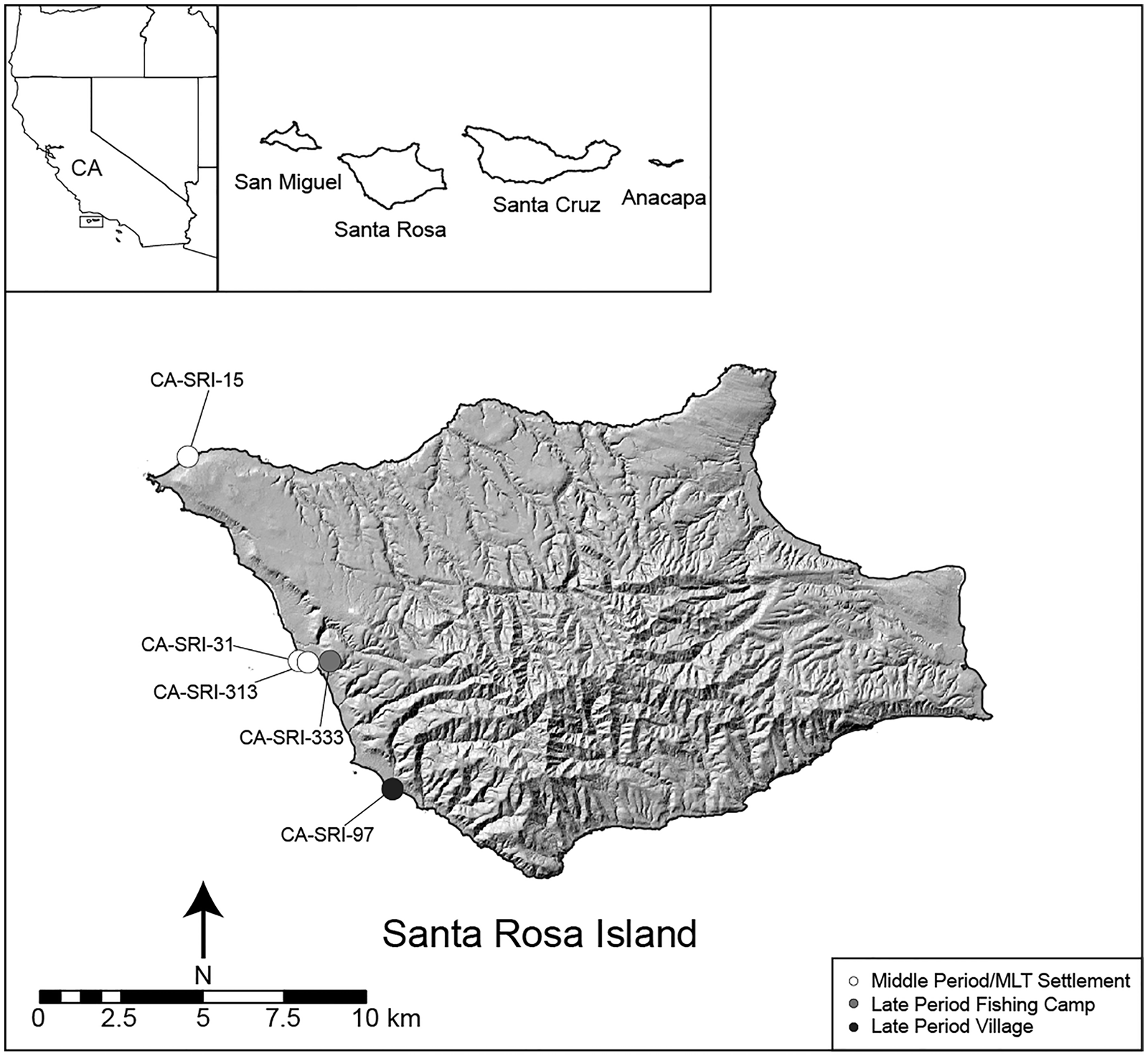
In some cases, innovations allowed maritime foragers to travel farther from shore to target large pelagic fish species like swordfish, tuna, yellowtail, and bonito that have a relatively high risk of failure (Pletka Reference Pletka and Arnold2001). Catching these pelagic fishes comes with costs, so it is important when attempting to reconstruct past diets to consider how the decision for some members of the population to target these species as part of a broader foraging strategy is reflected in the regional archaeological record. In this study, we use faunal data—including fish bone identifications from western Santa Rosa Island, one of the four northern Channel Islands off the coast of California (Figure 1)—to reconstruct the relationship between population growth and decisions regarding which subsistence strategies to pursue. This is supplemented with seasonality estimates using stable oxygen isotopic measurements (δ18O) of California mussel (Mytilus californianus) shells, which reflect mobility, intensity of site occupation, and the role of shellfish in the diet.
California's northern Channel Islands with the sites of interest indicated.

Risk and Foraging Strategies
Although it is common in archaeology to classify a population of hunter-gatherers by one subsistence strategy, ethnographically, procurement of dietary resources at the group level is frequently made up of multiple simultaneous foraging strategies (e.g., Bird and Bliege Bird Reference Bird and Bird2002; Bliege Bird and Bird Reference Bliege Bird and Bird2008; Bliege Bird et al. Reference Bliege Bird, Codding and Bird2009). These could include male and female activities or those pursued by children, adults, and the elderly. Jochim (Reference Jochim1988) has argued that we must consider the interaction of these systems to fully understand aspects of the archaeological record, including settlement and subsistence patterns.
One primary reason that different members of a group pursue different foraging strategies is to balance return and risk given relevant constraints (Bliege Bird and Bird Reference Bliege Bird and Bird2008). Cross-culturally, men's hunting activities tend to be riskier than women's, with greater variance in foraging outcomes in terms of both harvest size and chances of failure (e.g., Bliege Bird and Bird Reference Bliege Bird and Bird2008; Bliege Bird et al. Reference Bliege Bird, Smith and Bird2001; Hawkes et al. Reference Hawkes and Blurton-Jones1991). A forager is more likely to pursue a risk-prone foraging strategy if the benefits of a high return outweigh the costs of failure (Hawkes Reference Hawkes1991).
In cases in which men's foraging strategies are high-risk, women often pursue lower-risk strategies that yield higher overall average returns but lack the potential for a windfall during a single bout (Bliege Bird and Bird Reference Bliege Bird and Bird2008). This has been attributed in part to women's role in caring for children (Hurtado et al. Reference Hurtado, Hill, Kaplan and Hurtado1992; Kaplan et al. Reference Kaplan, Hill, Hurtado and Cashdan1990). Women's and men's foraging strategies work together to provide reliable returns and the potential to obtain status as a family unit. Coastal hunter-gatherer populations also pursue multiple simultaneous foraging strategies (Bird and Bliege Bird Reference Bird and Bird1997, Reference Bird and Bird2002). For example, in addition to men's and women's strategies, Bird and Bliege Bird (Reference Bird and Bird2002) also noted the role of children and the elderly among the Meriam islanders in northeastern Australia in foraging for shellfish.
Settlement and Subsistence on California's Northern Channel Islands
At the time of European contact in 1542, the northern Channel Islands (NCI) were more densely populated than other areas in California and most hunter-gatherer populations globally (Winterhalder et al. Reference Winterhalder, Kennett, Grote and Bartruff2010). The residents of the NCI lived in large coastal villages under the control of chiefs, and they participated in an extensive trade network that included food and nonfood items, including shell beads, chert microliths, and steatite artifacts (Arnold Reference Arnold1992; Johnson Reference Johnson and Glassow1993; Kennett Reference Kennett2005; King Reference King1990). The subsistence economy of the Island Chumash was heavily reliant on marine foods, although recent research has also highlighted the dietary importance of plant resources, including geophytes like blue dick corms (Dichelostemma sp.; e.g., Gill Reference Gill, Jazwa and Perry2013; Timbrook Reference Timbrook2007). Still, cultural and demographic change can be reflected by the marine faunal record, particularly the geographic distribution of shell midden sites and the changes in the density of different species of shellfish, fish, marine mammals, and sea birds.
The number of high-density shell midden sites increased through the late Holocene (after 3600 cal BP). Furthermore, with the exception of some earlier high-density sites (e.g., Gamble Reference Gamble2017), coastal settlement sites increased in faunal density through time, indicating an increase in the exploitation of coastal resources, particularly fish (e.g., Glassow Reference Glassow and Glassow1993; Glassow et al. Reference Glassow, Braje, Costello, Erlandson, Johnson, Morris, Perry and Rick2010; Jazwa et al. Reference Jazwa, Kennett and Winterhalder2016, Reference Jazwa, Kennett, Winterhalder and Joslin2017; Kennett Reference Kennett1998, Reference Kennett2005). Trade and offshore fishing and marine mammal hunting were facilitated by sophisticated plank canoes (tomols) with restricted ownership (Arnold Reference Arnold1992, Reference Arnold1995; Gamble Reference Gamble2002). Skills limited to subsets of the population and managed by chiefs included the production of tomols and the manufacture and exchange of chert microblades/microdrills and shell beads made from Olivella biplicata shells. This provides evidence for craft specialization (Arnold Reference Arnold1992; Kennett Reference Kennett2005; King Reference King1990; Perry and Jazwa Reference Perry and Jazwa2010).
Beginning around 1300 cal BP, population growth on the NCI accelerated (Arnold Reference Arnold1992; Kennett Reference Kennett2005; Winterhalder et al. Reference Winterhalder, Kennett, Grote and Bartruff2010). An especially important period of rapid cultural change was the Middle to Late period transition (MLT; 800–650 cal BP), which occurred during a time of extreme drought conditions associated with the Medieval Climatic Anomaly (1150–600 cal BP; Jones et al. Reference Jones, Brown, Mark Raab, McVicar, Geoffrey Spaulding, Kennett, York and Walker1999; Kennett Reference Kennett2005). While the population continued to grow during the MLT and into the Late period, people condensed in a smaller number of large village sites as they took steps to protect resources within their territories (Jazwa et al. Reference Jazwa, Kennett, Winterhalder and Joslin2017).
Fishing on the Northern Channel Islands
Archaeological fish assemblages are particularly valuable as proxies to trace cultural change because fishing often requires more investment in specialized technologies and can have higher pursuit costs than gathering shellfish (Glassow Reference Glassow and Glassow1993). Fishing was an important part of the subsistence economy throughout human occupation of the NCI. Although shellfish are the dominant contributor to most NCI midden assemblages predating the late Holocene (Jazwa et al. Reference Jazwa, Braje, Erlandson and Kennett2015, Reference Jazwa, Kennett and Winterhalder2016; Kennett Reference Kennett1998; Rick et al. Reference Rick, Erlandson, Vellanoweth and Braje2005), some Santa Cruz Island sites from that time contain larger amounts of marine mammals and fish (Glassow Reference Glassow and Glassow1993). A similar pattern was true for the Santa Barbara coast (King Reference King1990; Rick and Glassow Reference Rick and Glassow1999). During the late Holocene, there was an increase in the density and ubiquity of fish bone in the NCI archaeological record (Colten Reference Colten and Arnold2001; Glassow Reference Glassow and Glassow1993; Jazwa et al. Reference Jazwa, Kennett and Winterhalder2016; Kennett Reference Kennett2005). Fish is the dominant component from most of the large settlement sites, particularly those that date to the Late period and are the most likely candidates as historically documented villages (Glassow et al. Reference Glassow, Braje, Costello, Erlandson, Johnson, Morris, Perry and Rick2010; Johnson Reference Johnson and Glassow1993).
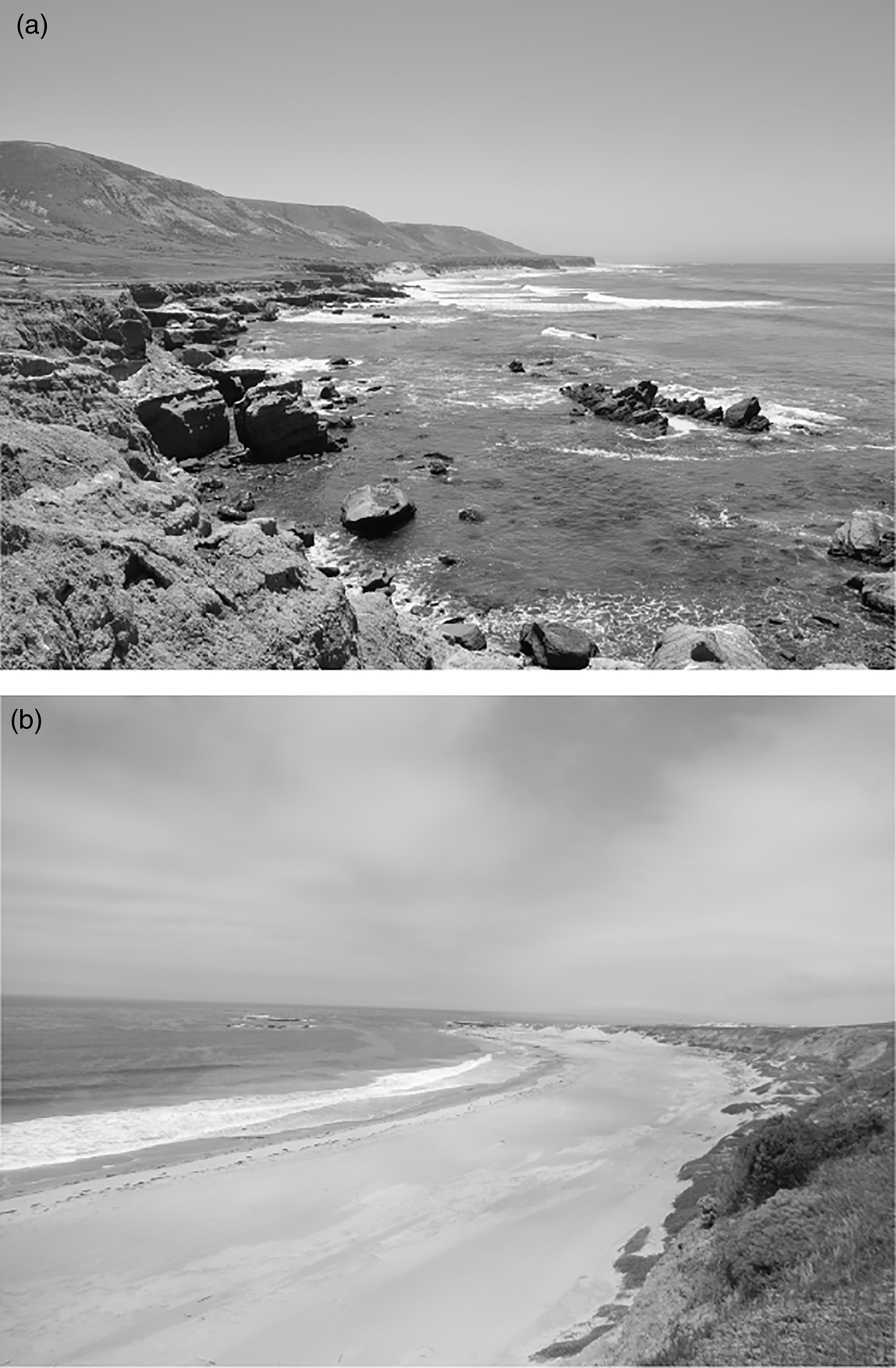
Among the most important technological innovations allowing for the increase in fishing that began during the Middle period (2550–800 cal BP) was the development of the single-piece fishhook in the Santa Barbara Channel region by 2500 cal BP (Rick et al. Reference Rick, Vellanoweth, Erlandson and Kennett2002), after which there was a rapid increase in fishing (Glassow Reference Glassow and Glassow1993; Jazwa et al. Reference Jazwa, Kennett and Winterhalder2016; Kennett Reference Kennett2005). People targeted nearshore fishes in rocky intertidal environments lining the coasts of the NCI (Figure 2a). Common taxa like surfperches and rockfishes are typically found in the surf zone, kelp beds, or tidepools (Eschmeyer et al. Reference Eschmeyer, Herald and Hermann1983). The development of the tomol by 1500 cal BP also facilitated offshore fishing and marine mammal hunting (Arnold Reference Arnold1992; Gamble Reference Gamble2002).
Photographs of (a) rocky intertidal and (b) sandy beach shorelines on the west end of Santa Rosa Island. Photographs by Christopher Jazwa.

The archaeological record from Santa Cruz Island indicates that there was a greater focus on large pelagic fishing after the MLT, including albacore and swordfish (Bernard Reference Bernard and Arnold2004; Colten Reference Colten and Arnold2001; Davenport et al. Reference Davenport, Johnson and Timbrook1993; Glassow Reference Glassow and Glassow1993; Paige Reference Paige2000; Pletka Reference Pletka and Arnold2001). Glassow (Reference Glassow and Glassow1993) argued that the increase in fishing over time, particularly offshore fishing from boats, may be related to greater sedentism. Many shellfish, including mussels, are stationary. Therefore, people harvesting them have access to a limited quantity. Fish, on the other hand, are mobile and can be more consistently caught close to a settlement without as much risk of depleting stock. Furthermore, tomols allowed access to more fishing locations, provided the village was near good beaches where canoes could be launched (Figure 2b).
The southwest coast of Santa Rosa Island is well suited to test the relationship between settlement patterns and fishing during the Middle period, the MLT, and the Late period. The coast is lined by a broad (~300–700 m wide) coastal terrace approximately 12 km long (Muhs et al. Reference Muhs, Simmons, Randall Schumann, Groves, DeVogel, Minor and Laurel2014). People would have been able to move easily throughout most of this area and would have had access to good fishing locations within their territory (Jazwa et al. Reference Jazwa, Kennett, Winterhalder and Joslin2017). The southwest coast of the island is an ideal fishing location because of the presence of extensive kelp forests, rocky intertidal coastline, and sandy beaches where tomols can be launched. We use fish assemblages from three large settlement sites (CA-SRI-15, -31, and -97) and two smaller sites with high fish density (CA-SRI-313 and -333) on the southwest coast of Santa Rosa Island to reconstruct shifts in foraging strategies and as proxies for increasing population density during the late Holocene.
Methods
We excavated seven 25 × 25 cm column samples in arbitrary 10 cm levels. All cultural materials were sorted as in Jazwa and colleagues (Reference Jazwa, Braje, Erlandson and Kennett2015, Reference Jazwa, Kennett and Winterhalder2016, Reference Jazwa, Kennett, Winterhalder and Joslin2017) and fish bones were sorted by Joslin or Paige (Reference Paige2000). The chronology of occupation of the sites in this study was previously published by the authors (Jazwa et al. Reference Jazwa, Kennett, Winterhalder and Joslin2017:7), with the exception of one date originally presented in Kennett (Reference Kennett1998:456) that we add from CA-SRI-31, Unit 2. To estimate sea surface temperature and the seasonality of shellfish harvesting, we sampled 20 California mussel shells for δ18O from each of seven stratigraphic levels, as in Jazwa and colleagues (Reference Jazwa, Braje, Erlandson and Kennett2015). Detailed methods are provided in the supplementary material.
Results
Site Chronology
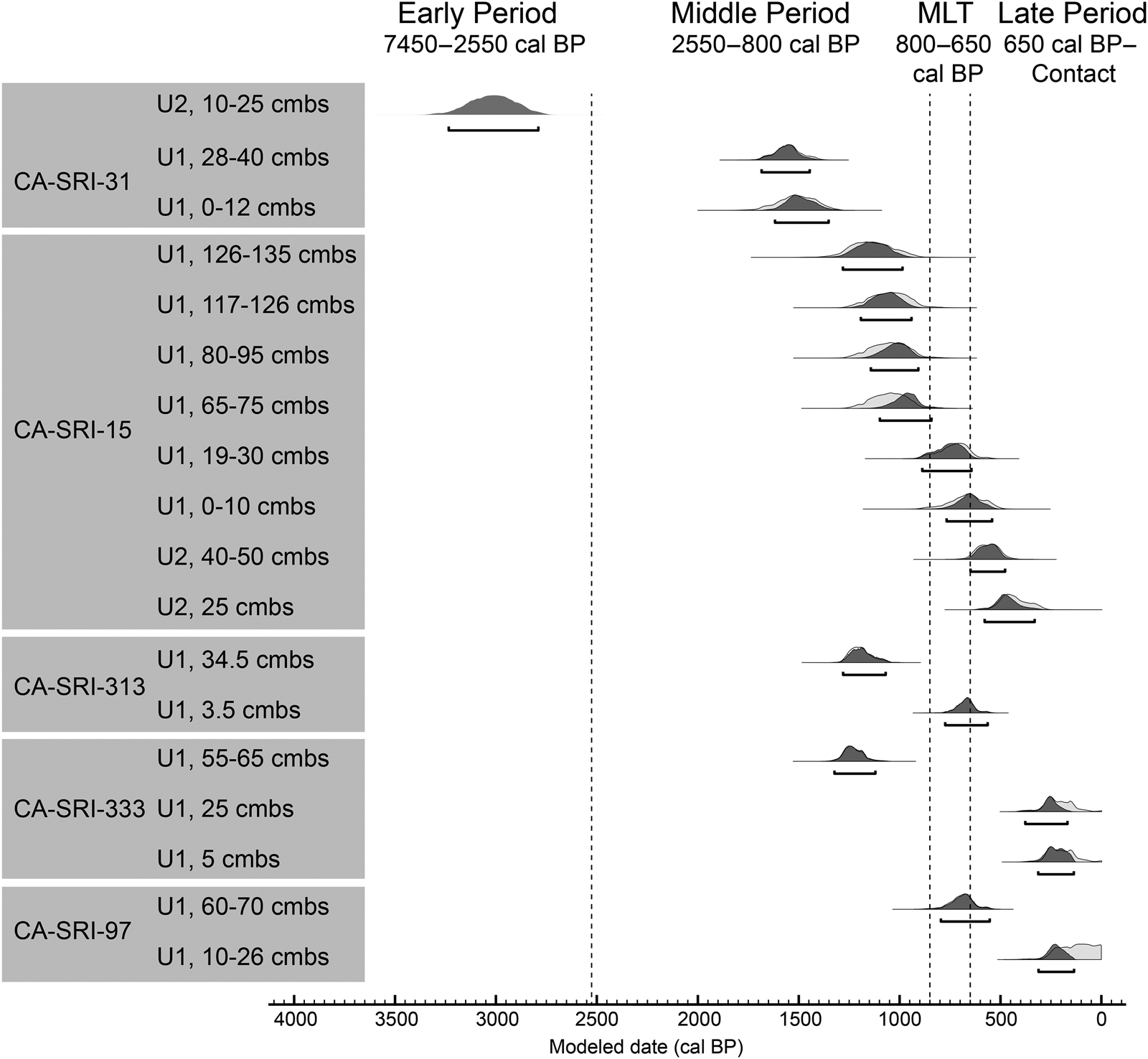
Radiocarbon dates establish a chronology of settlement along the southwest coast of Santa Rosa Island (Supplemental Table 1; Figure 3). The overall range of dates is from the end of the Early period (7450–2550 cal BP) to the Late period: 3240–2790 cal BP (2σ range; CA-SRI-31, Unit 2, 0–25 cmbs) to 310–135 cal BP (2σ range; CA-SRI-97, 10–26 cmbs). CA-SRI-31, Unit 2 is relatively low density, and the small amount of fish remains were not sorted by Paige (Reference Paige2000). The earliest unit included in our fish analysis is Unit 1 from CA-SRI-31, which has an initial date of 1680–1440 cal BP (2σ range).
The 2σ ranges for the radiocarbon dates from the excavated sites. All dates were calibrated in OxCal 4.1 (Bronk Ramsey Reference Bronk Ramsey2009) using the most recent marine calibration curve, Marine13 (Reimer et al. Reference Reimer, Bard, Bayliss, Warren Beck, Paul Blackwell, Ramsey, Buck, Cheng, Lawrence Edwards, Friedrich, Grootes, Guilderson, Haflidason, Hajdas, Hatté, Heaton, Hoffmann, Hogg, Hughen, Felix Kaiser, Kromer, Manning, Niu, Reimer, Richards, Marian Scott, Southon, Staff, Turney and van der Plicht2013). Dark gray distributions are modeled based on stratigraphy. Light gray distributions are not.

CA-SRI-313 is immediately east of CA-SRI-31, and CA-SRI-333 is approximately 0.5 km to the southeast. Both sites have their earliest evidence for occupation soon after the latest dates from CA-SRI-31. CA-SRI-313 was occupied before and during the MLT, possibly extending to the beginning of the Late period (775–565 2σ cal BP; 3.5 cmbs). Occupation of CA-SRI-333 is primarily focused during the Late period, with only the low-density deeper levels of the deposits associated with the Middle period and the MLT (Supplemental Table 1). The densest deposits at CA-SRI-97 (10–26 cmbs) are the latest in this study and are almost certainly associated with the historic village of Nawani (Glassow et al. Reference Glassow, Braje, Costello, Erlandson, Johnson, Morris, Perry and Rick2010; Johnson Reference Johnson and Glassow1993; Kennett Reference Kennett1998, Reference Kennett2005). Occupation of CA-SRI-15 is coincident with the rest of the sites in this study.
Faunal Data
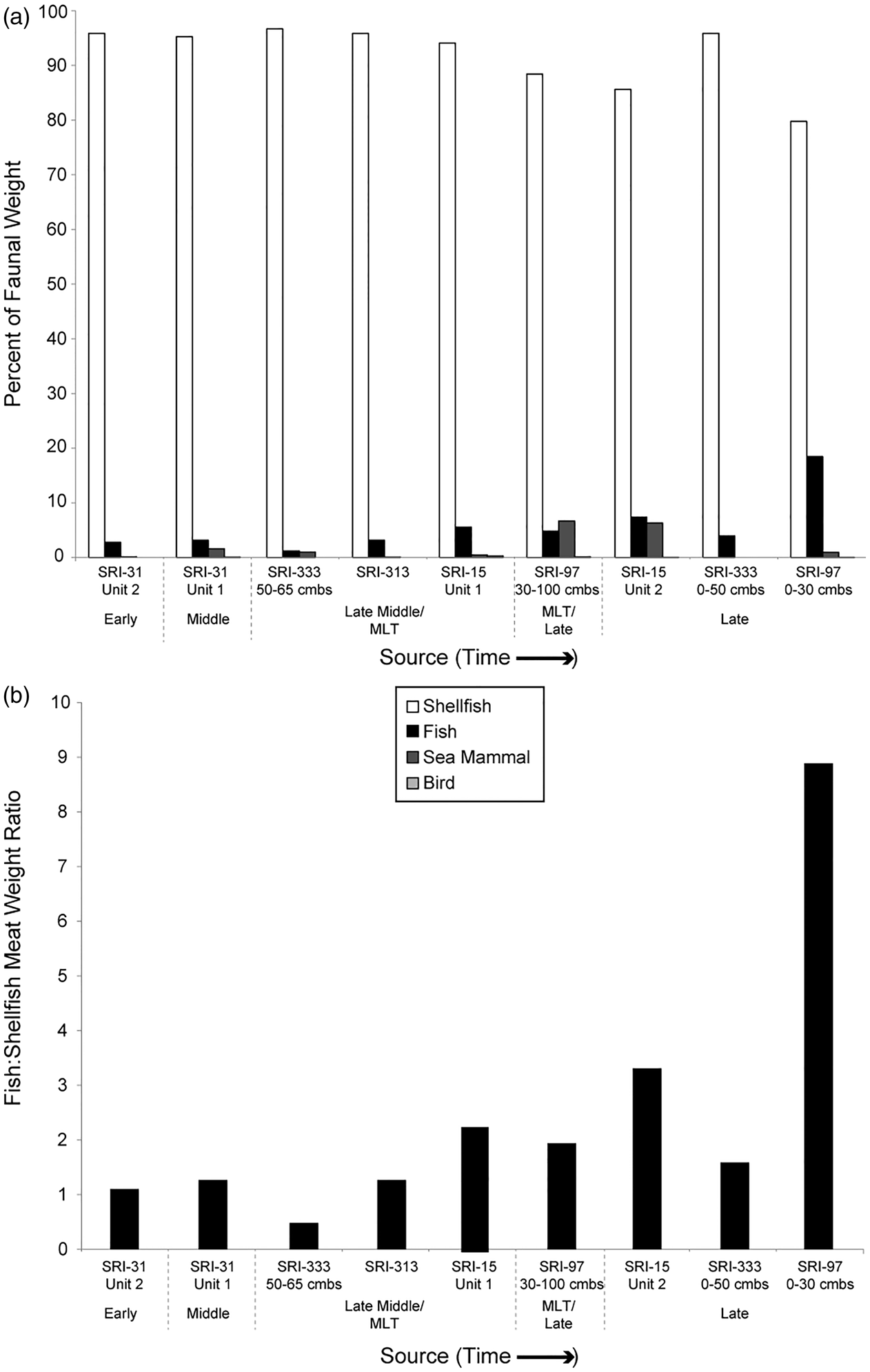
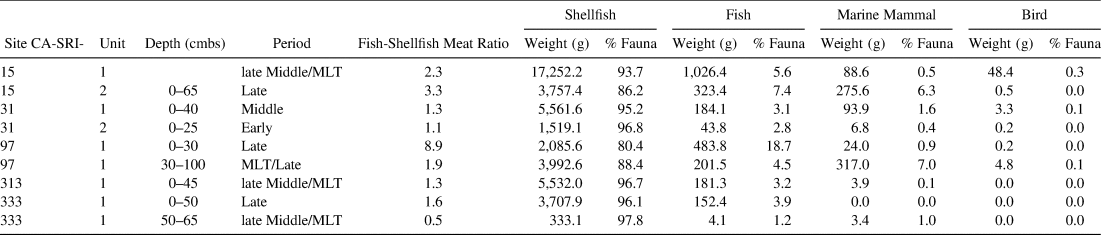
The faunal data groups chronologically into eight cultural components (Table 1; Figure 4). CA-SRI-97 and -333 had clear changes in cultural strata, with two components each. The other three sites only have one each. In all the assemblages included in this study, shellfish are by far the dominant subsistence component by measured weight, making up at least 80% of the total in each. Shellfish make up a smaller proportion by weight of the total faunal record of the components dating to the Late period than during the earlier periods. Fish bone makes up the second highest proportion in all components except from CA-SRI-97, 30–100 cmbs, in which there is a greater weight of marine mammal bone.
Major faunal constituents for the cultural components in question by (a) percent of faunal weight and (b) ratio of fish to shellfish by estimated meat weight.

Summary of Faunal Data by Cultural Component, Including Ratio of Fish to Shellfish by Estimated Meat Weight.

For ratios of the meat weight of fish to shellfish, a value greater than 1 suggests that fish made up a more prominent component of the diet, and a value less than 1 suggests that shellfish were more prominent. Estimates of meat weight indicate fish were more abundant than shellfish in all cultural components except the late Middle and MLT deposits from CA-SRI-333. Fish make up the greatest proportion of the assemblage at the Late period village deposits from CA-SRI-97 (0–30 cmbs), which are associated with the historic village of Nawani. At this component, there is a ratio of fish to shellfish meat of 8.9. Even at the Early period deposits at CA-SRI-31, Unit 2, which likely predates the single-piece shell fishhook, fish and shellfish are nearly equal in meat weight, with a ratio of 1.1 (Table 1).
Fish Data
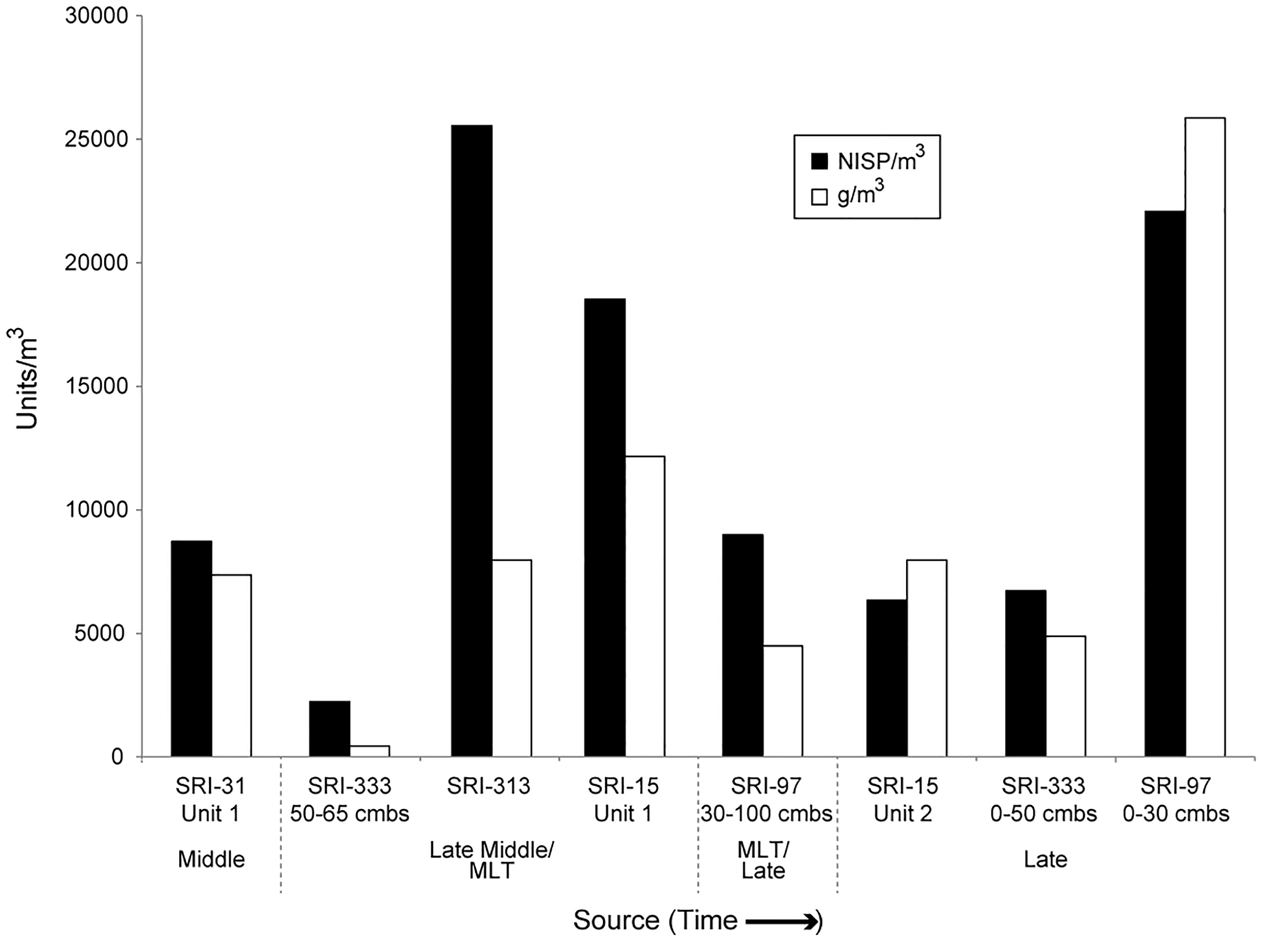
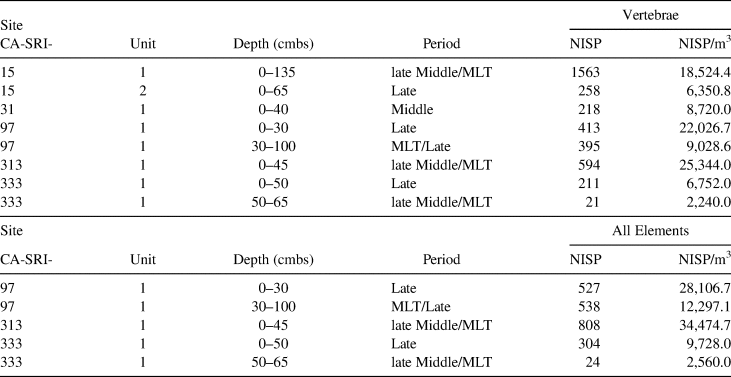
For fish bone, taxonomic data are available for the number of identified specimens (NISP) and the density per cubic meter (NISP/m3) from each temporal designation except CA-SRI-31, Unit 2 (Table 2; Supplemental Tables 2–4). In general, components that were deposited during the Middle period and the MLT have more fish bone than those dating to the Late period except for the village deposits from CA-SRI-97 (0–30 cmbs; Figure 5), in which the overall total weight density of fish remains is more than twice that at any other component. This suggests that during the Middle period and the MLT, fishing occurred equally at many occupied sites, but during the Late period, more fishing was conducted at the central village sites than other locations.
Density of fish bones for the cultural components by vertebrae NISP and total weight.

Summary of NISP and NISP/m3 for Each Cultural Component by Only Vertebrae and All Identified Elements.

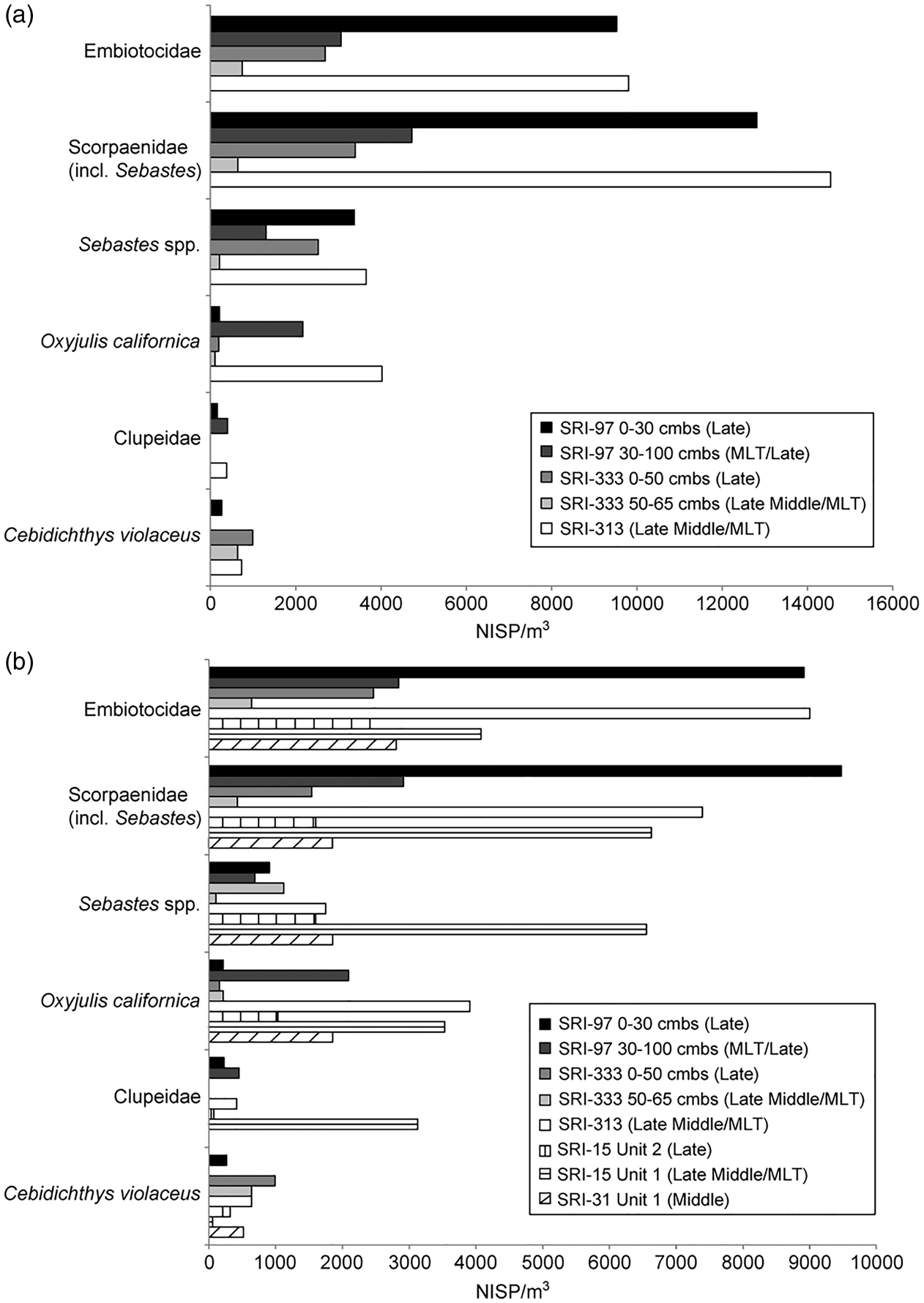
In the faunal records for all the sites considered here, three categories dominate: Embiotocidae (surfperches), Oxyjulis californica (señoritas), and Scorpaenidae (rockfishes and scorpionfishes; Figure 6). The fourth most prominent category is Cebidichthys violaceus (monkeyface prickleback). The exception to this pattern is CA-SRI-15, Unit 1, which has a large density of clupeids (herrings and sardines) in the assemblage, suggesting the use of nets. Only one vertebra from a pelagic fish, Thunnus alalunga (albacore), was recovered in any of the materials (CA-SRI-97; Supplemental Table 2). Therefore, we do not have clear evidence for pelagic fishing along the west coast of Santa Rosa Island. Instead, local fishing activity was largely focused on nearshore subsistence.
The six most prominent fish categories by NISP density for (a) all identified elements and (b) vertebrae only.

Seasonality of Mussel Harvest
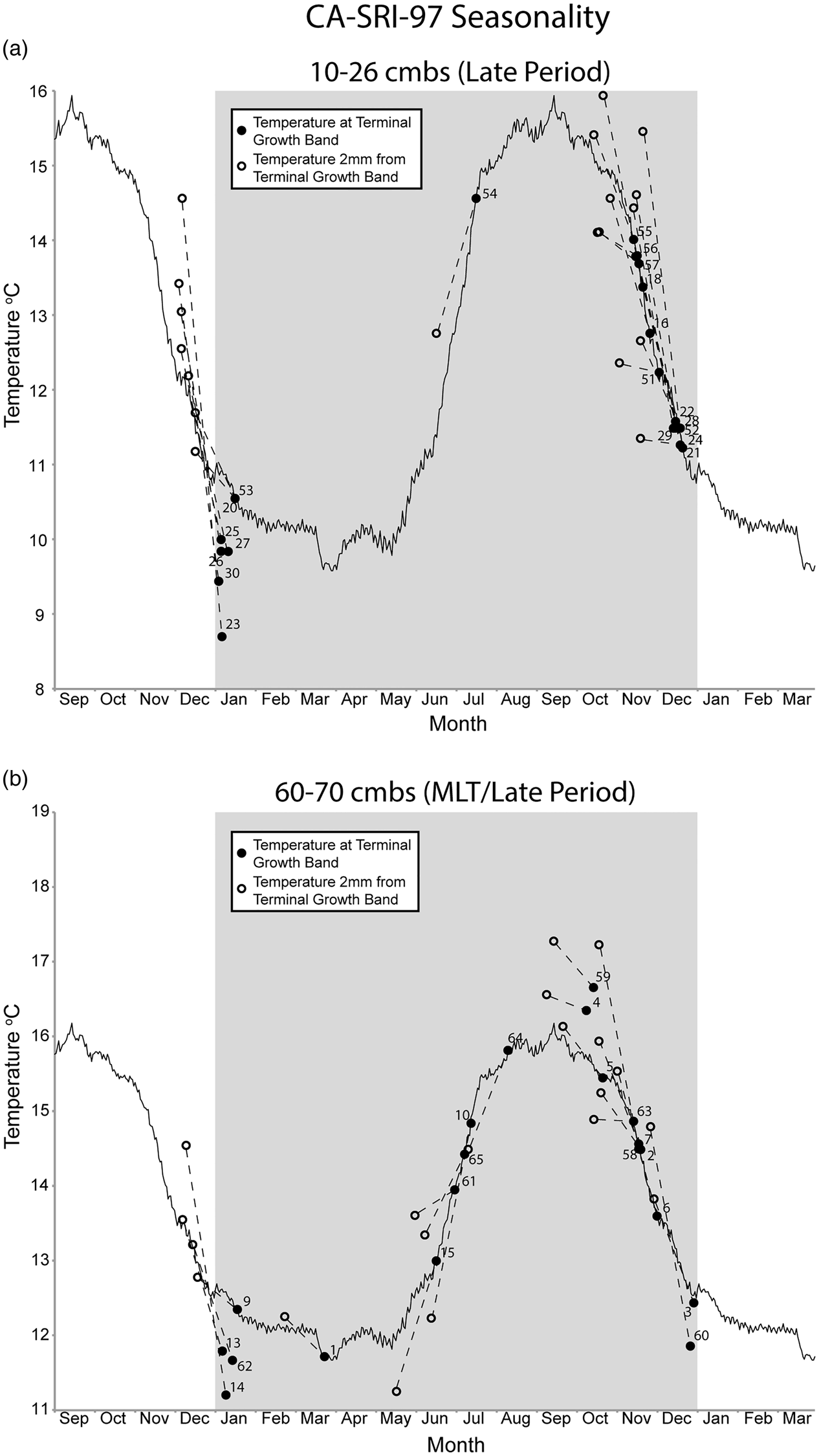
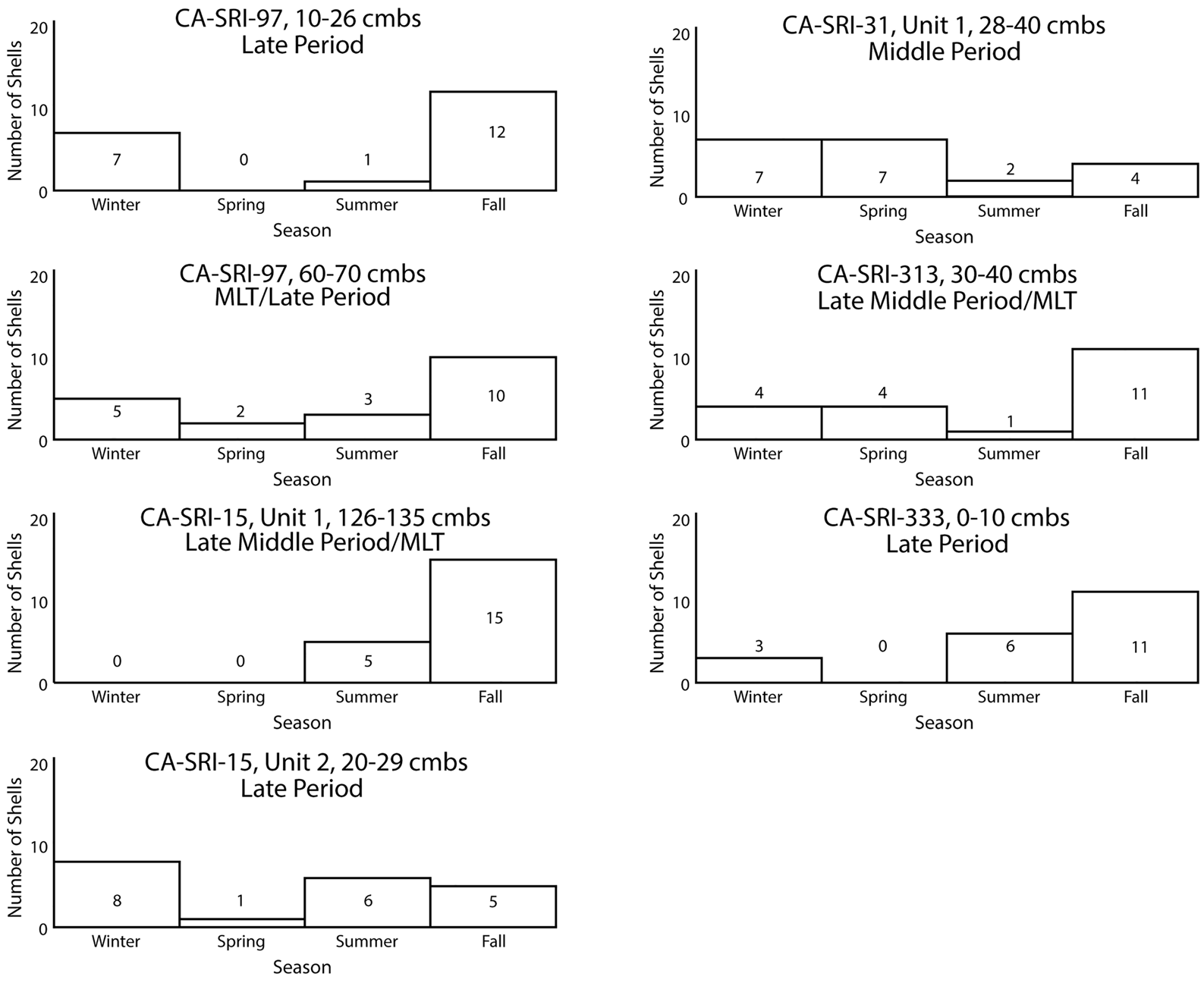
The δ18O data indicate seasonality patterns for California mussel harvesting from each site in this study (Figures 7–8; Supplemental Tables 5–6; Supplemental Figures 1–5). The most notable pattern from these data is that the Late period village deposits from CA-SRI-97 appear to have a seasonal signature, with δ18O measurements clustering in the late fall and winter. These measurements only represent the season of collection for mussels and not necessarily the site's season of occupation because the ratio of fish to shellfish meat weight is 8.9. A possible explanation is that these were seasons when mussel collecting was more important. The earlier deposits from CA-SRI-97 have more of a year-round mussel harvesting profile, although the highest density of shells are associated with the fall and winter. CA-SRI-31 has a year-round signature, and both CA-SRI-313 and -333 have evidence associated with all but one season, suggesting that these sites were not just seasonal camps. During the Middle period and the MLT, mussel seasonality at CA-SRI-15 was largely confined to the summer and fall, whereas the Late period has evidence for harvest throughout the year (Figure 8).
Seasonal profile of Mytilus californianus shells from (a) CA-SRI-97, 60–70 cmbs, an example of a deposit with a year-round occupation signature; and (b) CA-SRI-97, 10–26 cmbs, an example of a deposit with a seasonal (fall-winter) occupation signature. The curve was stretched and shifted to the range of temperatures from the profile of one shell with 20 samples drilled at 2 mm increments. The terminal growth band and one month (2 mm) prior are plotted to estimate season of collection.

Histograms of season of harvest for mussels at all sites.

Discussion
The late Holocene faunal record from western Santa Rosa Island is consistent with a pattern of nearshore, subsistence-level fishing during the Middle period, the MLT, and the Late period. Although there is evidence for an increase in offshore fishing for prestigious pelagic fishes during the Late period in the Santa Barbara Channel region (Colten Reference Colten and Arnold2001; Glassow Reference Glassow and Glassow1993; Pletka Reference Pletka and Arnold2001), evidence for this type of fishing at CA-SRI-97, the historically documented village site of Nawani, is limited to a single albacore vertebra. This suggests that inhabitants of western Santa Rosa Island may not have frequently fished for these species. Instead, the record is dominated by nearshore fish species, which could be harvested with a lower risk of failure. Although the fish species that were targeted remained consistent throughout the periods investigated in this study, their overall abundance and relative dietary importance with respect to shellfish increased substantially through time.
Permanent settlement along the west coast of Santa Rosa Island occurred late compared with other regions of the island (Jazwa et al. Reference Jazwa, Kennett and Winterhalder2016). Only one component analyzed as a part of this study—CA-SRI-31, Unit 2—dates to the Early period, predating the appearance of the single-piece fishhook. It is almost 50% fish by weight, which is contrary to our expectation that shellfish make up more of the diet at that time. Nevertheless, deposits from that unit, including fish, are low density. During the Middle period and the MLT, fishes became more prominent in the archaeological record, and they consistently made up a larger portion of the diet than shellfish, although both were important. Fishing increased even more during the Late period, when island populations concentrated at fewer primary village sites with high population densities (Arnold Reference Arnold1992; Glassow et al. Reference Glassow, Braje, Costello, Erlandson, Johnson, Morris, Perry and Rick2010; Jazwa et al. Reference Jazwa, Kennett and Winterhalder2016, Reference Jazwa, Kennett, Winterhalder and Joslin2017; Kennett Reference Kennett1998, Reference Kennett2005; Rick et al. Reference Rick, Erlandson, Vellanoweth and Braje2005). Fishing can be more readily intensified than shellfish collecting, so people likely turned to fishing to support the larger populations.
In the final centuries of the Middle period leading up to the MLT, CA-SRI-31 was still a major settlement hub at the mouth of Bee Canyon. The radiocarbon record indicates that the population was distributed along the southwest coast of the island at this time (Supplemental Table 1; Kennett Reference Kennett1998:456–458). There was also a trend toward larger quantities of fish and greater diversity of fish species between CA-SRI-31 (Middle period) and the subsequent deposits at CA-SRI-313 and -15 (both late Middle and MLT), suggesting an increased reliance on fishing. The δ18O record from CA-SRI-31 and -313 suggests that the southwest coast of the island was occupied year-round at that time, supported by the productive fishing grounds there. CA-SRI-15 reflects a more seasonal signature, focused largely during the summer and fall. There also appears to have been a focus on net fishing for clupeids, which would have been most readily available during those seasons.
Although the absolute number of settlement sites decreased across the NCI during the MLT, there is evidence of continued occupation at CA-SRI-15 and -313 along with initial evidence for settlement at CA-SRI-97. It is unclear if the occupation at CA-SRI-333 continued during this period or if there was a gap and the site was reoccupied later. The initial deposits at CA-SRI-97 reflect an increased focus on marine mammal hunting, either by boat or on sandy beaches. Today, the protected ~600 m long beach immediately south of the site is a preferred habitat for marine mammals, who are present there year-round in varying densities. The isotopic record from mussel shells supports a year-round occupation at CA-SRI-97 at this time.
Major settlement shifts and changing fishing practices occurred during the Late period, with the population condensing to a smaller number of coastal villages (Jazwa et al. Reference Jazwa, Kennett, Winterhalder and Joslin2017). Along the northwest coast, the hub of settlement at CA-SRI-15 moved from the more exposed western part of the prominence adjacent to a long sandy beach (Unit 1) to a smaller but more sheltered cove on the eastern side (Unit 2). Fish remained the most important dietary component, and marine mammal also overtook shellfish. The lower density of fish bone from the Late period indicates less fishing, but the seasonality record suggests that people occupied the site year-round. There was also a decrease in clupeid fishing.
Of the west coast sites in this study, only CA-SRI-97 and -333 provided evidence for occupation during the Late period. These two sites have distinct faunal records, each representing a component of the overall subsistence system. The density of fish bone from Late period deposits from CA-SRI-97 is by far the highest of any site investigated as a part of this study. The δ18O data suggest mussel harvesting during the fall and winter. However, this analysis should be used with caution when inferring site seasonality because fish meat weight is 8.9 times that of shellfish. The overall abundance of faunal materials and identification of the site as the historically documented village of Nawani suggest that the site was likely occupied year-round. The seasonal signature may simply be for shellfish harvesting, which was done seasonally to supplement diet.
The Late period assemblage from CA-SRI-333 contains a lower density of fish and other faunal remains than CA-SRI-97. The diversity of fishes that were caught at CA-SRI-333 is higher, including an increase in species like monkeyface prickleback. The nearshore region adjacent to this site is rocky and includes exposed boulders, which is conducive to encountering these species (Eschmeyer et al. Reference Eschmeyer, Herald and Hermann1983). Therefore, it appears that people at CA-SRI-333 were fishing along the rocky coast, opportunistically catching species as they were encountered. Isotopic evidence suggests that mussels were harvested at the site during all seasons except spring, indicating that it was likely a small site occupied by a small group of people who may have had some connection with the nearby village.
There does not appear to be an increase in large pelagic fishes at any site in this study during the Late period. Although Late period sites on Santa Cruz Island contain the remains of high-risk fishes like albacore and swordfish (Bernard Reference Bernard and Arnold2004; Davenport et al. Reference Davenport, Johnson and Timbrook1993; Pletka Reference Pletka and Arnold2001), subsistence fishes like surfperches and rockfishes dominate the assemblage. There are several possible explanations. First, under any circumstances, pelagic fish species are often challenging to catch, and efforts to harvest them have a high failure rate. Ethnographically, high-risk species like these tend to make up only a small proportion of the overall caloric intake (Bliege Bird Reference Bliege Bird1999; Bliege Bird and Smith Reference Bliege Bird and Smith2005). Therefore, we expect to see the same pattern in the archaeological record. Also, we included only one excavation unit from CA-SRI-97, and it is possible that pelagic fish remains are present elsewhere at the site. Gamble (Reference Gamble2017) has shown that faunal records from different areas within complex settlement sites can differ substantially. Gobalet and Jones (Reference Gobalet and Jones2018) have shown that there is little evidence for fishing for large-bodied offshore fishes in central California, so it is possible that it was not a widespread strategy.
Fishing Strategies and Risk
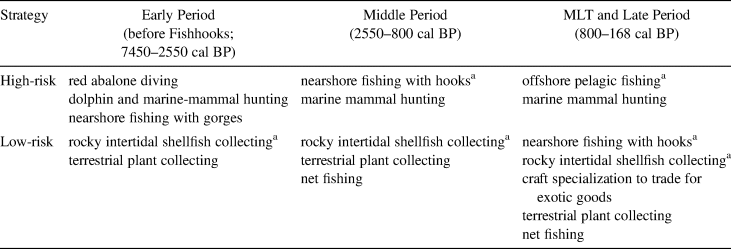
The faunal record from western Santa Rosa Island, including the relatively small number of large pelagic fish remains at CA-SRI-97, is consistent with a subsistence pattern that includes multiple foraging strategies (Jochim Reference Jochim1988). Archaeology provides an interesting opportunity to add time depth to ethnographic observations of these strategies. Within the context of broad patterns from the NCI, the transition in the faunal record on western Santa Rosa Island may reflect a change in risk-prone and risk-averse strategies (Table 3; Bliege Bird and Bird Reference Bliege Bird and Bird2008). As the occupants of the NCI employed different relative high- and low-risk subsistence strategies, their foraging choices changed the relative proportions of fish and shellfish in the archaeological record. Additionally, a particular strategy, such as nearshore fishing, may have transitioned in how it was incorporated in the overall subsistence system. It has a higher chance of failure than shellfish collecting but a lower chance than offshore pelagic fishing. In contexts in which population density may be too high to rely on shellfish collecting, nearshore fishing may take on the role of the low-risk option compared with pelagic fishing.
Patterns in High- and Low-Risk Foraging Strategies on the Northern Channel Islands.

aSubsistence practice that provided a primary caloric source.
Before the development of the shell fishhook at the start of the Middle period, the bulk of the marine diet on the NCI came from rocky intertidal shellfish (Jazwa et al. Reference Jazwa, Kennett and Winterhalder2016). This subsistence strategy would have been relatively low risk, with success in collecting enough food for a meal virtually assured, especially California mussel. In our experience, California mussels can be collected safely on the NCI during almost any low tide, provided the swell is not too high. Perhaps later in the Late period, the uppermost deposits may have been depleted enough to limit the times of the month when mussels could be collected efficiently to spring low tides, but this is unlikely before the Middle period.
During the Middle period, the development of single-piece shell fishhooks is coincident with an increase in fish remains in the archaeological record (Glassow Reference Glassow and Glassow1993; Jazwa et al. Reference Jazwa, Kennett and Winterhalder2016, Reference Jazwa, Kennett, Winterhalder and Joslin2017; Rick et al. Reference Rick, Erlandson, Vellanoweth and Braje2005). This technology increased the efficiency and success rate of fishing on the islands, likely decreasing the risk associated with nearshore fishing. As the population of the NCI increased, more efficient fishing provided a more abundant source of food. The increased return rate from fishing allowed people to split foraging time between fish (high-risk) and rocky intertidal shellfish (low-risk) harvesting strategies. Therefore, both components make up large proportions of the faunal record during the Middle period and the MLT. Marine mammal hunting increased across the NCI during this period as well. Furthermore, net fishing, which we have evidence for from CA-SRI-15, may have also been a relatively low-risk strategy with a high success rate. However, net construction and use likely required more cooperation and up-front investment in equipment (Table 3).
During the Late period, people congregated at a relatively small number of coastal villages with higher population densities than during any previous period (Kennett Reference Kennett2005). It is unlikely that rocky intertidal shellfish could have supported these large populations without being quickly depleted. Therefore, rocky intertidal shellfish collecting could no longer serve as a viable risk-averse strategy, and it decreased in relative importance compared with nearshore fishing with hooks. Evidence from Santa Cruz Island (Colten Reference Colten and Arnold2001; Glassow Reference Glassow and Glassow1993; Pletka Reference Pletka and Arnold2001) suggests that on the NCI, part of the population devoted more time to the even riskier strategy of offshore fishing for large pelagic species. This may have occurred on a small scale at CA-SRI-97, but we do not have direct evidence. Unfortunately, more infrequently caught large animals can be patchy in the archaeological record, overestimated if the excavation unit is placed where the remains of one was deposited and potentially underestimated if not. Although it was high risk, offshore fishing was likely undertaken by a subsection of the population of the NCI for part of the time. Additionally, because fishing for these pelagic species has a high chance of failure, fishers could also collect kelp forest species while out on the water, which would appear indistinguishable from fishing from the shore in the archaeological record. Shellfish collecting was still conducted as a reliable strategy, perhaps seasonally.
Conclusion
The faunal record from five archaeological sites along the southwest coast of Santa Rosa Island provides an opportunity to observe changes in foraging strategies as population density increased and the distribution condensed geographically to a smaller number of nucleated villages. As population grew on the NCI, technological innovations helped increase fishing productivity. The development of the single-piece fishhook and plank canoe allowed for these changes in subsistence patterns during the late Holocene. During the MLT and the Late period, environmental and cultural shifts promoted a population aggregation at fewer more densely populated village sites on the islands (Jazwa et al. Reference Jazwa, Kennett, Winterhalder and Joslin2017; Kennett Reference Kennett2005). Before that time, the two primary dietary components were shellfish and nearshore fishes. The archaeological literature from sites on Santa Cruz Island indicates that after that time, large-bodied pelagic fishes became more important in the NCI faunal record at some sites, although not those in this study. Around the islands, including on western Santa Rosa Island, nearshore fishes were the dominant subsistence components and shellfish decreased in importance. In both cases, there is evidence for multiple foraging strategies making up the larger subsistence system, likely a combination of high- and low-risk approaches. On the NCI, social and technological changes occurred during the late Holocene that led to higher population densities and subsistence strategies that provided enough food to support them. The archaeological record allows for the opportunity to reconstruct foraging patterns from the past that are similar to present-day ethnographic observations and provides time depth to reconstruct changes in these strategies through time.
Acknowledgments
We would like to thank Channel Islands National Park (CHIS), including Kelly Minas, Don Morris, Kristin Hoppa, Ann Huston, and Laura Kirn. This project was supported by funds from CHIS (135414, P11AC30805, Jazwa; 1443CA8120-96-003, Kennett), the National Science Foundation (BCS-1338350, BCS-1623514, BCS-1724639, Jazwa; SBR-9521974, BCS-1460369, Kennett), the University of California Santa Barbara, California State University Long Beach, the University of Oregon, Pennsylvania State University, and the University of Nevada Reno. Ken Gobalet helped with fish identifications, and Brendan Culleton provided seasonality advice. Kirk Schmitz translated the abstract into Spanish. Ken Gobalet, Lynn Gamble, and five anonymous reviewers provided valuable feedback.
Data Availability Statement
All of the data presented in this article were original to this study. Everything is presented in the article or in the supplemental materials.
Supplemental Materials
For supplementary material accompanying this essay, visit https://doi.org/10.1017/aaq.2020.18.
Supplemental Figure 1. Seasonal profile of Mytilus californianus shells from CA-SRI-15, Unit 1, 126–135 cmbs, created as in Figure 7.
Supplemental Figure 2. Seasonal profile of Mytilus californianus shells from CA-SRI-15, Unit 2, 20–29 cmbs, created as in Figure 7.
Supplemental Figure 3. Seasonal profile of Mytilus californianus shells from CA-SRI-31, 28–40 cmbs, created as in Figure 7.
Supplemental Figure 4. Seasonal profile of Mytilus californianus shells from CA-SRI-313, 30–40 cmbs, created as in Figure 7.
Supplemental Figure 5. Seasonal profile of Mytilus californianus shells from CA-SRI-333, 0–10 cmbs, created as in Figure 7.
Supplemental Table 1. Radiocarbon dates from the sites in this study.
Supplemental Table 2. Fish data from vertebrae by NISP and calculated NISP/m3.
Supplemental Table 3. Fish data from all identified elements by NISP and calculated NISP/m3.
Supplemental Table 4. Summary of NISP and NISP/m3 for each excavation level using only vertebrae (left column) and all elements (right column).
Supplemental Table 5. Oxygen isotopic data and estimated sea surface temperature from the terminal growth band and 2 mm from the terminal growth band of the shells analyzed in this study.
Supplemental Table 6. Individual shell oxygen isotopic profiles with estimated sea surface temperature values.