Temperament is defined as “constitutionally based individual differences in reactivity and self-regulation” (Damon, Lerner, & Eisenberg, Reference Damon, Lerner and Eisenberg2006), which are expressed as individual differences in attention, emotional regulation and behavioral, emotional reactivity (Shiner et al., Reference Shiner, Buss, McClowry, Putnam, Saudino and Zentner2012), which together give a unique emotional style to an infant (Gray, Edwards, O’Callaghan, Cuskelly, & Gibbons, Reference Gray, Edwards, O’Callaghan, Cuskelly and Gibbons2013). Temperament is the result of relatively consistent basic dispositions inherent in the person that underlie and modulate the expression of activity, reactivity, emotionality, and sociability (Shiner et al., Reference Shiner, Buss, McClowry, Putnam, Saudino and Zentner2012). In the first moments of life its components have a strong biological roots and as development proceeds, the expression of temperament becomes increasingly more influenced by experience and context (McMeekin et al., Reference McMeekin, Jansen, Mallan, Nicholson, Magarey and Daniels2013) and will be the result of complex interactions with environmental factors, dependent on experience and context through the development process (Li, Fein, & Grummer-Strawn, Reference Li, Fein and Grummer-Strawn2008; Worobey, Islas Lopez, & Hoffman, Reference Worobey, Islas Lopez and Hoffman2009).
For all this, more recently an integrative definition of temperament has been made. Temperament traits are early emerging basic dispositions in the domains of activity, affectivity, attention, and self-regulation, and these dispositions are the product of complex interactions among genetic, biological, and environmental factors across time (Shiner et al., Reference Shiner, Buss, McClowry, Putnam, Saudino and Zentner2012).
Longitudinal studies show the importance of early infant temperament on possible behavioral and clinical problems during childhood as well as for long-term psychological adjustment (Grant, Bagnell, Chambers, & Stewart, Reference Grant, Bagnell, Chambers and Stewart2009; Kagan & Snidman, Reference Kagan and Snidman1991; Kagan & Snidman, Reference Kagan and Snidman1999; Lahey et al., Reference Lahey, van Hulle, Keenan, Rathouz, D´Onofrio, Rodgers and Waldman2008; Sanson, Prior, & Oberklaid, Reference Sanson, Prior and Oberklaid1998). This issue is an important reason for studies of the clinical implications of the possible effects of maternal and contextual variables on infant temperament (Bridgett et al., Reference Bridgett, Gartstein, Putnam, McKay, Iddins, Robertson and Rittmueller2009).
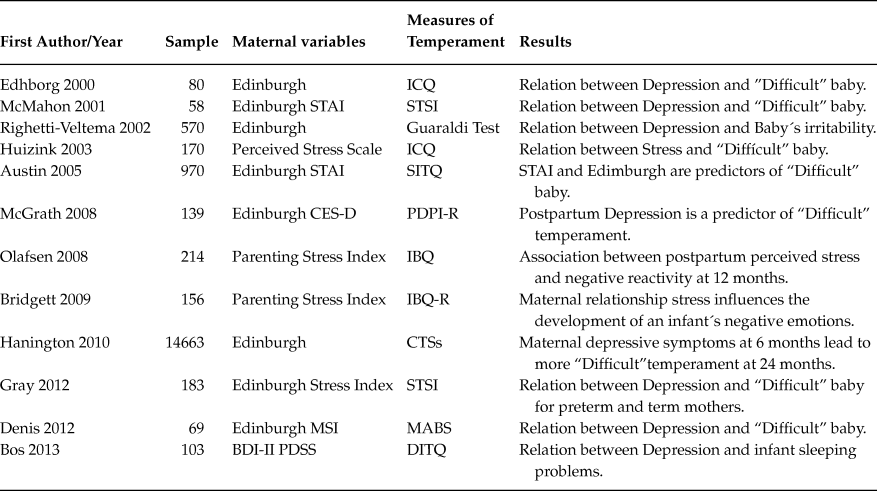
Postpartum depression is a significant mental health problem that affects women around the world and imposes a significant burden of illness on them and their families (O’Hara & McCabe, Reference O’Hara and McCabe2013). A mother’s emotional state is a well-known environmental factor that relates to the development of infant temperament (DiPietro, Novak, Costigan, Atella, & Reusing, Reference DiPietro, Novak, Costigan, Atella and Reusing2006; Grace, Evindar, & Stewart, Reference Grace, Evindar and Stewart2003; Luoma et al., Reference Luoma, Tammminen, Kaukonen, Laippola, Puura, Salmelin and Almquist2001; Murray & Cooper, Reference Murray and Cooper1997; Murray et al., Reference Murray, Sinclair, Cooper, Ducournau, Turner and Stein1999; Najman et al., Reference Najman, Williams, Nikles, Spense, Bor, O´Callaghan and Andersen2000; O´Connor, Heron, Golding, Beveridge, & Glover, Reference O´ Connor, Heron, Golding, Beveridge and Glover2002; van der Bergh, Mulder, & Mennes, Reference van der Bergh, Mulder and Mennes2005). Most studies have focused on postpartum depression, but antenatal maternal anxiety and perceived stress during pregnancy are variables of growing interest in the last years. A review of recent studies about the relations between a mother´s emotional state and infant temperament is showed in Table 1 .
Recent studies about a mother´s emotional state and infant temperament
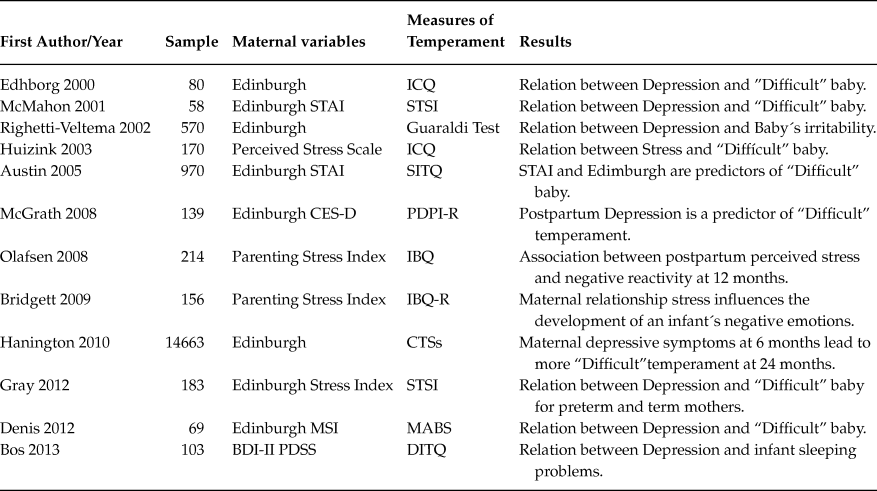
There are consistent results about the relationship between a mother’s depressive mood and her infant’s temperament. For example, one of the first studies on this subject showed that depressed mothers evaluated their children as more “emotional” (Field et al., Reference Field, Sandberg, Garcia, Vega-Lahr, Goldstein and Guy1985). In a meta-analysis on the relationships between postpartum depression and infant temperament (Beck, Reference Beck1996), a significant correlation appears during the first year of life. There is a significant relationship between postpartum depression starting at two months after delivery and the mother’s evaluation of her child’s temperament as “difficult” (Edhborg, Seimyr, Lundh, & Widström, Reference Edhborg, Seimyr, Lundh and Widström2000; McMahon, Barnett, Kowalenko, Tennant, & Don, Reference McMahon, Barnett, Kowalenko, Tennant and Don2001). There are significant differences between depressed and non-depressed mothers in terms of their description of their child as complaining more, being more tearful and having more sleep difficulties (Righetti-Veltema, Conne-Perréard, Bousquet, & Manzano, Reference Righetti-Veltema, Conne-Perréard, Bousquet and Manzano2002). In recent studies (Austin, Hadzi-Pavlovic, Leader, Saint, & Parker, Reference Austin, Hadzi-Pavlovic, Leader, Saint and Parker2005; Hanington, Ramchandani, & Stein, Reference Hanington, Ramchandani and Stein2010; McGrath, Records, & Rice, Reference McGrath, Records and Rice2008; Melchior et al., Reference Melchior, Chastang, de Lauzon, Galéra, Saurel-Cubizolles and Larroque2012), postpartum depression in the mother has been a good predictor of “difficult” temperament in the infant.
These ratings of infant temperament as reported by mothers are also significantly associated with maternal anxiety during pregnancy. Mothers of children with a “difficult” temperament often have higher anxiety scores in the State-Trait Anxiety Inventory (STAI) scale during this period (Austin et al., Reference Austin, Hadzi-Pavlovic, Leader, Saint and Parker2005; Vaughn, Bradley, Joffe, Seifer, & Barglow, Reference Vaughn, Bradley, Joffe, Seifer and Barglow1987). Likewise, mothers that perceived stress during the first months of pregnancy are likely to evaluate their infants as having “negative temperament” or “difficult behavior” (Huizink et al., Reference Huizink, Robles de Medina, Mulder, Visser and Buitelaar2002; Martin, Noyes, & Wisenbaker, Reference Martin, Noyes and Wisenbaker1999). During the postpartum period, an association between perceived stress and negative reactivity has been found at 12 months after birth (Olafsen et al., Reference Olafsen, Kaaresen, Handegard, Ulvund, Dahl and Ronning2008). In a recent study, the results suggested that associations of difficult temperament with maternal postpartum anxiety emerge early in the postpartum period (Britton, Reference Britton2011).
In the present study, we have considered some relevant issues that are related to infant temperament and have not yet been fully explored. To the best of our knowledge, no previous studies have evaluated the mothers’ anxiety state and mood during the first days following delivery. Moreover, despite some exceptions (Denis, Ponsin, & Callahan, Reference Denis, Ponsin and Callahan2012), the majority of previous studies have not evaluated infant temperament during the first months of life, and certainly not during the first weeks. We think that it would be very useful in the prediction of temperament to measure early variables associated with temperament, including a combination of maternal, contextual and perinatal factors.
We have also included the mothers’ confidence in caregiving as an outcome variable. This is an interesting variable to analyze given that there is a statistically significant relationship between confidence in caregiving and perception of infant health (May & Hu, 2000). Furthermore, mothers who are more concerned about infant care during the early postpartum period often perceive their infant as more difficult (Kaitz, Reference Kaitz2007). On the other hand, the family situation influences the mothers’ evaluations of their caregiving during the first year. Moreover, infant responsiveness may be particularly salient to a mother´s caregiving evaluation (Pridham, Lin, & Brown, Reference Pridham, Lin and Brown2001).
Our aim is to analyze the influence of the mother´s anxiety level, mood, socio-demographic characteristics and perinatal variables on infant temperament as well as on the mother´s self-confidence in caregiving. Taken together these results will determine which factors are the best predictors for these outcome variables.
For all this, the hypothesis of this work are: 1) There will be a significant positive relationship between mother’s emotional state, measured by the Edinburg test in the postpartum and the measures of difficult temperament such as infant irritability measured by the MABS in the child and 2) There will be a significant negative relationship between the mother’s emotional state, measured by the STAI and the Edinburg test, and her own caregiving self evaluation.
Method
Participants and procedure
A prospective study was carried out with an initial sample, including 317 pairs of mothers and newborns from the Hospital Clínico de Valencia. All participants were of Spanish origin, none of the women were under psychiatric treatment during their pregnancy, and all of them were able to read and answer the clinical questionnaires.
Post-partum data was collected by trained psychologists while mothers were still at the hospital. The same evaluators carried out an 8 weeks follow up by a phone interview and questionnaires were received by mail post.
Less than 5% of the women refused to participate in the study, mainly for keeping their privacy.
At 8 weeks follow up, 257 women and their infants (81%) remained in the study. Sixty cases (19%) were lost for several reasons: the mothers didn’t explicitly refuse to continue, but they did not submit the questionnaires; mothers said that they had submitted the completed scales, but we did not receive the questionnaires. Only in 4 cases there was an explicit rejection, and 1 baby died a few weeks after birth. χ2 analysis showed no significant differences (p > .05) in demographic variables or clinical scale scores between the 60 lost participants and the final sample.
All participants gave their informed written consent and ethical approval for the study was obtained from the Ethics Committee of the hospital.
Measures
At birth
During the 2 to 3 days following the childbirth all mothers completed a semi-structured interview that included socio-demographic data (age, education level, marital status, employment status during pregnancy, number of sons, and number of people at home), personal and family history of psychiatric illness, obstetric variables (delivery, anesthetic, complications) and data on the newborn (sex, birth weight, weeks of gestation and Apgar score).
Edinburgh Postpartum Depression Scale (EPDS)
Depressive symptoms were assessed using the total score from the Edinburgh Postpartum Depression Scale (Cox, Holden, & Sagovsky, Reference Cox, Holden and Sagovsky1987). The EPDS is a 10-item self-report scale with four possible responses. The total score ranges from 0 to 30, with higher scores representing greater depression. A validated Spanish version of the EPDS (García-Esteve, Ascaso, Ojuel, & Navarro, Reference García-Esteve, Ascaso, Ojuel and Navarro2003) was administered.
State-Trait Anxiety Inventory (STAI S/T)
To assess maternal anxiety, we used the Spanish adaptation form of the STAI (Tenenbaum, Furst, & Weingarten Reference Tenenbaum, Furst and Weingarten1985). This inventory contains 20 items measured on a 4-point Likert scale (where 0 corresponds to none, and 4 corresponds to high). It assesses the global level of anxiety at a single moment (State) and general anxiety (Trait).
At 8 weeks. Mother and Baby Scale (MABS)
Infant temperament and the mother’s confidence in caregiving were assessed using a translated Spanish version (Ivorra et al., Reference Ivorra, Sanjuan, Jover, Carot, de Frutos and Molto2010) of the Mother and Baby Scale, a part of a wider well validated method for assessing child temperament (Brazelton & Nugent, Reference Brazelton and Nugent1995). This is a 32-item mother-reported measure of neonatal behavior and maternal confidence in caregiving. In the present study, we examined the two MABS General Subscales (Baby and Mother) with four items for infant behavior (irritability, sleep, alertness and nursing difficulty) and two items for mother’s emotional state with regard to parental caretaking (self-confidence and difficulty perception). These items cluster the most important components of infant temperament and global confidence of all the items from the MABS scale and are measured on a 7-point Likert scale. As in a previous administration of this version of the scale (Ivorra et al., Reference Ivorra, Sanjuan, Jover, Carot, de Frutos and Molto2010) psychometric characteristics were acceptable (α = .741).
At this time, EPDS and STAI-S were completed by mothers. All of these scales were administered by a senior trained clinical psychologist (first author).
Data analysis
A Chi-Squared Automatic Interaction Detection (CHAID) analysis was used (Kass, Reference Kass1980; Biggs, Ville, & Suen, Reference Biggs, Ville and Suen1991). This is a powerful classification tree method suitable for classifying observations based on easy-to-follow decision rules, separating groups in the optimal way over the outcome variable according to the best classifying independent variable. The advantage of this multivariate method is that one can manage non-parametric data, analyzing both continuous and categorical variables as predictors (Manly, Reference Manly1990).
We have included several factors in this statistical analysis, including a mother’s anxiety and mood, socio-demographic data and perinatal variables as predictors and infant temperament and maternal confidence in caregiving at 8 weeks as outcome variables.
The Chi-square Automatic Interaction Detection (CHAID) is a form of data-mining that has been previously used to predict the interaction between parents and child characteristics (Chen, Hou, & Chuang, Reference Chen, Hou and Chuang2010). It searches the best predictors of dependent variables using a stepwise algorithm that divides a data set in exclusive and exhaustive segments that differ with respect to the response variable (Kass, Reference Kass1980). The segments are defined by a tree structure of a number of independent variables, the predictors, and by using the Bonferroni adjustment, CHAID makes up for the fact that a number of original categories can be merged into a smaller number of combined categories. The adjustment nullifies the bias towards predictors with more categories. Thus, CHAID partitions the data into mutually exclusive, exhaustive, subsets that best predicts the dependent variable. We used alpha level of 0.05 for all statistical tests.
Results
Descriptive analyses
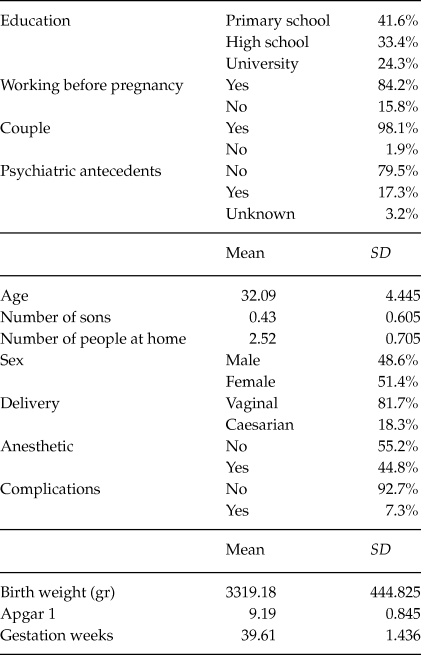
Mothers had a mean age of 32.09 (age range: 18–36 years) and 62.5% of them were primiparous. Considering the educational level, 56% of the women had completed primary school studies; 84.2% of the women were working before the pregnancy. In relation with the marital status, 98.1% of them were married and the mean number of people at home was 2.52 (people range: 1–4). With respect to obstetric variables, only 17.8% of the women had cesarean deliveries, and 44.3% had anesthetic during delivery, which are normal values in Spain (Santamaría Lozano, Reference Santamaría Lozano2009).
The newborn group consisted of 155 males (48.5%) and 162 females (51.5%). The mean birth weight was 3,313Kg (weight range: 2,183–3,962), mean Apgar score was 9.2 (Apgar range: 6,8–10) and mean gestation period (in weeks) was 39.6 (gestation period range: 34–40) only 7.3% had some complications during delivery. Detailed characteristics of the sample are shown in table 2.
Socio-demographic Characteristics of Mothers and Data from Newborns

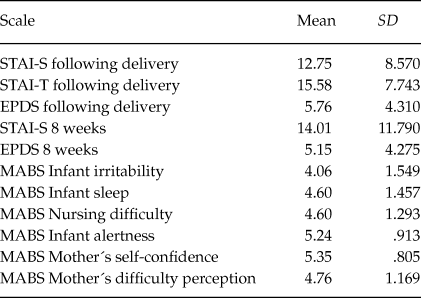
The mean and the standard deviation of clinical variables (STAI, EPDS and MABS) are shown in Table 3.
Descriptive data about State-Trait Anxiety Inventory (STAI-T), Edinburgh Postpartum Depression Scale (EPDS) and Mother and Baby Scale (MABS)

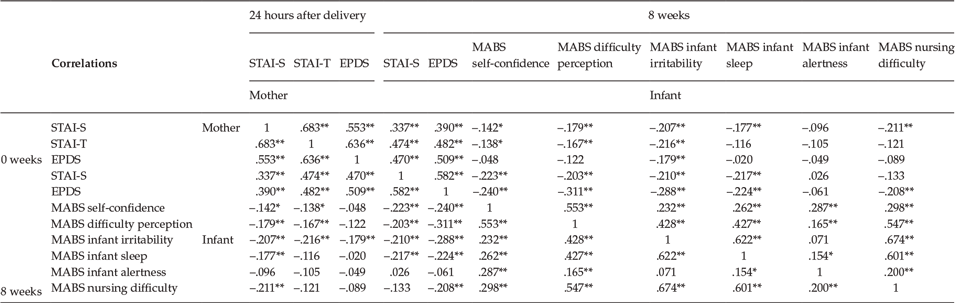
A general correlation among predictors and outcome variables is showed in table 4.
Correlations among predictors and outcome variables

* Significant correlation (0.05).
** Significant correlation (0.01).
CHAID Analyses
Infant temperament at 8 weeks
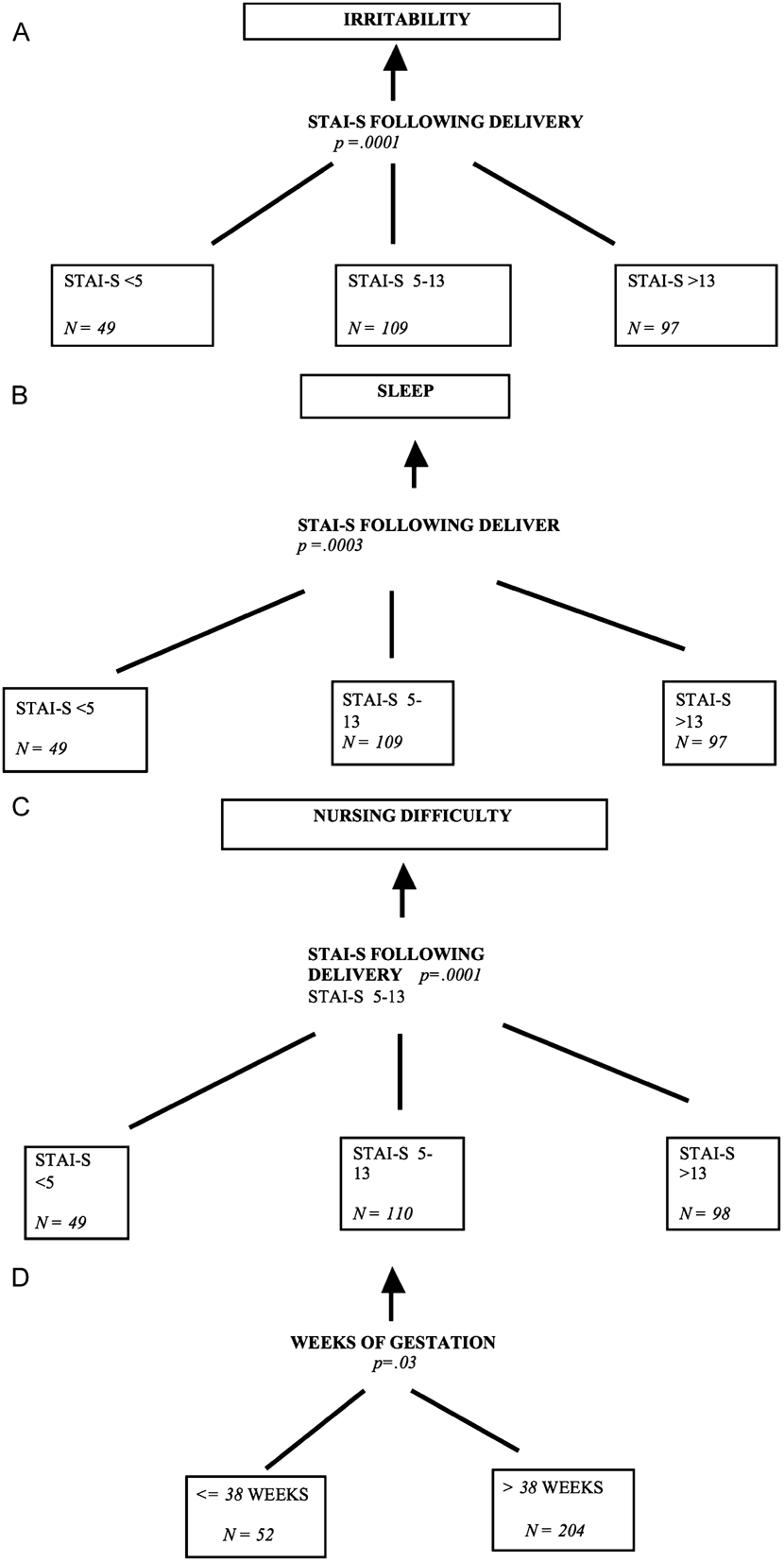
The best predictors for each one of the 4 CHAID analysis using Irritability, Sleep, Nursing Difficulty and Infant Alertness as dependent variables in each analysis are presented in Figure 1.
CHAID decision trees for “infant temperament” variables at 8 weeks. Best predictors for each one of the 4 CHAID (using Irritability, Sleep, Nursing Difficulty and Infant Alertness as dependent variables in each analysis).

Infant Irritability
The most significant variable in the prediction of infant irritability was a mother´s anxiety state during the first days after the childbirth (p = .001). Higher maternal anxiety scores were correlated with infant irritability.
Infant Sleep
The most significant variable in the prediction of infant sleep was also the mother´s anxiety state during the first days after the childbirth (p = .0003). Higher levels of a mother’s anxiety state during the first 2 to 3 days following delivery were correlated with a worst infant sleep.
Nursing difficulty
Again, the most significant variable in the prediction of nursing difficulty is the mother’s postpartum anxiety (p = .001). Babies whose mothers have a higher score in STAI-S during the first days after birth are evaluated as more “difficult” in MABS scale at 8 weeks.
Infant Alertness
The most significant variable in the prediction of infant alertness was the weeks of gestation (p = .03). Babies with 38 or fewer weeks of gestation were evaluated as being less “awake” than those with a greater number of weeks of gestation.
Mother´s confidence in caregiving at 8 weeks
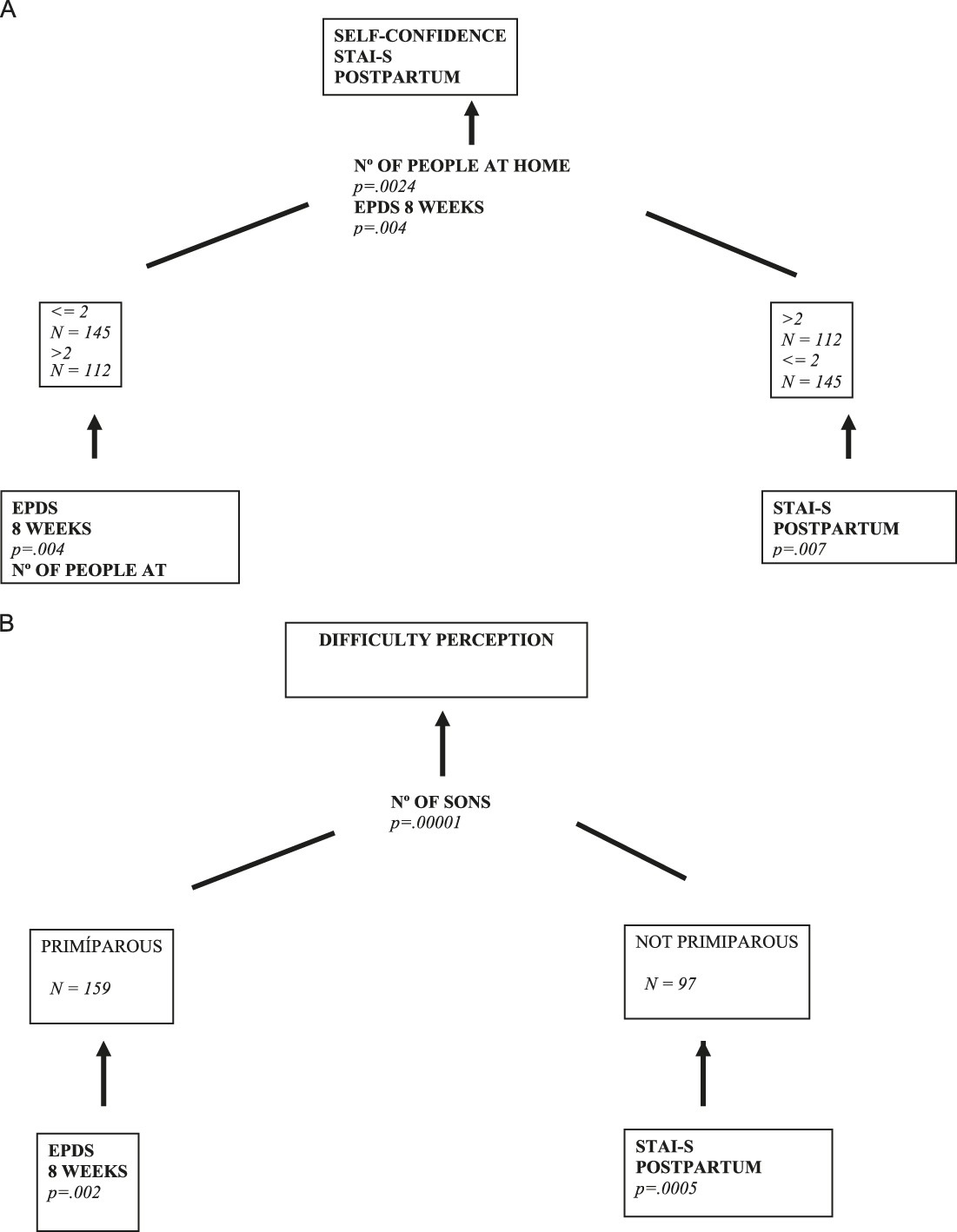
The main results for this variable using CHAID decision trees for “Mother’s confidence in caregiving” variables at 8 weeks, using Self-confidence and Difficulty Perception as dependent variables in each analysis are presented in Figure 2.
CHAID decision trees for “confidence in caregiving” variables at 8 weeks. Best predictors for each one of the 2 CHAID (using Self-confidence and Difficulty Perception as dependent variables in each analysis).

Self-Confidence
The most significant variable related to a mother’s self-confidence was the number of people at home (p = .0024). When there were more than 2 people at home, self-confidence was higher.
Two groups could be differentiated according to this variable. For each group, another significant variable was detected. For those mothers who lived with 2 or fewer people, self-confidence was related to their mood at 8 weeks and was lower when their EPDS score was higher. However, for those mothers who lived with more than 2 people, self-confidence showed a significant relationship with postpartum anxiety during the first days following delivery and was lower when the STAI-S score was higher.
Difficulty perception
The most significant variable for caregiving difficulty was the number of sons (p = .00001). Mothers that were not primiparous had a lower perception of difficulty.
Again, another significant variable was detected for each group. For primiparous mothers, difficulty perception was related to their EPDS scores at 8 weeks. Scores were higher when the depressive mood was more severe. However, mothers that were not primiparous had a greater perception of difficulty in association with higher levels of postpartum anxiety during the first days following childbirth.
Discussion
The most remarkable result of this study is the significant association between the mother’s anxiety during the days immediately following childbirth with infant temperament irritability and health related problems like worse sleep and difficulty. CHAID analysis found that a high maternal anxiety-state during this period is correlated with the level of irritability in the 8 weeks after birth. This is indicated by a more “difficult” temperament and health related problems like worse sleep. Thus, the maternal anxiety-state immediately following childbirth showed to be a good predictor of child temperament 8 weeks after birth.
In a previous study, Austin et al. (Reference Austin, Hadzi-Pavlovic, Leader, Saint and Parker2005) found that maternal “trait anxiety” measured during the third trimester of pregnancy was predictive of difficult infant temperament independent of depression and socio-demographic or obstetric risk factors. In other recent study, prenatal “state anxiety” predicted less positive infant affect, and postnatal “state anxiety” was related to infant distress and reactivity (Coplan, O´Neil, & Arbeau, Reference Coplan, O´Neil and Arbeau2005). Maternal anxiety “just after delivery” has not been previously considered in studies on this subject. In the present study, according to CHAID predictive analysis, the initial maternal “state anxiety following delivery” was the best predictor of infant temperament during the first weeks of life. This is also more indicative than EPDS scores, a variable that has been reported as significant in other studies about temperament (McGrath et al., Reference McGrath, Records and Rice2008). As depressive symptoms, both post-partum blues and postpartum depression, have predicted the risk to develop further postpartum depression (Ferretti, Franca, & Folin, Reference Ferretti, Franca and Folin2012), EPDS measure at 2 days after delivery should be interpreted as a predictor of postpartum depression. By using a correlation analysis on our sample, maternal depression at 8 weeks would be significantly related to an infant´s irritability, sleep and difficulty (as showed in Table 4).
These results are consistent with previous studies. One previous study also using the EPDS and the MABS measure at two days after delivery, found a direct correlation between postpartum blues, mother self-steem and infant’s difficulty (Denis, Ponsin, & Callahan, Reference Denis, Ponsin and Callahan2012). However, by using the CHAID method for data mining, the most significant variable for infant temperament appeared to be the mother´s anxiety during the first days after childbirth. The CHAID method identified it as the optimum independent variable for separating different groups over temperament. The only infant temperament variable that did not have a significant relationship with postpartum anxiety is the alertness level. That may be because, alertness was mainly related with maturity of the nervous system measured as weeks of gestation. It would be important to follow the level of alertness in these children in order to check the stability of this trait.
With regard to a mother’s confidence in caregiving, the results showed that the most important variables influencing self-confidence and difficulty perception were contextual-family factors, specifically those related to the number of members of the family. It is important to notice that all these families were of Spanish family origin. We speculate that self confidence was related with the social support from the other family members. In further studies, it could be of interest to look in other cultural context if this variable is also relevant. For caregiving difficulty, the most significant variable is the number of sons. It seems reasonable to assume that for not primiparous mothers, their past experience makes the care of their babies easier. For these maternal variables, anxiety and mood are not the most significant influences, but rather they seem to moderate the effect of the contextual variables.
Another important question is the direction of the association between maternal emotional state and her evaluation of infant temperament. It has been postulated that a depressed mother could evaluate her son as more “difficult”. The converse has also been suggested, that a “difficult” child could influence a mother’s depressive symptoms (Murray, Stanley, Hooper, King & Fiori-Cowley, Reference Murray, Stanley, Hooper, King and Fiori-Cowley1996). In a large recent study about parental depression and child temperament (Hanington et al., Reference Hanington, Ramchandani and Stein2010) mother to child effects were significant, but little evidence was found for child to mother effects. The same question could be posed in our study with regard to maternal postpartum anxiety and infant temperament.
Finally, it would be necessary to confirm whether the influence of the mother’s early anxiety state remaining has a lasting effect. We are following up the experimental sample and have data to analyze in order to address this question.
One limitation of this study is that infant temperament was measured via a maternal rating and not via a naturalistic observational evaluation from an expert. Mothers’ reports of temperament include a subjective component, as provided by her personality and mental health for example. It also includes an objective component, which correlates with infant emotionality when assessed by trained observers (Foreman & Henshaw, Reference Foreman and Henshaw2002). However, in several studies there is a convergence between the mother’s and observer’s assessment, suggesting that mothers are credible observers of infant behavior (Hane, Fox, Polak-Toste, Ghera, & Guner, Reference Hane, Fox, Polak-Toste, Ghera and Guner2006; Worobey, Reference Worobey1986). On the other hand, observational evaluation also has limitations, including the modification of infants’ natural reactions or the difficulties in the observation of all their possible behaviors over long periods of time, as well as the fact that these procedures often have not been sufficiently validated for this age (Pauli-Pott, Mertesacker, & Beckmann, Reference Pauli-Pott, Mertesacker and Beckmann2005).
Despite the limitations and necessity for future studies to confirm these results, our study suggests that a mother’s anxiety during the first days following childbirth can be a good predictor of infant temperament, at least as evaluated by the mother, during the first weeks of life. To control the eventual subjective influence of the mother and her emotional state over her evaluation of infant temperament, future studies should include more direct and objective measurements of child behavior to explore the influences of the mother’s anxiety and mood over infant temperament. Likewise, maternal postpartum anxiety modulates her confidence in caregiving, which is significantly influenced by contextual factors like social support and rearing experience. These results have clinical implications, suggesting that postnatal psychological interventions focused on a mother’s anxiety could have an early positive effect on infant temperament and also on maternal confidence in caregiving. Besides, these results provide specific targets in the early formation of temperament, which in turn may be related to future psychological problems. To sum up, this data adds information on what to search for in an early evaluation of the mother and its context after delivery in order to identify children at risk of developing future health problems and support maternal confidence and her subjective wellbeing.
The conduct of the research was supported by the Instituto Carlos III, Ministerio de Salud Español (FIS: PI041635, PI070254); and by Red Española de Salud Mental CIBERSAM. The funding sources had no involvement in the preparation of the article.
We are grateful for the mothers and their children who participated in the study.