Introduction
The West Indian fruit fly Anastrepha obliqua (Macquart) (Diptera: Tephritidae) is the main fruit fly species that attacks mango fruits in commercial orchards at low altitudes (Aluja et al., Reference Aluja, Cabrera, Ríos, Guillén, Celedonio, Hendrichs and Liedo1987, Reference Aluja, Celedonio-Hurtado, Liedo, Cabrera, Castillo, Guillén and Ríos1996). In Mexico, this fly has the second greatest economic impact among all species belonging to the Anastrepha genus (Reyes et al., Reference Reyes, Santiago, Hernández and Tan2000). An integrated programme utilizing the sterile insect technique has been implemented to control this pest in northern Mexico since 2001 (Rull Gabayet et al., Reference Rull Gabayet, Reyes Flores, Enkerlin Hoeflich, McPheron and Steck1996).
The adaptation of fruit flies to mass-rearing conditions, or colonization, may be a difficult and resource-consuming effort. This was the case for A. obliqua. Throughout the process, there is a tendency to maintain strains adapted for mass-production that have been selected for fast and uniform development, the ability to reach sexual maturity at nearly the same time, high fecundity and homogeneity in quality parameters.
However, this long-term selection under mass-rearing conditions could adversely affect the mating performance of sterile flies (Leppla et al., Reference Leppla, Huettel, Chambers, Ashley, Miyashita, Wong and Harris1983). An improvement in the general vigour of a colony can be achieved by reducing the stress of the rearing regimen of the mother colony (Calkins and Parker, Reference Calkins, Parker, Dyck, Hendrichs and Robinson2005).
The filter rearing system (FRS) is a recent development for mass-rearing genetic-sexing strains of the Mediterranean fruit fly Ceratitis capitata (Wiedemann) (Fisher and Caceres, Reference Fisher, Caceres and Tan2000). The FRS has a potential application in colony management in almost any insect-rearing programme (Parker, Reference Parker, Dyck, Hendrichs and Robinson2005). The concept involves maintaining a small colony under minimal stress conditions, e.g. circadian rhythm of the light–dark cycle, low density, male-biased sex ratio and optimal temperature. Care must be taken to maintain desirable adaptations such as oviposition behaviour, high fecundity in the colony, and survival ability and appropriate mating behaviour under field conditions. Selection pressure must be reduced in the colony to maintain traits for successful performance in the field.
In the mass-rearing of A. obliqua at the Moscafrut facility in Metapa, Chiapas, Mexico, the relaxed rearing method is used for colony management to prevent the accumulation of deleterious traits from high-density rearing. Flies are reared at a low density to increase their vigour and size. The egging cages have been designed in such a way that insects must fly to access food and drink; this selects against non-flyers. Liedo et al. (Reference Liedo, Salgado, Oropeza and Toledo2007) have shown that the use of inserts to increase the surface resting area within adult cages for the mother colony results in strains with higher mating competitiveness. They recommended investigating the introduction of inserts for already adapted colonies to determine whether flies would then recover their mating competitiveness (a reverse effect).
The objective of this study was to assess the effect of relaxed mother-colony rearing conditions on the production and sexual performance of A. obliqua. Relaxed conditions were characterized by a lower adult density in reproduction cages and a lower egg density per gram of larval diet.
Materials and methods
Insects
Flies as pupae were obtained from the mass-rearing colony maintained in the Moscafrut Facility in Metapa de Domínguez, Chiapas, Mexico. This strain was initially obtained from an experimental colony at the Subtropical Agricultural Research Laboratory (ARS-USDA, Weslaco, Texas, USA), which was established from flies collected from Spondias mombin L. fruits in the State of Veracruz, Mexico (Moreno et al., Reference Moreno, Ortega-Zaleta and Mangan1997). This strain had been reared on an artificial diet (Artiaga-López et al., Reference Artiaga-López, Hernández, Domínguez-Gordillo, Moreno, Orozco-Dávila and Barnes2004) for at least 150 generations before the present study. The last introduction of wild material was done 8 years before the study.
Mother colony under relaxed conditions
Relaxed handling conditions consisted of a low adult density in reproduction cages (60,000 vs. 88,000 pupae per cage) and a low larval density in the larval rearing diet (3.7 vs. 6.18 eggs/g of diet).
Mass-rearing management
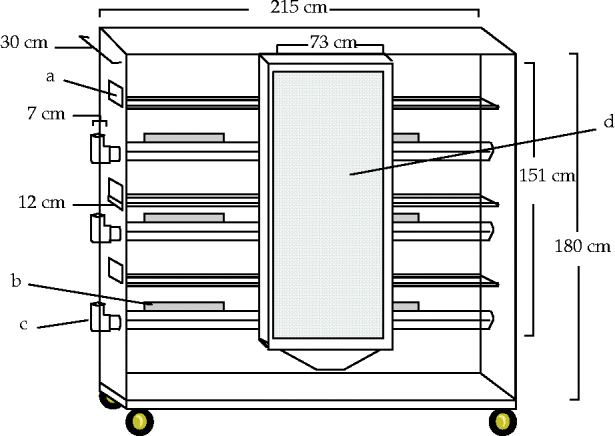
Two days before emergence, the pupae from each group were separated from the pupation substrate using a sieve (mesh 18) and placed at the densities specified above in Mission-type mass-rearing egging cages consisting of an aluminium frame (215 × 180 × 30 cm) with a front chamber where the oviposition substrate panel is installed (Fig. 1). Adults were fed ad libitum with a mixture of sucrose and enzymatic yeast hydrolysate (ICN Biomedicals, Costa Mesa, California, USA) at a 3:1 ratio, and water was provided in a plastic pipe with a horizontal strip of filter paper (Schwarz et al., Reference Schwarz, Zambada, Orozco, Zavala and Calkins1985; Message and Zucoloto, Reference Message and Zucoloto1989). The adult colonies were kept at 26–27 °C, 70 ± 5% relative humidity (RH) and 13 h light–11 h dark photoperiod. Light was provided by white 75 W fluorescent tubes placed 60 cm above the cages; light intensity inside a cage was approximately 700 lux.
(colour online) Drawing of a Mission-type mass-rearing cage for Anastrepha obliqua: (a) door for food trays, (b) horizontal strip of filter paper to provide water, (c) plastic pipe, and (d) screen oviposition panel.

The eggs were collected using gauze oviposition panels placed on the cage wall. These panels consisted of white gauze covering a thin layer of transparent silicon (Dow Corning Corporation, Midland, Michigan, USA). To avoid dehydration of the eggs, a uniform layer of 1% furcellaran (a gelling agent) was sprayed on the external surface of the panel three times a day. Furcellaran was prepared by mixing 24 g of furcellaran in 1 litre of tap water. The mixture was boiled, stirred and allowed to cool. Before use, furcellaran was blended and poured into a compressed-air spray tank at 60 psi. Eggs were collected daily at 16.00 h by spraying tap water onto the panel, using a flat-fan spray nozzle directed at a downward angle of 45 deg. Eggs were washed with tap water and then 1 ml of eggs per 149 ml of water chlorinated at 5 ppm was transferred into 9-litre polycarbonate plastic bottles (Nalgene™). For egg incubation, a bubbling system was used by injecting air (airflow of 3.0 l/min) through the egg solution (Schwarz et al., Reference Schwarz, Zambada, Orozco, Zavala and Calkins1985).
For larval development, a modified diet based on the formulation of Artiaga-López et al. (Reference Artiaga-López, Hernández, Domínguez-Gordillo, Moreno, Orozco-Dávila and Barnes2004) was used. It consisted (by weight) of 16.33% corncob fractions (Corn cob fractions 100; Mt Pulaski Products, Inc., Chicago, Illinois, USA), 9% sugar (Ingenio Huixtla, Chiapas, Mexico), 6.33% torula yeast (Lake States Div. Rhinelander Paper Co., Rhinelander, Wisconsin, USA), 8.66% corn flour (Maíz Industrializado del Sureste, S.A. de C.V., Arriaga, Chiapas, Mexico), 0.18% Nipagin (methyl parahydroxybenzoate) (Mallinckrodt Speciality Chemicals Co., St Louis, Missouri, USA), 0.33% sodium benzoate (Cia. Universal de Industrias, S.A. de C.V., Mexico), 0.1% guar gum (Tic Gums, Inc., Belcamp, Maryland, USA), 0.44% citric acid (Anhidro acidulante FNEUM, Mexana; S.A. de C.V., Morelos, Mexico) and 58.63% tap water. Six kilograms of diet were placed in each tray (772 mm length, 397 mm width and 73 mm depth) (Model 805208; Molded Fiber Glass Tray Company, Linesville, Pennsylvania, USA). Developing larvae were kept at 26 ± 1 °C and 80% RH for 10 days until maturity, after which the larvae were washed out of the medium. To eliminate excess water, larvae were mixed with vermiculite and separated from it with a sieve for pupation without substrate at 21 ± 1 °C and 70% RH. After 24 h, the pupae were covered with vermiculite and transferred to a second room at 25 ± 1 °C and 80% RH for maturation for 14 days. One day before adult emergence, the pupae were separated from the vermiculite using a sieve (mesh 18) and then counted, weighed and placed inside the egging cages for adult emergence.
Generational rearing parameters
Rearing parameters were estimated during the parental generation and the next 12 generations. Fecundity was estimated using the daily volume of eggs collected and expressed as the number of eggs/female per day, estimating the initial number of females per cage. Fertility was expressed as the mean percentage of egg hatch and was estimated from the maximum number of hatched eggs by counting the number of empty chorions in three samples of 100 eggs incubated for 120 h. Larval recovery was defined as the percentage of eggs transferred to the diet that developed into mature larvae. Pupal recovery was defined as the percentage of larvae that underwent transformation to pupae. Both recovery values were calculated according to the method described by Rivera et al. (Reference Rivera, Hernández, Toledo, Salvador and Silva2007). Average weights of both larvae and pupae were estimated from counts of the total number of insects in three samples of 7.5 g. Adult emergence was based on eight samples of 50 pupae in containers (140 mm high and 80 mm diameter), counting only the normal adults that had emerged at 5 days. Flight ability was estimated using three samples of 150 pupae and counting the number of fliers among the emerged flies (FAO/IAEA/USDA, 2003; Hernández et al., Reference Hernández, Flores-Breceda, Sosa-Iturbe, De La and Ezquivel2005).
Mating performance
Six field cages (3 m diameter and 2 m high) supported by a metal frame were set up in a mango orchard in Tapachula, Chiapas, Mexico, at an altitude of 137 m above sea level. Potted host mango and citrus trees were placed alternately around the inside circumference and at the centre of each field cage. In each cage, 20 males and 20 females of the tested wild populations collected from mango fruits and 20 sterile males and 20 sterile females of the mass-reared strain were released. Wild flies were 15–17 days old and sterile flies 8–10 days old. To identify individual flies, a small numbered piece of paper was glued onto the dorsal side of each fly's thorax using white glue. Throughout the observation period, the number and type of matings were recorded – wild male and female, sterile male and female, wild male and sterile female or sterile male and wild female. Each cage was regarded as a replicate. The indices used to compare the behaviour of relaxed and non-relaxed colonies were strain isolation index (ISI), female relative performance index (FRPI), male relative performance index (MRPI) and relative sterility index (RSI) (Cayol et al., Reference Cayol, Vilardi, Rial and Vera1999; FAO/IAEA/USDA, 2003). Male calling was recorded during 30-min periods based on vigorous wing fanning, everted prostiger and puffed pleural glands. Observations were made in the morning (07.00–12.00 h).
Data analysis
The data on egg hatch, larval and pupal recovery, adult emergence and flight ability were arcsine-transformed using the following formula:
 $$\begin{eqnarray} \end{eqnarray}$$
where Y values are considered to be a percentage (Underwood, Reference Underwood2005), and then subjected to ANOVA and mean separation using the Tukey honestly significant difference procedure for generational comparisons (P ≤0.05) (SAS Institute, 1999).
Results
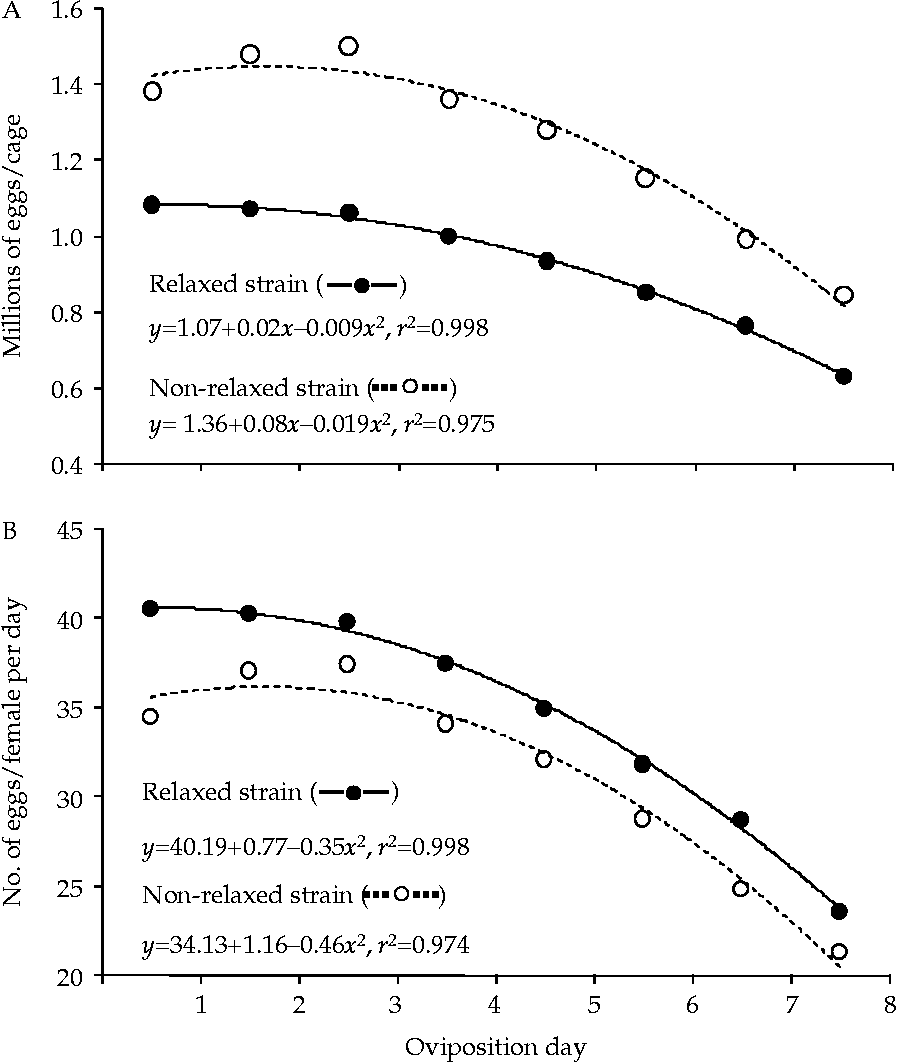
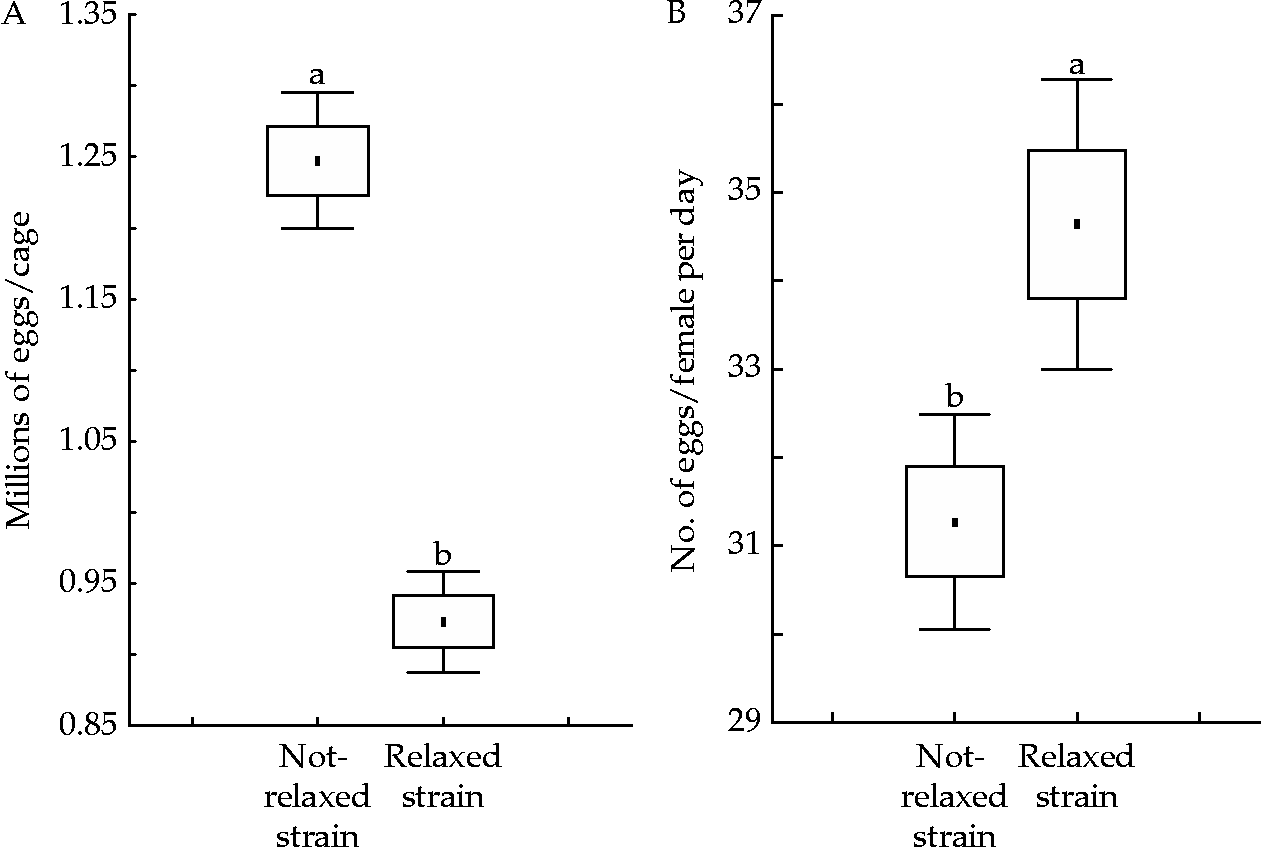
Relfaxed rearing conditions improved the quality of the mother colony. Daily egg production, expressed as millions of eggs collected/cage per day, decreased significantly under relaxed conditions compared with that of the control (F= 349.47; df = 1, 208; P< 0.0001) (Figs 2A and 3A). However, daily fecundity, expressed as the number of eggs/female per day, increased significantly under relaxed conditions (F= 20.52; df = 1, 208; P< 0.0001) (Fig. 3B).
Eggs per cage and daily fecundity during the first few oviposition days in Anastrepha obliqua.
Eggs per cage (A) (F = 349.47; df = 1, 208; P, 0.0001) and individual fecundity (B) (F = 20.52; df = 1, 208; P, 0.0001) of the relaxed and non-relaxed strains of Anastrepha obliqua.
Individual fecundity rates were highest during the first two or three oviposition days and then decreased with age. Individual fecundity was always higher for the relaxed system during the eight oviposition days. Differences among the oviposition days were highly significant for the relaxed colony (F= 11.23; df = 7, 104; P< 0.0001) and also for the non-relaxed colony as the control (F= 33.24; df = 7, 104; P< 0.0001). The daily individual fecundity was described by y= − 0.46x 2+1.96x+34.13, r 2= 0.974 (F= 21.25; df = 1, 6; P= 0.0037), for the relaxed colony and by y= − 0.35x 2+0.77x+40.19, r 2= 0.997 (F= 25.90; df = 1, 6; P= 0.0022), for the non-relaxed colony.
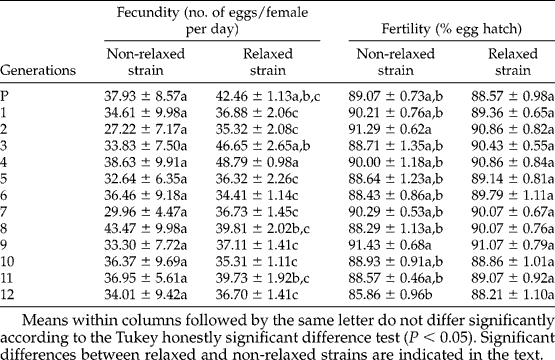
Differences in fecundity among 12 generations were significant for the relaxed colony (F= 6.65; df = 12; P< 0.0001), but not for the non-relaxed colony (F= 0.23; df = 12, 143; P= 0.9963). Fertility, expressed as the percentage of egg hatch, was not significantly different among the generations for the relaxed colony (F= 1.16; df = 12; P= 0.3162), but significant among the generations for the not-relaxed colony (F= 2.54; df = 12, 169; P= 0.0042) (Table 1). The interaction between generations and colony type was not significant for fecundity (F= 0.31; df = 12, 286; P= 0.9885).
Fecundity and fertility of Anastrepha obliqua under relaxed conditions in the Moscafrut facility at Metapa de Domínguez, Chiapas
P, parental.
Means within columns followed by the same letter do not differ significantly according to the Tukey honestly significant difference test (P< 0.05). Significant differences between relaxed and non-relaxed strains are indicated in the text.
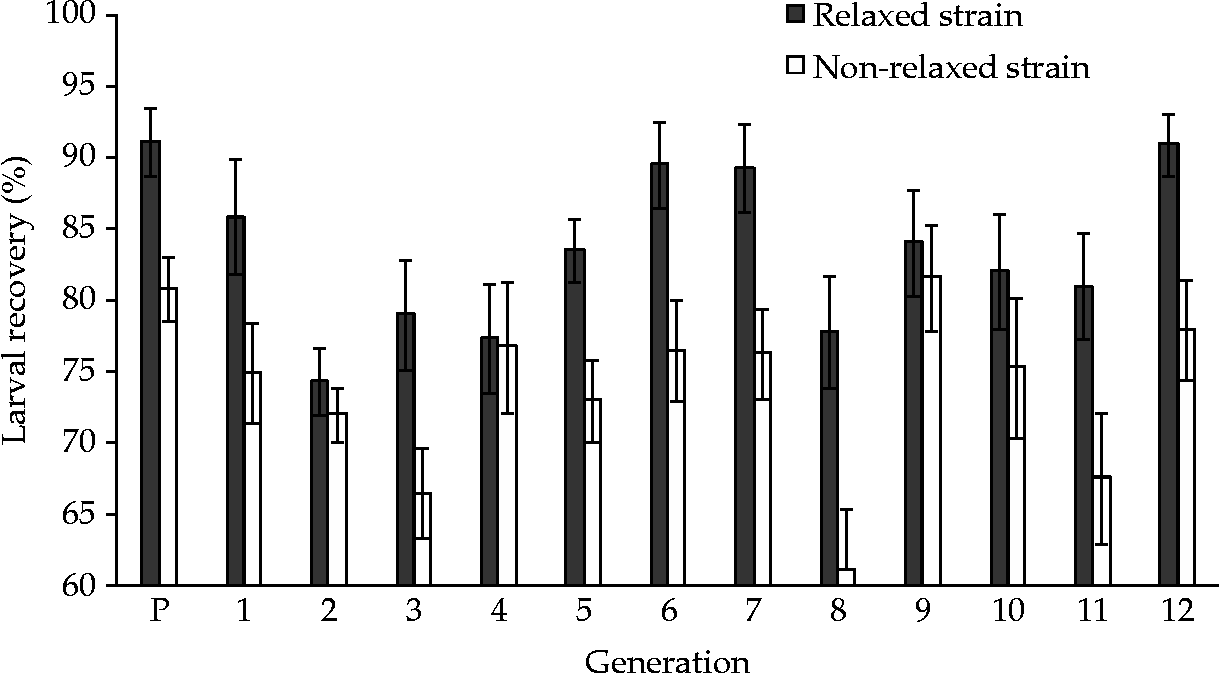
Larval survival, expressed as the percentage of larval recovery, was significantly greater in the relaxed colony than in the non-relaxed colony (F= 4.31; df = 12, 286; P< 0.0001) in the 12 generations tested (Fig. 4). The interaction between generations and colony type was not significant (F= 1.04; df = 12, 286; P= 0.4072).
Larval recovery (%) per generation of the relaxed and non-relaxed strains of Anastrepha obliqua.
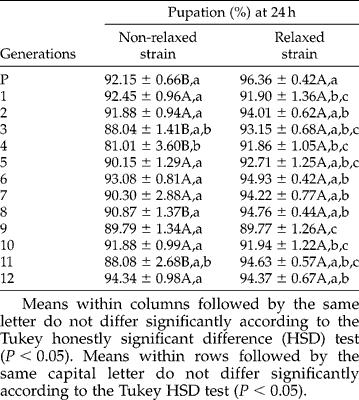
Pupation was significantly greater in the relaxed strain than in the non-relaxed strain in the parental, third, fourth, eighth and eleventh generations. In the other generations, differences between the rearing systems were not significant (F= 4.65; df = 12, 286; P< 0.0001) (Table 2). The interaction between generations and colony type was significant (F= 2.61; df = 12, 286; P= 0.0026).
Pupation (%) at 24 h of Anastrepha obliqua under relaxed conditions in the Moscafrut facility at Metapa de Domínguez, Chiapas
P, parental.
Means within columns followed by the same letter do not differ significantly according to the Tukey honestly significant difference (HSD) test (P< 0.05). Means within rows followed by the same capital letter do not differ significantly according to the Tukey HSD test (P< 0.05).
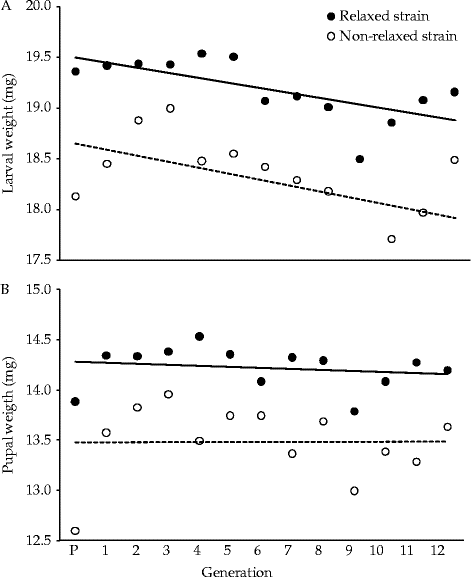
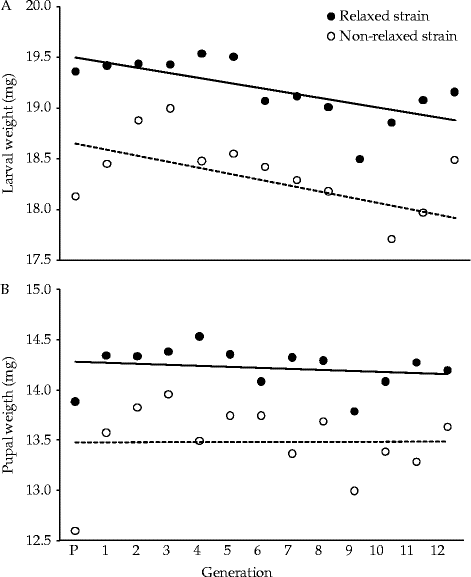
Larval and pupal weights of the relaxed strain were always greater than those of the non-relaxed strain. Differences between the two rearing systems were highly significant (F= 10.13; df = 12, 286; P< 0.0001 for larval weight; F= 5.03; df = 12, 286; P< 0.0001 for pupal weight) (Fig. 5A and B). The interaction between generations and colony type was not significant for both larval and pupal weights (larvae: F= 1.31; df = 12, 286; P= 0.2087) (pupae: F= 1.27; df = 12, 286; P= 0.2347). Larval weight (Fig. 5A) tended to decrease over the generations, and when fitted to the regression linear model (y= 19.56 − 0.05x, r 2= 0.46), it was found to be significant for the relaxed colony (F= 9.25; df = 1, 11; P= 0.0112) and not significant for the non-relaxed colony (y= 18.72 − 0.06x, r 2= 0.25) (F= 3.76; df = 1, 11; P= 0.0786). Pupal weight (Fig. 5B) remained rather constant over the generations, and when fitted to the regression linear model (y= 14.29 − 0.0099x, r 2= 0.033), it was found to be not significant for the relaxed colony (F= 0.38; df = 1, 11; P= 0.5496) and the not-relaxed colony (y= 13.47+0.001x, r 2= 0.001) (F= 0.0008; df = 1, 11; P= 0.9775).
Larval (A) and pupal (B) weight (mg) per generation of the relaxed and non-relaxed strains of Anastrepha obliqua. P, parental generation.
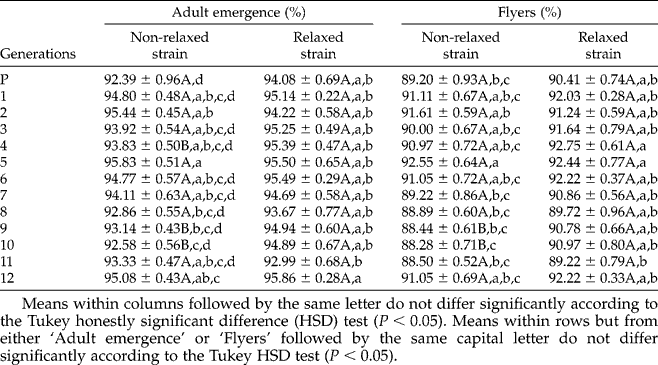
There were significant differences in adult emergence in the fourth, ninth and tenth generations (F= 4.54; df = 12, 286; P< 0.0001) (Table 3). The interaction between generations and colony type was not significant (F= 1.56; df = 12, 286; P= 0.1017).
Adult emergence (%) and flyers (%) of Anastrepha obliqua under relaxed conditions in the Moscafrut facility at Metapa de Domínguez, Chiapas
P, parental.
Means within columns followed by the same letter do not differ significantly according to the Tukey honestly significant difference (HSD) test (P< 0.05). Means within rows but from either ‘Adult emergence’ or ‘Flyers’ followed by the same capital letter do not differ significantly according to the Tukey HSD test (P< 0.05).
With only two exceptions, there were no significant differences in flight ability. The two cases where flight ability was significantly higher for the relaxed colony were the ninth and tenth generations (F= 5.93; df = 12, 286; P< 0.0001) (Table 3). The interaction between generations and colony type was not significant (F= 0.79; df = 12, 286; P= 0.6555).
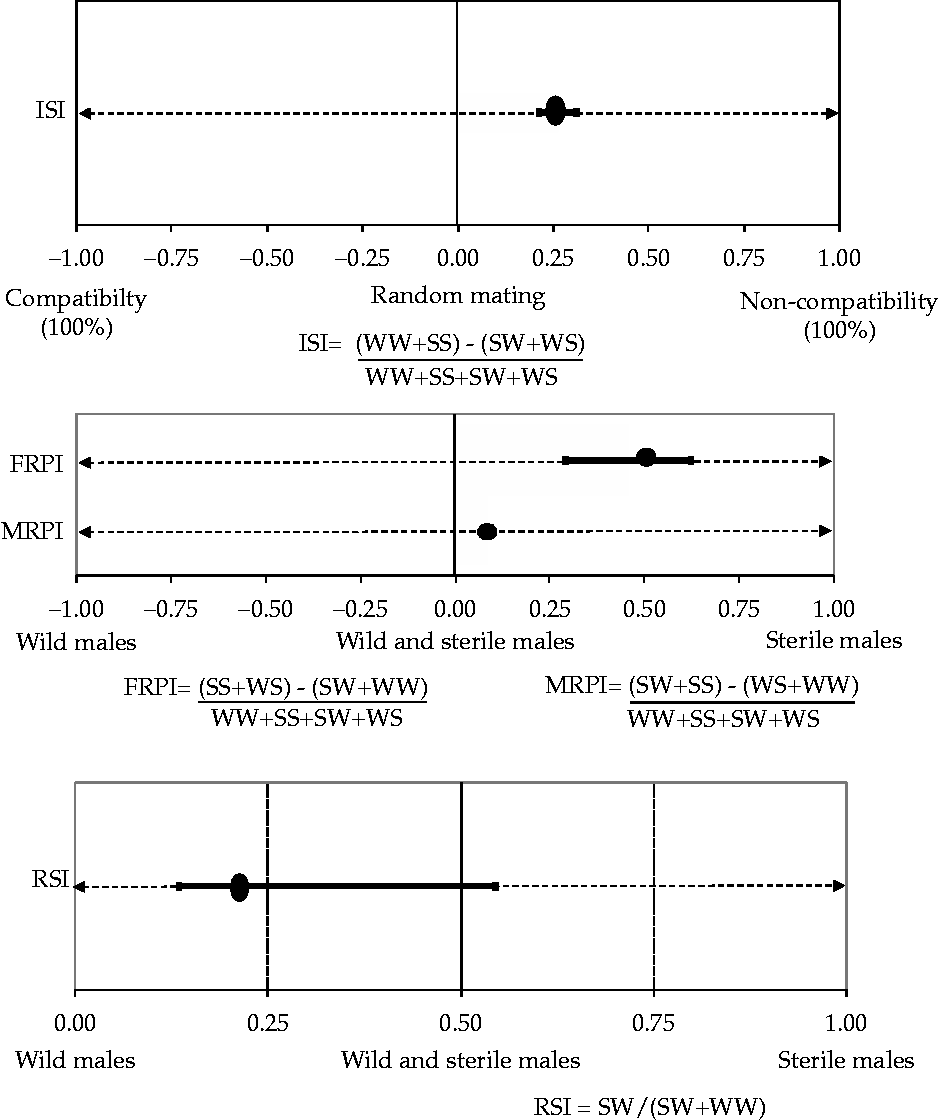
Regarding mating performance, the ISI indicated 25% incompatibility for sterile males. The FRPI indicated a mean close to a 50% preference for sterile males. The MRPI indicated a mean close to a 5% preference for sterile males. The RSI indicated a mean less than 25% preference for the wild males (Fig. 6).
Sexual index of the wild and relaxed males of Anastrepha obliqua. WW, wild male and female; SS, sterile male and female; WS, wild male and sterile female; SW, sterile male and wild female; ISI, strain isolation index; FRPI, female relative performance index; MRPI, male relative performance index; RSI, relative sterility index.
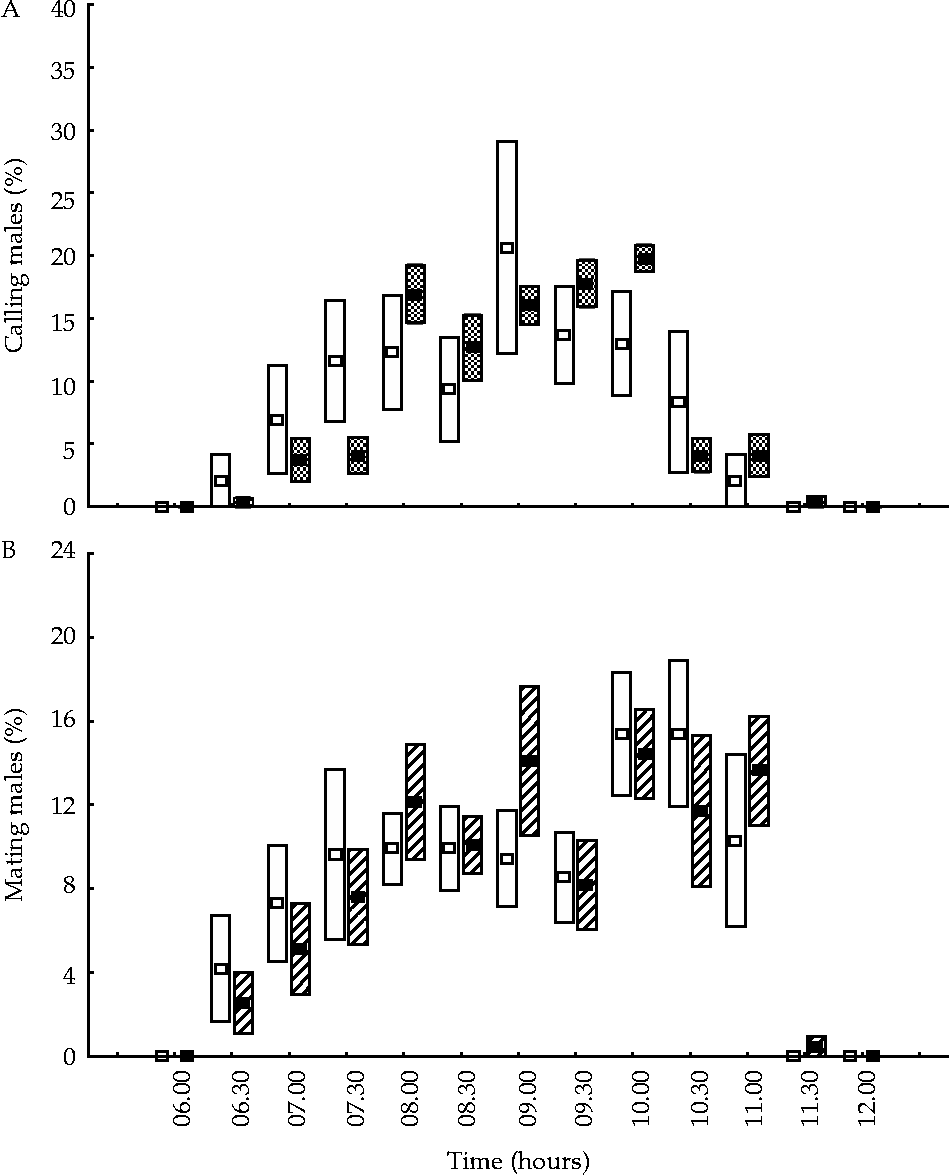
Figure 7A shows the percentage of males calling against time. In general, sterile males were calling more frequently than wild males. Differences in the percentage of calling males between the two rearing systems was significant (F= 5.04; df = 25, 286; P< 0.0001). The peak of calling behaviour for sterile males was at 09.00 h. Differences in sterile male calling frequency at different times of the day were significant (F= 2.48; df = 12, 143; P< 0.0056). Wild male calling frequency peaked at 10.00 h; differences in wild male calling frequency among the times of day were highly significant (F= 27.27; df = 12, 143; P< 0.0001). However, wild males exhibited a more consistent calling behaviour between 08.00 and 10.30 h. A paired comparison of calling frequency at 30-min intervals indicated no significant difference (F= 2.22; df = 1, 22; P= 0.05).
(A) Calling and (B) mating males of relaxed and non-relaxed strains of Anastrepha obliqua.
The number of mating males was recorded every 30 min from 06.00 to 12.00 h. The percentage of mating for each strain in every 30-min interval is shown in Fig. 7B. Sterile males achieved more matings than wild males from 06.30 to 07.30 h, but before 08.30 h, the inverse trend was observed. The sterile and wild males exhibited a significant difference in the number of matings in the morning (F= 4.92; df = 25, 286; P< 0.0001). The sterile males exhibited the highest mean mating at 10.00 and 10.30 h (F= 4.25; df = 12, 143; P< 0.0056), while the wild males exhibited the highest mean mating from 08.00 to 11.30 h (F= 6.32; df = 12, 143; P< 0.0001).
Discussion
The relaxed conditions of low density permitted the recovery of fecundity in adults and low-density larvae in artificial diets generated big flies. Low density prevented the accumulation of the deleterious effects of high density and revealed the existence of a reverse effect as suggested by Liedo et al. (Reference Liedo, Salgado, Oropeza and Toledo2007) for sexual competitiveness. These authors showed that an increase in the surface resting area within adult cages of the mother colony, as well as the use of low adult cage density during colonization, resulted in strains with high mating competitiveness. This suggests that adaptations such as oviposition behaviour and appropriate mating behaviour should be maintained, and therefore assumedly a low selection pressure will make large production lines function efficiently and, without changes in field capability, increase the efficacy of sterile males (Fisher and Caceres, Reference Fisher, Caceres and Tan2000).
Colonization for mass-rearing is a selection process in which insects adapt to the new rearing conditions (Leppla et al., Reference Leppla, Huettel, Chambers, Ashley, Miyashita, Wong and Harris1983; Leppla, Reference Leppla, Robinson and Hooper1989). The necessary high density used under mass-rearing favours the traits conferring enhanced competitive ability for limited resources (Joshi and Mueller, Reference Joshi and Mueller1988). This selection can affect the characteristics of the laboratory population, selecting for fast development, small size, and reduced courtship and sexual competitiveness (Liedo et al., Reference Liedo, Salgado, Oropeza and Toledo2007, Hernández et al., Reference Hernández, Toledo, Artiaga-López and Flores2009).
It is expected that a low density will reduce competition stress and favour food consumption by larvae. According to Orozco-Dávila et al. (Reference Orozco-Dávila, Hernández, Solís, Quintero and Domínguez2006), larvae could be maintained at a low density and thus could have a greater chance for weight increase, which directly influences pupal weight. According to Meza et al. (Reference Meza, Díaz Fleischer and Orozco2005), mating ability is greatly influenced by the size of males.
Acknowledgements
The authors are grateful to the technical staff of Planta Moscafrut for their assistance. This study was partially funded by the Joint FAO/IAEA Programme on Nuclear Techniques in Food and Agriculture (contract no. 13023/R0. 2005–2010) and the Campaña Nacional Contra Moscas de la Fruta, Programa Moscamed-Moscafrut (SAGARPA – SENASICA).