Introduction
End-stage kidney disease (ESKD) requires a replacement therapy in the form of a renal transplant or dialysis: hemodialysis (HD) or peritoneal dialysis (PD). Although the incidence of ESKD is stabilizing or falling worldwide, its prevalence is still high. In 2016, a survey of 79 countries, showed the prevalence of treated ESKD patients varying from 117 to 3,392 per million population; the prevalence in Denmark was 939 per million population at that time, with 455 per million population receiving dialysis treatment (United States Renal Data System, 2018). The median percent increase in ESKD prevalence over the years 2003–2015 (of 35 countries that reported data) was 43%. The growing body of literature reflects this increasing prevalence, but primarily focuses on physical outcomes and less on palliative care needs. HD extends life but does not entirely prevent suffering related to symptoms, comorbidities, and the treatment per se. Patients undergoing HD may present a high symptom burden (Fleishman et al., Reference Fleishman, Dreiher and Shvartzman2020), similar to patients with other serious and life-threatening illnesses such as cancer, in which it is widely recognized to assess and address palliative care needs.
Nowadays, the palliative care focus is primarily on patients with advanced cancer; however, during the past decades, there has been growing awareness of the importance of providing palliative care to other patient populations, most notably to patients with progressing chronic diseases, such as renal and heart failure. Unfortunately, palliative care for these patient populations has in many countries, including Denmark, not become standard of care yet and evidence for effectiveness and cost-effectiveness of hospital-based specialist palliative care for adults with noncancer advanced illnesses and their caregivers is still sparse (Bajwah et al., Reference Bajwah, Oluyase and Yi2020). Thus, in Denmark, only 10% of all patients referred to specialized palliative care in 2019 had noncancer illnesses (Hansen et al., Reference Hansen, Adsersen and Grønvold2020), despite the fact that already in 2011, the Danish Health Authority recommended palliative care for all citizens with serious and life-threatening illnesses (Sundhedsstyrelsen, 2011). National awareness about palliative care needs in noncancer populations is required to facilitate this paradigm shift and Patient-Reported Outcomes Measures (PROMs) obtained in these populations may be a very relevant first step. PROMs are an umbrella term covering the patient's perspective on physical and psychological well-being, symptoms, and treatment effects, which have been recognized as valid outcomes in clinical medicine (Patrick et al., Reference Patrick, Ferketich and Frame2004). It can facilitate better patient involvement in the treatment/care and improve patient-centered outcomes. As the patient is the primary source of information, PROMs should be optimized by supplementary clinical observations and objective findings (Efficace et al., Reference Efficace, Novik and Vignetti2007).
A Danish study from Rigshospitalet, Copenhagen University Hospital (Molsted et al., Reference Molsted, Aadahl and Schou2004) reported that patients with ESKD undergoing HD had significantly impaired health-related quality of life (HRQOL) compared with the general population. During the last decades, efforts have been made to reduce the mortality and morbidity of patients undergoing HD. Technical advances have been made regarding dialysis filters (Mollahosseini et al., Reference Mollahosseini, Abdelrasoul and Shoker2020), as well as new medications and novel treatment strategies have been implemented (Jablonski and Chonchol, Reference Jablonski and Chonchol2014). A reduction in adjusted all-cause mortality has been observed over the last decade (United States Renal Data System, 2020). However, during the same period, the HD population has become older (United States Renal Data System, 2020) and accordingly more fragile. Therefore, we hypothesized that HRQOL reported by patients undergoing HD in 2019 was not improved when comparing HRQOL reported by patients undergoing HD in 2000 in the same hospital department (Molsted et al., Reference Molsted, Aadahl and Schou2004). The aim of this study was to assess HRQOL, fatigue, anxiety, and depression in Danish HD patients and compare the present status with data obtained almost two decades ago and with the general population data.
Methods
Study design, populations, and ethics
This is a cross-sectional study. All HD patients treated at Rigshospitalet, Copenhagen University Hospital from January to June 2019 were screened. Patients were eligible for the study if they had received HD for at least 3 months and were 18 years or older. Patients with cognitive dysfunction, and/or those not fluent in the Danish language were excluded. The results were compared with formerly published data regarding HD patients treated at the same department in 2000 (Molsted et al., Reference Molsted, Aadahl and Schou2004) and with the Danish general population (Bjørner et al., Reference Bjørner, Damsgaard and Watt1997; Boter et al., Reference Boter, Mänty and Hansen2014). The local Knowledge Centre on Data Protection Compliance approved the study (VR 2018-437). Non-intervention studies do not require approval of an ethic committee in Denmark.
Procedures
Patients were identified from the department patients list. Eligible patients were invited by a letter containing the invitation and written information about the study. Patients interested in the study attended a meeting with a research nurse at the subsequent HD session. They received oral information and informed consent was obtained in the case of agreement. The research nurse asked the patients to fill in an electronic questionnaire, which was offered during the HD session through an electronic device or by sending a link to the questionnaire by e-mail.
Assessment
Socio-demographic and clinical data were collected through interviewing the patients and by hospital electronic records. Socio-demographic data included age, gender, educational level, and employment status. Clinical data comprised information regarding primary renal disease, duration of renal disease, dialysis vintage, values of albumin/hemoglobin/dialysis quality (Kt/V), and comorbidity using the Charlson Co-morbidity Index (CCI) (Charlson et al., Reference Charlson, Pompei and Ales1987).
HRQOL was assessed by the Kidney Disease Quality of Life Short Form (KDQOL-SF) version 1.3 (Hays et al., Reference Hays, Kallich and Mapes1997). Its reliability has been tested for Danish HD and PD patients (Molsted et al., Reference Molsted, Heaf and Prescott2005). The questionnaire consists of two parts: a generic and a disease-specific part. The generic part is the Short Form (SF-36), which consists of 36 items that compose eight health dimensions: Physical Function (PF), Role Limitation — Physical (RP), Bodily Pain (BP), General Health (GH), Vitality (VT); Social Function (SF), Role Limitation — Emotional (RE) and Mental Health (MH). In addition, two summary scores can be computed: a Physical Component Score (PCS) and a Mental Component Score (MCS). The disease-specific part of the KDQOL-SF contains 43 items, which are transformed into 9 disease-specific scales, one overall health scale, and two scales that assess the patient's experience of the dialysis staff: symptoms and problems, effects of kidney disease, burden of kidney disease, work status, cognitive function, quality of social interaction, sexual function, sleep, social support, dialysis staff encouragement, overall health, and patient satisfaction. For all scales of the KDQOL-SF, a score from 0 to 100 was calculated. A higher score indicates better quality of life.
The Multidimensional Fatigue Inventory (MFI-20) was used to measure fatigue (Smets et al., Reference Smets, Garssen and Bonke1995). It consists of 20 items assigned to five scales: general fatigue, physical fatigue, mental fatigue, reduced activity, and reduced motivation. Sum scores for the separate scales (range: 4–20, 4 indicating the absence of fatigue) and a total MFI score (range 20–100) were computed; higher scores indicate a higher degree of fatigue.
The Hospital Anxiety and Depression Scale (HADS) was applied to assess anxiety and depression (Zigmond and Snaith, Reference Zigmond and Snaith1983). It consists of 14 items, seven items for each scale (anxiety and depression). Scores were calculated for each scale and a score ≥ 8 indicates the presence of anxiety/depression.
Statistical analyses
We report data as means, standard deviations (SDs), and range for continuous variables and in absolute numbers (n) and percentages for dichotomous variables. PROMs were analyzed for those who responded to the questionnaires. Comparisons were made between the data of this study and published data of chronic HD patients, who were treated at the same department at Rigshospitalet, Copenhagen University Hospital in 2000 (Molsted et al., Reference Molsted, Aadahl and Schou2004). In addition, comparisons with normative data of the Danish general population (Bjørner et al., Reference Bjørner, Damsgaard and Watt1997; Boter et al., Reference Boter, Mänty and Hansen2014) were also performed. The general population SF-36 scores were computed by creating an age- and gender-matched population from the normative Danish scores available (Bjørner et al., Reference Bjørner, Damsgaard and Watt1997). For comparisons, we used t-tests for normally distributed continuous data and Chi-square tests for dichotomous data. A P-value of <0.05 was considered to be statistically significant. All statistical analyses were performed using IBM-SPSS V. 25.0 package.
Results
Patient characteristics
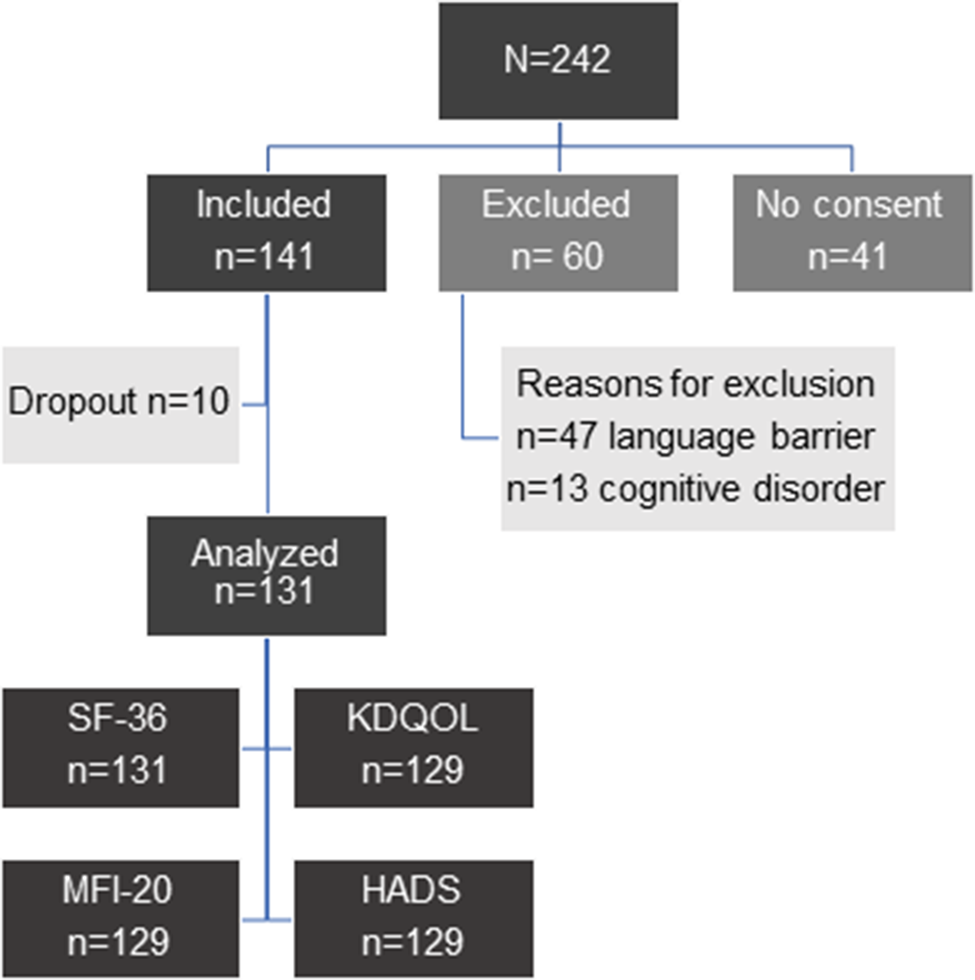
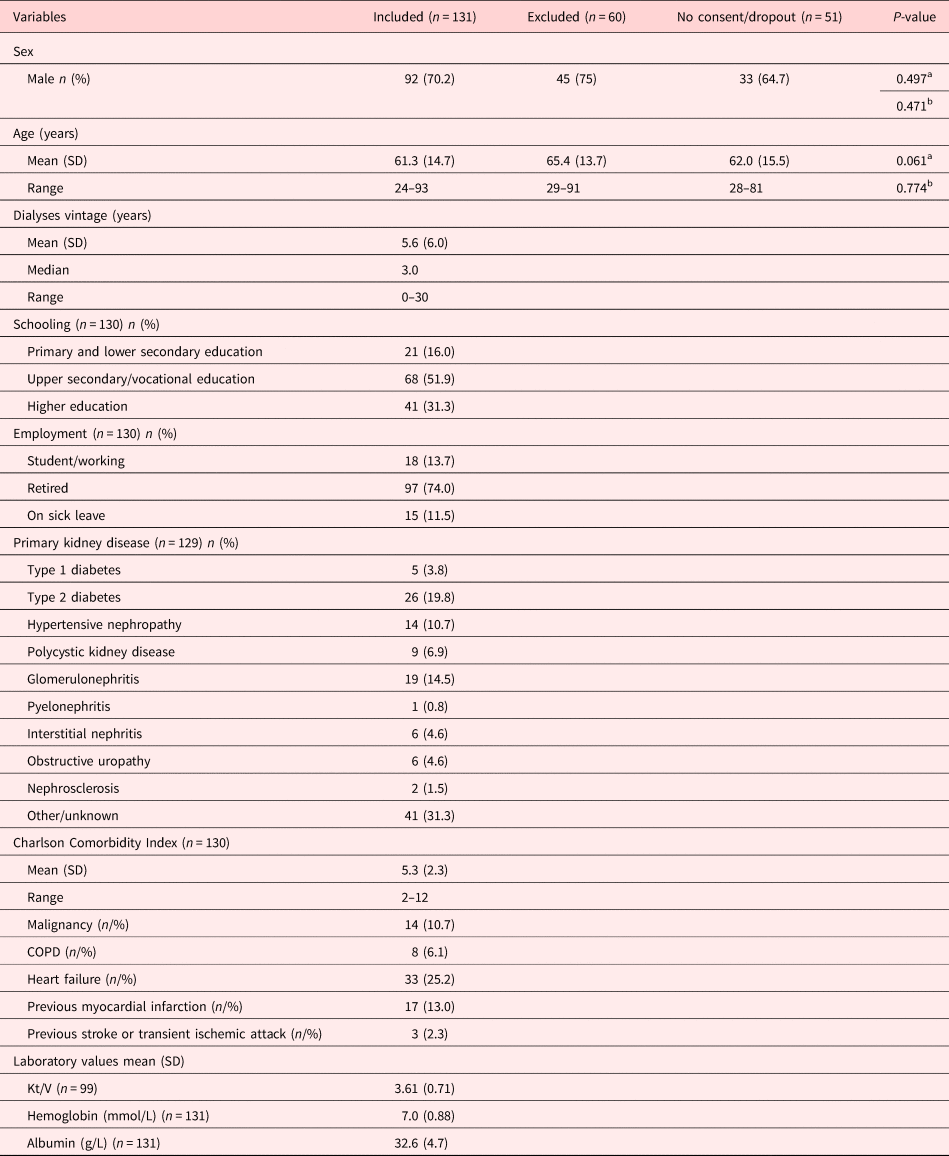
A total of 242 HD patients were screened; 141 were eligible for the study, and out of them, 131 (response rate 93%) filled in one or more questionnaires and 51 (38.9%) responded to the questionnaire by the electronic link (Figure 1). No differences regarding sex and age were observed between patients who were included, excluded or did not consent to participate in the study or dropped out. Included patients’ mean age was 61.3 years (SD: 14.7), 70.2% male, mean dialysis vintage was 5.6 (SD: 6.0) years, 51.9% had upper secondary/vocational education, 74% were retired, 23.6% had diabetes as primary kidney disease, and Charlson Comorbidity Index was mean: 5.3 (SD: 2.3) (Table 1).
Study flow diagram.

Patient characteristics

Kt/V, clearance × time/volume.
a Included vs. excluded.
b Included vs. no consent/dropout.
Health-related quality of life
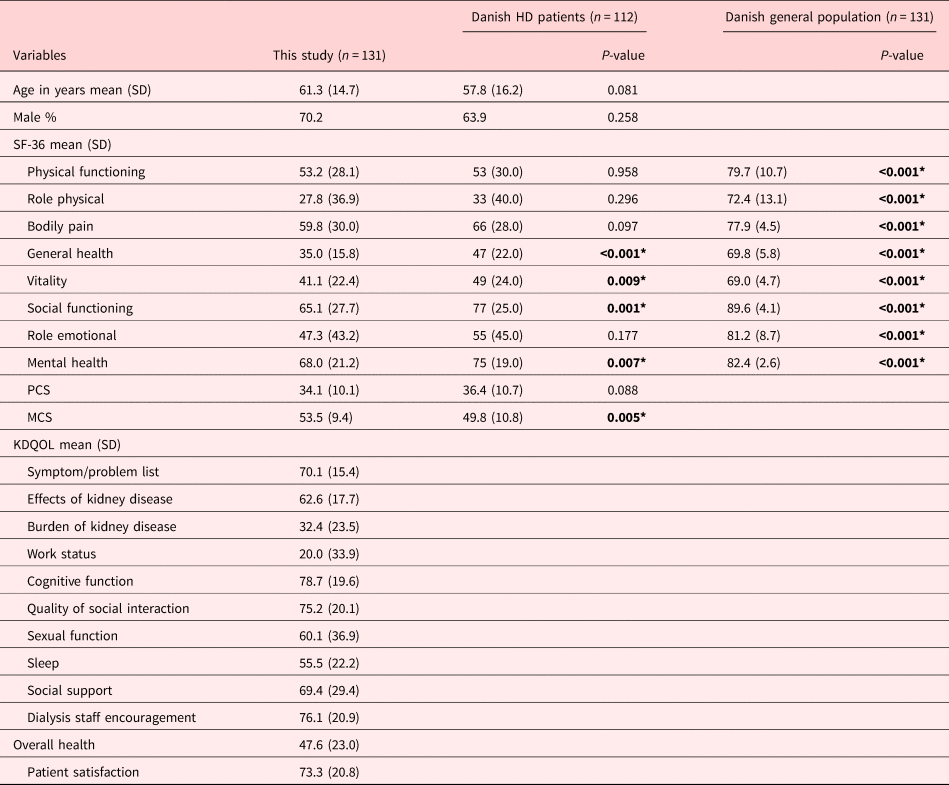
SF-36 scores of the present patient population were compared with scores reported previously for a comparable Danish HD population of all chronic HD patients that were treated at the same department in 2000 (Molsted et al., Reference Molsted, Aadahl and Schou2004; Table 2). Significantly lower scores on the scales GH, VT, SF, MH, and MCS of SF-36 were found comparing the present population with the population sample from 2000. Furthermore, the present population had significant lower SF-36 scores on all subscales compared with the age- and sex-matched Danish population (Bjørner et al., Reference Bjørner, Damsgaard and Watt1997; Table 2). The disease-specific KDQOL-SF data of the present population is displayed in Table 2.
KDQOL-SF, comparisons with a similar sample of Danish HD patients (2000) and the Danish general population
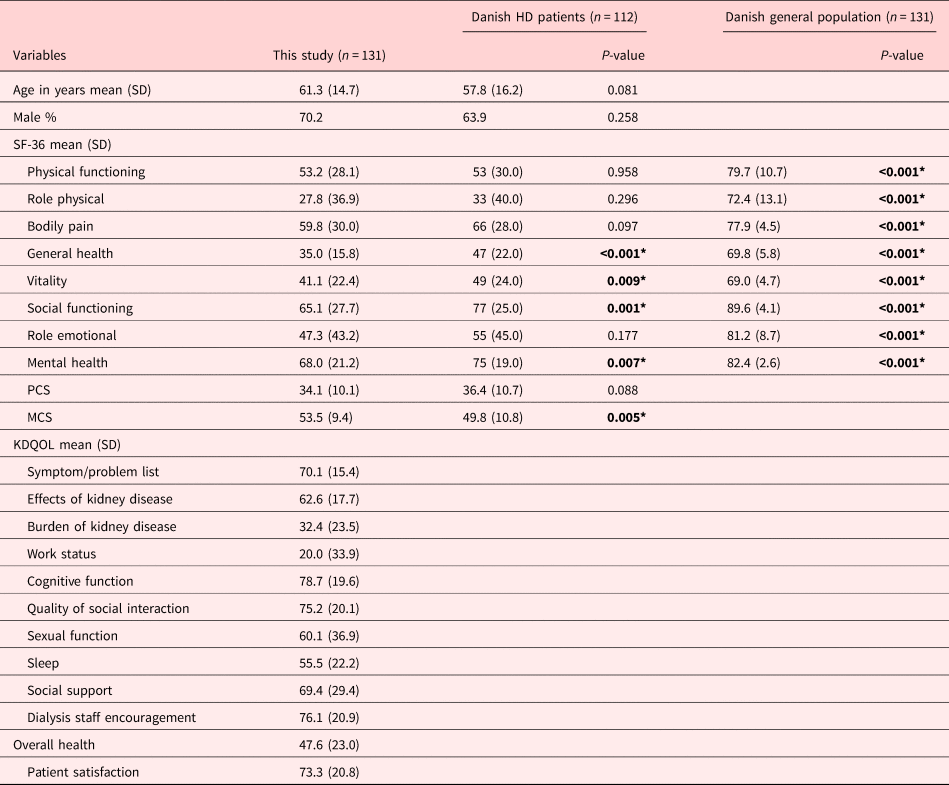
PCS, physical component score; MCS, mental component score; *P < 0.05.
Fatigue, anxiety, and depression
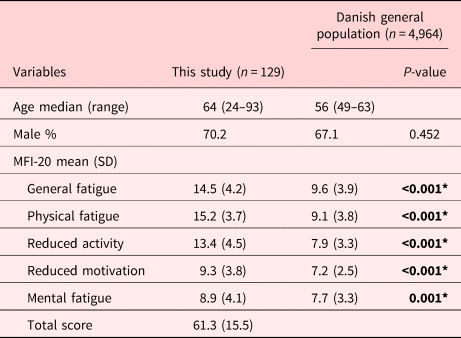
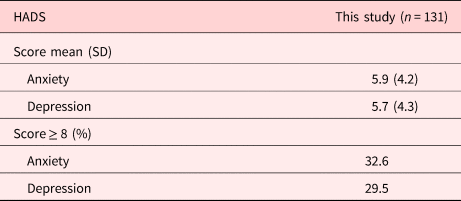
Fatigue scores in the present HD patient population were statistically significantly higher than in the general population (Boter et al., Reference Boter, Mänty and Hansen2014; Table 3). According to the cut off used for screening of anxiety/depression cases, the presence of anxiety and depression was high in the patient population, 32.6% and 29.5%, respectively (Table 4).
Fatigue — comparison with the general population

*P < 0.05.
Anxiety and depression

Discussion
In this study, the major domains VT, GH, SF, MH, and MCS of HRQOL measured by the generic SF-36 were significantly lower in the present patient population than formerly measured in a representative sample 19 years ago in the very same department (Molsted et al., Reference Molsted, Aadahl and Schou2004) However, these two samples may not be readily comparable as dialysis vintage was higher in the population sampled in 2019 (5.6 vs. 2.5 years) (Molsted et al., Reference Molsted, Aadahl and Schou2004), which may influence quality of life negatively (Ishiwatari et al., Reference Ishiwatari, Yamamoto and Fukuma2020). In addition, there were other differences between the populations, with relatively more diabetic patients, lower Kt/V and lower albumin levels in the present study. Furthermore, there could have been unmeasured confounders, such as comorbidity. Finally, the disease-specific KDQOL-SF was not translated into Danish in 2000, which precluded further disease-specific comparisons. Another Danish study published in 2007 reported KDQOL-SF scores; however, it was carried out in a different HD department in Denmark (N = 71) (Molsted et al., Reference Molsted, Prescott and Heaf2007). In comparison with the 2007 study, the present study also showed lower scores for all the domains, except for social support and dialysis staff encouragement.
Overall, these findings are remarkable as a former Danish study found no differences assessing generic and disease-specific HRQOL in two different samples of HD patients in 2002 and 2015 from another dialysis center in Denmark (Knudsen et al., Reference Knudsen, Eidemak and Molsted2016). Although the observation period was different and the time span between studies was shorter in the study by Knudsen et al. (Reference Knudsen, Eidemak and Molsted2016) than in the present study, we are surprised to find the marked deterioration in a number of domains of HRQOL in the present study population. Furthermore, there are studies from abroad, which within similar decades and even over shorter time spans have demonstrated improvements of HRQOL in HD patients (Gabbay et al., Reference Gabbay, Meyer and Griffith2010; Mazairac et al., Reference Mazairac, de Wit and Penne2011). The most likely explanation is that the current HD population has on average longer dialysis vintage, accumulating more comorbidity; this in combination with increasing age, renders a frailer population. Although adjustment for these differences over time would likely lead us to conclude differently, reality is that we face a different population nowadays, with lower quality of life and increasing needs for addressing these issues in their care and management. If we look into the different affected domains of HRQOL in more detail, they involve physical, psychological, social, and existential dimensions of suffering. To address these needs, improvement of basic palliative resources, integration and implementation of an interdisciplinary hospital-based team approach that includes palliative-trained physicians, physiotherapists, psychologists, nurses, social workers, dieticians, and chaplains are needed. A future rational approach could be integrated interventions comprising specialized palliative care and nephrology (Gelfand et al., Reference Gelfand, Schell and Eneanya2020).
In the present population, we have also studied different dimensions of fatigue, anxiety, and depression. Fatigue is the most common symptom in HD patients and has been reported to be present in up to 89% of patients with advanced renal failure (Murtagh et al., Reference Murtagh, Addington-Hall and Higginson2007; Artom et al., Reference Artom, Moss-Morris and Caskey2014). It has a multifactorial etiology including anemia, depression, low albumin levels, sleep disturbances, and restless legs syndrome (Jhamb et al., Reference Jhamb, Liang and Yabes2013). Not surprisingly, scores of all five dimensions of fatigue according to the MFI-20 was significantly elevated compared with the age- and sex-matched Danish population. The need for greater recognition of and research into symptom prevalence and causes in HD patients is urgently needed in order to find pharmacological and nonpharmacological interventions to alleviate suffering, corresponding to the efforts demonstrated for decades to provide and improve the palliative care of patients with cancer (Kaasa et al., Reference Kaasa, Loge and Aapro2018).
Finally, patients need to be informed that dialysis may not necessarily lead to acceptable HRQOL and mental/functional status. It is important to keep in mind that the HD dialysis procedure itself can have effects on patients’ symptoms and HRQOL. This relates to the burden and frequency of the procedure itself as well as the potential side effects and complications of treatment. When healthcare providers discuss HD with patients and their families, the potential benefits are usually emphasized, and the negative aspects of treatment are often not discussed or even minimized (Davison et al., Reference Davison, Levin and Moss2015).
Strengths and limitations
The external validity of the present study may be limited as a result of residual confounding. Clinical parameters may have an effect on the medical conditions of the patients and consequently on their HRQOL. Due to the limited data from 2000, it was not possible to include important variables like comorbidity in the analyses. A strength of the study is that the two samples came from the same HD department and PROMs were used in both.
Conclusion
This study found significantly deteriorated HRQOL in important domains representing physical, psychological, social, and existential dimensions of suffering in patients undergoing HD in a Danish dialysis department over a 19-year time period from 2000 to 2019. Compared with the sample of HD patients from 2000, the HD patients had markedly reduced HRQOL in 2019. Furthermore, fatigue, anxiety, and depression were highly prevalent in HD patients in 2019. It is crucial to focus on integrated interventions, combining disease-modifying treatments with holistic palliative care interventions to improve HRQOL and symptom control. A prerequisite for that could include the systematic assessment of HRQOL and symptoms in the routine care of the HD patient.
Acknowledgments
We thank Mr. Morten Aagaard Petersen for the statistical support.
Funding
This study was supported by Region Hovedstaden (Denmark), which had no role in the study development/conduction, analysis of data or drafting of the manuscript.
Conflict of interest
The authors declare no conflicts of interest.