FC01.01
Dance embraces dementia: A psychomotor intervention in care homes
Azucena Guzman Garcia, J Hughes, M Freeston; L Rochester
Institute for Ageing and Health, Newcastle Upon Tyne, Northumberland, England
I James, University Northumbria, United Kingdom
It is acknowledged that despite not having a cure for dementia, improvements can be made in the areas of care and treatment. The aim is to improve the quality of life of those with a diagnosis and of their carers in order to maintain their remaining abilities. However, people with dementia not only present decline in cognition, but changes in behaviour. These behavioural and psychological symptoms of dementia (BPSD) are treated through pharmacological and non-pharmacological interventions. The introduction of the latter is advised prior to psychotropic treatments. Hence, more evidence regarding the efficacy of non-pharmacological treatments is needed, especially in long-term care settings. To date several psychosocial interventions are available for people with dementia which may be used, such as: reality orientation, validation, cognitive stimulation therapy, music therapy, and aromatherapy. However, research on dance in dementia has been overlooked, despite being a familiar activity for both male and female elders as a result of their experiences in younger days. An investigation is presented on Danzón (Latin ballroom dance) as a psychomotor dance-based approach to test its feasibility as a non-pharmacological intervention for care homes. Following the Medical Research Council framework as a model to inform the development of the intervention, a systematic literature review of qualitative and quantitative studies of dancing with older people with dementia living in long-term care was conducted. Although methodological difficulties and limited evidence were found, it can be argued that dancing constitutes a promising intervention. Then, a qualitative pilot study was carried out, which aimed to investigate the effect of introducing the Danzón psychomotor intervention (DPI) for people with dementia living in care homes (n = 13) with care staff acting as facilitators of the dance sessions. Two separate conceptual models found positive outcomes and negative concerns around the use of Danzón, derived both from the experiences of people with dementia and from that of care staff. This pilot work led us to conduct an exploratory trial to focus on individual responses (n = 10) using a multiple-baseline single-case design with three phases: (A) pre intervention, (B) dancing intervention, and (C) a naturalistic observational follow-up period. Participants were diagnosed with different types of dementia in mild/moderate stages, and their individualized measures of mood, behaviour and quality of life were used together with standardized outcome measures across three private care homes. Results revealed that from the 32 individualized items, 21 had a positive, small to medium effect; eight items showed no change; and three items adverse changes. In addition to the primary data analysis, group analyses were undertaken in order to estimate the effect size and test the feasibility of a future Randomized Control Trial. An additional qualitative evaluation involved available care staff and relatives (n = 35). Overall, all residents provided positive responses. However, there was some concern amongst staff about the possibility of continuing to implement dancing because of work load and staff shortages. The findings of this study are presented in relation to its potential contribution to the National Dementia Strategy in United Kingdom. These data contribute to the understanding of dancing interventions as a treatment to reduce BPSD, particularly in terms of improving general levels of satisfaction for care staff and quality of life of people with dementia when living in long-term care.
FC01.02
The impact of personalized one-to-one interaction based on the Montessori method on agitation, affect and engagement in individuals with dementia
Eva Van Der Ploeg, D O'Connor; S Runci
Monash University, Cheltenham, Victoria, Australia
B Eppingstall, Monash University, Cheltenham, Victoria, Australia
C Camp, Linda-&-Cameron, Inc., Solon, Ohio, United States Of America
Background: The agitated behaviours that accompany dementia (such as pacing and aggression) are stressful to both nursing home residents and their carers and are difficult to treat. Behaviours stemming from pain, major depression or psychosis benefit from treatment with analgesics, antidepressants or antipsychotics. However, in cases where the causes of agitation are uncertain, psychotropic medications have limited efficacy and side-effects such as increased confusion and falls should be considered when prescribing medications. Therefore, increasingly more attention has been paid to non-pharmacological interventions which are associated with fewer risks. The aim of the current study is to test if personalized one-to-one interaction activities based on the Montessori methodology will reduce the frequency of behavioural symptoms of dementia significantly more than a relevant control condition.
Methods: This controlled trial with randomized cross-over between conditions was conducted with 34 persons with moderate to severe dementia and associated high frequency behavioural problems living in aged care facilities in the Melbourne Metropolitan region (Australia). Consented, willing participants were assigned in random order to the Montessori intervention or a relevant control condition for two weeks with two sessions in each week and then switched to the other condition. Montessori activities derive from the principles espoused by Maria Montessori and subsequent educational theorists to promote engagement in learning, namely task breakdown, guided repetition, progression in difficulty from simple to complex, and the careful matching of demands to levels of competence. The control condition consisted of conversation or reading from and looking at pictures in a newspaper to control for benefits of one-to-one interaction. The number of agitated behaviours and type of engagement and affect were noted before, during and after intervention time for each minute (30 min. per period).
Results: Aged care facility residents on average displayed agitated behaviours (predominantly pacing behaviour) during 17 (out of 30) minutes at baseline. Both conditions were successful in reducing this agitation, but the Montessori intervention was more effective than the control condition (respectively a 52% and 41% reduction (p < .05, Cohen's d = 0.25)). In addition, residents were more constructively engaged (p < .001, Cohen's d = 1.01), and displayed significantly more interest (p < .01, Cohen's d = 0.32) and pleasure (p < .05, Cohen's d = 0.59) during the Montessori intervention compared to the control condition. Effect sizes of this magnitude are considered medium to large, but are remarkable when one considers the careful selection of the control condition that successfully adjusts the effect for the extra attention that accompanies the Montessori intervention. In the 30 minutes post-intervention frequency of agitation and type of engagement and affect returned to baseline level for both conditions.
Discussion: Montessori activities are successful in reducing agitation and eliciting more positive affect and constructive engagement when compared to usual care and a relevant attention-control condition. The lack of after-effect from the intervention may be explained by the limited opportunity to interact with staff members and other residents, and by the short duration and low frequency of our intervention. Furthermore, the importance of settling highly agitated individuals even for half an hour should not be underestimated. We believe the effects would be even larger and possibly longer lasting, if Montessori activities were to be conducted on a daily basis. Volunteers and relatives are possible resources to implement the intervention on a more regular basis.
FC01.03
Creating an individualized meaningful occupational approach for residential care clients with dementia
Wendy Hall,NorthWestern Mental Health, Sunshine, Victoria, Australia
Objectives and study: Providing meaningful individualized opportunities for engagement for older people with dementia in residential aged care facilities poses significant challenges. Use of equipment, method of engagement and carer skill level often mean that the demands of meaningful engagement exceed the older person's abilities whether this is due to their cognitive and physical deficits, functional impairment or the presence of behavioural and psychological symptoms (BPSD). Grading activities to suit the person's abilities, engaging them and making activities meaningful have been identified as particularly problematic for carers. The Functional Occupational Staging and Response Tool (FOSART) was specifically developed in response to these identified problems. The FOSART assesses the functioning of people with dementia when engaged in usual daily activities and guides carers in selecting activities that are meaningful to the person and responsive to their abilities and deficits. This study examined the impact using the FOSART had on residents and staff in a 30 bed psychogeriatric residential aged care facility in Melbourne, Australia.
Methods: All residents with dementia in the psychogeriatric facility and staff caring for them participated in this study. Activity engagement, BPSD and carer stress were measured prior to and following implementation of the FOSART. Staff satisfaction and knowledge about the use of meaningful activities with residents was also measured.
Results: Use of the FOSART resulted in significant reductions in resident's BPSD severity and frequency, and improvements in activity engagement, both facilitated and spontaneous. Carer satisfaction and perceived knowledge increased whilst carer burden decreased.
Conclusion: The FOSART is an easily used tool that assists carers to identify and provide activities which are meaningful and suitable to the abilities of people with dementia. The use of this tool in activity provision assists in reducing BPSD, improving engagement and assists in reducing care related burden experienced by staff.
FC01.04
Music therapy efficacy on behavioral and psychological symptoms in dementia
Alfredo Raglio, D Bellandi; M Gianotti, M Ubezio
Sospiro Foundation, Sospiro, Cremona, Italy; Interdem Group, European Union
Introduction: Music therapy is one of main and widespread psychosocial interventions in dementia care. The literature shows the efficacy of music therapy, in particular on behavioral and psychological symptoms of dementia (BPSD) (Vink et al., 2003; Svansdottir et al., 2006; Raglio et al. 2008; 2010). Despite its practice it is not quite clarified what is music therapy and if there are differences between music and music therapeutic intervention. Moreover, in the field of music therapy, evidence based methods of practice and research are needed.
Aims: This paper focuses on three fundamental points: music therapy definition, methodological research criteria and evaluation of outcomes.
Methods: We present two randomized controlled trials (Raglio et al., 2008; 2010) in which music therapy can be considered as a specific relational technique that uses sonorous-music interaction (active music therapy) to promote empathetic relationship (“affect attunement” moments, Stern, 1985; 2004) between persons with dementia and music therapist. The non-verbal and sonorous-musical communication facilitates the emotional process and the possibility to share emotional states (Raglio et al., 2009). The described studies involved 60 subjects (with a moderate-severe level of dementia) each, randomly assigned to experimental (music therapy) or control (standard care: educational, occupational and entertainment activities) groups. The experimental groups underwent 30 music therapy bi-weekly sessions (30 minutes each). The music therapists were trained professionals and evaluators were blinded. The assessment included functional (Barthel Index), cognitive (Mini Mental State Examination) and behavioral (Neuropsychiatric Inventory) evaluations. Also the quantity and quality of relationship and behaviors during the sessions have been evaluated using a music therapy observational scheme. The first study (Raglio et al., 2008) was based on a continuous treatment while the second (Raglio et al., 2010) on cycles of sessions spaced out by washout periods.
Results: The group underwent music therapy sessions (in particular in the first study, Raglio et al., 2008) significantly improved the Neuropsychiatric Inventory global scores and some of its sub-items: delusions, agitation, anxiety, apathy, irritability, aberrant motor activity and nighttime behavior disturbances. Also the “affect attunement” moments between persons with dementia and music therapist significantly increased during the treatment. The second study (Raglio et al., 2010) confirmed the results above mentioned: In the music therapy group the behavioral disturbances underwent a significant reduction at the end of the 1st cycle of sessions, maintaining the effects during the treatment. At the end of the treatment the disturbances increased again. The cycles of sessions administration also reduced the music therapy efficacy on the communicative-relational aspects.
Conclusion: Both studies showed the effectiveness of active music therapy on BPSD and on communicative-relational process in persons living with moderate-severe dementia. We believe that music therapy can be a recommended and not expensive non-pharmacological approach in dementia management and care. The recent literature strengthens the possibility that music therapy could be considered for inclusion in the guidelines for dementia treatment.
References:
Raglio A., Bellelli G., Traficante D., Gianotti M., Ubezio M.C., Villani D., Trabucchi M. (2008). Efficacy of music therapy in the treatment of behavioral and psychiatric symptoms of dementia. Alzheimer Disease and Associated Disorders, 22(2), 158–62. Raglio A., Gianelli M. V. (2009). Music therapy for individuals with dementia: areas of interventions and research perspectives, Current Alzheimer Research, 6, 293–301. Raglio A., Bellelli G., Traficante D., Gianotti M., Ubezio M.C., Gentile S, Villani D., Trabucchi M. (2010). Efficacy of music therapy treatment based on cycles of sessions: a randomised controlled trial. Aging and Mental Health, 14, 900–904. Stern, D. (1985). The Interpersonal World of the infant. New York: Basic Book. Stern, D. (2004). The Present Moment in Psychotherapy and Everyday Life. London: Norton & Company Ltd. Svansdottir HB, Snaedal J. (2006). Music therapy in moderate and severe dementia of Alzheimer's type: a case-control study. International Psychogeriatrics, 18:613–621. Vink AC, Birks JS, Bruinsma MS, et al. (2004). Music therapy for people with dementia. Cochrane Database Systematic Review [database online], CD003477.
FC01.05
Managing expectations through the diagnostic process of dementia
Kritika Samsi, J Manthorpe
King's College London, London, United Kingdom
L Robinson, Institute of Health and Society, Newcastle University, Newcastle Upon Tyne, United Kingdom
J Keady, University of Manchester/Greater Manchester West Mental Health NHS Foundation Trust, Manchester, United Kingdom
C Abley
J Bond
S Campbell, The University of Manchester, Manchester, United Kingdom
In the context of growing policy imperative around early diagnosis of dementia, this exploratory qualitative study focused on the diagnostic narrative of people with memory problems and carers before and after receiving a diagnosis. The aim was to explore the experience of people with memory problems and their carers as they transition through the process of receiving a diagnosis of dementia at memory clinics. In-depth interviews were conducted in 3 sites with 27 people with memory problems and 26 carers from a memory clinic. Experiences of the process of assessment (testing) and diagnosis disclosure were explored, in order to identify consequences and implications for practice. Transcripts were analyzed by drawing on principles of grounded theory; conceptual themes were derived from data. A key finding was the expectations with which participants approached services and the implications these had for longer-term service relationship. Most expectations with which participants accessed services appeared to focus on receiving ‘early intervention’, specifically medication. Most talked of expecting accurate, timely diagnosis with limited understanding of the complexity of the diagnostic process. Some felt that scans would be definitive and bring ‘closure’ and relief to the ‘waiting’ they experienced. Few considered the option that the diagnosis of dementia may only open up more uncertainty and ‘watchful waiting’. Participants also described an enforced passive role within services, with long periods of waiting, lack of efficient follow-up from services, confusion processes and pathways, limited understanding of the disease trajectory and when things would get worse. Emergent findings also revealed mixed feelings about the diagnostic process. While some felt supported and said that receiving the diagnosis reassured them and helped them plan for the future, others found waiting between initial assessment and diagnosis distressing. Greater support before receiving a diagnosis and providing an indication of what may be wrong were identified as potentially beneficial. In some cases, what was perceived to be poor or lack of communication between services and professionals resulted in information being given to the person with dementia and carers that they felt was inappropriate or at the wrong time for them. Narratives of carers revealed their role in the diagnostic process, suggesting there may be value in focusing on involving family members or friends early on in a relationship-based attitude to dementia care. Post-diagnosis, providing counseling support to the relationship, rather than always individually to people with dementia and carers may also be worth considering. Receiving a diagnosis of dementia can be life-changing for some and there is need for people with memory problems and carers to be ‘held’ by services from the start of the diagnostic process. There is need to manage expectations with which people may approach services, in order that disappointment, frustration, anxiety and feelings of being let down are mitigated. Negative emotions appeared to have implications for long-term management of the condition as well as consequences for caregiving. Moreover, it is important that eligibility criteria for medication are discussed early in order that feelings of surprise, abandonment can be controlled and other sources of support can be suggested.
FC01.06
A psychosocial support programme for people with dementia and their family carers: An 18 months randomized controlled intervention study
Froydis Bruvik,Kavli Research Center for Ageing and Dementia, Bergen, Norway
K Engedal, Norwegian Centre for Ageing and Health, Oslo University hospital, Oslo, Norway
A Ranhoff, Institute of Medicine, University of Bergen, Bergen, Norway
I Ulstein, Oslo University Hospital, Ulleval, Oslo, Norway
Background: Dementia is one of the most common and devastating diseases in the elderly. It leads to impaired memory, change in behaviour, psychiatric symptoms and loss in skills important for activity of daily living. Family carers often suffer a high degree of physical, mental, social and economic burden. It is believed that carers abilities to cope and their knowledge about the dementia disorders are of significance importance to provide better care for people with dementia, but also for their own psychological health. The purpose of this study is to improve the care for people with dementia and reduce burden on family carers by offering a program to the family that consists of: a) systematic educational program and b) support for coping. We will measure the effect in the patients by instruments measuring quality of life, degree of depression and anxiety. In carer we will measure degree of burden as well as quality of life and degree of depression. Our hypothesis is that relatives who reported a high degree of mastery will have a reduced risk of depression, and the patients of these carers will be able to stay at home longer.
Methods: We have included 228 families from 18 municipalities in Norway. The inclusion criteria are: The person with dementia should live at home, has capacity to give the consent to participation and has a score on the MMSE above 14. Relatives should have: weekly “face to face” contact and report burden by the Relative Stress Scale above 4. The families from each municipality, people with dementia and their relatives, are randomized to either intervention- or control group. The intervention consists of five individual counseling sessions, teaching about dementia and follow-up group-meetings based on problem solving method. The control group receives follow-up as usual. The relative participates in all counseling sessions where the people with dementia take part in two and the family network in one of the sessions. The educational program about dementia is carried out as a seminar with up to 30 carers. The carers will take part in eight group-meetings, the two last as ‘booster sessions’. The person with dementia will participate in six groups-meeting with education about dementia if appropriate, and “pleasant tasks”. The intervention is carried out by local project co-workers, nurses and occupational therapists, employed by the municipalities. In most other similar studies specialist from specialist health service do the intervention. We have made treatment manuals that should be used in each meeting; conversation and group meeting. The intervention will go on for 18 month. The following scales are used at baseline and at 12 and 24 month follow-up:
Person with dementia:
Mini–mental state examination, (MMSE) (Folstein et al. in 1975), The Quality of life in Alzheimer's disease (QOL-AD) (Logsdon et al., 1999), Utilisation in Dementia (RUD Lite) instrument (Wimo, 1998) The Neuropsychiatric Inventory (NPI) (Cummings et al., 1997), The Cornell scale (Cornell) (Alexopoulos 1988), Activity of daily living (ADL) (Lawton and Brody, 1969)
Carers:
Relatives’ Stress Scale (RSS) (Greene et al., 1982), Locus of control (LOC) Geriatric depression Ssala, (GDS), (Yesavage J A, 1983) Utilization in Dementia (RUD Lite) instrument (Wimo, 1998), The Quality of life in Alzheimer's disease (QOL-AD) (Logsdon et al., 1999).
Preliminary results: The study started in September 2009, and all 228 dyads will be included by mars 2011. Persons with dementia (N = 192) have a mean age of 77 years (SD = 8.6), 50.5 % are females and 60 % are married. They have 10.7 years of education 10.7 (SD = 6.7) and have had symptoms of dementia in mean 4.3 (SD = 2.8) years. The mean MMSE score is 21.4 (SD = 3.8) and the mean Cornell score is 8.1 (SD = 5.3). The cares’ mean age is 63.7 years (SD = 11.9) and 23.6% are men. Burden measured by mean of the RSS is 23.8 (SD = 11.4) and depresion as measured by GDS 7.2 (SD = 8.3).
FC01.07
Non-pharmacological intervention in Alzheimer's disease: Benefits of aerobic exercise on neuropsychiatric symptoms and caregiver burden: A randomized controlled trial UNESP - Univ Estadual Paulista
Florindo Stella,UNESP - Univ Estadual Paulista, Rio Claro-SP, Brazil
A Canonici, Araras, Sao Paulo, Brazil
S Gobbi, L Gobbi, Rio Claro, Sao Paulo, Brazil
R Santos-Galduroz, Sao Paulo, Brazil
J Cação, Sao Jose do Rio Prieto, Brazil
Neuropsychiatric symptoms highly prevalent among Alzheimer's disease (AD) patients represent a source of caregiver's burden with a shorter time to institutionalization and an increase in suffering of caregivers or relatives. Currently there is a significant increasing effort in order to clarify the impact of physical exercises, as a non-pharmacological intervention, on reducing the patient's suffering and on alleviating the caregiver's burden. Pharmacological interventions for patients with behavioural disturbances in Alzheimer's disease at present are only symptomatic, although treated patients have shown significant benefits compared to those without treatment. Improving the management of Alzheimer's disease patients with neuropsychiatric symptoms such as agitation, aggression, depression, apathy, and other psychopathological phenomena, involves attenuating the frequency and severity of these disturbances.
Aims: To examine the effects of a six-month aerobic exercise on neuropsychiatric symptoms from patients with Alzheimer's disease, as well, the impact of exercise on alleviating caregiver's burden.
Methods: This controlled trial involved 32 community patients and their respective caregivers coming from two university centers in Brazil. The aerobic exercise program was performed during a six-month period, 60 minutes three times per week. Patients were divided into two randomized groups: 16 with motor intervention and 16 sedentary (five sedentary patients were excluded because of clinical intercurrences). Aerobic exercises and functional balance were conducted during six months, 60 minutes three times per week. Main exercise program involved walking, dancing, and exploring upper and lower limbs driven to enhance flexibility, strength, agility, and to improve functional balance. These motor components seem to be important for maintaining functional capacity of patients with AD. We evaluated psychopathological features of patients using Neuropsychiatric Inventory (NPI) and Cornell Scale for Depression in Dementia. Caregivers were evaluated concerning burden and stress through NPI-Distress and Burden Interview.
Results: The aerobic exercise program during a six-month period was effective in decreasing neuropsychiatric symptoms in patients with AD and reduced caregivers burden. Patients from exercise group presented significant reduction in (Neuropsychiatric Inventory (F:11.12; p = 0.01) and Cornell Depression scale (F:11.97; p = 0.01). Caregivers whose patients participated in intervention program had their burden and stress significantly decreased when compared to caregivers whose patients were sedentary (NPI-Distress (F: 9.37; p = 0.01) and Burden Interview (F: 11.28; p = 0.01). However, in the sedentary group, these symptoms slightly increased, and respective caregivers had their burden unchanged. Patients who participated in aerobic exercise had improvement on several domains from Neuropsychiatric Inventory, for instance in irritability, anxiety, apathy/indifference, and appetite alterations when compared to sedentary. On the other hand, differences between groups could be attributable to the reciprocal influence of two factors: The reduction in symptoms among patients who participated in aerobic exercise and the increase of these symptoms in the sedentary group. Concerning the procedures as described in the methods section, the raters completed the scales considering the patient and the caregiver together or separated, according to specific situations, such as emotional condition or behaviour control. Despite these procedures could interfere with accuracy of quality of measurements, the raters engaged themselves in order to avoid the emotional influence from patient or caregiver in the results. Regarding the number of patients, there was a small sample size mainly in sedentary group, which substantially reduces its statistical power and capacity of generalization.
Conclusions: An aerobic exercise program, during six months, contributed to reduce neuropsychiatric symptoms in patients with Alzheimer's disease and to attenuate caregivers’ burden. Irritability, anxiety, apathy, and appetite alterations were the mainly improved psychopathological manifestations. Aerobic exercise contributed to reduction in neuropsychiatric symptoms of Alzheimer's disease patients and attenuated caregivers’ burden.
FC02.01
Attitude to aging and its relationship with depression, physical health and satisfaction with life
Christina Bryant, H Jackson, B. Bei, K Gilson, F Judd, A Komiti
University of Melbourne, Melbourne, Victoria, Australia
Background: The promotion of health and well-being in older adults has become a topic of interest and importance in an era of global population aging. Many factors that may help promote positive aging have been identified, including reducing the impact of disability, promoting lifelong physical health, and encouraging engagement with social activities. In contrast to some risk factors for anxiety and depression in older adults, such as chronic diseases, attitudes may be more amenable to change. Attitudes are known to exert a powerful influence on behaviour and well-being. Previous studies in older adults have demonstrated a relationship between attitudes to ones’ own aging, with a number of outcomes including mental health, cardiovascular risk, and mortality, after controlling for the effects of psychosocial variables and physical functioning. It is therefore of interest to investigate the attitudes and expectation older people hold about the aging process in relation to their physical/mental health in later years of life.
Objectives: This study had two objectives: firstly to examine the attitudes to aging held by a sample of older Australian adults, and secondly, to examine the relationships between attitudes to aging and self-report measures of physical/mental health, as well as satisfaction with life. It was hypothesized that more positive attitudes to aging would predict better physical health, lower levels of depression/anxiety symptoms, and greater satisfaction with life.
Method: A cross-sectional postal survey was conducted on 422 (42% males 58% females) community dwelling older adults (age>60, M = 72) who have been part of a longitudinal study of health and aging in rural areas of Australia. Participants completed the following questionnaires: the Attitude to Ageing Questionnaire (AAQ), the SF-12 Health Survey, the Satisfaction with Life Scale, the Geriatric Anxiety Inventory, and the Centre for Epidemiological Studies Depression Scale. The AAQ contains three domains: Psychological Growth (PSYGRO), Psychosocial Loss (PSYSOLOSS), and Physical Change (PHYCH).
Results: Overall, attitudes to aging reported by our sample were positive. The majority of participants scored within positive range for PSYGRO (86.4%), PSYSOLOSS (83.2%), and PHYCH (65.6%). Older age correlated positively with more negative PSYSOLOSS (r = .16, p < .01) but not with PSYGRO or PHYCH. Compared to males, females reported more positive PSYSOLOSS, F(1, 400) = 5.05, p < .05, while no gender difference was found for PSYGRO, PHYCH, or other physical/mental health outcome variables. Multiple regression analyses were performed to examine the role of attitudes to aging: 1) After controlling for demographic factors (i.e. age, gender, religion, relationship, employment, and financial status), symptoms of depression/anxiety, and satisfaction with life, more positive PSYSOLOSS and PHYCH were significantly associated with better outcomes of physical health on the Physical Component of the SF-12 (both p < .01); more positive PHYCH was also significantly associated with less reported physical pain (p < .05). 2) After controlling for demographic factors, reported physical health (i.e. SF-12 Physical Component and pain), and satisfaction with life, more positive attitudes to aging, particularly the PSYSOLOSS and PHYCH domains, were significantly associated with lower levels of depression and anxiety symptoms, as well as better reported mental health on the Mental Component of the SF-12 (all p < .01). 3) More positive PSYSOLOSS and PSYGRO were significantly associated with greater satisfaction with life, independent of demographic factors, reported physical health, and symptoms of depression and anxiety (both p < .01).
Discussion: Attitudes to ageing share a strong relationship with both physical and mental aspects of wellbeing in later years. The findings that more positive attitudes to ageing were significantly associated with better physical health after controlling for demographic factors and the levels of anxiety and depressive symptoms, and that participants with more positive attitudes were more satisfied with life even after controlling for physical and mental health suggest that attitudes may represent an interpersonal resource that can assist older adults in dealing with the challenges of ageing. It may be that positive attitudes are relatively resilient and can therefore act as a protective factor even at times of ill health or lowered psychological well-being. Therefore, the promotion of positive attitudes to ageing should be the target of intervention at both the societal and individual level.
FC02.02
The predictors and prevalence of staff stress and burnout in residential and nursing homes
Katie Roberts-Stride, F Washington, D Marshall, E Moniz-Cook
Humber NHS FT, Institute of Rehabilitation, University of Hull, Hull York Medical School, Hull, England
Background: Caring for the growing number of residents with dementia has the potential to increase levels of stress and burnout amongst staff working in residential and nursing homes. Factors such as staff knowledge, training, job satisfaction and supervision may moderate their experience and improve the associated care provided to residents.
Aim: In order to better understand occupational stress in care home staff, this study examined the predictors of stress and burnout in long-term care settings for older people. The prevalence of staff stress and burnout was also surveyed, as an update to existing research which suggests that rates in these settings are lower than population norms.
Methods: Three hundred and twenty six care staff working in 14 care homes across England took part in a cross-sectional survey. Staff perceptions of their stress, burnout, job satisfaction, knowledge, organisation of the care environment and difficulty in managing challenging behaviour were measured by questionnaire. Multiple regression was used to determine the predictors of stress and burnout in older adult care home settings. The prevalence of stress and burnout was compared with the existing literature of surveys of staff well-being in care homes.
Results: The predictors of staff stress were low job satisfaction, perceived difficulty in the management of challenging behaviour and lack of job clarity. Burnout was associated with poor organization of resident routines, fewer opportunities for residents to influence their own care, increased work pressure, low job satisfaction and perceived difficulty in managing challenging behaviour. Staff below the age of 40 showed a greater risk of depersonalization (i.e. disengagement from residents). A new finding was that knowledge about dementia did not predict staff well-being. The prevalence of stress and burnout was relatively low (16%), in line with other similar surveys of staff stress in care home settings.
Conclusions: These results provide insight into why prevalence rates of stress might be low in staff working with older people in care home settings. Low stress may be associated with disengagement from the residents’ experience of life in the care home and organizational factors such as the clarity of the job they are expected to do. Care plans that clearly define what staff require to do for each individual resident, may be an important moderator for staff stress and burnout. This is particularly the case for residents who are unable to easily influence their own care or communicate their needs and preferences. Targeting unmet needs in such residents has scope to reduce their reported difficulties in the management of challenging behaviour. The implications of these findings for the way care homes are organized to deliver care and for in-service training on the delivery of targeted personalized care plans within the care home setting are discussed.
FC02.03
Abstract withdrawn
FC02.04
Effectiveness and cost-effectiveness of dementia care coordinated by memory clinics in comparison with general practitioners: Results of a randomized clinical trial
Els Meeuwsen; R Melis, M Olde-Rikkert
Radboud University Nijmegen Medical Centre, Nijmegen, The Netherlands
E Adang
G Van Der Aa
G Goluke-Willemse, Rijnstate Hospital, TA Arnhem, The Netherlands
B De Leest, Elkerliek ziekenhuis, Helmond, The Netherlands
F Raak Van, GGZ, Boxmeer, The Netherlands
P Scheltens, M Visser
VU University Medical Center, Amsterdam, The Netherlands
C Schölzel-Dorenbos, Slingeland Hospital, Doetinchem, The Netherlands
D Verheijen, HospitalGgelderse Vallei, Ede, The Netherlands
F Verhey, University Hospital of Maastricht, Maastricht, The Netherlands
C Wolfs, Maastricht University Medical Center, Maastricht, The Netherlands
Background: With increasing numbers of memory clinics performing treatment and care coordination for dementia patients, the question arises whether this care is more efficient than dementia care provided by general practitioners.
Objective: To evaluate the effectiveness and cost-effectiveness of post-diagnosis treatment and care coordination of dementia patients by memory clinics in comparison with general practitioners.
Design: Multi-center randomized clinical trial. Setting: Memory clinic and primary care. Participants: 175 patients newly diagnosed with mild to moderate dementia living in the community and their informal caregivers. Intervention: Usual care provided by either the memory clinic or the general practitioner. Measurements: Effectiveness of dementia care was evaluated for the effect on the quality of life of the patient as rated by the caregiver using the Quality of Life in Alzheimer's Disease (Qol-AD) instrument and for the effect on self-perceived caregiver burden of the informal caregiver, as measured using the Sense of Competence Questionnaire (SCQ). A cost-utility analysis using utilities generated by the EuroQol instrument established efficiency.
Results: With regard to the primary outcomes, quality of life of the patient in the memory clinic group was 0.5 point higher (95% CI: −0.6 – 1.6) and caregiver burden was 2.4 points lower (95% CI: −5.8 – 1.0) than in the general practitioner group, no significant difference between the two study-arms. Compared with patients receiving general practitioner care, patients treated by the memory clinic gained a mean 1.024 euro (95% CI: −7.723 – 5.674) at a loss of 0.025 QALY (95% CI: -0.114 – 0.064), no significance was found. The estimated incremental cost-effectiveness was 41.442 euro per lost QALY.
Conclusion: There is no difference in effectiveness and cost-effectiveness between memory clinics and general practitioners with regard to treatment and care co-ordination of patients with dementia and their caregivers. Thus, memory clinics are neither more effective nor are they more expensive than primary care. Case-based decisions on the best alternative can be made on other grounds than efficiency (e.g. preference, case complexity). Which of either alternatives is best in specific subgroups (e.g. those persons who receive dementia medication) should be subject to further study.
FC02.05
Evidence for a relationship between quality of life and a homelike physical environment: Results from the Sydney Multisite Intervention of LaughterBosses and ElderClowns (SMILE) study
Richard Fleming, University of Wollongong, Wollongong, New South Wales, Australia
B Goodenough, Dementia Collaborative Research Centre, University of New South Wales, Sydney, New South Wales, Australia
H Brodaty; L Low
University of New South Wales, Sydney, New South Wales, Australia
Introduction: Ten design principles have been suggested for designing homelike environments for people with dementia: safety; small size; good visual access; reduction of unnecessary stimuli; highlighting of useful stimuli; provision for wandering and access to an outdoor area; familiarity; provision for privacy and community; community links; and opportunities for domestic activities. An Environmental Audit Tool (EAT) has been developed to measure these attributes in residential facilities. However evidence has been lacking as to the relationship between scores on this tool and the quality of life of residents in the facilities. The opportunity to assess the relationship between a homelike environment, as measured by the EAT, and quality of life has been afforded by the evaluation of the environments and the assessment of quality of life of residents conducted as part of the SMILE study.
Methods: The facilities were evaluated by a single researcher carrying out an audit using the EAT. Research staff assessed the quality of life (QoL) of the residents using the self-report and proxy versions of the DemQol. The overall 4-point rating for Quality of Life was obtained from the resident, an informant and the mean of resident and informant scores. Hierarchical multiple linear regression assessed the contribution of the EAT score in explaining variance in these three overall QoL ratings, after controlling for resident demographics (e.g. age, gender, ethnicity), disease (e.g. dementia diagnosis, psychiatric comorbidities), time in care, medications, current functioning (Barthel Index, speech, sight and hearing ratings) global deterioration, Neuropsychiatric Inventory-Nursing Home version (NPI-NH) total score and cognitive impairment.
Results: The 36 sites were located within 50 km of central Sydney, Australia, 18 were classified as “High Care” (e.g. nursing home), 14 were “Low Care”, and 4 were a high/low care combination. Bed numbers ranged from 11 to 80, with 13 defining themselves as specialist dementia. The sample of 283 residents was predominantly female (75.3%) with a mean age of 83.9 years. A confirmed diagnosis of dementia was available for 72% with Alzheimers Disease (18%) the most common diagnosis; 19.1% of the residents had nil/minimal impairment, 31.1% were mild, 29% were moderate, and 20.8% were severely impaired. Self rated QoL scores of ‘very good’ (scored as 1) was selected by 18.6% residents, 41% selected ‘good’, 34% selected fair, and 6.4% selected ‘poor’. The model explained 16.4% of the variance in self-report QoL ratings, with the EAT accounting for a statistically significant proportion of this variance (2.2%) after all other variables were entered into the model. Inspection of the standardized regression coefficients indicated that a change of one in EAT scores corresponded with a change of 0.17 standard deviations in QoL ratings. In comparison with residents scoring ‘poor’ on QoL residents with ‘very good’ QoL were likely to live in facilities scoring approximately 9% higher on the EAT. Similar trends were observed for the independent analyses of the proxy and mean (self-report/proxy) QoL ratings, with the latter accounting for the highest proportion of variance overall (20.4%) and retaining a statistically significant and unique contribution for the EAT score.
Discussion: While it is usually difficult to attribute cause and effect in a cross sectional study it is unlikely that the QoL of the residents has resulted in the presence of a homelike environment. It is therefore plausible to attribute a causal link, albeit not strong, between the quality of the physical environment, as measured by the EAT, and QoL. The case for the importance of the quality of the physical environment is strengthened by the control of a wide range of psychosocial and disease-related variables, including medications. However, it should be noted that the quality of care was not controlled for in this study and it may be that there is a link between quality of care and quality of environment. The benefits of a homelike environment have been challenged by recent research findings. This study may help to further the debate by encouraging large scale, multi-factorial investigations that include the collection of self report data on QoL.
Conclusion: This study supports the hypothesis that QoL for residents can be improved by the provision of environments that are designed to take into account 10 principles of design that are particularly relevant to a homelike environment. However, definitive proof requires the inclusion of a quality of care measure and longitudinal design, preferably using a randomized controlled trial, to demonstrate cause and effect.
FC02.06
Attachment style and caregiver's burden in dementia care
Rabih Chattat,University of Bologna, Bologna, Italy
T Oliva
D Rebecchi
E Bergonzini
The burden of caregivers of persons with dementia is the outcome of a complex pathway. The Impact of stressor factors (primary and secondary) on caregiver wellbeing is modulated by a range of dimensions related to intrapersonal, interpersonal and societal aspects. The relationship between carers and persons with dementia is an important dimension from a life span point of view. The Attachment Theory can be an important frame to understand factors influencing caregivers’ burden. The aim of this study is to investigate the correlation between attachment style and caregiver burden of caregivers of persons with Dementia.
Method: 42 caregivers of persons with dementia (81% are AD) are recruited with mean age of 54,36 years, 85,71% are female and 66,66% are children and 56,41% are still working. The person with dementia had a mean age of 79,97 years and mean disease duration of 1,7 years with mean MMSE score of 17,55; ADL score of 4,75, IADL score of 2,52 and NPI global score of 14,26. For the assessment of caregivers the following questionnaires were used: the General Health Questionnaire-12 for the assessment of psychological distress, the Zarit Burden Interview for burden, The Sense of Competence Questionnaire (SCQ) and the Attachment Style Questionnaire for the identification of attachment style. The ASQ gives the opportunity to identify 5 dimensions of attachment listed as: confidence, discomfort with closeness, need for approval, preoccupation with relationship and relationship as secondary. Statistical analysis is done using Pearson methods for correlations. Informed consent and ethical approval are obtained.
Results: Within the 5 subscales of the ASQ, the one mostly related to global distress of caregivers is the subscale of need for approval which is correlated with GHQ, ZBI, SCQ and also with NPI score. The significant correlation is not influenced by disease duration. The need for approval is related to the respondents’ need for acceptance and confirmation from others, and characterizes Bartholomew's fearful and preoccupied groups. The second ASQ subscale which shows some correlation is that related to Preoccupation with Relationships, which involves an anxious and dependent approach to relationships even if the correlation is modulated by duration of disease.
Conclusion: Even if the data are limited we can argue that the attachment style assessment can be an important aspect to be evaluated since it can be helpful to identify early caregivers who are at risk of burden. Furthermore, while need of approval seems to have an important role in the development of burden, the preoccupation for relationship seems to be modulated by disease duration, in other words it can be in relation to disease progression and change in relationship.
FC02.07
Quality of life in dementia: A tale of two countries
Wilco Achterberg,LUMC, Leiden, The Netherlands
S Bartholomeyczik, Department of Nursing Science, Witten, Germany
M Dichter, Deutsches Zentrum für Neurodegenerative Erkrankungen, Witten, North Rhine-Westphalia, Germany
M Pieper, VU University Medical Center, Amsterdam, The Netherlands
Goal of session: The measurement of quality of life is always a challenging task, both in cross-sectional and intervention studies. In dementia, this task is even more complicated, but maybe even more important. Therefore, this session provides an overview of the opportunities and challenges of using standardized quality of life instruments in (advanced) dementia. In addition, the experiences in the application of a quality of life instrument (Qualidem) and its psychometric properties are presented.
Overview: Quality of life (QoL) is a widely selected outcome in intervention studies, but the selection of the adequate instrument to measure QoL is difficult, because there is currently no generally accepted definition and concept of the QoL of people with dementia. This lack of theoretical clarity results in standardized QoL-measurements with different perspectives and contents. Furthermore, it leads to a wide variance of different strategies for the psychometric evaluation, especially the evaluation of the construct validity, for these instruments. Researchers from Germany and The Netherlands are cooperating in a workgroup Quality of life in dementia. Several intervention studies in both countries have recently been performed or are currently under way, all dedicated to improve quality of life in dementia. The workgroup decided to coordinate these studies, and have used the same outcome measure, the Qualidem, which is an observational instrument, filled out by the (primary) nurse, and tested on reliability and validity. The following research projects on dementia are part of the workgroup:
1. STA OP! - The Dutch Serial Trial Intervention (Amsterdam/Leiden)
2. VIDEANT - Guideline Implementation for Behavioral Symptoms of Dementia in Nursing Homes (Charité, Klinik für Psychiatrie und Psychotherapie, Berlin)
3. STI-D - Effectiveness of the German Version of the Serial Trial Intervention for the Reduction of Challenging Behaviours in People with Dementia (Charité, Institut für Medizinische Soziologie, Berlin)
4. InDemA - Interdisciplinary Implementation of Quality Instruments for the Care for People with Dementia in Nursing Homes (Universität Witten/ Herdecke).
Based on an international cooperation between research teams from Germany and The Netherlands the studies included in this session investigate the quality of life of people with dementia in large samples in Germany and The Netherlands.
Next to the results of cross-sectional measurements of quality of life, psychometric properties of the Qualidem and the experiences of using the qualidem are presented. We will start with a presentation of a systematic review of instruments for the measurement of quality of life in dementia, thereafter discuss the results of a psychometric analysis of 680 dementia patients in whom the qualidem was measured (data from several German studies). In a presentation using Dutch data, profiles of quality of life, measured with the QUALIDEM, will be presented, and it will be shown how these profiles may be different for other stages of dementia. In the discussion, important criteria for the selection of an adequate instrument are discussed and in addition to the possibilities of using the Qualidem for international comparisons.

FC03.01
Abstract withdrawn
FC03.02
Abstract withdrawn
FC03.03
Abstract withdrawn
FC03.04
Abstract withdrawn
FC03.05
Abstract withdrawn
FC03.06
Abstract withdrawn
FC03.07
Abstract withdrawn

FC03.08
Abstract withdrawn
FC04.02
Theoretical and clinical implications of the relationship between anxiety and late-life cognitive impairment
Sherry A. Beaudreau; Palo Alto Veterans Affairs Health Care System & Stanford University School of Medicine Palo Alto, California, United States
V Samarina, M Stephens, S Sharp
Palo Alto University, Palo Alto, California, United States
R. O'Hara, Stanford University School of Medicine, Stanford, California, United States
Anxiety symptoms and disorders are common among older adults and significantly impact both functioning and quality of life. Initial research has led to the hypothesis that anxiety and other psychiatric symptoms are a prodrome of neurodegenerative processes such as Alzheimer's dementia. Other studies suggest that geriatric anxiety may lead to specific cognitive deficits, specifically inhibitory deficits. The role that cognitive impairment has with regard to anxiety has implications for the conceptualization and treatment of geriatric anxiety.
The current investigation, funded by an Alzheimer's Association New Investigator Research Grant (PI: Beaudreau; NIRG-09-133592), examines the impact of anxiety and comorbid depressive symptoms on cognitive impairment. Baseline data on 120 American community-dwelling older adults will be presented. All participants were required to be 65 or older, free of dementia or psychotic symptoms, and able to pass a brief cognitive phone screen. Participants completed comprehensive psychiatric and neuropsychological assessment. Genetic data was also collected via saliva to determine if two genetic markers moderate the association between anxiety and depressive symptoms on cognitive impairment. This symposium will discuss how general anxiety symptoms and worry impact diverse areas of cognitive functioning, including inhibitory ability. These findings will be discussed in the context of the larger literature where more general cognitive deficits are typically observed and how depressive comorbidity may be obscuring the results of other studies. Potential directions for adapting behavioral treatments or applying new treatments to geriatric anxiety in the context of specific cognitive deficits will be presented.
FC04.03
ADHD in old age: Prevalence, diagnostic instruments and clinical implications
Marieke MichielsenVU University Medical Center, Amsterdam, The Netherlands
T Guldberg-Kjär, University of Gothenburg, Hjärup, Sweden
E Semeijn, PsyQ & EMGO Institute for Health and Care Research, VU University Medical Center, Amsterdam, The Netherlands
S Kooij, PsyQ, psychomedical programs, Program Adult ADHD, The Hague, The Netherlands
M Lensing, Oslo University Hospital, Oslo, Norway
Background: Our knowledge about Attention-Deficit/Hyperactivity Disorder (ADHD) in later life is still sparse. What was thought to be a disorder only present in childhood is now mostly recognized as a persistent disorder with a profound impact in adulthood. Although co-morbid disorders, impairment and the prevalence of ADHD in children and adults has been the topic of research in many studies, little focus has been on the disorder in older adults.
In short, two studies will be presented in this presentation. In both studies, data were used from the Longitudinal Aging study Amsterdam (LASA), an ongoing population-based study. ADHD cases were found following a two-phase sampling procedure: 1494 participants at baseline were screened with an ADHD questionnaire developed by Barkley and on 234 subjects (age 60–94 years) a Dutch structured diagnostic interview based on the DSM-IV criteria (DIVA 2.0) was administered in the summer of 2010.
The first study estimated the prevalence of ADHD in older adults. The results of this study indicate that ADHD does not disappear in older adults and that it is a lifelong condition. The second study evaluated the ADHD questionnaire by Barkley among older adults. Psychometric characteristics and the optimal cut-point were determined. The results show that the ADHD screening list seems to be limited in identifying ADHD from non-ADHD in older adults in a population-based sample.
FC04.04
A Parallel diagnostic procedure by a geriatrician, psychiatrist, and psychologist for older persons with MUSS
Carolien Benraad, P Hilderink, D T.J.W.van Driel, Pro Persona, Nijmegen, The Netherlands
R Oude Voshaar, University Center of Psychiatry, University Medical Center Groningen, Groningen, The Netherlands
An important explanation for the lack of research into MUSS and somatoform disorders in later life is the complex diagnostic process due to the high prevalence of somatic diseases, psychiatric comorbidity and the nonspecific presentation of symptoms in older people. In order to address these issues, we conducted a pilot study among older patients (n = 37, mean age 75 years (range 60–92 years), 84% female sex) referred for MUSS to a psychiatric outpatient clinic specialised in somatoform disorders. Our primary aim was to systematically characterise this patient group with respect to their somatic complaints, functional impairment, cognitive functioning, psychiatric comorbidity and underlying somatic diseases.
Within a two-week period, patients were examined by an old age psychiatrist (among others the Mini-International Neuropsychiatric Interview), a clinical psychologist (using different well-validated rating scales), and a geriatrician for a standardized geriatric assessment (among others the Cumulative Illness Rating Scale (CIRS-G), Timed Up and Go test (TUGT), Hand Grip Strength and Groningen Activity Restriction Scale (GARS). The geriatrician judged whether the physical complaints were not explained, partially explained or fully explained by organic pathology. Acknowledging the difficulties in assigning older people to one of these three categories, patients were also judged by a second geriatrician who was blinded for the outcome of the first geriatrician (Smith et al., 2004).
The mean duration of the primary complaint was 5.9 years. In three patients, organic pathology was found that fully explained their symptoms (kappa between geriatricians = 0.72). A further 2 patients reported psychosocial problems as their primary complaint. This leaves a total sample of 32 patients who met DSM-IV criteria for a somatoform disorder: undifferentiated somatoform disorder (n = 16), pain disorder (n = 8), hypochondriasis (n = 4), somatisation disorder (n = 1), and a combination of hypochondriasis with a pain disorder (n = 3). Twenty of these patients (54%) reported pain as their primary symptom.
Twenty-two (69%) of the patients diagnosed with a somatoform disorder had one or more co-morbid psychiatric disorder (one, n = 11; two, n = 8, three, n = 3). Most common co-morbid disorders were depressive disorders (n = 18), followed by anxiety disorders (n = 10) and substance use disorders (n = 6) (Hilderink et al, 2009). Depressed patients with MUSS had more severe somatic symptoms, psychological symptoms and more functional impairments (all p-values < .01).
A somatic disease partially explained the primary symptom in 15 out of 32 patients (kappa between geriatricians = 0.68). Patients with partially explained somatic symptoms were older, had more somatic co-morbidity, had a higher TUGT, and lower hand grip strength, and finally lower functional status (all p-values < .05) compared to patients without any explanation of their somatic complaints.
A multidisciplinary diagnostic workup for older patients with longstanding MUSS still identified organic pathology fully explaining the primary complaint in 8% of the patients. Classification of the primary complaint as no, partially or completely explained by organic pathology by a geriatrician was good. Nevertheless, high levels of psychopathology were found. Our multidisciplinary approach, however, appeared to be acceptable for patients and increased motivation for subsequent psychological treatment.
References:
• Smith RC, Korban E, Kanj M ea A method for rating charts to identify and classify patients with medically unexplained symptoms Psychother and Psychosom 2004;73:36–42
• P. Hilderink, C. Benraad, D. van Driel ea ‘Medically Unexplained Physical Symptoms in elderly people, a pilot study of Geriatric Psychiatric characteristics’ Am J Geriatr Psychiatry 2009; 17: 1085–1088
FC05.01
Neuropsychiatric symptoms associated with the APOE-ɛ4 allele in subjects with mild cognitive impairment in the DESCRIPA and ADNI cohorts
Lyzel Elias-Sonnenschein, F Verhey, I Ramakers
Maastricht University, Maastricht, Netherlands
P Aalten, Alzheimer Centre Limburg, Maastricht, Netherlands
J Trojanowski, L Shaw for ADNI
University of Pennsylvania, Philadelphia, Pennsylvania, United States
P Visser For DESCRIPA, VU University Medical Center, Amsterdam, The Netherlands
Background: Neuropsychiatric symptoms are common in subjects with mild cognitive impairment (MCI) and may indicate underlying Alzheimer's Disease (AD) pathology. The apolipoprotein E ɛ4 allele (APOE-ɛ4 allele) has been reported to increase the risk of psychopathology commonly found in AD. Its role in the neuropsychiatric symptomatology in subjects with MCI is unclear. We investigated the association between the APOE-ɛ4 allele and neuropsychiatric symptoms in subjects with MCI.
Methods: Subjects were selected from the database of the DESCRIPA, a European multi-center study (www.descripa.eu) and the Alzheimer's Disease Neuroimaging Initiative (ADNI), a US-based multi-site study (http://adni.loni.ucla.edu). We included in the analysis subjects with MCI, defined as a Clinical Dementia Rating (CDR) of 0.5 based on CDR box scores, who had available APOE genotyping data and Neuropsychiatric Inventory (NPI) scores. The 12-item NPI evaluates the following symptoms: delusion, hallucination, agitation, depression, anxiety, euphoria, apathy, disinhibition, irritability, aberrant motor behavior, nighttime behavior, and appetite/eating abnormalities. Subjects from the ADNI sites were administered the NPI-questionnaire (NPI-Q), which only indicated whether or not a symptom was present, whereas subjects from the Maastricht cohort were given the full NPI, which specified the frequency of the symptom. In order to make the scores comparable, we dichotomized NPI scores of 1 or more as 1 = symptom present, and a score of 0 = symptom absent. The data were analyzed using generalized linear models. Age, gender, education, and MMSE score were included as covariates. Correction for center was made.
Results: A total of 698 subjects (317 or 45.5% females) fulfilled the inclusion criteria. At baseline, their mean age was 72.9 ± 8 years, mean education 13.2 ± 4.6 years, and mean MMSE score 27 ± 2. Of the 349 (50%) carriers of the APOE-ɛ4 allele, 279 (40%) were heterozygotes and 73 (11%) were homozygotes. The most common neuropsychiatric symptoms were irritability (29%), depression (27%), anxiety (25%), apathy (21%), and nighttime behavior (20%). The APOE-ɛ4 allele carriers more often had symptoms of agitation (60% of carriers vs. 40% of non-carriers, OR 1.54, 95% CI 1.25–1.89, P < 0.001).
Conclusions: We found significant associations between the APOE-ɛ4 allele and increased symptoms of agitation. In subjects with MCI, agitation may signal early underlying AD pathology. Follow-up studies are necessary to determine the predictive value of this symptom for conversion to AD.
FC05.02
The effect of key in vivo biomarkers for Alzheimer's disease in cerebrospinal fluid on specific cognitive decline in subjects with mild cognitive impairment
Inez Ramakers, F Verhey, P Visser
Maastricht University, Maastricht, Netherlands
P Scheltens, VU University Medical Center, Amsterdam, The Netherlands
H Hampel
H Soininen, University Eastern Finland, Kuopio, Finland
M Olde Rikkert, Radboud University Nijmegen Medical Centre, Nijmegen, The Netherlands
M Verbeek
L Spiru
L Wahlund
L Minthon
M Tsolaki
K Blennow, Mölndal, Sweden
Background: Pathological changes of Alzheimer's disease (AD) are in vivo reflected by increased concentrations of tau and decreased levels of the β-amyloid (1–42) protein (Aβ42) in the cerebrospinal fluid (CSF). In subjects with mild cognitive impairment (MCI), this CSF biomarker profile is predictive for more rapid decline and conversion to AD. However, the effect of these CSF biomarkers on specific cognitive decline over time is unclear. Aim of the study was to investigate the relation between key in vivo biomarkers for AD in CSF and the course of specific neuropsychological test performances over time in subjects with MCI.
Methods: Subjects with MCI (n = 156) were selected from the DESCRIPA study. The DESCRIPA study is a multi-center, prospective cohort study of non-demented subjects selected from 20 outpatient memory clinics in 11 European countries. The mean age of the subjects was 68.7 years; 49% were female, and the mean MMSE score was 27.2.The biomarkers measured were the concentrations of Aβ42, total tau (t-tau), and phosphorylated tau (p-tau) in the CSF. Aβ42 and tau concentrations were measured using commercially available single-parameter ELISA kits (respectively Innotest® beta-amyloid (1–42) and Innotest ® hTAU-Ag; Innogenetics, Ghent, Belgium) in a single laboratory. The neuropsychological domains included general cognitive functioning (MMSE), memory (immediate and delayed recall of a Word Learning Test), speed of information processing (Trail Making Test A), executive functioning (Trail Making Test B), and verbal fluency (fluency animals). Subjects received annual neuropsychological follow-up assessments comparable to baseline for 2 to 3 years. Decline on cognitive measures was analyzed by use of slope analysis with mixed models.
Results: Preliminary analyses showed that subjects with abnormal concentrations of Aβ42 performed significantly worse on all cognitive measures at baseline. Abnormal t-tau concentrations were related to worse baseline performances on general cognition and memory. P-tau was not related to baseline performances. Abnormal baseline concentrations of Aβ42, t-tau and p-tau predicted decline on delayed recall at follow-up. Abnormal concentrations of Aβ42 and t-tau predicted decline on the MMSE score. None of the baseline CSF markers predicted decline on the TMT A, TMT B or fluency task.
Conclusions: In subjects with MCI, CSF markers for AD are related to a decline in memory and general cognitive functioning, but not to decline in information processing speed or executive functioning.
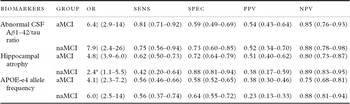
Predictive accuracy of AD biomarkers in subjects with aMCI and naMCI
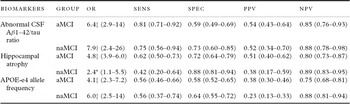
*p < 0.05, †p < 0.01, ‡p < 0.001. Results are presented with 95% confidence intervals. aMCI = amnestic mild cognitive impairment; naMCI = non-amnestic mild cognitive impairment; OR = odds ratio, sens = sensitivity, spec = specificity, PPV = positive predictive value, NPV = negative predictive value.
FC05.03
Biomarkers for prediction of Alzheimer-type dementia in subjects with amnestic versus non-amnestic mild cognitive impairment
Stephanie Vos, F Verhey, P Visser
Maastricht University, Maastricht, Netherlands
P Scheltens, W Van Der Flier
VU University Medical Center, Amsterdam, The Netherlands
H Soininen, Univ Eastern Finland, Kuopio, Finland
L Wahlund
H Hampel
M Tsolaki
L Minthon
G Frisoni, IRCCS Fatebenefratelli, Brescia, Italy
L Froelich, Central Institute of Mental Health, Mannheim, Germany
F Nobili, Clinical Neurophysiology, Genoa, Italy
K Blennow, Mölndal, Sweden
R Wolz, Imperial College London, London, United Kingdom
Introduction: Alzheimer's disease (AD) biomarkers are useful to predict AD-type dementia in subjects with amnestic mild cognitive impairment (aMCI). The predictive accuracy of these markers in subjects with non-amnestic MCI (naMCI) is unknown. The revised NINCDS-ADRDA criteria consider both aMCI and naMCI as prodromal stages of AD-type dementia. However, AD may present different in both MCI subtypes and as a result AD biomarkers may have a different predictive accuracy for AD-type dementia in aMCI and naMCI. Aim of the present study was to investigate the predictive accuracy of beta amyloid (Aβ)1–42, total tau, and the ratio of Aβ1–42 to total tau ratio in cerebrospinal fluid (CSF), hippocampal volume (HCV), and the apolipoprotein E (APOE) genotype for AD-type dementia in subjects with aMCI and subjects with naMCI. In addition, we tested demographic variables and cognitive measures as predictor for AD-type dementia.
Methods: We selected 346 subjects with aMCI and 192 subjects with naMCI from the DESCRIPA multicenter study and VU university medical center cohort. CSF Aβ1–42 and total tau were measured by commercially available sandwich ELISAs. Hippocampal volume on magnetic resonance imaging (MRI) was measured by an automated atlas based method (LEAP). CSF and MRI scores were dichotomized based on the cut-point that maximized the Youden index for the prediction of AD in a time-dependent ROC curve. General linear model was performed with correction for center. Outcome measure was progression to AD-type dementia in 2 years.
Results: 110 (32%) of the subjects with aMCI (age = 69.5 (SD 7.9), MMSE = 26.4 (2.6)) and 31 (16%) subjects with naMCI (age = 70.0 (7.3), MMSE = 27.5 (2.1)) converted to AD-type dementia after an average follow up of 1.6 years (SD 0.6). Subjects with aMCI who converted to AD-type dementia were younger (p < 0.05), had lower delayed recall scores (p < 0.001) and had lower levels of CSF Aβ1–42 (p < 0.01) compared to subject with naMCI who converted to AD-type dementia. The odds ratio of the CSF measures, hippocampal volume and APOE-e4 genotype for AD-type dementia was similar in subjects with aMCI and subjects with naMCI, with the CSF ratio of Aβ1–42 to total tau being the best predictor for progression to AD-type dementia in both MCI subgroups. However, the sensitivity, specificity, positive predictive value and negative predictive value of the biomarkers varied between MCI subgroups (see table).
Conclusions: AD biomarkers are useful to predict AD-type dementia both in subjects with aMCI and in subjects with naMCI. Differences in sensitivity, specificity, positive predictive value and negative predictive value between the MCI subgroups, however, suggest a different interpretation of biomarker results in each MCI group. This may have implications for clinical practice and AD trial design.
FC05.04
Quantitative EEG using the Statistical Pattern Recognition method to detect Alzheimer's disease
Knut EngedalNorwegian Centre for Ageing and Health, Oslo University Hospital, Oslo, Norway
A Oeksengaard Karoliska Institute, Stockholm, Sweden
N Ommundsen, M Barca, E Hoesteng
Oslo University Hospital, Oslo, Norway
B Fure
Background: About fifty percent of persons referred to a memory clinic have a dementia disorder, mainly due to Alzheimer's disease (AD). The remaining patients have either a diagnosis of mild cognitive impairment (MCI), or they have subjective cognitive impairment (SCI) that cannot be confirmed by neuropsychological tests. Some of them will previously have suffered a stroke and are concerned about cognitive decline they have experienced after stroke. A time- and cost consuming work-up is normally performed to separate the diseased from the non-diseased. Simple diagnostic methods with high diagnostic power are needed. EEG is a simple and none-invasive method (1, 2), but the use of EEG in the traditional way has not been found to be an accurate method in the dementia diagnostic assessment (2). However, recently a new method has been developed, the Statistical Pattern Recognition (SPR). This method has shown good diagnostic power in preclinical studies (3, 4), but no real life study with patients consecutively referred to dementia work-up have so far been published to test the method's validity.
Aim: The aim was to examine the diagnostic power of quantitative EEG by the use of the Statistical Pattern Recognition (SPR) method to detect Alzheimer's disease (AD) among persons referred to a memory clinic and to separate them from healthy elderly and stroke patients.
Methods: This is a prospective study of 183 persons. 137 were randomly selected among patients referred to a memory clinic, 27 patients without dementia that had suffered a stroke at least 6 months previous to this study and 19 were healthy elderly persons recruited from the community. Their mean age was 65.years (s.d. 10.4), 54% were men. A comprehensive dementia work-up was performed, including neuropsychology, blood tests, MRI or CT, SPECT and in some cases spinal fluid examination. The healthy elderly were only examined with neuropsychological tests. Diagnoses were made without knowledge of the EEG results. Dementia was diagnosed according to the ICD-10 research criteria, AD according to the NINCDS-ADRDA criteria, MCI according to the Winblad criteria (5) and lastly we used the diagnosis of SCI in persons with subjective cognitive complains, that could not be confirmed by neuropsychology.
Results: The clinical diagnostic work-up revealed that 36 persons were normal, 52 persons received the diagnosis of SCI, 49 MCI, 38 AD, 2 had frontotemporal lobe dementia and 6 dementia due to Parkinson's /Lewy body disease. According to the EEG measurement, 60 persons had normal qEEG, 58 persons received a qEEG diagnose of AD and 65 recording were inconclusive. Using the physicians’ clinical diagnosis as gold standard the sensitivity of the EEG method in detecting Alzheimer's disease was 70%, and the specificity was 86%, when we defined the 36 normal persons and the 52 persons with SCI as healthy subjects (n = 88). The results of the EEG measurement were significantly associated with the degree of medial temporal lobe atrophy (MTA) on MRI and the performance on all neuropsychological tests. In a multivariate regression analysis the Clock drawing test and the CERAD-10 words learning test best explained the EEG findings.
Conclusions: The qEEG using the SPR method is only fairly good at distinguishing AD patients from non-demented persons. Degree of cognitive impairment and MTA can influence significantly on the qEEG result, indicating that the diagnostic power of the qEEG SPR method might increase with increasing severity of AD.
References:
1. Gudmundsson S, Runarsson TP, Sigurdsson S, Eiriksdottir G, Johnsen K: Reliability of quantitative EEG features. Clin neurophysiol 2007;118:2162–71. 2. Jelic V, Kowalski J: Evidence-Based Evaluation of Diagnostic Accuracy of Resting EEG in Dementia and Mild Cognitive Impairment. Clinical EEG and Neuroscience 2009;40:129–142
3. Snaedal J, Johannesson GH, Gudmundsson ThE, Padjak TH, Johnsen K: The use of EEG in Alzheimer's disease, with and without scopolamine – A pilot study. Clin Neurophysiol 2010;121: 836–841
4. Ommundsen N, Engedal K, Oeksengaard AR. The Validity of the Quantitative EEG Statistical Pattern Recognition Method in Diagnosing Alzheimer's Disease. Dement Geriatr Cogn Disorder, 2011, in press
5. Winblad B, Palmer K, Kivipelto M, Jelic V, Fratiglioni L, Wahlund LO et al: Mild Cognitive impairment – beyond controversies, towards a consensus: report of the International Working Group on Mild Cognitive Impairment. Journal of Internal Medicine 2004; 256:240–246
FC05.05
The role of lipoproteins and inflammation in cognitive decline: Do they interact?
Tessa N. van den Kommer, D.J.H. Deeg, Departments of Epidemiology and Biostatistics, VU University Medical Center, Amsterdam, The Netherlands
M G Dik, Department of Nursing Home Medicine, VU University Medical Center, Amsterdam, The Netherlands
H C Comijs, Department of Psychiatry and the EMGO Institute for Health and Care Research, VU University Medical Center, Amsterdam, the Netherlands and GGZinGeest partner of VUmc, Amsterdam, the Netherlands
C. Jonker, Department of Psychiatry and the EMGO Institute for Health and Care Research, VU University Medical Center, Amsterdam, the Netherlands
Objective: High levels of low-density lipoprotein (LDL) cholesterol, low levels of high-density lipoprotein (HDL) cholesterol, both major transport lipoproteins of cholesterol, as well as high triglycerides have been shown to be independently associated with cardiovascular disease, which in turn is a well known risk factor of cognitive impairment and dementia. However, evidence of a direct association between lipoproteins and cognitive decline is inconsistent and mechanisms are still far from clear. Differences in sample characteristics (late-life versus midlife, outcome measure, baseline cognition) and adjustment for possible mediating or modifying factors could explain these inconsistencies. Inflammatory markers have been shown to be strongly associated with cardiovascular disease and may play a role in the development of cognitive decline and dementia. We hypothesise that inflammation plays a modifying role with respect to the association between lipoproteins, lipids and cognition. In the present study we examined the associations between HDL cholesterol, LDL cholesterol, triglycerides and the trajectory of cognitive functioning and focused on the modifying effect of inflammatory markers C-reactive protein (CRP), Interleukin-6 (IL-6), α1-antichymotrypsin (ACT) on these associations.
Methods: Data were used from the ongoing population-based Longitudinal Aging Study Amsterdam. The study sample comprised participants of whom a blood sample was available at baseline, who were not using lipid-lowering drugs at the time of blood sampling and with cognitive data on at least 2 occasions over 6 years of follow-up, which resulted in a final sample of 1,003 persons aged ≥ 65 years. Cognition was measured with the Mini-Mental State Examination (general cognitive functioning), Auditory Verbal Learning Test (memory) and Coding Task (information processing speed). Serum HDL cholesterol and triglycerides were measured with a Hitachi 747 analyzer (VUmc) using enzymatic colorimetric tests (Roche diagnostics, Mannheim, Germany). LDL cholesterol was calculated using the Friedewald formula (total cholesterol – HDL cholesterol – (0.456 *total triglyceride concentration)). Serum levels of ACT, CRP, and IL-6 were determined using sensitive regular immunoassays (ELISA) developed and performed at Sanquin Research, Amsterdam, the Netherlands. Data were analysed by means of linear mixed models in SPSS for Windows, version 15. First, trajectories of cognitive functioning were modelled as a function of time. Second, the presence of a non-linear association was studied by adding the main predictors and their quadratic term to each model in separate analyses. Age, education, sex, life-style factors i.e. alcohol use, relevant diseases i.e. cardiovascular diseases, medication use and ApoE e4 phenotype were all considered as potential confounders. Effect modification by the inflammatory markers was tested in the fully adjusted models by adding product terms.
Results: We found an independent association between lower HDL cholesterol and worse memory performance. In addition, lower LDL cholesterol was predictive of worse general cognitive performance and faster decline on information processing speed. Further analysis showed that this association lost significance in levels above the median of LDL cholesterol. Furthermore, a significant modifying effect of inflammation (CRP, ACT) was found. A negative additive effect of low LDL cholesterol and high inflammation was found on general cognitive functioning and memory performance. Also, high triglycerides were associated with lower memory performance in those with high inflammation.
Conclusion: The present findings implicate that a combination of low LDL cholesterol and high inflammation as well as high triglycerides and high levels of inflammation may be used as markers predictive of prolonged lower cognitive functioning.
FC06.01
Suffering in dementia and the request for euthanasia/assisted suicide in patients with dementia: Never allowed or the ultimate act of autonomy?
Martin Smalbrugge, C Hertogh
VU Medical Center, Amsterdam, Netherlands
J Legemaate
I De Beaufort
J Hughes, Institute for Ageing and Health, Newcastle University, North Shields, Tyne And Wear, United Kingdom
Background: In the Netherlands euthanasia and assisted suicide have been allowed since the 1980's on the basis of case law and jurisprudence. With the introduction of the euthanasia law in 2002 the legislator not only recognised this practice, but also extended the rules for legal euthanasia/assisted suicide from competent patients to incompetent patients, provided that an advance directive for euthanasia is present. Through this extension, although not based on prior jurisprudence, the legislator created a formal possibility for physician assisted death in cases of (advanced) dementia. However, legalization did not end the debate on euthanasia in Dutch society. On the contrary, the debate continued, focussing especially on the delicate subject of euthanasia and assisted suicide in patients suffering from dementia. Many seniors in our country fear the prospect of becoming demented and welcome the law based opportunities for physician assisted death. Nonetheless: the number of (granted) requests for physician assisted death from patients with early stage dementia remains low, while euthanasia in patients with advanced dementia on the basis of an advance directive for euthanasia is not performed at all, despite the possibilities offered by the law. What are the reasons behind the discrepancies between law-based opportunities and actual practice? What is - or should be - our position when we are confronted with an oral or written request on such a delicate subject? These are the questions that will be adressed in this symposium.
Objective: The objective of the session is: - to inform about the concepts of euthanasia and assisted suicide, the legal rules and the due care criteria - to outline the complex moral dilemmas the question of physician assisted death raises in patients with early and advanced dementia respectively - to depict the arguments pro and contra euthanasia and assisted suicide in patients with dementia - to stimulate a discussion among audience and presenters about the topic of euthanasia and assisted suicide in patients with dementia
Outline of the session:
1. fragments of a television documentary on suffering from dementia and the request for euthanasia The session will start with (fragments of) a recent Dutch television documentary on the issue, filmed from the point of view of the person with dementia and his/her proxies. In the documentary a patient with a frontotemporal dementia and his family is followed during the dementia-process. The suffering of the patient and the dilemmas, raised by the request for euthanasia by the patient, both for relatives and for the physicians are clearly made tangible in this documentary. In the documentary, euthanasia is eventually is not a feasible option for the patient and his physician.
2. Euthanasia and assisted suicide: concepts, legal rules and due care criteria Johan Legemaate, professor of health law at the University of Amsterdam, will outline the concepts of euthanasia and assisted suicide and the legal rules on euthanasia and assisted suicide in the Netherlands, including the due care criteria physicians have to follow when they consider compliance with a request for physician assisted death. Attention will also be paid to the legal problems regarding competency when patients suffering from dementia request for euthanasia.
3. Moral dilemmas with regard to requests for physician assisted death in patients with early and advanced dementia respectively. Cees Hertogh, professor of geriatric ethics at the VU University Medical Center in Amsterdam, will focus on the moral dilemmas that physicians encounter when they are confronted with a request for physician assisted death in cases of dementia. He will elaborate on the situation of early and advanced dementia respectively and sketch distinguishing and morally relevant features between these situations. He will also go into the roles of relatives.
4. Arguments pro and contra euthanasia and assisted suicide in dementia. Julian Hughes, honorary clinical professor at the Institute for Ageing and Health of Newcastle University in the United Kingdom, will present the arguments contra euthanasia and assisted suicide in dementia. Inez de Beaufort, professor of health care ethics at the Erasmus Medical Center in Rotterdam, will present the arguments pro euthanasia and assisted suicide in dementia. Both presenters will argue from the perspective of the patient as well as from the perspective and responsibility of the professional/physician.
5. Discussion: Euthanasia and assisted suicide in dementia: never allowed or an ultimate act of autonomy? The symposium ends with a discussion about the topic among presenters and attendees, moderated by professor Cees Hertogh.
FC07.01
Willful neglect and ill-treatment under the Mental Capacity Act 2005: Identifying thresholds and safeguarding pathways
Kritika Samsi, J Manthorpe
King's College London, London, United Kingdom
Criminalizing ill-treatment or willful neglect of people with dementia is a new approach to improving care and treatment in England and Wales or, at least, providing elements of protection, prevention and justice. New legislation was introduced by the Mental Capacity Act (MCA) 2005 (implemented 2007). Court decisions are emerging following prosecutions. This new legal framework has important implications for professionals working with people with dementia and carers. They may be prosecuted for actions or inactions that might have gone unnoticed or might have been categorised as poor practice. The Act applies to all those with care of a person lacking capacity; thus there is potential that family carers may also be prosecuted and, if convicted, imprisoned or fined. Finally, and importantly, the law clarifies that people with dementia have rights not to be ill-treated or neglected by anyone responsible for their care and treatment. The study on which this paper draws forms part of a 5-year programme of translational research (Evidem). Its focus is on the MCA and safeguarding people with dementia from abuse and mistreatment. Interviews (n = 115) focusing on professionals’ experiences, expectations, training and knowledge of the Act. have been conducted. Participants covered a range of services for people with dementia, including psychiatrists, nurses, social workers and Alzheimer's Society staff. Questions explored specific problems with legal understandings. Follow up interviews a year later sought examples of the Act in practice and any emerging issues. Interviews were recorded and transcribed. Framework Analysis was applied to the data and the interview topic guide served as the basis for identifying key emergent themes. Consistent themes were identified through rigorous analysis of transcripts and a coding framework was iteratively developed. Overall, findings from these interviews revealed that understanding of the MCA was patchy across all groups of professionals. A significant gap in understanding amongst practitioners was around the new criminal offences of wilful neglect and ill-treatment, introduced under Section 44 of the MCA. Greater clarity around specifics of these offences (i.e. what constitutes ‘wilful’?) would have been welcomed. This included specifying the thresholds of a punishable offence, and the safeguarding procedures to follow once a possible offence has been identified. Some participants felt unsure about the kind of advice they could give people with dementia and carers with regards to safeguarding in the community. A general lack of confidence with implementing the Act was also confessed by a large proportion of participants. This paper also reports the setting up of a nominal group of 15 experts in the field met in 2011 to debate these findings and to inform the development of easy-to-use materials to fill gaps identified by professionals around definitions, thresholds and professional responsibilities. This work, under the banner, “It's a Crime”, is being tailored to different professional groups and settings. Key stakeholders include the Police and national policy makers, as well as the Alzheimer's Society, who have key roles in communicating new provisions to people with dementia and their carers. Lessons for other legal systems are identified in this paper.
FC07.02
The expectation and experience of the diagnosis of dementia: Lessons from patients and families
Maree Mastwyk,Caulfield Hospital, Caulfield South, Victoria, Australia
Overview: The expectation and experience of the diagnosis of dementia: Lessons from patients and their families.
Objectives: To explore the expectations of the patient and family in attending a memory clinic. In particular, do the patient and family expect, in all instances, to be told of the diagnosis? To ascertain what information is understood by the patient and carer at the feedback session, pinpointing aspects of the feedback session that were of value, locate areas of the presentation that could be improved and perhaps identify information that is not provided but could be of value.
Sample: The sample was drawn from attendees at two Melbourne Memory Clinics and private patients of two associates of the National Ageing Research Institute (NARI). Methodology: The study was designed using psychological adjustment theory. It consisted of four parts. Phase I consisted of 2 questionnaires, one for the patient and one for the next-of-kin to complete, asking about their wants and expectations of their appointment at the memory clinic. These questionnaires were dispatched with a reply paid envelope before the appointment occurred to eliminate bias, voluntary return being indicative of consent. Phase II consisted of an interview with the patient and next-of-kin at the treatment review visit. Questions related to their recall of the ‘feedback’ session, their understanding of a diagnosis of dementia and the best way to impart the diagnosis. An interview guide was prepared and questions were directed firstly to the patient and secondly to the next of kin. Phase III consisted of a second interview which commenced with a recap of the first. Patient and next of kin were asked if they had changed their minds about anything they had said the first time and if they had anything to add. For Phase IV, a focus group of specialists in the diagnosis of memory disorders was conducted. Pertinent results from phases I and II were presented for discussion.
Results: Phase I demonstrated that 84% of patients expected to be told of their diagnosis and 90% wanted to be told. Their reasons for this were: to make plans/put affairs in order, to receive treatment, to get help/learn strategies to cope, “It's my right to know/I want to know the truth”. Of the next of kin, 88% expected the diagnosis to be told to the patient and 88% wanted the patient to be told of the diagnosis. Their reasons were similar: in order to make plans, to receive treatment, to develop strategies to cope and ‘it's the patient's right to know’. Phase II: 94% of patients were given their diagnosis by their consultant. Nineteen percent of patients remembered their diagnosis, 19% recalled discussion of the MRI or CT scan and 31% recalled discussion of medication/medication to delay progress. Of the next of kin, 59% remembered the diagnosis, 75% recalled discussion of medication/medication to delay progress and 56% recalled discussion of the MRI/CT/pathophysiology. Seventy percent of patients thought the best way to present a diagnosis of dementia was to use a direct/straight forward approach, 11% thought a straight forward but sensitive approach was required. Seventy five per cent of next of kin thought the diagnosis should be presented in a straight forward fashion. Following a recap of this interview in Phase III, none of the respondents wanted to alter anything they had said. During the Phase IV specialist focus group, discussion was concerned with current practice and retention of information from the feedback session. Techniques suggested were to ask the patient and carer to paraphrase the content of the consultation.
Conclusions: The patient and their next of kin seek accurate information in order to plan their futures and manage their affairs and lifestyle even before a definitive diagnosis has been made. Gathering information, finding solutions for problems, planning and looking for support from the community are healthy strategies used by the individual to maintain self-esteem during the process of adaptation to a chronic illness. These strategies form the basic steps of psychological adjustment theory.
FC07.03
The Rise and Organization of Case Management Dementia in the Netherlands
José Peeters, A Francke, NIVEL, Utrecht, The Netherlands
A Pot, Netherlands Institute of Mental Health and Addiction, Trimbos-institute, Utrecht, The Netherlands
Introduction: In the Netherlands there are currently about 200.000 people with dementia and this number will increase significantly in the future. Relatives play an important role in the care for these people. These informal caregivers are often burdened and miscommunication between caregivers is rather common. The “case manager dementia” can play an important role as a trustee for both client and caregiver. In addition, the case manager can inform them about dementia, the available care supply, can coordinate the dementia care and will provide social and emotional support. So, case management does not only content coordination of the care, but also diagnostics, treatment and support.
Methods and Materials: In December 2010, all managers (N = 74) of regional Dementia Care Networks in the Netherlands received an invitation to fill in an online questionnaire. 56 Managers have completed the questionnaire (netto response rate 77%). The questionnaire consisted of 22 items regarding the organization and incorporation of case management in the region, funding of case management, the number and type of clients and informal carers receiving case management, the caseload and the tasks of the case managers.
Results: This study shows that case management dementia has undergone tremendous development in the Netherlands. In 2011in 74 regions case management is organized. In most regions it started in 2009/2010. Case management is in three-quarters of the regions (76%) formally embedded in a comprehensive regional supply of care and welfare services for people with dementia and their caregivers. In most regions, case management is an autonomous function (70%), while sometimes case management is combined with other roles, such as the role of practice nurse in a practice of a GP (18%). There are also some regions with a combination of both forms (12%). There is a rather large variation in the way case management is organized and filled in. Case management often starts when there is a suspicion of dementia (52%) or from formal diagnosis (27%) and ends immediately (18%) or about six weeks after admission to a nursing home or the death of the person with dementia (80%). Case managers have various tasks: providing information to individual clients, practical support to clients and carers, diagnostics and multidisciplinary consultation are the main responsibilities of case managers. Funding of case management also varies between regions, and is often provided by a combination of temporary and structural funding sources. Although at the moment almost in all regions in the Netherlands case management is offered, a future increase within regions of the case management supply is still needed. Taking into account the number of persons with dementia, an estimated total of about 1.170 FTE case managers dementia is needed in the Netherlands. This survey showed that about one quarter (273 FTE) is available at the moment.
Conclusions: To further promote and implement case management structural funding is important. In addition, development of quality criteria for “case management” is needed. Such criteria may improve the chance that persons with dementia and their informal caregivers receive good support of a case manager, despite current variations in the organization and content of case management.
FC07.04
Safeguarding older adults: A focus on safeguarding systems to protect older people from abuse and neglect
Susan Mary Benbow, P Kingston
Staffordshire University, Stafford, Staffordshire, United Kingdom
G Swanwick, HSE & AMNCH, Dublin 24, Ireland
L Mitchell, University of Queensland, Springwood, Queensland, Australia
C Cohen, Toronto, Ontario, Canada
O Baiyewu, University of Ibadan, College of Medicine, Ibadan, Nigeria
Background: The IPA has a Service Delivery Task Force which has is co-chaired by Greg Swanwick and Susan Mary Benbow. The Task Force has two main aims: • To share models of service delivery from around the world • To learn from the experience of colleagues in other countries about which models of service delivery have worked well. In the United Kingdom the safeguarding of vulnerable adults was highlighted by the publication of the Rowan Report in 2003. The Rowan report followed an investigation into allegations of abuse on a long term care ward for older people with mental health problems. The investigation identified as important factors which were similar to those identified in other Inquiries which took place before the Rowan Inquiry – and are similar to those identified in inquiries which have taken place since that time. The response to the Rowan Report attracted political attention and considerable publicity. An audit of older people's mental health wards was carried out to try to identify ‘at risk’ services and intervene. Two national documents were produced which had useful information in, but which have become largely invisible: CSIP (2005) published Moving on: Key Learning from Rowan (available at: http://psychminded.co.uk/news/news2005/july05/movingon.pdf accessed 4th March, 2011) and the Faculty of Old Age Psychiatry (Royal College of Psychiatrists) published The Rowan Report implications and advice: guidance note for members (available at: http://www.rcpsych.ac.uk/pdf/Rowan.pdf accessed 4th March, 2011) which, although aimed at old age psychiatrists, contains equally useful advice for other professionals. Since then there have been further incidents, inquiries and investigations in other areas of care. The Francis Inquiry (available at: http://www.dh.gov.uk/en/Publicationsandstatistics/Publications/PublicationsPolicyAndGuidance/DH_113018 accessed 4th March, 2011) was published in February 2010 as two volumes totalling over 800 pages and containing 18 broad recommendations - these are relevant to all services in the United Kingdom providing care for frail and physically ill older adults whether in a physical healthcare, mental healthcare or community setting. The problems highlighted in the Report are fundamental to the care of vulnerable older adults, particularly those who have cognitive impairment, and unlikely to be peculiar or unique to the hospital (or healthcare system) investigated. It is important that we all learn from each other if vulnerable older adults are to be safeguarded in the future. There are potential benefits in sharing experiences and learning in a wider health and social care community through the IPA, and that underlies this symposium programme. Overview This symposium has been organised by the Service Delivery Task Force. It will involve colleagues from different countries presenting briefly on the system for safeguarding in their country. Through a series of short presentations people from different countries will share a snapshot of their system for safeguarding vulnerable adults with the aim of sharing information about their system, how far it protects older adults, particularly those with dementia, from abuse and neglect, and how the Task Force might work through the IPA to enhance the protection of vulnerable older adults. There are confirmed participants from Africa, Australasia, North America and the United Kingdom. Summary The discussion will address how to take work further through the IPA. Three areas will be highlighted: 1. how we share learning across Task Force members and across the IPA 2. how we could act through the IPA to further the protection of vulnerable older adults 3. how we could link in with existing IPA initiative in order to support the protection of vulnerable older adults eg with the Capacity Task Force and/or the Nursing Home Task Force.
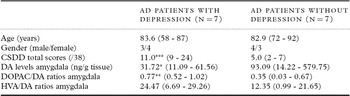
Data are presented as median with minimum-maximum ranges between brackets. Significant differences are indicated with an asterisk (*p < 0.05; **p < 0.005; ***p < 0.001). For comparison of male-female ratios, Chi-Square statistics were used. Abbreviations: AD = Alzheimer's disease; CSDD = Cornell Scale for Depression in Dementia; DA = dopamine; DOPAC = 3,4-dihydroxyphenylacetic acid; HVA = homovanillic acid.
FC08.01
Monoaminergic characterization of depression in amygdala and hippocampus of patients with Alzheimer's disease
Yannick Vermeiren, T Aerts, K De Winter, T Goudman, P De Deyn
University of Antwerp, Wilrijk, Antwerp, Belgium
D Van Dam, University of Antwerp, Institute Born-Bunge, Wilrijk, Belgium
S Engelborghs Antwerp, Belgium
Introduction: Alzheimer's disease (AD) is the most common form of dementia and is characterized by numerous behavioral disturbances, generally classified as Behavioral and Psychological Signs and Symptoms of Dementia (BPSD). BPSD are clustered into seven main subtypes: paranoid and delusional ideation, hallucinations, activity disturbances, aggressiveness, diurnal rhythm disturbances, affective disturbances and anxieties. Depression coexists with AD with a prevalence ranging from 20 up to 50%. More specifically, depression can accelerate disease progression and has even been associated with mortality in AD. Literature provides evidence for structural and neuropathological changes in amygdala and hippocampus of depressed AD subjects compared to nondepressed AD patients, but neurochemical correlates of depression in AD remain unclear. This pilot study therefore included 14 neuropathologically confirmed and behaviorally rated AD patients with (n = 7) or without (n = 7) depression to neurochemically characterize depression in amygdala and hippocampus. Moreover, a wide range of BPSD besides depression was linked to the neurochemical dataset of these two strategic brain regions as well.
Methods: Neuropathologically confirmed AD patients with depression (total Cornell Scale for Depression in Dementia (CSDD)-score ≥8 (n = 7)) and 7 nondepressed AD subjects (CSDD-score)
Results: In the amygdala, DA levels were significantly lower in the depressed AD group compared to their nondepressed counterparts (p = 0.017) (Table 1). Furthermore, DOPAC/DA ratios, representing dopaminergic catabolism, were significantly higher in depressed compared to nondepressed AD patients (p = 0.001) (Figure 1). HVA/DA ratios tended to be higher in the depressed AD group in comparison with the nondepressed group, although statistical significance was not achieved (p = 0.053) (Table 1). In contrast, neurochemical analyses of the hippocampus did not show statistically significant differences in levels of biogenic amines or metabolites. In addition, several interesting behavioral correlations with our neurochemical data were observed in amygdala and hippocampus of the total AD group. DA concentrations in the amygdala were negatively correlated with CSDD total scores (p = 0.003; r = −0.728; n = 14). Accordingly, DOPAC/DA ratios correlated positively with CSDD total scores as well (p = 0.000007; r = +0.909; n = 14). Finally, NE concentrations in the hippocampus were negatively correlated with sleep disturbances (Behave-AD cluster E) (p = 0.001; r = −0.782; n = 14).
Discussion: These preliminary results suggest that altered dopaminergic neurotransmission in amygdala may be associated with the etiology of depression in AD. Neuropathological research as well as volumetric studies provide evidence for structural changes in amygdala to be involved with affective disturbances in AD subjects, whilst neurochemical research is rather scarce and mainly focuses on noradrenergic- and serotonergic-related neurotransmission. However, corresponding to our preliminary data, dopaminergic neurotransmission may be involved as well. Similarly, genetic association studies already indicated dopaminergic gene pathways and -receptors to be associated with mood disorders in AD. Moreover, changes in dopaminergic neurotransmission in discrete areas of the mesolimbic system have been associated with apathy in AD, and pharmacological treatment with dopamine-enhancing agents has proven beneficial for depression in AD. These results are awaiting confirmation in an extended study population in which not only amygdala but also other parts of the limbic system and cortex will be neurochemically analyzed and associated with depression in AD.
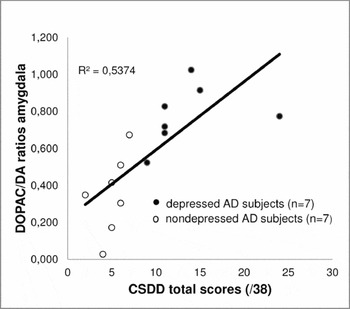
FC08.02
THE interplay of atherosclerotic disease and neuroticism in late life-depression
Radboud Marijnissen,Arnhem, Gelderland, The Netherlands
B Bus, S Holewijn, J De Graaf
Radboud University Medical Centre, Nijmegen, The Netherlands
B Franke, Nijmegen, The Netherlands
R Oude Voshaar, University Medical Center Groningen, Groningen, The Netherlands
Background: Neuroticism and cardiovascular disease are both major vulnerability factors in late-life depression, but have hardly been examined in relation to each other. Recently, we demonstrated a significant association between subclinical atherosclerotic disease (as indexed by the Intima Media thickness of the carotid artery) and depressive symptoms (Bus et al., Psychol Med 2010). Different hypotheses can be made how subclinical atherosclerotic disease interact with the level of neuroticism in explaining the severity of depressive symptoms.First, both risk factor act independent of each other. Secondly, the presence of both vulnerabilities interact with each other increasing the risk more than both the additive effect of both risks independently (positive interaction). A third, but more speculative hypothesis, might be a negative interaction between high neuroticism and a higher prevalence of cardiovascular disease, as recently found by our group among very old community-dwelling elderly aged 70 years and over (Wouts et al., 2010).In addition to chance finding, we also hypothesized that this finding could be explained by apathy due to cerebrovascular disease whichin turn decreases the effect of neuroticism on depression.
Objective: The objective of the present study was to examine the interplay between subclinical atherosclerotic disease and neuroticism in late-life depression and whether these two factors indeed interact in explaining depressive symptoms in a population aged 50 through 70 years. We hypothesise to find a negative interaction that might be explained by apathy.If so, subsequent analyses will be conducted on the different symptom clusters of depression. If a negative interaction can indeed be explained by apathy, we expect to find only a negative interaction between neuroticism and the IMT in explaining the cognitive-affective symptoms of depression, but not the somatic-affective symptoms.
Method: This study was part of the Nijmegen Biomedical Study (NBS), a population based survey, including 1261 participants aged 50 through 70. Depressive symptoms were measured by the Beck Depression Inventory (BDI). Principal components analysis of the BDI-items yielded two factors, representing a cognitive-affective symptom cluster and a somatic-affective symptom cluster (see Marijnissen et al, JAGS 2010). Atherosclerotic disease was measured by the Intima Media Thickness of the carotid arteries(IMT). Neuroticism was measured by using the Dutch version of the revised Eysenck Personality Questionnaire (EPQ-RSS). Multiple linear regression analyses of IMT and neuroticism and their interaction were regressed on different measures of depressive symptoms, adjusted for potential confounders (age, sex, somatic comorbidity).
Results: Neuroticism was strongly associated with the sum score of the BDI as well as with the two depressive symptom clusters (all p-values < .040). However, the IMT was only associated with the somatic-affective symptom cluster (p = .001), but not the cognitive-affective symptom cluster (p = .44). Interestingly, we indeed found a negative interaction between neuroticism and IMT in explaining the severity of the cognitive-affective symptom cluster (Beta = −.41, p = . 007), but not with respect to the somatic-affective symptoms.
Conclusion: Neuroticism is strongly associated with depressive symptoms, both cognitive-affective and somatic-affective symptoms, whereas the association of subclinical atherosclerosis is driven by the somatic affective symptom cluster. Nevertheless, we found a negative interaction between neuroticism and atherosclerosis in explaining the cognitive-affective symptoms of depression, in line with our hypothesis, which means that the effect of neuroticism as explanation for depressive symptoms diminish in case of more severe atherosclerosis. These results support our hypothesis that the cerebrovascular disease may cause apathy which in turn decreases the effect of neuroticism on depression.
References: Wouts L, Janzing JG, Lampe IK, Franke B, de Vegt F, TendolkarIk van Iersel MB, Buitelaar JK, Oude Voshaar RC. The interaction etween cerebrovascular disease and neuroticism in late-life depression: a cross-sectional study. Int J Geriatr Psychiatry 2010 (July 30) (PMID 20677172). Bus BA, Marijnissen RM, Holewijn S, Franke B, Purandare N, de Graaf J, den Heijer M, Buitelaar JK, Oude Voshaar RC. Depressive symptom clusters are differentially associated with atherosclerotic disease.Psychol Med 2010 (Dec 10:1–10) (PMID 21144110). Marijnissen RM, Bus BA, Holewijn S, Franke B, Purandare N, de Graaf J, den Heijer M, Buitelaar JK, Oude Voshaar RC, Depressive symptom clusters are differentially associated with general and visceral obesity. J Am GeriatrSoc 2011;59:67–72.
FC08.03
White matter hyperintensities and cognitive impairment during electroconvulsive therapy in severely depressed elderly patients
Mardien Oudega, MSc, MD, Eric van Exel, MD, PhD, Hannie C. Comijs, PhD, Aartjan T.F. Beekman, MD, PhD, M. L. Stek, MD, PhD
VUMC/GGZinGeest, Amsterdam, The Netherlands
Mike P. Wattjes, MD, Philip Scheltens, MD, PhD, Frederik Barkhof, MD, PhD,
Department of Radiology, VU University Medical Center, Amsterdam, The Netherlands
Piet Eikelenboom, MD, PhD, Department of Psychiatry, VU University Medical Center, Amsterdam, The Netherlands, GGZinGeest, Amsterdam, The Netherlands, Department of Neurology, Academic Medical Center, Amsterdam, The Netherlands
Anton J.M. de Craen, PhD, Department of Gerontology and Geriatrics, Leiden University Medical Center, Leiden, The Netherlands
Background: Electroconvulsive therapy is an effective and relatively safe treatment option in severely depressed elderly. Despite remission rates of around 70% in patients above 60 years old, the emergence of cognitive impairment during ECT may specifically limit the use of ECT in depressed elderly, as aging and cognitive impairment are interdependent variables. Frail elderly may experience more pronounced cognitive impairment during an ECT course, but research on this topic is sparse. Therefore we studied, in a naturalistic cohort, the possible contribution of structural brain abnormalities in cognitive impairment during ECT. We hypothesized that both medial temporal lobe atrophy and white matter hyperintensities contribute to cognitive impairment during ECT. We also determined if the effect of these structural brain abnormalities on cognitive impairment during ECT was irrespective of clinical improvement.
Methods: In 81 elderly patients with depression, magnetic resonance images (MRI) were recorded before ECT. White Matter Hyperintensities (WMH) were rated with the Age-Related White Matter Changes scale (ARWMC). In addition, we rated Medial Temporal Lobe Atrophy (MTA) and Global Cortical Atrophy (GCA). Cognitive impairment during ECT was measured weekly with the Mini Mental State Examination (MMSE) and depression was rated with the Montgomery-Åsberg Depression Rating Scales (MADRS). Both MMSE and MADRS were completed by the same research nurse for all patients 5 days or less before starting ECT, 2 days after each weekly ECT treatment and one week after the final ECT session. Linear Regression was used to quantify the hypothesized associations between structural brain abnormalities and mean MMSE scores taken during and on ECT completion.
Results: The mean MMSE score at baseline for all patients was 25.5 points, the lowest MMSE score during ECT was 23.3 points and the mean MMSE score after ECT was 26.3 points. The lowest MMSE score during ECT was 20.7 points in patients with WMH and 24.0 points in patients without WMH (p = 0.01). Stratification for ECT treatment method showed no significant difference in the lowest MMSE scores of patients with or without WMH, receiving unilateral ECT (22.5 points vs. 23.9 points, p = 0.58). There was a difference in the lowest MMSE scores in patients who switched from unilateral ECT to bilateral ECT (18.7 points in patients with WMH vs. 22.0 points in patients without WMH, p = 0.046). This group also showed the largest decline in MMSE score (26 points at baseline to 18.7 points during ECT). In contrast, no significant association was found between cognitive impairment during ECT and MTA or GCA. All these associations were independent of clinical improvement due to ECT.
Conclusions: Our results showed a significant association between lowest mean MMSE score during ECT treatment and moderate or severe WMH in patients who switched from unilateral treatment to bilateral ECT. When continuing ECT this association disappeared and MMSE scores improved. No associations were found between MTA or GCA and MMSE scores during or after ECT treatment. This implicates that ECT does not have to be discontinued when patients experience transient cognitive impairment during ECT. Furthermore, in the case of patients with WMH who need to be switched to bilateral ECT, it may well be possible to better prepare the patients and their relatives to cope with transient cognitive impairment.
FC08.04
A randomized placebo controlled discontinuation of antidepressants in persons with dementia – the DESEP study
Sverre Bergh,Innlandet Hospital Trust, Ottestad, Norway
G Selbaek, Centre for Old Age Psychiatry Research, Innlandet Hospital Trust, Ottestad, Norway
K Engedal, Norwegian Centre for Ageing and Health, Oslo University hospital, Oslo, Norway
Background: Depressive symptoms are common in dementia; approximately 20% of patients with dementia have depressive symptoms. The depressive symptoms are fluctuating, and usually they don't persist for more than 12–18 months. Nevertheless up to 40% of patients in Norwegian nursing homes are prescribed antidepressants at regular basis and for a long period of time. The aim of our study was to study the effect of antidepressants discontinuation on depressive symptoms, agitation and side-effects in patients with dementia living in Norwegian nursing homes.
Method: 128 residents from 52 nursing homes in Norway were included in a randomised placebo-controlled discontinuation trial over 25 weeks. Inclusion criteria were dementia of Alzheimer, Vascular or mixed Alzheimer/Vascular type, minimum three months prescription of escitalopram, citalopram, paroxetin or sertraline, Clinical Dementia Rating (CDR) ≥1 and a minimum length of stay in the nursing home of three month. Exclusion criteria were clinical history of depression or schizophrenia, severe somatic disease or terminal illness and not able to take tablets/capsules as prescribed. All patients were assessed at baseline and after 4, 7, 13 and 25 weeks with the Cornell Scale of Depression in Dementia, the Neuropsychiatric Inventory (NPI) and a six item version of the Unified Parkinson Disease Rating Scale. In addition the patients were assessed with the Severe Impairment Battery, the Quality of Life-Alzheimer Disease and the Lawton and Brodaty Activity of Daily Living Scale at baseline and after 25 weeks. Statistics: All 128 patients were included in the analysis of the baseline characteristics, analysed with independent student's t-test for parametric data, Mann-Whitney-U test for non-parametric data and Chi-square statistics for categorical data. We did an Intention-to-treat analysis, and 118 patients with ≥2 assessments were included in the analysis. The two study groups were compared with independent student's t-test for the difference between baseline and 25 weeks for all three primary outcomes, Cornell, NPI and UPDRS. The analyses are done with the two groups still blinded to what group that were prescribed placebo.
Results: At baseline the two study groups did not differ in terms of sex, age, CDR-score, dementia diagnosis, Cornell-score or NPI score. Group C had a mean Cornell score at baseline of 5.10 (SD = 4.14), increasing to 7.76 (SD 5.38), n = 57, after 25 weeks, while group D had a mean Cornell score at baseline of 5.89 (SD 4.62), decreasing to 5.40 (SD 4.59), n = 58, after 25 weeks, p = 0.009. Difference in Cornell score between baseline and 25 weeks were 2. 53 (SD 5.61) n = 57 for group C and − 0.43 (SD 3.61) n = 58 for group D significantly, p-value = 0.001. The difference between baseline and 25 weeks for NPI affective subsyndrom (NPI anxiety + NPI depression) in group C and D were 1.59 (SD 6.23) n = 59 and - 0.69 (SD4.62) n = 58 respectively, p-value = 0.026. The difference in UPDRS between baseline and week 25 were not significantly different (p = 0.392) between the groups.
Conclusion: After 25 weeks, there is a statistical significant difference between the two groups, where group C had increased depressive symptoms and group D had a small decrease in their depressive symptoms.
FC08.05
White matter changes in dementia with Lewy bodies: A diffusion tensor imaging study
Rosie Watson, J. O'Brien
Newcastle University, Newcastle Upon Tyne, Tyne And Wear, United Kingdom
A Blamire, Newcastle Upon Tyne, United Kingdom
R Barber, Institute for Ageing and Health, Newcastle University, Newcastle, United Kingdom
J Wood
Overview: Dementia with Lewy bodies (DLB) is a common form of neurodegenerative dementia. However, diagnosis can be difficult and many cases are missed during life. To aid in a better understanding of the disease process, it is important to investigate pathophysiological mechanisms of the disease which may also help to identify potential biomarkers. Diffusion imaging can provide detail on the tissue microstructure via measurements of anisotropy of water movements which include the fractional anisotropy (FA) and mean diffusivity (MD). In brain tissue, anisotropy is defined by the integrity of the white matter tracts with disruption, damage or degeneration of the tracts expected to cause reduction in FA. Microstructural changes can therefore potentially be detected by alterations in these measures and help provide insight into white matter degeneration in DLB compared with normal ageing and other dementias. Using diffusion tensor imaging (DTI) - MRI we investigated the differences in the tissue integrity in white matter tracts in DLB (n = 35, mean age = 78.4, MMSE = 20.3), AD (n = 36, mean age = 78.3, MMSE = 19.5) and similar aged controls (n = 35, mean age = 76.7, MMSE = 29.1). Voxelwise statistical analysis of the FA data was carried out using Tract-Based Spatial Statistics (TBSS). Despite similar levels of dementia severity, areas of reduced FA were more extensive in AD than DLB when compared to controls. In DLB, the FA value was significantly reduced in the white matter tracts in the parieto-occipital areas which included the precuneus and cingulate gyri (Fig. 1(a)). In AD, the pattern of FA reduction was much more widespread, extending into the temporal and frontal lobes (Fig.1(b)). When DLB and AD were compared directly, clusters of reduced FA were found in the pons, left thalamus and right cerebellum in DLB while in AD reduced FA was found in bilateral frontal lobes, parahippocampal gyri, fornix and body of corpus callosum. In DLB the change in white matter tract integrity as reflected in FA reduction was concentrated in the parieto-occipital areas with relative sparing of temporal and frontal lobe structures. This is in keeping with the characteristic clinical and cognitive profile of the disease and also functional imaging studies. It is also suggestive of differing mechanisms of disease between DLB and AD. Further investigation is warranted including a comparison of measures of the MD and component eigenvalues and how they relate to the characteristic clinical features of DLB. Figure 1. Areas of reduced FA (Blue) as determined using Tract Based Spatial Statistics (a) DLB compared to controls, p <0.05 and (b) AD compared to controls, p < 0.05; all results are corrected for multiple comparisons using the familywise error correction. The green regions represent the major white matter tracts (“skeleton”) which were assessed by the TBSS algorithm.
FC08.06
Prognostic implications of white matter hyperintensities for depressive symptoms in people with mild dementia
Hogne Sønnesyn,Stavanger University Hospital, Stavanger, Norway
Introduction: White matter hyperintensities (WMH) are commonly found in cerebral magnetic resonance imaging (MRI) scans in older people. They seem to be particularly common in depression and dementia, and are considered a marker of cerebrovascular disease. In previous studies, WMH have predicted incident depression and depressive symptoms in older people. In subjects with dementia, frontal WMH have been found to be associated with higher depression scores. However, little is known about the prognostic implications in subjects with mild dementia. We hypothesized that the prevalence, incidence and prognosis of depressive symptoms in mild dementia are related to the presence and volume of WMH, and deep frontal WMH in particular.
Methods: We screened all referrals to outpatient clinics in geriatric medicine and old age psychiatry in the counties of Rogaland and Hordaland in Western Norway from March 2005 to March 2007 for patients with a first time diagnosis of mild dementia, i.e. a minimum MMSE score of 20. Patients with acute delirium, terminal illness, recently diagnosed with a major somatic illness, previous bipolar disorder or psychotic disorder were excluded. Structured clinical interviews and physical, neurological, psychiatric, and neuropsychological examinations were performed and routine blood tests were taken. A standardised protocol for MRI scan was performed, including axial T2 FLAIR, and the volumes of WMH were quantified using an automated method, followed by manual editing. Dementia diagnoses of Alzheimer's disease (AD), dementia with Lewy bodies (DLB), dementia associated with Parkinson's disease (PDD) and vascular dementia (VaD) and other dementias were made according to consensus criteria. Depression and depressive symptoms were assessed, using the Montgomery and Åsberg Depression Rating Scale (MADRS), with a cut-off value for depression of 7. Results A total of 206 patients were included at baseline, and 190 were seen at the 1 year follow-up examination. Only 74 patients had MRIs of sufficient quality for WMH analysis (“WMH-MRI”) and were included. There were no significant differences between those with and without WMH-MRI in demographic and clinical variables at baseline, and depression scores at baseline and 1 year follow-up did not differ significantly between these groups. We did not find significant differences between those with MADRS scores below 7 and those with a score of at least 7 at baseline with regard to age, sex, MMSE and physical illness. Using MADRS as depression measure, significant positive correlation (Spearman corr. coeff. 0.282, p = 0.021) was found with deep frontal WMH at baseline. When analysing the groups separately, significant positive correlation was found in AD patients (Spearman corr. coeff. 0.312, p = 0.029), but not in DLB/PDD patients. Depressed patients at baseline had significantly more total and deep frontal WMH than the non-depressed group (M-W, both p-values 0.039). In contrast to the observed associations between WMH and depression at baseline, there were no significant differences in terms of baseline measures of total WMH or frontal deep WMH between the non-depressed and the depressed at 1-year follow-up. When comparing patients with favourable (never depressed, remission) and unfavourable (new depression, persistence) courses of depression with regard to total WMH and frontal deep WMH, we did not find any significant differences. We also did not find any significant differences in total or deep frontal WMH between patients in remission and patients with persistent depression at 1 year follow-up.
Discussion: The main findings of this study were that at baseline, but not at follow-up, the volumes of deep frontal WMH were positively, but weakly correlated with MADRS scores. Furthermore, at baseline, but not at follow-up, patients with depression had significantly higher volumes of total and deep frontal WMH. These differences in depression status do not seem to be explained by age, sex, MMSE-scores or comorbidity. Our results do not support any prognostic implications of WMH in people with mild dementia at follow-up with regard to depression. This is in contrast to findings in older people without dementia. The explanation for this might be that WMH are a chronic condition that exert their major influence early in the course of dementia, and that other factors, intrinsic and extrinsic, determine the incidence and course of depression at later stages. More research is needed to identify these factors.
FC08.07
Pattern of depressive symptoms among nursing home patients with dementia: How stable are the factors of the Cornell Scale for depression in dementia
Maria Barca,Oslo University Hospital, Ullevaal, Oslo, n/a, Norway
J Laks, State University of Rio de Janeiro, Rio De Janeiro, Rio De Janeiro, Brazil
G Selbaek, Centre for Old Age Psychiatry Research, Innlandet Hospital Trust, Ottestad, n/a, Norway
K Engedal, Norwegian Centre for Ageing and Health, Oslo University hospital, Oslo, Norway
Aim: Depression in dementia is common. At symptom level the prevalence is about 40–50% and at disorder level 20–25% [1]. According to a recently published systematic review the prevalence of depression at disorder and symptom level do not vary over the course of dementia [2]. Many instruments are developed that measure depression in demented subjects, but the most used is the Cornell scale for depression in dementia (CSDD) [3]. This scale is shown to be reliable and valid in various clinical settings [4,5], and previous factors analyses has shown a four or five factor solution [6,7]. To follow-up demented patients measuring depressive symptoms the Cornell scale would be useful. If the factors are stable sub scales could also be used in follow-up studies. Thus, the aim of this study was to analyse the stability of the factor analysis of the CSDD.
Methods: A sample of 704 nursing home patients with dementia was assessed with the Cornell Scale and the Clinical Dementia Rating Scale (CDR), a global scale for physical health, developed by Lyketsos and Lawton's Scale for ADL. Information was collected regarding demographic characteristics and diagnoses. The patients were followed-up 12 months later. Three factor analyses were performed: Cornell scale at baseline among 704 patients with dementia, Cornell scale at baseline and after 12 months, among 420 patients with dementia that had complete data on the Cornell at both assessments. A principle component analysis with varimax rotation was applied. The number of components was determined by evaluating the criterion of eigenvalues >1 and examining the scree-plot. Loadings greater than or equal to 0.40 were judged to be significant.
Results: The factor analyses among 704 patients at baseline resulted in five factors accounting together for 53.9 % of the variance. We called them mood (anxiety, sadness, suicide, poor self-esteem, pessimism and delusions), Physical (appetite and weight loss), Cyclic (agitation, difficulty falling asleep, multiple awakening and early morning awakening), Retardation (lack of joy, retardation, multiple physical complaints, loss of interest and lack of energy) and Behaviour (irritability and diurnal variation). The factor analyses among 420 patients at baseline resulted in the same factor solution that explained 52.7% of the variance, whereas the factor analyses after 12 months had only one difference: agitation loaded with the behaviour factor, instead of the cyclic and the explained variance was 53.5%. In all analyses the mood sub-scale explained most of the variance (15.4, 14.9 and 13.5%, respectively) and the behaviour sub-scale had the lowest variance explained (8.8, 7.7 and 8.9, respectively).
Conclusion: The factor analysis of the Cornell scale for depression in dementia is stable in a 12 months follow-up and the sub-scales can, therefore, be used in follow-up studies.
References:
1 Lyketsos CG, Olin J: Depression in Alzheimer's disease: Overview and treatment. Biol Psychiatry 2002;52:243–252. 2 Verkaik R, Nuyen J, Schellevis F, Francke A: The relationship between severity of Alzheimer's disease and prevalence of comorbid depressive symptoms and depression: A systematic review. Int J Geriatr Psychiatry 2007;22:1063–1086. 3 Alexopoulos GS, Abrams RC, Young RC, Shamoian CA: Cornell scale for depression in dementia. Biol Psychiatry 1988;23:271–284. 4 Barca ML, Engedal K, Selbaek G: A reliability and validity study of the cornell scale among elderly inpatients, using various clinical criteria. Dement Geriatr Cogn Disord 2010;29:438–447. 5 Lam CK, Lim PP, Low BL, Ng LL, Chiam PC, Sahadevan S: Depression in dementia: A comparative and validation study of four brief scales in the elderly chinese. Int J Geriatr Psychiatry 2004;19:422–428. 6 Barca ML, Selbaek G, Laks J, Engedal K: The pattern of depressive symptoms and factor analysis of the cornell scale among patients in norwegian nursing homes. Int J Geriatr Psychiatry 2008;23:1058–1065. 7 Harwood DG, Ownby RL, Barker WW, Duara R: The factor structure of the cornell scale for depression in dementia among probable alzheimer's disease patients. Am J Geriatr Psychiatry 1998;6:212–220.
FC09.01
Prevalence, incidence, progression, reversion and risk factors for Mild Cognitive Impairment in the Sydney Memory and Aging Study
Henry Brodaty, N Kochan, Brian Draper, S Reppermund, M Slavin, P Sachdev
University of New South Wales, Sydney, New South Wales, Australia
M Heffernan
J Trollor, School of Psychiatry, University of New South Wales, New South Wales, Australia
Background: Mild cognitive impairment (MCI) has been a useful construct heuristically but there has been debate about its utility clinically. Rates of prevalence, incidence, progression, stability and improvement vary widely often depending on whether clinical or population samples are studied. For example, rates of reversion from MCI to cognitively normal at follow-up in population based samples range from 31% to 92.6% compared to 10% in clinic samples. Most MCI epidemiological information coming from prevalence studies with relatively few population based incidence studies rates and even fewer that report incidence of MCI subtypes, mostly for amnestic subtype only (6, 15–18). The increased rate of dementia associated with MCI makes identifying risk factors for MCI and for its progression to dementia an important area of research.
Aim: to investigate the prevalence, incidence, progression and reversion of Mild Cognitive Impairment (MCI) over two years in a community population sample of people aged 70–90 years without dementia. Method: 1037 persons and their living in the eastern suburbs of Sydney were recruited through the electoral roll. Potential participants were excluded if they had a diagnosis of dementia or had a Mini-mental State Examination score of <24 or if they any of several pre-defined major neurological or psychiatric conditions. They were asked to undergo clinical, neuropsychological, blood, genetic and neuroimaging assessments and to allow research staff to interview with an informant, usually a spouse or relative. Participants were followed up 2 years later. Neuropsychological tests, administered by trained research psychologists, measured five cognitive domains of memory, language, attention/processing speed, visuospatial and executive functioning. Cognitive impairment was defined as a test performance 1.5 SD or more below published normative values (age and education matched where possible). Participants were considered impaired in a domain if at least one measure in the domain was impaired. Participants were further classified into amnestic or non-amnestic and single or multiple domain subtypes of MCI. Results: Of 873 who were fluent in English, 320 (36.7%) met Petersen criteria for MCI. Prevalence rates for non-amnestic MCI were 13.1%, non amnestic multiple domain MCI 2.9%, amnestic MCI 11.3%, amnestic multiple domain MCI 9.3%. Males had a significantly higher prevalence than females. The incidence of MCI was 101.6 per 1000 person years. Incidence of amnestic MCI increased with age for males but not for other subtypes. Over the first two years follow-up, 4.8% of persons with MCI progressed to dementia, 28.6% reverted to no cognitive impairment and 66.5% stayed stable. Risk factors for incident MCI and dementia were presence of ApoE e4 allele, high homocysteine, and heart disease; protective factors were better odour identification, better visual acuity and more mental activity. Those with amnestic multi-domain MCI were 7.5 times more likely to develop dementia by follow-up than those not cognitively impaired.
Conclusions: Despite using the same criteria, the Sydney prevalence of MCI was higher than previously reported though risk factors and rates of progression and reversion were similar. Outcomes of MCI varied with MCI diagnosis being stable over two years for only about one-third of participants. Participants classified as having single domain MCI (amnestic or nonamnestic) reverted to cognitively normal at a greater rate than those classified with multidomain MCI.
FC09.03
A comparison of patients with and without dementia in the general hospital: Reasons for admission, comorbidities, procedures and outcomes
Brian Draper,University of New South Wales, Sydney, Australia
R Karmel, Australian Institute of Health and Welfare, Canberra, Australian Capital Territory, Australia
D Gibson
A Peut, Australian Institute of Health and Welfare, Ainslie, Australian Capital Territory, Australia
P Anderson
Background: People with dementia experience the full range of acute illnesses that require hospitalisation. The Hospital Dementia Services Project is exploring service delivery factors that influence outcomes for people with dementia.
Methods: Data extracted from the NSW Admitted Patient Care Database for people aged 50 and over for the period July 2006 to June 2007 were linked to create person based records relating to both individual and multiple periods of hospitalisation. This yielded nearly 409,000 multi-day periods of hospitalisation relating to almost 253,000 persons. Using ICD-10-AM codes for dementia and other principal diagnoses, reasons for admission, comorbidities, procedures and outcomes were examined for patients with and without dementia.
Results: Dementia was age-related with 25% of patients aged 85 years and over having dementia compared with 0.9% of patients aged 50–54 years. Dementia patients were more like to be admitted for fractured femurs, lower respiratory tract infections, urinary tract infections and head injuries and had higher rates of delirium than non-dementia patients. Non-dementia patients were more likely than dementia patients to be admitted for circulatory system disorders and neoplasms. Dementia patients were more likely to have an allied health intervention (particularly physiotherapy and social work) and CT brain scan than patients without dementia. Non-dementia patients had more cardiovascular procedures (9%) than dementia patients (2.2%), an effect largely driven by coronary artery procedures (4.5% vs 0.6%). Mean length of stay for admissions for patients with dementia was 16.4 days and 8.9 days for those without dementia. Patients with dementia were more likely than those without to be re-admitted within 3 months for another multi-day stay. Mortality rates and transfers to nursing home care were higher for patients with dementia than for patients without dementia. These outcomes were more pronounced in the 50–64 age group.
Conclusion: Outcomes of hospitalisation vary substantially for patients with dementia compared with patients without dementia and these differences are frequently most marked among patients under 65.
FC09.04
Comparative study of clinical and neuropsychological characteristics between early-, late and very-late-onset schizophrenia-spectrum disorders
Manon Hanssen,Maastricht University Medical Centre, Maastricht, The Netherlands
M Van Der Werf
M Verkaaik
I Myin-Germeys
J Van Os
F Verhey, University Hospital of Maastricht, Maastricht, Netherlands
S Köhler, Universiteit Maastricht, Maastricht, Netherlands
Background: Schizophrenia-spectrum disorders show considerable heterogeneity across the life span regarding etiology, symptomatology and neurocognition (Howard et al., 2000). To explore possible differences in pathogenetic pathways with the early-onset counterpart, it is important to compare the phenotypic and endophenotypic manifestations of schizophrenia-spectrum disorders with different ages of onset. Recently, Vahia et al. (2010) concluded that late onset schizophrenia (LOS) should be regarded a subtype of schizophrenia based on their clinical and neurocognitive difference. Additionally, a recent meta-analysis showed that the neurocognitive profiles of EOS and LOS differ, including specific deficits in LOS rather than overall deterioration. Unfortunately, earlier studies generally did not differentiate between the potentially more informative distinction between LOS and very late onset schizophrenia (VLOS) and did not exclude patients who are likely to have prodromal dementia. In a 5-year follow-up study, we found that the prognosis of LOS more closely resembles EOS, while VLOS differed in important ways from these two groups (Köhler et al., 2009). Likewise, Palmer et al. (2001) stated that EOS and LOS comprise a more homogenous group based on their neuropsychological and clinical profile compared to VLOS. Thus, more research comparing psychosis across the life span is needed in order to explore whether LOS and VLOS are the phenotypic expression of EOS in later life or whether they represent different disease entities.
Methods: Patients with a DSM-IV diagnosis of non-affective psychotic disorder (n = 342) and healthy controls (n = 290) were recruited at baseline in the context of two related studies. Participants aged 50 years and younger were recruited in the Genetic Risk and Outcome in Psychosis (GROUP) study, and participants aged 45 years and older were recruited for the parallel Psychosis in the Elderly (PSITE) study. The neuropsychological test battery comprised measures of IQ (WAIS, RAVEN), verbal memory (Word Learning Task, WLT), attention (Continuous Performance Test, CPT), and the executive functions (Response Shifting Task, RST). Participants with a probable diagnosis of dementia based on CAMCOG cut-off criteria or a clinical diagnosis at baseline or at the 1-year diagnostic follow-up were excluded. Differences between onset groups were studied with t-tests and multivariate regression analyses. Neuropsychological data were standardised into z-scores using the relevant age-matched control group.
Results: In total 286 EOP (83.6%), 24 LOP (7.0%) and 32 VLOP (9.4%) were included. At inclusion, EOP patients had mostly 1 to 3 psychotic episodes (range 1–8), LOP patients mostly 1 or 2 (range 1–4), and VLOP patients mostly 1 or 2 (range 1–4). EOP and LOP did not differ regarding proportions in current remission, while EOP and VLOP (p ≤ .001), and LOP and VLOP (p = .006) showed significant differences regarding remission state. In addition, VLOP patients had higher PANSS positive symptoms and disorganization scores compared with EOS (both p ≤ .001) and LOP patients (both p ≤ .05). There were no group differences regarding mean PANSS negative symptom scores. Most notably, no statistically significant differences were observed on the CAMCOG, estimated IQ, WLT, CPT or RST between the three age of onset groups.
Conclusion: VLOP shows significant differences in clinical characteristics including remission state, positive and disorganized symptoms from EOP and LOP, suggesting more chronic and severe disease expression and/or suboptimal treatment. In contrast, no differences were observed in the neuropsychological domain. Our results support the idea that LOP and VLOP are both phenotypic expressions of schizophrenia-spectrum disorders in later life. If patients with (prodromal) dementia are carefully screened for and excluded, VLOP does not appear to be a different disease entity. A restriction of our study is the relatively low inclusion of LOP and VLOP patients. However, motivating elderly with paranoid delusions is a challenging task.
FC09.05
The Australian Dementia Collaborative Research Centres
Henry Brodaty,University of New South Wales, Sydney, New South Wales, Australia
E Beattie, Faculty of Health Queensland Unversity of Technology, Brisbane, Queensland, Australia
K Anstey
Background and Aim: In 2006, the Australian government funded three Dementia Collaborative Research Centres (DCRCs) as research engines within a broader national dementia initiative, each with a different focus and each with several partners (in a hub and spoke model) across Australia and internationally. This paper describes the functioning of the DCRCs and their achievements.
Method: Centres were established focussing on Assessment and Better Care (ABC) at University of New South Wales in Sydney, on Early Detection and Prevention (EDP) at Australian National University in Canberra, and on Consumers and Carers (CC) at Queensland University of Technology in Brisbane. The model of funding rewarded collaboration rather than traditional competition between researchers. Centres operated on a hub and spoke model with each having several partners from academic, service provision and consumer organisations throughout Australia. The Centres’ four pillars of enterprise were research, capacity building, knowledge translation (KT) and consumer involvement. A recent initiative initiated by Alzheimer's Australia, the Consumer Dementia Research Network, has been supported by the DCRCs and creates a deliberative interface between consumers and researchers by including consumers in aspects of research from conception through dissemination, and valuing consumer research priorities. Further, the DCRCs interact with other elements of the National Dementia Initiative such as the Dementia Behaviour Advisory Services and the Dementia Training and Study Centres.
Results: Centre partners were funded to complete literature reviews and undertake pilot projects and leverage these outcomes to obtain larger grants from national funding agencies and to undertake more ambitious projects. Examples from the DCRC-ABC include non-pharmacological management of behavioural and psychological symptoms of dementia using Lavender oil, Montessori techniques and volunteers; better design of residential facilities; retention and recruitment strategies for nurses in aged care; competency standards in dementia for nurses; understanding of barriers to and way to improve diagnosis and management of dementia by general practitioners; analysis of national linked data sets to determine rates and predictors of transitions in care between hospital, community care and residential care; analysis of national data base to determine use of residential respite care; awareness and beliefs about dementia in culturally and linguistically diverse and in Aboriginal communities; and prevalence of younger onset dementia. Research emanating from DCRC-EDP included individual meta-analyses of risk factors for Alzheimer's disease, namely smoking, obesity, cholesterol and alcohol; promotion of Alzheimer's prevention campaigns to the general public and general practitioners; development of biomarkers for detection of pre-symptomatic Alzheimer's disease; economic and demographic modelling of the projections of the prevalence of dementia conditioned on different risk factors scenarios in the Australian population; development of population-based risk reduction interventions; development of a framework for dementia prevention policy. Examples for DCRC-CC include systematic reviews (the use of thickened fluids in terminal dementia care, pain management in dementia and palliative care in dementia); social issues in dementia. (loneliness, stigma, sexual expression and continuing social participation of people with dementia and their carers); intervention development (to ameliorate anxiety in community living people with dementia, to relieve carer stress relating to BPSDs, BPSD management using an animal robot (PARO); improving the care needs of people with dementia in hospitals; dementia knowledge (of indigenous Australians; of staff in a large regional health care district; carer experiences (a survey of residential respite).
Conclusion: Collaborations have occurred that would not have been possible without the Centres. These include collaborations both within and between sectors. Importantly, researchers have engaged significantly with consumers, policy makers and clinicians in developing research projects. Capacity building has occurred through the funding of graduate and under-graduate scholarships and post-doctoral fellowships to support and grow the next generation of dementia researchers; consumers are becoming more involved than they would otherwise have been (in particular with Alzheimer's Australia) and KT is the next major objective. The DCRCs provide a feasible and effective model of research by combining collaborative and competitive approaches. They have increased dementia research capacity in Australia and now face the challenge of translating research outputs into practice.
FC09.06
Reducing social isolation and keeping active through senior peer mentoring
Glenda Cook,Northumbria University, Newcastle Upon Tyne, Tyne And Wear, United Kingdom
In later life, loss, in its many forms, can contribute to the contraction of an older person's social life thus they engage in less activity, have fewer opportunities for enjoyment and can feel socially isolated. As age advances the accumulative effect of losses can undermine the individual's resilience and this can contribute to ever more self-imposed restrictions on their social life. The project reported here concerns the development of a one-to-one support intervention in the form of senior peer mentoring to address withdrawal from social life by older people in a large rural English county. The Senior peer mentoring programme provided a framework whereby support could be given voluntarily by one older person to another. This mentoring relationship was established with the aim of enabling mentees to grow and develop their full potential, facilitating them to work through difficult situations, to assist them to raise their self-esteem and self confidence and to re-engage in physical activity.
Evaluation method: A contextural action research approach was adopted for the evaluation. This involved a process of continuous learning to inform service development and understanding of the experiences of the mentees. In addition to 6 learning events, 11 individual interviews, and 4 group discussions were undertaken with mentees and mentors.
Findings: All of the mentees indicated that their personal health and social problems had limited their ability to interact with other people and this had contributed to their retraction from social life. With the support of their mentor they identified groups and opportunities for keeping active. Though positive outcomes were achieved through the intervention for some individuals this did not occur for every participant. This suggests that different types of intervention may be needed for subgroups within the older population. There are those individuals who can, with support of a mentor, progressively build their confidence, be more physically active and become more socially engaged. Case descriptors will be presented to illustrate how individuals can be supported to re-engage with groups and activities in their own communities through this short-term goal-focused intervention. The themes of loss and regaining confidence, being supported to take part in social and/or physical activities, and increased opportunities for social interaction will also be discussed in the presentation.
Conclusion: The findings suggest that senior peer mentoring complements health and social interventions and addresses important unmet need that exists in the older population in the UK. Senior peer mentoring can reduce social isolation and enables older people to keep active, which are key determinants of well-being and quality of life.
FC09.07
Lifestyle, clinical diseases and sociodemographic factors associated to dementia prevalence in Brazilian elderly subjects
Ricardo Barcelos-Ferreira,University of Sao Paulo Faculty of Medicine, Sao Paolo, Brazil
C Bottino, Institute of Psychiatry, University of Sao Paulo, Sao Paulo, Sao Paulo, Brasil
Background: Studies have shown the association of cognitive decline and other clinical conditions, such as hypertension, stroke, diabetes, cardiovascular disease and depression that are very common to the elderly. In addition, longitudinal studies have found that some lifestyle and sociodemographic factors could increase the risk of dementia including Alzheimer's Disease. The evaluation of those conditions associated to the risk of cognitive impairment could help physicians to better understand and prevent the development of dementia syndrome (DS) in elderly population.
Objectives: The present study aims to estimate the prevalence of DS and investigate the association with lifestyles, clinical deseases and sociodemographic factors in a sample of elderly subjects, from Ribeirao Preto city, State of Sao Paulo, Brazil.
Methods: Cross-sectional study of a randomized community sample of 1145 elderly subjects aged 60 years or older. Instruments applied: Fuld Object Memory Evaluation (FOME), (8) Mini Mental Status Examination (MMSE), (9) the Informant Questionnaire on Cognitive Decline in the Elderly (IQCODE), (10) the Bayer Activities of Daily Living Scale (B-ADL)(11), Cambridge Mental Disorders of the Elderly Examination (CAMDEX), and a socioeconomic questionnaire. (12) RESULTS The univariated analysis indicated independent factors associated to DS. After adjusting for all the variables, the multivariate analysis showed an association with age 70–79a (OR = 1.7; p = 0.003), 80–89a (OR = 2.3; p < 0.001), ≥90a (OR = 3.7; p < 0.001); Hypertension (OR = 0.8; p = 0.05); Stroke (OR = 1.8; p = 0.001); employment (OR = 0.5; p = 0.005). The overall prevalence of DS was 5.9% (95% CI; 2.5–7.1%), and the most frequent dementia was Alzheimer's Disease Dementia (30%). There was no association between DS and gender, physical exercise, diabetes, Parkinson disease, psychotropics, alcohol use, social class and marital status.
Conclusions: In our sample, dementia syndrome in elderly subjects were associated with sociodemographic factors and cognitive decline. Age and stroke were positively associated with DS, while employment and hypertension were protective factors. The negative association between hypertension and DS have been seeing in few studies, and could be explained by the range of types of dementia. Consistent with previous reports, Alzheimer's Disease was the most frequently type of DS, and vascular dementia was the second one. Further investigations, including additional cross-national comparison studies that will examine the role of factors like gender, socioeconomic class, lifestyle and cardiovascular disease, are needed.
FC09.08
Social determinants of mental health in old age
Carlos Augusto Mendonça Lima,Centro Hospitalar do Alto Ave, Guimarães, Portugal
H Wolf, University of Zurich, Psychiatric University Hospitals, Zurich, Zurich, Switzerland
D Conn, Baycrest Centre; University of Toronto, Toronto, Ontario, Canada
S Buila, Southern Illinois University Carbondale, Carbondale, Illinois, United States
From a population health perspective, the mental health status of individuals, subgroups within the population and the population as a whole is the result of an intricate interplay among various complex factors. In this context, mental illness is a growing problem. Social determinants affect mental health directly and indirectly. Diverse and complex, these determinants include social marginalization, social networks, social support, financial constraints, and environmental factors as well as, for example, gender-, migration-, stress- and mobility-related factors. We may ask ourselves with some justification why science and politics have been – and still are – rather reluctant to address the context between these determinants and mental health. With equal justification we may ask questions about attitudes, positions and responsibilities with regard to social factors in the context of both mental health and mental illness. The importance of social factors for the mental health of the population is still being underestimated. This symposium will show that individual factors such as poverty do not simply make you mentally ill per se, and that wealth cannot keep you healthy. Instead, much depends on the measure of inequality in a society (e.g. on the extent of the differences in income and personal wealth). The process of aging is a challenge that impacts social determinants. In the symposium, social determinants will be described with a focus on aging and the significance of forms of residence, rural determinants, and self-management for improving mental health in old age. The fourth presentation especially will describe current international attitudes toward the subject which, although nationally embedded, is of international significance. The diversity of the determinants presented will permit looking at the issue of mental health of the elderly from different scientific angles. The form and place of residence as well as the capability of managing one's own situation are determinants that greatly influence the health of individuals as well as communities and societies. What we need to do today and in the future is to enhance the integration and appreciation of the importance of social determinants for mental health in training, education, and the transfer of knowledge as well as in practical work and, more especially, in political implementation. Deliberate health promotion in politics, particularly in the mental health context, and any steps resulting therefrom should concentrate more on addressing the social determinants of health, identifying the causes of health deficits and difficulties, and trying to resolve these before they lead to permanent problems. The objective is to preserve the quality of each individual life as long and as well as possible, to meet the challenges presented by the process of aging sustainably and constructively, and to develop and make the best possible use of communities and their resources. This is in the spirit of Erich Fried (1921–1988), a poet who once said that those who want the world to remain as it is do not want it to remain. If we apply this to the globally growing number of elderly people, more and more of whom will develop forms of dementia, we can see that we are all called upon to do something, to make a sustained effort, particularly in view of what we know about social determinants and their impact on mental health. (by Sabine Bährer-Kohler)
FC10.01
Are antipsychotics safe in the elderly?
Michael Woodward,Austin Health, Heidelberg West, Victoria, Australia
N Pratt, V Le Blanc, P Ryan
University of South Australia, Adelaide, South Australia, Australia
A Salter
E Roughead
Introduction: The atypical antipsychotic risperidone was listed on the Australian Pharmaceutical Benefits Scheme (PBS) in 2005 for the treatment of the behavioural symptoms of dementia. Randomized controlled trial evidence showed that atypical antipsychotics improve symptoms such as aggression, psychosis and agitation. These improvements were limited to patients with more severe dementia. The adverse effects of treatment with antipsychotics are under-investigated. Trials are limited to the study of the newer class, atypical antipsychotics, and often only investigate their short term safety. The risk-benefit ratio from randomized controlled trials suggests 1 excess death for every 11 to 33 person who showed improvement on outcome measures in the trials. Observational studies suggest hip fracture and pneumonia are additional risks but results have varied.
Objective: To estimate the risk of hospitalisation for hip fracture and pneumonia associated with antipsychotic prescribing in the elderly.
Methods: Using the Australian Government Department of Veterans’ Affairs health claims database we performed a self-controlled case-series design. This method controls for unmeasured confounding due to its within-person study design. Participants were veterans aged 65 years or over hospitalised for hip fracture or pneumonia between 1 January 2005 and 31 December 2008. Antipsychotic use was determined from dispensing history and only incident antipsychotic users were included. Exposure time was stratified into unexposed time, 1 to 12 weeks and beyond twelve weeks. Pre-exposure risk times were included to account for antipsychotic use initiated in hospital.
Results: Of the 13,324 patients hospitalised for pneumonia, 807 were initiated on typical antipsychotics and 1,107 on atypical antipsychotics. Of the 8,234 patients hospitalised for hip fracture, 494 patients were initiated on typical antipsychotics and 1,091 on atypical antipsychotics. The risk of hip fracture was highest in the first week after initiation of atypical antipsychotics (IRR = 2.17; 95% CI 1.54 – 3.06). The risk then declined with longer-term treatment, however, the risk remained significantly raised with greater than 12 weeks continuous exposure (IRR = 1.43; 95% CI 1.23 – 1.66). The risk of hospitalization for pneumonia was raised in all post exposure periods for both typical and atypical antipsychotics. There was a 70% to 80% increased risk of pneumonia with greater than 12 weeks continuous exposure with typical and atypical antipsychotics respectively. Conclusions: This study found that both typical and atypical antipsychotics were associated with an increased risk of hospitalisation for hip fracture and pneumonia. We estimated that for every 2 to 5 persons who would show improvement in outcome measures in the randomised control trials, one would be hospitalised for pneumonia. For every 4 to 12 persons who would show improvement in outcome measures in the randomised control trials one would be hospitalised for hip fracture. Considering the modest improvement in terms of efficacy and the increased risk of mortality associated with hip fracture and pneumonia, the risks associated with antipsychotics may now outweigh their benefit. The Department of Veterans’ Affairs through their Veterans’ Medicines Advice and Therapeutics Education Service (MATES), has tackled this problem with an initiative aimed at reducing the inappropriate use of antipsychotics. Health claims data were used to provide direct patient-based feedback to general practitioners supported by up-to-date clinical information discussing the non-pharmacological management and pharmacological management of BPSD and the benefits and risks of antipsychotics. Ongoing evaluation of the Veterans’ MATES program has demonstrated a 15% reduction in the use of risperidone amongst Australian veterans since the intervention.
FC10.02
FUNCTIONAL analysis-based intervention for challenging behaviour in dementia: Supporting staff caring for people with dementia
Esme Moniz-Cook,Institute of Rehabilitation, University of Hull, Hull York Medical School, Hull, England
K Roberts-Stride, Humber NHS Foundation Trust, Institute of Rehabilitation, Hull, England
I James Centre for the Health Of the Elderly, Newcastle General Hospital, Newcastle, England
R Malouf, Cochrane Dementia and Cognitive Improvement Group, Oxford, England
M De Vugt, Maastricht University, Maastricht, The Netherlands
F Verhey, University Hospital of Maastricht, Maastricht, The Netherlands
Background: Functional analysis is a behavioural intervention that involves exploring the meaning or purpose of an individual's behaviour. It extends the ‘ABC’ approach of behavioural analysis and associated management, to overcome the restriction of having to derive a single explanatory hypothesis for the person's behaviour. In dementia care, behavioural or functional analysis is the non-pharmacological intervention of choice for challenging behaviours, such as agitation and aggression. Functional analysis typically requires the therapist to develop and evaluate individualised hypotheses-driven strategies that aid staff caregivers to reduce and potentially resolve the person's distress and its associated behavioural manifestations.
Objectives: The objective of this review was to evaluate the effectiveness of functional analysis- based interventions for people with dementia and formal caregivers. Only randomised controlled studies of functional analysis were selected.
Results: Three studies from residential and nursing care home settings, one assisted living and one hospital care could be included in the review. At baseline, residential and nursing care studies had a total of 645 participants and there were 31 and 71 in assisted living and hospital care settings, respectively. Meta-analysis of two studies (N = 505) found a significant effect on the primary outcome of frequency. Meta analysis of four studies (N = 378) found no effect on the severity of problem behaviours.
Conclusion: The evidence for the effectiveness of functional analysis-based interventions for challenging behaviour implemented by formal caregivers in care homes, assisted living or hospital care settings shows promise, but is limited at present. The results are dominated by two care home studies from England and Australia. There are no studies using functional analysis alone, as an intervention for challenging behaviour in dementia. In all cases functional analysis has to date been delivered within broad multi-component programmes of care where ‘dosage’ detail (such as frequency and duration of the functional-analysis component) could not be extracted. Given the urgent need for a robust non-pharmacological intervention for challenging behaviour in dementia, this review suggests that randomised controlled trials of functional analysis in residential and nursing homes are required.
FC10.03
Black box warning: Is it true?
Sarvada Tiwari, N Pandey, S Srivastava
CSM Medical University (erstwhile King Georges’ Medical University), Lucknow, Uttar Pradesh, India
N Singh
S Faruqui
Introduction: The advisory of the Food and Drug Administration (FDA)1 stated that atypical antipsychotic agents increased the cardio-vascular side effects and mortality among elderly patients with dementia (Black Box Warning) but this advisory didn't include typical agents. The present study is an attempt to find out safer antipsychotic drug for older adults with dementia and having behavioural and psychological symptoms.
Methods: It is a randomized clinical trial involving 68 patients with Behavioural and Psychological Symptoms in Dementia (BPSD). Patients were alternatively assigned to receive haloperidol (dose range 1.0–3.5mg) or risperidone (dose range 1.0–3.0 mg) and followed up for a period of 12 months (at baseline, one week and months 1, 2, 3, 6 and 12 months). The doses were decided as per the Expert Consensus Guideline Series (2003). BPSD was assessed by the Behaviour Pathology in Alzheimer's Disease Rating Scale (BEHAVE-AD) and the frequency and severity of the side effects were measured by Dosage Record Treatment Emergent Symptom Scale (DOTES).
Results: Mean age was 74.32+10.2 in haloperidol group and 73.32+8.2 in risperidone group. 55.9% in haloperidol and 58.8% in risperidone group were males. Interim data at three months, as compared to the baseline (completed patients in groups: haloperidol = 11; risperidone = 7), showed improvement in symptoms on BEHAVE-AD in both the groups. On DOTES, ‘drowsiness’ and ‘anorexia’ were the side effects that were found significantly more in patients on haloperidol than risperidone. Further analysis will be discussed.
Conclusion: Atypical antipsychotic (risperidone) was found to be safer drug in comparison to typical antipsychotics (haloperidol) in terms of side effects and mortality. Therefore, Black Box Warning needs to be re-examined. The findings will be discussed in terms of possible ethnic differences doses and duration of treatment.
Key words: Side effects, mortality, behavioural and psychological symptoms in dementia (BPSD), antipsychotics.
Reference:
1Food and Drug Administration. FDA public health advisory: deaths with antipsychotics in elderly patients with behavioral disturbances. (Accessed November 3, 2005, at www.fda.gov/cder/drug/advisory/antipsychotics.htm.)
FC10.04
Challenging behavior of people with dementia: Nursing interventions and its correlation to pain
Daniela Hardenacke, M Halek
German Centre of Neurodegenerative Diseases (DZNE), Witten, Witten, Germany
J Nordheim
A Kuhlmey
M Pieper, VU University Medical Center, Amsterdam, The Netherlands
W Achterberg, LUMC, Leiden, The Netherlands
Challenging behavior and pain (physical discomfort) are highly prevalent in nursing home residents with dementia. At any given time up to 80% of nursing home residents have challenging behavior, and 45–80% is in pain. It has been shown that the uncovering of reasons for challenging behavior and the assessment of pain is very difficult due to communication problems of people with dementia, especially in late stage of dementia. Furthermore, neuropathological changes in the medial and/or lateral pain system hampers the expression of pain. This results in pain often being expressed as challenging behaviour. A further difficulty is that the number of potential triggers that causes challenging behavior is huge and often it is a combination of different triggers. Thus it has been suggested that challenging behavior of people with dementia can be the result of being unable to articulate pain adequately, as well as side effects of drugs, the environment or the behaviour of others. Due to the multitude of triggers, standardized assessments are needed that systematically guide nurses to identify these triggers. Different assessments have been developed to support nurses in identified reasons for challenging behaviour. Two of them are the newly developed IdA (Innovatives demenzorientiertes Assessmentsystem) and the STI-D (Serial Trial Intervention). So far, only a few studies exist that investigate the effects of nursing interventions using IdA or the STI-D on the reduction of challenging behaviour in nursing homes under every day care. The studies that are being presented, all show that there is a complex relation between behaviour, pain and the care that is given. Changing attitudes of care givers and using comprehensive interventions may help to improve the care for the advanced dementia patients, using strategies to help understand causes and of challenging behaviour. We also will discuss the problems encountered in implementing these strategies. In addition, we will discuss the possibilities of improving our knowledge, by comparing these different studies in different countries. Using aggregate data, more in depth analyses with larger power may help to better understand the elements of success in complex interventions. The following three studies investigate the effect of two nursing interventions using IdA and STI-D on the reduction of challenging behaviour of people with dementia, as well as the correlation of challenging behaviour and pain: 1. Implementation and evaluation of “understanding diagnostics” in the care of people with dementia 2. Reducing challenging behaviour in nursing homes residents with dementia 3. The relation between pain and challenging behaviour.
FC12.01
Quality of dementia diagnostic evaluation for ethnic minority patients: A nationwide study
T. Rune Nielsen,Copenhagen University Hospital Rigshospitalet, Copenhagen, Denmark
Background/Aims: In European countries, the proportion of the elderly in ethnic minority migrant populations is increasing. Consequently, dementia is increasingly becoming an important concern among these populations. Diagnostic evaluation of dementia for ethnic minority patients may be a scientific and clinical challenge for health care professionals in all parts of the world due to linguistic, cultural and educational differences. The pattern of immigration and the history of ethnic minorities are heterogeneous in Western countries. Denmark has traditionally been a culturally homogeneous country with the vast majority of the population consisting of white urban Protestants with a minimum of seven years of education from public schools. Similar to other countries in northern Europe, immigration from non-Western countries is a relatively new phenomenon in Denmark, and the majority of people from ethnic minorities are relatively young. It is primarily among the Turkish, Pakistani, and ex-Yugoslavian immigrants who came to Denmark as working migrants in the 60s and 70s that elderly persons aged 60 years or more are found today. This study aimed to evaluate the current quality of diagnostic evaluation of dementia in the secondary healthcare sector for patients from the main ethnic minorities in Denmark.
Quality of diagnostic evaluations performed by dementia specialists with patients from ethnic minorities and patients from the general population
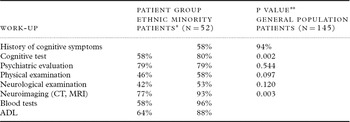
Valid clinical information was defined as categories rated as well documented or sufficiently documented by the evaluation process. * Ethnic minority patients: Immigrants from Turkey, ex-Yugoslavia, and Pakistan. ** Level of significance based on Fisher's Exact test.
Methods: The Danish Civil Registration System assigns unique national identification numbers to all Danish residents, and records individual demographic data such as age, gender, immigration, emigration and death. Using the same identification numbers, all Danish residents’ contacts with the secondary healthcare system have been recorded in two national medical registers. These registers were used to identify patients who were immigrants from Turkey, ex-Yugoslavia, and Pakistan, who were diagnosed with dementia in the period 2005–2007. Medical records for all patients were requested from the relevant hospital departments and were independently reviewed and rated by three raters according to a predefined protocol. There is no European consensus on good clinical practice with patients from ethnic minority backgrounds. Therefore, the recommendations from evidence-based clinical guidelines for evaluation of dementia were used as golden standard. The data were compared to data from a previous similar study in the general Danish population.
Results: Based on a population of 71,546 people from the main ethnic minorities, no more than 62 patients were identified with dementia diagnoses in the medical registers. Medical records of 59 of the patients (95%) were obtained. After review, 57 medical records were included in the final analyses. An evidence-based basic dementia work-up was documented in only 23% of the patients. Dementia diagnosis was confirmed in 35% of the patients. In 14% of the patients, the raters ruled out dementia, and in 51% it was not possible to determine whether dementia was present. When the quality of the diagnostic evaluation performed by dementia specialists (psychiatrists, neurologists or geriatricians) for patients from ethnic minorities was compared to patients from the general population, significant differences between the two samples were present on five of eight items of the evidence-based basic dementia work-up (see table).
Conclusions: To our knowledge, this is the first study to evaluate the nationwide quality of diagnostic evaluation of dementia for patients from ethnic minorities. We found significant ethnic disparities in the quality of diagnostic evaluations and outcome of dementia in the secondary healthcare sector. We suspect that the problems identified in this study can be found in other Western countries with comparable patterns of immigration and similar healthcare standards. However, this has never been investigated. More research is required to clarify the reasons behind the poor quality of the diagnostic work-up with patients from ethnic minorities, and effective strategies for improving diagnostic accuracy are urgently needed.
FC12.02
Correlates of cognitive decline in nursing home patients with dementia
Sanne Bergervoet, H Bor, R Koopmans, S Zuidema
UMC St Radboud, Nijmegen, Netherlands
R Wetzels, Radboud University Nijmegen, Nijmegen, The Netherlands
Introduction: Dementia is a disease characterized by cognitive decline, leading to an increased need in care and sometimes admission in a nursing home. There has been a lot of research to predict the speed of cognitive decline in patients with dementia, often with conflicting results. Dementia diagnosis is one of the potential factors influencing the rate of cognitive decline. Other factors, like gender, age and psychotropic medication use, may also contribute to the rate of cognitive decline. The aim of this study was to investigate the rate of cognitive decline in a longitudinal cohort of nursing home residents with dementia and to investigate which factors have a significant impact on the rate of cognitive decline.
Method: Residents were enrolled from fourteen special dementia care units (SCU) from nine nursing homes in The Netherlands. Resident's elderly care physicians systematically screened all residents for inclusion. Residents were considered for inclusion provided they: 1) met criteria for dementia of the Diagnostic and Statistical Manual of Mental Disorders fourth edition, 2) had no history of life-threatening disease at the time of inclusion, 3) had to reside in the nursing home for at least four weeks, and 4) Severe Impairment Battery short version (SIB-s) score at baseline >5 to allow change in SIB-s score. At baseline cognitive function was assessed with MMSE and the SIB-s. Biannual follow-up measurements up to two years was assessed with the SIB-s. The SIB-s is specifically developed for assessment of patients who are cognitively too much impaired to be able to complete standard neuropsychological test. The SIB-s is more sensitive to change in later stages of dementia. Individual regression slope was analyzed to calculate overall cognitive decline. Random intercept, random slope mixed model including dementia diagnosis, gender, age, antipsychotic use and antidepressant use, were used to identify the impact of the included variables on the rate of cognitive decline.
Results: 203 residents met our inclusion criteria. The residents who did not met our inclusion criteria were mostly females, significantly older (t = 0.02) and more using antipsychotics (X2 = 0.01) and more severe cognitive impaired with lower SIB-s (t = 0.01) and MMSE-scores at baseline (t = 0.01). Demographic characteristics and stage of dementia of included residents were at baseline to a large extent similar between the group AD patients and the group with VaD and between men and women, however AD patients were slightly taking more antipsychotic (38% vs 35%) At baseline, residents had mean MMSE score of 10.1 (SD 6.2), ranging 0 to 25 and mean SIB-s score of 35.2 (SD 12.0), ranging from 6 to 50. Overall annual rate of cognitive decline was 5.1 points (SD 3.7) on the SIB-s . Residents with Alzheimer Dementia (AD) deteriorate 2.03 (SE 1.0, p 0.04) points per 6 months faster on the SIB-s than residents with vascular dementia (VaD). Gender is another statistically significant factor; women deteriorate in 6 months on average 3.13 points (SE 1.1, p0.007) more on the SIB-s than man. There is a trend that nursing home residents who are taking antidepressants have a faster cognitive decline than nursing home residents who do not. No statistical relationship between rates of cognitive decline measured using the SIB-s and other potential correlates (age and antipsychotic use) were found.
Conclusion: This is the first study that examined the rate of cognitive decline using the SIB-s in a large sample of nursing home residents over a two years follow-up period. We have found that gender and dementia diagnosis have a significant impact on the rate of cognitive decline. Further large longitudinal cohort studies are needed to support our findings.
FC12.03
The value of FDG-PET imaging in excluding behavioural variant of frontotemporal dementia
Bertjan Kerklaan, Sint Lucas Andreas Ziekenhuis, Amsterdam, The Netherlands
BNM van Berckel, WM Van der Flier, P Scheltens, YAL Pijnenburg
VU University Medical Center, Amsterdam, The Netherlands
K Herholz, University of Manchester, Manchester, United Kingdom
A Dols, GGZ inGeest/Vumc, Amsterdam, The Netherlands
We know that clinical criteria and structural imaging lack sensitivity and specificity for establishing a diagnosis of behavioural variant of frontotemporal dementia (bvFTD). Most misdiagnosis encountered are Alzheimers disease and psychiatric disorders. Recently proposed new criteria for bvFTD acknowledge these shortcomings and advocate the incorporation of results of structural and functional imaging (FDG-PET) in bvFTD criteria. It is expected that addition of these parameters will increase specificity of bvFTD criteria. The value of negative FDG-PET imaging in excluding bvFTD in patients however, remains largely unknown.
We conducted a retrospective cohort study of a group of 53 possible bvFTD patients with normal results of structural imaging. Revision of baseline FGD-PET imaging was carried out by two independent and blinded professionals. Primary outcome was the clinical diagnosis after at least two years of follow-up in the group with normal results of functional imaging. Secondary outcome was the diagnostic value of FDG-PET for bvFTD.
Of 53 possible bvFTD patients, 44 patients were found to have a pattern of hypometabolism not typical for bvFTD on FDG-PET scan (non-bvFTD-pattern) after reviewing. 30 of these patients had normal results of FDG-PET imaging. After a mean follow-up of 37 months 13 out of 30 patients were diagnosed with bvFTD, 10 with a psychiatric disorder and 7 with miscellaneous disorders.
Out of the other 14 patients with a non-bvFTD-pattern, 4 were diagnosed with bvFTD. The negative predictive value of a non-bvFTD-pattern for exclusion of bvFTD is 61%.
In the group of 11 patients with a typical bvFTD pattern of hypometabolism on FDG-PET scan (bvFTD-pattern) 8 patients were diagnosed with bvFTD after follow-up. The positive predictive value for a bvFTD-pattern for demonstration of bvFTD is 73%. Sensitivity and specificity for the detection of bvFTD by bvFTD-pattern are 32% and 90% respectively.
In case of possible bvFTD with normal results of structural and functional imaging one cannot exclude bvFTD. The rather low negative predictive value of a non-bvFTD-pattern on FDG-PET scan might be accounted for by a high prevalence of a non-degenerative phenocopy of bvFTD. Otherwise, imaging might have been performed too early for detection of abnormalities. Future studies, ideally autopsy proven, could give more insight into these hypotheses.
In any respect, these are important findings that show that FDG-PET imaging should be interpreted cautiously. Above all, these results need to be accounted for when FDG-PET imaging is incorporated in new criteria for bvFTD.
FC12.04
European Dementia Consensus Network (EDCON): Consensus and evidence base of a new scale on the Clinical Dementia Care Profile, fit for the Health2.0-in-Dementia era
Marcel Olde Rikkert, L Schoonhoven
Radboud University Nijmegen Medical Centre, Nijmegen, The Netherlands
A Burns
A Lobo
We are currently entering the Health2.0 era in dementia care, because of quick changes in disease management programs for dementia, though cross-national differences in quality of dementia care are increasing. This urgently asks for a new staging systems of dementia for adequate interdisciplinary communication and efficient targetting of care. In this symposium the European Dementia Consensus Network (EDCON) will present, in three parts, consensus and evidince for a new instrument for clinical assessment of care needs in dementia patients: 1. The details of the EDCON consensus methodology and a brief overview of its latest results. 2. The results of a systematic review on dementia staging instruments. 3. The developmental process and reliability testing of the new Clinical Dementia Care Profile. First, the EDCON work process will be detailed and exemplified by the EDCON European consensus documents on: dementia diagnosis disclosure, standards of care, access to care, assessment of capacity to consent and the ethics of genetic testing. Systematically problematic topics were addressed, by thorough review of the literature, cross national focus groups, and consensus meetings, resulting in five concise consensus statement, issued in three books and seven peer reviewed papers. The EDCON steering group concluded that current progress of dementia research on the one hand, and changes in complexity of health care and society on the other, urgently require progress in recognizing the care needs of patients suffering from dementia, across all relevant domains involved in determining the best care for the patient: cognition, functioning, behavior, physical comorbidity and caregiver burden. Based on this analysis, EDCON started it's methodology of developing a consensus statement on the domain of clinical care profile assessment in dementia. Secondly, a systematic literature review will be presented on validity and reliability of clinically applicable, already available multidomain, dementia staging instruments. Starting from 963 articles, 23 articles describing 12 staging instruments were identified that fulfilled all in- and exclusion criteria (N = 6,109 subjects, age: 65–87). Reliability was studied in most (91%) of the papers and was judged moderate to good. 78% of the papers evaluated concurrent validity, which was good to very good, while discriminant validity was assessed in only one 25%. The scales can be applied on average in 5 minutes. CDR, GDS and FAST have been monitored on reliability and validity, and the Clinical Dementia Rating (CDR) currently is the best-evidenced scale, also studied in international perspective, and is available in 14 languages. Based on this review EDCON concluded that the need for refinement of a global severity rating scale, covering both preclinical and predementia disease and dementia stage, is not yet fulfilled in literature, asking for a new global rating scale for assessment of the global care profile. Thirdly, EDCON will present the new Clinical Dementia Care Profile assessment scale. Its development started with focus groups across Switzerland, Spain, United Kingdom, The Netherlands, France and Denmark to reach consensus on the aims, content and preconditions for development of this new assessment instrument. All focus groups underlined that the instrument was needed, but that it should be simple, multi-domain oriented and directly applicable in and related to clinical practice. Next, EDCON consensus meetings resulted in a draft of the instrument with anchor points on five domains that were considered relevant for assessment of the complexity of care needed: cognition, activities of daily life, behavior, carer stress/career support, and physical comorbidity. At the next stage, the feasibility and reliability of the first preliminary scale anchorpoints were tested in clinical case vignettes. This led to drafting the next version of the EDCON Clinical Dementia Care Profile, consisting of five 6-point Likert scales for the five domains, and a sixth summary 6-point Likert scale, which expresses the clinician's total assessment of care needed, ranging from ‘no dementia related care needs’ (score 0) to ‘maximum dementia related care needs’ (score 5). This scale was subjected to cross-national reliability testing with case vignettes, of which data will be presented. The next phases of European data collection and implementation will be presented, and the clinical applications of the scale will be discussed, both from the perspective of individual and public, modern (2.0) health care planning.
FC13.01
Porter's redesigning dementia health care
Marcel Olde Rikkert, Radboud University Nijmegen Medical Centre Nijmegen, The Netherlands
Porter's main frame of value-assessment and redesigning dementia care will be clarified for dementia care. This means that the process of care will be clarified in the terms used by Porter and that the three levels of value assessment will be exemplified for dementia diagnostics and dementia treatment.
FC13.02
Value in health status, subjective well-being or quality of life in dementia
Carla Schölzel-Dorenbos, Slingeland Hospital, Doetinchem, The Netherlands
Based on our research on Quality of Life in Dementia and the challenges met in reliable and valid assessment of QoL in cognitive decline, we will discuss the pro's and cons of subjective wellbeing assessment versus QoL, as measured by carers.
FC13.03
Value in care for carers of dementia patients
Myrra Vernooij-Dassen, Radboud University Nijmegen Medical Centre, Nijmegen, The Netherlands
We will present data from a new review of reviews to identify positive effects of psychosocial interventions on health status and sustainability of community care or institutionalisation. The perspective of reciprocity and its value (or negative value) in dementia care will be explained. Reciprocity between dementia patient and carer will be shown to have a new angle to facilitate the provision of more effective care, especially in design and implementation of psychosocial interventions.
FC13.04
Value in a new composite endpoints, specifically designed for older persons
René Melis, Radboud University Nijmegen Medical Centre, Nijmegen, The Netherlands
Value may also be measured by creating an outcome specifically designed and selected by older subjects. In an ongoing research project older subjects are composing a composite endpoint of quality of life measures, functional performances, mood, and living arrangment. In this presentation, the principle of and data on this composite endpoint will be shown, and their applicability to dementia care will be discussed.
FC13.05
Multidisciplinary Intervention for challenging behaviour in patients with Dementia (MID)
Bjørn Lichtwarck, Research Centre for Old Age Psychatri, Mo I Rana, Norway
Irene Røen, Innlandet Hospital Trust, Hamar, Norway
Geir Selbaek, Centre for Old Age Psychiatry Research, Innlandet Hospital Trust, Ottestad, Norway
Context: Nearly all nursing-home patients with dementia experience behavioral and psychological symptoms BPSD). Psychotropic drugs are extensively used to treat BPSD in spite of the fact that the evidence for effect is weak and the risk of severe adverse events is considerable. There is a lack of large, rigorous studies investigating the effect of holistic approaches which are based on both biological, social and psychological factors. We have conducted a pilot study of an intervention which includes both a rigorous assessment and the treatment of BPSD. This model, Multidisciplinary Intervention for challenging behavior (agitation) in patients with Dementia (MID), is based on the theoretical framework of cognitive behavioral therapy (CBT), and tailor a treatment plan that takes into account the unique characteristics of each individual.
The main aims of the pilot study were to evaluate the utility of the research plan for a future RCT, and the ability of the intervention to induce clinically meaningful change in outcome measures.
Methods: The pilot study includes 30 patients from 9 nursing homes in Norway. Inclusion criteria were a stay in the nursing home of more than 4 weeks, score on the Clinical Dementia Rating scale (CDR) of one or higher and a score of six or more on the agitation item of the Neuropsychiatric Inventory (NPI).
The first part of the intervention consisted of a three hours lecture for the staff about dementia, BPSD, quality of care and the MID. MID was successively implemented for each patient in three stages: a registration-observation stage which includes medical examination of the patient, background history and a detailed registration on a daily basis of the behaviours or symptoms at stake. A staff guiding stage consisting of a structured guiding meeting then followed. Specially trained nurses from the nursing home set a meeting for 1-1,5 hours for the nursing home health workers. After this meeting a detailed plan for the patient is put into action, and the evaluation stage begins.
In this presentation we account for measurements at baseline and after 6 weeks. These were done by research assistants who interviewed the staff members who knew the patient best. We will repeat these measures after 4 and 8 months. Outcome measures were agitation measured by Cohen Mansfield Agitation Inventory (CMAI), neuropsychiatric symptoms measured by the Neuropsychiatric Inventory (NPI), depression by Cornell Scale for Depression in Dementia (CSDD) and quality of life by the Quality of Life in Late-stage Dementia scale (QUALID). Change at 6- week was explored by the Wilcoxon Signed Rank Test.
Results: Of the 30 patients included at baseline, 28 patients (one deceased, one hospitalized) were assessed after 6 weeks of intervention. At baseline the mean age was 81,9 years (SD 9,1), 57 per cent were women. CDR scores at baseline showed that 3 per cent had mild dementia (CDR 1), 43 per cent had moderate dementia (CDR 2), and 53 per cent had severe dementia (CDR 3). Table 1 shows the scores on outcome measures at baseline and at 6-week follow-up. There was a significant improvement on subscales of the NPI for agitation, affective and psychotic symptoms and of depressive symptoms measured by the CSDD. The NPI 10 staff distress measurements showed a significant decline. A non-significant trend of reduction was observed for agitation measure by the CMAI and there was a non-significant improvement in patients’ quality of life measured by QUALID. The utility of the research plan was established with needs of only minor changes.
Conclusion: The pilot study shows that the intervention by the MID might be a systematic and simple tool for the nursing home health workers to meet agitation, and to tailor a treatment plan that takes into account the unique characteristics of each individual. There was a significant reduction, measured after about 6 weeks of intervention, in agitation, affective symptoms and of psychotic symptoms in the patients, as well as reduced caregiver burden. Though this a open study without a control group, these results are suggestive of a possible effect of the intervention. The results need to be replicated in a randomized controlled trial, and we are planning for such a trial based on our experience from this pilot study.