Implication
The high cost and limitation of feedstuff resources are critical issues for the rabbit production. Bilberry pomace (BP), a by-product of industrial fruit processing, contains fibres and different beneficial antioxidant compounds. The current paper, which had the purpose of studying the BP nutritive value and its potential use in rabbit feeds, has focused on its effect on several parameters. Results showed that BP can be used as an alternative protein and fibre sources for growing rabbits with consequent benefits for rabbit farmers who can reduce the economic costs by replacing other more expensive feed ingredients with BP by-product.
Introduction
The high cost and limitation of feedstuff resources are critical issues for the livestock section, especially in the rabbit production field. However, several agricultural by-products could be used as alternative raw materials in rabbit nutrition as they have been found to be highly nutritious and low cost feeding sources (Dabbou et al., Reference Dabbou, Gasco, Gai, Zoccarato, Rotolo, Dabbou Fekih, Brugiapaglia, Helal and Peiretti2014 and Reference Dabbou, Gai, Renna, Rotolo, Dabbou, Lussiana, Kovitvadhi, Brugiapaglia, De Marco, Helal, Zoccarato and Gasco2017b).
Fruit pomace is a by-product of industrial fruit processing, and it is composed of the cell wall compounds, stems and seeds of the fruit. Vegetable by-products and pomace can be incorporated into animal diets, without adverse results on growth performances and digestibility (Dabbou et al., Reference Dabbou, Gasco, Gai, Zoccarato, Rotolo, Dabbou Fekih, Brugiapaglia, Helal and Peiretti2014), and can help to reduce the feed costs. Moreover, due to the presence of bioactive components they can prevent the harmful effects of oxidation (Saura-Calixto, Reference Saura-Calixto2011) and improve the function of the intestinal ecosystem (Silva et al., Reference Silva, Morita and Boleli2013). Nevertheless, Gidenne et al. (Reference Gidenne, Carabaño, García and De Blas2010) demonstrated that the use of fibrous sources rich in insoluble fibre fractions, even if of low nutritional value, affects the retention rate of the digesta, microbial activity, fibre fermentability and caecal turnover. Gut microbiota play important roles in mammal’s health and, in rabbits, the control of the microbiota could therefore improve digestive efficiency or immune status (Zeng et al., Reference Zeng, Han, Wang, Wen, Jian, Guo, Yu, Du, Fu, Kong, Yang, Si, Zhao and Li2015). Improved digestive efficiency through optimisation of the composition of the microbiota has a direct impact on feed costs. Moreover, the control of the microbiota could limit digestive problems around weaning, considering its barrier effect and partly through its role as immune stimulator (Combes et al., Reference Combes, Fortun-Lamothe, Cauquil and Gidenne2013).
In this regard, bilberry (Vaccinium myrtillus L.) has been reported to be a nutrient source that is high in bioactive components, including dietary fibre and polyphenols. Bilberry pomace (BP) contains different beneficial phytochemicals, including phenols, anthocyanins and flavonoids (Dabbou et al., Reference Dabbou, Renna, Lussiana, Gai, Rotolo, Kovitvadhi, Brugiapaglia, Helal, Schiavone, Zoccarato and Gasco2017a). BP has a high antioxidant activity with about 65% of inhibition of 1,1-diphenyl-2-picrylhydrazyl radical scavenging activity (Dabbou et al., Reference Dabbou, Renna, Lussiana, Gai, Rotolo, Kovitvadhi, Brugiapaglia, Helal, Schiavone, Zoccarato and Gasco2017a). In addition, BP has health benefits by reducing plasma cholesterol and abdominal fat in rat (Khanal et al., Reference Khanal, Howard, Wilkes, Rogers and Prior2012). Moreover, from a microbiological point of view, Puupponen-Pimiä et al. (Reference Puupponen-Pimiä, Nohynek, Hartmann-Schmidlin, Kähkönen, Heinonen, Määttä-Riihinen and Oksman-Caldentey2005) shown that berries and their phenolics selectively inhibit the growth of human pathogenic bacteria through different possible mechanism of action.
The goal of this study was to determine the nutritive value of BP and to evaluate its potential use in growing rabbits by assessing: growth performance, blood parameters, bacterial community and organ oxidative status.
Material and methods
Animals, diets and experimental design
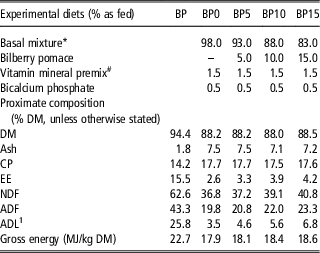
The trial was carried out at the experimental rabbitry of the Department of Agricultural, Forest and Food Sciences of the University of Turin (Italy). At 35 days of age, 144 Grimaud rabbits were individually caged (41×30×28 cm height) and randomly allotted to four groups. Rabbits were housed at a temperature of 22±2°C (photoperiod 16L : 8D) and had free access to clean drinking water. Diets were prepared using organic BP (Arc en ciel Soc. Agric. Coop., Cafasse, Italy) dried in an oven at 60°C to a constant weight and then ground finely. Rabbits were fed ad libitum with a basal diet (BP0), which was tested against three assay diets, prepared by substituting 50, 100 and 150 g/kg of the BP0 diet with BP (BP5, BP10 and BP15, respectively, Table 1), as reported in Dabbou et al. (Reference Dabbou, Renna, Lussiana, Gai, Rotolo, Kovitvadhi, Brugiapaglia, Helal, Schiavone, Zoccarato and Gasco2017a).
Proximate composition of the bilberry pomace (BP) and the experimental diets of the rabbits (modified from Dabbou et al., Reference Dabbou, Renna, Lussiana, Gai, Rotolo, Kovitvadhi, Brugiapaglia, Helal, Schiavone, Zoccarato and Gasco2017a)

BP0=bilberry pomace 0%; BP5=bilberry pomace 5%; BP10=bilberry pomace 10%; BP15=bilberry pomace 15%; DM=dry matter; EE=ether extract.
*Containing (% fresh matter): alfalfa meal 30, wheat bran 20, barley 17, dried beet pulp 15, soya bean meal 11.5, molasses 2, wheat straw 2 and soya bean oil 0.5.
#Vitamin A200 U, α-tocopherylacetate 16 mg, Niacin 72 mg, vitamin B6 16 mg, choline 0.48 mg, dl-methionin 600 mg, Ca 500 mg, P 920 mg, K 500 mg, Na 1 g, Mg 60 mg, Mn 17 mg, Cu 0.6 mg per kg of diet.
1 Analysed with the modified Van Soest procedure adapted to tannins content with sodium bisulfate.
Digestibility trial
A digestibility trial was conducted using 10 rabbits per dietary treatment and started at 46th day of age according to the procedure described by the European Group on Rabbit Nutrition (EGRAN, 2001). Faeces were collected individually and daily for 4 consecutive days (0900 h). Each faecal sample was weighed and placed in a two-layer plastic bag and immediately frozen at −20°C for chemical composition.
The nutrient digestibility coefficient was calculated using the total collection of faeces for each rabbit and for each nutrient following the equation reported in Rotolo et al. (Reference Rotolo, Gai, Peiretti, Ortoffi, Zoccarato and Gasco2014).
Growth performance
During the trial, BW was recorded at 35, 49 and 83 days of age, whereas feed intake was recorded individually on a fortnightly basis.
Mortality was recorded daily. The average daily feed intake (ADFI), average daily weight gain (ADG) and feed conversion ratio (FCR) were calculated. The trial lasted 48 days.
Chemical proximate analysis
The BP, diet and faeces samples were analysed for DM (2000 #930.15), ash (2000 #923.03), CP (2000 #984.13), EE (2003 #2003.05) and ADF (2000 #973.18) contents according to the AOAC procedures (AOAC, 2000 and 2003). Neutral detergent fibre was determined according to Van Soest et al. (Reference Van Soest, Robertson and Lewis1991), and ADL with the modified Van Soest procedure adapted to tannins content with sodium bisulphate. Gross energy (GE) was measured using an adiabatic bomb calorimeter (IKA C7000, Staufen, Germany). Moreover the main BP polyphenols were identified and quantified as reported in Supplementary Material Table S1. Analyses were carried out on three replicates of each feed and two replicates of each faeces sample.
Caecal sampling
At 83 days of age, 10 rabbits per group were slaughtered without fasting. The caecum of each rabbit was separated from the digestive tract and weighed. The pH value of the fresh caecal content was immediately measured (Crison Micro pH 2001 pH meter; Crison Instruments, Barcelona, Spain). The caecal content was then removed, put into sterilised polyethylene bags (using a sterilised spatula), and kept at −20°C to evaluate the bacterial community. The remaining empty caecum was washed with distilled water, dried with blotting paper and weighed. The weights of the full, empty and caecal contents were expressed in % of BW.
Sample extraction and electrophoresis protocols
In order to observe the development and dynamic of bacterial communities, hard faeces were collected from five female rabbits per group at 35, 49 and 83 days of age, while the caecal contents (n=5 per group) were taken during the slaughtering at 83 days of age. Samples from the same group, the same collection site and day were pooled together in sterilised polyethylene bags, and stored at −80°C until examination. DNA extraction and denaturing gradient gel electrophoresis (DGGE) procedures (Supplementary Material S1) were performed according to Ferrocino et al. (Reference Ferrocino, Bellio, Romano, Macori, Rantsiou, Decastelli and Cocolin2015).
16S rRNA amplicon target sequencing
DNA, extracted directly from the faecal and caecal samples, was used to assess the gut microbiota, and the V3-V4 region of the 16S rRNA gene was amplified according to the Illumina sample preparation manual (Illumina Inc, San Diego, CA, USA). To reduce the inter-sample variability, the DNA of the five rabbits extracted from each treatment was mixed, and an equimolar pool of the DNA was obtained prior to PCR amplification. The PCR products were purified and tagged by using a Nextera XT library preparation kit (Illumina Inc, San Diego, CA, USA), according to the manufacturer’s instructions and sequenced with a MiSeq illumina, and 250 bp paired-end reads were generated.
Blood samples and antioxidant enzymes of the organs
Blood, liver and kidney samples were collected from 10 rabbits per group during the slaughtering procedure. Serum biochemistry and electrophoresis was performed according to Kovitvadhi et al. (Reference Kovitvadhi, Gai, Dabbou, Ferrocino, Rotolo, Falzone, Vignolini, Gennero, Bergagna, Dezzutto, Barbero, Nebbia, Rosati, Cocolin, Zoccarato and Gasco2016). Liver and kidney samples were washed with ice-cold 0.9% phosphate buffered saline, blotted dry and weighed. The tissues were homogenised (10% w/v) in a potassium phosphate buffer solution (pH 7.4) for 30 s and then centrifuged at 3000 rpm for 15 min at 4°C.The supernatant fraction was collected and stored at −80°C for superoxide dismutase, glutathione peroxidase (GSH-Px), catalase (CAT) and malondialdehyde (MDA) analyses by means of spectrophotometric methods.
Statistical analysis
The statistical analyses were performed using an SPSS software package (version 17 for Windows; SPSS Inc., Chicago, IL, USA). Homogeneity of variance was tested using Levene’s test. Data collected, except that of the gut microbiota, were tested by one-way ANOVA, evaluating the effect of dietary BP inclusion by polynomial contrasts. Significance was accepted for P<0.05. The similarity distance matrix generated using Bionumerics version 5.1 software (Applied Maths, Sint Martens Latem, Belgium) was used to build a non-metric multidimensional scaling plot of dissimilarity in which the Euclidean distance was adopted.
Bioinformatics analysis
Paired-end reads were analysed by using QIIME 1.9.0 Software and a recently described pipeline (Ferrocino et al., Reference Ferrocino, Di Cagno, De Angelis, Turroni, Vannini, Bancalari, Rantsiou, Cardinali, Neviani and Cocolin2017). In order to avoid biases due to different sequencing depths, all the samples were rarefied at 13 821 reads after raw read quality filtering. Statistics and plotting were performed in R environment. Details are provided as Supplementary Material S1. The 16S rRNA gene sequences are available at the Sequence Read Archive of NCBI (National Center for Biotechnology Information) (accession number SRP100668).
Results
Digestibility and growth performance
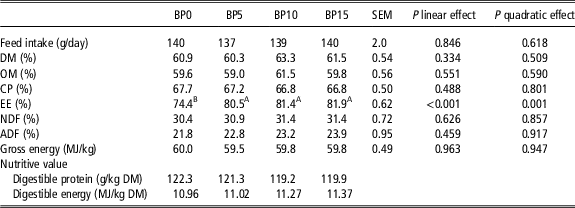
Table 2 reports the apparent digestibility coefficients of the nutrients. None of them were affected by the inclusion level of BP except EE, which appears higher in rabbits fed BP than BP0. Calculating the mean CP digestibility of the experimental diets (67.1%), we found 10.47% of DP level of BP, since no effect on CP digestibility were registered and since the estimation was used for moderate incorporation (50, 100 and 150 g/kg). According to the mean of the four diets, the DE was estimated to 9.44 MJ/kg DM which corresponds to 2256 kcal.
Feed intake and nutrient digestibility coefficients of the rabbits fed the experimental diets

BP0=Bilberry pomace 0%; BP5=Bilberry pomace 5%; BP10=Bilberry pomace 10%; BP15=Bilberry pomace 15%; DM=dry matter; OM=organic matter; EE=ether extract.
A,BDifferent superscript letters indicate significant differences (P<0.001).
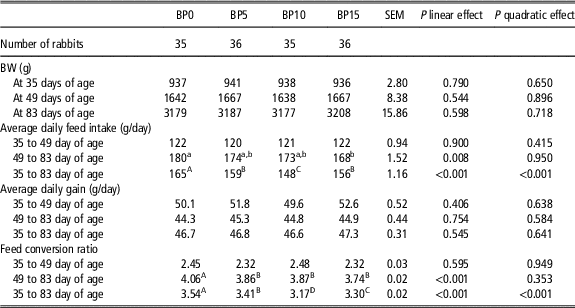
During the trial no health problem was experienced and only two rabbits died (one BP0 and one BP10). The initial BW ranged from 936 to 941 g, and the final BW ranged from 3177 and 3208 g without significant differences among groups. Final BW and ADG were not affected by the feeding treatments for all periods considered (Table 3). Average daily feed intake and FCR showed a linear (P<0.001) decrease to BP with a minimum observed for BP15 group from 49 to 83 days of age. During the whole period, ADFI and FCR showed a linear and quadratic effects to BP inclusion level with a minimum corresponding to BP10 group (P<0.001).
Growth performance of the rabbits fed the experimental diets

BP0=bilberry pomace 0%; BP5=bilberry pomace 5%; BP10=bilberry pomace 10%; BP15=bilberry pomace 15%.
a,bDifferent superscript letters indicate significant differences (P<0.05); A,B,C,DDifferent superscript letters indicate significant differences (P<0.01).
Caecal traits, blood parameters and oxidative status
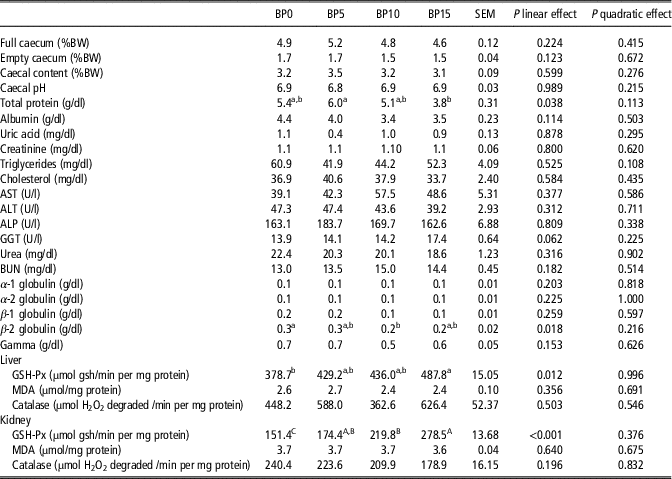
No significant effects related to BP inclusion level were observed for the caecal traits. The inclusion level of BP did not affect the blood parameters (Table 4), except for the total protein and β-2 globulin concentration which showed a linear effect to BP inclusion level. GSH-Px activity of the liver (P<0.05) and kidney (P<0.001) showed a linear responses to BP with a maximum observed for BP15 group.
Caecal traits, blood parameters and oxidative status of the rabbit organs.

BP0=bilberry pomace 0%; BP5=bilberry pomace 5%; BP10=bilberry pomace 10%; BP15=bilberry pomace 15%; BP0=bilberry pomace 0%; BP5=bilberry pomace 5%; BP10=bilberry pomace 10%; BP15=bilberry pomace 15%; AST=aspartate aminotransferase; ALT=alanine aminotransferase; ALP=alkaline phosphatase; GGT=gamma glutamyltransferase; BUN=blood urea nitrogen; GSH-Px=glutathione peroxidase; MDA=malondialdehyde.
a,bDifferent superscript letters indicate significant differences (P<0.05); A,B,CDifferent superscript letters indicate significant differences (P<0.01).
Analysis of the gut microbiota
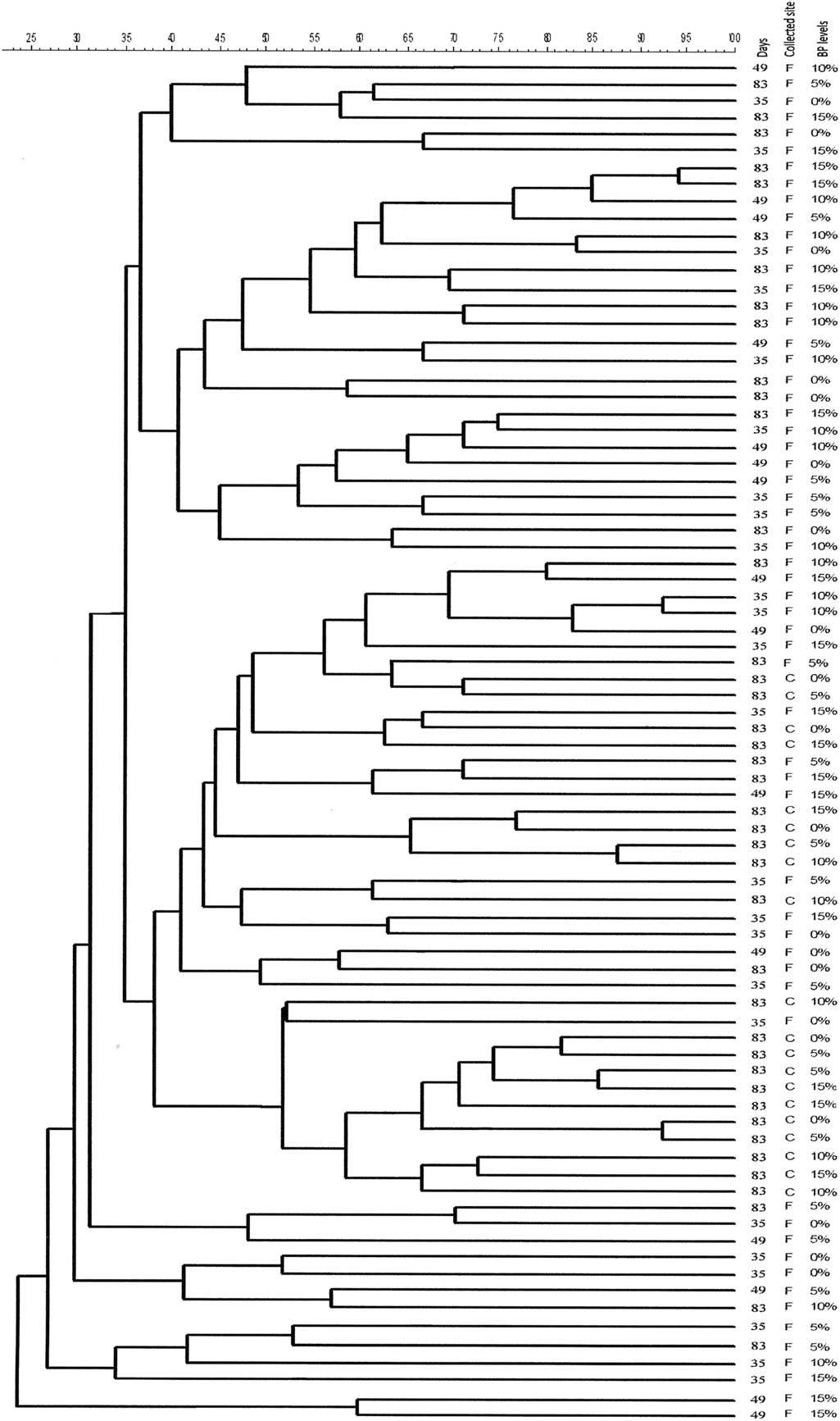
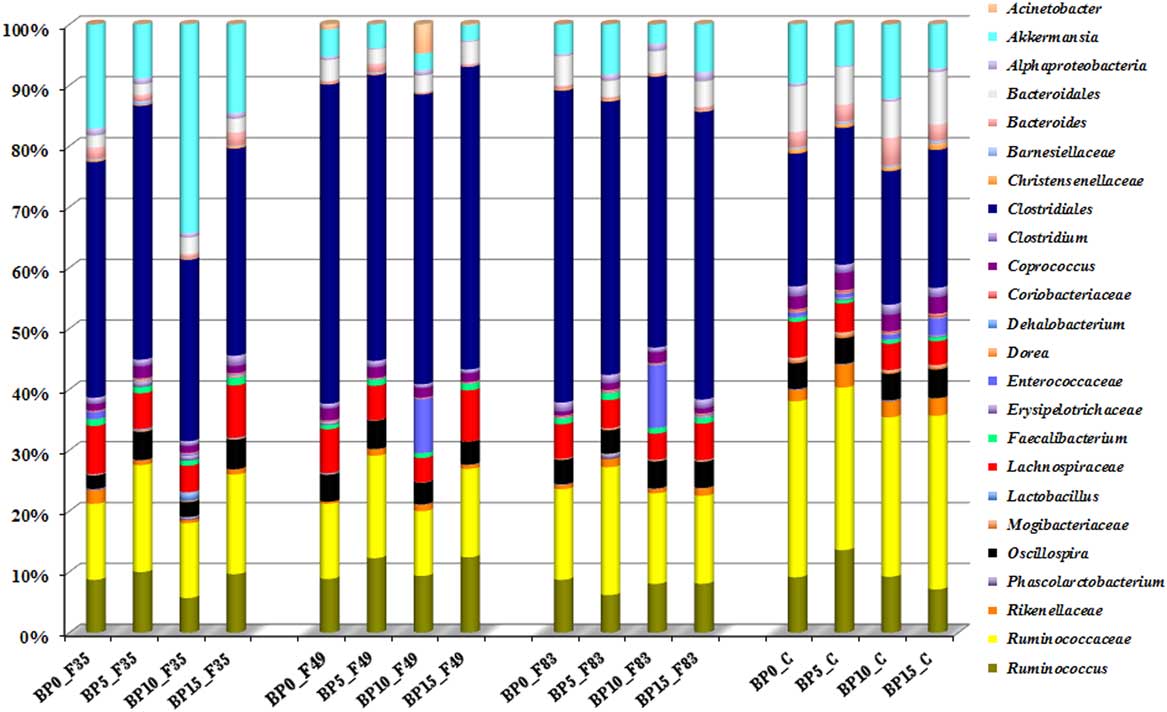
The PCR-DGGE analysis presented in Figure 1 shows no clear separation of the samples as affected by dietary incorporation. A few sub-clusters, with at least two to four samples in the same experimental group, were found to have a high percentage of similarity (>60%). However, the caecal sample profiles were grouped together (>70%). After sequencing, a total of 2 656 045 raw reads (2×250 bp) were obtained. After joint and quality filtering, a total of 114 488 reads passed the filters applied by QIIME, with an average value of 71 511 reads/sample, and a sequence length of 433 bp (Supplementary Material Table S2). The number of operational taxonomic units (OTUs), the Good’s estimated sample coverage (ESC), the Chao1 and Shannon indices obtained for all the samples are reported in Supplementary Material Table S2 and Figure S1. The rarefaction analysis and the estimated sample coverage indicated that there was satisfactory coverage for all the samples (ESC average 85%). The trend of the rarefaction curves also confirmed that bacterial richness was sampled (Supplementary Material Figure S1). Adonis and Anosim statistical tests, based on the Weighted UniFrac distance matrix, showed significant differences for the time, and when faeces and caecal samples were compared (P<0.001), but no difference was observed when the different diets were compared. The dietary treatment affects the microbiota composition (Figure 2). Clostridium, Oscillospira, Ruminococcus and Ruminococcaceae were in particular found to be characteristic of the BP groups (P<0.01), mainly in BP5 group. On the other hand, Lachnospiraceae were found to be characteristic of the basal diet (P<0.01). Ruminococcus and Lachnospiraceae were never found below 6% of the relative abundance in any of the samples, a prevalence of Ruminococcus was observed in BP5 (around 10%), while Lachnospiraceae were found to be characteristic of the BP0 samples (6% of the relative abundance). Ruminococcaceae, Oscillospira and Clostridiales were never found below 10%, 4% or 40% of the relative abundance, respectively, and were always higher when affected by the inclusion of 50 g/kg BP.
(colour online) Cluster analysis of the denaturing gradient gel electrophoresis profile of the rabbit bacterial communities in the hard faeces (F) and caecal content (C) of the rabbits fed with 0%, 5%, 10% and 15% bilberry pomace (BP) levels sampled at 35, 49 and 83 days of age; five replicates per group.

(colour online) Incidence of the major taxonomic groups detected by means of 16S amplicon target sequencing. Only operational taxonomic units (OTUs) with an incidence above 0.2% in at least two samples are shown. The samples are labelled according to the bilberry pomace dietary supplementation levels at 0%, 5%, 10% and 15% (BP0, BP5, BP10 and BP15), to the type (hard faeces (F) and caecal content (C)) and to the days of age (35, 49 and 83) of the rabbits.

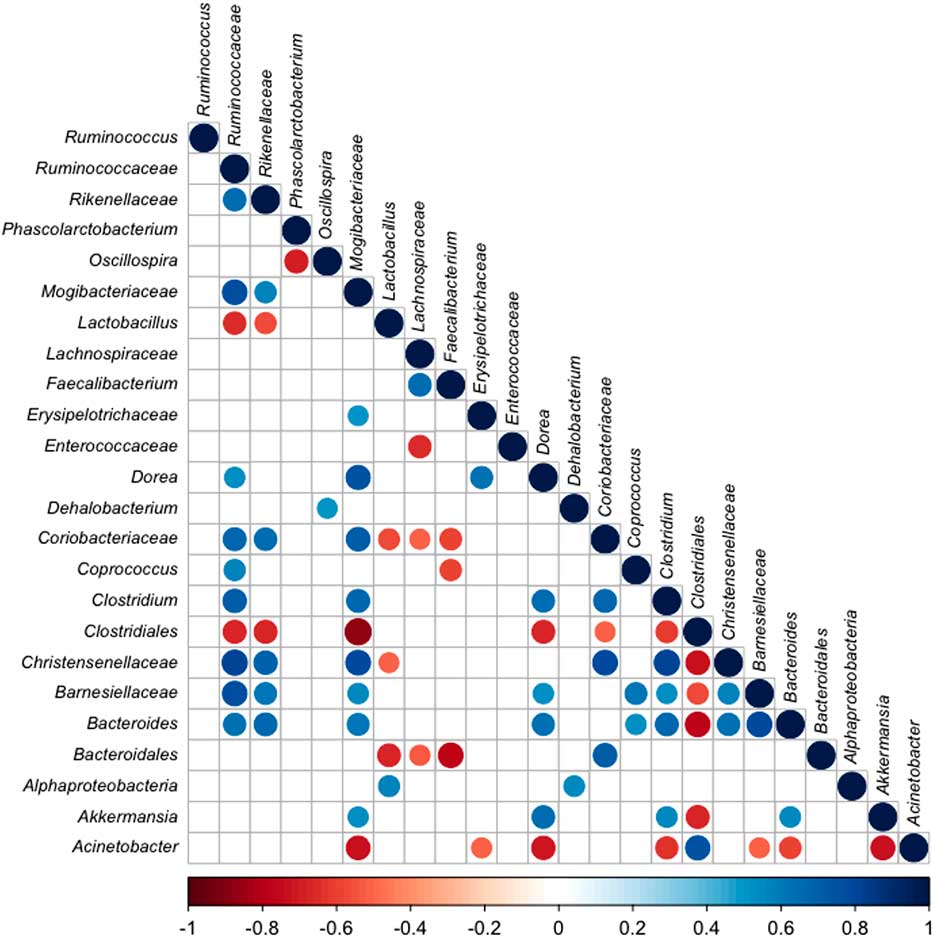
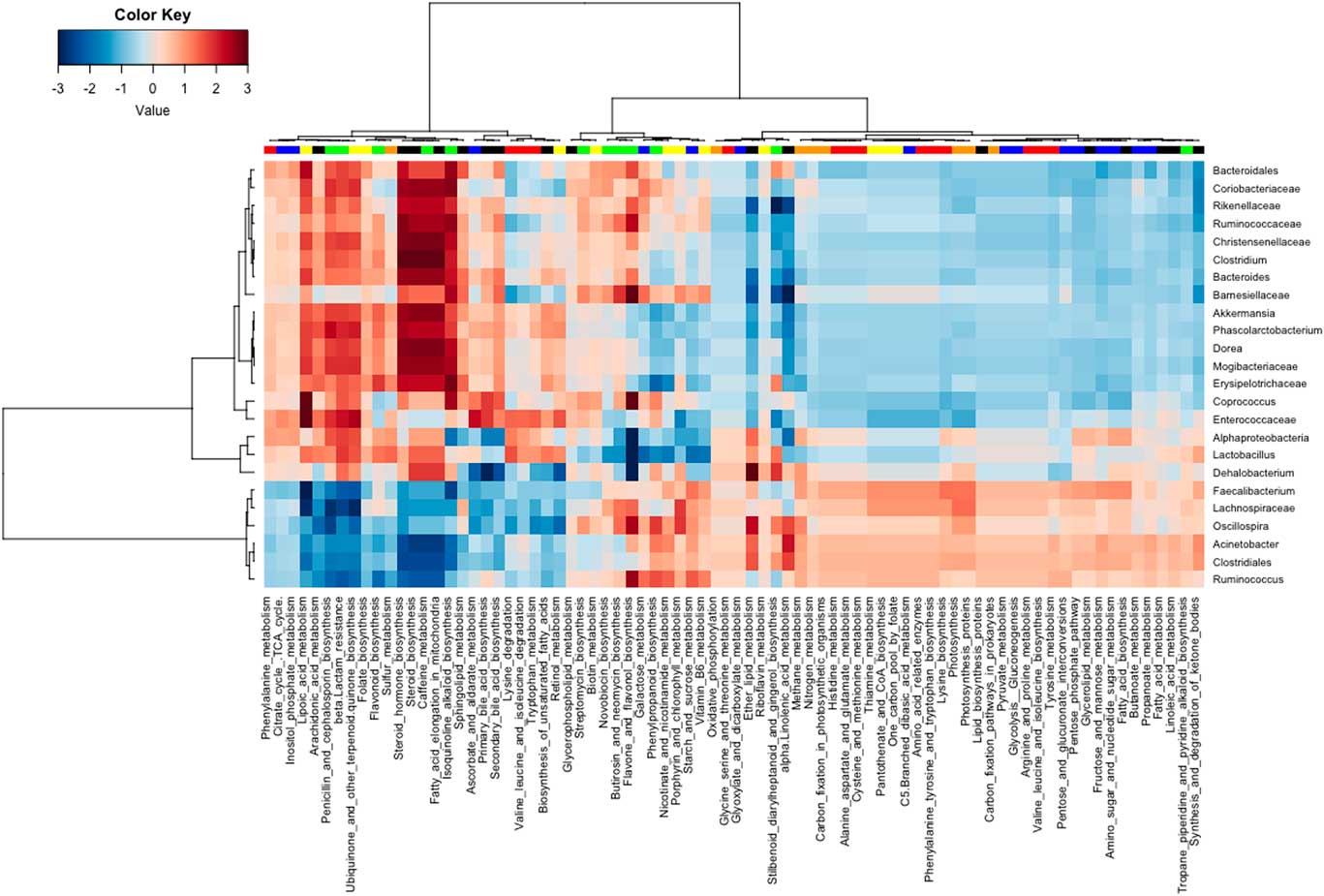
Clear differences were observed when comparing fecal and caecal samples (P<0.001). It was possible to observe a significant increase in Ruminococcaceae and a reduction in Clostridiales (Figure 2). Operational taxonomic unit co-occurrence was investigated (Figure 3) and Clostridiales and Lachnospiraceae, showed the highest number of negative correlations, and a notable exclusion of Ruminococcaceae and Enterococcaceae was observed. Ruminococcaceae co-occurred together with Dorea, Coprococcus and Clostridium. Plotting the correlation between the OTUs and the predicted pathways (Figure 4 and Supplementary Material Table S3), it appeared that Ruminococcaceae, Clostridium and Dorea were mainly related to the lipid metabolism (steroid biosynthesis and fatty acid (FA) elongation pathways) (false discovery rate; FDR<0.05). Clostridiales were mainly related to the ether lipid metabolism and α linoleic acid metabolism (FDR<0.05) and Ruminococcus was found to be positively related to galactose, starch and the sucrose metabolism (FDR<0.05).
(colour online) Significant co-occurrence and co-exclusion relationships between the rabbit bacterial operational taxonomic units (OTUs). Spearman’s rank correlation matrix of the OTUs with >0.2% abundance in at least two samples. Close correlations are indicated with large circles, whereas weak correlations are indicated by small circles. The colour of the scale bar denotes the nature of the correlation, with 1 indicating a perfectly positive correlation (dark blue) and −1 indicating a perfectly negative correlation (dark red). Only significant correlations (false discovery rate <0.05) are shown.

(colour online) Heat plot showing Spearman’s correlations between the rabbit bacterial operational taxonomic units (OTUs) occurring/at 0.2% in at least two samples and the predicted metabolic pathways, related to the amino acid metabolism (red), biosynthesis of other secondary metabolites (green), the carbohydrate metabolism (blue), energy metabolism (orange), lipid metabolism (black) and the metabolism of the cofactors and vitamins (yellow). The rows and columns are clustered according to Ward linkage hierarchical clustering.

Discussion
Nutritive value of bilberry pomace and digestibility trial
Some information is available in bibliography about the chemical composition of BP and about its suitability as a protein and fibre source. Bilberry pomace used in this trial showed an interesting phenolic compound profile where chlorogenic acid and delphinidin -3-galactoside were the most abundant phenolic acid and anthocyanin, respectively. Bilberry pomace is also high in protein (142 g/kg DM) and contained 626, 433 and 258 g/kg DM of NDF, ADF and ADL, respectively. References to the use of BP in rabbit nutrition are not available in tables of ingredients (INRA, 2004). However, our product remained close to the grape pomace (GP) mentioned in the INRA tables (2004) and by Martens et al. (Reference Martens, Perez, Villamide, Cervera, Gidenne and Xiccato2002). The incorporation level of BP in the feed increased especially the fibre fraction. In the contrary, CP remained similar among the experimental feeds.
In the present trial, the BP inclusion level only improved the digestibility coefficient of EE (P<0.001), compared with the BP0 group. The EE digestibility coefficient is generally higher when the level of dietary fat is increased (Table 1), and its value usually depends on the type of fat that is added (Pascual et al., Reference Pascual, Motta, Cervera, Quevedo, Blas and Fernández-Carmona2002). The EE digestibility found here was affected by the increasing level of BP in the diet, and depended on its unsaturation degree. In fact, this result is associated with a high EE in BP (15.5% DM), and seems to be related to its richness in polyunsaturated fatty acid (PUFA), especially α-linolenic acid (32.6 g/100 g of the total FAs; Dabbou et al., Reference Dabbou, Renna, Lussiana, Gai, Rotolo, Kovitvadhi, Brugiapaglia, Helal, Schiavone, Zoccarato and Gasco2017a), which are easier emulsified in the digestive tract than saturated FAs (Pascual et al., Reference Pascual, Motta, Cervera, Quevedo, Blas and Fernández-Carmona2002). It is interesting to note that the BP groups, compared with some raw materials used in rabbit feeds (soya bean hulls and GP) with a similar NDF content, showed higher NDF digestibility values (Gidenne et al., Reference Gidenne, Carabaño, García and De Blas2010).
Our product presented a moderate energetic value than other by-products as GP (5.0 and 9.3 MJ/kg DM), dried beet pulp (10.3 MJ/kg DM) and dried citrus pulp (11.2 MJ/kg DM) (Martens et al., Reference Martens, Perez, Villamide, Cervera, Gidenne and Xiccato2002; INRA, 2004; Guemour et al., Reference Guemour, Bannelier, Dellal and Gidenne2010), as its protein, ADF and ADL contents were respectively higher and lower than the above-mentioned by-products. Moreover, using a low incorporation level in the feed probably avoid any major anti-nutritional effect from tannins or other components. Villamide (Reference Villamide1996) and Villamide et al. (Reference Villamide, Martens, Cervera, Perez and Xiccato2001) showed that the incorporation of feed ingredients at a low level leads to a lower precision in the estimated nutritive value, particularly if measured on a low number of animals and on a short period. DP and DE are applicable only in the tested range of incorporation (⩽150 g/kg) as we used a low incorporation level in the feed.
Growth performance
It is important to highlight that diets were not exactly balanced due to the BP inclusion level. This trial was designed not with the aim to evaluate the effects of BP on rabbit growth performance but in order to supply more information about the nutritive value of BP and to evaluate some valuable nutritional facts for further experiments with balanced diets.
During the weaning period (35 to 49 days of age), ADFI and FCR did not differ significantly between groups. However, during the finishing period and the whole period, the ADFI and the FCR decreased linearly with the increase of BP incorporation rate. Considering the whole period, FCR decreased by about 3.5% compared with BP0 (3.54 v. 3.41) at 50 g/kg of BP incorporation in the diet. This reduction was greater in the animals fed the BP10 diet, and resulted in a 10% better efficiency than BP0. These results could be related to the organic acids (such as malic, citric acid and others) contained in fruit pomaces that could improve flavour and palatability of the feed mixture, and stimulate the secretion of gastric juice. On the basis of these results, it is possible to state the 100 g/kg of BP has led to the best results without negative effect on growth performance. However, further experiments are necessary to confirm the present results and try to determine the optimal incorporation rate for the BP in balanced feeds.
Using other by-products, Guemour et al. (Reference Guemour, Bannelier, Dellal and Gidenne2010) did not report effect of GP in FCR during the post weaning period showing a linear increase in FCR with 3% to 6% GP incorporation rate during the whole fattening period. Garcia et al. (Reference Garcia, Galvez and de Blas1993) showed that the moderate substitution of barley grain by sugar beet pulp (SBP) has little effect on intake and growth performance in finishing rabbits while at high levels, SBP inclusion (>35%) severely impaired growth performance. Pieszka et al. (Reference Pieszka, Szczurek, Bederska-Łojewska, Migdał, Pieszka, Gogol and Jagusiak2017) demonstrated that ADFI and FCR are influenced by the type of dry pomace fed to fattening pigs, with lowest values being observed in apple and carrot fed groups. On the other hand, Jurgoński et al. (Reference Jurgoński, Juśkiewicz, Zduńczyk, Matusevicius and Kołodziejczyk2014) reported that the dietary addition of a polyphenol-rich extract from blackcurrant pomace had no effect on the final BW, ADG or ADFI of rabbits fed standard and high fat diets.
Caecal traits, blood analysis and oxidative status
It should be pointed out that the caecal content was unaffected by the different BP supplementation diets (Table 4). The values were similar to those reported by Rotolo et al. (Reference Rotolo, Gai, Peiretti, Ortoffi, Zoccarato and Gasco2014) in growing rabbits. The pH value of the caecum content was similar to those obtained by Jurgoński et al. (Reference Jurgoński, Juśkiewicz, Zduńczyk, Matusevicius and Kołodziejczyk2014), who studied the effect of a polyphenol-rich extract, obtained from blackcurrant pomace, on growing rabbits. These authors reported that the addition of the polyphenolic extract was associated with a decrease in pH in the small intestine, but had no effect on the pH of the caecum.
The BP inclusion level did not influence the MDA values or CAT activities to any great extent (Table 4). However, the highest GSH-Px level was recorded in the kidney and liver samples obtained from the BP supplemented groups. GSH-Px prevents tissues from suffering from oxidative damage and counteracts oxidative stress (Choi et al., Reference Choi, Chung, Choi and Kang2010). An improved liver GSH-Px activity was also observed in rabbits fed a diet supplemented with a grape seed and peel extracts (Choi et al., Reference Choi, Chung, Choi and Kang2010). Sgorlon et al. (Reference Sgorlon, Stradaioli, Stefanon, Altimer and Della Loggia2005) stated that the oxidative stress markers were significantly increased for 0.03 and 0.15 (mg/kg) of grape polyphenol supplementation in New Zealand White rabbit diets during a period of heat stress caused by the high temperatures of the summer season. These results indicated that BP polyphenols act as effective antioxidants and increase kidney and liver resistance to oxidative stress through the activation of an antioxidant enzyme system.
Jankowski et al. (Reference Jankowski, Juśkiewicz, Zduńczyk, Kosmala, Zieliński, Antoszkiewicz and Zduńczyk2016) revealed an improvement in the antioxidant status indicators, including a decrease in the lipid peroxide levels, an increase in the antioxidant capacity of the hydrophilic and lipophilic fractions of the blood plasma, and a decrease in the concentration of the hepatic thiobarbituric acid reactive substances in turkeys fed diets enriched with PUFA and fruit pomace as sources of polyphenols.
Gut microbial community profile
The microbiota of the digestive tract plays an important role in the development of gut immunity and the prevention of pathogen overgrowth (Chung et al., Reference Chung, Pamp, Hill, Surana, Edelman, Troy, Reading, Villablanca, Wang, Mora, Umesaki, Mathis, Benoist, Relman and Kasper2012). Hence, a quick adaptation to reach an appropriate stable microbial ecosystem leads to health conditions in rabbits (Combes et al., Reference Combes, Fortun-Lamothe, Cauquil and Gidenne2013). Amplicon-based sequencing of 16S rRNA and PCR-DGGE were performed on the faeces and caecal contents to examine in order to establish the effects of the dietary supplementation on the intestinal microbiota composition. No difference was observed, in terms of complexity between samples, in the alpha diversity index or in the DGGE results.
The gut ecosystem of rabbits contains a wide variety of bacterial species that play an important role in producing volatile FAs, as an energy source, amino acids (AA) and vitamins by means of fermentation, whereas the major component of hard faeces contains indigestible material with a short transit time (Michelland et al., Reference Michelland, Combes, Monteils, Cauquil, Gidenne and Fortun-Lamothe2010). A difference in the bacterial community was observed between the caecal content and hard faeces on the basis of the microbiota and physiological activities as observed by Michelland et al. (Reference Michelland, Combes, Monteils, Cauquil, Gidenne and Fortun-Lamothe2010). The BP dietary supplementation increases the relative abundance of Clostridium, Oscillospira and Ruminococcus. This increment has been particularly important for the BP5 group. Moreover, their presence co-excluded the presence of other OTUs. These results could be related to the BP composition. In fact, fruit pomaces are characterised by a high content of fibre-polyphenol complexes and polyphenols can exert both positive and negative effects on the properties of dietary fibre in pomaces, including fibre influence on the composition of gut microflora. Oscillospira in rabbit gut microbiota may be involved in the fermentation process (Zeng et al., Reference Zeng, Han, Wang, Wen, Jian, Guo, Yu, Du, Fu, Kong, Yang, Si, Zhao and Li2015) while Ruminococcus produced propionate and butyrate (Reichardt et al., Reference Reichardt, Duncan, Young, Belenguer, McWilliam Leitch, Scott, Flint and Louis2014), which play a protective role against different types of disease (De Filippis et al., Reference De Filippis, Pellegrini, Vannini, Jeffery, La Storia, Laghi, Serrazanetti, Di Cagno, Ferrocino, Lazzi, Turroni, Cocolin, Brigidi, Neviani, Gobbetti, O’Toole and Ercolini2015). Fruit pomaces led to a significant increase in butyric proportion in the short-chain FAs profile in caecal digesta of turkeys Juskiewicz et al. (Reference Juskiewicz, Jankowski, Kosmala, Zdunczyk, Slominski and Zdunczyk2016). In the present trial, the dietary inclusion of BP has been characterised by the dominance of Clostridium, which has recently been associated with elevated levels of AA and phenolic compounds in the gut (Ponnusamy et al., Reference Ponnusamy, Choi, Kim, Lee and Lee2011). The main OTUs, affected by the BP, were related to the putative genes involved in the lipid metabolism, in particular steroid and FA biosynthesis. The presence of such long FAs can be related to many health-related functions, such as anti-inflammatory effects (Nguemeni et al., Reference Nguemeni, Gouix, Bourourou, Heurteaux and Blondeau2013).
Conclusion
The nutritive value obtained in the present study for BP appeared high if compared with other by-products mentioned in the literature. BP can be considered a good candidate as alternative protein and fibre sources for the growing rabbits without adverse effect on growth performance, caecal environmental condition and caecal contents in the tested range of incorporation (<150 g/kg). BP inclusion leads to a modification of the gut microbiota, which in turn favors the development of several taxa. Its use in rabbit nutrition could represent an opportunity to valorise agro-industrial by-products. However, further researches are necessary to confirm the present results and to determine the optimal inclusion level for BP in balanced diets.
Acknowledgements
This research was supported by a ‘University of Torino (ex 60%)’ grant (Es. fin. 2016).
Declaration of interest
The authors declare that there is no conflict of interest.
Ethics statement
The experimental protocol was designed according to the guidelines of the current European and Italian laws on the care and use of experimental animals (European Directive 86 609/EEC, put into law in Italy with D.L. 116/92) and approved by the Ethical Committee of the University of Turin.
Software and data repository resources
The data sets analysed in the current study are available from the corresponding author on reasonable request.
Supplementary material
To view supplementary material for this article, please visit https://doi.org/10.1017/S175173111800099X