1. Introduction
The petrography and geochemistry of siliciclastic sediments have been widely used to determine the degree of weathering (Nesbitt & Young, Reference Nesbitt and Young1982; Fedo, Nesbitt & Young, Reference Fedo, Nesbitt and Young1995), source rock composition (Tawfik et al. Reference Tawfik, Ghandour, Maejima and Abdel-Hameed2011; Cao et al. Reference Cao, Wu, Chen, Hu, Bian, Wang and Zhang2012; Armstrong-Altrin et al. Reference Armstrong-Altrin, Lee, Kasper-Zubillagaa, Carranza-Edwards, Garcia, Eby, Balaram and Cruz-Ortiz2012, Reference Armstrong-Altrin, Nagarajan, Lee, Kasper-Zubillaga and Córdoba-Saldaña2014), tectonic setting (Dickinson & Suczek, Reference Dickinson and Suczek1979; Bhatia, Reference Bhatia1983; Verma & Armstrong-Altrin, Reference Verma and Armstrong-Altrin2013) and diagenesis (Zaid, Reference Zaid2015; Zaid & Gahtani, Reference Zaid and Gahtani2015; Zaid et al. Reference Zaid, ElBadry, Ramadan and Mohamed2015), as well as palaeogeographic reconstruction of provenance (Zimmermann & Spalletti, Reference Zimmermann and Spalletti2009; Armstrong-Altrin, Reference Armstrong-Altrin2015).
The siliciclastic-dominated Araba Formation, the lowermost Palaeozoic strata in Egypt, is widely distributed in NE Egypt. It crops out along a faulted zone along the foot slopes of Precambrian basement. The Araba Formation consists mainly of sandstone with mudstone and conglomerate intercalations. It varies in thickness from 5 to 130 m and seems to be barren of body fossils and, as a result, different ages have been suggested. The formation was assigned to the Early Cambrian by Omara (Reference Omara1972) and to the Cambrian by Said & El Kelani (Reference Said and El Kelani1988).
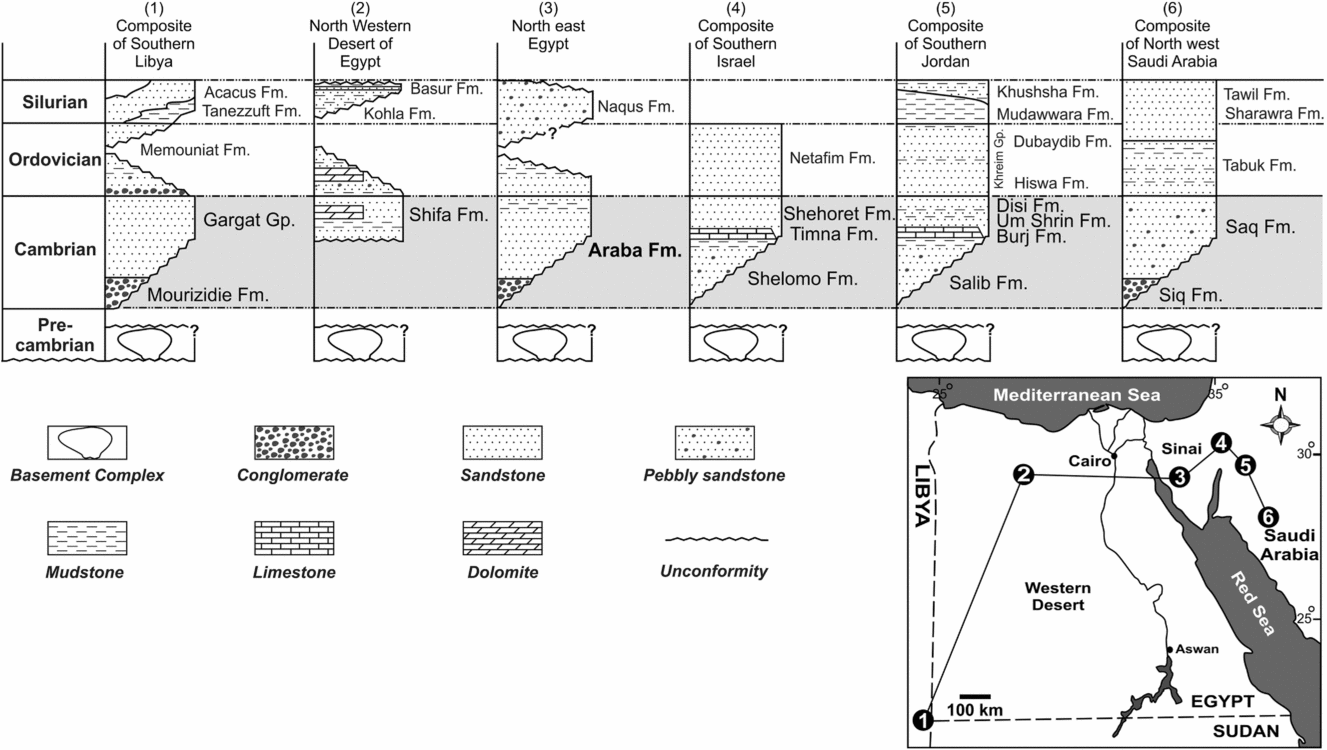
The Araba Formation (Fig. 1) is coeval with the Mourizidie and Hassaouna formations in Libya, the Shifa Formation in the Western Desert, the Sarabit El-Khadim and Abu Hamata formations in SW Sinai (El Shahat & Kora, Reference El Shahat and Kora1986), the fluvial Amudei Shelomo and the marine Timna and Shehoret formations in Israel, and the Salib, Burj, Um Ishrin and Disi formations in Jordan. It is also equivalent to the Siq and Saq formations in NW Arabia. This formation is believed to be an outcrop analogue to the subsurface ‘Nubian D’ unit, which is part of the Nubian reservoir that constitutes about 17% of the hydrocarbon production in the Gulf of Suez region.
Correlation between the Cambrian rocks of Egypt and neighbouring countries. Adapted from (1) Bellini & Massa (Reference Bellini, Massa, Salem and Busrevil1980); (2) Keeley (Reference Keeley1989); (3) Issawi & Jux (Reference Issawi and Jux1982); (4) Weissbrod & Perath (Reference Weissbrod and Perath1990); (5) Lloyd (Reference Lloyd1968); and (6) (A. Al-Laboun, unpub. Ph.D. thesis, King Abdel-Aziz Univ. Saudi Arabia, 1982).

Although provenance studies are common, studies on the geochemistry of the siliciclastic sediments combined with petrographic data are meagre. Most of the studies that have been carried out on the Araba Formation in NE Egypt have focused on its lithostratigraphy, facies analysis, depositional environment, sequence stratigraphy, diagenetic evolution and reservoir potential (Tawfik et al. Reference Tawfik, Ghandour, Maejima and Abdel-Hameed2010; Kordi, Turner & Salem, Reference Kordi, Turner and Salem2011; Ghandour et al. Reference Ghandour, Tawfik, Maejima and Abdel-Hameed2013). However, studies focused on provenance, tectonic setting and palaeo-weathering of the Araba Formation are very limited (e.g. Tawfik et al. Reference Tawfik, Ghandour, Maejima and Abdel-Hameed2011, Reference Tawfik, Ghandour, Maejima and Abdel-Hameed2012). In this paper, we examine the petrography, diagenetic features and geochemistry of the sandstones and mudstones of the Araba Formation exposed in the Taba area, east Sinai, Egypt. The objectives of this study are to document the diagenetic overprints, evaluate the source rock composition and tectonic setting, and to infer the palaeo-weathering and climatic conditions which prevailed during the deposition of the Araba clastic sediments.
2. Geological background
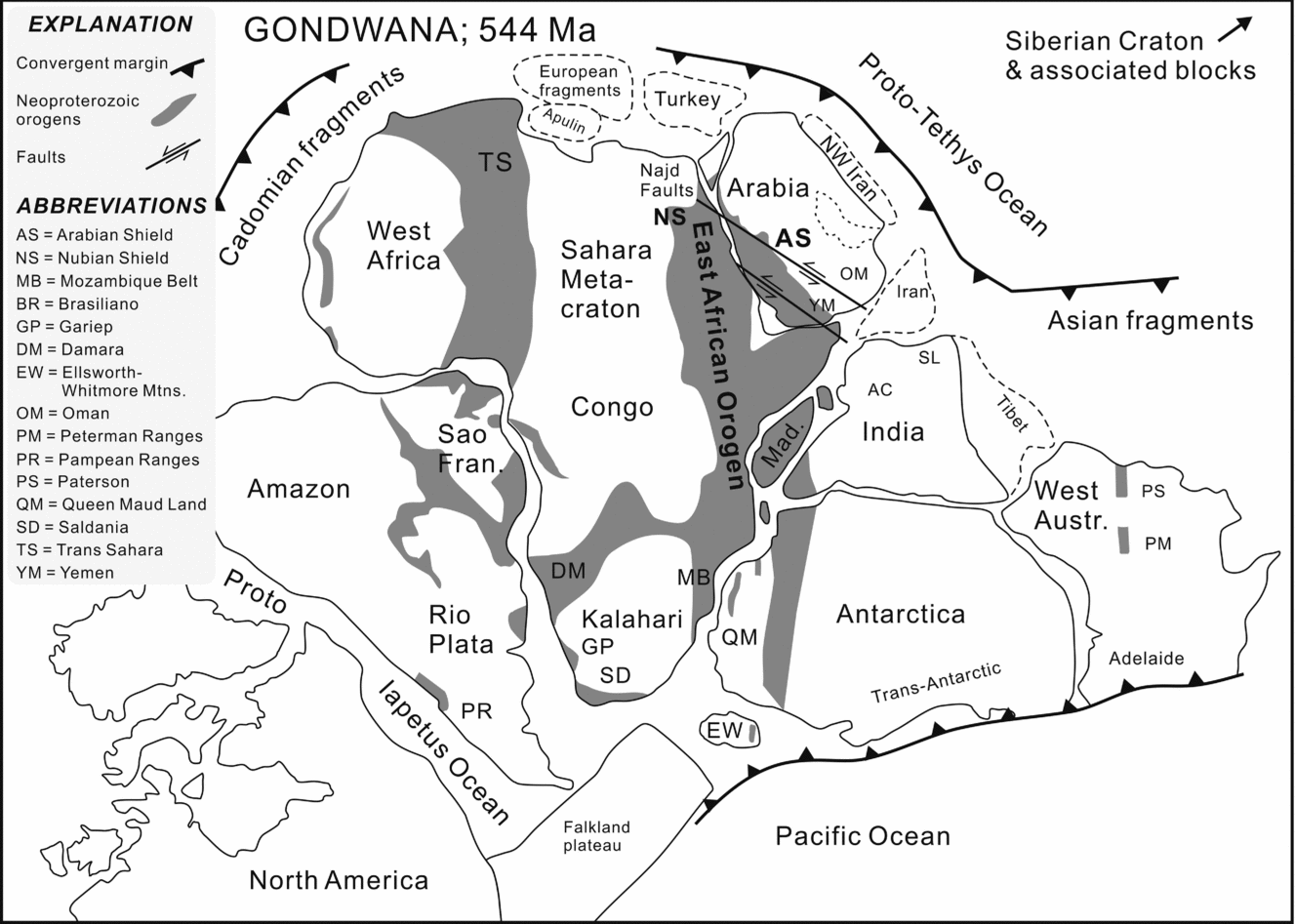
The Gondwana supercontinent, formed by the closure of the Mozambique Ocean and amalgamation of East and West Gondwana near the end of Neoproterozoic time, led to the formation of the East African Orogeny (EAO; Fig. 2). The EAO extends from southern Israel, Sinai and Jordan in the north to Mozambique and Madagascar in the south. Traditionally, it is subdivided into the Arabian–Nubian Shield (ANS) in the north, composed largely of juvenile Neoproterozoic crust (Fig. 2; Stern, Reference Stern1994; Johnson et al. Reference Johnson, Andresen, Collins, Fowler, Fritz, Ghebreab, Kusky and Stern2011), and the Mozambique Belt (MB) in the south, comprising mostly pre-Neoproterozoic crust with a Neoproterozoic – early Cambrian tectonothermal overprint.
Map of Gondwana at the end of Neoproterozoic time showing the general arrangement of different tectonic elements (after Powell et al. Reference Powell, Preiss, Gatehouse, Krapez and Li1994).

The ANS is composed of accreted Neoproterozoic juvenile volcanic arcs, gneisses, metagabbros, metavolcano-sedimentary sequences, granites and gabbro–diorite complexes (Stern, Reference Stern1994). At about 580–540 Ma, the ANS crust was stabilized, accompanied by continental-scale uplift, erosion and the development of intramountain basins and rifting (Moghazi, Reference Moghazi2003; Avigad et al. Reference Avigad, Sandler, Kolodner, Stern, McWilliams, Miller and Beyth2005). At the end of Neoproterozoic time, the basement of North Africa and Arabia subsided thermally providing the accommodation space necessary for the deposition of platform-type Cambro-Ordovician fluvio-marine deposits that can be traced from Morocco in the west to Oman in the east (Avigad et al. Reference Avigad, Sandler, Kolodner, Stern, McWilliams, Miller and Beyth2005). These deposits thicken northwards and the sedimentation was accomplished by a continent-wide braided fluvial stream with a general south to north palaeocurrent direction throughout North Africa and Arabia. In this context, the overall North African palaeogeography during Cambrian time was that of a broad platform, gently sloping to the north and being progressively overstepped from north to south by a thin sedimentary veneer ranging southwards from shallow marine to fluvial (Ghienne et al. Reference Ghienne, Boumendjel, Paris, Videt, Racheboeuf and Salem2007).
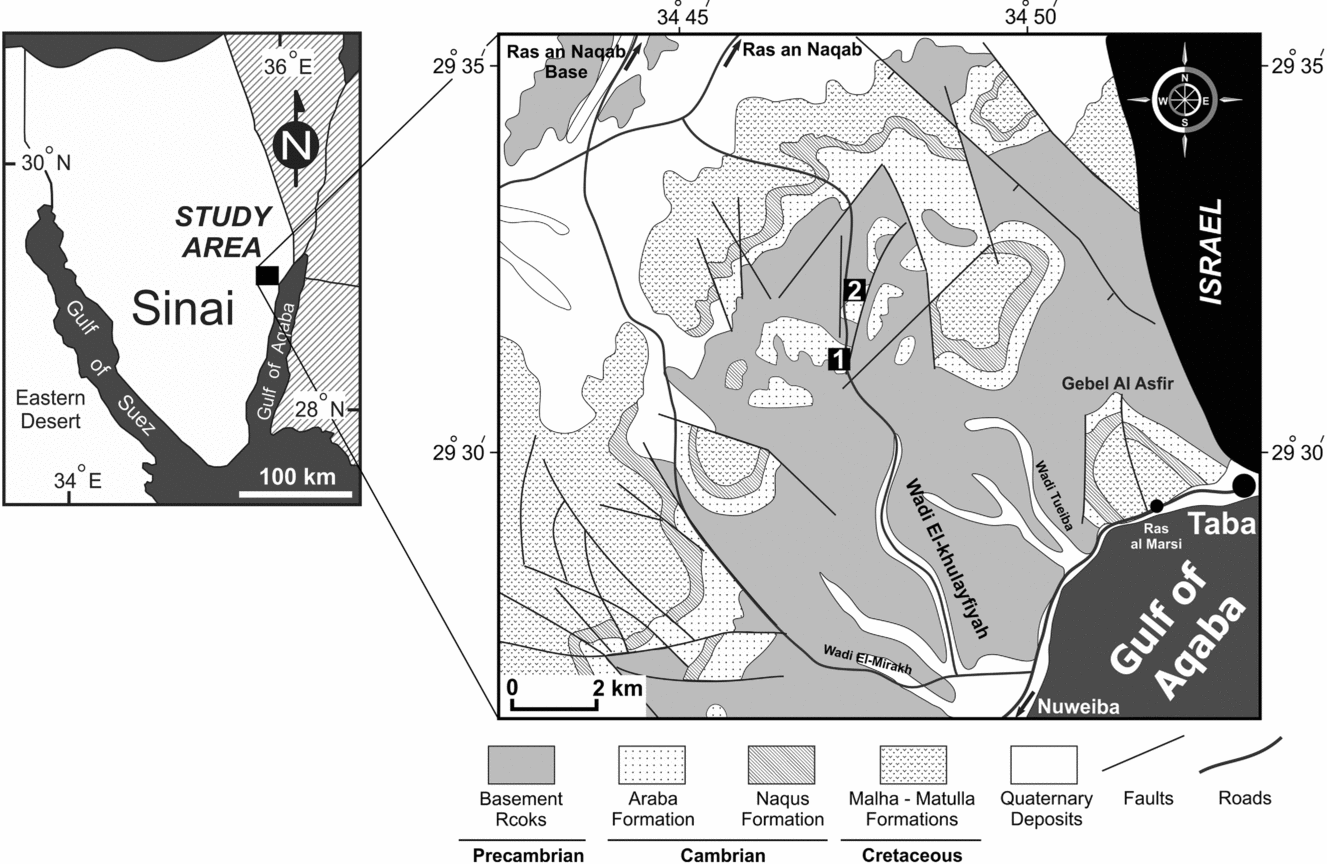
The study area lies between latitudes 29°31′–29°33′N and longitudes 34°46′–34°48′E, along Wadi El-Khulayfiya to the west of the Gulf of Aqaba and Taba City, east Sinai, Egypt (Fig. 3). In this area, Precambrian basement of the ANS is nonconformably overlain by the Cambrian Araba Formation and the overlying Ordovician Naqus Formation. These siliciclastic deposits are unconformably succeeded by the Lower Cretaceous Malha Formation and the overlying Upper Cretaceous Galala, Wata and Matalla formations.
Simplified location and geological maps of the Taba region, west of the Gulf of Aqaba, NE Egypt. Numbers refer to the location of the measured sections.

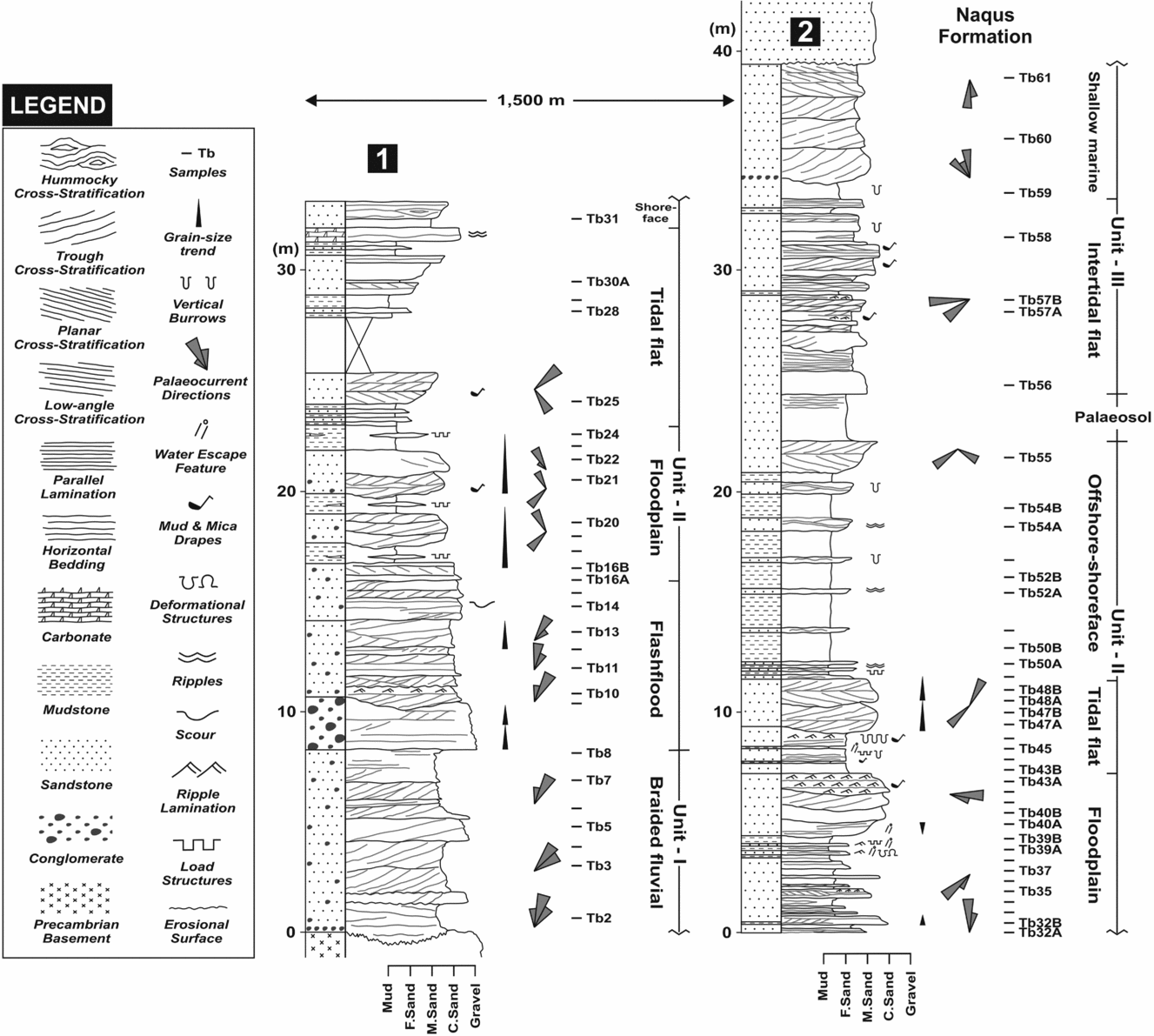
The Araba Formation attains a thickness of ~ 60 m in the study area and consists of very fine-grained to pebbly sandstone with mudstone, conglomerate and rare carbonate intercalations (Fig. 4). This formation was deposited in fluvio-marine environments and is differentiated into three incomplete depositional units. The basal one (Unit-I) is ~ 12 m of medium- to coarse-grained sandstones, arranged in seven vertically stacked 0.8 to 3 m thick channels that seem to have been deposited in a northward-flowing low-sinuosity braided fluvial system.
Measured sections (1 and 2) and the proposed depositional settings of the studied Araba sandstones exposed in the Taba region, east Sinai, Egypt.

The second unit (Unit-II) is ~ 33 m of fining-upwards strata representing deposition in a fluvio-marine setting with an upwards increase in marine influence. It consists at the base of 15 m thick massive clast- to matrix-supported conglomerates grading upwards into alternating massive to horizontal-laminated sandstones and reddish brown mudstones. This basal part is interbedded with thin cross- and ripple-laminated fine-grained sandstone representing ephemeral flash flood and associated distal floodplain deposits. The middle part, on the other hand, is dominated by 6–12 m thick heterolithic reddish brown argillaceous fine-grained sandstones, interbedded with massive, plane parallel-laminated to cross-stratified medium-grained sandstones, and locally a thin dolomitic bed. These strata bear features such as tidal laminites, mud drapes, oppositely dipping cross-lamination, alternations of thick sand – thin mud couplets, reactivation surfaces, wave ripples and abundant vertical burrows suggesting deposition in an intertidal flat setting. The upper part of this unit is represented by ~ 10 m of mudstones interbedded with storm-induced thin wave-rippled to hummocky cross-stratified sandstones deposited in an offshore to offshore – lower shoreface transition environment. It is sharply capped by cross-stratified coarse-grained sandstones of upper shoreface affinity. The contact between Unit-II and Unit-III is defined by a ~ 1.5 m thick palaeosol representing a subaerial unconformity.
Unit-III (~ 16 m thick) is dominated by heterolithic deposits of intertidal flat origin, sharply and erosively overlain by thick-bedded and cross-stratified coarse-grained sandstones of shallow marine origin.
3. Material and methods
The mineralogical, petrographic and geochemical studies were carried out at the Department of Geosciences, Osaka City University in Japan.
A total of 65 sandstone and mudstone samples were collected from the entire Araba Formation. Among them 45 thin-sections were prepared. The selected sandstone samples were impregnated with blue-dye epoxy under vacuum to identify porosity and stained with Alizarin Red-S and potassium ferricyanide to facilitate mineral identification. The sandstone modal composition was quantified based on counting 500 points in each thin-section using the Gazzi-Dickinson method. Grain texture and fabric were visually identified by measuring the maximum diameter of 100 random grains per thin-section under the microscope.
The clay mineralogy of the mudstone and selected sandstone samples was determined by conventional X-ray diffraction (XRD) method, using smear-on-glass slide and powder press techniques. The samples were completely dispersed in a diluted solution of Calgon to avoid flocculation. The oriented mounts of clay fractions (< 2 μm) were prepared by pipetting the clay suspension onto glass slides. The analysis was done by a RIGAKU RAD-I X-ray diffractometer (CuKα-radiation with 30 kV, 10 mA, 2–70° 2-theta). Discrimination between kaolinite and chlorite was done after heating the samples to 550°C for two hours in a muffle furnace. Expandable clays were determined after treatment with ethylene glycol at 25°C for 15 hours.
Fifteen sandstone samples were examined by a KEYENCE VE-7800 Scanning Electron Microscope (SEM) at 15 and 20 kV accelerating voltages for identification of delicate cementing materials. The chemical compositions of some selected silicate and carbonate minerals plus different cement types were obtained using a JEOL JSM-5500 SEM equipped with an EDAX-EDS system (CDU-LEAP and back-scattered electron (BSE) detectors and Genesis software). Operating conditions during electron microprobe analyses were an acceleration voltage of 20 kV and a beam current of 500 pA. The concentrations of Si, Ti, Al, Fe, Mn, Ca, Mg, Ba, N, K, P, Ni, Co, Cr, V, Cu and Zn were quantitatively measured.
Major- and trace-element concentrations of 45 sandstone and 9 mudstone samples were obtained by a RIGAKU RIX 2100 X-ray fluorescence spectrometer (XRF), equipped with a Rh/W dual-anode X-ray tube. The analyses were performed on the whole-rock specimens under a 50 kV and 50 mA accelerating voltage and tube current, respectively. Fused glass discs were prepared by mixing 1.8 g of powdered sample (dried to 110°C for 4 hours), with 3.6 g of Spectroflux (Li2B4O7 20%, LiBO2 80%, dried at 450°C for 4 hours), 0.54 g of oxidant LiNO3 (dried at 110°C for 4 hours) and traces of LiI. The mixture was fused at 800°C for 120 sec and 1200°C for 400 sec. The chemical index of alteration (CIA), chemical index of weathering (CIW) and plagioclase index of alteration (PIA) were calculated following the methods of Nesbitt & Young (Reference Nesbitt and Young1982), Harnois (Reference Harnois1988) and Fedo, Nesbitt & Young (Reference Fedo, Nesbitt and Young1995), respectively.
4. Results
4.a. Petrography
4.a.1. Conglomerate
Clast- to matrix-supported conglomerate is a minor lithofacies found in the basal part of the Araba Formation of the study area (Fig. 4). The conglomerates have polymictic composition with dominantly granite, volcanic, quartz and chert pebbles. Clasts are up to 20 cm in length, sub-angular to rounded in shape and poorly sorted. They yield N–NW palaeocurrent directions. Sandstone matrix clasts are sub-angular to sub-rounded, moderately to well sorted and consist of quartz, lithic fragments and rarely K-feldspar that is cemented by iron oxides, silica and clay cements.
4.a.2. Sandstone
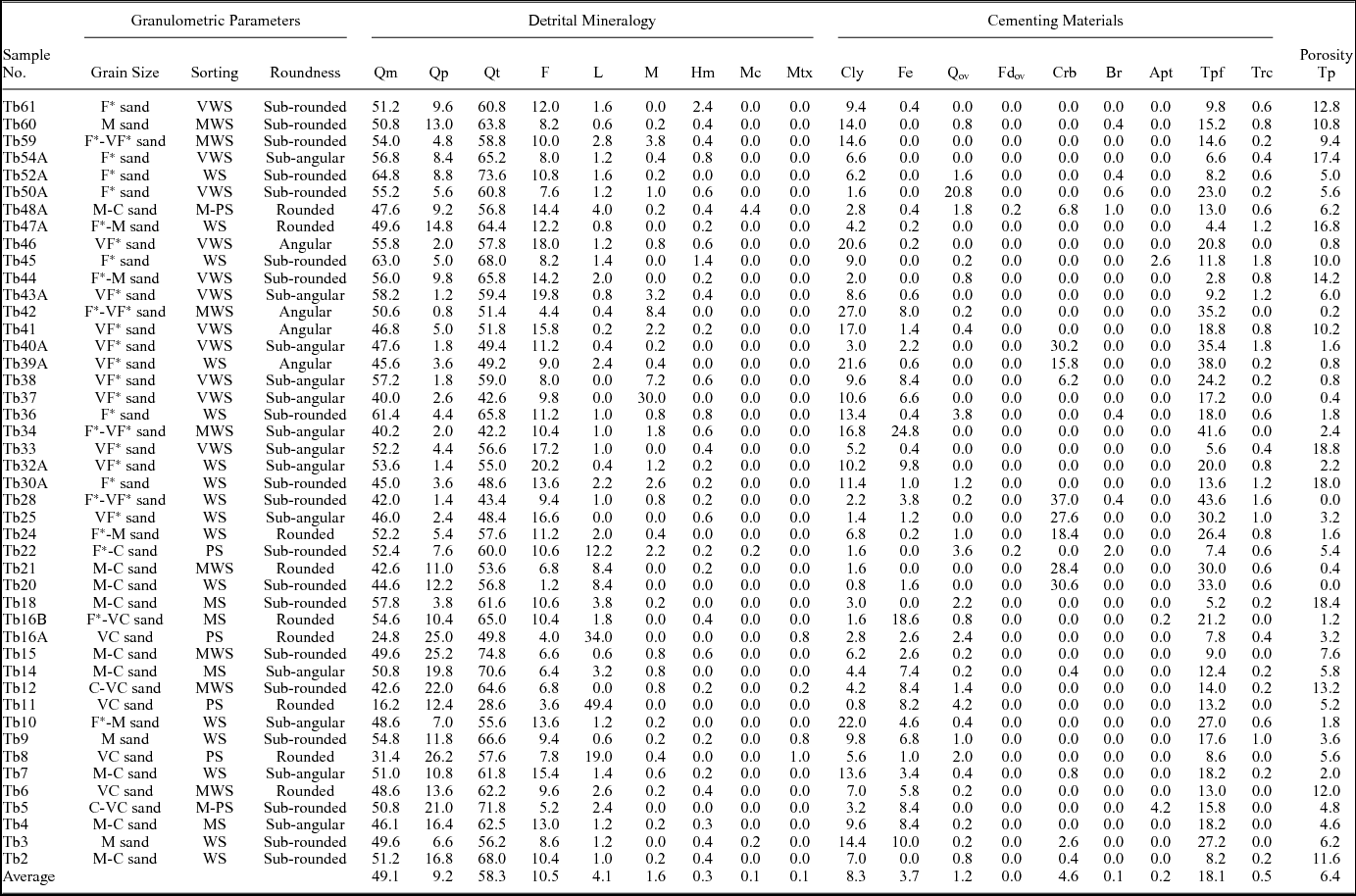
The sandstones of the Araba Formation are composed mainly of framework grains (average 75%), diagenetic cements (av. 18.6%) and porosity (av. 6.4%) with a minor amount of matrix. They vary from very fine to very coarse grained and poorly to very well sorted with angular to rounded grains (Table 1). The extrabasinal non-carbonate grains are represented mainly by monocrystalline and polycrystalline quartz (av. 49.1% and 9.2%, respectively; Table 1). Monocrystalline grains mostly display straight to slightly undulose extinction and occasionally contain mineral inclusions such as zircon and tourmaline crystals, and rarely rutile needles (Fig. 5a). Some monocrystalline quartz grains are embayed and euhedral in shape. Polycrystalline quartz grains predominate in the coarse sand fraction and include subcrystals with straight, curved, sutured and crenulated intercrystalline boundaries.
Textural parameters and modal composition of the Araba Formation

Abbreviations: VC – very coarse grained; C – coarse grained; M – medium grained; F* – fine grained; VF – very fine grained; VWS – very well sorted; WS – well sorted; MWS – moderately well sorted; MS – moderately sorted; PS – poorly sorted; Qm – monocrystalline quartz; Qp – polycrystalline quartz; Qt – total quartz; F – feldspar; L – rock fragment; M – mica; Hm – heavy minerals; Mc – mud clast; Mtx – matrix; Cly – clay mineral cements; Fe – iron-oxide cements; Qov – quartz overgrowth; Fdov – feldspar overgrowth; Crb – carbonate cements; Br – barite cement; Apt – apatite cement; Tpf – total pore-filling cement; Trc – total replacement cement; Tp, total porosity.
Photomicrographs of petrographic features of the Araba sandstones showing: (a) monocrystalline quartz grain (Qm) with abundant prismatic tourmaline inclusions, XPL; (b) rhyolite (Ry) and dacite (dc) fragments exhibiting spheriolitic and porphyritic textures, respectively, XPL; (c) a granitic rock fragment, PPL; (d) a zircon grain with abraded terminals, XPL; (e) an opaque (op) and a hornblende grain with fracture porosity, PPL.

Feldspars are second in abundance (av. 10.5%; Table 1) and dominated by twinned K-varieties (e.g. microcline and perthite) that are partly to extensively altered to clay minerals. Rock fragments range from ~ 0 to 49.4% (av. 4.1%; Table 1) and are medium to very coarse and sub-angular to well rounded in shape. They are of igneous (av. 67% of total lithic grains), sedimentary (av. 20%) and metamorphic origin (av. 13%). Grains made of volcanic rocks such as rhyolite and dacite are common (Fig. 5b) and coarse granitic and granophyre fragments are also dominant (Fig. 5c). Sedimentary grains are sub-rounded to well rounded and composed of unfossiliferous chert fragments. Metamorphic fragments are represented only by quartzite grains.
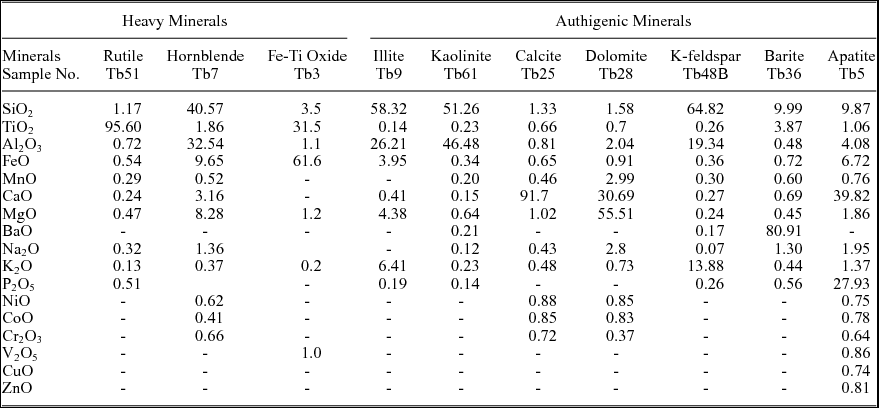
Muscovite and biotite (av. 1.6%) are common in the Fe-rich, very fine- to fine-grained sandstones and occur as very fine comminute flakes and shreds. Mica flakes tend to be aligned parallel to bedding planes and deformed when sandwiched between detrital grains. Heavy minerals (av. 0.3%) include zircon, tourmaline and rutile together with minor hornblende and apatite grains (Fig. 5d, e). Opaques are principally made of Fe and Ti varieties (Table 2). Intrabasinal non-carbonate grains are only represented by illitized mud intraclasts (av. 0.1%) that are extensively compacted into a pseudomatrix (av. 0.1%; Table 1).
Representative results of electron microprobe analyses in the Araba sandstones

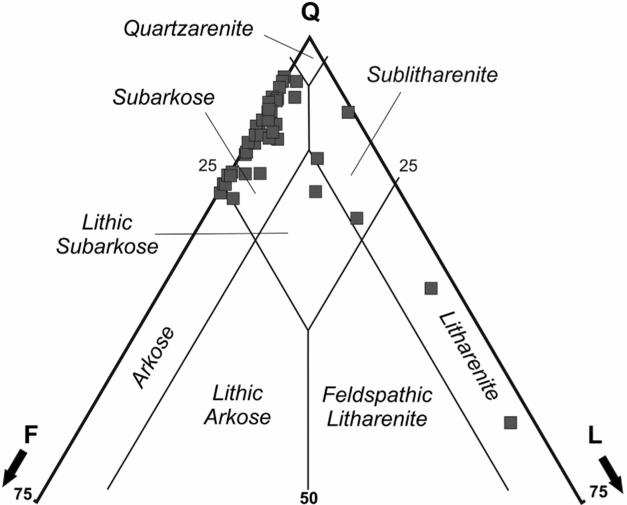
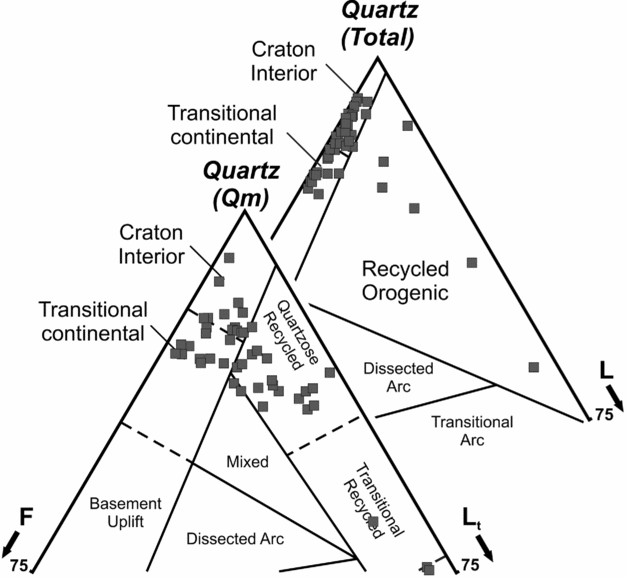
On average, the present modal composition Q80F14L6 suggests that the Araba sandstones are mainly subarkoses (McBride, Reference McBride1963; Fig. 6). However, the present composition slightly differs from that at the time of deposition, which was probably Q78F16L6, based on the abundance of mouldic pores, as well as macropores filled with cement (cf. McBride, Reference McBride1977). These sandstones plot within the craton interior and transitional continental, as well as recycled orogenic fields (Dickinson et al. Reference Dickinson, Beard, Brakenridge, Erjavec, Ferguson, Inman, Knepp, Lindberg and Ryberg1983; Fig. 7).
QFL triangle diagram showing the composition of the sandstones of the Araba Formation (after McBride, Reference McBride1963). Q – quartz; F – feldspar; L – lithic grains.

QtFL and QmFLt ternary diagrams showing the main provenances of the Araba sandstones (after Dickinson et al. Reference Dickinson, Beard, Brakenridge, Erjavec, Ferguson, Inman, Knepp, Lindberg and Ryberg1983).

4.b. Clay mineralogy
XRD analysis of the sandstone and mudstone samples revealed no obvious qualitative difference in the mineralogical composition between the bulk and fine (< 2 μm) fractions. Clays are represented mainly by mixed-layer illite/smectite (I/S), illite and smectite, together with traces of kaolinite.
Mixed-layer I/S is the most abundant clay species, showing a broad diffraction peak between the basal spacing normally shown by its pure components. It constitutes about 46% of the clay volume. Illite comprises about 32% of the total clay volume and is characterized by 10.06, 5.00 and 3.35Å reflections. Smectite (montmorillonite) constitutes about 17% of the total clay volume and is characterized by 14.6Å reflection. Unlike other clay species, kaolinite occurrence is restricted to the middle and upper layers of the Araba Formation. It comprises only 5% of the total clay and is characterized by 7.17, 7.16, 3.58 and 3.57Å reflections that completely collapse after being heated to 500°C.
4.c. Sandstone diagenesis
The sandstones of the Araba Formation display a variety of diagenetic features. These include mechanical infiltration of clay, compaction, precipitation of mineral cements, dissolution of detrital and diagenetic constituents, as well as grain replacement (Figs 8, 9). Most of these processes are responsible for destroying much of the primary intergranular porosity and permeability in the sandstones. Mechanical compaction is evidenced by grain packing, bending of flexible mica flakes and fracturing of quartz, feldspar and brittle rock fragments (Fig. 8a). Chemical compaction is well developed as indicated by the predominance of concave-convex and sutured grain contacts (Fig. 8b). Grain-to-grain pressure dissolution features are more well developed in clay-coat-rich sandstones than in clay-coat-poor ones.
Photomicrograph, SEM and BSE images showing diagenetic features of the Araba sandstones: (a) An intensively crushed K-feldspar (fd) between rigid quartz grains (qz), XPL. (b) Sutured contact (arrow) developed along detrital quartz grains. (c) Honeycomb-shaped mixed-layer I/S clay coating engulfed by quartz overgrowth (qzov). (d) Fibrous illite with lath-like projections growing on I/S aggregates. (e) Tangential, cryptocrystalline smectite coating. (f) Kaolinite cement (k) completely occluding the pore spaces and engulfing smectite grain-coating (sm) (arrows).

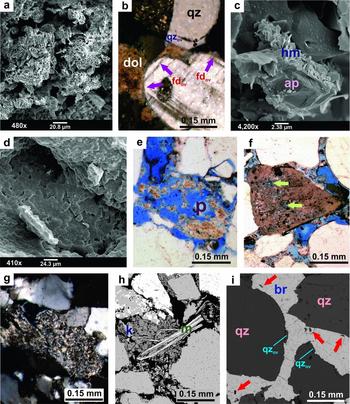
Photomicrographs, SEM and BSE images showing the diagenetic features of the Araba Formation: (a) Micro-rosettes of haematite. (b) K-feldspar overgrowth (fdov) replaced by late-stage poikilotopic dolomite (dol), XPL. (c) Fluorapatite blade (ap) associated with hexagonal crystals of haematite (hm). (d) Halite cement engulfing all other minerals. (e, f) Intragranular macropores (p and arrows), in K-feldspar and hornblende grains, respectively, PPL. (g) Complete illitization of feldspar grain, XPL. (h) A characteristic expanded texture of mica (m) and kaolinite (k) replacement. (i) Corrosive poikilotopic barite cement (br) invading quartz grains (qz) and their overgrowth (qzov). Note the floating relics (arrows).

Clay minerals are the most abundant diagenetic cements in the studied sandstones. They range in abundance from 0.8 to 27% (av. 8.3%; Table 1). The mixed-layer I/S has a sheet structure with lath-like, spiny projections of illite and a crinkly form of smectite (Fig. 8c). Illite occurs commonly as irregular flakes with tiny lath-like projections and fibrous pore-filling cement (Fig. 8d). Smectite occurs chiefly as a crinkly form tangentially coating detrital grains and, less commonly, as pore-filling cement plugging the intergranular porosity (Fig. 8e). Kaolinite is present as euhedral, pseudo-hexagonal plates and face-to-face vermicular stacks filling intergranular primary pores and replacing feldspars, respectively (Fig. 8f).
Iron oxides (0–24.8%; av. 3.7%; Table 1) occur as thin coatings around detrital grains and as scattered aggregates of pore-filling cement (Fig. 9a). Quartz cement (0–20.8%; av. 1.2%) mostly occurs as thick, euhedral syntaxial overgrowths around detrital quartz grains (Table 1). The overgrowth was differentiated from detrital quartz rims by fluid inclusions, thin clay and/or Fe-oxide coatings. K-Feldspar cement is present as traces (up to 0.2%; Fig. 9b) in the form of thin, discontinuous overgrowths. Electron microprobe analyses showed virtually pure end-member KAlSi3O8 with a K2O value as high as 13.88% and sodium concentrations of about 0.07% (Table 2).
Calcite and dolomite are the carbonate cements (0–37%; av. 4.6%; Table 1) observed in the Araba sandstones. Calcite is recorded as scattered patches partially filling intergranular pores and locally filling fractures in quartz and occasionally replacing detrital quartz, feldspars and micas (Fig. 9b). Electron microprobe analyses revealed a nearly pure CaCO3 end-member with minor MgO and MnO (Table 2). Dolomite occurs mainly as poikilotopic cement in the form of pore-filling, fracture-filling and, less frequently, as mosaics of tiny rhombic crystals. Occasionally, it replaces detrital quartz and feldspar grains. Dolomite crystals usually contain abundant fluid inclusions giving the crystals a turbid aspect in transmitted light. Electron microprobe analyses revealed a nearly pure CaMgCO3 end-member with minor amounts of MnO (Table 2).
Barite, apatite and halite cements were detected only in a few samples (Table 1). Barite (0–2%; av. 0.1%), is present typically as patches of poikilotopic crystals in the form of pore-filling and fracture-filling textures with replacement features attacking the margins of surrounded framework grains such as quartz, feldspars, rock fragments and other overgrowth cements. Apatite cement (av. 0.2%) occurs as prismatic blades up to 30 μm in length and as locally occluded pore spaces or intermixed with reddish iron-oxide materials (Fig. 9c). Electron microprobe analyses showed that apatite cement is of the fluorapatite type (Table 2). Traces of halite cement lining pores is found as small cubes with rounded corners (Fig. 9d).
Unstable K-feldspar, biotite and less stable heavy minerals, as well as carbonate cements, are the phases that suffered from dissolution in these sandstones (Fig. 9e, f). Partial dissolution of mineral grains is recognized by jagged or embayed boundaries, whereas complete dissolution of detrital grains has led to the formation of mouldic macropores. Illite is observed partially or completely replacing K-feldspar grains (Fig. 9g). The replacement proceeded apparently parallel to cleavage planes. Kaolinite is observed replacing K-feldspar and muscovite forming a vermicular texture and a characteristic fanning or expanded texture, respectively (Fig. 9h). Calcite, dolomite and barite are highly corrosive to detrital quartz and K-feldspar grains and their overgrowths, as marked by the presence of several projections/engulfments of these cements into grain margins (Fig. 9i).
4.d. Geochemistry
4.d.1. Major-element geochemistry
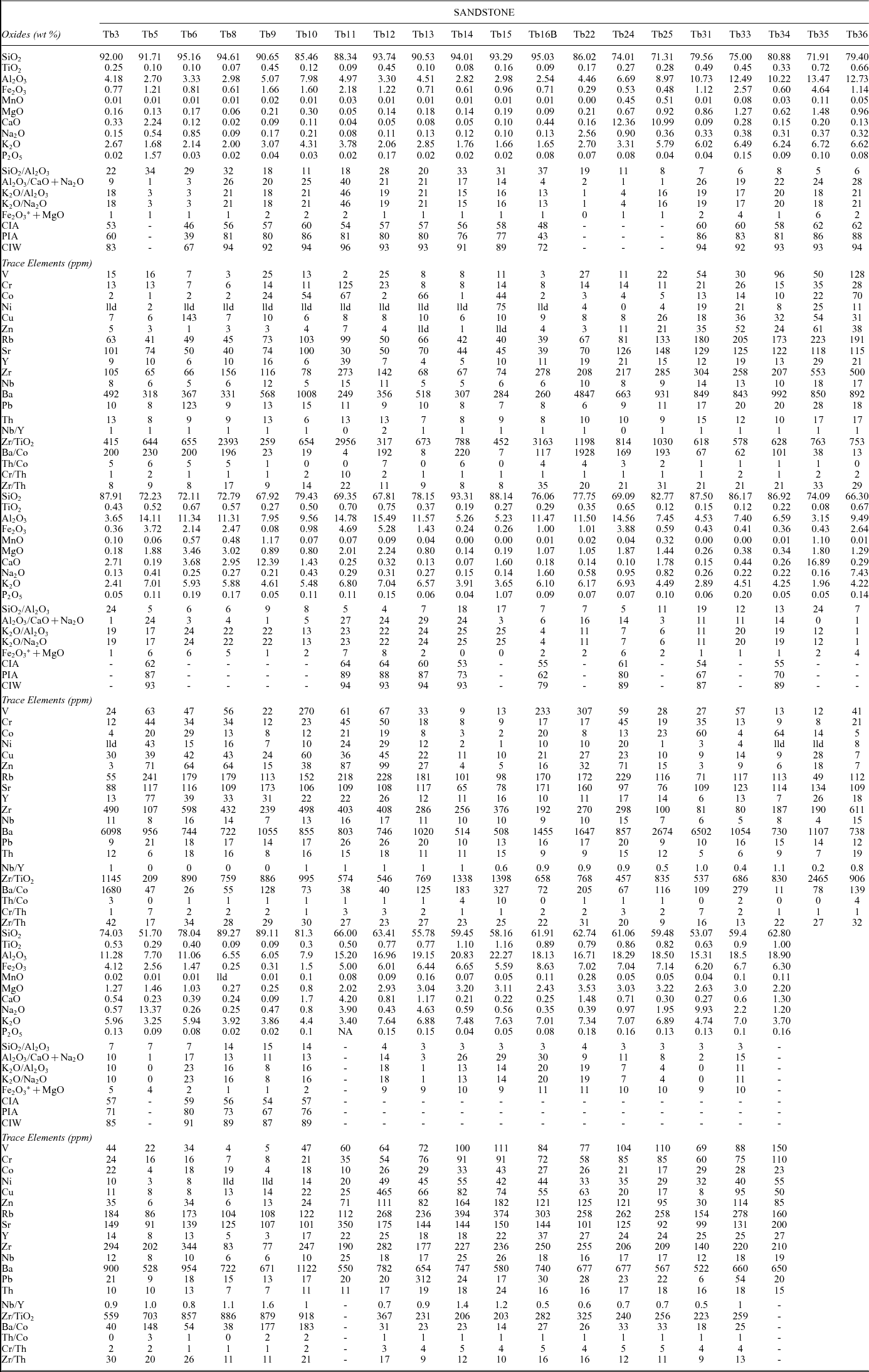
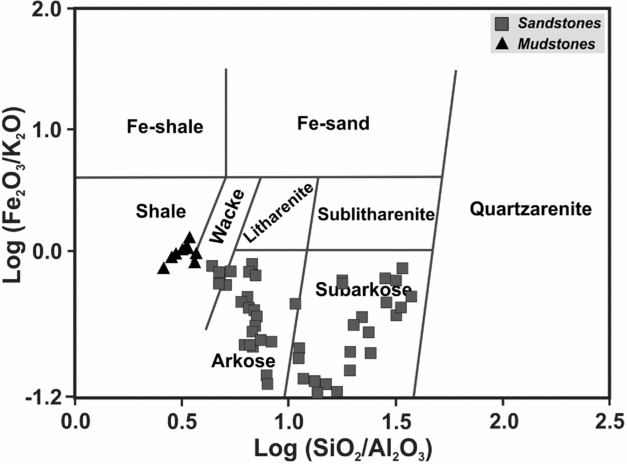
The sandstones of the Araba Formation have higher SiO2 (av. 81.3%), and correspondingly lower TiO2 (av. 0.3%), Al2O3 (av. 7.9%), Fe2O3 (av. 1.5%), MgO (av. 0.8%) and K2O (av. 4.4%) contents than in the mudstones (Table 3). Based on the chemical classification diagram of Herron (Reference Herron1988), the sandstones are mostly classified as arkoses to subarkoses and the mudstones as shales (Fig. 10).
Chemical composition of major elements (%) and trace elements (ppm) of the Araba sandstones and mudstones

Geochemical classification of the sandstones and mudstones of the Araba Formation (after Herron, Reference Herron1988).

The relationships between SiO2 and TiO2 (r = −0.62; n = 45), Al2O3 (r = −0.73; n = 45), Fe2O3 (r = −0.58; n = 45), MgO (r = −0.76; n = 45) and K2O (r = −0.64; n = 45) for the sandstones of the Araba Formation are statistically not significant. However, in the mudstones, this correlations are slightly different (r = 0.30, −0.00, 0.39, 0.25 and 0.75; n = 9, respectively). Similarly, in the sandstones, the correlations between Al2O3 and TiO2 (r = 0.80; n = 45), Fe2O3 (r = 0.70; n = 45), MgO (r = 0.72; n = 45) and K2O (r = 0.97; n = 45) are statistically significant (Fig. 11b), whereas, in the mudstones, except for TiO2 and K2O (r = 0.92 and 0.60, respectively; n = 9), the correlations are statistically not significant for Fe2O3 and MgO (r = −0.21 and 0.26, respectively; n = 9). On the other hand, both MnO and Fe2O3*+MgO are positively correlated with MgO (r = 0.65; n = 54) and Al2O3 (r = 0.89; n = 54), respectively.
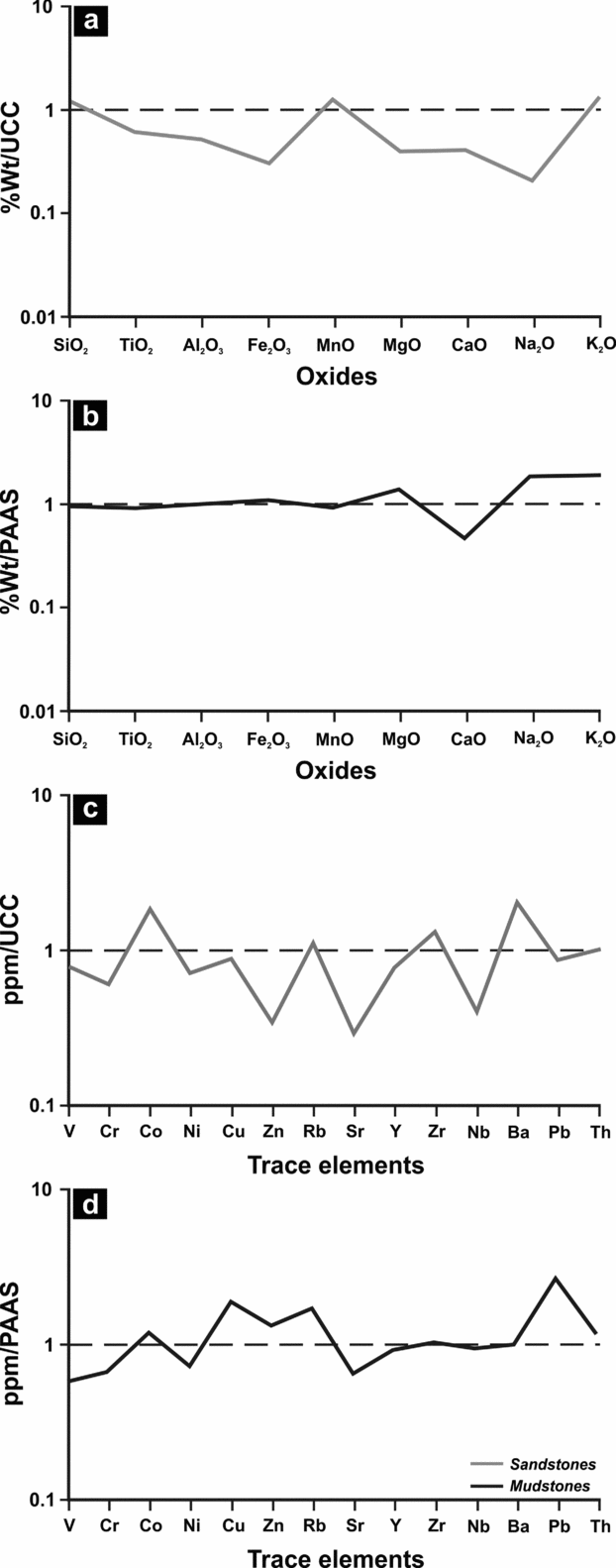
Multi-element plots of average chemistry of the Araba Formation normalized against UCC and PAAS (Taylor & McLennan, Reference Taylor and McLennan1985). (a) Major-element concentrations of sandstones normalized against UCC; (b) major-element concentrations of mudstones normalized against PAAS; (c) trace-element concentrations of sandstones normalized against UCC; and (d) trace-element concentrations of mudstones normalized against PAAS.

Generally, the sandstone and mudstone samples from the Araba Formation have K2O/Na2O values >>1 (av. 16 and 11, respectively; Table 3). On average, the Araba sandstones are slightly enriched in SiO2 and MnO, as well as in K2O contents and depleted in other elements compared to the upper continental crust (UCC; Taylor & McLennan, Reference Taylor and McLennan1985; Fig. 11a). On the other hand, the mudstones show a mostly similar composition to the Post Archaean Australian Shale (PAAS; Taylor & McLennan, Reference Taylor and McLennan1985), except for MgO, K2O, Na2O and CaO (Fig. 11b).
4.d.2. Trace-element geochemistry
The trace-element concentrations and elemental ratios are presented in Table 3. The trace-element concentrations in the clastic sediments of the Araba Formation are normalized to the average UCC and PAAS values (Fig. 11c, d, respectively). The abundances of large ion lithophile elements (LILEs), such as Rb, Ba and Sr, are similar in the sandstone and mudstone samples but are different relative to the UCC and PAAS. In the sandstone and mudstone samples, Rb and Ba are enriched but Sr is depleted relative to the UCC and PAAS (Fig. 11c, d, respectively). Rb, Ba and Sr contents are positively correlated with both Al2O3 (r = 0.97, 0.61 and 0.40, respectively; n = 54) and K2O (r = 0.93, 0.68 and 0.54, respectively; n = 54).
The concentrations of high-field-strength elements (HFSEs) such as Y, Zr, Nb and Th are similar in the sandstone and mudstone samples but show different behaviour to the UCC and PAAS (Fig. 11c, d, respectively). The average concentration of Zr is relatively enriched in the sandstones and mudstones (av. 247 and 220 ppm, respectively), while Th is enriched only in the mudstones (av. 18 ppm). In contrast, Y (av. 17 and 25 ppm) and Nb (av. 10 and 18 ppm) are depleted in the sandstone and mudstone samples. Meanwhile, the HFSEs (Y, Zr, Nb and Th) for the sandstones and mudstones are positively correlated with TiO2 (r = 0.44, 0.47, 0.93 and 0.86, respectively; n = 54). On the other hand, Nb and Th are positively correlated with Al2O3 (r = 0.83 and 0.71, respectively; n = 54) and K2O (r = 0.75 and 0.59, respectively; n = 54). The average Zr content for the sandstones is higher than in the mudstones.
The transition trace elements (TTEs) including V, Cr, Co, Ni and Zn in the sandstones and mudstones show different abundances relative to the UCC and PAAS (Fig. 11c, d, respectively). In comparison with the UCC and PAAS, the V, Cr and Ni contents are lower and Co content is higher in the sandstone and mudstone samples, respectively (Fig. 11c, d). The Zn content is higher in the mudstone than in the sandstone samples, as well as compared to the average PAAS value (Fig. 11c, d; Table 3). The TTEs, V, Cr, Ni and Zn in the sandstone and mudstone samples are positively correlated with TiO2 (r = 0.41, 0.70, 0.70 and 0.89, respectively; n = 54), Al2O3 (r = 0.49, 0.72, 0.71 and 0.91, respectively; n = 54), Fe2O3 (r = 0.25, 0.80, 0.74 and 0.85, respectively; n = 54) and K2O (r = 0.53, 0.57, 0.57 and 0.80, respectively; n = 54). In contrast, Co has shown no significant correlation with other elements. The Th/Co and Cr/Th ratios in the sandstones and mudstones vary from 0.1 to 9.5 and 0.6 to 9.9, respectively (Table 3).
5. Discussion
5.a. Mineral authigenesis
The grain-to-grain pressure dissolution features are well pronounced in the clay-coated and mica-rich sandstones of the Araba Formation indicating that intergranular clays played a major role in quartz dissolution. This dissolution is enhanced along mica contacts as a consequence of local pH increase arising from the interaction of mica surfaces with the adjoining pore fluids (Oelkers, Bjørkum & Murphy, Reference Oelkers, Bjørkum, Murphy, Kharaka and Maest1992).
The important factors that favour smectite formation in the Araba sandstones are mostly attributed to (1) the low-lying topography and poor drainage, which may have led to favourable chemical conditions for the formation of smectite (Aoudjit et al. Reference Aoudjit, Robert, Elsass and Curmi1995); and (2) semi-arid climatic conditions during weathering with minimal throughput of water and limited ability to lose cations (e.g. Ca2+, Mg2+, Na+ and K+). In weathered granitic rocks of the French Armorican Massif, poorly drained and relatively stagnant groundwater conditions in a downslope position (with the water enriched in silica and basic cations) have led to the preferential formation of dioctahedral smectite (montmorillonite; Aoudjit et al. Reference Aoudjit, Robert, Elsass and Curmi1995). The local dissolution of detrital framework grains can result in smectite growth at the expense of plagioclase and glassy volcanic grains in plagioclase-rich arkoses and litharenites (Ryu & Niem, Reference Ryu and Niem1999).
At increasing burial depth, smectite was likely to be converted into illite via mixed-layer I/S. This conversion was controlled by a combination of burial depth, temperature, time and also percentage of K-feldspar in the succession. Illite is probably formed during burial by the degradation of smectite at temperatures around 100°C (Chuhan, Bjørlykke & Lowery, Reference Chuhan, Bjørlykke and Lowery2000). On the other hand, kaolinite is probably derived from K-feldspars and micas which acted as a likely source of Al and Si (De Ros, Reference De Ros1998).
The iron incorporated in the haematite cement was likely released by the breakdown of unstable Fe-bearing minerals (e.g. pyroxene, amphibole and biotite; Schöner & Gaupp, Reference Schöner and Gaupp2005). These labile mafic minerals are partly prone to diagenetic alteration and suggest that the pigmentation process took place during the earlier stage of diagenesis.
Silica needed for quartz overgrowth is probably derived from the dissolution of K-feldspar; illitization of eodiagenetic smectite during burial; transformation of kaolinite into illite; and pressure dissolution (Madhavaraju et al. Reference Madhavaraju, Ramasamy, Ruffell and Mohan2002). Quartz cement is inhibited by grain-coating clays, which is normally attributed to a reduction in the surface area available for nucleation of authigenic quartz. Al and Si participating in K-feldspar cement were probably internally sourced by the alteration of detrital silicates, particularly feldspars. However, other sources of silica, such as pressure solution or illitization of smectitic clays, cannot be excluded.
The presence of poikilotopic calcite cement filling large intergranular pores in loosely packed sandstones with a floating grain texture, as well as its occurrence filling fractures in quartz or replacing detrital grains, probably indicates two stages of formation. Calcium needed for eodiagenetic calcite is derived from the dissolution of unstable grains such as plagioclase, hornblende and volcanic rock fragments (Moraes & De Ros, Reference Moraes and De Ros1990). Conversely, calcium incorporated in mesodiagenetic calcite is linked to the illitization of smectite in the sandstones and interstratified mudstones.
The potential contributors of magnesium in the Araba sandstones are believed to be the dissolution of biotite and the conversion of smectite to illite during diagenesis. This conversion is a common diagenetic process which is capable of releasing large amounts of Fe, Mg, Ca, Na and Si. Smectite–illite conversion is invoked as the source of ions necessary for late-stage dolomites.
The sulfate involved in barite formation and the presence of halite cement in these sandstones may be sourced from the overlying Lower Cretaceous Malha Formation and/or possibly from seawater. Such a source of sulfate has been demonstrated elsewhere in deeply buried sandstones from different basins (e.g. Sullivan et al. Reference Sullivan, Haszeldine, Boyce, Rogers and Fallick1994). A plausible internal source of Ba2+ is the dissolution of K-feldspar. This is consistent with the common association of K-feldspar and barite cements in the Araba sandstones.
The occurrence of apatite cement in the Araba sandstones is probably related to recrystallization of detrital apatite which was derived from acidic igneous rocks (Weissbrod & Nachmias, Reference Weissbrod and Nachmias1987). However, phosphorous may be contributed from the nearby weathered basement, since continental weathering is likely the most important source of phosphorous. Thus, the combination of Ca, F and PO4 under basic conditions may have led to the precipitation of fluorapatite cement. Apatite cement has been previously recorded in Lower Palaeozoic sandstones of SW Sinai (Kordi, Turner & Salem, Reference Kordi, Turner and Salem2011) and neighbouring countries (e.g. Israel, southern Jordan and NW Arabia; Weissbrod & Nachmias, Reference Weissbrod and Nachmias1987).
5.b. Geochemical composition
The petrological and geochemical classifications of the Araba sandstones show a similar behaviour. The plotting of sandstone samples within the arkosic field (Fig. 10) is attributed to the presence of aluminous clay minerals. The enrichment of silica in the sandstones relative to the mudstones together with their negative correlations with TiO2, Al2O3, Fe2O3, MgO and K2O, confirms that most of the silica is incorporated in quartz grains. The differences in correlation coefficient values between the sandstones and mudstones are probably attributed to dilution by quartz (Cullers, Reference Cullers2000). Similarly, the higher contents of Al2O3, TiO2, Fe2O3 and K2O in the mudstone samples reflect their association with clay-sized phases. In general, Al2O3 and trace-element concentrations increase as grain size and SiO2 content decrease (Armstrong-Altrin et al. Reference Armstrong-Altrin, Lee, Kasper-Zubillagaa, Carranza-Edwards, Garcia, Eby, Balaram and Cruz-Ortiz2012, Reference Armstrong-Altrin, Nagarajan, Madhavaraju, Rosales-Hoz, Lee, Balaram, Cruz-Martinez and Avila-Ramirez2013). The common association of TiO2, Fe2O3, MgO, Fe2O3+MgO* and K2O in the mudstones indicates that these elements are absorbed onto clay minerals and metal oxides (Das, Al-Mikhlafi & Kaur, Reference Das, Al-Mikhlafi and Kaur2006). The elevated K2O/Na2O ratios in the Araba sandstones and mudstones are attributed to the higher proportion of K-bearing minerals such as K-feldspar, muscovite and illite compared to Na-plagioclases (Table 1).
The depletion of the major-element concentrations in the Araba sandstones, compared to the UCC, is not only attributed to quartz dilution but also indicates that chemical weathering has led to the removal of soluble elements from the clastic fraction compared to insoluble hydrolysates. The slightly elevated MnO content in the sandstones is possibly due to Mn mineralization, which is consistent with the Cu–Mn mineralization recorded in the Cambrian Timna Formation of Israel (A. Segev, unpub. Ph.D. thesis, Hebrew Univ. Jerusalem, Jerusalem, 1986). However, electron microprobe analysis of dolomite (sample Tb 28; Table 2) and the close association of MnO with MgO (Table 3) may support a diagenetic origin.
K2O is slightly enriched as a result of K-metasomatism during illite formation. According to Fedo, Nesbitt & Young (Reference Fedo, Nesbitt and Young1995), K-metasomatism of sandstones can take two different paths, representing (1) conversion of aluminous clay minerals to illite, and/or (2) conversion of plagioclase to K-feldspar. K-metasomatism was also documented from the Lower Cambrian sediments of Israel (Sandler, Teutsch & Avigad, Reference Sandler, Teutsch and Avigad2012). The lower CaO and Na2O contents in the sandstones together with a lack of elemental relationships suggest the destruction of plagioclases during chemical weathering in the source area and/or during sediment transport. On the other hand, the notable enrichment of MgO, K2O and Na2O in the mudstones is possibly linked to phyllosilicates, K-metasomatism and halite cement, respectively.
The enrichment of Rb in the sandstones and mudstones is related to the common occurrence of detrital K-feldspar, whereas Ba enrichment in the sandstones is attributed to the presence of diagenetic barite cement. However, the lower content of Sr is probably due to the deficiency of calcic plagioclase. The close association of Rb, Sr and Ba with Al2O3 and K2O suggests that their distribution is mainly controlled by phyllosilicate minerals (Etemad-Saeed, Hosseini-Barzi & Armstrong-Altrin, Reference Etemad-Saeed, Hosseini-Barzi and Armstrong-Altrin2011). The enrichment of Zr content is generally due to the occurrence of zircon minerals (Armstrong-Altrin et al. Reference Armstrong-Altrin, Nagarajan, Madhavaraju, Rosales-Hoz, Lee, Balaram, Cruz-Martinez and Avila-Ramirez2013). The elevated content of Zr in the sandstones compared to the mudstones is due to preferential concentration of zircons in the coarse-grained sands, unlike Nb, which is usually absorbed onto clay minerals in mudstones. The moderately positive correlation between Y and Zr against TiO2 suggests that their behaviour is mainly controlled by detrital heavy minerals. In contrast, significant correlations between Nb and Th v. TiO2, Al2O3 and K2O imply their association in clay minerals and/or other Ti- and Nb-bearing phases (Etemad-Saeed et al. Reference Etemad-Saeed, Hosseini-Barzi, Edabi, Sadeghi and Houshmandzadeh2015).
The depletion or enrichment of V, Co, Cr and Ni in clastic sediments provides a significant clue to the source rock (Cullers, Reference Cullers2000). A positive correlation between V, Cr, Ni and Zn versus TiO2, Al2O3 and Fe2O3 indicates their intimate relationship to Fe–Ti oxides, as well as clay minerals. The high value of Co in the Araba sediments may suggest some input of mafic materials from the source area (Armstrong-Altrin et al. Reference Armstrong-Altrin, Lee, Verma and Ramasamy2004). Nevertheless, simultaneous depletion of other TTEs like Cr, Ni and V indicates that the enrichment of Co in the sandstones is probably linked to copper mineralization (A. Segev, unpub. Ph.D. thesis, Hebrew Univ. Jerusalem, Jerusalem, 1986).
5.c. Provenance
The combination of petrographic and geochemical data is an important tool to determine the provenance of clastic sediments. The high proportion of angular monocrystalline quartz together with rounded polycrystalline grains in the Araba sandstones indicates that they were derived from various sources with different transport distances. The dominance of unstrained monocrystalline grains over strained ones points to a plutonic origin. The observed inclusions of bipyramidal zircon and prismatic microlites of tourmaline within quartz grains indicate derivation from volcanic, plutonic or metamorphic rocks (Blatt, Middleton & Murray, Reference Blatt, Middleton and Murray1980; Loi & Dabard, Reference Loi and Dabard1997). Meanwhile, the occurrence of embayed and euhedral monocrystalline grains reflects a silicic volcanic origin (Blatt, Middleton & Murray, Reference Blatt, Middleton and Murray1980).
The presence of a wide variety of polycrystalline grains including curved, sutured and crenulated intercrystalline boundaries with variable numbers of subcrystals and a wide spectrum of crystal shapes indicates derivation from composite/mixed sources. The polycrystalline quartz grains with two to five subcrystals and straight to slightly curved intercrystalline boundaries suggest a plutonic source (Blatt, Middleton & Murray, Reference Blatt, Middleton and Murray1980), whereas those with five or more elongated crystals with sutured and crenulated intercrystalline subcrystal boundaries indicate a metamorphic terrain (Asiedu et al. Reference Asiedu, Suzuki, Nogami and Shibata2000). The predominance of K-feldspar over plagioclase together with muscovite and biotite micas suggests a plutonic source (Osae et al. Reference Osae, Asiedu, Banoeng-Yakubo, Koeberl and Dampare2006). The common existence of the ultrastable zircon–tourmaline–rutile (ZTR) group with minor amounts of hornblende and apatite grains suggests their derivation from igneous source rocks (Asiedu et al. Reference Asiedu, Suzuki, Nogami and Shibata2000).
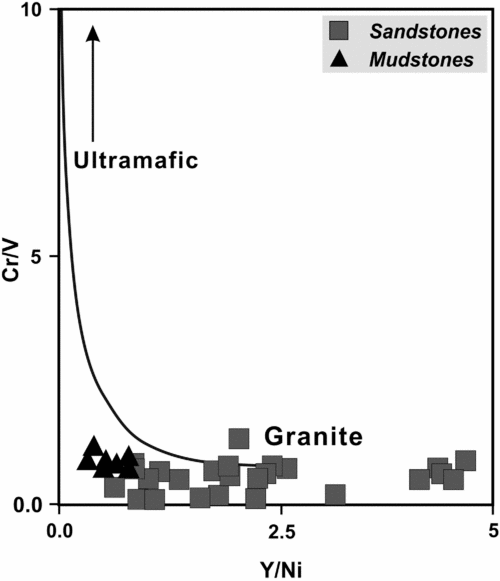
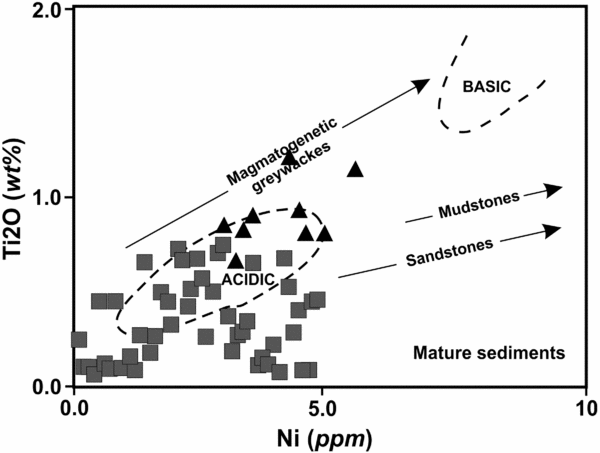
Using major oxides as variables, Roser & Korsch (Reference Roser and Korsch1988) established a discriminant function diagram to differentiate four major provenance fields: mafic, intermediate, felsic and quartzose recycled. Figure 12 shows that most of the sandstones and mudstones of the Araba Formation are plotted in the recycled sedimentary field, suggesting their derivation from a cratonic interior or recycled origin. Unlike major oxides, certain trace elements such as LILEs, HFSEs and some TTEs are mostly useful in the determination of provenance, as they have relatively low mobility during sedimentary processes and short residence times in seawater (Bhatia, Reference Bhatia1983; Cullers, Reference Cullers2000). Plotting the data on the Cr/V–Y/Ni (Hiscott, Reference Hiscott1984) and TiO2–Ni diagrams (Floyd et al. Reference Floyd, Shail, Leveridge, Franke, Morton, Todd and Haughton1991; Figs 13, 14) reveals that the sandstones and mudstones were mostly derived from felsic source rocks. Furthermore, the ratios of Th/Co and Cr/Th in the sediments of the Araba Formation are also consistent with those derived from felsic source rocks (Cullers, Reference Cullers2000).
Provenance discriminant function plot for the Araba sandstones and mudstones (after Roser & Korsch, Reference Roser and Korsch1988).

Cr/V v. Y/Ni diagram for the Araba sandstones and mudstones (after Hiscott, Reference Hiscott1984).

TiO2–Ni diagram for the Araba sandstones and mudstones (after Floyd et al. Reference Floyd, Shail, Leveridge, Franke, Morton, Todd and Haughton1991).

Field-based indications for the sense of transport suggest that the quartz-rich sand was conveyed from the Gondwana hinterland towards the open ocean in the north (Fig. 4). Such northward transportation to the northern margin of Gondwana has previously been recorded from the Cambrian sediments of North Africa, the Sinai Peninsula and Arabia (Avigad et al. Reference Avigad, Gerdes, Morag and Bechstädt2012).
5.d. Tectonic setting
The modal data of the Araba sandstones mostly plot in the craton interior field (Fig. 7), comprising high quartzose detritus with less than 10% feldspars, and nearly all of them are potassic. These sandstones were derived from relatively low-lying granitoid and gneissic terrain that was supplemented by recycled sands from associated platform or passive margin basins (Dickinson et al. Reference Dickinson, Beard, Brakenridge, Erjavec, Ferguson, Inman, Knepp, Lindberg and Ryberg1983). However, samples plotted within the recycled orogenic field indicate that the sediment sources are dominantly sedimentary with subordinate volcanic rocks derived from tectonic settings where stratified rocks are deformed, uplifted and eroded (Dickinson & Suczek, Reference Dickinson and Suczek1979).
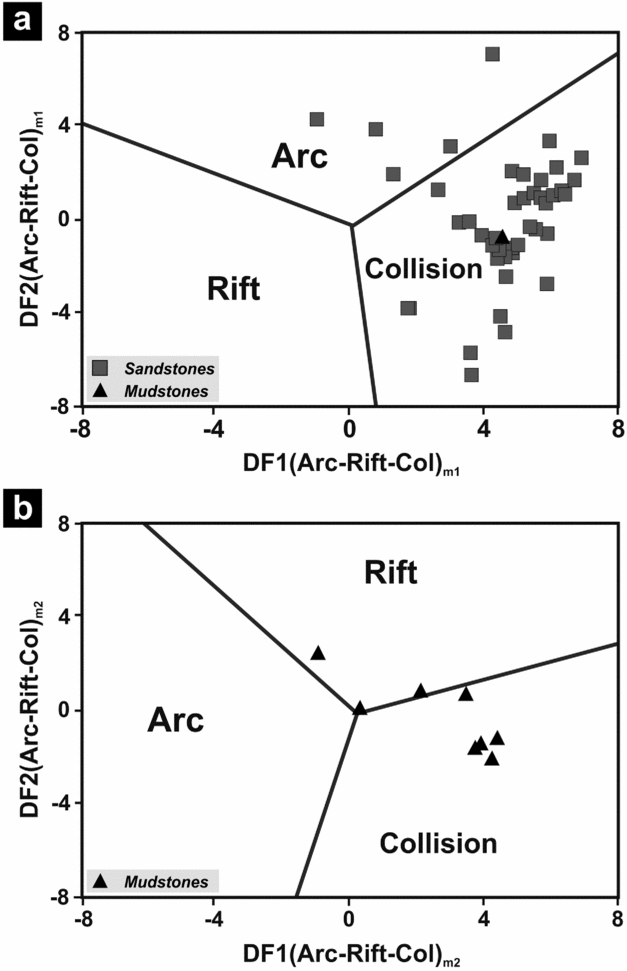
Various diagrams are available to identify the tectonic setting of a source region (e.g. Bhatia, Reference Bhatia1983; Roser & Korsch, Reference Roser and Korsch1986) and are continuously used in many studies. These diagrams were evaluated by other researchers and they cautioned against the use of these previously proposed discrimination diagrams (e.g. Armstrong-Altrin & Verma Reference Armstrong-Altrin and Verma2005; Ryan & Williams, Reference Ryan and Williams2007). Recently, Verma & Armstrong-Altrin (Reference Verma and Armstrong-Altrin2013) proposed two new discriminant-function-based major-element diagrams for the tectonic discrimination of siliciclastic sediments from three main tectonic settings; island or continental arc, continental rift and collision have been created for the tectonic discrimination of high-silica ((SiO2)adj = 63−95%) and low-silica rocks ((SiO2)adj = 35−63%). These diagrams were used in recent studies to discriminate the tectonic setting of a source region, based on sediment geochemistry (Armstrong-Altrin et al. Reference Armstrong-Altrin, Nagarajan, Lee, Kasper-Zubillaga and Córdoba-Saldaña2014; Zaid & Gahtani, Reference Zaid and Gahtani2015; Armstrong-Altrin, Reference Armstrong-Altrin2015; Armstrong-Altrin et al. Reference Armstrong-Altrin, Machain-Castillo, Rosales-Hoz, Carranza-Edwards, Sanchez-Cabeza and Ruíz-Fernández2015). According to these high- and low-silica diagrams (Fig. 15a, b), most of the Araba sediments are plotted within the collision field.
New discriminant function multidimensional diagrams for (a) high-silica and (b) low-silica clastic sediments of the Araba Formation (after Verma & Armstrong-Altrin, Reference Verma and Armstrong-Altrin2013). The subscripts m1 and m2 in DF1 and DF2 are based on loge- and log ratios of major elements. The discriminant function equations are: DF1(Arc–Rift–Col)m1 = (−0.263 × In(TiO2/SiO2)adj) + (0.604 × In(Al2O3/SiO2)adj) + (−1.725 × In(Fe2O3 t/SiO2)adj) + (0.660 × In(MnO/SiO2)adj) + (2.191 × In(MgO/SiO2)adj) + (0.144 × In(CaO/SiO2)adj) + (−1.304 × In(Na2O/SiO2)adj) + (0.054 × In(K2O/SiO2)adj) + (–0.330 × In(P2O5/SiO2)adj) + 1.588. DF2(Arc–Rift–Col)m2 = (−1.196 × In(TiO2/SiO2)adj) + (1.604 × In(Al2O3/SiO2)adj) + (0.303 × In(Fe2O3 t/SiO2)adj) + (0.436 × In(MnO/SiO2)adj) + (0.838 × In(MgO/SiO2)adj) + (–0.407 × In(CaO/SiO2)adj) + (1.021 × In(Na2O/SiO2)adj) + (−1.706 × In(K2O/SiO2)adj) + (–0.126 × In(P2O5/SiO2)adj) – 1.068.

The ANS is by far the largest tract of mostly juvenile Neoproterozoic crust among the regions of Africa that were affected by the Pan-African orogenic cycle. This crust was sandwiched between continental tracts of East and West Gondwana. The precise timing of the collision is still being resolved, but appears to have occurred after ~ 630 Ma but before ~ 610 Ma (Kröner & Stern, Reference Kröner and Stern2004). The terminal collision between East and West Gondwana may have continued for a few tens of millions of years. Compared to the southern ANS, deformation in the northern ANS part was considerably less affected by the collision that ended by the beginning of Cambrian time. Accordingly, the N–W-trending left-lateral faults of the Najd Fault System of Arabia and Egypt were formed as a result of escape tectonics associated with the collision.
5.e. Palaeo-weathering and climate
The most widely used chemical indices to assess the degree of chemical weathering in the source area are the CIA (Nesbitt & Young, Reference Nesbitt and Young1982), CIW (Harnois, Reference Harnois1988) and PIA (Fedo, Nesbitt & Young, Reference Fedo, Nesbitt and Young1995). Chemical weathering increases under humid conditions, with leaching of cations (e.g. Na+, K+ and Ca2+) and the concentration of Al and Si in the residue. Conversely, in an environment dominated by physical weathering, abrasion is the primary producer of sediments by mechanical breakdown into smaller grain sizes. The chemical alteration of feldspars to form clay minerals is thus negligible under physical weathering.
The CIA is a good measure of palaeo-weathering conditions, and it essentially monitors the progressive weathering of feldspars to clay minerals (Fedo, Nesbitt & Young, Reference Fedo, Nesbitt and Young1995; Armstrong-Altrin et al. Reference Armstrong-Altrin, Lee, Verma and Ramasamy2004). The systematic progression in alteration of minerals is incipient (CIA = 50–60) to intermediate (CIA = 60–80) to extreme (CIA > 80) chemical weathering. Excluding samples rich in carbonate, halite and apatite cements, the calculated values of the CIA vary from 46 to 64 (av. 57; Table 3). These values suggest that the Araba sandstones were subjected to incipient chemical weathering at the source area (Nesbitt & Young, Reference Nesbitt and Young1982).
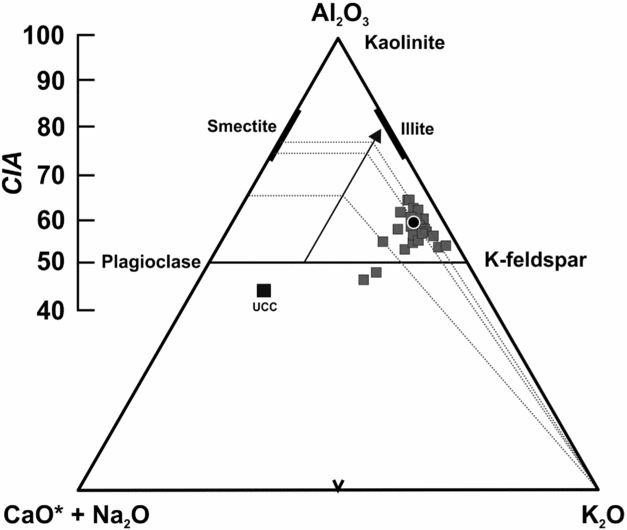
In the A–CN–K diagram (Nesbitt & Young, Reference Nesbitt and Young1984), the samples of the Araba sandstones typically plot in a trend following the A–K join and close to the K-apex (Fig. 16). The deviation from the predicted weathering trend is probably attributable to differential dissolution of labile minerals, as plagioclases are more easily dissolved than K-feldspar. This is confirmed by the petrographic study and indicated by elevated K2O/Na2O ratios (Table 3). This deviation could also be related to a metasomatic increase in K during diagenesis, caused by the conversion of aluminous clay minerals to illite (Fedo, Nesbitt & Young, Reference Fedo, Nesbitt and Young1995). Accordingly, the studied Araba sandstones exhibit a lower CIA than the original values. Several authors have emphasized the importance of K+ correction (e.g. Price & Velbel, Reference Price and Velbel2003). Based on the predicted weathering trend of granite, the reconstructed CIA values range from 65 to 77 (av. 74) implying moderate chemical weathering (Fig. 16).
Al2O3–CaO*+Na2O–K2O ternary diagram for the Araba sandstones (after Nesbitt & Young, Reference Nesbitt and Young1984). Arrow refers to trend of initial weathering profile of granite.

Although a precise CIA value cannot be ascertained, the alternative CIW index is used in this study to monitor palaeo-weathering at the source area. Harnois (Reference Harnois1988) proposed the CIW index, which is not sensitive to post-depositional K enrichments. The siliciclastic sediments of the Araba Formation possess CIW values ranging from ~ 67 to 96 (av. 89). These high values probably suggest a prolonged dissolution of unstable plagioclases during transportation and/or diagenesis, other than extreme chemical weathering at the source terrain.
The degree of chemical weathering can also be evaluated using the PIA (Fedo, Nesbitt & Young, Reference Fedo, Nesbitt and Young1995). The studied sandstones have a wide range of PIA values (39–89; av. 76) indicating that a great deal of plagioclases have been converted into clay minerals. This, in turn, is consistent with the data obtained using the CIA, and indicates moderate weathering at the source area. The presence of K-feldspar, the common presence of biotite mica and the scarcity of hornblende and apatite are also in harmony with the weathering indices of the Araba sandstones.
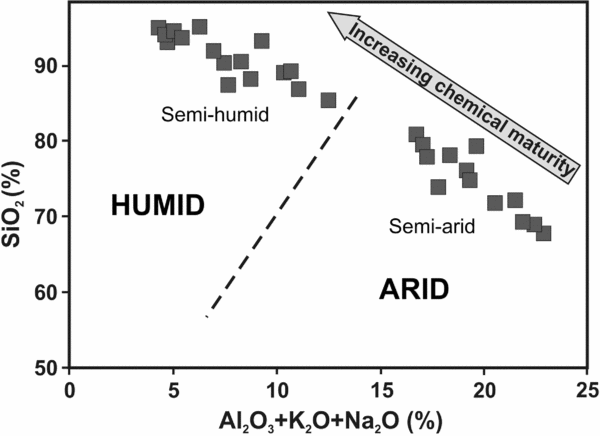
Climate affects sand composition through its destructive influence on parent rocks. In this study, the palaeoclimatic condition prevailing during Cambrian time over north Gondwanaland was inferred from the bi-plots of Suttner & Dutta (Reference Suttner and Dutta1986). This diagram seems to be a sensitive discriminator of sandstones with different climate heritage. The major-element concentrations demonstrate the significance of both humid and arid climatic conditions (Fig. 17). The presence of smectite clay coating, especially in the lower and middle parts of the succession, supports an arid to semi-arid climate. In addition, the occurrence of evaporates and ventifacts in the Cambrian of north Gondwana indicates residence under a warm to arid climate (Álvaro et al. Reference Álvaro, Rouchy, Beschstadt, Boucot, Boyer, Debrenee, Moreno-Eiris, Perejón and Venin2000). On the other hand, Knox, Soliman & Essa (Reference Knox, Soliman and Essa2011) argued that the stratigraphic variation in ATi (apatite–tourmaline index) values within the Cambrian sandstones of Sinai is the result of variation in climate or the rate of erosion and transport. This result is in harmony with the data obtained by Avigad et al. (Reference Avigad, Sandler, Kolodner, Stern, McWilliams, Miller and Beyth2005) and Tawfik et al. (Reference Tawfik, Ghandour, Maejima and Abdel-Hameed2011) who attributed the Cambro-Ordovician siliciclastic sediments to intensive chemical weathering of the Pan-African continental basement in a warm-humid climate that prevailed over north Gondwana from the end of Neoproterozoic time to pre-glacial Ordovician time, hence, indicating that the environmental conditions may have fluctuated considerably.
Chemical maturity of the Araba sandstones (after Suttner & Dutta, Reference Suttner and Dutta1986).

6. Conclusions
Integrated petrographic and geochemical studies of the Cambrian Araba Formation exposed in east Sinai, Egypt, provided important information on the diagenetic overprints, provenance, tectonic setting, intensity of weathering and climate signature prevailing in north Gondwana during that time. The formation consists dominantly of sandstone with mudstone and rarely conglomerate interbeds and was deposited in fluvio-marine environments.
Unlike other mature Cambrian quartzarenites of Yeman, Saudi Arabia, southwestern Egypt and the Egyptian Eastern Desert, the studied sandstones possess a sub-mature, subarkosic composition. They also show some variation in lithic and heavy mineral compositions, indicating a relatively short transport distance and different proximal source areas. Diagenetic features that affected these sandstones are: mechanical infiltration of smectite and kaolinite; physical and chemical compactions; cementation by clays, iron oxides, quartz, feldspar, calcite, dolomite, barite, apatite and halite; dissolution; and clay replacement.
The recorded N–NW palaeocurrent directions in the fluvio-conglomeratic layer together with its rock fragment composition indicate their derivation from the neighbouring Precambrian terrains. Modal composition and geochemical indices (Cr/V, Y/Ni, Th/Co and Cr/Th ratios) of the sandstones and mudstones suggest their derivation from felsic source rocks on the northern fringe of the ANS.
Usage of the modern tectonic discrimination plots has revealed that the Araba succession had been originally deposited in a collisional setting. Such a setting is consistent with the collision that occurred between East and West Gondwana that most likely followed the closure of the Mozambique Ocean, forming the East African Orogen.
Palaeo-weathering indices such as the CIA, CIW and PIA suggest that the source area was moderately chemically weathered. This conclusion suggests that earlier subarkosic Cambrian sands were derived from local erosion of moderately weathered basement rocks on the northern fringe of the ANS, probably under fluctuating climatic conditions.
Acknowledgements
This work was fully supported by the Japanese Ministry of Education, Culture, Sports, Science and Technology, MONBUKAGAKUSHO (H.A.T., grant number 072534); and the International Association of Sedimentologists, IAS (H.A.T., postgraduate grant scheme 2010, 2nd session). J.S.A. is grateful to the Instituto de Ciencias del Mar y Limnología, UNAM Institutional project (no. 616). The authors are greatly indebted to Dr Takeshi Kuritani, Hokkaido University, for facilitating the use of laboratory equipment and Prof. Luiz F. De Ros, Universidade Federal do Rio Grande do Sul, for the comments on the earlier version of the manuscript. Editor P. Leat and two anonymous reviewers are thanked for their constructive comments.