The development of novel-targeted therapies in the last decade has improved survival in children with idiopathic and heritable pulmonary arterial hypertension. Reference Zijlstra, Douwes and Rosenzweig1 Although treatment with new selective pulmonary vasodilators results in haemodynamic and functional improvement in paediatric populations, there are limited data on treatment strategies in paediatric pulmonary arterial hypertension due to a small number of randomised controlled clinical trials evaluating the safety and efficacy of pulmonary vasodilators; therefore, the use of these agents is mainly based on experience as opposed to clinical trials.
Targeted therapy involves three major pathways: endothelin-1, nitric oxide, and prostacyclin. Patients with severe pulmonary arterial hypertension have a deficiency of prostacyclin and prostacyclin synthase. Reference Tuder, Cool and Geraci2,Reference Falcetti, Hall and Phillips3 Therefore, targeting the prostacyclin pathway is an effective treatment option, but only epoprostenol infusion therapy is approved for the treatment of paediatric pulmonary arterial hypertension. Selexipag is an oral selective prostacyclin (IP2) receptor agonist that has become available for the treatment of adult patients with pulmonary arterial hypertension. The binding of prostacyclin to the IP2-receptor activates adenylyl cyclase, resulting in increased levels of intracellular cyclic adenosine monophosphate, which leads to relaxation of the pulmonary arterial smooth muscle, vasodilation, and reduced proliferation. Reference Falcetti, Hall and Phillips3
Previous studies have reported that selexipag was well tolerated and showed significant improvement in haemodynamics, exercise tolerance, and outcomes in adult patients with pulmonary arterial hypertension. Reference Sitbon, Channick and Chin4–Reference Coghlan, Channick and Chin6 Although the beneficial effect of selexipag in adult patients with pulmonary arterial hypertension has been reported, clinical data on its use, titration, adverse effects, and efficacy in the paediatric population is limited. Our objective was to investigate the safety, tolerability, and efficacy of selexipag in children and young adults with idiopathic and heritable pulmonary arterial hypertension.
Materials and methods
This single-centre retrospective cohort study enrolled 11 patients with pulmonary arterial hypertension receiving selexipag as initial prostacyclin therapy or after transition from beraprost sodium and epoprostenol. Five patients were younger than 20 years, and six patients were young adults. The protocol or this study was approved by the Ethics Committee of Toho University Omori Medical Center (M21204).
The clinical impact of selexipag was evaluated by assessing plasma brain natriuretic peptide levels, exercise capacity, cardiac catheterisation, and NYHA functional class before and after the initiation of selexipag. Plasma brain natriuretic peptide concentrations were collected in ethylenediaminetetraacetic acid tubes. Exercise capacity was assessed by a 6-minute walk distance at each follow-up catheterisation in children over 6 years of age. Right heart catheterization was performed with a balloon-tipped, flow-directed Swan-Ganz catheter, and systemic arterial line for monitoring. We measured the mean right atrial pressure, mean pulmonary artery pressure, mean systemic blood pressure, and pulmonary capillary wedge pressure. Accordingly, cardiac output was obtained using thermodilution, and the cardiac index was calculated. Pulmonary vascular resistance was calculated as follows: (mean pulmonary artery pressure − mean pulmonary wedge pressure)/pulmonic blood flow. We evaluated the pulmonary vascular resistance index as (mean pulmonary artery pressure − mean pulmonary wedge pressure)/cardiac index. In addition, the pulmonary vascular resistance-to-systemic vascular resistance ratio was calculated.
Safety evaluations included the recording of severe adverse events (systemic hypotension), haemodynamic changes, and laboratory tests. At each clinic visit, we routinely asked about clinical worsening, including chest pain with exercise, dyspnoea with exercise, dizziness, syncope, near-syncope, oedema in the feet and hands, pallor, and cyanosis. In addition, after the initiation of selexipag, all patients were asked about side effects such as headache, jaw pain after meals, nausea, diarrhoea, flushing, myalgia, and any allergic reaction.
Dosing of selexipag in children and young adults
In young adults, the daily dose was adjusted in increments of 200 μg twice daily to a maximum of 1600 μg twice daily every 2 weeks. The dose was titrated to reach the maximum tolerated dose for each subject. Children weighing more than 40 kg were administered an adult dose. Children weighing less than 40 kg were treated at 80 μg/kg. In children, the selexipag dose was increased every 2 or 4 weeks to the maintenance dose.
Statistical analysis
All analyses included baseline and at least one post-baseline measure. All results are reported as median and range or mean ± standard deviation, together with the 95% confidence interval as appropriate. Comparisons of 6-minute walk distance, NYHA functional class, natriuretic peptide levels, and haemodynamic variables before and after initiation of selexipag were performed using Student’s t-test when the data had a normal distribution. If the data did not show a normal distribution, a non-parametric test was used for analysis (Mann-Whitney U test). A chi-squared test was used to compare discrete variables. Statistical significance was defined as a p-value of 0.05. Analyses were conducted using Statmate IV for Windows (Atoms Co., Tokyo, Japan).
Results
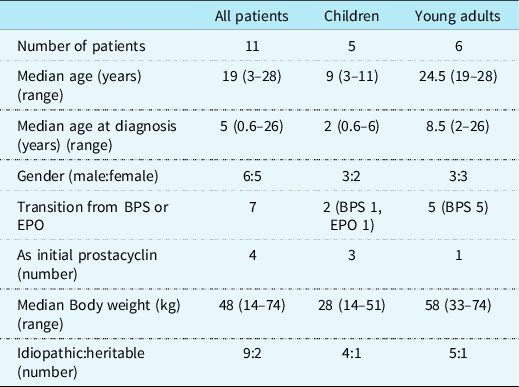
Table 1 shows the clinical characteristics of the five children and six young adults with pulmonary arterial hypertension. Of the 11 patients, 1 child and 5 young adults were switched from beraprost sodium, and 1 child (13 years old) transitioned from epoprostenol to selexipag. For the remaining three children and one young adult, selexipag was added as an initial prostacyclin therapy in combination with phosphodiesterase type 5 inhibitors and endothelin receptor antagonists. Seven patients received triple vasodilator therapy before the initiation of selexipag, and four patients received double vasodilator therapy. The median duration of treatment with concomitant therapies before the initiation of tadalafil therapy was 6 (1–20) years. Although 7 of 11 patients (64%) were in NYHA functional class II at baseline, haemodynamic parameters in children were relatively better than those in young adults.
Patient demographics at baseline.
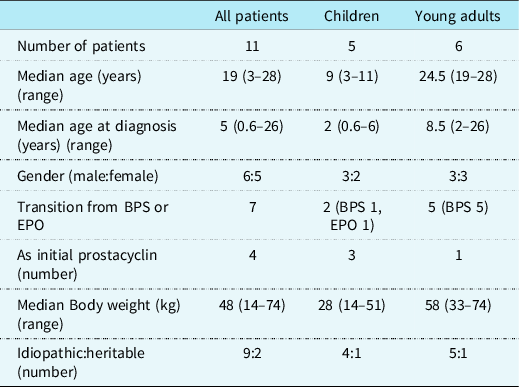
BPS, beraprost sodium; EPO, epoprostenol.
Disease severities after initiation of selexipag
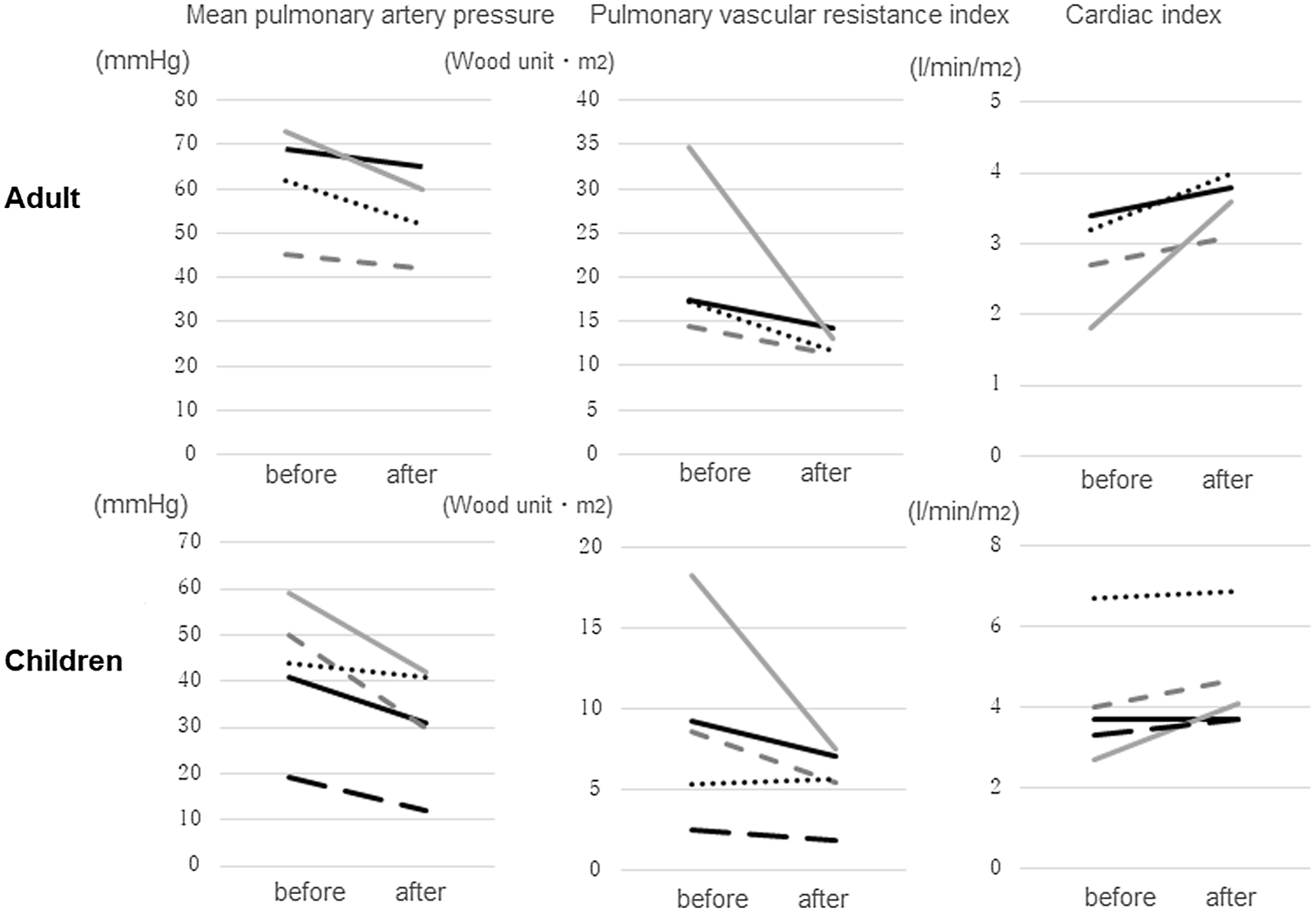
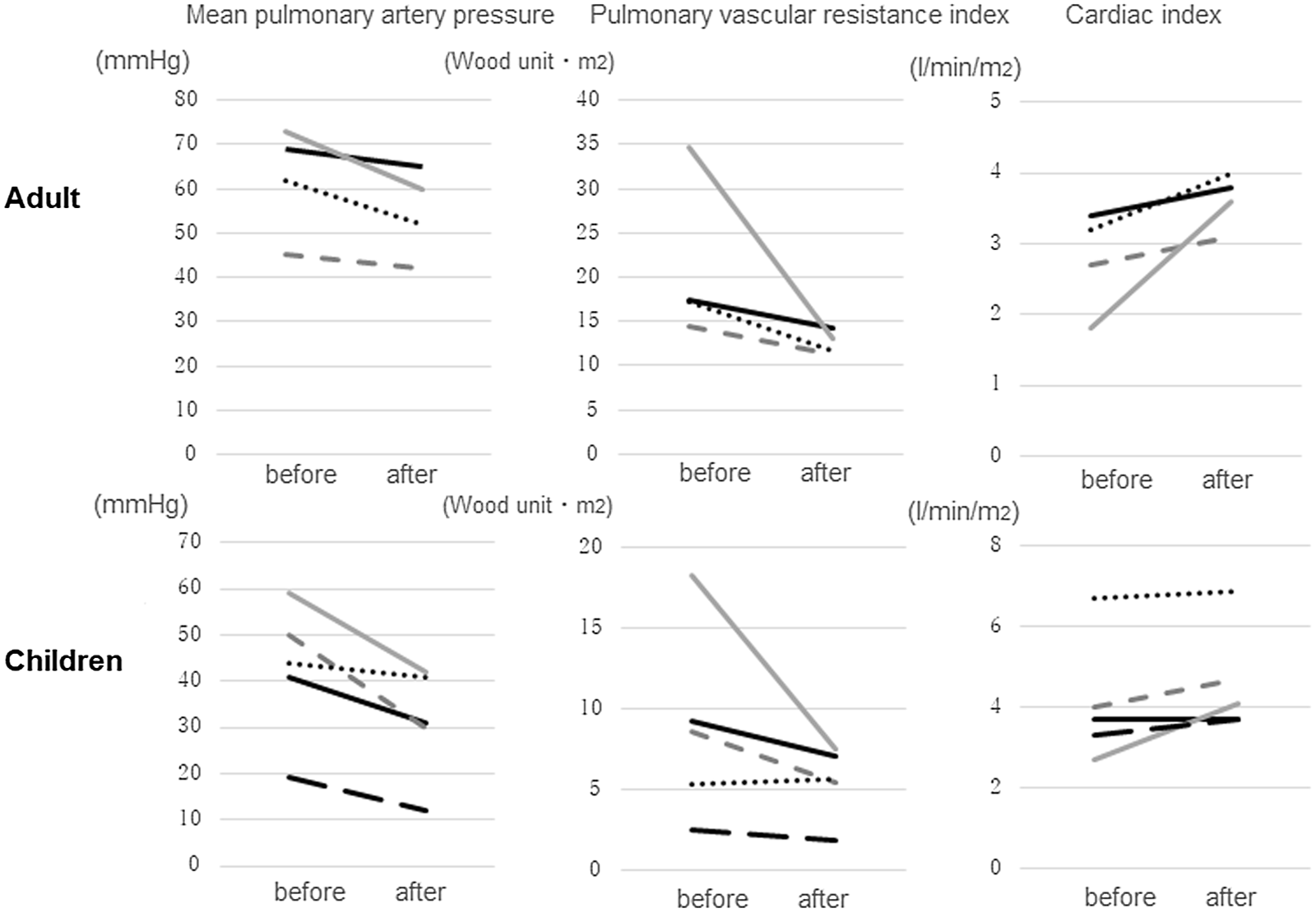
The median follow-up period after the initiation of selexipag was 2 years (1–3 years). One patient did not undergo evaluation of disease severity after the initiation of selexipag due to discontinuation. Therefore, disease severity was assessed in 10 patients, including NYHA functional class, plasma brain natriuretic peptide levels, 6-minute walk distance, and haemodynamic parameters evaluated by right heart catheterisation during follow-up. Although none of the patients experienced improvement in NYHA functional class, there was no deterioration of NYHA functional class in any of the patients. Whereas there were no significant differences in brain natriuretic peptide levels between before and after initiation of selexipag [median and rage; 14.6 pg/ml (5.7–702.2 pg/ml) versus 11.5 pg/ml (2.0–236 pg/ml), p = 0.23], 6-minute walk distance was significantly improved [median and rage; 399 m (370–654 m) versus 480 m (416–631 m), p = 0.03]. Of the 11 patients, 9 patients underwent 1-year follow-up catheterization , and statistically significant improvements were observed after the initiation of selexipag in terms of mean pulmonary arterial pressure (median: 50 vs. 42 mmHg, p < 0.01), pulmonary vascular resistance index (median; 14.5 versus 7.5 Wood units · m2, p < 0.05), and cardiac index (median; 3.3 versus 3.8 Wood units · m2, p < 0.01). When study subjects were divided into the paediatric and young adult groups, we found significant improvements in haemodynamic parameters, including mean pulmonary arterial pressure, pulmonary vascular resistance index, and cardiac index, in both groups (Fig 1). None of the patients changed the concomitant medications or added new vasodilator therapies due to clinical worsening after the initiation of selexipag.
Haemodynamic change after initiation of selexipag: Nine patients (four adults and five children) underwent 1-year follow-up catheterization, and statistically significant improvements of mean pulmonary arterial pressure, pulmonary vascular resistance index, and cardiac index were observed after the initiation of selexipag. Adult: black solid lines; 25 years, male, IPAH, transition from BPS, grey solid line; 19 years, male, IPAH, transition from BPS, dotted line; 28 years female, IPAH, De novo, dash line; 24 years, male, IPAH, transition from BPS. Children (according to Table 2): black solid lines; patient #1, grey solid line; patient #2, dotted line; patient #3, grey dash line; patient #4, black dash line; patient #5. BPS, beraprost sodium; IPAH, idiopathic pulmonary arterial hypertension.
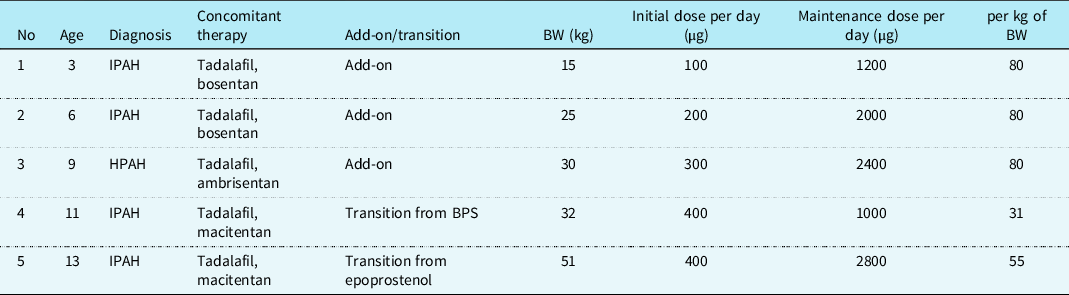
Clinical profile of five paediatric patients treated with selexipag.
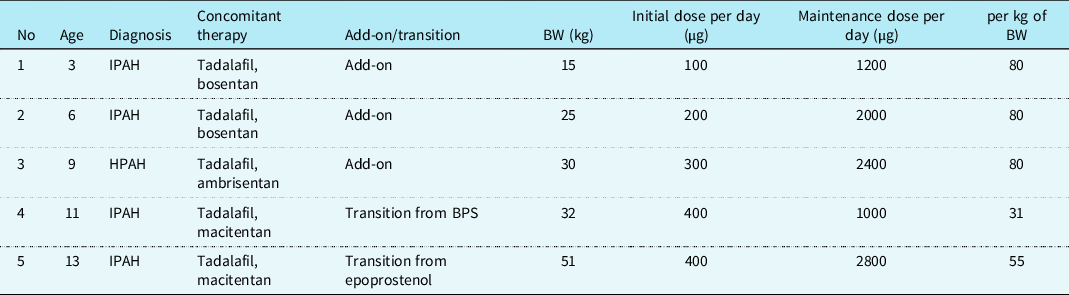
BPS, beraprost sodium; BW, body weight; HPAH, heritable pulmonary arterial hypertension; IPAH, idiopathic pulmonary arterial hypertension.
Children receiving selexipag
Five paediatric patients with idiopathic and heritable pulmonary arterial hypertension received selexipag during the observational period. The median (range) age at the initiation of selexipag was 9 years (range, 3–13 years). The initial dose of selexipag in children was 50–200 μg twice daily (Table 2). Of the four patients (cases 1–4) who weighed less than 40 kg, three patients were up-titrated to the maintenance dose of 40 μg/kg twice daily over several weeks, while dose reduction due to side effects such as nausea was required in one patient (case 4). A 9-year-old boy had episodes of chest pain during exercise, which resolved after the initiation of selexipag (case 3). A 13-year-old girl who weighed more than 40 kg was weaned from intravenous epoprostenol therapy to selexipag (case 5). Selexipag was started at a dose of 200 μg twice daily and increased by 200 μg twice daily per week to a total maintenance dose of 1400 μg twice daily. While selexipag was being up-titrated, epoprostenol was concomitantly weaned. The patient was successfully weaned off epoprostenol infusion therapy. As haemodynamic parameters remained stable on a dose of 1400 μg of selexipag twice daily, she did not up-titrate to a maximum selexipag dose of 1600 μg twice daily.
Adverse events
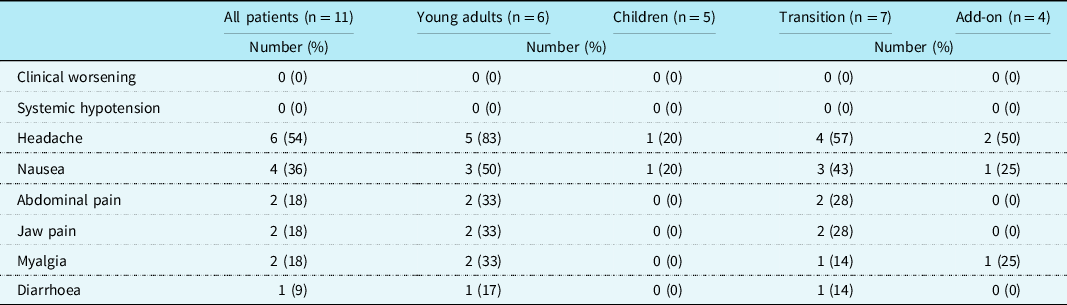
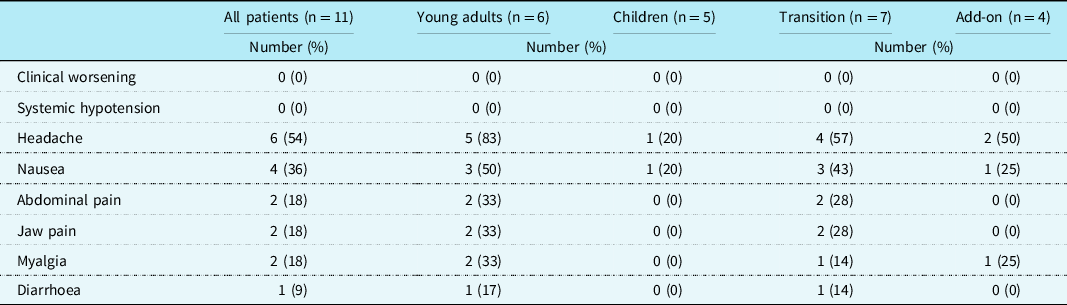
During follow-up, none of the patients experienced any clinical worsening, such as hospitalisation due to heart failure, syncope, haemoptysis, lung transplantation, or death. The side effect profiles are shown in Table 3. Most adverse events were mild to moderate. Side effects of selexipag were observed in all six young adult patients (100%), while only one child (20%) experienced nausea after taking selexipag. This paediatric patient stopped up-titration of selexipag due to side effects. The mean body weight-adjusted dose of selexipag in all patients with side effects was 31–67 μg daily per kg compared to 80 μg daily per kg in paediatric patients without side effects, suggesting no dose-related side effects. The most common side effects of selexipag were headache and nausea in adult patients, whereas there were few side effects in children. Of the 11 patients, 1 young adult patient discontinued selexipag due to severe headache. Overall, the rate of discontinuation was 9%.
Adverse events for 11 patients receiving selexipag.
Discussion
This retrospective observational cohort study demonstrated the clinical safety and potential efficacy of selexipag therapy in paediatric and young adult patients with idiopathic and heritable pulmonary arterial hypertension. Our results showed that oral selexipag was well tolerated by paediatric patients. We found that twice-daily administration of selexipag statistically improved disease severity without any clinical worsening in our study population. In addition, most of the paediatric patients who weighed less than 40 kg successfully continued selexipag therapy and had favourable clinical efficacy with a selexipag daily dose of 80 μg/kg. Selexipag therapy improved haemodynamic data including mean pulmonary arterial pressure, pulmonary vascular resistance index, and cardiac index compared with baseline in 9 of 11 patients who underwent repeated catheterisation. Furthermore, selexipag therapy allowed six of seven patients to be successfully switched from beraprost sodium or epoprostenol to selexipag without needing to resume beraprost sodium and epoprostenol. Only one young adult patient discontinued selexipag due to side effects, and all paediatric patients continued selexipag during the follow-up period. Our study is interesting because it is the first report to evaluate the effective dose of selexipag in children with idiopathic and heritable pulmonary arterial hypertension. The current study is helpful in guiding selexipag therapy for paediatric patients with pulmonary arterial hypertension because it suggests the safe use of selexipag for paediatric patients.
Recently, selexipag has been approved for the treatment of pulmonary arterial hypertension in adults. In a previous study (GRIPHON), oral selexipag was effective in improving exercise capacity and haemodynamics in adult patients with idiopathic and secondary pulmonary arterial hypertension without systemic hypotension. Reference Sitbon, Channick and Chin4–Reference Coghlan, Channick and Chin6 Additionally, several small case reports of paediatric patients with pulmonary arterial hypertension have demonstrated the clinical benefits and safety of selexipag in this group. Reference Hansmann, Meinel, Bukova, Chouvarine, Wåhlander and Koestenberger7–Reference Geerdink, Bertram and Hansmann10 Nevertheless, selexipag has not been approved for paediatric patients with pulmonary arterial hypertension because no established dosing of selexipag exists for children. Although the selexipag doses used in this study were empiric, they appeared to be safe and effective for paediatric populations. Therefore, our study provides important information on the usefulness of selexipag as an additional targeted therapy for paediatric pulmonary arterial hypertension.
Headache and nausea were the most common adverse events associated with selexipag in this study. These adverse events were similar to those in previous adult studies, Reference Sitbon, Channick and Chin4–Reference Coghlan, Channick and Chin6 but adverse events were rare in children. Compared to paediatric patients, all young adult patients who received lower body weight-adjusted doses of selexipag experienced side effects. Therefore, our results demonstrate that there is no apparent dose response for adverse events due to selexipag.
The reasons for the improvement of clinical variables such as haemodynamics after initiation of selexipag are not clear in this study. In both transition cases and add-on cases, selexipag improved haemodynamic parameters at the year follow-up catheterisation. One explanation may be due to the different pharmacokinetics of selexipag. For example, selexipag has a longer half-life compared to beraprost sodium (6–13 hours versus 1 hour), Reference Bruderer, Hurst, Kaufmann and Dingemanse11,Reference Demolis, Robert, Mouren, Funck-Brentano and Jaillon12 which makes serum levels more consistent, and this may be advantageous in terms of haemodynamics. Furthermore, selexipag is a selective IP2-receptor agonist, and its pharmacokinetic profile is different from that of beraprost sodium as a prostacyclin analogue. The prostacyclin analogue binds to the IP receptor in addition to other prostacyclin receptors, such as the EP3-receptor, which causes vasoconstriction by inhibiting adenylate cyclase. Reference Kuwano, Hashino, Noda, Kosugi and Kuwabara13 EP3-receptor expression is upregulated in pulmonary arterial smooth muscle cells in response to hypoxia in pulmonary arterial hypertension models. Reference Morrison, Studer, Ernst, Haag, Kauser and Clozel14 Therefore, prostacyclin analogues could potentially affect efficacy. Selexipag is chemically distinct from prostacyclin analogues and appears to offer a promising oral agent targeting the prostacyclin pathway.
This study has some limitations worth noting, including the small sample size, open-label design, lack of a placebo group, and relatively short observational duration. A larger controlled study is warranted to confirm the safety results observed in paediatric patients with pulmonary arterial hypertension. Although the sample size was small, our patients showed improvement in haemodynamics. Therefore, despite these limitations, our study has valuable clinical implications as we found that selexipag may have a favourable safety profile and potential efficacy in young adults and paediatric patients with pulmonary arterial hypertension.
Conclusions
Selexipag may have a favourable safety profile and potential efficacy in children and young adults with pulmonary arterial hypertension and may prevent disease progression.
Acknowledgements
None.
Financial support
This research received no specific grant from any funding agency, commercial, or not-for-profit sectors.
Conflicts of interest
None.
Ethical standards
The authors assert that all procedures contributing to this work comply with the ethical standards of the Declaration of Helsinki and have been approved by the Ethics Committee of Toho University Omori Medical Center.