Patients with rare diseases have historically been underserved by commercial drug development. Over time, a consensus has emerged in many countries or regions to address this disparity by means of specific legislation for drugs to treat rare diseases (usually called “orphan drugs”). In several regions, orphan drug legislation has been enacted, which has successfully encouraged the development of drugs that, in the absence of such interventions, would not be commercially viable.
Given the increasing pressures on healthcare budgets, many jurisdictions have begun to use health technology assessment, including economic evaluation, to assist in decisions concerning the reimbursement of drugs and other health technologies. Although standard methods of health technology assessment are important in improving the efficiency of healthcare provision, there are concerns about whether they adequately reflect societal preferences for the treatment of serious and/or life-threatening rare diseases. Therefore, the objectives of this study are (i) to discuss whether the standard methods of health technology assessment (HTA) are adequate for assisting decisions concerning orphan drugs and (ii) to outline a research agenda to help understand the societal value of orphan drugs and issues surrounding their development, funding, and use.
FUNDING OF AND ACCESS TO ORPHAN DRUGS
In several jurisdictions (such as the United States, Singapore, Japan, Australia, European Union), legislation exists to encourage the development of orphan drugs. All share the common underlying principle of equity in access to treatment—patients suffering from rare conditions should be entitled to the same opportunity of receiving treatment as other patients with more frequently occurring disorders. In all cases, the legislation is focused on incentives to foster and reward innovation, including grants and tax credits for research and clinical development, reduced fees for approval applications, guarantees of market exclusivity and the promise of fast-track assessments.
The pharmaceutical and biopharmaceutical industry has responded to these incentives. In the 24 years since the Orphan Drug Act was passed in the United States, 282 drugs and biologic products came to market under the legislation. In contrast, in the 8 to 10 years preceding the act, only ten treatments for rare diseases had been approved by the Food and Drug Administration and brought to market (11). The Commission of the European Communities reviewed the first 5 years of the orphan legislation in the European Union (EU) and concluded that it “has far exceeded initial expectations,” citing twenty-two orphan medicines authorized from April 2000 to April 2005 for the treatment of 20 different life-threatening or chronically debilitating rare diseases, resulting in more than 1 million people having the potential to benefit from treatment (2).
However, the increased incentives for the development and market approval of OD legislation are important but intermediate benchmarks. Complete and genuine success of the orphan regulations in terms of patients with rare diseases is realizing increased life expectancy and/or quality of life. This can only be achieved when patients with orphan diseases can access approved therapies with timely reimbursement, a condition that stands outside the scope of any orphan policy that exists today. Decisions regarding access and reimbursement are taken at national, state, regional, and provider levels.
Given that stakeholders at every level face the global issue of increasing financial pressure in health care and the relatively high acquisition costs of orphan drugs, there are widespread concerns that the ultimate success of orphan regulations may be compromised. Several studies have documented the variability and constraints in access to available treatments for orphan diseases.
An independent study was conducted on behalf of the European commission to evaluate the conditions for marketing orphan drugs in the EU (1). In only nine of twenty-five EU countries were all ten then approved orphan drugs (OD) marketed, and in only one of twenty-five countries were all ten orphan drugs on a national reimbursement list (noting drugs on this type of list are automatically reimbursed). Due to data limitations, the study used three indicators of access rather than the direct measure of proportion of patients who are effectively treated and reimbursed. There are a wide variety of factors impacting on access to therapy, including the nature of budgets (hospital or not, local or national, dedicated or not), reimbursement (national or not, positive or negative lists or not), setting (hospital centers or not, referral centers or not), and the value of the therapy in terms of cost-effectiveness. One factor that favored accessibility was when orphan drugs were handled specifically by well-established procedures. France and The Netherlands were among the best in patient access and the only countries to have instituted specific OD committees.
At a national level, the prescribing of orphan drugs in the United Kingdom has recently been studied by Kanavos and Saka (13). A survey of orphan disease associations and support groups in the United Kingdom indicated that, of sixty-two orphan conditions, some form of treatment was available for thirty-eight (69.1 percent). They found that, where a treatments were available, 34.2 percent of them were provided unconditionally by the National Health Service (NHS). In a further 31.6 percent of cases, the treatment was provided selectively by different health authorities. In the remaining 34.2 percent of cases, no treatment was provided. The study notes that cost is one of the main reasons for selection of provision by NHS, although other factors are also important. These include the lack of knowledge by physicians of rare conditions, the lack of specialist health personnel, and controversy surrounding treatment.
In addition, a survey by the European Organization for Rare Diseases (EURORDIS) compared access in Europe with care between countries and between different rare diseases (9). It found that there was variability in access to available orphan drugs. In only one of the twenty-six European countries studied, was there access (in December 2004) to all twelve orphan medicinal products authorized before December 2003. In only 34 percent of the countries (nine of twenty-six), was there availability for half the products (six of twelve).
HEALTH TECHNOLOGY ASSESSMENT AND ORPHAN DRUGS
In several jurisdictions, HTA is gaining increasing popularity as a method of determining priorities for the reimbursement of health treatments and programs (12). Although the detailed arrangements differ from location to location, HTA usually involves an assessment of the incremental cost-effectiveness of the new therapy compared with the existing treatments for the disease in question. The incremental cost-effectiveness ratio (ICER) is then compared with that of other, funded, healthcare interventions in the jurisdiction concerned, or judged against an implicit or explicit “cost-effectiveness threshold,” or societal willingness-to-pay for new health technologies. For example, in the United Kingdom, this threshold is considered to be around £20,000–£30,000 per quality-adjusted life-year (QALY) gained (18). This presumption has been validated by empirical evidence on the decisions made by the Technology Appraisal Committee of the National Institute for Health and Clinical Excellence (NICE) in the United Kingdom (7).
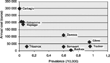
It is no surprise that orphan drugs fare badly under such procedures. Prices and the corresponding cost-effectiveness estimates are high. First, because of rarity, the development costs have to be recouped from sales to a limited number of patients worldwide, with consequently high acquisition costs per patient. Across the ten orphan drugs in the Alcimed study, there was a relationship between disease prevalence and the annual OD cost (see Figure 1) (1). Therefore, on a patient-by-patient basis, the incremental cost per QALY is usually very high, being in excess of “standard” cost-effectiveness thresholds. Second, because of the small number of persons suffering from rare diseases, it is often difficult to enroll sufficient patients into a standard randomized controlled trial. This means that, at the time of product launch, there may not be the same breadth and quality of clinical evidence for orphan drugs, compared with those for more common diseases.

Relationship between annual cost of treatment per patient and prevalence. Reproduced from Alcimed (1), with permission.
In short, if standard HTA procedures were to be applied to orphan drugs, virtually none of them would be “cost-effective.” In line with this conclusion, McCabe et al. (14) argue that standard procedures should be applied to all health technologies equally and pose the question, “What price rarity?”. That is, from a pure position of efficiency (i.e., maximizing the total health gain for the population from the available resources), there may not be a place for orphan drugs and surely not for ultra-orphan drugs, which are defined by NICE as affecting fewer than 1,000 patients in the United Kingdom. Devoting resources to the treatment of rare diseases would mean that there would be fewer resources for the treatment of common conditions. This finding raises the question of why have incentives to develop such drugs if they will later be judged by criteria on which they are doomed to fail?
When considering the opportunity cost of orphan drugs, it is important to consider also the magnitude of the budget impact they present. Based on analyses in France and The Netherlands, the Alcimed study estimated that the total cost of European orphan drugs per country in 2004 was modest, being between .7 percent and 1 percent of national medicine budgets.
The legitimacy for the availability of orphan drugs, therefore, rests on whether the “standard” methods of HTA adequately reflect societal preferences. Even in the paper outlining the value judgments applied by NICE, Rawlins and Culyer (18) argue that there is more to decision making than the strict application of cost-effectiveness thresholds. Using an example of a drug for end-stage cancer, they point out that ICERs considerably in excess of £30,000 per QALY could be considered acceptable under certain circumstances. In its appraisal of imatinib for chronic myeloid leukemia, the NICE Appraisal Committee decided that, in the absence of alternative treatments, £37,000 per QALY was cost-effective in the chronic phase, allowed £38,400 per QALY for the accelerated phase on the basis of consistency, and then approved £49,000 per QALY for the blast phase—on grounds of equity—so as not to penalize those who had not had access to treatment at the early stages of disease owing to failures in the healthcare system.
In addition, data from Australia illustrate that the decisions of the Pharmaceutical Benefits Advisory Committee (PBAC), although reflecting a cost-effectiveness logic, obviously take other factors into account. George et al. (10) speculate that, beyond the uncertainty surrounding the cost-effectiveness assessments themselves, other factors may include (i) the seriousness of the health condition, (ii) the availability of other therapies to treat the disease in question, and (iii) the cost to the patient if the drug is not listed for public reimbursement. Furthermore, with respect to funding orphan drugs, the Commonwealth Government provides funds under a specific appropriation outside the Pharmaceutical Benefits Scheme specifically for the purpose of assisting access to expensive and lifesaving drugs accepted by the PBAC as clinically effective, but not deemed cost-effective (3).
Most orphan drugs exhibit many of the characteristics of these exceptions that funding committees already make, which suggests that societal value may deviate from cost-effectiveness. That is, they are almost always for serious conditions, they represent the only therapeutic options for patients suffering from the diseases in question, and the cost of therapy would be far beyond the financial means of most patients if no public subsidy were available. In 40 percent of the diseases for which orphan drugs have been approved in the EU, there were previously no satisfactory treatment options authorized (2). This finding raises an important issue: are we reasonably representing societal preferences when we compare the incremental cost-effectiveness of a new drug where there is already a viable standard of care against that of another new drug where no such care currently exists.
In the United Kingdom, NICE has begun to address these issues through work that applies to orphan drugs and through efforts that are specific to ultra-orphan drugs. In April 2005, NICE issued a report on social value judgments, based on a literature review, two Citizen's Council reports, and a population survey.
The report restates the general role of cost-effectiveness analysis in the institute's decision making and discusses other considerations (16). It found that cost-utility analysis was a necessary, but insufficient, basis for decisions. However, NICE needed explicit reasons to recommend interventions with incremental costs per QALY above its normal threshold. It considered and rejected several potential reasons, such as age (except when age is an indicator of benefit or risk), social roles (for example, working or not), income, social class, gender, sexual orientation, ethnicity, or self-inflicted illness. NICE was not sure what to do about the Rule of Rescue, urging considerable care when applying it. Finally, NICE concluded that special consideration should be given to innovations that provide significant improvements in health for previously untreated conditions.
In 2004, NICE assembled a Citizen's Council around funding ultra-orphan drugs, specifically “to advise on whether or not the NHS should be prepared to pay premium prices for drugs to treat patients with very rare diseases” (15). Of twenty-seven Council members, overall twenty took a decision that there should be a different way to assess value; four thought that patients with a rare disease should be treated as a matter of principle, provided that the treatment works, and sixteen thought that the NHS should consider paying premium prices with certain conditions (main criteria included severity of disease, if treatment provides health gain rather than just stabilization, and if the condition is life-threatening). At the other end of the spectrum, seven members believed that rare diseases should not have a different decision-making process and that rarity was insufficient reason to warrant funding a drug with a higher cost-effectiveness ratio.
The Citizen's Council report is now out for consultation and clearly more investigation of societal preferences is needed. Departures from the strict cost-effectiveness criteria are also observed in other fields. Society is prepared to invest vast amounts of resources in rescuing mountaineers who encounter difficulties, or those who are missing at sea. On the other hand, society appears to be reluctant to adopt policies that will save large number of lives, or would be much more cost-effective, such as some safety measures (8).
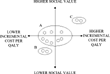
There appears to be a deviation between cost-effectiveness and societal value, as illustrated by Figure 2. For many health technologies, the strict application of efficiency criteria may be a good approximation of societal value (Group A). However, there may be interventions with much lower cost-effectiveness ratios that decision makers reject for public reimbursement because they consider them to have low societal value (Group B). Examples include the treatment of male impotence, which has been shown to have an ICER of less than €10,000 per QALY (19), and the surgical removal of tattoos.

The relationship between social value and incremental cost per quality-adjusted life-year (QALY).
On the other hand, there may be interventions, with an ICER far above the standard threshold, that decision makers approve because they have a higher societal value than is predicted by cost-effectiveness alone (Group C). Orphan drugs may be in this category, along with some end-stage cancer therapies.
Further evidence for the relevance of other factors, beyond cost-effectiveness, in societal decision making is found in empirical research into individuals' trade-offs between efficiency and equity in healthcare provision. In a survey of the U.S. general public, Ubel and Loewenstein (20) considered the distribution of scarce livers to 2 prognostic groups. They found that the majority of the respondents (33 percent) opted for equity and would distribute the organs equally between the two groups. Only 22 percent of the respondents would have distributed the organs to the one group that would have maximized efficiency. In another study, Ubel and colleagues (21) asked members of the general public how many lives of people with paraplegia would need to be saved to be equally beneficial to saving 100 lives of people who could be returned to perfect health, the majority (65 percent) said the number should be 100. Other studies have shown that the general public is willing to trade off efficiency in the interests of greater equity, forgoing the most cost-effective treatments to help out the most seriously ill patients, or those that have no alternative treatment (17;20).
A further issue relates to funding health services and the way resources are allocated within the healthcare system. Critical in this debate is the distinction between technical and allocative efficiency. In the absence of alternative treatments (altogether, or of comparable efficacy), the use of cost-effectiveness as a tool to reveal societal preferences may amount to explicit rationing now and in the future. Whereas this approach may be justified from a technical efficiency perspective, it may not be from an allocative efficiency perspective and may prove unfair for rare disease sufferers who would have no access to treatment. Such an approach may be incompatible with the principles of equity and intergenerational solidarity, both of which are deeply rooted in European health policy making.
A RESEARCH AGENDA
The discussion above demonstrates that there is a policy gap in respect of access to drugs for rare diseases and that further research is required to understand and address the shortcomings in the evaluation of orphan drugs. This research falls under two main themes (i) assessing the societal value of orphan drugs and (ii) funding the development and use of orphan drugs.
Assessing the Societal Value of Orphan Drugs
First, more research is required on the extent of any deviation between societal values and the efficiency perspective when deciding on the reimbursement of health technologies. To what extent does any deviation depend on the characteristics of the disease and the technology being assessed? Where do orphan drugs fall on this spectrum?
Second, in assessing the incremental cost per QALY of orphan drugs, in what ways does rarity impact? Compared with drugs for more common diseases, does rarity impact mainly on the incremental costs, because the costs of development are being recouped through sales of the drug to fewer patients worldwide? Alternatively, does rarity impact on the incremental QALYs, because the nature of the diseases being treated makes it difficult to demonstrate a large increase in QALYs with any degree of certainty?
Third, given the difficulties of conducting randomized clinical trials and the progressive nature of many rare diseases, how could patient registries be used to accumulate knowledge on the effectiveness and societal value of orphan drugs? Can they also be used to help us determine which patients benefit most from therapies? Given payers' concerns about the cost of orphan drugs, registries could also be used to track expenditure in a given jurisdiction. They could also form the basis of risk-sharing schemes, where final level of reimbursement of drugs is determined based on evidence of long-term clinical effect. This approach was followed for beta interferon, in the treatment of multiple sclerosis in the United Kingdom, but has yet to be evaluated (5;6).
Finally, do current processes for assessing and appraising drugs need to be adapted to make them suitable for orphan drugs? In particular, are standard evidence requirements in line with what can be realistically delivered? Nevertheless, can all the elements of societal value be adequately reflected in existing decision-making procedures or does this need to be made more explicit?
Funding the Development and use of Orphan Drugs
Innovation in pharmaceuticals is rewarded by a mixture of direct funding of research and development (R&D) to pharmaceutical companies and public research centers and by the temporary monopoly price associated with patents. These two sources of funding are not coordinated, which for many drugs may not pose problems.
However, the rationale for coordinating these two sources of funding is obvious in the case of orphan drugs, as by its very nature these are likely to be treatments that require public funding to ensure equity in access. It does not make much sense (in terms of efficiency) for the public system to fund or subsidize R&D on orphan drugs and later not reimburse the resulting innovations. This strategy will lead to a waste of R&D resources (if the products are finally not used) and discourage future investment on R&D on orphan drugs. At the same time, health insurers can and should not be expected to fund, at any price, all effective orphan drugs that the industry voluntarily decided to develop and bring to the market.
First, research is required into whether the traditional way of financing clinical research into medicines for rare diseases is sustainable in the long run. Given that the need to recoup development costs results in high prices, is there a better way for society to provide the necessary financial incentives? Other mechanisms have been proposed, including auctions of patents. The objective of this approach is to reward the innovator for success in developing the product, irrespective of future sales. An alternative approach would be advance purchasing commitments, which would provide the innovator with a guarantee of some reward.
Second, at what level in the healthcare system should budgets be set and how does this relate to the likely size of the patient population, which, because rare diseases are mostly genetic in origin, may vary substantially on a regional basis? In the United Kingdom, this issue has previously been discussed in the context of transferring the costs of expensive medicines for some diseases from local budget holders (i.e., fundholding general practices) to supraregional health authorities, which serve a larger patient population (4). In the Netherlands, a proposal for hospital-based funding of ultra-orphan medicines was not upheld in the end for reasons of patient access and equity. The main conclusion is that such funding should preferably be nationally and centrally controlled to maintain equity and consistency, avoiding so-called post-code prescribing, and to avoid unacceptable levels of financial risks falling on providers with small budgets. The optimal solution to the funding of orphan drugs is likely to depend critically on the financial arrangements in a given healthcare system, as well as the size of the population being served.
Third, how can funding schemes developed so as to allow access to orphan drugs, yet provide assurances to payers that funds are not being wasted? As mentioned above, registries could play a key role in this, in facilitating a better informed debate between manufacturers and reimbursement agencies.
CONCLUSIONS
The current situation, where companies are given incentives to develop orphan drugs, yet, access to the drugs is limited by financial constraints, is inefficient for society at large and unsatisfactory both to patients and to industry. In particular, if incentives are to be given to develop treatments for rare diseases, these need to extend beyond market exclusivity to patient access and reimbursement. Standard HTA procedures may not fully capture the societal value of some health technologies and there are currently serious shortcomings in the evaluation of orphan drugs. Therefore, more research is required into the methods of assessing the societal value of health technologies and the methods of funding the development and use of orphan drugs. The research agenda proposed here is the first step in that process.
CONTACT INFORMATION
Michael F. Drummond, DPhil (md18@york.ac.uk), Professor of Health Economics, Centre for Health Economics, University of York, Heslington, York YO10 5DD, UK
David A. Wilson, MA (dwilson@genzyme.com), Instructor, Institute of Health Professionals, Massachusetts General Hospital, 36 First Avenue, Boston, Massachusetts 02129-4667; Director, Department of Health Economics, Genzyme Corporation, 500 Kendall Street, Cambridge, Massachusetts 02142
Panos Kanavos, PhD (p.g.kanavos@lse.ac.uk). Lecturer in International Health Policy and Research Fellow in Pharmaceutical Economics, LSE Health & Social Care, London School of Economics, Houghton Street, London WC2A 2AE. UK
Peter Ubel, MD (paubel@umich.edu), Professor, Department of Internal Medicine University of Michigan, 300 Ingalls Building, Room 7, Ann Arbor, Michigan 48109
Joan Rovira, PhD (jrovira@soikos.com), Professor, Department of Economic Theory in Faculty of Economic and Managerial Sciences, University of Barcelona, Digonal 690, Barcelona 08034, Spain; Director of Research, SOIKOS Consultancy Firm, SOIKOS, Serdenya 229-336 6-4, Barcelona 08013, Spain
This study draws on discussions that took place at a Roundtable on the Use of Health Economics for Orphan Drugs, held at the London School of Economics on 16 December 2005. The workshop was organized with funding from Genzyme to share expertise in health economics, epidemiology, medicine, medical ethics, and other fields; to understand better the issues related to the development, assessment, and use of orphan drugs. The Roundtable was attended by a wide range of experts from industry and academia. The authors are grateful for financial support for this effort from Genzyme and for the comments expressed by other Roundtable members (Bert Leufkens, Stuart MacLeod, Geoff McDonough, Andrea Rappagliosi, and Erik Tambuyzer). However, they take sole responsibility for the views expressed in the paper.