


1. Introduction
The Lower Chelif Basin in northwestern Algeria, one of the major Neogene basins of the western Mediterranean, is principally filled by Miocene sedimentary successions. These deposits record the complex interplay among regional tectonism associated with the closure of the Maghrebian Tethys, eustatic sea-level fluctuations and the evolution of adjacent structural highs. Along the basin margins, Miocene strata commonly rest unconformably on Mesozoic substrates and record successive Neogene marine transgressions within the basin. Among these marginal domains, the Beni Chougrane Massif occupies a key palaeogeographic position along the southern margin of the Lower Chelif Basin. Previous studies have shown that the Miocene succession exposed in this area differs in several respects from successions elsewhere in the basin (Perrodon, Reference Perrodon1957).
One of the most notable features is the limited exposure of lower Miocene deposits. In most sectors of the Lower Chelif Basin, these strata are buried beneath younger deposits and are therefore mainly known from borehole data. By contrast, the Beni Chougrane region locally preserves well-exposed outcrops of lower Miocene siliciclastic deposits south of Mohammadia, formerly known as Perrégaux (Figure 1). These deposits consist mainly of conglomerates, sandstones and marls (Perrodon, Reference Perrodon1957; Dalloni and Bouillon, Reference Dalloni and Bouillon1936), consistent with observations made in the present study.
Location and geological setting of the studied area. (a) Location of the studied section within the western Mediterranean Basin and northwestern Algeria. (b) Modified extract from the Perrégaux geological map (sheet No. 183, scale 1:50,000), showing the position of the studied section in the Beni Chougrane Mountains, Algeria.

Figure 1. Long description
Panel A: A regional map of northwestern Algeria and the western Mediterranean Basin. The map highlights the Lower Chelif Basin, the Tellian Atlas, and the Beni Chougrane Massif. Key locations such as Mostaganem, Mascara, and Chelif are labeled. The Mediterranean Sea is shown to the north. Panel B: A detailed geological map of the Mohammadia area within the Beni Chougrane Mountains. The map includes various geological formations such as Quaternary, Pliocene, Tortonian-Messinian, Lower Tortonian, and Cretaceous. The Djemel Ahmar and Ferraguig areas are highlighted. The map also shows the positions of rivers like Oued Es Sierra and Oued Er Rih. Fault lines and geological boundaries are marked.
The stratigraphic relationships between lower and upper Miocene deposits in this region also differ from those documented elsewhere in the basin. In several localities, upper Miocene deposits overlie the lower Miocene succession with apparent sedimentary continuity. The upper Miocene transgressive succession, widely recognized throughout the Lower Chelif Basin and other peri-Mediterranean basins, typically comprises basal detrital deposits overlain by blue marls, diatomites, carbonates and evaporites (Perrodon, Reference Perrodon1957).
The complex palaeotopography of the Beni Chougrane Massif exerted a strong control on sedimentation during Neogene marine transgressions. The region also records the synchronous development of marine and continental depositional systems during the Miocene. Continental deposits of the Bouhanifia Formation are intercalated between marine units containing diagnostic planktonic foraminiferal assemblages (Ouda and Ameur-Chenbeur, Reference Ouda and Ameur-Chehbeur1978; Belkebir et al. Reference Belkebir, Bessedik, Ameur-Chehbeur and Anglada1996). These deposits yield rodent assemblages assigned to the Vallesian and contain volcanic ash layers dated to 12.18 and 10.4 Ma, thereby providing important chronostratigraphic constraints (Ameur-Chenbeur et al. Reference Ameur-Chenbeur, Jaeger and Michaux1976).
Despite these previous studies, the early stages of marine flooding across the Cretaceous substrate of the Beni Chougrane Massif remain poorly documented. In particular, the sedimentological characteristics, ichnological content and precise age of the earliest marine deposits formed during the transgression across the massif have not yet been investigated in detail.
The present study focuses on a well-exposed Miocene succession assigned here to the Oued Feraguig Detrital Formation. The objectives are (1) to refine the age of the deposits using planktonic foraminiferal biostratigraphy; (2) to characterize the sedimentary facies and ichnological assemblages; and (3) to reconstruct the depositional environments associated with the initial marine transgression onto the Beni Chougrane Massif. This integrated approach provides new insights into the timing and sedimentary expression of the early Tortonian marine transgression and the associated palaeoenvironmental evolution along the southern margin of the Lower Chelif Basin.
2. Geological setting
The Beni Chougrane Mountains, located along the southern margin of the Lower Chelif Basin, form part of the western Algerian Tell (Figure 1a). The Tell represents a segment of the Maghrebide belt that formed in response to convergence between the African Plate and the AlKaPeCa terrane in the western Mediterranean. This tectonic evolution involved the progressive closure of the Maghrebian Tethys and the subsequent collision between the AlKaPeCa terrane and the North African margin in the late Burdigalian, at ca. 17 Ma (Leprêtre et al. Reference Leprêtre, Frizon de Lamotte, Combier, Gimeno-Vives, Mohn and Eschard2018).
The geodynamic evolution of the region was strongly influenced by subduction rollback in the western Mediterranean, which promoted the development of several Oligo–Miocene back-arc basins (Bouillin, Reference Bouillin1986; Jolivet et al. Reference Jolivet, Faccenna, Huet, Labrousse, Le Pourhiet and Lacombe2008). In this context, the Lower Chelif Basin developed as a Neogene extensional basin. Its evolution has been attributed to two main extensional phases: an NNE–SSW-oriented phase during the early Miocene, followed by renewed extension during the Serravallian–Tortonian (Medaouri et al. Reference Medaouri, Mauffret, Casero and Domzig2014; Bouyahiaoui et al. Reference Bouyahiaoui, Sage, Abtout, Klingelhoefer, Yelles-Chaouche and Schnürle2015).
The Beni Chougrane Mountains consist of thick Mesozoic and Cenozoic sedimentary successions (Dalloni, Reference Dalloni1952; Perrodon, Reference Perrodon1957). The Mesozoic series includes locally exposed Triassic evaporites and a well-developed Upper Cretaceous succession dominated by marl and carbonate facies. These rocks form the structural framework of the massif and constitute the substrate on which the Neogene deposits subsequently accumulated. The Cenozoic succession comprises Palaeogene siliciclastic deposits overlain by a diverse Neogene succession organized into two major depositional cycles. Biostratigraphic studies across the Lower Chelif Basin have constrained the first cycle to the interval from the latest Burdigalian to the Serravallian and the second from the Tortonian to the Messinian (Belkebir et al. Reference Belkebir, Bessedik and Mansour2002). These cycles reflect the combined influence of regional tectonic activity and eustatic sea-level fluctuations, which controlled successive marine transgressions within the basin. Within this framework, the Beni Chougrane Massif formed an important structural high along the southern margin of the Lower Chelif Basin during the Miocene. Its irregular palaeotopography exerted a strong control on sedimentation during the early stages of marine flooding. The detrital deposits documented in this study record the initial marine flooding of this Cretaceous structural high and therefore provide valuable constraints on the palaeogeographic evolution of the basin during the Tortonian.
3. Materials and methods
This study focuses on a stratigraphic section exposed along the northeastern margin of the Beni Chougrane Massif. A detailed bed-by-bed sedimentological analysis was conducted throughout the section to document lithological variations, sedimentary structures, and ichnological features.
Field observations included measurements of bed thickness and bedding geometry, together with descriptions of lithology, grain size, macrofaunal content and sedimentary structures. Particular attention was given to horizons containing well-preserved trace fossils. Trace fossils were photographed in situ using a Nikon D7500 digital camera. The morphological and structural attributes of the trace fossils were recorded following the criteria of Bromley (Reference Bromley1996). The analysis included ichnotaxonomic identification, toponomic classification (Martinsson, Reference Martinsson1970), assignment of ethological categories and trophic types (Bromley, Reference Bromley1996), and ichnofacies recognition based on the original concepts of Seilacher (Reference Seilacher1967) and subsequent refinements (e.g. Buatois and Mángano, Reference Buatois and Mángano2011; MacEachern et al. Reference MacEachern, Bann, Gingras, Zonneveld, Dashtgard, Pemberton, Knaust and Bromley2012). Bioturbation intensity was assessed using the Bioturbation Index (BI) of Taylor and Goldring (Reference Taylor and Goldring1993). The BI ranges from 0, indicating no bioturbation, to 6, indicating complete sediment homogenization.
The biostratigraphic framework was established primarily using planktonic foraminifera, whereas benthic foraminiferal assemblages were used to infer bathymetric conditions. Eleven marl samples were collected from unconsolidated deposits here assigned to the Oued Feraguig Detrital Formation. In the laboratory, the samples were disaggregated, washed and sieved through stacked 100- and 80-µm sieves. The >100-µm fraction was repeatedly split using a microsplitter to obtain aliquots containing approximately 300 specimens each. These aliquots were then analysed to determine the relative abundances of the microfaunal components.
4. Description of the studied succession
Miocene strata exposed along the southern margin of the Lower Chelif Basin in northwestern Algeria rest unconformably on the Cretaceous substrate of the Beni Chougrane Mountains (Figure 1a). Continuous, well-exposed outcrops occur along the RN17A road between kilometre points 42 and 53, permitting detailed investigation of the lower part of the Neogene succession. This predominantly detrital interval is defined here as the Oued Feraguig Detrital Formation, named for Oued Feraguig (Figure 1b). The formation is 80–90 m thick and unconformably overlies a weathered Upper Cretaceous substrate, which is composed mainly of marl with interbedded limestone and truncated by a peneplain surface. The contact is a low-relief, subplanar erosional surface. The upper boundary is sharp and defined by a transition from sandstone-dominated deposits to the weathered grey marls of the overlying Blue Marls Formation sensu stricto.
On the basis of lithological characteristics and vertical stacking patterns, the Oued Feraguig Detrital Formation is subdivided into three informal lithostratigraphic units (Figure 2).
Stratigraphy of the studied area. (a–c) General views of the studied section exposed along Oued Feraguig, showing the lower detrital unit (LDU) overlying the Upper Cretaceous substrate across an erosional unconformity (Cr/Mio U), as well as the marly unit (MU) and upper detrital unit (UDU). (d) Measured lithostratigraphic log of the early Tortonian succession at the Oued Feraguig section, Beni Chougrane Massif.

4.a. Lower detrital unit
This unit comprises a basal conglomerate–breccia bed that rests unconformably on the Upper Cretaceous succession (Figures 2 and 3a). The deposit is clast-supported in its lower part and grades upward from a clast-supported to a matrix-supported fabric (Figure 3b–d). The clasts are predominantly pebble-sized, moderately to poorly sorted and subrounded to rounded. They consist mainly of grey marl and yellowish limestone clasts derived from the underlying Upper Cretaceous succession. The lower boundary is sharp and erosional, whereas the upper boundary is diffuse. No internal sedimentary structures are visible, and the bed appears massive.
Field photographs of the basal conglomerate–breccia bed. (a) General view of the basal conglomeratic unit overlying the Upper Cretaceous substrate, from which it is separated by an angular unconformity; (b) Matrix- to clast-supported conglomerate; (c and d) mud-clast breccia; (e) close-up view of bioeroded cobbles derived from the Upper Cretaceous substrate showing club-shaped borings (Gastrochaenolites isp.) and barnacle encrustations (red arrows).

Fossils are scarce and include fossilized wood fragments and abraded, fragmented and bioeroded oyster shells. The bed shows no evidence of bioturbation; however, several cobble-sized limestone clasts bear bivalve borings assigned to Gastrochaenolites isp. (Figure 3e).
The conglomerate–breccia bed is 0.9–2.5 m thick and grades upward into a 2–3-m-thick interval of massive sandstone (Figure 3a). This sandstone interval, in turn, grades upward into the marly deposits of the overlying unit. The conglomerate–breccia bed is laterally continuous beneath the sandstone beds.
4.b. Marly unit
This unit is ca. 13 m thick and consists mainly of greenish to yellowish marls, with thin, fine-grained sandstone interbeds occurring locally in its upper part. Washed residues yielded sparse benthic foraminifera and ostracods, together with rare planktonic foraminifera, indicating low overall microfossil abundance throughout this interval.
4.c. Upper detrital unit
This unit comprises a 60–65-m-thick succession of well-sorted, fine- to medium-grained sandstones with thin greenish marl interbeds containing sparse benthic foraminifera. Sample M9, collected from the uppermost marly interval, yielded very rare planktonic foraminifera, together with ostracods and bivalves.
The sandstone beds range from tabular to wedge-shaped and are laterally continuous for tens of metres. They commonly display planar-parallel lamination (Figure 4a, b), planar cross-stratification (Figure 4c), trough cross-stratification (Figure 4d), ripple cross-lamination and locally developed hummocky and swaley cross-stratification (Figure 4e–g). Small-scale herringbone cross-stratification associated with mud drapes also occurs. Bed boundaries are typically sharp, and many basal contacts are erosional. Some sandstone beds are massive and structureless.
Field photographs of the early Tortonian Oued Feraguig Detrital Formation (Algeria). (a and b) Planar-parallel lamination (1) and slightly undulating parallel lamination (2), with sharp basal and upper contacts and vertical burrows (arrows); (c) sandstone beds displaying planar cross-stratification (1) overlain by planar-parallel lamination (2), with channelization and sharp, erosional basal and upper contacts (arrows); (d) sandstone beds showing trough cross-stratification (1) overlain by planar-parallel lamination (2), with channelization and erosional bounding surfaces (arrows); (e–g) structureless sandstone (1) overlain by swaley and hummocky cross-stratified sandstone (2); (h) heavily bioturbated sandstone. Hammer for scale, 28 cm long.

Figure 4. Long description
Panel A: Photo of a rock formation showing planar-parallel lamination with sharp basal and upper contacts and vertical burrows indicated by arrows. Panel B: Photo of a rock formation displaying slightly undulating parallel lamination with sharp basal and upper contacts and vertical burrows indicated by arrows. Panel C: Photo of a rock formation with sandstone beds showing planar cross-stratification overlain by planar-parallel lamination, with channelization and sharp, erosional basal and upper contacts indicated by arrows. Panel D: Photo of a rock formation with sandstone beds showing trough cross-stratification overlain by planar-parallel lamination, with channelization and erosional bounding surfaces indicated by arrows. Panel E: Photo of a rock formation with structureless sandstone overlain by swaley and hummocky cross-stratified sandstone. Panel F: Photo of a rock formation with structureless sandstone overlain by swaley and hummocky cross-stratified sandstone. Panel G: Photo of a rock formation with structureless sandstone overlain by swaley and hummocky cross-stratified sandstone. Panel H: Photo of a heavily bioturbated sandstone formation.
Body fossils are relatively sparse and include complete and fragmented bivalves, particularly pectinids and oysters, together with gastropods and balanomorph barnacles. The beds exhibit variable bioturbation intensities, ranging from BI = 2 to BI = 5. In some intervals, intense bioturbation has largely obliterated primary sedimentary structures (Figure 4h). The ichnoassemblage is dominated by Ophiomorpha nodosa, Thalassinoides suevicus, Skolithos linearis and Arenicolites isp. Ophiomorpha burrows are predominantly vertical, whereas Thalassinoides burrows form horizontal networks.
A thin conglomeratic channel-fill deposit occurs in the lower part of the unit and rests on a low-relief erosional surface (Figure 5). This deposit contains well-rounded extraformational pebbles, mud clasts, and reworked oyster shells (Figure 5a–c). The matrix consists mainly of clay- and sand-sized particles. Bioerosional traces, including Gastrochaenolites (Figure 5d), occur locally in pebble-sized clasts 2–6 cm in diameter and cobble-sized clasts 7–10 cm in diameter. Both contacts are sharp, with the basal contact being erosional. Massive sandstone beds locally contain dispersed pebbles and cobbles supported within a fine- to medium-grained sandy matrix (Figure 6a). Thin lag veneers composed of disarticulated ostreid shells and isolated pebbles are also present.
Field photographs of the upper Miocene Oued Feraguig Detrital Formation, Algeria. (a–c) Thin channelized conglomerate bed containing well-rounded extraformational pebbles and reworked oyster shells; (d) Close-up view of reworked clasts showing bioerosional borings (Gastrochaenolites isp.) and encrustation by barnacles (arrows). Hammer for scale, 28 cm long.

Field photographs of the upper Miocene Oued Feraguig Detrital Formation, Algeria. (a) Massive, highly bioturbated sandstone containing floating pebbles, interpreted as a debris-flow deposit; (b) Thin oyster bank composed of upright-growing individuals of Crassostrea gryphoides (Schlotheim, Reference von Schlotheim1813); (c and d) metre-scale soft-sediment deformation structures developed within amalgamated fine-grained sandstone beds. In (a), a Nikon lens cap, 52 mm in diameter, is shown for scale.

The uppermost part of the unit contains a prominent, 1.90–2.20-m-thick sandstone bed affected by soft-sediment deformation (Figure 6b, c). The deformation structures include ball-and-pillow structures, load casts, and flame structures. Microfaults are also observed.
Near the top of the unit, a few metres above the deformed sandstone bed, two lens-shaped oyster banks occur approximately 3 km apart. They are composed of densely packed individuals of Crassostrea gryphoides (Schlotheim, Reference von Schlotheim1813) preserved in an upright growth position. These banks are 0.30–0.90 m thick and pinch out laterally over a few metres (Figure 6b). Their upper contact with the overlying sandstone bed is sharp. The assemblage is nearly monospecific, consisting predominantly of C. gryphoides.
5. Timing of the marine transgression
Foraminiferal specimens recovered from the Oued Feraguig Detrital Formation are moderately to well-preserved. Their overall abundance is generally low, although it increases in the uppermost samples. Benthic foraminifera occur throughout most of the sampled interval, whereas planktonic foraminifera are generally rare and locally absent.
The basal samples contain a moderately diverse planktonic foraminiferal assemblage in which Neogloboquadrina and Globigerinoides are prominent. Despite their overall low abundance, the planktonic foraminiferal assemblage yields several biostratigraphically significant taxa, notably Globigerinoides subquadratus Brönnimann, Reference Brönnimann1954, Paragloborotalia mayeri (Cushman and Ellisor, Reference Cushman and Ellisor1939), Globorotalia praemenardii Cushman and Stainforth, Reference Cushman and Stainforth1945, and Neogloboquadrina acostaensis (Blow, Reference Blow1959). Correlation with the Mediterranean planktonic foraminiferal biozonation places the studied succession between the last common occurrence of G. subquadratus at ca. 11.54 Ma and the first regular occurrence of N. acostaensis at ca. 10.55 Ma, corresponding to subzones MMi9–MMi10 of Lirer et al. (Reference Lirer, Foresi, Iaccarino, Salvatorini, Turco, Cosentino, Sierro and Caruso2019). The last occurrences of P. mayeri and G. praemenardii provide additional support for this assignment. Test size and coiling direction are regarded only as supplementary population characteristics and are not used independently for age determination.
This age assignment indicates that the first marine flooding of the Cretaceous substrate of the Beni Chougrane Mountains, along the southern margin of the Lower Chelif Basin, occurred during the early Tortonian transgression.
6. Trace-fossil analysis
The trace-fossil assemblage of the Oued Feraguig Detrital Formation exhibits low to moderate ichnological diversity. Fourteen ichnotaxa were identified, and the assemblage is dominated by vertical domichnia. Most trace fossils are preserved in fine-grained sandstones deposited under wave-dominated conditions. A summary of the principal ichnological features is provided in Table 1.
Trace-fossil record of the Oued Feraguig Detrital Formation, showing ethology, toponomic classification, trophic group, possible producer(s) and relative abundance of each ichnotaxon within the succession. Abundance categories are abundant, common and scarce

Table 1. Long description
A table comparing ichnotaxa with ethological categories, toponomic classifications, trophic groups, possible producers, and abundance. The table has 14 rows and 5 columns. Column headers are Ichnotaxa, Ethological category, Toponomic classification, Trophic group, Possible producer(s), and Abundance. Row 1: Ichnotaxa, Arenicolites isp.; Ethological category, Domichnia; Toponomic classification, Endichnia; Trophic group, Suspension-feeder; Possible producer(s), Polychaete worms; Abundance, Common. Row 2: Ichnotaxa, Asteriacites stelliformis; Ethological category, Cubichnia; Toponomic classification, Hypichnia; Trophic group, -; Possible producer(s), Asteroidea; Abundance, Common. Row 3: Ichnotaxa, Conichnus conicus; Ethological category, Domichnia; Toponomic classification, Endichnia; Trophic group, Suspension-feeder; Possible producer(s), Sea anemones; Abundance, Common. Row 4: Ichnotaxa, Diplocraterion parallellum; Ethological category, Domichnia; Toponomic classification, Endichnia; Trophic group, Suspension-feeder; Possible producer(s), Polychaetes and crustaceans; Abundance, Abundant. Row 5: Ichnotaxa, Diplopodichnus biformis; Ethological category, Repichnia; Toponomic classification, Epichnia; Trophic group, -; Possible producer(s), ?Myriapods; Abundance, Scarce. Row 6: Ichnotaxa, Gastrochaenolites isp.; Ethological category, Domichnia; Toponomic classification, Endolithic boring; Trophic group, Suspension-feeder; Possible producer(s), Bivalves; Abundance, Abundant. Row 7: Ichnotaxa, Gyrolithes isp.; Ethological category, Domichnia; Toponomic classification, Endichnia; Trophic group, Suspension-feeder; Possible producer(s), Decapod crustaceans or polychaetes; Abundance, Common. Row 8: Ichnotaxa, Ophiomorpha nodosa; Ethological category, Domichnia/Fodinichnia; Toponomic classification, Endichnia, Epichnia, Hypichnia; Trophic group, Suspension-feeder; Possible producer(s), Callianassid shrimp; Abundance, Abundant. Row 9: Ichnotaxa, Palaeophycus heberti; Ethological category, Domichnia; Toponomic classification, Hypichnia; Trophic group, Suspension-feeder; Possible producer(s), Polychaete worms; Abundance, Common. Row 10: Ichnotaxa, Rosselia socialis; Ethological category, Domichnia; Toponomic classification, Endichnia; Trophic group, Detritus-feeder; Possible producer(s), Terebellid polychaetes; Abundance, Scarce. Row 11: Ichnotaxa, Skolithos linearis; Ethological category, Domichnia; Toponomic classification, Endichnia; Trophic group, Suspension-feeder; Possible producer(s), Phoronids or polychaetes; Abundance, Abundant. Row 12: Ichnotaxa, Skolithos verticalis; Ethological category, Domichnia; Toponomic classification, Endichnia; Trophic group, Suspension-feeder; Possible producer(s), Phoronids or polychaetes; Abundance, Abundant. Row 13: Ichnotaxa, Thalassinoides horizontalis; Ethological category, Domichnia/Fodinichnia; Toponomic classification, Hypichnia; Trophic group, Deposit-feeder; Possible producer(s), Decapod crustaceans; Abundance, Common. Row 14: Ichnotaxa, Thalassinoides suevicus; Ethological category, Domichnia/Fodinichnia; Toponomic classification, Epichnia; Trophic group, Deposit-feeder; Possible producer(s), Decapod crustaceans; Abundance, Abundant.
Ichnogenus Arenicolites Salter, Reference Salter1857
Arenicolites isp. (Figure 7a)
Trace fossils from the upper Miocene Oued Feraguig Detrital Formation, Algeria. (a) Cross-section view of Arenicolites isp. (Ar) associated with large vertical unfilled burrows of Ophiomorpha nodosa (On). (b, c) Star-shaped Asteriacites stelliformis preserved on the lower surface of fine-grained wave-dominated sandstone in positive hyporelief. (d, e) Cross-section view of Conichnus conicus showing V-shaped lamina in the central core. (f–i) Vertical spreiten-bearing U-shaped burrows of Diplocraterion parallelum.

Figure 7. Long description
Panel A: A cross-section view of Arenicolites isp. (Ar) associated with large vertical unfilled burrows of Ophiomorpha nodosa (On). The image shows the internal structure of these burrows in a sedimentary rock. Panel B: A star-shaped Asteriacites stelliformis preserved on the lower surface of fine-grained wave-dominated sandstone in positive hyporelief. The star shape is clearly visible and distinct. Panel C: Another view of star-shaped Asteriacites stelliformis, similar to Panel B, showing the same positive hyporelief on the sandstone surface. Panel D: A cross-section view of Conichnus conicus showing V-shaped lamina in the central core. The V-shaped lamina is a key feature of this trace fossil. Panel E: Another cross-section view of Conichnus conicus, similar to Panel D, highlighting the V-shaped lamina. Panel F: Vertical spreiten-bearing U-shaped burrows of Diplocraterion parallelum. The U-shaped burrows are clearly visible and distinct. Panel G: Another view of vertical spreiten-bearing U-shaped burrows of Diplocraterion parallelum, similar to Panel F, showing the same distinct U-shaped burrows. Panel H: Another view of vertical spreiten-bearing U-shaped burrows of Diplocraterion parallelum, similar to Panels F and G, showing the same distinct U-shaped burrows. Panel I: Another view of vertical spreiten-bearing U-shaped burrows of Diplocraterion parallelum, similar to Panels F, G, and H, showing the same distinct U-shaped burrows.
Description. Simple, unornamented, vertical, J-shaped or incompletely preserved U-shaped burrows lacking spreiten in vertical section. The limbs maintain a nearly constant diameter of 20–23 mm, and the burrows reach an observed depth of 200 mm. On bedding planes, the burrows may be represented by paired circular to elliptical apertures of variable diameter, although these apertures were not clearly observed in the field. The burrow fill is similar to the surrounding host sediment. The burrows are preserved as endichnial full-relief structures in structureless fine-grained sandstone associated with several vertical burrows of Ophiomorpha nodosa.
Discussion. Arenicolites is interpreted as a dwelling burrow, or domichnion, produced by suspension-feeding organisms such as polychaete annelids or small arthropods (Fillion and Pickerill, Reference Fillion and Pickerill1990). This ichnotaxon has been reported from environments ranging from shallow-marine shorefaces to tidal flats (Pemberton et al. Reference Pemberton, Spila, Pulham, Saunders, MacEachern, Robbins and Sinclair2001; Belhadji et al. Reference Belhadji, Bouchemla, Benyoucef, Zeghari, Talmat, Berrabah and Zemour2026) and has also been recorded, albeit rarely, in continental and deep-marine settings (Rindsberg and Kopaska-Merkel, Reference Rindsberg and Kopaska-Merkel2005; Knaust, Reference Knaust2017). Arenicolites is a common component of the Skolithos ichnofacies (Buatois and Mángano, Reference Buatois and Mángano2011).
Ichnogenus Asteriacites von Schlotheim, Reference von Schlotheim1820
Asteriacites stelliformis (Miller and Dyer, Reference Miller and Dyer1878) (Figure 7b, c)
Description. The specimens are horizontal, star-shaped traces with five to seven long arms, preserved on the soles of fine-grained sandstone beds in positive hyporelief. The central part is star-shaped to slightly pentagonal, clearly distinct from the arms, and ranges from 25 to 35 mm in diameter. The arms are straight to gently curved, elongate and taper from the centre toward the distal tips. Complete arms are 110–130 mm long and taper from approximately 20 mm wide near the centre to 5 mm at their tips. The arms display delicate transverse and V-shaped striae. The total diameter of the trace exceeds 160 mm. Locally, repeated horizontal repositioning produced complex aggregates of overlapping arms that partly obscure the original star-shaped morphology.
Discussion. Asteriacites is a common, cosmopolitan trace fossil with a stratigraphic range extending from the Cambrian to the Quaternary. It is classically interpreted as the resting trace, or cubichnion, of sea stars and brittle stars (Knaust and Neumann, Reference Knaust and Neumann2016). However, repeated horizontal repositioning may produce complex Asteriacites aggregates interpreted as feeding structures (Mángano et al. Reference Mángano, Buatois, West and Maples1999). Based on morphology and morphometry, Knaust and Neumann (Reference Knaust and Neumann2016) recognized only three valid ichnospecies: A. lumbricalis, A. stelliformis, and A. quinquefolius. Throughout the Phanerozoic, Asteriacites is most abundant in shallow- and marginal-marine siliciclastic deposits with normal-marine salinity (e.g. Mángano et al. Reference Mángano, Buatois, West and Maples1999; Jagt et al. Reference Jagt, Fraaije and van Bakel2009; Baucon and Neto De Carvalho, Reference Baucon and Neto de Carvalho2016; Parihar et al. Reference Parihar, Meghwal and Singh2023). Asteriacites stelliformis is reported from Algeria for the first time.
Ichnogenus Conichnus Männil, Reference Männil and Hecker1966
Conichnus conicus Männil, Reference Männil and Hecker1966 (Figure 7d, e)
Description. The burrows are vertical to slightly inclined and cylindrical to conical in cross-section. The burrows maintain an almost constant width along most of their length, although the upper part is slightly wider in some specimens. The basal termination is distinctly rounded to subrounded. The central core commonly contains subequally spaced chevron-like or V-shaped laminae. Some specimens display steep, clearly defined lateral laminae. The specimens are, on average, 150 mm long and 20 mm wide.
Discussion. Conichnus is widely reported from shallow-marine settings, including shoreface, tidal and lagoonal deposits (e.g. Pemberton et al. Reference Pemberton, MacEachern, Frey, Walker and James1992; Desai and Saklani, Reference Desai and Saklani2015; Belhadji et al. Reference Belhadji, Bouchemla, Benyoucef, Zeghari, Talmat, Berrabah and Zemour2026). It is interpreted as a dwelling or resting trace produced by sessile suspension feeders, probably anemone-like organisms comparable to modern ceriantharid anemones (Pollard et al. Reference Pollard, Goldring and Buck1993; Savrda, Reference Savrda2002; Desai and Saklani, Reference Desai and Saklani2015; Knaust, Reference Knaust2017). However, based on the criteria proposed by Buck and Goldring (Reference Buck and Goldring2003), molluscs may also be considered possible producers, in which case the trace may record escape behaviour. Conichnus is commonly recorded from proximal shelf settings within the Skolithos Ichnofacies and is considered one of its main components. In such settings, it commonly records equilibrium adjustment in response to substrate aggradation (e.g. Belhadji et al. Reference Belhadji, Bouchemla, Benyoucef, Zeghari, Talmat, Berrabah and Zemour2026).
Ichnogenus Diplocraterion Torell, Reference Torell1870
Diplocraterion parallelum Torell, Reference Torell1870 (Figure 7f–i)
Description. The specimens are vertical to inclined U-shaped burrows displaying protrusive or retrusive sandy spreiten between the two limbs in cross-section. The limbs are straight to slightly inclined cylindrical tubes, mostly parallel, with an average diameter of 20 mm. Concave-up protrusive and retrusive spreiten are common. In some specimens, the burrow width gradually increases downward, ending in a large semicircular base. The burrows are 60–65 mm wide on average, with an interlimb spacing of 20–30 mm. Burrow depth varies but commonly reaches 150 mm. The fill is identical to the surrounding sediment. The burrows are preserved as endichnial full-relief structures in fine-grained sandstones.
Discussion. Diplocraterion is commonly interpreted as a domichnial ichnotaxon produced by suspension-feeding organisms, most likely polychaetes and crustaceans (Fürsich, Reference Fürsich1975; Fillion and Pickerill, Reference Fillion and Pickerill1990; Knaust, Reference Knaust2017). The spreiten record adjustments that maintained equilibrium with the sediment–water interface in response to animal growth or changes in sedimentation rate, corresponding to equilibrichnia sensu Bromley (Reference Bromley1996). Diplocraterion is a characteristic element of shallow-marine, high-energy environments with unstable substrates (e.g. Fillion and Pickerill, Reference Fillion and Pickerill1990; Schlirf, Reference Schlirf2000; Bouchemla et al. Reference Bouchemla, Benyoucef, Belhadji, Zaidi and Chachour2025a). This ichnogenus is one of the main components of the Skolithos ichnofacies (Knaust, Reference Knaust2017).
Ichnogenus Diplopodichnus Brady, Reference Brady1947
Diplopodichnus biformis Brady, Reference Brady1947 (Figure 8a)
Trace fossils from the upper Miocene Oued Feraguig Detrital Formation, Algeria. (a) Horizontal trails of Diplopodichnus biformis. (b) Gastrochaenolites isp. in a reworked calcareous limestone block. (c) Large horizontal burrow system of Thalassinoides suevicus (Ts) associated with Gyrolithes isp. (Gy). (d) Gyrolithes isp.; note that both specimens in (c) and (d) show sinistral coiling. (e) Upper bedding-plane view showing large horizontal burrows ranging from filled to unfilled of Ophiomorpha nodosa co-occurring with sparse unfilled shafts of Skolithos linearis (Sl). (f) Lower bedding-plane bearing large filled horizontal Ophiomorpha nodosa. (g–j) Vertical, straight to inclined, slightly winding burrows of Ophiomorpha nodosa.

Figure 8. Long description
Panel A: A photo of horizontal trails of Diplopodichnus biformis. Panel B: A photo of Gastrochaenolites isp. in a reworked calcareous limestone block. Panel C: A photo of a large horizontal burrow system of Thalassinoides suevicus (Ts) associated with Gyrolithes isp. (Gy). Panel D: A photo of Gyrolithes isp. showing sinistral coiling. Panel E: A photo of an upper bedding-plane bearing large horizontal burrows ranging from filled to unfilled of Ophiomorpha nodosa co-occurring with sparse unfilled shafts of Skolithos linearis (Sl). Panel F: A photo of a lower bedding-plane bearing large filled horizontal Ophiomorpha nodosa. Panels G to J: Photos of vertical, straight to inclined, slightly winding burrows of Ophiomorpha nodosa.
Description. The specimens are horizontal, straight to winding trails composed of two closely spaced, elongate, parallel grooves separated by a narrow median ridge 2–3 mm wide. They are preserved in positive epirelief. The median ridge is slightly higher than the surrounding substrate. The grooves are locally smooth but are commonly ornamented by indistinct striae or punctate markings, interpreted as faint foot imprints. Each groove is approximately 1 mm wide. The total trace length is approximately 110 mm, whereas the total width ranges from 3 to 4.5 mm.
Discussion. Diplopodichnus is a controversial ichnogenus documented in numerous studies and known from a broad chronostratigraphic and geographic range (Avanzini et al. Reference Avanzini, Contardi, Ronchi and Santi2011). In the studied section, Diplopodichnus biformis occurs as an accessory ichnotaxon and forms continuous, relatively straight trails that most likely record locomotion behaviour (repichnia) (Schatz et al. Reference Schatz, Mángano, Buatois and Limarino2011). The functional morphology of this ichnospecies indicates walking by an arthropod on a substrate too soft to preserve discrete tracks (Lima et al. Reference Lima, Minter and Netto2017). Laboratory and field-based neoichnological studies have produced trails similar to D. biformis, attributed to myriapods (e.g. Davis et al. Reference Davis, Minter and Braddy2007; Corrêa et al. Reference Corrêa, Lima and Netto2014; Netto et al. Reference Netto, Corrêa, Lima, Sedorko and Villegas-Martín2021). Diplopodichnus biformis is reported from Algeria for the first time.
Ichnogenus Gastrochaenolites Leymerie, Reference Leymerie1842
Gastrochaenolites isp. (Figure 8b)
Description. This ichnotaxon occurs in dense concentrations and comprises two principal morphologies: vertical to gently inclined, club-shaped borings and horizontal, elongate, flask-shaped borings. Both forms have smooth walls, and most cavities are empty. The chambers are closely spaced and have flattened to subrounded bases and circular to oval cross-sections. Borings with a circular outline are 7–8 mm deep and reach a maximum diameter of approximately 13 mm, whereas elongate flask-shaped borings are 2–4 mm deep and reach a maximum length of approximately 14 mm. Most borings are empty, whereas some contain sediment fill. No trace-making organisms are preserved. The borings occur only in angular to subangular calcareous clasts within the basal conglomerate facies.
Discussion. Because of the absence of diagnostic features and incomplete preservation, assignment to the ichnospecies level is not possible. Gastrochaenolites is interpreted as a dwelling trace produced by a wide range of suspension-feeding bivalves (Bromley, Reference Bromley1970; Kelly and Bromley, Reference Kelly and Bromley1984; Bromley and Asgaard, Reference Bromley and Asgaard1993). In the Mediterranean Sea, the best-known and most common producer is Lithophaga lithophaga Linnaeus, Reference Linnaeus1758 (e.g. Žuljević et al. Reference Žuljević, Despalatović, Cvitković, Morton and Antolić2018), an active borer in various substrate types. Gastrochaenolites is widely distributed in rockgrounds and hardgrounds in shallow-marine settings (Kelly and Bromley, Reference Kelly and Bromley1984; Bouchemla et al. Reference Bouchemla, Benyoucef, Muñiz, Zeghari, Belhadji, Neto de Carvalho, Berrabah and Belloumou2026), particularly in environments ranging from the intertidal to the shallow subtidal.
Ichnogenus Gyrolithes Saporta, Reference de Saporta1884
Gyrolithes isp. (Figure 8c, d)
Description. Endichnial, full-relief, vertical to inclined, unbranched, smooth, cylindrical to flattened spiral burrows oriented perpendicular or oblique to the bedding planes. In cross-section, the burrows are circular to elliptical and are filled with sediment similar to the host rock. Burrow diameter ranges from 18 to 21 mm. Burrow depth and the number of whorls cannot be determined reliably because of incomplete preservation. On bedding planes, only the last coil is visible. All observed helical burrows display sinistral coiling. Gyrolithes occurs mainly in association with Thalassinoides suevicus.
Discussion. Gyrolithes occurs mainly in shallow- and marginal-marine deposits (e.g. Netto et al. Reference Netto, Buatois, Mángano and Balistieri2007; Muñiz and Belaústegui, Reference Muñiz and Belaústegui2019; Moosavizadeh and Knaust, Reference Moosavizadeh and Knaust2022; Bouchemla et al. Reference Bouchemla, Benyoucef, Belhadji, Zaidi and Chachour2025a). It is interpreted as a dwelling structure, or domichnion, produced by decapod crustaceans and comparable in origin to Thalassinoides and Ophiomorpha burrow systems (Uchman and Hanken, Reference Uchman and Hanken2013). According to Laing et al. (Reference Laing, Buatois, Mángano, Narbonne and Gougeon2018), Gyrolithes may also have been produced by polychaetes, enteropneusts or organisms of uncertain affinity. However, recent observations by Moosavizadeh and Knaust (Reference Moosavizadeh and Knaust2022) support decapod crustaceans as the most likely trace makers. This ichnotaxon has recently been reported from a mixed Skolithos–Cruziana ichnofacies and from the archetypal Skolithos ichnofacies in the Lower Chelif Basin (Bouchemla et al. Reference Bouchemla, Benyoucef, Belhadji, Zaidi and Chachour2025a; Belhadji et al. Reference Belhadji, Bouchemla, Benyoucef, Zeghari, Talmat, Berrabah and Zemour2026).
Ichnogenus Ophiomorpha Lundgren, Reference Lundgren1891
Ophiomorpha nodosa Lundgren, Reference Lundgren1891 (Figures 7a and 8e–j)
Description. Large to thin, vertical, inclined or horizontal, straight to gently curved, cylindrical to subcylindrical burrows, predominantly unbranched, although rare branching occurs, with circular to ovoid cross-sections and variable orientations relative to bedding. Burrow diameter within a single population is relatively constant, but throughout the succession it ranges from 10 to 25 mm. Burrow length is highly variable and commonly exceeds 170 mm. The internal burrow tube is smooth, whereas the outer wall is lined with sparse, irregularly distributed, millimetre-scale pellets that range from ovoid to conical. Ophiomorpha nodosa is abundant throughout the section and is preserved as epichnia, endichnia, and hypichnia, including full-relief specimens. Burrow fills are similar in colour and grain size to the surrounding sediment.
Discussion. Ophiomorpha is a significant component of trace-fossil assemblages from high-energy shallow-marine settings and is most commonly reported from shoreface and foreshore deposits (e.g. Frey et al. Reference Frey, Howard and Pryor1978; Pollard et al. Reference Pollard, Goldring and Buck1993; Bouchemla et al. Reference Bouchemla, Bendella, Benyoucef, Lagnaoui, Ferré, Scherzinger and Bel Haouz2020; Mekki et al. Reference Mekki, Bouchemla, Adaci, Talmat, Ferré and Benyoucef2023). It is interpreted as a dwelling or feeding trace produced by deposit- and suspension-feeding organisms, most commonly linked to callianassid shrimp activity (Knaust, Reference Knaust2025). The presence of O. nodosa indicates a nearshore-to-shoreface expression of the Skolithos ichnofacies (Knaust, Reference Knaust2025), although it may also occur in the offshore transition zone and on storm- and tide-generated offshore barforms (e.g. Belhadji et al. Reference Belhadji, Bouchemla, Benyoucef, Zeghari, Talmat, Berrabah and Zemour2026).
Ichnogenus Palaeophycus Hall, Reference Hall1847
Palaeophycus heberti Saporta, Reference Saporta1872 (Figure 9a)
Trace fossils from the upper Miocene Oued Feraguig Detrital Formation, Algeria. (a) Lower bedding-plane view showing several burrows of Palaeophycus heberti. (b) Upper bedding-plane view showing the burrow aperture of Rosselia socialis associated with Thalassinoides suevicus (Ts) and Skolithos verticalis (Sv). (c–f) Vertical to inclined deep-tier burrows of Skolithos linearis. (g) Dense concentration of Skolithos verticalis. (h) Hypichnial burrows of Thalassinoides horizontalis. (i, j) Large, horizontal, three-dimensional burrows of Thalassinoides suevicus.

Description. Simple, horizontal, unbranched, cylindrical to subcylindrical burrows with a thick lining and variable orientation. Burrow diameter is approximately 25 mm, and observed lengths range from 250 to 460 mm. The burrows have smooth, unornamented walls and are filled with sediment identical to the host material. They are preserved in convex hyporelief.
Discussion. Palaeophycus is a facies-crossing trace fossil recorded from a wide range of depositional environments (Pemberton and Frey, Reference Pemberton and Frey1982; Bouchemla et al. Reference Bouchemla, Bendella, Benyoucef, Lagnaoui, Ferré, Scherzinger and Bel Haouz2020, Reference Bouchemla, Benyoucef, Zhang, Salamon, Klein and Mekki2024). It is interpreted as a dwelling burrow, or eurybathic domichnion, produced by predatory worms, possibly polychaete annelids or suspension feeders (Pemberton and Frey, Reference Pemberton and Frey1982; Fillion and Pickerill, Reference Fillion and Pickerill1984; Bromley, Reference Bromley1999).
Ichnogenus Rosselia Dahmer, Reference Dahmer1937
Rosselia socialis Dahmer, Reference Dahmer1937 (Figure 9b)
Description. The specimens are vertical to subvertical, straight to slightly inclined, unbranched, lined, fusiform burrows preserved as endichnial full-relief structures. In bedding-plane view, the burrow appears as a circular to slightly ovoid, funnel-shaped aperture with a diameter of 5–9 mm. The funnels display concentric laminations around the main cylindrical internal tube. In vertical section, the burrow gradually narrows downward from the bulbous part. The burrow fill is lithologically similar to the host rock. This ichnospecies is rare in the section and mainly co-occurs with Thalassinoides suevicus and Skolithos verticalis.
Discussion. Rosselia is commonly interpreted as a dwelling structure, or domichnion, produced by detritus-feeding polychaetes (Nara, Reference Nara2002; Knaust, Reference Knaust2021). It has been reported from a wide range of depositional environments (cf. Bayet-Goll et al. Reference Bayet-Goll, Knaust, Daraei, Bahrami and Bagheri2021), but is particularly common in marginal- to shallow-marine settings (e.g. Knaust, Reference Knaust2021; Belhadji et al. Reference Belhadji, Bouchemla, Benyoucef, Zeghari, Talmat, Berrabah and Zemour2026). Rosselia is a characteristic component of the Cruziana ichnofacies in shoreface and offshore settings (Pemberton et al. Reference Pemberton, Spila, Pulham, Saunders, MacEachern, Robbins and Sinclair2001; MacEachern et al. Reference MacEachern, Bann, Pemberton, Gingras, MacEachern, Bann, Gingras and Pemberton2007; Bouchemla et al. Reference Bouchemla, Benyoucef, Belhadji, Zaidi and Chachour2025a).
Ichnogenus Skolithos Haldeman, Reference Haldeman1840
Skolithos linearis Haldeman, Reference Haldeman1840 (Figure 9c–f)
Description. The specimens are long, narrow, unbranched burrows preserved as endichnial full-relief structures. They are vertical to steeply inclined, locally slightly curved and cylindrical to subcylindrical, with walls ranging from distinct to poorly defined and typically oriented perpendicular to bedding. The burrows occur mostly as isolated tubes in structureless decimetre-thick sandstone beds. Burrow diameters range from 5 to 10 mm, and depths vary from 100 to 360 mm. The fill is structureless and matches the lithology and grain size of the fine-grained host sandstone.
Skolithos verticalis Hall, Reference Hall1843 (Figure 9g)
Description. Vertical to inclined, straight to slightly curved, cylindrical to subcylindrical, unbranched, lined or unlined burrows preserved as endichnial full-relief structures within massive, fine- to medium-grained sandstone. Burrows commonly occur in clusters of five to seven closely spaced specimens, although isolated examples are also present. The specimens have distinct, high-relief margins and lack funnel-shaped tops. Burrow diameters are relatively uniform, ranging from 20 to 23 mm, and lengths are variable, commonly up to 100 mm but locally reaching 500 mm. The burrow fill consists of fine- to medium-grained sediment, depending on the grain size of the host sandstone.
Discussion. Skolithos is interpreted as a dwelling burrow produced by suspension-feeding trace makers, most commonly attributed to phoronids and to various groups of worms, including priapulids and polychaetes (Dashtgard and Gingras, Reference Dashtgard, Gingras, Knaust and Bromley2012; Knaust et al. Reference Knaust, Thomas and Curran2018; Mekki et al. Reference Mekki, Bouchemla, Adaci, Talmat, Ferré and Benyoucef2023). This ichnogenus is characteristic of relatively high-energy shallow-marine conditions (e.g. Fillion and Pickerill, Reference Fillion and Pickerill1984; Schlirf and Uchman, Reference Schlirf and Uchman2005; Bouchemla et al. Reference Bouchemla, Benyoucef, Belhadji, Zaidi and Chachour2025a). However, it has also been recorded in non-marine environments, including fluvial and other continental settings (e.g. Benyoucef et al. Reference Benyoucef, Pérez-García, Adaci, Sanjuan, Krajewski, Bouchemla, Vullo, Antonietto, Salamon, Mekki and Bensalah2025). In marine deposits, the producers of these dwelling structures mainly exploited suspended organic particles in the water column.
Ichnogenus Thalassinoides Ehrenberg, Reference Ehrenberg1944
Thalassinoides horizontalis Myrow, Reference Myrow1995 (Figure 9h)
Description. The burrows are hypichnial, horizontal to slightly oblique, unornamented and unlined, cylindrical to slightly flattened and Y-shaped, lacking vertical offshoots. The tunnels are straight to slightly winding and show bifurcations without junctional swellings. They are 20–25 mm in diameter and up to 90 mm long. The fill is identical to the surrounding host rock.
Thalassinoides suevicus Rieth, Reference Rieth1932 (Figures 8c, 9b, i, j)
Description. Epichnial, rarely hypichnial, horizontal burrows that are straight to slightly curved. The burrow systems are three-dimensional and display Y-shaped bifurcations. Individual tunnels are cylindrical to flattened with evident constrictions or swellings at both junctional and interjunctional segments. The tunnels have smooth walls and are locally interconnected, with pronounced swellings at Y-shaped junctions. Burrow diameters range from 20 to 40 mm, and visible lengths exceed 350 mm. The burrows are filled with material similar in colour and texture to the surrounding fine-grained sediments. Some burrows contain bioclastic debris.
Discussion. Thalassinoides is generally regarded as a facies-crossing form. It has been reported from a wide range of depositional environments but is most common in well-oxygenated shallow-marine settings (Frey et al. Reference Frey, Curran and Pemberton1984; Myrow, Reference Myrow1995; Bouchemla et al. Reference Bouchemla, Benyoucef, Klein and Adaci2023, Reference Bouchemla, Benyoucef, Garah, Salamon, Krajewski and Slami2025b). Thalassinoides is interpreted as recording dwelling and feeding behaviour and is produced mainly by decapod crustaceans (Frey et al. Reference Frey, Curran and Pemberton1984; Myrow, Reference Myrow1995; Bromley, Reference Bromley1996; Knaust, Reference Knaust2017; Bouchemla et al. Reference Bouchemla, Bendella, Benyoucef, Vinn and Ferré2021, Reference Bouchemla, Benyoucef, Klein and Adaci2023). Other organisms, particularly arthropods in Palaeozoic deposits, have also been considered potential producers. These dwelling and feeding burrows are particularly abundant in Cenozoic successions, including the Neogene sandstone deposits of the Lower Chelif Basin (see Belhadji et al. Reference Belhadji, Bouchemla, Benyoucef, Zeghari, Talmat, Berrabah and Zemour2026).
7. Facies analysis and interpretation
Ten sedimentary facies (Ft1–Ft10) were identified within the Oued Feraguig Detrital Formation on the basis of lithology, sedimentary structures, ichnological attributes and fossil content. These facies are grouped into two facies associations representing lower-shoreface deposits (FA1) and middle- to upper-shoreface deposits (FA2). Representative sedimentological features are illustrated in Figures 3–6. Detailed facies descriptions and depositional interpretations are presented below.
Ft1. Monomictic breccia and conglomerate
Description. Facies Ft1 comprises a basal conglomeratic unit composed predominantly of reworked limestone and marlstone clasts derived from the underlying Upper Cretaceous substrate. The unit rests on this substrate across an angular unconformity. The deposit is poorly sorted and displays both clast-supported and matrix-supported fabrics. It contains granule- to cobble-sized clasts dispersed within a medium-grained sandy matrix (Figure 3a–c).
The clasts are generally subangular to subrounded and consist mainly of lithologies identical to those of the underlying substrate, indicating a predominantly local provenance. The deposit is laterally extensive, can be traced for several hundred metres, and is bounded by sharp erosional contacts. Internally, the deposit is predominantly massive and lacks grading or well-developed sedimentary structures. Locally, the basal 10–20 cm displays crude horizontal stratification and a clast-supported fabric that grades upward into matrix-supported conglomerate. Fossilized wood fragments and marine bioclasts, including abraded and bioeroded oyster fragments, occur within the matrix.
Interpretation. The massive character, poor sorting and matrix-supported intervals are consistent with primary emplacement by subaqueous debris flows, followed by wave erosion and reworking during marine transgression (Blair and McPherson, Reference Blair and McPherson1998; Mulder and Alexander, Reference Mulder and Alexander2001).
This basal conglomeratic unit is interpreted as a debris-flow deposit that was subsequently reworked into a transgressive lag in a nearshore setting along a tectonically active basin margin. A relatively slow transgression likely promoted prolonged sediment reworking and the development of a laterally continuous transgressive conglomerate (Figures 2d and 3a). The coexistence of angular and rounded clasts indicates variable transport distances. Part of the coarse fraction was probably derived from nearby exposed topographic highs along the unconformity surface. The presence of marine bioclasts records early marine colonization and reworking during the initial phase of marine inundation.
Ft2. Polymictic conglomerate
Description. Facies Ft2 occurs as rare, isolated conglomeratic channel bodies intercalated within cross-stratified sandstone facies in the upper detrital unit. These channels extend laterally for tens of metres and are 0.20–0.80 m thick. Their basal contacts are sharp and erosional (Figure 5a).
The conglomerate displays both matrix- and clast-supported fabrics and consists of subrounded to well-rounded pebble- to cobble-sized clasts showing little or no imbrication. In matrix-supported intervals, the clasts are dispersed within a greenish, sandy marl matrix. The clast assemblage is dominated by micritic limestone and oyster shells, with subordinate heterolithic components, including quartzite and laminated sandstone. Many clasts show clear evidence of bioerosion (Figure 5d).
Interpretation. Basal erosional scours indicate high-energy marine erosion and deposition driven by wave- or tide-generated currents. These deposits are comparable to storm-generated lags or beach-lag deposits (Hart and Plint, Reference Hart, Plint and Plint1995).
The predominance of well-rounded clasts and the presence of heterolithic components suggest derivation from nearby source areas followed by substantial marine reworking. Sediment transport and redistribution were most likely controlled by wave-generated currents during shoaling, storm-related flows and longshore drift. These processes are characteristic of upper-shoreface environments, where high-energy conditions promote the entrainment and concentration of extraformational pebbles and cobbles, mud clasts and shell debris within channels and along erosional surfaces.
Ft3. Debris-flow deposits
Description. Facies Ft3 consists of massive sandstone containing dispersed pebbles and displaying moderate to intense bioturbation within a fine- to medium-grained sandy matrix (Figure 6a). The clasts are subrounded to rounded and poorly sorted, and the deposit lacks grading. The clasts are composed predominantly of limestone derived from the underlying Cretaceous substrate, with subordinate quartzitic extrabasinal clasts.
Interpretation. The absence of grading, together with poor sorting and a matrix-supported fabric, indicates deposition from gravity-driven debris flows (Shanmugam, Reference Shanmugam2006). The combination of low ichnodiversity and relatively high bioturbation intensity suggests rapid post-depositional colonization of event beds. This pattern is consistent with short-lived substrate stabilization and increased post-depositional nutrient availability, conditions that allowed opportunistic benthic organisms to colonize the sediment.
Ft4. Structureless sandstone
Description. Facies Ft4 consists predominantly of moderately to well-sorted, fine- to medium-grained sandstone. The deposits contain marine bioclastic debris, including bivalves, gastropods and echinoid fragments. Bioturbation is sparse and limited to isolated Thalassinoides burrows.
Primary sedimentary structures are generally absent, although faint parallel lamination is locally preserved and defined by subtle grain size variations. Coarse bioclastic fragments are either randomly dispersed within the matrix or concentrated in discrete, channelized horizons and coarse laminae. The upper parts of some beds grade upward into planar-laminated sandstone.
Interpretation. The structureless character of these sandstones may reflect rapid deposition from sediment-laden flows or partial post-depositional homogenization. The scarcity of bioturbation, together with the local preservation of faint parallel lamination, supports rapid sediment accumulation rather than complete obliteration of primary structures by biogenic reworking.
The presence of thick sandstone beds with only rare marl intercalations indicates deposition under comparatively high-energy conditions, most likely in a proximal shoreface setting. The upward transition into planar-laminated sandstone or marl facies records waning flow conditions following high-energy depositional events.
Ft5. Intensely bioturbated sandstone
Description. Facies Ft5 consists of intensely bioturbated, very fine- to medium-grained sandstone (Figure 4h), locally interbedded with thin marl layers. Primary sedimentary structures are largely disturbed or obliterated by biogenic reworking, although relict bedding is locally preserved. Horizontal to subhorizontal and vertical to subvertical burrows are present.
Interpretation. The high bioturbation intensity indicates reduced sedimentation rates and prolonged exposure of the substrate at the sediment–water interface, allowing extensive colonization and reworking by benthic organisms. Such intense biogenic activity commonly leads to partial or complete destruction of primary sedimentary structures.
The trace-fossil assemblage is consistent with the Skolithos ichnofacies and indicates deposition in shallow-marine environments characterized by moderate to relatively high hydrodynamic energy and episodically stable substrate conditions.
Ft6. Horizontally laminated sandstone
Description. Facies Ft6 consists of brown, well-sorted, fine- to medium-grained sandstone displaying planar-parallel lamination. Bioturbation intensity is low (BI 1–2), and ichnodiversity is also limited. The assemblage is dominated by vertical, cylindrical Skolithos and Ophiomorpha burrows (Figure 4a).
Beds have sharp basal contacts, whereas their upper surfaces commonly display symmetrical wave ripples and locally developed ferruginous crusts. The facies forms tabular units 0.5–2 m thick and is interbedded with greyish-green sandy marl within the upper detrital unit (Figure 4a–d).
Interpretation. The association of parallel lamination with symmetrical wave ripples indicates deposition under oscillatory-flow conditions generated by wave activity. Such structures are characteristic of high-energy shallow-marine environments, particularly foreshore to upper-shoreface settings (James and Dalrymple, Reference James and Dalrymple2010).
The low bioturbation intensity (BI 1–2) and the dominance of vertical Skolithos and Ophiomorpha burrows indicate environmentally stressed conditions, most likely related to high hydrodynamic energy, substrate instability, or rapid sedimentation (e.g. Belhadji et al. Reference Belhadji, Bouchemla, Benyoucef, Zeghari, Talmat, Berrabah and Zemour2026).
These features are consistent with energetic nearshore environments in which frequent sediment reworking limits sustained benthic colonization. This facies is therefore interpreted as recording deposition in foreshore to upper-shoreface settings.
Ft7. Large-scale cross-bedded sandstone
Description. Facies Ft7 is confined to the upper detrital unit of the Oued Feraguig Detrital Formation and consists of fine- to medium-grained sandstone displaying large-scale unidirectional cross-bedding with inclined foresets that range from angular to tangential. Both planar and trough cross-stratification are present (Figure 4c, d). Some cross-stratified sets are tabular, whereas others are distinctly trough-shaped.
The sandstone is moderately sorted and composed predominantly of quartz, with subordinate shell fragments derived from oysters, other bivalves and gastropods. Beds are ungraded and typically bounded by sharp basal contacts and truncated upper surfaces. Bottomset intervals are moderately bioturbated (BI 3–4) and locally contain well-preserved burrows assigned to Skolithos and Ophiomorpha. Lateral continuity is variable and commonly interrupted by erosional surfaces. Some of these surfaces are associated with lenticular, matrix-supported pebble lags and oyster-rich shell concentrations.
Interpretation. The large-scale planar and trough cross-stratification record the migration of subaqueous dune-scale bedforms under persistent unidirectional currents. The coexistence of planar and trough geometries indicates deposition from both straight-crested, two-dimensional dunes and sinuous-crested, three-dimensional dunes.
Sharp basal contacts, truncated foresets and associated pebble lags indicate episodic erosion and the development of reactivation surfaces under energetic flow conditions. Moderate bioturbation within bottomsets suggests intermittent pauses in sedimentation, allowing colonization between depositional events.
Overall, this facies records high-energy, current-dominated sandy deposition, most likely in upper-shoreface to foreshore settings.
Ft8. Hummocky and swaley cross-stratified sandstone
Description. Facies Ft8 consists of fine- to medium-grained sandstone displaying hummocky cross-stratification (HCS) and swaley cross-stratification (SCS). The sandstone is generally well-sorted but locally contains scattered extraformational pebbles less than 2 cm in diameter and mud clasts less than 3 cm in diameter. Pebbles are subrounded to well-rounded. Bioturbation intensity is low (BI 1–2) and is concentrated mainly along bedding planes.
The facies forms laterally restricted units ranging from 0.5 to 1.2 m in thickness. It occurs in the lower part of the upper detrital unit (Figure 4e–g), sharply overlying large-scale cross-bedded sandstone (Ft7). In some intervals, it grades upward into heterolithic silty sandstone.
Interpretation. Hummocky and swaley cross-stratification indicate deposition under combined-flow conditions generated by storm waves and associated currents. These structures are characteristic of storm-influenced shallow-marine environments, particularly the lower shoreface between the fair-weather wave base and the storm wave base.
The presence of mud clasts and extraformational pebbles indicates episodic erosion and substrate reworking during high-energy storm events. Limited bioturbation reflects frequent physical disturbance and rapid sedimentation, which restricted sustained benthic colonization. The sedimentary characteristics are consistent with storm-event deposition within a shoreface system.
Ft9. Crassostrea shell bed
Description. Facies Ft9 is restricted to the upper part of the Oued Feraguig Detrital Formation. It consists of massive, lenticular, decimetre-thick shell beds extending laterally over a few metres (Figure 6b). The deposits lack internal stratification and are dominated by oyster shells that form a self-supporting framework and are preserved in growth position, with a predominantly subvertical orientation and no evidence of significant transport or reworking.
Crassostrea gryphoides is the principal skeletal component, occurring as articulated specimens and shell fragments that constitute approximately 75–90% of the sediment volume. The matrix consists of fine- to medium-grained sandstone.
Encrusters are relatively rare and include bryozoans and balanid barnacles. In contrast, most shells display bioerosional traces, notably Caulostrepsis taeniola, with rare occurrences of Trypanites and Rogerella. Borings occur predominantly on external shell surfaces, whereas only 2–5% of specimens contain borings on their internal surfaces.
Interpretation. The bioerosion assemblage is assigned to the Trypanites ichnofacies, which is characteristic of lithified marine substrates, including hardgrounds, rockgrounds and skeletal material such as shells (Frey and Pemberton, Reference Frey, Pemberton and Walker1984). The predominance of borings on external shell surfaces is consistent with syn-vivo or early postmortem colonization, whereas the scarcity of internal borings suggests limited exposure of disarticulated shells at the sediment–water interface. This pattern suggests a limited residence time of empty shells at the sediment–water interface, most likely due to relatively high sedimentation rates and rapid burial.
The abundance of articulated specimens preserved in growth position, together with the self-supporting framework, supports the interpretation of the deposit as an autochthonous oyster accumulation. The deposit is therefore interpreted as a Crassostrea biostrome, or oyster bank.
The predominantly subvertical orientation of shells reflects growth within dense populations, where competition for space promotes upward shell development (Machalski, Reference Machalski1998). Comparable Neogene accumulations of Crassostrea are widely reported and are commonly interpreted as fossil analogues of modern oyster reefs formed in shallow- to marginal-marine environments (e.g. Rutsch, Reference Rutsch1955; Herb, Reference Herb, Geister and Herb1984).
Ft10. Marl
Description. Facies Ft10 dominates the middle unit and the uppermost part of the upper detrital unit of the Oued Feraguig Detrital Formation. It consists of greenish to yellowish marl intervals, 0.10–5 m thick, extending laterally over tens to hundreds of metres. Beds are generally structureless or parallel laminated and locally contain faint silt laminae.
Fossil content is sparse. The lower Ft10 intervals contain rare benthic and planktonic foraminifera, whereas other intervals contain only sparse benthic foraminifera. Contacts with adjacent sandstone facies are sharp.
Interpretation. The clay-rich composition and planar lamination indicate suspension settling in low-energy, quiet-water settings. Thin silty laminae record episodic higher-energy events. Intervals containing only benthic foraminifera, when interbedded with shallow-marine sandstones, are consistent with relatively shallow offshore to lower-shoreface settings. Intervals also yielding planktonic foraminifera may record somewhat more open-marine conditions near the lower shoreface–offshore transition zone (e.g. Zandkarimi et al. Reference Zandkarimi, Bayet-Goll, Falahatgar, Sharafi, Amani and Hasanlou2022; Sharafi et al. Reference Sharafi, Reolid, Bayet-Goll and Sadeghzadeh2023).
8. Synsedimentary soft-sediment deformation structures (SSDS)
Soft-sediment deformation structures (SSDS) occur locally within a sandstone bed in the uppermost part of the upper detrital unit of the Oued Feraguig Detrital Formation (Figure 6c, d). The deformed bed is 1.90–2.20 m thick and contains ball-and-pillow structures, load casts, and flame structures. Associated microfaults are also present. Soft-sediment deformation structures develop in unlithified sediment before consolidation and may result from several mechanisms, including rapid sedimentation, density inversion, excess pore-water pressure, and liquefaction. In some cases, the deformation responsible for SSDS may be triggered by seismic activity (Rossetti and Góes, Reference Rossetti and Góes2000; Shanmugam, Reference Shanmugam2017). The stratigraphic position and thickness of the bed, together with the abundance of deformation structures within it, indicate synsedimentary instability most likely related to rapid deposition and the resulting density inversion. A seismic trigger cannot be excluded, although this interpretation requires independent supporting evidence.
9. Facies associations and depositional model
The ten sedimentary facies identified within the Oued Feraguig Detrital Formation are grouped into two facies associations, FA1 and FA2. Their vertical stacking records a shallowing-upward trend following the initial marine flooding of the Cretaceous substrate of the Beni Chougrane Massif. More specifically, the succession records a transition from lower-shoreface deposits to higher-energy middle- to upper-shoreface settings during the early Tortonian transgression.
FA1. Lower-shoreface deposits
FA1 occurs in the lower part of the studied succession and is dominated by greenish to yellowish marl intervals (Ft10), with minor fine-grained sandstone interbeds represented by Ft4 and Ft6. Physical sedimentary structures are generally sparse or poorly developed because of the fine-grained nature of the deposits. Bioturbation is sparse and is represented by horizontal trace fossils, including Asteriacites stelliformis, Diplopodichnus biformis, Palaeophycus heberti and Thalassinoides suevicus. Additional trace fossils include middle- to deep-tier vertical burrows, such as Arenicolites isp., Ophiomorpha nodosa, Skolithos verticalis and Rosselia socialis. Microfaunal abundance is low; the assemblages consist mainly of benthic foraminifera, with rare planktonic specimens.
These deposits are interpreted as recording a lower-shoreface environment, located below the fair-weather wave base but above the storm wave base and episodically affected by storms. This interpretation is supported by ichnological, sedimentological, and micropalaeontological evidence. The dominance of fine-grained deposits reflects relatively low-energy conditions during fair-weather periods, whereas the sandstone interbeds are interpreted as proximal tempestites transported basinward during storm events. This pattern records an alternation between storm and fair-weather conditions in a wave-dominated setting rather than one dominated by persistent unidirectional or tidal currents (Buatois et al. Reference Buatois, Santiago, Herrera, Plink-Björklund, Steel, Espin and Parra2012; Sharafi et al. Reference Sharafi, Rodríguez-Tovar, Janočko, Bayet-Goll, Mohammadi and Khanehbad2022; Belhadji et al. Reference Belhadji, Bouchemla, Benyoucef, Zeghari, Talmat, Berrabah and Zemour2026).
The low diversity and low abundance of the benthic fauna likely reflect unstable substrate conditions, episodic sediment input, or both during the early stages of marine transgression. The trace-fossil suite is assigned to the Skolithos ichnofacies, with subordinate opportunistic elements of the proximal Cruziana ichnofacies (MacEachern et al. Reference MacEachern, Bann, Pemberton, Gingras, MacEachern, Bann, Gingras and Pemberton2007; MacEachern and Bann, Reference MacEachern, Bann, Hampson, Steel, Burgess and Dalrymple2008).
The Cruziana ichnofacies is typically characterized by a diverse association of horizontal and vertical traces, relatively high bioturbation intensity, and structures produced by both deposit-feeding and suspension-feeding organisms (MacEachern et al. Reference MacEachern, Bann, Pemberton, Gingras, MacEachern, Bann, Gingras and Pemberton2007, Reference MacEachern, Bann, Gingras, Zonneveld, Dashtgard, Pemberton, Knaust and Bromley2012; Buatois and Mángano, Reference Buatois and Mángano2011; Neto de Carvalho et al. Reference Neto de Carvalho, Rodrigues and Baucon2014; Bouchemla et al. Reference Bouchemla, Benyoucef, Neto de Carvalho, Vinn, Zemour and Zeghouane2027). However, the studied trace-fossil suite differs from the archetypal Cruziana ichnofacies because it is dominated by vertically oriented dwelling burrows produced by suspension feeders, whereas horizontal traces are sparse. The dominance of vertical structures is more typical of the Skolithos ichnofacies (MacEachern et al. Reference MacEachern, Bann, Gingras, Zonneveld, Dashtgard, Pemberton, Knaust and Bromley2012), although subordinate Cruziana elements occur where local conditions allowed more prolonged substrate colonization (Buatois and Mángano, Reference Buatois and Mángano2011; MacEachern et al. Reference MacEachern, Bann, Gingras, Zonneveld, Dashtgard, Pemberton, Knaust and Bromley2012).
FA2. Middle- to upper-shoreface deposits
FA2 is developed throughout much of the succession and forms prominent ridges along the plateau escarpments adjacent to the RN17A road (Figure 1b). It consists predominantly of planar-parallel laminated sandstone (Ft6) and planar- and trough-cross-stratified sandstone (Ft7), with locally developed structureless sandstone (Ft4), intensely bioturbated sandstone (Ft5), and hummocky and swaley cross-stratified sandstone (Ft8). The association also includes the basal monomictic breccia and conglomerate (Ft1), which rests directly on the Cretaceous substrate. Higher in the succession, thin lag concentrations of extraformational pebbles, mud clasts, and shell debris represented by Ft2 and Ft3 occur locally within the sandstone-dominated interval. These coarse-grained deposits contain reworked oyster fragments and bioeroded clasts.
The ichnoassemblage is dominated by vertically oriented dwelling burrows produced by suspension feeders, including Ophiomorpha, Diplocraterion and Skolithos, which are particularly abundant in cross-stratified and massive sandstones. Toward the top of the succession, laterally discontinuous lens-shaped oyster banks composed of densely packed individuals of Crassostrea gryphoides occur locally (Ft9).
FA2 is interpreted as recording deposition within a wave-dominated shoreface system ranging from the middle shoreface to the upper shoreface and locally to the foreshore. Sedimentation was controlled primarily by fair-weather wave processes interrupted by episodic storms, as indicated by hummocky cross-stratification (Leckie and Walker, Reference Leckie and Walker1982). The predominance of sandstone facies, the abundance of sedimentary structures indicative of high-energy processes, and the scarcity of fine-grained interbeds indicate deposition under energetic hydrodynamic conditions (Bouchemla et al. Reference Bouchemla, Benyoucef, Belhadji, Zaidi and Chachour2025a).
The lag concentrations of pebbles, mud clasts, and shell debris are interpreted as ravinement-related deposits formed by wave erosion and sediment reworking during transgression. Although FA2 is dominated by middle- to upper-shoreface deposits, Ft8 records episodic lower-shoreface storm deposition and therefore represents a deeper-water component locally intercalated within the association.
The ichnological assemblage, dominated by Gyrolithes, Conichnus, Diplocraterion, Skolithos and Ophiomorpha, is characteristic of the archetypal Skolithos ichnofacies. This ichnofacies reflects colonization of high-energy, mobile sandy substrates by suspension-feeding organisms (Seilacher, Reference Seilacher1967; Pemberton et al. Reference Pemberton, Spila, Pulham, Saunders, MacEachern, Robbins and Sinclair2001; MacEachern et al. Reference MacEachern, Bann, Pemberton, Gingras, MacEachern, Bann, Gingras and Pemberton2007, Reference MacEachern, Bann, Gingras, Zonneveld, Dashtgard, Pemberton, Knaust and Bromley2012).
The low to moderate ichnodiversity and the local occurrence of large-diameter burrows suggest generally well-oxygenated conditions and an adequate food supply capable of supporting relatively large burrow systems (e.g. Bouchemla et al. Reference Bouchemla, Benyoucef, Belhadji, Zaidi and Chachour2025a). In addition, energetic and persistent water movement would have enhanced the availability of suspended food particles, favouring suspension-feeding organisms (Bromley, Reference Bromley1996). Accordingly, this trace-fossil suite supports interpretation of a wave-dominated middle- to upper-shoreface setting, one of the most common depositional contexts of the archetypal Skolithos ichnofacies (Pemberton et al. Reference Pemberton, Flach and Mossop1982; MacEachern et al. Reference MacEachern, Bann, Pemberton, Gingras, MacEachern, Bann, Gingras and Pemberton2007). This ichnofacies is typically characterized by low diversity and a high abundance of vertical dwelling burrows.
The upward increase in grain size, the increasing dominance of physical sedimentary structures over biogenic structures, and the overall decrease in bioturbation intensity indicate progressively more energetic conditions. These features define a shallowing-upward trend within a progradational shoreface system. The occurrence of oyster banks composed of C. gryphoides reflects episodic phases of reduced sediment reworking and substrate stabilization, which allowed the establishment of benthic communities.
10. Discussion
10.a. Implications for the Neogene evolution of the Lower Chelif Basin
10.a.1. Timing and significance of the early Tortonian transgression
The sedimentary record of the Oued Feraguig Detrital Formation provides new constraints on the timing and nature of marine flooding along the southern margin of the Lower Chelif Basin. Planktonic foraminiferal assemblages indicate an early Tortonian age corresponding to subzones MMi9–MMi10 and place the initial marine flooding at the studied locality within the interval ca. 11.54–10.55 Ma.
This timing coincides with a phase of marine expansion documented in several peri-Mediterranean basins and is therefore relevant to the reconstruction of the Neogene evolution of the western Mediterranean. In the Lower Chelif Basin, the early Tortonian transgression postdates previously documented Serravallian marine incursions and records a renewed connection with the western Mediterranean marine domain.
The Oued Feraguig Detrital Formation records an early Tortonian transgressive system along the southern margin of the basin. When compared with previously dated successions elsewhere in the basin, the Oued Feraguig record suggests spatial and temporal variability in marine flooding across the Lower Chelif Basin.
Because diagnostic planktonic foraminiferal markers were scarce or absent, previous studies conducted in the Lower Chelif Basin (Mazzola, Reference Mazzola1971; Belkebir, Reference Belkebir1986; Belkebir et al. Reference Belkebir, Bessedik and Mansour2002; Belhadji et al. Reference Belhadji, Belkebir, Saint Martin, Mansour, Bessedik and Conesa2008; Bouchemla et al. Reference Bouchemla, Benyoucef, Belhadji, Zaidi and Chachour2025a; Belhadji et al. Reference Belhadji, Bouchemla, Benyoucef, Zeghari, Talmat, Berrabah and Zemour2026) generally assigned the transgressive deposits to the Neogloboquadrina acostaensis Biozone of Iaccarino (Reference Iaccarino, Bolli, Saunders and Perch-Nielsen1985), which correlates with subzone MMi11 of Lirer et al. (Reference Lirer, Foresi, Iaccarino, Salvatorini, Turco, Cosentino, Sierro and Caruso2019). However, the bioevents identified in the Oued Feraguig detrital succession – namely the last common occurrence of Globigerinoides subquadratus, the last occurrences of Paragloborotalia mayeri and Globorotalia praemenardii, and the first regular occurrence of Neogloboquadrina acostaensis – provide a more precise age constraint for these deposits. The succession is assigned to subzones MMi9–MMi10 and is bracketed between the last common occurrence of G. subquadratus at ca. 11.54 Ma and the first regular or common occurrence of N. acostaensis at ca. 10.55 Ma. These data indicate that marine flooding along the southern margin of the Lower Chelif Basin began earlier than suggested by previous biostratigraphic interpretations.
10.a.2. Controls on sedimentation: tectonics and eustasy
The facies architecture and vertical stacking pattern of the Oued Feraguig Detrital Formation reflect the combined influence of relative sea-level change, sediment supply and inherited palaeotopography. The succession records an initial phase of marine flooding, followed by the establishment and progradation of a high-energy shoreface system. At the regional scale, this evolution must be considered within the tectonic framework of the Maghrebide belt. During the Miocene, the Beni Chougrane Massif formed a structural high along the southern margin of the Lower Chelif Basin. The Beni Chougrane structural high developed through successive compressional and extensional phases related to convergence between the African Plate and the AlKaPeCa terrane.
The irregular palaeotopography inherited from this tectonic evolution exerted a primary control on sediment distribution during transgression. Local relief favoured the development of the basal transgressive deposit represented by Ft1. Higher in the succession, Ft2 records additional episodes of erosion and coarse-grained sediment concentration within the shoreface system. Superimposed on this tectonic framework, regional or eustatic sea-level fluctuations may also have influenced accommodation and shoreline migration. The succession records initial landward migration of the shoreline during marine flooding, followed by progradation of a wave-dominated shoreface system. This evolution indicates an early transgressive phase succeeded by reduced accommodation creation or increased sediment supply.
10.a.3. Development of a wave-dominated shoreface system
The dominance of well-sorted sandstones, the abundance of wave-generated sedimentary structures and the prevalence of the Skolithos ichnofacies collectively indicate the establishment of a wave-dominated shoreface system.
Facies relationships document a continuum from lower-shoreface to middle- and upper-shoreface environments. Ft8 represents episodic lower-shoreface storm deposition within an association otherwise dominated by middle- to upper-shoreface facies. Large-scale cross-bedding in Ft7 records strong unidirectional currents, whereas planar-parallel lamination and associated wave ripples in Ft6 indicate energetic wave-influenced conditions in upper-shoreface to foreshore settings.
The vertical stacking pattern, characterized by upward coarsening and increasing hydrodynamic energy, reflects the progradation of shoreface deposits over more distal marine facies. This architecture is consistent with progradational shallow-marine systems developed along tectonically influenced basin margins.
10.a.4. Palaeoenvironmental and regional significance of oyster banks
The occurrence of oyster banks composed of C. gryphoides represents an important palaeoenvironmental marker in the upper part of the Oued Feraguig Detrital Formation. The abundance of articulated shells preserved in growth position, their predominantly subvertical orientation, and the development of a self-supporting framework indicate that these accumulations formed as autochthonous biostromes rather than as transported shell lags.
At the regional scale, Crassostrea gryphoides banks and biostromes were widespread in Miocene shallow-marine and marginal-marine environments throughout the circum-Tethyan region (Laurain, Reference Laurain1984; Hoşgör, Reference Hoşgör2008; Harzhauser et al. Reference Harzhauser, Djuricic, Mandic, Neubauer, Zuschin and Pfeifer2016; El-Sabbagh and El-Hedeny, Reference El-Sabbagh and El-Hedeny2016). These giant oyster communities could represent locally important carbonate-producing benthic systems, although individual oyster constructions may have been geologically short-lived (Harzhauser et al. Reference Harzhauser, Djuricic, Mandic, Neubauer, Zuschin and Pfeifer2016).
In the Oued Feraguig succession, the oyster banks therefore record brief ecological windows during which sediment mobility and hydrodynamic disturbance temporarily decreased. These conditions allowed substrate stabilization, larval settlement, repeated recruitment, and the establishment of dense oyster populations within an otherwise energetic shoreface system. Their limited lateral extent and stratigraphic restriction suggest that bank development was episodic rather than persistent and was probably terminated by renewed wave reworking, increased clastic sediment supply, or rapid burial.
The oyster banks consequently provide evidence for short-term fluctuations in hydrodynamic energy and sedimentation rate superimposed on the longer-term progradation of the shoreface. They demonstrate that even strongly wave-dominated systems may contain temporary phases of ecological stability during which benthic ecosystem engineers become established. Comparable Miocene C. gryphoides accumulations along circum-Tethyan margins indicate that such oyster banks constitute useful regional indicators of substrate stability, food availability, oxygenated bottom waters and pauses in clastic sediment reworking (Harzhauser et al. Reference Harzhauser, Djuricic, Mandic, Neubauer, Zuschin and Pfeifer2016). Their occurrence at Oued Feraguig therefore strengthens comparisons between the Lower Chelif Basin and other Neogene transgressive–progradational successions of North Africa and the Mediterranean region.
10.a.5. Implications for the Neogene palaeogeography of the Lower Chelif Basin
The Oued Feraguig Detrital Formation records the progressive marine inundation of the Beni Chougrane Massif during the early Tortonian. It documents the transition from an emergent, subaerially exposed Cretaceous substrate to fully marine shoreface environments. This evolution reflects the incorporation of the southern margin of the Lower Chelif Basin into the broader western Mediterranean marine system.
The facies architecture demonstrates that the transgression was not spatially uniform but was strongly controlled by local tectonic relief and sediment supply. The results support a model in which inherited structural relief strongly influenced sedimentation along the southern margin of the Lower Chelif Basin through its interaction with eustasy and coastal processes.
The studied succession provides a useful example of a Neogene transgressive–progradational system developed along a tectonically influenced Mediterranean basin margin.
10.b. Ichnological constraints on depositional environment and ichnofacies
The principal trace-fossil inventory comprises 14 systematically described ichnotaxa, with three additional bioerosion ichnotaxa – Caulostrepsis, Trypanites and Rogerella – recorded in oyster shells. Among these, Ophiomorpha, Skolithos and Thalassinoides are the most common ichnogenera in the sandstone facies. Gastrochaenolites is the principal bioerosion ichnotaxon recorded in lithic clasts. It occurs in the monomictic breccia-conglomerate facies in the lower part of the formation, directly above the Upper Cretaceous substrate, and in isolated conglomeratic channel bodies in the middle part of the succession. In contrast, Caulostrepsis, Trypanites and Rogerella occur in oyster shells.
Coarse-grained sandstones and conglomeratic intervals commonly occur in transgressive marine successions affected by repeated wave- and current-driven reworking. Such processes generate medium- to very coarse-grained deposits that may extend toward the shelf margin (Swift et al. Reference Swift, Thorne, Oertel, Knight and McLean1986, Reference Swift, Phillips, Thorne, Swift, Oertel, Tillman and Thorne1991). In the studied succession, the repeated reworking of coarse deposits and the development of bioeroded clasts suggest that the early Tortonian Sea advanced gradually across the Upper Cretaceous substrate, allowing gastrochaenid bivalves, the principal producers of Gastrochaenolites, to colonize and bore into reworked calcareous clasts in very shallow-marine settings (Savazzi, Reference Savazzi and Savazzi1999; Domènech et al. Reference Domènech, de Gibert and Martinell2001; Bouchemla et al. Reference Bouchemla, Benyoucef, Muñiz, Zeghari, Belhadji, Neto de Carvalho, Berrabah and Belloumou2026). A similar scenario has been reported from the northern margin of the Lower Chelif Basin in the Dahra Mountains, and such processes appear to have been widespread in the western Mediterranean during the middle and late Miocene (e.g. Domènech et al. Reference Domènech, de Gibert and Martinell2001; Giannetti et al. Reference Giannetti, Falces-Delgado and Baeza-Carratalá2020; Bouchemla et al. Reference Bouchemla, Benyoucef, Belhadji, Zaidi and Chachour2025a).
Most recorded trace fossils are dwelling structures, or domichnia, produced during intervals of substrate colonization between depositional events. The dominance of vertical domichnia is characteristic of the Skolithos ichnofacies, which typically develops in energetic shallow-marine settings (Seilacher, Reference Seilacher1967; MacEachern et al. Reference MacEachern, Bann, Pemberton, Gingras, MacEachern, Bann, Gingras and Pemberton2007; Buatois and Mángano, Reference Buatois and Mángano2011; MacEachern et al. Reference MacEachern, Bann, Gingras, Zonneveld, Dashtgard, Pemberton, Knaust and Bromley2012). Subordinate horizontal traces record resting, locomotion, feeding and dwelling behaviours and include Asteriacites, Diplopodichnus, Palaeophycus and Thalassinoides. The locally occurring Rosselia represents an additional vertical to subvertical dwelling structure. The occurrence and preservation of these horizontal ichnotaxa were probably governed by local ecological and taphonomic conditions rather than water depth alone (Seilacher, Reference Seilacher1967; MacEachern et al. Reference MacEachern, Bann, Pemberton, Gingras, MacEachern, Bann, Gingras and Pemberton2007).
The rare horizontal traces probably record brief colonization episodes during comparatively low-energy fair-weather intervals and represent subordinate elements commonly associated with the Cruziana ichnofacies (e.g. Belhadji et al. Reference Belhadji, Bouchemla, Benyoucef, Zeghari, Talmat, Berrabah and Zemour2026). However, the rare Cruziana-type elements occur within an assemblage dominated by vertical structures characteristic of the Skolithos ichnofacies. The FA1 assemblage is therefore interpreted as a distal expression of the Skolithos ichnofacies in the lower shoreface (Buatois and Mángano, Reference Buatois and Mángano2011; Figure 10). According to Ekdale (Reference Ekdale1988), trace fossils are bathymetrically controlled only when the ecological factors that govern their producers are themselves correlated with water depth. Consequently, the occurrence of horizontal traces outside their most typical environmental setting in the studied succession is better explained by local environmental conditions that temporarily resembled those more typical of quieter, slightly deeper settings.
Depositional-setting diagrams of the upper Miocene Oued Feraguig Detrital Formation (Algeria), created partly using AI tools (ChatGPT-4), together with a schematic model illustrating the distribution of the recorded trace fossils. The trace-fossil suite represents the Skolithos ichnofacies, dominated by vertical suspension-feeding communities developed in a wave-dominated shoreface system.

Figure 10. Long description
A diagram of the depositional setting of the upper Miocene Oued Feraguig Detrital Formation in Algeria. The diagram illustrates the distribution of trace fossils and sedimentary environments. The diagram is divided into two main parts: an upper part showing the sedimentary environments and a lower part showing the trace fossils. The upper part shows the Mediterranean Sea, wave-dominated currents, and different zones of the shoreface, including the lower shoreface, middle-upper shoreface, foreshore, and backshore. The lower part shows a detailed view of the trace fossils found in the middle-upper shoreface and lower shoreface. The trace fossils include Thalassinoides, Ophiomorpha, Skolithos, Gyrolithes, Conichnus, Palaeophycus, Diplopodichnus, Rosselia, Diplocraterion, Arenicolites, Asteriacites, and Gastrochaenolites. The diagram also includes a legend explaining the different types of trace fossils.
The FA1 assemblage may represent a relatively distal expression of the Skolithos ichnofacies extending into the lower shoreface (Baucon et al. Reference Baucon, Enrichetti, Cabella, Bavestrello, Bo, Toma, Neto de Carvalho, Carbone and Briguglio2023). Similar distal expressions of the Skolithos ichnofacies have been documented from other storm-dominated shelf and deep-sea settings (Farmer and Miller, Reference Farmer, Miller and Frizzell1981; Vossler and Pemberton, Reference Vossler and Pemberton1988; Crimes and Fedonkin, Reference Crimes and Fedonkin1994; Kane et al. Reference Kane, Kneller, Dykstra, Kassem and McCaffrey2007; Buatois and Mángano, Reference Buatois and Mángano2011; Zhou et al. Reference Zhou, Willems, Li and Luo2011; Baucon et al. Reference Baucon, Enrichetti, Cabella, Bavestrello, Bo, Toma, Neto de Carvalho, Carbone and Briguglio2023; Belhadji et al. Reference Belhadji, Bouchemla, Benyoucef, Zeghari, Talmat, Berrabah and Zemour2026). The trace-fossil suite is therefore assigned to the Skolithos ichnofacies, with subordinate opportunistic elements of the proximal Cruziana ichnofacies (MacEachern et al. Reference MacEachern, Bann, Pemberton, Gingras, MacEachern, Bann, Gingras and Pemberton2007; MacEachern and Bann, Reference MacEachern, Bann, Hampson, Steel, Burgess and Dalrymple2008).
The interpretation of FA1 as a distal Skolithos assemblage with subordinate Cruziana elements is further supported by the common occurrence of Thalassinoides. Where abundant, this ichnogenus is particularly characteristic of lower-shoreface settings (Pemberton et al. Reference Pemberton, Spila, Pulham, Saunders, MacEachern, Robbins and Sinclair2001, Reference Pemberton, MacEachern, Dashtgard, Bann, Gingras, Zonneveld, Knaust and Bromley2012). Several studies have identified the lower shoreface as a common environment for the development of Thalassinoides (Uchman and Krenmayr, Reference Uchman and Krenmayr2004; Pervesler et al. Reference Pervesler, Uchman, Hohenegger and Dominici2011; Chrząstek, Reference Chrząstek2013; Mayoral et al. Reference Mayoral, Ledesma-Vázquez, Baarli, Santos, Ramalho, Cachão, Da Silva and Johnson2013; Bouchemla et al. Reference Bouchemla, Benyoucef, Belhadji, Zaidi and Chachour2025a). Scarce occurrences of Thalassinoides, however, may also occur in middle- to upper-shoreface settings (Hampson and Storms, Reference Hampson and Storms2003; Malpas et al. Reference Malpas, Gawthorpe, Pollard and Sharp2005; Bayet-Goll et al. Reference Bayet-Goll, Neto de Carvalho, Mahmudy-Gharaei and Nadaf2015).
The large diameters of some Thalassinoides burrows are consistent with well-oxygenated conditions and an adequate food supply, although burrow size may also reflect producer size and substrate properties. In FA2, the preferential occurrence of Thalassinoides at the tops of sandstone beds may record colonization of event-bed surfaces under middle- to upper-shoreface conditions above fair-weather wave base (e.g. Chrząstek and Wypych, Reference Chrząstek and Wypych2018). Horizontally extensive burrow systems such as Thalassinoides, particularly where vertical shafts are absent, may indicate favourable environmental conditions, including sufficient food availability on the sea floor and within the uppermost part of the substrate (Rodríguez-Tovar et al. Reference Rodríguez-Tovar, Miguez-Salas and Duarte2017 and references therein).
Up-section, vertically oriented dwelling burrows become increasingly dominant as the succession passes into more energetic middle- to upper-shoreface facies. Within FA2, hummocky and swaley cross-stratification in Ft8 records episodic lower-shoreface storm deposition within an association otherwise dominated by middle- to upper-shoreface facies.
Within the sandstone beds, Diplocraterion, Skolithos and Ophiomorpha are the most abundant ichnogenera, whereas Arenicolites, Conichnus and Gyrolithes are less abundant. Bioturbation intensity ranges from BI = 2 to BI = 5. These vertical U-shaped, I-shaped, conical and spiral structures primarily record dwelling behaviour, although feeding or equilibrium adjustment is inferred for some ichnotaxa. They record colonization of mobile sandy substrates during intervals when conditions permitted the establishment and maintenance of dwelling structures (Pemberton and Frey, Reference Pemberton and Frey1984; Pemberton et al. Reference Pemberton, Spila, Pulham, Saunders, MacEachern, Robbins and Sinclair2001; Buatois and Mángano, Reference Buatois and Mángano2011).
Skolithos, Ophiomorpha and Diplocraterion occur abundantly and are characteristic of energetic shallow-marine environments (Pemberton et al. Reference Pemberton, MacEachern, Dashtgard, Bann, Gingras, Zonneveld, Knaust and Bromley2012; Knaust, Reference Knaust2017; Knaust et al. Reference Knaust, Thomas and Curran2018; Bouchemla et al. Reference Bouchemla, Benyoucef, Belhadji, Zaidi and Chachour2025a; Belhadji et al. Reference Belhadji, Bouchemla, Benyoucef, Zeghari, Talmat, Berrabah and Zemour2026). Ophiomorpha is especially typical of such settings, and Diplocraterion commonly represents a relatively deep-tier dwelling structure in shallow- and marginal-marine environments (Pemberton et al. Reference Pemberton, Spila, Pulham, Saunders, MacEachern, Robbins and Sinclair2001; MacEachern et al. Reference MacEachern, Bann, Pemberton, Gingras, MacEachern, Bann, Gingras and Pemberton2007; Buatois and Mángano, Reference Buatois and Mángano2011; MacEachern et al. Reference MacEachern, Bann, Gingras, Zonneveld, Dashtgard, Pemberton, Knaust and Bromley2012; Bouchemla et al. Reference Bouchemla, Benyoucef, Belhadji, Zaidi and Chachour2025a).
In the sedimentary record, Ophiomorpha nodosa is widely regarded as a characteristic component of high-energy shallow-marine facies and is most commonly recorded in shoreface and foreshore deposits (e.g. Frey et al. Reference Frey, Howard and Pryor1978; Pollard et al. Reference Pollard, Goldring and Buck1993; Knaust, Reference Knaust2017, Reference Knaust2025; Belhadji et al. Reference Belhadji, Bouchemla, Benyoucef, Zeghari, Talmat, Berrabah and Zemour2026). It is particularly abundant in nearshore and shoreface expressions of the Skolithos ichnofacies (Knaust, Reference Knaust2025). Similarly, the U-shaped burrows Arenicolites and Diplocraterion are characteristic of energetic shallow-marine environments with unstable substrates (Gaillard and Racheboeuf, Reference Gaillard and Racheboeuf2006; Bouchemla et al. Reference Bouchemla, Benyoucef, Belhadji, Zaidi and Chachour2025a) and are among the main constituents of the Skolithos ichnofacies (Buatois and Mángano, Reference Buatois and Mángano2011; MacEachern et al. Reference MacEachern, Bann, Gingras, Zonneveld, Dashtgard, Pemberton, Knaust and Bromley2012; Knaust, Reference Knaust2017).
Other recorded vertically oriented dwelling structures include the conical Conichnus and the helical Gyrolithes, which are also widespread in shallow- and marginal-marine upper Miocene deposits of the Lower Chelif Basin (e.g. Bouchemla et al. Reference Bouchemla, Benyoucef, Belhadji, Zaidi and Chachour2025a; Belhadji et al. Reference Belhadji, Bouchemla, Benyoucef, Zeghari, Talmat, Berrabah and Zemour2026). These vertical and helical burrows may represent relatively deep-tier dwelling structures and are typical components of the Skolithos ichnofacies (Buatois and Mángano, Reference Buatois and Mángano2011; MacEachern et al. Reference MacEachern, Bann, Gingras, Zonneveld, Dashtgard, Pemberton, Knaust and Bromley2012).
Collectively, the sandstone-hosted assemblage indicates colonization of energetic shallow-marine environments and is characterized by the Skolithos ichnofacies (MacEachern et al. Reference MacEachern, Bann, Pemberton, Gingras, MacEachern, Bann, Gingras and Pemberton2007; Buatois and Mángano, Reference Buatois and Mángano2011). Individual sandstone facies generally display low ichnodiversity but a high abundance of vertical domichnia, whereas the formation as a whole contains a moderately diverse assemblage. In FA2, the dominance of vertical domichnia reflects the energetic conditions typical of high-energy middle- to upper-shoreface settings (Figure 10). Energetic wave interaction with the seafloor maintained organic particles in suspension, favouring dense populations of suspension feeders that produced vertical dwelling traces characteristic of the Skolithos ichnofacies (Pemberton et al. Reference Pemberton, Spila, Pulham, Saunders, MacEachern, Robbins and Sinclair2001; Buatois and Mángano, Reference Buatois and Mángano2011).
This interpretation is consistent with the Food Resource Paradigm of Pemberton et al. (Reference Pemberton, Spila, Pulham, Saunders, MacEachern, Robbins and Sinclair2001) and explains the dominance in FA2 of vertical dwelling structures produced by suspension feeders, which developed mainly above the fair-weather wave base in middle- to upper-shoreface settings. In contrast, FA1 records a more distal expression of the Skolithos ichnofacies, with subordinate Cruziana elements, in the lower shoreface.
11. Conclusions
This study provides an integrated sedimentological, ichnological, and biostratigraphic documentation of the currently available data for the early Tortonian marine transgression along the southern margin of the Lower Chelif Basin. The principal conclusions are as follows:
-
• The Oued Feraguig Detrital Formation unconformably overlies the Upper Cretaceous substrate of the Beni Chougrane Massif and records the earliest dated phase of late Miocene marine flooding presently recognized in this sector of the basin.
-
• Planktonic foraminiferal assemblages constrain the formation to the early Tortonian, corresponding to subzones MMi9–MMi10. Its age is bracketed by the last common occurrence of Globigerinoides subquadratus at ca. 11.54 Ma and the first regular or common occurrence of Neogloboquadrina acostaensis at ca. 10.55 Ma. These data indicate that marine flooding along the southern basin margin began earlier than suggested by previous assignments to subzone MMi11.
-
• Ten sedimentary facies were grouped into two facies associations documenting a shallowing-upward transition from lower-shoreface to middle- and upper-shoreface environments. The succession records initial marine inundation followed by the establishment and progradation of an energetic, wave-dominated shoreface system.
-
• The basal conglomeratic deposits record erosion of the irregular Cretaceous palaeotopography during initial marine flooding. Their massive character and clast- and matrix-supported fabrics indicate primary emplacement by subaqueous debris flows or high-density sediment-gravity flows, followed by wave reworking and incorporation into a transgressive lag. This two-stage evolution illustrates the interaction among inherited structural relief, sediment-gravity processes, and marine ravinement along an active basin margin.
-
• The ichnological record documents an environmental transition from a distal expression of the Skolithos ichnofacies, containing subordinate Cruziana elements in lower-shoreface deposits, to an archetypal Skolithos ichnofacies dominated by vertical dwelling structures in middle- to upper-shoreface deposits. This distribution demonstrates that ichnofacies expression was controlled not only by water depth but also by hydrodynamic energy, substrate mobility, sedimentation rate, oxygenation and availability of suspended food.
-
• The sandstone-hosted ichnoassemblage is dominated by Skolithos, Ophiomorpha and Diplocraterion, whereas subordinate horizontal traces record temporary substrate stabilization during comparatively low-energy intervals. The first Algerian occurrences of Asteriacites stelliformis and Diplopodichnus biformis expand the known Neogene ichnological record of North Africa and the western Mediterranean.
-
• Autochthonous oyster banks composed of C. gryphoides record short-lived phases of substrate stabilization and reduced sediment reworking within the otherwise energetic shoreface system. Their development demonstrates that local ecological windows were superimposed on the overall high-energy depositional regime.
-
• The Oued Feraguig succession records a transgressive–progradational response to the interaction of relative sea-level change, sediment supply and tectonically inherited palaeotopography. It therefore provides a regional reference framework for comparison with Neogene successions recording marine flooding elsewhere in the Lower Chelif Basin, North Africa and the western Mediterranean.
Future work should test the regional diachroneity of marine flooding through high-resolution correlation of successions on the northern and southern margins of the Lower Chelif Basin. Integration of planktonic foraminiferal and calcareous-nannofossil biostratigraphy with magnetostratigraphy, chemostratigraphy and dated volcanic horizons would provide a more robust chronological framework. Sediment-provenance and structural analyses are also required to quantify the respective influences of tectonic relief and sediment supply, whereas independent structural and stratigraphic evidence is needed to evaluate the possible seismic origin of the soft-sediment deformation structures.
Acknowledgements
We are grateful to the anonymous reviewers and to the Editor, Professor Emese Bordy, for their constructive comments and valuable suggestions, which significantly improved the quality and clarity of the manuscript.
Competing interests
The authors declare that they have no competing interests.
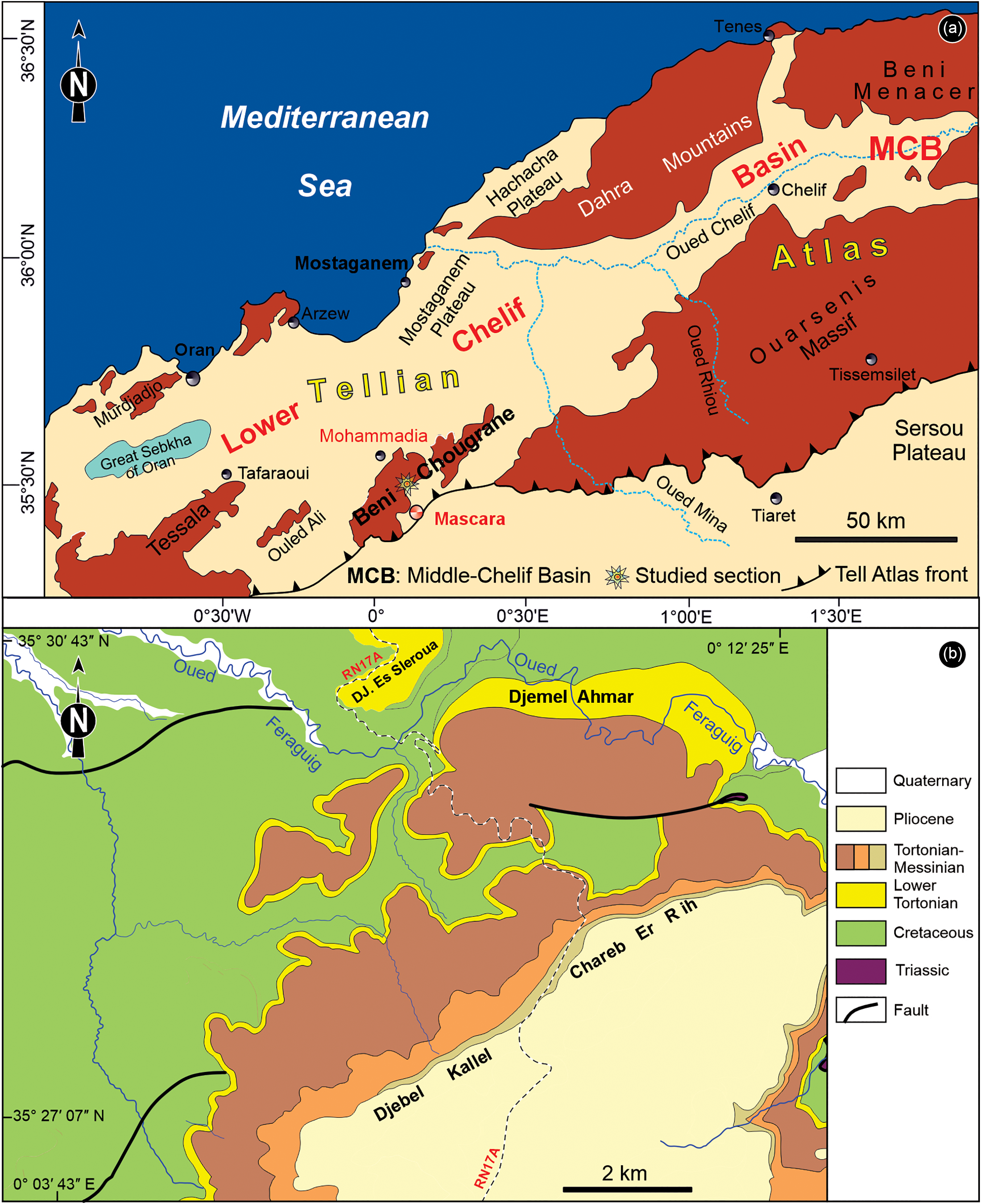
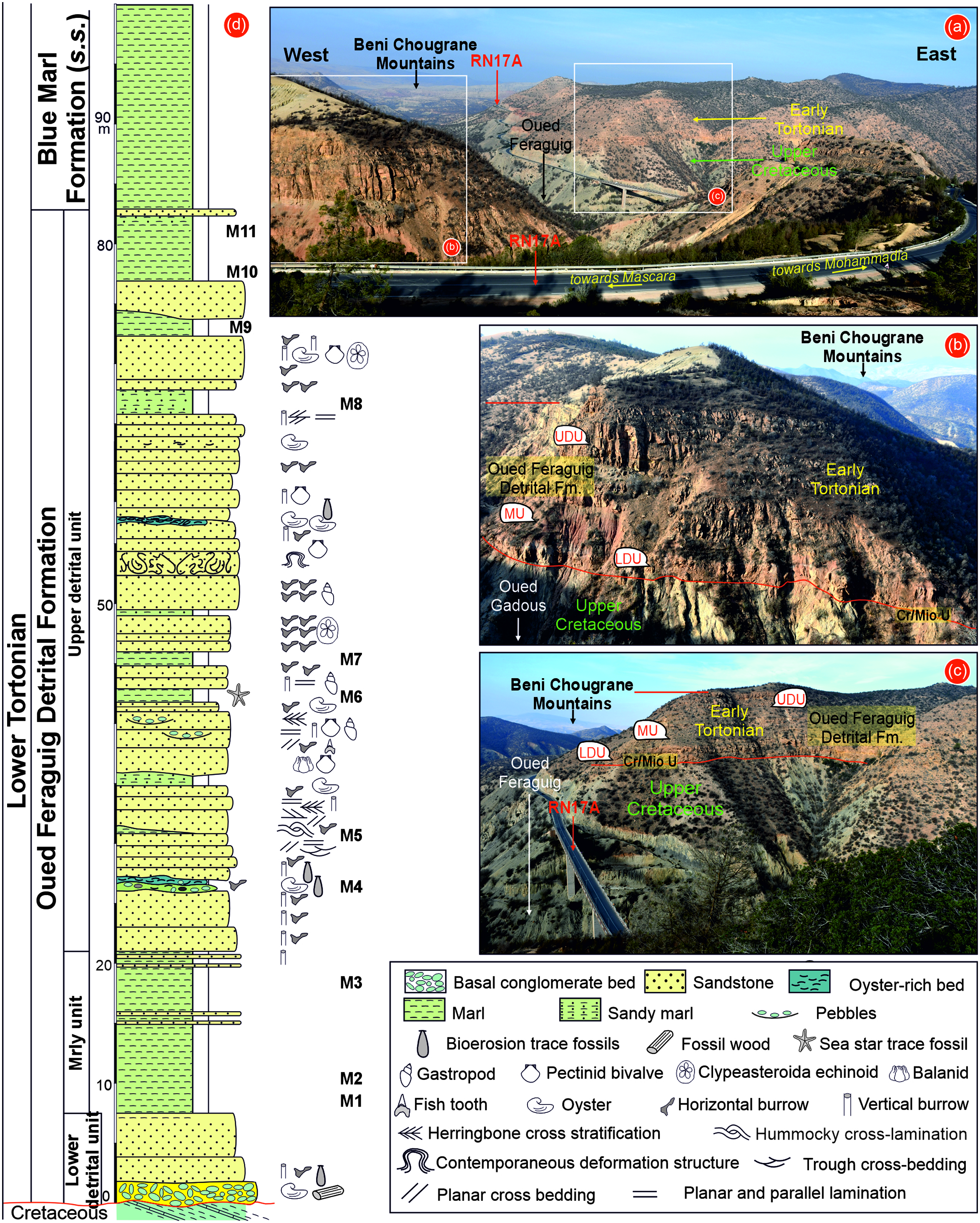
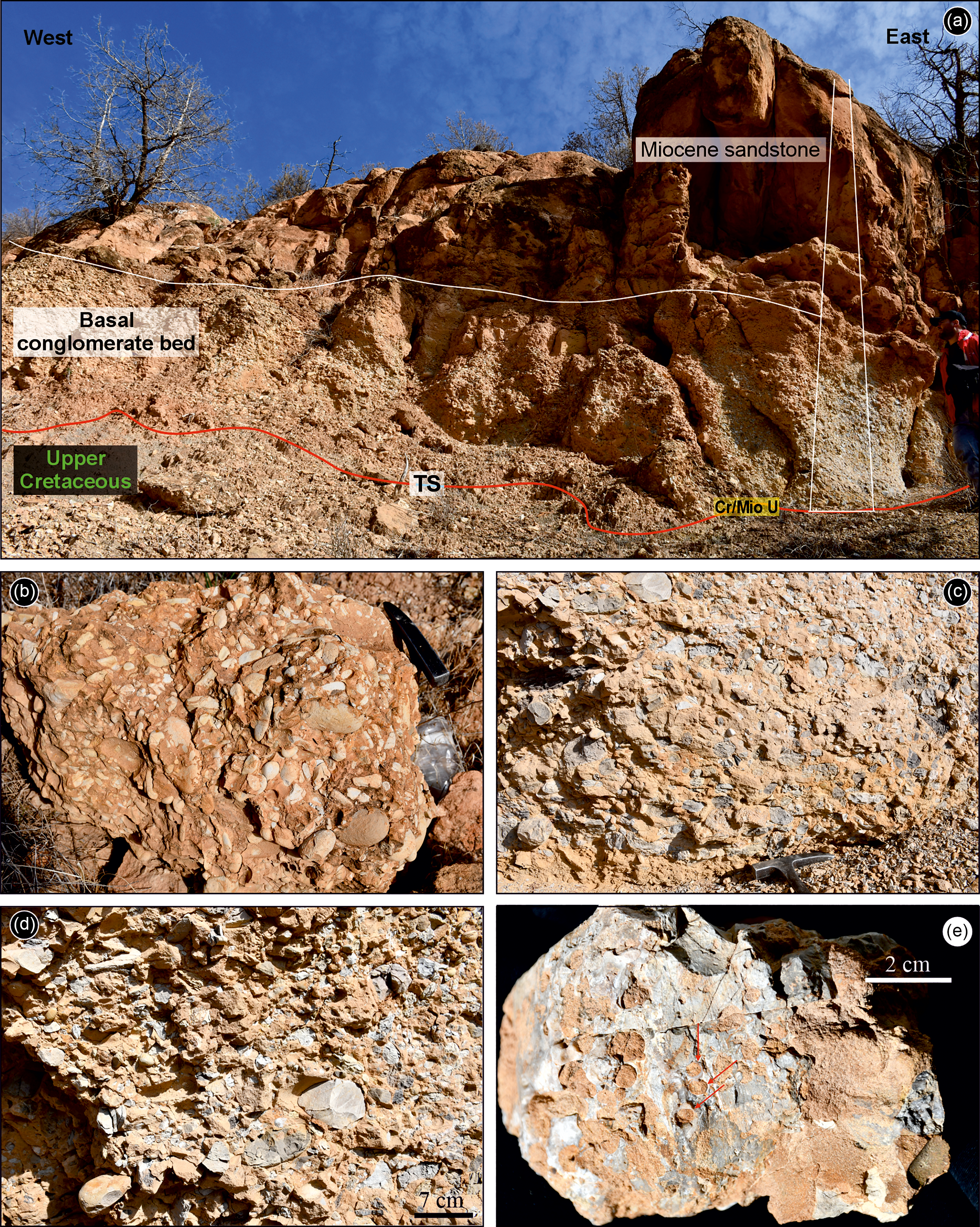
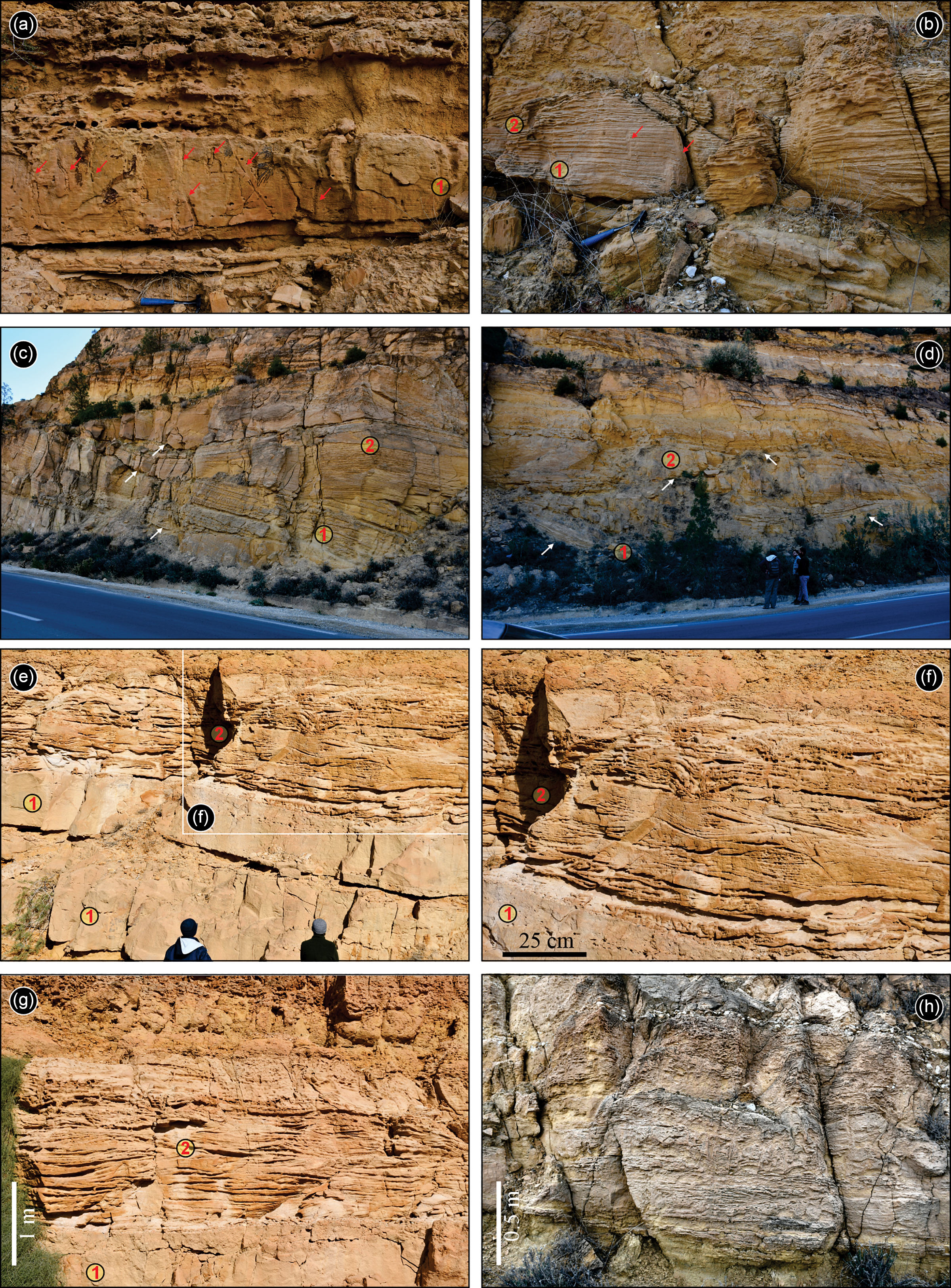
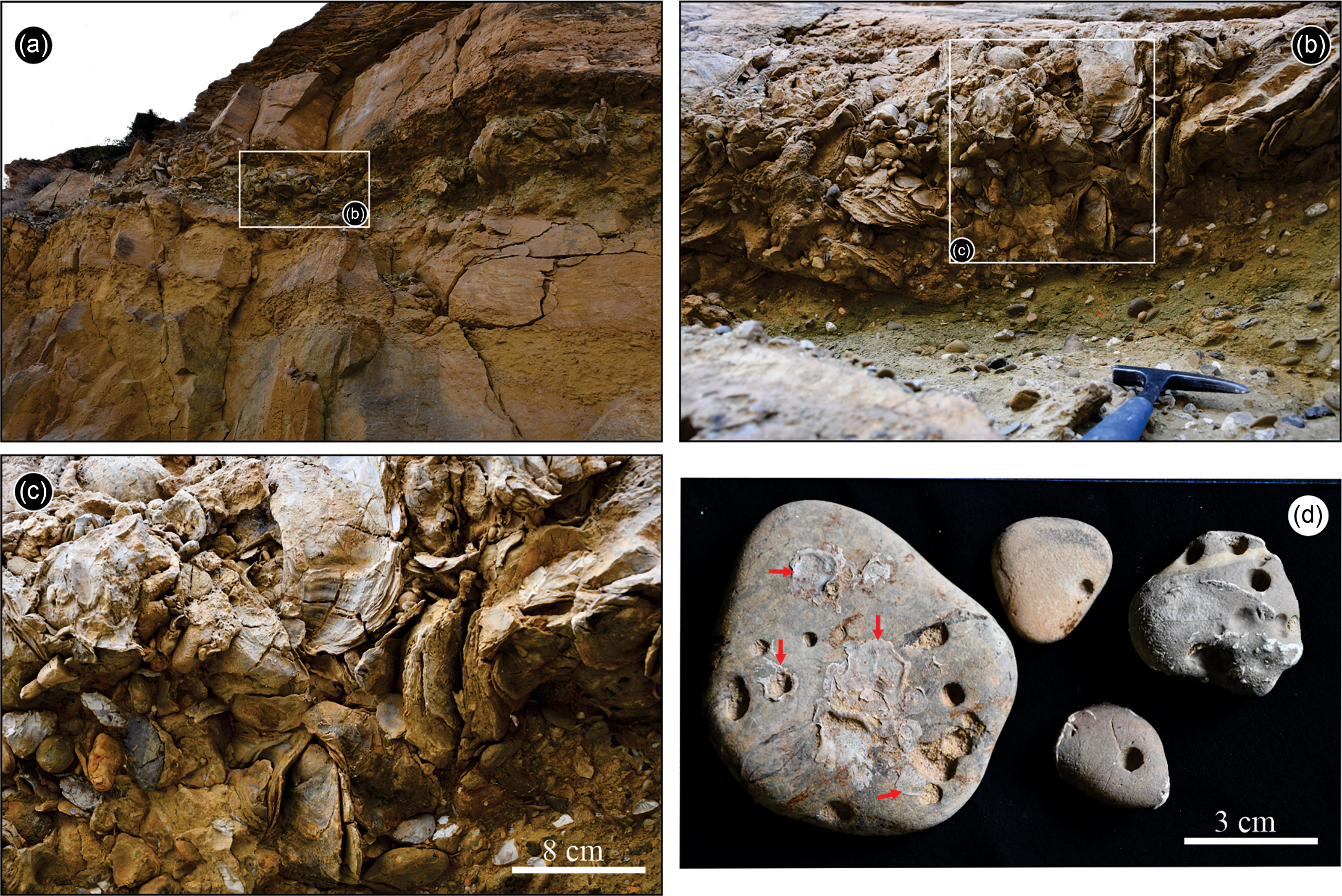
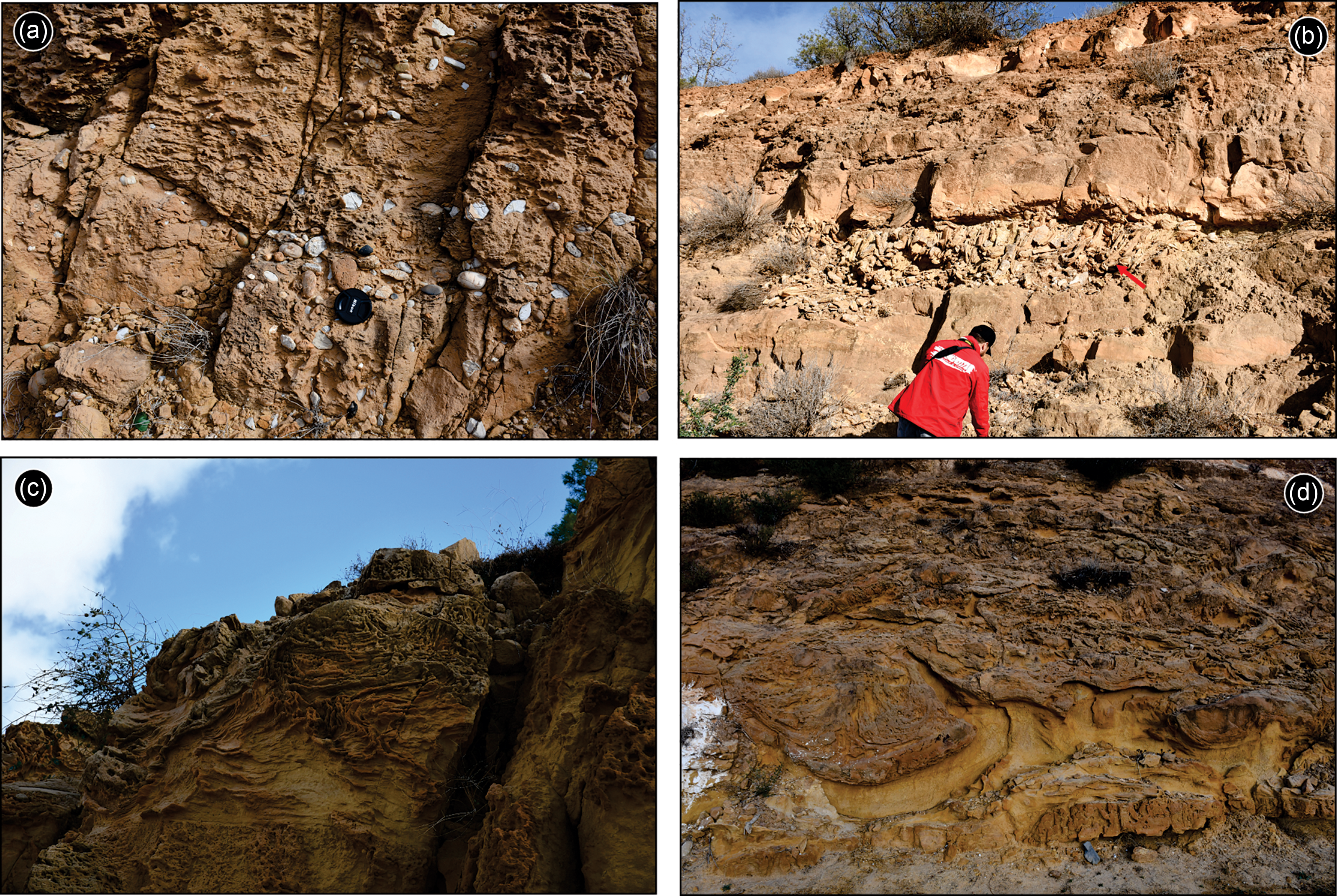
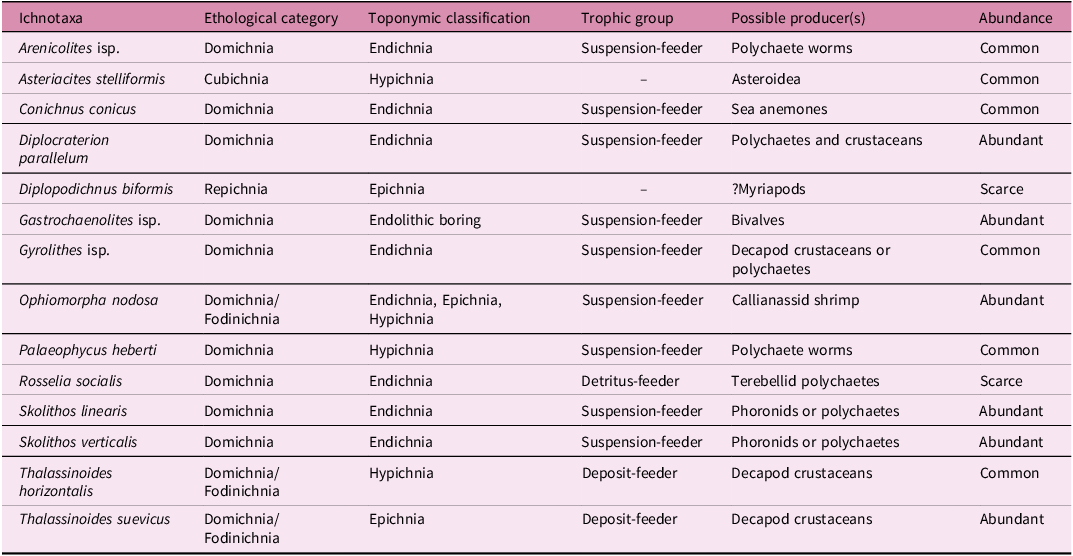
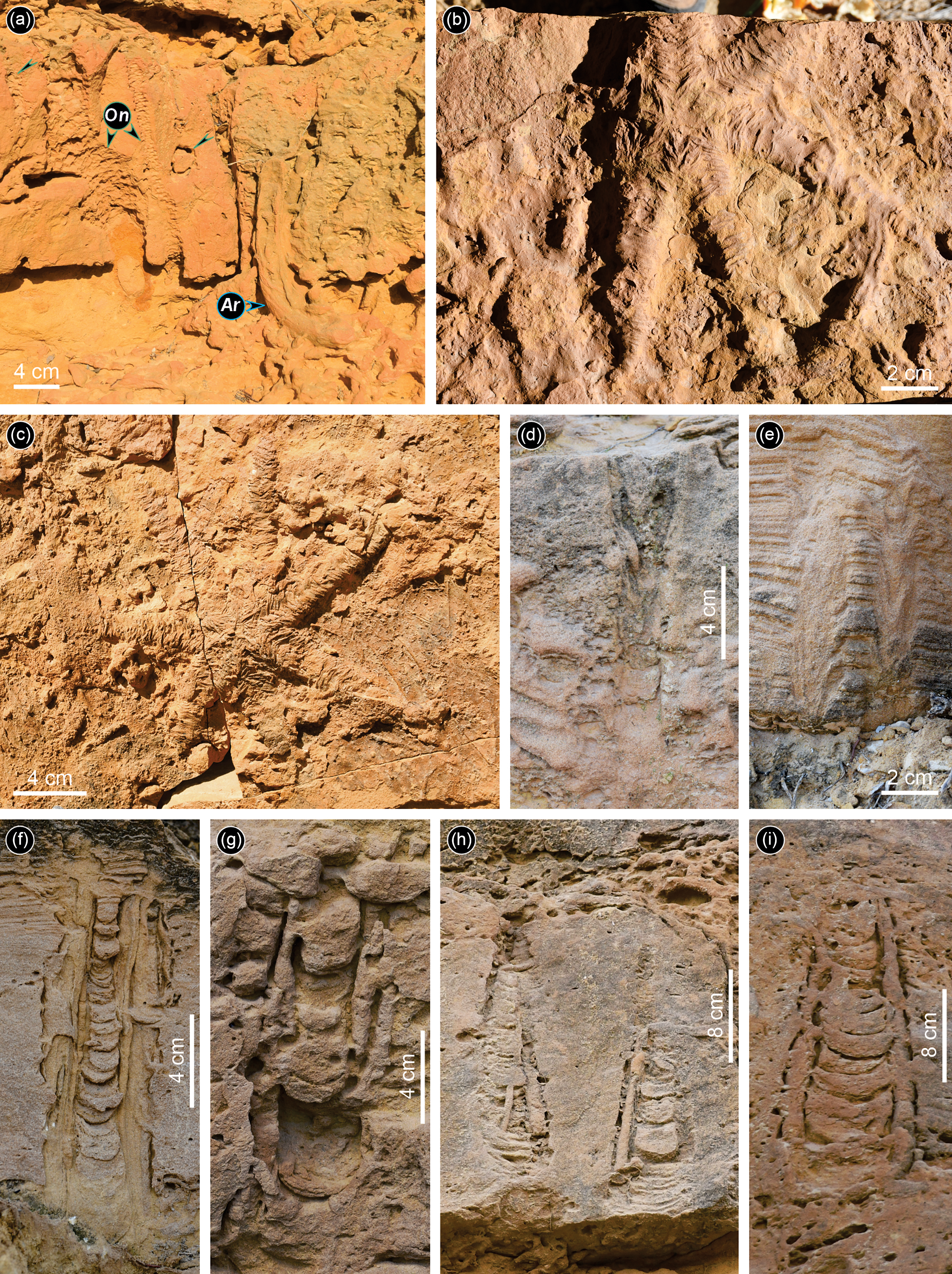
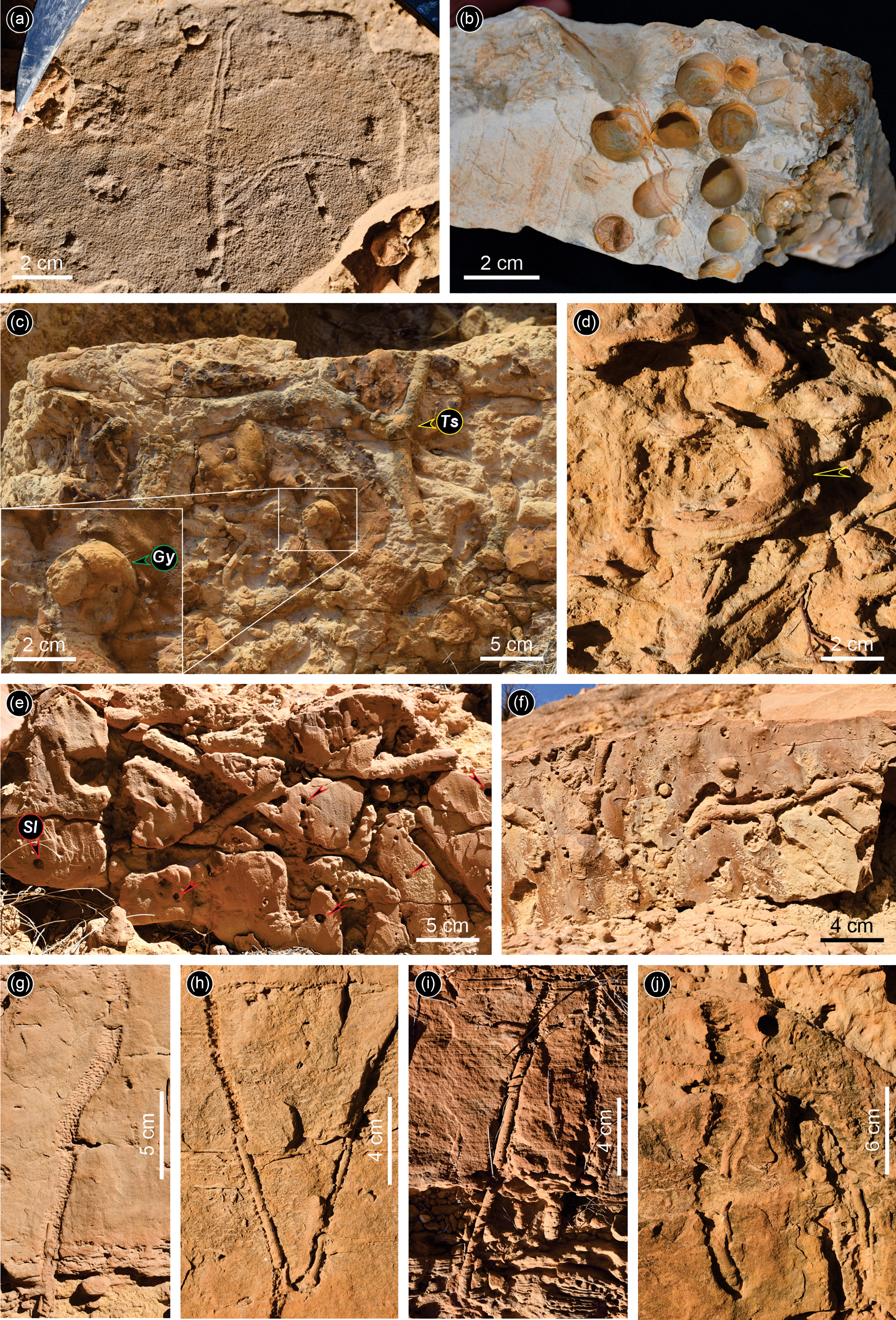
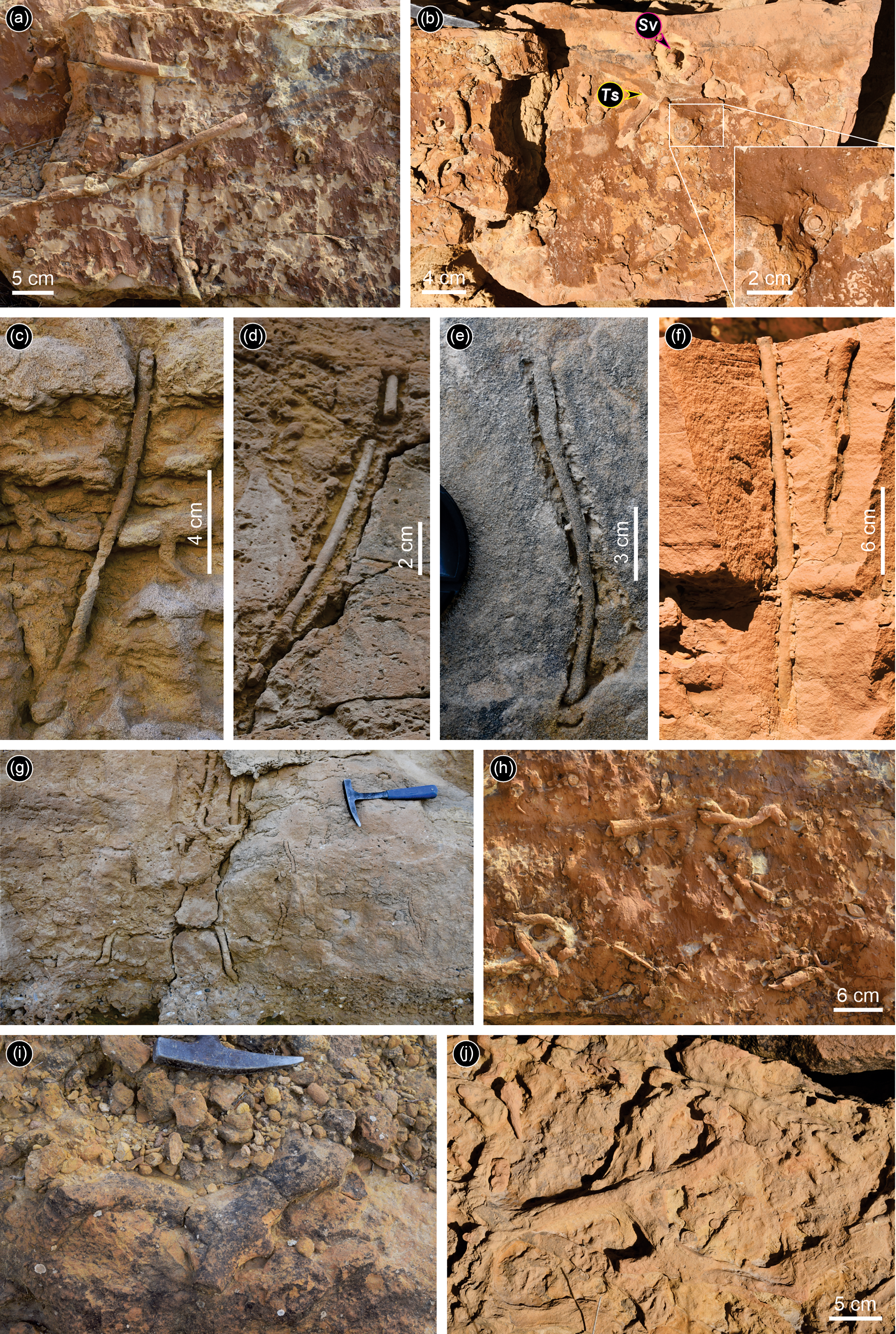
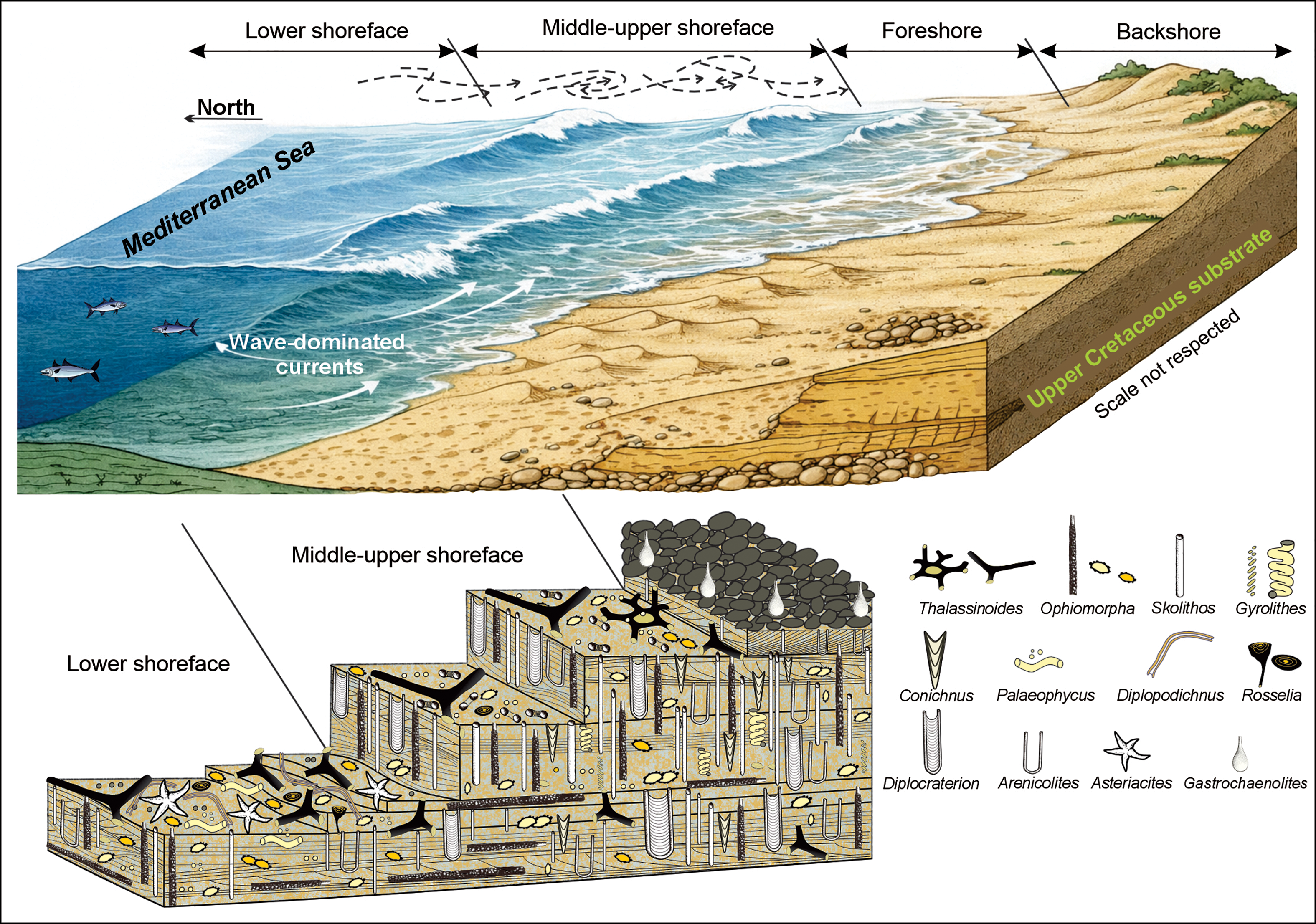

 Open access

