Bipolar disorder (BD) is a chronic and debilitating psychiatric illness. It is among the top 10 leading causes of disability worldwide (World Health Organization, 2001), by virtue of its association with severe psychosocial dysfunction, suicidality, and high comorbidity (Hodgins, Faucher, Zarac, & Ellenbogen, Reference Hodgins, Faucher, Zarac and Ellenbogen2002; Schaffer, Cairney, Cheung, Veldhuizen, & Levitt, Reference Schaffer, Cairney, Cheung, Veldhuizen and Levitt2006). As such, it entails important societal and economic costs (Begley et al., Reference Begley, Annegers, Swann, Lewis, Coan, Schnapp and Bryant-Comstock2001; Das Gupta & Guest, Reference Das Gupta and Guest2002), including particularly heavy burdens for the offspring of parents with BD (OBD). There is substantial evidence of adjustment and mental health problems among the OBD. The OBD display rates of attention, disruptive behavioral, and anxiety disorders in childhood two to nine times those observed among children with healthy parents (Birmaher et al., Reference Birmaher, Axelson, Monk, Kalas, Goldstein, Hickey and Brent2009; Singh et al., Reference Singh, Delbello, Stanford, Soutullo, Mcdonough-Ryan, McElroy and Strakowski2007). Recent clinical staging models suggest that the OBD are likely to exhibit age-specific emotional and behavioral difficulties prior to the development of subclinical affective symptoms and later major affective disorders (Duffy, Alda, Hajek, Sherry, & Grof, Reference Duffy, Alda, Hajek, Sherry and Grof2010; Duffy et al., Reference Duffy, Horrocks, Doucette, Keown-Stoneman, McCloskey and Grof2014; Miklowitz & Cicchetti, Reference Miklowitz and Cicchetti2006, Reference Miklowitz and Cicchetti2010). By young adulthood, approximately 30%–50% of the OBD will have developed a major affective disorder compared with only 10% of the offspring of parents with no affective disorder (ONAD; Mesman, Nolen, Reichart, Wals, & Hillegers, Reference Mesman, Nolen, Reichart, Wals and Hillegers2013; Nijjar, Ellenbogen, & Hodgins, Reference Nijjar, Ellenbogen and Hodgins2014; Rasic, Hajek, Alda, & Uher, Reference Rasic, Hajek, Alda and Uher2013).
Adverse outcomes for the OBD likely stem from a complex interaction between inherited traits and exposure to suboptimal childrearing environments (Brietzke et al., Reference Brietzke, Mansur, Soczynska, Kapczinski, Bressan and McIntyre2012). Genetic predisposition is the primary vulnerability factor reported in twin and adoption studies, with heritability estimates ranging between 60% and 93% (Kieseppa, Partonen, Haukka, Kaprio, & Lonnqvist, Reference Kieseppä, Partonen, Haukka, Kaprio and Lönnqvist2014; McGuffin et al., Reference McGuffin, Rijsdijk, Andrew, Sham, Katz and Cardno2003). At least one part of the genetic risk may be the transmission of alleles that increase sensitivity to both negative and positive environmental factors (Nilsson, Comasco, Hodgins, Oeland, & Åslund, 2015). In addition, since genetic risk does not entirely account for the intergenerational transmission of psychopathology, growing up with a parent who periodically becomes psychotic, dysfunctional, neglectful, or abusive has also been described as a dominant influence on the development of the OBD (Alloy et al., Reference Alloy, Abramson, Urosevic, Walshaw, Nusslock and Neeren2005; Post, Leverich, Xing, & Weiss, Reference Post, Leverich, Xing and Weiss2001). Disruptions in caregiving in families in which one parent has BD are well documented, as indicated by high levels of marital discord and separation (Dore & Romans, Reference Dore and Romans2001; Lam, Donaldson, Brown, & Malliaris, Reference Lam, Donaldson, Brown and Malliaris2005), parental absenteeism (e.g., due to hospitalizations; Pini et al., Reference Pini, de Queiroz, Pagnin, Pezawas, Angst, Cassano and Wittchen2005), nonoptimal parenting (e.g., use of lax disciplinary techniques; Calam, Jones, Sanders, Dempsey, & Sadhnani, Reference Calam, Jones, Sanders, Dempsey and Sadhnani2012), insecure offspring attachment (DeMulder & Radke-Yarrow, Reference DeMulder and Radke-Yarrow1991), and negative communication styles (Inoff-Germain, Nottelmann, & Radke-Yarrow, Reference Inoff-Germain, Nottelmann and Radke-Yarrow1992; Meyer et al., Reference Meyer, Carlson, Wiggs, Ronsaville, Martinez, Klimes-Dougan and Radke-Yarrow2006; Vance, Huntley, Espie, Bentall, & Tai, Reference Vance, Huntley, Espie, Bentall and Tai2008). With regard to general family dynamics, lower levels of cohesion and organization, and elevated conflict characterizes families in which a parent has BD relative to control samples (e.g., Barron et al., Reference Barron, Sharma, Le, Rushton, Close, Kelly and Le2014; Chang, Blasey, Ketter, & Steiner, Reference Chang, Blasey, Ketter and Steiner2001; Ferreira et al., Reference Ferreira, Moreira, Kleinman, Nader, Gomes, Teixeira and Caetano2013; Romero, Delbello, Soutullo, Stanford, & Strakowski, Reference Romero, DelBello, Soutullo, Stanford and Strakowski2005).
Dysfunctional caregiving environments in childhood are well-established risk factors for a broad array of mental disorders across the life span (see Yap & Jorm, Reference Yap and Jorm2015; Yap, Pilkington, Ryan, & Jorm, Reference Yap, Pilkington, Ryan and Jorm2014, for meta-analyses). Within the literature on affectively ill parents, there is robust evidence that unipolar depression in a parent contributes to illness onset in children at genetic risk via an impaired caregiving environment (see Beardslee, Gladstone, & O'Connor, Reference Beardslee, Gladstone and O'Connor2011, for a review). Among parents with BD, negative bidirectional correlations have been described between the quality of the childrearing environment and the experience of emotional and behavioral problems in the OBD (Calam et al., Reference Calam, Jones, Sanders, Dempsey and Sadhnani2012; Ferreira et al., Reference Ferreira, Moreira, Kleinman, Nader, Gomes, Teixeira and Caetano2013; Freed et al., Reference Freed, Tompson, Wang, Otto, Hirshfeld-Becker, Nierenberg and Henin2015). In a longitudinal investigation of the children of mothers with mood disorders (Meyer et al., Reference Meyer, Carlson, Wiggs, Ronsaville, Martinez, Klimes-Dougan and Radke-Yarrow2006; Radke-Yarrow, Reference Radke-Yarrow1998), extreme displays of negative affect and attitudes among mothers with BD during early childhood were predictive of risk for bipolar illness approximately 20 years later via negative alterations in frontal lobe functioning. Pioneering work by Miklowitz and colleagues has also shed light on the characteristics of the family environment relevant to BD, linking high levels of expressed emotion (i.e., criticism, hostility, and/or emotional overinvolvement) in family members to an increased likelihood of relapse (Miklowitz, Goldstein, Nuechterlein, Snyder, & Mintz, Reference Miklowitz, Goldstein, Nuechterlein, Snyder and Mintz1988) as well as longer and more severe illness episodes (Miklowitz, Wisiewski, Miyahara, Otto, & Sachs, Reference Miklowitz, Wisniewski, Miyahara, Otto and Sachs2005) in adolescents and adults diagnosed with BD. However, knowledge of the childrearing mechanisms underlying the parent–child transmission of psychopathology within the context of parental bipolar illness remains scarce.
To date, only one cross-sectional study has examined and found a small, but statistically significant indirect pathway from parents’ BD to current BD in offspring via heightened levels of family conflict (Schudlich, Youngstrom, Calabrese, & Findling, Reference Schudlich, Youngstrom, Calabrese and Findling2008), suggesting that the OBD may be especially susceptible to being exposed to a caregiving environment characterized by high levels of stress, chaos, and instability. Relative to control offspring, the OBD tend to experience more frequent and severe stressful life events (Ostiguy et al., Reference Ostiguy, Ellenbogen, Linnen, Walker, Hammen and Hodgins2009). Among those who eventually develop a mental disorder, negative life events often precede onset (Hillegers et al., Reference Hillegers, Burger, Wals, Reichart, Verhulst, Nolen and Ormel2004; Wals et al., Reference Wals, Hillegers, Reichart, Verhulst, Nolen and Ormel2005). High levels of the trait neuroticism (i.e., a tendency to react with elevated emotionality to stressors) in parents with BD have also been postulated to elicit unstable and disorganized caregiving environments in middle childhood that increases the risk for later high-risk sexual behaviors and poor interpersonal functioning in the OBD (Ellenbogen & Hodgins, Reference Ellenbogen and Hodgins2004; Nijjar, Ellenbogen, & Hodgins, Reference Nijjar, Ellenbogen and Hodgins2016; Ostiguy, Ellenbogen, & Hodgins, Reference Ostiguy, Ellenbogen and Hodgins2012). Likewise, structure provided by parents in middle childhood has been shown to influence cortisol reactivity in adolescence among the OBD (Ellenbogen & Hodgins, Reference Ellenbogen and Hodgins2009; Ellenbogen, Hodgins, & Walker, Reference Ellenbogen, Hodgins and Walker2004). In turn, persistent abnormalities in individuals’ biological sensitivity to stress have been associated with an increased vulnerability for the development of an affective disorder (Ellenbogen, Hodgins, Linnen, & Ostiguy, Reference Ellenbogen, Hodgins, Linnen and Ostiguy2011; Goodyer, Bacon, Ban, Croudace, & Herbert, Reference Goodyer, Bacon, Ban, Croudace and Herbert2009). Thus, stability, predictability, and cohesion in the childrearing environment may be especially important environmental predictors of health outcomes in youth who have a parent with BD, although knowledge of specific risk mechanisms remains elusive.
Ultimately, the current literature base highlights the need for additional research exploring the causal pathways linking the caregiving environment to mental health outcomes in the OBD. Specifically, longitudinal designs would help determine causality between both factors. It is also possible that disrupted caregiving processes that stem from parental affective disorder convey risk for a variety of maladaptive psychiatric outcomes in youth, and not just for the development of BD. In accordance with clinical staging models of BD, alternative, nonmood disorders should also be investigated as potential adverse outcomes for the OBD. Accordingly, the objectives of the current study were twofold: (a) to compare the quality of childrearing between families with a parent having BD and control families where neither parent has an affective disorder, and (b) to determine if the quality of the childrearing environment would mediate the relation between offspring's risk status (having a parent with BD vs. no affective disorder) and concurrent and prospective internalizing and externalizing symptoms in their offspring. Impairments in the caregiving environment were evaluated across three domains of parenting practices as rated by all parents within a family: mean levels of support (emotional warmth), structure (i.e., organization and consistency), and control (i.e., disciplinary practices). We hypothesized that parents with BD would display nonoptimal parenting in all domains relative to control parents. Moreover, we expected that having a parent with BD would increase offspring's likelihood of experiencing emotional and behavioral problems by way of increased disruptions in parenting practices during middle childhood. We explored these patterns at the Time 1 assessment, using concurrent measures, and prospectively by examining if parenting practices in middle childhood would continue to mediate the association between offspring risk status (OBD vs. ONAD) and offspring symptomatology approximately 12 years later as they transitioned into adulthood. In light of previous research showing a greater effect of structure, relative to support and control, provided by parents in middle childhood on stress reactivity in the adolescent OBD (Ellenbogen & Hodgins, Reference Ellenbogen and Hodgins2009), we postulated that the presence of low structure would yield the strongest predictive relations with symptoms of psychopathology among the OBD relative to the ONAD. Given that there are sex differences in vulnerability to specific internalizing (Angold, Erkanli, Silberg, Eaves, & Costello, Reference Angold, Erkanli, Silberg, Eaves and Costello2002) and externalizing (Broidy et al., Reference Broidy, Nagin, Tremblay, Bates, Brame, Dodge and Vitaro2003) pathologies in youth, we also explored whether sex of the offspring moderated the aforementioned statistical associations. To account for the large age range in the current sample (4 to 13 years at Time 1), and the fact the quality of family functioning varies with socioeconomic status (SES; Bradley & Corwyn, Reference Bradley and Corwyn2002), age of the offspring and family income (used as a proxy of SES) were controlled for in all analyses. In order to account for the continuity of mental health problems, issues of bidirectionality, and the possibility of evocative effects in the parent–child relationship (Larsson, Viding, Rijsdijk, & Plomin, Reference Larsson, Viding, Rijsdijk and Plomin2008), psychiatric diagnoses in offspring in middle childhood were controlled for in the mediation analyses. Parents’ antisocial personality traits were also included as a covariate to control for the possibility of genetically or environmentally transmitted effects involving parents’ antisocial behavior (Kim-Cohen, Moffitt, Taylor, Pawlby, & Caspi, Reference Kim-Cohen, Moffitt, Taylor, Pawlby and Caspi2005). To the best of our knowledge, this is the first study to evaluate the mediating role of parenting practices on both concurrent and longitudinal mental health outcomes in the OBD.
Method
Participants
Participants were recruited for a longitudinal investigation comparing the development of the OBD with that of the ONAD. Parents with a diagnosis of BD were recruited from psychiatric outpatient clinics in the province of Québec, as well as from advocacy and support groups. Control families, where neither parent had a lifetime diagnosis of a major affective disorder or any current Axis I diagnosis, were recruited from the same geographic locations via physicians’ offices and community organizations. Parental diagnoses were confirmed by an experienced clinician using the Structured Clinical Interview for DSM-III-R (SCID-I; Spitzer, Williams, Gibbon, & Michael, Reference Spitzer, Williams, Gibbon and First1992) and from an examination of psychiatric records. The Structured Clinical Interview for DSM-III-R Axis II personality disorders (SCID-II; Spitzer et al., Reference Spitzer, Williams, Gibbon and First1992) was also administered to assess symptoms of antisocial personality disorder in parents. For inclusion, families were required to be fluent in French or English, and have at least one biological child between the ages of 4 and 14 years who had been raised and educated in Canada. Families in which either parents or children presented with a chronic physical condition, physical handicap, or IQ below 70 were excluded from the study.
Assessments were made at two time points, approximately 12 years apart (11.7±1.0, range = 10–14). The initial sample was recruited between 1996 and 1998, and included 145 (76 female) offspring between the ages of 4 and 13 years (M = 7.89, SD = 2.41) from 103 families (58 OBD, 45 ONAD). Parents in this sample were mostly Caucasian, middle class, and French Canadian. Detailed demographic and psychosocial information on the original sample is described in Ellenbogen and Hodgins (Reference Ellenbogen and Hodgins2004). One hundred and one (52 female) offspring between the ages of 15 and 21 years (M = 19.71, SD = 2.50) from 74 families (42 OBD, 32 ONAD) returned for assessment at least 10 years later, consisting of 70% of the original sample. Twenty-nine offspring (19 OBD, 10 ONAD) met DSM-IV (American Psychiatric Association, 1994) criteria for a current diagnosis, including an affective disorder (2 OBD, 0 ONAD), anxiety disorder (15 OBD, 9 ONAD), substance use disorder (6 OBD, 2 ONAD), and 4 other diagnoses (1 OBD with hypochondriasis, 1 OBD with ADHD, 1 OBD with conduct disorder, and 1 ONAD with Tourette syndrome). Seventeen OBD (33%) and 5 (10%) ONAD had a lifetime diagnoses of an affective disorder. No differences were observed between the original sample and those who dropped out 12 years later with regard to offspring problem behavior and IQ, as well as parents’ scores across three dimensions of parenting (all ps >.05).
Measures
Time 1 offspring aged 4–13 years
Parents completed the Parenting Dimensions Inventory (PDI; Slater & Power, Reference Slater, Power and Vincent1987) as a measure of levels of (a) support (i.e., parental warmth, nurturance, and emotional expressiveness; “My child and I have warm, close moments together”), (b) structure (i.e., organization, consistency, and predictability; “Once I decide how to deal with a misbehavior of my child, I follow through on it”), and (c) control (i.e., frequency and type of disciplinary strategies; “I do not allow my child to get angry with me”) in the home. Parents endorsed items on a scale ranging from 1 (not at all characteristic of me) to 6 (very characteristic of me). Scores for each subscale of the PDI were mean ratings across all parents within a family. In the current sample, the PDI showed adequate internal consistency (α = 0.80).
The Achenbach System of Empirically Based Assessment (Achenbach & Rescorla, Reference Achenbach and Rescorla2001) is designed to assess children's internalizing and externalizing difficulties across eight dimensions of functioning at home and in school. For the purposes of this study, both the parent-reported Child Behavior Checklist (CBCL) and the Teacher Report Form (TRF) were administered. Composite scores were derived from three subscales (i.e., anxious/depressed, withdrawn/depressed, and somatic complaints) and two subscales (i.e., rule-breaking behavior and aggressive behavior) to assess internalizing and externalizing symptoms in youth, respectively. CBCL scores were averaged across all parents. The TRF was obtained for a subsample of children (n = 105; 55 OBD, 50 controls). The Achenbach System of Empirically Based Assessment shows adequate test–retest reliability (κ = 0.64–0.95) and high internal consistencies (α = 0.90; Achenbach & Rescorla, Reference Achenbach and Rescorla2001). Concurrent validity has also been established between the CBCL and other parent-reported behavior scales and diagnostic interviews for children (Barkley, Reference Barkley, Rutter and Tuma1998).
The Child Assessment Schedule (CAS; Hodges, Reference Hodges1981; Hodges, Mcknew, Cytryn, Stern, & Kline, Reference Hodges, McKnew, Cytryn, Stern and Kline1982) is a semistructured, diagnostic interview that was used by trained clinicians to assess for the number of psychiatric symptoms in offspring based on DSM-III (American Psychiatric Association, 1980) criteria. A total score representing the number of current symptoms that met the threshold for clinical significance across all affective, anxious, and disruptive behavior disorders was created. Only parent-reported symptoms were used for the purposes of this study. There is substantial evidence of interrater reliability and internal consistency for the CAS (Hodges, Reference Hodges1981; Hodges et al., 1982). Diagnostic agreement between child and parent informants has also been established (Verhulst, Althaus, & Berden, Reference Verhulst, Althaus and Berden1987).
Time 2 offspring aged 15–21 years
The SCID-I (First et al., Reference First, Spitzer, Gibbon and Williams2002) and Kiddie Schedule for Affective Disorders and Schizophrenia—Present and Lifetime version (K-SADS-PL; Kaufman & Schweder, Reference Kaufman, Schweder, Hilsenroth and Segal2004) were used to assess for the number of current (past month) symptoms of mental disorders in adult and adolescent offspring, respectively. Interviews were conducted by experienced clinicians trained and supervised in the use of the official French and English versions of the SCID-I or K-SADS-PL. In the present study, outcome at the follow-up was defined by the number of symptoms of major depressive disorder, anxiety disorders (generalized anxiety disorder, obsessive–compulsive disorder, social and specific phobia, and posttraumatic stress disorder), and substance use disorders recorded. Given the low diagnosis rate in the current sample (see participant description above), the number of symptoms reaching the subthreshold or threshold for clinical significance was tallied for each category. Thus, the final tally represents a count of only those symptoms that were deemed “severe” enough to be meaningful clinically, with higher numbers indicating a greater number of symptoms. Both diagnostic instruments demonstrate adequate psychometric properties (Basco et al., Reference Basco, Bostic, Davies, Rush, Witte, Hendrickse and Barnett2000; First et al., Reference First, Spitzer, Gibbon and Williams2002; Kaufman & Schweder, Reference Kaufman, Schweder, Hilsenroth and Segal2004). Interrater reliability obtained for 15% of interviews in the current sample was excellent (κ = 0.82).
Procedure
Following a telephone screening, parents with BD were administered the SCID-I and SCID-II interviews in the laboratory or at their homes, as well as a number of questionnaires. Parents with BD were euthymic during testing. Current spouses and ex-partners were also contacted and requested to complete the same interviews and questionnaires. Next, each parent independently completed the PDI and CBCL, and one parent from each family underwent the CAS interview for each of their children. Finally, parents provided consent and contact information for their child's teacher to complete the TRF. Control parents underwent the same procedures as families with a parent having BD.
Approximately 12 years later, parents were approached by telephone to provide consent for their adolescent and adult offspring to be contacted by study personnel. Offspring were then scheduled to return to the laboratory to undergo a diagnostic assessment, complete a battery of questionnaires (Nijjar et al., Reference Nijjar, Ellenbogen and Hodgins2014) and information processing tasks, as well as partake in three days of saliva collection in their natural environment (Ostiguy, Ellenbogen, Walker, Walker, & Hodgins, Reference Ostiguy, Ellenbogen, Walker, Walker and Hodgins2011). Only the diagnostic data is used in the present manuscript. Informed written consent was obtained from parents at Time 1 and from both parents and offspring at Time 2. Offspring participants received an honorarium of $150 CAN at Time 2 for participating in the full data collection. All procedures at Time 1 and Time 2 were approved by the Ethics Committee of the Université de Montréal and the Human Research Ethics Committee of Concordia University (Montréal, Canada), respectively.
Data analysis
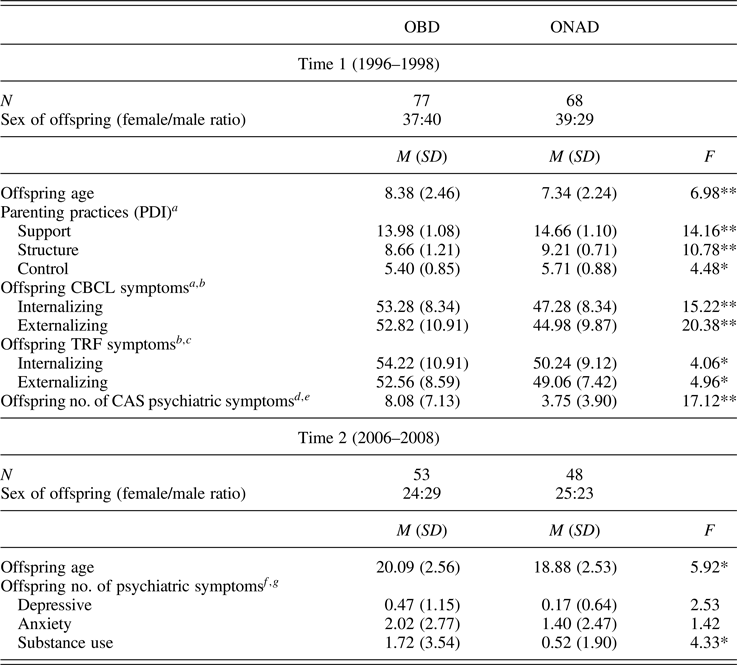
Prior to conducting the analyses, data were screened and corrected for outliers and distributional anomalies that violated statistical assumptions. Cases with missing data at Time 2 were deleted listwise. Comparison of the OBD and ONAD on study variables are presented in Table 1.
Comparison of offspring of parents with bipolar disorder (OBD) and offspring of parents with no affective disorder (ONAD)

Note: PDI, Parenting Dimensions Inventory; CBCL, Child Behavior Checklist; TRF, Teacher Report Form; CAS, Child Assessment Schedule.
aA mean score across all parents within a family.
bA t score.
cn = 55 OBD, 50 controls.
dFrom the CAS parent interview.
eIncludes clinical symptoms across all affective, anxious, and disruptive behavior disorders.
fFrom the Structured Clinical Interview for DSM-IV or Kiddie Schedule for Affective Disorders and Schizophrenia.
gIncludes present (past month) subclinical and clinical symptoms for each disorder.
*p < .05. **p < .01.
A multivariate analysis of covariance was first conducted to examine differences in the caregiving environment of the OBD relative to the ONAD in middle childhood across mean levels of parents’ support, structure, and control, controlling for offspring age and SES. Multivariate significance was determined using Wilk's λ. A statistically significant multivariate effect was followed-up by three tests of univariate analysis of covariance conducted on each dependent variable.
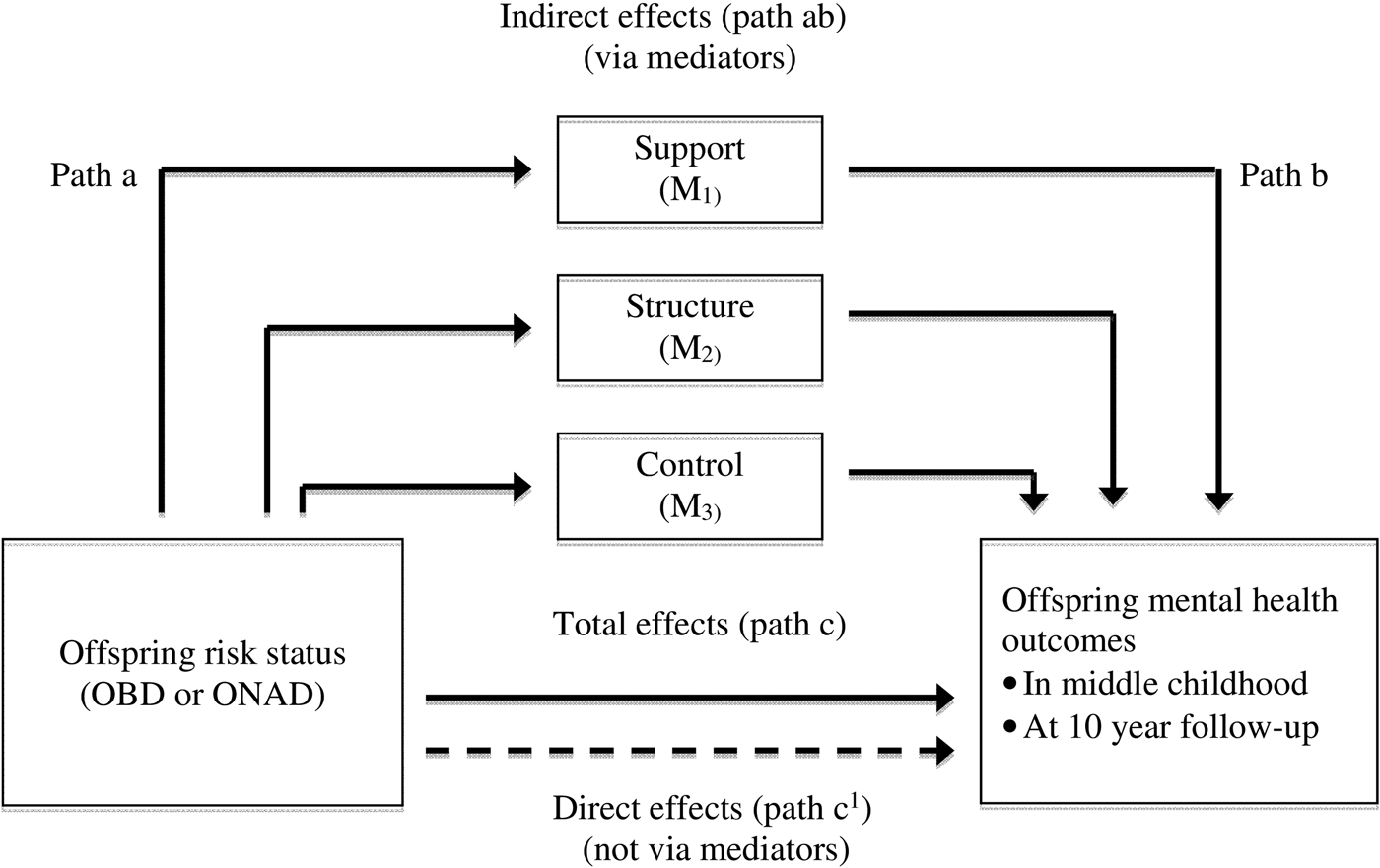
Two overarching, parallel multiple mediation models guided the main analytical procedure for this study, as represented in Figure 1. Parallel multiple mediation models the effects of a predictor on an outcome variable through two or more mediators. The output yields specific indirect effects for each mediator variable included in the statistical model, controlling for their intercorrelations. Hayes (Reference Hayes2013) provides a SPSS macro (PROCESS version 2.15) that calculates total (Path c; strength of the relation between a predictor and outcome variable prior to accounting for the mediator effects), direct (Path c1; strength of the relation between a predictor and outcome variable accounting for the mediator effects), and indirect (Path ab; strength of each mediating pathway) effects, as well as describes the relation between the predictor and mediator variables (Path a), and the mediator and outcome variables (Path b). PROCESS conducts tests of significance by constructing 95% bias-corrected confidence intervals. If the confidence interval does not include zero, the indirect effect is considered statistically significant at the .05 level. For this study, the bootstrap sample was set at 5,000 iterations. Finally, the output also yields partially standardized effect sizes (C ps) for the indirect effects, which represent the number of standard deviations by which the dependent variable is expected to increase or decrease per a change in the mediator equal to the size of Path a.
Multiple mediation models.

For all mediation analyses, the following covariates, all measured at Time 1, were included: offspring age, family income, offspring psychiatric diagnoses on the CAS, and parents’ antisocial traits as defined by the mean number of SCID-II threshold and subthreshold symptoms of antisocial personality disorder. To protect against violations of the assumption of independent observations, analyses were conducted with and without siblings (using random deletion). As the mediation analyses yielded similar findings, all participants were included in the final analyses. Finally, to determine if the mediated associations varied with offspring sex, the above-mentioned analyses were repeated using moderated mediation. However, offspring sex did not moderate any of the cross-sectional or longitudinal mediated analyses, and was dropped from the final statistical plan (data not shown).
Results
Group comparison of parenting practices in middle childhood
Mean levels of parent-rated support, structure, and control in middle childhood were compared between the BD and control families. After controlling for between-group differences in SES and offspring age, a multivariate analysis of covariance revealed a main effect of group for parenting practices, F (4, 138) = 1,167.76, p = .000. Post hoc analyses indicated significantly lower levels of support, t (143) = –3.76, p = .00, d = 0.63, structure, t (143) = –3.28, p = .00, d = 0.55, and control, t (143) = –2.12, p = .04, d = 0.36, in BD relative to control families (see Table 1 for means and standard deviations).
Mediation of the relation between offspring risk status and internalizing and externalizing problems in middle childhood
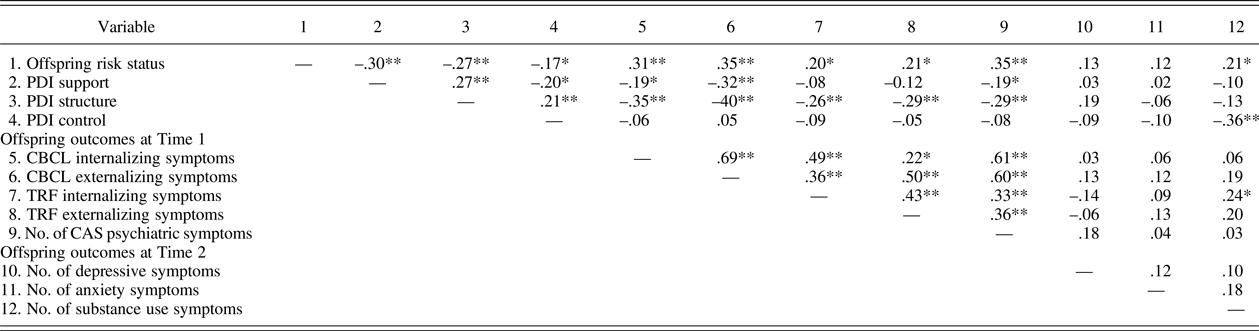
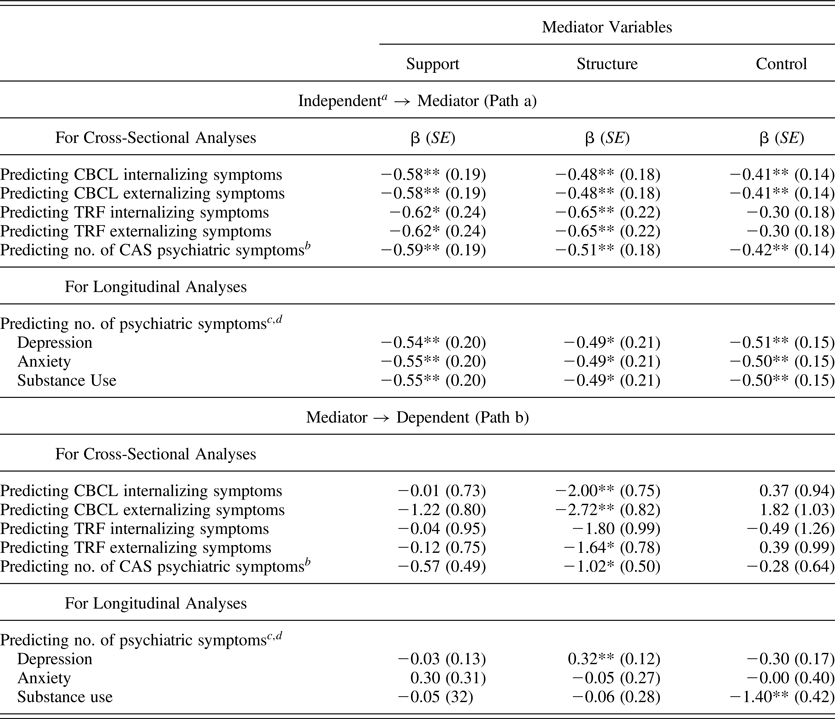
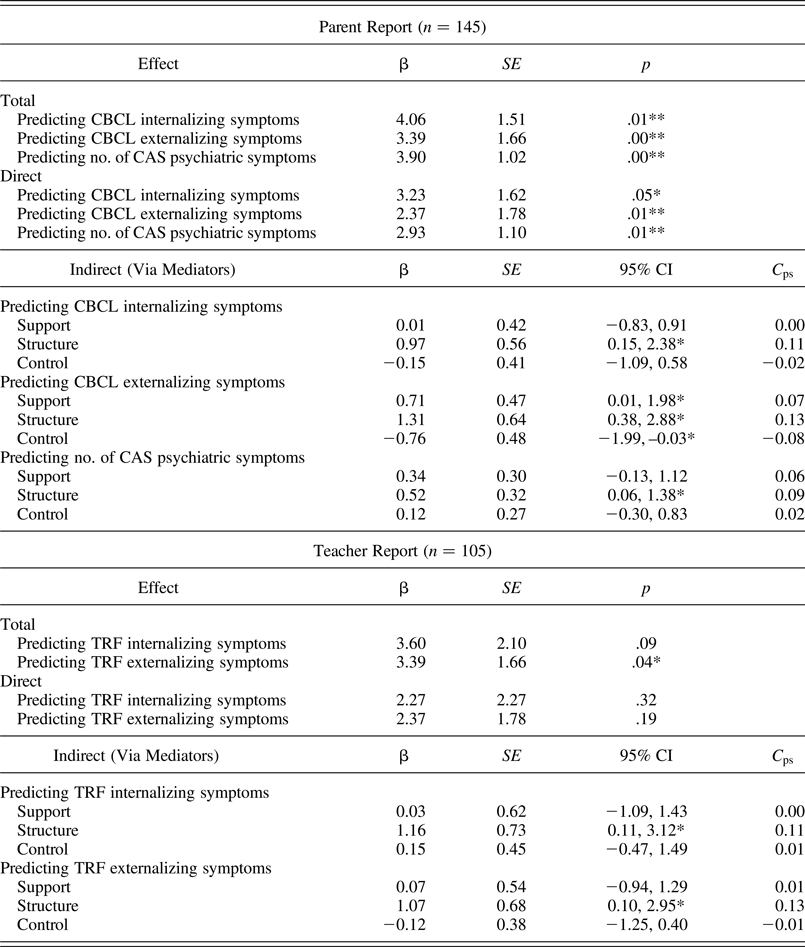
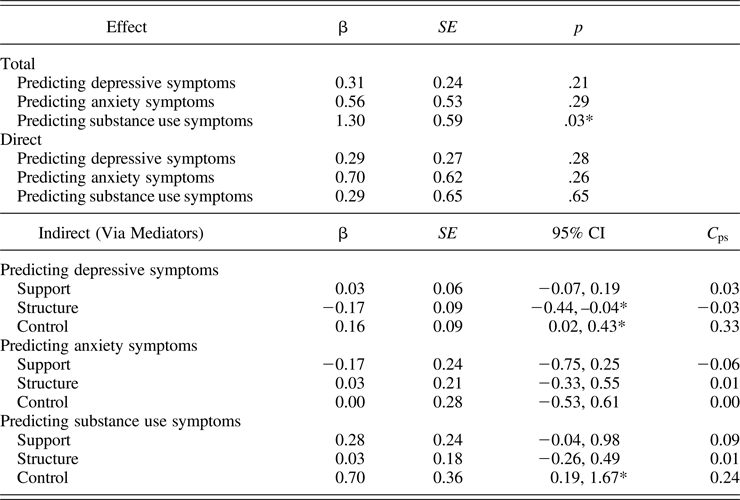
Pearson correlations between independent and dependent variables are shown in Table 2. Coefficients of the associations between predictor and mediator variables (Paths a in Figure 1), and mediator and outcome variables (Paths b in Figure 1) are summarized in Table 3. Coefficients for total, direct, and indirect effects (Paths c, c1, and ab in Figure 1) are presented in Tables 4 and 5 for the cross-sectional and longitudinal mediation analyses, respectively. The results for the indirect effects are highlighted in the text below, as a significant indirect effect is exclusively needed to establish mediation (Rucker, Preacher, Tormala, & Petty, Reference Rucker, Preacher, Tormala and Petty2011).
Pearson correlation coefficients for study variables
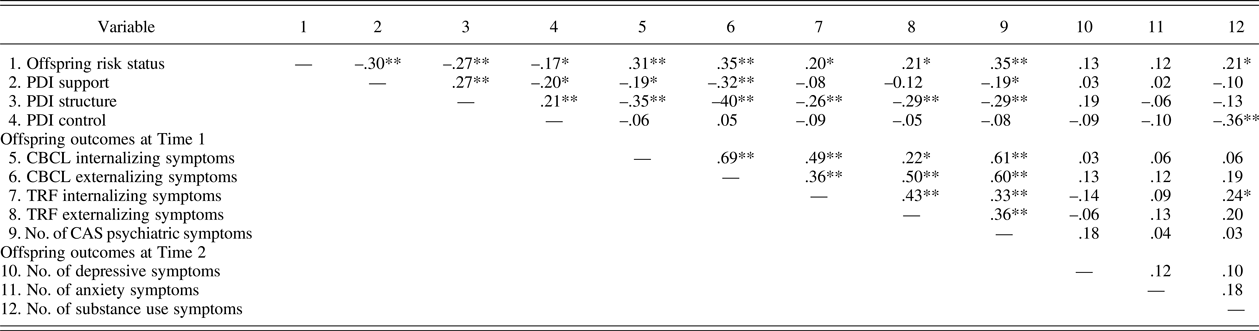
Note: PDI, Parenting Dimensions Inventory; CBCL, Child Behavior Checklist; TRF, Teacher Report Form; CAS, Child Assessment Schedule.
*p < .05. **p < .01.
Unstandardized coefficients between independent and mediator variables (Path a), and mediator and dependent variables (Path b) for the cross-sectional and longitudinal mediation models
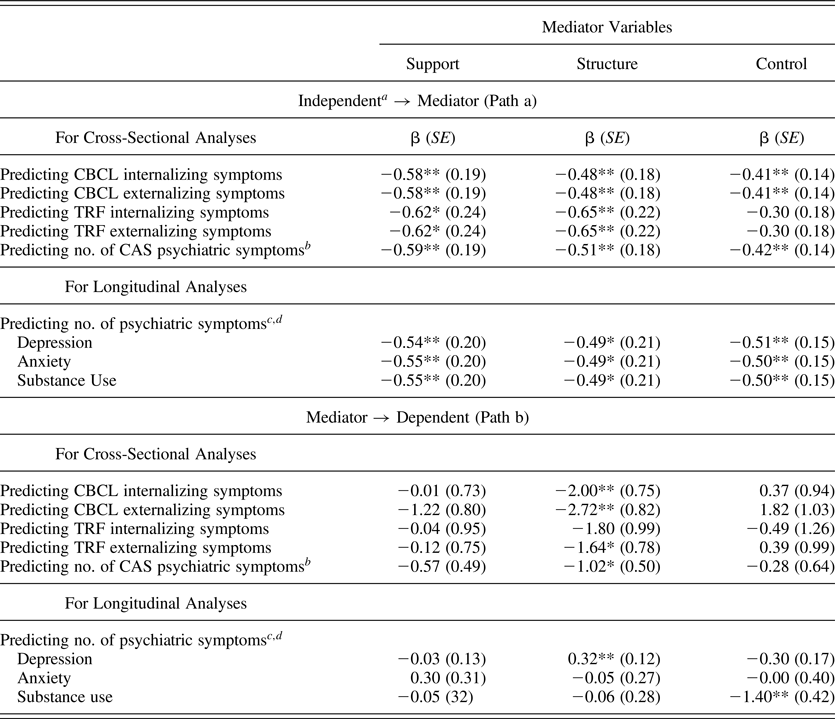
Note: CBCL, Child Behavior Checklist; TRF, Teacher Report Form; CAS, Child's Assessment Schedule.
aAcross all mediation models, the independent variable is offspring risk status (having a parent with bipolar disorder or not).
bIncludes clinical symptoms across all affective, anxious, and disruptive behavior disorders.
cFrom the Structured Clinical Interview for DSM-IV or Kiddie Schedule for Affective Disorders and Schizophrenia.
dIncludes present (past month) subclinical and clinical symptoms for each disorder.
*p < .05. **p < .01.
Unstandardized coefficients for the total, direct, and indirect effects of offspring risk status on internalizing, externalizing, and total psychiatric symptoms at baseline (cross-sectional analyses) via mean levels of parents’ support, structure, and control in middle childhood
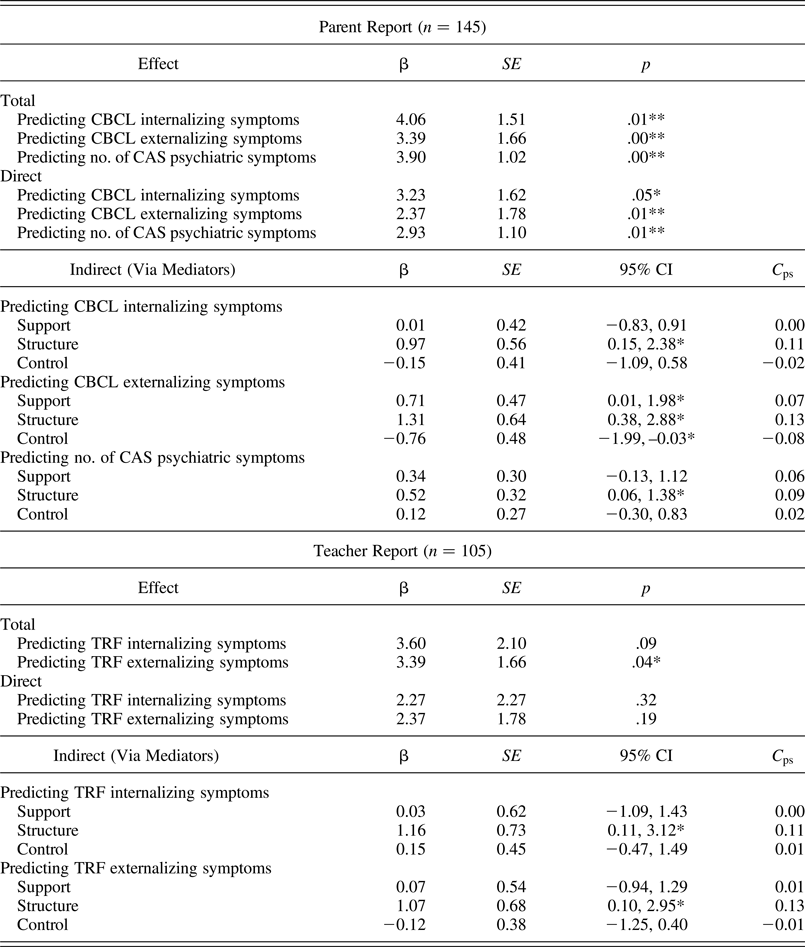
Note: CBCL, Child Behavior Checklist; CAS, Child Assessment Schedule; TRF, Teacher Report Form; C ps, partially standardized effect size.
*p < .05. **p < .01.
Unstandardized coefficients for the total, direct, and indirect effects of offspring risk status on symptoms of depressive, anxiety, and substance use disordersa,b in late adolescence and early adulthood (longitudinal analyses) via mean levels of parents’ support, structure, and control in middle childhood

Note: n = 101; C ps, partially standardized effect size.
aFrom the Structured Clinical Interview for DSM-IV or Kiddie Schedule for Affective Disorders and Schizophrenia.
bIncludes present (past month) subclinical and clinical symptoms for each disorder.
*p < .05.
Mean levels of support, structure, and control provided by parents in middle childhood were tested as potential parallel mediators of the relation between offspring risk status (OBD or ONAD) and parents’ report of internalizing and externalizing symptoms on the CBCL. Of the three mediators, structure showed a significant indirect effect of the relation between offspring risk status and rates of internalizing, ab = 0.97, SE = 0.56, 95% confidence interval (CI) [0.15, 2.4]; C ps = 0.11, and externalizing, ab = 1.31, SE = 0.64, 95% CI [0.38, 2.88]; C ps = 0.13, symptoms. Weaker, but statistically significant indirect effects on externalizing symptoms were detected for support, ab = 0.71, SE = 0.47, 95% CI [0.01, 2.0], C ps = 0.07, and control, ab = 0.76, SE = 0.48, 95% CI [–1.99, –0.03]; C ps = –0.08 (see Table 4). Similar to parent report, significant indirect effects of structure were detected when predicting the level of teacher-reported internalizing, ab = 1.16, SE = 0.73, 95% CI [0.11, 3.12]; C ps = 0.11, and externalizing, ab = 1.1, SE = 0.68, 95% CI [0.10, 2.95]; C ps = 0.13, symptoms on the TRF, as well as the total number of clinician-rated symptoms on the CAS, ab = 0.52, SE = 0.32, 95% CI [0.06, 1.38]; C ps = 0.09 (see Table 4). In sum, having a parent with BD was associated with lower levels of structure in middle childhood that, in turn, predicted higher rates of parent-reported, teacher-reported, and clinician-rated internalizing and externalizing symptoms in the OBD (see Table 3). With the exception of parent-report externalizing symptoms, the indirect effects of support and control were nonsignificant (all 95% CI contained zero) across all cross-sectional analyses.
Mediation of the relation between offspring risk status and internalizing and externalizing problems in early adolescence and young adulthood
Mean levels of support, structure, and control provided by parents in middle childhood were tested as potential parallel mediators of the relation between offspring risk status and current symptoms of depressive, anxiety, and substance use disorders in late adolescence and early adulthood on the SCID-1 or K-SADS-PL. Of the three mediators, control in middle childhood mediated the association between offspring risk status and the number of symptoms of depressive, ab = 0.16, SE = 0.09, 95% CI [0.02, 0.43]; C ps = 0.14, and substance use, ab = 0.70, SE = 0.36, 95% CI [0.19, 1.67]; C ps = 0.24, disorders 12 years later. Although weaker than for control, the indirect effect of structure on present symptoms of depression was also statistically significant, ab = –0.17, SE = 0.09, 95% CI [–0.44, –0.04]; C ps = –0.03 (see Table 5). Similar to the cross-sectional analyses of parenting and offspring symptoms in middle childhood, low levels of control in middle childhood predicted higher rates of offspring depressive and substance use symptoms in late adolescence and young adulthood. Conversely, high levels of structure in middle childhood were associated with higher rates of depressive symptoms (see Table 3). Across all remaining longitudinal analyses, the indirect effects of structure and support were nonsignificant (all 95% CI contained 0).
Discussion
The present prospective study showed that parenting practices in middle childhood mediated the associations between having a parent with or without BD, and internalizing and externalizing symptoms in offspring in middle childhood and approximately 12 years later. As expected, parents with BD displayed significant impairments in parenting practices relative to control parents, providing less support, structure, and control to their offspring in middle childhood. This is consistent with previous studies of parenting by adults with an affective disorder (Alloy, Abramson, Smith, Gibb, & Neeren, Reference Alloy, Abramson, Smith, Gibb and Neeren2006; Dix & Meunier, Reference Dix and Meunier2009; Radke-Yarrow, Reference Radke-Yarrow1998; Wilson & Durbin, Reference Wilson and Durbin2010). During middle childhood, parental structure, to a greater extent than support or control, underlay the relation between parents’ diagnosis of BD and a range of internalizing and externalizing difficulties in their offspring. Specifically, parents with BD were more likely than healthy control parents to provide low levels of organization, consistency, and stability in the home during middle childhood that, in turn, predicted higher rates of psychopathology in the OBD. These associations remained significant for parent-report, teacher-report, and clinician ratings of offspring psychopathology. In contrast, parental control in middle childhood emerged as the strongest predictor of offspring psychopathology in late adolescence and young adulthood. That is, parents’ inability to ensure adequate supervision and role boundaries, as well as set appropriate expectations, limits, and consequences for child misbehavior during middle childhood, mediated the association between having a parent with BD and symptoms of substance use and depressive disorders approximately 12 years later.
The results of the mediation analyses are consistent with the view that poor parenting practices in families that include a parent with BD represent a putative causal mechanism for internalizing and externalizing problems in the OBD (Alloy et al., Reference Alloy, Abramson, Urosevic, Walshaw, Nusslock and Neeren2005, 2006; Ellenbogen & Hodgins, Reference Ellenbogen and Hodgins2004; Meyer et al., Reference Meyer, Carlson, Wiggs, Ronsaville, Martinez, Klimes-Dougan and Radke-Yarrow2006). The present findings extend previous findings from this sample. We showed that levels of neuroticism were elevated among parents with BD and associated with a range of nonoptimal parenting practices including low warmth, low autonomy support, and ineffective behavioral control, as well as a less organized and consistent parenting style (Ellenbogen & Hodgins, Reference Ellenbogen and Hodgins2004). Parents’ traits of neuroticism and agreeableness were robust predictors of internalizing and externalizing problems among their offspring in middle childhood (Nijjar et al., Reference Nijjar, Ellenbogen and Hodgins2016; Ostiguy et al., Reference Ostiguy, Ellenbogen and Hodgins2012). These externalizing problems, in turn, place the OBD on trajectories leading to a variety of difficulties in adolescence and young adulthood, such as poor interpersonal functioning and high-risk sexual behaviors. Further, we found that the OBD were more sensitive to the deleterious effects of their parents’ neuroticism and its associated environmental consequences than the ONAD (Nijjar et al., Reference Nijjar, Ellenbogen and Hodgins2016; Ostiguy et al., Reference Ostiguy, Ellenbogen and Hodgins2012), further highlighting the important role of the home environment in preventing negative outcomes among the OBD.
It is interesting that the type of parenting practice that was an important predictor of behavioral outcomes differed depending on whether the outcome of interest was assessed concurrently in middle childhood or 12 years later when offspring were in late adolescence and young adulthood. There is evidence that a child's susceptibility to specific disruptions in caregiving depends on their age at exposure (Frick, Christian, & Wootton, Reference Frick, Christian and Wootton1999). Parenting practices that offer an organized, predictable, and consistent framework for daily living have been primarily associated with enhanced psychological well-being and psychosocial development among younger children. For instance, the use of child and family routines provide a buffer against hyperactivity, impulsivity, and noncompliance in low-income, ethnic minority children (Lanza & Drabick, Reference Lanza and Drabick2011), and internalizing problems in school-aged children (Bridley & Jordan, Reference Bridley and Jordan2012). Likewise, home environments characterized by high levels of disorganization, chaos, and noise have been associated with a range of internalizing, externalizing, and attention problems in preschool and school-aged children (Coldwell, Pike, & Dunn, Reference Coldwell, Pike and Dunn2006; Deater-Deckard et al., Reference Deater-Deckard, Mullineaux, Beekman, Petrill, Schatschneider and Thompson2009). Among adolescent populations, low levels of parental behavioral control, including inadequate regulation, monitoring, and supervision of adolescent activities, have been repeatedly linked to increased delinquency and engagement in high-risk behaviors (DeVore & Ginsburg, Reference DeVore and Ginsburg2005; Hoeve et al., Reference Hoeve, Dubas, Eichelsheim, Van der Laan, Smeenk and Gerris2009), greater internalizing problems and steeper trajectories toward externalizing difficulties (Galambos, Barker, & Almeida, Reference Galambos, Barker and Almeida2003), as well as higher rates of antisocial behaviors and depression (Bacchini, Miranda, & Affuso, Reference Bacchini, Miranda and Affuso2011).
In the present study, while a caregiving environment low in parental structure had an immediate impact on the OBD's mental health, the adverse psychological effects of insufficient parental control during middle childhood remained latent until the OBD reached late adolescence and early adulthood. The enduring effects of repeated exposure to suboptimal caregiving environments on offspring's psychological well-being have been well documented (e.g., Hoeve et al., Reference Hoeve, Dubas, Eichelsheim, Van der Laan, Smeenk and Gerris2009; Morgan, Brugha, Fryers, & Stewart-Brown, Reference Morgan, Brugha, Fryers and Stewart-Brown2012; Weich, Patterson, Shaw, & Stewart-Brown, Reference Weich, Patterson, Shaw and Stewart-Brown2009). The current data extend previous findings by suggesting that the impact of early negative caregiving not only persists but also may not be apparent until much later in the course of offspring development. Alternatively, it is possible that the longitudinal findings reflect consistency in parenting practices from childhood into late adolescence. Although not measured in the current study, parenting philosophies and practices tend to persist over time (Carrasco, Rodriguez, Del Barrio, & Holgado, Reference Carrasco, Rodriguez, Del Barrio and Holgado2011; Else-Quest, Clark, & Tresch Owen, Reference Else-Quest, Clark and Tresch Owen2011). This may be especially characteristic of the childrearing practices adopted by parents with BD, as behavioral and cognitive rigidity is a feature common to many psychopathologies (Schultz & Searleman, Reference Schultz and Searleman2002). Thus, the OBD who were exposed to low levels of parental control in middle childhood may have continued to experience inadequate parental control as they grew older that, in turn, contributed to the development of substance use and depressive symptoms.
Although parents with BD provided less support to their offspring than control parents, parental support in middle childhood did not emerge as a central pathway through which BD in a parent led to offspring internalizing and externalizing symptoms in either middle childhood or late adolescence and early adulthood. The finding that parental support failed to independently contribute to internalizing problems in the OBD was especially unexpected, as low parental warmth has been repeatedly associated with depression and anxiety among both general and high-risk pediatric populations (for meta-analyses, see McLeod, Weisz, & Wood, Reference McLeod, Weisz and Wood2007; and McLeod, Wood, & Weisz, Reference McLeod, Weisz and Wood2007). This pattern of findings suggests that the OBD may be more susceptible to the adverse effects of disrupted parental structure and control than support. For example, when compared to the ONAD, the OBD display dysregulations in the functioning of the hypothalamus–pituitary–adrenal axis, a neuroendocrine system responsible for the secretion of cortisol in response to environmental stressors (Ostiguy et al., Reference Ostiguy, Ellenbogen, Walker, Walker and Hodgins2011). In turn, hypothalamus–pituitary–adrenal axis dysfunction may represent a biological marker of vulnerability to psychopathology in the OBD (Ellenbogen et al., Reference Ellenbogen, Hodgins, Linnen and Ostiguy2011) that, in one study, was strongly predicted by disruptions in predictable and consistent caregiving 10 years earlier, but not supportive parenting (Ellenbogen & Hodgins, Reference Ellenbogen and Hodgins2009). Thus, the robust effects of parenting structure, rather than support, on mental health in the OBD highlights how the impact of different parenting factors on risk for mental illness may be partly determined by the nature of the vulnerabilities inherent to the population of high-risk youth being studied. It is worth noting that this finding stands in contrast to results reported by Meyer et al. (Reference Meyer, Carlson, Wiggs, Ronsaville, Martinez, Klimes-Dougan and Radke-Yarrow2006), who found that negative affect and attitudes in mothers with BD during early childhood were associated with greater odds of their offspring developing BD in early adulthood. However, important differences exist with regard to the parenting constructs (i.e., parental support vs. maternal negativity) and mental health outcomes (internalizing and externalizing problems vs. BD) assessed in each study, suggesting that the two studies are far too different to be compared with one another.
Likewise, parenting practices in middle childhood did not predict symptoms of anxiety in late adolescence and early adulthood, despite anxiety being among the most common psychiatric disorder developed by the OBD. This is in line with the findings from a recent systematic review (Wood, McLeod, Sigman, Hwang, & Chu, Reference Wood, McLeod, Sigman, Hwang and Chu2003) and meta-analysis (Yap & Jorm, Reference Yap and Jorm2015) demonstrating little evidence for an association between parenting styles and pediatric anxiety. McLeod, Weisz, et al. (Reference McLeod, Weisz and Wood2007) and Mcleod, Wood, et al. (Reference McLeod, Wood and Weisz2007) conducted two separate meta-analyses into the role of parenting in determining child and adolescent internalizing difficulties. In aggregate, parenting accounted for less than 4% of the total variance in offspring anxiety relative to 8% with regard to depression. This suggests that factors other than parenting may be especially important to consider in the pathogenesis of pediatric anxiety disorders, which may account for the present null result.
Insufficient parental control is particularly salient in the context of families that include a parent having BD and may have important implications for models of abnormal development among the OBD. Externalizing problems are elevated in the OBD compared to age-matched controls (Klimes-Dougan, Ronsaville, Wiggs, & Martinez, Reference Klimes-Dougan, Ronsaville, Wiggs and Martinez2006; Linnen, aan het Rot, Ellenbogen, & Young, Reference Linnen, aan het Rot, Ellenbogen and Young2009). Moreover, among high-risk offspring who develop BD, there is evidence of a subgroup characterized by antisocial behavior during childhood and adolescence who exhibit a more severe course of BD, including more hospitalizations and episodes, and a higher prevalence of psychotic symptoms during manic episodes (Carlson, Bromet, & Sievers, Reference Carlson, Bromet and Sievers2000; Carlson & Weintraub, Reference Carlson and Weintraub1993). Similarly, OBD who exhibit high levels of quarrelsome behavior in their daily social interactions, relative to those with low levels and to the ONAD, show blunted daytime cortisol levels (Ellenbogen et al., Reference Ellenbogen, Hodgins, Linnen and Ostiguy2011), a frequent biological correlate of antisocial behavior (Alink et al., Reference Alink, van IJzendoorn, Bakermans-Kranenburg, Mesman, Juffer and Koot2008). Externalizing problems, therefore, represent a core feature of premorbid risk among the OBD. As such, parenting behaviors, such as effective disciplinary strategies, that decrease externalizing behaviors in childhood, may have beneficial long-term effects for the OBD. In addition, the caregiving environment, specifically the relation between parent and child, interacts with specific genetic variants to modify the risk of delinquency (Nilsson et al., Reference Nilsson, Comasco, Hodgins, Oreland and Åslund2015) and depression (Comasco, Aslund, Oreland, & Nilsson, Reference Comasco, Åslund, Oreland and Nilsson2013).
It was unexpected that high levels of structure in middle childhood were significantly related to elevated rates of depressive symptoms in offspring 12 years later. Although a small statistical effect relative to the other reported findings, the direction of the mediating effect was contrary to the cross-sectional results, where high levels of structure were associated with fewer symptoms. Within community samples, a lack of age-appropriate autonomy granting and enmeshed family interactions have been associated with increased risk for adolescent depression (Jewell & Stark, Reference Jewell and Stark2003; Noom, Dekovic, & Meeus, Reference Noom, Deković and Meeus1999; Yap et al., Reference Yap, Pilkington, Ryan and Jorm2014), both of which could conceivably be a consequence of excessive parental structuring in later developmental stages. In the current study, this finding may be best understood within the context of co-occurring low levels of parental control, which also significantly predicted elevated symptoms of depression 12 years later. Namely, the establishment of rules, schedules, and order in the absence of parental monitoring, limit setting, and consequences may have created erratic, ambiguous, and confusing environments that further contributed to depressive symptomology in the OBD. Possible interpretations remain limited, however, as there are few studies to guide our understanding of how high parental structure might have a unique impact within the context of growing up with a parent with BD and a heightened familial risk for adolescent depression. Additional research is needed of combinations of the different aspects of parenting and outcomes for the OBD.
Strengths and limitations
To the best of our knowledge, this is the first study to investigate the mediating role of parenting practices in middle childhood on the mental health outcomes of the OBD measured concurrently and approximately 12 years. Thus, these data increase understanding of a putative mechanism that may be causally related to externalizing and internalizing symptoms among the OBD. Offspring psychopathology was independently rated by parents, teachers, and experienced clinicians. Three dimensions of parenting practices were examined simultaneously, allowing for comparisons of relative strength in predicting outcomes in the OBD. Another strength of the study was the estimations of associations of parenting and psychopathology in late adolescence and early adulthood while statistically controlling for offspring psychopathology in middle childhood. This reduced the likelihood that symptoms of depression and substance use disorders in late adolescence and early adulthood simply represented continuity from internalizing and externalizing problems observed in middle childhood, further supporting our finding of the enduring association between parenting practices and offspring psychopathology.
A number of study limitations should be considered when interpreting the results. Parenting practices were only measured when offspring were in middle childhood, limiting knowledge of parenting into late adolescence and early adulthood when the follow-up assessment of offspring mental health was undertaken. In particular, the absence of parenting measures during adolescence precludes the possibility of assessing how changing parenting practices over time may have influenced outcomes. Another limitation is the large age range of the participants. While parenting was measured during the developmental stage that is commonly described as middle childhood, certain practices will have a differential impact on offspring adjustment based on age (Frick et al., Reference Frick, Christian and Wootton1999). Parenting practices were assessed using a single self-report measure, which could have been influenced by parents’ mental health status (De Los Reyes & Kazdin, Reference De Los Reyes and Kazdin2005). However, parents with BD were in a euthymic state when completing the PDI. The use of an average score that represented levels of support, structure, or control across all parents within a family likely further helped reduce bias and error commonly associated with the use of self-report data derived from a single informant (Kroes, Veerman, & De Bruyn, Reference Kroes, Veerman and De Bruyn2003). However, this approach prevented us from gaining a more comprehensive understanding of the ways in which the specific parenting practices adopted by each caregiver may have interacted to determine psychiatric outcomes in the OBD. There is a growing area of research attesting to the differential impact of mothers’ and fathers’ parenting strategies on offspring clinical outcomes (McKinney & Renk, Reference McKinney and Renk2008; Milevsky, Schlechter, Netter, & Keehn, Reference Milevsky, Schlechter, Netter and Keehn2007) and that exposure to competent caregiving from at least one parent provides a buffer against emotional maladjustment in adolescents (Simons & Conger, Reference Simons and Conger2007). Given the elevated rates of assortative mating among patients with BD (Mathews & Reus, Reference Mathews and Reus2001), the implications with regard to parenting competence may be especially disadvantageous for the OBD. The unique contribution of parental support to offspring mental health may have been more apparent if considered in interaction with, rather than simultaneously to, the other components of parenting. For example, an authoritative parenting style, which combines parenting practices designed to optimize levels of both parental responsiveness and demandingness, has been consistently linked to psychological well-being in youth (Larzelere, Morris, & Harrist, Reference Larzelere, Morris and Harrist2013; Piko & Balazs, Reference Piko and Balázs2012). Ultimately, the use of both multiple informants and observation to assess parenting practices should be considered in future studies.
Conclusions
Low levels of structure provided by parents in middle childhood mediated the relation between having a parent with BD and elevated rates of internalizing and externalizing difficulties in the OBD during middle childhood. For the longitudinal outcomes, parental control in middle childhood emerged as the strongest mediator of the relation between having a parent with BD and offspring psychopathology 12 years later, in late adolescence and early adulthood. These findings support the usefulness of parent training prevention programs targeting the caregiving environment to reduce risk of psychopathology in the OBD. Specifically, the present findings not only emphasize the promotion of parental monitoring and adaptive disciplinary practices as a means of mental illness prevention but also highlight the importance of addressing issues of predictability, consistency, and organization in the home environment of the OBD. This is consistent with current trends in the treatment of adult and pediatric BD (Miklowitz, Reference Miklowitz2010). Further dismantling of parenting constructs is needed to help clarify some of the discrepant and unexpected findings that emerged in the current study. More multimethod, longitudinal research in populations at risk for affective disorders would also be of benefit.