


Introduction
During the coronavirus infectious disease (COVID-19) pandemic, high levels of psychological distress were identified across the general population (Pierce et al., Reference Pierce, Hope, Ford, Hatch, Hotopf, John, Kontopantelis, Webb, Wessely, McManus and Abel2020; Rettie and Daniels, Reference Rettie and Daniels2020). Murray and colleagues (Reference Murray, Grey, Wild, Warnock-Parkes, Kerr, Clark and Ehlers2020; p. 2) highlight that ‘One of the many aftershocks of the pandemic is likely to be a rise in patients presenting with PTSD related to their experiences of illness and medical treatment’, including those having experienced COVID-19 itself. Patients exposed to ICU environments are particularly vulnerable to developing PTSD, and this may be further compounded by sedative medications and partial consciousness (Davydow et al., Reference Davydow, Zatzick, Hough and Katon2013; Jackson et al., Reference Jackson, Lassen-Greene, Jutte and Stepanovic2020). During altered physiological states, patients are at greater risk of delirium, including experiences of confusion, hallucinations, and delusions (Kotfis et al., Reference Kotfis, Roberson, Wilson, Dabrowski, Pun and Ely2020). These experiences increase risk of PTSD as memory processing is impacted (Murray et al., Reference Murray, Grey, Wild, Warnock-Parkes, Kerr, Clark and Ehlers2020; Valsø et al., Reference Valsø, Rustøen, Skogstad, Schou‐Bredal, Ekeberg, Småstuen, Myhren, Sunde and Tøien2020). Memories are poorly organised, dominated by sensory information and remain segregated from autobiographical memories, rendering them easily triggered. The National Institute for Health and Care Excellence (NICE) ‘Rehabilitation after Critical Illness’ guidelines (2009) advise that patients receive psychological follow-up following discharge from ICU. However, in practice, these services are not available across all UK hospitals and have been further pressured by demands of the COVID-19 pandemic (Murray et al., Reference Murray, Grey, Wild, Warnock-Parkes, Kerr, Clark and Ehlers2020).
Intervention: CT-PTSD
CT-PTSD is considered a first-line treatment for PTSD and is advocated by various international clinical guidelines (American Psychological Association, 2017; International Society of Traumatic Stress Studies, 2019; National Institute for Health and Care Excellence, 2018). However, variables other than best treatment outcomes may influence clinical recommendations for mental health conditions. Dakin and colleagues (Reference Dakin, Devlin, Feng, Rice, O’Neill and Parkin2015) claim that cost-effectiveness is the principal driver of many NICE recommendations. Prioritisation of balancing costs over treatment effectiveness may negatively impact treatment selection. As a trauma-focused cognitive behavioural therapy (CBT), CT-PTSD has strong evidence of cost effectiveness (Mavranezouli et al., Reference Mavranezouli, Megnin-Viggars, Grey, Bhutani, Leach, Daly, Dias, Welton, Katona, El-Leithy, Greenberg, Stockton and Pilling2020) as well as several randomised control trials (RCTs) supporting its clinical efficacy with low drop-out rates (Ehlers et al., Reference Ehlers, Hackmann, Grey, Wild, Liness, Albert, Deale, Stott and Clark2014; Ehlers et al., Reference Ehlers, Wild, Warnock-Parkes, Grey, Murray, Kerr, Rozental, Beierl, Tsiachristas, Perera-Salazar, Andersson and Clark2020). Whilst CBT has been consistently evidenced for use with older adults, specific research investigating the effectiveness of CT-PTSD is limited (Laidlaw, Reference Laidlaw2021).
Research examining the effectiveness of psychological interventions for patients experiencing PTSD following a COVID-related ICU admission is also limited. Research evidence focuses on early intervention for PTSD in ICU environments (Wade et al., Reference Wade, Mouncey, Richards-Belle, Wulff, Harrison, Sadique, Grieve, Emerson, Mason, Aaronovitch, Als, Brewin, Harvey, Howell, Hudson, Mythen, Smyth, Weinman, Welch, Whitman and Rowan2019), highlighting the importance of patient diaries (Ullman et al., Reference Ullman, Aitken, Rattray, Kenardy, Le Brocque, MacGillivray and Hull2015) and consideration of sedation and medication use (Kress et al., Reference Kress, Gehlbach, Lacy, Pliskin, Pohlman and Hall2003). CT-PTSD is considered an effective treatment for PTSD, but has not yet been specifically tested with post-ICU patients; however, Murray and colleagues (Reference Murray, Grey, Wild, Warnock-Parkes, Kerr, Clark and Ehlers2020) suggest that it can be effectively used with this population. CT-PTSD is typically offered for 12 sessions, but it is acknowledged that more sessions are required in complex presentations, as is likely to be the case amongst post-ICU patients, where co–morbidity and multiple traumas are common (Murray et al., Reference Murray, Grey, Warnock-Parkes, Kerr, Wild, Clark and Ehlers2022).
For patients with co–morbid PTSD and depression, as evident in this case study, trauma-focused therapies have been found to reduce depressive symptoms (Rosen et al., Reference Rosen, Ortiz and Nemeroff2020). Treatment specifically targeting depressive symptoms does not tend to improve co–morbid PTSD (Rosen et al., Reference Rosen, Ortiz and Nemeroff2020), which further justifies the primary selection of CT-PTSD for the referred patient’s presentation.
Unresolved grief and delirium
Typically manifesting as a collection of acute symptoms that fluctuate over time, delirium involves a disturbance of consciousness that impacts one’s cognition (Cavallazzi et al., Reference Cavallazzi, Saad and Marik2012). Whilst delirium is a transient and reversible issue, its psychological impact can persist (Williams et al., Reference Williams, Dhesi and Partridge2020). In the context of psychosis, individuals’ appraisal of their voice-hearing experience has been associated with their levels of distress (Chadwick and Birchwood, Reference Chadwick and Birchwood1994). A similar association may be apparent in appraisals of delirium. Although research into grief and delirium is limited, case studies have shown that personal experiences of grief may shape an individual’s experience of delirium (Khoo, Reference Khoo2011). An individual who experiences communicating with the deceased during delirium may interpret this as a sign of transition from life to death (Breitbart and Cohen, Reference Breitbart, Cohen, Chochinov and Breitbart2000). Whilst this can be reassuring for those making this transition (Kearney, Reference Kearney1996), individuals who survive may find this experience distressing. This case study describes complicated grief that is distinct from major depression or PTSD, but presents co–morbidly (Shear et al., Reference Shear, Frank, Houck and Reynolds2005).
Older adult adaptations
This clinical case study describes the management of a myriad of physical health difficulties, including a diagnosis of incurable cancer. Greater physical health difficulties are more likely to accumulate in older adults leading to depression, as well as complicating grieving processes. Patients with experience of physical health conditions are arguably accustomed to deferring to expertise from medical professionals, and may similarly approach therapy with expectations of a medical model (Morrill, Reference Morrill2021). This could detrimentally influence patients’ sense of agency and increase helplessness (Renzaglia, Reference Renzaglia1983). It has been proposed that older people are more likely to believe that being a patient brings the need for patient passivity, i.e. being passive receivers of a healthcare professional’s help, advice, and expertise (Steuer and Hammen, Reference Steuer and Hammen1983). Therapists should therefore consider generational contexts and challenge cohort beliefs around self-generation of new behaviours and strategies (Evans, Reference Evans2007). Collaboration offered by therapeutic approaches, such as CBT, helps to redress power imbalances (Evans, Reference Evans2007). Despite independent consideration of gerontology and PTSD, the study of PTSD in older adult populations remains relatively limited (Thorp et al., Reference Thorp, Wells, Cook and Gold2017). Initial evidence suggests that older adults may experience PTSD symptoms differently from their younger counterparts (Thorp, Reference Thorp2022); for example, increased stigma may be evident (Corrigan et al., Reference Corrigan, Swantek, Watson and Kleinlein2003). PTSD symptoms are likely to connect with previous trauma experiences; however, older adults are less likely to independently make connections between current symptoms and previous trauma (Thorp et al., Reference Thorp, Sones and Cook2011). Thorp (Reference Thorp2022) highlights the need for research examining treatment outcomes in older adults with PTSD, including studies that account for co–morbid diagnoses and various trauma types.
Presenting problem
Case introduction
This case study details the assessment, formulation and intervention phases of individual CT–PTSD with Rosalind (pseudonym). The client provided her written consent for a case study to be written and published. The 65-year-old woman presented with PTSD following an ICU admission with COVID-19. Rosalind developed bilateral interstitial (double) pneumonia following COVID-19. She had recently undergone surgery (segmentectomy) after receiving a primary cancer diagnosis. Rosalind had also had multiple primary tumours over the last 7 years. Rosalind identified as a white British woman and explained that her family’s attitudes to help-seeking, particularly in relation to mental well-being, contributed to her unwillingness to seek professional help. She recognised that her negative self-perception resulted from ‘needing to get help this time’ for psychological problems, which had been more difficult than receiving help when ‘fighting four cancers in seven years’. Rosalind reflected on how her negative self-perception had been exacerbated by cohort beliefs and mental health stigma. Rosalind also noted that patterns of powerlessness throughout her life (e.g. being physically disciplined in the home environment and experiences of coercive control in romantic relationships) currently contributed to feelings of helplessness.
An internal referral was made to clinical psychology by Rosalind’s Cancer Support Worker following worsening COVID-related trauma symptoms. Rosalind felt that her ability to ‘fight’ her cancer had been impacted by her COVID-related trauma experience. She hoped that undertaking CT-PTSD would allow her to re-adopt her position of ‘fighter’, without the need for the cancer diagnosis to be the focus of therapy. She was referred to the clinical health psychology service for therapeutic input surrounding difficulties directly related to the adjustment to, and consequences of, her physical health challenges in ICU (including the necessary introduction of a walking aid: ‘my stick’). In addition, Rosalind presented with delirium in the context of her ICU admission, the content of which involved an encounter with her deceased father. Research suggests that individuals who access treatment within a year of the traumatic event may show better outcomes than those who access interventions later (Maguen and Price, Reference Maguen and Price2020). Rosalind was seen approximately 6 months post-ICU discharge.
Assessment
A structured assessment was undertaken at the start of therapy, including a clinical interview against the DSM-5 criteria (American Psychiatric Association, 2013), and information-gathering continued over the course of treatment. Rosalind scored above the clinical threshold on the Impact of Event Scale-Revised (IES-R) (Weiss and Marmar, Reference Weiss and Marmar1997) indicating ‘probable PTSD’ (although it is important to note that the IES-R is not mapped onto the latest DSM-5 criteria). Rosalind met clinical thresholds for depression and anxiety as demonstrated on the Hospital Anxiety Disorder Scale (HADS) (Zigmond and Snaith, Reference Zigmond and Snaith1983). The aim of the assessment process was not diagnosis, but to support formulation of Rosalind’s presenting issues, to identify the most appropriate intervention, and to identify Rosalind’s goals for moving on after trauma and reclaiming life.
At assessment, Rosalind reported that she ‘was starting to scare [her]self’, as she was experiencing ‘dark thoughts’ about ‘not feeling able to carry on’ in spite of ‘wanting to live’. It was important to consider Rosalind’s access to powerful medications when assessing her risk to self, as well as her ongoing challenges in managing an incurable cancer diagnosis. Regular discussions enabled assessment of Rosalind’s risk to self; however, suicidal ideation dissipated quickly once therapy commenced. Safety was appropriately contracted during peaks in trauma symptoms. Rosalind’s risk to self was mitigated by her understanding of, and commitment to, trauma therapy, as well as a desire to ‘reclaim [her] life’. Rosalind’s account of her difficulties indicated that she was experiencing PTSD, which was confirmed by a clinical psychologist. As PTSD was the primary difficulty, a CT-PTSD approach was indicated.
As is often the case when working with an older adult population (Saunders et al., Reference Saunders, Buckman, Stott, Leibowitz, Aguirre, John, Lewis, Cape and Pilling2021), a more detailed assessment enabled the therapist to tailor their approach and account for vast life experiences. A genogram was co-created, including abusive romantic relationships; estrangement from her sister; and conflicted parental relationships. For example, the genogram provided useful context about Rosalind’s conflicted relationship with her father, which supported sensitive management of her delirium experiences. Knowledge obtained during the genogram exercise enabled the therapist to hold in mind links between Rosalind’s delirium experience and adverse childhood experiences.
During the latter stages of assessment, specific, measurable, attainable, relevant and time-bound (SMART) goals were co-developed to support the therapeutic process and start work on rebuilding life from the outset. The goals to achieve by the end of therapy were:
-
Reduce symptoms of PTSD (including nightmares, flashbacks, intrusions and dissociative experiences).
-
Drop social avoidance behaviours, e.g. answer the telephone to a friend, and share her COVID-19 experience with friends.
-
Complete the post-ICU physiotherapy programme, return to graded exercise, spend time walking once per week, initiate contact with loved ones, engage in social activities, and go to busy places, including a large supermarket.
-
To improve self-care activities, such as showering and getting dressed at least 4 days of the week, book and attend self-care appointments, wear make-up at least a couple of days a week, and to try wearing contact lenses.
-
To return to engaging in creative arts consistently, and watch a thriller following the plot, without dissociating.
Psychological formulation
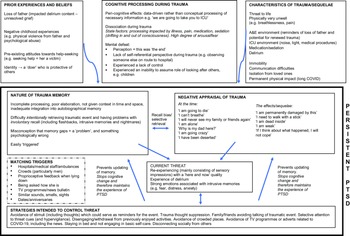
At the start of therapy, Rosalind’s minimal understanding of her symptoms contributed to feelings of worry and negative self-perceptions. She expressed fear that she was ‘going crazy’ and appraised complicated symptoms as a reflection of her character, for example, believing she was ‘weak’. Rosalind’s traumatic experiences included emergency transportation to hospital, invasive and painful medical procedures, seeing, hearing and learning about other patients dying, and hallucinations caused by delirium. These experiences were understood by Rosalind as her feeling ‘out of control’ and unable to assume her usual role of looking after others. Matching triggers (e.g. medical procedures, and the proprioceptive feedback of lying down) reactivated these beliefs, and led to her re-experiencing medical procedures (particularly in physical sensations), as well as re-experiencing the memory of the delirium.
Understandably, due to peri-traumatic factors (such as reduced consciousness, intense emotions and physical demand on her body), Rosalind had been unable to process her experiences at the time, leaving her account fragmented and poorly elaborated. Rosalind’s trauma account lacked chronology and she described significant memory ‘gaps’. She described a ‘here and now’ quality to her memories, experiencing frequent feelings that ‘she was back there’, and thus still at risk of death (see formulation in Fig. 1). Rosalind also reported dissociative experiences during trauma and its sequelae; for example, memories of observing her experiences ‘happen to herself’. She noted that time ‘passed her by’ in the weeks that followed her ICU discharge. She described a combination of emotional ‘numbness’, ‘overwhelm’, and an acute sense of ‘vulnerability’ that was unfamiliar, despite previous experiences of multiple cancer diagnoses and physical health challenges.
Formulation of Rosalind’s experience of PTSD based on Ehlers and Clark’s model (Reference Ehlers and Clark2000) applied to post-ICU PTSD as adapted in Murray et al. (Reference Murray, Grey, Wild, Warnock-Parkes, Kerr, Clark and Ehlers2020).

Rosalind’s attempts to reduce this sense of current threat provided some short-term relief, but inadvertently increased symptoms. For example, by engaging in cognitive and emotional avoidance and suppressing ICU memories, her experiences were not processed and updated with knowledge that she survived. Implementation of these short-term strategies promoted disconfirmation bias, as Rosalind was unable to learn that she can cope when thinking about the trauma. Rosalind’s experiences were complicated further by ongoing uncertainty surrounding COVID-19 throughout her treatment, both in terms of the broader context of the pandemic and navigating her personal experience of long COVID. The therapist worked collaboratively with Rosalind to balance risks whilst addressing behavioural avoidance (e.g. going out publicly). The patient and therapist contracted for open dialogue and consideration of whether avoidance behaviours originated in PTSD symptoms, or were the result of considered appraisal of risk to the patient’s physical health.
A sense of threat extended to multiple domains of Rosalind’s life, and she expressed reduced confidence, heightened anxiety, and lowered mood. She had become increasingly distant from living life in line with her values, and later recognised that she was significantly neglecting herself. For example, she spent ‘days in bed’ and ‘went weeks without showering’. It is likely that her recent experience of trauma renewed negative self-referential beliefs (e.g. ‘I am weak’), which had been somewhat dormant following personal growth after adverse childhood experiences.
Whilst undertaking imaginal reliving work for Rosalind’s second identified hotspot (session 7), Rosalind recalled delirium experiences that she had previously been consciously unaware of. Her delirium involved hallucinations of her father, who had died two years previously in Accident and Emergency (A&E). Rosalind was understandably distressed at the time of her actual delirium, as well as during the imaginal reliving of this experience by ‘seeing’ her father again. She explained having tried to ‘bury’ her grief since her father’s death. Her grief was largely complicated, and she measured above the clinical threshold across the Inventory of Complicated Grief (ICG) (Prigerson et al., Reference Prigerson, Maciejewski and Reynolds1995) administered during session 9. At this stage, it became apparent that treatment should be adjusted to incorporate grief work. Rosalind had a conflicted relationship with her father when he was alive. He was physically violent and ‘psychologically abusive’ throughout her upbringing. Rosalind, however, explained how they had had a more positive relationship ‘towards the end’ of his life. This allowed her to reconcile her experience of delirium, shifting her relationship with her delirium memory from her father’s presence being threatening and taking her with him into death, to his presence being one of some comfort, and one where he left Rosalind to reclaim her life away from the abuse he had inflicted (Fig. 1).
Method
Design
This case study implemented an AB single case design (Barlow et al., Reference Barlow, Nock and Hersen2008). A three-week baseline (A) was established prior to the CT-PTSD intervention phase (B), which improved the likelihood of capturing stable baseline data (Kratochwill et al., Reference Kratochwill, Hitchcock, Horner, Levin, Odom, Rindskopf and Shadish2010). In addition to an assessment session, the treatment phase included 17 further sessions. Undertaking imaginal reliving face-to-face supported management of Rosalind’s simultaneous engagement with distressing trauma memories and awareness of the present moment. Due to the complexity of Rosalind’s experiences, it was important for the therapist to be able to closely monitor and respond as re-experiencing of past pain might exacerbate current long COVID symptomology (e.g. breathlessness).
Measures
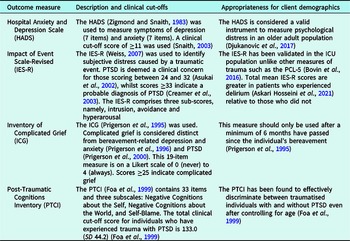
Evidence suggests that monitoring data using psychometric measures at frequent intervals contributes to positive treatment outcomes (Lambert, Reference Lambert2007). For example, real-time feedback facilitates necessary adjustments to treatment (Lambert, Reference Lambert, Duncan, Miller, Wampold and Hubble2010). Several psychometric measures were implemented over the course of therapy (Table 1). Lower cut-off scores are advocated for older adults when using PTSD self-report measures (Thorp et al., Reference Thorp, Sones and Cook2011). However, prior to therapy, Rosalind scored significantly above the clinical cut-off typically used (Weiss, Reference Weiss2007). It became clear that following her trauma, Rosalind had experienced negative alterations in her beliefs about personal vulnerability and perceived permanent negative changes to herself which prompted Post-Traumatic Cognitions Inventory (PTCI) administration (Table 1).
A table to show the measures implemented over the course of therapy

Course of therapy
Rosalind attended 18 sessions of CT-PTSD over a 6-month period. Appointments lasted between 60 and 90 minutes. Trauma-focused therapies have high drop-out rates, particularly when an individual presents with co–morbid depression (Flory and Yehuda, Reference Flory and Yehuda2022). Co-occurrence of PTSD and depression is also associated with poorer prognosis and greater suicidal risk (Flory and Yehuda, Reference Flory and Yehuda2022). A collaborative stance was fostered throughout to maximise Rosalind’s sense of control over therapy pacing and interventions used. Decision-making regarding therapeutic processes was undertaken collaboratively which helped redress power imbalances. The client responded favourably to the idea that herself and the therapist were ‘a team’, which provided a useful frame for therapy.
Sessions 1–3 (included socialisation, establishing a working alliance, and goal setting)
Discussions with Rosalind around her symptoms, treatment goals and hopes for rebuilding life, accompanied by a clear rationale for CT-PTSD, were undertaken at the beginning of treatment. Prior to therapy, Rosalind had interpreted her experiences as an indicator that she was ‘crazy’ and that she had permanently changed as a person ‘for the worst’ (Dunmore et al., Reference Dunmore, Clark and Ehlers2001). Initial sessions also included normalisation of Rosalind’s symptoms, and information about the nature of trauma memories. Rosalind experienced significant delirium with content related to complicated grief. Murray and colleagues (Reference Murray, Grey, Wild, Warnock-Parkes, Kerr, Clark and Ehlers2020) outline ways that CBT can be adapted when working with post-ICU PTSD and promote psychoeducation around delirium experiences. The identification of threatening personal meanings which had been ascribed to content by the client was important. A strong therapeutic alliance was established during the assessment and formulation stages of treatment, in line with the general principles of CT-PTSD (Ehlers and Wild, Reference Ehlers and Wild2015) as evident from Rosalind’s commentary ‘I somehow already know that I am safe, and that we are a team’. Therapy techniques (including grounding strategies) which promoted feelings of relative safety were practised at the start of treatment.
Sessions 4–6 (included working with trauma memories and reducing avoidance)
Interventions addressed key treatment targets in the Ehlers and Clark cognitive model (2005): elaborating trauma memories; identifying, modifying and updating problematic trauma appraisals; and dropping unhelpful cognitive and behavioural strategies. A brief account of Rosalind’s trauma was established and cognitive themes to be addressed in therapy were decided upon. Multiple hotspots were identified, including her ambulance transportation to hospital (primary hotspot) and time in A&E (secondary hotspot). Rosalind engaged in within-session imaginal reliving for the time of her ambulance transportation to hospital during these sessions. The worst meaning of this hotspot was unpacked (‘I am going to die’) and then updated during reliving (‘I did not die, I survived, I did see my family and friends again’).
Sessions 7–12 (included a continuation of work on trauma memories, and grief and loss)
As therapy progressed, imaginal reliving work continued to focus more on memories not elaborated previously, with attention shifting to Rosalind’s secondary hotspot around her time in A&E. These sessions also incorporated cognitive and imagery restructuring work, and included grief work from session 9. With the information generated during reliving, Rosalind produced a written record of her trauma narrative. This dual approach to CT-PTSD is supported by Ehlers and Wild (Reference Ehlers and Wild2015), who acknowledge its particular usefulness when the traumatic event occurred over an extended period of time and when clients experience heightened physical reactions during reliving. As per the guidance, the written narrative offered a summary of the updated trauma narrative including new meanings (e.g. I know now that I did not die, I survived) emphasised in a bold font (Ehlers and Wild, Reference Ehlers and Wild2015).
Peri-traumatic cognitions were re-appraised and adaptations were co-developed and integrated into the updated memories. For example, Rosalind’s worst meaning of experiencing difficult physical sensations (feeling cold and shaking uncontrollably) was that she was alone and uncared for. To update this meaning (‘I am no longer alone and uncared for’), Rosalind elected to incorporate an image of the therapist when reliving, as she felt the therapist provided her with a sense of safety. She imagined the therapist offering her a warm blanket at the point she felt cold and alone. Additionally, the patient noted ‘hearing [the therapist’s] voice’ (it was not clear if this was an intentional action by Rosalind or a natural evolution) when experiencing flashbacks after therapy had started, which reportedly helped to ground her, and ultimately contributed to resolving this symptomology. She also referenced hearing the therapist’s voice during imaginal reliving undertaken independently between sessions; again it is not clear if this was intentional or a natural evolution from the in-session reliving work. Furthermore, Rosalind noted how her use of the therapist’s voice helped her to self-soothe during times of ongoing challenge (e.g. attending a friend’s funeral). Rosalind’s description of this process was similar to compassion-focused therapy-based work around the compassionate voice (Gilbert, Reference Gilbert2014), but was mostly self-initiated.
Grief work included working towards accepting her father’s death, addressing conflicted feelings about their relationship, and purposeful remembering. Cognitive restructuring around her delirium was managed sensitively. Rosalind was active in decision-making around how best to conceptualise the inclusion of her father in her delirium experience. We explored her feelings of ‘comfort in “seeing him” again’, despite their ‘conflicted’ relationship. Rosalind expressed her spirituality through a narrative that her father’s presence and subsequent absence from her delirium signified that ‘it was not [her] time to die’ and that ‘he [had] moved on’. It was important that Rosalind’s spirituality was accounted for in the management of her grief and delirium experiences (Khoo, Reference Khoo2011). Rosalind experienced emotional distress when engaging in imaginal reliving and remembering that her father ‘left’ her, as the delirium experience came to a close. The personal meaning assigned to this experience replicated patterns of perceived ‘desertion’ in other experiences (e.g. the breakdown of her first marriage, her father’s death). This sense of abandonment was considered within the context of the therapeutic relationship, as another potential source for feared ‘desertion’, e.g. if the therapist unexpectedly left or therapy ended abruptly. The patient explained that her experiences of the therapist’s presence in her cognitions, outside of therapy, had helped reassure her and address feelings around abandonment. The internalisation of a cognitive representation of the therapist allowed the client to go towards a positive ending of the relationship with the therapist, as opposed to another experience of losing a relationship as abandonment.
Session 13–18 (included a site visit, trigger discrimination, and development of a therapy blueprint)
A site visit to the hospital was carried out in session 13, including attendance to A&E and the ward. As part of this process, Rosalind was afforded the opportunity to meet some of the healthcare staff working in these locations. Following this, a review of Rosalind’s site visit, as well as stimulus discrimination work, futureproofing, and a therapy blueprint was undertaken. Revisiting the hospital site of Rosalind’s trauma provided her with further evidence of the resolution of her traumatic experience. In this visit, predictions such as ‘I will be back there, and I can’t do that again’ were put to the test. On reviewing this visit, Rosalind noted that she had ‘coped’, and would be able to return to hospital without feeling distressed. Following this visit, Rosalind noted a positive increase in her belief about her ability to cope in the presence of triggers, as shown by discrepancies in predicted and actual subjective units of distress (SUDS) ratings. At the end of therapy, a blueprint was co-developed to recognise what had maintained Rosalind’s presenting difficulties and what was helpful in managing them. Potential setbacks, such as management of anniversaries, were reflected upon and strategies were planned. Cancer was never the focus of Rosalind’s therapy. By processing and addressing her traumatic experiences, she was able to return to her identify of being a ‘fighter’ of her cancer, in the knowledge that she would be able to return to hospital for treatment ‘on her own’.
Throughout therapy, Rosalind was guided to consider how her use of safety behaviours contributed to a sense of current threat and distanced her further from living in line with her values. Reclaiming life assignments formed part of each therapy session. Rosalind and the therapist reflected on the domains of life which held personal value to Rosalind and had been impacted by her experiences, and corresponding homework assignments were agreed as appropriate which supported moves towards Rosalind’s behavioural goals. Physical co-morbidities are often evident in an older adult population and liaison with multi-disciplinary professionals is important (Laidlaw, Reference Laidlaw2021). Behavioural work was undertaken with due consideration of this. For example, Rosalind’s goals included improving her adherence to physiotherapy recommendations, as activities proved challenging when they brought on similar body sensations to those experienced during the trauma (e.g. shortness of breath). Rosalind provided feedback throughout therapy about the importance of feeling ‘safe with the therapist’. She noted that this had supported her in continuing as therapy became more challenging. Rosalind expressed that the collaborative stance to the work had helped her to engage with the imaginal reliving component of treatment, alongside confidence in applying grounding techniques.
Outcome
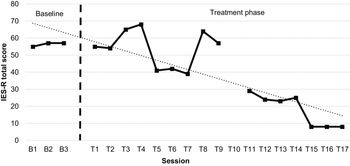
All goals were achieved at various times during therapy and were sustained until the end. CT-PTSD greatly reduced Rosalind’s traumatic stress symptoms. At the end of therapy, she reported no nightmares, flashbacks, intrusions, or dissociative experiences. Rosalind’s IES-R scores across the baseline phase indicate sufficient stability to draw conclusions that CT-PTSD positively impacted IES-R scores. These scores increased following the initiation of imaginal reliving work in session 2 of the intervention phase of therapy (Fig. 2). Rosalind experienced another peak in IES-R score following work to target the second ‘hotspot’ identified (A&E) in session 7 of the intervention phase of therapy. The lack of continuous downward trend is likely to exclude spontaneous remission (Morley, Reference Morley2017). Rosalind did not complete measures for session 10 (treatment phase) due to a further bereavement during this time. At the end of treatment, Rosalind scored 8 on the IES-R, which is significantly below the clinical cut-off (33), and is not indicative of PTSD. This score was stable over the last 3 weeks of therapy, which is suggestive of more reliable change.
Graph to show changes in Rosalind’s IES-R score across baseline and treatment phases of therapy.

Prior to direct intervention, Rosalind reported high levels of pathological cognitions associated with her traumatic experiences and PTSD symptoms. The PTCI had not been part of the initial baseline measures but was given first at session 9 and then again at session 16. Post-intervention, Rosalind’s PTCI scores show clinically significant improvement (Table 2).
Changes in Rosalind’s PTCI total score, and subscores (pre- and post-intervention targeting cognitive and imagery restructuring) and ICG score (pre- and post-intervention to target her ICU delirium and grief)

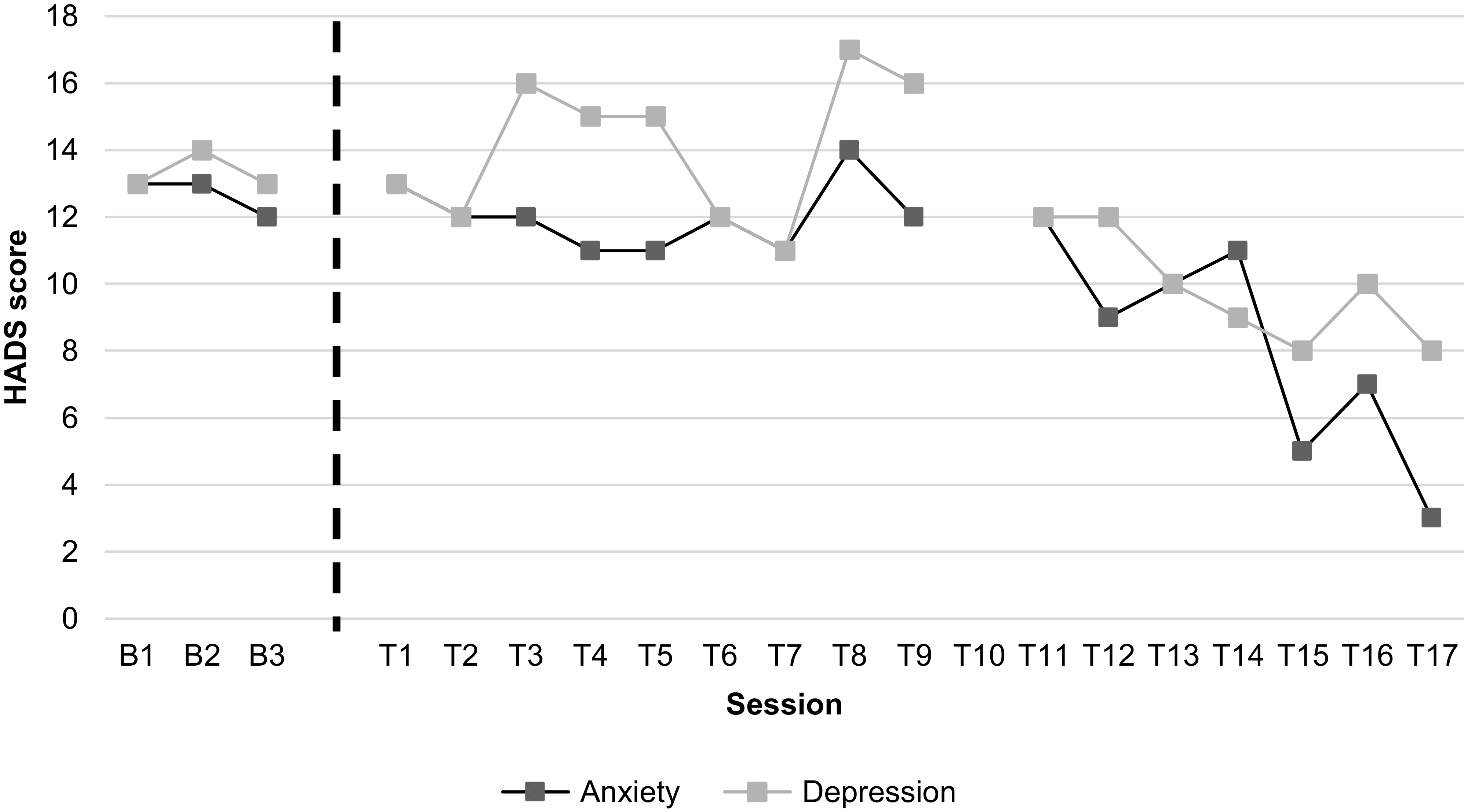
Results support the use of CT-PTSD in the context of complicated grief. Prior to undertaking direct work focusing on Rosalind’s grief and subsequent delirium content, she scored within the clinical range for complicated grief (Table 2). Following psychological intervention, Rosalind scored significantly below the cut-off (indicating absence of complicated grief). At baseline, Rosalind’s HADS scores indicated clinical levels of moderate to severe anxiety and depression (Fig. 3). Scores peaked in parallel with imaginal reliving work involving the two primary hotspots identified within her trauma experience (session 2 and session 7 of the intervention phase of therapy).
Graph to show changes in Rosalind’s HADS score across baseline and treatment phases of therapy.

Post-therapy, Rosalind’s scores indicated a mild level of anxious and depressive symptomology, which no longer met clinical threshold. Rosalind proffered that high-scoring HADS items (e.g. ‘I feel as if I am slowed down’), were related to her long COVID experience. This raises the question of how measures used in the physical health domain could be better adapted to account for long COVID in the future. Rosalind also retrospectively considered how her use of a walking aid had significantly reduced. She described using the aid ‘less than half the amount of time’ that she had prior to therapy, despite doing more physical activity. Rosalind viewed her move away from using a stick as ‘letting go of the trauma’ and ‘reclaiming [her] life’. When reviewing her goals, Rosalind recognised that she had met or surpassed ‘all of them’.
Discussion
Collectively, findings indicate that CT-PTSD was effective for the treatment of PTSD with co-morbidities with an older adult. All initial hypotheses were supported by treatment outcomes. Although IES-R scores were heightened during imaginal reliving, as predicted, the reduction in Rosalind’s trauma symptoms was reflected in scores, which consistently measured below clinical threshold towards the end of therapy. Stability in outcome measures in later sessions indicate that positive treatment outcomes will likely be maintained over time. Due to social distancing constraints, it was not possible to meet with Rosalind’s family. Given the impact that Rosalind’s ICU admission had on both herself and those around her, joint sessions may have been useful for helping to continue positive changes, as well as screening others who were involved for PTSD.
The AB design implemented may be considered ‘quasi-experimental’ (Tate et al., Reference Tate, Perdices, Rosenkoetter, McDonald, Togher, Shadish, Horner, Kratochwill, Barlow, Kazdin, Sampson, Shamseer and Vohra2016) and is limited by its failure to manipulate treatment (Morley, Reference Morley2017). As a single case design, findings should not be generalised without caution. However, the rich data provided through case study analysis implies high internal validity (Morley, Reference Morley2017). Furtherore, establishing a stable baseline and weekly administration of measures is preferable when compared with a simple pre–post designs (Morley, Reference Morley2017).
Despite meeting all therapy goals, Rosalind continues to experience difficulties in relation to long COVID that were not fully addressed as part of treatment. As professionals learn more about working with long COVID in the context of trauma therapy, reflecting on cases, such as Rosalind’s, may help to identify ways to better support this increasing patient population.
Experience of delirium and bereavement accounted for some complexities evident in Rosalind’s presenting difficulties. The content of Rosalind’s delirium was dominated by her father’s ‘presence’ and its highly emotive impact indicated complicated grief. This case study demonstrates the successful application of CT-PTSD despite the complex interplay between presenting difficulties and the unprecedented context of the COVID-19 pandemic. Typically, approximately 13% of patients admitted to ICU die (Intensive Care National Audit and Research Centre, 2019); however, mortality rates in ICU have increased significantly during the COVID-19 pandemic. During imaginal reliving, Rosalind reported a strong belief that ‘[she was] going to die’. Rosalind’s awareness of her own mortality was arguably exacerbated by her experiences of ICU, COVID-19, multiple cancer diagnoses, and recent major surgery. Additionally, her father’s presence in her delirium experience initially signified to Rosalind that she was likely to join her father in death. Given the cumulative perceived threats to her life, it is understandable that Rosalind went on to develop PTSD. These experiences were further compounded by her identity as an older adult with a significant number of adverse life experiences and ongoing cohort challenges, such as frequent bereavements. Given these factors, Rosalind’s commitment to therapy is particularly noteworthy, especially considering the high drop-out rates for her psychiatric diagnoses (Flory and Yehuda, Reference Flory and Yehuda2022). Beierl and colleagues (Reference Beierl, Murray, Wiedemann, Warnock-Parkes, Wild, Stott, Grey, Clark and Ehlers2021) reported a reciprocal relationship between working alliance and symptoms, where stronger working alliance (including measures of tasks, goals and bond), was predictive of improvements in PTSD symptomatology in CT-PTSD, and was further strengthened by symptom improvement. Indeed, in this work, client feedback and therapist observation indicated that treatment efficacy was facilitated by a strong therapeutic alliance.
Managing the indeterminate threat associated with COVID-19 presented unique challenges. However, ongoing uncertainty offered real-time opportunities to future-proof therapeutic work. In this context, patient choice and fostering a safe therapeutic space were especially important. Acceptance of Rosalind’s decision to write rather than record her narrative positively impacted the therapeutic relationship and contributed to her exercising greater autonomy in subsequent decision-making. Adaptation of manualised CT-PTSD reflected the collaborative stance frequently championed by CBT approaches. Enabling Rosalind to focus on what she was able to control within therapy sessions modelled a helpful approach for managing uncertainty across other contexts.
The site visit helped solidify processing of the traumatic event (Wild et al., Reference Wild, Warnock-Parkes, Murray, Kerr, Thew, Grey, Clark and Ehlers2020) and offered opportunities to test Rosalind’s beliefs around her own coping (Murray et al., Reference Murray, Merritt and Grey2015). Rosalind concluded that she can ‘cope’ when presented with trauma reminders. For example, she spoke about her (previously avoided) A&E experience with staff members at the trauma site without distress (as measured by SUDS ratings). This further decreased residual avoidance behaviours. CT-PTSD was found to improve multiple aspects of Rosalind’s presentation, and she shared that therapy had ‘allowed [her] to find the path, so that [she] can have [her] life back’.
Key practice points
-
(1) Quantitative and qualitative outcomes indicate clinically significant changes in trauma symptoms, suggesting that CT-PTSD can be used effectively with adults with complex and co-morbid presentations.
-
(2) A therapeutic relationship grounded in safety is important to the effective delivery of CT-PTSD. Its development can be supported through adoption of a collaborative stance including space for the client to challenge and shape interventions with appropriate contracting.
-
(3) The use of psychometric measures in the context of long COVID will be important to consider as understanding of psychological and physical impacts continues to progress. Studies looking into adaptations of measures may be helpful. Measures were introduced across the course of therapy with good effect, including at the start of various phases of work (e.g. interventions targeting grief).
-
(4) The use of imagery rescripting and cognitive restructuring were identified as particularly important to the understanding and processing of complicated grief, which may manifest as delirium during traumatic events.
-
(5) The importance of inter-disciplinary work in identifying the need for psychological input was highlighted. This paper describes a case where a psychosocial support pathway within oncology services effectively identified and referred a client for therapy. Given the nature of this client’s difficulties, evidence regarding the importance of offering psychological input as part of follow-up from ICU is demonstrated.
Data availability statement
Data availability is not applicable to this article as no new data were created or analysed in this study.
Acknowledgements
We would like to acknowledge Rosalind’s (pseudonym to protect identity) insight and dedication to applying therapy content. The success in treatment was proportional to the effort that Rosalind put into it. We would also like to thank Rosalind for permitting the submission and publication of an anonymised account of her therapy experience.
Author contributions
Charlotte Peters: Conceptualization (lead), Project administration (lead), Writing – original draft (lead), Writing – review & editing (lead); Kate Jenkins: Supervision (equal), Writing – review & editing (supporting); Rachel Paskell: Conceptualization (supporting), Project administration (supporting), Supervision (supporting), Writing – review & editing (supporting).
Financial support
This research received no specific grant from any funding agency, commercial or not-for-profit sectors.
Competing interests
The authors declare none.
Ethical standards
No specific ethical approval was required for this work as it reports on a routine piece of clinical work. Researchers have abided by the Ethical Principles of Psychologists and Code of Conduct as outlined by the British Psychological Society and British Association for Behavioural and Cognitive Psychotherapies. Informed consent from Rosalind (pseudonym) was obtained and identifiers have been removed to ensure Rosalind’s confidentiality is maintained.




Comments
No Comments have been published for this article.