





Heritage Spanish bilinguals make up one of the largest and fastest-growing bilingual student populations in the United States (Leeman, Reference Leeman2015; Montrul, Reference Montrul2023; Serafini & Roca-Ramirez, Reference Serafini and Roca-Ramirez2024), and extensive research demonstrates that their linguistic development diverges from monolingual norms in systematic and predictable ways shaped by input quantity, language contact, and sociopolitical context (Cabo & Rothman, Reference Cabo and Rothman2012; Cuza, Reference Cuza2013; Leeman, Reference Leeman and Potowski2018; Polinsky, Reference Polinsky2015). These individuals acquire Spanish through early exposure in the home but are simultaneously immersed in English through schooling, media, and societal interactions from childhood onward. Broadly, heritage bilinguals are individuals who acquire a socio-politically minority language (e.g., Spanish) as a first or early language in a bilingual or multilingual context, but typically become more dominant in the societal majority language (e.g., English) through schooling and broader sociocultural exposure (Montrul, Reference Montrul2023; Polinsky & Kagan, Reference Polinsky and Kagan2007). Language dominance refers to the relative balance between a bilingual’s two languages, which language is relatively stronger or receives more exposure, and is distinct from language proficiency, which describes the extent to which a bilingual’s skills in one or both languages meet native speaker expectations (Bedore et al., Reference Bedore, Peña, Summers, Boerger, Resendiz, Greene, Bohman and Gillam2012). A bilingual may demonstrate high proficiency in both languages yet still be dominant in one due to asymmetrical patterns of exposure or use.
Research on heritage grammars has consistently shown that features such as verb agreement, case morphology, and syntactic dependencies may display variable mastery due to reductions in input, cross-linguistic influence, and the dominance of English in formal schooling (Cuza, Reference Cuza2013; Polinsky, Reference Polinsky2015, Reference Polinsky2018). These developmental trajectories are further shaped by sociopolitical pressures surrounding Spanish use in the United States, where heritage speakers’ linguistic practices are often stigmatized or undervalued, influencing both their linguistic outcomes and access to academic opportunities (Leeman, Reference Leeman2015, Reference Leeman and Potowski2018). As recent research highlights, these morphosyntactic vulnerabilities can meaningfully affect comprehension and classroom participation, with implications for broader academic trajectories among heritage Spanish bilinguals (Nguyen et al., Reference Nguyen, Serafini, Leeman and Winsler2023; Serafini & Roca-Ramirez, Reference Serafini and Roca-Ramirez2024).
A central domain where morphosyntactic differences become evident is sentence interpretation, the real-time process by which listeners determine “who is doing what to whom.” Sentence interpretation is essential to comprehension because it requires integrating structural and morphological cues to identify agent–patient roles (Bates & MacWhinney, Reference Bates and MacWhinney1981). Languages differ widely in the cues they offer for this purpose. English relies heavily on rigid subject-verb-object (SVO) word order, making word order (WO) a highly valid and low-cost cue (Bates & Macwhinney, Reference Bates and MacWhinney1989; MacWhinney et al., Reference MacWhinney, Bates and Kliegl1984, Reference MacWhinney, Pleh and Bates1985). Spanish, by contrast, has flexible word order and rich inflectional morphology, which reduces the reliability of WO and increases the importance of verb agreement (VA) for identifying the agent of an action (Hernandez et al., Reference Hernandez, Bates and Avila1994; Reyes & Hernández, Reference Reyes and Hernández2006). Sentence interpretation tasks therefore offer a direct window into speakers’ underlying morphosyntactic systems and how they integrate cues when structure and meaning compete. In the present study, these patterns were quantified using cue-specific measures of WO and VA reliance, allowing for a fine-grained assessment of strategy use.
For bilinguals, and particularly heritage bilinguals, sentence interpretation is influenced not only by the grammatical properties of each language but also by their bilingual experience. Uneven input may lead to weaker morphological paradigms in Spanish, while extensive exposure to English may strengthen reliance on WO even in Spanish contexts. Understanding how heritage bilinguals use these cues provides insight into the interplay between language experience, dominance, and morphosyntactic processing. Because cue-weighting reflects experience-dependent learning, heritage bilinguals may show different cue-strength profiles across languages, depending on input, dominance, and proficiency.
The Competition Model provides a mechanistic framework for explaining how listeners weigh cues across languages (Bates et al., Reference Bates, McNew, MacWhinney, Devescovi and Smith1982; Bates & MacWhinney, Reference Bates and MacWhinney1981; MacWhinney, Reference MacWhinney, Csibra and Lukács2022). According to this model, cue use reflects cue validity (how reliably a cue signals interpretation), cue cost (the effort required to process it), and cue strength (the learned weighting of that cue). Differences in input distribution can lead to cross-linguistic variation: English speakers rely predominantly on WO, Spanish speakers rely on VA, and speakers of languages such as Hungarian, German, or Chinese rely more heavily on case marking or animacy (Liu et al., Reference Liu, Bates and Li1992; MacWhinney et al., Reference MacWhinney, Bates and Kliegl1984; Vaid & Pandit, Reference Vaid and Pandit1991). For bilinguals, the Competition Model predicts more diverse patterns. Some bilinguals differentiate their strategies across languages, whereas others show transfer (forward or backward) or amalgamation , blending cues from both languages (Hernandez et al., Reference Hernandez, Bates and Avila1994; Kilborn, Reference Kilborn1989). These patterns depend on the age of acquisition, proficiency, dominance, language pair, and input distribution (Liu et al., Reference Liu, Bates and Li1992; Pham & Ebert, Reference Pham and Ebert2015). The present study builds on this framework by operationalizing cue strength through continuous measures of WO- and VA-reliance and by modeling individual differences in these strategies.
However, a major theoretical issue remains. Behavior on the sentence interpretation task reflects not only the structure of the sentence but the strategy the listener uses to interpret it. Canonical word order sentences naturally elicit more first-noun responses, and agreement mismatches elicit shifts in interpretation. These structural effects are expected. What is theoretically informative is how listeners weigh WO and VA cues, and how those cue-weighting strategies differ between monolinguals and heritage bilinguals, or between English and Spanish for the same bilingual individual. Thus, the goal is not merely to describe choice patterns but to infer underlying strategies from observable choices. This motivates the use of cue-specific (WO vs. VA) and cue-composite measures to quantify the strategies that participants use.
Heritage bilinguals provide a unique opportunity to test how the Competition Model operates under different dominance and input histories, but prior Sentence Interpretation (SI) research has focused more heavily on L2 learners (Hernandez et al., Reference Hernandez, Bates and Avila1994; Kilborn & Cooreman, Reference Kilborn and Cooreman1987; MacWhinney, Reference MacWhinney, Meijer and van der Linden1992; Mcdonald & Mcdonald, Reference Mcdonald and Mcdonald1986). As a result, heritage bilingual cue patterns are not as well established. Their early exposure to Spanish and later dominance shifts toward English dominance provide a bilingual profile that allows researchers to examine how experience shapes cue weighting. If cue validity reflects experience-dependent learning, heritage bilinguals should show different patterns of cue strength across English and Spanish depending on their proficiency, dominance, and experience.
A second gap concerns proficiency measurement. Many studies rely on self-report proficiency, which correlates only modestly with objective performance (Bedore et al., Reference Bedore, Peña, Summers, Boerger, Resendiz, Greene, Bohman and Gillam2012; Marian et al., Reference Marian, Blumenfeld and Kaushanskaya2007). Only a handful of studies have used objective measures, and even fewer have incorporated receptive proficiency, which is arguably more relevant for comprehension-based tasks like sentence interpretation. Pham and Ebert (Reference Pham and Ebert2015) demonstrated that objective proficiency predicts cue reliance, but their measures centered primarily on naming. The present study addresses this gap by incorporating both expressive (naming) and receptive (listening comprehension) measures to predict cue-reliance strategies.
A third gap concerns socioeconomic status (SES). SES strongly influences language experience, including the amount and complexity of input children receive, which in turn shapes the development of morphosyntactic representations (Hoff, Reference Hoff2006; Magnuson et al., Reference Magnuson, Sexton, Davis-Kean and Huston2009; Meir & Armon-Lotem, Reference Meir and Armon-Lotem2017). Children from higher-SES backgrounds are more likely to receive input that is syntactically diverse and rich in inflectional morphology, whereas lower-SES environments often involve reduced opportunities for extended conversation, literacy exposure, and morphosyntactic scaffolding. One mechanism is the quality of caregiver input: higher-SES caregivers use more contingent responses, fewer directives, and more complex sentence structures, providing children with richer grammatical input to support morphosyntactic development (Hoff, Reference Hoff2006; Sorenson Duncan & Paradis, Reference Sorenson Duncan and Paradis2020). Maternal education is associated not only with vocabulary and oral language development across L1 and L2 (Sorenson Duncan & Paradis, Reference Sorenson Duncan and Paradis2020) but also with input quality, including greater L2 fluency and the ability to model more structurally complex utterances. Yet SES has rarely been examined within Competition-Model-based sentence interpretation studies, leaving open how input-based environmental factors may shape the cue weighting strategies that emerge from bilingual experience. By modeling SES alongside proficiency, the present study evaluates how environmental factors contribute to cue weighting in each language.
Finally, existing work rarely captures within-individual variability in bilingual cue strategies. Traditional sentence interpretation studies typically focus on accuracy or noun choice and reaction time, interpreting these outcomes in terms of whether a sentence is canonical or whether verb agreement supports a particular interpretation. Yet these behavioral outputs ultimately reflect underlying patterns of cue reliance that shape real-time language processing. The strength of the present approach is that it moves beyond group-level averages by transforming participants’ response patterns into a continuous measure of cue reliance, allowing us to characterize each individual’s processing strategy and directly test how language experience and SES shape bilingual morphosyntactic processing.
The study addresses two central questions: 1) How do English monolinguals and Spanish–English heritage bilingual adults interpret sentences that vary in word order and verb agreement in English and Spanish? and 2) To what extent do language proficiency and SES predict the sentence interpretation strategies reflected in these patterns?
Methods
Participants
Participants were students enrolled at the University of Houston. There was a total of 101 participants: 52 Spanish-English bilinguals and 49 English monolinguals. All participants reported no psychiatric or neurological problems. See Table 1 or a summary of participant demographics. For bilinguals, the majority of the sample (86%) learned English (L2) by seven years old.Footnote 1 This profile aligns with definitions of heritage bilingual individuals exposed to a minority language from early childhood at home, who subsequently acquire the societal language (English) in early childhood (Montrul, Reference Montrul2023; Polinsky & Kagan, Reference Polinsky and Kagan2007). Overall, bilinguals and monolinguals did not significantly differ in age, sex, handedness, immigration status, or household size.
Participant demographic

Table 1. Long description
The table compares demographic characteristics of monolingual and bilingual participants. It has 12 rows and 5 columns. The columns are labeled Monolingual (n = 49), Bilingual (n = 52), and Comparison. The rows are labeled Age, Household number, Father education, Mother education, Income, Sex, Race/ethnicity, Handedness, and Immigration. Each row provides mean (M) and standard deviation (SD) values for Age, Household number, Father education, Mother education, and Income. For Sex, Race/ethnicity, Handedness, and Immigration, the table provides counts (n) and percentages (%). The table includes statistical comparisons between monolingual and bilingual groups for each demographic characteristic.
Note: Bold = significant results. Income: 1 = Less than $15,000, 2 = $15,000–24,999, 3 = $25,000–34,999, 4 = $35,000–44,999, 5 = $45,000–54,999, 6 = $55,000–64,999, 7 = $65,000–74,999, and 8 = $75,000 or greater. Parental education: 1 = Elementary school, 2 = Middle school, 3 = High school, 4 = College (Bachelor), 5 = Graduate school (Master), and 6 = Graduate school (Doctorate).
Notably, because mother and father education were highly correlated (r = 0.77, p < 0.001) and showed similar group differences (Table 1), we compared their effect sizes to determine which would serve as the SES proxy. Both variables showed large effects, with maternal education (Cohen’s d = −1.318, 95% CI = [−1.75, −0.87]) having a slightly greater effect size than paternal education (Cohen’s d = −1.138, 95% CI = [−1.56, −0.70]). Although income data were collected, the measure was limited by a $75,000 ceiling, reducing its usefulness in capturing SES variation. It must be noted that income was positively correlated with both mother (r = 0.52, p < 0.001) and father (r = 0.49, p < 0.001) education. Maternal education was therefore selected as the sole SES proxy as it provided an interpretable and consistent indicator of SES (e.g., Magnuson et al., Reference Magnuson, Sexton, Davis-Kean and Huston2009; Sorenson Duncan & Paradis, Reference Sorenson Duncan and Paradis2020) and was used in subsequent analyses.
Language proficiency measures
The Language History Questionnaire (LHQ3)
The LHQ3 is a validated self-report tool designed to assess multiple dimensions of language experience across up to four languages (Li et al., Reference Li, Zhang, Yu and Zhao2020). The questionnaire covers a broad range of domains, including language acquisition history, age of onset across listening, speaking, reading, and writing modalities, current patterns of language use across social contexts, self-rated proficiency and accent strength, cultural identification, and code-switching frequency. It also captures contextual factors such as country of origin and residence, educational language history, and the social environments in which each language is used. For the present study, Question 15 was used, which measures self-rated proficiency across four modalities: listening, speaking, reading, and writing, on a 1(very poor)–7(excellent) scale. A single composite proficiency score for each language was calculated by averaging ratings across the four modalities, providing a balanced and internally consistent representation of overall self-perceived language ability. All participants were provided the questionnaire in English.
The Multilingual Naming Test (MiNT)
The MiNT is a validated measure of bilingual language proficiency through picture naming. The MiNT is especially useful for the present sample because heritage bilinguals often differ not just in what words they know, but in how quickly and easily they can access them across languages (Garcia & Gollan, Reference Garcia and Gollan2022). It consists of 80 pictures categorized by difficulty for both languages (Spanish and English). Bilinguals completed the MiNT in both English and Spanish; monolinguals completed it in English only. Bilingual individuals are prompted to identify the same images in both languages, avoiding a potential confound where differences in item familiarity across languages could lead to uneven performance unrelated to proficiency or dominance. Language administration was counterbalanced.
Scoring yielded three complementary indices. The first-pass score reflects items named correctly before revisiting skipped items, capturing immediate lexical access under natural retrieval conditions. The second-pass score includes items named correctly after being prompted to return to skipped items and provides the most accurate indicator of overall vocabulary knowledge. Accordingly, second-pass scores were used as the primary measure of language proficiency in the present study. The efficiency score combines first-pass accuracy and retrieval speed, reflecting how many items are named correctly per second and balancing lexical access rate with breadth of vocabulary. Higher efficiency scores indicate faster and more accurate retrieval, typically characteristic of the dominant language, while lower efficiency scores reflect slower or less accessible vocabulary consistent with a weaker or less-used language.
The Woodcock-Muñoz language survey
This language proficiency measure is a compilation of seven language tasks (Woodcock et al., Reference Woodcock, Muñoz-Sandoval, Ruef and Alvarado2005). This experiment used three of the seven standardized procedures: Picture Vocabulary, Understanding Directions (i.e., listening comprehension), and Passage Comprehension (i.e., reading comprehension). In each, participants must give an answer that is considered correct by the test-makers, from which experimenters calculated language proficiency scores. Bilinguals completed all three subtests in both English and Spanish; monolinguals completed them in English only. Performance on each subtest was calculated as percent correct. Pictures, audio, and passages used in the English and Spanish versions of each subtest differed across languages. Language administration was counterbalanced. Together, the three subtests chosen below capture proficiency across complementary language domains: receptive vocabulary, auditory comprehension, and reading, providing a comprehensive account of language ability in each language that is directly relevant to the real-time syntactic and morphological demands of the sentence interpretation task (Woodcock et al., Reference Woodcock, Muñoz-Sandoval, Ruef and Alvarado2005).
The Picture Vocabulary subtest (Test 1) assesses receptive vocabulary through picture-based identification. It contains 59 items in English and 58 items in Spanish and was administered using basal and ceiling rules of 6 (i.e., testing stopped after six consecutive correct responses to establish the basal and six consecutive incorrect responses to establish the ceiling). Per administration guidelines, college-level participants began at the college-level starting point.
The Understanding Directions subtest (Test 5) assesses listening comprehension. It consisted of five pictures in both English and Spanish. Following Woodcock administration standards, college-level participants began at Picture 4, item 36, with items spanning Pictures 1–5 (60 items total). This subtest did not follow standard basal and ceiling rules; however, participants were required to return to earlier items if their performance fell below the threshold needed to advance to the next section. One item from the English administration (Picture 5, item 3) was removed due to a standardized administration error in which the simultaneous pointing requirement was not consistently applied across participants, yielding a final English total of 59 items. The Spanish administration retained all 60 items.
The Passage Comprehension subtest (Test 7) assesses reading comprehension. It consisted of 33 items in English and 32 items in Spanish and was administered using basal and ceiling rules of 5 (i.e., testing stopped after five consecutive correct responses to establish the basal and five consecutive incorrect responses to establish the ceiling). Due to experimenter error across multiple participants for the final items, the last two items were excluded in both languages (English: items 32–33 excluded, yielding a final total of 31; Spanish: items 30–32 excluded, yielding a final total of 29). Exclusions were verified by confirming that the removed items did not correlate meaningfully with the remaining item total.
Bilingual language proficiency
For the purposes of this study, bilingual language proficiency was operationalized as a composite score reflecting both overall proficiency level and degree of balance across an individual’s two languages. This is a scoring approach that captures the combined linguistic resources a participant brings across both languages simultaneously. Proficiency in each language was taken from the relevant language assessment. These scores were then combined using the formula below, which weights the sum of L1 and L2 proficiency by a balance multiplier that favors more equal proficiency levels (Vaughn & Hernandez, Reference Vaughn and Hernandez2018).
 $$\left( {L1 + L2} \right) \times \sqrt {{{2 \times L1 \times L2} \over {L{1^2} + L{2^2}}}}$$
The multiplier equals 1.0 when L1 and L2 are equal, so bilingual proficiency is the simple sum of L1 and L2. When proficiency is uneven, the multiplier reduces the score to reflect the imbalance. Thus, higher bilingual proficiency scores reflect balanced and proficient individuals, while lower scores indicate dominance or generally lower proficiency. The resulting scale reflects a hierarchy of bilingual ability: the highest scores are obtained by individuals who are both highly proficient and relatively balanced across languages; individuals who are highly proficient overall but show a clear dominant language will score lower than a balanced peer with equivalent summed proficiency; and individuals with low proficiency in one or both languages will obtain the lowest scores regardless of balance.
It must be noted that this scoring method does not capture the direction of language dominanceFootnote 2 ; it does not distinguish whether L1 or L2 is the stronger language, nor does it indicate dominance in specific contexts or modalities. Rather, it indexes the magnitude of any imbalance alongside the overall proficiency level. This approach was selected because the primary theoretical interest in the present study is not in which language is dominant, but in whether participants draw on both languages at a comparable level.
Sentence interpretation task
The sentence interpretation task examines how participants use syntactic cues to understand sentence meaning. Participants listened to grammatical and semi-grammatical sentences and judged who was performing the action. The results indicated whether participants relied on word order, verb agreement, or both types when identifying the agent of an action.
Table 2 displays sample stimuli for different sentence types in English and Spanish. The task was designed to systematically manipulate word order and verb agreement cues, requiring some sentence types to be noncanonical or ungrammatical by standard grammatical rules in one or both languages. This is intentional and consistent with the CM paradigm, which requires cue conflict to assess the relative strength of competing cues; fully grammatical sentences with converging cues cannot isolate cue weighting in the way that conflicting or noncanonical sentences can. Participants were not asked to judge grammaticality but rather to identify the agent of the action, a task framing that constrains responses toward agent assignment rather than alternative syntactic readings. The use of animate nouns (animals) throughout and the consistent use of the present progressive verb form across all sentence types, following Hernandez et al. (Reference Hernandez, Bates and Avila1994), further reduces the likelihood of alternative parses such as relative clause interpretations.
Sample stimuli for the sentence interpretation task

Table 2. Long description
A table comparing sentence structures in English and Spanish. The table has 3 rows and 3 columns. The columns are labeled ‘Noun-Noun-Verb (NNV)’, ‘Noun-Verb-Noun (NVN)’, and ‘Verb-Noun-Noun (VNN)’. The rows are labeled ‘Ambiguous (Ag0)’, ‘First Noun (Ag1)’, and ‘Second Noun (Ag2)’. Each cell contains example sentences in both English and Spanish. Row 1: Ambiguous (Ag0): Noun-Noun-Verb (NNV): English: The cat the cow is scratching. Spanish: El gato la vaca está rascando. Noun-Verb-Noun (NVN): English: The elephant is kissing the horse. Spanish: El elefante está besando el caballo. Verb-Noun-Noun (VNN): English: Are touching the cats the goats. Spanish: Están tocando los gatos las cabras. Row 2: First Noun (Ag1): Noun-Noun-Verb (NNV): English: The rabbits the duck are pushing. Spanish: Los conejos el pato están empujando. Noun-Verb-Noun (NVN): English: The bear is scratching the cats. Spanish: El oso está rascando los gatos. Verb-Noun-Noun (VNN): English: Are chasing the rabbits the giraffe. Spanish: Están correteando los conejos la jirafa. Row 3: Second Noun (Ag2): Noun-Noun-Verb (NNV): English: The duck the bears are pushing. Spanish: El pato los osos están empujando. Noun-Verb-Noun (NVN): English: The bear are pulling the pigs. Spanish: El oso están jalando los cerdos. Verb-Noun-Noun (VNN): English: Are dragging the horse the dogs. Spanish: Están arrastrando el caballo los perros.
Note: Word Order: Noun-Verb-Noun (NVN), Verb-Noun-Noun (VNN), Noun-Noun-Verb (NNV). Subject-verb agreement: Ambiguous agreement (Ag0), Agreement with the first noun (Ag1), Agreement with the second noun (Ag2). Verbs are underlined and bolded to show manipulation of agreement across sentences.
The three independent variables present are (1) Language : sentences were either presented in English in the English condition or Spanish in the Spanish condition; (2) Word Order: Noun-Verb-Noun (NVN), Verb-Noun-Noun (VNN), Noun-Noun-Verb (NNV); and (3) Subject-verb agreement : Ambiguous agreement (Ag0), Agreement with the first noun (Ag1), and Agreement with the second noun (Ag2). The combination of the three different word order types and three different subject-verb agreement types yielded nine different sentence types; six sentences were formed from each sentence type, ultimately leading to 54 total sentences for each language.
The scoring method for the task utilized in this study was adapted from Hernandez and colleagues (Reference Hernandez, Bates and Avila1994). Because many sentence types in this paradigm do not have objectively correct responses, analyses focused on the probability of selecting the first noun as the agent rather than on accuracy (i.e., choice data ). Specifically, responses were scored as 1 when participants selected the first noun and 0 when they selected the second noun as the agent. Resulting scores therefore represented the probability of first-noun choice, ranging from 0 to 1. Probabilities closer to 1 indicate a greater likelihood of selecting the first noun as the agent, while probabilities closer to 0 indicate a greater likelihood of selecting the second noun. A probability near 0.5 reflects random or ambiguous performance, with participants selecting each noun at similar rates.
The sentence interpretation task was programmed in E-Prime 3. The task design, animal images, and sentence stimuli were adopted from Hernandez and colleagues (Reference Hernandez, Bates and Avila1994; see supplementary materials). Because prosody can influence sentence interpretation and cue use, and because heritage speakers, monolinguals, and L2 learners may rely on different prosodic strategies (Kim, Reference Kim2019), synthetic speech generated through Voicemaker® (https://voicemaker.in/) was used instead of human voice recordings (as was used in Hernandez et al., Reference Hernandez, Bates and Avila1994) to eliminate prosodic variation and ensure consistency across participants. English stimuli were generated using a female U.S. English voice (Voice ID: ai3-Taylor) at −8 speed, and Spanish stimuli were generated using a female Mexican Spanish voice (Voice ID: ai3-es-MX-Dalia) at −13 speed. Speech rate was reduced to create a more natural and human-like sounding voice. Audio files are available on OSF.
Participants first completed a baseline trial to practice using the response keys. They then completed six practice trials designed to familiarize them with sentence structures and response requirements. During these trials, participants viewed two animal images presented side-by-side, representing the nouns used in the sentence. The animal images were named aloud before sentence presentation, and picture position (left/right) was counterbalanced across trials to minimize side biases. Noun presentation order was not counterbalanced; the animal images were introduced to participants in the same order in which the nouns appeared in the sentence. For example, for the sentence “The bear is scratching the cats,” participants always heard “bear” then “cats” when the images were introduced, regardless of where each animal appeared on the screen Participants were instructed to identify which animal in the sentence performed the action and to press the F key if that animal appeared on the left side of the screen or the J key if it appeared on the right side of the screen. Thus, the agent was defined as the animal performing the action described in the sentence. Following practice, participants completed the experimental phase, which consisted of 54 trials. The order of language administration (English vs. Spanish) was counterbalanced across participants, and all task instructions were provided in both English and Spanish accordingly.
Results
All data and analyses are available at https://osf.io/rzaxq In general, groups differed in language proficiency (Table 3). Overall, findings reflect asymmetrical bilingual proficiency, with bilinguals demonstrating higher proficiency in English than in Spanish, and monolinguals showing higher English proficiency than bilinguals. Specifically, in English, monolinguals scored significantly higher on the MiNT and the Woodcock Vocabulary subtest. No group differences were observed for the Woodcock Listening or Comprehension subtests. Within bilinguals, participants occasionally scored significantly higher on English proficiency tasks. For instance, English scores were higher than Spanish scores for both the MiNT and the Woodcock Listening subtest. Bilinguals also rated themselves as significantly more proficient in English than in Spanish.
Language proficiency

Table 3. Long description
The table compares monolingual and bilingual proficiency in English and Spanish across various measures. It has 4 rows and 3 columns. The columns are labeled Monolingual, Bilingual, and Comparison. The rows are labeled with different measures: Woodcock Vocabulary, Listening comprehension, Reading comprehension, MiNT, and LHQ3. Each measure is further divided into English and Spanish. The table provides mean (M), standard deviation (SD), and range for each measure. For Woodcock Vocabulary, monolinguals scored higher in English compared to bilinguals, with a significant difference (p < 0.001). For Listening comprehension, no significant difference was observed in English, but bilinguals scored higher in Spanish (p < 0.001). For Reading comprehension, no significant differences were found. In MiNT, monolinguals scored higher in English (p < 0.001), and bilinguals scored higher in Spanish (p < 0.001). For LHQ3, no significant difference was observed in English, but bilinguals scored higher in Spanish (p < 0.001).
Note: Values reported on English rows reflect comparisons between monolinguals and bilinguals in English, and values reported on Spanish rows reflect comparisons between English and Spanish within bilinguals.
Bold: p < 0.05.
Sentence interpretation task
We compared sentence interpretation strategies across three group-language conditions: monolinguals completing the task in English, bilinguals completing the task in English, and bilinguals completing the task in Spanish (see Table 4).Footnote 3 A binomial generalized linear mixed-effects model was used to predict noun choice (first noun = 1, second noun = 0), and a linear mixed-effects model was used to predict response time. To follow-up on significant interactions, we conducted pairwise comparisons using simple-effects analyses.
Results of sentence interpretation task

Table 4. Long description
A table with 9 rows and 12 columns presenting the results of a sentence interpretation task. The columns are labeled: Condition, Word order, Verb agreement, Condition * Word Order, Condition * Verb Agreement, Word Order * Verb Agreement, and Condition * Word Order * Verb Agreement. Each row provides statistical values for chi-square (χ²), degrees of freedom (df), p-value (p), sum of squares (SS), mean squares (MS), NumDF, DenDF, F-value (F), p-value (p), and partial eta squared (ηp²). The table compares the effects of different conditions on response time and noun choice in a sentence interpretation task.
Note: Bold ∼ p < 0.05. Condition = group-language, which includes Monolingual in English, Bilingual in English, and Bilingual in Spanish. Word Order includes NVN, VNN, NNV. Verb Agreement includes Ag0, Ag1, Ag2.
Model specification: outcome ∼ condition*word order*verb agreement + (1|ID); ID = participant identification
A significant three-way interaction emerged between conditions (group-language), word order, and verb agreement, reflecting differential cue integration patterns depending on both language background and task language (Figure 1). For monolinguals, word order was the strongest cue, as they primarily selected the first noun as the agent for canonical sentences (NVN), and the second noun as the agent for non-canonical-order sentences (VNN and NNV), regardless of verb agreement (comparison among all simple contrasts for verb-agreement ps > 0.06). When bilinguals completed the task in Spanish, a stronger effect of relying on verb agreement emerged as they were more likely to choose the first noun for Ag1 (first-noun agreement) and the second noun for Ag2 (second-noun agreement), particularly for non-canonical-order sentences (as indicated by significant, positive Ag1-Ag2 estimates across all word orders, ps < 0.02). Interestingly, when bilinguals performed the task in English, their responses showed an intermediate pattern: during VNN sentences, they were more likely to choose the second noun even for Ag1, though still at a significantly higher rate for Ag0 (ambiguous agreement) and Ag2 sentences (simple contrasts showed significant Ag0-Ag1 and Ag1-Ag2 differences, ps < 0.001). In NNV sentences, bilinguals were choosing the noun choice closer to chance for Ag1 and Ag0 sentences (as indicated by a non-significant Ag0-Ag1 simple contrast comparison, p = 0.095). This suggests that while word order remains a highly available and valid cue in English, bilinguals may also activate morphosyntactic cues learned through Spanish, reflecting an amalgamation strategy. Their cue weighting appears flexible, shaped by the relative cue strength of agreement in their L1. Flexibility here reflects long-term, experience-driven differences in cue weighting across languages rather than real-time switching between strategies.
Interaction between condition, word order, and verb agreement on noun choice.

Figure 1. Long description
Three vertical bar graphs depict the probability of first noun choice across different word orders and verb agreement conditions for monolingual and bilingual speakers. Each graph is divided into three panels: Monolingual in English, Bilingual in English, and Bilingual in Spanish. The x-axis represents word order categories (NVN, VNN, NNV), and the y-axis represents the probability of first noun choice, ranging from 0 to 1. Each bar graph includes three data series represented by different colors: Ag0, Ag1, and Ag2. Panel A (Monolingual in English) shows high probabilities for NVN and low probabilities for VNN and NNV. Panel B (Bilingual in English) displays similar trends with slightly more variation in probabilities. Panel C (Bilingual in Spanish) indicates a broader range of probabilities across all word orders, with notable differences in the reliance on verb agreement cues.
For response time, a three-way interaction was not significant. However, there was a significant main effect of conditions (group-language) (Figure 2). Pairwise comparisons showed that monolinguals and bilinguals had similar response time (b = −53.2, p = 0.92) when completing the task in English, and bilinguals were slower when completing the task in Spanish (b = −356.1, p = 0.025 and b = −302.8, p < 0.001, respectively). There was also a significant two-way interaction between word order and verb agreement in response time across all participants. Simple effect analyses showed that in canonical order sentences (NVN), Ag2 elicited the longest response times (contrasts against Ag2 ps < 0.0001), as it presented a clear and salient conflict. In noncanonical order sentences, Ag1 conditions elicited the longest RTs, although only significantly different from Ag0 (ambiguous agreement) and Ag2 (second-noun agreement) in NNV sentences, where cue conflict is highest (contrasts against Ag1 ps < 0.0079). This again underscores the role of cue competition in processing difficulty. When syntactic cues misalign or are less reliable, participants experience increased cognitive load, consistent with the Competition Model’s account of how cue cost and ambiguity affect real-time comprehension. Together, these results reinforce that sentence interpretation strategies are not fixed but vary systematically as a function of cue type, cue reliability, and task language.
Interaction between word order and verb agreement on response time.

Cue reliance in sentence interpretation
Calculating language processing pattern
Specific-Cue-Reliance. Using participants’ noun-choice behavior in the sentence interpretation task, we identified each individual’s processing pattern—namely, whether they primarily relied on word order, on verb agreement, or fell somewhere in between. Given the nine types of sentences (Table 2), we first generated “perfect” response patterns representing an individual who relies exclusively on word order and another who relies exclusively on verb agreement (Table 5). These theoretical reference patterns were informed by the monolingual group data reported in Hernandez et al. (Reference Hernandez, Bates and Avila1994), whose English monolingual participants demonstrated a word-order-dominant profile and whose Spanish monolingual participants demonstrated an agreement-dominant profile consistent with Competition Model predictions. Because no monolingual Spanish comparison group was recruited in the present study, the Hernandez et al. (Reference Hernandez, Bates and Avila1994) Spanish monolingual data serve as the empirical basis for the verb-agreement reference pattern.
Expected first noun choice probabilities

Table 5. Long description
A table comparing noun-choice behavior under different processing strategies. The table is divided into two sections: one for a perfect word-order strategy and another for a perfect verb-agreement strategy. Each section has three columns labeled NNV, NVN, and VNN, and three rows labeled Ag0, Ag1, and Ag2. Under the perfect word-order strategy, the values are 0 for Ag0, Ag1, and Ag2 under NNV; 1 for Ag0, Ag1, and Ag2 under NVN; and 0 for Ag0, Ag1, and Ag2 under VNN. Under the perfect verb-agreement strategy, the values are 0.5 for Ag0 under NNV, NVN, and VNN; 1 for Ag1 under NNV, NVN, and VNN; and 0 for Ag2 under NNV, NVN, and VNN.
Note: Probabilities reflect the predicted likelihood of choosing the first noun across sentences.
For each participant, we calculated a response vector by averaging noun-choice behavior in the sentence interpretation task across the nine conditions. We then computed the Euclidean distances between each participant’s vector and these two theoretical reference patterns. These distances were subtracted from the maximum value of the respective scale, then z-standardized to produce specific-cue-reliance scores for each individual, yielding a word-order-reliance score and a verb-agreement-reliance score. Higher values on each dimension indicate stronger alignment with that respective strategy (see Calculation section).
Figure 3 illustrates the relationship between these scores across the group-language conditions. When completing the task in English, monolinguals showed a tight cluster in the upper-left quadrant, indicating dominant reliance on word order with minimal use of verb agreement. Bilinguals completing the task in English displayed broader dispersion, reflecting more mixed strategies. When completing the task in Spanish, bilinguals showed an even wider distribution, with scores skewed toward the verb-agreement dimension, suggesting greater reliance on verb agreement in that context. Overall, these cue-specific profiles highlight that bilinguals exhibit more varied and flexible cue use than monolinguals.
Word-order-reliance scores and verb-agreement-reliance scores.

Relative-Cue-Reliance. To capture overall cue preference into a single metric, we computed a relative-cue-reliance score by subtracting each participant’s verb-agreement-reliance score from their word-order-reliance score. Higher values indicate stronger reliance on word order, lower values indicate stronger reliance on verb agreement, and values near zero reflect balanced use of both cues. Relative-cue-reliance scores were calculated separately for each language condition (see Calculation section).
 $$relative{\rm{\;}}cue{\rm{\;}}reliance = word{\rm{\;}}order{\rm{\;}}reliance - verb{\rm{\;}}agreement{\rm{\;}}reliance$$
Figure 4 displays the distribution of relative-cue-reliance scores by group-language condition. When performing the task in English, monolinguals exhibited a negatively skewed distribution, reflecting strong word-order dominance, whereas bilinguals showed a flatter, more uniform distribution, indicating more variable strategies. Bilinguals performing the task in Spanish displayed a slightly positively skewed distribution, where they had a greater reliance on verb agreement than the English monolinguals in the English task. However, bilinguals in both English and Spanish did not have greater reliance on verb agreement compared to word order. These patterns align with the language-specific cue availability and reliability predicted by the Competition Model.
Relative-cue-reliance scores.

Within bilinguals, we examined the relationship between the relative-cue-reliance score in English and Spanish (Figure 5). The two scores are positively correlated, indicating that individuals who rely more on a particular cue (word order or verb agreement) in English tend to do the same in Spanish. Points along the diagonal represent consistent strategy use across languages, while deviations reflect divergence. Most participants fell below the diagonal, showing higher word-order reliance in English than in Spanish, or equivalently, greater reliance on verb agreement in Spanish relative to English. This pattern indicates that bilinguals exhibit language-specific cue weighting, with higher word-order reliance in English and greater verb-agreement reliance in Spanish. While individuals tend to maintain consistent cue preferences across languages (word order over verb agreement or vice versa), deviations from the diagonal reflect flexible, language-specific adaptation, consistent with the Competition Model (Hernandez et al., Reference Hernandez, Bates and Avila1994; Kilborn & Ito, Reference Kilborn and Ito1989).
Bilingual relative-cue-reliance score.

Together, these results indicate that bilinguals do not rely on a fixed cue strategy across languages. Instead, they exhibit flexible, experience-dependent cue integration that varies both within individuals and across language contexts. Using both specific- and relative-cue-reliance scores provided a more nuanced view of bilingual processing than group-level comparisons alone, supporting the notion that bilinguals adaptively manage competing syntactic cues during sentence interpretation.
To examine predictors of language processing strategy (i.e., cue reliance) in the sentence interpretation task, we conducted a series of linear mixed models. For specific-cue-reliance scores, verb-agreement and word-order reliance were treated as within-subject measures, with cue type included as a predictor.Footnote 4 Relative-cue-reliance scores were analyzed similarly as outcome variables. Listening comprehension was selected as an important indicator of English proficiency because it taps the ability to integrate lexical, syntactic, and semantic information during real-time language understanding (Cai, Reference Cai2020; Vafaee & Suzuki, Reference Vafaee and Suzuki2020; Wang & Treffers-Daller, Reference Wang and Treffers-Daller2017). This makes it theoretically aligned with the demands of the sentence interpretation task, which also requires listeners to map auditory input onto structural representations and interpret the intended meaning. Predictors included objective proficiency (MiNT, Woodcock listening), self-reported proficiency, and maternal education. We ran separate models for (1) English-task participants (monolinguals and bilinguals; but also see supplementary materials)Footnote 5 and (2) bilingual-only participants. For bilingual-only models, predictors included English and Spanish proficiency measures or bilingual proficiency measures and task language. For models with interactions, continuous variables were centered to reduce multicollinearity. To follow-up on significant interactions, we conducted pairwise comparisons using simple effects analyses.
Language processing in English task
We first explore all participants’ processing during the task in English. In general, analyses revealed that English vocabulary proficiency was the only consistent predictor of cue reliance. Higher English vocabulary was associated with greater reliance on word-order cues and reduced reliance on verb-agreement cues. No significant effects emerged for listening comprehension, self-reported proficiency, or maternal education. Detailed findings are as follows.
There was a significant two-way interaction between cue type and English proficiency for the English MiNT on specific-cue-reliance scores (Table 6), indicating that the relationship between proficiency and cue reliance differed across cue types. Simple effects analyses showed that higher English vocabulary was associated with increased reliance on word order cues (b = 5.51, p < 0.001) and decreased reliance on verb agreement cues (b = −2.71, p < 0.001). This suggests that as English proficiency increases, participants shift their strategy toward greater reliance on surface-level cues and away from morphosyntactic cues in English sentence interpretation, consistent with the Competition Model’s prediction that cue availability and cue cost drive cue selection. Relative-cue-reliance results further reinforce these findings. Relative-cue-reliance increased significantly with English MiNT scores (Table 6), indicating that higher English vocabulary was associated with greater reliance on word order and, correspondingly, reduced reliance on verb agreement (Figure 6). Mother education and self-report proficiency were unrelated to cue reliance.
Language processing strategies in English for monolinguals and bilinguals

Table 6. Long description
A table comparing specific-cue-reliance scores and relative-cue-reliance scores. The table has 16 rows and 7 columns. Column headers are SS, MS, DF, F, p, and η². Row labels include Outcome, Model specification, Cue Type, English MiNT, Cue Type * English MiNT, English Woodcock Listening, Cue Type * English Woodcock Listening, English self report, Cue Type * English self report, Mother Education, and Cue Type * Mother Education. The table presents statistical values for each row label, indicating the interaction between cue type and English proficiency. Notable trends include significant interactions for Cue Type and English MiNT, with p-values less than 0.001, suggesting that higher English vocabulary is associated with increased reliance on word order cues and decreased reliance on verb agreement cues.
Note: MiNT = Multilingual Naming Test, Cue Type includes word order and verb agreement. Bold p value: p < 0.05
English proficiency (MiNT) predicts cue reliance.

Figure 6. Long description
Panel A: A scatter plot shows the relationship between English proficiency (MiNT) and specific-cue-reliance. The x-axis represents English Proficiency (MiNT) ranging from 0.6 to 1.0, and the y-axis represents Specific-Cue-Reliance ranging from -2 to 3. Two data series are plotted: one for Verb Agreement in green and another for Word Order in purple. The green line indicates a slight negative trend for Verb Agreement, while the purple line shows a positive trend for Word Order. Panel B: Another scatter plot illustrates the relationship between English proficiency (MiNT) and relative-cue-reliance. The x-axis represents English Proficiency (MiNT) ranging from 0.6 to 1.0, and the y-axis represents Relative-Cue-Reliance ranging from -2.5 to 2.5. The blue line shows a positive trend, indicating that as English proficiency increases, reliance on relative cues also increases.
Language processing in bilinguals
For bilinguals, we first explored the independent effect of English and Spanish proficiency on cue reliance by task language. Language-specific proficiency measures revealed two primary findings. First, higher Spanish vocabulary proficiency was associated with greater reliance on verb agreement during Spanish sentence processing, but not English sentence processing. Second, higher English vocabulary proficiency was associated with greater reliance on word-order cues across languages. No consistent effects emerged for listening comprehension, self-reported proficiency, or maternal education. Detailed findings are as follows.
For specific-cue reliance, there was a significant three-way interaction between task language, cue type, and proficiency for Spanish MiNT (Table 7), indicating that the relationship between Spanish vocabulary and cue reliance differed across cue types and task language (Figure 7). Simple effects analyses showed that, when bilinguals completed the SI task in English, the slope relating Spanish MiNT to word-order reliance did not differ significantly from the slope relating Spanish MiNT to verb-agreement reliance (b = 1.75, p = 0.689). In addition, Spanish MiNT did not significantly predict reliance on either cue independently (word-order: b = −0.192, p = 0.871; verb-agreement: b = 1.559, p = 0.187). However, in the Spanish task, the simple slope relating Spanish MiNT to word-order reliance differed significantly from the simple slope relating Spanish MiNT to verb-agreement reliance (b = 6.566, p < 0.001). Specifically, Spanish MiNT significantly predicted reliance on the verb-agreement cue (b = 5.426, p < 0.001) but did not predict word-order reliance (b = −1.140, p = 0.334) in Spanish. Results from the relative-cue reliance were consistent with this trend, showing a two-way interaction between language and Spanish MiNT (Table 7). Similarly, simple effect analyses showed that Spanish MiNT predicted relative-cue reliance in Spanish (b = −657, p < 0.001) but not English (b = −1.75, p = 0.339).
Language processing strategies for bilinguals by language-specific proficiency

Table 7. Long description
The table presents data on language processing strategies for bilinguals, focusing on specific-cue reliance scores and relative-cue reliance scores. It includes columns for SS, MS, NumDF, DenDF, F, p, and p2. The rows are categorized by language, cue type, and various proficiency measures such as Eng MiNT, Spanish MiNT, Woodcock English Listening, Woodcock Spanish Listening, English Self-Report, Spanish Self-Report, and Mother Education. Each row provides specific values for these categories, indicating the interaction between task language, cue type, and proficiency. Notable trends include significant interactions and predictions for Spanish MiNT in different task languages and cue types.
Note: Eng = English, Span = Spanish. MiNT = Multilingual Naming Test, Cue Type includes word order and verb agreement. Bold indicates p < 0.05, underscore indicates p < 0.01; ID = participant identification.
All variance inflation (VIF) values were under 3.
Spanish MiNT Predicts Bilingual Cue Reliance in English and Spanish Tasks.

Figure 7. Long description
The image contains four scatter plots. The top row shows the relationship between Spanish proficiency and specific-cue reliance for English and Spanish. The bottom row shows the relationship between Spanish proficiency and relative-cue reliance for English and Spanish. Each plot has Spanish Proficiency (MiNT) on the horizontal axis and Specific-Cue Reliance or Relative-Cue Reliance on the vertical axis. The plots differentiate between Verb Agreement and Word Order cues using different colors and lines. In the top row, the green line represents Verb Agreement, and the purple line represents Word Order. In the bottom row, the blue line represents the trend. The plots show varying trends and data points indicating how reliance on these cues changes with Spanish proficiency.
In addition, there was a marginally significant two-way interaction between cue type and English MiNT on specific-cue reliance (Table 7). Simple effects revealed that, regardless of task language, English MiNT significantly positively predicted reliance on the word-order cue (b = 4.292, p = 0.002) but did not predict verb-agreement reliance (b = 0.876, p = 0.523). While there were marginally significant interactions between task language and English self-report, follow-up analyses did not reveal any significant differences between slopes or relationships for each predictor.
We further explored how language background predicts language processing using the bilingual proficiency measures (Table 8). Analyses using bilingual proficiency measures revealed two primary findings. Higher bilingual listening comprehension was associated with greater reliance on word-order cues across languages, whereas higher self-reported bilingual proficiency was associated with greater reliance on verb-agreement cues. No significant effects emerged for bilingual vocabulary proficiency or maternal education. Detailed findings are as follows.
Language processing strategies for bilinguals by bilingual proficiency

Table 8. Long description
A table with 20 rows and 7 columns comparing specific-cue-reliance and relative-cue-reliance scores across different language and bilingual proficiency measures. The columns are labeled SS, MS, NumDF, DenDF, F, P, and ηp2. The rows are grouped by outcome, with the first group focusing on specific-cue-reliance scores and the second group on relative-cue-reliance scores. Each row lists values for the respective columns, providing detailed statistical data on the interaction between language, cue type, and various bilingual proficiency measures. Notable trends include significant p-values for cue type, language * cue type, and other interactions, indicating strong associations in the data.
Note: MiNT = Multilingual Naming Test, Cue Type includes word order and verb agreement. Bold indicates p < 0.05. All variance inflation (VIF) values were under 2.
There was a significant two-way interaction between cue type and bilingual Woodcock listening on cue reliance. Simple effect analyses showed that regardless of task language, the simple slope relating bilingual Woodcock Listening to word-order reliance differed significantly from the simple slope relating bilingual Woodcock Listening to verb-agreement reliance (b = −4.53, p < 0.001). Specifically, bilingual Woodcock Listening significantly predicted reliance on the word-order cue (b = 3.02, p < 0.001) but did not predict verb-agreement reliance (b = −1.51, p = 0.085). Results from the relative-cue reliance were consistent with this trend, showing a main effect of Woodcock Listening, indicating that higher bilingual listening comprehension was associated with greater reliance on word order and, correspondingly, reduced reliance on verb agreement (Figure 8).
Bilingual woodcock listening predicts cue reliance.

Interestingly, there was a significant interaction between cue type and bilingual self-reported proficiency on cue reliance (Table 8). Simple-effects analyses showed that, regardless of task language, the slope relating self-reported proficiency to word-order reliance differed significantly from the slope relating self-reported proficiency to verb-agreement reliance (b = 0.315, p = 0.002). Higher self-reported proficiency negatively predicted reliance on the word-order cue (b = −0.157, p = 0.004) but positively predicted reliance on the verb-agreement cue (b = 0.158, p = 0.004). These results suggest that bilinguals who view themselves as more balanced and highly proficient rely less on word order and more on verb agreement across languages. However, results from the relative-cue-reliance analysis showed a two-way interaction between bilingual self-reported proficiency and language. Simple effects indicated that the slope relating bilingual self-reported proficiency to relative-cue reliance differed significantly between English and Spanish tasks (b = 0.319, p = 0.046). Bilingual self-reported proficiency significantly predicted relative-cue reliance in Spanish (b = −0.474, p = 0.005) but not in English (b = −0.155, p = 0.342). This suggests that higher self-perceived balanced proficiency was associated with greater reliance on word order—and correspondingly reduced reliance on verb agreement—but primarily in Spanish (Figure 9).
Bilingual self-reported proficiency predicts cue reliance.

Discussion
This study investigated how Spanish–English heritage bilingual adults and English monolinguals use morphosyntactic cues during sentence interpretation, and whether proficiency and SES predict individual variation in these strategies. The study examined how listeners weigh word order (WO) and verb agreement (VA). Across both research questions, the findings highlight that bilingual sentence interpretation is shaped by language-specific experience, proficiency, and sociolinguistic context, and that heritage bilinguals do not rely on a single cue strategy but instead demonstrate flexible, context-dependent patterns.
Strategy-based sentence interpretation across languages
Across languages, heritage bilinguals adapted their cue-weighting strategies in line with the structural properties of English and Spanish. When interpreting English sentences, bilinguals resembled monolinguals in relying heavily on WO, a cue with high validity, reliability, and availability in English syntax. In contrast, during Spanish sentence interpretation, bilinguals assigned greater weight to VA, reflecting the greater reliability of agreement morphology in a language with more flexible word order. Monolinguals showed stable WO reliance across conditions, consistent with English’s syntactic rigidity. These cross-group patterns align with prior work showing that bilinguals tune their cue-weighting assignments to the structural demands of each language (Hernandez et al., Reference Hernandez, Bates and Avila1994; Hernández et al., Reference Hernández, Fernández and Aznar-Besé2007).
These findings are consistent with the Unified Competition Model (MacWhinney, Reference MacWhinney, Arnon and Casillas2018), which predicts that cue strength develops from experience with the frequency, reliability, and cost of cues in each language. Because English provides consistent WO patterns reinforced by schooling and literacy, WO becomes a high-strength cue. Spanish, in contrast, provides consistent exposure to inflectional morphology early in development, making VA a highly informative cue for role assignment. Recent accounts of bilingual sentence processing further emphasize that bilinguals and monolinguals share similar parsing architectures, differing primarily in the timing and weighting of cues as a function of proficiency and input (Hopp, Reference Hopp2022). The present results support this view, demonstrating language-specific adaptations rather than globally distinct strategies.
Reaction-time patterns further highlight cue constraints across languages. Longer response times for noncanonical sentences and conflicting cue conditions reflect increased cue cost, the cognitive effort required when cues compete or when the dominant cue in a language is violated. Bilinguals and monolinguals showed comparable response times in English, suggesting that WO parsing is highly automatized for both groups. In Spanish, however, bilinguals were slower, consistent with reduced automatization of agreement-based parsing and greater processing difficulty when integrating morphological information. These findings align with Competition Model predictions that cue cost increases when cues are less familiar, less reliable, or require more complex integration.
Individual variability revealed through cue profiling
A major methodological contribution of this study was the use of specific and relative cue reliance scores to capture individual strategy differences. These metrics revealed substantial within-group variability: some bilinguals showed strong differentiation across languages, others displayed blended or intermediate patterns consistent with amalgamation, and a smaller subset exhibited transfer effects, such as WO overextension into Spanish. This heterogeneity reflects the dynamic and experience-dependent nature of bilingual morphosyntactic processing and aligns with updated Competition Model approaches (MacWhinney, Reference MacWhinney, Arnon and Casillas2018, Reference MacWhinney, Csibra and Lukács2022) highlighting that cue-weighting varies along a gradient continuum rather than in categorical groupings.
These findings also align with research showing that bilinguals’ cue-weighting strategies adapt to the distributional properties of their input, shifts in language dominance, and their accumulated processing experience (Dussias et al., Reference Dussias, Valdés Kroff, Beatty-Martínez, Johns and Schwieter2019). Transfer patterns in particular are consistent with heritage-language literature documenting that reduced or inconsistent morphological input in the heritage language increases reliance on WO and other general cues (Montrul, Reference Montrul2018) and meta-analytic evidence showing that long-term reductions in L1 input led to measurable shifts in morphosyntactic processing (Román & Gómez-Gómez, Reference Román and Gómez-Gómez2022).
Proficiency and mechanisms underlying cue use
Proficiency emerged as a key factor shaping cue reliance. In English, higher English MiNT vocabulary and bilingual listening comprehension predicted greater WO reliance, reflecting that individuals with stronger language skills can more efficiently use high-validity cues. In Spanish, higher Spanish vocabulary and self-reported Spanish proficiency predicted greater VA reliance, demonstrating that proficiency supports the use of morphology in role assignment when agreement cues are reliably available. This pattern is consistent with monolingual Spanish findings reported by Hernández et al. (Reference Hernandez, Bates and Avila1994), in which native Spanish speakers demonstrated strong agreement-dominant cue weighting, suggesting that VA reliance reflects a proficiency-linked convergence toward the monolingual norm. That heritage bilinguals with higher Spanish proficiency show a similar tendency toward VA weighting suggests that sustained exposure and practice with Spanish morphology, even within a bilingual context, can support the development of agreement-based processing strategies characteristic of monolingual Spanish speakers. These effects align with prediction-based accounts of sentence processing, which propose that more proficient speakers generate stronger anticipatory expectations using language-specific cues (Kaan, Reference Kaan2014; Kaan et al., Reference Kaan, Ballantyne and Wijnen2015). They also fit the Revised Hierarchical Model (Kroll & Stewart, Reference Kroll and Stewart1994), which posits that increased proficiency strengthens conceptual access and supports more efficient retrieval of morphosyntactic information. Moreover, although heritage speakers acquire Spanish early, their later shift in dominance toward English leads to reduced opportunities to practice agreement-based processing. Hernández et al. (Reference Hernández, Fernández and Aznar-Besé2007) note that even early bilinguals may show reduced reliance on morphosyntactic cues if input becomes inconsistent or limited, supporting the interpretation that Spanish VA use requires sustained proficiency and input. Accordingly, variability in heritage speakers’ cue-weighting patterns reflects proficiency-linked differences in how consistently they access and practice morphosyntactic cues across their language experience.
Bilingual self-reported proficiency predicted cue reliance only in Spanish. This asymmetric pattern is consistent with findings that self-ratings are more informative for bilinguals’ non-dominant or variable-input language, where individuals show greater metalinguistic awareness and less overestimation (Marian et al., Reference Marian, Blumenfeld and Kaushanskaya2007; Neveu & Gollan, Reference Neveu and Gollan2024; Tomoschuk et al., Reference Tomoschuk, Ferreira and Gollan2019). The lack of predictive value for English self-ratings is also well established, as bilinguals often overestimate abilities in their dominant language due to fluency-based illusions of competence.
Limitations and future directions
Although the present study offers new insight into heritage bilinguals’ cue-weighting strategies, several limitations should be acknowledged. The study focused exclusively on Spanish–English heritage bilinguals; examining typologically diverse language pairs would help determine whether similar strategy patterns emerge in systems that differ in their cue distributions, such as case-marking or topic-prominent languages. Moreover, SES was measured through maternal education and an ordinal income scale. The income scale had a restricted range and limited granularity, which may have reduced its sensitivity to SES-related variability in linguistic processing. Also, the self-report format of the language background questionnaire introduced measurement limitations. Participants did not always respond consistently to items assessing the length of language use or language history, precluding the inclusion of this variable as a covariate. Although such information would be theoretically meaningful, the reliability concerns warranted its exclusion from the current models. Future research would benefit from more comprehensive SES measures incorporating parental occupation, household resources, neighborhood context, and educational opportunity, as well as more accurate measures of language background.
Although the cue-composite measure provides an interpretable WO–VA continuum, it necessarily reduces multidimensional processing to a single axis. Additional work should investigate how other cues, such as animacy, semantics, and prosody, interact with morphosyntactic strategies. However, as described in the Cue Reliance and Calculation sections, the verb-agreement theoretical reference pattern used to anchor individual cue-reliance scores was empirically grounded in the Spanish monolingual data reported in Hernandez et al. (Reference Hernandez, Bates and Avila1994), whose participants demonstrated the agreement-dominant profile predicted by the CM. This provides an indirect and theoretically established point of comparison. Future work would benefit from recruiting a local monolingual Spanish-speaking sample to enable more direct, demographically comparable baseline contrasts and to examine whether cue hierarchies in current Spanish monolingual speakers align with those reported in prior studies.
While the present findings are interpreted within the CM framework, the results may in principle be compatible with other theoretical accounts of language processing. We adopt the CM because it has been the predominant framework applied to sentence interpretation research and provides the theoretical constructs most directly relevant to the present design. Future work should examine whether alternative models generate different or complementary predictions observed here. Finally, longitudinal studies could clarify how cue-weighting strategies evolve as bilinguals’ language dominance, proficiency, and input conditions shift across the lifespan.
Conclusion
Overall, this study demonstrates that heritage bilinguals’ sentence interpretation strategies are flexible, language-specific, and shaped by proficiency and individual experience. Bilingual participants assigned greater weight to word order when interpreting English sentences and relied more heavily on verb agreement when interpreting Spanish sentences, reflecting adaptive tuning to the structural demands and cue distributions of each language. The profiling analyses showed that bilinguals do not rely on a single bilingual strategy; instead, they cluster along a continuum of cue dominance, including differentiation, amalgamation, and transfer. These findings highlight substantial within-group variability that is obscured by traditional group means.
Proficiency selectively shaped cue reliance in each language, underscoring the importance of modeling the sociolinguistic contexts in which each language is acquired and used. By integrating continuous cue-reliance measures with predictors of bilingual experience, this study extends the Competition Model and highlights the dynamic, heterogeneous nature of heritage bilingual morphosyntactic processing. These findings underscore the need for approaches that capture bilingualism as a continuum rather than a categorical distinction.
Supplementary material
The supplementary material for this article can be found at https://doi.org/10.1017/S0142716426101015
Replication package
All data and analyses are available at https://osf.io/rzaxq.
Acknowledgments
I want to thank my research assistants: Yanira Rocha, Joseline Torres, Kamila Uribe, Emilia Cichocki, Paul Mallard, and Jesus Santana from the Laboratory of Neural Basis of Bilingualism who helped with the data collection process. I would also like to thank Dr. Benjamin Tamber-Rosenau, Dr. Elizabeth Goodin-Mayeda, Dr. Lorena Molina, Dr. Yinan Xu, and Dr. Uxue Perez for their input on the analyses and conceptualization. Without the help and support from my team, these efforts would not have been made possible, thank you all.
Author contributions
E.D.R. was responsible for Conceptualization, Data curation, Investigation, Methodology, Project administration, Writing—original draft, Writing—review and editing. M.V.H.N. was responsible for Investigation, Methodology, Formal analysis, Software, Validation, Visualization, Writing—original draft, Writing—review and editing. A.E.H. was responsible for Conceptualization, Funding acquisition, Investigation, Methodology, Resources, Software, Supervision, Validation, Writing—review and editing.
Competing interests
The author declares no conflict of interest.
Calculation
Theoretical basis
The Competition Model frames sentence interpretation as the outcome of competing probabilistic cues (e.g., word order vs. verb-agreement); each cue has a language-specific reliability that listeners learn from experience. The specific-cue-reliance scores operationalize how closely an individual’s noun-choice behavior aligns with an extreme, cue-specific strategy (pure word-order vs. pure verb-agreement). The relative-cue-reliance score compresses those two alignments into a single dimension that indexes preference between the two cues in a given language context.
Procedure
-
• Each participant produced trial-level noun choices (binary: chose first noun = 1; otherwise = 0) for every sentence in the sentence-interpretation task.
-
• The task included
 $K = 9$
experimental sentence types (Table 2).
-
• Two theoretical reference patterns provide the expected first-noun choice probabilities for each of the
$K$
conditions (Table 5): one reflecting a pure word-order strategy and one reflecting a pure verb-agreement strategy.


Step 1—Build each participant’s empirical response vector
For participant
 $i$
and each condition
 $k \in \left\{ {1, \ldots, K} \right\}$
, compute the empirical probability of choosing the first noun:
 $${p_{i,k}} = {{n_{i,k}^{\left( 1 \right)}} \over {{n_{i,k}}}}$$
where:
-
•
$n_{i,k}^{\left( 1 \right)}$
= number of trials in condition k where participant i chose the first noun, -
•
${n_{i,k}}$
= total trials completed by participant i in condition k.


These values form a probability vector:
 $${p_i} = \left( {{p_{i,1}}, \ldots, {p_{i,K}}} \right)$$
Averaging within condition yields a vector directly comparable to the two theory-based vectors, consistent with the Competition Model’s assumption that cue weighting manifests in predictable first-noun choice probabilities.
Step 2—Define the two theoretical reference vectors (Table 5)
-
•
$wo = \left( {w{o_1}, \ldots, w{o_K}} \right)$
: probabilities predicted under a purely word-order strategy. -
•
$va = \left( {v{a_1}, \ldots, v{a_K}} \right)$
: probabilities predicted under a purely verb-agreement strategy.


These represent idealized endpoints of the cue-weight continuum and provide anchor points for quantifying participant alignment with each strategy.
Step 3—Compute Euclidean distances to the reference patterns
For each participant i, calculate the Euclidean distance between their response vector and each theoretical vector:
 $$d_i^{\left( {wo} \right)} = \sqrt {\sum\limits_{k = 1}^K {{{\left( {{p_{i,k}} - w{o_k}} \right)}^2}} }\,\,\,\,\,\,\,d_i^{\left( {va} \right)} = \sqrt {\sum\limits_{k = 1}^K {{{\left( {{p_{i,k}} - v{a_k}} \right)}^2}} }$$
Euclidean distance summarizes how dissimilar a participant’s cue-use pattern is from each theoretical strategy across all sentence types. Smaller values indicate closer alignment; larger values indicate weaker alignment.
Step 4—Reverse and scale distances into cue-reliance scores
Because distance increases as similarity decreases, we first identify the largest observed distance for each strategy:
 $${D_{{\rm{obs,max}}}}\left( {wo} \right) = \max {d_i}\left( {wo} \right)\,\,\,\,\,\,\,\{D_{{\rm{obs,max}}}\left( v \right) = \max {d_i}\left( {va} \right)$$
Then reverse each participant’s score relative to these maxima:
 $${s_i}\left( {wo} \right) = {D_{{\rm{obs,max}}}}\left( {wo} \right) - {d_i}\left( {wo} \right)\,\,\,\,\,\,\,\,\,\,{s_i}\left( {va} \right) = {D_{{\rm{obs,max}}}}\left( {va} \right) - {d_i}\left( {va} \right)$$
This direction reversal makes the scores more intuitive: higher values now indicate closer alignment with the reference pattern, and lower values reflect weaker reliance on that cue.
Step 5—Standardize the transformed scores to create specific-cue-reliance scores
To place the two cue-reliance dimensions on the same scale, we z-transform each set of scores across participants:
 $${z_i}\left( {wo} \right) = {{{s_i}\left( {wo} \right) - \bar s\left( {wo} \right)} \over {{\sigma _{s\left( {wo} \right)}}}}\,\,\,\,\,\,\,\,\,{z_i}\left( {va} \right) = {{{s_i}\left( {va} \right) - \bar s\left( {va} \right)} \over {{\sigma _{s\left( {va} \right)}}}}$$
Standardization centers the scores, normalizes their variance, and facilitates comparisons between the two cue dimensions, as well as their use in regression models.
Step 6—Compute the relative-cue-reliance scores
Finally, to summarize each participant’s overall cue preference on a single continuous metric, compute:
 $${\rm{RC}}{{\rm{R}}_i} = {z_i}\left( {wo} \right) - {z_i}\left( {va} \right).$$
Positive values indicate stronger reliance on word order, negative values indicate stronger reliance on verb agreement, and values near zero reflect more balanced cue weighting. This index consolidates cue-specific standardized scores into a single interpretable measure of participants’ dominant cue preference.
Glossary
Heritage bilingual
An individual exposed to a minority language from early childhood but who becomes dominant in the societal language due to schooling and broader sociolinguistic pressures.
Word order (WO)
A structural cue indicating agent–patient roles based on noun phrase position. English relies heavily on WO due to its rigid Subject-Verb-Object structure.
Agreement cue (VA)
A morphosyntactic cue in which verb inflection (e.g., number or person marking) identifies the agent of an action. In Spanish, agreement morphology is a highly reliable cue for sentence interpretation.
Cue cost
The cognitive effort required to process a cue. Cues that are less automatized or harder to integrate (e.g., complex morphology) impose higher processing cost, reflected in slower reaction times.
Cue reliability/cue validity
The degree to which a cue consistently signals the correct interpretation. Word order is highly valid in English; verb agreement is highly valid in Spanish.
Cue strength
The learned weighting a listener assigns to a cue based on experience, frequency, and reliability. In the Competition Model, cue strength develops from input patterns and may differ by language.
Cue reliance
A continuous measure quantifying the extent to which a participant uses a particular cue—such as word order or verb agreement when interpreting sentences. Used in this study as WO reliance and VA reliance.
Amalgamation
A bilingual cue-weighting pattern in which a speaker blends cues from both languages, producing intermediate or mixed strategies rather than fully differentiating by language.
Differentiation
A bilingual pattern in which cue strategies differ clearly across languages (e.g., using WO in English and VA in Spanish), reflecting language-specific tuning.
Transfer
A bilingual cue-weighting pattern in which strategies from one language influence processing in the other (e.g., using English WO strategies when interpreting Spanish sentences).
Listening comprehension
A receptive proficiency measure indexing the ability to integrate lexical, syntactic, and semantic information in real-time spoken language processing.
Morphosyntax
The interface of morphology and syntax; refers to grammatical structures that rely on both word form and sentence structure, such as verb agreement.
Sentence interpretation task
An experimental paradigm in which listeners identify the agent of an action in sentences that vary in word order or morphological marking, used to infer underlying cue-weighting strategies.
Socioeconomic status (SES)
Environmental and educational background factors associated with differences in language input. In this study, SES was measured using maternal education and an income scale.
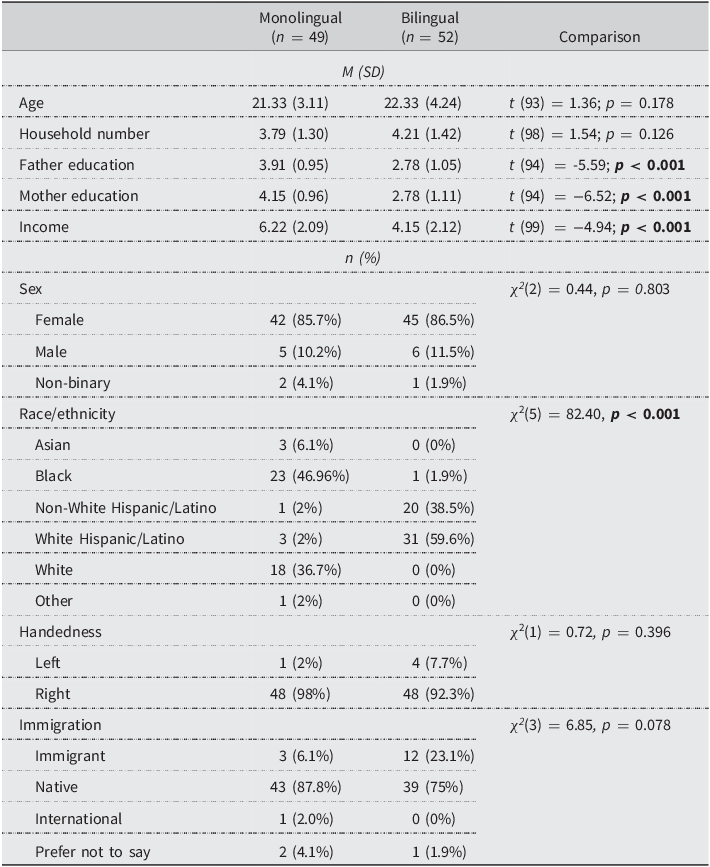
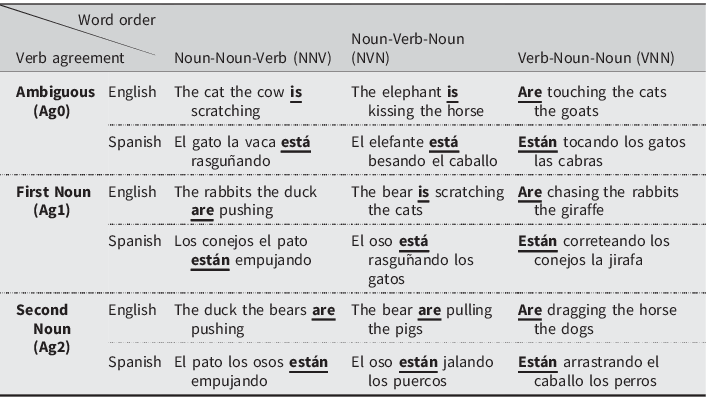
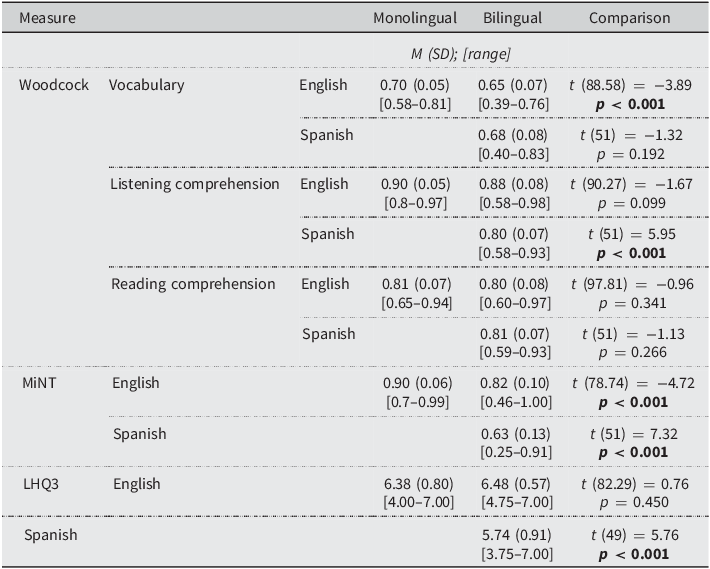
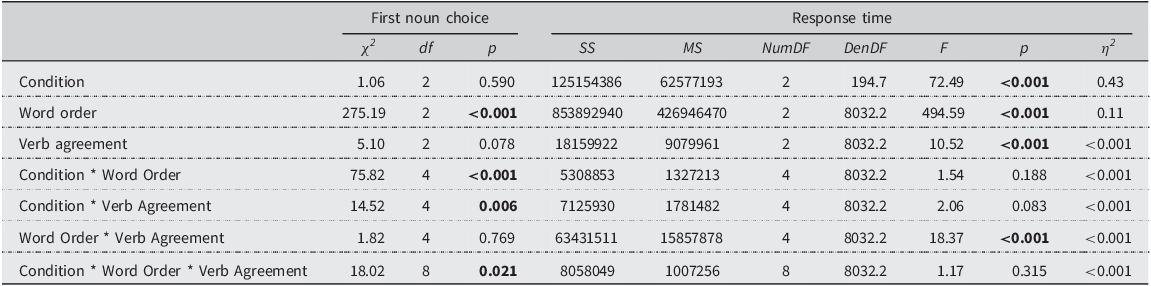

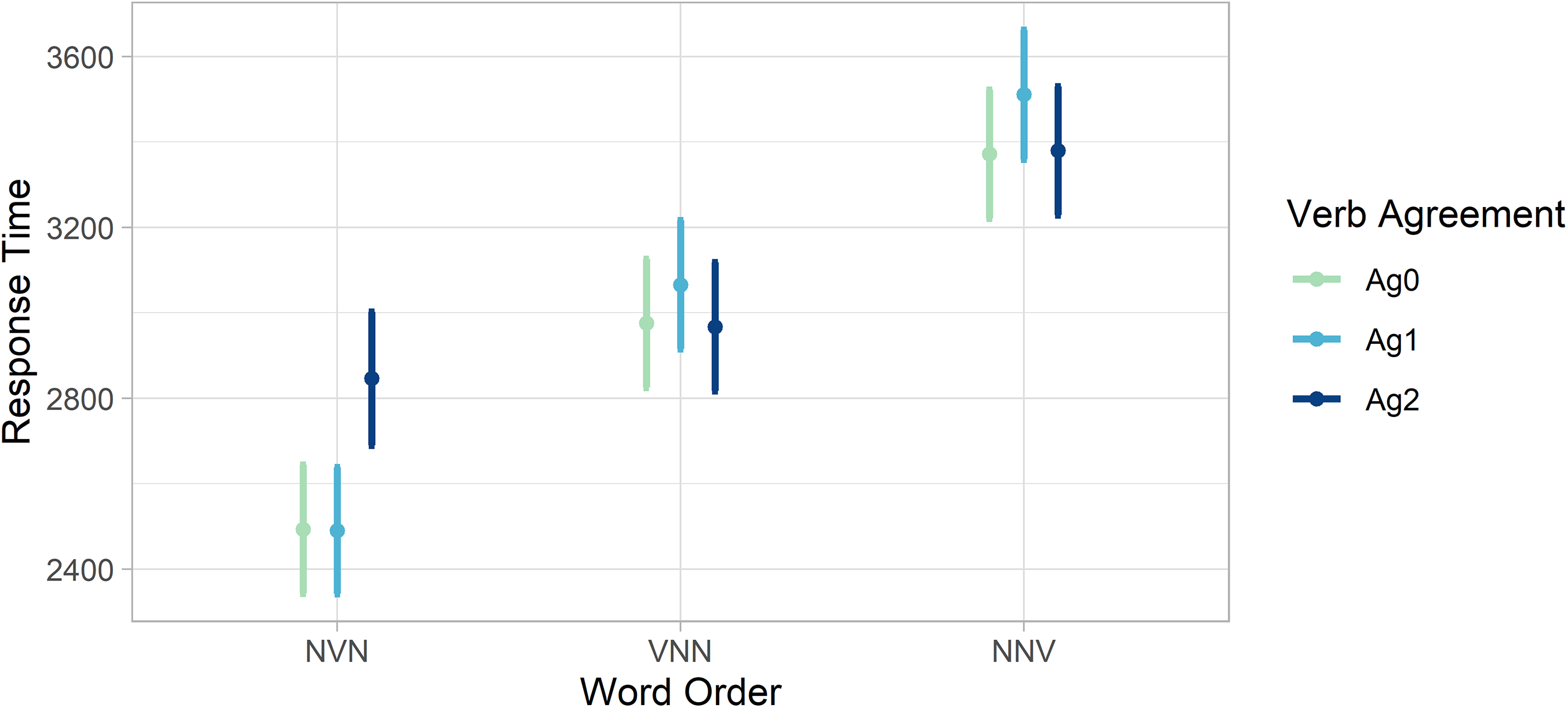
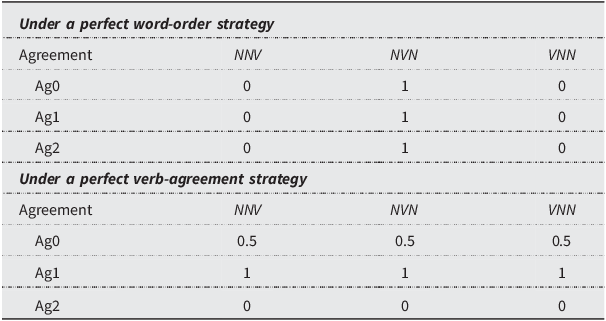
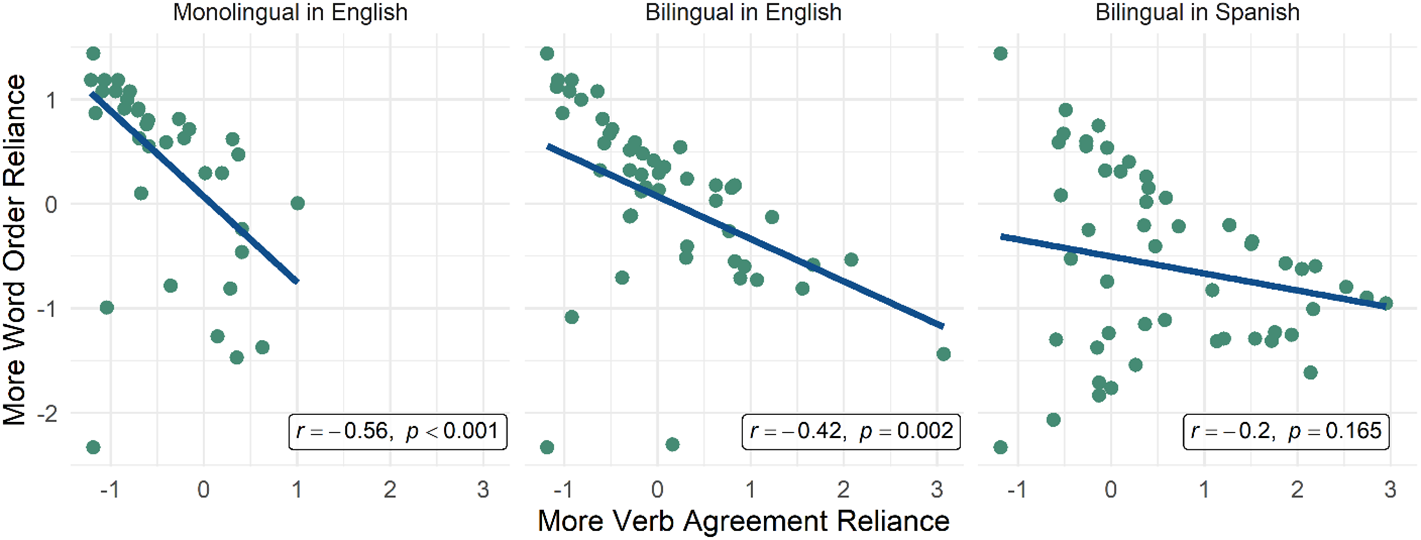
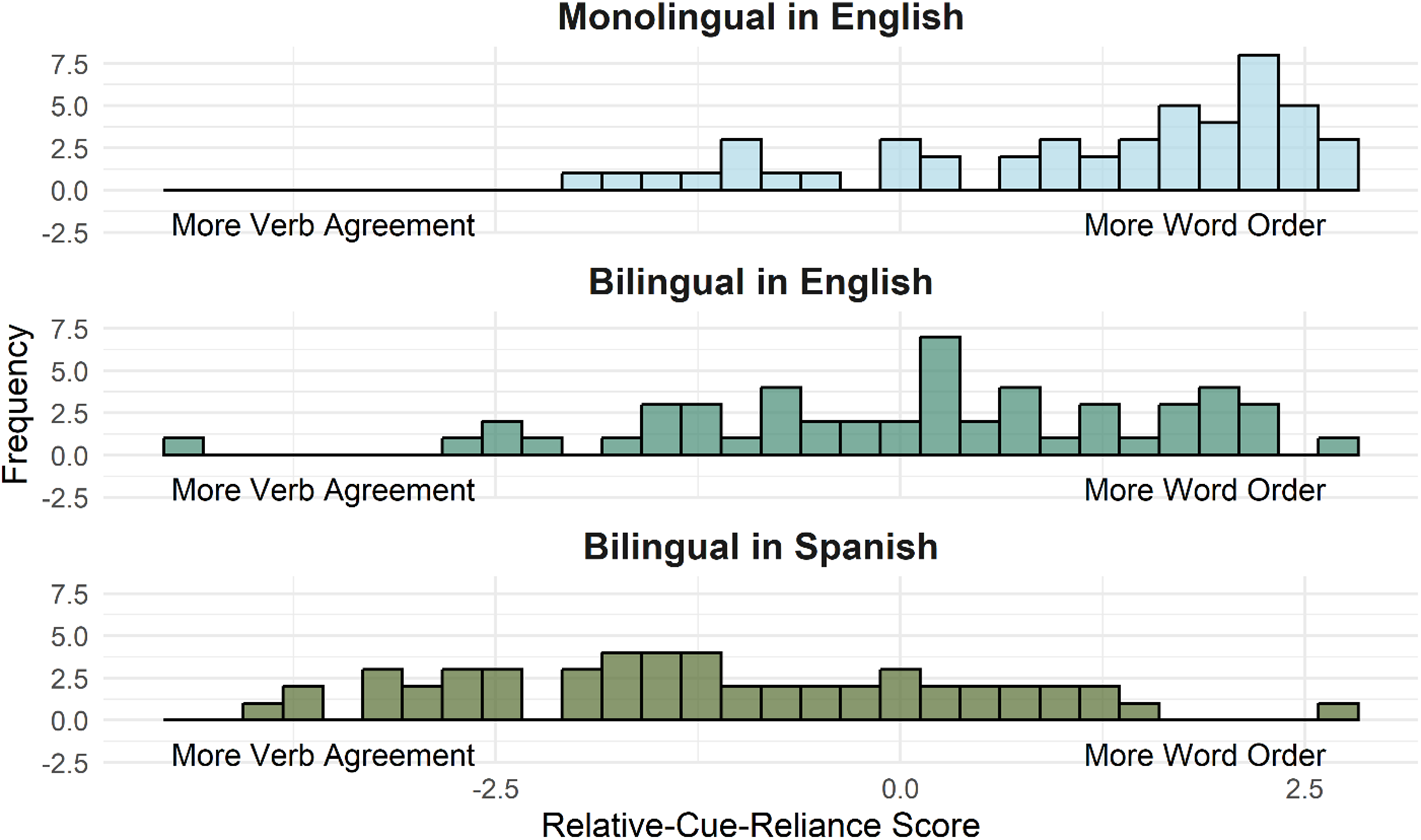

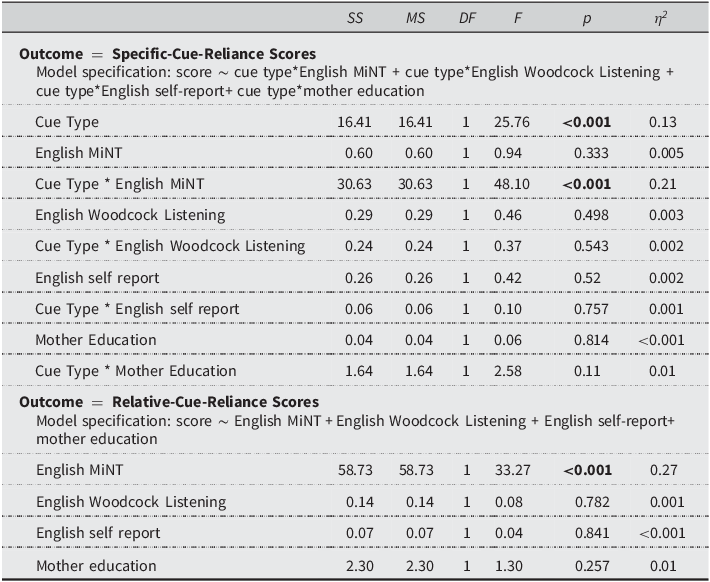

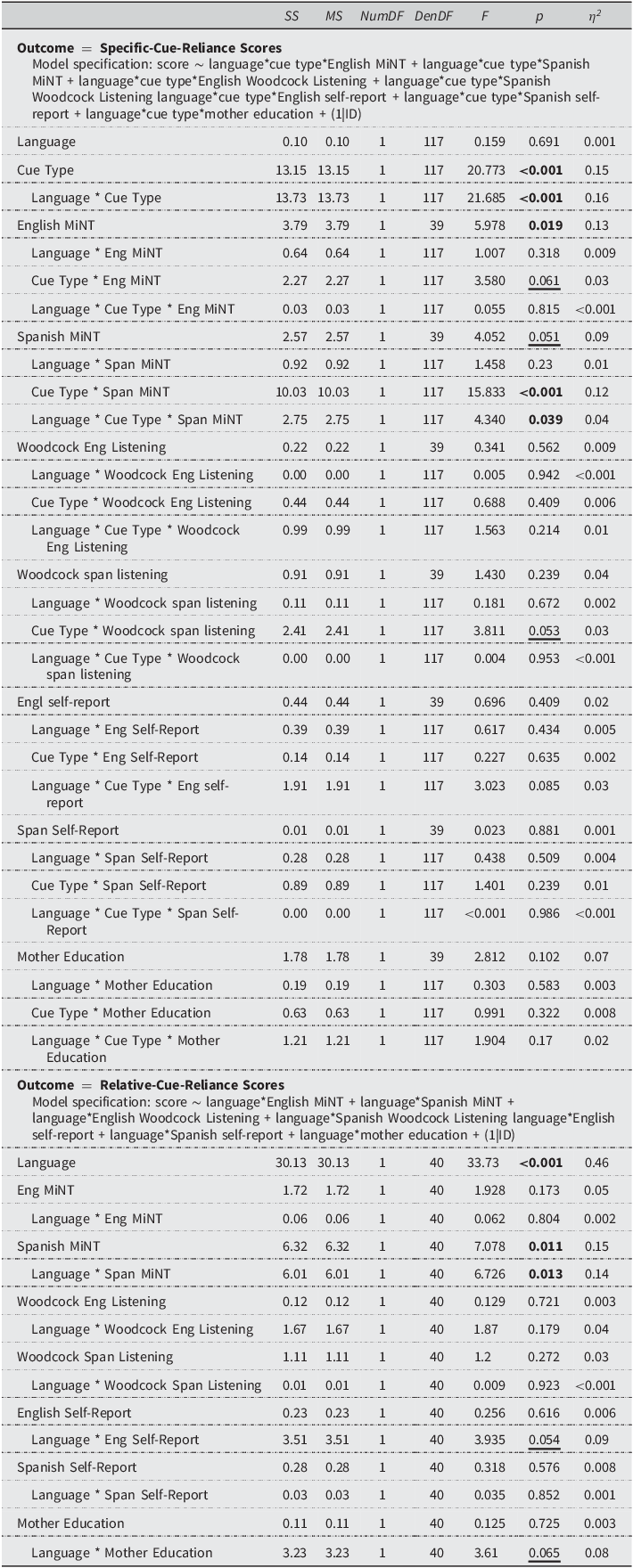

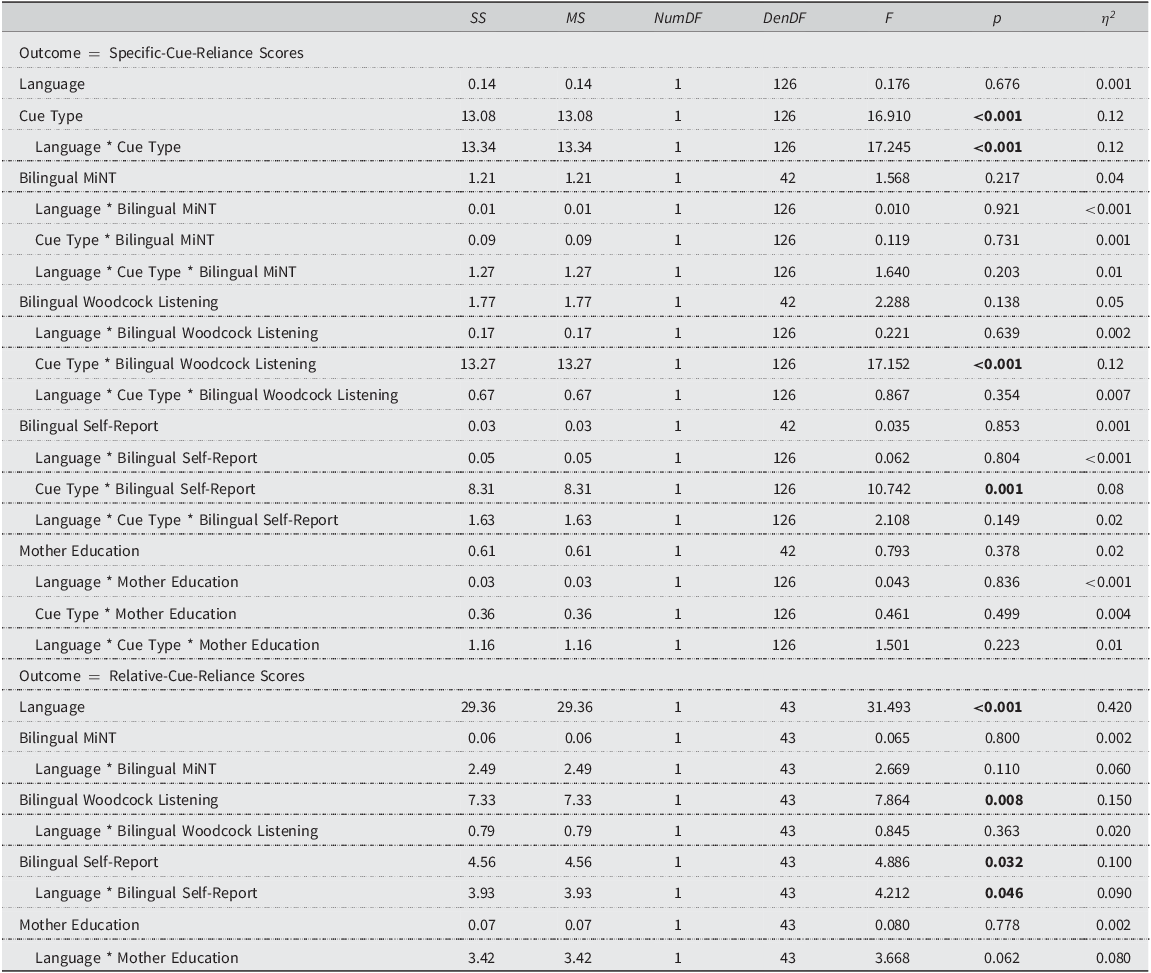


 Open access

