Introduction
Bipolar disorder (BPD) is a severe mental illness, which is associated with high rates of morbidities and mortality (Crump, Sundquist, Winkleby, & Sundquist, Reference Crump, Sundquist, Winkleby and Sundquist2013). It is characterized by recurrent mood fluctuations, agitation, impulsiveness, poor concentration and inattention. BPD can pose a significant impact on physical health, cognitive and psychomotor functions, as well as relationships with their families and friends. Patients with BPD often repeatedly visit the emergency room (ER) due to various reasons, in which traumatic injuries are one of the most alarming causes for admissions (Slankamenac, Heidelberger, & Keller, Reference Slankamenac, Heidelberger and Keller2020).
It has been well recognized that patients with BPD are prone to perform risk-taking behaviours, such as aggressive behaviours to self or others, violence, suicidal attempts and dangerous driving, under the influence of impulsivity (Látalová, Reference Látalová2009; Najt et al., Reference Najt, Perez, Sanches, Peluso, Glahn and Soares2007). Impulsive aggression usually arises during the manic or hypomanic phase while the risk of self-harm and/or suicidal attempts is higher during depressive episodes (Látalová, Reference Látalová2009; Valtonen et al., Reference Valtonen, Suominen, Haukka, Mantere, Leppämäki, Arvilommi and Isometsä2008). Impaired concentration and attention also adversely affect patients' abilities to perform daily tasks and put them at risk of accidents. All these symptoms ultimately increase the tendency of physical injuries or traumatic injuries that result in ER admissions. Prior studies also showed that patients with BPD have elevated risks of medically attended injuries, motor vehicle accidents, self-harm and suicidal attempts than those without BPD (Chen et al., Reference Chen, Yang, Lee, Wong, Ponton, Lee and Wu2018; McGinty, Baker, Steinwachs, & Daumit, Reference McGinty, Baker, Steinwachs and Daumit2013; Singhal, Ross, Seminog, Hawton, & Goldacre, Reference Singhal, Ross, Seminog, Hawton and Goldacre2014). All of these traumatic injuries could potentially contribute to the heightened risk of premature death among patients with BPD, where the unnatural death (including accidents, suicide completion, intentional and unintentional injuries) is reported to be seven times more common in patients with BPD relative to the general population, as well as substantial physical disabilities and financial burdens in both individual and population levels (Dean, Gerner, & Gerner, Reference Dean, Gerner and Gerner2004; Hayes, Miles, Walters, King, & Osborn, Reference Hayes, Miles, Walters, King and Osborn2015). Therefore, effective strategies are necessary to reduce the occurrence of traumatic injuries.
Numerous studies including randomized clinical trials and observational studies of mood stabilizers (e.g. lithium, valproate, lamotrigine and carbamazepine) and antipsychotics have demonstrated beneficial effects on relapse prevention, hospitalizations and mood stabilization compared to placebo or active comparators (Kishi et al., Reference Kishi, Ikuta, Matsuda, Sakuma, Okuya, Mishima and Iwata2021; Lähteenvuo et al., Reference Lähteenvuo, Tanskanen, Taipale, Hoti, Vattulainen, Vieta and Tiihonen2018; Miura et al., Reference Miura, Noma, Furukawa, Mitsuyasu, Tanaka, Stockton and Kanba2014; Weisler, Kalali, & Ketter, Reference Weisler, Kalali and Ketter2004). Thus, we hypothesize that the pharmacological approaches could lower the risks of traumatic injuries by alleviating symptoms and stabilizing mood. Despite the limited studies conducted on the outcome of traumatic injuries, most published studies have primarily focused on evaluating the effect of drug treatment of BPD on different causes of injuries, such as traffic accidents, violent behaviour, self-harm and suicidal attempts, which provided no concise conclusion (Chen et al., Reference Chen, Yang, Lee, Wong, Ponton, Lee and Wu2018; Fazel, Zetterqvist, Larsson, Långström, & Lichtenstein, Reference Fazel, Zetterqvist, Larsson, Långström and Lichtenstein2014; Hayes et al., Reference Hayes, Pitman, Marston, Walters, Geddes, King and Osborn2016). However, the effects of the pharmacological treatment of BPD on the overall risk of ER admissions due to traumatic injuries have been under-examined in this regard. In this study, we aimed to assess the association between the pharmacological treatment of BPD and risks of ER admissions due to traumatic injuries, to test our hypothesis that the drug treatment of BPD has a protective effect on traumatic injuries.
Methods
Data source
Clinical Data Analysis Reporting System (CDARS) is a population-based electronic health record database developed by the Hong Kong Hospital Authority (HA), which is the sole acute public healthcare services provider including mental health. HA services are available to all Hong Kong residents (>7.4 million) (Hospital Authority, 2021). Clinical data in CDARS have been continuously updated for each individual who assessed public services and include medical diagnosis, prescriptions and dispensing records, accidents and emergency attendances, hospital admissions and discharges medical records, psychiatric outpatient and inpatients medical records, as well as all other specialist outpatients and general outpatients medical records. CDARS does not capture clinical data from the private healthcare sectors but a local study reported that approximately 88.5% of psychiatric patients utilised public mental health services under HA (Tang, Reference Tang1997). Therefore, the CDARS is likely to cover the majority of the Hong Kong population. Since all medical information is directly recorded from health records to CDARS, the accuracy of data has been guaranteed and therefore successfully used in several pharmaco-epidemiological studies in psychotropic medications (Man et al., Reference Man, Chan, Coghill, Douglas, Ip, Leung and Wong2015, Reference Man, Coghill, Chan, Lau, Hollis, Liddle and Wong2017; Wang et al., Reference Wang, Chan, Coghill, Ip, Lau, Simonoff and Man2021; Wong et al., Reference Wong, Wong, Chui, Lee, Chang, Chen and Chan2016). This retrospective study used CDARS as a longitudinal electronic healthcare record database. Therefore, follow-up assessment was based on the records of the medical care provided by the HA. The clinical information in the baseline, as well as the follow-up, was extracted from CDARS. The study protocol was approved by the Institutional Review Board of the University of Hong Kong/Hospital Authority Hong Kong West Cluster (UW19-409).
Study design
A self-controlled case series (SCCS) design was applied to investigate the association between the pharmacological treatment of BPD and ER admissions due to traumatic injuries, by making within-individual comparisons in individuals who have experienced both exposures and outcomes of interests over the observation period. Each individual serves as their own control by comparing exposed and unexposed periods, rather than exposed and unexposed patients (Gao et al., Reference Gao, Man, Chan, Chui, Li, Coghill and Wong2021; Man et al., Reference Man, Lau, Coghill, Besag, Cross, Ip and Wong2020). In contrast to between-individual comparison study designs such as cohort and case-control studies, SCCS can eliminate the potential effects of recorded and unmeasured time-invariant confounding factors, such as genetic factors, childhood experience, family history and underlying disease severity (Petersen, Douglas, & Whitaker, Reference Petersen, Douglas and Whitaker2016).
Case identification
Individuals diagnosed with BPD from database inception to 31 December 2019 were identified in CDARS. The diagnosis of BPD was identified through the International Classification of Diseases, Ninth Revision, Clinical Modification (ICD-9-CM) diagnostic codes (296.0, 296.1 and 296.4–296.8). Patients with the diagnosis of schizophrenia or schizoaffective disorder (ICD-9-CM: 295) after the diagnosis of BPD were excluded. CDARS contains hospital inpatient and outpatient specialist clinical services and mental disorders diagnoses are normally made by psychiatrists. Among all patients with BPD, those aged 18 or above who received at least one prescription of any of the BPD pharmacological treatment agents (lithium, valproate, carbamazepine, lamotrigine and/or antipsychotics) and had at least one ER admission due to traumatic injuries during the study period (from 1 January 2001 to 31 December 2019) were included in the analyses.
As BPD is rarely diagnosed in children and adolescents (NICE, 2014), patients were included if they were aged 18 years or above. Therefore, the individual observation period started on 1 January 2001, the 18th birthday of the patient or the date of the patient entering the database (whichever was later) and ended on 31 December 2019 or the date of registered death (whichever was earlier). To fulfill the assumptions of SCCS, patients who had experienced the outcome of interest before the observation started were excluded. In SCCS, there was no censoring by the outcome of interest as this would violate the model assumptions and introduce bias to the results (Man et al., Reference Man, Coghill, Chan, Lau, Hollis, Liddle and Wong2017; Petersen et al., Reference Petersen, Douglas and Whitaker2016).
Exposures and outcomes
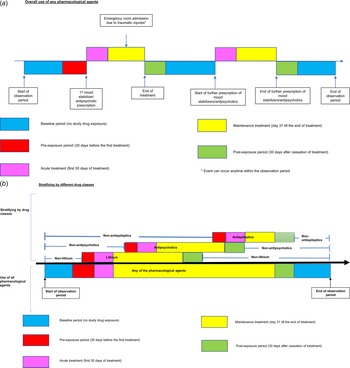
The exposure of interest was the pharmacological treatment of BPD including mood stabilizers and/or antipsychotics. Mood stabilizers are defined as lithium, sodium valproate, carbamazepine and lamotrigine only. These drugs were chosen because they are recommended by the international clinical guidelines and are commonly used as the treatment of BPD in Hong Kong (Malhi et al., Reference Malhi, Bell, Bassett, Boyce, Bryant, Hazell and Murray2021; Ng et al., Reference Ng, Man, Gao, Chan, Lee, Hayes and Wong2021; NICE, 2014; Yatham et al., Reference Yatham, Kennedy, Parikh, Schaffer, Bond, Frey and Berk2018). Details of the study medications were summarized in online Supplementary Table S1. Exposure periods were defined as the time receiving the study medications estimated by prescription start and end dates recorded in CDARS for each prescription. More than 99% of the prescriptions have the intended prescription start and end dates available. The dispensing dates were automatically recorded when patients have their prescriptions dispensed at the pharmacies at the public hospitals. The duration of treatment was calculated using daily dosages and quantity prescribed if prescription end dates were not available. The median duration of different drug classes was then imputed for those prescriptions with insufficient drug details. We divided the observation period into five different risk windows: (1) absence of all study medications (baseline period), (2) 30 days before the first study medication exposure (pre-exposure period), (3) first 30 days of study medications exposure (acute treatment), (4) day 31 till the end of study medications exposure (maintenance treatment) and (5) 30 days after the end of exposure of study medications (post-exposure period). A pictorial representation of the study design timeline of a single hypothetical participant is illustrated in Fig. 1a. The pre-exposure period was defined as the time before the first prescription of study medications (lithium, valpraote, carbamazepine, lamotrigine or antipsychotics) so there were no pre-exposure periods before each of the maintenance treatment periods. The reason for adding a 30-day pre-exposure period was to address any effects of recent ER admissions which might alter the likelihood of prescribing treatment of BPD and potentially introduce bias to the risk estimates during the treatment.
Graphical illustration of self-controlled case series study design: (a) overall use of any pharmacological agents, (b) stratifying by different drug classes. This figure shows the study design and timeline for a single hypothetical participant.

The outcome of interest was incident ER admission due to traumatic injuries. In Hong Kong, clinicians define ER admissions due to traumatic injuries according to National Trauma Data Standard Patient Inclusion Criteria and coded as ‘Traumatic case = Yes’ in CDARS as a compulsory procedure upon admission and are validated by the ER clinicians and nurses (online Supplementary Table S2) (American College of Surgeons Committee on Trauma, 2019). The corresponding date of the ER admission was identified as an event date.
Statistical analysis
Incidence rate ratios (IRRs) with 95% confidence intervals (CI) were estimated by comparing the incidence rates of outcomes during different periods with the rate during the baseline period using conditional Poisson regression. A significance level <0.05 was used in all statistical analyses. We adjusted for age in 1-year age bands and concurrent use of antidepressants and/or benzodiazepines derivatives as time-varying confounding factors. The analysis was further stratified by sex.
A subgroup analysis was conducted by stratifying by different drug classes (i.e. lithium, antipsychotics, mood stabilizing antiepileptics), we considered different pharmacological agents (other than the study drug class) as time-varying exposures (Fig. 1b). Patients who had ER admissions due to traumatic injuries without exposure to the study drug class during the observation period were included to contribute information on the impact of time-varying confounders on the risk of ER admissions due to traumatic injuries (Whitaker, Hocine, & Farrington, Reference Whitaker, Hocine and Farrington2009). All unexposed person-time to the respective study drug class was included in the baseline period. The inclusion of unexposed cases is recommended when the exposure periods are long or indefinite (Whitaker et al., Reference Whitaker, Hocine and Farrington2009).
To test the robustness and validity of the study results, several sensitivity analyses were conducted with different definitions of study cohort, criteria of defining observation period and lengths of exposure periods including (1) redefining the start of the observation period to 1 January 2001, the 18th birthday of the individual, the date of the patient entering the database or the first observed date of BPD diagnosis, whichever was later; (2) removing individuals who died during the observation period; (3) restricting the study cohort to incident users of mood stabilizers and/or antipsychotics; (4) restricting to individuals without a diagnosis of schizophrenia from database inception till the end of observation period; (5) redefining the study cohort by only including patients with at least two inpatient diagnosis of BPD and excluding those with more than one inpatient diagnosis of schizophrenia from database inception till the end of observation period; (6) removing individuals with ER admission due to traumatic injuries happening on the first day of prescription of any study medications; and (7) different drug non-adherence scenarios. To account for any potential residual confounding, an E value estimates the required strength of an unmeasured confounding variable that would nullify the observed associations between our exposure and outcomes, while accounting for all measured covariates (VanderWeele & Ding, Reference VanderWeele and Ding2017). We also further adjusted for some potential confounders, such as concurrent use of hypnotics and anxiolytics and doses of treatment agents in two separate sensitivity analyses. The purpose and details of each sensitivity analysis were reported in online Supplementary Table S3. All analyses were performed by two investigators (VN and LG) for quality assurance using SAS (version 9.4) and R (version 3.5.3; R Core Team) respectively.
Results
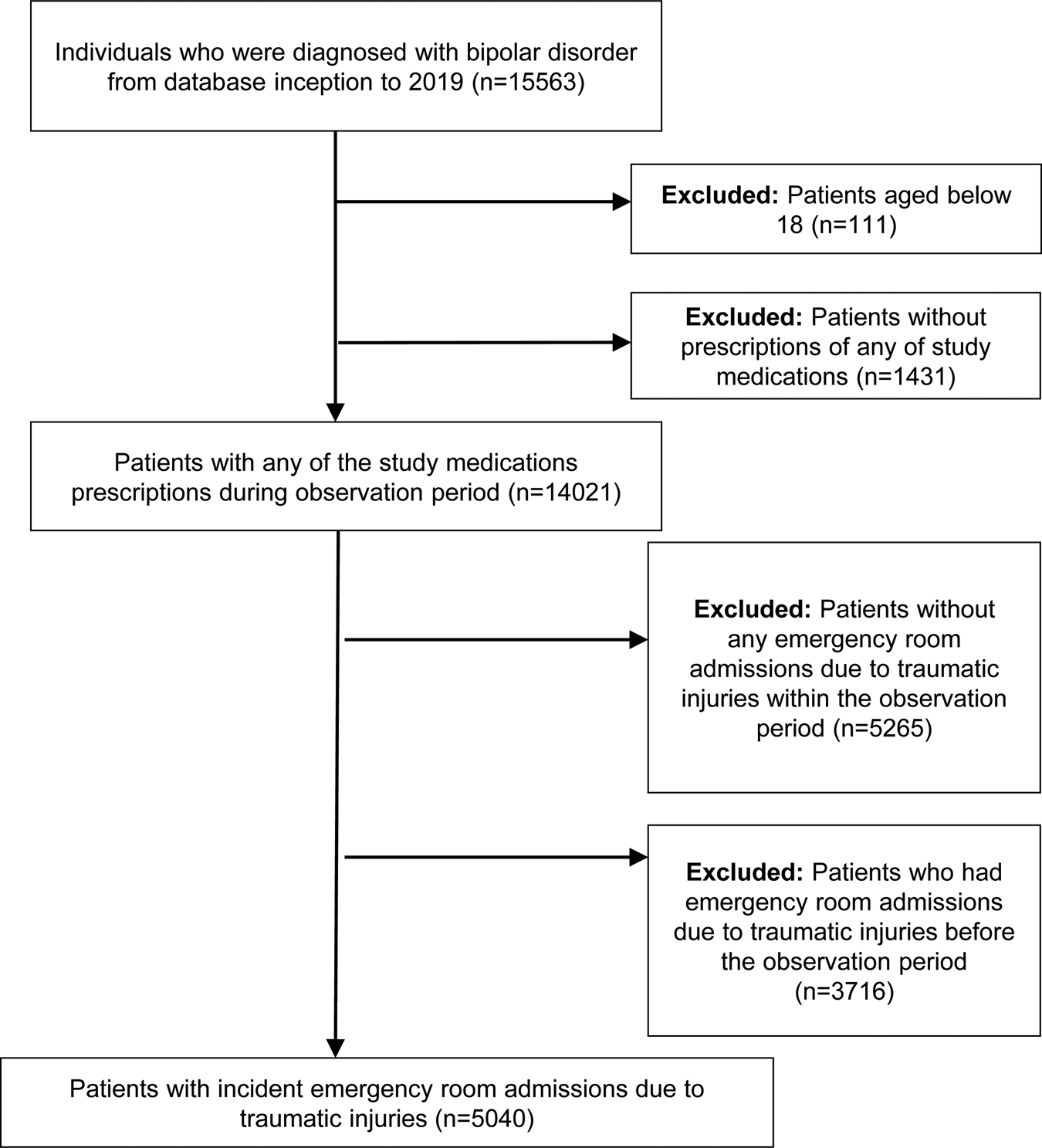
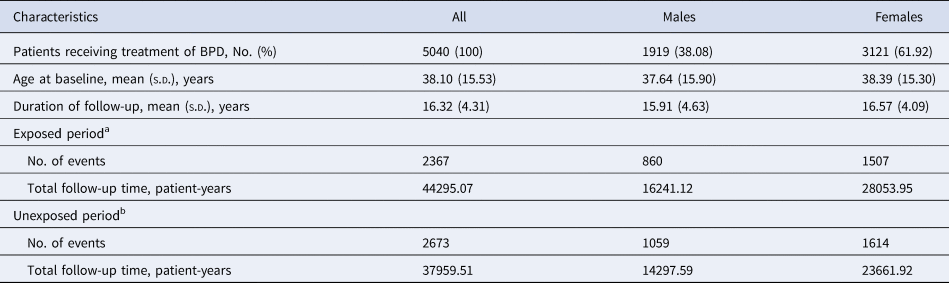
Among 14 021 patients with BPD who received at least one prescription of mood stabilizers and/or antipsychotics between the observation period, 5040 of them were identified with incident ER admissions due to traumatic injuries and included in the analysis (Fig. 2). The overall incidence rate of ER admissions due to traumatic injuries among patients who received mood stabilizing treatment during the observation period was 4.79 per 100 patient-years. The mean age at the start of the observation period is 38.1 years old and the mean duration of follow-up is 16.3 years (Table 1).
Flowchart of patient identification. This figure shows the selection criteria of patients included in the self-controlled case series analysis.

Characteristics of the study population

BPD, bipolar disorder; s.d., standard deviation.
a Exposed period refers to the time which the patients were treated with any of the pharmacological treatment agents of BPD (i.e. acute treatment and maintenance treatment).
b Unexposed period refers to the time which the patients were not treated with any of the pharmacological treatment agents of BPD (i.e. baseline, pre-exposure and post-exposure periods).
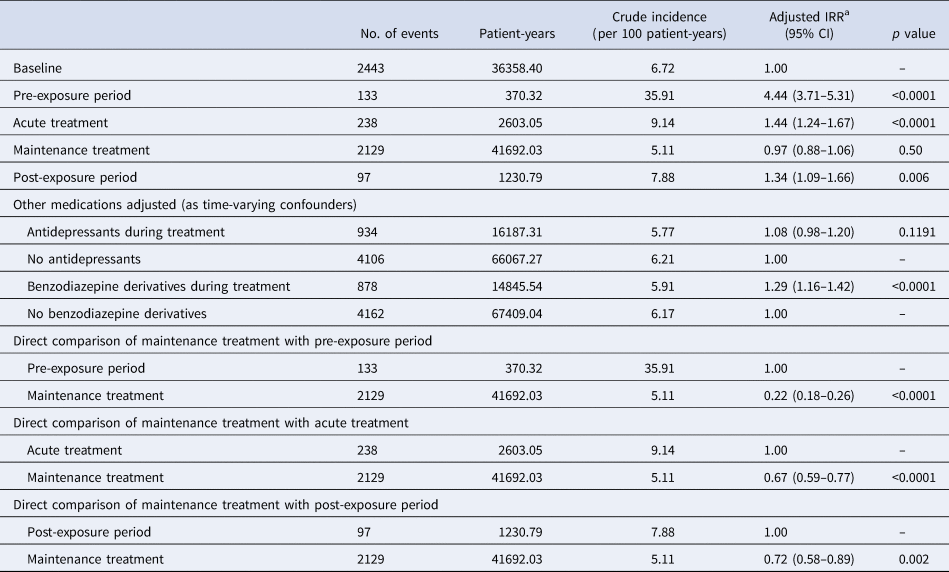
Compared to the baseline period, the risk of ER admissions due to traumatic injuries was approximately 4.4-fold higher during the pre-exposure period (IRR = 4.44, 95% CI 3.71–5.31, p < 0.0001) and then was lowered to IRR of 1.44 (95% CI 1.24–1.67, p < 0.0001) immediately after the treatment was initiated (Table 2). The risk became similar to the baseline level during maintenance treatment (IRR = 0.97, 95% CI 0.88–1.06, p = 0.50) but increased after the treatment was ceased (IRR = 1.34, 95% CI 1.09–1.66, p = 0.006). However, when we directly compared the maintenance treatment to other risk periods (pre-exposure, acute treatment and post-exposure periods respectively), we also observed a reduction in the risk of ER admissions due to traumatic injuries during the maintenance treatment (pre-exposure: IRR = 0.22, 95% CI 0.18–0.26, p < 0.0001; acute treatment: IRR = 0.67, 95% CI 0.59–0.77, p < 0.0001; post-exposure: IRR = 0.72, 95% CI 0.58–0.89, p = 0.002).
Results from the self-controlled case series analyses
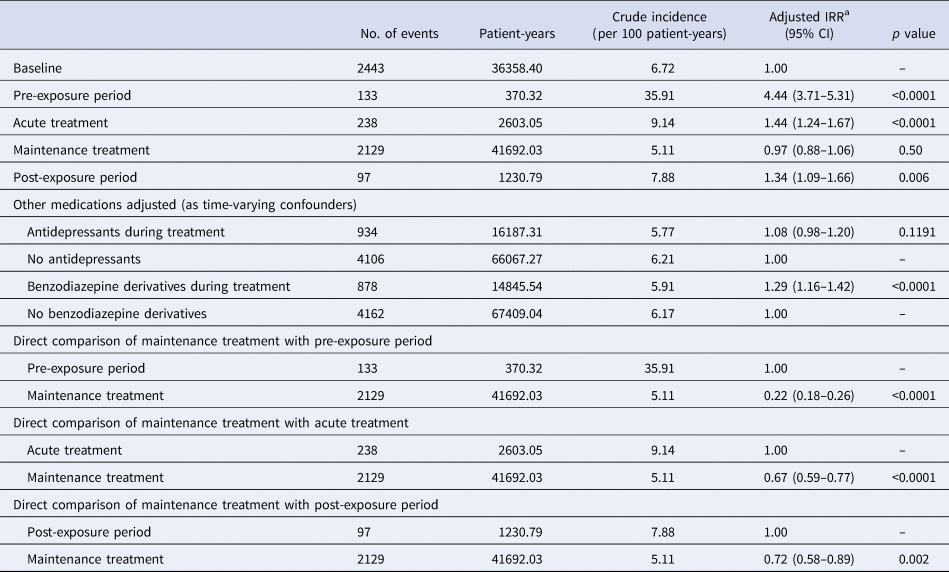
CI, confidence interval; ER, emergency room; IRR, incidence rate ratio.
a All estimates are adjusted for age in 1-year age band and concurrent use of antidepressants and/or benzodiazepine derivatives.
When stratifying by different drug classes, an increased risk was only observed in pre-exposure periods to antipsychotics and mood stabilizing antiepileptics (antipsychotics: IRR = 3.74, 95% CI 3.04–4.58, p < 0.0001; mood stabilizing antiepileptics: IRR = 1.90, 95% CI 1.46–2.47, p < 0.0001) (online Supplementary Table S4). Compared to their own baseline periods, lithium use was associated with a lower risk during both acute (IRR = 0.67; 95% CI 0.48–0.94, p = 0.0208) and maintenance treatment (IRR = 0.81, 95% CI 0.70–0.94, p = 0.0046) while an increased risk with decreasing magnitude was detected with the use of antipsychotics during acute treatment (IRR = 1.43, 95% CI 1.20–1.70, p < 0.0001). No significant changes in the risk was found with the use of mood stabilizing antiepileptics (acute treatment: IRR = 1.17, 95% CI 0.95–1.43, p = 0.1343; maintenance treatment: IRR = 0.99, 95% CI 0.90–1.10, p = 0.9218).
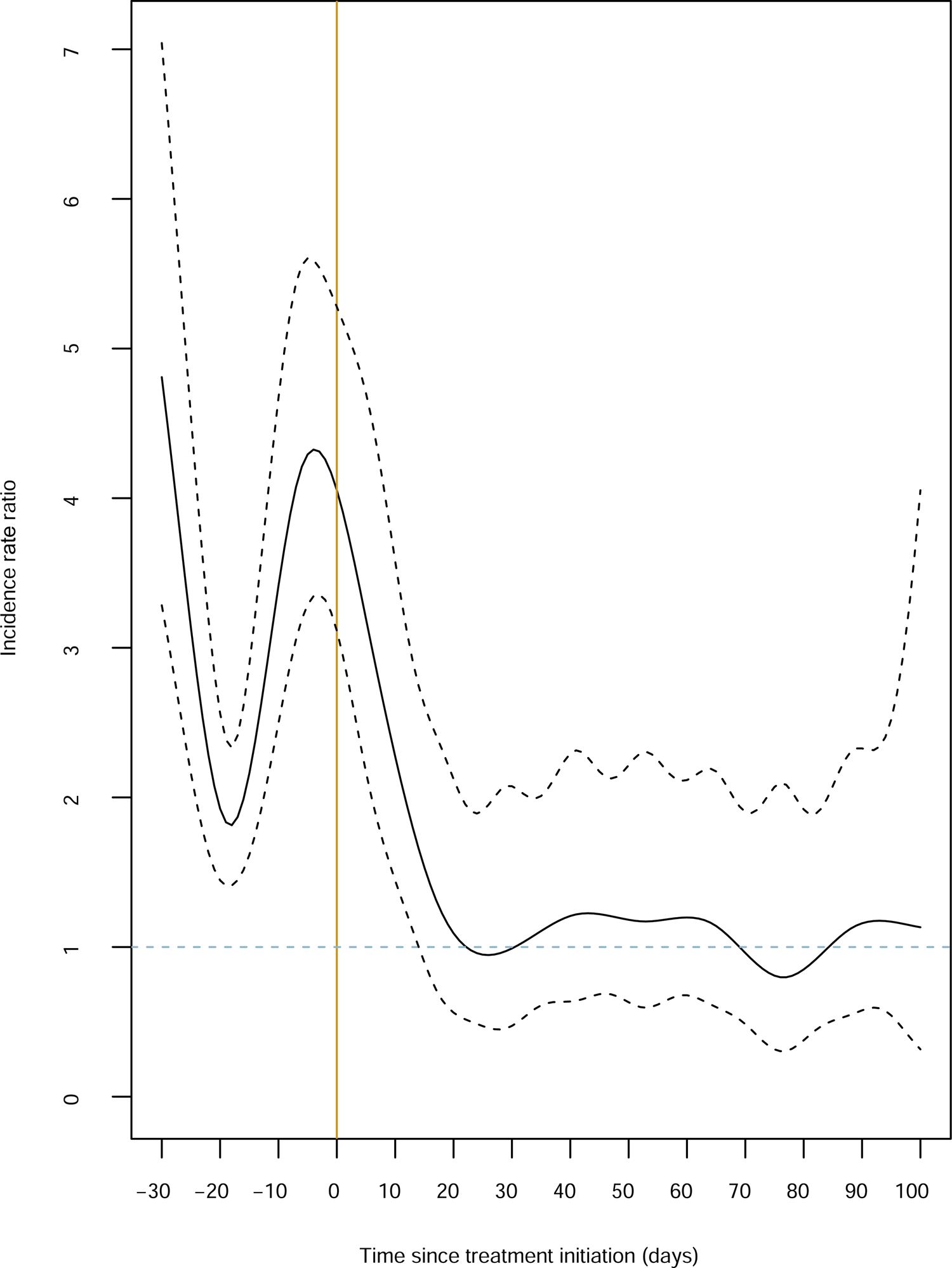
Further analysis using non-parametric spline-based SCCS showed that the risk of ER admissions due to traumatic injuries increased significantly before the treatment initiation and then started to drop to the baseline level within 30 days after the treatment was started (Fig. 3). The sex-stratified analysis showed similar results to the overall analysis (online Supplementary Table S5). A total of 44 patients (0.87%) died within 30 days after the incident ER admissions due to traumatic injuries and the distribution of the proportion of patients who censored the observation period within 30 days after the first ER admissions due to traumatic injuries were shown in online Supplementary Fig. S1. We removed these patients who died during the observation period in sensitivity analysis and the results remained robust. The remaining sensitivity analyses did not change the overall findings (online Supplementary Tables S6–S7 and Figs S2–S5).
Results from the non-parametric spline-based self-controlled case series analysis. This figure shows variation of incidence rate ratio (IRR) of emergency room admissions due to traumatic injuries between the time of pre/post exposure of treatment. The black solid line is the estimated IRR and the black dotted lines refer to its 95% confidence interval. The blue dotted line indicated baseline IRR.

Discussion
From the main analysis, the incidence of ER admissions due to traumatic injuries demonstrated a 4.4-fold and 1.4-fold elevation 30 days before and after the initiation of the pharmacological treatment of BPD, respectively. During the prolonged treatment (>1 month), the risk returned to the baseline. Considering the analysis of the direct comparison of the incidence rate during the treatment periods to the pre-exposure periods, our study results do not suggest an increased risk of ER admissions due to traumatic injuries associated with the use of BPD pharmacological treatment. When stratifying by different drug classes, lithium was associated with a lower risk while an increased risk with decreasing magnitude was observed during acute treatment of antipsychotics. No significant changes were detected with the use of mood stabilizing antiepileptics.
Indeed, the 30-day pre-exposure period showed a high incidence of ER admissions due to traumatic injuries. This suggests that the observed increased risk of traumatic injuries before initiation was due to the worsening symptoms, recurrent mood episodes or agitation that lead to medical attention and hence clinicians decide to start the treatment. However, our non-parametric plot (Fig. 3) showed a sudden drop of IRR around 20 days before treatment initiation. One possible reason to explain is that patients with worsening symptoms or fluctuated mood episodes could potentially receive more care and support from family and peers or psychotherapy from healthcare professionals before being medicated, leading to a temporary decrease in IRR. Prolonged exposure to BPD treatments (>1 month) was associated with a significantly lower risk of ER admission due to traumatic injuries relative to the pre-exposure period. Although the incidence for ER admissions due to traumatic injuries rose shortly after treatment cessation, the magnitude of the increased risk was lower than that during the pre-exposure period. Our overall findings support the hypothesis that BPD treatment together with other medical care could lower the risk of traumatic injuries in patients with BPD.
Discontinuation of long-term psychotropic medications regimen has been a common clinical occurrence among patients with BPD and is usually followed by a range of withdrawal reactions that could arise within hours or days (Cosci & Chouinard, Reference Cosci and Chouinard2020; Kishi et al., Reference Kishi, Matsuda, Sakuma, Okuya, Mishima and Iwata2020). The earlier relapse of symptoms and reoccurrences of mood episodes have important clinical implications. A previously published systematic review and meta-analysis showed that the risks of any recurrent mood episodes (mania or depressive episodes) increased after discontinuation of mood stabilizing therapy, particularly the risk of the recurrent manic, hypomanic and/or mixed episodes increased immediately after treatment cessation while the recurrence of depressive episodes was delayed (Kishi et al., Reference Kishi, Matsuda, Sakuma, Okuya, Mishima and Iwata2020). The cognitive and functional abilities might be more likely adversely affected under the influence of impulsivity during manic episodes and hence increasing the likelihood of risk-taking behaviour and accidents, thus the risk of traumatic injuries would possibly rebound as observed in our study. Although no significant changes were observed during the post-exposure periods of individual drug classes due to small sample, close monitoring of patients' symptoms is still highly recommended if treatment is discontinued by clinicians or patients themselves.
To our knowledge, no study has reported a direct association between the risk of traumatic injuries and use of pharmacological treatment of BPD. Limited studies have been conducted to examine the association of drug treatment of BPD and different causes of injuries, except for suicidal attempts. Similar to our findings, a previous study using primary care healthcare database from the UK reported that patients with BPD taking lithium had reduced rate of self-harm and unintentional injuries, implicating that lithium can reduce the impulsive aggression in addition to mood stabilization (Hayes et al., Reference Hayes, Pitman, Marston, Walters, Geddes, King and Osborn2016). Most of the existing studies largely focussed on either the causes or types of traumatic injuries. Several studies demonstrated lithium had a decreasing tendency of road injuries, fractures and traumatic brain injuries but the results were not statistically significant, possibly due to small sample size (Chen et al., Reference Chen, Yang, Lee, Wong, Ponton, Lee and Wu2018; Liao et al., Reference Liao, Ku, Chen, Lu, Chen, Yang and Chen2021; Su et al., Reference Su, Cheng, Huang, Lee, Yang, Lu and Chin-Hung Chen2017). Although our study also revealed that lithium use was associated with a decreased risk of traumatic injuries, the aforementioned evidence could not be directly comparable to our findings. Further studies with a larger sample size are warranted to investigate the effect of individual psychiatric medication on ER admissions due to traumatic injuries to provide more evidence on the use of polypharmacy in the management of BPD.
Our study has notable strengths. SCCS study design relies on the within-individual comparison to control both measured and unmeasured time-invariant confounding factors. This could prevent the selection bias related to the control group in a cohort or case-control studies due to the nature of the between-individual comparison. Apart from the study design, the clinical records of ER attendances are not commonly available in electronic healthcare databases. Data used in our study directly come from ER admission records and the date of event was automatically recorded into the system upon admission. Similarly, the medication data in CDARS are dispensing records, which the dispensing dates are automatically recorded. The majority of the dispensing records had the intended prescription start and end dates recorded. Therefore, the precise prescription periods and event dates, which are crucial to SCCS, could help maintain the accuracy of the results. Furthermore, the HA is the sole public healthcare service provider which manages the majority of patients who need specialist care in Hong Kong (Leung, Tin, & O'Donnell, Reference Leung, Tin and O'Donnell2009). Patients with BPD in our study were managed by the specialists at the hospitals and their diagnosis of BPD were confirmed for further clinical management so it is unlikely that there is a significant misdiagnosis compared to primary care electronic healthcare records and claims data, in which these databases frequently utilized external data, such as specialist letters and hospital discharge summary, for validation (Herrett, Thomas, Schoonen, Smeeth, & Hall, Reference Herrett, Thomas, Schoonen, Smeeth and Hall2010).
There are some limitations to consider in our study. Firstly, the actual reasons or diagnoses for ER admissions are not well-recorded as ICD-9-CM code. Due to the data protection regulation, we are unable to access the free text to ascertain the causes of ER admissions. Consequently, we are not able to identify the causes of patients admitted to ER and hence the nature of traumatic injuries. However, the aim of our study was to investigate the association between the treatment and ER admissions due to traumatic injuries so the reasons for traumatic injuries are only of secondary interest. Secondly, like other observational studies using electronic databases, CDARS only provides medication prescribing and dispensing records but adherence to medications is not recorded. This might lead to misclassification of the exposure periods which would usually bias the estimates towards null and hence potentially masking the effect of the medications but one of our sensitivity analyses mimicked the scenarios of non-adherence by extending the exposure periods from 1 to 10 weeks and our results remained robust as the primary analysis. Furthermore, CDARS captures clinical data only from the public healthcare system in Hong Kong, so data from the private practice are not available and the exposure periods might be underestimated. Patients with higher socio-economic status might seek consultation and treatment from the physicians at private sector but patients with BPD usually require lifelong treatment and would often prefer public services due to subsidised medical costs (Leung et al., Reference Leung, Tin and O'Donnell2009). Therefore, our study likely covered most of the BPD patients in Hong Kong. Thirdly, the utilization of non-pharmacological treatment is not well-recorded in CDARS, therefore we would not be able to identify patients who received non-pharmacological treatment in our study cohort and hence they are not accounted for in our analysis. Such missing information might potentially bias the result estimates. However, non-pharmacological treatment is labour intensive. Subject to inadequacy of resources and manpower at the HA (Food and Health Bureau, 2017; Legislative Council Secretariat, 2020), it is uncommon for patients with BPD to be referred for non-pharmacological treatment. Furthermore, pharmacological treatment is considered as the mainstay approach for management of BPD according to international treatment guidelines, which most clinicians comply with. It is common that clinicians prescribe pharmacological treatment to patients when their presentations indicate mood disturbance or relapse due to crisis or negative experience for symptoms control then initiate non-pharmacological treatment only if the symptoms are not controlled and time permitted for counselling the patients. Therefore, it is unlikely that the effect of non-pharmacological treatment could affect the overall conclusion.
Conclusion
The risk of ER admissions due to traumatic injuries was higher before the start of treatment of BPD and decreased following treatment initiation, hence our study supports the hypothesis that the pharmacological treatment of BPD with appropriate medical care is associated with reduced risk of traumatic injuries, especially for lithium. This finding has important implications for clinical practice. Clinicians should be mindful of the timely prescribing of appropriate pharmacological regimens to patients based on their symptoms and severity; monitor for relapse of symptoms if the cessation of treatment is warranted.
Supplementary material
The supplementary material for this article can be found at https://doi.org/10.1017/S0033291722002215.
Acknowledgements
We thank the Hong Kong Hospital Authority for granting access to the data from CDARS for research purposes.
Financial support
This work was supported by AIR@InnoHK administered by Innovation and Technology Commission of the Hong Kong SAR Government. Vanessa W. S. Ng and Le Gao are supported by the Postgraduate Student Scholarship from The University of Hong Kong. Joseph F Hayes is supported by grants from the Wellcome Trust, the National Institute for Health Research (NIHR) North Thames Applied Research Collaboration and the University College London Hospitals NIHR Biomedical Research Centre. David P. J. Osborn is supported by the NIHR Biomedical Research Centre at University College London Hospitals and the NIHR Applied Research Collaboration North Thames. Other authors received no specific funding for this work. The funder had no role in the design or conduct of the study; collection, management, analysis or interpretation of the data; preparation, review or approval of the manuscript; and decision to submit the manuscript for publication.
Conflict of interest
Esther W. Chan has received an honorarium from the Hospital Authority, research grants from the Narcotics Division of the Security Bureau of HKSAR, National Health and Medical Research Council (NHMRC, Australia), National Natural Science Foundation of China (NSFC), Research Fund Secretariat of the Food and Health Bureau (HMRF, HKSAR), Research Grants Council (RGC, HKSAR), Wellcome Trust; Amgen, AstraZeneca, Bayer, Bristol-Myers Squibb, Janssen, Pfizer, RGA and Takeda outside the submitted work. Kenneth K. C. Man received the CW Maplethorpe Fellowship, grants from the National Institute for Health Research, UK; the European Union Horizon 2020 Framework and personal fees from IQVIA Holdings, Inc., unrelated to this work. Ian C. K. Wong has received grants from the Research Grants Council (RGC, Hong Kong), the National Institute for Health Research, UK, Innovative Medicines Initiative (IMI), Shire, Janssen-Cilag, Eli-Lily, Pfizer, Bayer, Bristol-Myers Squibb, Takeda, Amgen, AstraZeneca and the European Union FP7 program. He is a member of the National Institute for Health and Clinical Excellence (NICE) ADHD Guideline Group, the British Association for Psychopharmacology ADHD guideline group and an advisor to Shire. He also receives personal fee from IQVIA and Jacobson Pharmaceutical; outside of submitted work. Vanessa W. S. Ng, Le Gao, Ho Ming Edwin Lee, Joseph F. Hayes, David P. J. Osborn and Timothy H. Rainer declare no conflict of interest.
Ethical standards
This study was approved by the Institutional Review Board of the University of Hong Kong/Hospital Authority Hong Kong West Cluster (UW19-409).