Introduction
Contraceptive use contributes to fertility control and birth spacing, and reduces induced abortions (Marston & Cleland, Reference Marston and Cleland2003) and unintended pregnancies (Dixit, Reference Dixit2012). Despite the long history of family planning programmes in India, the modern contraceptive prevalence rate (mCPR) remains low in some states, and many couples still lack access to safe and effective family planning methods. Overall, the progress in mCPR remained stagnant in India between 2005 and 2016: the mCPR was 47.7% in 2015–16 as against 48.5% in 2005–06. Contrary to the assumption of an increase in demand for contraception, during the same period, the total demand for any method (from 70% in 2005–06 to 66% in 2015–16) and unmet need for contraceptive methods (13.9–12.9%) decreased (IIPS & ICF, 2017), suggesting the need for a detailed study on the reasons for non-use of contraceptives.
Studies across the world cite several reasons for non-use of contraceptives. Pioneering research by Sedgh et al. (Reference Sedgh, Hussain, Bankole and Singh2007) in developing countries revealed that about 10–50% of married women who had unmet need cited ‘infrequent sex’ as a reason for non-use. Infrequent sex, concerns about side-effects (Sedgh et al., Reference Sedgh, Hussain, Bankole and Singh2007) and health risks have been found to be the most common reasons for non-use in countries with high levels of unmet need for family planning (United Nations, 2015). On the other hand, perceived infecundity and subfecundity are major reasons for non-use in high contraceptive use settings (Casterline et al., Reference Casterline, Perez and Biddlecom1997; El-Zanaty et al., Reference El-Zanaty, Way, Kishor and Casterline1999). For example, in a study conducted in the United States, the majority of non-users believed they could not get pregnant, and therefore cited this as a reason for non-use (Mosher et al., Reference Mosher, Jones and Abma2015). Earlier studies conducted in the 1980s found that contraceptive use was limited to abstinence in Nigeria and Senegal, where postpartum abstinence and breastfeeding practices were also very high (DIGEST, 1985, 1989). Health and side-effects, reduced need, failure and method-related reasons were among the major reasons for discontinuation according to a multi-country study conducted by Bradley et al. (Reference Bradley, Schwandt and Khan2009). A recent study conducted across 35 villages in Maharashtra by Valekar et al. (Reference Valekar, Pandve, Chawla and Mane2017) found that fear of the side-effects of contraceptives was the most common reason (34%) for not using contraception (Valekar et al., Reference Valekar, Pandve, Chawla and Mane2017).
Most earlier research studies conducted in India and other parts of the world that cited reasons for non-use of contraceptives were based on women who were identified to have unmet needs (Shrestha et al., Reference Shrestha, Stoeckel and Tuladhar1991; Sedgh et al., Reference Sedgh, Hussain, Bankole and Singh2007; Sedgh & Hussain, Reference Sedgh and Hussain2014). These studies excluded a large proportion of women who were infecund or had no need for contraception. The present study examined women’s self-reported reasons for non-use of contraception, its trends and associated complexity of reporting selected reasons for non-use of contraception in India.
Methods
Data
The Indian Demographic and Health Survey, also known as the National Family Health Survey (NFHS), is a large-scale, multi-round cross-sectional survey conducted in a representative sample of households throughout India. The NFHS conducted its 4th round of data collection in 2015–16, and the present study primarily used data from this round of the survey. To study changes in the selected measures over time data from the NFHS-3, collected in 2005–06, were also used. The NFHS uses stratified two-stage sampling procedures and collects data on socioeconomic and demographic characteristics, and reproductive, maternal and child health data and other health-related information from men aged 15–54 and women aged 15–49 years. The NFHS-3 provides information up to state level; however, the NFHS-4 covers samples across 640 districts that existed at the time of the survey in India. More details of the survey design and sample size are described elsewhere (IIPS & ICF, 2017).
All non-users were classified into a total of fourteen categories by pregnancy status, based on who wanted to have a (another) child soon/within 2 years, and according to their cited reasons for non-use. The classification framework is shown in Fig. 1. The question on current use was skipped for women who were pregnant at the time, or had a hysterectomy (included in NFHS-4 only). In addition, non-users who wanted to have a child soon (within 2 years), responded undecided or gave a non-numeric response on fertility preference, were not asked for their reasons of non-use. The total sample size of women who were married at the time of the NFHS-3 was 37,296, and 247,024 during the NFHS-4. These women were not using any method at the time of the survey. Twenty different reasons were included in the questionnaire to the question on reasons for non-use, and the same question was asked in both rounds of the NFHS. The question on reasons for non-use of contraception was non-probing, but multiple choices were allowed. Analysis of the responses in NFHS-4 and NFHS-3 respectively indicated that nearly 79% and 66% women of cited only one reason, 12% and 20% cited two reasons, 2% and 3% reported three or more reasons and 7% and 11% women cited other reasons or didn’t know.
Classification of survey women with question ‘skip pattern’ of current use, and cited reasons for non-use. aA separate question on ‘hysterectomy performed’ was asked in NFHS-4. bMultiple responses possible.

Measures
A derived measure of abstinence (DMA) was computed using a combination of ‘cited reasons for non-use’ and ‘practised sex behaviour within the last 3 months before the survey’. The survey included a question on last sexual activity: ‘When was the last time you had sexual intercourse?’; responses were recorded in days, weeks, months and years. This information on sexual activity was compared with cited reasons for abstinence to create the DMA variable. Women who cited ‘not having sex’ as a reason for non-use, and who reported ‘no sex’ in the last 3 months, were classified as ‘abstainers’ as indicated by the DMA. In the NFHS-4, the question on sexual activity was only asked in the state modules, which was about 15% of the total sample size (IIPS & ICF, 2017). Therefore, the sample size for the analysis of abstinence as indicated by the DMA was reduced to 37,757 in the NFHS-4; however, for other dependent variables, the sample size was 247,024 women.
Infecund women were defined as those who were married, not using contraception, not pregnant or not postpartum amenorrhoeic. Specifically, ‘infecund’ included the following categories: (i) married for 5+ years, had no children in the past 5 years and never used contraception; (ii) responded ‘can’t get pregnant’ on willingness to have children in the future; (iii) chose ‘menopausal/hysterectomy’ as a reason for not using contraception; (iv) response to time since last period was ≥6 months, and not postpartum amenorrhoeic (0–59 months); (v) response to time since last period was ‘menopausal/hysterectomy’ or ‘never menstruated’; (vi) response to last period was ‘before last birth’ and last birth took place 5+ years ago (Bradley et al., Reference Bradley, Croft, Fishel and Westoff2012).
Independent variables included were age, education, parity, wealth index, place of residence, religion, caste and household structure – all single-item questions. Furthermore, ‘husband’s living status’ was taken as a proxy for migration, with the categories: woman living with husband, husband away for ≤1 month, husband away for 2–6 months and husband away for >6 months. The work status of couples was categorized as no one working, only husband working, only wife working and both working. Information on the husband’s living status and occupation were not collected for the overall total sample in the NFHS-4, as it was part of state modules only (IIPS & ICF 2017). However, this did not reduce the sample size in the statistical regression models, as missing values were categorized in a separate category of ‘missing’.
Statistical analysis
First, changes in levels of pregnancy, those desiring a child within 2 years and cited reasons for non-use over time (from 2005–06 to 2015–16) were documented. To test whether these changes were significant or not, bivariate logistic regression analysis was applied to the pooled data (NFHS-3 and NFHS-4), by taking a time dummy as the independent variable and each reason for non-use as the dependent variable. The pattern of reasons for non-use by state-level mCPR was assessed, and the level of significance of these differentials tested using the chi-squared test. Furthermore, concordance analyses were carried out between cited reasons and other related issues in the survey. Multivariate logistic regression analyses for the select dependent measures were carried out.
Results
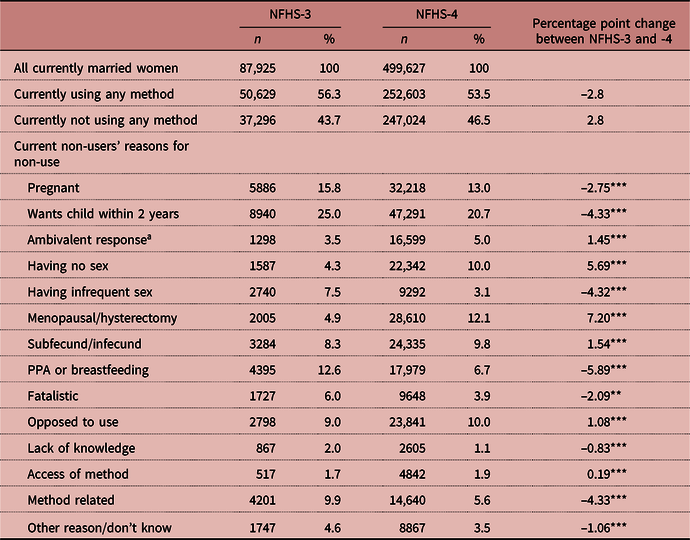
Overall contraceptive use declined by 2.8 percentage points between the two survey rounds, from 56.3% in 2005–06 to 53.5% in 2015–16 (Table 1), and modern contraceptive use remained stagnant at around 48%. Among women who were not using contraception in 2015–16, a fifth wanted to have a child in the next 2 years (20.7%) and 13% were pregnant. Fertility-related reasons for non-use declined significantly by 7.1 percentage points, from 40.8% in 2005–06 to 33.7% in 2015–16. At the same time, ‘menopausal or hysterectomy’ was the most cited reason for non-use (12.1%), followed by ‘not having sex’ (10%) and ‘opposition to use’ (10%). Opposition to use as a reason remained largely the same between the two rounds of the NFHS. On the other hand, postpartum amenorrhoea or breastfeeding (13% and 7%), lack of knowledge (2% and 1%) and method-related reasons (10% and 6%) dropped between the two survey rounds.
Percentage of currently married women aged 15–49 by current use and non-use of contraceptives and reasons for non-use

a Undecided or non-numeric response or don’t know to question on ‘desire for next child’.
PPA: postpartum amenorrhoea.
*** Difference significant at p < 0.01 using logistic regression by taking time dummy as independent variable.
Sum of all reasons is not 100% due to multiple responses (115% in NFHS-3 and 106% in NFHS-4).
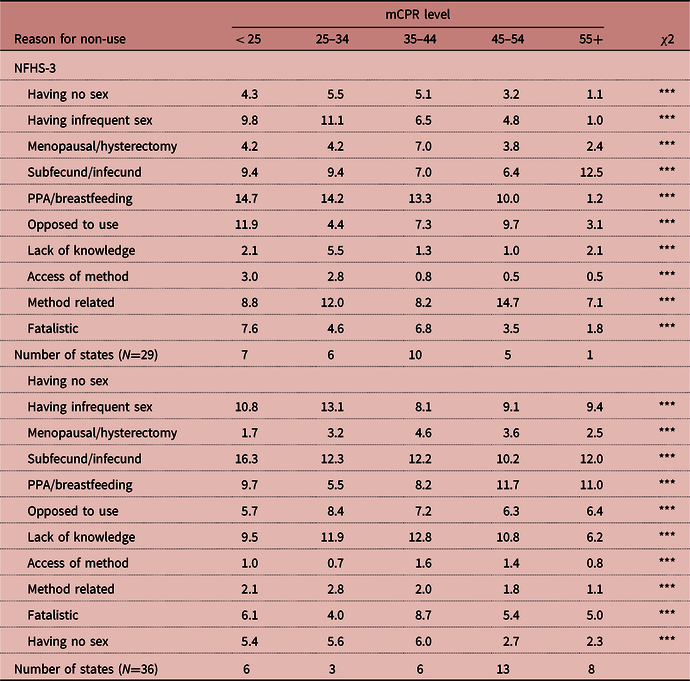
The most common reason for non-use among states with moderate or lower levels of mCPR (Table 2) were ‘not having sex’ and ‘menopausal or hysterectomy’. Increase in the reporting of ‘menopausal or hysterectomy’ was more prominent in states with a mCPR below 35%. In contrast, reporting of ‘subfecund or infecund’ was higher (13% in 2005 and 11% in 2016) in states with more than 55% contraception use. Furthermore, during 2005–06 method-related reasons were higher (12 and 9%, respectively) among women from the states with moderate (25–34%) and lower level (below 25%) mCPR. In 2005–06, there were bigger differences between low-mCPR and high-mCPR settings in the reporting of opposition (12% and 3%) and fatalism (8% and 2%) that were not common in 2015–16. The reporting of opposition-related reasons as non-use of contraception fell slightly, from 12% to 9% in the states with low mCPR, but doubled in the states with the highest mCPR.
Percentage of women by mCPR levels of states by reasons for non-use of contraceptives

*** p < 0.001.
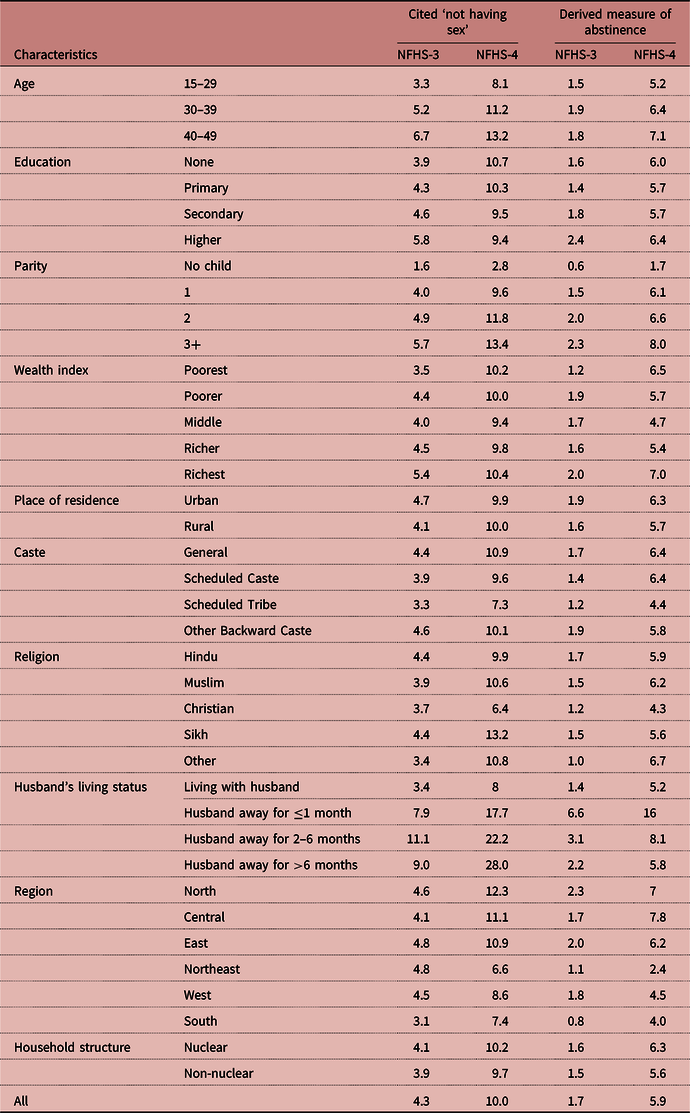
Self-reported abstinence and abstinence as indicated by the DMA increased from 4.3% to 10% and 1.7% to 5.9%, respectively between 2005–06 and 2015–16 (Table 3). Higher levels of abstinence as indicated by DMA were found among older women aged 40–49 (7%), those with no education (6%), those who had 3 and more children (8%) and among women belonging to richer households (7%) and nuclear households (6%).
Percentage of non-users who cited ‘not having sex’ as a reason for non-use and reported derived measure of abstinence by background characteristics

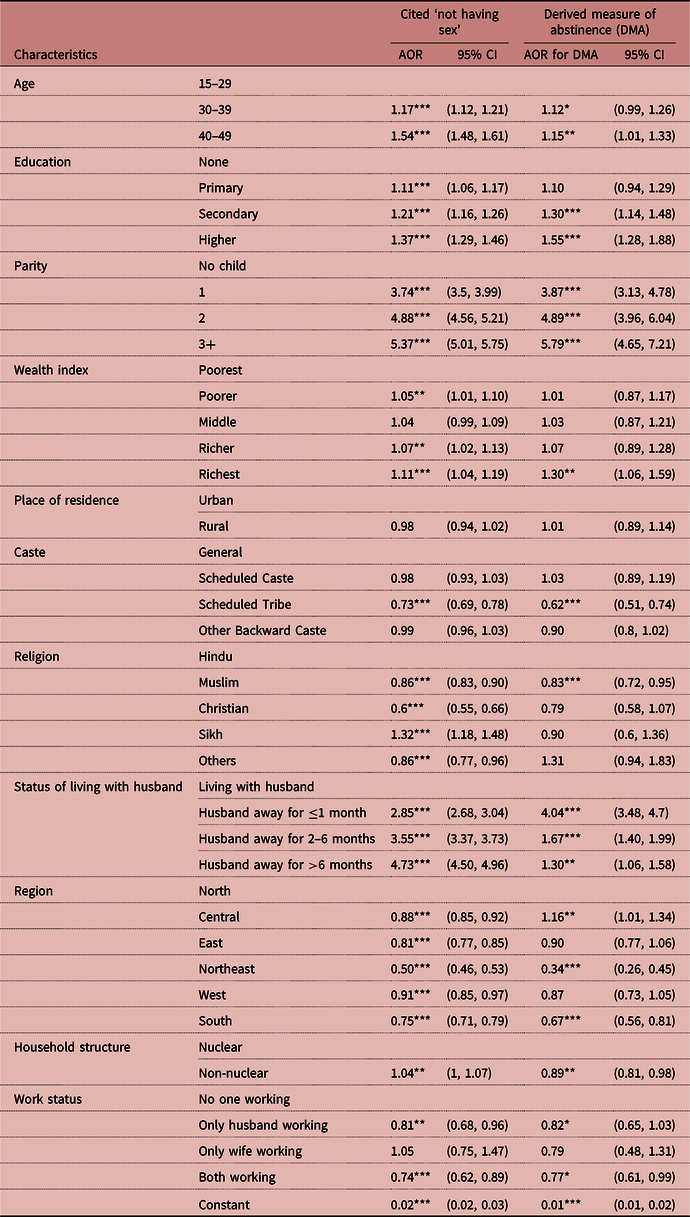
The results of the multivariate logistic regression analyses in Table 4 show that reported abstinence as a reason for non-use was higher among older women aged 40–49 years (Adjusted odds ratio [AOR]: 1.54, 95% CI: 1.48, 1.61) compared with younger ones who had 3 or more children (AOR: 5.37, 95% CI: 5.01, 5.75), and increased with the level of education and income. The odds of abstinence were higher for women with higher education (AOR for self-reported abstinence: 1.37, 95% CI: 1.29, 1.46; AOR for DMA:1.55, 95% CI: 1.28, 1.88) and from the richest families (AOR for self-reported abstinence: 1.11, 95% CI: 1.04, 1.19, AOR for DMA 1.30, 95% CI: 1.06, 1.59). In comparison to women from the North region of India, all others had lower odds of reporting this reason; while women from the Central region (AOR: 1.16, 95% CI: 1.01, 1.34) had higher odds of abstinence. Women living in non-nuclear families had lower odds of being abstainers (AOR: 0.89, 95% CI: 0.81, 0.98) as indicated by DMA.
Odds ratio (95% CI) of currently married women who cited ‘not having sex’ as a reason for non-use of contraceptives and reported derived measure of abstinence

*p < 0.1; **p < 0.05; ***p < 0.01.
AOR: Adjusted odds ratio – the logistic regression model controlled for other characteristics included in the table.
CI: Confidence Interval.
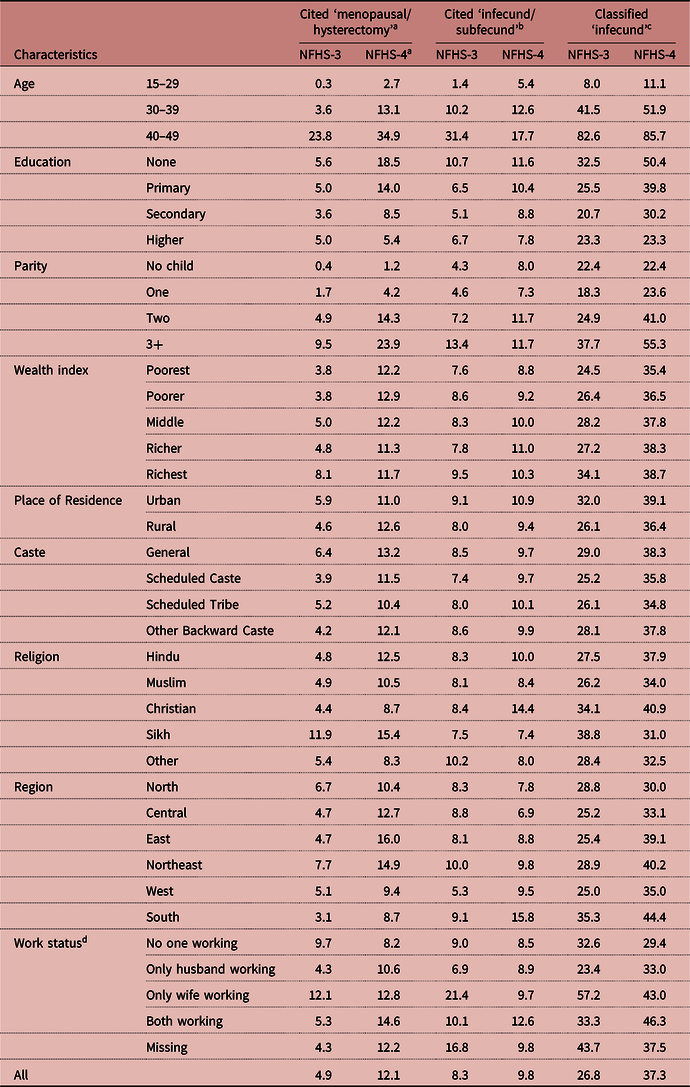
Overall, women who cited ‘menopause or hysterectomy’ increased by about two-fold, and ‘infecund/subfecund’ by 1.5% from 2005 to 2015. Levels of infecundity (including subfecund, menopause and hysterectomy) among non-users increased over the period with women’s age, parity and household level of affluence, but reduced with education (Table 5). It had become more prevalent in urban areas (11%), General Castes (10%), Christians (14%), the Northeast region (10%) and among working couples (13%). The highest increase in menopause or hysterectomy was among older women (24–35%), those who had 3 or more children (10–24%), those from a poor family (4–12%) and from the Northeast region (8–15%). On the other hand, reporting of infecundity and subfecundity increased, with higher rates among young women (1.4–5.4%), those who had lower education (11–12%), those with no or 2 children (4–8%), Christians (8–14%) and those living in the South region (9–16%).
Percentage of non-using currently married women who cited ‘menopause/ hysterectomy’ and ‘infecund/subfecund’ as reasons for non-use and who were classified infecund, by background characteristics

a In NFHS-4, reason for non-use was not asked of those women who had had hysterectomies or reported while responding to time since menstruation returned, so they were included in this category.
b Also includes women who said ‘declared infecund’ in response to preference for next child.
c Classified by the DHS in definition of unmet need.
d Information on employment was collected in the state modules sample; a separate category was created for missing data.
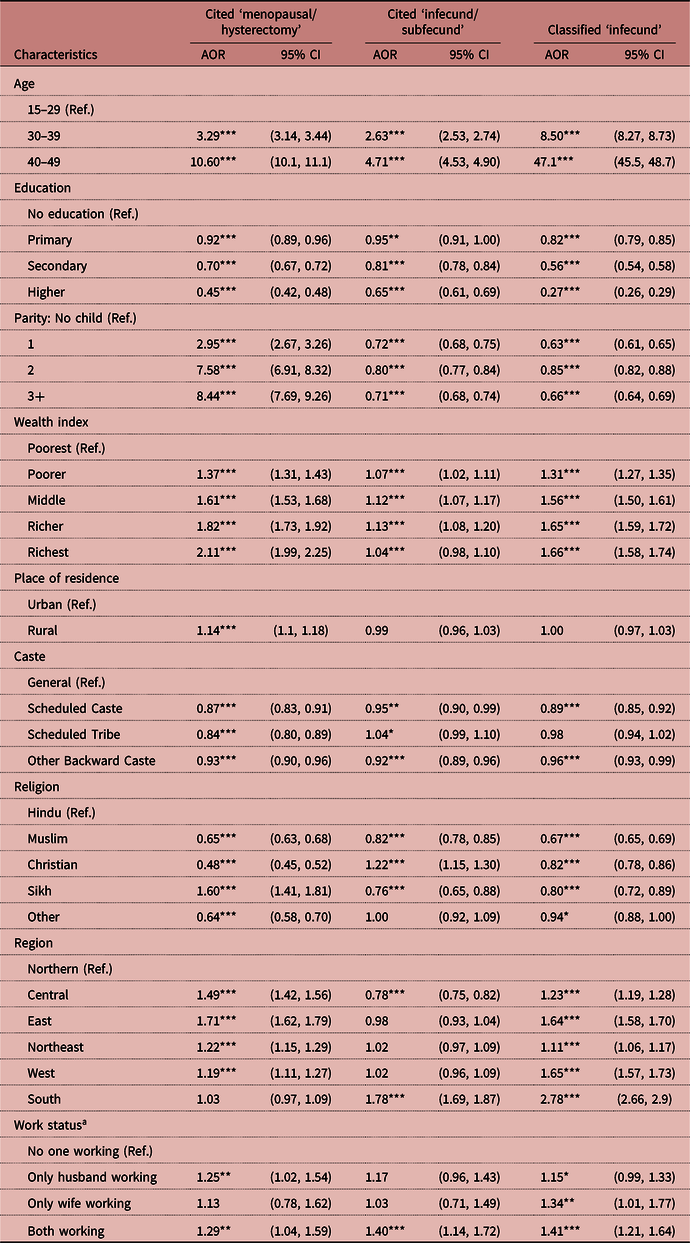
Results from the multivariate logistic regression analyses of NFHS-4 data showed that older women (AOR: 47.1, 95% CI: 45.5, 48.7) were more likely to report infecundity as a reason for non-use than younger women (Table 6). Women with higher education had significantly lower odds (AOR: 0.45, 95% CI: 0.42, 0.48) of reporting infecundity compared with those with no education. Women’s risk of reporting ‘menopause or hysterectomy’ increased with their parity and the economic status of the household; however, infecundity reduced with number of children, and increased with household income. Women in first (AOR: 2.95, 95% CI: 2.67, 3.26), second (AOR: 7.58, 95% CI: 6.91, 8.32) and 3+ (AOR: 8.44, 95% CI: 7.69, 9.26) parity reported higher odds of citing ‘menopause or hysterectomy’ compared with women with no child(ren). Women belonging to poorer (AOR: 1.37, 95% CI: 1.31, 1.43), middle (AOR: 1.61, 95% CI: 1.53, 1.68), richer (AOR: 1.82, 95% CI: 1.73, 1.92) and richest (AOR: 2.11, 95% CI: 1.99, 2.25) wealth quintiles had higher odds of reporting ‘menopause or hysterectomy’ than poorest women. In comparison to the General Caste and Hindu religion, women from all other castes and the Sikh religion (AOR: 1.6, 95% CI: 1.41, 1.81) were more likely to report ‘menopause or hysterectomy’. Women from all other regions were more likely to report infecundity than those from the North region.
Odds ratios (95% CI) of currently married women who cited ‘infecund’ as a reason for non-use of contraceptives and who reported infecundity, NFHS-4

a Information on employment was collected in state modules sample, a separate category was created for missing data.
*p < 0.1; **p < 0.05; ***p < 0.01.
AOR: Adjusted odds ratio – the logistic regression model controlled for other characteristics included in the table.
CI: Confidence Interval.
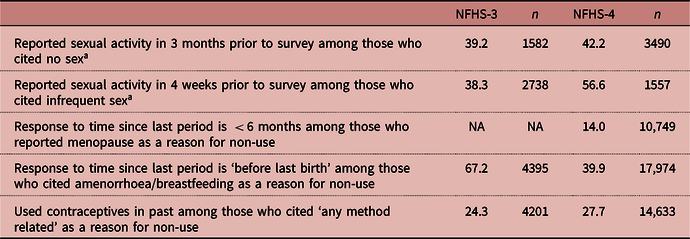
Among women who cited ‘no sex’ as a reason for non-use of contraception, nearly 42% reported sexual activity in the 3 months prior to the survey (Table 7). Similarly, among those women who cited ‘infrequent sex’, around 56.6% reported sexual activity within the 4 weeks prior to the survey. Furthermore, among those who cited menopause as a reason for non-use, only around 14% reported ‘less than 6 months’ when asked ‘time since last period returned’.
Percentage of currently married women who reported sexual activity, time since menstruation and contraceptive use in past according to their reported reasons for non-use

a Based on subsample for state modules.
Discussion
The stagnation or slight decline in overall modern contraception use, and its contradiction with the decline in unmet need and TFR in India, raises several questions, prompting the in-depth analysis of the reasons for non-use of contraceptives carried out in this study. ‘Menopause or hysterectomy’, followed by ‘abstinence’ and ‘opposition to use’ were the reasons most cited by non-users. The highest increase during the inter-survey period 2005 to 2015 were noted for ‘menopause or hysterectomy’, followed by ‘not having sex’ and ‘subfecund or infecund’. The increase in ‘menopause or hysterectomy’ as a reason for non-use could have been influenced by the addition of a new question (for the first time in NFHS-4), letting investigators probe further on hysterectomy. Furthermore, there is a possibility that female sterlization might have been misclassified as hysterectomy in NFHS-4. An approximate one percentage point decline in female sterilization between 2005 and 2015 further supports this possibility of misclassification (IIPS & ICF, 2017).
On the other hand, the share of non-users who cited postpartum amenorrhoea, breastfeeding, infrequent sex and method-related reasons among all non-users had declined over time. These findings clearly reflect the positive impact of family planning programmes in reducing method-related barriers, and increasing postpartum contraception use. The recent commitment of the Government of India to provide modern contraception to an additional 48 million women is implemented through Family Planning 2020 (FP2020) (Government of India, 2014). According to Jain and Winfrey (Reference Jain and Winfrey2017) and Sanogo et al. (Reference Sanogo, RamaRao, Jones, N’diaye, M’bow and Diop2003), a wider choice of contraceptive methods, an increase in the number of people receiving contraceptive services and maintenance of quality of care is critical to the use of contraception. Mozumdar et al. (Reference Mozumdar, Gautam, Gautam, Dey, Saith and Achyut2019) showed that information received on the side-effects of a selected method and facility readiness to provide a range of contraceptive choice were significantly associated with receipt of method choice.
The reporting of ‘menopausal or hysterectomy’ and ‘not having sex’ has been more prominent in the states with low or moderate levels of mCPR (Casterline et al., Reference Casterline, Perez and Biddlecom1997; El-Zanaty et al., Reference El-Zanaty, Way, Kishor and Casterline1999), and higher reported subfecundity or infecundity was observed in the states with a high level of mCPR. Similar findings have been reported in other countries, where method-related reasons and infrequent sex were found to be higher among women from settings with low levels of contraceptive use (Sedgh & Hussain, Reference Sedgh and Hussain2014; Machiyama et al., Reference Machiyama, Casterline, Mumah, Huda, Obare and Odwe2017). The migration/mobility status of the husband emerged as the most prominent factor for reporting abstinence as a reason for non-use. In the NFHS-4, increase in those who cited ‘not having sex’ as their reason was noted as the length of separation increased – from 8% with no separation (living with husband) to 28% for absences of more than 6 months. On the other hand, the rise in the derived measure of abstinence was irregular and smaller, but this may reflect occasional sexual intercourse when the husband made a home visit. Whether or not contraceptive precautions were used on these occasions, a woman living away from her husband most of the time was likely to define herself as a non-user – unless sterilized. Increase in temporary/seasonal migration/mobility in South Asian countries, including India, has been documented (Deshingkar & Farrington, Reference Deshingkar, Farrington, Deshingkar and Farrington2009; Kulkarni, Reference Kulkarni2015). However, due to limited information on migration and mobility, for example frequency of visits back home, sexual activity when the husband was on a visit to home, this study could not draw more insights in this regard. This study’s findings suggest that ‘menopause or hysterectomy’ as a cited reason is more common among older women, those with higher parity and among poor families.
This study found that the inconsistency between women’s cited reason ‘abstinence’ and their reported sexual activity in the months prior to the survey was similar to the findings in other developing countries (Sedgh & Hussain, Reference Sedgh and Hussain2014). The survey question on current use of contraceptive methods does not pertain to any specified reference period; therefore, the cited reason of ‘abstinence’ may not be consistent with the reported sexual activity in the months preceding the survey.
Although the findings of this study offer important insights into the programme, it had certain limitations. Firstly, the anomaly between the related measures – e.g. sexual activity and self-report of abstinence – could be interpreted as women not perceiving the risk of pregnancy within their sexual experiences (or) be a result of the investigator’s bias for marking non-use of contraception and quoting abstinence as a reason for non-use. The data from the NFHS limit the ability to examine this issue fully. Future research may examine the anomalies identified in the data on reasons for non-use of contraception. Secondly, the study largely relied on the self-reported responses to reasons for non-use of contraception, which also increased the risk of social desirability, and in part may explain the differences between the inter-survey period. The sample size in the recent round of the NFHS was more than six times greater than previous rounds of the survey, raising questions about the quality of data received from study participants and the questions asked by field investigators. Thirdly, there may have been recall bias and/or a lack of understanding of particular questions on sterilization, hysterectomy and sexual activity. To reduce these recall and personal biases, the NFHS could devise methodologies to ask questions in a particular format in the future.
In conclusion, the present results show that abstinence and infecundity are the emerging reasons for non-use of contraceptive methods in India. A higher reporting of abstinence and menopause/hysterectomy among less-educated women, and in states with low levels of mCPR, are perhaps a cause of concern from a research and programmatic perspective. There is a need for programmes to examine these issues within geographies with low levels of contraceptive use. Furthermore, women’s survey responses were inconsistent when examined for internal consistency. From the perspective of survey research, it is important to find ways to address these inconsistencies in responses, which might partially be associated with lower quality of data. From a programmatic perspective, it is important to reach out to the substantial proportion of women who cite ‘no sex’, ‘infrequent sex’, ‘postpartum amenorrhoea’ or ‘breastfeeding’ as reasons for non-use of contraceptives, as they would benefit from counselling on risk of pregnancy and sexually transmitted infections (STIs), and the methods that are appropriate for their circumstances.
Acknowledgments
The authors wish to acknowledge Prof. K. Srinivasan for his insightful comments during the RASTA workshop.
Funding
This paper was prepared as part of a mentorship programme under the RASTA initiative of the Evidence Project, Population Council. The Evidence Project is made possible by the generous support of the United States Agency for International Development (USAID) under the terms of cooperative agreement No. AID-OAA-A-13-00087. The contents of this paper are the sole responsibility of the authors and do not necessarily reflect the views of USAID, the United States Government or the Population Council.
Conflicts of Interest
The authors have no conflicts of interest to declare.
Ethical Approval
The authors assert that all procedures contributing to this work comply with the ethical standards of the National Family Health Survey-4, conducted under the scientific and administrative supervision of the International Institute for Population Sciences (IIPS), Mumbai, India. The IIPS conducted an independent ethical review of the NFHS protocols. The IIPS is under the administration of the Ministry of Health and Family Welfare (MoHFW), Government of India.