Introduction
The assessment and treatment of Posttraumatic Stress Disorder (PTSD) across the lifespan has received relatively little attention in the literature compared with other psychological disorders, such as depression. Moreover, little is known about age differences in the clinical presentation of PTSD among veterans seeking mental health services. A recurring theme in the assessment literature with older adults is the potential for health issues to influence scores on mental health measures, including the assessment of PTSD symptoms (Van Zeist and Beekman, Reference Van Zelst, Beekman, Beck and Sloane2012). The purposes of this study are: first, to investigate age differences in the clinical presentation of PTSD and its three symptom clusters among Canadian veterans seeking mental health services, and second, to assess age and health as predictors of PTSD symptomatology.
Age differences in PTSD
Although previous studies have compared veterans from different military engagements (e.g. Fontana and Rosenheck, Reference Fontana and Rosenheck1994), only one study has had, as its primary objective, the investigation of age differences in PTSD and other mental health disorders among veterans. Frueh et al. (Reference Frueh, Grubaugh, Acierno, Elhai, Cain and Magruder2007) conducted a cross-sectional, epidemiological study of age differences in PTSD and other psychiatric disorders among 745 veterans in US Veterans Affairs primary care clinics. Participants were assessed for trauma, intensity, and frequency of PTSD symptoms, and other Diagnostic and Statistical Manual of Mental Disorders: Fourth Edition, Text Revision (DSM-IV-TR) Axis I disorders. These data were supplemented with chart reviews of the previous 12 months, noting medical and psychiatric diagnoses and VA healthcare utilization. Results indicated that veterans 65 years and older (n = 284) had lower rates of PTSD than those in the 45–64-year age group (n = 323), at 6.3% and 18.6% respectively. Rates in the youngest group (18–44 years, n = 60) were 13.3%. Interestingly, there were no significant age differences in physical health functioning. However, the 62% response rate in this study raises the issue of sampling bias. In particular, the lack of age differences in physical health status may, in part, reflect lower rates of participation among frail elderly.
Age differences in PTSD symptom clusters
The DSM-IV-TR diagnostic criteria identify three symptom clusters in PTSD: avoidance, re-experiencing, and hyperarousal (American Psychiatric Association, 1994). To date these factors have not been investigated among different age groups. However, the clinical presentation of PTSD has some unique age-related features and it is quite possible that these may be reflected in age differences in symptom clusters (Lapp et al., Reference Lapp, Agbokou and Ferreri2011).
For example, avoidance and re-experiencing may be less prominent features of PTSD among older adults. Suppressing thoughts and reminders of war-related trauma may not be as salient an issue, given the passage of time and fading memories of these events. It has been suggested that the recency of the traumatic event may influence appraisal and recall of the event (Pietrzak et al., Reference Pietrzak, Goldstein, Southwick and Grant2012). Furthermore, research on autobiographical memory provides evidence for over general memory and the fading effect bias in which, with the passage of time, negative events are remembered with less specificity and are less likely to evoke negative emotions (Williams et al., Reference Williams2007). This may be related to the finding that some older veterans construe their difficult wartime experiences in a positive light, noting the good that came from adversity and their increased sense of self-efficacy as a result of their experiences (Davison et al., Reference Davison2006).
On the other hand, late-onset PTSD and late-onset stress symptomatology (LOSS) may result in higher scores on the re-experiencing cluster among older adults. In late-onset PTSD, older adults begin to re-experience PTSD symptoms or an exacerbation of PTSD symptoms (Spiro et al., Reference Spiro, Schnurr and Aldwin1994). Although the mechanism involved is unclear, it has been suggested that negative life events such as ill health or loss reactivate feelings associated with earlier traumas (Molinari and Williams, Reference Molinari and Williams1995). Re-experiencing may also be related to late-life developmental processes such as reminiscence or life review, whereby traumatic memories are remembered and processed (Erikson, Reference Erikson1982). Relatedly, LOSS is a phenomenon that involves “combat-related thoughts, feelings, reminiscences, memories, or symptoms” which have been dormant but re-occur many years after combat experiences (Davison et al., Reference Davison2006, p. 87). In contrast to delayed-onset PTSD, the major features of LOSS are reminiscence with the possibility of distress and sleep disturbance; however, there is typically an absence of the avoidance and emotional numbing that is typical of PTSD (King et al., Reference King, King, Vickers, Davison and Spiro III2007).
The hyperarousal cluster may be influenced by the tendency of older trauma survivors to express their distress in somatic symptoms (van Zelst and Beekman, Reference Van Zelst, Beekman, Beck and Sloane2012). This cluster includes sleep disturbance, a symptom that is related to many chronic health conditions and to an increase in the overall shorter duration and poorer quality of sleep that occurs with age (Maglione and Ancoli-Israel, Reference Maglione, Ancoli-Israel, Morin and Esple2012). This cluster also includes the symptom of irritability or aggressive behavior. Among veterans in long-term care, the most commonly reported PTSD symptom was anger or irritability, with 47% of residents endorsing this symptom, and 22% and 9% reporting moderate or severe levels respectively (Carlson et al., Reference Carlson, Lauderdale, Hawkins and Sheikh2008). Collateral ratings from staff confirmed the presence of irritability, anger, or aggression in 28% of residents, at moderate (19%) or severe (9%) levels.
PTSD and physical health
Posttraumatic stress disorder is highly comorbid with physical health conditions and pain, particularly among veterans who are experiencing a difficult transition to civilian life (Thompson et al., Reference Thompson2011). A recent survey of 1,072 Canadian New Veterans Charter clients (a program designed to assist injured and ill veterans through benefits and services) found that 42.5% had PTSD, 90.7% had at least one physical health problem (most often musculoskeletal), and 80.3% reported that pain or discomfort were always present (Thompson et al., Reference Thompson2011). Participation and activity limitations were reported by 95.3% of clients.
Similar findings were reported by Durai et al. (Reference Durai2011) using screening data from the primary care research in the Substance Abuse and Mental Health in the Elderly (PRISM-E) study. Older veterans in primary care were divided into those with partial PTSD (symptoms from one or two symptom clusters, n = 1,813) and those with PTSD (symptoms from all three clusters, n = 228). Of those with partial PTSD, 56.9% reported poor general health, while for those with “all cluster” PTSD, the percentage was much higher at 73.3%. These health issues in addition to high rates of comorbidity with other mental health problems (e.g. other anxiety disorders, depression, substance use disorders) result in PTSD clients with a diverse and complex range of physical and mental health problems. Older adults typically have more chronic health conditions and pain, and both have been shown to be positively related to the severity of PTSD symptoms (Beckman et al., Reference Beckman, Moore, Feldman, Hertzberg, Kirby and Fairbank1998; van Zelst et al., Reference Van Zelst, de Beurs, Beekman, van Dyck and Deeg2006; Otis et al., Reference Otis, Gregor, Hardway, Morrison, Scioli and Sanderson2010).
Thus, the first goal of this study was to investigate age differences in PTSD and its three symptom clusters. Previous studies have not addressed age differences in symptom clusters, and Frueh et al. (Reference Frueh, Grubaugh, Acierno, Elhai, Cain and Magruder2007) assessed a primary care sample. In contrast, this study examined age differences in veterans seeking specialized mental health services, a group that is expected to have more severe mental health problems. It was hypothesized that older adults would have lower scores on total PTSD symptoms. Given the absence of previous data, no specific hypotheses were made regarding age differences on symptom clusters. The second goal of this research was to examine age, health-related quality of life, pain, and number of chronic illnesses as predictors of PTSD symptom severity. It was hypothesized that health indices would account for incremental variance in the prediction of PTSD symptoms, both overall and on each of the symptom clusters, above that which was accounted for by age alone.
Methods
Participants and procedure
Participants were 104 male veterans undergoing an initial, interdisciplinary assessment at an outpatient clinic providing specialized mental healthcare to veterans from WWII, the Korean engagement, and other missions (e.g. Rwanda, Bosnia, and Afghanistan). All were English speaking. The intake interview assessed demographic information, military history, presenting problems, and mental health history. This was followed by an extensive assessment by a psychologist or psychiatrist, including measures of PTSD, health-related quality of life, pain severity, and number of chronic illnesses. This study was approved by the University Conjoint Faculties Research Ethics Board.
Measures
Posttraumatic stress symptoms
The Detailed Assessment of Posttraumatic Stress (DAPS) is a 104-item self-report measure based on a five-point scale; higher scores indicate more severe symptoms (Briere, Reference Briere2001). The DAPS has an internal consistency of 0.83 and convergent validity of 0.73 with the PTSD Checklist and 0.78 with the Clinician-Administered PTSD Scale (McFall et al., Reference McFall, Smith, Roszell, Tarver and Malas1990). When compared with the Clinician-Administered PTSD Scale for diagnostic utility, it yielded a sensitivity of 0.88 and a specificity of 0.86 (McFall et al., Reference McFall, Smith, Roszell, Tarver and Malas1990). There are two validity and 11 clinical subscales on DAPS, including avoidance, re-experiencing, and hyperarousal, with internal consistencies of 0.95, 0.92, and 0.94 respectively in a clinical/community sample (Briere, Reference Briere2001).
Health-related quality of life
The World Health Organization Quality of Life – Brief Version (WHOQOL-BREF) consists of seven items scored on a Likert scale from 1 to 5, where higher scores indicate better subjective health (WHOQOL Group, 1998; Skevington et al., Reference Skevington, Lofty and O’Connell2004). The α coefficient was reported to be 0.82 (Skevington et al., Reference Skevington, Lofty and O’Connell2004).
Pain severity
The Brief Pain Inventory (BPI) comprises four items rated from 0 (no pain) to 10 (pain as bad as you can imagine) (Cleeland, Reference Cleeland, Chapman and Loeser1989). Higher scores indicate greater pain severity.
Chronic health conditions
These were assessed by the number of DSM-IV-TR Axis III (American Psychiatric Association, 1994) conditions reported by the participants.
Data analyses
Internal consistency estimates (α coefficients) were calculated for all measures. Analyses of variance (ANOVAS) with Scheffé post hoc tests of significance were used to assess differences in PTSD and health across four age groups: 22–35 years (n = 19, 18%), 36–45 years (n = 38, 36%), 46–64 years (n = 34, 33%), and 65–87 years (n = 13, 13%). Family-wise error rates were set at 0.05. Hierarchical regression was used to assess the incremental contributions of health variables to PTSD severity once age factor was controlled. Four separate regressions were conducted for the total DAPS and the three subscales, avoidance, re-experiencing, and hyperarousal. In all regressions, age was entered in the first step and health variables (WHOQOL-BREF: physical health, pain severity, and number of chronic health conditions) were entered in the second step. Effect sizes were estimated using Cohen's f 2 (Cohen, Reference Cohen1992).
Results
Sample characteristics
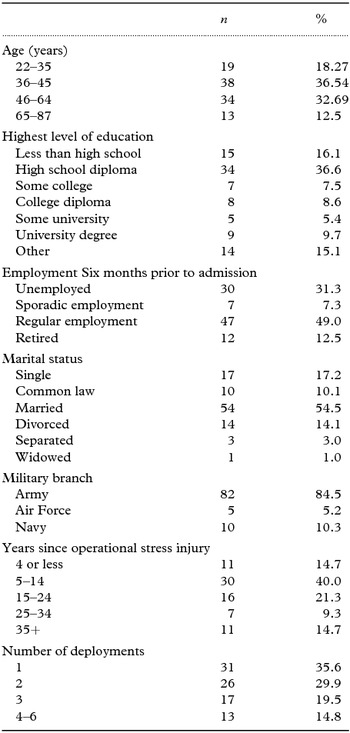
Table 1 presents demographic and military characteristics of the sample. Mean age was 47.13 years (SD = 14.70, range = 22–87 years). As indicated in Table 1, most participants were between the age of 36 and 64 years (69.2%), had at least a high school education (82.9%), were engaged in regular employment (49.0%) or unemployed (31.3%), and were married (54.5%). The majority of veterans had served in the army (84.5%). Participants were deployed an average of 2.26 times (SD = 1.34) and 45% had received a medical release. All veterans in this sample experienced an operational stress injury related to service, most often 5 to 14 (40.0%) or 15 to 24 (21.3%) years ago. Number of chronic conditions identified on Axis III ranged from 1 to 12 with a mean of 3.30 (SD = 2.42).
Demographic and military characteristics of participants (N = 104)

Note: Percentages may not total 100% due to rounding error.
Internal consistency of measures
Internal consistency estimates (Cronbach's α) for the DAPS and its subscales were excellent, according to Cicchetti's (Reference Cicchetti1994) guidelines, at 0.95 (total score), 0.93 (re-experiencing), 0.90 (avoidance), and 0.90 (hyperarousal). Similarly, internal consistency estimates were excellent for the BPI (0.94) and good for the WHOQOL-BREF (0.84).
ANOVA analyses
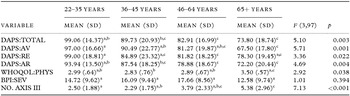
Table 2 summarizes the mean values and standard deviations for PTSD and health variables and the one-way ANOVAS assessing age differences. Older adults had significantly lower severity on total PTSD and the three symptom clusters. Sheffé post hoc analyses indicated that the locus of significant differences was most often between the youngest group (22–35 years) and the two oldest groups (46–64 and 65–87 years). There were no significant age differences on pain severity; however, older adults reported better health-related quality of life and more chronic health conditions.
Age differences on PTSD and health measures

Notes: DAPS = Detailed Assessment of Posttraumatic Stress; DAPS:AV = DAPS Avoidance; DAPS:RE = DAPS Re-experiencing; DAPS:AR = DAPS Hyperarousal; WHOQOL:PHYS = WHOQOL-Bref:Physical Health; BPI:SEV = Brief Pain Inventory:Severity; NO. AXIS III = Number of DSM-IV-TR Axis III disorders.
Means values not sharing a common superscript (i.e. a,b,c) within a given variable are significantly different (Scheffé, p < 0.05).
Hierarchical regression analyses
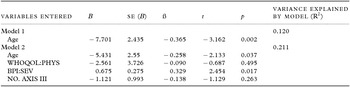
Table 3 summarizes the results of the hierarchical regression analyses with total DAPS as the dependent variable. Age explained 12.0% of variance in PTSD severity. When health variables were entered in the second step, the explained variance increased to 21.1%. The change in R2 was significant (F-change (4, 62) = 5.403, p = 0.001). Of the health variables, pain severity was the only significant β coefficient (p = 0.017). Three additional hierarchical regression analyses were performed with the DAPS subscales. For avoidance, age explained 17.7% of the variance, increasing to 25.2% when health variables were included. The change in R2 was significant (F-change (4, 62) = 6.555 p = 0.000). For re-experiencing, age explained 6.1% of the variance, increasing to 13.9% when health variables were included. The change in R2 was significant (F-change (4, 62) = 3.669, p = 0.010). For hyperarousal, age explained 7.5% of the variance, increasing to 14.5% when health variables were included. The change in R2 was significant (F-change (4, 62) = 3.801, p = 0.008). For the DAPS subscales, pain severity was the only significant β coefficient for re-experiencing (p = 0.010), avoidance (p = 0.047), and hyperarousal (p = 0.053). Variance tolerance tests indicated that multicollinearity was not a problem in the analyses. Effect sizes ranged from 0.22 to 0.35, placing them in the medium (0.15) to large (0.35) range, as per Cohen's (Reference Cohen1992) criteria.
Hierarchical regression predicting PTSD symptom severity (DAPS)

Note: DAPS = Detailed Assessment of Posttraumatic Stress; WHOQOL:PHYS = WHOQOL-Bref: Physical Health; BPI:SEV = Brief Pain Inventory:Severity; NO. AXIS III = Number of DSM-IV-TR Axis III disorders.
Discussion
The results of this study clearly suggest that, among veterans seeking specialized mental healthcare, older adults report less severe symptoms in both total and symptom clusters. Interestingly, although older veterans in this sample reported significantly more chronic illnesses, there were no significant age differences in ratings of pain severity and older adults had better health-related quality of life.
Why is it that older veterans report fewer PTSD symptoms? First, as noted by Frueh et al. (Reference Frueh, Grubaugh, Acierno, Elhai, Cain and Magruder2007), older veterans with more severe mental health problems may not survive until old age, resulting in a mortality effect. Trauma associated with elder abuse and neglect has been associated with higher rates of mortality over a 13-year interval (Lachs et al., Reference Lachs, Williams, O’Brien, Pillemer and Charlson1998).
Second, older adults report less negative affect and are less likely to exhibit a negative attentional bias relative to younger age groups (Spaniol et al., Reference Spaniol, Voss and Grady2008). These age differences in the experience and processing of emotional information may influence self-reports of PTSD symptoms. Support for this was found on the DAPS's positive bias validity scale, which was significantly and positively correlated with age (p < 0.001). This suggests a pattern of PTSD symptom under endorsement among older adults. In general, older adults report their symptoms of anxiety and depression less accurately and may not label events as traumatic (Cook, Reference Cook2002; Wetherall et al., Reference Wetherall2009).
Third, the recency of the event and the fading affect bias may influence appraisal and recall (Williams et al., Reference Williams2007; Pietrzak et al., Reference Pietrzak, Goldstein, Southwick and Grant2012). These processes suggest that more distal events are rated as less severe and that, with the passage of time, negative events are remembered with less specificity and are less likely to evoke negative emotions. In addition, there is evidence that older veterans view their combat experiences as having both negative and positive consequences. For example, focus group data with older veterans emphasized the sense of self-efficacy that accrued from difficult wartime experiences and the sense of meaning that can arise from adversity (Davison et al., Reference Davison2006). Maturation and the life review processes may give rise to new, more positive appraisals of wartime experiences.
Fourth, it may be that the PTSD diagnostic criteria conceptually do not map well onto the experiences of older adults. In general, very little is known about PTSD among older adults, in particular, the meaning and subjective experiences of the three symptom clusters. As a result, existing measures of PTSD symptoms may not accurately reflect the experiences of older veterans. For example, the avoidance cluster focuses on the processes of avoiding thoughts and reminders of the trauma and a sense of a foreshortened future. However, qualitative data would suggest that some older veterans are actively engaged in processing these memories, perhaps, in part, due to the life-span developmental processes of life review and reminiscence (Davison et al., Reference Davison2006). Moreover, the diagnostic criterion, sense of a foreshortened future, may have little relevance for older veterans, having already experienced the developmental milestones cited in the criteria and, simply by virtue of their advanced age, have a foreshortened future.
Health variables accounted for significantly more variance in PTSD symptoms over and above age alone, with pain severity being the most important predictor. In this study, age was defined chronologically; however there is evidence that subjective age may be an even stronger predictor (Solomon et al., Reference Solomon, Helvitz and Zerach2009). Pain and PTSD are frequently comorbid among veterans and a number of theoretical models have been proposed to account for this pattern of comorbidity (Otis et al., Reference Otis, Gregor, Hardway, Morrison, Scioli and Sanderson2010). For example, Sharp and Harvey (Reference Sharp and Harvey2001) describe the cognitive, affective, and behavioral factors by which PTSD and chronic pain are mutually maintained, including general anxiety, depression (specifically negative attentional biases, fatigue, and lethargy), and reduced adaptive coping due to the cognitive demands of PTSD and pain symptoms.
The results of this study reinforce the importance of assessing pain severity among those seeking treatment for PTSD. While this may be a routine practice in clinics specializing in the assessment and treatment of veterans and others who have experienced trauma, many adults are treated in primary care clinics or by general practitioners without specialized expertise in pain and PTSD. This is particularly true for older adults who are less likely to receive outpatient mental health treatment compared with their younger counterparts (Karlin et al., Reference Karlin, Duffy and Gleaves2008). In addition, interoceptive exposure, the treatment of choice for reducing anxiety sensitivity may not be as efficacious among clients with pain, although this has yet to be investigated (Asmundson and Taylor, Reference Asmundson, Taylor, Young, Kane and Nicholson2006).
Limitations of the study
This study has several limitations. First, these data are cross-sectional and confound age and cohort influences. It is often suggested that older adults are more likely to face their difficulties with self-reliance and stoicism. This may be particularly true of older veterans who trained and served at a time when mental health problems were associated with greater stigma within military culture (Settersten, Reference Settersten2006). An additional cohort influence is the difference in military venues and potentially the type of combat exposure. Older participants in this study were deployed primarily in central Europe and South Korea, while younger veterans were most often deployed in the Middle East, Eastern Europe, Africa, and Southeast Asia. Unfortunately, this study did not collect detailed data on combat exposure. Brooks and Fulton (Reference Brooks and Fulton2010) reported that elderly American veterans of the Korean War had poorer mental health status than those who served elsewhere. Longitudinal data from Vietnam veterans in the United States indicated that community attitudes at home toward the military engagement and high combat exposure predicted a more chronic course of PTSD (Koenen et al., Reference Koenen, Stellman, Stellman and Sommer2003). Moreover, Australian veterans of the Korean War with severe combat exposure were more likely to have comorbid PTSD and depression versus PTSD alone (Ikin et al., Reference Ikin, Creamer, Sim and McKenzie2010). Thus, the age differences observed in this study may be related to other factors, such as where participants were deployed and the severity (e.g. length of exposure) of their combat experiences.
Second, the study did not collect data on cumulative life-event distress. This information would have been helpful in understanding the extent to which other traumatic experiences or stressful life events (e.g. job loss, divorce, and bereavement) may have contributed to overall levels of distress across age groups.
Third, only male veterans were included in the study, data on ethnicity was not collected, and all participants were clients at a community clinic designed to provide specialized services to military veterans. Female gender and ethnicity are risk factors for PTSD (see Cook et al., Reference Cook, Biyanova, Elmore, Beck and Sloan2012 for review). Thus, these results may not generalize for female veterans, diverse ethnic groups, or to the majority of veterans that are treated in primary care facilities, most often without access to mental healthcare providers (van Zelst et al., Reference Van Zelst, de Beurs, Beekman, van Dyck and Deeg2006).
Directions for future research
The results of this study provide some intriguing possibilities for future research. At a very basic level, there is a need to explore the phenomenology of PTSD symptom clusters among older veterans and the extent to which the diagnostic criteria are suitable for this age group. To the best of our knowledge, there are no qualitative studies addressing this issue. This research also raises interesting questions about older veterans’ motivations for seeking mental health services. Do age-related life events or developmental processes such as life review act as precipitants to help-seeking, particularly for those with a history of subthreshold PTSD who are seeking treatment for the first time? Are older veterans motivated less by distress and more by the need for support and coping skills as they negotiate these late-life transitions and processes?
Recognizing the need to adapt PTSD interventions for older adults, Hyer and Yeagerii (Reference Hyer, Yeagerii, Beck and Sloane2012) recommend a multi-component treatment model that includes techniques that have received empirical support in younger adults but incorporate a gentler form of exposure therapy at the end if the therapist believes that the client is a candidate for this approach. This model also includes eliciting positive core memories and a re-narration of the self, therapeutic techniques found in reminiscence therapy.
On a final cautionary note, the lower levels of PTSD symptoms reported among older veterans in this study should not be minimized as their scores on the DAPS were clearly in the clinically elevated range. Research on age differences in symptom presentation can potentially lead to empirically supported treatments for PTSD that have been adapted for the unique needs of older adults.
Conflict of interest
None.
Description of authors’ roles
C. Konnert formulated the premise of the paper, performed the statistical analyses, and wrote the paper. M. Wong assisted in data collection, the formulation of the paper, and provided ongoing feedback.